Search results
Search for "image" in Full Text gives 1504 result(s) in Beilstein Journal of Nanotechnology. Showing first 200.
Radiofrequency enhances drug release from responsive nanoflowers for hepatocellular carcinoma therapy
Beilstein J. Nanotechnol. 2024, 15, 569–579, doi:10.3762/bjnano.15.49
- diameters were 156 nm, 177 nm, and 199 nm, respectively (Figure 2e). The average size obtained from TEM was different from the sizes found by dynamic light scattering (DLS). The reason is that the TEM image depicts the size of the sample in the dry state, while the DLS method depicts the size of the
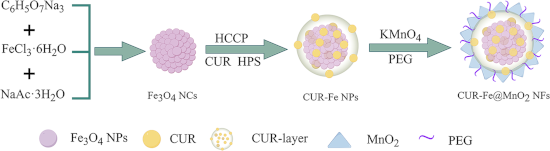
- as, *p < 0.05, ****p < 0.0001, ns (not significant). Synthesis of the Fe3O4 NCs, CUR-Fe NPs, and CUR-Fe@MnO2 NFs. Figure 1 was drawn using Figdraw (https://www.figdraw.com), export ID AOPIS34314. The materials contained in the image are copyrighted by Home for Researchers. This content is not subject
- ), export ID AOPIS34314. The materials contained in the image are copyrighted by Home for Researchers. This content is not subject to CC BY 4.0. We would like to thank Prof Yingqi Li, Zhanfeng Zheng, Yongzhen Wang and Yong Wang for their technical help. Funding The authors are grateful for the financial


Directed growth of quinacridone chains on the vicinal Ag(35 1 1) surface
Beilstein J. Nanotechnol. 2024, 15, 556–568, doi:10.3762/bjnano.15.48
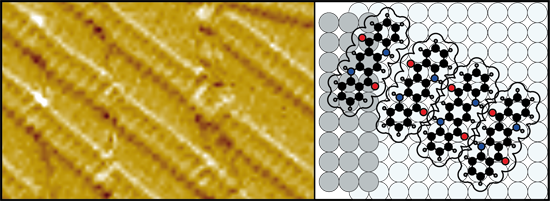
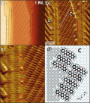
- that up to three chains, parallel to an adjacent step edge, would fit on a terrace (one chain is 16.5 Å in width). A QA chain that is oriented perpendicular to the step edges would consist of seven molecules on one terrace (the intermolecular distance within a QA chain is 6.6 Å). An STM image of the Ag
- (35 1 1) surface is shown in Figure S1a of Supporting Information File 1. The STM image reveals that the Ag steps are not regularly spaced. Instead, the distribution of the terrace widths is very broad. The step distribution that was obtained by evaluating STM images with an Python script reported by
- Bastidas et al. [32] is shown in Figure S1b in Supporting Information File 1. On the left-hand side of the STM image (Figure S1, Supporting Information File 1), the average distance between the steps is only 20 Å (seven atom rows), which is less than half of the expected terrace width of 50.5 Å. At the


Cholesterol nanoarchaeosomes for alendronate targeted delivery as an anti-endothelial dysfunction agent
Beilstein J. Nanotechnol. 2024, 15, 517–534, doi:10.3762/bjnano.15.46
- 33342 for 10 min at RT. After staining, the membranes were separated from the inserts and were mounted on slides using a motion mounting medium. A Leica laser-scanning spectral confocal microscope TCS SP8 (Leica Microsystems, Wetzlar, Germany) was used. Image processing was performed using ImageJ
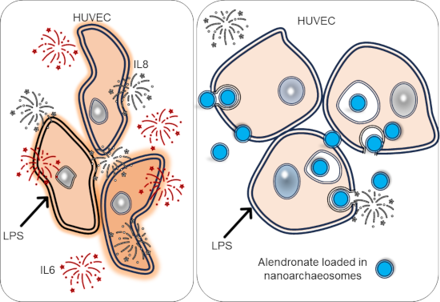
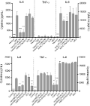
- test using Prisma 4.0 Software (Graph Pad Software, CA, USA). A p-value < 0.05 was considered statistically significant: *p < 0.05; **p < 0.01; ***p < 0.001, ****p < 0.0001; n.s. represents non-significant (p > 0.05). (A) Representative image of alendronate loaded in a cholesterol-containing





Photocatalytic degradation of methylene blue under visible light by cobalt ferrite nanoparticles/graphene quantum dots
Beilstein J. Nanotechnol. 2024, 15, 475–489, doi:10.3762/bjnano.15.43
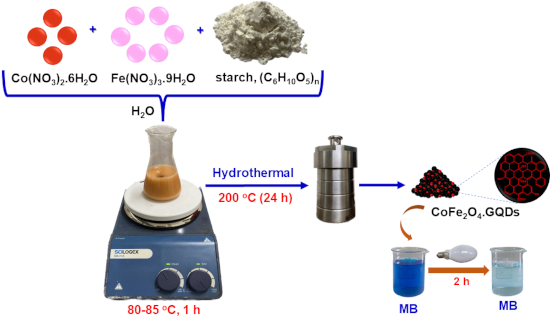
- of CF and CF/GQDs-200, respectively, and the corresponding particle size distribution. CF has very fine particles of around 15–20 nm. The intimate interfacial contact between GQDs sheets and the CF nanoparticle is further depicted in the TEM image (Figure 4e). In this image, the deposited
- curves of CF/GQDs-200. SEM images of (a) CF/GQD-140, (b) CF/GQD-180, and (c) CF/GQD-200; TEM observations and corresponding particle size distribution of (d) CF and (e) CF/GQDs-200. EDX-mapping of CF/GQDs-200. (a) Electron microscopy image, (b) EDX spectrum, (c) carbon mapping, (d) oxygen mapping, (e




Sidewall angle tuning in focused electron beam-induced processing
Beilstein J. Nanotechnol. 2024, 15, 447–456, doi:10.3762/bjnano.15.40
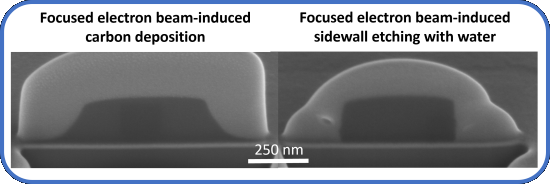
- using focused ion beam (FIB) milling and shown as an electron tilt image in Figure 1b, clearly demonstrates the Gaussian shape. For lithography applications, however, both the long tails and the Gaussian cross section are highly undesirable. The tails may form interconnects to neighboring lines, and the
- functioned as the reference. The lines were etched serially from left to right. The distance between the deposits was chosen to be larger than the range of the BSE electrons so that each deposit could be etched independently. Figure 3b shows a quick-scan top view SE image of the array after etching
- SE image. A 200 nm thick carbon FEBID deposit was fabricated, which would be thick enough to image with SE as well as using FIB cross sectioning. The top view SE image and cross section of the reference structure are shown in Figure 7. Such a deposit was then exposed to FEBIE at both sidewalls. A




Heat-induced morphological changes in silver nanowires deposited on a patterned silicon substrate
Beilstein J. Nanotechnol. 2024, 15, 435–446, doi:10.3762/bjnano.15.39
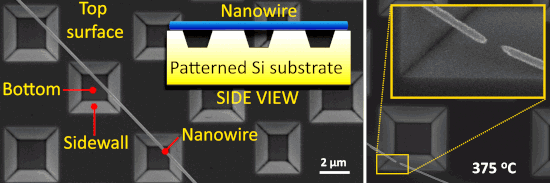
- plane (upwards or downwards) it will not be visible in the SEM image. If a NW is contacting one or more NWs, then heat-induced redistribution of silver atoms between the NWs is often observed, resulting in thickening and shortening of all the contacting NWs (Supporting Information File 1, Figure S5
- one image. : Necking and splitting of Ag NWs in the heating scheme 1 after treatment at 375 °C. SEM images of Ag NWs after a single-step heat treatment (heating scheme 2) at 400 °C. Fragmentation of NWs happened almost exclusively in the adhered parts. Average values of splits per length unit in
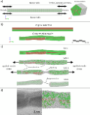
- fragmentation of NWs during the heat treatment. Molecular dynamics model of the NW: (a) initial conditions, (b) results of the compression cycle, (c) results of the tensile deformation; (d) amorphization of the central part of the NW as a result of heat-treatment cycles: TEM image (left) and MD simulation frame


Potential of a deep eutectic solvent in silver nanoparticle fabrication for antibiotic residue detection
Beilstein J. Nanotechnol. 2024, 15, 426–434, doi:10.3762/bjnano.15.38
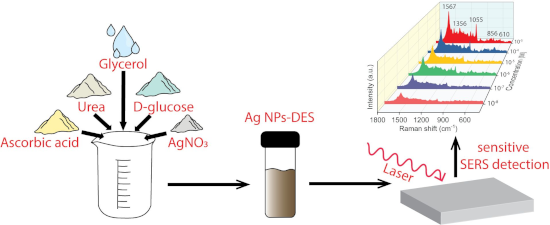
- peaks of SDZ are as follows: Although the consistency in SERS signals recorded on the Ag NPs-DES substrate has been investigated with 10−6 M NFT, we need to evaluate the SERS mapping image of SDZ to ensure the stability of our substrate when analytes are changed. Hence, 10−5 M of SDZ was added dropwise


Unveiling the nature of atomic defects in graphene on a metal surface
Beilstein J. Nanotechnol. 2024, 15, 416–425, doi:10.3762/bjnano.15.37
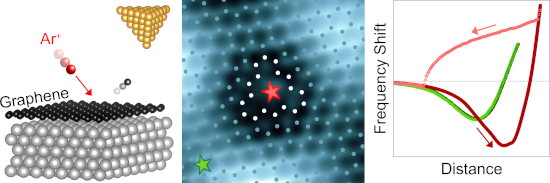
- depicted in the bottom inset to Figure 1a, which shows an atomically resolved STM image of graphene. Mounds of the moiré pattern appear as depressions, while valleys show bright contrast at the specific tunneling parameters used for the STM topograph in Figure 1a. At higher tunneling currents, a contrast
- evidenced by shifts of the point of maximum attraction and hysteresis loops in force spectroscopy experiments. Scanning tunneling microscopy and spectroscopy of defect types 1 and 2 in graphene on Ir(111). (a) Constant-current STM image of Ar+-bombarded graphene (bias voltage: 100 mV, tunneling current: 50
- image and (b) simultaneously recorded tunneling current map of two adjacent defects (10 mV, 3.6 nm × 3.6 nm). (c),(d) As (a),(b) for a type-2 defect (10 mV, 2.5 nm × 2.5 nm). The relevant defects in (a–d) are encircled by a dashed line. The gray scale (from dark to bright) covers changes in the


Classification and application of metal-based nanoantioxidants in medicine and healthcare
Beilstein J. Nanotechnol. 2024, 15, 396–415, doi:10.3762/bjnano.15.36


Investigating ripple pattern formation and damage profiles in Si and Ge induced by 100 keV Ar+ ion beam: a comparative study
Beilstein J. Nanotechnol. 2024, 15, 367–375, doi:10.3762/bjnano.15.33
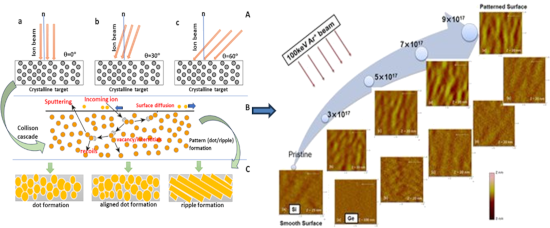
- analysis of Si and Ge samples irradiated with a fluence of 9 × 10¹⁷ ions/cm2 was performed in cross-sectional mode. The TEM image clearly reveals the surface modification occurred due to Ar ion irradiation. At fewer places, Ar bubbles of ≈15 nm were also visible (marked with a dotted section) in Si. It was


Modulated critical currents of spin-transfer torque-induced resistance changes in NiCu/Cu multilayered nanowires
Beilstein J. Nanotechnol. 2024, 15, 360–366, doi:10.3762/bjnano.15.32
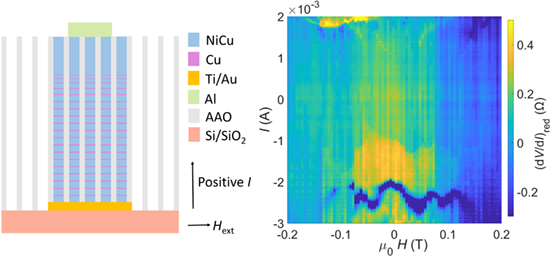
- . Therefore, the fabrication process of 3D devices becomes easier. Figure 2a shows a SEM image of nanowires after removing the AAO template and top electrodes by diluted NaOH solution. Each nanowire consists of multiple NiCu layers of different thickness that are separated by thin Cu layers (denoted as Cu
- STT-induced features can be interpreted as asynchronous changes of the magnetization direction of different NiCu layers as well as spin accumulation at different interfaces. (a) SEM image after nanowire deposition and surface polishing. The bright dots represent the deposited nanowires the tops of
- which are near the surface of the AAO template. (b) SEM image of nanowire-based devices. The measured nanowire array was contacted by the patterned Au bottom electrode and the Al top electrode. (c) Sketch of the cross section of the device. (a) SEM image of nanowires after the AAO template was removed


Controllable physicochemical properties of WOx thin films grown under glancing angle
Beilstein J. Nanotechnol. 2024, 15, 350–359, doi:10.3762/bjnano.15.31
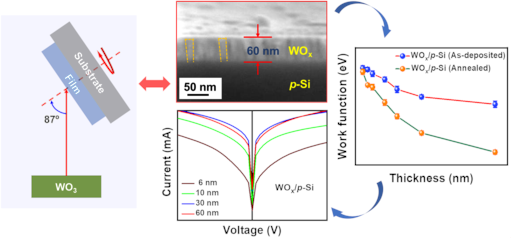
- uniformity. WSxM software was used to carry out AFM image analysis. Kelvin probe force microscopy (KPFM) was used to study the local work function of the WOx films. WOx samples were removed from the high-vacuum environment right before the KPFM measurements to avoid any contamination in air. For KPFM


Comparative electron microscopy particle sizing of TiO2 pigments: sample preparation and measurement
Beilstein J. Nanotechnol. 2024, 15, 317–332, doi:10.3762/bjnano.15.29
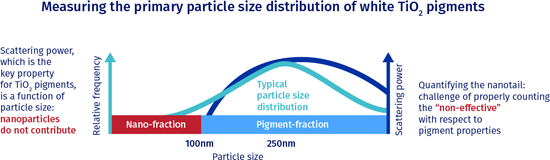
- particles on each image, and to correctly identify the particle edges. Effective image acquisition and analysis requires training and routine performance checks for both the personnel capturing the images and those interpreting them. Results Electron microscopy measurements of E171 samples and related
- samples in 2023. Three of the reported measurements were made by SEM and three by TEM. The following three images (Figures 3–5) illustrate typical images used for the different methods. A top-view SEM image is shown in Figure 3 (Precheza M2, Venator M3), Figure 4 is an example of a TEM image (RCPTM, P1
- , P6), and Figure 5 is a cross-section SEM image (KRONOS M1). The particle size distributions measured with each manufacturer’s method are remarkably similar, as shown in Figure 1. The D50n values are close, but the tails of the distributions vary slightly, especially in the cases where a small number


Design, fabrication, and characterization of kinetic-inductive force sensors for scanning probe applications
Beilstein J. Nanotechnol. 2024, 15, 242–255, doi:10.3762/bjnano.15.23
- microscopy (SPM), the tip plays a fundamental role in the achievable lateral resolution of the image. The focused electron-beam induced deposition (FEBID) [34] technique has been adapted to fabricate tips for SPM, for example, to enhance commercial platinum–iridium alloy (Pt-Ir)-coated conductive tips [35
- by setting the deposition height to 10 μm. Defocusing of the electron spot during vertical growth naturally forms a narrowing conical structure. At the apex of this cone, we routinely achieve a curvature radius of less than 10 nm, as verified by the SEM image in Figure 6c. Finally, we deposit a thin
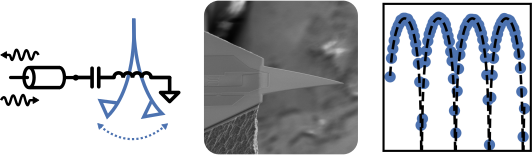
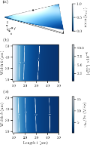
- direction. (a) Scanning electron microscope (SEM) image of a fabricated sensor seen from an angled topside view. The cantilever is formed from a Si-N plate protruding from and supported by a Si substrate. A thin film of Nb-Ti-N is deposited on top of the Si-N and patterned to form the microwave resonator. A



Quantitative wear evaluation of tips based on sharp structures
Beilstein J. Nanotechnol. 2024, 15, 230–241, doi:10.3762/bjnano.15.22
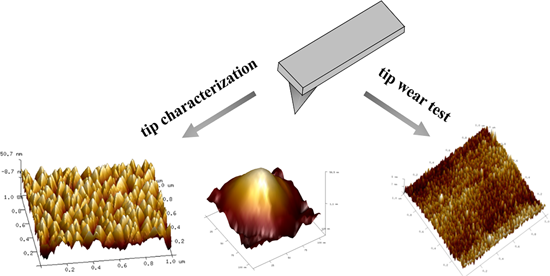
- surface topography [7]. A sharper needle tip leads to more accurate measurements [8]. During the scanning process, tip and sample come into mutual contact, causing wear on the tip [9]. Tip wear or damage in practical applications can have severe consequences, including reduced image quality and erroneous
- . Orji et al. [14] utilized a transmission electron microscope (TEM) to image a tip and derived its tapered shape from the TEM image. Electron microscopic observation offers the advantages of high precision and resolution, enabling accurate acquisition of morphological information about the tip. However
- indicator of tip wear, but also used the surface roughness (Ra) to represent the degree of image deterioration to evaluate the degree of probe wear. It was concluded that a high free amplitude and a set point of 0.5 increase probe wear, while a set point of 0.6 reduces tip wear; the scanning speed does not




Ion beam processing of DNA origami nanostructures
Beilstein J. Nanotechnol. 2024, 15, 207–214, doi:10.3762/bjnano.15.20
- , we only evaluated samples on Si. AFM imaging was used to check and subsequently analyze the irradiated samples. The imaging was performed in air using a Dimension Icon AFM (Bruker) in ScanAsyst mode which employs PeakForce Tapping Technology and ScanAsyst probes (40 kHz, 0.4 N/m). Image processing
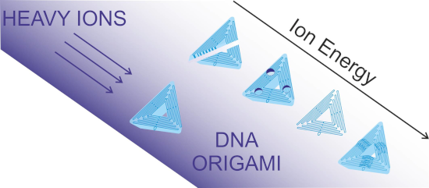
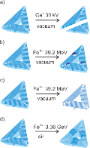
- irradiated samples with the height profiles of one side of representative nanotriangles at each fluence level plotted at the bottom of each image. The relative mean height of the nanotriangles in comparison to the unirradiated control sample is plotted in Figure 2A as a function of the fluence. We associate
- increasing fluences of 56Fe25+ ions with height profiles of representative triangles shown at the bottom of each image. A height map at higher magnification is also presented in Figure 1D, and the relative height increase is plotted as a function of the fluence in Figure 2B. In this irradiation experiment


Graphene removal by water-assisted focused electron-beam-induced etching – unveiling the dose and dwell time impact on the etch profile and topographical changes in SiO2 substrates
Beilstein J. Nanotechnol. 2024, 15, 190–198, doi:10.3762/bjnano.15.18
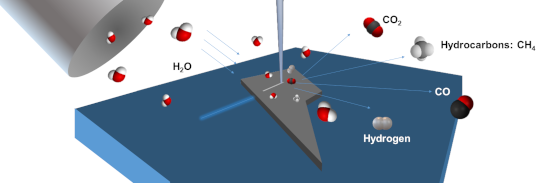
- be optimized to prevent unnecessary defects and reduce the detrimental impact on the underlying substrate. The optical microscope image of the graphene flake before the patterning process is shown in Figure 2A. The size of the etched lines, estimated based on SEM measurements, is usually smaller than
- 50 nm (20 nm in the best case). However, due to the long residual time of the water molecules inside the SEM chamber, the collection of an image can further destroy the investigated material. Therefore, we performed a second series of experiments for a detailed analysis with Raman spectroscopy and
- that with certain precautions water-assisted FEBIE can be applied for such a nanopatterning process. The experimental data obtained with scanning Raman spectroscopy, correlative probe and electron microscopy, and in situ AFM measurements provide a comprehensive image of FEBIE etch profiles. In addition


Nanocarrier systems loaded with IR780, iron oxide nanoparticles and chlorambucil for cancer theragnostics
Beilstein J. Nanotechnol. 2024, 15, 180–189, doi:10.3762/bjnano.15.17
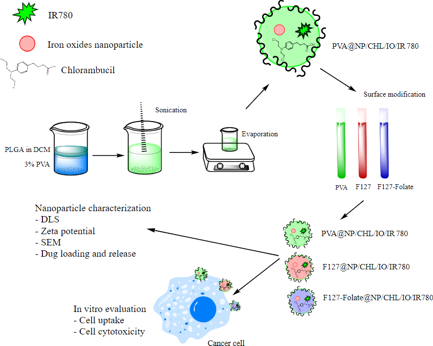
- . Then, the signals were normalized to the signal of PVA@NP/Cou-6 for comparison. The fluorescence image of the NPs in the cells were displayed in Supporting Information File 1, Supplementary data 2 and Figure S2. Cytotoxicity effects of nanoparticles The cells were seeded onto 96-well plates at 5,000


Enhanced feedback performance in off-resonance AFM modes through pulse train sampling
Beilstein J. Nanotechnol. 2024, 15, 134–143, doi:10.3762/bjnano.15.13
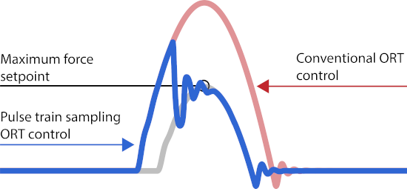
- therefore the imaging speed. To overcome these limitations, we introduce an alternative control technique that takes advantage of the non-zero contact duration, enabling an enhanced force control. This method provides rapid control of the maximum force, resulting in better image quality at faster scan rates
- examine the system response. A peak-to-peak ORT actuation of 50 nm at 2 kHz rate was applied to the Z piezo. We have mounted a Fastscan-A (Bruker) cantilever, setting the scan rate to 4 Hz. The acquired image has 250 × 250 pixels so both trace and retrace images have 1 ORT cycle per pixel. Integral gains
- high-frequency disturbances, but also in improving tracking of lower-frequency components of the sample topography. Extracting mechanical properties from the interaction curves is one of the most powerful capabilities of ORT techniques. Together with the topographical image, they provide material


New application of bimetallic Ag/Pt nanoplates in a colorimetric biosensor for specific detection of E. coli in water
Beilstein J. Nanotechnol. 2024, 15, 95–103, doi:10.3762/bjnano.15.9
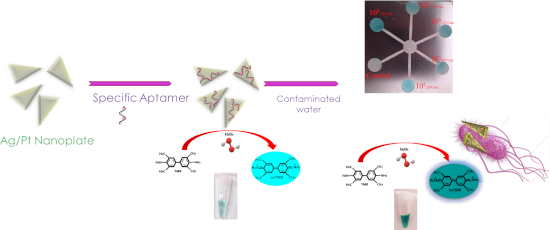
- that, one drop of the E. coli-contaminated sample was put onto a paper chip. The final stage in the paper evaluation was to add 6 µL of H2O2 and 6 µL of TMB to paper chips. The ImageJ software was utilized to evaluate the intensity of the resulting blue color. a) The SEM image AND b) EDS analysis of Ag
- /Pt NPL. a) Absorbance spectra of Ag/Pt NPL after the addition of TMB, TMB and H2O2, NPL, and aptamer-NPL in the presence of TMB-H2O2. b) Image related to the color change of the proposed NPL, c) the zeta potential of NPL, aptamer-NPL, E. coli bacteria, and NPL-E. coli. a) The calibration curve of


Study of the reusability and stability of nylon nanofibres as an antibody immobilisation surface
Beilstein J. Nanotechnol. 2024, 15, 83–94, doi:10.3762/bjnano.15.8
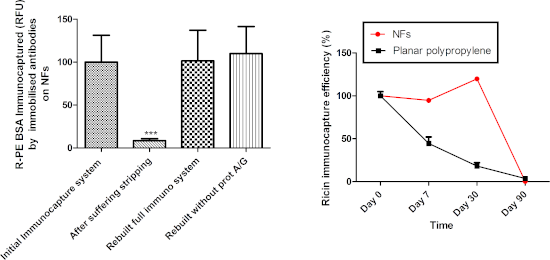
- immunocapture system in NF and 96-well microplate, for each time: ***p < 0.001. Field-emission scanning electron microscopy image of NFs. Acknowledgements We would like to thank the whole team at Nieves Murillo of TECNALIA – Industry and Transport Division for providing the nylon NFs. Funding These results


Berberine-loaded polylactic acid nanofiber scaffold as a drug delivery system: The relationship between chemical characteristics, drug-release behavior, and antibacterial efficiency
Beilstein J. Nanotechnol. 2024, 15, 71–82, doi:10.3762/bjnano.15.7
- ImageJ software as an image analysis tool. Fourier-transform infrared spectroscopy was performed in a Nicolet NEXUS 670 spectrometer. The resulting spectra were recorded in transmission mode in the wavelength range of 500–4000 cm−1. A Raman spectrometer (MacroRAM, Horiba) was used to investigate the
- contact angles of the electrospun scaffolds were measured using a Samsung FACED camera (Korea). A drop of bidistilled water was placed on the flat surface of the electrospun scaffold and then a digital image of the drop was taken for measuring the value of the contact angle using an image processing
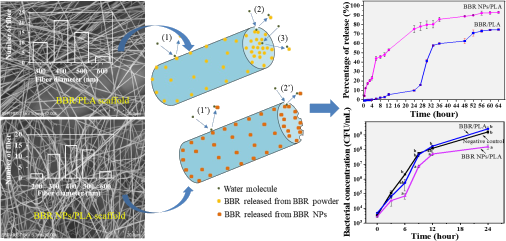
- inverted microscope every 24 h. Statistical analysis The data were reported as mean values ± standard deviations. Statistical analysis of antibacterial data was performed using one-way analysis of variance (ANOVA). A p-value of less than 0.05 was considered statistically significant. (a) SEM image of BBR


Measurements of dichroic bow-tie antenna arrays with integrated cold-electron bolometers using YBCO oscillators
Beilstein J. Nanotechnol. 2024, 15, 26–36, doi:10.3762/bjnano.15.3
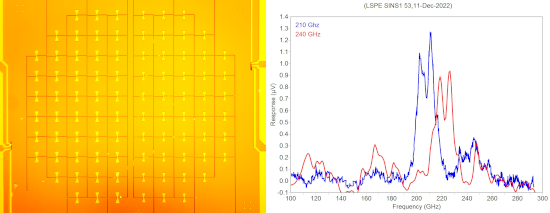
- a substrate thickness of 0.29 mm seem to be closer to the experimental results, see Measurement results section below. (a) Design of the sample of LSPE VB 210/240 from the SINS1 series. (b) Optical photo of the sample of LSPE VB 210/240 from the SINS1 series. (a) SEM image of the LSPE sample; bow
- -tie antennas are visible. (b) SEM image where the required elements are painted with pseudocolors; red: normal metal absorber, green: SN contact, and blue: SIN tunnel junctions. I–V characteristics of two receiving structures of a sample receiving system from the LSPE VB 210/240 SINS1 series. Measured


TEM sample preparation of lithographically patterned permalloy nanostructures on silicon nitride membranes
Beilstein J. Nanotechnol. 2024, 15, 1–12, doi:10.3762/bjnano.15.1
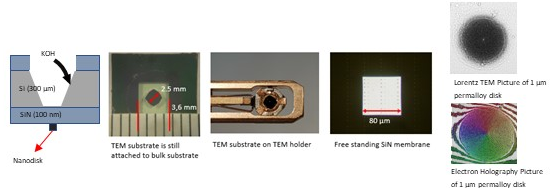
- deflected by the circularly oriented magnetic fields. The magnetic contrast can hardly be observed when the image is in-focus but becomes more visible when the image is defocused. On one side of the focus, the magnetization of the vortex deflects the electron beams inwards, which then overlaps and results
- sample and a coherently tilted reference plane wave. The intensity of the hologram can be represented in the form of where Ψi(r) stands for the electron wavefunction in the image plane i with amplitude Ai and phase φi, r is a two-dimensional vector in the sample plane, and q is the two-dimensional
- -off or IBE methods on the bulk substrate. Then we protected the nanostructure with a resist and patterned AZ®5214E resist on the back side of the substrate using the image reversal technique. A window in the SiN buffer layer was prepared by ion beam etching through the aperture in the mask of AZ®5214E


unDrift: A versatile software for fast offline SPM image drift correction
Beilstein J. Nanotechnol. 2023, 14, 1225–1237, doi:10.3762/bjnano.14.101
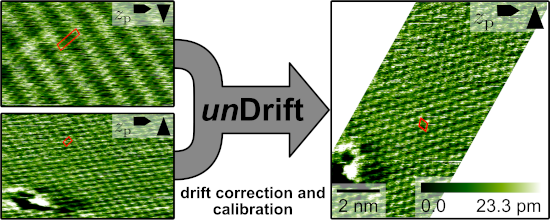
- for drift during the measurement (online drift correction) or afterwards (offline drift correction). With the currently available software tools, however, offline drift correction of SPM data is often a tedious and time-consuming task. This is particularly disadvantageous when analyzing long image
- determine the drift velocity from the apparent movement of stationary features either by automatic evaluation of the cross-correlation image or based on positions identified manually by the user. We demonstrate the performance and reliability of unDrift using three challenging examples, namely images
- force microscopy; calibration; drift correction; image correlation functions; periodic structures; scanning probe microscopy; Introduction In science and technology, scanning probe microscopy (SPM) techniques are widely used to study the structure and properties of surfaces and interfaces from the