


Search results
Search for "pressure" in Full Text gives 1097 result(s) in Beilstein Journal of Nanotechnology. Showing first 200.
Determining by Raman spectroscopy the average thickness and N-layer-specific surface coverages of MoS2 thin films with domains much smaller than the laser spot size
Beilstein J. Nanotechnol. 2024, 15, 279–296, doi:10.3762/bjnano.15.26
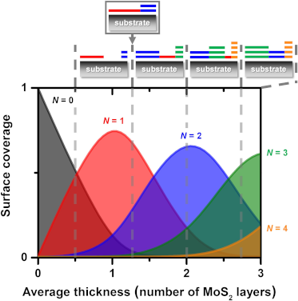
- injection pulsed-pressure chemical vapor deposition (DLI-PP-CVD). Such samples are constituted of nanoflakes (with a lateral size of typically 50 nm, i.e., well below the laser spot size), with possibly a distribution of thicknesses and twist angles between stacked layers. As an essential preliminary, we
- growth of wafer-scale MoS2 thin films on SiO2/Si substrates by direct liquid injection pulsed-pressure chemical vapor deposition (DLI-PP-CVD) using low-toxicity precursors [27]. Such MoS2 thin films showed good stoichiometry (Mo/S = 1.94–1.95) and the potential for high photoluminescence quantum yield


Multiscale modelling of biomolecular corona formation on metallic surfaces
Beilstein J. Nanotechnol. 2024, 15, 215–229, doi:10.3762/bjnano.15.21
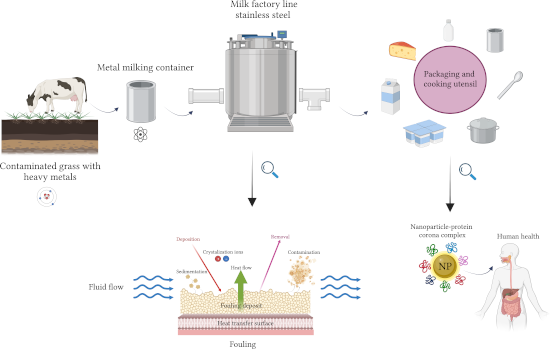
- ions. The system’s pH value was maintained at a neutral level, and the NaCl salt concentration was set to 150 mM, mimicking the overall ionic strength of milk and equivalent to one salt molecule per 10 nm3. The system underwent equilibration for 1.0 ns under constant pressure conditions at 1.0 bar and
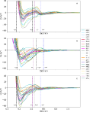
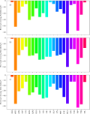
- -tempered metadynamics (AWT-MetaD) simulations, the adsorption energy was calculated at a temperature of 300 K, a pressure of 1.0 bar, and a neutral pH within the NVT ensemble. Additionally, we measured the interaction energy as a function of surface separation distance (SSD) as a collective variable




Ion beam processing of DNA origami nanostructures
Beilstein J. Nanotechnol. 2024, 15, 207–214, doi:10.3762/bjnano.15.20
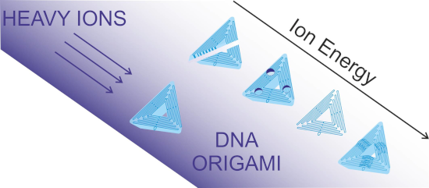
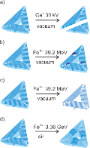
- nanostructure height must be associated with the energy transfer within the DNA nanostructure or highly localized effects, such as thermal and pressure shock waves in the vicinity of the track [40]. We are now preparing experiments to explore this issue. The formation of craters on the nanostructures was


Graphene removal by water-assisted focused electron-beam-induced etching – unveiling the dose and dwell time impact on the etch profile and topographical changes in SiO2 substrates
Beilstein J. Nanotechnol. 2024, 15, 190–198, doi:10.3762/bjnano.15.18
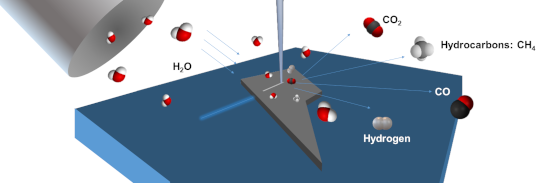
- formed, and they start to chemically react with graphene. There are a few possible reaction paths which could occur during this process: A first series of water FEBIE experiments have been performed on single, bi-, and triple layers of graphene in ESEM mode at a background pressure of 130 Pa, with a beam
- AFM profiles measured in situ, we cannot exclude that it appears after taking out the sample and exposing it to air and ambient pressure. This effect, to the best of our knowledge, is firstly reported in this work and has not been mentioned in prior research on water-assisted FEBIE etching of graphene
- electrons at a given process time. From the pressure P inside the SEM chamber one can calculate the number of impinging molecules by using the formula J = PNA/(2πMRT)1/2, given in the reference [31], where NA is the Avogadro number, M is the molar mass of impinging molecules, R is the universal gas constant


CdSe/ZnS quantum dots as a booster in the active layer of distributed ternary organic photovoltaics
Beilstein J. Nanotechnol. 2024, 15, 144–156, doi:10.3762/bjnano.15.14
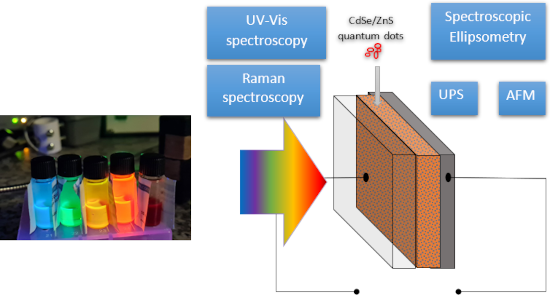
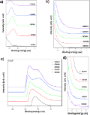
- pressure of approximately 8 × 10⁻¹⁰ mbar, using the XPS/UPS/ARPES PREVAC setup. The analysis chamber was equipped with a PREVAC Ea15 hemispherical analyzer and a PREVAC EA15 40B source (UV power U = 0.56 kV, PUV = 55 W, He I). The beam energy scale was calibrated at the Fermi level of 16.87 eV. The samples




Development and characterization of potential larvicidal nanoemulsions against Aedes aegypti
Beilstein J. Nanotechnol. 2024, 15, 104–114, doi:10.3762/bjnano.15.10
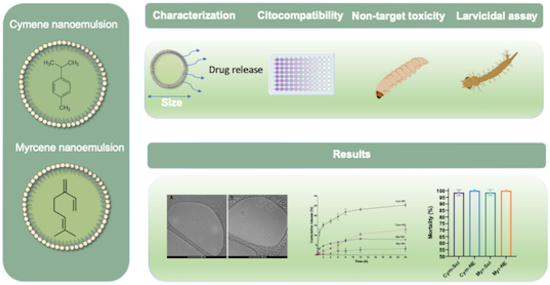
- [14]. NEs can be obtained through two general approaches, that is, high-energy methods and low-energy methods. The high-energy methods are characterized by using equipment such as sonicators, high-speed homogenizers, and high-pressure homogenizers, which provide high energy input during processing


Measurements of dichroic bow-tie antenna arrays with integrated cold-electron bolometers using YBCO oscillators
Beilstein J. Nanotechnol. 2024, 15, 26–36, doi:10.3762/bjnano.15.3
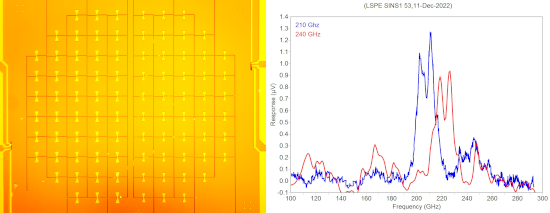
- of 1.2 nm of Fe and 30 nm of Al on top; then, 60 nm of aluminum are deposited at an angle of 45°. Thus, we form a superconductor–normal metal (SN) Andreev contact. Subsequently, oxidation is carried out at a relatively high pressure (1–2 Torr) in the working chamber of the sputtering unit. The last


Nanotechnological approaches in the treatment of schistosomiasis: an overview
Beilstein J. Nanotechnol. 2024, 15, 13–25, doi:10.3762/bjnano.15.2

- classic nanocarriers are not present in SLN, such as lack of biocompatibility, difficulty to produce on a large scale, and high raw material cost [36]. Many methods are used to prepare SLN, and they are divided into (1) high-energy methods, for dispersion of the lipid phase (such as high-pressure
- used in the future [8]. In another work, Gonzalez et al. [48] increased the dissolution of PZQ by producing nanocrystals through high-pressure homogenization, followed by drying through spray-drying. After that, they resuspended the powder in Oral plus® and Oral Sweet®, which are suspension vehicles


TEM sample preparation of lithographically patterned permalloy nanostructures on silicon nitride membranes
Beilstein J. Nanotechnol. 2024, 15, 1–12, doi:10.3762/bjnano.15.1
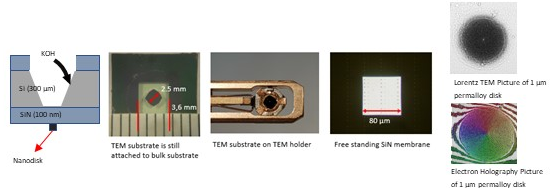
- magnetron sputtering through the resist aperture. We used DC magnetron sputtering in a pure Ar environment at a pressure of 1 Pa to deposit Py at room temperature. The effective permalloy target had a diameter of 8 mm. The sputtered material almost forms a parallel beam when it approaches the substrate at a
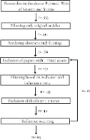
- , we initially fabricated the nanostructures on a 200 µm thick Si substrate with 100 nm thick SiN buffer layers on both sides. The buffer layers were deposited with low-pressure CVD to ensure stress-free films. The fabrication process is shown in Figure 10. First, we made the nanostructure using lift


A combined gas-phase dissociative ionization, dissociative electron attachment and deposition study on the potential FEBID precursor [Au(CH3)2Cl]2
Beilstein J. Nanotechnol. 2023, 14, 1178–1199, doi:10.3762/bjnano.14.98
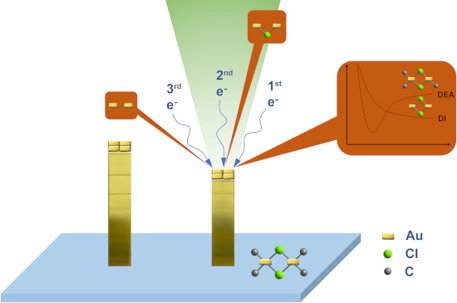
- that we attribute to electron-induced secondary and tertiary reactions in the deposition process. We find this precursor to be stable at ambient conditions and to have sufficient vapor pressure to be suitable for use in HV instruments. More importantly, in the UHV setup, FEBID with [Au(CH3)2Cl]2
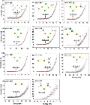
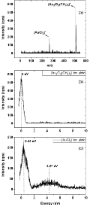
- most significant DI processes from below their thresholds to 50 eV. The intensities are normalized to the pressure and the signal intensity of Ar+ from Ar at an electron energy of 50 eV. Table 3 shows the integral intensities of these fragments over the presented energy range, along with their relative



Density functional theory study of Au-fcc/Ge and Au-hcp/Ge interfaces
Beilstein J. Nanotechnol. 2023, 14, 1093–1105, doi:10.3762/bjnano.14.90
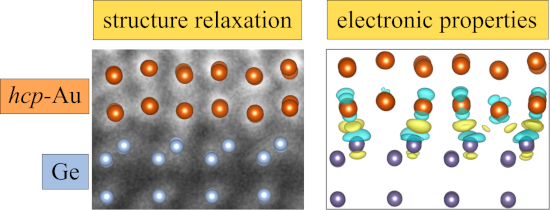
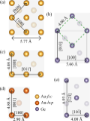
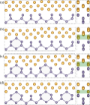
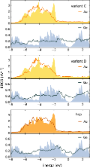
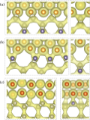
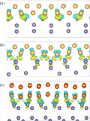
- in the bulk and in the supercell configurations. Structural models Under ambient pressure, germanium and gold crystallize in the diamond () and the fcc (Fm3m) structure, respectively. Their experimental lattice constants are aGe = 5.66 Å for germanium and aAu−fcc = 4.08 Å for gold [31]. The hexagonal





Properties of tin oxide films grown by atomic layer deposition from tin tetraiodide and ozone
Beilstein J. Nanotechnol. 2023, 14, 1085–1092, doi:10.3762/bjnano.14.89
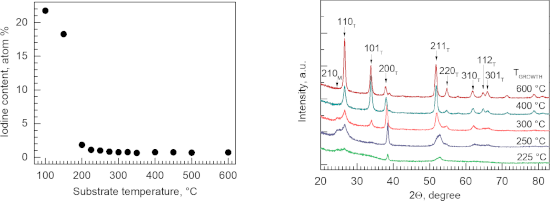
- authors aim to provide a comprehensive description of said process and the resulting films. Experimental The films studied in this work were grown in a low-pressure flow-type ALD reactor [16]. Tin(IV) iodide, SnI4 (99.999%, Sigma-Aldrich), used as the tin precursor was evaporated at 83 °C from a half-open


Experimental investigation of usage of POE lubricants with Al2O3, graphene or CNT nanoparticles in a refrigeration compressor
Beilstein J. Nanotechnol. 2023, 14, 1041–1058, doi:10.3762/bjnano.14.86
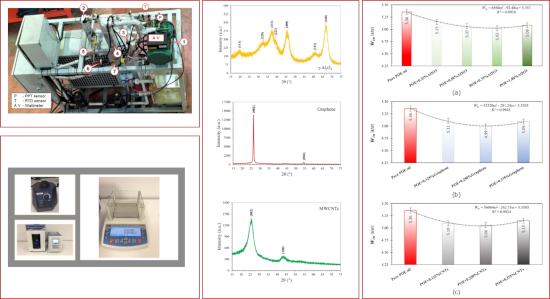
- . Details of the experimental investigation are presented in the following sections. Experimental setup The experimental setup includes a semi-hermetic reciprocating compressor. This compressor is compatible with the refrigerant R1234yf. The experimental setup is shown in Figure 1. Pressure and temperature
- measurement devices were placed to control operating conditions at the inlet and outlet of the compressor. Pressure and temperature values were measured at the inlet and outlet to ensure safe operation of the refrigeration compressor. Piezoresistive pressure transmitters (PPT) and resistance temperature
- detector (RTD) sensors were used for pressure and temperature measurements, respectively. Besides, required electrical power of the compressor was measured using a digital wattmeter. During the tests, the pressure and temperatures at the compressor inlet and outlet were kept approximately constant. The





Nanoarchitectonics of photothermal materials to enhance the sensitivity of lateral flow assays
Beilstein J. Nanotechnol. 2023, 14, 988–1003, doi:10.3762/bjnano.14.82
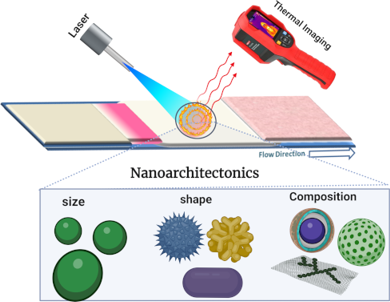
- . Thus, the test results from LFAs are not comparable with standard centralized laboratory techniques such as enzyme-linked immunosorbent assay, real-time polymerase chain reaction, and high-pressure liquid chromatography, which have a detection limit from nanomolar to attomolar concentrations, whereas


Fragmentation of metal(II) bis(acetylacetonate) complexes induced by slow electrons
Beilstein J. Nanotechnol. 2023, 14, 980–987, doi:10.3762/bjnano.14.81
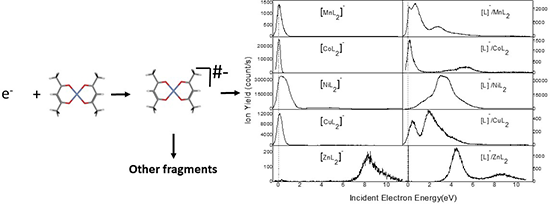
- , 0.498, 0.44, and 0.16 eV for CuL2, NiL2, and CoL2, MnL2, and ZnL2, respectively [15][16][17][18][19]. As the molecules are sublimated, the pressure of the molecular beam, P, that is, the number of precursors in the gas phase, follows the Clausius–Clapeyron relation (log(P) = C − ΔHsub/T), where C is a
- of an electron source, an oven, and a quadrupole mass analyzer (QMA). The components are housed in a UHV chamber at a base pressure of around 2 × 10⁻⁸ mbar. A well-defined electron beam generated from a trochoidal electron monochromator (resolution approx. 210 meV FWHM), orthogonally intersects an


Isolation of cubic Si3P4 in the form of nanocrystals
Beilstein J. Nanotechnol. 2023, 14, 971–979, doi:10.3762/bjnano.14.80
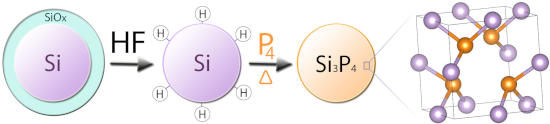
- synthesized either under atmospheric or high pressure. Since pseudocubic Si3P4 is bound to be metastable according to the phase diagram [8], any method of its synthesis must involve out-of-equilibrium conditions. The majority of theoretical studies on numerous Si3P4 phases have shown pseudocubic (tetragonal
- temperatures as low as 400 °C with no elevated pressure. Prior to this study, bulk cubic sphalerite-type SiP had only been synthesized above 1700 °C under a pressure of 40–50 kbar [20]. Results and Discussion Initially, the objective of the experiment was to obtain silicon NPs with a controlled distribution of
- . In order to obtain silicon phosphide samples, weighted amounts of hydrogenated Si NPs (ca. 10 mg) and red phosphorus (ca. 15 mg) were transferred to a clean degassed quartz ampoule, which was sealed under the residual pressure of 5 × 10⁻² mbar. Annealings were carried out in a muffle furnace SNOL-3


Metal-organic framework-based nanomaterials for CO2 storage: A review
Beilstein J. Nanotechnol. 2023, 14, 964–970, doi:10.3762/bjnano.14.79

- [16][17][18][19]. However, several studies have indicated that the surface area is not the sole determining factor in CO2 storage at low pressure. For instance, despite having a lower surface area than MOF-177, HKUST-1 exhibited a greater CO2 adsorption capacity of 4.16 mmol·g−1 at 298 K and 1 bar [20
- investigations under 10 bar and 298 K. At pressures higher than 10 bar, computational and experimental results were significantly different because of the unsuitable force field under high pressure conditions. Recently, Stanton et al. also used the GCMC technique to predict the CO2 adsorption of various MOF
- , which promotes their interaction with OMSs within the MOF structures. In this regard, MOFs tend to exhibit instability under such conditions. Therefore, design and selection of MOFs are imperative for effective CO2 adsorption, such as in the case of MOF-808. Furthermore, CO2 storage at low pressure is




Low temperature atomic layer deposition of cobalt using dicobalt hexacarbonyl-1-heptyne as precursor
Beilstein J. Nanotechnol. 2023, 14, 951–963, doi:10.3762/bjnano.14.78
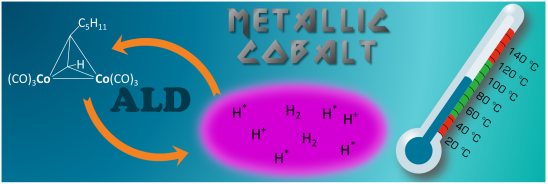
- Microelectronics of Chemnitz University of Technology, and FAP Forschungs- und Applikationslabor Plasmatechnik GmbH. The reactor is a single-wafer reactor for 200 mm wafers and consists of an inner and an outer reactor with a typical base pressure of 3 × 10⁻⁶ mbar. A simplified schematic sketch is shown in Figure
- 1. The reactor is designed to offer a wide variability as it consists of two bubblers, two Vapbox evaporators (Kemstream SAS), and two CEM systems (Bronkhorst High-Tech B.V.) for precursor delivery. In that way, one can evaporate liquids with high and low vapour pressure, as well as solids in
- under inert gas atmosphere. The bubbler was heated to 30 °C, which will result in a vapour pressure of 15.7 mbar according to the published Antoine parameters of Georgi and co-workers [23]. Pure argon (6N) was used as carrier gas for bubbling. The depositions in CVD mode were done with a continuous


Ni, Co, Zn, and Cu metal-organic framework-based nanomaterials for electrochemical reduction of CO2: A review
Beilstein J. Nanotechnol. 2023, 14, 904–911, doi:10.3762/bjnano.14.74
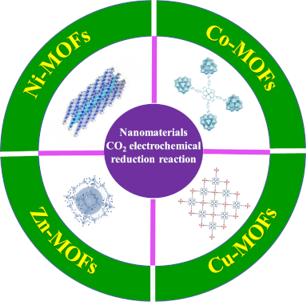
- sacrificial agents to create metal or metal compounds embedded in carbon matrices was considered a potential direction in CO2RR application. Systematic studies should be conducted to control morphological structure and composition by changing reaction conditions (time, temperature, and pressure) when


Industrial perspectives for personalized microneedles
Beilstein J. Nanotechnol. 2023, 14, 857–864, doi:10.3762/bjnano.14.70
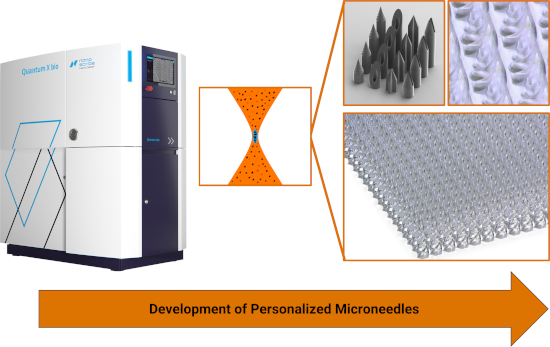
- artifact from slicing the computer-aided design (CAD) into layers [47][48]. The staircase effect leads to increased surface roughness of the order of micrometers, and high surface roughness on the microneedles will require substantially more pressure to penetrate the skin. These slicing artifacts


Biomimetics on the micro- and nanoscale – The 25th anniversary of the lotus effect
Beilstein J. Nanotechnol. 2023, 14, 850–856, doi:10.3762/bjnano.14.69

- along its body. The authors built on this inspiration to develop carbon nanotube cones which similarly separate the regions. Their model predicts the specific geometry and surface properties that will be required to create a low-pressure system for harvesting water vapour. Rebora et al. [19], in the


A wearable nanoscale heart sound sensor based on P(VDF-TrFE)/ZnO/GR and its application in cardiac disease detection
Beilstein J. Nanotechnol. 2023, 14, 819–833, doi:10.3762/bjnano.14.67
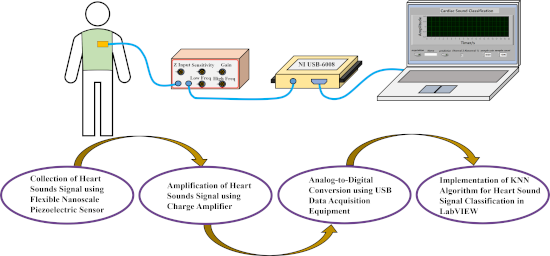
- mechanical vibration signals into voltage signals, have become one of the primary materials for creating heart sound sensors [9]. Piezoelectric materials are essential components in heart sound auscultation equipment. When pressure is applied to piezoelectric materials, they generate a voltage, a phenomenon
- decibel level of the sound emitted is adjusted by regulating the amplitude of the signal generated and the power amplifier's amplification. During the electric-acoustic conversion performance test, a decibel tester is placed 1.5 cm above the heart sound sensor to control the sound pressure. Construction
- simulations. Specifically, Figure 9a–c shows the simulated voltage distribution within the P(VDF-TrFE)/ZnO/GR piezoelectric film under sound pressures of 65, 75, and 85 dB. Figure 9d–f presents the corresponding stress distribution in the piezoelectric film. It is evident that as the sound pressure increases


Control of morphology and crystallinity of CNTs in flame synthesis with one-dimensional reaction zone
Beilstein J. Nanotechnol. 2023, 14, 741–750, doi:10.3762/bjnano.14.61
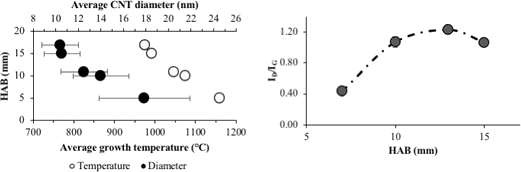
- on the growth control in CVD conclude that independent parameters, such as fuel selection, synthesis temperature, vapor pressure, and catalyst, govern CNT growth [6]; all can be manipulated for synthesis control. CVD is preferred because of the high degree of control and the possibility to synthesize
- within a burner enclosure at atmospheric pressure. An extractor fan is also employed to minimize surrounding air disturbance to the flame. Premixed flame setup and synthesis The setup for CNT synthesis using a premixed flame burner with a sintered metal outlet is depicted in Figure 6. The burner


The microstrain-accompanied structural phase transition from h-MoO3 to α-MoO3 investigated by in situ X-ray diffraction
Beilstein J. Nanotechnol. 2023, 14, 692–700, doi:10.3762/bjnano.14.55
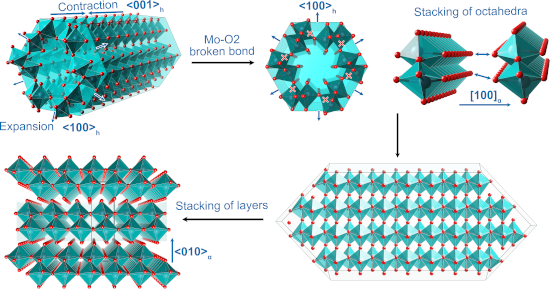
- ], β-MoO3 [15][16], h-MoO3 [17], γ-MoO3 [18], and the high-pressure phase MoO3-II [19]. α-MoO3 and β-MoO3 are the two most commonly reported molybdenum oxides. α-MoO3 is a thermodynamically stable orthorhombic phase. It is a layered crystal with strong covalent bonding within the layers and weak van


Investigations on the optical forces from three mainstream optical resonances in all-dielectric nanostructure arrays
Beilstein J. Nanotechnol. 2023, 14, 674–682, doi:10.3762/bjnano.14.53
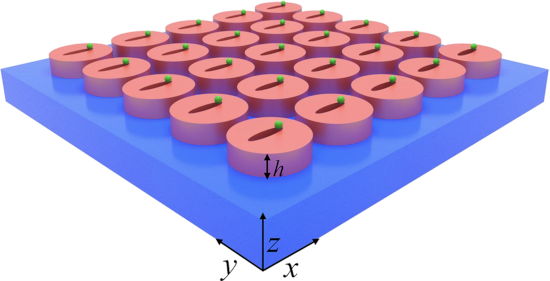
- Guangdong Wang Zhanghua Han Shandong Provincial Key Laboratory of Optics and Photonic Devices, Center of Light Manipulation and Applications, School of Physics and Electronics, Shandong Normal University, Jinan 250358, China 10.3762/bjnano.14.53 Abstract Light can exert radiation pressure on any





