


Search results
Search for "X-ray photoelectron spectroscopy" in Full Text gives 323 result(s) in Beilstein Journal of Nanotechnology. Showing first 200.
Understanding the performance and mechanism of Mg-containing oxides as support catalysts in the thermal dry reforming of methane
Beilstein J. Nanotechnol. 2018, 9, 1162–1183, doi:10.3762/bjnano.9.108
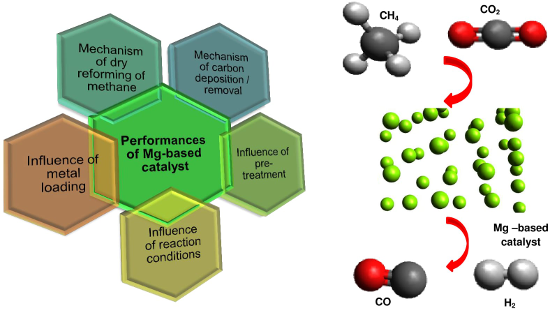
- /MgO–ZrO2 catalyst. The effect of the presence of MgO in maintaining the stability of the catalyst was clearly exhibited in the X-ray photoelectron spectroscopy (XPS) results, as shown in Figure 5. Based on a study by Fan et al. [52], Figure 5 shows a high binding energy of 531.5 eV. This indicates the






Electrostatic force spectroscopy revealing the degree of reduction of individual graphene oxide sheets
Beilstein J. Nanotechnol. 2018, 9, 1146–1155, doi:10.3762/bjnano.9.106
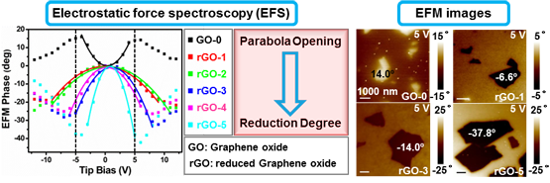
- methods, such as X-ray photoelectron spectroscopy (XPS) [8][9], Raman spectroscopy [10], and UV–vis absorption spectra [11][12], reflect the average information of rGO materials. However, they cannot characterize an isolated rGO sheet at the nanoscale. Optical observation [13] and transmission electron


Cyclodextrin inhibits zinc corrosion by destabilizing point defect formation in the oxide layer
Beilstein J. Nanotechnol. 2018, 9, 936–944, doi:10.3762/bjnano.9.86
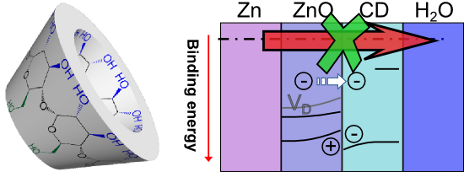
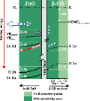
- , with Raman spectra of the interface proving the adsorption of the intact β-CD. Angular dependent X-ray photoelectron spectroscopy (ADXPS) and ultraviolet photoelectron spectroscopy (UPS) were used to extract a band-like diagram of the β-CD/ZnO interface, showing a large energy level shift at the
- that affecting the defect chemistry of passivating films by molecular inhibitors maybe a viable strategy to control corrosion of metals. Keywords: band diagram; defect chemistry; organic corrosion inhibitors; X-ray photoelectron spectroscopy; zinc corrosion; Introduction Organic corrosion inhibitors
- containing electrolyte, samples were analysed by angle-dependent X-ray photoelectron spectroscopy (ADXPS) combined with ultraviolet photoelectron spectroscopy (UPS). Results and Discussion Electrochemical measurements of the corrosion potential Ecorr displayed in Figure 1a show a cathodic shift by several


Nanoscale mapping of dielectric properties based on surface adhesion force measurements
Beilstein J. Nanotechnol. 2018, 9, 900–906, doi:10.3762/bjnano.9.84
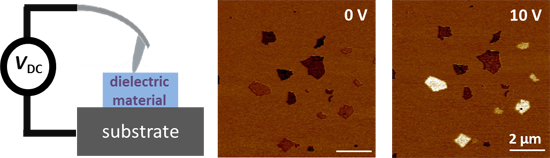
- a higher lateral resolution comparable to the conventional AFM modes. The dependence of the adhesion force under a biased AFM tip on the reduction degree of GO was also studied through X-ray photoelectron spectroscopy (XPS) experiments. Figure 4a shows the average adhesion forces of the three
- samples were processed using the software Nanoscope Analysis v1.7. For each image, a first-order flatten correction was applied to remove sample inclination. The reduction extent of the GO was characterized by X-ray photoelectron spectroscopy (XPS, AXIS Ultra DLD, Kratos). Schematic representation of the


Effect of annealing treatments on CeO2 grown on TiN and Si substrates by atomic layer deposition
Beilstein J. Nanotechnol. 2018, 9, 890–899, doi:10.3762/bjnano.9.83
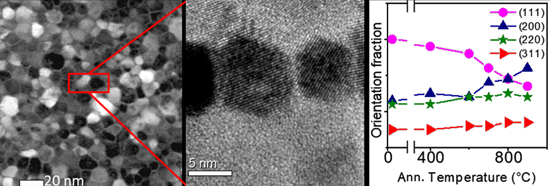
- obtained by using X-ray photoelectron spectroscopy (XPS) measurements performed on a PHI 5600 instrument (Physics Electronics Inc.) equipped with a monochromatic Al Kα X-ray source (energy = 1486.6 eV) and a concentric hemispherical analyzer. The spectra were collected at a take-off angle of 45° and a band


Facile chemical routes to mesoporous silver substrates for SERS analysis
Beilstein J. Nanotechnol. 2018, 9, 880–889, doi:10.3762/bjnano.9.82
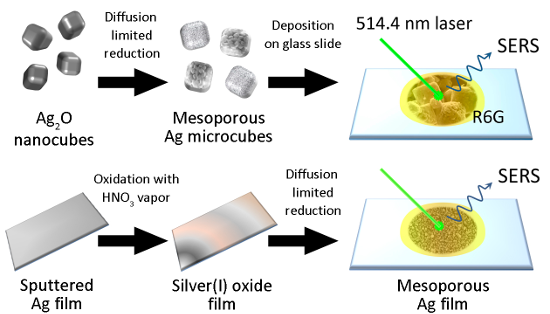
- and Raman signal enhancement mediators. The efficiency of silver reduction was characterized by X-ray diffraction and X-ray photoelectron spectroscopy. The developed substrates were applied for SERS detection of rhodamine 6G (enhancement factor of about 1–5 × 10⁵) and an anti-ischemic mildronate drug
- the compounds was carried out using WinXPow software and the ICDD PDF2 database. X-ray photoelectron spectroscopy analysis was performed using an electron spectroscopy for chemical analysis (ESCA) setup at the Laboratory of Industrial Chemistry of Ruhr University at Bochum equipped with the X-ray


Comparative study of antibacterial properties of polystyrene films with TiOx and Cu nanoparticles fabricated using cluster beam technique
Beilstein J. Nanotechnol. 2018, 9, 861–869, doi:10.3762/bjnano.9.80
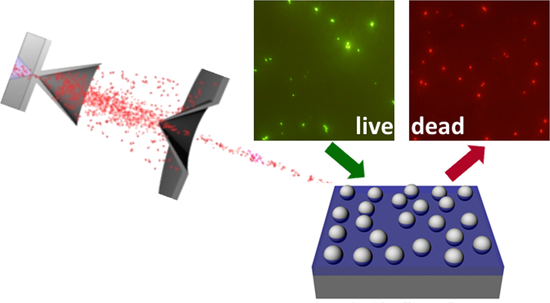
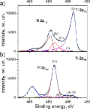
- thin polymer film does not affect the morphology. Since Ti clusters were prepared in three different manners, they exhibit different compositions as confirmed by means of X-ray photoelectron spectroscopy (XPS). Ti NPs of type 1 immediately after the deposition demonstrate the peak at a binding energy




Noble metal-modified titania with visible-light activity for the decomposition of microorganisms
Beilstein J. Nanotechnol. 2018, 9, 829–841, doi:10.3762/bjnano.9.77
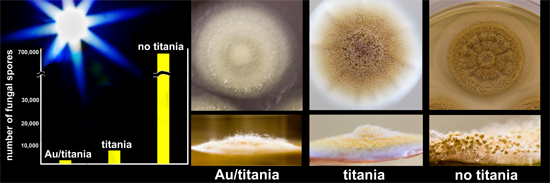
- were modified with silver and gold by photodeposition, and characterized by diffuse reflectance spectroscopy (DRS), X-ray powder diffraction (XRD), X-ray photoelectron spectroscopy (XPS) and scanning transmission electron microscopy (STEM). It was found that silver co-existed in zero valent (core) and


Graphene composites with dental and biomedical applicability
Beilstein J. Nanotechnol. 2018, 9, 801–808, doi:10.3762/bjnano.9.73
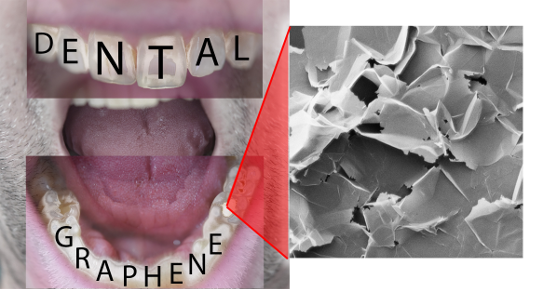
- of 40 N/m. Image processing was carried out using the Nanoscope software. The X-ray photoelectron spectroscopy (XPS) measurements were performed on a Theta Probe spectrometer (Thermo Electron Co., Germany) using monochromatic Al Kα radiation (photon energy of 15 keV with maximum energy resolution of


Facile synthesis of a ZnO–BiOI p–n nano-heterojunction with excellent visible-light photocatalytic activity
Beilstein J. Nanotechnol. 2018, 9, 789–800, doi:10.3762/bjnano.9.72
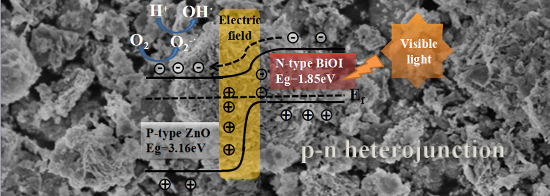
- , which is significantly improved from the pure BiOI (5.23 cm2/g) and ZnO (16 cm2/g) materials. This may lead ZnO/BiOI to have more active bonding sites than pure BiOI and ZnO, which is beneficial for the photodegradation activity. Chemical state analysis X-ray photoelectron spectroscopy (XPS) was carried
- –800 nm. The photoluminence (PL) spectra were recorded by a Horiba Floruomax-4_1188D-4513-FM instrument with an emission wavelength of 320 nm. X-ray photoelectron spectroscopy (XPS) measurements were performed at 150 W with a monochromatic Al Kα (1486.6 eV) X-ray source on an ESCALAB 250 instrument


A review of carbon-based and non-carbon-based catalyst supports for the selective catalytic reduction of nitric oxide
Beilstein J. Nanotechnol. 2018, 9, 740–761, doi:10.3762/bjnano.9.68

- following [49]. In particular, the catalyst active phases before and after SCR-NH3 reaction are typically characterised by: atomic absorption spectroscopy (AAS) X-ray fluorescence spectroscopy (XRF) electron paramagnetic resonance (EPR) X-ray photoelectron spectroscopy (XPS) temperature-programmed reduction
- spectroscopy (FTIR), X-ray photoelectron spectroscopy (XPS), and temperature-programmed desorption (TPD), the comparison of the properties for both ACFP and ACFN was clarified. Chuang et al. [18] considered three different methods, i.e., impregnation, polyol, and microwave-heated polyol methods for the
Anchoring Fe3O4 nanoparticles in a reduced graphene oxide aerogel matrix via polydopamine coating
Beilstein J. Nanotechnol. 2018, 9, 591–601, doi:10.3762/bjnano.9.55
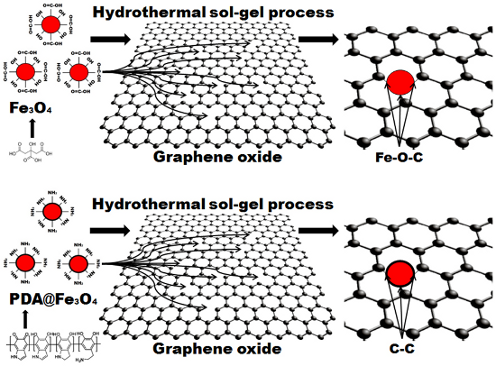
- Fourier Transform Infrared (FTIR) spectroscopy (Bruker Optics, TENSOR 27) equipped with a MCT detector and globar source. The chemical composition of the samples was studied using X-ray photoelectron spectroscopy (XPS). The measurements were performed in an ultra-high vacuum (UHV) chamber using a


Fabrication and photoactivity of ionic liquid–TiO2 structures for efficient visible-light-induced photocatalytic decomposition of organic pollutants in aqueous phase
Beilstein J. Nanotechnol. 2018, 9, 580–590, doi:10.3762/bjnano.9.54
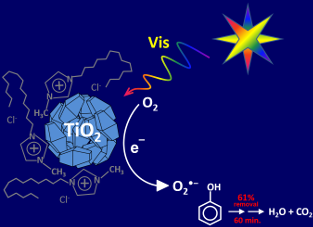
- ). X-ray photoelectron spectroscopy (XPS) experiments were performed on a PHI 5000 VersaProbeTM (ULVAC-PHI) spectrometer with monochromatic Al Kα radiation (hν = 1486.6 eV). The high-resolution (HR) XPS spectra were collected by the hemispherical analyzer at a pass energy of 23.5 eV and an energy step
- photoactivity of TiO2, a series of TiO2 microspheres have been synthesized via a solvothermal method assisted by 1-methyl-3-octadecylimidazolium chloride ([ODMIM][Cl]) and 1-methyl-3-tetradecylimidazolium chloride ([TDMIM][Cl]). All as-prepared samples were characterized by X-ray powder diffraction (XRD), X-ray
- photoelectron spectroscopy (XPS), diffuse reflectance spectroscopy (DRS), scanning transmission microscopy (STEM) and the Brunauer–Emmett–Teller (BET) surface area method, whereas the photocatalytic activity was evaluated by the degradation of phenol in aqueous solution under visible light irradiation (λ > 420




Electron interactions with the heteronuclear carbonyl precursor H2FeRu3(CO)13 and comparison with HFeCo3(CO)12: from fundamental gas phase and surface science studies to focused electron beam induced deposition
Beilstein J. Nanotechnol. 2018, 9, 555–579, doi:10.3762/bjnano.9.53
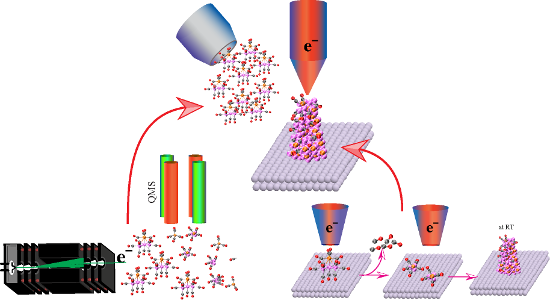
- molecules in FEBID, UHV-surface science studies have been performed, in which nanoscale thin films of precursor molecules adsorbed onto inert substrates were irradiated with 500 eV electrons. Changes in the composition and bonding in the film have been analyzed with X-ray photoelectron spectroscopy (XPS
- monitored in situ by X-ray photoelectron spectroscopy (XPS) and mass spectrometry. Figure 9 shows the evolution of the O 1s, Fe 2p and Ru 3d/C 1s XPS regions of a nanometer-thick film of H2FeRu3(CO)13 adsorbed onto a gold substrate at 213 K, plotted as a function of increasing electron dose. Area analysis


Single-step process to improve the mechanical properties of carbon nanotube yarn
Beilstein J. Nanotechnol. 2018, 9, 545–554, doi:10.3762/bjnano.9.52
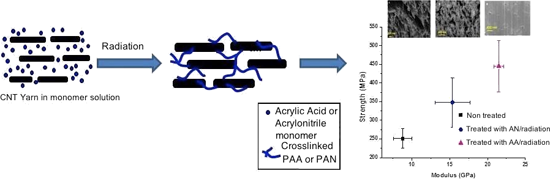
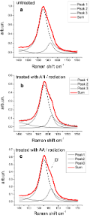
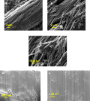
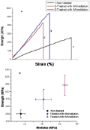
- by X-ray photoelectron spectroscopy (XPS), Raman spectroscopy and scanning electron microscopy (SEM). The best improvement in mechanical properties was achieved on a sample treated with an aqueous solution of AA and subsequent irradiation. CNT yarn treatment with AA enhanced the strength (444.5
- . Characterization Surface chemical composition and bonding were analyzed by X-ray photoelectron spectroscopy (XPS) using a Thermo Scientific K-Alpha instrument. The K-Alpha uses Al Kα X-rays focused to a spot 400 μm in diameter. Emitted photoelectrons were energy analyzed using a 180° double focusing hemispherical




Ultralight super-hydrophobic carbon aerogels based on cellulose nanofibers/poly(vinyl alcohol)/graphene oxide (CNFs/PVA/GO) for highly effective oil–water separation
Beilstein J. Nanotechnol. 2018, 9, 508–519, doi:10.3762/bjnano.9.49
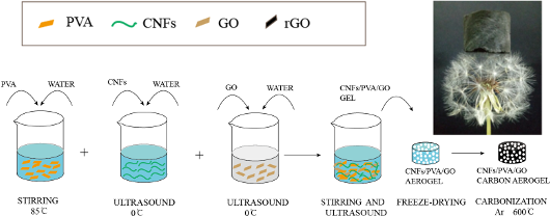
- , Q 50 TA Instruments, USA). The X-ray photoelectron spectrometry spectra results were carried out using X-ray photoelectron spectroscopy (XPS, AXIS UltraDLD, USA). The absorption capacity of the CNF/PVA/GO carbon aerogels was measured by immersing the carbon aerogels into various organic reagents and
- spectrum. After the carbonization treatment (Figure 4f), all characteristic bands of the carbon aerogel are tangential G-bands and the disorder-induced D-band, which are in agreement with the SEM and FTIR results. To further confirm the reduction degree of the GO during the carbonization treatment, X-ray
- photoelectron spectroscopy was carried out (Figure 5a). The higher C/O ratio of rGO revealed the effective reduction during the thiolation reaction, which was verified more clearly in the high-resolution C 1s core-level spectra shown in Figure 5b and 5c. The typical C 1s core-level spectrum was divided into


Influence of the preparation method on the photocatalytic activity of Nd-modified TiO2
Beilstein J. Nanotechnol. 2018, 9, 447–459, doi:10.3762/bjnano.9.43
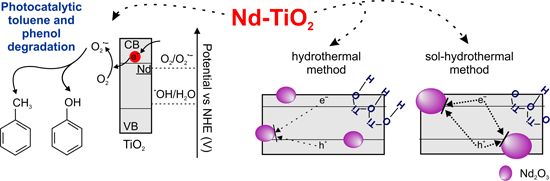
- (SHT) methods. The as-prepared samples were characterized by X-ray diffraction (XRD), BET surface area measurements, scanning electron microscopy (SEM), diffuse reflectance spectroscopy (DRS), luminescence spectroscopy and X-ray photoelectron spectroscopy (XPS). The photocatalytic activity of the
- Instrument PIXIS:256E digital CCD camera, equipped with a SP-2156 Imaging Spectrograph and an Opolette 355LD UVDM tunable laser as the excitation source. X-ray photoelectron spectroscopy (XPS) measurements were used for chemical characterization of the Nd-TiO2 composites surface. The high-resolution (HR) XPS




Engineering of oriented carbon nanotubes in composite materials
Beilstein J. Nanotechnol. 2018, 9, 415–435, doi:10.3762/bjnano.9.41
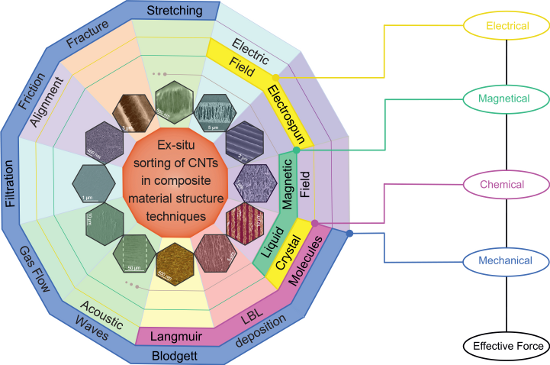
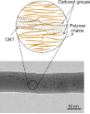
- ]) effects on the application and quality of composites. For this aim, many techniques have been developed such as Raman spectroscopy, Fourier-transforms infrared spectroscopy (FTIR) and X-ray photoelectron spectroscopy (XPS). Raman spectroscopy: Raman spectroscopy is a powerful tool to identify and quantify
- , many researchers indicate that the macroscopic optical properties of CNTs depend on the tube orientation with respect to the direction of beam propagation. Thus, FTIR results can be related to the morphology of the CNT mixture such as bundling, length and straightness [125]. X-ray photoelectron
- spectroscopy: The XPS technique does not explore the whole sample volume but rather provides information about the chemical composition of the CNT surface [144][145]. XPS suffers from surface charge artifacts, so correct sample preparation is crucial to achieve a flat and uncontaminated surface. Despite the








Sugarcane juice derived carbon dot–graphitic carbon nitride composites for bisphenol A degradation under sunlight irradiation
Beilstein J. Nanotechnol. 2018, 9, 353–363, doi:10.3762/bjnano.9.35
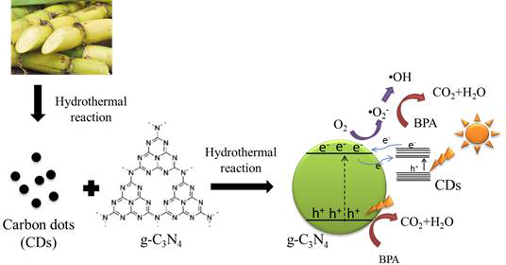
- urea and sugarcane juice as starting materials. The chemical composition, morphological structure and optical properties of the composites and CDs were characterized using various spectroscopic techniques as well as transmission electron microscopy. X-ray photoelectron spectroscopy (XPS) results
- (PL), X-ray photoelectron spectroscopy (XPS), transmission electron microscopy (TEM), etc. The influence of the weight percentage of CDs and a scavenging experiment were carried out to illustrate the potential degradation mechanisms. Overall, the incorporation of CDs into g-C3N4 was efficient towards
- and it was concluded that CDs are favorable for the separation of charge carriers, but the increasing concentration of CDs could lead to inefficiency of charge separation [46]. X-ray photoelectron spectroscopy (XPS) analysis The XPS spectra in Figure 4a–c reveal the surface composition and chemical


BN/Ag hybrid nanomaterials with petal-like surfaces as catalysts and antibacterial agents
Beilstein J. Nanotechnol. 2018, 9, 250–261, doi:10.3762/bjnano.9.27
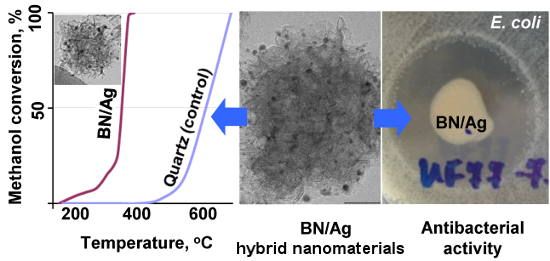
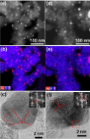
- vapours, and (ii) ultraviolet (UV) decomposition of AgNO3 in a suspension of BN NPs. The hybrid microstructures were studied by high-resolution transmission electron microscopy (HRTEM), high-angular dark field scanning TEM imaging paired with energy dispersion X-ray (EDX) mapping, X-ray photoelectron
- -ray photoelectron spectroscopy (XPS) using an Axis Supra (Kratos Analytical) spectrometer. The powder samples were attached to the carbon tape covered with glue. The maximum lateral dimension of the analyzed area was 0.7 mm. To avoid differential charging of samples, the spectra were acquired with
- spectroscopy (XPS), and infrared spectroscopy (FTIR). They were also characterized in terms of thermal stability, Ag+ ion release, catalytic and antibacterial activities. The materials synthesized via UV decomposition of AgNO3 demonstrated a much better catalytic activity in comparison to those prepared using





Bombyx mori silk/titania/gold hybrid materials for photocatalytic water splitting: combining renewable raw materials with clean fuels
Beilstein J. Nanotechnol. 2018, 9, 187–204, doi:10.3762/bjnano.9.21
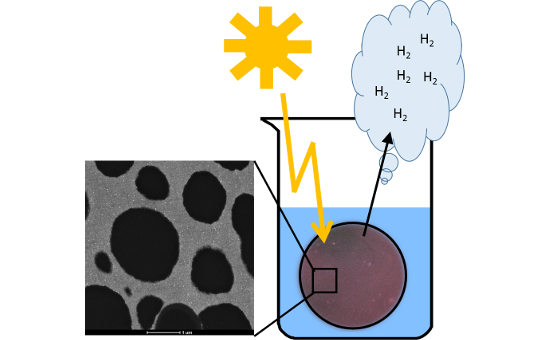
- with carbon using a Polaron CC7650 Carbon Coater, or, alternatively, deposited directly on the carbon glue pad using PLANOCARBON and sputtered with Pd/Au using a SC7620 Mini Sputter Coater. X-ray photoelectron spectroscopy (XPS) measurements were done on a K-Alpha+ XPS instrument (Thermo Fisher


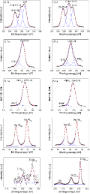
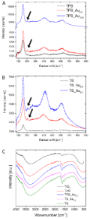


Co-reductive fabrication of carbon nanodots with high quantum yield for bioimaging of bacteria
Beilstein J. Nanotechnol. 2018, 9, 137–145, doi:10.3762/bjnano.9.16
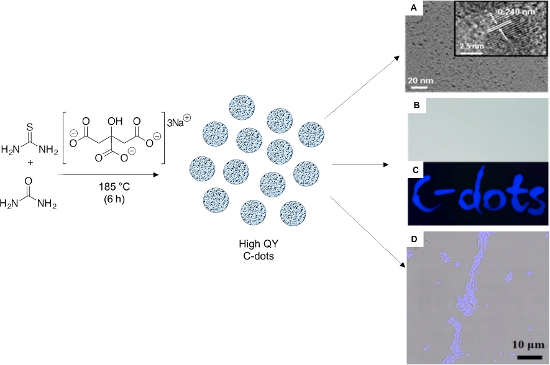
- , leading to high quantum yield C-dots. The obtained C-dots are well-dispersed with a uniform size and a graphite-like structure. A synergistic reduction mechanism was investigated using Fourier transform infrared spectroscopy and X-ray photoelectron spectroscopy. The findings show that using both thiourea
- have additional –NH3+ and sulphur-containing groups, such as S–H and C–S. The weak peak at 1665 cm−1 of Sb indicates an effective reduction of C=O groups. The chemical composition of the C-dots was further characterized by X-ray photoelectron spectroscopy (XPS) (Figure 4). The C 1s spectra can be
- was focused to a spot approximately 2 μm in diameter with a 50× microscope objective; the accumulation time was 10 s. Raman spectra were collected from several randomly selected positions on the substrate. Further evidence of the product composition was inferred by means of X-ray photoelectron


Dry adhesives from carbon nanofibers grown in an open ethanol flame
Beilstein J. Nanotechnol. 2017, 8, 2719–2728, doi:10.3762/bjnano.8.271
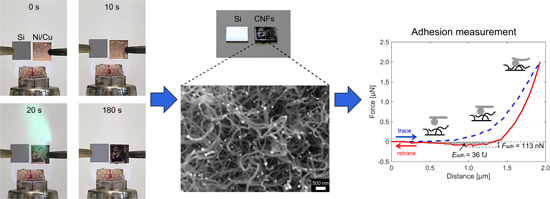
- substrate directly on carbon-coated copper grids (Quantifoil). Raman spectroscopy was performed with an excitation wavelength of 532 nm (Renishaw inVia Raman microscope). X-ray photoelectron spectroscopy (XPS) measurements were performed using a K-Alpha+ XPS instrument (Thermo Fisher Scientific, East


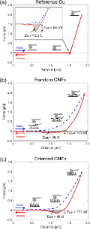
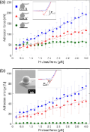
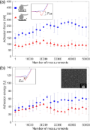
L-Lysine-grafted graphene oxide as an effective adsorbent for the removal of methylene blue and metal ions
Beilstein J. Nanotechnol. 2017, 8, 2680–2688, doi:10.3762/bjnano.8.268
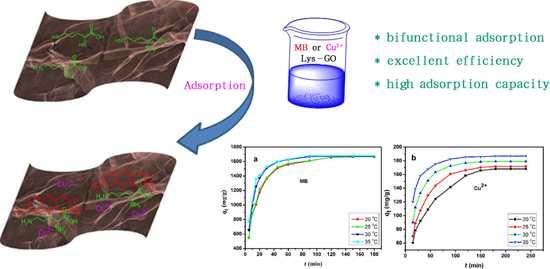
- properties of Lys-GO were characterized using infrared spectrometry, scanning electronic microscopy and X-ray photoelectron spectroscopy. The as-prepared Lys-GO material was systematically investigated in a series of batch adsorption experiments for the removal of methylene blue (MB) and copper ions (Cu2
- Sinopharm Chemical Reagent Co. Ltd. (Shanghai China). The deionized (DI) water used throughout all experiments was purified to 18.2 MΩ·cm with the Millipore system. Lys-GO was characterized by scanning electron microscopy (SEM, AJEOL JSM-6510LV, JAPAN) and X-ray photoelectron spectroscopy (XPS, Kratos XSAM


One-step chemical vapor deposition synthesis and supercapacitor performance of nitrogen-doped porous carbon–carbon nanotube hybrids
Beilstein J. Nanotechnol. 2017, 8, 2669–2679, doi:10.3762/bjnano.8.267
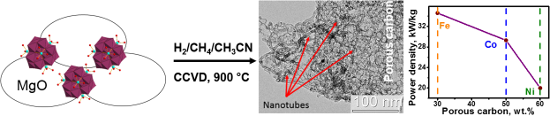
- the nanotube growth in a carbon-containing gas environment. An analysis of the obtained products by means of transmission electron microscopy, thermogravimetry and X-ray photoelectron spectroscopy methods revealed that the catalyst's composition influences the nanotube/porous carbon ratio and
- was studied by means of X-ray photoelectron spectroscopy (XPS) and near-edge X-ray absorption fine structure (NEXAFS) at the facility of the Russian-German beamline at the Berliner Elektronenspeicherring für Synchrotronstrahlung (BESSY II) station. XPS spectra were measured at an energy of
- synthesized using Co/Mo (a), Ni/Mo (b) and Fe/Mo (c) catalysts. The curves have been fitted by three components, assigned to different carbon species. X-ray diffraction patterns of CNx materials synthesized using Co/Mo, Ni/Mo and Fe/Mo catalysts. X-ray photoelectron spectroscopy (XPS) N 1s spectra (a) and





