


Search results
Search for "annealing" in Full Text gives 502 result(s) in Beilstein Journal of Nanotechnology. Showing first 200.
Exploring the photoleakage current and photoinduced negative bias instability in amorphous InGaZnO thin-film transistors with various active layer thicknesses
Beilstein J. Nanotechnol. 2018, 9, 2573–2580, doi:10.3762/bjnano.9.239
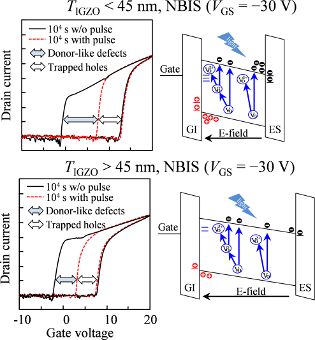
- annealing and N2O plasma treatment [31]; and (ii) inactivating the defects in the semiconductor by means of introducing new elements to form stable chemical bonds with the defects, for example by fluoride ion implantation and nitrogen annealing [32][33]. Conclusion The impact of the TIGZO on the


High-temperature magnetism and microstructure of a semiconducting ferromagnetic (GaSb)1−x(MnSb)x alloy
Beilstein J. Nanotechnol. 2018, 9, 2457–2465, doi:10.3762/bjnano.9.230
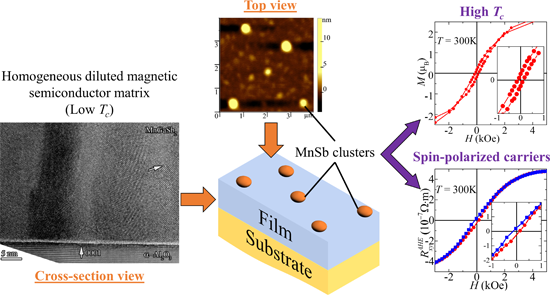
- pristine films correspond to diffraction patterns for the hexagonal compound with the space group P63/mmc. Also, the image analysis showed that the morphology of the film and the lateral dimensions of the film columns remained the same after annealing. It should be noted, that the energy-dispersive X-ray
- microanalysis showed a slight (2–3%) decrease of Mn content in the film volume after annealing. This can be related to the details of sample preparation (e.g., the presence of a thicker damaged layer on the surface) or to the diffusion of Mn atoms. Thus, we can conclude that film annealing causes a phase
- )1−x(MnSb)x films with x = 0.41 and thickness d = 120–135 nm. Electron microscopy data suggests that studied films have single-phase columnar structure in the volume. It was found that annealing process induces a phase transition of hexagonal GaSb matrix into a cubic matrix. AFM and MFM studies



Pinning of a ferroelectric Bloch wall at a paraelectric layer
Beilstein J. Nanotechnol. 2018, 9, 2356–2360, doi:10.3762/bjnano.9.220
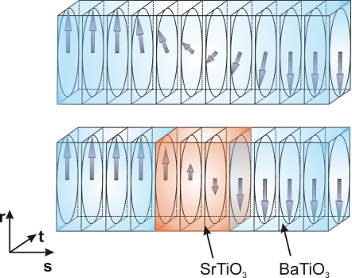
- ferroelectric Bloch walls encountering a layer of paraelectric material by means of phase-field simulation. This technique allows the relaxed domain wall profiles to be predicted by simulated annealing of the system based on numerical solution of material-specific time-dependent Ginzburg–Landau–Devonshire
- the walls in the simulation box, but there were no real constrains introduced there, only the natural limitations resulting from the standard protocol of simulated annealing procedure, governed by the time-dependent Ginzburg–Landau equation. The hysteresis loop shown in Figure 8 has been calculated

![[Graphic 2]](/bjnano/content/inline/2190-4286-9-220-i2.svg?max-width=637&scale=1.18182) -oriented 180-degree domain walls in a) pure BaTiO3, b) BaTiO3–SrTiO3 superla...
-oriented 180-degree domain walls in a) pure BaTiO3, b) BaTiO3–SrTiO3 superla...


Block copolymers for designing nanostructured porous coatings
Beilstein J. Nanotechnol. 2018, 9, 2332–2344, doi:10.3762/bjnano.9.218
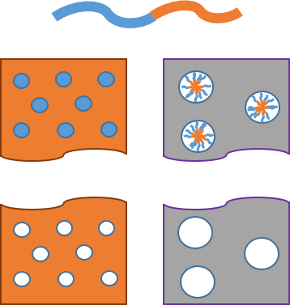
- -organic bond. The aqueous environment favored the extraction of the freely accessible, soluble PEO and Ru-PEO moieties, leaving both PS and Ru-PS moieties to form the nanoporous polymeric matrix. It has been demonstrated that by controlling the annealing procedure and the humidity, it is possible to
- domains are horizontally (parallel) oriented [90]. As reported previously [90], the order achieved in thin films made by PS-b-PEO copolymers depends only on either the solvent casting or the solvent vapor annealing conditions, and not the substrate. Furthermore, the presence of the solvent in these


Two-dimensional photonic crystals increasing vertical light emission from Si nanocrystal-rich thin layers
Beilstein J. Nanotechnol. 2018, 9, 2287–2296, doi:10.3762/bjnano.9.213
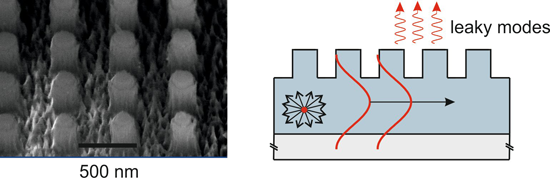
- good qualitative agreement with the measured ones. Fabrication of the samples Firstly, SiNC-rich layers were fabricated by Si ion implantation into a polished silica substrate followed by thermal annealing at 1100 °C (for details see [28]). An implant energy of 400 keV with an implant fluence of 1



Intrinsic ultrasmall nanoscale silicon turns n-/p-type with SiO2/Si3N4-coating
Beilstein J. Nanotechnol. 2018, 9, 2255–2264, doi:10.3762/bjnano.9.210
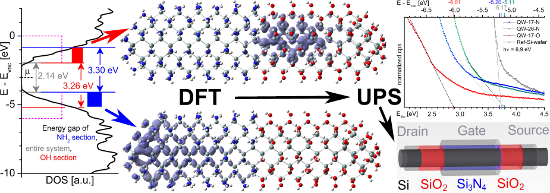
- swiftly loaded into the ultrahigh vacuum (UHV) annealing chamber. All NWell samples were contacted via a lateral metal contact frame on the front surface which was processed by photolithographical structuring, wet-chemical mesa etching and thermal evaporation of Al. The reference Si-wafer was contacted





Lead-free hybrid perovskites for photovoltaics
Beilstein J. Nanotechnol. 2018, 9, 2209–2235, doi:10.3762/bjnano.9.207
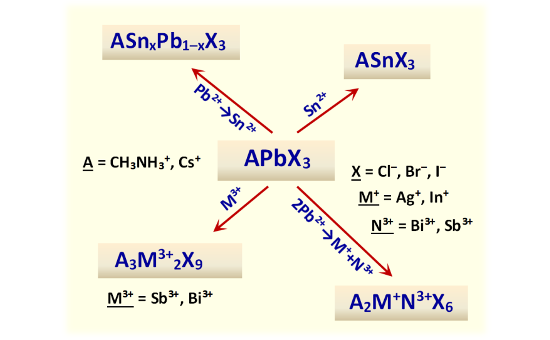
- annealing at 100 °C [162]. The last step yields a much more uniform and homogeneous MABI layer than conventional single-step spin-coating/annealing resulting in almost doubled PCE. Highly compact and pin-hole-free MABI films can be produced by a two-step process including the high-vacuum deposition of BiI3
- MAPI [88]. Cs3Sb2I9 can exist as two polymorphs – a layered (2D) modification built by two-dimensional layers of polyanions and a “dimer” (0D) form built of isolated dioctahedral Sb2I93− anions [89]. The HP formation can be directed to one of these forms by tailoring the temperature of annealing, the
- 0D and 2D modifications forming at 150 and 250 °C, respectively. The layered 2D form demonstrated higher electron and hole mobilities and a better tolerance to defects as compared to the dimer-built 0D polymorph. The 2D-Cs3Sb2I9 HP can be formed by annealing the original metal iodide mixture at 250


Electrospun one-dimensional nanostructures: a new horizon for gas sensing materials
Beilstein J. Nanotechnol. 2018, 9, 2128–2170, doi:10.3762/bjnano.9.202
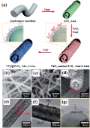
- fabrication strategy for synthesis of SnO2 NFs with a branch-on-stem morphology using electrospinning, oxygen plasma etching, sputtering and annealing. Electrospun PVP NFs were first etched with oxygen plasma to make a hierarchical template. Afterwards, a SnO2 film is deposited by sputtering and the PVP
- template is removed by annealing. The morphology of the NFs is dependent on sputtering time, resulting in uniformly distributed branches all over stem. Jun et al. [77] developed polypyrrole (PPy)-coated SnO2 tube-in-tube structures using single-nozzle electrospinning with a phase separation solvent method
- annealing and calcination [83]. A very low detection limit (9.7 ppb NOx) with an optimal response time (20 s) is achieved with nanocrystalline (5–10 nm) SnO2 NTs at room temperature [141]. Similar behaviour is exhibited by p-type NiO and CuO toward CO and NO2 [111][112]. The gas sensing behaviour also






Spin-coated planar Sb2S3 hybrid solar cells approaching 5% efficiency
Beilstein J. Nanotechnol. 2018, 9, 2114–2124, doi:10.3762/bjnano.9.200
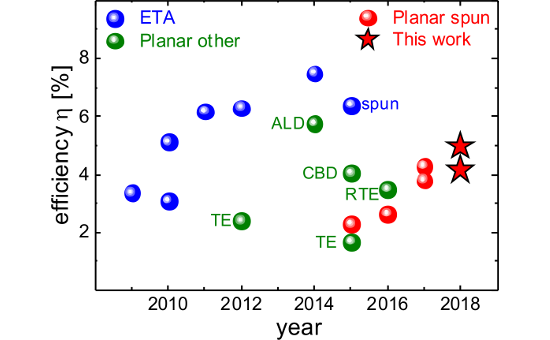
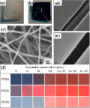
- routes based on different precursors reported in the literature. By studying the film morphology, sub-bandgap absorption and solar cell performance, improved annealing procedures are found and the crystallization temperature is shown to be critical. In order to determine the optimized processing
- annealing process that considerably improves substrate coverage. We compare both process routes in terms of morphology, electronic defects and device performance with a focus on the crystallization step. For optimized annealing conditions, we vary the hole transport material and illustrate a qualitatively
- visible. For better comparison, SEM images of substrates without Sb2S3 can be found in Figure S1, Supporting Information File 1. The morphology is improved by annealing the films at 100 °C directly after spin-coating for approximately 60 minutes prior to thermal decomposition at 180 °C. Figure 2b shows


Phosphorus monolayer doping (MLD) of silicon on insulator (SOI) substrates
Beilstein J. Nanotechnol. 2018, 9, 2106–2113, doi:10.3762/bjnano.9.199
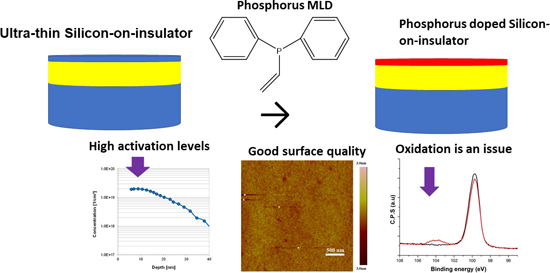
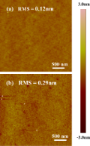
- capping layer the dopant monolayer is essentially “burnt” off during high-temperature annealing. Cap removal was carried out using a standard buffered oxide etch. Atomic force microscopy (AFM) was used to acquire high-resolution topographic images to evaluate the surface quality throughout MLD processing
- × 1020 cm−3. However, due to the inaccuracy of SIMS in this region it is difficult to assess these values. One possible reason for these elevated values may be dopant trapping by SiO2 during the annealing process. The surface oxidation found after functionalization (Figure 6) has the potential to inhibit
- diffusion into the substrate. Other research groups [7][8][18], working on P diffusion doping using a variety of techniques have also seen limitations at 2 × 1019 cm−3. This was further examined by using longer annealing times of 10 and 100 s. Figure S1 (Supporting Information File 1) shows that this leads




Localized photodeposition of catalysts using nanophotonic resonances in silicon photocathodes
Beilstein J. Nanotechnol. 2018, 9, 2097–2105, doi:10.3762/bjnano.9.198
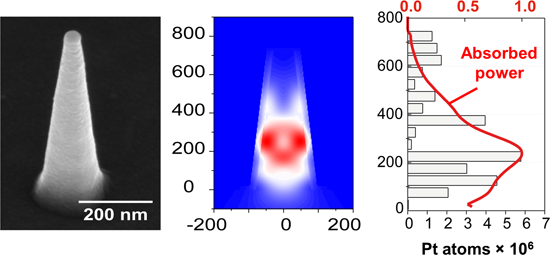
- . Post-annealing of the samples in a tube oven, in air, at 350 °C for 3 h with a ramp of 11 °C/min was needed for the formation of anatase TiO2 (Figure S2, Supporting Information File 1). Photo-electrochemical deposition For the deposition of platinum nanoparticles, a photo-electrochemical cell (Zahner


Metal-free catalysis based on nitrogen-doped carbon nanomaterials: a photoelectron spectroscopy point of view
Beilstein J. Nanotechnol. 2018, 9, 2015–2031, doi:10.3762/bjnano.9.191
- valence band (VB) spectra with high energy resolution [58]. They correlated the change in the DOS to the different types of nitrogen functionalities incorporated in the carbon matrix, using X-ray photoemission spectroscopy and in situ annealing. Specifically, it was shown that through annealing at
- ion kinetic energy or plasma parameters as well as the annealing conditions [81][82]. Recently, in accordance with the theoretical report of Krasheninnikov et al. [83], Scardamaglia et al. showed that for the doping of carbon nanostructures in a suspended geometry, the use of energetic ions with
- , Scardamaglia et al. [37] showed that the sp2-character of the material is maintained or easily recovered through thermal annealing (Figure 6). A nitrogen atom can be hosted in the hexagonal carbon network in many forms. The three most common configurations are pyridinic (N1), pyrrolic (N2) and graphitic (N3




Recent highlights in nanoscale and mesoscale friction
Beilstein J. Nanotechnol. 2018, 9, 1995–2014, doi:10.3762/bjnano.9.190
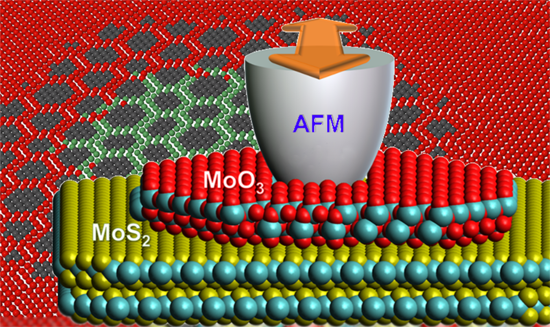
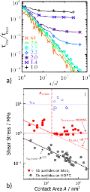
- annealing, dehalogenation as well as cyclodehydrogenation can be achieved, which leads to clean, defect-free GNRs. Therefore, ideal contacts, free of contaminants, can be grown on the gold surface. The GNRs are observed to move preferentially in the [−101] direction, where the moiré pattern forming with Au


Electromigrated electrical optical antennas for transducing electrons and photons at the nanoscale
Beilstein J. Nanotechnol. 2018, 9, 1964–1976, doi:10.3762/bjnano.9.187
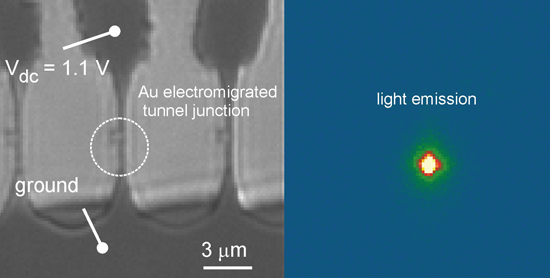
- momentary rise of the conductance, which we attribute to the desorption of surface contaminants as well as a temperature annealing of the constriction due to dissipation of the electrical power in this area. This effect can be traced in Figure 2a at around t = 150 s. An example of another temperature effect
- . We substantiate this hypothesis by the temporary improvement of the conductance at t = 150 s before the onset of electromigration discussed in Figure 2a. The SEM image of Figure 2c is also providing additional confirmation of a partial annealing of the constriction. In the area marked “annealed zone
- connections. The areas colored in red are made by electron-beam lithography, the regions in blue are those fabricated by photolithography. (a) Temporal extract of the electromigration sequence featuring the effect of partial annealing, Joule heating and onset of electromigration on the evolution of the


![[Graphic 32]](/bjnano/content/inline/2190-4286-9-187-i38.svg?max-width=637&scale=1.18182) and
and ![[Graphic 33]](/bjnano/content/inline/2190-4286-9-187-i39.svg?max-width=637&scale=1.18182) are...
are...


Defect formation in multiwalled carbon nanotubes under low-energy He and Ne ion irradiation
Beilstein J. Nanotechnol. 2018, 9, 1951–1963, doi:10.3762/bjnano.9.186
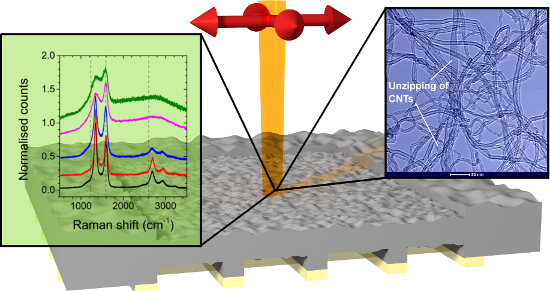
- , ion irradiation can also be used to modify the electronic properties. The presence of defects can increase the resistivity by several orders of magnitude [2][16]. When combining low-fluence ion irradiation with subsequent annealing, the electrical conductivity of SWCNTs can be improved [17]. The



A differential Hall effect measurement method with sub-nanometre resolution for active dopant concentration profiling in ultrathin doped Si1−xGex and Si layers
Beilstein J. Nanotechnol. 2018, 9, 1926–1939, doi:10.3762/bjnano.9.184
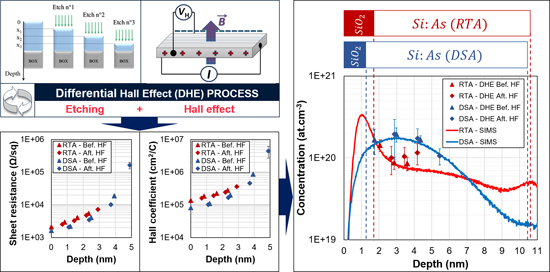
- thick SiGe test structure fabricated by CVD and uniformly doped in situ during growth. The developed method is finally applied to the investigation of dopant activation achieved by advanced annealing methods (including millisecond and nanosecond laser annealing) in two material systems: 6 nm thick
- mobility; contact resistance; differential Hall effect; dopant activation; fully depleted silicon on insulator (FDSOI); laser annealing; sub-nanometre resolution; Introduction The research efforts made throughout the last decades have made it possible to keep the momentum for a continuous miniaturization
- increase of the active dopant concentration at the surface of the source/drain material (usually Si or SiGe) is a key factor for obtaining a resistance reduction [6], and several process solutions have been proposed to this purpose, involving advanced implanting or annealing techniques [7]. Within this


Electrical characterization of single nanometer-wide Si fins in dense arrays
Beilstein J. Nanotechnol. 2018, 9, 1863–1867, doi:10.3762/bjnano.9.178
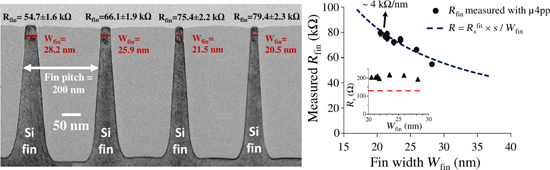
- implantation and annealing treatment. This increase in sheet resistance when going to nanoscale elongated geometries was expected and understood to originate from the presence of interface states as well as defects at the fin sidewalls [6]. Conclusion This paper demonstrates the capability of μ4pp to


Friction force microscopy of tribochemistry and interfacial ageing for the SiOx/Si/Au system
Beilstein J. Nanotechnol. 2018, 9, 1647–1658, doi:10.3762/bjnano.9.157
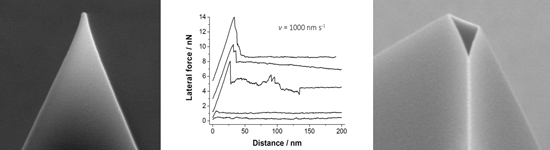
- cantilevers before use. A Au(111) single crystal (MaTeck GmbH, Jülich, Germany) was prepared by repeating a sputter–heating cycle (20 min Ar sputtering at 25 μA/1 keV followed by 1 h annealing at 850 °C) until a sharp (111) pattern was observed by low-energy electron diffraction (LEED). The n-Si(100) sample




Light extraction efficiency enhancement of flip-chip blue light-emitting diodes by anodic aluminum oxide
Beilstein J. Nanotechnol. 2018, 9, 1602–1612, doi:10.3762/bjnano.9.152
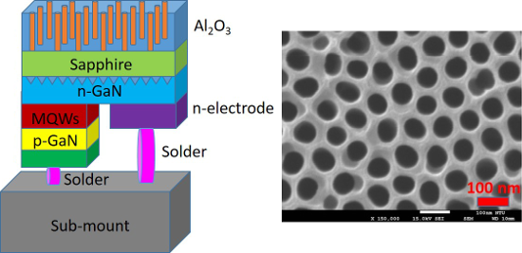
- traditional LED by producing a TiO2 microstructure array on p-GaN through dipping and rapid convective deposition and using noncrystalline TiO2 and anatase TiO2 with a diameter of 520 nm [13]. Huang et al. used Zn and Mg for ion implantation at the GZO thin layer and then adopted rapid thermal annealing to


Absence of free carriers in silicon nanocrystals grown from phosphorus- and boron-doped silicon-rich oxide and oxynitride
Beilstein J. Nanotechnol. 2018, 9, 1501–1511, doi:10.3762/bjnano.9.141
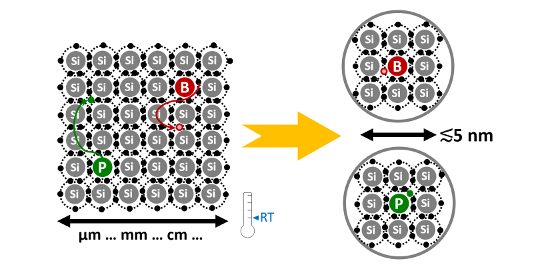
- of thermal activation via, e.g., a high-temperature annealing process a significant fraction of potential dopants will remain on interstitial sites [3]. The decreasing number of Si–Si bonds per Si NC atom is a crucial point for the increase of dopant formation energies [4]. These factors impede
- broad overview of all available techniques and approaches [11]. Here, we focus on the Si NC growth via phase separation of PECVD-deposited, P- or B-doped silicon-rich oxide thin films via annealing at high temperatures. Additionally, we focus on comparatively lowly doped samples (on the order of 0.1–1
- incorporation efficiency of B in Si-rich oxides is approximately one order of magnitude lower than that of P. Since SIMS cannot reveal the distribution of the dopants in the heterogeneous sample system of Si NCs and SiO2 after annealing, atom probe tomography (APT) is used. APT was demonstrated to be a powerful


Nanoporous silicon nitride-based membranes of controlled pore size, shape and areal density: Fabrication as well as electrophoretic and molecular filtering characterization
Beilstein J. Nanotechnol. 2018, 9, 1390–1398, doi:10.3762/bjnano.9.131
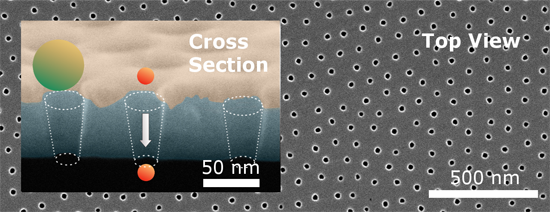
- silicon dioxide layers during rapid thermal annealing [13]. This fabrication offers the advantage of full compatibility to semiconductor fabrication techniques. While pore distance and pore size can be controlled within acceptable limits, the generated pores are random in position and the membrane
- of the micelle-grown Au NPs [35][40]. Up to a diameter of about 30 nm this process can be done in a single step. The spherical shape can be improved by additional annealing [35]. These Au NPs are then applied as an etching mask in a RIE process that was optimized to remove Si and Si compounds (oxide
- of the resulting membranes, may deteriorate their permeability. It turned out, however, that fluorocarbon surface contaminations could be removed by annealing in ultra-high vacuum (10−8 mbar) at 500 °C for 120 min (details are given in Supporting Information File 1). For membrane C with the smallest


Heterostuctures of 4-(chloromethyl)phenyltrichlorosilane and 5,10,15,20-tetra(4-pyridyl)-21H,23H-porphine prepared on Si(111) using particle lithography: Nanoscale characterization of the main steps of nanopatterning
Beilstein J. Nanotechnol. 2018, 9, 1211–1219, doi:10.3762/bjnano.9.112
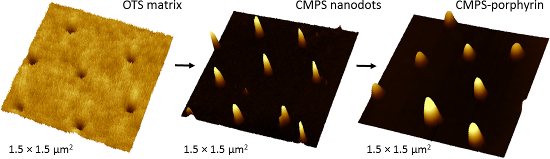
- drying, 10 µL of monodisperse silica microspheres in water was deposited on the clean silicon substrates and dried in air to produce a surface film of Si spheres. The substrate and dried microspheres were placed in an oven at 150 °C for 20 h. The annealing heating step was used to temporarily solder the


P3HT:PCBM blend films phase diagram on the base of variable-temperature spectroscopic ellipsometry
Beilstein J. Nanotechnol. 2018, 9, 1108–1115, doi:10.3762/bjnano.9.102
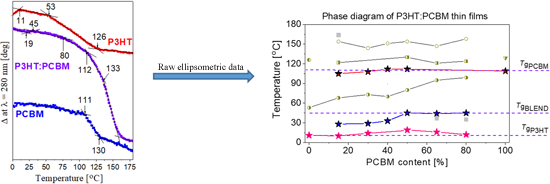
- post-deposition treatments, e.g., heat treatment [20][21]. One large branch of studies on OPV devices based on thin films of polymer:fullerene blend active layers deals with the optimization of their power conversion efficiency by applying thermal annealing [8]. Remarkably, it has been proven that the
- . They also related the value of the optimum annealing temperature for a given sample to their content of PCBM. What is important, these results were confirmed using two different experimental methods that allow for the determination of Tg. Namely, dynamic mechanical thermal analysis (DMTA) and


Room-temperature single-photon emitters in titanium dioxide optical defects
Beilstein J. Nanotechnol. 2018, 9, 1085–1094, doi:10.3762/bjnano.9.100
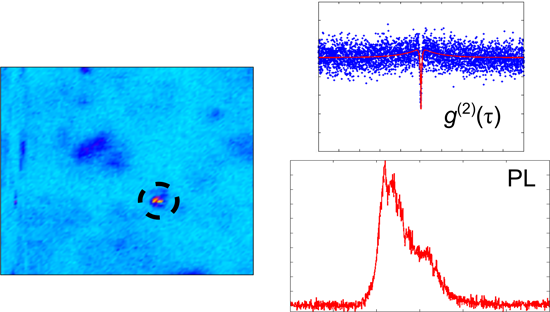
- treatment is also required. To the best of our knowledge, we can only conclude that we did not observe single-photon emission in some morphologies probably due to different fabrication methods and annealing temperatures. It can be inferred that for these two morphologies there is a pure non-radiative decay
- mechanism. This topic is beyond the scope of the current work, which focusses on the optical regime and single-photon emission. Morfa et al. [7] observed a dependence of the creation of defects in ZnO nanoparticles on the annealing temperature. Single-photon emission in TiO2 thin films The a-450 °C-TiO2
- single-photon emitting defects represent 5% of the total number of fluorescing features investigated. A previous work by Morfa et al. [7] on single-photon emitting defects in ZnO films showed that the annealing temperature plays an important role in the creation of defects. In our work, the films that


Single-crystalline FeCo nanoparticle-filled carbon nanotubes: synthesis, structural characterization and magnetic properties
Beilstein J. Nanotechnol. 2018, 9, 1024–1034, doi:10.3762/bjnano.9.95
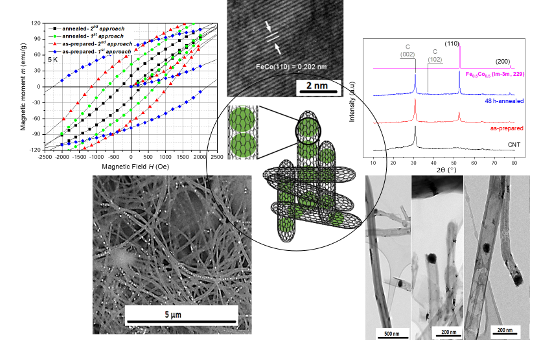
- of the filling inside the CNTs and was confirmed by quantitative measurements performed by TGA as will be shown later (see Figure 6). It is important to emphasize the effect of annealing on the growth of the particles. For the as-prepared samples (i.e., only reduced, Figure 1a and 1b), different
- morphologies and particle sizes for the filling materials have been observed (small, large spheres, particle chains as indicated by arrows in Figure 1b), whereas after an additional heat treatment step (annealing at 600 °C for 48 h), a significant growth in the particles size was observed. This observation was
- treatment step. We attribute the observation of a pronounced increase in particle size to the prolonged heat treatment (i.e., annealing for 48 h), which provides a significantly higher amount of thermal energy. This increases the probability of particle merging, which in turn leads to particle growth. TEM





