


Search results
Search for "catalyst" in Full Text gives 384 result(s) in Beilstein Journal of Nanotechnology. Showing first 200.
Synthesis of a MnO2/Fe3O4/diatomite nanocomposite as an efficient heterogeneous Fenton-like catalyst for methylene blue degradation
Beilstein J. Nanotechnol. 2018, 9, 1940–1950, doi:10.3762/bjnano.9.185
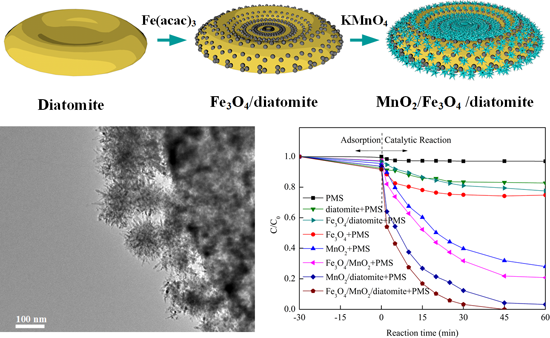
- nanocomposite is synthesized and then used as heterogeneous Fenton-like catalyst to degrade the organic pollutant methylene blue (MB) with the activation of PMS. The characterization results show that the Fe3O4 nanoparticles and nanoflower-like MnO2 are evenly distributed layer-by-layer on the surface of
- diatomite, which can be readily magnetically separated from the solution. The as-prepared catalyst, compared with other Fenton-like catalysts, shows a superb MB degradation rate of nearly 100% in 45 min in the pH range of 4 to 8 and temperature range of 25 to 55 °C. Moreover, the nanocomposite shows a good
- mineralization rate of about 60% in 60 min and great recyclability with a recycle efficiency of 86.78% after five runs for MB. The probable mechanism of this catalytic system is also proposed as a synergistic effect between MnO2 and Fe3O4. Keywords: diatomite; Fenton-like oxidation; hybrid catalyst; iron(II,III


Improving the catalytic activity for hydrogen evolution of monolayered SnSe2(1−x)S2x by mechanical strain
Beilstein J. Nanotechnol. 2018, 9, 1820–1827, doi:10.3762/bjnano.9.173
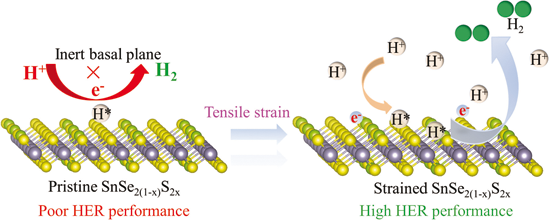
- ; however, the high cost and limited resources of these types of catalyst restrict their usage in the mass production of hydrogen [8][9][10]. Therefore, exploring non-noble and earth-abundant elements as catalysts for hydrogen production is one of the most promising pathways for the mass production of
- ], electronics [28], and catalysis [29], as well as in the fabrication of solar cells and film electrodes [30]. A good electro-catalyst for HER should have sufficient active sites for catalysis. Furthermore, because electrons participate in the HER process, an ideal catalyst for HER should have good electronic
- conductivity. Tuning the band structure of the catalyst is important for improving the HER efficiency. It was reported that the band structure and carrier mobility of monolayer MX2 can be tuned by substitution of M with M' atoms or X with X' atoms to form monolayer MxM'(1−x)X2 or MX2xX'2(1−x) alloys [31][32


SO2 gas adsorption on carbon nanomaterials: a comparative study
Beilstein J. Nanotechnol. 2018, 9, 1782–1792, doi:10.3762/bjnano.9.169
- presence of few MWNTs and other catalyst impurities. The presence of these foreign particles might be one of the reasons for the observed low SO2 uptake in SWNTs. In Figure 5c, the SO2 adsorption at 3 bar is plotted as a function of the specific surface area of the adsorbent. At this pressure, CNHs, MWNTs
- vapor deposition [56][57]. The bimetallic catalyst system for the VACNT growth was prepared by depositing a thin layer of aluminum (13–15 nm) over the substrate through thermal evaporation in a vacuum of 10−6 mbar, followed by the sputter deposition of 1.2 nm of an iron catalyst layer. The synthesis was


Controllable one-pot synthesis of uniform colloidal TiO2 particles in a mixed solvent solution for photocatalysis
Beilstein J. Nanotechnol. 2018, 9, 1715–1727, doi:10.3762/bjnano.9.163
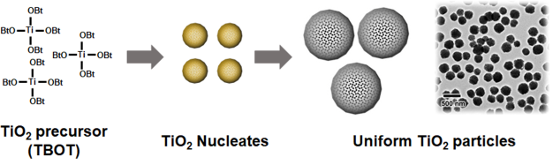
- and the catalyst activity can be optimized for further enhanced activity. To the best of our knowledge, this is first report on the synthesis and systemic study of uniform colloidal TiO2 particles using sol–gel synthesis in mixed solvent conditions using ethanol–acetonitrile. Results and Discussion
- . Before UV-light irradiation, the reaction mixture containing the catalyst and RhB was stirred for 30 min to ensure saturation of the RhB adsorption on the surface of the TiO2 particles. All of the TiO2 catalysts showed a similar adsorption capacity in the range of ≈9% of C/C0. In the blank experiment
- (i.e., no catalyst), the C/C0 of RhB was decreased by only ≈2% after UV–vis irradiation for 60 min, while the degradation of RhB significantly improved when the TiO2 catalysts were used. The TiO2 sample calcined at 350 °C (TiO2-350) exhibited the lowest catalytic activity among all of the catalysts




Toward the use of CVD-grown MoS2 nanosheets as field-emission source
Beilstein J. Nanotechnol. 2018, 9, 1686–1694, doi:10.3762/bjnano.9.160
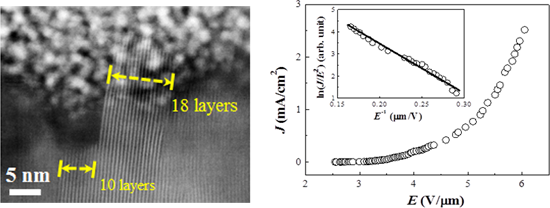
- active and are thus highly preferable as a catalyst surface over the relatively inert MoS2 basal plane [27]. Figure 4c shows the atomic structure of the MoS2 NSs with some edge dislocations (labelled as “T”) along the c-axis. Moreover, the interplanar distances are ca. 0.62 and ca. 0.30 nm, corresponding



Friction force microscopy of tribochemistry and interfacial ageing for the SiOx/Si/Au system
Beilstein J. Nanotechnol. 2018, 9, 1647–1658, doi:10.3762/bjnano.9.157
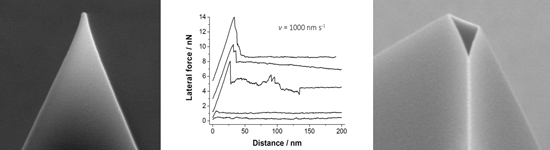
- Cr that is used in Au-coated tips as thin adhesive layer could play a role in the chemical activation and act as a catalyst. Strong friction was observed as sign of reactive tip–sample interactions after removal of passivating layers. The further development of friction after tip activation depended




Sheet-on-belt branched TiO2(B)/rGO powders with enhanced photocatalytic activity
Beilstein J. Nanotechnol. 2018, 9, 1550–1557, doi:10.3762/bjnano.9.146
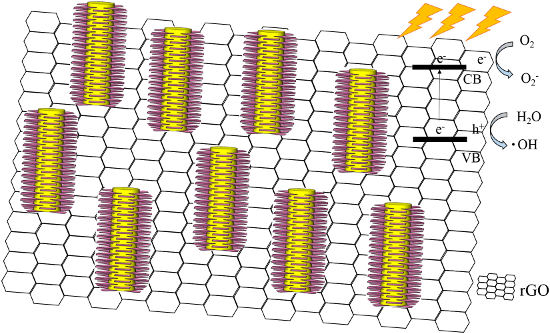
- under UV light illumination for up to 5 cycles. The slightly decreased efficiency can be attributed to the catalyst loss during the centrifugation process after each cycle. The reaction rate constants were normalized with the corresponding specific surface area of the photocatalysts to see whether or


Cr(VI) remediation from aqueous environment through modified-TiO2-mediated photocatalytic reduction
Beilstein J. Nanotechnol. 2018, 9, 1448–1470, doi:10.3762/bjnano.9.137
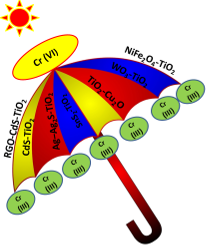
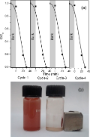
- overlap of the TiO2 band with that of Fe3O4 and (iii) efficient separation and recyclability of the catalyst under application of an external magnetic field because of the presence of magnetic Fe3O4. Therefore, the composite photocatalysts exhibited a higher rate of photoreduction of Cr(VI) as compared to
- %. Photocatalytic reduction of chromate ions under sunlight over CuBi2O4/TiO2 has also been reported by Lahamar et al. A remarkable performance of 98% reduction is obtained in less than 4 h for a Cr(VI) concentration of 30 mg L−1 at pH ≈4 by using 1 g L−1 catalyst. The kinetics of chromate photoreduction is well


Ag2WO4 nanorods decorated with AgI nanoparticles: Novel and efficient visible-light-driven photocatalysts for the degradation of water pollutants
Beilstein J. Nanotechnol. 2018, 9, 1308–1316, doi:10.3762/bjnano.9.123
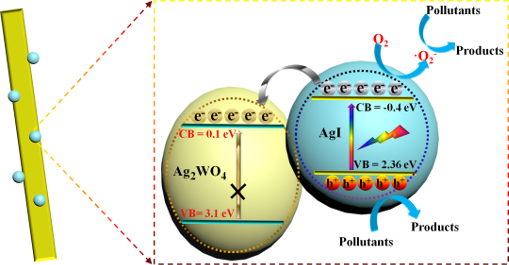
- , and UV–vis DRS were used to investigate the morphology and optical properties of the as-prepared AgI/Ag2WO4 catalyst. With AgI acting as the cocatalyst, the resulting AgI/Ag2WO4 heterostructure shows excellent performance in degrading toxic, stable pollutants such as rhodamine B (RhB), methyl orange
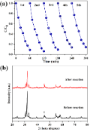
- cycling photocatalytic degradation of RhB was performed. As shown in Figure 8a, no apparent activity decrease was observed after five successive runs, demonstrating the good stability of the catalyst. Furthermore, the XRD pattern of the used 0.3AgI/Ag2WO4 is similar to that of the fresh one (Figure 8b
- exhibiting remarkable photocatalytic performance has been prepared via a facile method. This resulting AgI/Ag2WO4 catalyst exhibits exceptionally high and stable photocatalytic activity for the degradation of RhB, MO and 4-CP due to its extended light absorption range and the formation of a heterojunction




Understanding the performance and mechanism of Mg-containing oxides as support catalysts in the thermal dry reforming of methane
Beilstein J. Nanotechnol. 2018, 9, 1162–1183, doi:10.3762/bjnano.9.108
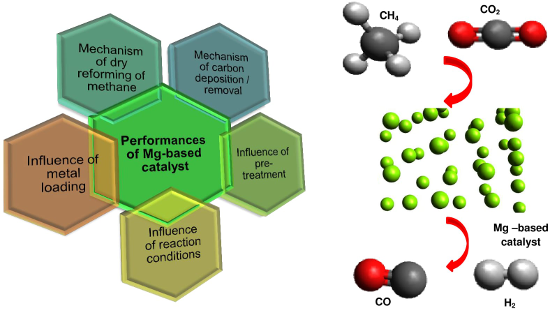
- (synthetic gas) production and co-utilization of methane and carbon dioxide, which are the main greenhouse gases. Magnesium is commonly applied in a Ni-based catalyst in DRM to improve catalyst performance and inhibit carbon deposition. The aim of this review is to gain better insight into recent
- catalyst surface, which consequently facilitates high catalytic activity and low catalyst deactivation. The mechanism of DRM and carbon formation and reduction are reviewed. This work further explores how different constraints, such as the synthesis method, metal loading, pretreatment, and operating
- conditions, influence the dry reforming reactions and product yields. In this review, different strategies for enhancing catalytic activity and the effect of metal dispersion on Mg-containing oxide catalysts are highlighted. Keywords: carbon formation; catalyst development; dry reforming of methane






Single-crystalline FeCo nanoparticle-filled carbon nanotubes: synthesis, structural characterization and magnetic properties
Beilstein J. Nanotechnol. 2018, 9, 1024–1034, doi:10.3762/bjnano.9.95
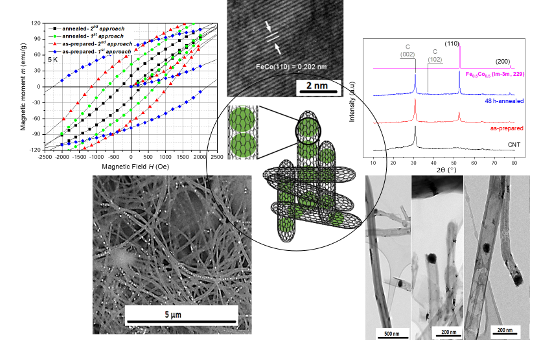
- nanotubes are heat treated to 3000 °C. This process reduces the iron content (i.e., the catalyst) to a very low level (<100 ppm) [41][42][43]. The material Fe50Co50@CNT has been prepared by the following two filling approaches. The first approach is an extension of a reported solution filling approach for


Bioinspired self-healing materials: lessons from nature
Beilstein J. Nanotechnol. 2018, 9, 907–935, doi:10.3762/bjnano.9.85

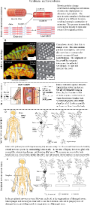







Facile synthesis of a ZnO–BiOI p–n nano-heterojunction with excellent visible-light photocatalytic activity
Beilstein J. Nanotechnol. 2018, 9, 789–800, doi:10.3762/bjnano.9.72
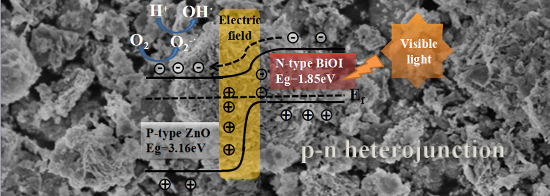
- unsatisfactory, while no concentration difference is visible without the catalyst, demonstrating the self-degradation of RhB is negligible. All of the ZnO–BiOI heterostructured nanocomposites exhibit remarkably improved photocatalytic activity in terms of both the efficiency and the degradation degree for 100
- shows the physical color of the samples. (b) The plot of (αhν)2 vs photon energy (hν). Photocatalytic activity under visible light illumination. (a) The rhodamine B (RhB) solution degradation of the as-prepared samples with sample with no catalyst and P25 as comparison. (b) The linear fitting of the


A review of carbon-based and non-carbon-based catalyst supports for the selective catalytic reduction of nitric oxide
Beilstein J. Nanotechnol. 2018, 9, 740–761, doi:10.3762/bjnano.9.68
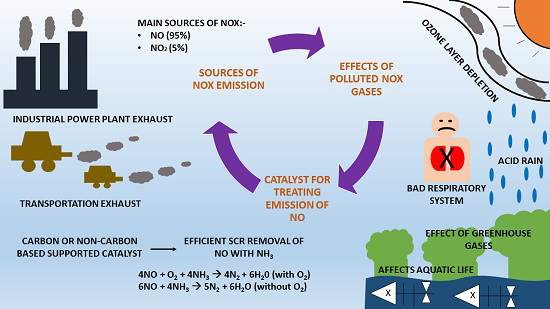
- catalyst supports for nitric oxide (NO) removal through selective catalytic reduction (SCR) with ammonia are examined in this review. A number of carbon-based materials, such as carbon nanotubes (CNTs), activated carbon (AC), and graphene (GR) and non-carbon-based materials, such as Zeolite Socony Mobil–5
- (ZSM-5), TiO2, and Al2O3 supported materials, were identified as the most up-to-date and recently used catalysts for the removal of NO gas. The main focus of this review is the study of catalyst preparation methods, as this is highly correlated to the behaviour of NO removal. The general mechanisms
- involved in the system, the Langmuir–Hinshelwood or Eley–Riedeal mechanism, are also discussed. Characterisation analysis affecting the surface and chemical structure of the catalyst is also detailed in this work. Finally, a few major conclusions are drawn and future directions for work on the advancement
Cyclodextrin-assisted synthesis of tailored mesoporous silica nanoparticles
Beilstein J. Nanotechnol. 2018, 9, 693–703, doi:10.3762/bjnano.9.64
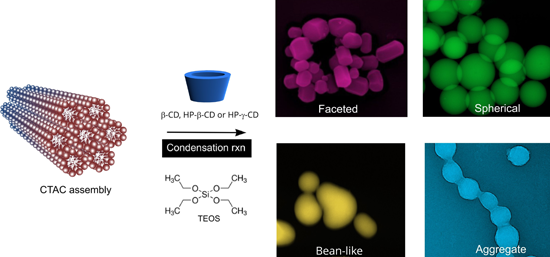
- structures were produced using a combination of CTAB surfactant, ethylene glycol solvent and NH4OH as the catalyst. MSNs were also reported in branched forms using organosilane precursors in a one-pot, CTAB-directed sol–gel synthesis [17]. For such a system, increasing the ethyl acetate concentration led to


Perovskite-structured CaTiO3 coupled with g-C3N4 as a heterojunction photocatalyst for organic pollutant degradation
Beilstein J. Nanotechnol. 2018, 9, 671–685, doi:10.3762/bjnano.9.62
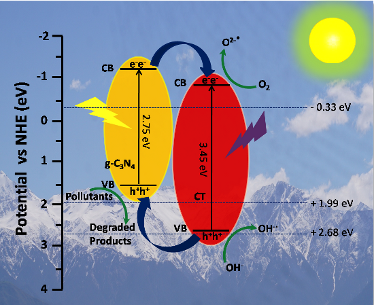
- the UV–vis spectrophotometer. The photocatalytic degradation percentage (%) of the catalyst was calculated from the following relation [41][42]: Degradation (%) = (1 − C/C0) – 100, where C0 refers to the absorbance of RhB after adsorption equilibrium, achieved prior to the light irradiation, and C is
- quantify the amount of dye degraded. The time-dependent absorption spectra of RhB solutions degraded by the CTCN heterojunction photocatalyst under different light sources are depicted in Figure 9a–c and those for bare g-C3N4 and CT, including the control experiments performed without catalyst, are
- the chromophore of RHB during the degradation process. Control experiments for the degradation of RhB without any catalyst reflect its high stability under different light irradiation conditions, as no significant decrease in the absorption was observed. Figure 9d–f represents the degradation


Mechanistic insights into plasmonic photocatalysts in utilizing visible light
Beilstein J. Nanotechnol. 2018, 9, 628–648, doi:10.3762/bjnano.9.59
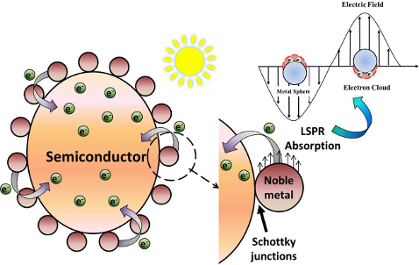
- the LSPR feature in the Cu7S4@Pd catalyst. They found that Pd NPs showed weak LSPR absorption at 808, 980 and 1500 nm, while Cu7S4 exhibited obvious electrical field enhancement at these wavelengths; thus Cu7S4 was found to be the dominant contributor to the LSPR feature [111]. Using a similar
- drops of catalyst (ammonium dimolybdate) for the oxidation of I− by H2O2. Thus, I3− was obtained in the solution and was measured at 360 nm. Alternatively, when Ti4+ ions were used as indicators, yellow-coloured metal complexes with H2O2 were formed and examined at 410 nm. [118]. The DPD method is based
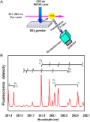
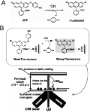
- - acetic acid mediated with horseradish peroxidase as a catalyst. The complete reaction scheme is explained in Figure 13a [115]. The intensity of the generated fluorescence is analysed using a fluorescence spectrophotometer with an emission wavelength of 408.5 nm excited at 316.5 nm. The concentration of





Facile synthesis of ZnFe2O4 photocatalysts for decolourization of organic dyes under solar irradiation
Beilstein J. Nanotechnol. 2018, 9, 436–446, doi:10.3762/bjnano.9.42
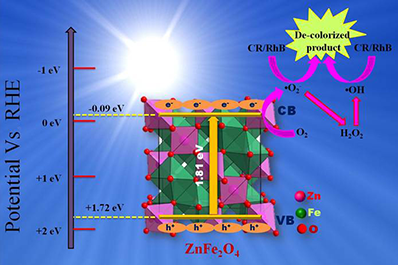
- step, the adsorption ability of the catalyst was studied under dark conditions for 30 min. It was confirmed that the adsorption effect of the catalyst is negligible regarding the decolourization of a Congo red solution. Then 0.02 g of photocatalyst was used to decolourize 20 mL of 10 ppm of Congo red
- molecules in the solution (•O2−, •HO2, H2O2). TA readily reacts with •OH and forms 2-hydroxyterephthalic acid (HTA) via the reaction shown in Scheme 1. In a typical procedure, 5 mM of TA was mixed with the required amount of catalyst and an equimolar ratio of NaOH, as TA is not soluble in acidic or neutral
- −5 M solution of nitroblue tetrazolium (NBT) was taken as molecular probe. 0.01 g of ZFO was dispersed in 10 mL of the prepared NBT solution and irradiated under solar light for 1 h. After reaction, the catalyst was separated and the solution analysed in an UV spectrophotometer. Figure 11c shows the


Engineering of oriented carbon nanotubes in composite materials
Beilstein J. Nanotechnol. 2018, 9, 415–435, doi:10.3762/bjnano.9.41
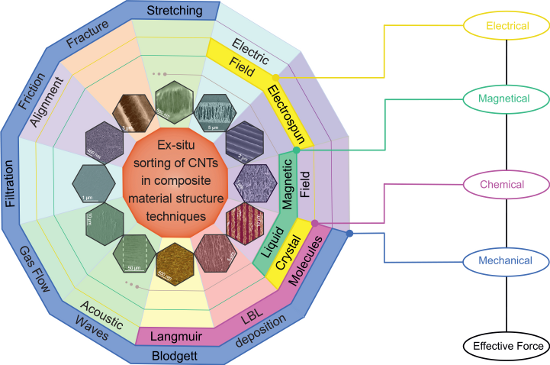
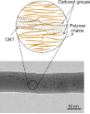
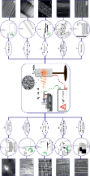
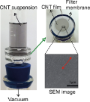
- of CNT nanocomposites could be fulfilled [14][27][28][29][30]. In terms of processing techniques, the arrangement and alignment of CNTs in a matrix of composite materials are divided in two categories. In the first category alignment is arranged during growth, where the regular placement of catalyst
- of a wide range of materials, spraying can be combined with other methods to fabricate composite materials. In this method, a sheet of CNTs is produced by chemical vapor deposition (CVD) on a SiO2/Si substrate that is coated with a very thin layer of iron as a catalyst. The CNT rows have been grown
- may reduce the required magnetic field [108][109][110]. Aleman et al. have recently reported the ferromagnetism of residual catalysts in CVD growth of CNTs. This work shows that adjustment of the size and shape of the catalyst nanoparticle can control the CNT ferromagnetism behavior. This phenomenon








Photocatalytic and adsorption properties of TiO2-pillared montmorillonite obtained by hydrothermally activated intercalation of titanium polyhydroxo complexes
Beilstein J. Nanotechnol. 2018, 9, 364–378, doi:10.3762/bjnano.9.36
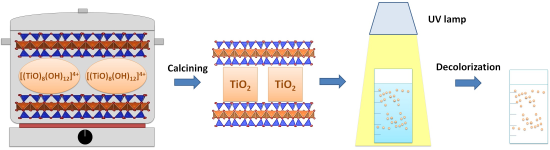
- the performance of the catalyst [53]. In addition, anatase and rutile phase ratio can play an important role, which, as noted in [54], can significantly affect the rate of photocatalytic decomposition. While interpreting the photocatalytic activity of TiO2-pillared clays one should keep in mind the






BN/Ag hybrid nanomaterials with petal-like surfaces as catalysts and antibacterial agents
Beilstein J. Nanotechnol. 2018, 9, 250–261, doi:10.3762/bjnano.9.27
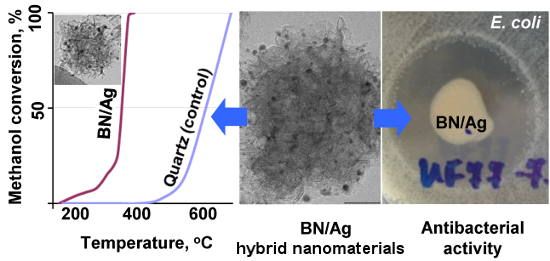
- these BN NPs are thought to demonstrate advanced characteristics as catalyst supports. Also, colloidal silver is effective against different types of microorganisms, therefore BN/Ag HNMs are of great interest as antibacterial agents. For example, it has been reported by Gao et al. [10] that the
- -BN compared with commonly used catalyst supports (i.e., SiO2, Al2O3, etc.). An important question that needs additional analysis is the role of catalyst support morphology. In contrast to the previous works, that were focused on the catalytic activity of 2D BN nanosheets decorated with Ag NPs during
- NPs demonstrated a possibility to create an “eternal catalyst”. The best catalytic characteristics (100% methanol conversion at 350 °C) were achieved for the UV BN/Ag HNMs without preliminary activation stage. Our results also confirmed that both types of BN/Ag HNMs possess a strong antibacterial



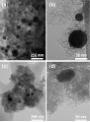


Bombyx mori silk/titania/gold hybrid materials for photocatalytic water splitting: combining renewable raw materials with clean fuels
Beilstein J. Nanotechnol. 2018, 9, 187–204, doi:10.3762/bjnano.9.21
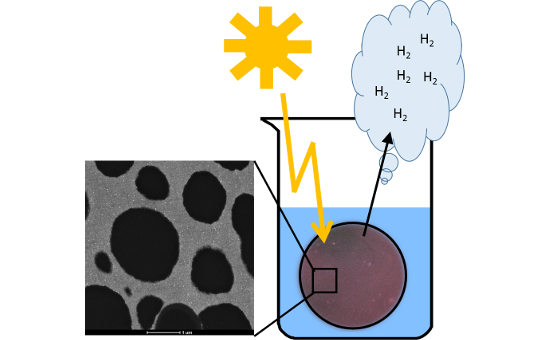
- to a wealth of studies on photocatalytic water splitting [6][7][8][9][10]. To be successful, the water splitting catalyst needs to have a certain set of properties. Most prominently, it should have a bandgap of at least 1.23 eV to provide the energy needed to split water. However, the bandgap should
- at higher temperatures [24]. Following the same general idea, Gärtner et al. investigated the effect of different Au precursors for Au loading via in situ photodeposition with sodium tetrachloridoaurate(III) dihydrate (NaAuCl4·2H2O) providing the most efficient water splitting catalyst. The same
- at an intensity of about 1000 W/m2 as light source. For comparison a 300 W Xe-lamp without the AM1.5G filter was also used. In a typical experiment, the catalyst and a stirring bar were placed in the reactor. Then the setup was evacuated three times and filled with argon (Ar) to remove residual




Dopant-stimulated growth of GaN nanotube-like nanostructures on Si(111) by molecular beam epitaxy
Beilstein J. Nanotechnol. 2018, 9, 146–154, doi:10.3762/bjnano.9.17
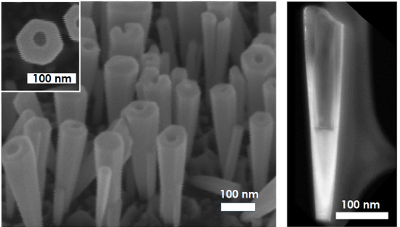
- absence of a doping flux [16]. Compared to other widely studied III–V NWs (e.g., Al(Ga, In)As), which can be synthesized by MBE on Si substrates via a vapor–liquid–solid (VLS) mechanism that uses catalyst droplets, GaN NWs grow according to the self-induced mechanism in the absence of catalyst [17][18


Combined scanning probe electronic and thermal characterization of an indium arsenide nanowire
Beilstein J. Nanotechnol. 2018, 9, 129–136, doi:10.3762/bjnano.9.15
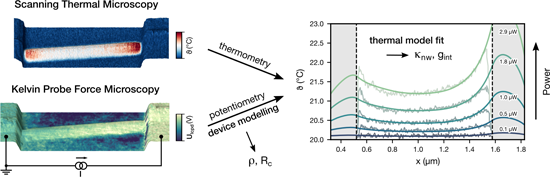
- -patterned wafer on which they where localized and contacted by e-beam lithography. The InAs NWs studied were grown in a metal-organic vapor deposition (MOCVD) system by vapor–liquid–solid (VLS) growth using a gold particle as catalyst and using trimethylindium (TMIn) and tert-butylarsine (TBA) as precursors


Atomic layer deposition and properties of ZrO2/Fe2O3 thin films
Beilstein J. Nanotechnol. 2018, 9, 119–128, doi:10.3762/bjnano.9.14
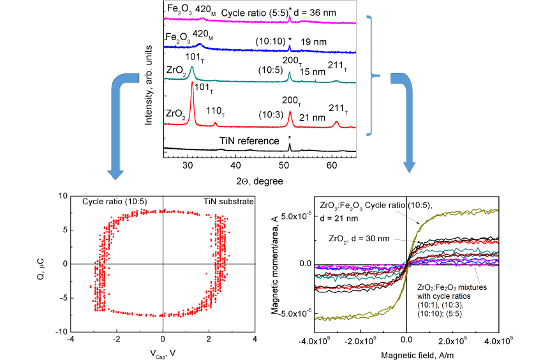
- the tetragonal phase [7]. Microwave-assisted combustion synthesis of a powder and the subsequent sintering of samples were used to fabricate ZrO2 doped with Co, and ferromagnetism in such samples was confirmed [8]. Different nanostructures of undoped ZrO2 were prepared by catalyst-assisted PLD and all





