


Search results
Search for "doping" in Full Text gives 427 result(s) in Beilstein Journal of Nanotechnology. Showing first 200.
Photoactive nanoarchitectures based on clays incorporating TiO2 and ZnO nanoparticles
Beilstein J. Nanotechnol. 2019, 10, 1140–1156, doi:10.3762/bjnano.10.114
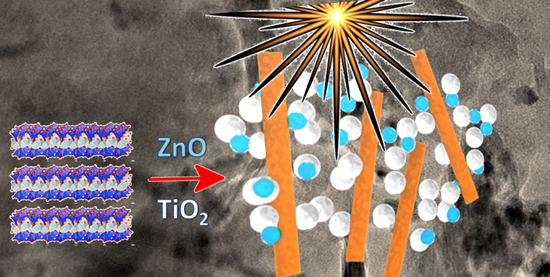
- compared to TiO2, particularly in acidic solution, which can be a drawback for practical applications [46][47]. By changing morphology, doping, and conformation, i.e. as films, of the nanoparticles the intrinsic opto-electronic properties of the semiconductor as well as its chemical stability and surface
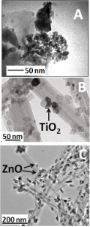
- semiconducting NPs on inert porous solids of large specific surface area is considered to be beneficial for the photocatalytic activity. Recently, strategies have been reported to improve the performance of photocatalysts via doping, or the introduction of semiconductor heterojunctions by combining them with
- transition metals or with other semiconductors. Among them, semiconductor heterojunctions have attracted great attention [139]. The doping of TiO2 and ZnO NPs with the aim to conveniently tuning the bandgap energy values can be a suitable option. In this context, it has been verified for both types of NPs, a



Porous N- and S-doped carbon–carbon composite electrodes by soft-templating for redox flow batteries
Beilstein J. Nanotechnol. 2019, 10, 1131–1139, doi:10.3762/bjnano.10.113
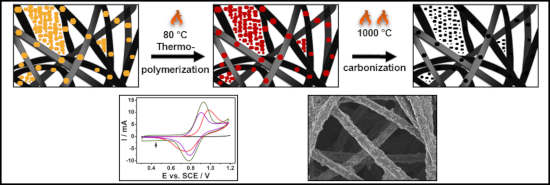
- works described heteroatom doping that should provide more active centres for the vanadium redox reactions, and hence lead to a higher electrochemical activity [14][15][16][17]. But still details of the mechanism are lacking and contradictory suggestions can be found in the literature, as to which
- functionality. Results and Discussion For the synthesis of nitrogen-doped carbon composite electrodes phloroglucinol was suggested as a carbon source whereas pyrrole-2-carboxaldehyde was utilized as a nitrogen source and the block copolymer Pluronic® F-127 was used as porogen. In the co-doping process
- can be observed. While the fibers of the co-doped composite electrode are covered completely and the space between fibers is filled up almost completely, the N-doped felt exhibits only partial coverage. It seems as if the carbon coating sticks more readily to the fibers after co-doping. But so far, we



Synthesis and characterization of quaternary La(Sr)S–TaS2 misfit-layered nanotubes
Beilstein J. Nanotechnol. 2019, 10, 1112–1124, doi:10.3762/bjnano.10.111
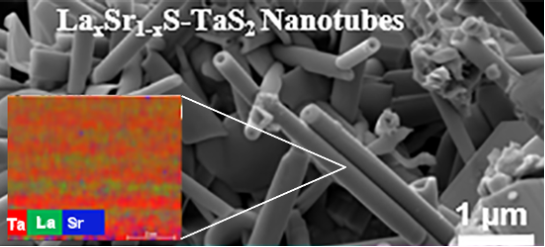
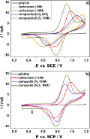
- a non-monotonic behavior upon Sr doping of the LaS part. In fact, the charge transfer per TaS2-unit, Q, first slightly increases in absolute value with increasing Sr content in the rock-salt lattice from 0.14 to 0.16 e− per TaS2 unit and then reaches a minimum (maximum in absolute value) at 20 atom
- , progressive Sr doping should disqualify the necessity of nanotubular morphology. Not surprisingly, the interlayer distance (c-axis) and the overall diameter of the SrxLa1−xS–TaS2 misfit nanotubes increases with higher Sr content in the lattice. Conclusion In conclusion, new alloys of misfit-layered compounds


CuInSe2 quantum dots grown by molecular beam epitaxy on amorphous SiO2 surfaces
Beilstein J. Nanotechnol. 2019, 10, 1103–1111, doi:10.3762/bjnano.10.110
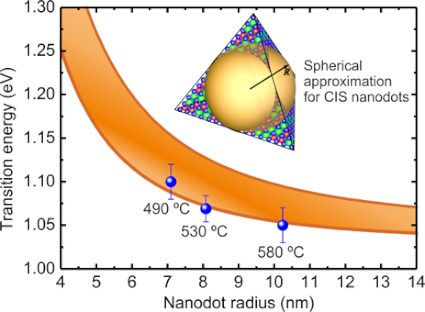
- performance of vacuum-prepared materials and non-vacuum-prepared materials is usually attributed to the sensitivity of the chalcopyrite semiconductor to external contaminants [29], to the dependency of its properties on the preparation method [30], and to the self-doping characteristics of the chalcopyrite


Glucose-derived carbon materials with tailored properties as electrocatalysts for the oxygen reduction reaction
Beilstein J. Nanotechnol. 2019, 10, 1089–1102, doi:10.3762/bjnano.10.109
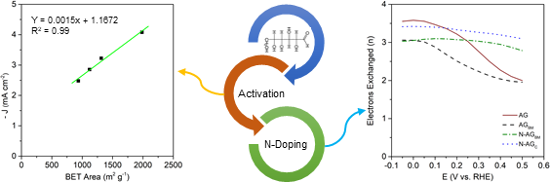
- were applied to modify the textural properties, while nitrogen functionalities were incorporated via different N-doping methodologies (ball milling and conventional methods) using melamine. A direct relationship between the microporosity of the activated carbons and the limiting current density was
- found, with the increase of microporosity leading to interesting improvements of the limiting current density. Regardless of the doping method used, similar amounts of nitrogen were incorporated into the carbon structures. However, significant differences were observed in the nitrogen functionalities
- according to the doping method applied: ball milling appeared to originate preferentially quaternary and oxidized nitrogen groups, while the formation of pyridinic and pyrrolic groups was favoured by conventional doping. The onset potential was improved and the two-electron mechanism of the original


Electronic and magnetic properties of doped black phosphorene with concentration dependence
Beilstein J. Nanotechnol. 2019, 10, 993–1001, doi:10.3762/bjnano.10.100
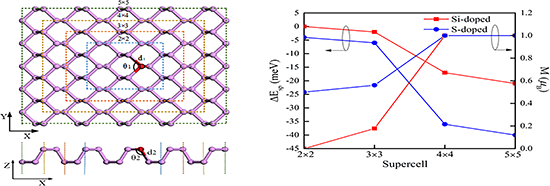
- element phosphorus, which hinders its application in spintronic devices [13]. Therefore, searching for methods of inducing magnetism in black phosphorene arises as a necessity for developing the next generation of spintronic devices. Substitutional doping has been proven to be an effective and promising
- approach to tune the electronic and magnetic properties of low-dimensional materials [14][15][16]. For instance, Bai et al. [17] theoretically tailored the electronic and magnetic properties of arsenene between non-magnetic and dilute magnetic by doping with Ge atoms. More importantly, it was
- experimentally demonstrated that substitutional doping of TMDs could be achieved by filling the vacancies observed in CVD-grown monolayer TMDs [18]. Liu et al. [19] prepared epitaxial copper-doped ZnO films and observed that the substitution of Cu for Zn and the presence of strong Cu–Zn–O bonds are necessary for


Synthesis of novel C-doped g-C3N4 nanosheets coupled with CdIn2S4 for enhanced photocatalytic hydrogen evolution
Beilstein J. Nanotechnol. 2019, 10, 912–921, doi:10.3762/bjnano.10.92
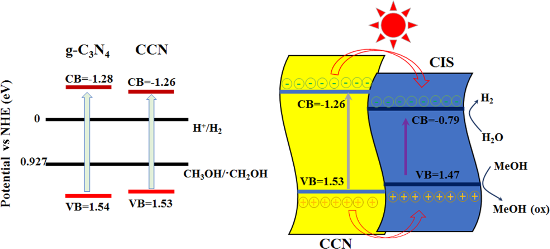
- effective strategy, the combination of C-doping with nanocomposite semiconductors, is presented in this work. C-doped g-C3N4 (CCN) was prepared by supramolecular self-assembly and subsequently a number of CdIn2S4/CCN composite photocatalysts were designed and fabricated though in situ decoration of CdIn2S4
- photocatalytic activity of g-C3N4 is severely restricted by the inefficient separation of photogenerated electron–hole pairs and insufficient photon absorption. Up to now, a variety of strategies such as anion doping, novel metal deposition on surfaces and the design of heterojunctions/nanocomposites have been
- devoted to improving the transport and separation of electron–hole pairs [10][11][12][13][14][15][16]. Among them, C atom doping for N atoms in g-C3N4 is highly promising due to its π-rich nature, which can evidently improve the photocatalytic performance of g-C3N4 [17][18][19][20][21]. For instance


Co-doped MnFe2O4 nanoparticles: magnetic anisotropy and interparticle interactions
Beilstein J. Nanotechnol. 2019, 10, 856–865, doi:10.3762/bjnano.10.86
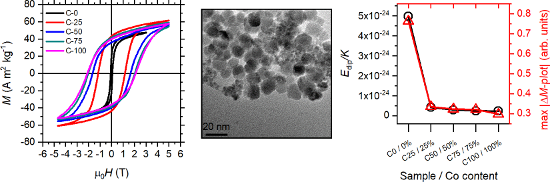
- doping on the magnetic properties of Mn1−xCoxFe2O4 nanoparticles was investigated. All samples consist of ensembles of nanoparticles with a spherical shape and average diameter of about 10 nm, showing small structural changes due to the substitution. Besides having the same morpho-structural properties
- , the effect of the chemical composition, i.e., the amount of Co doping, produces marked differences on the magnetic properties, especially on the magnetic anisotropy, with evident large changes in the coercive field. Moreover, Co substitution has a profound effect on the interparticle interactions, too
- . Keywords: cobalt doping; collective dynamics; ferrite nanoparticles; interparticle interactions; magnetic properties; Introduction A strong scientific interest has driven the fundamental research on magnetic nanoparticles in the last decades [1][2][3][4], with interest constantly fed by their wide range


Trapping polysulfide on two-dimensional molybdenum disulfide for Li–S batteries through phase selection with optimized binding
Beilstein J. Nanotechnol. 2019, 10, 774–780, doi:10.3762/bjnano.10.77
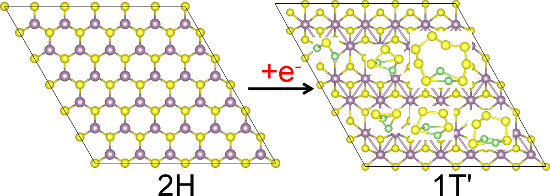
- electrical conductivity [10]. However, the adsorption of polarized LPSs on non-polarized graphene is weak; heteroatom doping is necessary for improving the anchoring effect. Nitrogen doping has been used to modify the anchoring behavior of graphene, and the N-doped graphene showed improved anchoring of Li2Sx


An iridescent film of porous anodic aluminum oxide with alternatingly electrodeposited Cu and SiO2 nanoparticles
Beilstein J. Nanotechnol. 2019, 10, 735–745, doi:10.3762/bjnano.10.73
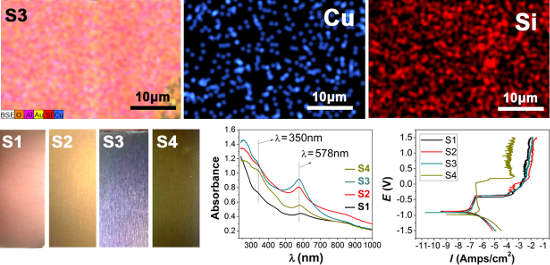
- production procedures, aluminum alloys have been extensively used as nonferrous structural materials [1][2][3][4][5][6][7][8][9][10][11][12]. Aluminum alloys are generally prepared by doping aluminum with other elements at a low content [13]. Anodic aluminum oxidation processing and electrodeposition


Hydrophilicity and carbon chain length effects on the gas sensing properties of chemoresistive, self-assembled monolayer carbon nanotube sensors
Beilstein J. Nanotechnol. 2019, 10, 565–577, doi:10.3762/bjnano.10.58
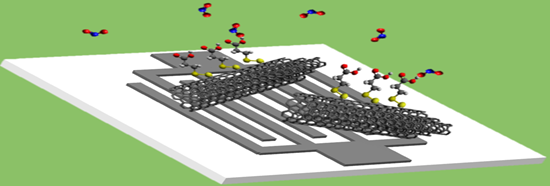
- it quite reactive with the sensor surface. Oxygen acts as an electron acceptor due to its lone pairs of valence electrons and can be adsorbed on the sensor surface, p-doping CNTs [39]. To correctly identify the response towards target species (i.e., nitrogen dioxide and ethanol), the oxygen


Mo-doped boron nitride monolayer as a promising single-atom electrocatalyst for CO2 conversion
Beilstein J. Nanotechnol. 2019, 10, 540–548, doi:10.3762/bjnano.10.55
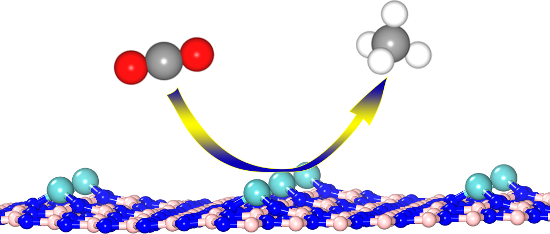
- refractory nature [11][35][36][37][38][39][40][41]. Moreover, BN nanomaterials have been used as superior substrates for doping various transition metals by electron beam irradiation [42] or solvent exfoliation [43] to form selected point defects, which are preferred to growing specific boron vacancies [42


Choosing a substrate for the ion irradiation of two-dimensional materials
Beilstein J. Nanotechnol. 2019, 10, 531–539, doi:10.3762/bjnano.10.54
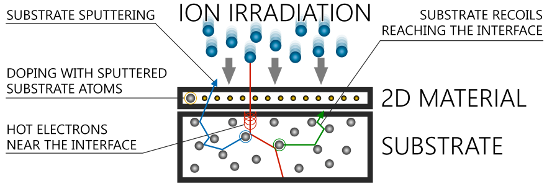
- to a peculiar doping effect, as it was shown for graphene in [1]. Besides, one cannot exclude participation of displaced recoil atoms [8] that reach the interface but remain within the substrate. Moreover, since there is a charge transfer between the substrate and the monolayer [9][10][11][12], the
- crystal lattice, leading to ion implantation (doping) [25]. For the latter to occur, the ion should have a considerably low energy – of about 20–200 eV, with the most effective implantation occurring at 25–75 eV [1][25][26][27][28][29]. The process peaks in the lower part of this region for 2D TMDs and in
- atoms can receive energy optimal for the implantation as well, leading to doping of the 2D material with the substrate atoms at much greater incident ion energies (for example, 5 keV Si into graphene on SiO2 [1]; similar is naturally expected for 2D TMDs). Table 1 presents simulation results for
Widening of the electroactivity potential range by composite formation – capacitive properties of TiO2/BiVO4/PEDOT:PSS electrodes in contact with an aqueous electrolyte
Beilstein J. Nanotechnol. 2019, 10, 483–493, doi:10.3762/bjnano.10.49
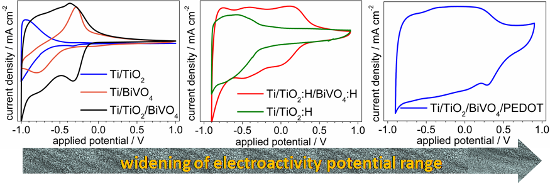
- potential. It is related to the reduction/oxidation of titanium on the surface bonded to OH groups [58]. The reduction/oxidation activity is commonly described as H+ doping/dedoping with simultaneous reduction/oxidation of Ti4+/Ti3+ for TiO2 in the form of both nanotubes [59] and single crystals [60]. BiVO4




Advanced scanning probe lithography using anatase-to-rutile transition to create localized TiO2 nanorods
Beilstein J. Nanotechnol. 2019, 10, 412–418, doi:10.3762/bjnano.10.40
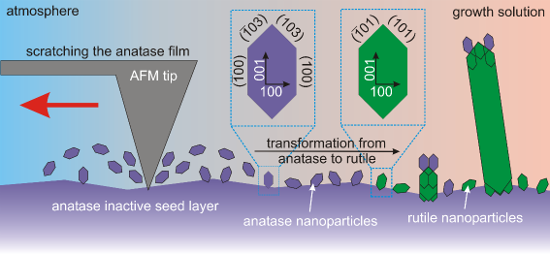
- nanostructures. Keywords: hydrothermal crystal growth; lithography; nanostructures; seed crystals; surface processes; oxides; Introduction Rutile TiO2 is a chemically stable semiconductor with a band gap of 3.1 eV [1]. Dependent on the kind of nanostructure and doping, it has outstanding electronic and


Sub-wavelength waveguide properties of 1D and surface-functionalized SnO2 nanostructures of various morphologies
Beilstein J. Nanotechnol. 2019, 10, 379–388, doi:10.3762/bjnano.10.37
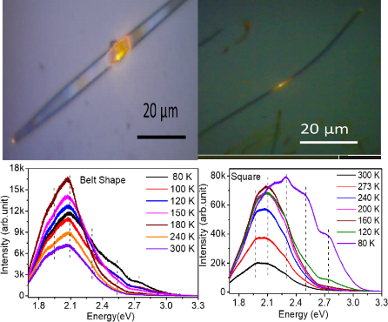
- electronics and optical devices [6][7]. The controlled growth of single crystalline 1D semiconductor nanostructures (NSs) of various dimensionality with desired chemical composition and precise doping level has offered numerous possibilities for making model devices and integration strategies [6][8


Study of silica-based intrinsically emitting nanoparticles produced by an excimer laser
Beilstein J. Nanotechnol. 2019, 10, 211–221, doi:10.3762/bjnano.10.19
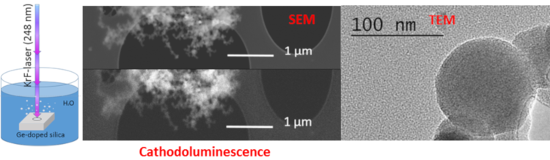
- , pure silica nanoparticles were produced using a laser pulse energy of 400 mJ on pure silica, whereas Ge-doped nanoparticles were obtained using 33 and 165 mJ per pulse on germanosilicate glass. The difference in the required energy is attributed to the Ge doping, which modifies the optical properties
- low and/or the pulse duration is on the time scale of nanoseconds or longer. The second type of process is responsible for the absorption in transparent medium and is usually active for ultrashort laser pulses characterized by high intensity [14]. It is noteworthy that defects in or doping of a
- fragmentation [4]. Different from other studies [15][20], the purpose of the present investigation is to provide data concerning the production of pure and Ge-doped silica nanoparticles; thus it is worth highlighting some of the effects of the Ge doping of silica. Indeed, the Ge atoms are substitutional to Si



Wet chemistry route for the decoration of carbon nanotubes with iron oxide nanoparticles for gas sensing
Beilstein J. Nanotechnol. 2019, 10, 105–118, doi:10.3762/bjnano.10.10
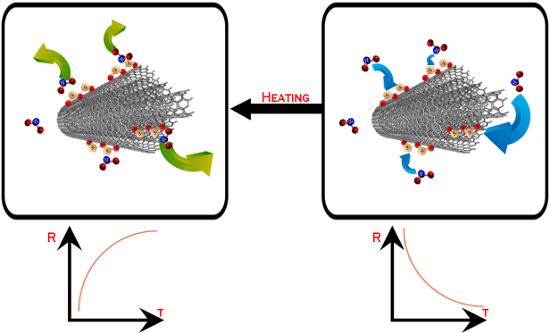
- with iron oxide nanoparticles substantially ameliorated the response towards nitrogen dioxide. Keywords: benzene detection; doping; gas sensor; metal nanoparticle decoration; multiwalled carbon nanotubes; NO2 detection; room temperature gas sensing; surface modification; Introduction Carbon nanotubes
- results for carbon nanotubes decorated with iron oxide nanoparticles of larger size. This is consistent with the literature, in which heat treatment on sensors doped with an optimum doping ratio can cause both an increase in the size of decorating nanoparticles and an enhancement in the response of the




Threshold voltage decrease in a thermotropic nematic liquid crystal doped with graphene oxide flakes
Beilstein J. Nanotechnol. 2019, 10, 71–78, doi:10.3762/bjnano.10.7
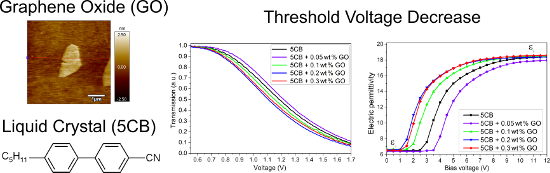
- -optical performance is doping them with nanoparticles. Hsu et al. showed that the small addition of gold nanoparticles decreases Uth due to the increased electric anisotropy and decreased elastic constant [5]. Haraguchi and collaborators doped the twisted nematic liquid crystal cell with inorganic



Amorphous NixCoyP-supported TiO2 nanotube arrays as an efficient hydrogen evolution reaction electrocatalyst in acidic solution
Beilstein J. Nanotechnol. 2019, 10, 62–70, doi:10.3762/bjnano.10.6
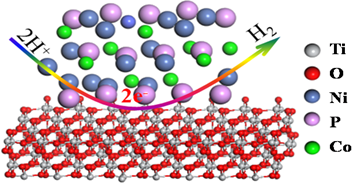
- −), suggesting a small electron density transfer from Ni and Co to P [37]. This charged structure is very beneficial for improving surface activity toward HER. A critical means to improve the charge transfer of HER is to enhance the conductivity of the electrocatalysts. Doping or hybridization to form a
- , respectively. It should be noted that the hydrogen doping may occur due to the small radius of the hydrogen atom when measuring the electrocatalytic activity of NixCoyP/TNAs. Generally speaking, hydrogen doping increases electrical conductivity and enhances electron transfer. Thus the electrocatalytic activity




Zn/F-doped tin oxide nanoparticles synthesized by laser pyrolysis: structural and optical properties
Beilstein J. Nanotechnol. 2019, 10, 9–21, doi:10.3762/bjnano.10.2
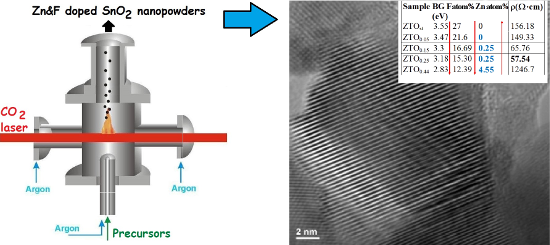
- content and crystallite size. The fluorine presence is due to the catalytic partial decomposition of the SF6 laser energy transfer agent. In direct correlation with the increase in the Zn doping level, the bandgap of co-doped nanoparticles shifts to lower energy (from 3.55 to 2.88 eV for the highest Zn
- reduced bandgap of tin oxide nanoparticles by introduction of defects to the crystal lattice is ≈0.7 eV [4]. Generally, the doping of these semiconducting oxides with specific cations or anions is performed in order to increase their electrical conductivity while maintaining a high optical transparency in
- promising, lower cost, but good performing material alternatives to ITO for these types of applications is fluorine-doped tin oxide (FTO) [8]. Regarding the cation doping for the synthesis of tin-based transparent and conductive oxidic (TCO) materials, the literature has been focused on doping with i



Ternary nanocomposites of reduced graphene oxide, polyaniline and hexaniobate: hierarchical architecture and high polaron formation
Beilstein J. Nanotechnol. 2018, 9, 2936–2946, doi:10.3762/bjnano.9.272
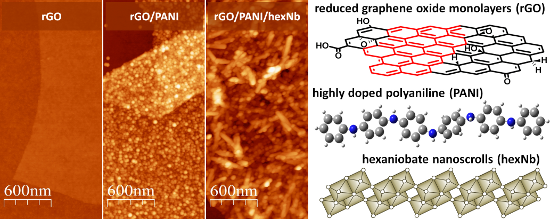
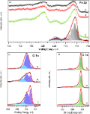
- room temperature. Detailed characterisation by X-ray photoelectron and Raman spectroscopies indicates an intermediate reduction degree for the rGO component and high doping degree of the PANI chains compared to the neat polymer. The latter feature can be attributed to cooperative effects of PANI chains
- with rGO flakes and hexNb nanoscrolls, which promote conformational changes of the polymer backbone (secondary doping). Spectroscopic and electrochemistry data indicate a synergetic effect on the ternary nanocomposite, which is attributed to interactions between the components resulting from the
- morphological aspects. Therefore, the new nanocomposite presents promising properties for development of new materials in the film form on substrates for sensing or corrosion protection for example. Keywords: graphene oxide; hexaniobate; polyaniline; Raman spectroscopy; secondary doping; Introduction


Graphene-enhanced metal oxide gas sensors at room temperature: a review
Beilstein J. Nanotechnol. 2018, 9, 2832–2844, doi:10.3762/bjnano.9.264
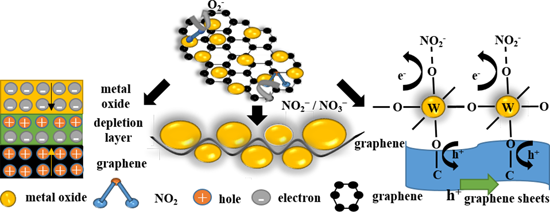
- heterojunctions are responsible for the exceptional NO2 sensing performance of CeO2–rGO sensor. Zhang et al. [59] added GO suspension to a Fe(NO3)3·9H2O solution, then synthesized α-Fe2O3–rGO hybrids via hydrothermal method. During the process of testing, the authors found that the doping amount of graphene
- significantly affected the sensing properties of the α-Fe2O3–rGO sensor. The α-Fe2O3–rGO sensor with the optimal doping amount of 12.2% showed the highest sensitivity and rapid response time to NO2 at room temperature. In addition, the sensor exhibited excellent selectivity to NO2 because other interference
- demonstrated that the response and recovery of this sensor were much faster than that of SnO2–rGO sensor, which could only work at 50–55 °C. The doping of Ag nanoparticles not only improved the electron transfer rate of the sensor, but also increased the number of active sites on the surface of the sensor



Variation of the photoluminescence spectrum of InAs/GaAs heterostructures grown by ion-beam deposition
Beilstein J. Nanotechnol. 2018, 9, 2794–2801, doi:10.3762/bjnano.9.261
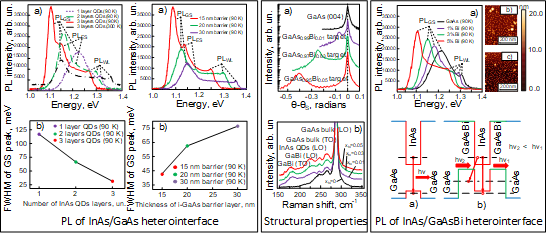
- their isovalent doping with bismuth on the photoluminescence properties of InAs/GaAs heterostructures. The experimental samples were grown by ion-beam deposition. We showed that using three vertically stacked layers of InAs quantum dots separated by thin GaAs barrier layers was accompanied by a red
- -shift of the photoluminescence peak of InAs/GaAs heterostructures. An increase in the thickness of the GaAs barrier layers was accompanied by a blue shift of the photoluminescence peak. The effect of isovalent Bi doping of the GaAs barrier layers on the structural and optical properties of the InAs/GaAs
- . It is shown that isovalent doping of GaAs potential barriers by bismuth was accompanied by a red-shift of the photoluminescence peak of InAs quantum dots of 121 meV. Keywords: infrared photodetectors; ion-beam deposition; nanoheterostructures; photoluminescence; quantum dot; semiconductors


Near-infrared light harvesting of upconverting NaYF4:Yb3+/Er3+-based amorphous silicon solar cells investigated by an optical filter
Beilstein J. Nanotechnol. 2018, 9, 2788–2793, doi:10.3762/bjnano.9.260
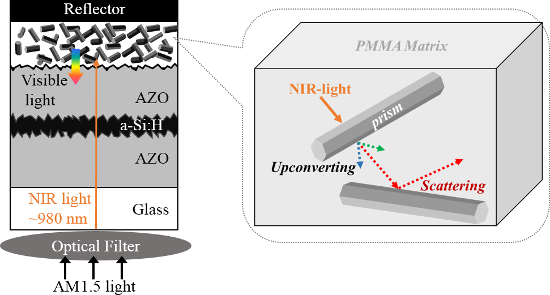
- phase transition is completed after 12 h. In Figure 1c, energy-dispersive X-ray (EDX) analysis confirms the doping with Yb and Er. The molar ratio of Y/Yb/Er in the hexagonal phase NaYF4:Yb3+/Er3+ was determined to be 79.8:18.2:2. It is extremely close to the stoichiometric ratio of 80:18:2 of the most





