


Search results
Search for "heating" in Full Text gives 780 result(s) in Beilstein Journal of Nanotechnology. Showing first 200.
On the stability of microwave-fabricated SERS substrates – chemical and morphological considerations
Beilstein J. Nanotechnol. 2021, 12, 541–551, doi:10.3762/bjnano.12.44
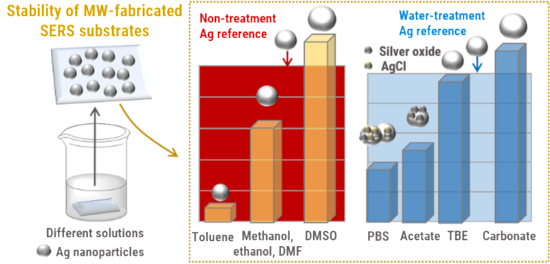
- typical heating process) which initiates the reduction of the silver salt by ethanol. This triggers a short burst of silver nanoparticle nucleation, which forms reaction seeds on the glass substrate. The strong affinity of the silver ions for the free hydroxyl groups of glass surfaces allows for the
- time was fixed to 2 min, which corresponds to the shortest time to yield a sufficient coverage with Ag nanoparticles with high homogeneity and SERS activity [24]. The chosen time of 2 min includes the heating ramp time and an additional cooling time of 2 min was required. Thus, the total microwave


The preparation temperature influences the physicochemical nature and activity of nanoceria
Beilstein J. Nanotechnol. 2021, 12, 525–540, doi:10.3762/bjnano.12.43
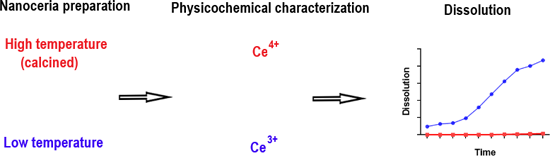
- nanoceria, described in Supporting Information File 1, Table S1, were calcined by heating in porcelain crucibles in a muffle furnace to 900 °C at a ramp rate of ca. 10 °C/min, then held for 3 h. The product was characterized by electron microscopy performed on the Thermo Scientific Talos F200X described




Boosting of photocatalytic hydrogen evolution via chlorine doping of polymeric carbon nitride
Beilstein J. Nanotechnol. 2021, 12, 473–484, doi:10.3762/bjnano.12.38
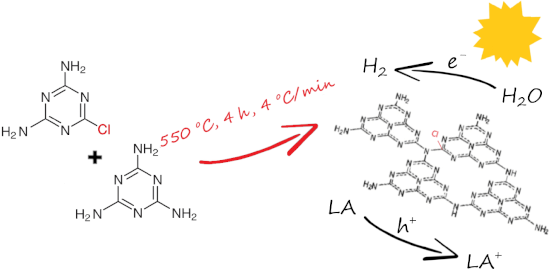
- direct heating of melamine. A given amount of melamine was placed in a covered crucible in a muffle furnace and heated in static air to 550 °C with a ramping rate of 4 °C/min and then was held at 550 °C for 4 h. After the reaction, the furnace was cooled down to room temperature. The obtained PCN was


Rapid controlled synthesis of gold–platinum nanorods with excellent photothermal properties under 808 nm excitation
Beilstein J. Nanotechnol. 2021, 12, 462–472, doi:10.3762/bjnano.12.37
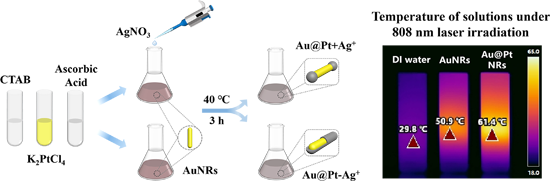
- during heating [15][16]. Pt nanoparticles have better light and thermal stability then Au nanoparticles [17]. Au–Pt bimetal nanoparticles may not only further enrich the functions of nanostructures, but the spatial distribution of both elements also plays an important role in adjusting the properties
- heating. The Au@Pt NRs solution exhibits a stronger thermal response than AuNRs with the same amount of Au. Due to the fact that the LSPR of Au@Pt NRs is closer to 808 nm and has a wider band, it absorbs more photon energy and releases more heat. Next, to explore the influence of laser power on the
- @Pt NRs solution (OD = 0.5) under different laser power densities (10 min). (d) Temperature elevation curves of Au@Pt NRs solution with different OD under 808 nm laser irradiation (2.0 W/cm2, 10 min). Heating and cooling curves of (a) AuNRs and (c) Au@Pt NRs under 808 nm laser irradiation. Linear fit


Nickel nanoparticle-decorated reduced graphene oxide/WO3 nanocomposite – a promising candidate for gas sensing
Beilstein J. Nanotechnol. 2021, 12, 343–353, doi:10.3762/bjnano.12.28
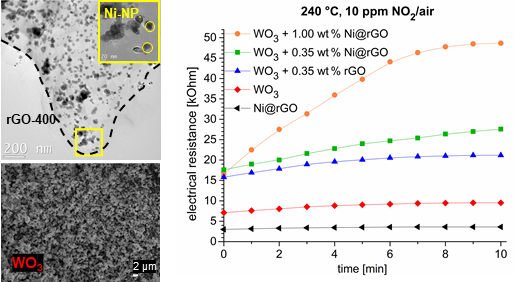
- Ni@rGO composite without heat treatment. The temperature dependence of the magnetization was determined during several heating–cooling cycles. It was noted that with an increase in the number of cycles, the Сurie temperature of the sample increased from 345 to 357 °C. Most likely, the increase in the


The patterning toolbox FIB-o-mat: Exploiting the full potential of focused helium ions for nanofabrication
Beilstein J. Nanotechnol. 2021, 12, 304–318, doi:10.3762/bjnano.12.25
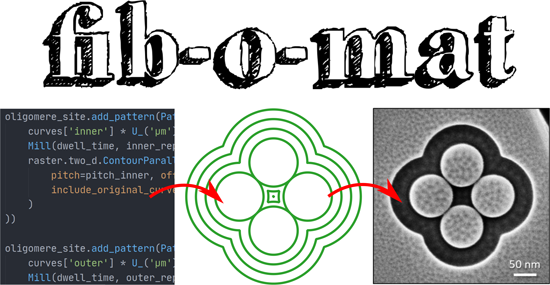
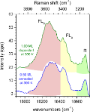
- region exhibits temperatures around 800 K while the bridges stay close to room temperature. The resonance frequency of the fundamental mode is 12.5 MHz (cf. Figure 6b) and exhibits a quality factor of about 300 without laser heating. When suspended graphene is heated by a light source, the built-in


Doxorubicin-loaded gold nanorods: a multifunctional chemo-photothermal nanoplatform for cancer management
Beilstein J. Nanotechnol. 2021, 12, 295–303, doi:10.3762/bjnano.12.24
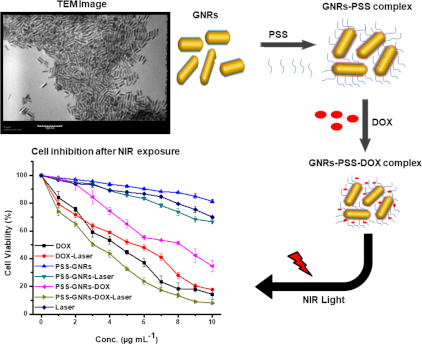
- DOX release at different pH values. Fluorescence intensity was measured from 0 to 30 h. (b) Heating curves of water, PSS GNRs and PSS-GNRs-DOX (10 µg Au/mL) under NIR (808 nm) laser irradiation. (a) Relative viabilities of HepG2 and 3T3 cells after being incubated with different concentrations of PSS


Gold(I) N-heterocyclic carbene precursors for focused electron beam-induced deposition
Beilstein J. Nanotechnol. 2021, 12, 257–269, doi:10.3762/bjnano.12.21
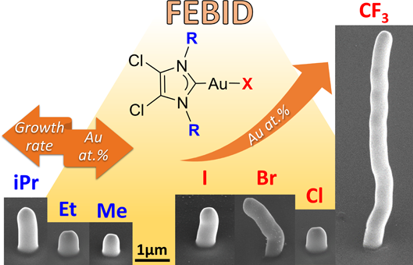
- Sublimation temperatures for compounds 1–7 were obtained by cold finger sublimation. The cold finger sublimation setup was immersed in an oil bath and heated by a heating plate. The temperature was controlled and registered by an immersion thermometer immersed in the oil bath at the same height as the bulk
- material and connected to the heating plate. The pressure measured for each experiment was 1 × 10⁻³ mbar on a VACUU.VIEW or DCP 3000 Vacuubrand manometer mounted on the Schlenk line used. The cold finger was cooled down with continuous water flow. 20 ± 1.5 mg of bulk material were charged in the
- sublimation apparatus, which was then evacuated and conditioned with Ar or N2 before being evacuated again. The dynamic heating of the sample was carried out at a heating rate of 1 K per 10 min. The sublimation temperature was determined as the point at which the formation of a white film was observed on the





Scanning transmission helium ion microscopy on carbon nanomembranes
Beilstein J. Nanotechnol. 2021, 12, 222–231, doi:10.3762/bjnano.12.18
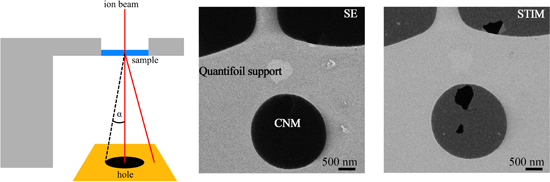
- nanocrystalline graphene upon heating [25]. It was observed that this comes with a loss of atoms, which is also apparent in this experiment by the decreasing membrane thickness (see Figure 7a). The results from both methods, XPS and EFTEM, confirm the thickness measurement by STIM. While XPS and STIM are close


Paper-based triboelectric nanogenerators and their applications: a review
Beilstein J. Nanotechnol. 2021, 12, 151–171, doi:10.3762/bjnano.12.12
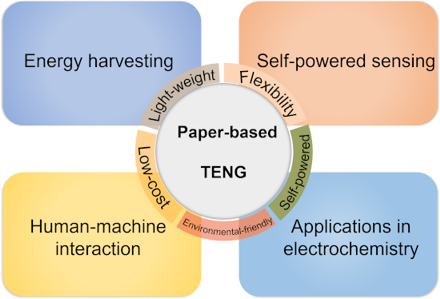
- conductivity. VF is a simple and rapid method to cast functional materials onto solution-processable substrates without the need to implement any time-consuming and high-cost processes (e.g., evacuation, thermal/e-beam heating, and radio-frequency sputtering). The conductivity is also easily adjustable by






A review on the green and sustainable synthesis of silver nanoparticles and one-dimensional silver nanostructures
Beilstein J. Nanotechnol. 2021, 12, 102–136, doi:10.3762/bjnano.12.9
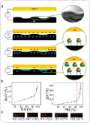
- [143][231]. In most cases, AgNPs are synthesized in metal oxide thin films such as TiO2, SiO2, and ZrO2 where the average particle size is almost 10 nm when the heating temperature is 600 °C in the case of SiO2 thin films, and 500 °C in the case of TiO2 and ZrO2 [231]. Arun Kumar et al. [145
- the gas phase to the reactor chamber. Second, adsorption of the vapor on the substrate surface and establishment of medium compounds followed by formation of a layer. Third, nucleation and growth of the layer through heating [241]. The important factors that control the process and size of synthesized


The role of gold atom concentration in the formation of Cu–Au nanoparticles from the gas phase
Beilstein J. Nanotechnol. 2021, 12, 72–81, doi:10.3762/bjnano.12.6
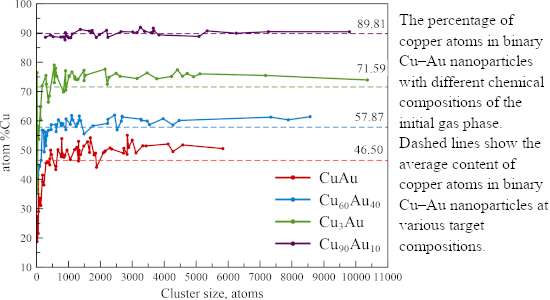
- heating of Cu3Au nanoclusters, typical changes called “order–disorder transition” occur in the nanocluster structure, leading to the decomposition of the initial L12 crystal structure. This leads to a transition to the FCC structure with a random atomic distribution in the long-range coordination spheres


Effect of different silica coatings on the toxicity of upconversion nanoparticles on RAW 264.7 macrophage cells
Beilstein J. Nanotechnol. 2021, 12, 35–48, doi:10.3762/bjnano.12.3
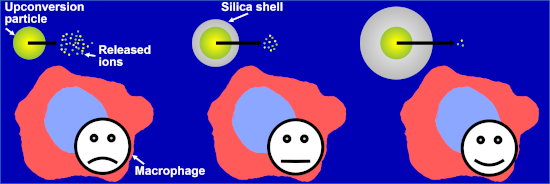
- (30% v/v) were added, respectively. The mixture was stirred overnight under argon atmosphere, followed by heating under reflux for 1 h. For the particles with thicker silica coating, 1.5 mL (c = 20 g/L in ethanol, particle mass = 30 mg) of the dispersion was diluted to c = 1 g/L and reacted with 25 µL


Free and partially encapsulated manganese ferrite nanoparticles in multiwall carbon nanotubes
Beilstein J. Nanotechnol. 2020, 11, 1891–1904, doi:10.3762/bjnano.11.170
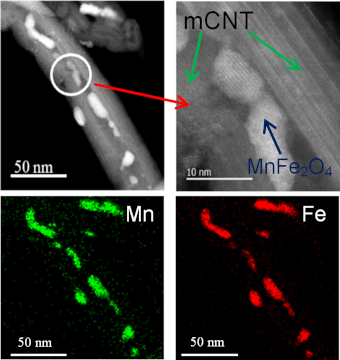
- analyzer transmission energy of 50 eV, while the individual elemental peaks were recorded at an analyzer pass energy of 20 eV. All XPS measurements were carried out at room temperature and no heating was performed prior to the XPS measurement. The obtained XPS spectra were deconvoluted using the CasaXPS




Nanocasting synthesis of BiFeO3 nanoparticles with enhanced visible-light photocatalytic activity
Beilstein J. Nanotechnol. 2020, 11, 1822–1833, doi:10.3762/bjnano.11.164
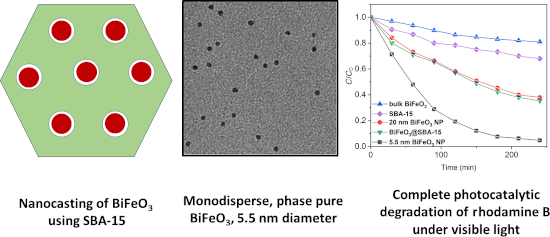
- -methoxyethanol as a solvent, the effect of different molar ratios between the Bi/Fe metal precursors was then analyzed, since significant bismuth loss can be observed during calcination as bismuth is volatile at high temperatures. Thus, it is necessary to compensate for this loss during the heating step by
- heating. In addition, the presence of Bi3+ in acidic aqueous solutions leads to the formation of polynuclear cationic species. Once a thermal treatment at 500 °C is applied, those clusters decompose into α- and β-Bi2O3 by-products, which are not observed when an intermediate heating step is carried out




Self-standing heterostructured NiCx-NiFe-NC/biochar as a highly efficient cathode for lithium–oxygen batteries
Beilstein J. Nanotechnol. 2020, 11, 1809–1821, doi:10.3762/bjnano.11.163
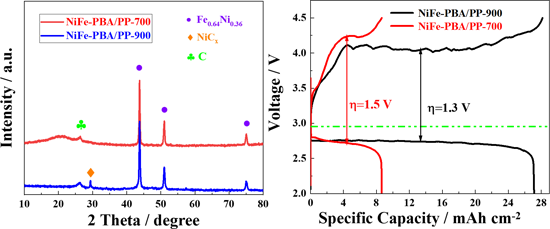
- were washed with ethanol and water alternatively and calcined at a certain temperature for 2 h with a heating ramp of 5 °C·min−1 in a tube furnace in nitrogen atmosphere. The calcined samples were labeled as NiFe-PBA/PP-T. Physical characterization X-ray diffraction (XRD) patterns were recorded using a






Electron beam-induced deposition of platinum from Pt(CO)2Cl2 and Pt(CO)2Br2
Beilstein J. Nanotechnol. 2020, 11, 1789–1800, doi:10.3762/bjnano.11.161
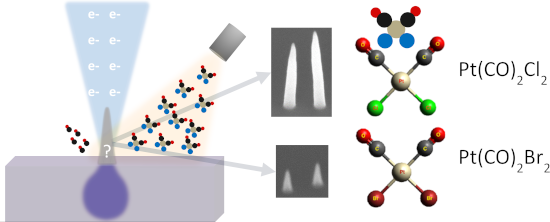
- likely indicative that prolonged heating at 90 °C will result in precursor decomposition (Figure 2a,b). Conversely, for Pt(CO)2Br2, prolonged heating at 90 °C facilitated a greater degree of sublimation vs decomposition whereupon approximately 29% of the original mass remained (Figure 2b,c). This is
- reasonably below the initial Pt content of 47.5%. The TGA studies indicate that Pt(CO)2Br2 is more stable under prolonged heating, leading to increased volatility, but Pt(CO)2Cl2 is more efficient under a faster ramped-temperature process (10 °C/min). Precursor gas properties Precursor crucible temperature


Direct observation of the Si(110)-(16×2) surface reconstruction by atomic force microscopy
Beilstein J. Nanotechnol. 2020, 11, 1750–1756, doi:10.3762/bjnano.11.157
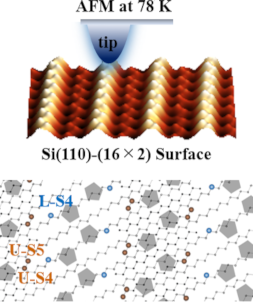
- zig-zag chains extend) was not related to the direction of current during sample heating, which is consistent with previous studies [12][22]. In the step area, two types of typical facets were observed: (17 15 1) and (15 17 1) [12][16] extending in the directions of and , respectively, which are



Seebeck coefficient of silicon nanowire forests doped by thermal diffusion
Beilstein J. Nanotechnol. 2020, 11, 1707–1713, doi:10.3762/bjnano.11.153
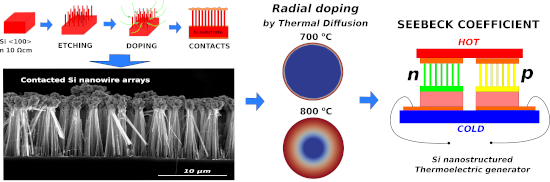
- electrical power needed to heat TH through Joule heating is the thermal power = V × I that crosses the sample in the absence of heat losses. The system is in vacuum and the irradiation loss is limited by a thermal shield maintained at TH. Hence, the thermal resistance ℜ can be evaluated as ℜ = (TH − TC
- of the contact thermal resistance ℜCA, together with the value of the heat flux through the sample = V × I, can be used for a correct evaluation of ΔTNW: For each sample, several Seebeck voltage values Vseebeck have been recorded for different heating power values , that is, for different values of


Out-of-plane surface patterning by subsurface processing of polymer substrates with focused ion beams
Beilstein J. Nanotechnol. 2020, 11, 1693–1703, doi:10.3762/bjnano.11.151
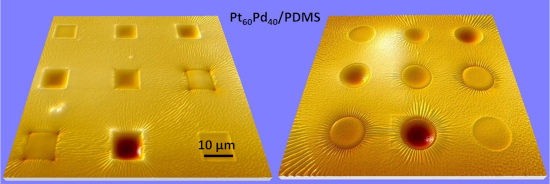
- ions and materials, such as structural damage and chemical modification that affect functional properties of the near-surface layers, are substantially reduced in comparison to FIB milling. Another advantage of the subsurface processing is that the local heating is negligible in comparison to ion


The influence of an interfacial hBN layer on the fluorescence of an organic molecule
Beilstein J. Nanotechnol. 2020, 11, 1663–1684, doi:10.3762/bjnano.11.149
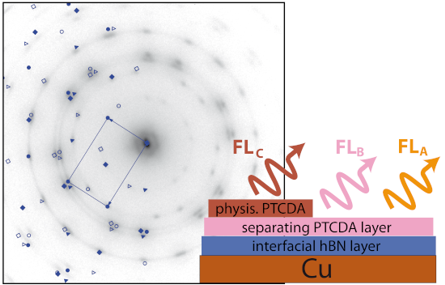
- . The sample was annealed in iterative steps of heating, holding at a constant temperature for 3 min, and cooling down again to 20 K for a measurement. The annealing temperatures were in the range of 100–400 K and are specified below. In the following, one monolayer (ML) of PTCDA refers to a single





Piezoelectric sensor based on graphene-doped PVDF nanofibers for sign language translation
Beilstein J. Nanotechnol. 2020, 11, 1655–1662, doi:10.3762/bjnano.11.148
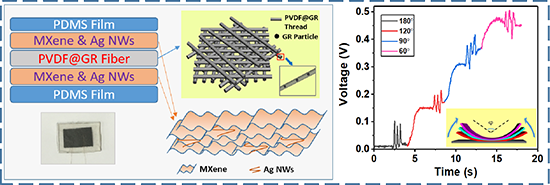
- Shenzhen Oss Corporation. Electrospinning process: First, GR is added to DMF and ultrasonically dispersed for 10 min. The dispersion is then heated to 60 °C. PVDF powder (18 wt %) is added under continuous heating and stirring for 6 h to obtain the spinning solution. The prepared solution is filled into a
- vertical rod on one side and can be rotated laterally. The PES is moved between the heating stage and the suspended cooling end in a cycle of approximately 7 s, and the output of the analogue signal is recorded. Sign language translation system: The PESs were attached to five finger bending joints of a


Amorphized length and variability in phase-change memory line cells
Beilstein J. Nanotechnol. 2020, 11, 1644–1654, doi:10.3762/bjnano.11.147
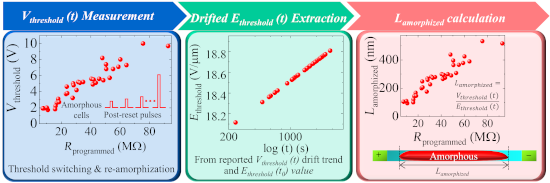
- by an electrical breakdown due to impact ionization, a purely electrical effect. The following sharp increase in current is ascribed to thermal runaway (i.e., a decrease in resistivity with increasing temperature that leads to further heating [17]). In this work, we use this model to interpret our
- the parasitic capacitances present in the system and to the thermal runaway of the amorphous GST, which also lead to a quick rise of the cell temperature and produce enough Joule heating to induce melting of the material [27]. The sharp falling edges of Icell for the two re-amorphization events due to




Selective detection of complex gas mixtures using point contacts: concept, method and tools
Beilstein J. Nanotechnol. 2020, 11, 1631–1643, doi:10.3762/bjnano.11.146
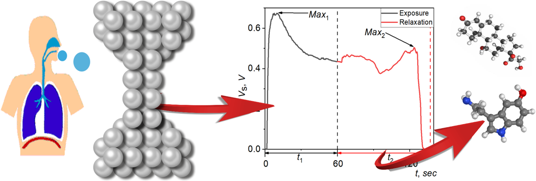
- exclusion of any side factors and effects that could alter the characteristic breath profile of a patient. A heating of the sensor in order to prevent condensation of the exhaled breath inside the sensor holder was not performed in our studies since it is the condensate from the exhaled gas that activates


![[Graphic 4]](/bjnano/content/inline/2190-4286-11-146-i8.svg?max-width=637&scale=1.18182) in th...
in th...

![[Graphic 7]](/bjnano/content/inline/2190-4286-11-146-i11.svg?max-width=637&scale=1.18182) in the...
in the...
PTCDA adsorption on CaF2 thin films
Beilstein J. Nanotechnol. 2020, 11, 1615–1622, doi:10.3762/bjnano.11.144
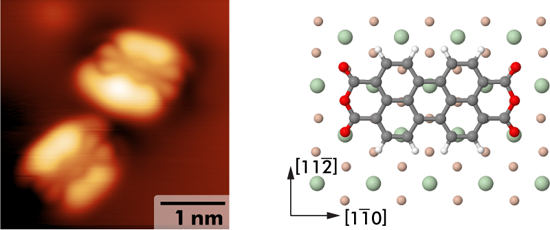
- material (cleanliness 99.9%, Alfa Aesar, Kandel, Germany) was deposited from an e-beam evaporator (type EFM3T, Focus GmbH, Huenstetten, Germany) on silicon samples held at about 600 °C by direct-current heating. Further details on the sample preparation and CaF2/Si(111) surface properties can be found in





