Search results
Search for "medicine" in Full Text gives 308 result(s) in Beilstein Journal of Nanotechnology. Showing first 200.
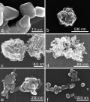
Characterization and influence of hydroxyapatite nanopowders on living cells
Beilstein J. Nanotechnol. 2018, 9, 3079–3094, doi:10.3762/bjnano.9.286
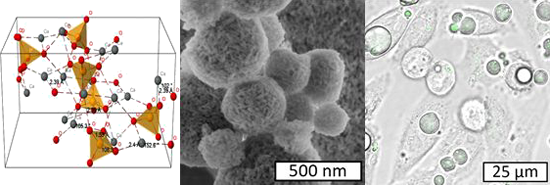
- sectors, including automobile, chemicals, construction, cosmetics, electronics, energy, engineering, environment, medicine, security, sports, telecommunication, textiles and transportation [1][2]. The International Organization for Standardization, in cooperation with the European Committee for
- in the application of novel NPs in medicine and biology. Adverse effect of NOAA on living organisms may be influenced by many factors such as size, shape, solubility, exposure time, surface charge, surface area, crystallinity, agglomeration or chemical composition [7][8][9]. Since the properties of
- regenerative medicine. The use of nanosized hydroxyapatites in biomedical applications is constantly growing due to their good mechanical properties and enhanced efficiency of gene transfection in drug delivery. Calcium phosphates are sensitive to the preparation conditions [11][12][13][14][15]. They can be

![[Graphic 1]](/bjnano/content/inline/2190-4286-9-286-i2.svg?max-width=637&scale=1.18182) .
.



In situ characterization of nanoscale contaminations adsorbed in air using atomic force microscopy
Beilstein J. Nanotechnol. 2018, 9, 2925–2935, doi:10.3762/bjnano.9.271
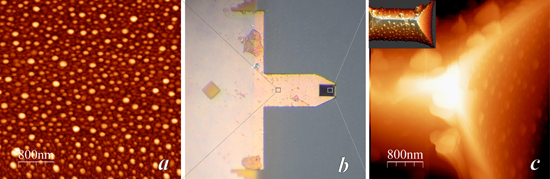
- contamination; tip cleaning; tip–sample interaction; van der Waals interaction; Introduction Surface science is fundamental to understand many processes in industrial applications, environmental science, biology, medicine and phenomena such as self-assembly [1], friction [2][3] and wetting [4]. In any study
- ambient conditions as compared to UHV, and AFM under ambient conditions has become a fundamental and widely used tool for nanoscale research in materials science, physics, biology and medicine, chemistry as well as engineering and environmental sciences. We are therefore convinced that this issue of

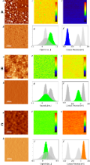

Nanostructured liquid crystal systems and applications
Beilstein J. Nanotechnol. 2018, 9, 2644–2645, doi:10.3762/bjnano.9.245

- having numerous applications in liquid crystal displays, modulators, sensors, solar cells, etc. Liquid crystals are used in both large and small devices. They surround us everywhere: in our house, on the street, and at our job. Liquid crystals are applied in biology and medicine, and for oil recovery as
Cytotoxicity of doxorubicin-conjugated poly[N-(2-hydroxypropyl)methacrylamide]-modified γ-Fe2O3 nanoparticles towards human tumor cells
Beilstein J. Nanotechnol. 2018, 9, 2533–2545, doi:10.3762/bjnano.9.236
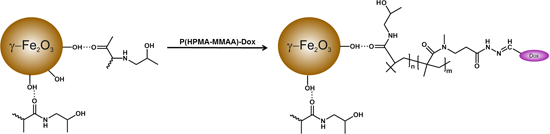
- Experimental Medicine CAS, Vídeňská 1083, 142 20 Prague 4, Czech Republic 10.3762/bjnano.9.236 Abstract Doxorubicin-conjugated magnetic nanoparticles containing hydrolyzable hydrazone bonds were developed using a non-toxic poly[N-(2-hydroxypropyl)methacrylamide] (PHPMA) coating, which ensured good colloidal
- from MRI contrast agents to drug-delivery systems, local heat sources in magnetic hyperthermia therapy of tumors, magnetically assisted transfection of cells, and magnetic field-assisted separation techniques. Let us to note that MRI is already widely used in human medicine and several iron-oxide-based
- oxide particles used in the MTT test. Acknowledgements Financial support of the Czech Science Foundation (No. 17-04918S) is acknowledged. We thank Cedars-Sinai Medical Center’s International Research and Innovation in Medicine Program and the Association for Regional Cooperation in the Fields of Health


Non-agglomerated silicon–organic nanoparticles and their nanocomplexes with oligonucleotides: synthesis and properties
Beilstein J. Nanotechnol. 2018, 9, 2516–2525, doi:10.3762/bjnano.9.234
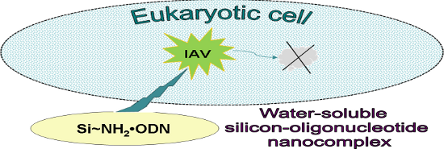
- and Fundamental Medicine, Siberian Branch of Russian Academy of Sciences, pr. Lavrent’eva 8, Novosibirsk, 630090, Russia Institute of Catalysis, Siberian Branch of Russian Academy of Sciences, pr. Lavrent’eva 5, Novosibirsk, 630090, Russia FBRI State Research Center of Virology and Biotechnology
- practical medicine. Despite many efforts in this field, this problem cannot be considered as completely solved. А promising approach is the use of various nanoparticles as delivery vehicles. We have previously developed methods for immobilizing DNA fragments onto titanium dioxide nanoparticles with the


Effect of electrospinning process variables on the size of polymer fibers and bead-on-string structures established with a 23 factorial design
Beilstein J. Nanotechnol. 2018, 9, 2466–2478, doi:10.3762/bjnano.9.231
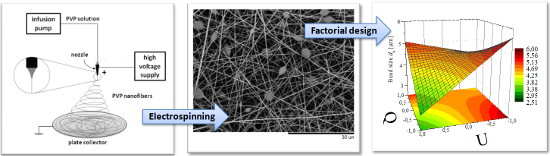
- technologies, as well as in new fields of scientific and industrial interest. They are considered to be potentially useful in areas such as nanoelectronics, medicine (e.g., wound healing, tumor therapy, inhalation therapy), filtration processes, textile manufacture, nanocatalysis production, etc. [5][6


Droplet-based synthesis of homogeneous magnetic iron oxide nanoparticles
Beilstein J. Nanotechnol. 2018, 9, 2413–2420, doi:10.3762/bjnano.9.226
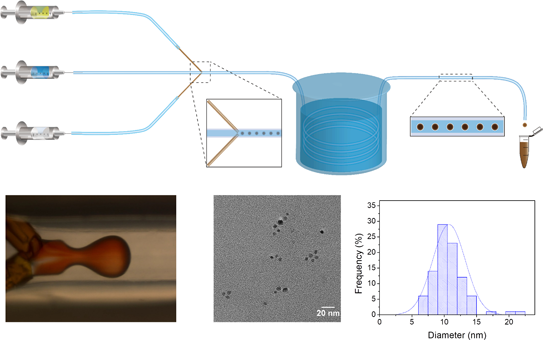
- storage [2], environmental studies [3], or in medicine [4]. In medical applications, a particular focus of research lies on the development of multifunctional nanomaterials, as they allow for the parallel treatment and diagnostic monitoring of a diseases and thus would help to reduce the costs of


SERS active Ag–SiO2 nanoparticles obtained by laser ablation of silver in colloidal silica
Beilstein J. Nanotechnol. 2018, 9, 2396–2404, doi:10.3762/bjnano.9.224
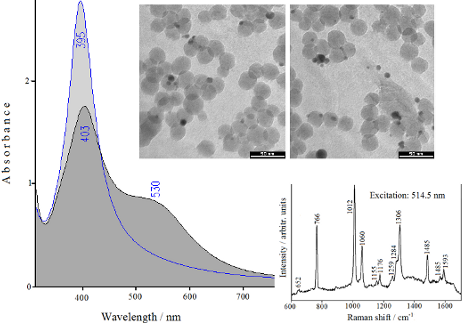
- formed with silica and silver, especially in recent years [1][2][3][4][5][6][7][8][9][10][11][12][13][14], which have found various applications in medicine, catalysis and environmental research. In this regard, it is important to remark that silica is an inert and optically transparent material. The aim


The role of adatoms in chloride-activated colloidal silver nanoparticles for surface-enhanced Raman scattering enhancement
Beilstein J. Nanotechnol. 2018, 9, 2236–2247, doi:10.3762/bjnano.9.208
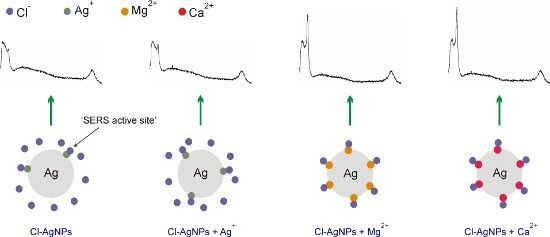
- Medicine, Manastur 3-5, 400372 Cluj-Napoca, Romania 10.3762/bjnano.9.208 Abstract Chloride-capped silver nanoparticles (Cl-AgNPs) allow for high-intensity surface-enhanced Raman scattering (SERS) spectra of cationic molecules to be obtained (even at nanomolar concentration) and may also play a key role in



Fabrication of photothermally active poly(vinyl alcohol) films with gold nanostars for antibacterial applications
Beilstein J. Nanotechnol. 2018, 9, 2040–2048, doi:10.3762/bjnano.9.193
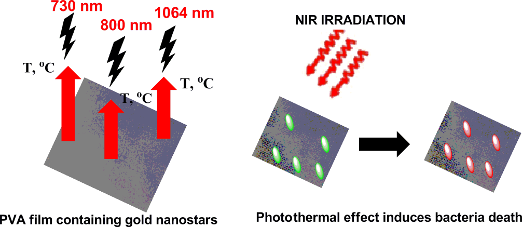
- Mykola Borzenkov Maria Moros Claudia Tortiglione Serena Bertoldi Nicola Contessi Silvia Fare Angelo Taglietti Agnese D'Agostino Piersandro Pallavicini Maddalena Collini Giuseppe Chirico Department of Medicine and Surgery, Nanomedicine Center, University of Milano-Bicocca, Piazza dell’Ateneo Nuovo


Biomimetic and biodegradable cellulose acetate scaffolds loaded with dexamethasone for bone implants
Beilstein J. Nanotechnol. 2018, 9, 1986–1994, doi:10.3762/bjnano.9.189
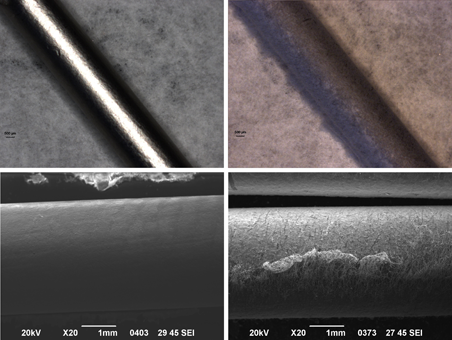
- inflammations along with a simultaneous controlled release of the drug. Keywords: drug delivery; electrospinning; nanocoatings; orthopedics; tissue engineering; Introduction The application of nanotechnology in medicine, known as nanomedicine, aims to overcome problems associated with diseases at the


Preparation of micro/nanopatterned gelatins crosslinked with genipin for biocompatible dental implants
Beilstein J. Nanotechnol. 2018, 9, 1735–1754, doi:10.3762/bjnano.9.165
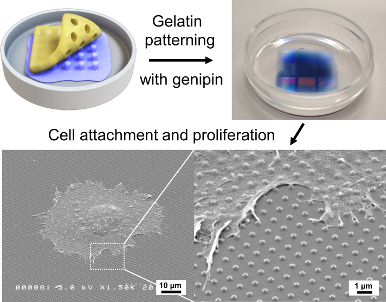
- Reika Makita Tsukasa Akasaka Seiichi Tamagawa Yasuhiro Yoshida Saori Miyata Hirofumi Miyaji Tsutomu Sugaya Department of Periodontology and Endodontology, Graduate School of Dental Medicine, Hokkaido University, Sapporo 060-8586, Japan Department of Biomaterials and Bioengineering, Faculty of
- Dental Medicine, Hokkaido University, Sapporo 060-8586, Japan School of Dental Medicine, Hokkaido University, Sapporo 060-8586, Japan Department of Periodontology and Endodontology, Faculty of Dental Medicine, Hokkaido University, Sapporo 060-8586, Japan 10.3762/bjnano.9.165 Abstract Background








Atomic-level characterization and cilostazol affinity of poly(lactic acid) nanoparticles conjugated with differentially charged hydrophilic molecules
Beilstein J. Nanotechnol. 2018, 9, 1328–1338, doi:10.3762/bjnano.9.126
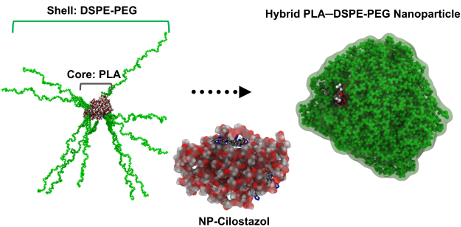
- , Talca, Chile INFIQC, CONICET, Departamento de Química Teórica y Computacional, Facultad de Ciencias Químicas, Universidad Nacional de Córdoba, XUA5000 Córdoba, Argentina Laboratory of Nanomedicine and Targeted Delivery, Center for Integrative Medicine and Innovative Science (CIMIS), Faculty of Medicine
- promising field for numerous diseases and represents the forefront of modern medicine. In the present work, full atomistic computer simulations were applied to study poly(lactic acid) (PLA) nanoparticles conjugated with polyethylene glycol (PEG). The formation of this complex system was simulated using the


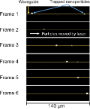
Surface characterization of nanoparticles using near-field light scattering
Beilstein J. Nanotechnol. 2018, 9, 1228–1238, doi:10.3762/bjnano.9.114
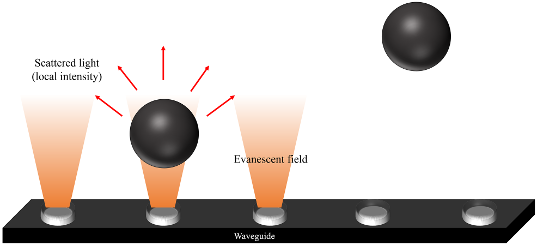
- reaction kinetics at the particle surface. Keywords: nanoparticle surface properties; nanoparticles; nanophotonic force microscopy; near-field light scattering; superparamagnetic iron oxide; Introduction Nanotechnology is an increasingly integral part of modern medicine, predominantly in the fields of




Bioinspired self-healing materials: lessons from nature
Beilstein J. Nanotechnol. 2018, 9, 907–935, doi:10.3762/bjnano.9.85
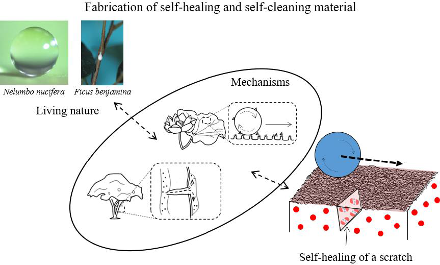
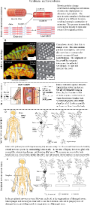
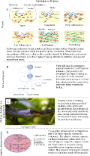
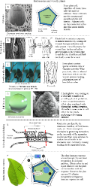
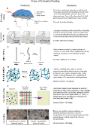
- ] states that regenerative medicine “…seeks to repair or regenerate damaged tissue and organs…without leaving scar tissue behind, thereby restoring both structure and function of tissues/organs.” The overall goal of life is to survive, and healing is one of the tools an organism uses to achieve this goal








Comparative study of antibacterial properties of polystyrene films with TiOx and Cu nanoparticles fabricated using cluster beam technique
Beilstein J. Nanotechnol. 2018, 9, 861–869, doi:10.3762/bjnano.9.80
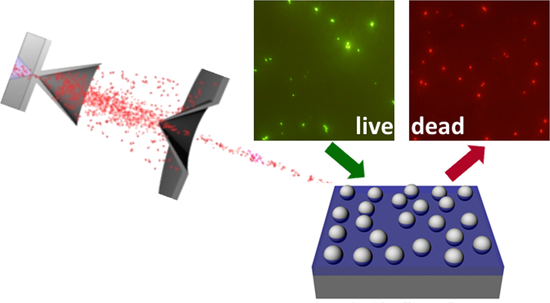
- 10.3762/bjnano.9.80 Abstract Background: Antibacterial materials are of high importance for medicine, and for the production and conservation of food. Among these materials, polymer films with metal nanoparticles (NPs) are of considerable interest for many practical applications. Results: The paper
- of consumables for medicine (for example, catheters for drug delivery) [7][8]. There are different ways for the formation of polymers with metal NPs. Particles can be synthesized in situ using the organic matrix as the reaction medium or ex situ by chemical or physical means and then incorporated




Heavy-metal detectors based on modified ferrite nanoparticles
Beilstein J. Nanotechnol. 2018, 9, 762–770, doi:10.3762/bjnano.9.69
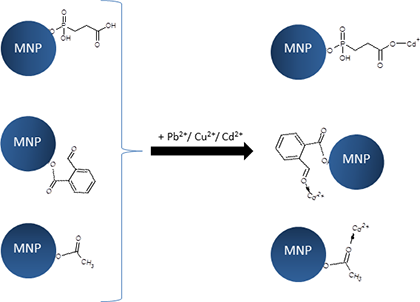
- nanoparticles can be widely used in medicine for drug delivery, implants manufacture, as components of contrast agents in magnetic resonance imaging (MRI) as well as active centers in hyperthermia treatment [1]. The use of magnetic nanoparticles in drug delivery allows for a significant reduction of the amount


Nanoparticle delivery to metastatic breast cancer cells by nanoengineered mesenchymal stem cells
Beilstein J. Nanotechnol. 2018, 9, 321–332, doi:10.3762/bjnano.9.32
- Liga Saulite Karlis Pleiko Ineta Popena Dominyka Dapkute Ricardas Rotomskis Una Riekstina Faculty of Medicine, University of Latvia, Raina Blvd. 19, LV-1586 Riga, Latvia Biomedical Physics Laboratory, National Cancer Institute, P. Baublio Street 3b, LT-08406 Vilnius, Lithuania Life Science Center
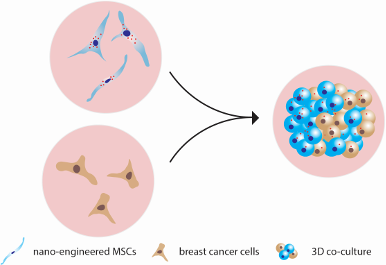
- nanoparticle delivery vehicles to specifically target metastatic breast cancer cells. Experimental Cell culture Primary human skin mesenchymal stem cells (MSCs) from frozen primary cell stock were used in accordance with authorised approval from the Institute of Experimental and Clinical Medicine Ethics



Dynamic behavior of a nematic liquid crystal with added carbon nanotubes in an electric field
Beilstein J. Nanotechnol. 2018, 9, 233–241, doi:10.3762/bjnano.9.25
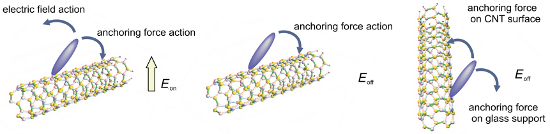
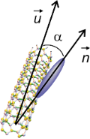
- : Fréedericksz transition, nanotubes; Introduction The increased interest for nanomaterials in different domains such as chemistry, medicine or engineering, makes their characterization quite necessary. This might be the reason why there are so many research papers presenting new materials and new experiments

![[Graphic 1]](/bjnano/content/inline/2190-4286-9-25-i33.svg?max-width=637&scale=1.18182) is the undistu...
is the undistu...



Liquid-crystalline nanoarchitectures for tissue engineering
Beilstein J. Nanotechnol. 2018, 9, 205–215, doi:10.3762/bjnano.9.22
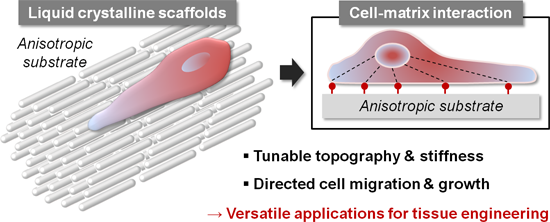
- challenges for applying LC nanoarchitectures in tissue engineering fields is discussed. Keywords: biocolloid; biopolymer; cell-matrix interaction; mesophase; regenerative medicine; Review Introduction Liquid crystals (LCs) are ubiquitous in our life [1]. On one hand, LC materials play a central role in
- not yet been sufficiently recognized among scientists in the field of tissue engineering and regenerative medicine, or even among experts in fields of LC technology. The objective of this review article is to deal with this issue with a multidisciplinary point of view. First, the ultrastructures and
- discussed, in the context of their applications to cell templates and scaffolds for regenerative medicine. In particular, it is discussed how varying nanoarchitectures in different LC orders have been realized in several tissue engineering topics. Lastly, a perspective on the opportunities and challenges


Co-reductive fabrication of carbon nanodots with high quantum yield for bioimaging of bacteria
Beilstein J. Nanotechnol. 2018, 9, 137–145, doi:10.3762/bjnano.9.16
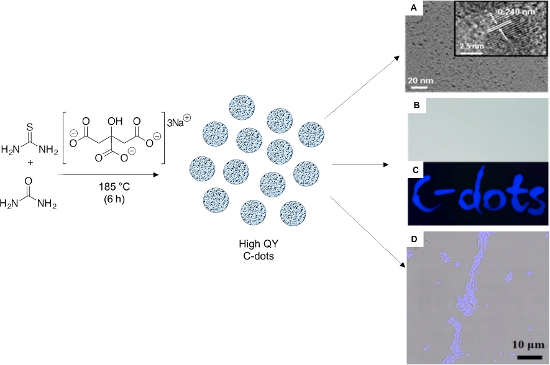
- medicine. Within this class of materials, carbon nanodots (C-dots) are deemed a major breakthrough for the development of fluorescent nanomaterials. They are a promising alternative to fluorescent inorganic semiconductor nanocrystals and organic dyes due to their chemical stability, good dispersibility in


Hyperthermic intracavitary nanoaerosol therapy (HINAT) as an improved approach for pressurised intraperitoneal aerosol chemotherapy (PIPAC): Technical description, experimental validation and first proof of concept
Beilstein J. Nanotechnol. 2017, 8, 2729–2740, doi:10.3762/bjnano.8.272
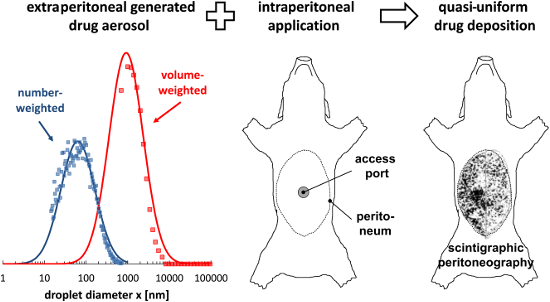
- -01062 Dresden, Germany Technologieorientierte Partikel-, Analysen- und Sensortechnik, Topas GmbH, Oskar-Röder Straße 12, D-01237 Dresden, Germany Clinic for Nuclear Medicine, University Hospital Essen, Hufelandstraße 55, D-45147 Essen, Germany Basic Research Laboratory Department of Surgery, St. Mary’s
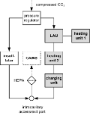


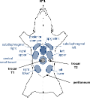


Dry adhesives from carbon nanofibers grown in an open ethanol flame
Beilstein J. Nanotechnol. 2017, 8, 2719–2728, doi:10.3762/bjnano.8.271
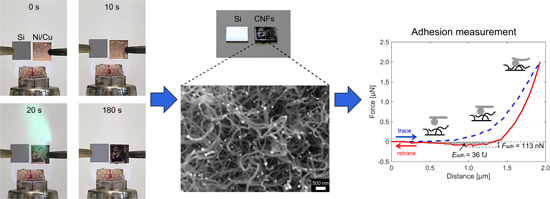
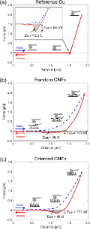
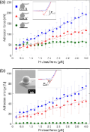
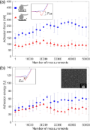
- ], manufacturing processes to transfer objects [23] and plasters in medicine [24]. Polymer-based dry adhesives [25][26][27] benefit from easy fabrication routes and low production cost. However, there are several polymer-related problems, such as thermal instability at elevated temperatures and creep [28


Synthesis of [{AgO2CCH2OMe(PPh3)}n] and theoretical study of its use in focused electron beam induced deposition
Beilstein J. Nanotechnol. 2017, 8, 2615–2624, doi:10.3762/bjnano.8.262
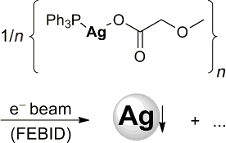
- metals [5]. In this context, the deposition of, for example, silver is challenging, since there is a lack of volatile silver precursors for FEBID processes [5]. Silver (nano)structures are of importance, for example, in circuits, batteries, LED or RFID chips, medicine and photovoltaics [1]. Recently, it


Involvement of two uptake mechanisms of gold and iron oxide nanoparticles in a co-exposure scenario using mouse macrophages
Beilstein J. Nanotechnol. 2017, 8, 2396–2409, doi:10.3762/bjnano.8.239
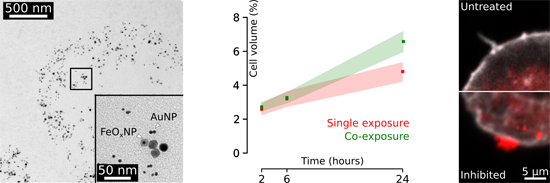
- rise of nanotechnology-containing products [1]. Numerous contemporary developments in consumer products (e.g., food additives, cosmetics and sporting equipment), environmental remediation, medicine and information technology heavily rely on innovative nanomaterial-driven industrial technology [2]. A