


Search results
Search for "monolayer" in Full Text gives 503 result(s) in Beilstein Journal of Nanotechnology. Showing first 200.
Hydrophilicity and carbon chain length effects on the gas sensing properties of chemoresistive, self-assembled monolayer carbon nanotube sensors
Beilstein J. Nanotechnol. 2019, 10, 565–577, doi:10.3762/bjnano.10.58
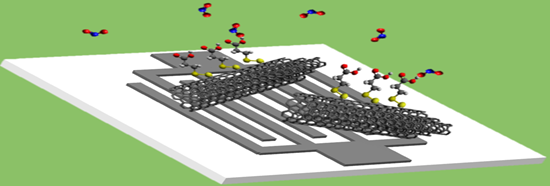
- ); self-assembled monolayer (SAM); thiol; Introduction Carbon nanotubes were first observed by Sumio Iijima in 1991 [1] and since then, this nanostructure has been widely used in chemoresistive gas sensors [2][3][4][5] due to the possibility to engineer its sensitivity towards chemicals present in a


Direct observation of the CVD growth of monolayer MoS2 using in situ optical spectroscopy
Beilstein J. Nanotechnol. 2019, 10, 557–564, doi:10.3762/bjnano.10.57
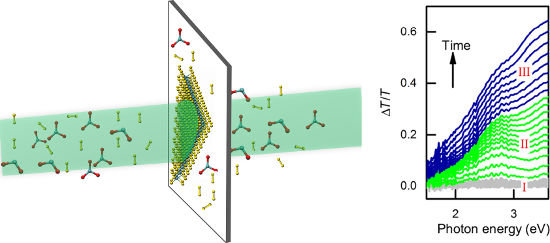
- dichalcogenide (2D TMDC) materials. However, it is very challenging to carry out such studies during chemical vapor deposition (CVD). Here, we report the first, real time, in situ study of the CVD growth of 2D TMDCs. More specifically, the CVD growth of a molybdenum disulfide (MoS2) monolayer on sapphire
- substrates has been monitored in situ using differential transmittance spectroscopy (DTS). The growth of the MoS2 monolayer can be precisely followed by observation of the evolution of the characteristic optical features. Consequently, a strong correlation between the growth rate of the MoS2 monolayer and
- spectroscopy; molybdenum disulfide (MoS2) monolayer; two-dimensional transition-metal dichalcogenides (2D TMDC); Introduction Two-dimensional transition metal dichalcogenide (2D TMDC) materials have drawn wide attention because of their fascinating physical and chemical properties [1][2][3][4][5][6]. Given


Mo-doped boron nitride monolayer as a promising single-atom electrocatalyst for CO2 conversion
Beilstein J. Nanotechnol. 2019, 10, 540–548, doi:10.3762/bjnano.10.55
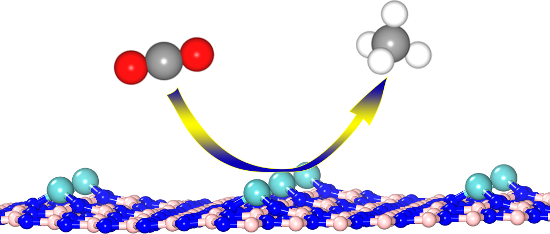
- ), including Sc to Zn, Mo, Ru, Rh, Pd and Ag, supported on a boron nitride (BN) monolayer with boron vacancies, were investigated as electrocatalysts for the CO2 reduction reaction (CRR) using comprehensive density functional theory (DFT) calculations. The results demonstrate that a single-Mo-atom-doped boron
- nitride (Mo-doped BN) monolayer possesses excellent performance for converting CO2 to CH4 with a relatively low limiting potential of −0.45 V, which is lower than most catalysts for the selective production of CH4 as found in both theoretical and experimental studies. In addition, the formation of OCHO on
- the Mo-doped BN monolayer in the early hydrogenation steps is found to be spontaneous, which is distinct from the conventional catalysts. Mo, as a non-noble element, presents excellent catalytic performance with coordination to the BN monolayer, and is thus a promising transition metal for catalyzing


Choosing a substrate for the ion irradiation of two-dimensional materials
Beilstein J. Nanotechnol. 2019, 10, 531–539, doi:10.3762/bjnano.10.54
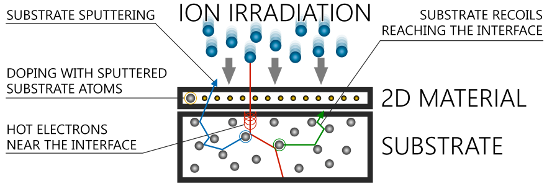
- irradiation of 2D materials is usually carried out on substrates [1]. However, the substrate choice is known to play a significant (and sometimes crucial) role in the irradiation process [1][2][3][4][5][6][7]. On one hand, it can increase the stability of a monolayer under irradiation, leading to reduction of
- a resultant defect yield [3]; on the other, it can participate in defect formation in the 2D material through energy transfer from sputtered substrate atoms moving through the monolayer [1][4]. When the energy is suitable, these atoms can become embedded into the 2D material crystal lattice, leading
- to a peculiar doping effect, as it was shown for graphene in [1]. Besides, one cannot exclude participation of displaced recoil atoms [8] that reach the interface but remain within the substrate. Moreover, since there is a charge transfer between the substrate and the monolayer [9][10][11][12], the
Polymorphic self-assembly of pyrazine-based tectons at the solution–solid interface
Beilstein J. Nanotechnol. 2019, 10, 494–499, doi:10.3762/bjnano.10.50
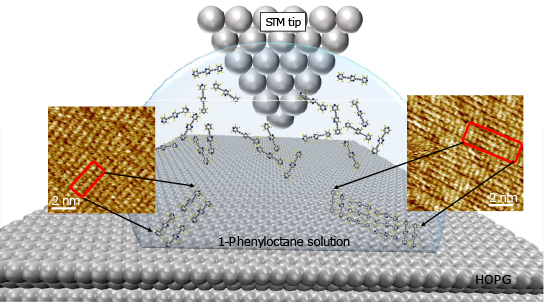
- topographic image of the 2,5-bis(pyridin-4-ylethynyl)pyrazine molecular monolayer at the 1-phenyloctane–HOPG interface. Molecules of 1 self-assemble to form ordered structures on a very large scale up to 500 nm × 500 nm. As clearly discernible in Figure 2a, these molecules undergo polymorphic self-assembly


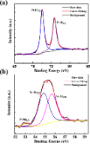
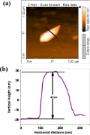
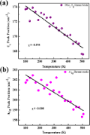
Temperature-dependent Raman spectroscopy and sensor applications of PtSe2 nanosheets synthesized by wet chemistry
Beilstein J. Nanotechnol. 2019, 10, 467–474, doi:10.3762/bjnano.10.46
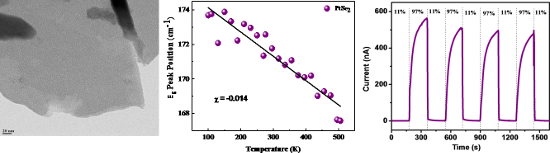
- , etc. from group IV–V and X represents the chalcogenides family, X = S, Se, Te, etc. The metal atom M is sandwiched between layers of chalcogenide (X) atoms in the structure X–M–X. The TMDCs show diverse functional properties at the monolayer level in contrast to bulk due to the quantum confinement
- semimetallic nature and single-layer PtSe2 has a semiconducting nature with a bandgap of 1.2 eV. Bilayer PtSe2 is also a semiconducting material but with a slightly smaller band gap than the monolayer material [19]. This layer-dependent conversion of semimetal-to-semiconductor transition has potential for



Removal of toxic heavy metals from river water samples using a porous silica surface modified with a new β-ketoenolic host
Beilstein J. Nanotechnol. 2019, 10, 262–273, doi:10.3762/bjnano.10.25
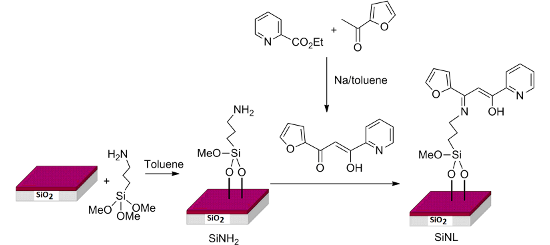
- ). This indicates that the adsorption of metal ions occurs by a monolayer formation in the same limited number of adsorption sites on a homogeneous adsorbent surface. Thermodynamic modeling. The influence of temperature on the adsorption of Zn(II), Pb(II), Cd(II) and Cu(II) ions onto SiNL was evaluated


Scanning probe microscopy for energy-related materials
Beilstein J. Nanotechnol. 2019, 10, 132–134, doi:10.3762/bjnano.10.12

- covalently grafted with a monolayer of poly(3-hexylthiophene) functionalized with carboxylic groups [8]. Their study unravels the physical mechanisms taking place locally during the photovoltaic process and its correlation to the nanoscale morphology. Electrochemical energy storage (i.e., in a battery) is a
Pull-off and friction forces of micropatterned elastomers on soft substrates: the effects of pattern length scale and stiffness
Beilstein J. Nanotechnol. 2019, 10, 79–94, doi:10.3762/bjnano.10.8
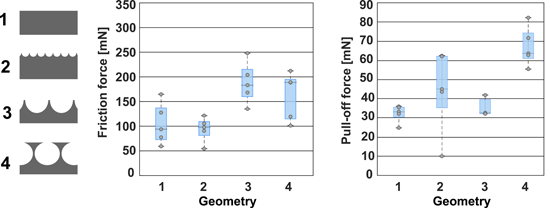
- this method is that it requires complex instrumentation [28]. Akerboom et al. recently demonstrated a fast and cost-effective alternative method to fabricate micropatterns, in which a colloidal monolayer acts as a three-dimensional template to shape a curable resin [29][30], resulting in arrays of sub
- without a terminal layer on friction. The fabricated sub-microscale dimples had a lower depth than the particle radius. Considering that the time between casting the monolayer with PDMS, degassing and subsequent curing at 68 °C was in the order of 15 min, the uncured PDMS does not fully flow through the
- colloidal monolayer on this timescale, resulting in a limited dimple depth. A strategy to increase the PDMS penetration into the monolayer would be to cure the PDMS at room temperature for 48 h, in which case PDMS remains in a liquid state for much longer. Indeed, we did observe larger dimples and thinner





Apparent tunneling barrier height and local work function of atomic arrays
Beilstein J. Nanotechnol. 2018, 9, 3048–3052, doi:10.3762/bjnano.9.283
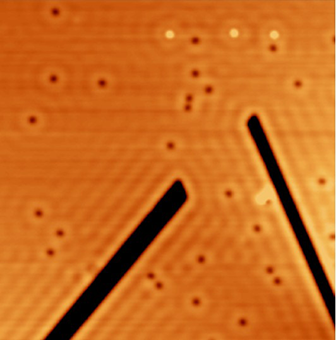
- ) terrace, a Cu adatom, a monatomic chain, a wide chain, and grooves of monolayer depth with single-atom or wider width. There are systematic differences between the slopes of the terrace data (black line) and the other data sets (colors). On asperities such as adatoms and narrow chains the current varies
- chains and trenches of monolayer height. (a) A Cu chain approximately two atoms wide and a parallel trench. (b) Two wide trenches (approx. 2 and 3 atoms) with deposited single Cu atoms. (c) Monatomic chains and trenches. The images were acquired at (a) V = 20 mV and I = 3 nA and (b, c) V = 100 mV and I
- monolayer depth with single-atom and wider width (approx. 2 atoms) are displayed. The curves are arbitrarily offset along the ordinate for clarity. The terrace data are shown with each curve for comparison. Small undulations of the data are due to low-frequency vibration of the microscope. Apparent barrier


Size limits of magnetic-domain engineering in continuous in-plane exchange-bias prototype films
Beilstein J. Nanotechnol. 2018, 9, 2968–2979, doi:10.3762/bjnano.9.276
- were approximated from the density values of pure metals using with x being the mole fraction, x = n/100. The SRIM compound correction was deactivated for all layers except SiO2. Simulations were performed using the monolayer collision mode for 2 × 10⁶ helium ions with a kinetic energy of 15 keV




![[Graphic 63]](/bjnano/content/inline/2190-4286-9-276-i63.svg?max-width=637&scale=1.18182) .
. ![[Graphic 64]](/bjnano/content/inline/2190-4286-9-276-i64.svg?max-width=637&scale=1.18182) is the angle between the domain wall (DW) normal vector
is the angle between the domain wall (DW) normal vector ![[Graphic 65]](/bjnano/content/inline/2190-4286-9-276-i65.svg?max-width=637&scale=1.18182) and the local unidirectio...
and the local unidirectio...
Ternary nanocomposites of reduced graphene oxide, polyaniline and hexaniobate: hierarchical architecture and high polaron formation
Beilstein J. Nanotechnol. 2018, 9, 2936–2946, doi:10.3762/bjnano.9.272
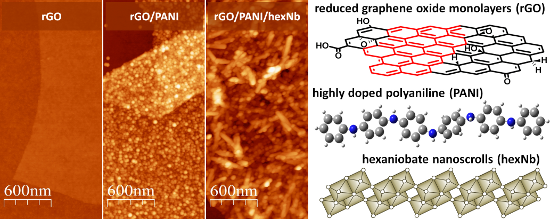
- smooth monolayer rGO particles, which are partially restacked when deposited on the Si/SiO2 substrate. The AFM images of the rGO/PANI nanocomposite show similar flake dimensions (ca. 25 μm) as the rGO-25 sample, and no granular particles were observed, as reported for PANI aggregates [36]. On the other


Low cost tips for tip-enhanced Raman spectroscopy fabricated by two-step electrochemical etching of 125 µm diameter gold wires
Beilstein J. Nanotechnol. 2018, 9, 2718–2729, doi:10.3762/bjnano.9.254
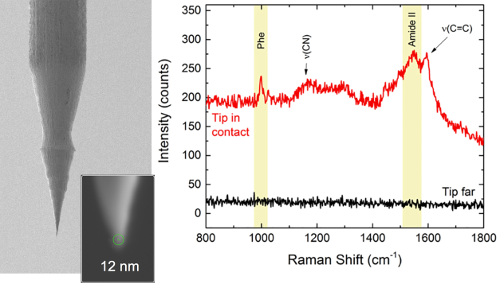
- bound) in gap-mode. TERS maps of sub-monolayer films of R6G on Au(111) are shown with optical resolution better than 5 nm. The procedure can in principle be applied to thinner wires to further reduce costs and production times, although issues related to the fragility of the tip and difficulties in the


Size-selected Fe3O4–Au hybrid nanoparticles for improved magnetism-based theranostics
Beilstein J. Nanotechnol. 2018, 9, 2684–2699, doi:10.3762/bjnano.9.251
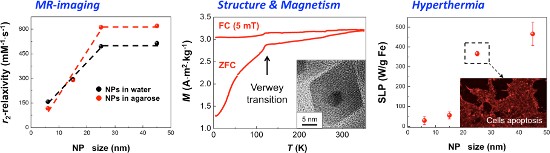
- positive staining of 4T1 cells is found only on the periphery of the cell monolayer. However, ROS activation is observed at this point of time – as indicated by an increased number of H2DCFDA-positive cells in the culture (Figure S5C, Supporting Information File 1). Exposure to AMF for 30 min is sufficient


Two-dimensional semiconductors pave the way towards dopant-based quantum computing
Beilstein J. Nanotechnol. 2018, 9, 2668–2673, doi:10.3762/bjnano.9.249
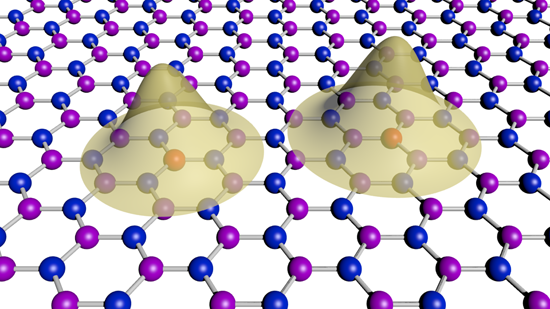
- instance, MoS2[32] or h-BN [33]) and the experimentally reported values lie in a wide range [32]. Typically, the dielectric constant of monolayer materials is expected to be smaller than their 3D counterparts, as their screening capabilities are reduced at low dimensionality [29][33]. All this variability


![[Graphic 7]](/bjnano/content/inline/2190-4286-9-249-i7.svg?max-width=637&scale=1.18182) and energy for one electron bound to a donor pair
and energy for one electron bound to a donor pair ![[Graphic 8]](/bjnano/content/inline/2190-4286-9-249-i8.svg?max-width=637&scale=1.18182) as a function of R. For R = 2a*, ...
as a function of R. For R = 2a*, ...

Nanoantenna structures for the detection of phonons in nanocrystals
Beilstein J. Nanotechnol. 2018, 9, 2646–2656, doi:10.3762/bjnano.9.246
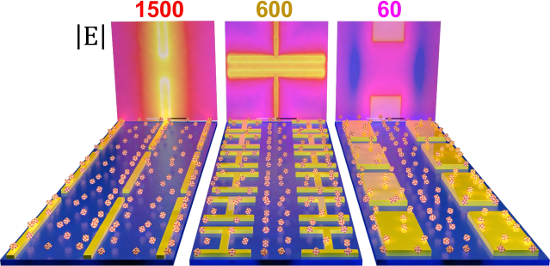
- been extensively examined to date. Recently, A. Toma et al. [21] published the first report on SEIRA for detection of an optical phonon mode (so-called Froehlich mode) from a monolayer of CdSe NCs deposited on Au nanoantenna arrays. The SEIRA enhancement induced by the nanoantennas was estimated to be
- -shaped nanoantennas, were used for further SEIRA investigations. These arrays with appropriate structural parameters were also used for depositing CdSe, CdS, and PbS NCs in the Langmuir–Blodgett experiments. As it is seen from representative SEM images in Figure 7, a homogeneous monolayer of CdSe NCs is


Characterization of the microscopic tribological properties of sandfish (Scincus scincus) scales by atomic force microscopy
Beilstein J. Nanotechnol. 2018, 9, 2618–2627, doi:10.3762/bjnano.9.243

- . [13] sedated animals, put them on a tilted flat covered with a monolayer of granular particles, and determined the angle at which the animal started to slide in forward direction on its ventral scales. The static friction coefficient µst, determined in this more classical way, was higher for sandfish


Non-agglomerated silicon–organic nanoparticles and their nanocomplexes with oligonucleotides: synthesis and properties
Beilstein J. Nanotechnol. 2018, 9, 2516–2525, doi:10.3762/bjnano.9.234
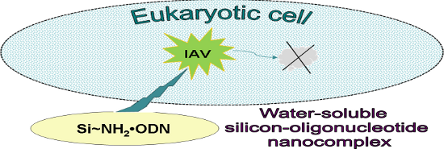
- blue) and 488 nm (for fluorescein-labeled samples, green) were used. The results are shown in Figure 5. Cell viability assays The experiments were carried out similarly as described in [20]. In short: Two days after the formation of a continuous monolayer of MDCK cells at 37 °C and 5% CO2, the cells


ZnO-nanostructure-based electrochemical sensor: Effect of nanostructure morphology on the sensing of heavy metal ions
Beilstein J. Nanotechnol. 2018, 9, 2421–2431, doi:10.3762/bjnano.9.227
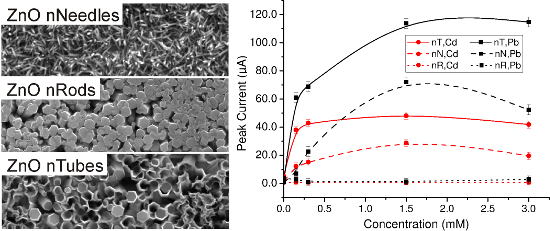
- in the substitution reaction and forms stronger bonds with the ZnO surface. The Freundlich (multilayered) adsorption model is the result of a very strong interaction [26]. By contrast, Cd–O bonds are much weaker than Pb–O bonds, so in the case of cadmium, the Langmuir (monolayer) adsorption model is
- effectiveness of sedimentation is directly related to the electronegativity of the adsorbate: substances with higher electronegativity form stronger bonds with the ZnO surface and exceed the monolayer range. This was supported by the fact that a significantly better adsorption of lead ions was observed compared


Phosphorus monolayer doping (MLD) of silicon on insulator (SOI) substrates
Beilstein J. Nanotechnol. 2018, 9, 2106–2113, doi:10.3762/bjnano.9.199
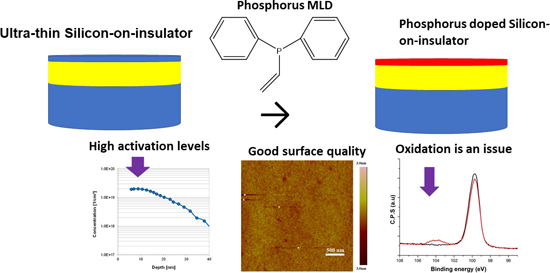
- Applied Materials, Gloucester, Massachusetts, USA CRANN@AMBER, Trinity College Dublin, Dublin 2, Ireland 10.3762/bjnano.9.199 Abstract This paper details the application of phosphorus monolayer doping of silicon on insulator substrates. There have been no previous publications dedicated to the topic of
- and will be problematic when attempting to reach doping levels achieved by rival techniques. Keywords: CMOS; doping; monolayer; silicon; silicon on insulator (SOI); Introduction Aggressive device scaling in the sub-20 nm region has resulted in a number of techniques that were previously essential
- future device scaling that a means of damage-free, conformal doping is established, and this is where monolayer doping (MLD) appears to have potential to succeed. MLD was pioneered by Javey and co-workers [5] in 2008 and has subsequently been used to dope multiple substrate types such as silicon [5][6][7




A scanning probe microscopy study of nanostructured TiO2/poly(3-hexylthiophene) hybrid heterojunctions for photovoltaic applications
Beilstein J. Nanotechnol. 2018, 9, 2087–2096, doi:10.3762/bjnano.9.197
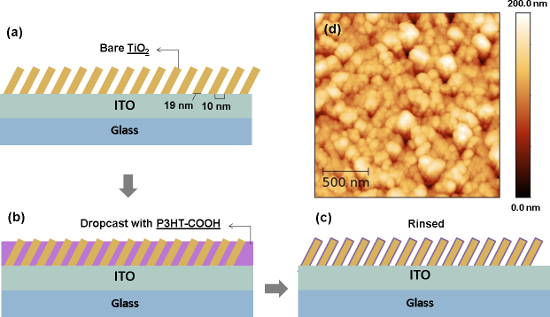
- monolayer of poly(3-hexylthiophene) (P3HT) functionalized with carboxylic groups (–COOH). Through a joint analysis of the photovoltaic properties at the nanoscale by photoconductive-AFM (PC-AFM) and surface photovoltage imaging, we investigated the physical mechanisms taking place locally during the
- composed of arrays of nanoscale columns, covalently sensitized with a P3HT-COOH monolayer to form hybrid bulk heterojunctions. The grafting of P3HT on the surface of TiO2, ensured by the COOH groups, was demonstrated to be beneficial for the photoconversion efficiency of the system [16][17][18]. The


Recent highlights in nanoscale and mesoscale friction
Beilstein J. Nanotechnol. 2018, 9, 1995–2014, doi:10.3762/bjnano.9.190
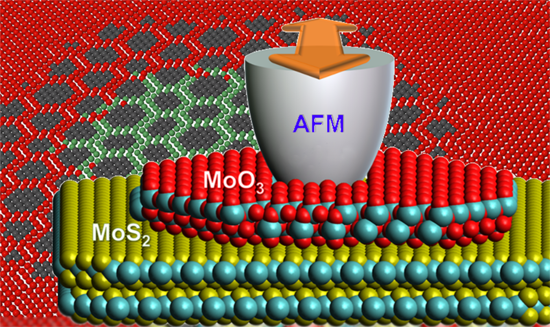
- frictional sliding observed in the case of overlayer/substrate lattice mismatch. Nucleation dynamics characterizes the depinning mechanism of a stiff commensurate colloidal monolayer [167]. In contrast, if the interface is characterized by a lattice mismatch, the presence/absence of static friction depends


Self-assembled quasi-hexagonal arrays of gold nanoparticles with small gaps for surface-enhanced Raman spectroscopy
Beilstein J. Nanotechnol. 2018, 9, 1977–1985, doi:10.3762/bjnano.9.188
- /mL and stirred for 2 days. The micelles were loaded with chlorauric acid (HAuCl4, loading parameter (L = 0.5), Sigma-Aldrich) and stirred again for 2 days. Spin-coating was applied to cover the substrate with a monolayer of the gold-loaded micelles (30 s at 2000 rpm). Electroless deposition A quartz
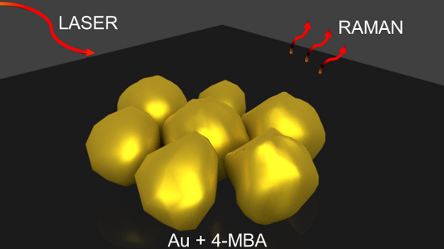
- features. To measure the SERS signal, the gold nanoparticles were covered with a self-assembled monolayer of 4-MBA. Because the thiol-group of the 4-MBA molecules has a very high affinity for gold [27], and the samples were rinsed thoroughly with ethanol to remove any unbound molecules, we can assume that



Synthesis of hafnium nanoparticles and hafnium nanoparticle films by gas condensation and energetic deposition
Beilstein J. Nanotechnol. 2018, 9, 1868–1880, doi:10.3762/bjnano.9.179
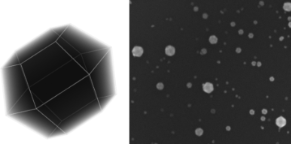
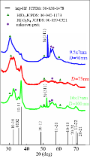
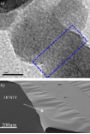
- . For this purpose samples with low coverage (monolayer) of Hf NPs were prepared. The coverage with nanoparticles was defined by the deposition time. AFM and TEM images reveal the height and diameter of the NPs. Faceted Hf nanoparticles were formed with a mean size of (diameter × height) 16 nm × 15 nm






Improving the catalytic activity for hydrogen evolution of monolayered SnSe2(1−x)S2x by mechanical strain
Beilstein J. Nanotechnol. 2018, 9, 1820–1827, doi:10.3762/bjnano.9.173
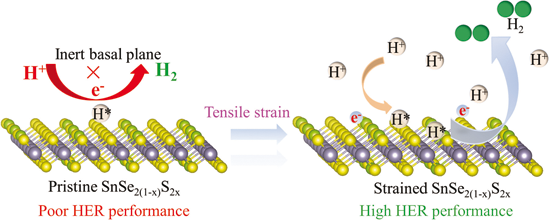
- non-noble metals and earth-abundant elements is a promising pathway for achieving practical electrochemical water splitting. In this work, the electronic properties and catalytic activity of monolayer SnSe2(1−x)S2x (x = 0–1) under compressive and tensile strain were investigated using density
- functional theory (DFT) computations. The results showed SnSe2(1−x)S2x alloys with continuously changing bandgaps from 0.8 eV for SnSe2 to 1.59 eV for SnS2. The band structure of a SnSe2(1−x)S2x monolayer can be further tuned by applied compressive and tensile strain. Moreover, tensile strain provides a
- direct approach to improve the catalytic activity for the hydrogen evolution reaction (HER) on the basal plane of the SnSe2(1−x)S2x monolayer. SnSeS and SnSe0.5S1.5 monolayers showed the best catalytic activity for HER at a tensile strain of 10%. This work provides a design for improved catalytic





