


Search results
Search for "nanowires" in Full Text gives 335 result(s) in Beilstein Journal of Nanotechnology. Showing first 200.
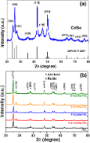
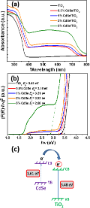
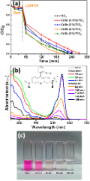
CdSe nanorod/TiO2 nanoparticle heterojunctions with enhanced solar- and visible-light photocatalytic activity
Beilstein J. Nanotechnol. 2017, 8, 2741–2752, doi:10.3762/bjnano.8.273
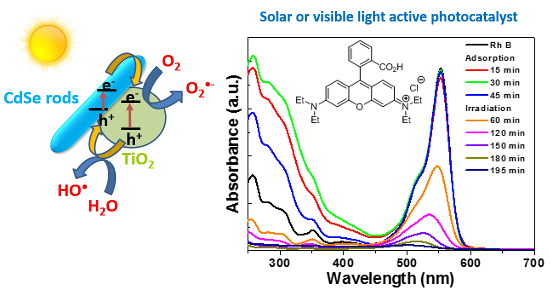
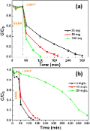
- nanoparticles (Aeroxide® P25) are of spherical/ellipsoidal shape and their average diameter is ≈23 ± 6 nm (Figure 1a). CdSe NRs produced after the solvothermal synthesis have an average length and an average diameter of 120 and 12 nm, respectively (Figure 1b). Some nanowires with lengths up to 300 nm could also






Beyond Moore’s technologies: operation principles of a superconductor alternative
Beilstein J. Nanotechnol. 2017, 8, 2689–2710, doi:10.3762/bjnano.8.269



The role of ligands in coinage-metal nanoparticles for electronics
Beilstein J. Nanotechnol. 2017, 8, 2625–2639, doi:10.3762/bjnano.8.263
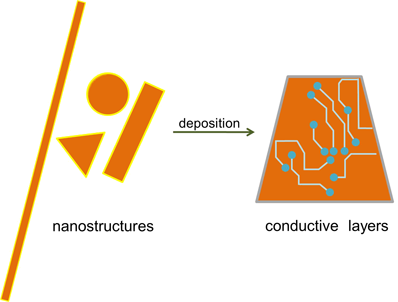
- rings [48], or patterned grids [49] have been fabricated as transparent conductive electrodes. Inks of metal nanoparticles are also good candidates to print electrodes for organic field-effect transistors [50]. Magdassi et al. demonstrated the inkject printing of silver nanowires (Ag NWs) onto plastic
- initial nucleation processes of particle synthesis; this is probably the mechanism of the formation of ultrathin gold nanowires [64]. Silver nanoparticle synthesis by reduction of silver salts is an important case of ligand-directed nanoparticle growth. Cetyltrimethylammonium bromide (CTAB, Figure 2) in
- silver nitrate in the presence of poly(vinylpyrrolidone) (PVP, Figure 2) and sodium bromide. The nanobars formed when bromide ions etched the multiply twinned seeds, promoted the formation of single crystal seeds, and initiated anisotropic growth [68]. Longer silver nanowires grew from multiply twinned


Localized growth of carbon nanotubes via lithographic fabrication of metallic deposits
Beilstein J. Nanotechnol. 2017, 8, 2592–2605, doi:10.3762/bjnano.8.260
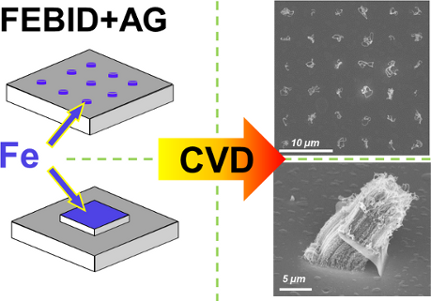
- for further improvements in the fabrication process. If one also considers the exploration of other precursors for both processes and surfaces, even more possibilities to tailor secondary nanostructures can be considered, including Si or Ge nanowires. One more specific direction might be to target the




Direct writing of gold nanostructures with an electron beam: On the way to pure nanostructures by combining optimized deposition with oxygen-plasma treatment
Beilstein J. Nanotechnol. 2017, 8, 2530–2543, doi:10.3762/bjnano.8.253
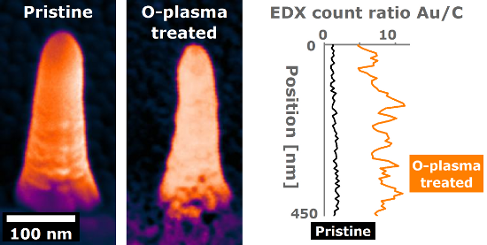
- years several methods to purify FEBID deposits have been presented. For instance, in the case of tungsten, it was found that just by applying a smart writing strategy one could produce single-crystal nanowires [47] whereas the use of a supersonic carrier gas can also yield nanostructures of a high
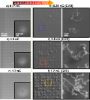
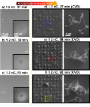
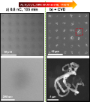
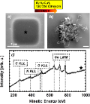
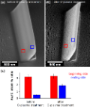
- the spacing between {1,1,1}, {2,0,0}, {2,2,0}, and {3,1,1} planes in the face centered cubic (fcc) Au lattice, respectively. Apart from the deposition of NPs, we used FEBID to directly write horizontal Au nanowires (NWs), NW networks, and planar structures (Figure 1d,e). In the latter case, the

Au nanostructure fabrication by pulsed laser deposition in open air: Influence of the deposition geometry
Beilstein J. Nanotechnol. 2017, 8, 2438–2445, doi:10.3762/bjnano.8.242
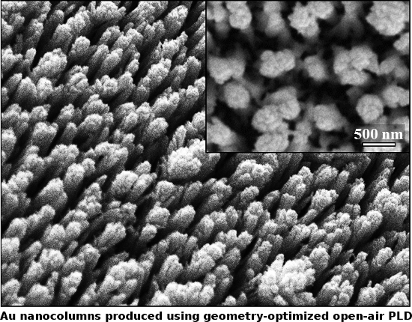
- decrease in the target–substrate distance below 3 mm resulted in the formation of denser, larger structures compared to deposition at larger distances [23]. In the latter case, micrometer-sized droplets and fine nanowires around and over them were obtained [21][23]. Despite the recent significant progress


Hydrothermal synthesis of ZnO quantum dot/KNb3O8 nanosheet photocatalysts for reducing carbon dioxide to methanol
Beilstein J. Nanotechnol. 2017, 8, 2264–2270, doi:10.3762/bjnano.8.226
- concentration of Nb2O5 was favorable to form NaNbO3 nanorods and nanoplates, while a lower concentration of NaOH facilitated formation of NaNbO3 cubes [12]. Shi and his co-workers synthesized polymeric g-C3N4 coupled with NaNbO3 nanowires for enhancing photocatalytic reduction of CO2 into renewable fuel [13




Substrate and Mg doping effects in GaAs nanowires
Beilstein J. Nanotechnol. 2017, 8, 2126–2138, doi:10.3762/bjnano.8.212
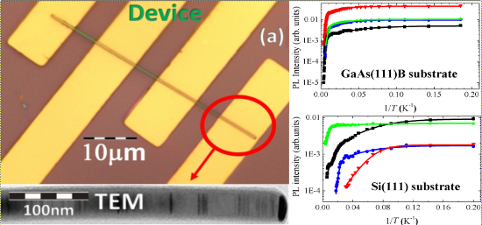
- Abstract Mg doping of GaAs nanowires has been established as a viable alternative to Be doping in order to achieve p-type electrical conductivity. Although reports on the optical properties are available, few reports exist about the physical properties of intermediate-to-high Mg doping in GaAs nanowires
- the GaAs nanowires on their electronic structure; ii) a considerable reduction of the density of vertical nanowires, which is almost null for growth on Si(111); iii) the occurrence of a higher WZ phase fraction, in particular for growth on Si(111); iv) an increase of the activation energy to release
- the less bound carrier in the radiative state from nanowires grown on GaAs(111)B; and v) a higher influence of defects on the activation of nonradiative de-excitation channels in the case of nanowires only grown on Si(111). Back-gate field effect transistors were fabricated with individual nanowires


Magnetic properties of optimized cobalt nanospheres grown by focused electron beam induced deposition (FEBID) on cantilever tips
Beilstein J. Nanotechnol. 2017, 8, 2106–2115, doi:10.3762/bjnano.8.210
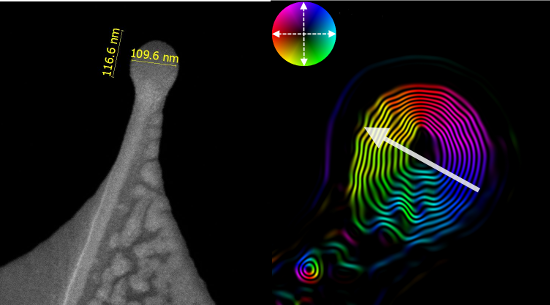
- of tip cantilevers with applications in magnetic force microscopy (MFM) [7][8][9][10] and magnetic resonance force microscopy (MRFM) [11]; (c) planar nanowires for application in magnetic domain-wall conduits [12][13], in logic circuits [14][15], in dense memory arrays [16] and for superconducting
- -vortex-lattice pinning [17]; as well as (d) three-dimensional nanowires for magnetic domain-wall studies [18][19] and for remote magnetomechanical actuation [20], quantum dots for magnetic storage [21] and catalytic purposes [22], polygonal shapes for micromagnetic studies [23][24] and spin-ice
- the growth mode, as previously reported in 3D cobalt nanowires grown by FEBID [31]. In 3D cobalt nanowires the growth occurs in a radial mode for a wire diameter greater than 120 nm, which results in higher Co content than wires with a diameter less than 80 nm, which grow in a linear mode. In order to


Systematic control of α-Fe2O3 crystal growth direction for improved electrochemical performance of lithium-ion battery anodes
Beilstein J. Nanotechnol. 2017, 8, 2032–2044, doi:10.3762/bjnano.8.204
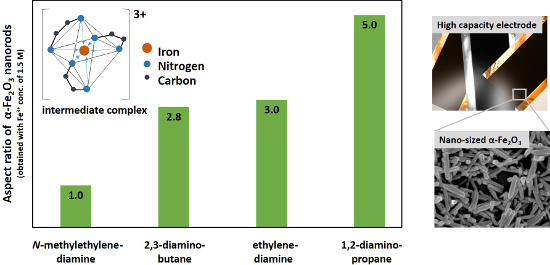
- α-Fe2O3 nanoparticles (e.g. nanorods with hexagonal structure, electrospun nanorods, and nanowires) or other morphologies (e.g. nanotubes, flower-like nanostructure, spindles, and hollow spheres) showed a notable electrochemical performance in the interaction with lithium. The results are also


Functional materials for environmental sensors and energy systems
Beilstein J. Nanotechnol. 2017, 8, 2015–2016, doi:10.3762/bjnano.8.201

- nanomaterials (e.g., nanowires, nanotubes, graphene, metal oxides, carbon nanostructures, large band gap semiconductors, and metals) with new sensing properties (e.g., ppb-level detection, high sensitivity, selectivity) that are self-heating and provide durable operation for low-power devices (tens of μW to
Freestanding graphene/MnO2 cathodes for Li-ion batteries
Beilstein J. Nanotechnol. 2017, 8, 1932–1938, doi:10.3762/bjnano.8.193
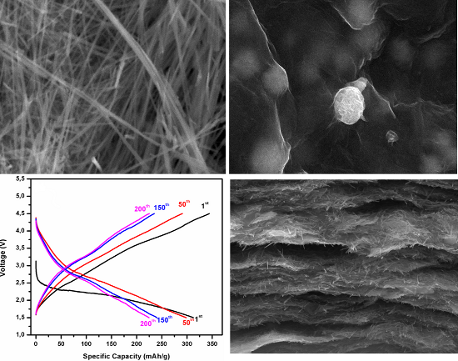
- The α-, β-, and γ-MnO2 phases were synthesized by a microwave-assisted hydrothermal method. α-MnO2 nanowires and β-MnO2 nanorods were prepared according to our previous report [8]. To prepare γ-MnO2, 1.83 mg of (NH4)2S2O8, 1.35 mg of MnSO4 and 3 mmol were dissolved in 80 mL of distilled water. Then
- nanostructure composed of uniform nanowires have 1–2 μm length and 40–60 nm average diameter. β-MnO2 (Figure 1b) shows that the as-prepared β-MnO2 sample has a nanorod structure with 0.5–1 μm length and 20–40 nm average diameter. The γ-MnO2 (Figure 1c) exhibits an urchin-like structure with 0.5–1 μm average
- diameter with very thin nanoneedles. The structure of graphene/MnO2 nanocomposites was also investigated. It can be seen from Figure 1d,e that α-MnO2 nanowires and β-MnO2 nanorods were homogeneously distributed on the surface and between the layers of graphene. Moreover, it also indicates that the urchin


(Metallo)porphyrins for potential materials science applications
Beilstein J. Nanotechnol. 2017, 8, 1786–1800, doi:10.3762/bjnano.8.180
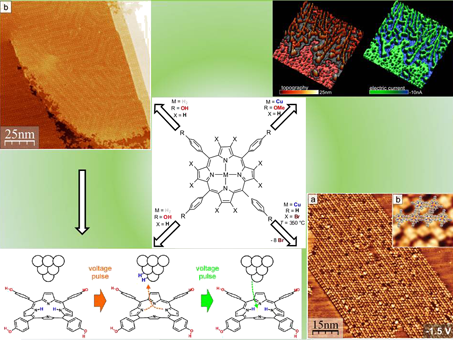
- to match certain device requirements. For example, after proper manipulation and lithography procedures single molecular nanowires or dendrites might be realized. This certainly opens possibilities for application in materials science, for example, the integration into molecular-based devices. In
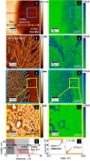
- valuable information in order to obtain single organic filaments that could eventually play a role as organic nanowires (Figure 2d). cs-AFM studies showed to be suitable to obtain quantitative measures of local transport properties in relation to topographical features and this approach could be applied to
- functionalization of (metallo)porphyrins on how to assemble individual molecules further into large non-covalently and covalently bonded ensembles. The potential for applications of the results reviewed here ranges from dendrites as nanowires for electronic/spintronic device integration via self-assembled non






Synthesis and catalytic application of magnetic Co–Cu nanowires
Beilstein J. Nanotechnol. 2017, 8, 1769–1773, doi:10.3762/bjnano.8.178
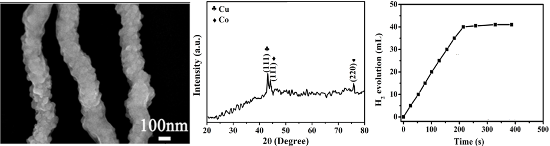
- Lijuan Sun Xiaoyu Li Zhiqiang Xu Kenan Xie Li Liao School of Chemical Engineering, Sichuan University, Chengdu 610065, PR China 10.3762/bjnano.8.178 Abstract A rapid, template-free method was developed to prepare magnetic, bimetallic Co–Cu nanowires via liquid phase reduction and metal
- replacement under an external magnetic field. The characterization results confirmed that the as-prepared product was bimetallic Co–Cu nanowires with a desirable linear structure. Additionally, the magnetic hysteresis loop showed that the bimetallic Co–Cu nanowires were paramagnetic, which meant they could be
- easily separated from the reaction mixture. Furthermore, they were applied to the hydrolysis system of ammonia borane as a catalyst for the first time. More importantly, the catalysis results showed that the bimetallic nanowires possessed appealing catalytic performance. Therefore, a rapid and facile


Transport characteristics of a silicene nanoribbon on Ag(110)
Beilstein J. Nanotechnol. 2017, 8, 1699–1704, doi:10.3762/bjnano.8.170
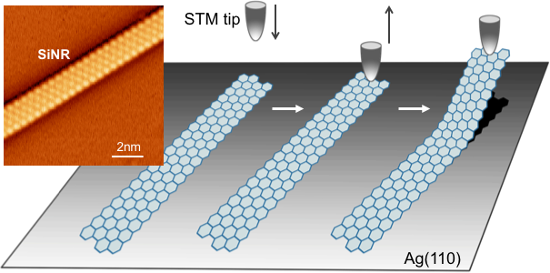
- discuss the origin of the peak as it relates to the SiNR. Keywords: nanojunction; nanoribbon; scanning tunnelling microscopy; silicene; transport; Introduction The electronic transport characteristics of nanomaterials from a single molecule, nanowires, nanotubes, and nanoribbons to two-dimensional (2D


Fixation mechanisms of nanoparticles on substrates by electron beam irradiation
Beilstein J. Nanotechnol. 2017, 8, 1523–1529, doi:10.3762/bjnano.8.153
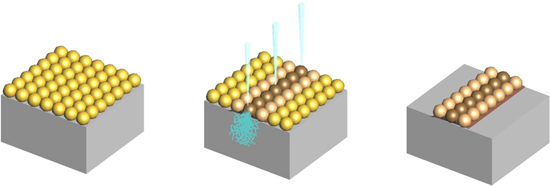
- particular, arrays of gold or silver nanostructures can be used for such waveguides, as nanostructures made of these materials interact with visible light. Such LSPR structures would make the development of smaller optical circuits and devices possible. Plasmon propagation through nanowires or rows of
- nanoparticles was studied by several researchers [3][4][5]. However, in most of the experiments nanowires or nanoparticles were deposited on substrates without attempting to control their positions. Therefore, a practical technique is necessary to produce nanoparticle patterns. Rows of nanoparticles could be


Fabrication of hierarchically porous TiO2 nanofibers by microemulsion electrospinning and their application as anode material for lithium-ion batteries
Beilstein J. Nanotechnol. 2017, 8, 1297–1306, doi:10.3762/bjnano.8.131
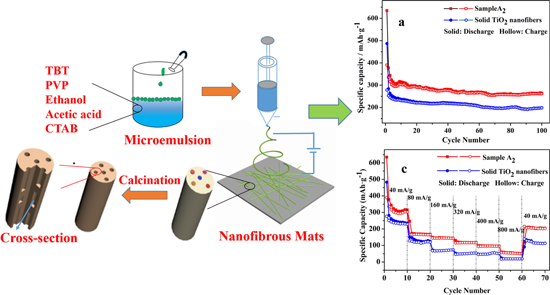
- ] that have advantages over normal structures including a large specific surface area, a high electrolyte–electrode contact area and excellent mass transport of products or reactants to active sites inside meso- or micropores. One-dimensional (1D) nanostructures such as nanofibers, nanotubes, nanowires




Metal oxide nanostructures: preparation, characterization and functional applications as chemical sensors
Beilstein J. Nanotechnol. 2017, 8, 1205–1217, doi:10.3762/bjnano.8.122
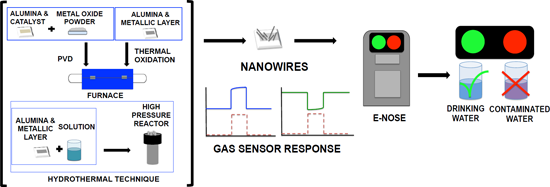
- nanowires have been integrated into an electronic nose and successfully applied to discriminate between drinking and contaminated water. Keywords: chemical sensors; electronic nose; metal oxides; nanowires; Introduction Nanotechnology is the base for improving knowledge about materials and phenomena at
- show the different sensing capabilities of oxides within a real application, using sensors arrays and electronic noses. Evaporation, thermal oxidation and hydrothermal methods were optimized for the direct integration of metal oxide nanowires into chemical sensor transducers, without using any transfer
- oxidizing and a reducing gas interesting for environmental monitoring). Moreover, we have integrated metal oxide nanowires into an electronic nose and proved its ability in a real case study, more specifically the detection of water contamination. Results and Discussion Preparation of metal oxide


Enhanced catalytic activity without the use of an external light source using microwave-synthesized CuO nanopetals
Beilstein J. Nanotechnol. 2017, 8, 1167–1173, doi:10.3762/bjnano.8.118
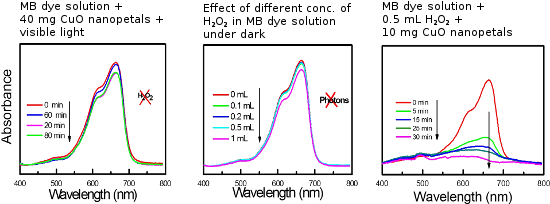
- carbon monoxide (CO) [7][8][9]. CuO is one of the few p-type metal oxide semiconductors with a narrow band gap ≈1.24 eV [10]. The properties of CuO nanomaterials (nanoparticles, nanowires, nanosheets, etc.) are closely related to morphology and crystallite size [7]. These different nanoscale morphologies


Hierarchically structured nanoporous carbon tubes for high pressure carbon dioxide adsorption
Beilstein J. Nanotechnol. 2017, 8, 1135–1144, doi:10.3762/bjnano.8.115
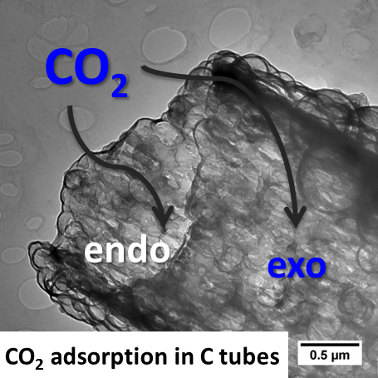
- attractive as a potential material for catalysis and electronic and photonic devices due to its semiconducting nature with a wide band gap, excellent mechanical properties, chemical inertness and thermal conductivity [13][14][15][16][17]. Especially, one-dimensional SiC in the form of nanowires or nanorods


Assembly of metallic nanoparticle arrays on glass via nanoimprinting and thin-film dewetting
Beilstein J. Nanotechnol. 2017, 8, 1049–1055, doi:10.3762/bjnano.8.106
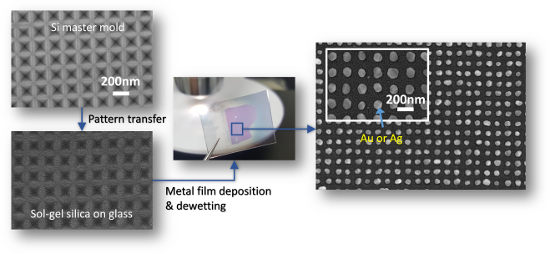
- surface [1][2]. Because it is a relatively simple process [3], this technique opens up numerous applications, such as high-density magnetic recording media [2][4], photovoltaic devices [5][6][7][8][9][10], photocatalysts [11] and catalysts for the fabrication of carbon nanotubes and nanowires. However


Near-field surface plasmon field enhancement induced by rippled surfaces
Beilstein J. Nanotechnol. 2017, 8, 956–967, doi:10.3762/bjnano.8.97
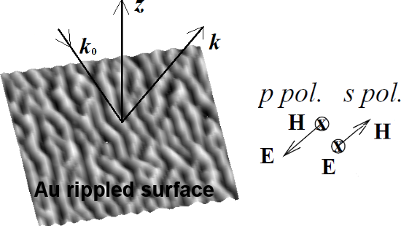
- that is a quick and low cost method for the synthesis of both large area arrays of self-organized nanowires for SERS molecular detection [14][19][20] and plasmon-enhanced photon harvesting in the vis–NIR range [14][21]. Other techniques widely employed to produce patterned metal nanostructures are top
- Figure 2B and Figure 2D, respectively. In particular, Figure 2A,C shows that rippled surfaces featuring a quasi-regular pattern of stripes, or nanowires, present a strong enhancement factor: the occurrence of two main peaks in Figure 2A makes impossible to detect (in the dynamics chosen for the
- representation) the weaker peaks. On the contrary, the holed rippled surface (Figure 2C) leads to a smaller enhancement factor by six orders of magnitude. Different from spherical geometries or regular nanowires, rippled surfaces, as in Figure 2, give the possibility to study the enhancement factor on surfaces


Synthesis of coaxial nanotubes of polyaniline and poly(hydroxyethyl methacrylate) by oxidative/initiated chemical vapor deposition
Beilstein J. Nanotechnol. 2017, 8, 872–882, doi:10.3762/bjnano.8.89
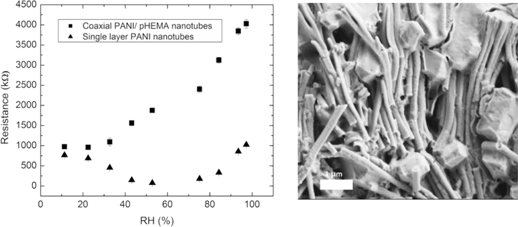
- applicable in different areas [7][8]. Among these, the conducting polymer (CP) nanostructures, such as nanowires, nanorods, nanotubes or nanospheres have been extensively studied through solution-based techniques, such as chemical polymerization [9][10][11] or electrochemical polymerization [12][13][14] for


3D Nanoprinting via laser-assisted electron beam induced deposition: growth kinetics, enhanced purity, and electrical resistivity
Beilstein J. Nanotechnol. 2017, 8, 801–812, doi:10.3762/bjnano.8.83
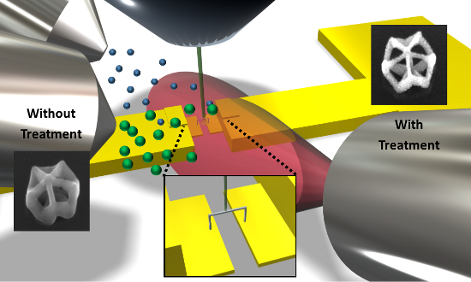
- , grain structure/morphology, and electrical resistivity of 3D platinum nanowires synthesized via electron beam induced deposition with and without an in situ pulsed laser assist process which photothermally couples to the growing Pt–C deposits. Notably, we demonstrate: 1) higher platinum concentration
- and a coalescence of the otherwise Pt–C nanogranular material, 2) a slight enhancement in the deposit resolution and 3) a 100-fold improvement in the conductivity of suspended nanowires grown with the in situ photothermal assist process, while retaining a high degree of shape fidelity. Keywords
- of 3D growth have been demonstrated [35][36][37][38] beyond simple 1D nanowires, controlled growth of complex geometries using EBID has only recently been achieved based on a combined simulation and computer aided design approach [11]. This approach has also been used with Ga+ ion beam induced


Vapor deposition routes to conformal polymer thin films
Beilstein J. Nanotechnol. 2017, 8, 723–735, doi:10.3762/bjnano.8.76
- porous materials, including membranes, foams, and textiles, or irregular surface geometries, as well as for encapsulating fibers, nanowires, or particles [1]. For example, tailoring the surface energy of the pore walls of a separation membrane without obstructing the pore can enhance the passage of the
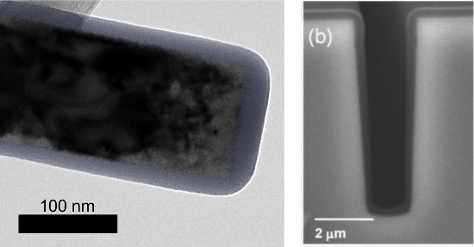
- structure except for e-beam induced electrostatic attraction between the coated wire tops. There is no thinning of the coated nanowires down the vertical axis, indicating good side wall coverage. TEM samples were made by sonicating the nanowire arrays in IPA to create a nanowire solution. A drop of solution





