Search results
Search for "sensing" in Full Text gives 519 result(s) in Beilstein Journal of Nanotechnology. Showing first 200.
Advanced hybrid nanomaterials
Beilstein J. Nanotechnol. 2019, 10, 2563–2567, doi:10.3762/bjnano.10.247

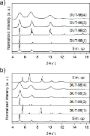
- for sensing or corrosion protection. To understand composite formation of a complex hybrid assembly, high quality characterization is paramount. An example is small angle X-ray scattering (SAXS), which was used in the work “Mechanism of silica–lysozyme composite formation unraveled by in situ fast
Plasmonic nanosensor based on multiple independently tunable Fano resonances
Beilstein J. Nanotechnol. 2019, 10, 2527–2537, doi:10.3762/bjnano.10.243
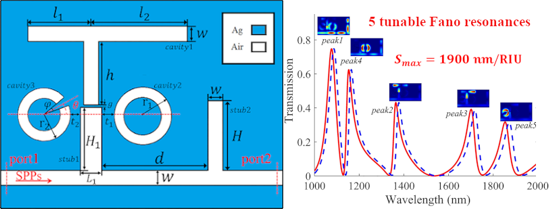
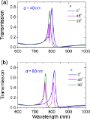
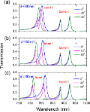
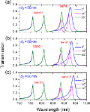
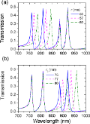
- Fano resonance is preferable to create an excellent plasmonic sensor with ultrahigh performance. However, such attempts to date lack the utilization of various resonators to generate multiple Fano peaks/dips at an arbitrary defined position for practical multi-sensing applications. In this paper, we
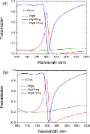
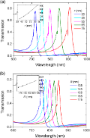
- by the right and bottom parts of cavity1. This kind of multiple use of the cavity can effectively decrease the size of the structure. Subsequently, we investigated the features of cavity2 and cavity3 on sensing performance. Figure 6a shows the relation between r1 and the transmission spectra. When
- sensitivity and FOM. Although, the FOM value is less than the outstanding values in previous reports, it is worth noting that our structure has the best independent tunability among the structures. It is worth noting that this structure not only displays excellent performance in refractive index sensing, but




Synthesis and acetone sensing properties of ZnFe2O4/rGO gas sensors
Beilstein J. Nanotechnol. 2019, 10, 2516–2526, doi:10.3762/bjnano.10.242
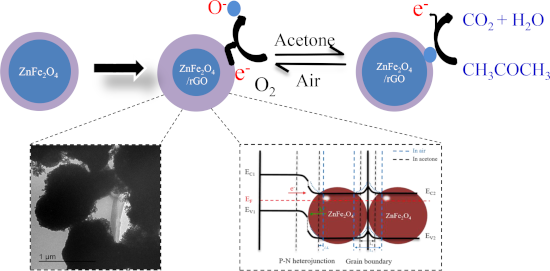
- about 600–1000 nm. The gas sensing test revealed that the introduction of rGO improved the performance of the sensing of acetone to low concentration, and the ZnFe2O4/rGO composite gas sensor containing 0.5 wt % of rGO exhibited a high sensitivity in sensing test using 0.8–100 ppm acetone at 200 °C. The
- , it may be possible to diagnose diabetes using a nondestructive testing technology based on sensing acetone. Thus, it is necessary to develop novel micro/nanomaterials, which can be applied as high-performance gas sensors to detect acetone at low concentration or to monitor variations of its
- concentration. Due to their excellent properties and cost efficiency, gas sensors based on metal oxide semiconductors, such as ZnO [5], SnO2 [6], WO3 [7], TiO2 [8], Er-SnO2 [9], Au-In2O3 [10], GO-WO3 [11] and Ni-SnO2/G [12] have been widely studied until now. However, their sensing properties regarding low




Evaluation of click chemistry microarrays for immunosensing of alpha-fetoprotein (AFP)
Beilstein J. Nanotechnol. 2019, 10, 2505–2515, doi:10.3762/bjnano.10.241
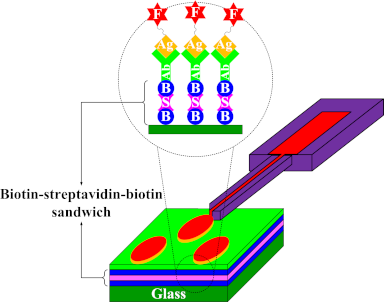
- –maleimide or biotin–DBCO for the second class and biotin–amine or biotin–thiol for the third class). The anti-AFP antibody was immobilized on the surfaces via a biotin–streptavidin–biotin sandwich technique. To evaluate the sensing performance of the differently prepared surfaces, fluorescently labeled AFP
- the results of the fluorescence analysis, an incubation of samples of either route 3 or 5 at 37 °C for 20 min was determined to offer an optimal performance. Evaluation of sensitivity To further elucidate the capability of the approach for sensing applications, a sensitivity curve for one of the


Label-free highly sensitive probe detection with novel hierarchical SERS substrates fabricated by nanoindentation and chemical reaction methods
Beilstein J. Nanotechnol. 2019, 10, 2483–2496, doi:10.3762/bjnano.10.239
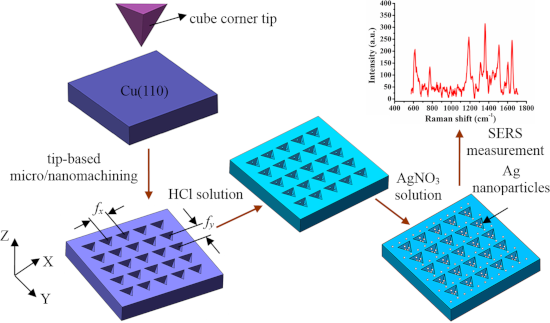
- -field intensity. The size, shape, and interparticle spacing of the nanoparticles or nanostructures influences the LSPR. A series of metals including Au, Cu and Ag are useful in ultra-trace biological or chemical sensing and have shown great potential to obtain surface enhancement. Thus, many different


Multiple Fano resonances with flexible tunablity based on symmetry-breaking resonators
Beilstein J. Nanotechnol. 2019, 10, 2459–2467, doi:10.3762/bjnano.10.236
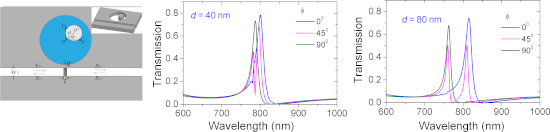
- , such as self-reference and multichannel sensing [25][26]. The generation of multiple Fano resonances is attributed to the existence of multiple discrete states. In most of the published papers, high-order modes are excited in the same cavity [23][28]. Discrete states are provided by different modes




Coating of upconversion nanoparticles with silica nanoshells of 5–250 nm thickness
Beilstein J. Nanotechnol. 2019, 10, 2410–2421, doi:10.3762/bjnano.10.231
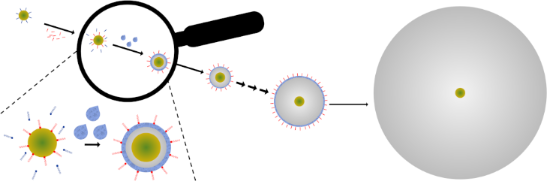
- + upconversion nanoparticles (UCNP) is presented. The concept enables the precise adjustment of shell thicknesses for the preparation of thick-shelled nanoparticles for applications in plasmonics and sensing. First, an initial 5–11 nm thick shell is grown onto the UCNPs in a reverse microemulsion. This is
- be similarly necessary for applications in plasmonics or chemical sensing [20][21]. One of the most versatile ways to protect the surface of NP, making hydrophobic particle surfaces hydrophilic and simultaneously providing functional groups for subsequent covalent attachment of, e.g., biomolecules
- microemulsion technique in 2008 [42][43]. However, for certain applications such as sensing and plasmonics, a thicker silica shell is desired that can be loaded with sensor molecules or used as spacer for the plasmonic enhancement of the emission of UCNPs by gold or silver shells [45]. Moreover, since UCNPs can


Semitransparent Sb2S3 thin film solar cells by ultrasonic spray pyrolysis for use in solar windows
Beilstein J. Nanotechnol. 2019, 10, 2396–2409, doi:10.3762/bjnano.10.230
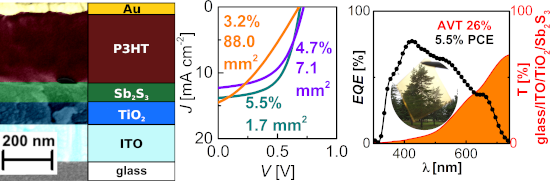
- 1 [71]: where λ is the wavelength, and T(λ) (%) is the total transmittance at λ. The resistivity of Sb2S3 layers on glass/TiO2 substrate was measured at room temperature in dark by using the van der Pauw technique (MMR Technologies H50) and collinear four-wire I–V sensing (Eco Chemie BV, AutoLab



Deterministic placement of ultra-bright near-infrared color centers in arrays of silicon carbide micropillars
Beilstein J. Nanotechnol. 2019, 10, 2383–2395, doi:10.3762/bjnano.10.229
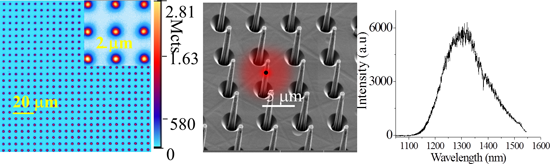
- element method simulations. Our study provides the pathway for device design and fabrication with an integrated ultra-bright ensemble of VSi and NCVSi for in vivo imaging and sensing in the infrared. Keywords: color centers; micropillars; proton irradiation; quantum sensing; silicon carbide; vacancy
- the near-infrared, there is a need to improve the spontaneous emission rate for room-temperature applications such as magnetic sensing and SPSs. For all the above applications, the fluorescence emission enhancement of the color centers is a crucial issue for room-temperature applications, specifically
- [50] provided an equivalent enhancement (factor of three) of SIL but with a smaller footprint and better scalability. The sensitivity of quantum magnetic sensing using spin carrying color centers undergoing ODMR as probes, such as VSi, is currently of the order of δB ≈ 10μT/√Hz and can be improved in


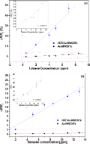
Multiwalled carbon nanotube based aromatic volatile organic compound sensor: sensitivity enhancement through 1-hexadecanethiol functionalisation
Beilstein J. Nanotechnol. 2019, 10, 2364–2373, doi:10.3762/bjnano.10.227
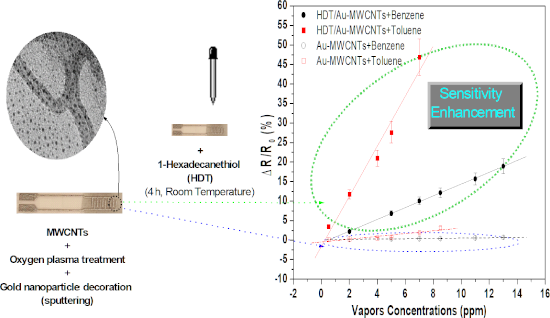
- of trace concentrations of toluene in exhaled breath is associated with lung cancer and can therefore be considered as a biomarker for this pathology [2][3][4]. A gas sensor is generally composed of an active sensing film or material deposited on an electrode. The sensing performance is strongly
- correlated to the active sensing film/material used. Various nanomaterial-based gas sensors have been investigated to monitor the presence of aromatic VOCs. The ones mainly studied are based on metal oxides, carbon nanotubes, graphene and hybrid materials [5][6]. Carbon nanotube based gas sensors (e.g
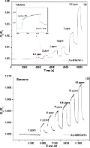
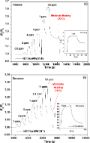
- information on the various chemical bonds present on the sensor structure. Vapour sensing experimental setup The sensors developed based on Au-MWCNTs and HDT/Au-MWCNTs were tested for the detection of aromatic VOCs (toluene and benzene). The vapours were generated by a dilution bench consisting of a chemical




A novel method to remove impulse noise from atomic force microscopy images based on Bayesian compressed sensing
Beilstein J. Nanotechnol. 2019, 10, 2346–2356, doi:10.3762/bjnano.10.225
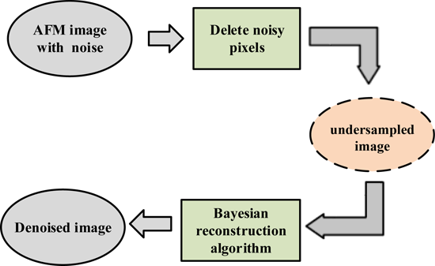
- , China School of Physics, Beihang University, Beijing 100191, China 10.3762/bjnano.10.225 Abstract A novel method based on Bayesian compressed sensing is proposed to remove impulse noise from atomic force microscopy (AFM) images. The image denoising problem is transformed into a compressed sensing
- matrices with some rows removed, are constructed by recording the position of the noise-free pixels. Third, the Bayesian compressed sensing reconstruction algorithm is applied to recover the image. Different from traditional compressed sensing reconstruction methods in AFM, each row of the AFM image is
- proposed method is robust and its performance is not influenced by the noise density in a certain range. Keywords: atomic force microscopy (AFM); Bayesian compressed sensing; denoising; image processing; impulse noise; Introduction Atomic force microscopy (AFM) is a powerful tool in the fields of


Adsorption and desorption of self-assembled L-cysteine monolayers on nanoporous gold monitored by in situ resistometry
Beilstein J. Nanotechnol. 2019, 10, 2275–2279, doi:10.3762/bjnano.10.219
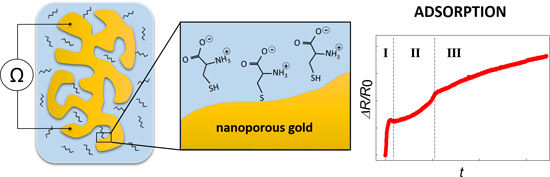
- ); voltammetry; Findings Nanoporous gold, produced by selective etching of the less noble component of a AuAg master alloy (also known as dealloying), is a very promising material in many applications due to its three-dimensional nanoporous structure. Among many other technological applications as sensing [1][2

Use of data processing for rapid detection of the prostate-specific antigen biomarker using immunomagnetic sandwich-type sensors
Beilstein J. Nanotechnol. 2019, 10, 2171–2181, doi:10.3762/bjnano.10.210

- sensing performance. Electrochemical immunosensors containing magnetic nanoparticles have been used to detect several cancer biomarkers [22][23][24]. Zhuo and co-workers detected carcinoembryonic antigen (CEA) and α-fetoprotein (AFP) with a three-layer immunosensor with Fe3O4 magnetic core modified with a
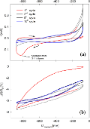
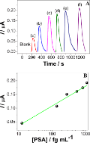
- architecture of the sensing device, in which polyclonal antibodies were immobilized onto magnetic nanoparticles to selectively capture PSA. Furthermore, a proof-of-principle experiment regarding the detection of PSA in healthy and prostate cancer cell lysates is demonstrated, where the data were discriminated
- , respectively. This can be seen by the location of the sandwich-type immunosensing data for these cells in Figure 5. Conclusion In this paper, we leverage sensing technologies to achieve ultrahigh sensitivity in detecting the prostate cancer biomarker PSA by using MNPs to capture PSA in a pre-concentration


Nitrogen-vacancy centers in diamond for nanoscale magnetic resonance imaging applications
Beilstein J. Nanotechnol. 2019, 10, 2128–2151, doi:10.3762/bjnano.10.207
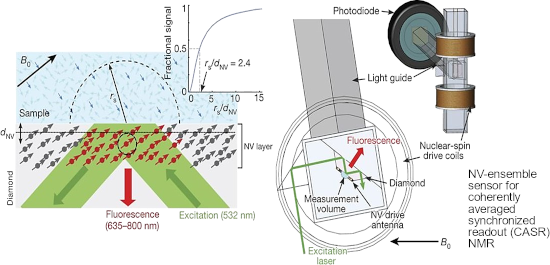
- using ultra-low-field MRI and OMRI sequences. The difference images from the two methods reveal a higher contrast of the NDs compared to water. Moreover, this method permits a better tracking of NDs in biological samples using OMRI sequences. NV-center quantum sensing There are different concepts
- preparation. Specifically, NV forms in both bulk and ND – this option introduces more opportunity in terms of applications, even if the ND NV magnetic sensing technology is less developed. A review of the superior properties of diamond nanomaterials and the NV centers, as well as their uses in biomedical
- enhancement of the dynamic range by a factor of 4 × 10³ is achieved for interrogation times exceeding 2 ms. Optical detection of weak magnetic fields in a spin bath is undertaken in [26] by sensing external magnetic dipoles with fluorescent ND due to the charge dynamics of coupled spins. This provides


Ion mobility and material transport on KBr in air as a function of the relative humidity
Beilstein J. Nanotechnol. 2019, 10, 2084–2093, doi:10.3762/bjnano.10.203
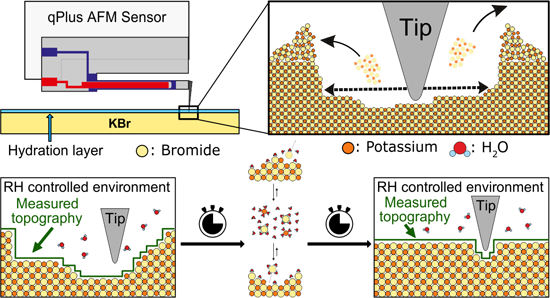
- range for each experiment. Experimental For the experiments we used a custom-designed AFM equipped with a qPlus sensor. The qPlus sensor is a stiff (k = 1800 N/m) self-sensing quartz sensor with a resonance frequency around f0 = 32 kHz. It has enabled unprecedented results in low-temperature AFM, such


Review of advanced sensor devices employing nanoarchitectonics concepts
Beilstein J. Nanotechnol. 2019, 10, 2014–2030, doi:10.3762/bjnano.10.198

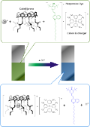
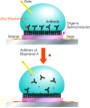
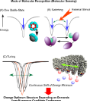
- logical conversion to outputs (response, energy, products, etc.). Good sensing systems have many contributions regarding the former part. This is why the importance of sensors has been re-recognized in modern sensor technology. In recent decades, the development of sensor technologies has highly depended
- on advancements in microfabrication and nanofabrication of device structures. These so-called nanotechnological advancements enable us to prepare sensing devices with various advantageous features with an ultrasmall device size (thus requiring an ultrasmall amount of the target sample), highly
- integrated connection, and high sensitivity [42][43]. In addition to these nanotechnological advancements in device fabrication, sensing materials for molecular recognition have been continuously explored on the basis of supramolecular chemistry with the aid of synthetic organic chemistry and materials





Nanostructured and oriented metal–organic framework films enabling extreme surface wetting properties
Beilstein J. Nanotechnol. 2019, 10, 1994–2003, doi:10.3762/bjnano.10.196
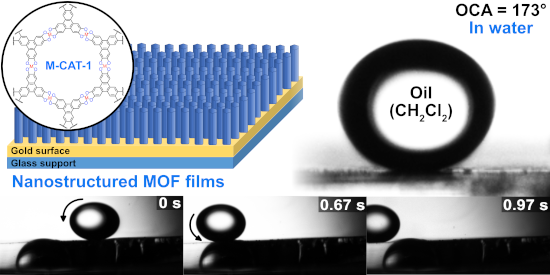
- ][41][42][43][44][45]. Thereby, they are attractive synthesis targets for a large variety of applications, including gas storage and separation, chemical sensing, thermoelectrics, capacitors, transistors or photovoltaics [46][47][48][49][50][51][52]. Due to their exceptional variety of structural


First principles modeling of pure black phosphorus devices under pressure
Beilstein J. Nanotechnol. 2019, 10, 1943–1951, doi:10.3762/bjnano.10.190
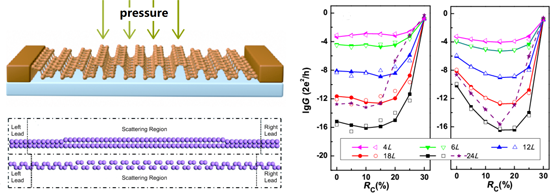
- transition under axial strain [5][32]. The sensitivity to and the resilience against strain make BP an ideal material for strain-sensing electronics and flexible electronic devices. Xiao et al. fabricated few-layer BP nanosheets by chemical vapor transport [25], and observed a phase transition from an




Charge-transfer interactions between fullerenes and a mesoporous tetrathiafulvalene-based metal–organic framework
Beilstein J. Nanotechnol. 2019, 10, 1883–1893, doi:10.3762/bjnano.10.183
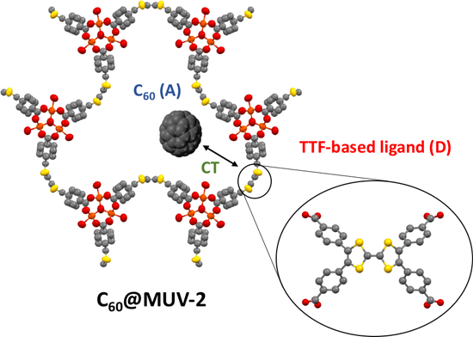
- constructed from metallic nodes and organic linkers, have been a major breakthrough in chemistry in the last decades [1][2]. Because of their immense structural and functional possibilities, this class of hybrid materials finds several applications in, for example, gas storage and separation, sensing or




Processing nanoporous organic polymers in liquid amines
Beilstein J. Nanotechnol. 2019, 10, 1844–1850, doi:10.3762/bjnano.10.179
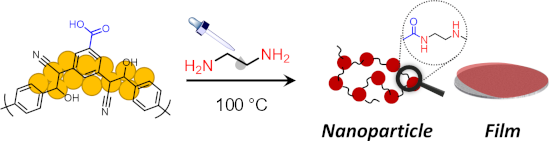
- high porosity, which is beneficial for applications such as gas sorption, gas separation, heterogeneous (photo)catalysis, sensing, and (opto)electronics. However, the network structures are practically insoluble. Thus, the processing of nanoporous polymers into nanoparticles or films remains


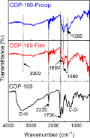

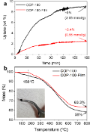
Biocatalytic oligomerization-induced self-assembly of crystalline cellulose oligomers into nanoribbon networks assisted by organic solvents
Beilstein J. Nanotechnol. 2019, 10, 1778–1788, doi:10.3762/bjnano.10.173
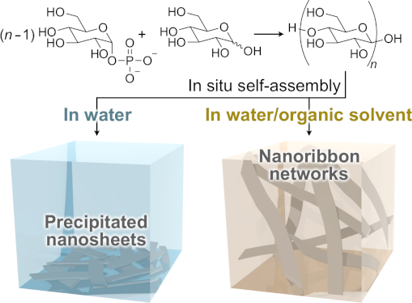
- nanoarchitectonics [1][4][11]. Achievements include nanopatterning [12], drug delivery [13], molecular sensing [14], nanodevices [15][16], and cell architectures [17][18]. On the other hand, crystalline poly- and oligosaccharides, such as cellulose and chitin, lag behind in nanoarchitectonics despite the superiority


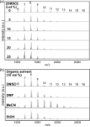



Growth dynamics and light scattering of gold nanoparticles in situ synthesized at high concentration in thin polymer films
Beilstein J. Nanotechnol. 2019, 10, 1768–1777, doi:10.3762/bjnano.10.172
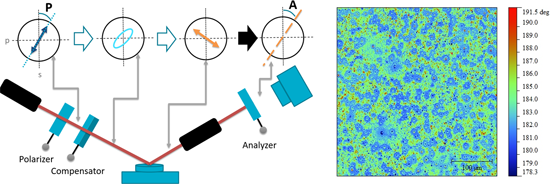
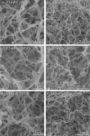
- can be used for constructing passively Q-switched or mode-locked lasers [13][14][15]. This type of lasers has numerous applications in telecommunications, medicine, material processing and optical fiber sensing [16][17]. Moreover, AuNPs are good candidates for preparing passive Q-switch films because


Remarkable electronic and optical anisotropy of layered 1T’-WTe2 2D materials
Beilstein J. Nanotechnol. 2019, 10, 1745–1753, doi:10.3762/bjnano.10.170
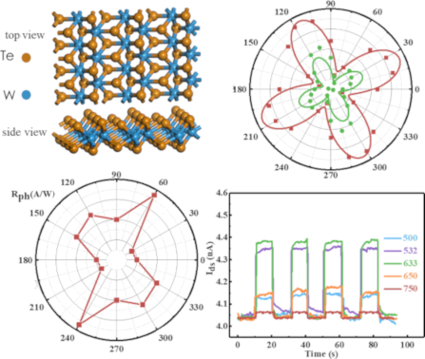
- phenomena and for applications ranging from electronics [11] and photonics [12][13] to sensing [14][15] and actuation [16] at the nanoscale. Recently, tungsten telluride (WTe2), as a member of the TMDC family, has drawn tremendous research interest since the discovery of its large non-saturating positive


The impact of crystal size and temperature on the adsorption-induced flexibility of the Zr-based metal–organic framework DUT-98
Beilstein J. Nanotechnol. 2019, 10, 1737–1744, doi:10.3762/bjnano.10.169
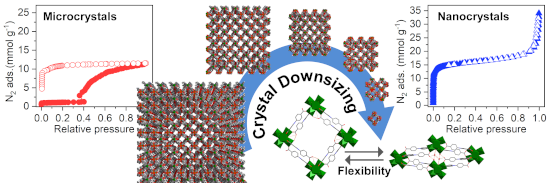
- flexible MOFs are being reported and their use in the areas of storage [4], separation [5] and sensing [6] of gases is being evaluated; their structural flexibility and adsorption behavior can be manipulated by applying chemical functionalization to the ligand [7] and metal cluster [8]. However, recent



Subsurface imaging of flexible circuits via contact resonance atomic force microscopy
Beilstein J. Nanotechnol. 2019, 10, 1636–1647, doi:10.3762/bjnano.10.159
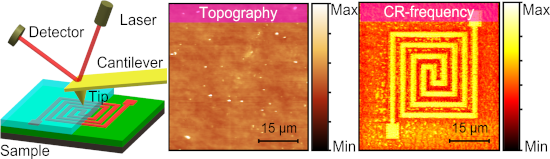
- ) has emerged as a promising way. Various SPM-based nanoscale subsurface imaging methods have been proposed that rely on different detection mechanisms including thermal, magnetic, electric, and mechanical sensing. Among them, contact resonance atomic force microscopy (CR-AFM) demonstrates the unique
- stiffer cover layer and a softer bottom layer can enable much easier subsurface sensing of the flexible circuits via CR-AFM, and the middle layer material does not have much influence. Optimization of CR-AFM subsurface imaging Based on the systematic investigation of the main variables, a contrast