


Search results
Search for "spring constant" in Full Text gives 184 result(s) in Beilstein Journal of Nanotechnology.
Vibration-induced dynamic structural superlubricity on MoS2/Au(111) under ultrahigh vacuum
Beilstein J. Nanotechnol. 2026, 17, 1039–1046, doi:10.3762/bjnano.17.71
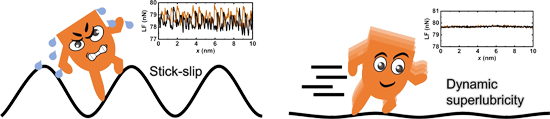
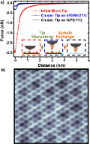
- and an amplitude of u2. The stiffness kt denotes the lateral spring constant of the cantilever, and k2 represents the local interfacial stiffness between the MoS2 and the gold substrate. As the cantilever support moves at a constant velocity of vs, the tip and the MoS2 flake are displaced by x1 and x2


Supramolecular one-dimensional conducting nanofibers from a C3-symmetric tetrathiafulvalene derivative
Beilstein J. Nanotechnol. 2026, 17, 872–881, doi:10.3762/bjnano.17.63
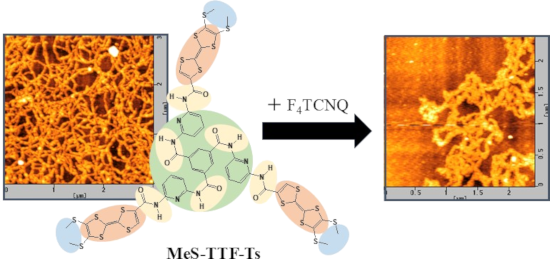
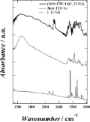
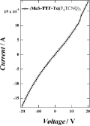
- measurements The structures formed on mica substrates were observed using an atomic force microscopy (AFM) system (Bruker Multi Mode 8). Measurements were performed in non-contact mode using a silicon cantilever with a spring constant of approximately 0.8 N·m−1. Optical spectra UV–vis absorption spectra were


Probing tribological evolution in atomically thin MoS2 at different scales
Beilstein J. Nanotechnol. 2026, 17, 586–597, doi:10.3762/bjnano.17.40
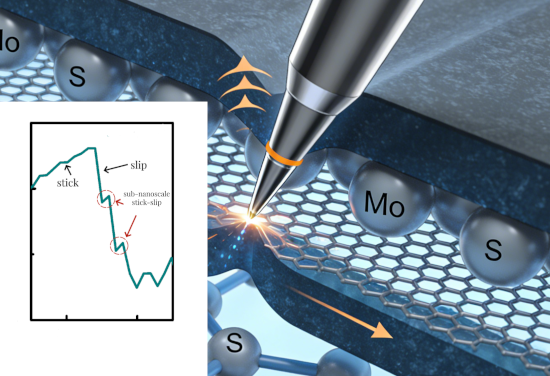
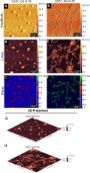
- mode using silicon probes (PPP-LFMR, Nanosensors) with a normal spring constant of 0.2 N·m−1 and a tip radius of ≈8 nm. Raman spectra were collected using a 533 nm laser (0.5 mW power) to avoid sample damage. The surface roughness (Ra) values of MoS2 were measured from the corresponding topographic


Development and in vitro evaluation of liposomes and immunoliposomes containing 5-fluorouracil and R-phycoerythrin as a potential phototheranostic system for colorectal cancer
Beilstein J. Nanotechnol. 2026, 17, 97–121, doi:10.3762/bjnano.17.7
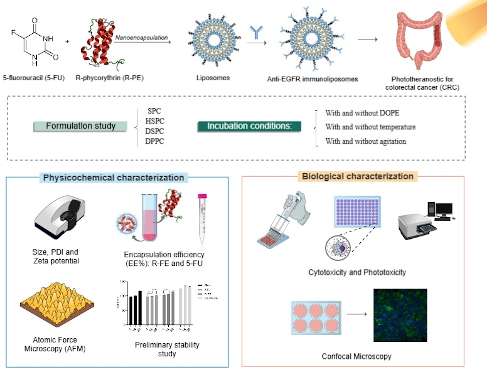
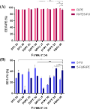
- drying for 15 min at room temperature. The analyses were conducted in air, using the tapping mode to prevent damage to the sample surface, by using a PPP-NCSTAu probe (Nanosensors®, Switzerland), with frequency resonance of 125 kHz and spring constant of 5.0 N/m. The scan rate was 1.5 s per line. The



Quantitative estimation of nanoparticle/substrate adhesion by atomic force microscopy
Beilstein J. Nanotechnol. 2026, 17, 1–14, doi:10.3762/bjnano.17.1

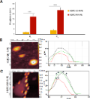
- cantilever deflection as well as torsional spring constant [39]. However, errors can arise due to the sensitivity of the PSPD to laser alignment and a few micrometers offset from the tip shear center, leading to erroneous determination of the cantilever torsion loop offset. As a result, there is very low
- requirements of each experimental setup. The normal spring constant was determined using the thermal sweep method [40] implemented by default in the Asylum Research MFP-3D system. Table 1 summarizes the calibration constants and applied normal forces obtained for both wedge and D-LFC methods, which were used



Multifrequency AFM integrating PeakForce tapping and higher eigenmodes for heterogeneous surface characterization
Beilstein J. Nanotechnol. 2025, 16, 2077–2085, doi:10.3762/bjnano.16.142
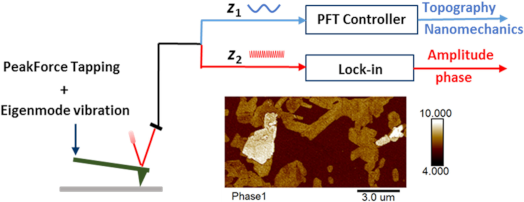
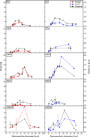
- constant The inverse optical lever sensitivity (InvOLS) and the spring constant (k) of each cantilever were calibrated following a standard procedure, which is built into the Bruker Nanoscope software. Briefly, InvOLS (in nm·V−1) was determined by averaging the slope of the constant compliance region from
- at least five force–distance curves acquired on a rigid sapphire surface. The standard deviation of these measurements was consistently less than 5%. Subsequently, the spring constant was calibrated using the thermal tune method. The cantilever was retracted more than 5 μm from the sample surface to
- record its thermal vibration power spectral density. A fit to the fundamental resonance peak, based on the equipartition theorem, yielded the spring constant. Characterization of higher eigenmodes The resonant frequencies of the higher eigenmodes were characterized by performing a frequency sweep using


Molecular and mechanical insights into gecko seta adhesion: multiscale simulations combining molecular dynamics and the finite element method
Beilstein J. Nanotechnol. 2025, 16, 2055–2076, doi:10.3762/bjnano.16.141
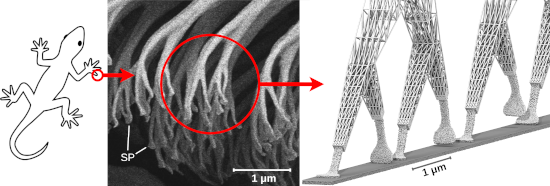
- from the spatulae. To mitigate excessive deformation or drift, harmonic springs connect the FE nodes in the bridging domain to their initial positions at the start of each FEM iteration. These springs have a stiffness referred to as the FE-coupling spring constant. These FE-coupling harmonic springs
- used this multiscale approach to simulate crystalline and amorphous polymers [43]. Once the FEM calculation is complete, the updated positions of the FE nodes in the bridging domain, and hence of the APs, are passed back to the particle domain. The FE-coupling spring constant was optimized, starting
- from the same value as the MD-coupling spring constant and then reduced until forces across the domains matched [43]. Further discussion on the choice of the spring constants is provided in Supporting Information File 1. The FE calculation is static (no inertia), and the MD employs thermostats




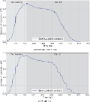


Mechanical property measurements enabled by short-term Fourier-transform of atomic force microscopy thermal deflection analysis
Beilstein J. Nanotechnol. 2025, 16, 1952–1962, doi:10.3762/bjnano.16.136
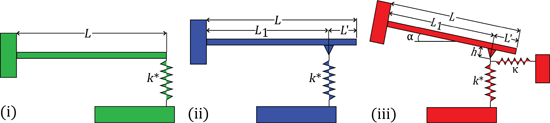
- -CONT), and harder cantilevers with an integrated tip (Nanosensors PPP-NCL). The soft cantilevers have a nominal stiffness in the normal bending direction of 0.2 N·m−1, and the hard cantilevers have a nominal stiffness of 40 N·m−1. For each cantilever used, the spring constant of the cantilever in the
- same value as the one obtained using the Sader method (74.3 mN·m−1 for this cantilever in Figure 2) [20]. Similar observations were made for the other cantilevers used in the experiments conducted within this paper, with the difference between the value of D1 and the normal spring constant calculated
- dimensions in the determination of the Sader spring constant or other calculations of the normal spring constant are important. Finally, it has been demonstrated that the Sader method can consistently show a difference compared with the thermal noise method used above, particularly for soft cantilevers as




Mechanical stability of individual bacterial cells under different osmotic pressure conditions: a nanoindentation study of Pseudomonas aeruginosa
Beilstein J. Nanotechnol. 2025, 16, 1171–1183, doi:10.3762/bjnano.16.86
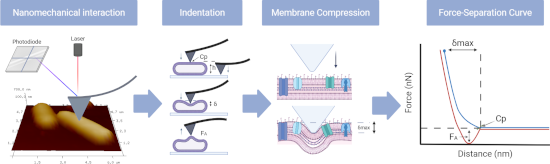
- a NanoScope V controller operated in fluid conditions throughout all experiments, using a pre-assembled fluid chamber with the appropriate solutions within a sealed O-ring. The instrument was operated in contact mode using MLCT probes from Bruker, cantilever D with a nominal spring constant of 0.03


Piezoelectricity of hexagonal boron nitrides improves bone tissue generation as tested on osteoblasts
Beilstein J. Nanotechnol. 2025, 16, 1068–1081, doi:10.3762/bjnano.16.78
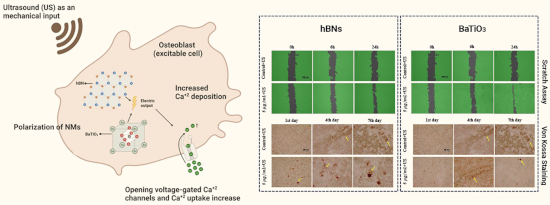
- microscopy (PFM, Nanomagnetic Instruments, UK) was applied to evaluate nanoscale piezoelectric behavior using self-aligned conducting EFM probes with a spring constant of 2.8 N/m and a resonance frequency of 75 kHz. In vitro analyses To investigate the influence of hBNs and BaTiO3 with US therapy on


The impact of tris(pentafluorophenyl)borane hole transport layer doping on interfacial charge extraction and recombination
Beilstein J. Nanotechnol. 2025, 16, 678–689, doi:10.3762/bjnano.16.52
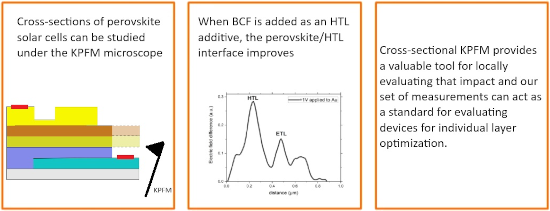
- lock-in amplifier (Zurich Instruments), in an argon atmosphere glove box (less than 1% ppm O2 and negligible humidity). The cantilever used was SCM PIT V2 (resonance frequency: 75 kHz, spring constant: 3 N/m, Bruker). The scan rate of the measurement was 0.5 Hz. To increase the reliability of our data


Nanoscale capacitance spectroscopy based on multifrequency electrostatic force microscopy
Beilstein J. Nanotechnol. 2025, 16, 637–651, doi:10.3762/bjnano.16.49

- capacitance gradient, we need to calculate the electrostatic force from the detected amplitude signal, Adet, taking into account the cantilever’s frequency-dependent spring constant or transfer function, k(ω): Interestingly, the forces in Equation 11 only depend on the frequency difference, Δωe, of the
- ). To enhance the signal, we select ωE such that 2ωE coincides with the second resonance of the cantilever (2ωE = ωm,2). We connect the numerical value of the capacitance gradient to the detected amplitude using the cantilever’s frequency-dependent transfer function or spring constant k(ω) by For the
- the Pt/Ir-coated conductive cantilevers (NuNano SPARK-150Pt and MikroMasch HQ:NSC18/Pt) was ≈75 kHz; the levers had a spring constant of 2–3 N·m−1, a tip radius of 18 nm, and a tip height of 10–18 μm. The topography feedback measurements were performed with amplitude modulation on the first eigenmode




A biomimetic approach towards a universal slippery liquid infused surface coating
Beilstein J. Nanotechnol. 2024, 15, 1376–1389, doi:10.3762/bjnano.15.111
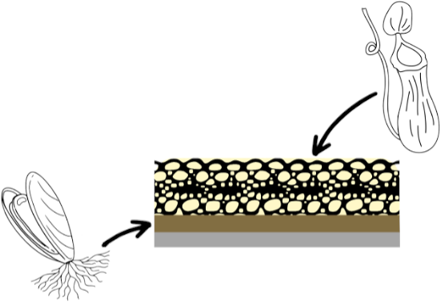
- Innova instrument in tapping mode. RTESPA-300 (Bruker, Billerica, MA) probes were used with a tip radius of 12 nm, a spring constant of 40 N/m, and a frequency of 300 kHz. A minimum of six images from two different samples were produced with dimensions of 5 × 5 μm at a scan rate of 0.5 Hz. Post




New design of operational MEMS bridges for measurements of properties of FEBID-based nanostructures
Beilstein J. Nanotechnol. 2024, 15, 1273–1282, doi:10.3762/bjnano.15.103
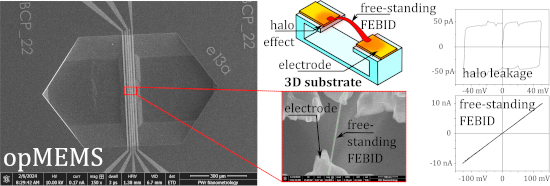
- spectral analysis of vibrations [49]. The thermomechanical noise analysis approximates the bridge as a simple harmonic oscillator with one DOF, as has been used for determining the spring constant of AFM cantilevers [50]. This approach provides an approximation for the stiffness k in terms of the measured


Design, fabrication, and characterization of kinetic-inductive force sensors for scanning probe applications
Beilstein J. Nanotechnol. 2024, 15, 242–255, doi:10.3762/bjnano.15.23
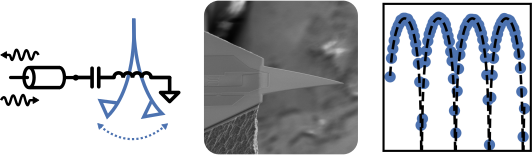
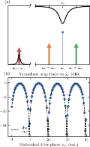
- comes the spring constant k, which should match the maximum tip–surface force gradient. For a given k, the mechanical resonant frequency is set by meff, A larger mechanical resonant frequency gives a larger integration bandwidth for a given mechanical quality factor Qm = ωm/γm. However, increasing ωm
- fabricating a wafer of sensor chips. We design the cantilever’s plane-view dimensions to achieve ωm/2π in the range of 0.5–10 MHz, corresponding to mechanical spring constant values k in the range of 2–160 N/m for typical device parameters. The wide frequency range allows us to fabricate devices working in
- ωm, quality factor Qm, and spring constant k of the cantilever. These trade-offs affect the transduction efficiency and force sensitivity. Although a large single-photon coupling rate g0 is desirable, we prioritize a cavity that we can pump to large intra-cavity photon numbers while maintaining



Quantitative wear evaluation of tips based on sharp structures
Beilstein J. Nanotechnol. 2024, 15, 230–241, doi:10.3762/bjnano.15.22
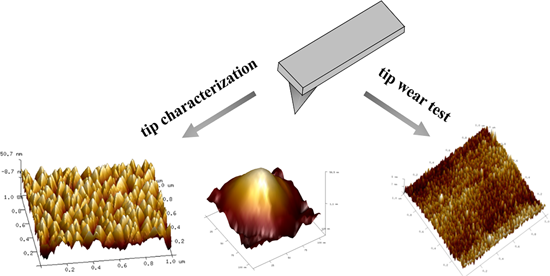
- , making it ideal for reverse imaging of the AFM probe tip to detect tip wear. AFM images were acquired using a Bruker Icon AFM system in tapping mode. The AFM probe used for AFM imaging was a Bruker FESPA-V2 probe. The cantilever was 225 µm long, 35 µm wide, and had a spring constant of 2.8 N/m. The




CdSe/ZnS quantum dots as a booster in the active layer of distributed ternary organic photovoltaics
Beilstein J. Nanotechnol. 2024, 15, 144–156, doi:10.3762/bjnano.15.14
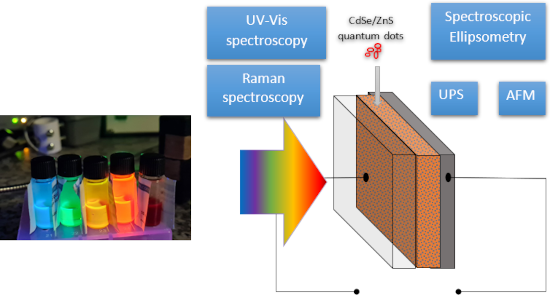
- carried out for three incidence angles (65°, 70°, and 75°). A Bruker atomic force microscope (AFM) MULTIMODE 8 was used in the measurements in the ScanAsyst in Air mode, using silicon nitride probes (with a nominal tip radius of 2 nm and a spring constant equal to 0.4 N/m). The substrate was




Enhanced feedback performance in off-resonance AFM modes through pulse train sampling
Beilstein J. Nanotechnol. 2024, 15, 134–143, doi:10.3762/bjnano.15.13
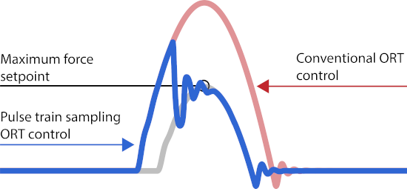
- setpoint value, as shown in Figure 2C-ii. The slope of the force–distance curve depends on the effective spring constant between the tip and the sample. To mitigate this issue, we select a small time window around the maximum deflection point, where the tip–sample relative velocity is the smallest because


Carbon nanotube-cellulose ink for rapid solvent identification
Beilstein J. Nanotechnol. 2023, 14, 535–543, doi:10.3762/bjnano.14.44
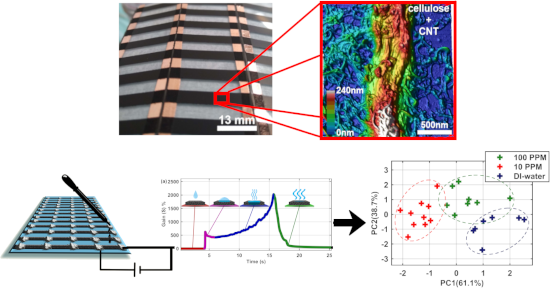
- contact mode. AC160TS silicon cantilevers from Olympus with a typical spring constant of k ≈ 46 N/m, a nominal radius of curvature of r ≈ 7 nm, and a resonant frequency of ω0 ≈ 300 kHz were employed. Heat flow and weight changes of selected solvents were determined by thermogravimetric analysis (TGA


High–low Kelvin probe force spectroscopy for measuring the interface state density
Beilstein J. Nanotechnol. 2023, 14, 175–189, doi:10.3762/bjnano.14.18
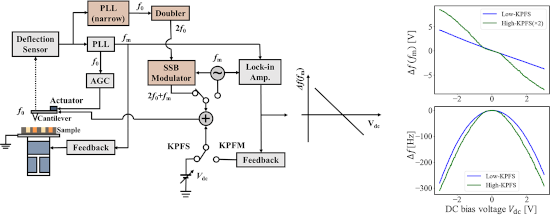
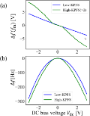
- advantages, namely high sensitivity to the electrostatic force gradient, high detection sensitivity using a cantilever with a weak spring constant at the first resonance, ease of implementation in adding FM-AFM, and no need to enhance the bandwidth of the cantilever deflection sensor. FM-KPFM is used to
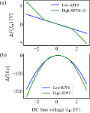
- vibration cos 2πf0t, f0 ± fm components of the electrostatic force Fele,L(f0 ± fm) appear: When the electrostatic force is detected by the FM method, the electrostatic force Fele,L(f0 ± fm) is demodulated into the fm component of the frequency shift ΔfL(fm), which is expressed as where k is the spring
- constant of the cantilever. This equation indicates that the slope of the dependence of the fm component of the frequency shift ΔfL(fm) on the DC bias voltage Vdc (ΔfL(fm)–Vdc curve) is proportional to the capacitance inside the semiconductor at a low-frequency AC bias (CD + Cit). High KPFS Next, we



Characterisation of a micrometer-scale active plasmonic element by means of complementary computational and experimental methods
Beilstein J. Nanotechnol. 2023, 14, 110–122, doi:10.3762/bjnano.14.12
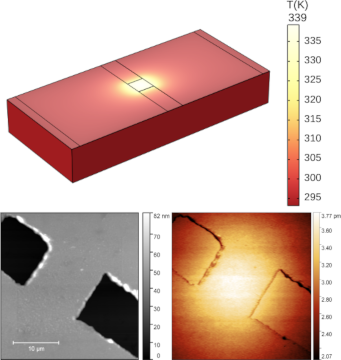
- setup used to perform such measurements. An Adama NM-RC probe (spring constant: 290.3 N/m, nominal resonance frequency: 814 kHz) has been used in contact mode to scan the topography of an electrically modulated sample with a loading force of 1.9 μN. This particular probe is intended for use in
- nanomechanical operations such as lithography and machining. The high spring constant of this cantilever has the advantage of minimising the unwanted deflection of the cantilever resulting from electrostatic interaction of the potential on the surface and the probe. The tip is constructed from wear-resistant




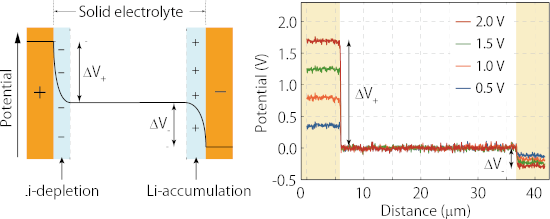
Utilizing the surface potential of a solid electrolyte region as the potential reference in Kelvin probe force microscopy
Beilstein J. Nanotechnol. 2022, 13, 1558–1563, doi:10.3762/bjnano.13.129
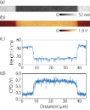
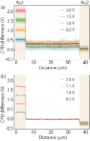
- spring constant of 3 N/m. The CPD was detected using the sideband KPFM mode [18][19][4]. The amplitude and frequency of the modulation voltage were 1.5 V and 3.2 kHz, respectively. The modulation voltage and DC voltage were applied to the tip to minimize the electrostatic force between the tip and sample




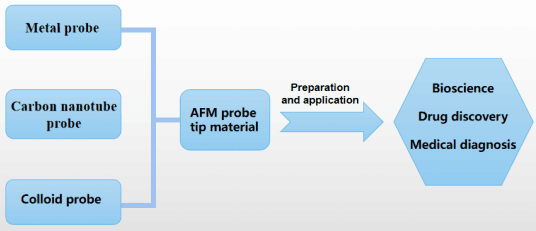
Studies of probe tip materials by atomic force microscopy: a review
Beilstein J. Nanotechnol. 2022, 13, 1256–1267, doi:10.3762/bjnano.13.104
- percussive mode AFM imaging, and the growth of PdNWCNT does not significantly decrease the cantilever spring constant and cantilever mass factor. PdNWCNTs showed better performance than standard CNTs in some SPM applications. For example, because it is difficult to form good ohmic contact CNTs, the existence
- , especially large colloidal probes, where the intrinsic static deflection sensitivity and spring coefficient need to be verified. Chighizola et al. [58] proposed an accurate method for calibrating large CPs. This method is applied to calibrate the intrinsic spring constant kTL of a topless cantilever beam by
Comparing the performance of single and multifrequency Kelvin probe force microscopy techniques in air and water
Beilstein J. Nanotechnol. 2022, 13, 922–943, doi:10.3762/bjnano.13.82
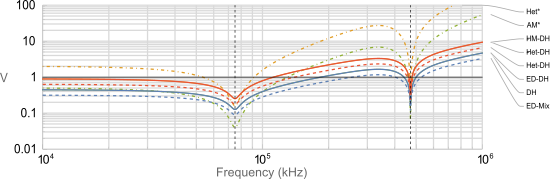
- in the response of the lever proportional to the quality factor of that mode, Qn, where n is the mode number [36][55]. KPFM techniques can be applied off resonance (ω ≠ ωn), where ∝ 1/kn, where kn is the spring constant of the n-th eigenmode. More generally, KPFM techniques are applied at, or close
- constant, T is the temperature, Nd is the detector noise, and ωn, kn, and Qn are, respectively, the resonance frequency, spring constant, and quality factor of the n-th eigenmode (n = 1, 2). The corresponding gain at a given frequency is then defined as We note that more complex expressions for the
Gelatin nanoparticles with tunable mechanical properties: effect of crosslinking time and loading
Beilstein J. Nanotechnol. 2022, 13, 778–787, doi:10.3762/bjnano.13.68
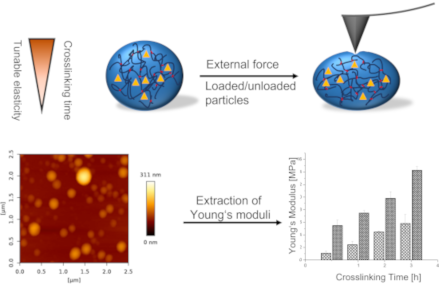
- same day. AFM measurements were carried out with a JPK NanoWizard® 3 AFM (JPK Instruments, Berlin, Germany) using the MLCT cantilever tip D (Bruker France Nano Surfaces, Wissembourg, France) with a nominal resonance frequency of 15 kHz and a spring constant of 0.03 N/m. Before each measurement, the
- actual sensitivity and the spring constant of the used cantilever were calibrated on a cleaned silica wafer by the thermal noise method by Hutter et al. [27] using a correction factor of 0.251. The data was acquired using the quantitative imaging mode (QI™) with image sizes of 5 × 5 µm and a resolution
- single nanoparticles. For the values of Young’s moduli, the respective curves were treated as follows: The determined spring constant and sensitivity must be applied to calibrate the cantilever deflection. To correct the vertical offset, a baseline subtraction is applied, and the contact point is





