


Search results
Search for "Claisen condensation" in Full Text gives 35 result(s) in Beilstein Journal of Organic Chemistry.
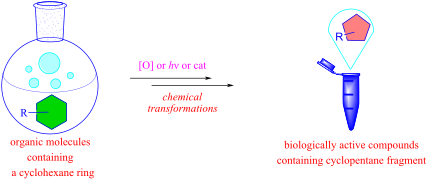
Transformation of the cyclohexane ring to the cyclopentane fragment of biologically active compounds
- Natalya Akhmetdinova,
- Ilgiz Biktagirov and
- Liliya Kh. Faizullina
Beilstein J. Org. Chem. 2025, 21, 2416–2446, doi:10.3762/bjoc.21.185
- 27). According to the authors, this transformation proceeded through stages of retro-Claisen condensation, intramolecular aldol-type condensation, and retro-Claisen deacetylation [77]. Photolysis of compound 152 proceeded more efficiently in C6H6/MeOH (1%) resulting in cyclopentanone derivative 153

Graphical Abstract

Scheme 1: Ozonolysis–cyclization sequence in the synthesis of echinopine A (3).

Scheme 2: Ozonolysis–cyclization sequence in the synthesis of taiwaniaquinoids 7–12.

Figure 1: Iridoid skeleton.

Scheme 3: Ozonolysis–cyclization sequence in the synthesis of compounds 17a,b, 18 and 19 with iridoid topolog...

Scheme 4: Oxidation–aldol condensation sequence in the synthesis of compounds 21 and 23 with iridoid topology....

Scheme 5: Oxidation–aldol condensation sequence in the synthesis of compounds 29 and 30 with iridoid topology....

Scheme 6: Method for ring contraction in the absence of a double bond in a six-membered ring of triterpenoids....

Scheme 7: Oxidation–Dieckmann cyclization sequence in the synthesis of a new nortriterpenoid 39.

Scheme 8: Oxidation–Dieckmann cyclization sequence in the synthesis of 18,19-di-nor-cholesterol (40).

Scheme 9: Oxidation–cyclization sequence in the synthesis of 3-ethyl-substituted betulinic acid derivatives 49...

Scheme 10: Benzilic acid-type rearrangement in the synthesis of 4β-acetoxyprobotryane-9β,15α-diol (52).

Scheme 11: Benzilic acid-type rearrangement in the synthesis of (−)-taiwaniaquinone H (11).

Scheme 12: Benzilic acid-type rearrangement in the synthesis of dactylicapnosines A (63) and B (64).

Scheme 13: Aza-benzilic acid-type rearrangement in the synthesis of (+)-stephadiamine (71).

Scheme 14: α-Ketol rearrangement in the synthesis of saffloneoside (73).

Scheme 15: Conversion of (−)-preaustinoid A (80) to (−)-preaustinoid B (81) via α-ketol rearrangement.

Scheme 16: α-Ketol rearrangement in the synthesis of 2,8-oxymethano-bridged diquinane 90.

Scheme 17: Oxidative ring contraction during the synthesis of (+)-cuparene (91) and (+)-tochuinylacetate (92).

Scheme 18: Semipinacol rearrangement in the synthesis of diterpenoids 97–100.

Scheme 19: Co-catalyzed homoallyl-type rearrangement in the syntheses of meroterpenes 106–109.

Scheme 20: Ring contraction reaction promoted by TTN·3H2O and HTIB in the synthesis of indanes.

Scheme 21: Rearrangement involving a hypervalent iodine compound in the synthesis of derivative 120.

Scheme 22: Wolff rearrangement in the synthesis of taiwaniaquinones A (7), F (8), taiwaniaquinols B (10), D (1...

Scheme 23: Wolff rearrangement in the synthesis of cheloviolene C (128), seconorrisolide B (129), and seconorr...

Scheme 24: Wolff rearrangement in the synthesis of (−)-pavidolide B (134).

Scheme 25: Wolff rearrangement in the synthesis of presilphiperfolan-8-ol (141).

Scheme 26: Photochemical rearrangement in the synthesis of cyclopentane derivatives 147a,b.

Scheme 27: Synthesis of cyclopentane derivatives 147a and 151.

Scheme 28: Photochemical rearrangement in the synthesis of cyclopentane derivative 153.

Scheme 29: Photochemical rearrangement in the synthesis of tricyclic ketones 155, 156.

Scheme 30: Photochemical rearrangement in the synthesis of cis/trans salts 160.

Figure 2: Scope of the photoinduced carboborative ring contraction of steroids. Reaction conditions: steroid ...

Scheme 31: Photoinduced carboborative ring contraction in the synthesis of artalbic acid (180).

Scheme 32: Synthetic versatility of the photoinduced carboborative ring contraction.

Scheme 33: Methods of disclosure of epoxide 189.

Scheme 34: Methods of disclosure of epoxide 190.

Scheme 35: Rearrangement of α,β-epoxy ketone 197.

Scheme 36: Acid-induced rearrangement in the synthesis of perhydrindane ketones 202 and 205.

Scheme 37: Rearrangement of epoxyketone 208 in the synthesis of huperzine Q (206).

Scheme 38: Rearrangement of epoxide 212 under the action of Grignard reagent.

Scheme 39: Semipinacol rearrangement of epoxide 220 in the synthesis of (−)-citrinadin A (217) and (+)-citrina...

Scheme 40: Semipinacol rearrangement of epoxide 225 in the synthesis of hamigeran G (223).

Scheme 41: Semipinacol rearrangement of epoxide 231 in the synthesis of (−)-spirochensilide A (228).

Scheme 42: Wagner–Meerwein rearrangement in the synthesis of compound 234 with iridoid topology.

Scheme 43: Wagner–Meerwein rearrangement in the synthesis of compound 238 with iridoid topology.

Scheme 44: Wagner–Meerwein rearrangement in the synthesis of compound 241 with iridoid topology.

Scheme 45: Wagner–Meerwein rearrangement in the synthesis of lupane derivatives 245, 246, 248, and 249.

Scheme 46: Wagner–Meerwein rearrangement in the synthesis of weisaconitine D (252) and cardiopetaline (255).

Scheme 47: Wagner–Meerwein rearrangement in the synthesis of cardiopetaline (255).
C2 to C6 biobased carbonyl platforms for fine chemistry
- Jingjing Jiang,
- Muhammad Noman Haider Tariq,
- Florence Popowycz,
- Yanlong Gu and
- Yves Queneau
Beilstein J. Org. Chem. 2025, 21, 2103–2172, doi:10.3762/bjoc.21.165

Graphical Abstract

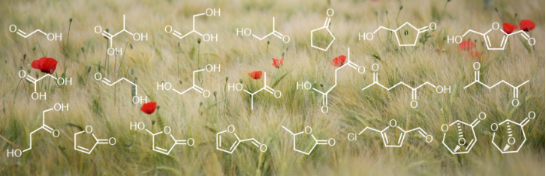
Figure 1: C2–C6 biobased carbonyl building blocks.

Scheme 1: Proposed (2 + 2) route to glycolaldehyde and glycolic acid from erythritol by Cu/AC catalyst (AC = ...

Scheme 2: Reductive amination of GCA.

Scheme 3: N-Formylation of secondary amines by reaction with GCA.

Scheme 4: Synthesis and conversion of hydroxy acetals to cyclic acetals.

Scheme 5: Synthesis of 3-(indol-3-yl)-2,3-dihydrofurans via three-component reaction of glycolaldehyde, indol...

Scheme 6: BiCl3-catalyzed synthesis of benzo[a]carbazoles from 2-arylindoles and α-bromoacetaldehyde ethylene...

Scheme 7: Cu/NCNSs-based conversion of glycerol to glycolic acid and other short biobased acids.

Scheme 8: E. coli-based biotransformation of C1 source molecules (CH4, CO2 and CO) towards C2 glycolic acid.

Scheme 9: N-Formylation of amines with C2 (a) or C3 (b) biomass-based feedstocks.

Scheme 10: Methods for the formation of propanoic acid (PA) from lactic acid (LA).

Scheme 11: Co-polymerization of biobased lactic acid and glycolic acid via a bicatalytic process.

Scheme 12: Oxidation of α-hydroxy acids by tetrachloroaurate(III) in acetic acid–sodium acetate buffer medium.

Figure 2: Selective catalytic pathways for the conversion of lactic acid (LA).

Scheme 13: Synthesis of 1,3-PDO via cross-aldol reaction between formaldehyde and acetaldehyde to 3-hydroxypro...

Scheme 14: Hydrothermal conversion of 1,3-dihydroxy-2-propane and 2,3-dihydroxypropanal to methylglyoxal.

Scheme 15: FLS-catalyzed formose reaction to synthesize GA and DHA.

Scheme 16: GCA and DHA oxidation products of glycerol and isomerization of GCA to DHA under flow conditions us...

Scheme 17: Acid-catalyzed reactions of DHA with alcohols.

Scheme 18: Synthesis of dihydroxyacetone phosphate from dihydroxyacetone.

Scheme 19: Bifunctional acid–base catalyst DHA conversion into lactic acid via pyruvaldehyde or fructose forma...

Scheme 20: Catalytic one-pot synthesis of GA and co-synthesis of formamides and formates from DHA.

Scheme 21: (a) Synthesis of furan derivatives and (b) synthesis of thiophene derivative by cascade [3 + 2] ann...

Scheme 22: Brønsted acidic ionic liquid catalyzed synthesis of benzo[a]carbazole from renewable acetol and 2-p...

Scheme 23: Asymmetric hydrogenation of α-hydroxy ketones to 1,2-diols.

Scheme 24: Synthesis of novel 6-(substituted benzylidene)-2-methylthiazolo [2,3-b]oxazol-5(6H)-one from 1-hydr...

Scheme 25: ʟ-Proline-catalyzed synthesis of anti-diols from hydroxyacetone and aldehydes.

Scheme 26: C–C-bond-formation reactions of a biomass-based feedstock aromatic aldehyde (C5) and hydroxyacetone...

Scheme 27: Ethanol upgrading to C4 bulk chemicals via the thiamine (VB1)-catalyzed acetoin condensation.

Scheme 28: One-pot sequential chemoenzymatic synthesis of 2-aminobutane-1,4-diol and 1,2,4-butanetriol via 1,4...

Scheme 29: Synthesis of 1,4-dihydroxybutan-2-one by microbial transformation.

Scheme 30: Conversion of polyols by [neocuproine)Pd(OAc)]2(OTf)2] to α-hydroxy ketones.

Scheme 31: Chemoselective oxidation of alcohols with chiral palladium-based catalyst 2.

Scheme 32: Electrochemical transformation of furfural to 5-hydroxy-2(5H)-furanone (HFO).

Scheme 33: Selective hydrodeoxygenation of HFO and oxidation to γ-butyrolactone (GBL).

Scheme 34: Photosensitized oxygenation of furan towards HFO via ozonide intermediates.

Scheme 35: Conversion of furfural to HFO and MAN by using mesoporous carbon nitride (SGCN) as photocatalyst.

Scheme 36: Synthesis of HFO from furan derivatives.

Scheme 37: Photooxidation of furfural to 5-hydroxy-2(5H)-furanone (HFO).

Scheme 38: Synthesis of Friedel–Crafts indole adduct from HFO.

Scheme 39: Conversion of HFO to α,γ-substituted chiral γ-lactones.

Scheme 40: Tautomeric transformation of HFO to formylacrylic acid.

Scheme 41: Hydrolysis of HFO to succinic acid in aqueous solution.

Scheme 42: Substitution and condensation reactions of 5-hydroxy-2(5H)-furanone (HFO).

Scheme 43: (a) Conversion of HFO towards valuable C4 chemicals and (b) anodic oxidation of 5-hydroxy-2(5H)-fur...

Figure 3: Conversion of HFO towards other natural and synthetic substances.

Scheme 44: Conversion of furfural to maleic anhydride (reaction a: VOx/Al2O3; reaction b: VPO).

Scheme 45: Conversion of furfural into succinic acid.

Scheme 46: Electro‑, photo‑, and biocatalysis for one-pot selective conversions of furfural into C4 chemicals.

Scheme 47: Production route of furfural from hemicellulose.

Scheme 48: Mechanism for xylose dehydration to furfural through a choline xyloside intermediate.

Scheme 49: Conversion of furfural to furfuryl alcohol and its derivatives.

Scheme 50: Conversion of furfural to furfuryl alcohol and 3-(2-furyl)acrolein.

Scheme 51: The aerobic oxidative condensation of biomass-derived furfural and linear alcohols.

Scheme 52: The single-step synthesis of 2-pentanone from furfural.

Scheme 53: Electrocatalytic coupling reaction of furfural and levulinic acid.

Scheme 54: Conversion of furfural to m-xylylenediamine.

Scheme 55: Conversion of furfural to tetrahydrofuran-derived amines.

Scheme 56: Formation of trans-4,5-diamino-cyclopent-2-enones from furfural.

Scheme 57: Production of pyrrole and proline from furfural.

Scheme 58: Synthesis of 1‑(trifluoromethyl)-8-oxabicyclo[3.2.1]oct-3-en-2-ones from furfural.

Scheme 59: Conversion of furfural to furfural-derived diacids.

Scheme 60: A telescope protocol derived from furfural and glycerol.

Scheme 61: A tandem cyclization of furfural and 5,5-dimethyl-1,3-cyclohexanedione.

Scheme 62: A Ugi four-component reaction to construct furfural-based polyamides.

Scheme 63: One-pot synthesis of γ-acyloxy-Cy7 from furfural.

Scheme 64: Dimerization–Piancatelli sequence toward humins precursors from furfural.

Scheme 65: Conversion of furfural to CPN.

Scheme 66: Synthesis of jet fuels range cycloalkanes from CPN and lignin-derived vanillin.

Scheme 67: Solar-energy-driven synthesis of high-density biofuels from CPN.

Scheme 68: Reductive amination of CPN to cyclopentylamine.

Scheme 69: Asymmetric hydrogenation of C=O bonds of exocyclic α,β-unsaturated cyclopentanones.

Scheme 70: Preparation of levulinic acid via the C5 route (route a) or C6 route (routes b1 and b2).

Scheme 71: Mechanism of the rehydration of HMF to levulinic acid and formic acid.

Scheme 72: Important levulinic acid-derived chemicals.

Scheme 73: Direct conversion of levulinic acid to pentanoic acid.

Scheme 74: Catalytic aerobic oxidation of levulinic acid to citramalic acid.

Scheme 75: Conversion of levulinic acid to 1,4-pentanediol (a) see ref. [236]; b) see ref. [237]; c) see ref. [238]; d) see r...

Scheme 76: Selective production of 2-butanol through hydrogenolysis of levulinic acid.

Scheme 77: General reaction pathways proposed for the formation of 5MPs from levulinic acid.

Scheme 78: Selective reductive amination of levulinic acid to N-substituted pyrroles.

Scheme 79: Reductive amination of levulinic acid to chiral pyrrolidinone.

Scheme 80: Reductive amination of levulinic acid to non-natural chiral γ-amino acid.

Scheme 81: Nitrogen-containing chemicals derived from levulinic acid.

Scheme 82: Preparation of GVL from levulinic acid by dehydration and hydrogenation.

Scheme 83: Ruthenium-catalyzed levulinic acid to chiral γ-valerolactone.

Scheme 84: Catalytic asymmetric hydrogenation of levulinic acid to chiral GVL.

Scheme 85: Three steps synthesis of ε-caprolactam from GVL.

Scheme 86: Multistep synthesis of nylon 6,6 from GVL.

Scheme 87: Preparation of MeGVL by α-alkylation of GVL.

Scheme 88: Ring-opening polymerization of five-membered lactones.

Scheme 89: Synthesis of GVL-based ionic liquids.

Scheme 90: Preparation of butene isomers from GVL under Lewis acid conditions.

Scheme 91: Construction of C5–C12 fuels from GVL over nano-HZSM-5 catalysts.

Scheme 92: Preparation of alkyl valerate from GVL via ring opening/reduction/esterification sequence.

Scheme 93: Construction of 4-acyloxypentanoic acids from GVL.

Scheme 94: Synthesis of 1,4-pentanediol (PDO) from GVL.

Scheme 95: Construction of novel cyclic hemiketal platforms via self-Claisen condensation of GVL.

Scheme 96: Copper-catalyzed lactamization of GVL.

Figure 4: Main scaffolds obtained from HMF.

Scheme 97: Biginelli reactions towards HMF-containing dihydropyrimidinones.

Scheme 98: Hantzsch dihydropyridine synthesis involving HMF.

Scheme 99: The Kabachnik–Fields reaction involving HMF.

Scheme 100: Construction of oxazolidinone from HMF.

Scheme 101: Construction of rhodamine-furan hybrids from HMF.

Scheme 102: A Groebke–Blackburn–Bienaymé reaction involving HMF.

Scheme 103: HMF-containing benzodiazepines by [4 + 2 + 1] cycloadditions.

Scheme 104: Synthesis of fluorinated analogues of α-aryl ketones.

Scheme 105: Synthesis of HMF derived disubstituted γ-butyrolactone.

Scheme 106: Functionalized aromatics from furfural and HMF.

Scheme 107: Diels–Alder adducts from HMF or furfural with N-methylmaleimide.

Scheme 108: Pathway of the one-pot conversion of HMF into phthalic anhydride.

Scheme 109: Photocatalyzed preparation of humins (L-H) from HMF mixed with spoiled HMF residues (LMW-H) and fur...

Scheme 110: Asymmetric dipolar cycloadditions on HMF.

Scheme 111: Dipolar cycloadditions of HMF based nitrones to 3,4- and 3,5-substituted isoxazolidines.

Scheme 112: Production of δ-lactone-fused cyclopenten-2-ones from HMF.

Scheme 113: Aza-Piancatelli access to aza-spirocycles from HMF-derived intermediates.

Scheme 114: Cross-condensation of furfural, acetone and HMF into C13, C14 and C15 products.

Scheme 115: Base-catalyzed aldol condensation/dehydration sequences from HMF.

Scheme 116: Condensation of HMF and active methylene nitrile.

Scheme 117: MBH reactions involving HMF.

Scheme 118: Synthesis of HMF-derived ionic liquids.

Scheme 119: Reductive amination/enzymatic acylation sequence towards HMF-based surfactants.

Scheme 120: The formation of 5-chloromethylfurfural (CMF).

Scheme 121: Conversion of CMF to HMF, levulinic acid, and alkyl levulinates.

Scheme 122: Conversion of CMF to CMFCC and FDCC.

Scheme 123: Conversion of CMF to BHMF.

Scheme 124: Conversion of CMF to DMF.

Scheme 125: CMF chlorine atom substitutions toward HMF ethers and esters.

Scheme 126: Introduction of carbon nucleophiles in CMF.

Scheme 127: NHC-catalyzed remote enantioselective Mannich-type reactions of CMF.

Scheme 128: Conversion of CMF to promising biomass-derived dyes.

Scheme 129: Radical transformation of CMF with styrenes.

Scheme 130: Synthesis of natural herbicide δ-aminolevulinic acid from CMF.

Scheme 131: Four step synthesis of the drug ranitidine from CMF.

Scheme 132: Pd/CO2 cooperative catalysis for the production of HHD and HXD.

Scheme 133: Different ruthenium (Ru) catalysts for the ring-opening of 5-HMF to HHD.

Scheme 134: Proposed pathways for preparing HXD from HMF.

Scheme 135: MCP formation and uses.

Scheme 136: Cu(I)-catalyzed highly selective oxidation of HHD to 2,5-dioxohexanal.

Scheme 137: Synthesis of N‑substituted 3‑hydroxypyridinium salts from 2,5-dioxohexanal.

Scheme 138: Ru catalyzed hydrogenations of HHD to 1,2,5-hexanetriol (a) see ref. [396]; b) see ref. [397]).

Scheme 139: Aviation fuel range quadricyclanes produced by HXD.

Scheme 140: Synthesis of HDGK from HXD and glycerol as a chain extender.

Scheme 141: Synthesis of serinol pyrrole from HXD and serinol.

Scheme 142: Synthesis of pyrroles from HXD and nitroarenes.

Scheme 143: Two-step production of PX from cellulose via HXD.

Scheme 144: Preparation of HCPN from HMF via hydrogenation and ring rearrangement.

Scheme 145: Suggested pathways from HMF to HCPN.

Scheme 146: α-Alkylation of HCPN with ethylene gas.

Scheme 147: Synthesis of 3-(hydroxymethyl)cyclopentylamine from HMF via reductive amination of HCPN.

Scheme 148: Production of LGO and Cyrene® from biomass.

Scheme 149: Synthesis of HBO from LGO and other applications.

Scheme 150: Construction of m-Cyrene® homopolymer.

Scheme 151: Conversion of Cyrene® to THFDM and 1,6-hexanediol.

Scheme 152: RAFT co-polymerization of LGO and butadienes.

Scheme 153: Polycondensation of HO-LGOL and diols with dimethyl adipate.

Scheme 154: Self-condensation of Cyrene® and Claisen–Schmidt reactions.

Scheme 155: Synthesis of 5-amino-2-(hydroxymethyl)tetrahydropyran from Cyrene®.
The application of desymmetric enantioselective reduction of cyclic 1,3-dicarbonyl compounds in the total synthesis of terpenoid and alkaloid natural products
- Dong-Xing Tan and
- Fu-She Han
Beilstein J. Org. Chem. 2025, 21, 2085–2102, doi:10.3762/bjoc.21.164
- steps, respectively. As shown in Scheme 6 [58], the Cu-catalyzed 1,4-conjugated addition of 71 [59] with vinylMgBr followed by intramolecular Claisen condensation furnished bicyclic diketone 72 on a gram scale. Notably, for such a bicyclic substrate, it is quite challenging to achieve desymmetric

Graphical Abstract

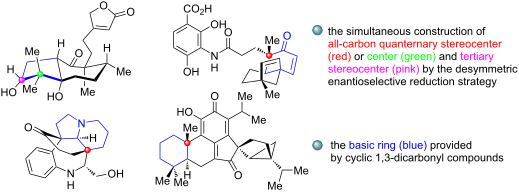
Figure 1: Several representative terpenoid and alkaloid natural products synthesized by applying desymmetric ...
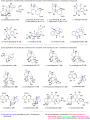
Figure 2: Selected terpenoid and alkaloid natural products synthesized by applying desymmetric enantioselecti...

Scheme 1: The total synthesis of (+)-aplysiasecosterol A (6) by Li [14].

Scheme 2: The total synthesis of (−)-cyrneine A by Han [31].

Scheme 3: The total syntheses of three cyrneine diterpenoids by Han [31,32].

Scheme 4: The total synthesis of (−)-hamigeran B and (−)-4-bromohamigeran B by Han [51].

Scheme 5: The total synthesis of (+)-randainin D by Baudoin [53].
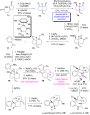
Scheme 6: The total synthesis of (−)-hunterine A and (−)-aspidospermidine by Stoltz [58].

Scheme 7: The total synthesis of (+)-toxicodenane A by Han [65,66].
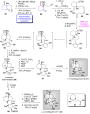
Scheme 8: The formal total synthesis of (−)-conidiogeone B and total synthesis of (−)-conidiogeone F by Lee a...

Scheme 9: The total syntheses of four conidiogenones natural products by Lee and Han [72].

Scheme 10: The total synthesis of (−)-platensilin by Lou and Xu [82].

Scheme 11: The total synthesis of (−)-platencin and (−)-platensimycin by Lou and Xu [82].

Scheme 12: The total synthesis of (+)-isochamaecydin and (+)-chamaecydin by Han [86].
Multicomponent syntheses of pyrazoles via (3 + 2)-cyclocondensation and (3 + 2)-cycloaddition key steps
- Ignaz Betcke,
- Alissa C. Götzinger,
- Maryna M. Kornet and
- Thomas J. J. Müller
Beilstein J. Org. Chem. 2024, 20, 2024–2077, doi:10.3762/bjoc.20.178

- oxalate (9) and alkylphenones 10 through a sterically hindered Claisen condensation, producing a six-membered lithium enolate salt. Subsequent cyclocondensation with hydrazines concludes the formation of pyrazoles. However, this process could not be performed as a one-pot synthesis, as the solvent had to
- , product 17a shows cytotoxic activity against Hep G2 hepatocellular carcinoma and MCF-7 breast carcinoma cell lines. The synthesis of 3,5-bis(arylamino)pyrazoles 21 involves the preparation of bisarylthioamides 22 via nucleophilic addition and double retro-Claisen condensation of isothiocyanates 19 and

Graphical Abstract

Scheme 1: Consecutive three-component synthesis of pyrazoles 1 via in situ-formed 1,3-diketones 2 [44].

Scheme 2: Consecutive three-component synthesis of 4-ethoxycarbonylpyrazoles 5 via SmCl3-catalyzed acylation ...

Scheme 3: Consecutive four-component synthesis of 1-(thiazol-2-yl)pyrazole-3-carboxylates 8 [51].

Scheme 4: Three-component synthesis of thiazolylpyrazoles 17 via in situ formation of acetoacetylcoumarins 18 ...

Scheme 5: Consecutive pseudo-four-component and four-component synthesis of pyrazoles 21 from sodium acetylac...

Scheme 6: Consecutive three-component synthesis of 1-substituted pyrazoles 24 from boronic acids, di(Boc)diim...

Scheme 7: Consecutive three-component synthesis of N-arylpyrazoles 25 via in situ formation of aryl-di(Boc)hy...

Scheme 8: Consecutive three-component synthesis of 1,3,4-substituted pyrazoles 27 and 28 from methylhydrazine...

Scheme 9: Consecutive three-component synthesis of 4-allylpyrazoles 32 via oxidative allylation of 1,3-dicarb...

Scheme 10: Pseudo-five-component synthesis of tris(pyrazolyl)methanes 35 [61].

Scheme 11: Pseudo-three-component synthesis of 5-(indol-3-yl)pyrazoles 39 from 1,3,5-triketones 38 [64].

Scheme 12: Three-component synthesis of thiazolylpyrazoles 43 [65].

Scheme 13: Three-component synthesis of triazolo[3,4-b]-1,3,4-thiadiazin-3-yl substituted 5-aminopyrazoles 47 [67]....

Scheme 14: Consecutive three-component synthesis of 5-aminopyrazoles 49 via formation of β-oxothioamides 50 [68].
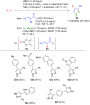
Scheme 15: Synthesis of 3,4-biarylpyrazoles 52 from aryl halides, α-bromocinnamaldehyde, and tosylhydrazine vi...

Scheme 16: Consecutive three-component synthesis of 3,4-substituted pyrazoles 57 from iodochromones 55 by Suzu...

Scheme 17: Pseudo-four-component synthesis of pyrazolyl-2-pyrazolines 59 by ring opening/ring closing cyclocon...

Scheme 18: Consecutive three-component synthesis of pyrazoles 61 [77].

Scheme 19: Three-component synthesis of pyrazoles 62 from malononitrile, aldehydes, and hydrazines [78-90].

Scheme 20: Four-component synthesis of pyrano[2,3-c]pyrazoles 63 [91].

Scheme 21: Three-component synthesis of persubstituted pyrazoles 65 from aldehydes, β-ketoesters, and hydrazin...

Scheme 22: Three-component synthesis of pyrazol-4-carbodithioates 67 [100].

Scheme 23: Regioselective three-component synthesis of persubstituted pyrazoles 68 catalyzed by ionic liquid [...

Scheme 24: Consecutive three-component synthesis of 4-halopyrazoles 69 and anellated pyrazoles 70 [102].

Scheme 25: Three-component synthesis of 2,2,2-trifluoroethyl pyrazole-5-carboxylates 72 [103].

Scheme 26: Synthesis of pyrazoles 75 in a one-pot process via carbonylative Heck coupling and subsequent cycli...

Scheme 27: Copper-catalyzed three-component synthesis of 1,3-substituted pyrazoles 76 [105].

Scheme 28: Pseudo-three-component synthesis of bis(pyrazolyl)methanes 78 by ring opening-ring closing cyclocon...

Scheme 29: Three-component synthesis of 1,4,5-substituted pyrazoles 80 [107].

Scheme 30: Consecutive three-component synthesis of 3,5-bis(fluoroalkyl)pyrazoles 83 [111].

Scheme 31: Consecutive three-component synthesis of difluoromethanesulfonyl-functionalized pyrazole 88 [114].

Scheme 32: Consecutive three-component synthesis of perfluoroalkyl-substituted fluoropyrazoles 91 [115].

Scheme 33: Regioselective consecutive three-component synthesis of 1,3,5-substituted pyrazoles 93 [116].

Scheme 34: Three-component synthesis of pyrazoles 96 mediated by trimethyl phosphite [117].

Scheme 35: One-pot synthesis of pyrazoles 99 via Liebeskind–Srogl cross-coupling/cyclocondensation [118].

Scheme 36: Synthesis of 1,3,5-substituted pyrazoles 101 via domino condensation/Suzuki–Miyaura cross-coupling ...

Scheme 37: Consecutive three-component synthesis of 1,3,5-trisubstituted pyrazoles 102 and 103 by Sonogashira ...

Scheme 38: Polymer analogous consecutive three-component synthesis of pyrazole-based polymers 107 [132].

Scheme 39: Synthesis of 1,3,5-substituted pyrazoles 108 by sequentially Pd-catalyzed Kumada–Sonogashira cycloc...

Scheme 40: Consecutive four-step one-pot synthesis of 1,3,4,5-substituted pyrazoles 110 [137].

Scheme 41: Four-component synthesis of pyrazoles 113, 115, and 117 via Sonogashira coupling and subsequent Suz...

Scheme 42: Consecutive four- or five-component synthesis for the preparation of 4-pyrazoly-1,2,3-triazoles 119...

Scheme 43: Four-component synthesis of pyrazoles 121 via alkynone formation by carbonylative Pd-catalyzed coup...

Scheme 44: Preparation of 3-azulenyl pyrazoles 124 by glyoxylation, decarbonylative Sonogashira coupling, and ...

Scheme 45: Four-component synthesis of a 3-indoloylpyrazole 128 [147].

Scheme 46: Two-step synthesis of 5-acylpyrazoles 132 via glyoxylation-Stephen–Castro sequence and subsequent c...

Scheme 47: Copper on iron mediated consecutive three-component synthesis of 3,5-substituted pyrazoles 136 [150].

Scheme 48: Consecutive three-component synthesis of 3-substituted pyrazoles 141 by Sonogashira coupling and su...

Scheme 49: Consecutive three-component synthesis of pyrazoles 143 initiated by Cu(I)-catalyzed carboxylation o...

Scheme 50: Consecutive three-component synthesis of benzamide-substituted pyrazoles 146 starting from N-phthal...

Scheme 51: Consecutive three-component synthesis of 1,3,5-substituted pyrazoles 148 [156].

Scheme 52: Three-component synthesis of 4-ninhydrin-substituted pyrazoles 151 [158].

Scheme 53: Consecutive four-component synthesis of 4-(oxoindol)-1-phenylpyrazole-3-carboxylates 155 [159].

Scheme 54: Three-component synthesis of pyrazoles 160 [160].

Scheme 55: Consecutive three-component synthesis of pyrazoles 165 [162].

Scheme 56: Consecutive three-component synthesis of 3,5-disubstituted and 3-substituted pyrazoles 168 and 169 ...

Scheme 57: Three-component synthesis of 3,4,5-substituted pyrazoles 171 via 1,3-dipolar cycloaddition of vinyl...

Scheme 58: Three-component synthesis of pyrazoles 173 and 174 from aldehydes, tosylhydrazine, and vinylidene c...

Scheme 59: Three-component synthesis of pyrazoles 175 from glyoxyl hydrates, tosylhydrazine, and electron-defi...

Scheme 60: Pseudo-four-component synthesis of pyrazoles 177 from glyoxyl hydrates, tosylhydrazine, and aldehyd...

Scheme 61: Consecutive three-component synthesis of pyrazoles 179 via Knoevenagel-cycloaddition sequence [179].

Scheme 62: Three-component synthesis of 5-dimethylphosphonate substituted pyrazoles 182 from aldehydes, the Be...

Scheme 63: Consecutive three-component synthesis of 5-(dimethyl phosphonate)-substituted pyrazoles 185 from al...

Scheme 64: Three-component synthesis of 5-(dimethyl phosphonate)-substituted pyrazoles 187 from aldehydes, the...

Scheme 65: Three-component synthesis of 5-diethylphosphonate/5-phenylsulfonyl substituted pyrazoles 189 from a...

Scheme 66: Pseudo-three-component synthesis of 3-(dimethyl phosphonate)-substituted pyrazoles 190 [185].

Scheme 67: Three-component synthesis of 3-trifluoromethylpyrazoles 193 [186].

Scheme 68: Consecutive three-component synthesis of 5-stannyl-substituted 4-fluoropyrazole 197 [191,192].

Scheme 69: Pseudo-three-component synthesis of 3,5-diacyl-4-arylpyrazoles 199 [195].

Scheme 70: Three-component synthesis of pyrazoles 204 via nitrilimines [196].

Scheme 71: Three-component synthesis of 1,3,5-substituted pyrazoles 206 via formation of nitrilimines and sali...

Scheme 72: Pseudo four-component synthesis of pyrazoles 209 from acetylene dicarboxylates 147, hydrazonyl chlo...

Scheme 73: Consecutive three-component synthesis of pyrazoles 213 via syndnones 214 [200].

Scheme 74: Consecutive three-component synthesis of pyrazoles 216 via in situ-formed diazomethinimines 217 [201].

Scheme 75: Consecutive three-component synthesis of 3-methylthiopyrazoles 219 from aldehydes, hydrazine, and 1...

Scheme 76: Three-component synthesis of 1,3,5-substituted pyrazoles 220 from aldehydes, hydrazines, and termin...

Scheme 77: Three-component synthesis of 1,3,4,5-substituted pyrazoles 222 from aldehydes, hydrazines, and DMAD ...

Scheme 78: Pseudo three-component synthesis of pyrazoles 224 from sulfonyl hydrazone and benzyl acrylate under...

Scheme 79: Titanium-catalyzed consecutive four-component synthesis of pyrazoles 225 via enamino imines 226 [211]. a...

Scheme 80: Titanium-catalyzed three-component synthesis of pyrazoles 227 via enhydrazino imine complex interme...

Scheme 81: Pseudo-three-component synthesis of pyrazoles 229 via Glaser coupling of terminal alkynes and photo...

Scheme 82: Copper(II)acetate-mediated three-component synthesis of pyrazoles 232 [216].

Scheme 83: Copper-catalyzed three-component synthesis of 1,3,4-substituted pyrazole 234 from oxime acetates, a...

Scheme 84: Three-component synthesis of 3-trifluoroethylpyrazoles 239 [218].

Scheme 85: Pseudo-three-component synthesis of 1,4-bisulfonyl-substituted pyrazoles 242 [219].

Scheme 86: Three-component synthesis of 4-hydroxypyrazole 246 [221].
Chemo-enzymatic total synthesis: current approaches toward the integration of chemical and enzymatic transformations
- Ryo Tanifuji and
- Hiroki Oguri
Beilstein J. Org. Chem. 2024, 20, 1693–1712, doi:10.3762/bjoc.20.151
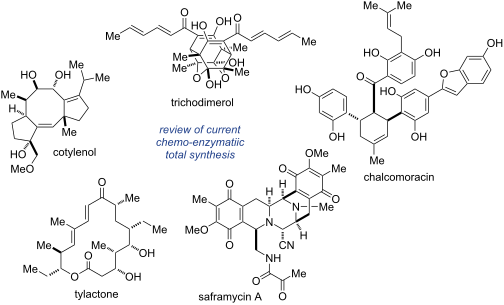
- isolated [47][49]. As shown in Scheme 5A, the proposed biosynthetic pathway of chalcomoracin (3) commence with the addition of three C2 units from the acetate pathway to 4-coumaroyl-CoA supplied from the shikimate pathway, leading to compound 42 [47]. Subsequent Claisen condensation, dehydration and

Graphical Abstract

Scheme 1: Targeted natural products and key enzymatic transformations in the chemo-enzymatic total syntheses ...

Scheme 2: Biosynthetic pathway to brassicicenes in Pseudocercospora fijiensis [14]. (A) Cyclization phase catalyz...

Scheme 3: Chemo-enzymatic total synthesis of cotylenol (1) and brassicicenes. (A) Chemical cyclization phase....
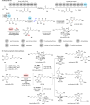
Scheme 4: (A) Biosynthetic pathway for trichodimerol (2) in Penicillium chrysogenum. (B) Chemo-enzymatic tota...
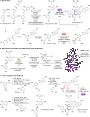
Scheme 5: (A) Proposed biosynthetic pathway for chalcomoracin (3) in Morus alba. (B) Outline of the biosynthe...

Scheme 6: (A) Chemo-enzymatically synthesized natural products by using the originally identified MaDA. (B) M...

Scheme 7: Proposed biosynthetic mechanism of tylactone (4) in Streptomyces fradiae.

Scheme 8: (A) Chemical synthesis and cascade enzymatic transformations of cyclization precursors. (B) Late-st...

Scheme 9: Proposed biosynthetic mechanism of saframycin A (5) in Streptomyces lavendulae.

Scheme 10: (A) Chemo-enzymatic total synthesis of saframycin A (5) and jorunnamycin A (103). (B) Chemo-enzymat...
Bioinformatic prediction of the stereoselectivity of modular polyketide synthase: an update of the sequence motifs in ketoreductase domain
- Changjun Xiang,
- Shunyu Yao,
- Ruoyu Wang and
- Lihan Zhang
Beilstein J. Org. Chem. 2024, 20, 1476–1485, doi:10.3762/bjoc.20.131
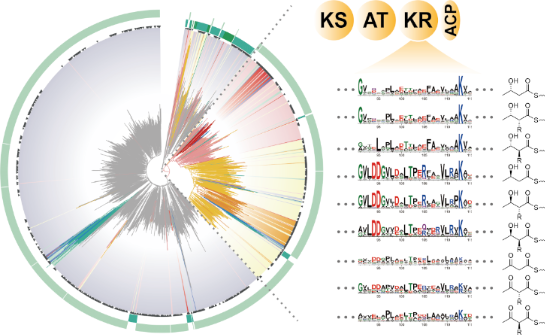
- ) [3][4]. The building blocks for PKS biosynthesis often include malonyl-CoA or methylmalonyl-CoA, which are loaded onto the ACP by the AT domain. Subsequently, the KS domain catalyzes the decarboxylative Claisen condensation between the ACP-tethered extender unit and the KS-tethered growing chain. The

Graphical Abstract

Figure 1: (a) Domain compositions and the products of α-, β-, γ- and δ-modules in cis-AT PKSs. (b) Stereocont...

Figure 2: (a) Classification and distribution of the collected KR sequences according to host taxonomy, modul...

Figure 3: (a) The position of fingerprint motifs in the KR structure (AmpKR2, A1-type, PDB ID 5XWV) [29]. Fingerp...

Figure 4: Sequence logo comparation of γ- and δ-module KRC based on the classification of their products. Top...

Figure 5: Summary of the updated fingerprints sorted by the taxonomic origin and the module type. Percentage ...
Substrate specificity of a ketosynthase domain involved in bacillaene biosynthesis
- Zhiyong Yin and
- Jeroen S. Dickschat
Beilstein J. Org. Chem. 2024, 20, 734–740, doi:10.3762/bjoc.20.67
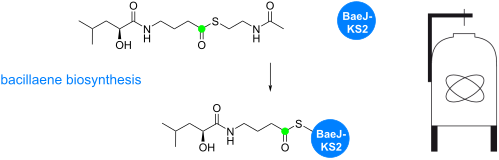
- : the acyl transferases (AT) for loading of the starter or extender units, the acyl carrier proteins (ACP) for anchoring the growing polyketide chain, and the ketosynthases (KS) for merging of the next extender unit with the existing chain by a decarboxylative Claisen condensation [2][4]. Today a high

Graphical Abstract

Scheme 1: Biosynthetic model for bacillaene (1). M1–M17 indicate modules 1–17. A = adenylation domain, ACP = ...

Scheme 2: Synthesis of the BaeJ-KS2 substrate surrogates (S)-11 and (R)-11. Green dots represent 13C-labelled...

Figure 1: 13C NMR spectra of (R)-11 incubated with BaeJ-KS2 and BaeJ-KS2-C222A. A) Free 11 dissolved in incub...
Vicinal ketoesters – key intermediates in the total synthesis of natural products
- Marc Paul Beller and
- Ulrich Koert
Beilstein J. Org. Chem. 2022, 18, 1236–1248, doi:10.3762/bjoc.18.129
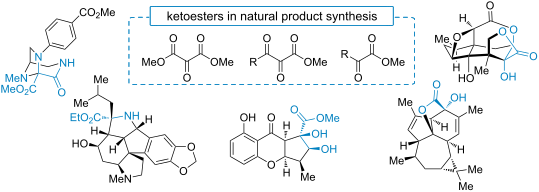
- also be used in photochemical reactions, as shown by Gramain et al. in the synthesis of the pyrrolizidine alkaloid (rac)-isoretronecanol (69, Scheme 11) [26]. A Claisen condensation of the lithium enolate of N-acetylpyrrolidine (66) with diethyl oxalate gave the ketoester 67. Irradiation of compound 67

Graphical Abstract

Scheme 1: Structures of vicinal ketoesters and examples for their typical reactivity.

Scheme 2: Doyle’s diastereoselective intramolecular aldol addition of α,β-diketoester.

Scheme 3: Synthesis of euphorikanin A (16) by intramolecular, nucleophilic addition [6].

Scheme 4: Ketoester cycloisomerization for the synthesis of preussochromone A (24) [10].

Scheme 5: Diastereoselective, intramolecular aldol reaction of an α-ketoester 28 in the synthesis of (−)-preu...

Scheme 6: Synthesis of an α-ketoester through Riley oxidation and its use in an α-ketol rearrangement in the ...

Scheme 7: Azomethine imine cycloaddition towards the synthesis of the proposed structure of palau’amine (44) [19]....

Scheme 8: Intramolecular diastereoselective carbonyl-ene reaction of an α-ketoester in the synthesis of jatro...

Scheme 9: Grignard addition to an α-ketoester and subsequent Friedel–Crafts cyclization in the synthesis of (...

Scheme 10: Diastereoselective addition to an auxiliary modified α-ketoester in the formal synthesis of (+)-cam...

Scheme 11: Intramolecular photoreduction of an α-ketoester in the synthesis of (rac)-isoretronecanol (69) [26].

Scheme 12: α-Ketoester as nucleophile in a Tsuji–Trost reaction in the synthesis of (rac)-corynoxine (76) [27].

Scheme 13: Mannich reaction of an α-ketoester in the synthesis of (+)-gracilamine (83) [28].

Scheme 14: Enantioselective aldol reaction using an α-ketoester in the synthesis of (−)-irofulven (87) [29].

Scheme 15: Allylboration of a mesoxalic acid ester in the synthesis of (+)-awajanomycin (92) [30,31].

Scheme 16: Condensation of a diamine with mesoxolate in the synthesis of (−)-aplaminal (96) [32].

Scheme 17: Synthesis of mesoxalic ester amide 102 and its use in the synthesis of (rac)-cladoniamide G (103) [33].

Scheme 18: The thermodynamically controlled, intramolecular aldol addition of a vic-tricarbonyl compound in th...
First example of organocatalysis by cathodic N-heterocyclic carbene generation and accumulation using a divided electrochemical flow cell
- Daniele Rocco,
- Ana A. Folgueiras-Amador,
- Richard C. D. Brown and
- Marta Feroci
Beilstein J. Org. Chem. 2022, 18, 979–990, doi:10.3762/bjoc.18.98
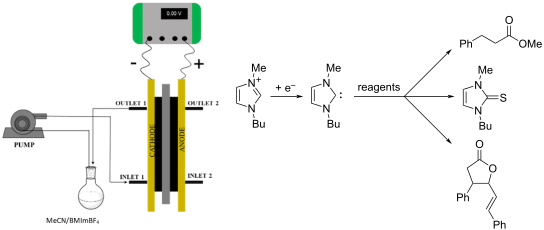
- as ligands in organometallic catalysts [9] and as versatile organocatalysts [10] in a very wide range of organic reactions such as classical benzoin condensation, transesterification, acylation, Knoevenagel reaction, Claisen condensation etc. The electrochemical generation of carbenes from ILs avoids

Graphical Abstract

Scheme 1: Electrochemical generation of NHC.

Scheme 2: Transformation of electrochemically generated NHC into the corresponding thione by its reaction wit...

Scheme 3: Umpolung of the aldehyde carbonyl carbon atom. Formation of the Breslow intermediate using NHCs.

Figure 1: Schematic representation of a plane-parallel plate flow electrochemical reactor.

Figure 2: C/PVDF anode before (A) and after (B) the first experiment (Table 1, entry 1).

Scheme 4: Electrogenerated NHC-catalyzed self-annulation of cinnamaldehyde.

Scheme 5: Byproduct obtained from the reaction between methanol and the Breslow intermediate.

Figure 3: Expanded view of the electrochemical cell components: (a) Aluminium end plates; (b) insulating PTFE...
Progress in the total synthesis of inthomycins
- Bidyut Kumar Senapati
Beilstein J. Org. Chem. 2021, 17, 58–82, doi:10.3762/bjoc.17.7
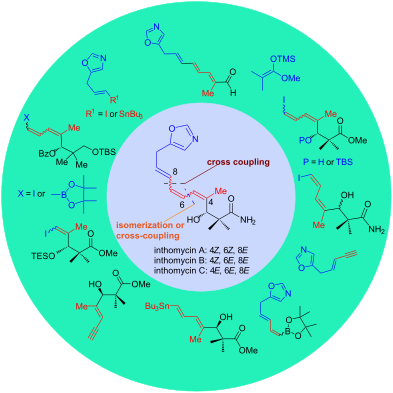
- inthomycins [36]. These triene moieties are a sub-unit of the oxazolomycin class of antibiotics. To prepare the phenyl analogue of racemic inthomycin C (rac-3), at first, the phosphonate 28 was prepared using a Claisen condensation of ethyl propionate (25) followed by methylation of 26a, treatment with

Graphical Abstract

Figure 1: The inthomycins A–C (1–3) and structurally closely related compounds.

Figure 2: Syntheses of inthomycins A–C (1–3).
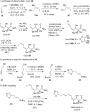
Scheme 1: The first total synthesis of racemic inthomycin A (rac)-1 by Whiting.

Scheme 2: Moloney’s synthesis of the phenyl analogue of inthomycin C ((rac)-3).
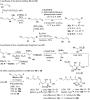
Scheme 3: Moloney’s synthesis of phenyl analogues of inthomycins A (rac-1) and B (rac-2).

Scheme 4: The first total synthesis of inthomycin B (+)-2 by R. J. K. Taylor.

Scheme 5: R. J. K. Taylor’s total synthesis of racemic inthomycin A (rac)-1.
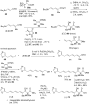
Scheme 6: The first total synthesis of inthomycin C ((+)-3) by R. J. K. Taylor.

Scheme 7: The first total synthesis of naturally occurring inthomycin C ((–)-3) by Ryu et al.

Scheme 8: Preparation of E,E-iododiene (+)-84 and Z,E- iododiene 85a.

Scheme 9: Hatakeyama’s total synthesis of inthomycin A (+)-1 and inthomycin B (+)-2.

Scheme 10: Hatakeyama’s total synthesis of inthomycin C ((–)-3).

Scheme 11: Maulide’s formal synthesis of racemic inthomycin C ((rac)-3).
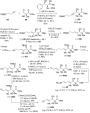
Scheme 12: Hale’s synthesis of dienylstannane (+)-69 and enyne (+)-82b intermediates.

Scheme 13: Hale’s total synthesis of inthomycin C ((+)-3).

Scheme 14: Hale and Hatakeyama’s resynthesis of (3R)-inthomycin C (−)-3 Mosher esters.

Scheme 15: Reddy’s formal syntheses of inthomycin C (+)-3 and inthomycin C ((−)-3).

Scheme 16: Synthesis of the cross-metathesis precursors (rac)-118 and 121.

Scheme 17: Donohoe’s total synthesis of inthomycin C ((−)-3).

Scheme 18: Synthesis of dienylboronic ester (E,E)-128.

Scheme 19: Synthesis of the alkenyl iodides (Z)- and (E)-130.

Scheme 20: Burton’s total synthesis of inthomycin B ((+)-2).

Scheme 21: Burton’s total synthesis of inthomycin C ((−)-3).

Scheme 22: Burton’s total synthesis of inthomycin A ((+)-1).

Scheme 23: Synthesis of common intermediate (Z)-(+)-143a.

Scheme 24: Synthesis of (Z)-and (E)-selective fragments (+)-145a–c.

Scheme 25: Kim’s total synthesis of inthomycins A (+)-1 and B (+)-2.

Scheme 26: Completion of total synthesis of inthomycin C ((–)-3) by Kim.
Synthesis of 4-amino-5-fluoropyrimidines and 5-amino-4-fluoropyrazoles from a β-fluoroenolate salt
- Tobias Lucas,
- Jule-Philipp Dietz and
- Till Opatz
Beilstein J. Org. Chem. 2020, 16, 445–450, doi:10.3762/bjoc.16.41
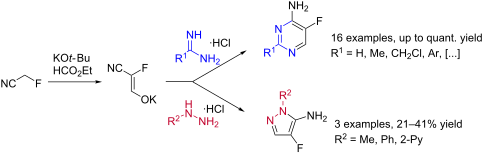
- (5). First, a Finkelstein halogen exchange reaction and a dehydration reaction were combined to obtain fluoroacetonitrile (7) in 82% yield [36]. The latter then underwent a Claisen condensation with ethyl formate to obtain 8 in 77% yield with a purity of 90%. The product contained about 10% (1H NMR

Graphical Abstract

Figure 1: The structures of 5-fluorouracil (1), 5-fluorocytosine (2), emtricitabine (3) and capecitabine (4).

Scheme 1: Synthesis of potassium (Z)-2-cyano-2-fluoroethenolate (8) by Dietz et al. [36].

Scheme 2: Scope of the cyclization reaction. All yields are those of the purified products. aNo further purif...

Scheme 3: Cyclization with phenylhydrazine (12a) to obtain the desired pyrazole 13a and the byproducts 13b an...
Chiral terpene auxiliaries V: Synthesis of new chiral γ-hydroxyphosphine oxides derived from α-pinene
- Anna Kmieciak and
- Marek P. Krzemiński
Beilstein J. Org. Chem. 2019, 15, 2493–2499, doi:10.3762/bjoc.15.242

- to the allylic alcohol. Thus, Claisen condensation of 8 with ethyl formate gave β-hydroxyenone 9, which was subjected to transaldolization with formaldehyde producing the corresponding 4-methyleneisopinocamphone (10) in 83% yield. Luche reduction of the latter compound provided (1R,2R,3R,5R)-4

Graphical Abstract

Scheme 1: Synthesis of (1R,2R,4S,5R)-3-methyleneneoisoverbanol (6).

Scheme 2: Synthesis of (1R,2R,3R,5R)-4-methyleneneoisopinocampheol (11).

Scheme 3: Synthesis of allylic alcohols 16 and 18 from β-pinene.

Figure 1: NOE effects in molecules 16 and 18.

Scheme 4: Synthesis of (1R,2R,3R,4R,5R)-3-((diphenylphosphanyl)methyl)isoverbanol (23).

Scheme 5: Synthesis of (((1R,2R,3S,4S,5S)-3-hydroxypinan-4-yl)methyl)diphenylphosphine oxide (27).

Scheme 6: Attempted sigmatropic rearrangement of phosphinites 28 and 29.
Application of chiral 2-isoxazoline for the synthesis of syn-1,3-diol analogs
- Juanjuan Feng,
- Tianyu Li,
- Jiaxin Zhang and
- Peng Jiao
Beilstein J. Org. Chem. 2019, 15, 1840–1847, doi:10.3762/bjoc.15.179
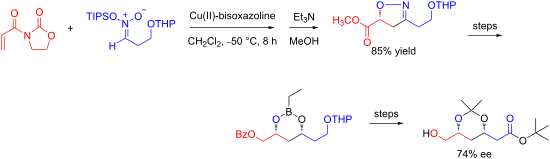
- methods using Claisen condensation. (b) Our new method using cycloaddition. Attempted oxidations of 4. Preparations of 16 and related syn-1,3-diol compounds. Attempted oxidations of 6'. Attempted selective protections of internal 1,3-hydroxy groups: (a) acetonizations of 1,3-diols; (b) removal of co

Graphical Abstract

Scheme 1: Accesses to tert-butyl 3,5-O-isopropylidene-3,5-dihydroxyhexanoates. (a) Previous methods using Cla...

Scheme 2: Attempted oxidations of 4.

Scheme 3: Preparations of 16 and related syn-1,3-diol compounds.

Scheme 4: Attempted oxidations of 6'.

Scheme 5: Attempted selective protections of internal 1,3-hydroxy groups: (a) acetonizations of 1,3-diols; (b...
A convenient and practical synthesis of β-diketones bearing linear perfluorinated alkyl groups and a 2-thienyl moiety
- Ilya V. Taydakov,
- Yuliya M. Kreshchenova and
- Ekaterina P. Dolotova
Beilstein J. Org. Chem. 2018, 14, 3106–3111, doi:10.3762/bjoc.14.290
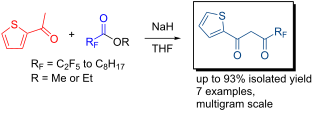
- ]. This compound was first obtained by Reid and Calvin in 1950 [15] by Claisen condensation of 2-acetylthiophene and ethyl trifluoroacetate in the presence of NaOEt in Et2O (Scheme 1). The purification procedure was laborious and included copper chelate precipitation and its subsequent acid decomposition
- alkoxides (predominantly NaOMe or NaOEt) and Et2O were used most frequently as the base and solvent, respectively, in the Claisen condensation of 2-acetylthiophene (1) with various esters of aliphatic, aromatic or heterocyclic carboxylic acids [24] (Table 1). In our initial experiments we tested several
- NaOEt from freshly opened metal cans, while old samples were much less reactive. We believe that slow degradation of alkoxides take place during storage under ambient conditions. Nevertheless, these samples of alkoxides are still suitable for many reactions other than the Claisen condensation of 2

Graphical Abstract

Scheme 1: Synthesis of Htta.

Figure 1: Known thiophene-based perfluorinated β-diketones.

Scheme 2: Preparation of 1-(2-thienyl)butane-1,3-dione (5).

Scheme 3: Preparation and cleavage of copper chelates of β-diketones.

Scheme 4: Keto-enol equilibrium of β-diketones.
Quinolines from the cyclocondensation of isatoic anhydride with ethyl acetoacetate: preparation of ethyl 4-hydroxy-2-methylquinoline-3-carboxylate and derivatives
- Nicholas G. Jentsch,
- Jared D. Hume,
- Emily B. Crull,
- Samer M. Beauti,
- Amy H. Pham,
- Julie A. Pigza,
- Jacques J. Kessl and
- Matthew G. Donahue
Beilstein J. Org. Chem. 2018, 14, 2529–2536, doi:10.3762/bjoc.14.229

- quinolines of type 10 via C→D, the ethyl acetopyruvate has two carbonyls a and b as depicted in 13 that result in regioisomeric products upon ring closure. The desired quinoline 11 requires ring closure onto carbonyl b. To that end, ethyl sodioacetopyruvate was prepared via Claisen condensation of acetone

Graphical Abstract

Figure 1: Investigational non-catalytic HIV-1 Integrase inhibitors.

Scheme 1: Boehringer Ingelheim retrosynthesis of quinoline 1.

Scheme 2: Quinoline ring condensation strategies.
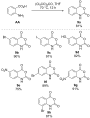
Scheme 3: Isatoic anhydrides from anthranilic acids with triphosgene.
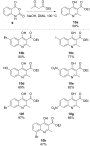
Scheme 4: Substituted 2-methyl-4-hydroxyquinolines from isatoic anhydrides and ethyl acetoacetate.
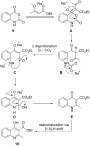
Scheme 5: Mechanistic hypothesis for the cyclocondensation reaction.

Scheme 6: Quinoline synthesis with ethyl acetylpyruvate.
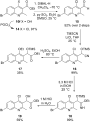
Scheme 7: Elaboration of the benzoic acid ethyl ester to the acetic acid residue.

Scheme 8: Umpolung addition of ethoxycarbonyl via a MAC strategy.
Synthesis of a leopolic acid-inspired tetramic acid with antimicrobial activity against multidrug-resistant bacteria
- Luce Mattio,
- Loana Musso,
- Leonardo Scaglioni,
- Andrea Pinto,
- Piera Anna Martino and
- Sabrina Dallavalle
Beilstein J. Org. Chem. 2018, 14, 2482–2487, doi:10.3762/bjoc.14.224
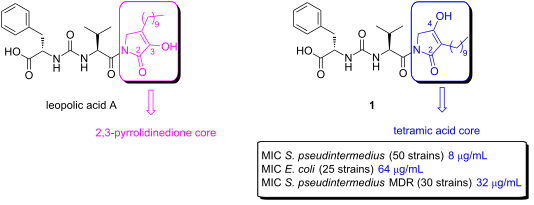
- could be a Lacey–Dieckmann cyclization starting from a N-acetoacetyl-α-amino ester. Interestingly, the biosynthetic pathways of the tetramic acid scaffold involves Lacey–Dieckmann cyclases [23] or a spontaneous intramolecular Claisen condensation, which occurs in the cytosol. To protect the α-amino

Graphical Abstract

Figure 1: Structures of leopolic acid A and compound 1.

Scheme 1: Synthesis of 3-decyltetramic intermediate 13. Reagent and conditions: a) TEA, THF, 0 °C to rt, 2.5 ...

Scheme 2: Synthesis of dipeptide L-Phe-L-Val intermediate 20. Reagents and conditions: a) PTSA·H2O, benzyl al...

Scheme 3: Synthesis of compound 1. Reagents and conditions: a) n-BuLi, THF, −60 °C, 220 min, 60%; b) H2, Pd/C...
Synthesis of 1-indanones with a broad range of biological activity
- Marika Turek,
- Dorota Szczęsna,
- Marek Koprowski and
- Piotr Bałczewski
Beilstein J. Org. Chem. 2017, 13, 451–494, doi:10.3762/bjoc.13.48
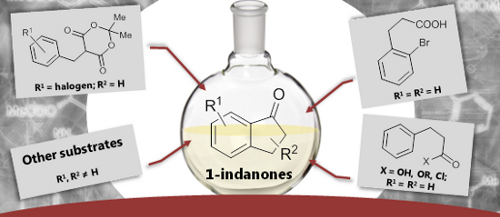
- 55 via a formal 1,4-addition of arylboronic acids to β-aryl-α,β-unsaturated ketones and esters [39]. Thus, the α,β-unsaturated diester 52 was coupled with arylboronic acid in the presence of rhodium(I)/Chiraphos® complex as a catalyst to obtain derivative 53, which next underwent a Claisen
- condensation to form 1-indanone 54. The latter was further used as a substrate for the synthesis of selective endothelin A receptor antagonist 55 (Scheme 19). A simple and efficient synthesis of 1-indanones 60 from methyl vinyl ketone (57) has been proposed by Felpin et al. [40]. In this synthesis, the authors

Graphical Abstract

Figure 1: Biologically active 1-indanones and their structural analogues.

Figure 2: Number of papers about (a) 1-indanones, (b) synthesis of 1-indanones.

Scheme 1: Synthesis of 1-indanone (2) from hydrocinnamic acid (1).

Scheme 2: Synthesis of 1-indanone (2) from 3-(2-bromophenyl)propionic acid (3).

Scheme 3: Synthesis of 1-indanones 5 from 3-arylpropionic acids 4.

Scheme 4: Synthesis of kinamycin (9a) and methylkinamycin C (9b).

Scheme 5: Synthesis of trifluoromethyl-substituted arylpropionic acids 12, 1-indanones 13 and dihydrocoumarin...

Scheme 6: Synthesis of 1-indanones 16 from benzoic acids 15.

Scheme 7: Synthesis of 1-indanones 18 from arylpropionic and 3-arylacrylic acids 17.

Scheme 8: The NbCl5-induced one-step synthesis of 1-indanones 22.

Scheme 9: Synthesis of biologically active 1-indanone derivatives 26.

Scheme 10: Synthesis of enantiomerically pure indatraline ((−)-29).

Scheme 11: Synthesis of 1-indanone (2) from the acyl chloride 30.

Scheme 12: Synthesis of the mechanism-based inhibitors 33 of coelenterazine.

Scheme 13: Synthesis of the indane 2-imidazole derivative 37.

Scheme 14: Synthesis of fluorinated PAHs 41.

Scheme 15: Synthesis of 1-indanones 43 via transition metal complexes-catalyzed carbonylative cyclization of m...

Scheme 16: Synthesis of 6-methyl-1-indanone (46).

Scheme 17: Synthesis of 1-indanone (2) from ester 48.

Scheme 18: Synthesis of benzopyronaphthoquinone 51 from the spiro-1-indanone 50.

Scheme 19: Synthesis of the selective endothelin A receptor antagonist 55.

Scheme 20: Synthesis of 1-indanones 60 from methyl vinyl ketone (57).

Scheme 21: Synthesis of 1-indanones 64 from diethyl phthalate 61.

Scheme 22: Synthesis of 1-indanone derivatives 66 from various Meldrum’s acids 65.

Scheme 23: Synthesis of halo 1-indanones 69.

Scheme 24: Synthesis of substituted 1-indanones 71.

Scheme 25: Synthesis of spiro- and fused 1-indanones 73 and 74.

Scheme 26: Synthesis of spiro-1,3-indanodiones 77.

Scheme 27: Mechanistic pathway for the NHC-catalyzed Stetter–Aldol–Michael reaction.

Scheme 28: Synthesis of 2-benzylidene-1-indanone derivatives 88a–d.

Scheme 29: Synthesis of 1-indanone derivatives 90a–i.

Scheme 30: Synthesis of 1-indanones 96 from o-bromobenzaldehydes 93 and alkynes 94.

Scheme 31: Synthesis of 3-hydroxy-1-indanones 99.

Scheme 32: Photochemical preparation of 1-indanones 103 from ketones 100.

Scheme 33: Synthesis of chiral 3-aryl-1-indanones 107.

Scheme 34: Photochemical isomerization of 2-methylbenzil 108.

Scheme 35: Synthesis of 2-hydroxy-1-indanones 111a–c.

Scheme 36: Synthesis of 1-indanone derivatives 113 and 114 from η6-1,2-dioxobenzocyclobutene complex 112.

Scheme 37: Synthesis of nakiterpiosin (117).

Scheme 38: Synthesis of 2-alkyl-1-indanones 120.

Scheme 39: Synthesis of fluorine-containing 1-indanone derivatives 123.

Scheme 40: Synthesis of 2-benzylidene and 2-benzyl-1-indanones 126, 127 from the chalcone 124.

Scheme 41: Synthesis of 2-bromo-6-methoxy-3-phenyl-1-indanone (130).

Scheme 42: Synthesis of combretastatin A-4-like indanones 132a–s.

Figure 3: Chemical structures of investigated dienones 133 and synthesized cyclic products 134–137.

Figure 4: Chemical structures of 1-indanones and their heteroatom analogues 138–142.

Scheme 43: Synthesis of 2-phosphorylated and 2-non-phosphorylated 1-indanones 147 and 148 from β-ketophosphona...

Scheme 44: Photochemical synthesis of 1-indanone derivatives 150, 153a, 153b.

Scheme 45: Synthesis of polysubstituted-1-indanones 155, 157.

Scheme 46: Synthesis of 1-indanones 159a–g from α-arylpropargyl alcohols 158 using RhCl(PPh3)3 as a catalyst.

Scheme 47: Synthesis of optically active 1-indanones 162 via the asymmetric Rh-catalyzed isomerization of race...

Scheme 48: Mechanism of the Rh-catalyzed isomerization of α-arylpropargyl alcohols 161 to 1-indanones 162.

Figure 5: Chemical structure of abicoviromycin (168) and its new benzo derivative 169.

Scheme 49: Synthesis of racemic benzoabicoviromycin 172.

Scheme 50: Synthesis of [14C]indene 176.

Scheme 51: Synthesis of indanone derivatives 178–180.

Scheme 52: Synthesis of racemic pterosin A 186.

Scheme 53: Synthesis of trans-2,3-disubstituted 1-indanones 189.

Scheme 54: Synthesis of 3-aryl-1-indanone derivatives 192.

Scheme 55: Synthesis of 1-indanone derivatives 194 from 3-(2-iodoaryl)propanonitriles 193.

Scheme 56: Synthesis of 1-indanones 200–204 by cyclization of aromatic nitriles.

Scheme 57: Synthesis of 1,1’-spirobi[indan-3,3’-dione] derivative 208.

Scheme 58: Total synthesis of atipamezole analogues 211.

Scheme 59: Synthesis of 3-[4-(1-piperidinoethoxy)phenyl]spiro[indene-1,1’-indan]-5,5’-diol hydrochloride 216.

Scheme 60: Synthesis of 3-arylindan-1-ones 219.

Scheme 61: Synthesis of 2-hydroxy-1-indanones 222.

Scheme 62: Synthesis of the 1-indanone 224 from the THP/MOM protected chalcone epoxide 223.

Scheme 63: Synthesis of 1-indanones 227 from γ,δ-epoxy ketones 226.

Scheme 64: Synthesis of 2-hydroxy-2-methylindanone (230).

Scheme 65: Synthesis of 1-indanone derivatives 234 from cyclopropanol derivatives 233.

Scheme 66: Synthesis of substituted 1-indanone derivatives 237.

Scheme 67: Synthesis of 7-methyl substituted 1-indanone 241 from 1,3-pentadiene (238) and 2-cyclopentenone (239...

Scheme 68: Synthesis of disubstituted 1-indanone 246 from the siloxydiene 244 and 2-cyclopentenone 239.

Scheme 69: Synthesis of 5-hydroxy-1-indanone (250) via the Diels–Alder reaction of 1,3-diene 248 with sulfoxid...

Scheme 70: Synthesis of halogenated 1-indanones 253a and 253b.

Scheme 71: Synthesis of 1-indanones 257 and 258 from 2-bromocyclopentenones 254.

Scheme 72: Synthesis of 1-indanone 261 from 2-bromo-4-acetoxy-2-cyclopenten-1-one (260) and 1,2-dihydro-4-viny...

Scheme 73: Synthesis of 1-indanone 265 from 1,2-dihydro-7-methoxy-4-vinylnaphthalene (262) and bromo-substitut...

Scheme 74: Synthesis of 1-indanone 268 from dihydro-3-vinylphenanthrene 266 and 4-acetoxy-2-cyclopenten-1-one (...

Scheme 75: Synthesis of 1-indanone 271 from phenylselenyl-substituted cyclopentenone 268.

Scheme 76: Synthesis of 1-indanone 272 from the trienone 270.

Scheme 77: Synthesis of the 1-indanone 276 from the aldehyde 273.

Scheme 78: Synthesis of 1-indanones 278 and 279.

Scheme 79: Synthesis of 1-indanone 285 from octa-1,7-diyne (282) and cyclopentenone 239.

Scheme 80: Synthesis of benz[f]indan-1-one (287) from cyclopentenone 239 and o-bis(dibromomethyl)benzene (286)....

Scheme 81: Synthesis of 3-methyl-substituted benz[f]indan-1-one 291 from o-bis(dibromomethyl)benzene (286) and...

Scheme 82: Synthesis of benz[f]indan-1-one (295) from the anthracene epidioxide 292.

Scheme 83: Synthesis of 1-indanone 299 from homophthalic anhydride 298 and cyclopentynone 297.

Scheme 84: Synthesis of cyano-substituted 1-indanone derivative 301 from 2-cyanomethylbenzaldehyde (300) and c...

Scheme 85: Synthesis of 1-indanone derivatives 303–305 from ketene dithioacetals 302.

Scheme 86: Synthesis of 1-indanones 309–316.

Scheme 87: Mechanism of the hexadehydro-Diels–Alder (HDDA) reaction.

Scheme 88: Synthesis of 1-indenone 318 and 1-indanones 320 and 321 from tetraynes 317 and 319.

Scheme 89: Synthesis of 1-indanone 320 from the triyn 319.

Scheme 90: Synthesis 1-indanone 328 from 2-methylfuran 324.

Scheme 91: Synthesis of 1-indanones 330 and 331 from furans 329.

Scheme 92: Synthesis of 1-indanone 333 from the cycloadduct 332.

Scheme 93: Synthesis of (S)-3-arylindan-1-ones 335.

Scheme 94: Synthesis of (R)-2-acetoxy-1-indanone 338.

Figure 6: Chemical structures of obtained cyclopenta[α]phenanthrenes 339.

Scheme 95: Synthesis of the benzoindanone 343 from arylacetaldehyde 340 with 1-trimethylsilyloxycyclopentene (...
Chemical probes for competitive profiling of the quorum sensing signal synthase PqsD of Pseudomonas aeruginosa
- Michaela Prothiwa,
- Dávid Szamosvári,
- Sandra Glasmacher and
- Thomas Böttcher
Beilstein J. Org. Chem. 2016, 12, 2784–2792, doi:10.3762/bjoc.12.277
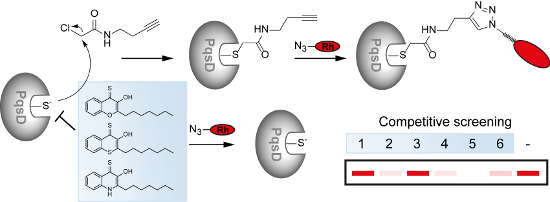
- ]. The biosynthesis of AQs has been matter of a long-standing debate that could only recently be resolved. Although HHQ could be produced in vitro by a PqsD catalyzed “head-to-head” decarboxylative Claisen condensation of activated anthranilic acid with β-keto fatty acid derivatives [10][11], isotope

Graphical Abstract

Figure 1: Quinolone signals of Pseudomonas aeruginosa. A) Structures of HHQ and PQS. B) Proposed mechanism fo...

Figure 2: Synthesis of electrophilic ABPP probes. A) Synthesis of α,β-unsaturated amide probes UA1–3. B) Synt...

Figure 3: In vitro labeling of PqsD by chemical probes. A) ABPP probe library with wild-type PqsD and PqsD C1...

Scheme 1: Synthesis of various HHQ and PQS analogues.
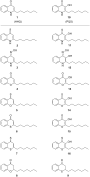
Figure 4: Library of HHQ and PQS analogues.

Figure 5: Competitive profiling platform. A) Schematic representation of the competitive labelling strategy w...
Biosynthesis of α-pyrones
- Till F. Schäberle
Beilstein J. Org. Chem. 2016, 12, 571–588, doi:10.3762/bjoc.12.56
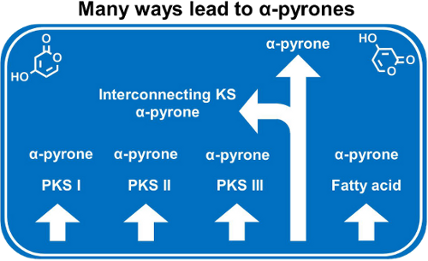
- ), and of derivatives (by post-PKS reactions) is shown in Figure 18. The authors suggested that seven malonyl-CoA building blocks are connected via Claisen-condensation reactions, followed by aldol-type cyclizations between C-2 and C-7, as well as between C-8 and C-13. The subsequent lactonization yields
- elongated by a butyrate moiety. Subsequently three further elongation steps, this time using malonate as extender units, follow. This results in the incorporation of acetate units via Claisen-condensation reactions. The reductive domains, i.e., ketoreductase (KR) and dehydration (DH) domains, present in the

Graphical Abstract

Figure 1: Selected monocyclic and monobenzo α-pyrone structures.

Figure 2: The basic core structure of dibenzo-α-pyrones.

Figure 3: Selected dibenzo-α-pyrones.

Figure 4: Structure of ellagic acid and of the urolithins, the latter metabolized from ellagic acid by intest...
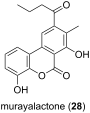
Figure 5: Structure of murayalactone, the only dibenzo-α-pyrone described from bacteria.

Figure 6: Structures of the 6-pentyl-2-pyrone (29) and of trichopyrone (30). Only 29 showed antifungal activi...

Figure 7: Selected monocyclic α-pyrones.

Figure 8: Structures of the gibepyrones A–F.

Figure 9: Structures of the phomenins A and B.

Figure 10: Structures of monocyclic α-pyrones showing pheromone (47) and antitumor activity (48), respectively....

Figure 11: Structures of 6-alkyl (alkoxy or alkylthio)-4-aryl-3-(4-methanesulfonylphenyl)pyrones.

Figure 12: Structures of kavalactones.

Figure 13: Strutures of germicins.

Figure 14: Structures of the pseudopyronines.

Figure 15: The structures of the monobenzo-α-pyrone anticoagulant drugs warfarin and phenprocoumon.

Figure 16: Structures of selected monobenzo-α-pyrones.
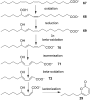
Figure 17: Hypothetical pathway of 29 generation from linoleic acid [34].

Figure 18: Proposed biosynthetic pathway of alternariol (modified from [77]). Malonyl-CoA building blocks are appl...

Figure 19: Structures of phenylnannolones and of enterocin, both biosynthesized via polyketide synthase system...

Figure 20: Pyrone ring formation. Examples for the three types of PKS systems are shown in A–C. In D the mecha...

Figure 21: Structures of csypyrones.

Figure 22: Schematic drawing of the T-shaped catalytic cavities of the related enzymes CorB and MxnB. The two ...

Figure 23: Stereo representation of the CorB binding situation (modified from [89]). The substrate mimic (dark vio...

Figure 24: Proposed mechanism for the CsyB enzymatic reaction. A) Coupling reaction of the β-keto fatty acyl i...
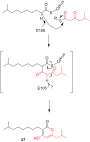
Figure 25: Proposed biosynthesis of photopyrone D (37) by the enzyme PpyS from P. luminescens (modified from [63])...
Catalytic asymmetric formal synthesis of beraprost
- Yusuke Kobayashi,
- Ryuta Kuramoto and
- Yoshiji Takemoto
Beilstein J. Org. Chem. 2015, 11, 2654–2660, doi:10.3762/bjoc.11.285
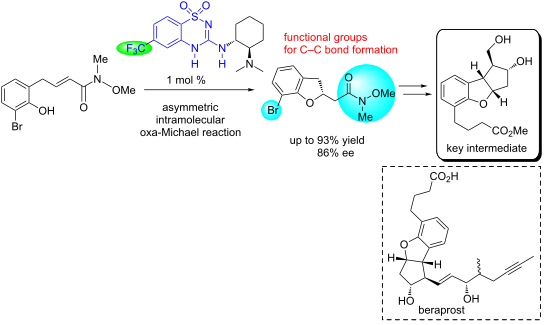
- yield (Table 1, entry 8). With both the AIOM adducts 5 and 6 in hand, we next investigated the construction of the tricyclic core (Scheme 3 and Scheme 4). The cross-Claisen condensation of 6 with lithium tert-butyl acetate afforded the corresponding β-ketoester, which was then treated with 2-azido-1,3
- ) at the ortho position was methyl, or via coupling reactions with C4 units when X was a bromo substituent. The cis-fused tricyclic core of 3 was assumed to be constructed by a stereoselective C–H insertion of diazoester 4, which can be readily prepared from the Weinreb amides 5 or 6 via Claisen
- condensation followed by diazo-transfer reaction. The chiral dihydrobenzofuran scaffold (5 or 6) could be synthesized by asymmetric intramolecular oxa-Michael reaction (AIOM) of α,β-unsaturated amides 7 or 8. Such reactions are generally considered to be challenging due to low nucleophilicity of the oxygen

Graphical Abstract

Figure 1: Structure of PGI2 and beraprost (1).

Scheme 1: Retrosynthetic analysis of beraprost (1).
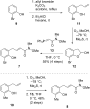
Scheme 2: Preparation of Michael precursors 7 and 8.

Scheme 3: First attempt at the synthesis of 2 from 6.
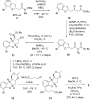
Scheme 4: Achievement of a formal synthesis of 2.
A novel and widespread class of ketosynthase is responsible for the head-to-head condensation of two acyl moieties in bacterial pyrone biosynthesis
- Darko Kresovic,
- Florence Schempp,
- Zakaria Cheikh-Ali and
- Helge B. Bode
Beilstein J. Org. Chem. 2015, 11, 1412–1417, doi:10.3762/bjoc.11.152
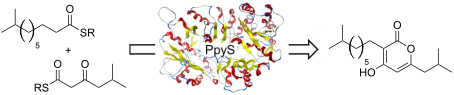
- photopyrone synthase (PpyS), which catalyzes the head-to-head condensation of two acyl moieties. Ketosynthases (KS) are the key enzymes involved in the biosynthesis of fatty acids and polyketides [8]. They are known to catalyze C–C bond formations via a Claisen condensation between acyl- and malonylthioesters

Graphical Abstract

Figure 1: Structures of photopyrones 1–8, pseudopyronines 9–11, myxopyronin A (12) and corallopyronin A (13)....
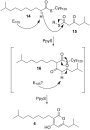
Scheme 1: Proposed biosynthesis of photopyrone D (4) by PpyS from P. luminescens. The second deprotonation st...

Figure 2: Dimeric structure of modeled PpyS (A). Chain A (blue), chain B (red). 14 (surface, cyan) is covalen...
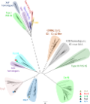
Figure 3: Phylogenetic tree (PHYML) composed of PpyS, its homologues and other known ketosynthases. Table S4 (...
Antioxidant potential of curcumin-related compounds studied by chemiluminescence kinetics, chain-breaking efficiencies, scavenging activity (ORAC) and DFT calculations
- Adriana K. Slavova-Kazakova,
- Silvia E. Angelova,
- Timur L. Veprintsev,
- Petko Denev,
- Davide Fabbri,
- Maria Antonietta Dettori,
- Maria Kratchanova,
- Vladimir V. Naumov,
- Aleksei V. Trofimov,
- Rostislav F. Vasil’ev,
- Giovanna Delogu and
- Vessela D. Kancheva
Beilstein J. Org. Chem. 2015, 11, 1398–1411, doi:10.3762/bjoc.11.151
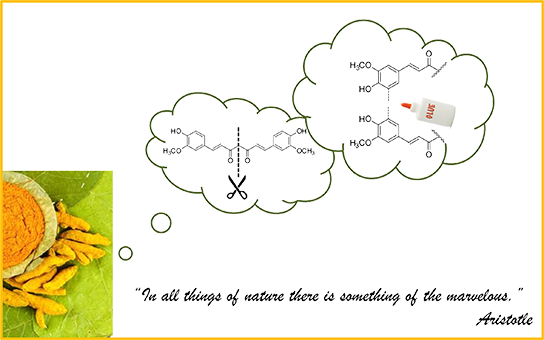
- studied compounds. Results and Discussion Claisen condensation of biphenyl ketone 6 and monomer 2 with diethyl oxalate was carried out in the presence of a base to give β-diketo ethyl esters 8 and 4 in good yields (Scheme 1). All compounds prepared were solid and stable in air. Trans-configuration was

Graphical Abstract

Figure 1: a) Degradation products of curcumin according to Wang et al. [10]; b) structures of the studied monomer...

Scheme 1: Preparation of hydroxylated biphenyl 8 and its monomer 4.

Figure 2: Time profiles of the relative chemiluminescence intensity (I/I∞) measured during the oxidation of e...

Figure 3: Time profiles of the relative chemiluminescence intensity (I/I∞) measured during the oxidation of e...
Figure 4: Kinetic curves of TGSO autoxidation at 80 °C in the absence (control, C) and in the presence of 1 m...

Figure 5: Fluorescence decay curves of fluorescein (13) in the absence (blank sample: white circles) and in t...

Figure 6: B3LYP/6-31+G(d,p)-optimized structures of the dimers and enthalpy differences between dimers with a...

Figure 7: Bond dissociation enthalpies (BDEs). Solid fill refers to monomers and radicals in gas phase (grey)...
The synthesis of active pharmaceutical ingredients (APIs) using continuous flow chemistry
- Marcus Baumann and
- Ian R. Baxendale
Beilstein J. Org. Chem. 2015, 11, 1194–1219, doi:10.3762/bjoc.11.134
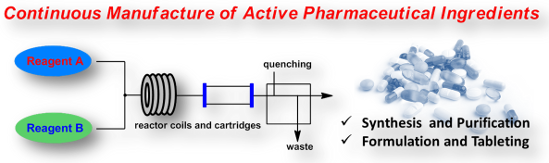
- whilst also safely handling the toxic and pyrophoric methyl dichlorophosphine reagent (Scheme 11). As the subsequent Claisen condensation step was also known to generate a considerable exotherm, a similar flow setup was used in order to allow the reaction heat to dissipate. The superiority of the heat
- an iodine mediated aromatisation, followed by high temperature mono-methylation using dimethyl carbonate/dimethylimidazole as a more benign alternative to methyl iodide at scale. The subsequent Claisen condensation step between ketone 112 and diethyl oxalate (113) was reportedly hampered by product

Graphical Abstract

Figure 1: Pharmaceutical structures targeted in early flow syntheses.

Scheme 1: Flow synthesis of 6-hydroxybuspirone (9). Inserted photograph reprinted with permission from [45]. Copy...

Figure 2: Configuration of a baffled reactor tube (left) and its schematic working principle (right).

Scheme 2: McQuade’s flow synthesis of ibuprofen (16).

Scheme 3: Jamison’s flow synthesis of ibuprofen sodium salt (17).

Scheme 4: Flow synthesis of imatinib (23).

Scheme 5: Flow synthesis of the potent 5HT1B antagonist 28.

Scheme 6: Flow synthesis of a selective δ-opioid receptor agonist 33.

Scheme 7: Flow synthesis of a casein kinase I inhibitor library (38).

Scheme 8: Flow synthesis of fluoxetine (46).

Scheme 9: Flow synthesis of artemisinin (55).

Scheme 10: Telescoped flow synthesis of artemisinin (55) and derivatives (62–64).

Scheme 11: Flow approach towards AZD6906 (65).

Scheme 12: Pilot scale flow synthesis of key intermediate 73.

Scheme 13: Semi-flow synthesis of vildagliptine (77).

Scheme 14: Pilot scale asymmetric flow hydrogenation towards 83. Inserted photograph reprinted with permission...

Figure 3: Schematic representation of the ‘tube-in-tube’ reactor.

Scheme 15: Flow synthesis of fanetizole (87) via tube-in-tube system.

Scheme 16: Flow synthesis of diphenhydramine.HCl (92).

Scheme 17: Flow synthesis of rufinamide (95).

Scheme 18: Large scale flow synthesis of rufinamide precursor 102.

Scheme 19: First stage in the flow synthesis of meclinertant (103).

Scheme 20: Completion of the flow synthesis of meclinertant (103).

Scheme 21: Flow synthesis of olanzapine (121) utilising inductive heating techniques.

Scheme 22: Flow synthesis of amitriptyline·HCl (127).

Scheme 23: Flow synthesis of E/Z-tamoxifen (132) using peristaltic pumping modules.

Figure 4: Container sized portable mini factory (photograph credit: INVITE GmbH, Leverkusen Germany).

Scheme 24: Flow synthesis of imidazo[1,2-a]pyridines 136 linked to frontal affinity chromatography (FAC).

Figure 5: Structures of zolpidem (142) and alpidem (143).

Scheme 25: Synthesis and screening loops in the discovery of new Abl kinase inhibitors.

Figure 6: Schotten–Baumann approach towards LY573636.Na (147).

Scheme 26: Pilot scale flow synthesis of LY2886721 (146).

Scheme 27: Continuous flow manufacture of alikiren hemifumarate 152.
An intramolecular C–N cross-coupling of β-enaminones: a simple and efficient way to precursors of some alkaloids of Galipea officinalis
- Hana Doušová,
- Radim Horák,
- Zdeňka Růžičková and
- Petr Šimůnek
Beilstein J. Org. Chem. 2015, 11, 884–892, doi:10.3762/bjoc.11.99

- the starting substrates A simple retrosynthesis of enaminones 3 leads to the corresponding β-diketones 4 accessible through Claisen condensation of 3-phenylpropionic ester 5 with the appropriate acetophenone 6 (Scheme 3). The synthesis of ester 5 was accomplished according to Scheme 4. The classic
- -Diketones 4 were obtained using tert-butoxide or tert-pentoxide mediated Claisen condensation of esters 5 with the appropriate acetophenones 6a–d (Scheme 5, step c). The substitution pattern on compounds 6 was chosen so that the final products 1 are the precursors for the synthesis of galipinine, galipeine

Graphical Abstract

Figure 1: Tetrahydroquinoline alkaloids of Galipea officinalis.

Scheme 1: Enaminone-based synthesis of (S)-cuspareine.

Scheme 2: The approaches to 2-aroylmethylidene-1,2,3,4-tetrahydroquinolines 1.

Scheme 3: The retrosynthetic analysis of the starting substrates for C–N cross-coupling.

Scheme 4: The synthesis of methyl 3-phenylpropionates. Conditions: (a) piperidine, PhCOOH, toluene, reflux 4 ...

Scheme 5: The synthesis of the starting β-enaminones. Conditions: (a) H2SO4, 65 °C, 46 h; (b) 1. t-BuOK/THF, ...

Figure 2: Ligands for C–N cross-coupling used in this work.

Figure 3: Deprotection of the hydroxy group in 1c to give the Galipein precursor 1e.

Figure 4: ORTEP (50% probability level) view for compound 1a. For selected parameters see Supporting Information File 1.
Diastereoselective and enantioselective conjugate addition reactions utilizing α,β-unsaturated amides and lactams
- Katherine M. Byrd
Beilstein J. Org. Chem. 2015, 11, 530–562, doi:10.3762/bjoc.11.60

Graphical Abstract

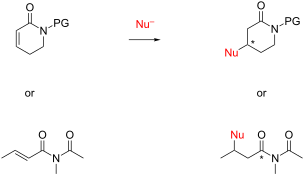
Scheme 1: Generic mechanism for the conjugate addition reaction.

Figure 1: Methods to activate unsaturated amide/lactam systems.

Scheme 2: DCA of Grignard reagents to an L-ephedrine derived chiral α,β–unsaturated amide.

Figure 2: Chiral auxiliaries used in DCA reactions.

Scheme 3: Comparison between auxiliary 5 and the Oppolzer auxiliary in a DCA reaction.

Scheme 4: Use of Evans auxiliary in a DCA reaction.
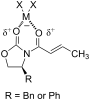
Figure 3: Lewis acid complex of the Evans auxiliary [43].

Scheme 5: DCA reactions of α,β-unsaturated amides utilizing (S,S)-(+)-pseudoephedrine and the OTBS-derivative...

Figure 4: Proposed model accounting for the diastereoselectivity observed in the 1,4-addition of Bn2NLi to α,...

Scheme 6: An example of a tandem conjugate addition–α-alkylation reaction of an α,β-unsaturated amide utilizi...

Scheme 7: Conjugate addition to an α,β-unsaturated bicyclic lactam leading to (+)-paroxetine and (+)-femoxeti...

Scheme 8: Intramolecular conjugate addition reaction to α,β-unsaturated amide.

Scheme 9: Conjugate addition to an α,β-unsaturated pyroglutamate derivative.

Scheme 10: Cu(I)–NHC-catalyzed asymmetric silylation of α,β-unsaturated lactams and amides.

Scheme 11: Asymmetric copper-catalyzed 1,4-borylation of an α,β-unsaturated amide.

Scheme 12: Asymmetric cross-coupling 49 to phenyl chloride.

Scheme 13: Rhodium-catalyzed asymmetric 1,4-arylation of an α,β-unsaturated lactam.

Scheme 14: Rhodium-catalyzed asymmetric 1,4-arylation of an α,β-unsaturated amide.

Scheme 15: Rhodium-catalyzed asymmetric 1,4-arylation of an α,β-unsaturated amide using a chiral bicyclic dien...

Scheme 16: Synthesis of (R)-(−)-baclofen through a rhodium-catalyzed asymmetric 1,4-arylation of lactam 58.

Scheme 17: Rhodium-catalyzed asymmetric 1,4-arylation of an α,β-unsaturated amide and lactam employing organo[...

Scheme 18: Rhodium-catalyzed asymmetric 1,4-arylation of an α,β-unsaturated lactam employing benzofuran-2-ylzi...

Figure 5: Further chiral ligands that have been used in rhodium-catalyzed 1,4-additions of α,β-unsaturated am...

Scheme 19: Palladium-catalyzed asymmetric 1,4-arylation of arylsiloxanes to a α,β-unsaturated lactam.

Scheme 20: SmI2-mediated cyclization of α,β-unsaturated Weinreb amides.

Figure 6: Chiral Lewis acid complexes used in the Mukaiyama–Michael addition of α,β-unsaturated amides.

Scheme 21: Mukaiyama–Michael addition of thioester silylketene acetal to α,β-unsaturated N-alkenoyloxazolidino...

Scheme 22: Asymmetric 1,4-addition of aryl acetylides to α,β-unsaturated thioamides.

Scheme 23: Asymmetric 1,4-addition of alkyl acetylides to α,β-unsaturated thioamides.

Scheme 24: Asymmetric vinylogous conjugate additions of unsaturated butyrolactones to α,β-unsaturated thioamid...

Scheme 25: Gd-catalyzed asymmetric 1,4-cyanation of α,β-unsaturated N-acylpyrroles [205].

Scheme 26: Lewis acid-catalyzed asymmetric 1,4-cyanation of α,β-unsaturated N-acylpyrazole 107.

Scheme 27: Lewis acid mediated 1,4-addition of dibenzyl malonate to α,β-unsaturated N-acylpyrroles.

Scheme 28: Chiral Lewis acid mediated 1,4-radical addition to α,β-unsaturated N-acyloxazolidinone [224].

Scheme 29: Aza-Michael addition of O-benzylhydroxylamine to an α,β-unsaturated N-acylpyrazole.

Scheme 30: An example of the aza-Michael addition of secondary aryl amines to an α,β-unsaturated N-acyloxazoli...

Scheme 31: Aza-Michael additions of anilines to a α,β-unsaturated N-alkenoyloxazolidinone catalyzed by palladi...

Scheme 32: Aza-Michael additions of aniline to an α,β-unsaturated N-alkenoylbenzamide and N-alkenoylcarbamate ...

Scheme 33: Difference between aza-Michael addition ran using the standard protocol versus the slow addition pr...

Scheme 34: Aza-Michael additions of aryl amines salts to an α,β-unsaturated N-alkenoyloxazolidinone catalyzed ...

Scheme 35: Aza-Michael addition of N-alkenoyloxazolidiniones catalyzed by samarium diiodide [244].

Scheme 36: Asymmetric aza-Michael addition of p-anisidine to α,β-unsaturated N-alkenoyloxazolidinones catalyze...

Scheme 37: Asymmetric aza-Michael addition of O-benzylhydroxylamine to N-alkenoyloxazolidinones catalyzed by i...

Scheme 38: Asymmetric 1,4-addition of purine to an α,β-unsaturated N-alkenoylbenzamide catalyzed by (S,S)-(sal...

Scheme 39: Asymmetric 1,4-addition of phosphites to α,β-unsaturated N-acylpyrroles.

Scheme 40: Asymmetric 1,4-addition of phosphine oxides to α,β-unsaturated N-acylpyrroles.

Scheme 41: Tandem Michael-aldol reaction catalyzed by a hydrogen-bonding organocatalyst.

Scheme 42: Examples of the sulfa-Michael–aldol reaction employing α,β-unsaturated N-acylpyrazoles.

Scheme 43: Example of the sulfa-Michael addition of α,β-unsaturated N-alkenoyloxazolidinones.

Figure 7: Structure of cinchona alkaloid-based squaramide catalyst.

Scheme 44: Asymmetric intramolecular oxa-Michael addition of an α,β-unsaturated amide.

Scheme 45: Formal synthesis atorvastatin.



