Search results
Search for "all-carbon" in Full Text gives 70 result(s) in Beilstein Journal of Organic Chemistry.
Melifoliox B, a novel phloroglucin derivative isolated from Melicope barbigera (Rutaceae) and synthesis of new oxidation products from melifoliones A and B
Beilstein J. Org. Chem. 2026, 22, 535–546, doi:10.3762/bjoc.22.39
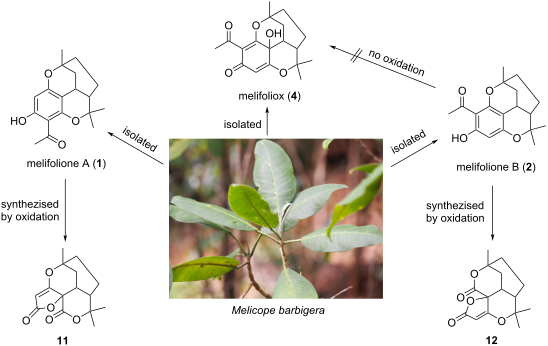
- careful analysis of the 2D NMR spectra (HSQC, HMBC) all carbon signals of both isomers could be unambiguously assigned to the corresponding atoms (Table 2). This clearly shows that the data given in literature [4] must be corrected. Oxidation of melifoliones Mixtures of melifolione A (1) and melifolione B



Improved synthesis and physicochemical characterization of the selective serotonin 2A receptor agonist 25CN-NBOH
Beilstein J. Org. Chem. 2026, 22, 175–184, doi:10.3762/bjoc.22.11
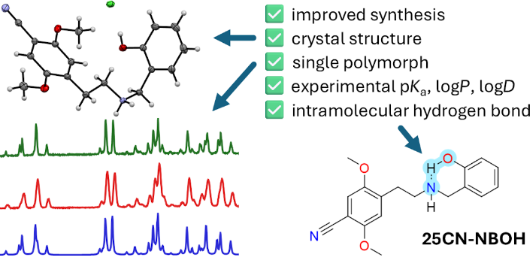
- ) Structure of the truncated model compound used for DFT calculations, with explicit water molecules and hydrogen bonds. b) Structure of 1 indicating formation of IMHB, as well as numbering of all carbon positions. c) Overlay of peaks from the 13C NMR spectra of 1 with varying percentages of D2O/H2O in DMSO


Total synthesis of natural products based on hydrogenation of aromatic rings
Beilstein J. Org. Chem. 2026, 22, 88–122, doi:10.3762/bjoc.22.4
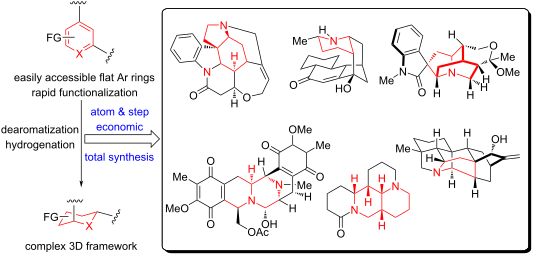
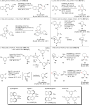
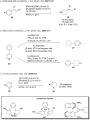
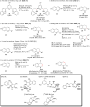
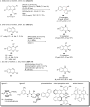
- the reaction include high functional group tolerance and excellent stereocontrol. In the same year, Zhou and co-workers reported a rhodium/bisphosphine-catalyzed asymmetric hydrogenation reaction of all-carbon aromatic rings 69 (Scheme 8) [64]. Through desymmetrization or kinetic resolution, a series











Recent advances in total synthesis of illisimonin A
Beilstein J. Org. Chem. 2025, 21, 2571–2583, doi:10.3762/bjoc.21.199
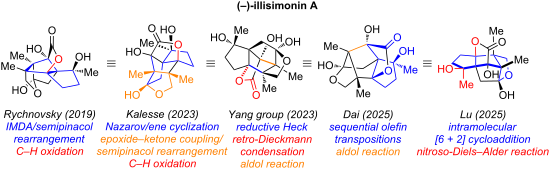
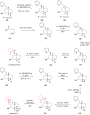
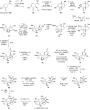
- epoxide ring-opening afforded 71. To install the all-carbon quaternary center at C5, compound 71 was treated with t-BuOK and MeI, enabling the deprotonation of the α,β-unsaturated aldehyde and methylation at C5; this step also facilitated protection of the secondary alcohol. The aldehyde was reduced in
- , generating an allylic alcohol that was acetylated in situ to provide 74. An Ireland–Claisen rearrangement facilitated the third olefin transposition, concurrently forming an all-carbon quaternary center at C9 and affording carboxylic acid 75. The fourth olefin transposition was achieved via a palladium






Synthesis of the tetracyclic skeleton of Aspidosperma alkaloids via PET-initiated cationic radical-derived interrupted [2 + 2]/retro-Mannich reaction
Beilstein J. Org. Chem. 2025, 21, 2470–2478, doi:10.3762/bjoc.21.189
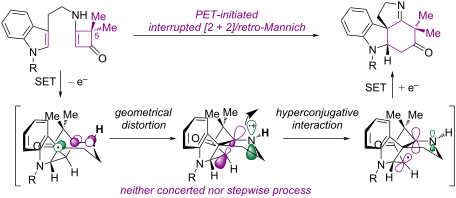
- construction of the tetracyclic core of Aspidosperma alkaloids. Our method involves an Ir-catalyzed PET reaction of K for the stereoselective formation of the cis-configured BC bicyclic core with an all-carbon quaternary center [25][26]. Computational studies suggest that the observed tandem PET reaction of K


Transformation of the cyclohexane ring to the cyclopentane fragment of biologically active compounds
Beilstein J. Org. Chem. 2025, 21, 2416–2446, doi:10.3762/bjoc.21.185
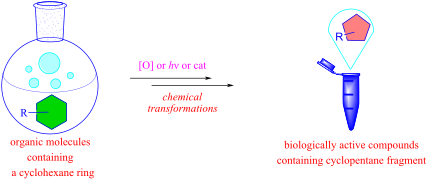
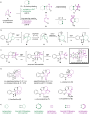
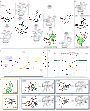
- [52] achieved high regioselectivity and stereospecific construction of contiguous all-carbon quaternary centers through an oxidative ring contraction of cyclic α-formyl ketones by the action of H2O2. This reaction is easy to perform, environmentally friendly, and does not require expensive catalysts


Synthetic study toward vibralactone
Beilstein J. Org. Chem. 2025, 21, 2376–2382, doi:10.3762/bjoc.21.182

- vibralactone, a potent inhibitor of pancreatic lipase, is reported. The synthesis of the challenging all-carbon quaternary center within the cyclopentene ring was achieved through intramolecular alkylidene carbene C–H insertion. Keywords: alkylidene carbene; C–H insertion; total synthesis; vibralactone
- cyclopentene ring containing an all-carbon quaternary center [14], and inhibits pancreatic lipase with an IC50 of 0.4 µg/mL. Several congeners with varying oxidation state, as well as related β-hydroxy acids or esters have also been isolated from the culture broth of the basidiomycete [15][16][17][18][19][20
- -lactone with an all-carbon quaternary center and two trisubstituted olefin moieties. It is therefore not surprising that this compound has attracted considerable interest from both the chemical biology and synthetic chemistry communities. Sieber and co-workers disclosed that vibralactone can target ClpP1


Recent advances in Norrish–Yang cyclization and dicarbonyl photoredox reactions for natural product synthesis
Beilstein J. Org. Chem. 2025, 21, 2315–2333, doi:10.3762/bjoc.21.177
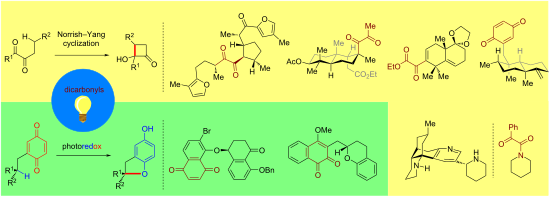
- stereochemical inversion of the Norrish–Yang reaction. This achieved efficient construction of benzofuranone-based 4,5-spirocycles with contiguous all-carbon quaternary centers, offering a conformational regulation protocol for stereocontrol in complex polycyclic systems. 1.3 Avarane-type meroterpenoids In 2024




Enantioselective radical chemistry: a bright future ahead
Beilstein J. Org. Chem. 2025, 21, 2283–2296, doi:10.3762/bjoc.21.174
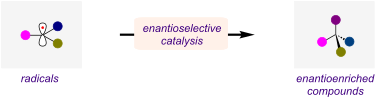
- single process that established five new carbon–carbon bonds and nine contiguous stereocenters, including four all-carbon quaternary centers (Scheme 3). Transition-metal-catalyzed radical reactions Recent advances in enantioselective radical reactions catalyzed by base metals (e.g., Fe, Co, Ni, Mn
- . Melchiorre and co-workers reported a dual catalytic system that involves photoredox and chiral organocatalysts for the construction of all-carbon quaternary centers. The authors studied radical additions to β,β-disubstituted cyclic enones (Scheme 7) [29]. The dual catalytic system of tetrabutylammonium
- decatungstate (TBADT) and chiral amine 33 was able to catalyze the reaction between benzodioxoles 32 and cyclic β,β-disubstituted enones 31. Cyclic ketones 34 bearing all-carbon quaternary stereocenters at the β-position were obtained in good yields and high enantioselectivity. Enzyme-catalyzed radical


The application of desymmetric enantioselective reduction of cyclic 1,3-dicarbonyl compounds in the total synthesis of terpenoid and alkaloid natural products
Beilstein J. Org. Chem. 2025, 21, 2085–2102, doi:10.3762/bjoc.21.164
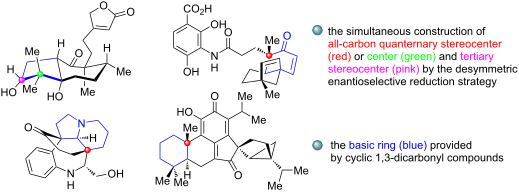
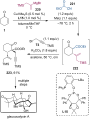
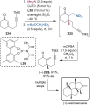
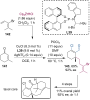
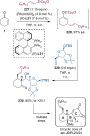
- The desymmetric enantioselective reduction of cyclic 1,3-dicarbonyl compounds is a powerful tool for the construction of ring systems bearing multiple stereocenters including all-carbon quaternary stereocenters, which are widely useful chiral building blocks for the total synthesis of structurally
- shortage of natural product sources. Nevertheless, the asymmetric total synthesis of terpenoid and alkaloid natural products presents significant challenges due to their complex and diverse ring systems and the presence of multiple stereocenters, including all-carbon quaternary stereocenters. Consequently
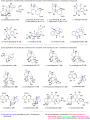
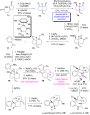
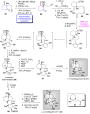
- , (−)-glaucopine C, and (+)-allocyathin B2 The cyrneine diterpenoids represent an important subfamily of cyathane diterpenoids which possess a common 5-6-7 fused tricarbocyclic core with two all-carbon quaternary stereocenters. Many impressive syntheses have been reported to date [18][19][20][21][22][23][24][25







Synthesis of N-doped chiral macrocycles by regioselective palladium-catalyzed arylation
Beilstein J. Org. Chem. 2025, 21, 1917–1923, doi:10.3762/bjoc.21.149
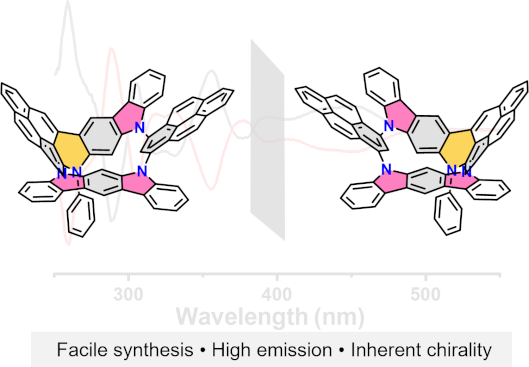
- -bridged structural analogs of [1n]metacyclophanes. In comparison to all-carbon [1n]metacyclophanes, the incorporation of N atoms endows them with unique features, such as enhanced molecular dynamics and tunable redox property, positioning them as key precursors to construct organic high-spin materials [20




Copper catalysis: a constantly evolving field
Beilstein J. Org. Chem. 2025, 21, 1477–1479, doi:10.3762/bjoc.21.109

- allenes with diisobutylaluminum hydride, which is followed by the allylation with p-toluenesulfonyl cyanide in a regio- and stereoselective manner. They propose a new way to access accessing acyclic β,γ-unsaturated nitriles with α-all-carbon quaternary centers. In the process, they managed to achieve a
Advances in nitrogen-containing helicenes: synthesis, chiroptical properties, and optoelectronic applications
Beilstein J. Org. Chem. 2025, 21, 1422–1453, doi:10.3762/bjoc.21.106
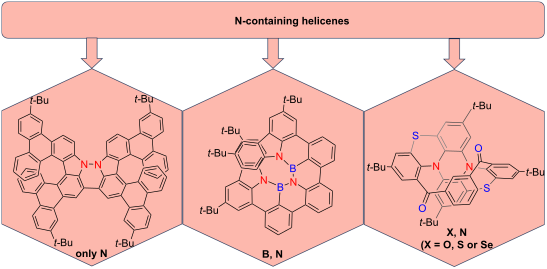
- demonstrated absorption at 368 and 516 nm, strong emission at 553 nm, a high PLQY of 0.96, |gabs| of 1.1 × 10⁻², |glum| of 9.1 × 10⁻⁴, and BCPL of 30.1 M−1 cm−1 – surpassing the performance of its all-carbon and thiadiazole counterparts [29]. In a related study, Hu’s team synthesized double aza[5]helicenes 17a

Recent advances and future challenges in the bottom-up synthesis of azulene-embedded nanographenes
Beilstein J. Org. Chem. 2025, 21, 1272–1305, doi:10.3762/bjoc.21.99
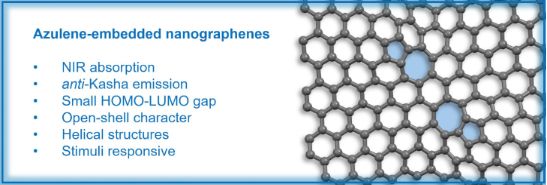
- gap 1.07 eV) which is impressive for such small π-scaffold. Formation of carbon–heteroatom bonds: Although the primary focus of this review is the synthesis of all-carbon azulene-embedded nanographenes, some carbon–heteroatom fusion reactions are also worth mentioning. In general, azulene-fused




Regioselective formal hydrocyanation of allenes: synthesis of β,γ-unsaturated nitriles with α-all-carbon quaternary centers
Beilstein J. Org. Chem. 2025, 21, 800–806, doi:10.3762/bjoc.21.63
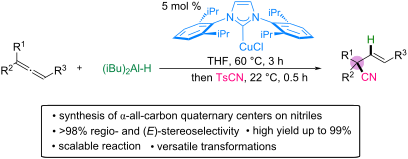
- by the regio- and stereoselective allylation with p-toluenesulfonyl cyanide. The proposed methodology is efficient for accessing acyclic β,γ-unsaturated nitriles with α-all-carbon quaternary centers and achieves yields up to 99% and excellent regio- and E-selectivity. The reaction proceeds under mild
- catalysis; hydrocyanation; regioselectivity; tosyl cyanide; Introduction Acyclic nitriles that incorporate α-all-carbon quaternary centers are highly valuable structural motifs typically found in natural products, biologically active compounds, and synthetic pharmaceuticals [1][2][3][4][5]. These compounds
- are important intermediates in organic syntheses because of the versatility of the cyano group, which can be readily transformed into a wide range of functional groups, including amides, carboxylic acids, amines, aldehydes, ketones, and N-heterocycles [6][7][8]. However, the synthesis of all-carbon




Recent advances in allylation of chiral secondary alkylcopper species
Beilstein J. Org. Chem. 2025, 21, 639–658, doi:10.3762/bjoc.21.51
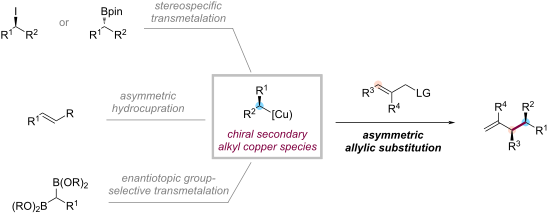
- bearing quaternary stereogenic centers with high stereospecificity. This methodology represents a significant advancement in the construction of challenging all-carbon quaternary stereogenic centers through stereospecific allylic substitution reactions. To elucidate the origin of the selective boron group




Total synthesis of (±)-simonsol C using dearomatization as key reaction under acidic conditions
Beilstein J. Org. Chem. 2025, 21, 601–606, doi:10.3762/bjoc.21.47
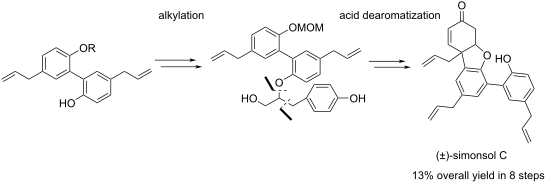
- route to date. The structural motif of an all-carbon quaternary center containing an aryl group is common in many natural products, such as galanthamine and morphine. Our current strategy provides an alternative approach for the synthesis of aryl-containing quaternary carbon centers, which could be


Synthesis and characterization of 1,2,3,4-naphthalene and anthracene diimides
Beilstein J. Org. Chem. 2024, 20, 1767–1772, doi:10.3762/bjoc.20.155
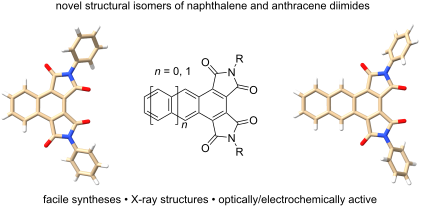
- organic thin-film transistors from heteroacenes. Inspired by these results, we sought to demonstrate the preparation of all-carbon scaffolds, i.e., acenes, that are cata-annulated with cyclic imides. Here, we communicate the successful synthesis of 1,2,3,4-NDIs and -ADIs and the characterization of their
- -delocalization. As part of our previous work constructing heteroacenes bearing cata-imide groups, we investigated the 9,10-diaza analog of compound 8-Hex (9, Figure 5). It is interesting to note that the all-carbon scaffold in 8-Hex results in a narrower bandgap than that of 9, with Δλmax = 85 nm. This


Electrophotochemical metal-catalyzed synthesis of alkylnitriles from simple aliphatic carboxylic acids
Beilstein J. Org. Chem. 2024, 20, 1497–1503, doi:10.3762/bjoc.20.133
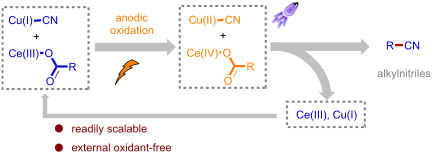
- intermediates in organic synthesis for the construction of all-carbon-substituted quaternary centers (Figure 1A). However, conventional methods for the synthesis of tertiary alkylnitriles such as direct functionalization of alkylnitriles [10] and hydrocyanation of alkenes [11][12][13][14] are typically hindered


α-(Aminomethyl)acrylates as acceptors in radical–polar crossover 1,4-additions of dialkylzincs: insights into enolate formation and trapping
Beilstein J. Org. Chem. 2023, 19, 1443–1451, doi:10.3762/bjoc.19.103
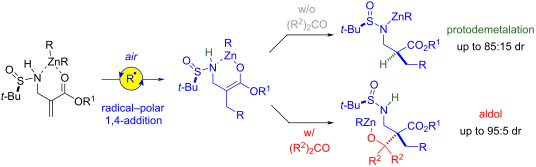
- thus the sense of chiral induction for the 1,4-addition reactions reported in Table 2. Tandem 1,4-addition–aldol condensation reactions We then went on to consider tandem 1,4-addition–aldol condensation reactions (Scheme 6), which offer the interesting prospect of generating an all-carbon quaternary
- view, the reported protocols are relevant as they offer a new, direct and modular route to enantioenriched α-mono- and α,α-disubstituted β-amino acids (β2-amino acids and β2,2-amino acids), with, for the latter, the noteworthy stereocontrolled construction of an all-carbon quaternary stereocenter






Construction of hexabenzocoronene-based chiral nanographenes
Beilstein J. Org. Chem. 2023, 19, 736–751, doi:10.3762/bjoc.19.54
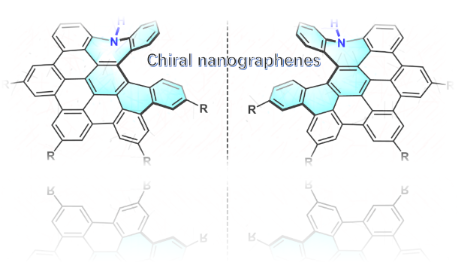
- compound 12. Meanwhile, Campaña, Morcillo, and co-workers converted the eight-membered ring 11 to nonagon-containing carbohelicene 14 through a single ring expansion reaction by treating 11 with TMSCHN2 (Scheme 2). By reacting with Tebbe’s reagent, compound 14 could be converted to all-carbon analogue 15


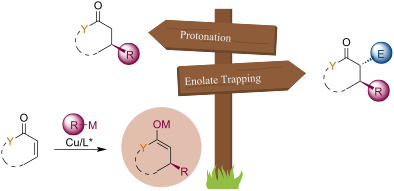
Enolates ambushed – asymmetric tandem conjugate addition and subsequent enolate trapping with conventional and less traditional electrophiles
Beilstein J. Org. Chem. 2023, 19, 593–634, doi:10.3762/bjoc.19.44
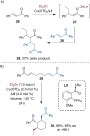
- . presented their work on the asymmetric desymmetrization of cyclopentene-1,3-diones 5 (Scheme 3) [23]. Following the Cu(OTf)2-catalyzed conjugate addition of R2Zn, the enolate 6 was trapped by several aromatic aldehydes 7. These complex chiral cyclopentane derivatives 8 bearing all-carbon quaternary
- contains six contiguous stereogenic centers out of which four are all-carbon quaternary stereocenters. The authors have achieved the stereoselective synthesis of waihoensene for the first time with a 3.8% overall yield (15 steps) (Scheme 59). The construction of the triquinane core included a Cu-catalyzed
- of a synthetic chemist, the most remarkable feature of this structure is the highly substituted cyclopropane ring incorporating two all-carbon quaternary centers, while the whole structure contains 7 stereocenters. Xu et al. recently demonstrated their 13-step total synthesis of (−)-peyssonnoside A








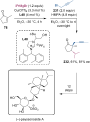
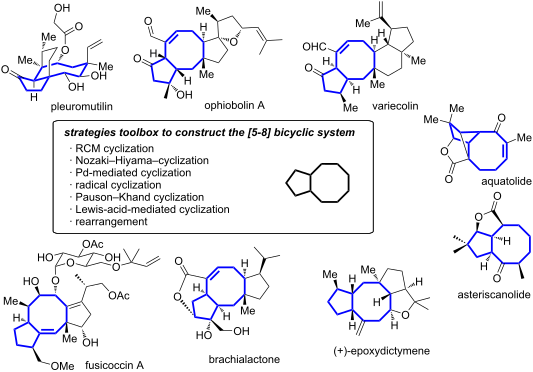
Strategies to access the [5-8] bicyclic core encountered in the sesquiterpene, diterpene and sesterterpene series
Beilstein J. Org. Chem. 2023, 19, 245–281, doi:10.3762/bjoc.19.23
- -8-6-5] tetracyclic all-carbon system with 10 stereogenic centers (Scheme 15). This natural product was isolated from two Gentianella plant species, namely G. nitida and G. alborosea used in Peruvian traditional medicine. The first report of its synthesis was given in 2014 by Hog and co-workers [46


Catalytic aza-Nazarov cyclization reactions to access α-methylene-γ-lactam heterocycles
Beilstein J. Org. Chem. 2023, 19, 66–77, doi:10.3762/bjoc.19.6

- reactions constitutes one of the main pillars of organic synthesis [1]. In this respect, the all-carbon Nazarov cyclization of divinyl ketones represents a direct method for the synthesis of five-membered carbocycles [2][3][4][5][6][7][8][9]. Variants of the Nazarov cyclization with substrates bearing one


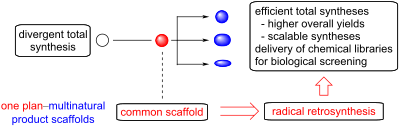
Combining the best of both worlds: radical-based divergent total synthesis
Beilstein J. Org. Chem. 2023, 19, 1–26, doi:10.3762/bjoc.19.1
- consecutive all-carbon quaternary carbon atoms [54][55][56]. Preliminary biological screening of this family revealed notable antibacterial and anticancer activities due to the α-methylene lactone moiety they bear [57]. Recently, in order to synthesize the common core present in crinipellins, Xie and Ding’s