


Search results
Search for "carbon dioxide" in Full Text gives 132 result(s) in Beilstein Journal of Organic Chemistry.
Novel macrocycles: from synthesis to supramolecular function
- Veronica Iuliano,
- Carmen Talotta,
- Margherita De Rosa,
- Paolo Della Sala,
- Konrad Tiefenbacher,
- Pablo Ballester and
- Carmine Gaeta
Beilstein J. Org. Chem. 2026, 22, 982–985, doi:10.3762/bjoc.22.76
- desymmetrized building blocks avoid the dense packing commonly observed in rigid planar systems. As a proof of concept, these precursors were converted into methylene-alternating copolymers that exhibit high solubility and measurable carbon dioxide adsorption, highlighting their potential for the development of
- versatile tools for the selective modulation of biologically relevant protein–protein interactions. The contributions collected in this thematic issue highlight the breadth and continued evolution of contemporary macrocyclic chemistry. From new ultracycle receptors to functional materials for carbon dioxide
Recent advances in the cleavage of non-activated amides
- Eun-Sol Choi and
- Hyo-Jun Lee
Beilstein J. Org. Chem. 2026, 22, 352–369, doi:10.3762/bjoc.22.23
- hydrogen chloride acting as a Lewis acid, enabling nucleophilic attack by the amine to form a tetrahedral intermediate Z. Subsequent intramolecular hydrogen shift, followed by elimination of dimethylamine, affords the protonated transamidation product. In 2021, Lee et al. discovered that carbon dioxide

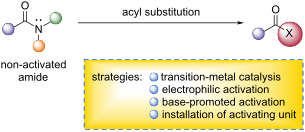
Graphical Abstract
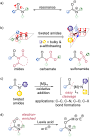
Scheme 1: a) Resonance structure of amide. b) Concept of twisted amides. c) Transition-metal-catalyzed activa...
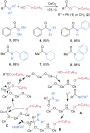
Scheme 2: Esterification of amides catalyzed by CeO2.

Scheme 3: Hydrolysis of amides catalyzed by Nb2O5.
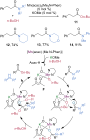
Scheme 4: Manganese-catalyzed esterification of tertiary amides.
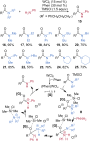
Scheme 5: Tungsten-catalyzed transamidation of hindered tertiary amides.
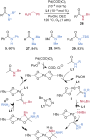
Scheme 6: Palladium-catalyzed transamidation of amides.

Scheme 7: Synthesis of benzyl esters via electrophilic activation of amides using DPT-BM.

Scheme 8: Esterification of amides promoted by SO2F2.
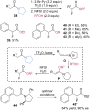
Scheme 9: α-Fluorinative cleavage of pyrrolidine-based tertiary amides via double electrophilic activation wi...
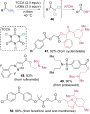
Scheme 10: Esterification of primary amides using TCCA via the generation of RCONCl2.
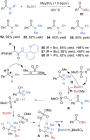
Scheme 11: Esterification of amides via electrophilic activation with Me2SO4.
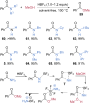
Scheme 12: HBF4-mediated esterification of amides.
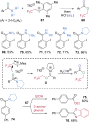
Scheme 13: Synthesis of 2,2,2-trifluoroethyl esters via electrophilic esterification of amide promoted by 67.
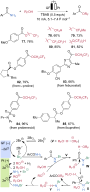
Scheme 14: Electrochemical activation of C–N bonds for esterification.

Scheme 15: Catalyst- and reagent-free transamidation of amide using aniline hydrochloride salt.
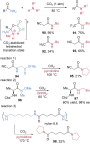
Scheme 16: CO2-catalyzed transamidation of amides.
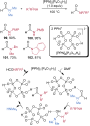
Scheme 17: Transamidation of formamides using cyclic dihydrogen tetrametaphosphate.

Scheme 18: BF3·OEt2-mediated transamidation of primary amides.

Scheme 19: Acyl iodide intermediate 121 generation from amides for the transamidation using HOTf and KI.
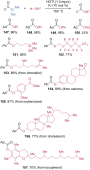
Scheme 20: Esterification of N,N-dimethyl amides via electrophilic generation of acyl iodide intermediates.

Scheme 21: Transamidation of DMAc promoted by KOt-Bu.
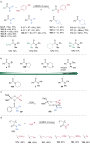
Scheme 22: a) LiHMDS-mediated transamidation of tertiary amides. b) Computed reactivities of selected amides. ...

Scheme 23: Zn-catalyzed chemoselective cleavage of amides directed by tert-butyl nicotinate.

Scheme 24: Chemoselective cleavage of N-PMB anilide for transamidation via acyl fluoride 194 generation. a) Cu...
Competitive cyclization of ethyl trifluoroacetoacetate and methyl ketones with 1,3-diamino-2-propanol into hydrogenated oxazolo- and pyrimido-condensed pyridones
- Svetlana O. Kushch,
- Marina V. Goryaeva,
- Yanina V. Burgart,
- Marina A. Ezhikova,
- Mikhail I. Kodess,
- Pavel A. Slepukhin,
- Alexandrina S. Volobueva,
- Vladimir V. Zarubaev and
- Victor I. Saloutin
Beilstein J. Org. Chem. 2025, 21, 2716–2729, doi:10.3762/bjoc.21.209
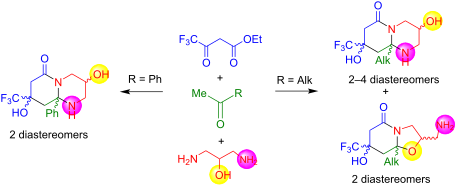
- functional group, the presence of which should affect their diastereomeric structure. We have found only one work describing the use of 1,3-diaminopropan-2-ol to form heterocycles, where it is reported to react with chloroacetaldehyde and carbon dioxide as an N,N-dinucleophile only, giving hexahydro[1,3

Graphical Abstract

Figure 1: Structures of bioactive molecules with trifluoromethylpyridine and piperidine frameworks.

Scheme 1: The reaction of ethyl trifluoroacetoacetate (1), acetone (2a) and 1,3- diaminopropan-2-ol (3).

Scheme 2: Three-component reaction of ethyl trifluoroacetoacetate (1), alkyl methyl ketones 2b,c and 1,3-diam...

Scheme 3: Three-component reaction of ethyl trifluoroacetoacetate (1), acetophenone (2d) and 1,3-diaminopropa...

Scheme 4: The proposed mechanism of three-component cyclization of 3-oxo ester 1, methyl ketones 2a–d and 1,3...

Figure 2: ORTEP view of compounds 4асc (a, CCDC: 2479553), 4аct (b, CCDC: 2479554), 4аtt (c, CCDC: 2479555), ...

Figure 3: ORTEP view of compound 5ctc (a, CCDC: 2479558), 5ctt (b, CCDC: 2479559) showing with the thermal el...

Figure 4: The fragments of the 1H NMR spectra (400 MHz, DMSO-d6) of diastereomers 4acc (a), 4аct (b), 4аtt (c...

Figure 5: Fragments of 1H NMR spectra (400 MHz, DMSO-d6) of hexahydrooxazolo[3,2-a]pyridin-5-ones 5ctc (a) an...
C2 to C6 biobased carbonyl platforms for fine chemistry
- Jingjing Jiang,
- Muhammad Noman Haider Tariq,
- Florence Popowycz,
- Yanlong Gu and
- Yves Queneau
Beilstein J. Org. Chem. 2025, 21, 2103–2172, doi:10.3762/bjoc.21.165

Graphical Abstract

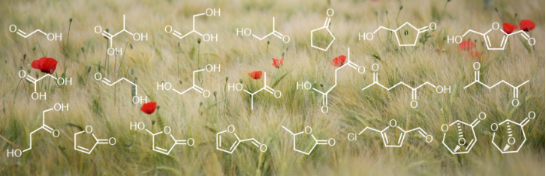
Figure 1: C2–C6 biobased carbonyl building blocks.

Scheme 1: Proposed (2 + 2) route to glycolaldehyde and glycolic acid from erythritol by Cu/AC catalyst (AC = ...

Scheme 2: Reductive amination of GCA.

Scheme 3: N-Formylation of secondary amines by reaction with GCA.

Scheme 4: Synthesis and conversion of hydroxy acetals to cyclic acetals.

Scheme 5: Synthesis of 3-(indol-3-yl)-2,3-dihydrofurans via three-component reaction of glycolaldehyde, indol...

Scheme 6: BiCl3-catalyzed synthesis of benzo[a]carbazoles from 2-arylindoles and α-bromoacetaldehyde ethylene...

Scheme 7: Cu/NCNSs-based conversion of glycerol to glycolic acid and other short biobased acids.

Scheme 8: E. coli-based biotransformation of C1 source molecules (CH4, CO2 and CO) towards C2 glycolic acid.

Scheme 9: N-Formylation of amines with C2 (a) or C3 (b) biomass-based feedstocks.

Scheme 10: Methods for the formation of propanoic acid (PA) from lactic acid (LA).

Scheme 11: Co-polymerization of biobased lactic acid and glycolic acid via a bicatalytic process.

Scheme 12: Oxidation of α-hydroxy acids by tetrachloroaurate(III) in acetic acid–sodium acetate buffer medium.

Figure 2: Selective catalytic pathways for the conversion of lactic acid (LA).

Scheme 13: Synthesis of 1,3-PDO via cross-aldol reaction between formaldehyde and acetaldehyde to 3-hydroxypro...

Scheme 14: Hydrothermal conversion of 1,3-dihydroxy-2-propane and 2,3-dihydroxypropanal to methylglyoxal.

Scheme 15: FLS-catalyzed formose reaction to synthesize GA and DHA.

Scheme 16: GCA and DHA oxidation products of glycerol and isomerization of GCA to DHA under flow conditions us...

Scheme 17: Acid-catalyzed reactions of DHA with alcohols.

Scheme 18: Synthesis of dihydroxyacetone phosphate from dihydroxyacetone.

Scheme 19: Bifunctional acid–base catalyst DHA conversion into lactic acid via pyruvaldehyde or fructose forma...

Scheme 20: Catalytic one-pot synthesis of GA and co-synthesis of formamides and formates from DHA.

Scheme 21: (a) Synthesis of furan derivatives and (b) synthesis of thiophene derivative by cascade [3 + 2] ann...

Scheme 22: Brønsted acidic ionic liquid catalyzed synthesis of benzo[a]carbazole from renewable acetol and 2-p...

Scheme 23: Asymmetric hydrogenation of α-hydroxy ketones to 1,2-diols.

Scheme 24: Synthesis of novel 6-(substituted benzylidene)-2-methylthiazolo [2,3-b]oxazol-5(6H)-one from 1-hydr...

Scheme 25: ʟ-Proline-catalyzed synthesis of anti-diols from hydroxyacetone and aldehydes.

Scheme 26: C–C-bond-formation reactions of a biomass-based feedstock aromatic aldehyde (C5) and hydroxyacetone...

Scheme 27: Ethanol upgrading to C4 bulk chemicals via the thiamine (VB1)-catalyzed acetoin condensation.

Scheme 28: One-pot sequential chemoenzymatic synthesis of 2-aminobutane-1,4-diol and 1,2,4-butanetriol via 1,4...

Scheme 29: Synthesis of 1,4-dihydroxybutan-2-one by microbial transformation.

Scheme 30: Conversion of polyols by [neocuproine)Pd(OAc)]2(OTf)2] to α-hydroxy ketones.

Scheme 31: Chemoselective oxidation of alcohols with chiral palladium-based catalyst 2.

Scheme 32: Electrochemical transformation of furfural to 5-hydroxy-2(5H)-furanone (HFO).

Scheme 33: Selective hydrodeoxygenation of HFO and oxidation to γ-butyrolactone (GBL).

Scheme 34: Photosensitized oxygenation of furan towards HFO via ozonide intermediates.

Scheme 35: Conversion of furfural to HFO and MAN by using mesoporous carbon nitride (SGCN) as photocatalyst.

Scheme 36: Synthesis of HFO from furan derivatives.

Scheme 37: Photooxidation of furfural to 5-hydroxy-2(5H)-furanone (HFO).

Scheme 38: Synthesis of Friedel–Crafts indole adduct from HFO.

Scheme 39: Conversion of HFO to α,γ-substituted chiral γ-lactones.

Scheme 40: Tautomeric transformation of HFO to formylacrylic acid.

Scheme 41: Hydrolysis of HFO to succinic acid in aqueous solution.

Scheme 42: Substitution and condensation reactions of 5-hydroxy-2(5H)-furanone (HFO).

Scheme 43: (a) Conversion of HFO towards valuable C4 chemicals and (b) anodic oxidation of 5-hydroxy-2(5H)-fur...

Figure 3: Conversion of HFO towards other natural and synthetic substances.

Scheme 44: Conversion of furfural to maleic anhydride (reaction a: VOx/Al2O3; reaction b: VPO).

Scheme 45: Conversion of furfural into succinic acid.

Scheme 46: Electro‑, photo‑, and biocatalysis for one-pot selective conversions of furfural into C4 chemicals.

Scheme 47: Production route of furfural from hemicellulose.

Scheme 48: Mechanism for xylose dehydration to furfural through a choline xyloside intermediate.

Scheme 49: Conversion of furfural to furfuryl alcohol and its derivatives.

Scheme 50: Conversion of furfural to furfuryl alcohol and 3-(2-furyl)acrolein.

Scheme 51: The aerobic oxidative condensation of biomass-derived furfural and linear alcohols.

Scheme 52: The single-step synthesis of 2-pentanone from furfural.

Scheme 53: Electrocatalytic coupling reaction of furfural and levulinic acid.

Scheme 54: Conversion of furfural to m-xylylenediamine.

Scheme 55: Conversion of furfural to tetrahydrofuran-derived amines.

Scheme 56: Formation of trans-4,5-diamino-cyclopent-2-enones from furfural.

Scheme 57: Production of pyrrole and proline from furfural.

Scheme 58: Synthesis of 1‑(trifluoromethyl)-8-oxabicyclo[3.2.1]oct-3-en-2-ones from furfural.

Scheme 59: Conversion of furfural to furfural-derived diacids.

Scheme 60: A telescope protocol derived from furfural and glycerol.

Scheme 61: A tandem cyclization of furfural and 5,5-dimethyl-1,3-cyclohexanedione.

Scheme 62: A Ugi four-component reaction to construct furfural-based polyamides.

Scheme 63: One-pot synthesis of γ-acyloxy-Cy7 from furfural.

Scheme 64: Dimerization–Piancatelli sequence toward humins precursors from furfural.

Scheme 65: Conversion of furfural to CPN.

Scheme 66: Synthesis of jet fuels range cycloalkanes from CPN and lignin-derived vanillin.

Scheme 67: Solar-energy-driven synthesis of high-density biofuels from CPN.

Scheme 68: Reductive amination of CPN to cyclopentylamine.

Scheme 69: Asymmetric hydrogenation of C=O bonds of exocyclic α,β-unsaturated cyclopentanones.

Scheme 70: Preparation of levulinic acid via the C5 route (route a) or C6 route (routes b1 and b2).

Scheme 71: Mechanism of the rehydration of HMF to levulinic acid and formic acid.

Scheme 72: Important levulinic acid-derived chemicals.

Scheme 73: Direct conversion of levulinic acid to pentanoic acid.

Scheme 74: Catalytic aerobic oxidation of levulinic acid to citramalic acid.

Scheme 75: Conversion of levulinic acid to 1,4-pentanediol (a) see ref. [236]; b) see ref. [237]; c) see ref. [238]; d) see r...

Scheme 76: Selective production of 2-butanol through hydrogenolysis of levulinic acid.

Scheme 77: General reaction pathways proposed for the formation of 5MPs from levulinic acid.

Scheme 78: Selective reductive amination of levulinic acid to N-substituted pyrroles.

Scheme 79: Reductive amination of levulinic acid to chiral pyrrolidinone.

Scheme 80: Reductive amination of levulinic acid to non-natural chiral γ-amino acid.

Scheme 81: Nitrogen-containing chemicals derived from levulinic acid.

Scheme 82: Preparation of GVL from levulinic acid by dehydration and hydrogenation.

Scheme 83: Ruthenium-catalyzed levulinic acid to chiral γ-valerolactone.

Scheme 84: Catalytic asymmetric hydrogenation of levulinic acid to chiral GVL.

Scheme 85: Three steps synthesis of ε-caprolactam from GVL.

Scheme 86: Multistep synthesis of nylon 6,6 from GVL.

Scheme 87: Preparation of MeGVL by α-alkylation of GVL.

Scheme 88: Ring-opening polymerization of five-membered lactones.

Scheme 89: Synthesis of GVL-based ionic liquids.

Scheme 90: Preparation of butene isomers from GVL under Lewis acid conditions.

Scheme 91: Construction of C5–C12 fuels from GVL over nano-HZSM-5 catalysts.

Scheme 92: Preparation of alkyl valerate from GVL via ring opening/reduction/esterification sequence.

Scheme 93: Construction of 4-acyloxypentanoic acids from GVL.

Scheme 94: Synthesis of 1,4-pentanediol (PDO) from GVL.

Scheme 95: Construction of novel cyclic hemiketal platforms via self-Claisen condensation of GVL.

Scheme 96: Copper-catalyzed lactamization of GVL.

Figure 4: Main scaffolds obtained from HMF.

Scheme 97: Biginelli reactions towards HMF-containing dihydropyrimidinones.

Scheme 98: Hantzsch dihydropyridine synthesis involving HMF.

Scheme 99: The Kabachnik–Fields reaction involving HMF.

Scheme 100: Construction of oxazolidinone from HMF.

Scheme 101: Construction of rhodamine-furan hybrids from HMF.

Scheme 102: A Groebke–Blackburn–Bienaymé reaction involving HMF.

Scheme 103: HMF-containing benzodiazepines by [4 + 2 + 1] cycloadditions.

Scheme 104: Synthesis of fluorinated analogues of α-aryl ketones.

Scheme 105: Synthesis of HMF derived disubstituted γ-butyrolactone.

Scheme 106: Functionalized aromatics from furfural and HMF.

Scheme 107: Diels–Alder adducts from HMF or furfural with N-methylmaleimide.

Scheme 108: Pathway of the one-pot conversion of HMF into phthalic anhydride.

Scheme 109: Photocatalyzed preparation of humins (L-H) from HMF mixed with spoiled HMF residues (LMW-H) and fur...

Scheme 110: Asymmetric dipolar cycloadditions on HMF.

Scheme 111: Dipolar cycloadditions of HMF based nitrones to 3,4- and 3,5-substituted isoxazolidines.

Scheme 112: Production of δ-lactone-fused cyclopenten-2-ones from HMF.

Scheme 113: Aza-Piancatelli access to aza-spirocycles from HMF-derived intermediates.

Scheme 114: Cross-condensation of furfural, acetone and HMF into C13, C14 and C15 products.

Scheme 115: Base-catalyzed aldol condensation/dehydration sequences from HMF.

Scheme 116: Condensation of HMF and active methylene nitrile.

Scheme 117: MBH reactions involving HMF.

Scheme 118: Synthesis of HMF-derived ionic liquids.

Scheme 119: Reductive amination/enzymatic acylation sequence towards HMF-based surfactants.

Scheme 120: The formation of 5-chloromethylfurfural (CMF).

Scheme 121: Conversion of CMF to HMF, levulinic acid, and alkyl levulinates.

Scheme 122: Conversion of CMF to CMFCC and FDCC.

Scheme 123: Conversion of CMF to BHMF.

Scheme 124: Conversion of CMF to DMF.

Scheme 125: CMF chlorine atom substitutions toward HMF ethers and esters.

Scheme 126: Introduction of carbon nucleophiles in CMF.

Scheme 127: NHC-catalyzed remote enantioselective Mannich-type reactions of CMF.

Scheme 128: Conversion of CMF to promising biomass-derived dyes.

Scheme 129: Radical transformation of CMF with styrenes.

Scheme 130: Synthesis of natural herbicide δ-aminolevulinic acid from CMF.

Scheme 131: Four step synthesis of the drug ranitidine from CMF.

Scheme 132: Pd/CO2 cooperative catalysis for the production of HHD and HXD.

Scheme 133: Different ruthenium (Ru) catalysts for the ring-opening of 5-HMF to HHD.

Scheme 134: Proposed pathways for preparing HXD from HMF.

Scheme 135: MCP formation and uses.

Scheme 136: Cu(I)-catalyzed highly selective oxidation of HHD to 2,5-dioxohexanal.

Scheme 137: Synthesis of N‑substituted 3‑hydroxypyridinium salts from 2,5-dioxohexanal.

Scheme 138: Ru catalyzed hydrogenations of HHD to 1,2,5-hexanetriol (a) see ref. [396]; b) see ref. [397]).

Scheme 139: Aviation fuel range quadricyclanes produced by HXD.

Scheme 140: Synthesis of HDGK from HXD and glycerol as a chain extender.

Scheme 141: Synthesis of serinol pyrrole from HXD and serinol.

Scheme 142: Synthesis of pyrroles from HXD and nitroarenes.

Scheme 143: Two-step production of PX from cellulose via HXD.

Scheme 144: Preparation of HCPN from HMF via hydrogenation and ring rearrangement.

Scheme 145: Suggested pathways from HMF to HCPN.

Scheme 146: α-Alkylation of HCPN with ethylene gas.

Scheme 147: Synthesis of 3-(hydroxymethyl)cyclopentylamine from HMF via reductive amination of HCPN.

Scheme 148: Production of LGO and Cyrene® from biomass.

Scheme 149: Synthesis of HBO from LGO and other applications.

Scheme 150: Construction of m-Cyrene® homopolymer.

Scheme 151: Conversion of Cyrene® to THFDM and 1,6-hexanediol.

Scheme 152: RAFT co-polymerization of LGO and butadienes.

Scheme 153: Polycondensation of HO-LGOL and diols with dimethyl adipate.

Scheme 154: Self-condensation of Cyrene® and Claisen–Schmidt reactions.

Scheme 155: Synthesis of 5-amino-2-(hydroxymethyl)tetrahydropyran from Cyrene®.
Calcium waste as a catalyst in the transesterification for demanding esters: scalability perspective
- Anton N. Potorochenko and
- Konstantin S. Rodygin
Beilstein J. Org. Chem. 2025, 21, 1520–1527, doi:10.3762/bjoc.21.114
- phase (with reflections at 2θ = 32.4, 37.5, 54.0, 64.3, 67.5) to 73.5 wt % was detected due to the decomposition of the Ca(OH)2 phase; the amount of the Ca(OH)2 phase after calcination was 2.4 wt %. The amount of the CaCO3 phase increased to 17.6 wt %, probably due to the sorption of carbon dioxide or

Graphical Abstract

Figure 1: XRD pattern of CS600.

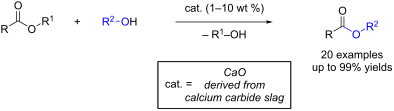
Scheme 1: The transesterification of soybean oil with various alcohols in the presence of CS600 catalyst. Rea...

Scheme 2: The transesterification of various esters with methanol in the presence of CS600 as catalyst. React...

Scheme 3: Gram-scale batch process for the transesterification of soybean oil with methanol. Reaction conditi...

Figure 2: CS600 reusability test. Reaction conditions: 2 wt % CS600, MeOH/4a ratio is 12:1, 65 °C, 4 h.

Figure 3: XRD patterns of the CS600 catalyst after the 1st reaction cycle: A) after washing with methanol and...
Selective monoformylation of naphthalene-fused propellanes for methylene-alternating copolymers
- Kenichi Kato,
- Tatsuki Hiroi,
- Seina Okada,
- Shunsuke Ohtani and
- Tomoki Ogoshi
Beilstein J. Org. Chem. 2025, 21, 1183–1191, doi:10.3762/bjoc.21.95
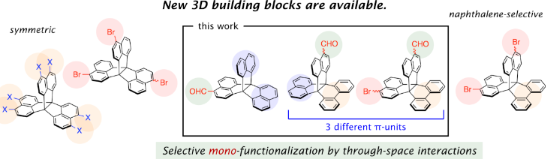
- followed by acid-mediated condensation. The linear copolymers show good solubility and carbon dioxide adsorption. Keywords: alternating copolymer; building block; formylation; gas adsorption; propellane; Introduction Combination of sp2- and sp3-hybridized atoms in core π-skeletons [1][2][3] is a key to

Graphical Abstract

Figure 1: Chemical structures of fully π-fused propellanes and their typical reaction patterns toward electro...

Figure 2: a) Synthesis of methylene-alternating copolymers of fully π-fused propellanes. DCE, 1,2-dichloroeth...

Figure 3: Gas adsorption (filled circles) and desorption (open circles) isotherms of [3.3.3]_oligo (dark red)...
Recent advances in controllable/divergent synthesis
- Jilei Cao,
- Leiyang Bai and
- Xuefeng Jiang
Beilstein J. Org. Chem. 2025, 21, 890–914, doi:10.3762/bjoc.21.73

- to substrate 11, followed by oxidative addition and release of carbon dioxide to form the zwitterionic π-allylpalladium intermediate Int-21. Under the reaction conditions, silyl triflate 12 undergoes a fluoride-mediated 1,2-elimination to generate the cyclic allene intermediate Int-22. Through a

Graphical Abstract

Scheme 1: Ligand-controlled regiodivergent C1 insertion into arynes [19].

Scheme 2: Ligand effect in homogenous gold catalysis enabling regiodivergent π-bond-activated cyclization [20].

Scheme 3: Ligand-controlled palladium(II)-catalyzed regiodivergent carbonylation of alkynes [21].
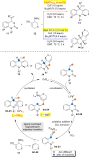
Scheme 4: Catalyst-controlled annulations of strained cyclic allenes with π-allyl palladium complexes and pro...

Scheme 5: Ring expansion of benzosilacyclobutenes with alkynes [23].

Scheme 6: Photoinduced regiodivergent and enantioselective cross-coupling [24].

Scheme 7: Catalyst-controlled regiodivergent and enantioselective formal hydroamination of N,N-disubstituted ...

Scheme 8: Catalyst-tuned regio- and enantioselective C(sp3)–C(sp3) coupling [31].

Scheme 9: Catalyst-controlled annulations of bicyclo[1.1.0]butanes with vinyl azides [32].

Scheme 10: Solvent-driven reversible macrocycle-to-macrocycle interconversion [39].

Scheme 11: Unexpected solvent-dependent reactivity of cyclic diazo imides and mechanism [40].

Scheme 12: Palladium-catalyzed annulation of prochiral N-arylphosphonamides with aromatic iodides [41].

Scheme 13: Time-dependent enantiodivergent synthesis [42].

Scheme 14: Time-controlled palladium-catalyzed divergent synthesis of silacycles via C–H activation [43].

Scheme 15: Proposed mechanism for the time-controlled palladium-catalyzed divergent synthesis of silacycles [43].

Scheme 16: Metal-free temperature-controlled regiodivergent borylative cyclizations of enynes [45].

Scheme 17: Nickel-catalyzed switchable site-selective alkene hydroalkylation by temperature regulation [46].

Scheme 18: Copper-catalyzed decarboxylative amination/hydroamination sequence [48].

Scheme 19: Proposed mechanism of copper-catalyzed decarboxylative amination/hydroamination sequence [48].

Scheme 20: Enantioselective chemodivergent three-component radical tandem reactions [49].

Scheme 21: Substrate-controlled synthesis of indoles and 3H-indoles [52].

Scheme 22: Controlled mono- and double methylene insertions into nitrogen–boron bonds [53].

Scheme 23: Copper-catalyzed substrate-controlled carbonylative synthesis of α-keto amides and amides [54].

Scheme 24: Divergent sulfur(VI) fluoride exchange linkage of sulfonimidoyl fluorides and alkynes [55].

Scheme 25: Modular and divergent syntheses of protoberberine and protonitidine alkaloids [56].
Red light excitation: illuminating photocatalysis in a new spectrum
- Lucas Fortier,
- Corentin Lefebvre and
- Norbert Hoffmann
Beilstein J. Org. Chem. 2025, 21, 296–326, doi:10.3762/bjoc.21.22


Graphical Abstract
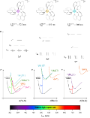
Figure 1: Influence of the metal center M (Fe, Ru, Os) on the position of the MLCT and MC (metal-centered) ab...

Scheme 1: Red-light-mediated ring-closing metathesis through activation of a ruthenium catalyst by an osmium ...

Scheme 2: Photocatalyzed polymerization of dicylopentadiene mediated with red or blue light.

Figure 2: Comparison between [Ru(bpy)3]2+ and [Os(tpy)2]2+ in a photocatalyzed trifluoromethylation reaction:...

Scheme 3: Red-light photocatalyzed C–N cross-coupling reaction by T. Rovis et al. (SET = single-electron tran...

Figure 3: Red-light-mediated aryl oxidative addition with a bismuthinidene complex.

Scheme 4: Red-light-mediated reduction of aryl derivatives by O. S. Wenger et al. (PC = photocatalyst, anh = ...
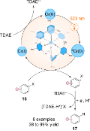
Scheme 5: Red-light-mediated aryl halides reduction with an isoelectronic chromium complex (TDAE = tetrakis(d...

Scheme 6: Red-light-photocatalyzed trifluoromethylation of styrene derivatives with Umemoto’s reagent and a p...
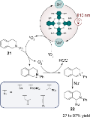
Scheme 7: Red-light-mediated energy transfer for the cross-dehydrogenative coupling of N-phenyltetrahydroisoq...
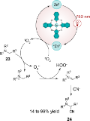
Scheme 8: Red-light-mediated oxidative cyanation of tertiary amines with a phthalocyanin zinc complex.

Scheme 9: Formation of dialins and tetralins via a red-light-photocatalyzed reductive decarboxylation mediate...
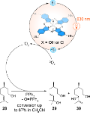
Scheme 10: Oxidation of β-citronellol (28) via energy transfer mediated by a red-light activable silicon phtha...

Scheme 11: Formation of alcohol derivatives 32 from boron compounds 31 using chlorophyll (chl) as a red-light-...

Scheme 12: Red-light-driven reductive dehalogenation of α-halo ketones mediated by a thiaporphyrin photocataly...

Figure 4: Photoinduced electron transfer-reversible addition-fragmentation chain transfer polymerization medi...
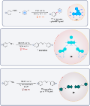
Figure 5: Recent examples of red-light-mediated photocatalytic reactions with traditional organic dyes.

Figure 6: Squaraine photocatalysts used by Goddard et al. and aza-Henry reaction with squaraine-based photoca...

Figure 7: Reactions described by Goddard et al. involving 40 as the photocatalyst.

Figure 8: Various structures of squaraine derivatives used to initiate photopolymerizations.
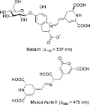
Figure 9: Naturally occurring cyanins.

Figure 10: Influence of the structure on the photophysical properties of a cyanin dye.

Figure 11: NIR-light-mediated aza-Henry reaction photocatalyzed by 46.

Scheme 13: Photocatalyzed arylboronic acids oxidation by 46.
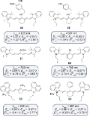
Figure 12: Cyanin structures synthetized and characterized by Goddard et al. (redox potentials given against s...
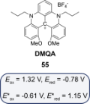
Figure 13: N,N′-Di-n-propyl-1,13-dimethoxyquinacridinium (55) with its redox potentials at its ground state an...
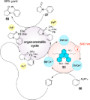
Scheme 14: Dual catalyzed C(sp2)–H arylation of 57 using DMQA 55 as the red-light-absorbing photocatalyst.

Scheme 15: Red-light-mediated aerobic oxidation of arylboronic acids 59 into phenols 60 via the use of DMQA as...

Figure 14: Red-light-photocatalyzed reactions proposed by Gianetti et al. using DMQA as the photocatalyst.

Scheme 16: Simultaneous release of NO and production of superoxide (O2•−) and their combination yielding the p...
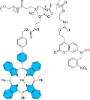
Figure 15: Palladium porphyrin complex as the photoredox catalyst and the NO releasing substrate are linked in...

Scheme 17: Uncaging of compound 69 which is a microtubule depolymerizing agent using near IR irradiation. The ...

Scheme 18: Photochemical uncaging of drugs protected with a phenylboronic acid derivative using near IR irradi...

Scheme 19: Photoredox catalytical generation of aminyl radicals with near IR irradiation for the transfer of b...

Scheme 20: Photoredox catalytical fluoroalkylation of tryptophan moieties.

Figure 16: Simultaneous absorption of two photons of infrared light of low energy enables electronic excitatio...

Scheme 21: Uncaging Ca2+ ions using two-photon excitation with near infrared light.
Molecular diversity of the reactions of MBH carbonates of isatins and various nucleophiles
- Zi-Ying Xiao,
- Jing Sun and
- Chao-Guo Yan
Beilstein J. Org. Chem. 2025, 21, 286–295, doi:10.3762/bjoc.21.21
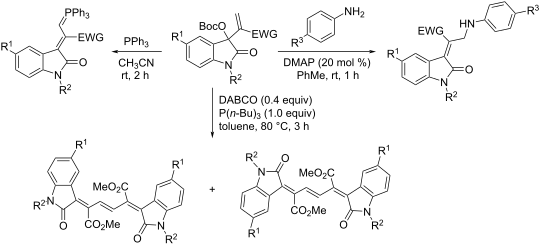
- derivatives. At first, a Lewis base attack at the α-position of the MBH nitrile of isatin resulted in the intermediate A with elimination of carbon dioxide and tert-butoxide ion. Secondly, the product 3 was produced by the SN2 substitution of the Lewis base by the arylamine. When MBH maleimides of isatin were
- used in the reaction, a direct Michael addition of the arylamine to the C=C bond of the maleimide unit and sequential elimination of carbon dioxide and tert-butoxide ion gives the intermediate B, which in turn undergoes an allylic rearrangement to afford the product 5. In this process, no extra
- addition of Lewis base is needed. When triphenylphosphine or tri(n-butyl)phosphine were involved in the reaction, the similar SN2’ substitution of tri(n-butyl)phosphine with the elimination of carbon dioxide and tert-butoxide anion gives the phosphonium salt C. Then, the deprotonation of phosphonium salt C

Graphical Abstract

Scheme 1: Reaction of arylamines and MBH carbonates of isatins. Reaction conditions: MBH carbonate of isatin ...
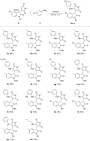
Scheme 2: Reaction of arylamines and MBH maleimides of isatins. Reaction conditions: MBH maleimide of isatin ...

Figure 1: Single crystal structure of compound 5a.

Figure 2: Single crystal structure of compound 5j.

Scheme 3: Reactions of MBH carbonates of isatins and triphenylphosphine. Reaction conditions: MBH carbonate o...

Figure 3: Single crystal structure of compound 6e.

Figure 4: Single crystal structure of compound 7a.

Figure 5: Single crystal structure of compound 8a.

Scheme 4: Proposed reaction mechanism for the various compounds.
Mechanochemical difluoromethylations of ketones
- Jinbo Ke,
- Pit van Bonn and
- Carsten Bolm
Beilstein J. Org. Chem. 2024, 20, 2799–2805, doi:10.3762/bjoc.20.235
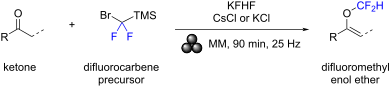
- sodium fluoride catalyst, with simple ketones, which resulted in the formation of difluoromethyl 2,2-difluorocyclopropyl ethers (Scheme 1B). Although the reactions worked well, it is also noteworthy that the use of TFDA as reagent, liberated fluoro(trimethyl)silane (TMSF), carbon dioxide, and ozone

Graphical Abstract

Scheme 1: Overview over difluoromethyl enol ether syntheses from acyclic and cyclic 1,3-diones (A), acyclic k...

Scheme 2: Attempted difluoromethylation of 1a in solution. The reactions were performed on a 0.2 mmol scale. ...

Scheme 3: Scope of ketones. The yields were determined by 1H NMR spectroscopy using 1,2-dichloroethane as the...

Scheme 4: Proposed mechanism (A) and mechanistic investigations (B and C). The yields were determined by 1H N...
Computational design for enantioselective CO2 capture: asymmetric frustrated Lewis pairs in epoxide transformations
- Maxime Ferrer,
- Iñigo Iribarren,
- Tim Renningholtz,
- Ibon Alkorta and
- Cristina Trujillo
Beilstein J. Org. Chem. 2024, 20, 2668–2681, doi:10.3762/bjoc.20.224
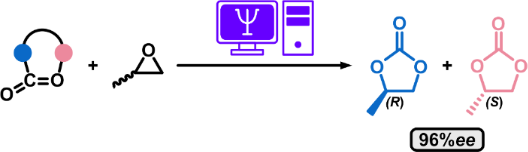
- strategy to mitigate rising atmospheric carbon dioxide levels. Despite extensive research on the CO2 insertion into epoxides to form cyclic carbonates, the stereochemical implications of this reaction have been largely overlooked, despite the prevalence of racemic epoxide solutions. This study introduces
- catalyst efficiency and selectivity in sustainable chemistry applications. Keywords: asymmetric catalysis; carbon dioxide; CO2; epoxide; frustrated Lewis pairs (FLPs); volcano plot; Introduction The field of frustrated Lewis pairs (FLPs) has flourished since their seminal discovery in 2006 by Stephan and
- enantiomerically pure product from a racemic mixture. Conclusion Carbon capture and utilisation technologies represent a promising avenue for addressing increasing atmospheric carbon dioxide levels. The reaction involving the insertion of CO2 into epoxides to form cyclic carbonates is a key focus within this

Graphical Abstract

Scheme 1: Reaction between propylene oxide (PO) and CO2 and the five catalyst scaffolds under study. The posi...

Figure 1: Schematic representation of an (A) 2D and a (B) 3D volcano plot. The abbreviation “cat.” stands for...

Scheme 2: Capture reactions of CO2 or an epoxide by FLP.

Figure 2: (A) Structure of PO annotated with the C–O bond distances and electron densities at the BCPs. BCPs ...

Figure 3: Symmetric FLP scaffolds considered in the first study. X denotes N or P.

Figure 4: Subset of FLP scaffolds considered in the catalyst optimisation study. Substituents and labels are ...

Figure 5: Coupling reaction between PO and CO2. Depending on the catalyst considered, the reaction follows me...

Figure 6: VOLCANO plot group 1. The free energies of pre-TS01 assembly and Min2 are considered for the correl...

Figure 7: VOLCANO plot group 2. The free energies of pre-TS01 assembly and Min2 are considered for the correl...

Scheme 3: Asymmetric catalysis studied. On the left, the catalyst proposed by Gao et al. for the asymmetric h...

Figure 8: Catalysed reaction between the (S)-enantiomer of propylene oxide and CO2 resulting in the formation...

Figure 9: Schemes of the different asymmetric reactions observed. Hydrogen capable of rotation is marked in o...
Efficient one-step synthesis of diarylacetic acids by electrochemical direct carboxylation of diarylmethanol compounds in DMSO
- Hisanori Senboku and
- Mizuki Hayama
Beilstein J. Org. Chem. 2024, 20, 2392–2400, doi:10.3762/bjoc.20.203
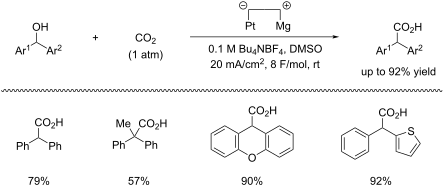
- Pt cathode and a Mg anode in the presence of carbon dioxide induced reductive C(sp3)−O bond cleavage at the benzylic position in diarylmethanol compounds and subsequent fixation of carbon dioxide to produce diarylacetic acids in good yield. This protocol provides a novel and simple approach to
- diarylacetic acids from diarylmethanol species and carbon dioxide without transformation of the hydroxy group into appropriate leaving groups, such as halides and esters including carbonates. Keywords: C(sp3)–O bond cleavage; diarylacetic acid; diarylmethanol; electrochemical reduction; fixation of carbon
- presence of carbon dioxide to give the corresponding phenylacetic acids [12]. We found that alkyl benzyl carbonates and benzal diacetates (benzylidene diacetates) were also applicable to electrochemical carboxylation with C(sp3)–O bond cleavage at the benzylic position, yielding phenylacetic acids [13] and

Graphical Abstract

Scheme 1: Synthesis of diarylacetic acids 2 from diarylmethanol compounds 1 and carbon dioxide.

Scheme 2: Attempted electrochemical carboxylation of halogen-containing diphenylmethanol compounds 1b and 1c.

Scheme 3: Synthesis of diarylacetic acids 2 by electrochemical carboxylation of diarylmethanol species 1.

Scheme 4: Attempted electrochemical carboxylation of 1m and 1n.

Scheme 5: Electrolysis of 1a under a nitrogen atmosphere.

Scheme 6: Plausible reaction pathways.
Natural resorcylic lactones derived from alternariol
- Joachim Podlech
Beilstein J. Org. Chem. 2024, 20, 2171–2207, doi:10.3762/bjoc.20.187

Graphical Abstract
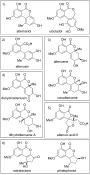
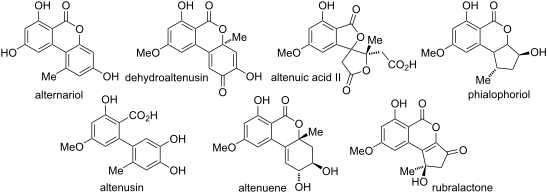
Figure 1: Examples of compounds covered in this review categorized in six sub-classes (see text).
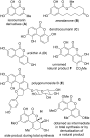
Figure 2: Examples of compounds not covered in this review.

Figure 3: Wrongly assigned and thus obsolete structures (details will be discussed in the respective chapters...

Figure 4: Alternariol with the correct IUPAC numbering and an occasionally used numbering based on the biphen...

Figure 5: Alternariol O-methyl ethers.

Figure 6: Alternariol O-glycosides.

Figure 7: Alternariol O-acetates and O-sulfates.

Figure 8: 2-Hydroxy- and 4-hydroxy-substituted alternariol and its O-methyl ethers.

Figure 9: Chloro- and amino-substituted alternariol and its O-methyl ethers.
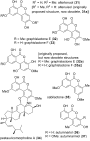
Figure 10: Presumed alternariol derivatives with non-canonical substitution pattern.

Figure 11: Alternariol derivatives with the 1-methyl group hydroxylated.
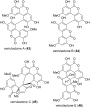
Figure 12: Verrulactones: pseudo-dimeric derivatives of altertenuol and related compounds.

Figure 13: Biaryls formed by reductive lactone opening and/or by decarboxylation.

Figure 14: Altenuene and its diastereomers.

Figure 15: 9-O-Demethylated altenuene diastereomers.

Figure 16: Acetylated and methylated altenuene diastereomers.

Figure 17: Altenuene diastereomers modified with lactic acid, pyruvic acid, or acetone.

Figure 18: Neoaltenuene and related compounds.

Figure 19: Dehydroaltenusin and its derivatives.

Scheme 1: Equilibrium of dehydroaltenusin in polar solvents [278].

Figure 20: Further quinoid derivatives.

Figure 21: Dehydroaltenuenes.

Figure 22: Complex aggregates containing dehydroaltenuene substructures and related compounds.

Figure 23: Dihydroaltenuenes.

Figure 24: Altenuic acids and related compounds.

Figure 25: Cyclopentane- and cyclopentene-fused derivatives.

Figure 26: Cyclopentenone-fused derivatives.

Figure 27: Spiro-fused derivatives and a related ring-opened derivative.

Figure 28: Lactones-fused and lactone-substituted derivatives.

Scheme 2: Biosynthesis of alternariol [324].

Scheme 3: Biosynthesis of alternariol and its immediate successors with the genes involved in the respective ...

Scheme 4: Presumed formation of altenuene and its diastereomers and of botrallin.

Scheme 5: Presumed formation of altenuic acids and related compounds.

Scheme 6: A selection of plausible biosynthetic paths to cyclopenta-fused metabolites. (No stereochemistry is...

Scheme 7: Biomimetic synthesis of alternariol (1) by Harris and Hay [66].

Scheme 8: Total synthesis of alternariol (1) by Subba Rao et al. using a Diels–Alder approach [34].

Scheme 9: Total synthesis of alternariol (1) using a Suzuki strategy by Koch and Podlech [62], improved by Kim et...

Scheme 10: Total synthesis of alternariol (1) using an intramolecular biaryl coupling by Abe et al. [63].

Scheme 11: Total synthesis of altenuene (54) and isoaltenuene (55) by Podlech et al. [249].

Scheme 12: Total synthesis of neoaltenuene (69) by Podlech et al. [35].

Scheme 13: Total synthesis of TMC-264 (79) by Tatsuta et al. [185].

Scheme 14: Total synthesis of cephalosol (99) by Koert et al. [304].
2-Heteroarylethylamines in medicinal chemistry: a review of 2-phenethylamine satellite chemical space
- Carlos Nieto,
- Alejandro Manchado,
- Ángel García-González,
- David Díez and
- Narciso M. Garrido
Beilstein J. Org. Chem. 2024, 20, 1880–1893, doi:10.3762/bjoc.20.163
- hydration reaction of carbon dioxide to bicarbonate, cyanates to carbamic acids, aldehydes to gem-diols, etc., and represent a potential therapeutic target for diseases like osteoporosis, edema, obesity or cancer [29]. Alım et al. [30] evaluated a series of thiophene sulfonamides based on the high stability
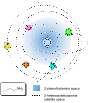
Graphical Abstract

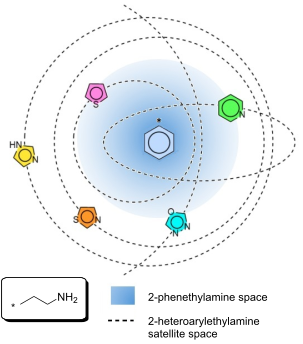
Scheme 1: Description of the 2-heteroarylethylamine scope of the present review featuring appropriate heteroa...

Scheme 2: 2-Aminoethylpyridine derivatives with therapeutic activity.

Scheme 3: 2-Aminoethylfuran derivatives with therapeutic activity.

Scheme 4: 2-Aminoethylthiophene derivatives with therapeutic activity, part 1.

Scheme 5: 2-Aminoethylthiophene derivatives with therapeutic activity, part 2.

Scheme 6: 2-Aminoethylthiophene derivatives with therapeutic activity, part 3.

Scheme 7: 2-Aminoethylpyrrole derivatives with therapeutic activity.

Scheme 8: Histamine metabolic pathway.

Scheme 9: 2-Aminoethylimidazole derivatives with therapeutic activity, part 1. Krel is referred as histamine ...

Scheme 10: Conformationally restricted 2-aminoethylimidazole derivatives with therapeutic activity, part 2.
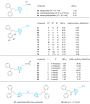
Scheme 11: 2-Aminoethylimidazole derivatives with therapeutic activity, part 3.

Scheme 12: 2-Aminoethylimidazole derivatives with therapeutic activity, part 4.

Scheme 13: 2-Aminoethylpyrazole derivatives with therapeutic activity.

Scheme 14: 2-Aminoethylisoxazole derivatives with therapeutic activity.

Scheme 15: 2-Aminoethylthiazole derivatives with therapeutic activity.

Scheme 16: 2-Aminoethyloxadiazole derivatives with therapeutic activity.

Scheme 17: 2-Aminoethyltriazole derivatives with therapeutic activity.

Scheme 18: 2-Aminoethyloxadiazole derivatives with therapeutic activity.
Synthetic applications of the Cannizzaro reaction
- Bhaskar Chatterjee,
- Dhananjoy Mondal and
- Smritilekha Bera
Beilstein J. Org. Chem. 2024, 20, 1376–1395, doi:10.3762/bjoc.20.120
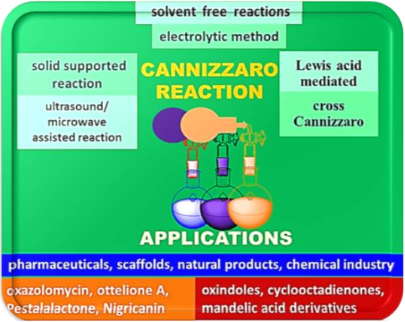
- flavoring agents, it plays a vital role for the development of unique sensory compounds [56][57]. The Cannizzaro disproportionation has also been observed in several electrochemical transformations [58] and during the electrocatalytic reduction of carbon dioxide [59]. A recent study by Liu et al. witnessed

Graphical Abstract
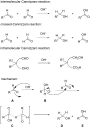
Figure 1: Types and mechanism of the Cannizzaro reaction.

Figure 2: Various approaches of the Cannizzaro reaction.

Figure 3: Representative molecules synthesized via the Cannizzaro reaction.

Scheme 1: Intramolecular Cannizzaro reaction of aryl glyoxal hydrates using TOX catalysts.
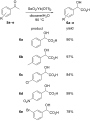
Scheme 2: Intramolecular Cannizzaro reaction of aryl methyl ketones using ytterbium triflate/selenium dioxide....

Scheme 3: Intramolecular Cannizzaro reaction of aryl glyoxals using Cr(ClO4)3 as catalyst.
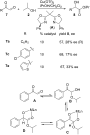
Scheme 4: Cu(II)-PhBox-catalyzed asymmetric Cannizzaro reaction.
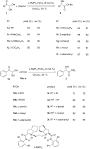
Scheme 5: FeCl3-based chiral catalyst applied for the enantioselective intramolecular Cannizzaro reaction rep...

Scheme 6: Copper bis-oxazoline-catalysed intramolecular Cannizzaro reaction and proposed mechanism.

Scheme 7: Chiral Fe catalysts-mediated enantioselective Cannizzaro reaction.
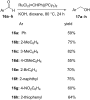
Scheme 8: Ruthenium-catalyzed Cannizzaro reaction of aromatic aldehydes.

Scheme 9: MgBr2·Et2O-assisted Cannizzaro reaction of aldehydes.

Scheme 10: LiBr-catalyzed intermolecular Cannizzaro reaction of aldehydes.

Scheme 11: γ-Alumina as a catalyst in the Cannizzaro reaction.

Scheme 12: AlCl3-mediated Cannizzaro disproportionation of aldehydes.

Scheme 13: Ru–N-heterocyclic carbene catalyzed dehydrogenative synthesis of carboxylic acids.

Figure 4: Proposed catalytic cycle for the dehydrogenation of alcohols.

Scheme 14: Intramolecular desymmetrization of tetraethylene glycol.

Scheme 15: Desymmetrization of oligoethylene glycol dialdehydes.

Scheme 16: Intramolecular Cannizzaro reaction of calix[4]arene dialdehydes.

Scheme 17: Desymmetrization of dialdehydes of symmetrical crown ethers using Ba(OH)2.

Scheme 18: Synthesis of ottelione A (proposed) via intramolecular Cannizzaro reaction.

Scheme 19: Intramolecular Cannizzaro reaction for the synthesis of pestalalactone.

Scheme 20: Synthetic strategy towards nigricanin involving an intramolecular Cannizzaro reaction.

Scheme 21: Spiro-β-lactone-γ-lactam part of oxazolomycins via aldol crossed-Cannizzaro reaction.

Scheme 22: Synthesis of indole alkaloids via aldol crossed-Cannizzaro reaction.

Scheme 23: Aldol and crossed-Cannizzaro reaction towards the synthesis of ertuliflozin.

Scheme 24: Synthesis of cyclooctadieneones using a Cannizzaro reaction.

Scheme 25: Microwave-assisted crossed-Cannizzaro reaction for the synthesis of 3,3-disubstituted oxindoles.

Scheme 26: Synthesis of porphyrin-based rings using the Cannizzaro reaction.

Scheme 27: Synthesis of phthalides and pestalalactone via Cannizarro–Tishchenko-type reaction.

Scheme 28: Synthesis of dibenzoheptalene bislactones via a double intramolecular Cannizzaro reaction.
Generation of alkyl and acyl radicals by visible-light photoredox catalysis: direct activation of C–O bonds in organic transformations
- Mithu Roy,
- Bitan Sardar,
- Itu Mallick and
- Dipankar Srimani
Beilstein J. Org. Chem. 2024, 20, 1348–1375, doi:10.3762/bjoc.20.119
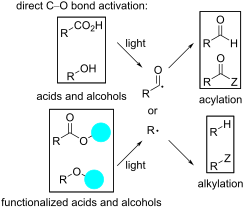
- excited-state photocatalyst oxidizes the cesium alkyl oxalate via SET, followed by elimination of two carbon dioxide molecules, generating a tertiary alkyl radical that easily combines with an electron-deficient alkene, providing the product. This protocol was well compatible with a wide range of acceptor

Graphical Abstract
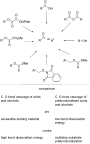
Figure 1: Generation of alkyl and acyl radicals via C–O bond breaking.

Figure 2: General photocatalytic mechanism.

Scheme 1: Photoredox-catalyzed hydroacylation of olefins with aliphatic carboxylic acids.
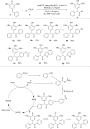
Scheme 2: Acylation–aromatization of p-quinone methides using carboxylic acids.
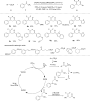
Scheme 3: Visible-light-induced deoxygenation–defluorination for the synthesis of γ,γ-difluoroallylic ketones....

Scheme 4: Photochemical hydroacylation of azobenzenes with carboxylic acids.
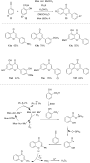
Scheme 5: Photoredox-catalyzed synthesis of flavonoids.
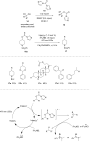
Scheme 6: Synthesis of O-thiocarbamates and photocatalytic reduction of O-thiocarbamates.
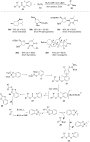
Scheme 7: Deoxygenative borylation of alcohols.

Scheme 8: Trifluoromethylation of O-alkyl thiocarbonyl substrates.
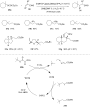
Scheme 9: Redox-neutral radical coupling reactions of alkyl oxalates and Michael acceptors.

Scheme 10: Visible-light-catalyzed and Ni-mediated syn-alkylarylation of alkynes.
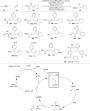
Scheme 11: 1,2-Alkylarylation of alkenes with aryl halides and alkyl oxalates.
Scheme 12: Deoxygenative borylation of oxalates.

Scheme 13: Coupling of N-phthalimidoyl oxalates with various acceptors.
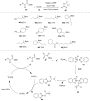
Scheme 14: Cross-coupling of O-alkyl xanthates with aryl halides via dual photoredox and nickel catalysis.

Scheme 15: Deoxygenative borylation of secondary alcohol.
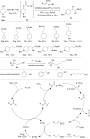
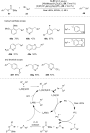
Scheme 16: Deoxygenative alkyl radical generation from alcohols under visible-light photoredox conditions.
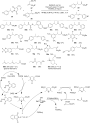
Scheme 17: Deoxygenative alkylation via alkoxy radicals against hydrogenation or β-fragmentation.
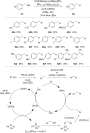
Scheme 18: Direct C–O bond activation of benzyl alcohols.
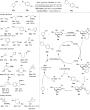
Scheme 19: Deoxygenative arylation of alcohols using NHC to activate alcohols.
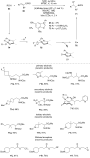
Scheme 20: Deoxygenative conjugate addition of alcohol using NHC as alcohol activator.
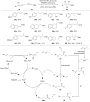
Scheme 21: Synthesis of polysubstituted aldehydes.
Carbonylative synthesis and functionalization of indoles
- Alex De Salvo,
- Raffaella Mancuso and
- Xiao-Feng Wu
Beilstein J. Org. Chem. 2024, 20, 973–1000, doi:10.3762/bjoc.20.87
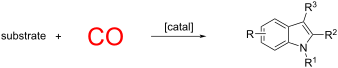
- yields in CH3CN under 10–20 bar of CO at 140 °C within 15–30 min and with carbon dioxide as the side-product (Scheme 18). Carbon monoxide is a cheap gas but its use requires safe and controlled environments and systems because it is highly toxic to human. In addition, reactions in which carbon monoxide

Graphical Abstract

Scheme 1: Pd(0)-catalyzed domino C,N-coupling/carbonylation/Suzuki coupling reaction for the synthesis of 2-a...

Scheme 2: Pd(0)-catalyzed single isonitrile insertion: synthesis of 1-(3-amino)-1H-indol-2-yl)-1-ketones.
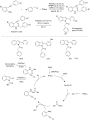
Scheme 3: Pd(0)-catalyzed gas-free carbonylation of 2-alkynylanilines to 1-(1H-indol-1-yl)-2-arylethan-1-ones....

Scheme 4: Pd(II)-catalyzed heterocyclization/alkoxycarbonylation of 2-alkynylaniline imines.

Scheme 5: Pd(II)-catalyzed heterocyclization/alkoxycarbonylation of 2-alkynylanilines to N-substituted indole...

Scheme 6: Synthesis of indol-2-acetic esters by Pd(II)-catalyzed carbonylation of 1-(2-aminoaryl)-2-yn-1-ols.
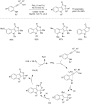
Scheme 7: Pd(II)-catalyzed carbonylative double cyclization of suitably functionalized 2-alkynylanilines to 3...

Scheme 8: Indole synthesis by deoxygenation reactions of nitro compounds reported by Cenini et al. [21].

Scheme 9: Indole synthesis by reduction of nitro compounds: approach reported by Watanabe et al. [22].

Scheme 10: Indole synthesis from o-nitrostyrene compounds as reported by Söderberg and co-workers [23].
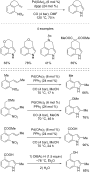
Scheme 11: Synthesis of fused indoles (top) and natural indoles present in two species of European Basidiomyce...

Scheme 12: Synthesis of 1,2-dihydro-4(3H)-carbazolones through N-heteroannulation of functionalized 2-nitrosty...

Scheme 13: Synthesis of indoles from o-nitrostyrenes by using Pd(OAc)2 and Pd(tfa)2 in conjunction with bident...
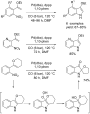
Scheme 14: Synthesis of substituted 3-alkoxyindoles via palladium-catalyzed reductive N-heteroannulation.

Scheme 15: Synthesis of 3-arylindoles by palladium-catalyzed C–H bond amination via reduction of nitroalkenes.

Scheme 16: Synthesis of 2,2′-bi-1H-indoles, 2,3′-bi-1H-indoles, 3,3′-bi-1H-indoles, indolo[3,2-b]indoles, indo...

Scheme 17: Pd-catalyzed reductive cyclization of 1,2-bis(2-nitrophenyl)ethene and 1,1-bis(2-nitrophenyl)ethene...

Scheme 18: Flow synthesis of 2-substituted indoles by reductive carbonylation.

Scheme 19: Pd-catalyzed synthesis of variously substituted 3H-indoles from nitrostyrenes by using Mo(CO)6 as C...

Scheme 20: Synthesis of indoles from substituted 2-nitrostyrenes (top) and ω-nitrostyrenes (bottom) via reduct...

Scheme 21: Synthesis of indoles from substituted 2-nitrostyrenes with formic acid as CO source.

Scheme 22: Ni-catalyzed carbonylative cyclization of 2-nitroalkynes and aryl iodides (top) and the Ni-catalyze...

Scheme 23: Mechanism of the Ni-catalyzed carbonylative cyclization of 2-nitroalkynes and aryl iodides (top) an...

Scheme 24: Route to indole derivatives through Rh-catalyzed benzannulation of heteroaryl propargylic esters fa...

Scheme 25: Pd-catalyzed cyclization of 2-(2-haloaryl)indoles reported by Yoo and co-workers [54], Guo and co-worke...

Scheme 26: Approach for the synthesis of 6H-isoindolo[2,1-a]indol-6-ones reported by Huang and co-workers [57].

Scheme 27: Zhou group’s method for the synthesis of 6H-isoindolo[2,1-a]indol-6-ones.

Scheme 28: Synthesis of 6H-isoindolo[2,1-a]indol-6-ones from o-1,2-dibromobenzene and indole derivatives by us...

Scheme 29: Pd(OAc)2-catalyzed Heck cyclization of 2-(2-bromophenyl)-1-alkyl-1H-indoles reported by Guo et al. [55]....

Scheme 30: Synthesis of indolo[1,2-a]quinoxalinone derivatives through Pd/Cu co-catalyzed carbonylative cycliz...

Scheme 31: Pd-catalyzed carbonylative cyclization of o-indolylarylamines and N-monosubstituted o-indolylarylam...

Scheme 32: Pd-catalyzed diasteroselective carbonylative cyclodearomatization of N-(2-bromobenzoyl)indoles with...
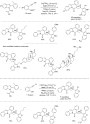
Scheme 33: Pd(0)-catalyzed synthesis of CO-linked heterocyclic scaffolds from alkene-indole derivatives and 2-...

Scheme 34: Proposed mechanism for the Pd(0)-catalyzed synthesis of CO-linked heterocyclic scaffolds.

Scheme 35: Pd-catalyzed C–H and N–H alkoxycarbonylation of indole derivatives to indole-3-carboxylates and ind...

Scheme 36: Rh-catalyzed C–H alcoxycarbonylation of indole derivatives to indole-3-carboxylates reported by Li ...

Scheme 37: Pd-catalyzed C–H alkoxycarbonylation of indole derivatives with alcohols and phenols to indole-3-ca...

Scheme 38: Synthesis of N-methylindole-3-carboxylates from N-methylindoles and phenols through metal-catalyst-...

Scheme 39: Synthesis of indol-3-α-ketoamides (top) and indol-3-amides (bottom) via direct double- and monoamin...

Scheme 40: The direct Sonogashira carbonylation coupling reaction of indoles and alkynes via Pd/CuI catalysis ...

Scheme 41: Synthesis of indole-3-yl aryl ketones reported by Zhao and co-workers [73] (path a) and Zhang and co-wo...

Scheme 42: Pd-catalyzed carbonylative synthesis of BIMs from aryl iodides and N-substituted and NH-free indole...

Scheme 43: Cu-catalyzed direct double-carbonylation and monocarbonylation of indoles and alcohols with hexaket...

Scheme 44: Rh-catalyzed direct C–H alkoxycarbonylation of indoles to indole-2-carboxylates [79] (top) and Co-catal...
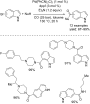
Scheme 45: Pd-catalyzed carbonylation of NH free-haloindoles.
Activity assays of NnlA homologs suggest the natural product N-nitroglycine is degraded by diverse bacteria
- Kara A. Strickland,
- Brenda Martinez Rodriguez,
- Ashley A. Holland,
- Shelby Wagner,
- Michelle Luna-Alva,
- David E. Graham and
- Jonathan D. Caranto
Beilstein J. Org. Chem. 2024, 20, 830–840, doi:10.3762/bjoc.20.75
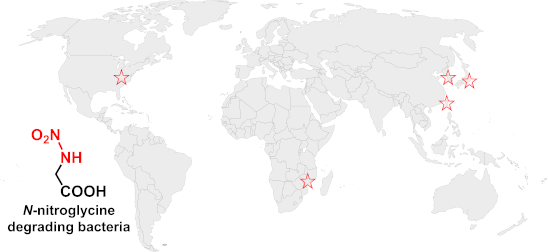
- produced during the process of amine-based carbon dioxide capture technologies [13][14]. These linear nitramines from these reactions pose their own health and environmental consequences [13]. Therefore, strategies to remediate linear nitramines are needed. Compared to cyclic nitramines [1][2][15][16

Graphical Abstract

Scheme 1: NNG degradation by reduced NnlA.

Figure 1: Nitrite concentrations observed in cultures of E. coli transformed with NnlA homologs or variants g...

Figure 2: Molecular mass determination of purified NnlA homologs by A) SDS-PAGE or B) analytical size exclusi...

Figure 3: UV–vis absorption spectra of purified NnlA homologs. All spectra were measured in 100 mM tricine, 1...

Figure 4: Representative LC–MS EICs monitoring molecular anions of NNG (m/z 119.01 ± 100 ppm) and glyoxylate (...

Figure 5: Alpha-fold model of Vs NnlA dimer (cyan) overlayed with Pseudomonas aeruginosa (grey; PDB: 3VOL [35,36]) t...

Figure 6: Phylogenetic tree of NnlA homologs with accession numbers. Branch lengths correspond to amino acid ...

Scheme 2: Acid–base equilibrium of 3-nitropropionate (3-NP) vs N-nitroglycine (NNG).
Construction of diazepine-containing spiroindolines via annulation reaction of α-halogenated N-acylhydrazones and isatin-derived MBH carbonates
- Xing Liu,
- Wenjing Shi,
- Jing Sun and
- Chao-Guo Yan
Beilstein J. Org. Chem. 2023, 19, 1923–1932, doi:10.3762/bjoc.19.143
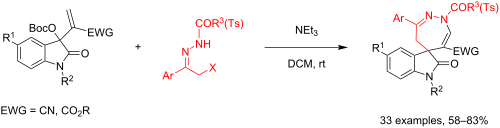
- depicted in Scheme 5. At first, MBH carbonates of isatin 2 is attacked at the α-position by the Lewis base to give the ammonium salt A with elimination of carbon dioxide and a tert-butoxide ion. Secondly, the ammonium salt A is deprotonated by the in situ generated tert-butoxide ion to give the allylic

Graphical Abstract

Scheme 1: Representative [4 + 3] cycloaddition reactions of MBH carbonates derived from isatins.
Scheme 2: Synthesis of spiro[indoline-3,5'-[1,2]diazepines] 3a–m. Conditions: α-halogenated acylhydrazone (0....

Scheme 3: Synthesis of spiro[indoline-3,5'-[1,2]diazepines] 5a–g. Conditions: α-halogenated acylhydrazone (0....

Scheme 4: Synthesis of dihydrospiro[indoline-3,5'-[1,2]diazepines] 7a–n. Conditions: α-halogenated N-tosylhyd...

Figure 1: Single crystal structure of the spiro compound 7a.

Scheme 5: Proposed reaction mechanism.

Scheme 6: Gram-scale synthesis of compound 7c.
Selectivity control towards CO versus H2 for photo-driven CO2 reduction with a novel Co(II) catalyst
- Lisa-Lou Gracia,
- Philip Henkel,
- Olaf Fuhr and
- Claudia Bizzarri
Beilstein J. Org. Chem. 2023, 19, 1766–1775, doi:10.3762/bjoc.19.129
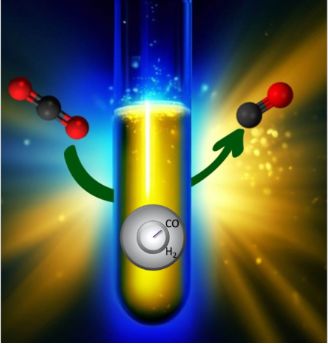
- Karlsruhe Nano Micro Facility (KNMFi), Karlsruhe Institute of Technology (KIT), Kaiserstrasse 12, 76131 Karlsruhe, Germany 10.3762/bjoc.19.129 Abstract Developing efficient catalysts for reducing carbon dioxide, a highly stable combustion waste product, is a relevant task to lower the atmospheric
- atmosphere (Figure 4, red curves). In DMA, the electrochemical behavior changed only moderately, suggesting that the reduced complex 1 does not react promptly with carbon dioxide under these conditions. On the other hand, when a 5:1 mixture of DMA/triethanolamine (TEOA) was used as the solvent, a significant
- )-based catalyst and its employment in photo-driven CO2 reduction. The cobalt core was hexacoordinated by two chelating quinolyl-triazole ligands and two −NCS groups. The electrochemical properties suggested that this complex could reduce carbon dioxide. The photocatalytic system chosen for this target

Graphical Abstract

Figure 1: Chemical structures of the molecular components used in this work: Co(II) complex 1 as the novel ca...

Figure 2: ORTEP drawing of crystal polymorph 1a (left) and 1b (right), shown at the 50% probability level. Hy...

Figure 3: UV–vis absorbance of complex 1 in DMA. Inset: zoom-in of the 500–800 nm range to visualize the low-...

Figure 4: Cyclic voltammetry of complex 1 in 0.1 M TBAPF6 solution of (a) DMA and (b) DMA/TEOA 5:1 (v/v). Bla...

Figure 5: Time evolution of CO (blue squares) and H2 (red triangles) with the power functional fitting (blue ...

Scheme 1: Proposed mechanism for the photoinduced reduction of carbon dioxide with the system presented in th...
Enabling artificial photosynthesis systems with molecular recycling: A review of photo- and electrochemical methods for regenerating organic sacrificial electron donors
- Grace A. Lowe
Beilstein J. Org. Chem. 2023, 19, 1198–1215, doi:10.3762/bjoc.19.88
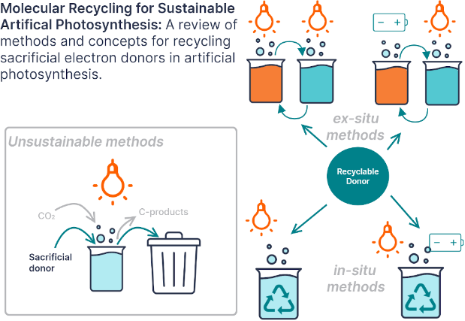
- artificial photosynthesis. Systems for photocatalytic carbon dioxide reduction are optimized using sacrificial electron donors. One strategy for coupling carbon dioxide reduction and water oxidation to achieve artificial photosynthesis is to use a redox mediator, or recyclable electron donor. This review
- discovery and creation of incredible chemical systems and materials. The ultimate goal is to harness energy from the sun and use it to transfer electrons and protons from water onto carbon dioxide and create molecules to replace fossil fuels [1][2]. However, when developing the components of artificial
- cycle to reduce and fixate carbon dioxide [7]. Quite sensibly, many research groups investigating artificial photosynthesis develop components and systems for water splitting and carbon dioxide reduction separately before they or others seek to combine them. This modular approach is hugely beneficial

Graphical Abstract

Figure 1: Diagram comparing the two reaction pathways for sacrificial electron donors (SD) in photocatalyzed ...

Figure 2: Diagram showing water-splitting systems developed by Girault, Scanlon, and co-workers that employ i...

Figure 3: Diagram illustrating the transfer of electrons in a photocatalytic particulate suspensions Z-scheme...

Figure 4: A. Structures of the molecules represented in part B. The numbers in brackets correspond to the com...

Figure 5: A. Structures of the molecules represented in part B. The numbers in brackets correspond to the com...
Photoredox catalysis harvesting multiple photon or electrochemical energies
- Mattia Lepori,
- Simon Schmid and
- Joshua P. Barham
Beilstein J. Org. Chem. 2023, 19, 1055–1145, doi:10.3762/bjoc.19.81
- SCE (1c) were readily reduced and dehalogenated products obtained in excellent yields (70–92%) (Figure 11A). Sodium formate was found to be a more efficient terminal reductant than trialkylamines which the authors attributed to the formation of a carbon dioxide radical anion (CO2•−) upon oxidation of

Graphical Abstract

Figure 1: Oxidative and reductive activations of organic compounds harvesting photoredox catalysis.

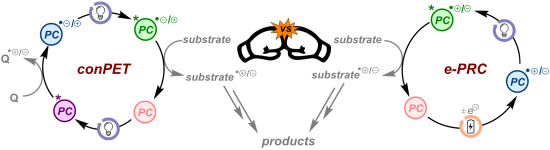
Figure 2: General catalytic cycles of radical ion conPET (left) and radical ion e-PRC (right).
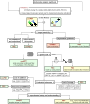
Figure 3: “Beginner’s guide”: comparison between advantages, capacities, and prospectives of conPET and PEC.
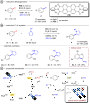
Figure 4: A) conPET reductive dehalogenation of aryl halides with PDI. B) Reductive C–H arylation with pyrrol...
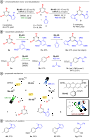
Figure 5: A) Chromoselective mono- and disubstitution or polybrominated pyrimidines with pyrroles. B) Sequent...

Figure 6: A) Synthesis of pyrrolo[1,2-a]quinolines. B) Synthesis of ullazines.

Figure 7: A) Reductive phosphorylation of aryl halides via conPET. B) Selected examples from the substrate sc...
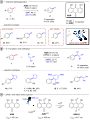
Figure 8: A) Reductive dehalogenation of aryl halides via conPET and selected examples from the substrate sco...
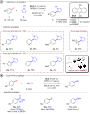
Figure 9: A) Reductive C–H arylation of aryl halides via conPET (top) and selected examples from the substrat...
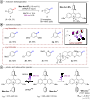
Figure 10: A) Reductive hydrodehalogenation of aryl halides with Mes-Acr-BF4. B) Selected examples from the su...
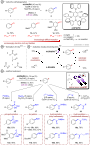
Figure 11: A) Reductive hydrodechlorination of aryl chlorides with 4-DPAIPN. B) Proposed formation of CO2•−. C...
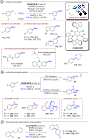
Figure 12: A) Reductive conPET borylation with 3CzEPAIPN (top) and selected examples from the substrate scope ...

Figure 13: Scale-up of conPET phosphorylation with 3CzEPAIPN.
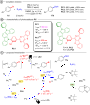
Figure 14: A) Borylation of 1d. B) Characteristics and structure of PC1 with green and red parts showing the l...
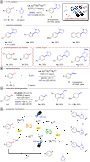
Figure 15: A) Reductive C–H arylation scope with polysulfide conPET (top) and selected examples from the subst...

Figure 16: Scale-up of A) C–H arylation and B) dehaloborylation with polysulfide photocatalysis in continuous-...

Figure 17: A) Formation of [Ir1]0 and [Ir2]0 upon PET between [Ir1]+ and Et3N. B) Mechanism of multi-photon ta...

Figure 18: A) Reductive hydrodehalogenation of aryl halides via multi-photon tandem photocatalysis. B) Selecte...

Figure 19: A) Carbonylative amidation of aryl halides in continuous flow. B) Selected examples from the substr...
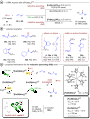
Figure 20: A) General scheme for reductive (RQ) and oxidative quenching (OQ) protocols using [FeIII(btz)3](PF6)...
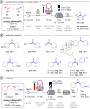
Figure 21: A) Carbonylative amidation of alkyl iodides with [IrIII(ppy)2(dtbbpy)]PF6. B) Selected examples fro...
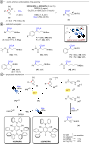
Figure 22: A) Carboxylative C–N bond cleavage in cyclic amines. B) Selected examples from the substrate scope....
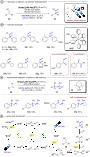
Figure 23: A) Formal reduction of alkenes to alkanes via transfer hydrogenation. B) Selected examples from the...
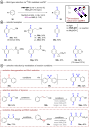
Figure 24: A) Birch-type reduction of benzenes with PMP-BPI. B) Selected examples from the substrate scope (sc...

Figure 25: Proposed mechanism of the OH− mediated conPET Birch-type reduction of benzene via generation of sol...

Figure 26: Reductive detosylation of N-tosylated amides with Mes-Acr-BF4. B) Selected examples from the substr...
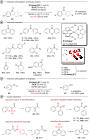
Figure 27: A) Reductive detosylation of N-tosyl amides by dual PRC. B) Selected examples from the substrate sc...

Figure 28: A) Mechanism of the dual PRC based on PET between [Cu(dap)2]+ and DCA. B) Mechanism of the dual PRC...
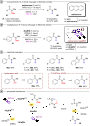
Figure 29: A) N–O bond cleavage in Weinreb amides with anthracene. B) N–O bond cleavage in Weinreb amides rely...
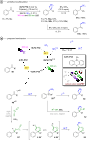
Figure 30: A) Pentafluorosulfanylation and fluoride elimination. B) Mechanism of the pentafluorosulfanylation ...
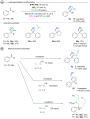
Figure 31: A) α-Alkoxypentafluorosulfanylation (top) and selected examples from the substrate scope (bottom). ...
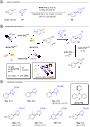
Figure 32: A) Oxidative amination of arenes with azoles catalyzed by N-Ph PTZ. B) Selected examples from the s...

Figure 33: A) C(sp3)–H bond activation by HAT via chloride oxidation by *N-Ph PTZ•+. B) Proposed mechanism for...

Figure 34: A) Recycling e-PRC C–H azolation of electron-rich arenes with pyrazoles using Mes-Acr+ as a photoca...

Figure 35: A) Radical ion e-PRC direct oxidation of unactivated arenes using TAC+ as an electro-activated phot...

Figure 36: A) Radical ion e-PRC direct oxidation of unactivated arenes using TPA as an electro-activated photo...

Figure 37: Proposed mechanism (top) and mode of preassembly (bottom).

Figure 38: A) Possible preassemblies of reactive (left) vs unreactive (right) arenes. B) Calculated spin densi...
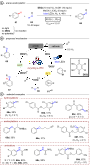
Figure 39: A) Recycling e-PRC C(sp2 )–H acetoxylation of arenes using DDQ as a photocatalyst. B) Proposed cata...

Figure 40: Gram scale hydroxylation of benzene in a recirculated flow setup.
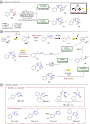
Figure 41: A) Radical ion e-PRC vicinal diamination of alkylarenes using TAC+ as an electro-activated photocat...
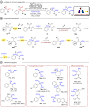
Figure 42: A) Sequential oxygenation of multiple adjacent C–H bonds under radical ion e-PRC using TAC+ as an e...

Figure 43: A) Enantioselective recycling e-PRC cyanation of benzylic C–H bonds using ADQS as photocatalyst. B)...

Figure 44: Proposed tandem mechanism by Xu and co-workers.
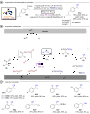
Figure 45: A) Enantioselective recycling e-PRC decarboxylative cyanation using Cu(acac)2, Ce(OTf)3 and a box l...

Figure 46: A) Enantioselective recycling e-PRC benzylic cyanation using Cu(MeCN)4BF4, box ligand and anthraqui...

Figure 47: A) Radical ion e-PRC acetoxyhydroxylation of aryl olefins using TAC+ as an electro-activated photoc...

Figure 48: Selected examples from the substrate scope.

Figure 49: Photoelectrochemical acetoxyhydroxylation in a recirculated flow setup.
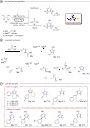
Figure 50: A) Radical ion e-PRC aminooxygenation of aryl olefins using TAC+ as an electro-activated photocatal...
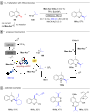
Figure 51: A) Recycling e-PRC C–H alkylation of heteroarenes with organic trifluoroborates using Mes-Acr+ as p...

Figure 52: A) Recycling e-PRC decarboxylative C–H alkylation of heteroarenes using CeCl3·7H2O as catalyst. B) ...

Figure 53: A) Recycling e-PRC decarboxylative C–H alkylation of heteroarenes using Fe(NH4)2(SO4)2·6H2O as cata...
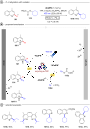
Figure 54: A) Recycling e-PRC C–H alkylation of heteroarenes with alkyl oxalates and 4CzIPN as photocatalyst. ...
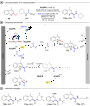
Figure 55: A) Recycling e-PRC decarboxylative C–H carbamoylation of heteroarenes using 4CzIPN as photocatalyst...
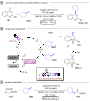
Figure 56: A) Photoelectrochemical HAT-mediated hydrocarbon activation via the chlorine radical. B) Proposed m...

Figure 57: A) Selected examples from the substrate scope. B) Gram and decagram scale semi-continuous flow PEC ...

Figure 58: A) Photoelectrochemical HAT-mediated dehydrogenative coupling of benzothiazoles with aliphatic C–H ...

Figure 59: A) Photoelectrochemical HAT activation of ethers using electro-activated TAC+ as photocatalyst. B) ...

Figure 60: Selected examples from the substrate scope.
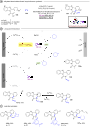
Figure 61: A) Photoelectrochemical HAT-mediated synthesis of alkylated benzimidazo-fused isoquinolinones using...

Figure 62: A) Decoupled photoelectrochemical cerium-catalyzed oxydichlorination of alkynes using CeCl3 as cata...

Figure 63: Proposed decoupled photoelectrochemical mechanism.

Figure 64: A) Decoupled photoelectrochemical ring-opening bromination of tertiary cycloalkanols using MgBr2 as...

Figure 65: A) Recycling e-PRC ring-opening functionalization of cycloalkanols using CeCl3 as catalyst. B) Prop...

Figure 66: Selected examples from the substrate scope of the PEC ring-opening functionalization.

Figure 67: A) Radical ion e-PRC reduction of chloro- and bromoarenes using DCA as catalyst and various accepto...
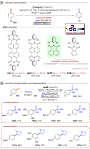
Figure 68: A) Screening of different phthalimide derivatives as catalyst for the e-PRC reduction of aryl halid...

Figure 69: Screening of different organic catalysts for the e-PRC reduction of trialkylanilium salts.

Figure 70: A) e-PRC reduction of phosphonated phenols and anilinium salts. B) Selected examples from the subst...

Figure 71: A) ConPET and e-PRC reduction of 4-bromobenzonitrile using a naphthalene diimide (NDI) precatalyst ...

Figure 72: A) Radical ion e-PRC reduction of phosphinated aliphatic alcohols with n-BuO-NpMI as catalyst. B) C...

Figure 73: Selected examples from the substrate scope.

Figure 74: A) Recycling e-PRC reductive dimerization of benzylic chlorides using a [Cu2] catalyst. B) Proposed...

Figure 75: A) Decoupled photoelectrochemical C–H alkylation of heteroarenes through deamination of Katritzky s...

Figure 76: Proposed mechanism by Chen and co-workers.
CO2 complexation with cyclodextrins
- Cecilie Høgfeldt Jessen,
- Jesper Bendix,
- Theis Brock Nannestad,
- Heloisa Bordallo,
- Martin Jæger Pedersen,
- Christian Marcus Pedersen and
- Mikael Bols
Beilstein J. Org. Chem. 2023, 19, 1021–1027, doi:10.3762/bjoc.19.78
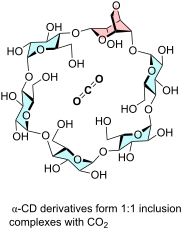
- Cecilie Hogfeldt Jessen Jesper Bendix Theis Brock Nannestad Heloisa Bordallo Martin Jaeger Pedersen Christian Marcus Pedersen Mikael Bols Department of Chemistry & Niels Bohr Institute, University of Copenhagen, 2100 København Ø, Denmark 10.3762/bjoc.19.78 Abstract Carbon dioxide (CO2) emissions
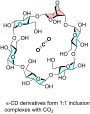
- stoichioimetry and that a number of simple and modified cyclodextrins bind CO2 in water with a Kg of 0.18–1.2 bar−1 (7–35 M−1) with per-O-methyl α-cyclodextrin having the highest CO2 affinity. Keywords: carbon dioxide; crystals; cyclodextrin; gas binding; Introduction The concentration of carbon dioxide (CO2
Graphical Abstract

Figure 1: Structure of cyclodextrins 1–6 studied in this work.

Figure 2: X-ray crystal structure of CO2 bound to α-CD.

Figure 3: TGA curve (blue) and dTGA curve (red) for CO2-1 crystals. Two lumps are seen with the former predom...

Figure 4: Cell used to measure vis spectra under pressure (left), structure of 7 (middle) and spectrum of 7 (...

Figure 5: Binding of CO2 to 1 as a function of pressure.
Investigation of cationic ring-opening polymerization of 2-oxazolines in the “green” solvent dihydrolevoglucosenone
- Solomiia Borova and
- Robert Luxenhofer
Beilstein J. Org. Chem. 2023, 19, 217–230, doi:10.3762/bjoc.19.21
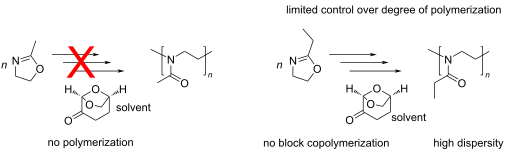
- for most POx, accordingly, it was used successfully only for the polymerization of EtOx [34]. Correia et al. used supercritical carbon dioxide for the synthesis of 2-oxazoline-based oligomers with antimicrobial properties and applied boron trifluoride etherate as the initiator [35]. However, carbamic
- , environmentally friendly, highly stable towards oxidation, yet degrades into water and carbon dioxide [27][38]. Therefore, DLG is an interesting candidate to investigate as solvent for the CROP of 2-oxazolines. Accordingly, in this work, we present the first examples of the successful CROP of POx and discuss the

Graphical Abstract

Figure 1: Schematic representation of the mechanism of the cationic ring-opening polymerization (CROP) of 2-a...

Figure 2: (a) First-order kinetic plot for the 2-ethyl-2-oxazoline ring-opening polymerization in DLG at 90 °...

Figure 3: MALDI-TOF mass spectrometry analysis of the poly(2-ethyl-2-oxazoline) initiated with methyl triflat...

Figure 4: MALDI-TOF mass spectrometry analysis of the poly(2-ethyl-2-oxazoline) initiated with 2-ethyl-3-meth...

Figure 5: Schematic illustration of the side reactions that can occur during the polymerization of 2-alkyl-2-...

Figure 6: Investigation of 2-ethyl-2-oxazoline polymerization in DLG at 60 °C initiated with MeOTf (black), M...

Figure 7: Investigation of 2-ethyl-2-oxazoline polymerization initiated with EtOxMeOTf at different monomer/i...
Preparation of β-cyclodextrin-based dimers with selectively methylated rims and their use for solubilization of tetracene
- Konstantin Lebedinskiy,
- Volodymyr Lobaz and
- Jindřich Jindřich
Beilstein J. Org. Chem. 2022, 18, 1596–1606, doi:10.3762/bjoc.18.170
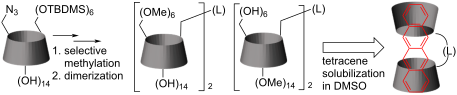
- kind of reaction engaging the azido group in the CD chemistry is the phosphine imide reaction [30][31]. This transformation involves triphenylphosphine and carbon dioxide to convert azide into isocyanate [31], allowing coupling with amines or other nucleophile groups. It is interesting to note that the

Graphical Abstract

Scheme 1: The synthesis of 6A-azido-6A-deoxy-per-6-O-tert-butyldimethylsilyl-β-cyclodextrin.

Scheme 2: The synthesis of β-cyclodextrin dimers with permethylated secondary rims.

Scheme 3: The synthesis of β-cyclodextrin dimers with permethylated primary rims.

Figure 1: The fragments of 1H NOESY NMR spectra of 4 (a), 10 (b), and 9 (c) indicating the interaction betwee...

Figure 2: The fragment of the 1H NMR spectrum of compounds 9 (green); 10 (red); 12 (blue) representing the si...

Figure 3: Other cyclodextrins that were used in the solubilization experiments with tetracene.

Figure 4: The tetracene UV absorbance dependence on concentration at 476 nm.

Figure 5: The relative concentrations of tetracene in DMSO solutions with hosts 4, 5, 10, 12, 13–18 referred ...

Figure 6: "Tail-to-tail" (a) and "head-to-head" (b) orientation of two cyclodextrin moieties and primary-rim ...

Figure 7: Isotherms of the titration of tetracene with "dimeric" CD solutions in DMSO at 298 K (circles – 10;...

Figure 8: Isotherms of the titration of tetracene with "monomeric" CD solutions in DMSO at 298 K (circles – 16...



