


Search results
Search for "kinetic" in Full Text gives 627 result(s) in Beilstein Journal of Organic Chemistry. Showing first 200.
Electrochemical reduction of unsaturated carbon–carbon bonds via 3d transition-metal catalysis
Beilstein J. Org. Chem. 2026, 22, 955–981, doi:10.3762/bjoc.22.75
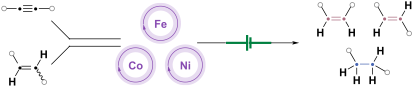
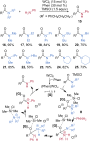
- under conditions in which both the redox mediator and the cobalt catalyst are simultaneously operative. Kinetic analysis revealed positive dependence on the concentrations of acid, alkyne, mediator, and cobalt catalyst, supporting a mechanistic regime in which substrate and acid binding equilibria
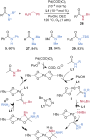
- D2O, the formation of deuterated low-valent cobalt species is suggested, which are proposed to give rise to catalytically relevant Co–D intermediates [94]. Kinetic analysis further revealed that, at a current of 2.5 mA, the reaction displays zeroth order dependence on alkyne, cobalt catalyst, and AcOD
- −1.30 V. Notably, product selectivity is highly sensitive to the applied potential, more cathodic conditions (−1.75 V) lead to increased HER, highlighting that precise potential control governs the competition between hydride transfer and proton reduction. Kinetic analysis reveals first-order dependence








The trans-influence in gold chemistry from a catalytic perspective
Beilstein J. Org. Chem. 2026, 22, 838–856, doi:10.3762/bjoc.22.66
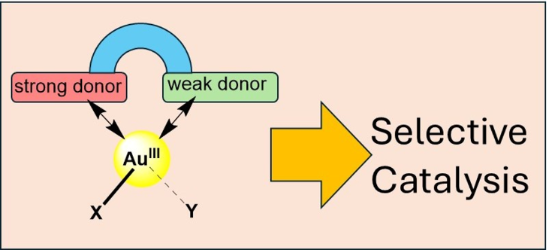
- the “trans-effect”, which describes the effect of a ligand L on the rate of substitution of another ligand in trans position, most prominently found in square-planar d8-complexes, notably those of platinum(II) [21]. This is a kinetic parameter and therefore combines ground-state energetics with the
- and 3. This correlation proved to be of predictive value in the optimisation of product selectivity with as yet untested ligands [26]. Using kinetic competition experiments is a particularly sensitive method for assessing ligand effects in catalysis, since they are able to quantitatively reflect even
- to C=C-bond isomerisation, to give the gold vinyls in E/Z ratios of 20:80 (24) and 50:50 (25), respectively (Scheme 12). The Z-isomer is evidently the kinetic product. The gold(III) hydrides that react with DMAD are all neutral or negatively charged complexes carrying electron-rich anionic C-ligands


Halogenated azobenzene acrylates: from efficient solution photoswitching to stable solid-state photochromic materials
Beilstein J. Org. Chem. 2026, 22, 782–794, doi:10.3762/bjoc.22.60
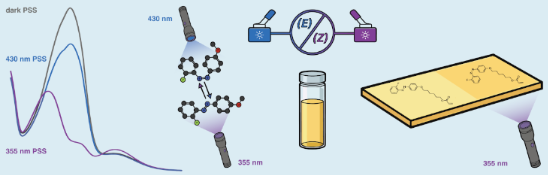
- analogous comparison using UV–vis absorption spectra along with a fatigue resistance verification. Representative thermal kinetic curves obtained by both UV–vis absorption and 1H NMR spectroscopy are shown in Figure 9. Thermal kinetics were optimized using the OPstat 6.10 software [33]. See Supporting
- = 4 × 10⁻⁵ M) which can influence the obtained kinetic parameters). These measurements confirmed similar effects of adding the second halogen, with the highest E → Z photoconversion seen for the monosubstituted switches and also the trends seen for values. The latter is further demonstrated by


Rongalite addition to dienones: diastereoselectivity in cyclic sulfone synthesis; stereochemical rationalization and prospects as a general conjugate nucleophile
Beilstein J. Org. Chem. 2026, 22, 742–752, doi:10.3762/bjoc.22.56

- sulfide oxidation. In that early work, the stereochemical analysis was dependent on conformational analysis and comparison of coupling constants in the 1H NMR spectra. Experiments discussed in our inital report confirmed that the reaction proceeded under kinetic control [21]. Closer examination of the
- selectivity for formation of 26 at room temperature suggests a profile that is more reflective of kinetic control, such that we can argue that 26 forms between 1 and 2 orders of magnitude more rapidly than cyclic products 1a and 1b, such that they are not detectable in the 1H NMR spectra. Further anecdotal




Computational prediction of C–H hydricities and their use in predicting the regioselectivity of electron-rich C–H functionalisation reactions
Beilstein J. Org. Chem. 2026, 22, 603–610, doi:10.3762/bjoc.22.46
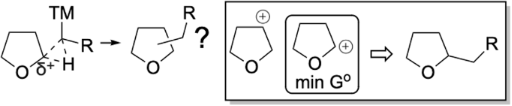
- ) electrode potentials are required for thermochemical cycles, but that experimentally measured potentials are often not reversible; thus, corrections may be needed to account for kinetic contributions. For relatively stable carbocations, the relevant potentials can be measured directly from carbocation salts


![[Graphic 6]](/bjoc/content/inline/1860-5397-22-46-i8.svg?max-width=637&scale=1.18182)


Kinetic resolution of racemic planar-chiral vinylcymantrenes by molybdenum-catalyzed asymmetric metathesis dimerization
Beilstein J. Org. Chem. 2026, 22, 568–574, doi:10.3762/bjoc.22.42
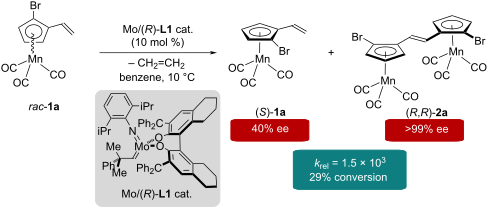
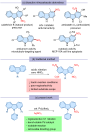
- Science Institute, Tokushima University, Tokushima 770-8501, Japan 10.3762/bjoc.22.42 Abstract Highly diastereo- and enantioselective kinetic resolution (KR) of a series of racemic planar-chiral 1-R-2-vinylcymantrenes (rac-1; R = Br, Me, I) was realized by an asymmetric metathesis dimerization (AMD
- chiral-2a/meso-2a = 96:4 molar ratio, and the selectivity factor (krel) was calculated to be 754 based on a second-order equation. In all the three substrates examined, the dimerized products, chiral-2, were obtained in >98% ee thanks to the outstanding enantioselectivity. Keywords: cymantrene; kinetic
- the excellent tolerance of the Mo-/Ru-metathesis catalysts toward the organometallic substrates. The olefin metathesis protocols could be extended to the asymmetric synthesis of diverse planar-chiral transition metal complexes either by the kinetic resolution of the racemic substrates [14][15][16] or


Get a better glimpse on sequential photoreactions of trisnorbornadienes with 19F NMR spectroscopy
Beilstein J. Org. Chem. 2026, 22, 527–534, doi:10.3762/bjoc.22.38
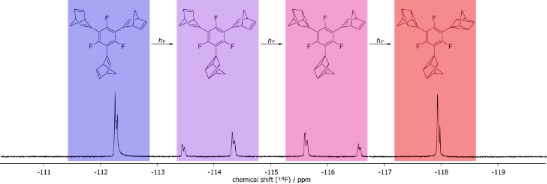
- and 2f1,2 decreased steadily, while the content of the trisquadricyclane 2f0,3 increased (Figure 3). This proposed consecutive, stepwise photoreaction was supported by theoretical analysis which showed a consistent fitting of the experimental data to the proposed kinetic model (see Supporting


Modern synthetic pathways towards eribulin and its subunits
Beilstein J. Org. Chem. 2026, 22, 495–526, doi:10.3762/bjoc.22.37
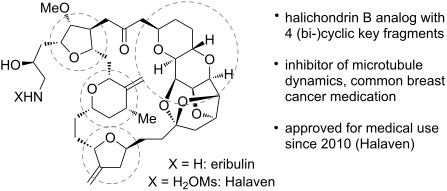
- 119. The addition of propargyl bromide led to racemic 120. By the use of a flow setup involving a column packed with Amano lipase, an enzyme from the bacterium Pseudomonas fluorescens, a kinetic resolution of 120 was performed leading to the continuous production of acetate 121 and free alcohol 122
- ketophosphonate 169 using MePO(OMe)2 and n-BuLi. Notably, building block 171 used herein can be synthesized from 170 within 6 steps including a kinetic resolution with Amano lipase PS-800. [94] Another fragment, 181, was synthesized from alcohols 173 and 174, which were perpared from tri-O-acetyl-ᴅ-glucal and (S
- . Hydrolytic kinetic resolution of 209 afforded enantioenriched epoxide (S)-209, which was opened regioselectively with lithium acetylide. The allylation and [3 + 2]-cycloaddition with tosyl azide led to 212. Treatment with Rh2(OAc)4 induced a [2,3]-Wittig rearrangement and subsequent hydrolysis afforded 213








Synthesis of a HDAC inhibitor–nanogold probe for cryo-EM visualization in class I HDAC co-repressor complexes
Beilstein J. Org. Chem. 2026, 22, 480–485, doi:10.3762/bjoc.22.35
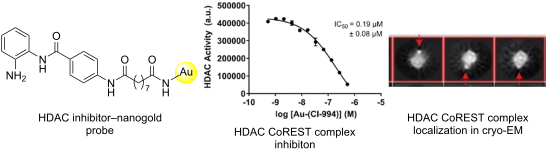
- independently and that their activities and modulation by inhibitors and activators are closely coupled. Both enzymes exist in at least two distinguishable states that differ in their kinetic properties, consistent with the two distinct structural states of the complex observed in the cryo-EM maps [10]. However



Recent advances in the stereoselective synthesis of distal biaxially chiral molecules
Beilstein J. Org. Chem. 2026, 22, 461–479, doi:10.3762/bjoc.22.34
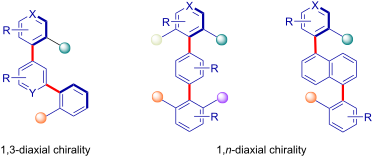
- alkylation for dynamic kinetic resolution. Moreover, additional alkylation at a sterically congested second rotational axis enabled the construction of remote, double axially chiral molecules 26. Further advances have come from transition-metal catalysis. Li’s group established a rhodium-catalyzed protocol
- organocatalytic approach. The mechanistic study revealed that the reaction proceeds through a stepwise double cyclization process: The first cyclization generates an intermediate bearing a stereogenic axis, while the second cyclization involves dynamic kinetic resolution of the spiral reaction intermediate under
- biaxial terphenyl atropisomers with chlorinated and brominated variants to achieve high diastereo- and enantioselectivity. The process takes place via a two-step kinetic resolution. In 2021, Shi and co-workers reported a highly trans-selective synthesis of axially chiral styrenes 76 containing a


Synthesis and stereochemical analysis of dynamic planar chiral oxa[7]orthocyclophene
Beilstein J. Org. Chem. 2026, 22, 436–442, doi:10.3762/bjoc.22.30

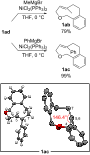
- nm). Plausible phenyl-substituent effect on the stereochemical stability of 1ac. Kinetic measurements for the racemization of 1ab and 1ad. HPLC analysis of 1ab and 1ad using a CD detector at 5 °C (OJ-H column, 4.6 mm × 250 mm, eluent: hexane/iPrOH 95:5, flow rate: 0.5 mL/min, monitoring wavelength




Cone p-aminocalix[4]arenes enriched with ‘clickable’ alkyne or azide functionalities
Beilstein J. Org. Chem. 2026, 22, 399–415, doi:10.3762/bjoc.22.28
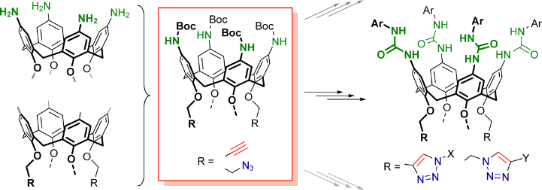
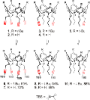
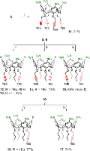
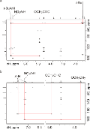
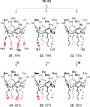
- thermodynamic and kinetic stability of the capsules and the guest exchange processes [55][56][57][58][59][60]. This has made dimerization of tetraureacalix[4]arenes one of the most explored self-organization processes in calixarene supramolecular chemistry, which has been used in the template synthesis of






Recent advances in the cleavage of non-activated amides
Beilstein J. Org. Chem. 2026, 22, 352–369, doi:10.3762/bjoc.22.23
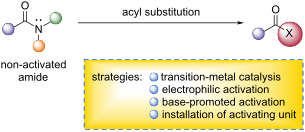
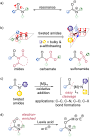
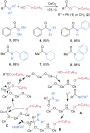
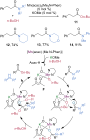
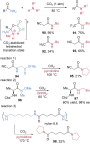
- corresponding amide products 26 were obtained using only 10−4 mol % Pd(COD)Cl2 in combination with 1-benzyl-1H-1,2,3-triazole (L1). Based on kinetic curves, TEM images, catalyst poisoning experiments, MS identification of intermediates, and EPR spectra of the crude mixture, the authors proposed two kinetically
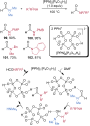
- reacted smoothly with p-methoxyphenyl (PMP) amine, p-methoxybenzyl (PMB) amine, N-benzyl-N-methylamine, and indole, generating the corresponding amides 99–102 in good to excellent yields. Based on kinetic studies, the authors proposed a plausible mechanism in which the dihydrogen tetrametaphosphate










Arene activation via π-bond localization: concepts and opportunities
Beilstein J. Org. Chem. 2026, 22, 257–273, doi:10.3762/bjoc.22.19
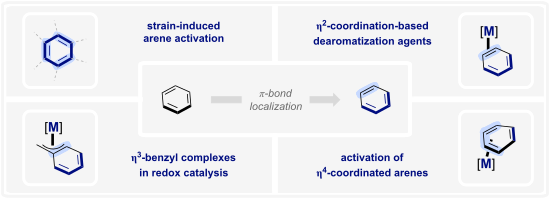
- arene activation offers powerful opportunities in reactivity design. Notably, the small-ring annelation exerts a dual influence: it lowers kinetic barriers and enhances regioselectivity, with strain-release providing the key thermodynamic driving force to overcome aromatic stabilization. Synthetic




A mild and atom-efficient four-component cascade strategy for the construction of biologically relevant 4-hydroxyquinolin-2(1H)-one derivatives
Beilstein J. Org. Chem. 2026, 22, 244–256, doi:10.3762/bjoc.22.18
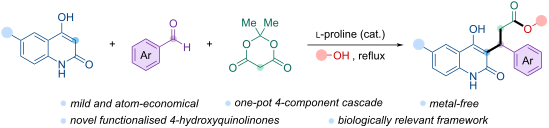
- renders the pyranoquinoline carbonyl more electrophilic than that of the acyclic ester, facilitating its alcoholysis at elevated temperature and extended reaction times. Consequently, pyranoquinolines may be regarded as kinetic products, formed rapidly under mild conditions, whereas the open-chain esters
- derivatives. These 3-(4-hydroxyquinolin-3-yl)propanoate esters were previously inaccessible, as earlier protocols consistently afforded cyclic pyranoquinolinones. Pyranoquinolinones are the kinetic products, whereas the open-chain esters represent the thermodynamically favored species formed via controlled


Screwing the helical chirality through terminal peri-functionalization
Beilstein J. Org. Chem. 2026, 22, 205–212, doi:10.3762/bjoc.22.14
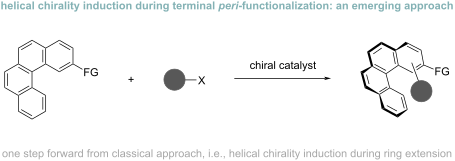
- through a catalytic kinetic resolution (KR) process was developed by Liu and co-workers [32]. The authors screened a range of organocatalysts, i.e., Takemoto’s thiourea catalyst, (S,S)-1,2-cyclohexanediamine-derived thioureas, cinchona alkaloid-derived thiourea, and squaramides to achieve the desired
- enantioselectivity. Notably, [6]helicene 3k was also readily produced, via kinetic resolution (Scheme 1). Computational studies suggested that hydrogen bonding and π interactions between the reactants and catalyst L1 controlled the stereochemical output of the products 3. The catalyst proximate both reactants to
- helical chiral entities was reported by Wang and co-workers. They reported an organocatalyzed asymmetric synthesis of phosphorus-containing chiral helicenes enabled by dynamic kinetic resolution using copper and peptide-mimetic phosphonium salts, i.e. amino acid-derived phosphonium iodide and bromide as


Improved synthesis and physicochemical characterization of the selective serotonin 2A receptor agonist 25CN-NBOH
Beilstein J. Org. Chem. 2026, 22, 175–184, doi:10.3762/bjoc.22.11
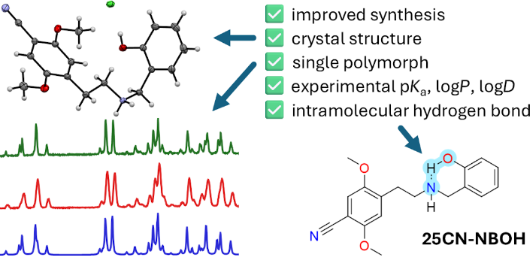
- in water of 8.5 ± 0.3 mg/mL, leading to a solution with a pH of 6.24 ± 0.01. However, the kinetic solubility appears low; when preparing a solution of 5 mg/mL, the container must be shaken for several minutes. Previously, we reported the solubility of 1 in buffer at pH 7.4 to be 0.4 mg/mL, which is


Circumventing Mukaiyama oxidation: selective S–O bond formation via sulfenamide–alcohol coupling
Beilstein J. Org. Chem. 2026, 22, 158–166, doi:10.3762/bjoc.22.9
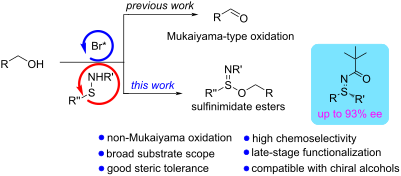
- previously disclosed a PIDA-mediated oxidative strategy for alcohol incorporation via activation of the S–NH bond (Scheme 1a) [14]. More recently, Wu and co-workers advanced the field by developing a dynamic kinetic resolution protocol for the enantioselective synthesis of sulfinimidate esters from racemic
- exceeds the theoretical maximum of 23% expected from the starting diastereomeric ratio, suggesting that the two diastereomers of 5 did not react at identical rates. These results are consistent with a partial kinetic resolution, wherein the major diastereomer of 5 reacts preferentially, leading to the
- reactivities of the two diastereomers. Although these findings strongly support the occurrence of a partial kinetic resolution, further kinetic measurements would be required for definitive confirmation. A plausible mechanism is outlined as follows. First, the sulfenamide 1 is oxidatively brominated by N


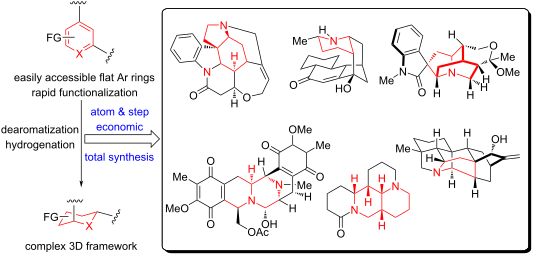
Total synthesis of natural products based on hydrogenation of aromatic rings
Beilstein J. Org. Chem. 2026, 22, 88–122, doi:10.3762/bjoc.22.4
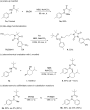
- hydrogenation reaction (Scheme 7) [60]. Using an acid-assisted dynamic kinetic resolution method, they obtained a series of chiral indolines 56 containing exocyclic stereocenters in high yields and excellent enantioselectivity. Mechanistic studies of the reaction revealed that the dynamic kinetic resolution
- the reaction include high functional group tolerance and excellent stereocontrol. In the same year, Zhou and co-workers reported a rhodium/bisphosphine-catalyzed asymmetric hydrogenation reaction of all-carbon aromatic rings 69 (Scheme 8) [64]. Through desymmetrization or kinetic resolution, a series
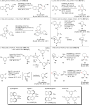
- protonation during reduction or an isomerization event. Kinetic translocation of the double bond to the correct position enabled an intramolecular Heck reaction, a transformation originally developed by Fukuyama (Scheme 12) [78]. Hydrogenation of (−)-tabersonine to (−)-decahydrotabersonine by Catherine











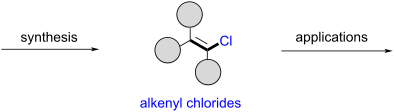
Synthesis and applications of alkenyl chlorides (vinyl chlorides): a review
Beilstein J. Org. Chem. 2026, 22, 1–63, doi:10.3762/bjoc.22.1
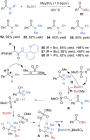
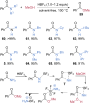
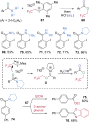
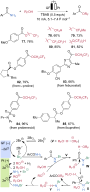
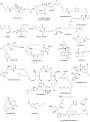
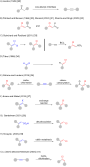
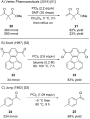
- attracted our interest, prompting a more detailed investigation. Kinetic studies with acetophenone revealed an induction period prior to reaction onset (Figure 5). Elevated temperatures shortened the initiation time, whereas lower temperatures extended it to several hours. Both temperature and reaction time























Recent advances in total synthesis of illisimonin A
Beilstein J. Org. Chem. 2025, 21, 2571–2583, doi:10.3762/bjoc.21.199
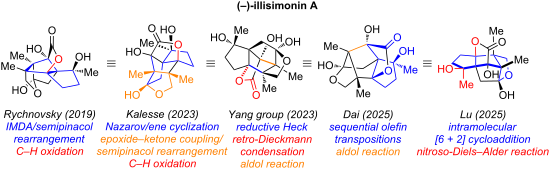
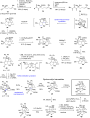
- reaction of 87 was employed, generating both the kinetic product 88 and the desired thermodynamic product 89. Heating 88 promoted a retro-Diels–Alder/Diels–Alder equilibrium, favoring the more stable isomer 89. Palladium-catalyzed hydrogenation of the 1,2-disubstituted alkene in 89, followed by Mo(CO)6






Palladium-catalyzed regioselective C1-selective nitration of carbazoles
Beilstein J. Org. Chem. 2025, 21, 2479–2488, doi:10.3762/bjoc.21.190
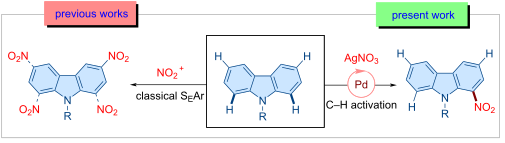
- that the cyclopalladation step is irreversible. To further investigate the nature of the C–H activation step, an intramolecular kinetic isotope effect (KIE) experiment was performed using monodeuterated substrate 1a-D1. A modest KIE value of kH/kD = 1.5 was observed under standard reaction conditions


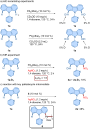
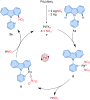
Catalytic enantioselective synthesis of selenium-containing atropisomers via C–Se bond formations
Beilstein J. Org. Chem. 2025, 21, 2447–2455, doi:10.3762/bjoc.21.186
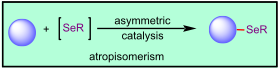
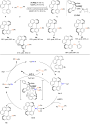
- catalytic performance. The developed catalytic system demonstrated high activity, excellent yields (mostly exceeding 85%), mild reaction conditions, broad functional group tolerance, as well as high regioselectivity, (E)-selectivity, and enantioselectivity (up to 99% ee). According to the kinetic study, the




Adaptive experimentation and optimization in organic chemistry
Beilstein J. Org. Chem. 2025, 21, 2367–2368, doi:10.3762/bjoc.21.180
- . provide a comprehensive review of machine learning applications in enantioselective organocatalysis, highlighting both achievements and remaining challenges [10]. Guo et al. present an automated flow chemistry system for nitration reactions, combining kinetic modeling with experimental optimization [11
Rotaxanes with integrated photoswitches: design principles, functional behavior, and emerging applications
Beilstein J. Org. Chem. 2025, 21, 2345–2366, doi:10.3762/bjoc.21.179

- pyridinium site. This light-driven shuttling was shown to be fatigue-resistant over multiple cycles, highlighting the robustness of the system. Notably, the authors also reported a general quantification of kinetic asymmetry in a multicycle chemical reaction network, establishing a framework applicable to





