Search results
Search for "molecular dynamics simulations" in Full Text gives 49 result(s) in Beilstein Journal of Organic Chemistry.
Amino acid-based surfactants: sustainable synthesis and antimicrobial mechanisms
Beilstein J. Org. Chem. 2026, 22, 1067–1085, doi:10.3762/bjoc.22.85
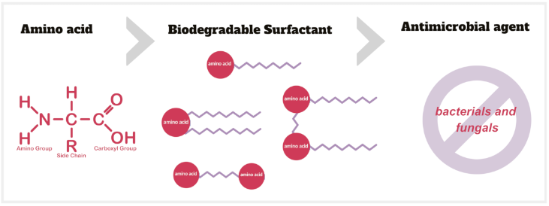
- showing complete antimicrobial activation below pH 6.5 [62]. Molecular dynamics simulations have demonstrated that phenylalanine-modified variants exhibit enhanced penetration into lipid bilayers, which has been attributed to the favorable partitioning of the aromatic side chain within the hydrophobic
- –π stacking with membrane components, with molecular dynamics simulations confirming 2–3-fold increases in membrane residence time for aromatic variants compared to aliphatic analogs as demonstrated by molecular dynamics simulations, the non-polar side chain of phenylalanine partitions favorably


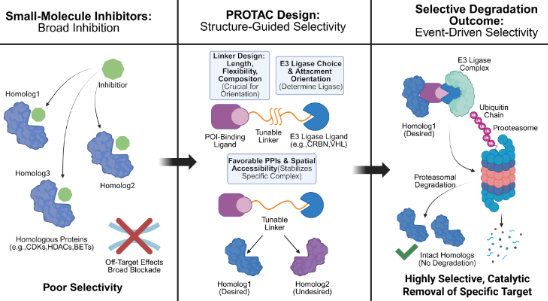
Advantages of PROTACs in achieving selective degradation of homologous protein families
Beilstein J. Org. Chem. 2026, 22, 628–661, doi:10.3762/bjoc.22.49









Isoorotamide-based peptide nucleic acid nucleobases with extended linkers aimed at distal base recognition of adenosine in double helical RNA
Beilstein J. Org. Chem. 2025, 21, 2513–2523, doi:10.3762/bjoc.21.193
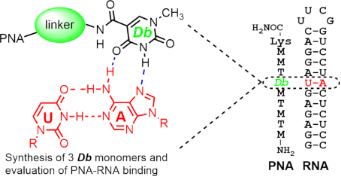
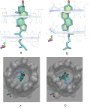
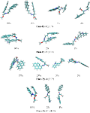
- details see Supporting Information File 1). The Db nucleobases were individually incorporated into the PNA model oligonucleotide and subjected to 50 ns unrestricted Desmond molecular dynamics. Pictures from the molecular dynamics simulations shown in Figure 7 represent the conformation of the PNA bases
- from glutaric anhydride [30]. In fact, molecular dynamics simulations did confirm that the amide carbonyl of the linker forms a stable H-bond to the amino group of C (Figure 7C). Since the distal guanosine in the C–G base pair is a mismatch with the isoorotic acid binding moiety, the isoorotamide


Effect of a photoswitchable rotaxane on membrane permeabilization across lipid compositions
Beilstein J. Org. Chem. 2025, 21, 2498–2512, doi:10.3762/bjoc.21.192
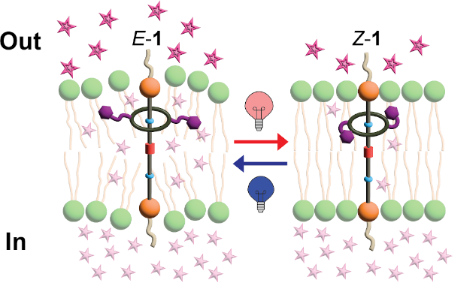
- more membrane perturbation compared to the axle alone, in agreement with our previous molecular dynamics simulations, which highlight the importance of the macrocycle to modulate lipid packing [15]. As cholesterol content increased, sulforhodamine B release progressively decreased, consistent with the
- previous molecular dynamics simulations of rotaxane 1 in POPC bilayers, a major component of EYPC [16], showed that rotaxane 1 disrupts lipid packing and promotes water accumulation within the bilayer [15]. These effects enhance membrane permeability to hydrophilic molecules such as sulforhodamine B. The
- azobenzene photoisomerization providing no additional release. This behavior aligns with our previous molecular dynamics simulations, which showed that rotaxane 1 disrupts lipid packing and promotes water accumulation within the bilayer [15]. These effects are driven by the position of the macrocycle in the




Rotaxanes with integrated photoswitches: design principles, functional behavior, and emerging applications
Beilstein J. Org. Chem. 2025, 21, 2345–2366, doi:10.3762/bjoc.21.179

- lipid membrane, leading to reversible changes in giant lipid vesicles. In the trans isomer, the membrane tension decreased, resulting in deformation and pronounced membrane undulations. Isomerization to the cis form increased membrane tension, causing vesicle contraction. Molecular dynamics simulations


Understanding the origin of stereoselectivity in the photochemical denitrogenation of 2,3-diazabicyclo[2.2.1]heptene and its derivatives with non-adiabatic molecular dynamics
Beilstein J. Org. Chem. 2025, 21, 2007–2020, doi:10.3762/bjoc.21.156
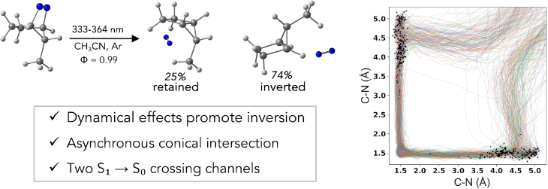
- enumerate all possible mechanistic pathways. Non-adiabatic molecular dynamics simulations We performed an NAMD simulation using the Fewest Switches Surface Hopping (FSSH) algorithm [92][93][94], with OpenMolcas [95][96] and with Python Rapid Artificial Intelligence Ab Initio Molecular Dynamics (Pyrai2MD


Tailored charge-neutral self-assembled L2Zn2 container for taming oxalate
Beilstein J. Org. Chem. 2024, 20, 3007–3015, doi:10.3762/bjoc.20.250
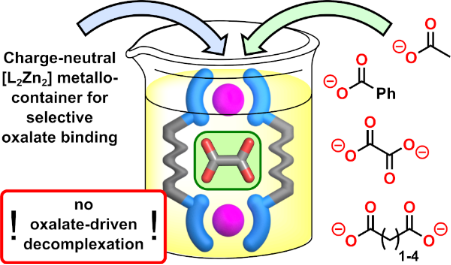
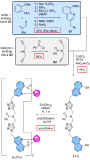
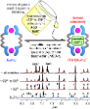
- calculated distance from the NOE cross peaks is roughly 2 Å for both contacts. We know that the triazole units can rotate by some degree at ambient temperature based on previous investigations [87]. Thus, dynamic tilting up and downwards of the triazole groups is expected. Molecular dynamics simulations (xTB




Computational toolbox for the analysis of protein–glycan interactions
Beilstein J. Org. Chem. 2024, 20, 2084–2107, doi:10.3762/bjoc.20.180
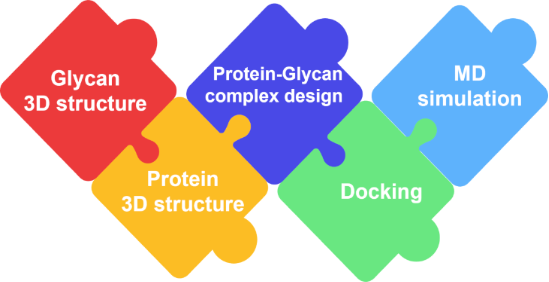
- , both in free state and in complex with proteins, also with reference to the principles, methodologies, and applications of all-atom molecular dynamics simulations. Herein, we focused on the programs that are generally employed for preparing protein and glycan input files to execute molecular dynamics
- web servers and downloadable software, which can help researchers in designing the workflow to study a glycan–protein system, are also reported. Computational tools to study glycans in the free state Since the first molecular dynamics simulations performed in the late 1980s on oligomannose type
- , CHARMM27, and CHARMM36 (all atom) are some of the popular force fields available in the program. (https://www.academiccharmm.org/) 3. GROMACS [63]: GROMACS is the acronym for "Groningen Machine for Chemical Simulations"; it is a powerful open-source software package for molecular dynamics simulations in


Electron-beam-promoted fullerene dimerization in nanotubes: insights from DFT computations
Beilstein J. Org. Chem. 2024, 20, 92–100, doi:10.3762/bjoc.20.10
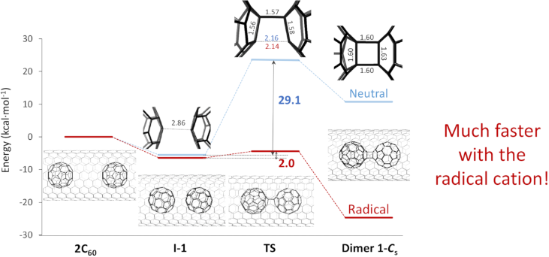
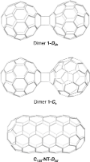
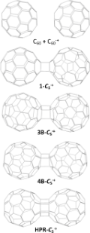
- surface that describes the formation of irreversible C–C bonds. Molecular dynamics simulations were done in the radical C120 dimer alone; we did not consider the interaction with the CNT. After a 4 ps metadynamics, we observed the sequential formation of C–C bonds between the two C60 cages up to a number




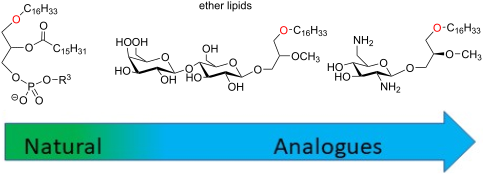
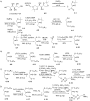
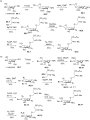
Synthesis of ether lipids: natural compounds and analogues
Beilstein J. Org. Chem. 2023, 19, 1299–1369, doi:10.3762/bjoc.19.96






Phenanthridine–pyrene conjugates as fluorescent probes for DNA/RNA and an inactive mutant of dipeptidyl peptidase enzyme
Beilstein J. Org. Chem. 2023, 19, 550–565, doi:10.3762/bjoc.19.40
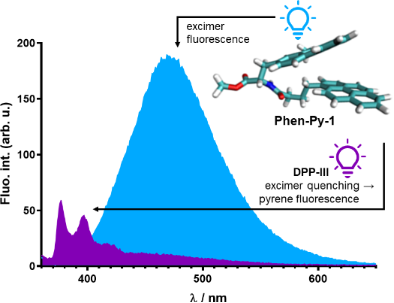
- in the cell membrane. Keywords: dipeptidyl peptidase enzyme; excimer; molecular dynamics simulations; phenanthridine; polynucleotide; pyrene; Introduction The design of small molecules that can selectively bind and discriminate different biomolecular structures (polynucleotides vs proteins, DNA or
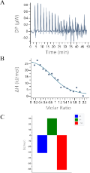
- pKa = 6.3. We assumed that this value would not change much in the prepared conjugates, which confirms that both Phen-Py-1 and Phen-Py-2 are monoprotonated at pH 5. We submitted all four systems to molecular dynamics simulations and performed clustering analysis on the obtained structures. The most
- interaction between phenanthridine and pyrene, which was more pronounced at weakly acidic pH where the phenanthridine nitrogen was protonated. Experimental data agreed well with molecular dynamics simulations, which confirmed that folded structures are more frequent in monoprotonated derivatives Phen-Py-1




Computational model predicts protein binding sites of a luminescent ligand equipped with guanidiniocarbonyl-pyrrole groups
Beilstein J. Org. Chem. 2022, 18, 1322–1331, doi:10.3762/bjoc.18.137
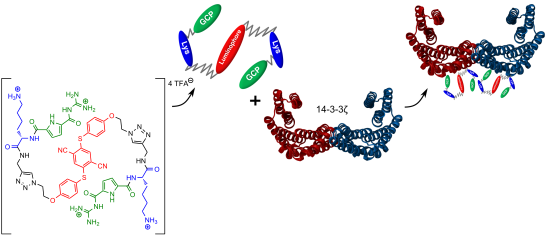
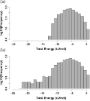
- 1.5.2 [41]. To validate our method, we applied it to the QQJ-096/14-3-3/c-Raf complex for which the potential binding site was available from all-atom molecular dynamics simulations in a previous study [26]. Our results for this system are reported in the first part of the Supporting Information File 1




Peptide stapling by late-stage Suzuki–Miyaura cross-coupling
Beilstein J. Org. Chem. 2022, 18, 1–12, doi:10.3762/bjoc.18.1
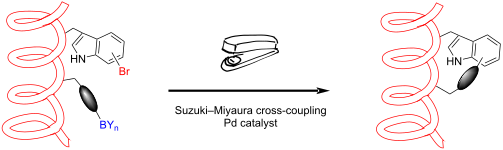
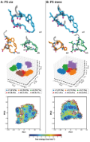
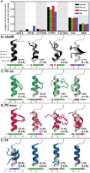
- . The conformational preferences of the stapled peptide P5 and of the linear peptides P6 and aAxWt were investigated via extensive accelerated molecular dynamics simulations (aMD) as implemented within the Amber18 program package [85]. The aMD methodology developed by McCammon and co-workers [86] has
- of the three cleavage sites are blocked by the macrocycle. Accelerated molecular dynamics simulations verified a significantly higher degree of helicity for SMC stapled peptide P5 compared to the linear analogues P6 and aAxWt, which is in accordance with the experimental data obtained from CD and


Double-headed nucleosides: Synthesis and applications
Beilstein J. Org. Chem. 2021, 17, 1392–1439, doi:10.3762/bjoc.17.98
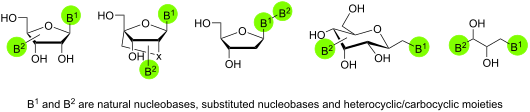
- strands. Oligonucleotides with fourteen consecutive incorporations of different double-headed nucleosides were synthesized and the DNA duplexes showed increased stability owing to increased stacking interactions among the nucleobases of the opposite strands [72]. Molecular dynamics simulations
- into oligonucleotides resulted in the formation of unstable duplexes with complementary DNA and RNA strands whereas four consecutive incorporations led to increased duplex stability due to an efficient stacking of heteroaromatic triazoles as revealed by CD spectroscopy and molecular dynamics
- simulations [15][22]. The double-headed nucleoside 157a was further used for the synthesis of 5-(phenyltriazol)-2′-deoxyuridine-modified 2′-O-methyl mixmer antisense oligonucleotides (AOs). The obtained AOs were investigated for their potential to induce exon skipping in DMD (Duchenne muscular dystrophy





Comparative ligand structural analytics illustrated on variably glycosylated MUC1 antigen–antibody binding
Beilstein J. Org. Chem. 2020, 16, 2540–2550, doi:10.3762/bjoc.16.206

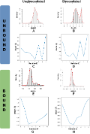
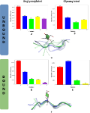
- approach by investigating the in-silico binding of a peptide and glycopeptide epitope of the glycoprotein Mucin 1 (MUC1) binding with the antibody AR20.5. To study the binding, we performed molecular dynamics simulations using OpenMM and then used the Galaxy platform for data analysis. The same analysis




Leveraging glycomics data in glycoprotein 3D structure validation with Privateer
Beilstein J. Org. Chem. 2020, 16, 2523–2533, doi:10.3762/bjoc.16.204
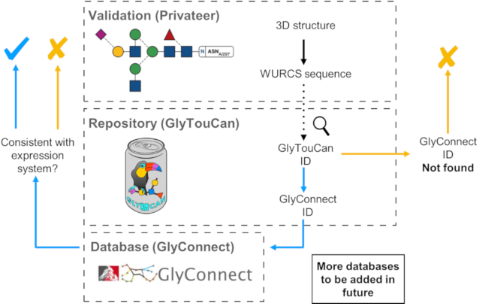
- study of these glycan-mediated interactions can provide unique insight into the molecular interplay governing these processes. In addition, it can provide structural snapshots in atomistic detail that can be used to generate molecular dynamics simulations describing a wider picture underpinning glycan
- /glycoproteomics to carbohydrate 3D model building and validation in Privateer Many fields, for example pharmaceutical design and engineering [58], molecular dynamics simulations [59] and protein interaction studies [60], rely upon structural biology to produce accurate atomistic descriptions of glycoproteins



Computational tools for drawing, building and displaying carbohydrates: a visual guide
Beilstein J. Org. Chem. 2020, 16, 2448–2468, doi:10.3762/bjoc.16.199

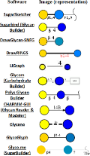
- models. These tools generally use 3D molecular templates of monosaccharides to reconstruct a 3D model. Energy minimisation methods can further refine the models. These models are essential for structure-based studies and complex calculations like Molecular Dynamics simulations. Therefore, the accurate








pH- and concentration-dependent supramolecular self-assembly of a naturally occurring octapeptide
Beilstein J. Org. Chem. 2020, 16, 2017–2025, doi:10.3762/bjoc.16.168
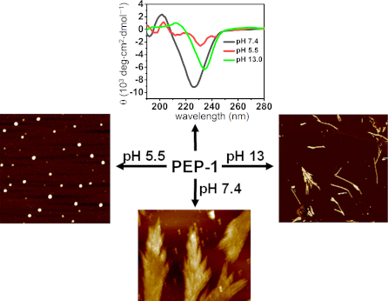
- (Glu−) amino acids [73][74]. Mechanistic insights into the observed conformational transformation via molecular dynamics simulations are underway in our laboratory. Conclusion In summary, we synthesized a naturally occurring amphiphilic peptide fragment, PEP-1, from a β-sheet lectin protein, galectin-1


Synthesis, docking study and biological evaluation of ᴅ-fructofuranosyl and ᴅ-tagatofuranosyl sulfones as potential inhibitors of the mycobacterial galactan synthesis targeting the galactofuranosyltransferase GlfT2
Beilstein J. Org. Chem. 2020, 16, 1853–1862, doi:10.3762/bjoc.16.152
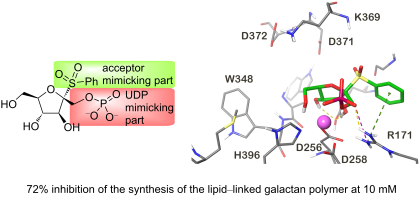
- mechanism studies using computational chemistry methods. The probable reaction mechanisms were studied by hybrid DFT QM/MM molecular dynamics simulations [11] where the possible transition state (TS) structures were localized. The observation of the possible TS structure opens the opportunities for the in
- structures. All fructofuranose and tagatofuranose derivatives were docked into the GlfT2 structure obtained by QM/MM molecular dynamics simulations, which representes the structure close to the transition state structure of the GlfT2 catalytic reaction. The best ten docking poses of each docked molecule were


Water inside β-cyclodextrin cavity: amount, stability and mechanism of binding
Beilstein J. Org. Chem. 2019, 15, 1592–1600, doi:10.3762/bjoc.15.163
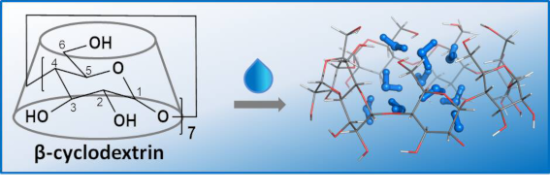
- disordered and mobile, and that the OH groups of the host β-CD may rotate [17]. Studies with molecular dynamics simulations have found only four water molecules inside the host β-CD cavity [18]. The energetics of the CD hydration/dehydration have been investigated as well. Experimental studies have been able


Synthesis and conformational preferences of short analogues of antifreeze glycopeptides (AFGP)
Beilstein J. Org. Chem. 2019, 15, 1581–1591, doi:10.3762/bjoc.15.162
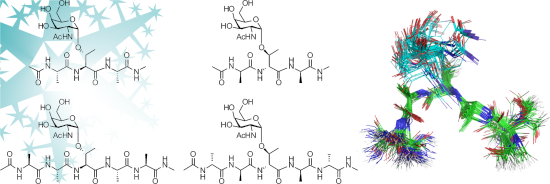
- into the ice lattice [12], others investigated the adsorption process on different surfaces via atomic force microscopy [10][13][14]. The antifreeze activity has been correlated with long-range perturbation of hydration dynamics [15]. Latest molecular dynamics simulations suggest that AFGP reversibly


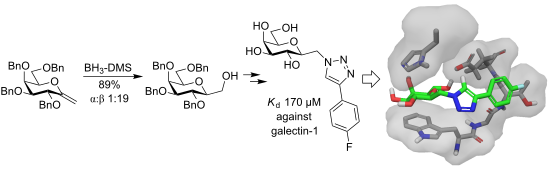
Stereo- and regioselective hydroboration of 1-exo-methylene pyranoses: discovery of aryltriazolylmethyl C-galactopyranosides as selective galectin-1 inhibitors
Beilstein J. Org. Chem. 2019, 15, 1046–1060, doi:10.3762/bjoc.15.102



6’-Fluoro[4.3.0]bicyclo nucleic acid: synthesis, biophysical properties and molecular dynamics simulations
Beilstein J. Org. Chem. 2018, 14, 3088–3097, doi:10.3762/bjoc.14.288
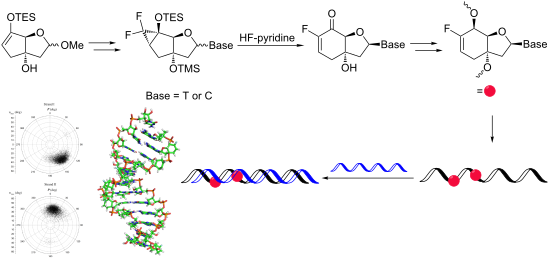
- modification might be a substrate for RNase H. Keywords: DNA/RNA affinity; fluorinated cyclopropanes; fluorinated nucleic acids; molecular dynamics simulations; sugar modified nucleosides; Introduction A powerful strategy for the treatment of various disorders like cancer, viral and inherited diseases is the
- unit and possibly positively impact the duplex stability. Here we report on the synthesis of the two 6’F-bc4,3 pyrimidine analogs with the base T and C, their incorporation into DNA, their biophysical properties, as well as a structural analysis by molecular dynamics simulations of hybrid DNA and RNA
- structure, giving evidence of mixed A/B-type helices. Molecular modeling To gain more information on the structural features of the 6’F-bc4,3 modification, we performed molecular dynamics simulations of the modified duplexes. We first calculated the potential energy profile versus pseudorotation phase angle


Crystal structure of the inclusion complex of cholesterol in β-cyclodextrin and molecular dynamics studies
Beilstein J. Org. Chem. 2018, 14, 838–848, doi:10.3762/bjoc.14.69
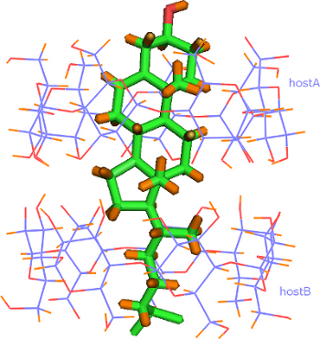
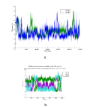
- stoichiometry 2:1) (Figure 2a) were subjected to equilibration and subsequent molecular dynamics simulations at both 300 and 340 K in explicit water solvent for almost 12 ns with the aim to monitor the dynamic behavior of CHL in β-CD in two different temperatures, study the host–guest interactions during the