


Search results
Search for "primary amine" in Full Text gives 171 result(s) in Beilstein Journal of Organic Chemistry.
Site-specific labelling of native peptides and proteins: chemical and enzymatic strategies
Beilstein J. Org. Chem. 2026, 22, 857–881, doi:10.3762/bjoc.22.67
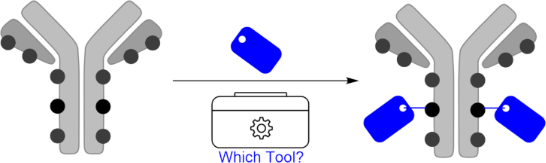
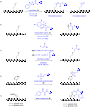
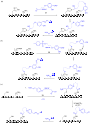
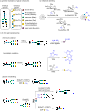
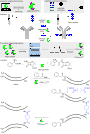
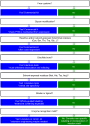
- , the enzyme cleaves the Thr–Gly peptide bond to form an acyl intermediate that is ligated to an incoming primary amine nucleophile, such as an N-terminal glycine or lysine ε-amine (Scheme 14a) [143]. Native proteins with an N-terminal glycine and sufficient flexibility can thus be directly modified by








Experimental and DFT studies on the regioselective methanolysis of 5-azido-9-oxabicyclo[6.1.0]nonan-4-yl 4-nitrobenzoate isomers
Beilstein J. Org. Chem. 2026, 22, 547–556, doi:10.3762/bjoc.22.40
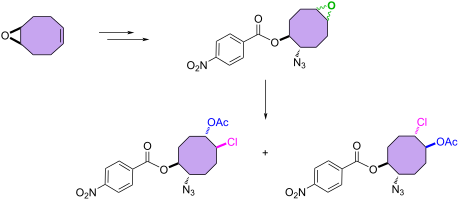
- methodologies for the preparation of this class of compounds are of considerable interest. Azides have traditionally been used as protected primary amine equivalents. Therefore, in our previous studies, we employed azides containing eight-membered rings as precursors in the synthesis of C8-aminocyclitols [12


Comparative analysis of complanadine A total syntheses
Beilstein J. Org. Chem. 2025, 21, 2334–2344, doi:10.3762/bjoc.21.178
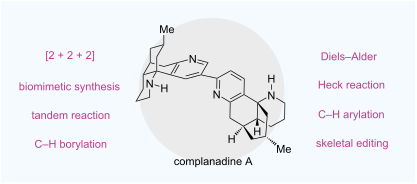
- synthetic capabilities, highlighting the importance of biomimetic strategies in total synthesis [23][24][25]. The Sarpong synthesis utilized (+)-pulegone (14) as the starting point as well. They first advanced (+)-pulegone to primary amine 25 with a masked enone moiety, which upon treatment with HClO4
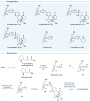
- Paal–Knorr pyrrole synthesis delivered 63, which was unstable and spontaneously cyclized to provide 64. Compound 64 was then advanced to tetracyclic intermediate 67 in a one-pot tandem process, which initiated with Staudinger azide reduction with PPh3 to form a primary amine. After reversible



Research towards selective inhibition of the CLK3 kinase
Beilstein J. Org. Chem. 2025, 21, 2250–2259, doi:10.3762/bjoc.21.172
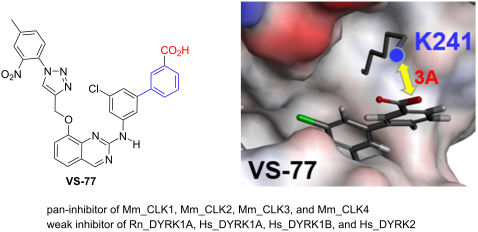
- , examination of the structure of CLK3 shows that this key lysine 241 is very close to the entry of the ATP binding site (Figure 1B). Lysine 241 could be considered as an opportunity to design new molecules with an improved affinity to CLK3, by adding specific interactions with this amino acid bearing a primary
- amine in terminal position. Based on this, our strategy was to design new inhibitors with introduction, in their terminal part, of an acid group which could perform an extra hydrogen bond or a salt bridge with lysine 241 and therefore could be specific to CLK3. Towards this goal we started from our


A m-quaterphenyl probe for absolute configurational assignments of primary and secondary amines
Beilstein J. Org. Chem. 2025, 21, 2211–2219, doi:10.3762/bjoc.21.168
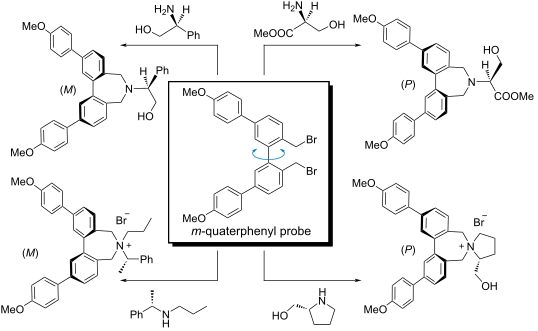
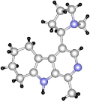
- comparing the observed and calculated sign of the CD Cotton effect, their absolute configurations were determined. Results and Discussion The probe 1 was prepared as described previously [41]. Probe 1–primary amine conjugates 2a–e were prepared by the reaction of 1 with chiral amino alcohols and amino acid
- twist of the two chromophores of quaternary ammonium salts (S)-2f,g and (R)-2h can be determined from the sign of the Cotton effect in CD. However, it is more difficult to predict the direction of twist from the structure of the quaternary ammonium salts than in the case of the 1–primary amine


C2 to C6 biobased carbonyl platforms for fine chemistry
Beilstein J. Org. Chem. 2025, 21, 2103–2172, doi:10.3762/bjoc.21.165
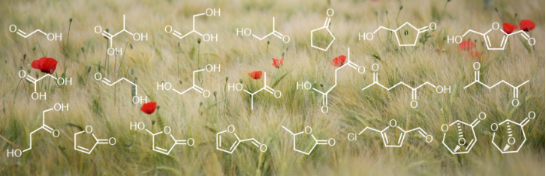
- surface have a unique ability to dissociate NH3 and generate hydrogen-like species (NH2δ−), thus accelerating the ammonolysis of the Schiff base to produce the corresponding primary amine. Cyclopentylamine was generated from CPN in 96% yield over a core‐shell‐structured Co@CoO catalyst at 80 °C under 0.3


Chiral phosphoric acid-catalyzed asymmetric synthesis of helically chiral, planarly chiral and inherently chiral molecules
Beilstein J. Org. Chem. 2025, 21, 1864–1889, doi:10.3762/bjoc.21.145
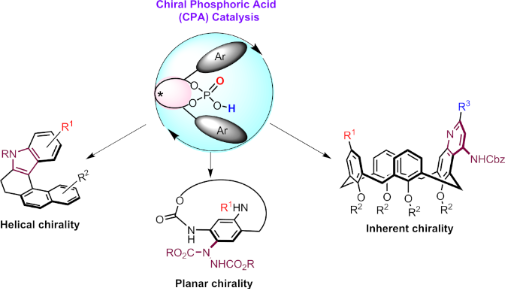
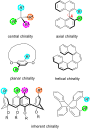
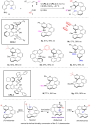
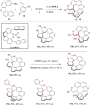
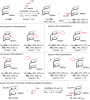
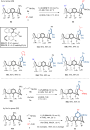
- directly used as a planarly chiral primary amine catalyst in the asymmetric electrophilic amination reaction of aldehyde 34, which yielded the α-amination product 35 with high enantioselectivity. In 2022, our group disclosed an enantioselective macrocyclization protocol for the asymmetric synthesis of









Systematic pore lipophilization to enhance the efficiency of an amine-based MOF catalyst in the solvent-free Knoevenagel reaction
Beilstein J. Org. Chem. 2025, 21, 1854–1863, doi:10.3762/bjoc.21.144
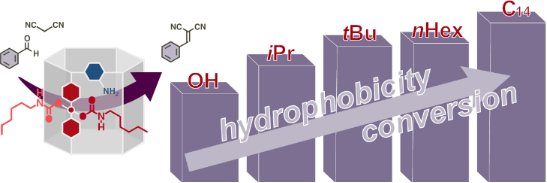
- malononitrile to form benzylidenemalononitrile (BMN). In a typical primary amine-catalyzed Knoevenagel condensation, the amine would undergo imine condensation with benzaldehyde. The imine would then deprotonate malononitrile, and the resulting carbanion would react with the imine, releasing the final product


Oxetanes: formation, reactivity and total syntheses of natural products
Beilstein J. Org. Chem. 2025, 21, 1324–1373, doi:10.3762/bjoc.21.101
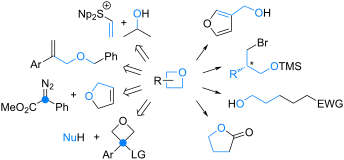
- (necessary for aromatisation) are promoted by trifluoroacetic acid under similarly mild conditions. In case of the pyrrole synthesis, the same precursors are treated with a primary amine in DCM and the reaction mixture is heated at 40 °C for 12–24 h. As 1,4-addition also takes place during this process, two








Investigations of amination reactions on an antimalarial 1,2,4-triazolo[4,3-a]pyrazine scaffold
Beilstein J. Org. Chem. 2025, 21, 1126–1134, doi:10.3762/bjoc.21.90
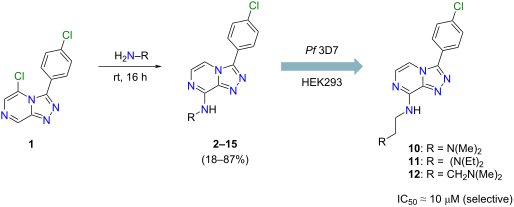
- scaffold for aminations with 14 commercially available primary amines. Reacting scaffold 1 with excess primary amine at room temperature for 16 h generated the desired amine analogues in respectable yields (18–87%) and high purity (≥95%) following chromatography workup. The structures of the 14 previously
- previously discussed), and later with propylamine, indicated that the reaction had reached completion at 6 h. However, to account for the possibility of slower rates of conversion for other primary amine reagents, the reactions for 3–15 were allowed to proceed at room temperature for 16 h. Crude reaction




Recent total synthesis of natural products leveraging a strategy of enamide cyclization
Beilstein J. Org. Chem. 2025, 21, 999–1009, doi:10.3762/bjoc.21.81
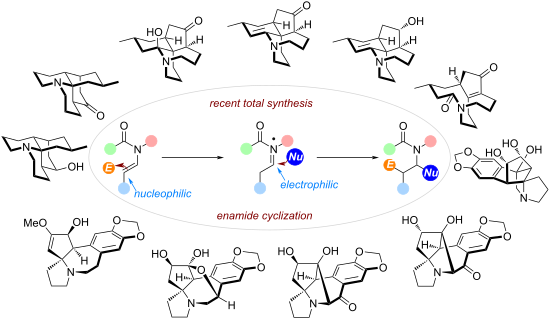
- intermediate would meet challenges associated with the instability of enolate derivatives. In their recent study, they successfully developed such a polycyclization taking advantage of a novel spiropyrroline-derived oxazole (SPDO) ligand (L3). As shown in Scheme 7, one-pot condensation of primary amine 40, β




Studies on the syntheses of β-carboline alkaloids brevicarine and brevicolline
Beilstein J. Org. Chem. 2025, 21, 955–963, doi:10.3762/bjoc.21.79

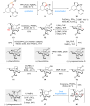
- were crowned by success. In order to completely avoid the possibility of overmethylation [37], the methyl group was introduced by N-formylation of the primary amine group of 25 to give congener 26, followed by reduction of the formyl group with borane–dimethyl sulfide complex [38] to result in
- brevicarine (2, isolated as its dihydrochloride salt). Based on the above results, Eschweiler–Clarke methylation of primary amine 25 was applied for the synthesis of N-methylbrevicarine (27) [39], a close structural analogue of alkaloid 2. The NMR data of our synthesized brevicarine (2) base and


Silver(I) triflate-catalyzed post-Ugi synthesis of pyrazolodiazepines
Beilstein J. Org. Chem. 2025, 21, 915–925, doi:10.3762/bjoc.21.74
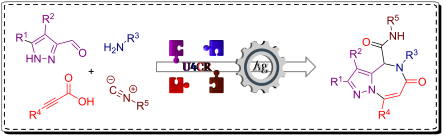
- [20][21][22][23]. For example, the Ugi four-component reaction (U4CR), involving a carbonyl compound, a primary amine, a carboxylic acid, and an isocyanide, provides a straightforward method for constructing dipeptide-like adducts [24][25][26][27]. These adducts can subsequently be rigidified into




New advances in asymmetric organocatalysis II
Beilstein J. Org. Chem. 2025, 21, 766–769, doi:10.3762/bjoc.21.60
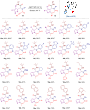
- describes the enantioselective Michael addition of pyrazoline-5-ones to α,β-unsaturated ketones. The enantioselectivity and chemical efficiency of this transformation were achieved with a cinchona-alkaloid-derived primary-amine–Brønsted acid composite [22]. A good demonstration of how organocatalysis

Origami with small molecules: exploiting the C–F bond as a conformational tool
Beilstein J. Org. Chem. 2025, 21, 680–716, doi:10.3762/bjoc.21.54
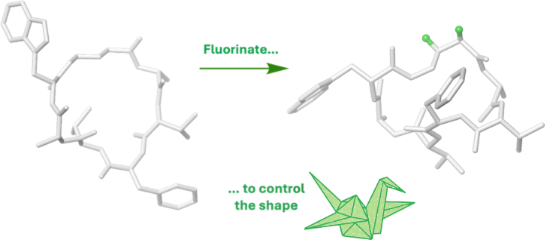
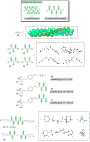
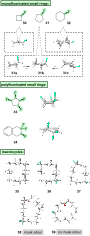
- elucidate the bioactive conformations, of other simple linear amines too. A gauche alignment of the vicinal C–N and C–F bonds is consistently seen [156], whether the scaffold is a primary amine (e.g., tetrafluorovaline, 91 [157]), a secondary amine (e.g., N-methyl-ᴅ-aspartate(92) [158][159]), or a tertiary








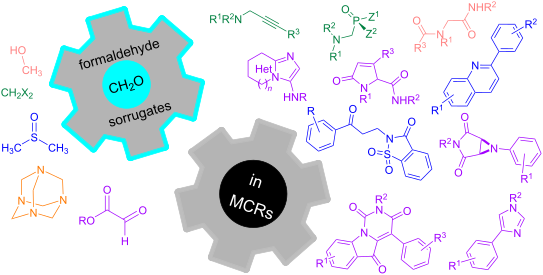
Formaldehyde surrogates in multicomponent reactions
Beilstein J. Org. Chem. 2025, 21, 564–595, doi:10.3762/bjoc.21.45
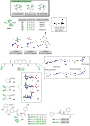
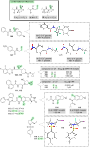
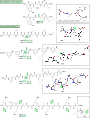
- isocyanide component is preferred over the formation of the imine, probably because of the high reactivity of the carbonyl compound or the low stability of the imine. After cycloaddition, the tosyloxazoline derivative undergoes an addition at C-2 by the primary amine, followed by elimination of the


Cu(OTf)2-catalyzed multicomponent reactions
Beilstein J. Org. Chem. 2025, 21, 122–145, doi:10.3762/bjoc.21.7

- Pd-catalyzed cross-coupling reactions, allowing the formation of C–C and C–N bonds in the o-position of the aryl chalcogen compounds. α-Aminophosphonates 14 were the result of a one-pot condensation of an aldehyde, a primary amine and phosphite P(OMe)3 with copper triflate acting as Lewis acid






Hot shape transformation: the role of PSar dehydration in stomatocyte morphogenesis
Beilstein J. Org. Chem. 2025, 21, 47–54, doi:10.3762/bjoc.21.5
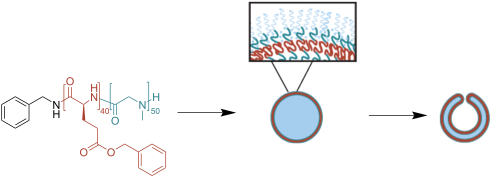
- glutamate) (PBLG) as the hydrophobic block, which was done to prevent ending on a primary amine in the final product which could disrupt self-assembly due to its ionizable nature. Subsequently, PBLG served as a macroinitiator for the polymerization of sarcosine NCA, yielding the final polymer with high


Facile one-pot reduction of β-nitrostyrenes to phenethylamines using sodium borohydride and copper(II) chloride
Beilstein J. Org. Chem. 2025, 21, 39–46, doi:10.3762/bjoc.21.4
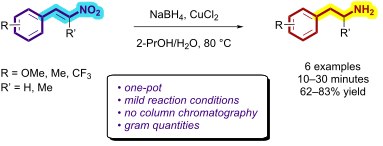
- ]. One of the most studied and inexpensive routes to synthesize substituted phenethylamines focuses on the reduction of their α,β-unsaturated nitroalkene analogue (β-nitrostyrene), where both the double bond and the nitro group need to be reduced to deliver the corresponding primary amine. Their


Reactivity of hypervalent iodine(III) reagents bearing a benzylamine with sulfenate salts
Beilstein J. Org. Chem. 2024, 20, 3281–3289, doi:10.3762/bjoc.20.272
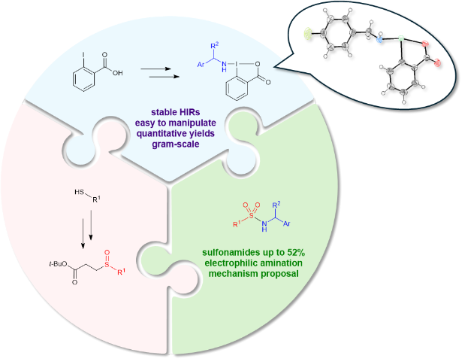
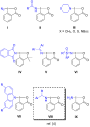
- groups (V), which proved to be useful in the transfer of imine radicals [17]. Bolm et al. contributed also to this topic by introducing a sulfoximidoyl-containing benziodoxolone (VI) [18]. Recently, our group disclosed the first HIRs bearing a primary amine moiety, the benzylamine benziodoxolone reagent
- primary amine-containing HIRs, or it might be due to the inability of the benzyl moiety to stabilize the sulfenate ion during the reaction. For tert-butyl 3-(p-tolylsulfinyl)propanoate (4a), and similarly to the outcome obtained for BBX 2a, sulfonamides 5ab and 5ac were obtained with moderate yields. The
- a drastic decrease in the yield of sulfonamide 5aa was observed, suggesting that the benzylamine-transfer reaction might occur via a radical mechanism. This finding supports the hypothesis that, beyond the ionic mechanism previously explored for our electrophilic primary amine transfer reagent [4



Discovery of ianthelliformisamines D–G from the sponge Suberea ianthelliformis and the total synthesis of ianthelliformisamine D
Beilstein J. Org. Chem. 2024, 20, 3205–3214, doi:10.3762/bjoc.20.266
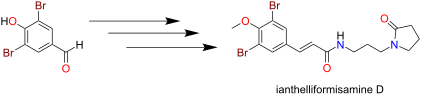
- commercially available primary amine, 1-(3-aminopropyl)pyrrolidin-2-one completed the total synthesis of the natural product in an overall yield of 1.5%. The NMR data comparison of the natural product and our synthetic compound was essentially identical. Due to our interest in the identification of potential
- –activity relationship data, leading to speculation over the moieties responsible for their antibiotic effects. A reduction in the number of amines in the polymeric chain and the absence of a primary amine was noted to decrease bioactivity by Xu et al. [7]. Research reported by Khan et al. in 2014 [9] also


![[Graphic 1]](/bjoc/content/inline/1860-5397-20-266-i2.svg?max-width=637&scale=1.18182)
![[Graphic 2]](/bjoc/content/inline/1860-5397-20-266-i3.svg?max-width=637&scale=1.18182)
![[Graphic 3]](/bjoc/content/inline/1860-5397-20-266-i4.svg?max-width=637&scale=1.18182)

![[Graphic 4]](/bjoc/content/inline/1860-5397-20-266-i5.svg?max-width=637&scale=1.18182)
![[Graphic 5]](/bjoc/content/inline/1860-5397-20-266-i6.svg?max-width=637&scale=1.18182)

Synthesis of the 1,5-disubstituted tetrazole-methanesulfonylindole hybrid system via high-order multicomponent reaction
Beilstein J. Org. Chem. 2024, 20, 3077–3084, doi:10.3762/bjoc.20.256
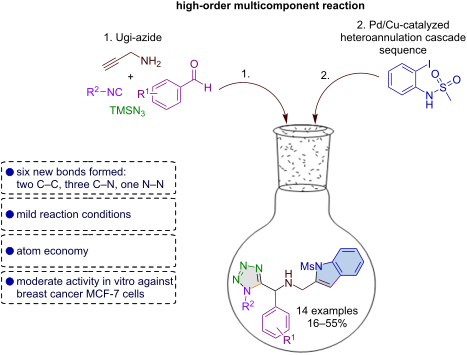
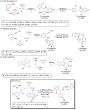
- trifluoroethanol as the solvent and at room temperature [23][24][25][26]. In the initial reaction, propargylamine served as a bifunctional reagent, with the primary amine group participating in the first step and the terminal alkyne promoting the subsequent heteroannulation. (Scheme 2). As observed in our previous



Multicomponent synthesis of α-branched amines using organozinc reagents generated from alkyl bromides
Beilstein J. Org. Chem. 2024, 20, 2834–2839, doi:10.3762/bjoc.20.239
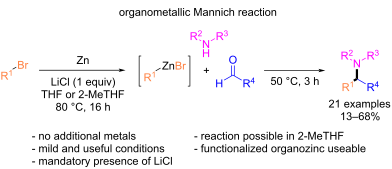
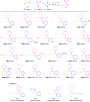
- . In addition, whereas tert-butylzinc iodide was efficient in the multicomponent coupling (99% yield), tert-butylzinc bromide led to a very low yield (16% 5kaa). The coupling presented some other limitations. It was not possible to carry out the reaction when a primary amine was employed. In addition


Improved deconvolution of natural products’ protein targets using diagnostic ions from chemical proteomics linkers
Beilstein J. Org. Chem. 2024, 20, 2323–2341, doi:10.3762/bjoc.20.199
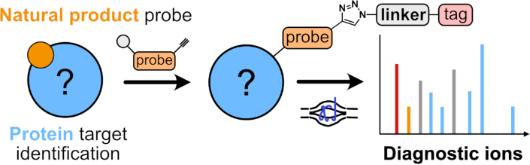
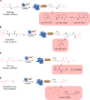
- . The fragmentation of the triazole ring leaving the primary amine and b-ion resulting from the fragmentation of the TEV-recognition peptide sequence. The chemical cleavage of the linker to release probe–peptide conjugates is achieved mainly by the change of the pH or via reducing conditions to release




Stereoselective mechanochemical synthesis of thiomalonate Michael adducts via iminium catalysis by chiral primary amines
Beilstein J. Org. Chem. 2024, 20, 2313–2322, doi:10.3762/bjoc.20.198
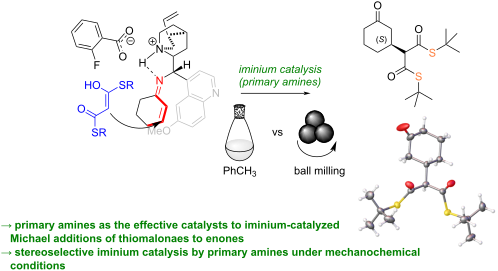
- [15][16] or iminium-ion catalysis [17] under ball-mill conditions are scarce, in contrast to the abundance of transformations catalyzed by such covalent catalysis. Among the numerous organocatalytic reactions facilitated by primary amine-based iminium ions, Michael-type additions deserve special
- by extended reaction times, sometimes up to 168 hours. An intriguing example involves the use of a bifunctional primary amine-sulfonamide catalyst, which activates benzylideneacetone towards dibenzyl malonate, with the presence of water accelerating the reaction [25]. An alternative approach, where
- product with 93% ee after 24 h, while the bifunctional primary amine-thiourea catalysts (system B) required 4 days to provide an adduct with similar enantioselectivity. Prolonged reaction time is in general the innate nature of organocatalytic reactions employing iminium activation approaches. With the





