Search results
Search for "protecting group" in Full Text gives 472 result(s) in Beilstein Journal of Organic Chemistry. Showing first 200.
Synthesis and optical resolution of 4,5-diaminohomoadamantane: a promising scaffold for chiral ligands and bioactive compounds
Beilstein J. Org. Chem. 2026, 22, 1013–1022, doi:10.3762/bjoc.22.80
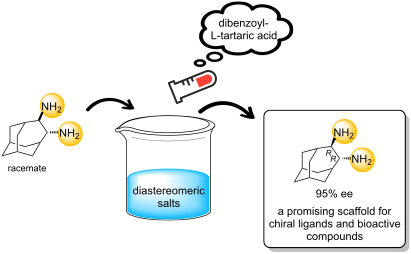
- with LiAlH4, the trans-isomer 15 was isolated. However, the removal of the protecting group in 15 by the known method [90] (sequential action of chloroacetonitrile and Cs2CO3) was unsuccessful. Therefore, we decided to use Red-Al [91][92] for simultaneous reduction and deprotection of 14 yielding only


The role of spacer length and flexibility in peptide self-assembly
Beilstein J. Org. Chem. 2026, 22, 986–996, doi:10.3762/bjoc.22.77
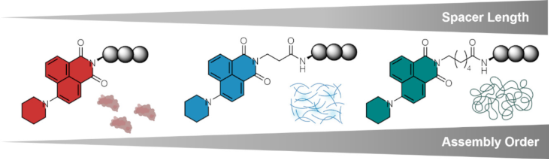
- swollen in DMF (15 mL) at room temperature for one hour before transferring it into the peptide synthesizer. In the peptide synthesizer, DMF was removed through the draining process and DMF (3.5 mL) was added prior to the coupling. Prior to every coupling, the Fmoc-protecting group was cleaved by one


Synthesis of sterically shielded piperidine nitroxides via acid-catalyzed heterocyclization of β-aminoketone derivatives with ketones
Beilstein J. Org. Chem. 2026, 22, 948–954, doi:10.3762/bjoc.22.74
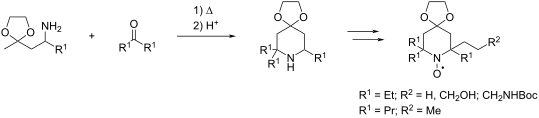
- investigation. In a separate set of experiments, aqueous hydrochloric acid was added to the reaction mixtures after the hydrogenation of 7a,d was complete. Under these conditions the dioxolane protecting group was removed and nitroxides 9a,d were isolated in 58% and 67% yield, respectively (Scheme 5). The IR


Total synthesis of the capsular polysaccharide repeating unit towards the development of a glycoconjugate vaccine against Klebsiella pneumoniae ST512
Beilstein J. Org. Chem. 2026, 22, 821–827, doi:10.3762/bjoc.22.64
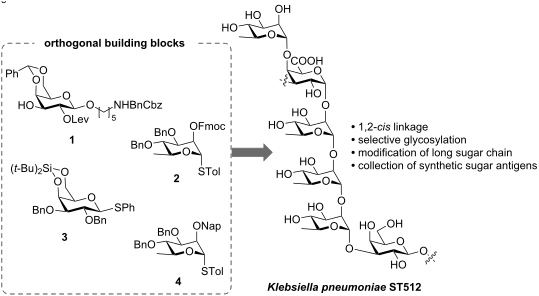
- Nap group to yield 9 (87% yield). Protection of the remaining C3-hydroxy group with a benzyl (Bn) ether furnished building block 4. To obtain building block 2, the Nap group was replaced with a fluorenylmethyloxycarbonyl protecting group (Fmoc) via a two-step sequence: DDQ-mediated deprotection (69
- furnished tetrasaccharide 15. Subsequently, donor 3 was coupled with compound 15 under NIS/TfOH promotion to yield pentasaccharide 16 in 89% yield. The stereoselective construction of the 1,2-cis linkage was directed by the bulky 4,6-O-silylidene protecting group of 3. Treatment with HF·pyridine


Design, synthesis, and biological evaluation of FXR/ASK1 dual-target modulators
Beilstein J. Org. Chem. 2026, 22, 771–781, doi:10.3762/bjoc.22.59
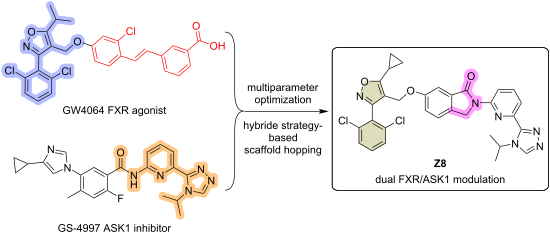
- Z26–29. The synthesis of target compound Z30 is illustrated in Scheme 8. Treatment of intermediate 2 with N-Boc-4-hydroxypiperidine (11) in the presence of sodium hydride produced ether 12, followed by removal of the Boc-protecting group, provided intermediate 13. Coupling of intermediate 13 with IXa


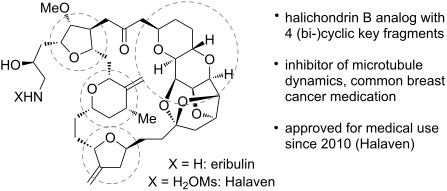
Modern synthetic pathways towards eribulin and its subunits
Beilstein J. Org. Chem. 2026, 22, 495–526, doi:10.3762/bjoc.22.37
- metathesis with ethyl acrylate, acidic cleavage of the diol protecting group and addition of NaH induced the oxy-Michael reaction towards 18 in 4:1 dr. Reduction of the ester moiety, subsequent protection with TBDPSCl and methylation of the secondary alcohol furnished 19. After Bn-deprotection, iodination
- -moiety and reprotection with (iPr)2SiHCl afforded 75. The addition of BF3·OEt2 at low temperatures induced the fluorination of the silane protecting group and a follow-up intramolecular hydride transfer (via 76). Afterwards, the introduced fluoride was substituted with Mg(OMe)2 in MeOH and the
- stereochemistry of the central protected alcohol unit was inverted within a sequence involving deprotection of all acetates, protection of the 1,2-diol as an acetonide, oxidation of the central alcohol with DMP and stereospecific reduction, which yielded alcohol 78. Finally, the silyl protecting group was cleaved







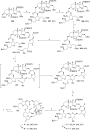

Synthesis of a HDAC inhibitor–nanogold probe for cryo-EM visualization in class I HDAC co-repressor complexes
Beilstein J. Org. Chem. 2026, 22, 480–485, doi:10.3762/bjoc.22.35
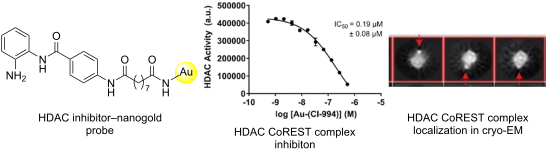
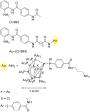
- dibenzylated by-product. Compound 5 was then coupled to the CI-994 intermediate 3 via HATU-mediated amide bond formation to produce 6 in good yield. Removal of the benzyl protecting group was performed by catalytic hydrogenation and acid 7 was obtained in near quantitative yield. Intermediate 7 was converted
- to its corresponding NHS ester 8 and residual starting material was removed by column chromatography. The Boc-protecting group was removed under anhydrous conditions in good yield and the structure of 9 was confirmed by NMR spectroscopy. Compound 9 was maintained as the TFA salt for the final step



A facile and practical method for the synthesis of trans-(±)-taxifolin and its derivatives via Darzens reaction
Beilstein J. Org. Chem. 2026, 22, 443–450, doi:10.3762/bjoc.22.31
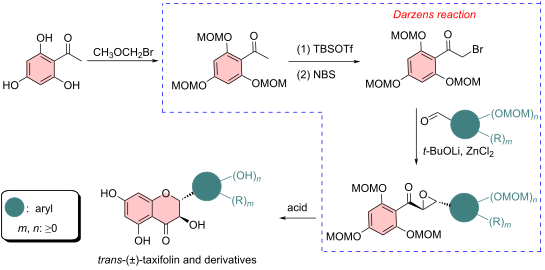
- failed because of concomitant protecting group cleavage (Supporting Information File 1, Table S1, entries 1 and 2). Subsequently, a series of common brominating reagents, such as Br2, PTT (trimethylphenylammonium tribromide) and NBS were attempted, but unfortunately, cleavage of MOM was still observed


Cone p-aminocalix[4]arenes enriched with ‘clickable’ alkyne or azide functionalities
Beilstein J. Org. Chem. 2026, 22, 399–415, doi:10.3762/bjoc.22.28
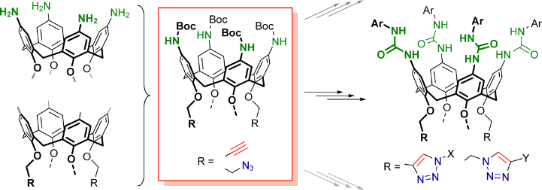
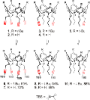
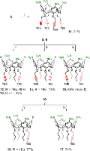
- ), AcOH, dichloromethane, rt, 48 h. Reduction of calixarenes 11, 15 and 17. Conditions: i) SnCl2·2H2O, HCl, EtOH, H2O, 70 °C, then KOH, H2O. Protecting group replacement in propargylated p-aminocalix[4]arenes. Conditions: i) Boc2O, Et3N, dichloromethane, rt; ii) H2O, n-Bu4NF·3H2O, THF, rt; iii) H2O, n






Synthesis of tricyclic fused pyrrolidine nitroxides from 2-alkynylpyrrolidine-1-oxyls
Beilstein J. Org. Chem. 2026, 22, 344–351, doi:10.3762/bjoc.22.22

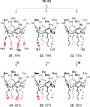
- metalation of trimethylsilylacetylene or benzyl propargyl ether with ethylmagnesium bromide. After quenching, removal of the MOP protecting group, and oxidation by atmospheric oxygen the nitroxides 2d and 2e were isolated in 64% and 66% yields, respectively. Terminal alkynes can be converted into




Asymmetric Mannich reaction of aromatic imines with malonates in the presence of multifunctional catalysts
Beilstein J. Org. Chem. 2026, 22, 151–157, doi:10.3762/bjoc.22.8
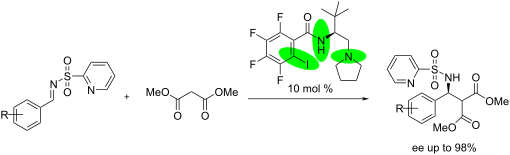
- Mannich reaction between a 2-sulfonylpyridine protected imine and a malonate (Scheme 1). The pyridine-containing protecting group was chosen considering our catalyst design. We envisioned that halogen bond (XB) will complement hydrogen bonds to activate an imine towards the nucleophilic attack of the
- the halogen bond is not essential for the stereoselectivity of the reaction, but the halogen atom has a beneficial effect on both reactivity and stereoselectivity. A comparative experiment using an imine with a para-toluenesulfonyl protecting group afforded the product in lower selectivity (Table 1
- , entry 17), further highlighting the importance of the pyridine ring containing protecting group. The interaction between catalyst E and the imine was further investigated by 19F NMR studies (see Supporting Information File 1). To further elucidate the role of noncovalent interactions, we conducted


Total synthesis of natural products based on hydrogenation of aromatic rings
Beilstein J. Org. Chem. 2026, 22, 88–122, doi:10.3762/bjoc.22.4
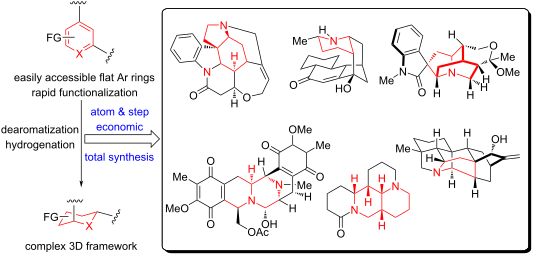
- contain complex three-dimensional structures, make total synthesis challenging. The retrosynthetic analysis [9], alongside the evolution of methodologies such as “two-phase synthesis” [10], “biomimetic synthesis” [11], or “protecting-group-free synthesis” [12], has progressively streamlined synthetic
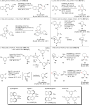
- chloride. Finally, through a sequence of removal of the Cbz protecting group, alcohol chlorination, proximal nucleophilic substitution, and deprotection of the secondary alcohol, the first total synthesis of nominine was completed. Although the synthetic route seemed to be lengthy, this challenging total






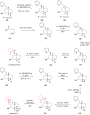


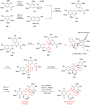


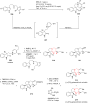

Advances in Zr-mediated radical transformations and applications to total synthesis
Beilstein J. Org. Chem. 2026, 22, 71–87, doi:10.3762/bjoc.22.3
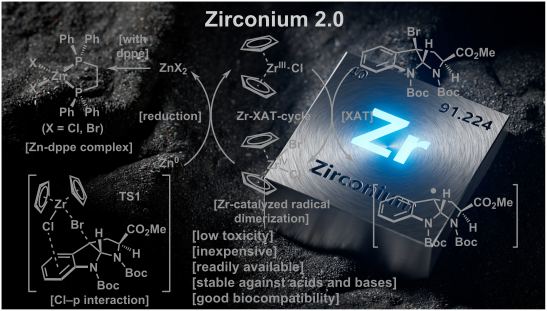
- % yield. No epimerization at the β-position was observed, and 57 was obtained as a single product. Subsequent removal of the silyl protecting group under PivOH buffer/TBAF conditions, followed by PPTS treatment, enabled spiroketal formation. Finally, epimerization at C38 with TMSOTf completed the total







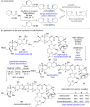
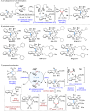

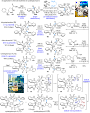
One-pot synthesis of ethylmaltol from maltol
Beilstein J. Org. Chem. 2025, 21, 2755–2760, doi:10.3762/bjoc.21.212

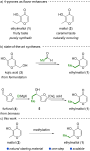
- via methylation of a dianionic intermediate, proved unsuitable due to competing overalkylation and the necessity of sub-zero temperatures. In contrast, a transient protecting group approach enabled selective methylation under mild conditions. This culminated in a scalable, operationally simple one-pot
- explore a modified and more selective approach with milder reaction parameters. In our revised strategy, we planned to introduce a transient protecting group for the free hydroxy group, thereby avoiding the necessity of dianion formation with the aim of improving solubility and stability (Table 2). We
- sub-zero temperatures rendered the strategy undesirable. Subsequent exploration of a transient protecting group strategy culminated in a one-pot procedure affording ethylmaltol (1) at a multigram-scale at ≥0 °C with a markedly improved purity profile. A key advantage of the presented approach to


Sustainable electrochemical synthesis of aliphatic nitro-NNO-azoxy compounds employing ammonium dinitramide and their in vitro evaluation as potential nitric oxide donors and fungicides
Beilstein J. Org. Chem. 2025, 21, 2739–2754, doi:10.3762/bjoc.21.211
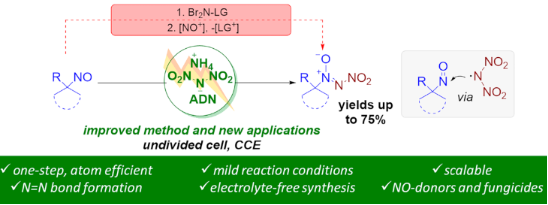
- 68% yield without cleavage of the acetonide protecting group. Note that compound 2f is not accessible using the known approach (see Scheme 1a), because the dioxane ring is opened during the nitration step. Surprisingly, nitro-NNO-azoxylation products 2g and 2h were obtained from methyl and ethyl 2





Total synthesis of asperdinones B, C, D, E and terezine D
Beilstein J. Org. Chem. 2025, 21, 2730–2738, doi:10.3762/bjoc.21.210
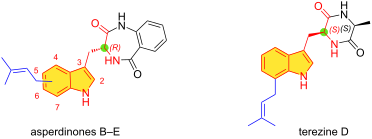
- , treatment of N-acetyl-5-prenyl-1H-indole (22) as a test substrate with HCl in dioxane or TFA in dichloromethane led to Markovnikov hydrochlorination and hydrotrifluoroacetylation of the prenyl group, respectively (Scheme 4) [57][58]. This result required the use of an N-protecting group in the iodozinc
- (6) and ent-asperdinone E, now using an N-Boc protecting group (Scheme 8). Treatment of 3-iodoindole 39 with the iodozinc reagent prepared from N-Boc-ʟ-alanine methyl ester ((R)-35) under Negishi coupling conditions afforded 40 in excellent yield. Cleavage of the N-Boc group and amide formation with


Recent advancements in the synthesis of Veratrum alkaloids
Beilstein J. Org. Chem. 2025, 21, 2657–2693, doi:10.3762/bjoc.21.206
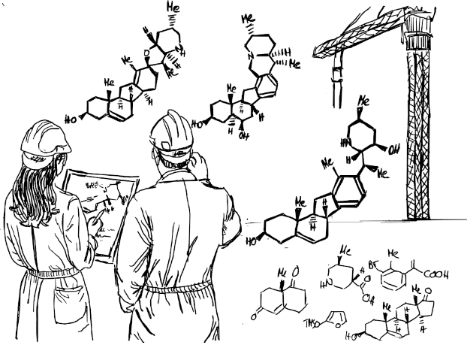
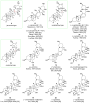
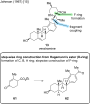
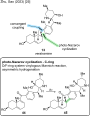
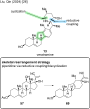
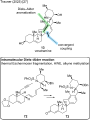
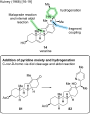
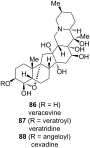
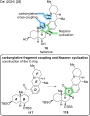
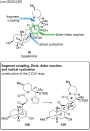
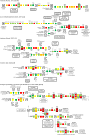
- of green for strategic connections, yellow for neutral, e.g., functional group interconversion and isomerization, orange for non-strategic reactions, and red for protecting group (PG) manipulations (Scheme 3). Protecting group manipulations refer to any protection or deprotection of a functional
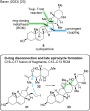
- installed another exo-methylene (in the future F-ring), which would later be reduced to the methyl group at C25. Staudinger reduction and two protecting group manipulations set the stage for the formation of the piperidine (F-ring) through a Mitsunobu reaction. Hydrogenation employing Wilkinson’s catalyst
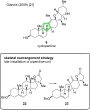
- metathesis for closing the D-ring (Scheme 7). For the left-hand fragment including the A-, B-, and C-ring, the synthesis started from commercially available (S)-Wieland–Miescher ketone (34), which can also be synthesized via a three-step sequence (Scheme 8). To access 35, several protecting group




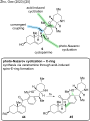
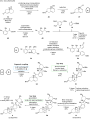
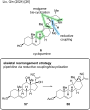

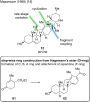











Chemoenzymatic synthesis of the cardenolide rhodexin A and its aglycone sarmentogenin
Beilstein J. Org. Chem. 2025, 21, 2637–2644, doi:10.3762/bjoc.21.204
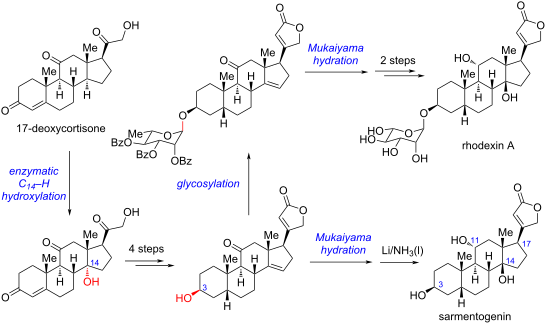
- Sciences and Biotechnology, Zhangjiang Institute for Advanced Study, Shanghai Jiao Tong University, Shanghai, 200240, China 10.3762/bjoc.21.204 Abstract Herein, we report a concise chemoenzymatic synthesis of the cardenolide rhodexin A in 9 steps and the first protecting-group-free synthesis of its
- ; C–H hydroxylation; chemoenzymatic synthesis; Mukaiyama hydration; protecting-group-free synthesis; Introduction Cardiac glycosides (CGs) are widely distributed natural products, generated by plants and amphibians [1]. Structurally, they are composed of an aglycone-steroidal moiety, an unsaturated
- -electron demand Diels–Alder (IEDDA) reaction was utilized to successfully construct the BCD tricyclic structure with the correct configuration of the four contiguous stereocenters in just one step. However, the requirement of a series of protecting group manipulations undermined the step-economy and



Visible-light-driven NHC and organophotoredox dual catalysis for the synthesis of carbonyl compounds
Beilstein J. Org. Chem. 2025, 21, 2584–2603, doi:10.3762/bjoc.21.200
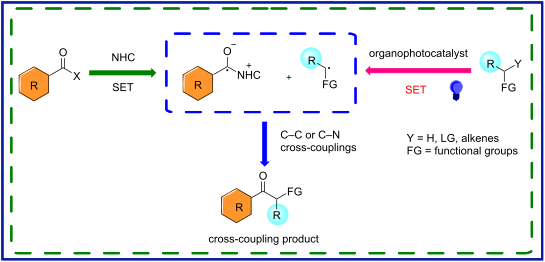
- by the removal of the PMP protecting group using 2 equivalents of CAN and pyridine, affording 2,3-dihydrofurans 12a in 58% (Scheme 4) [54]. In 2022, Sumida, Ohmiya, and co-workers developed a dual NHC/4CzIPN-organocatalyzed, versatile, light-driven silyl radical generation strategy from substituted





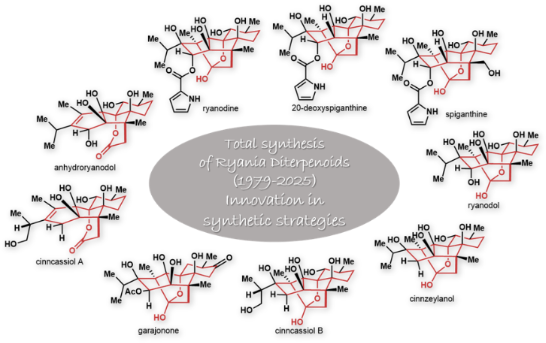
Total syntheses of highly oxidative Ryania diterpenoids facilitated by innovations in synthetic strategies
Beilstein J. Org. Chem. 2025, 21, 2553–2570, doi:10.3762/bjoc.21.198
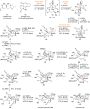
- reported the first total synthesis of ryanodine from ryanodol [47] (Scheme 5). Their strategy utilized a novel boronate protecting group to mask the four syn-oriented hydroxy groups. A critical step was the in-situ generation of the pyrrole-2-carboxylate unit from a glycine ester and 1,3-bis(dimethylamino
- to “climbing a staircase” – where each successive step involves functional group interconversions and protecting group manipulations, culminating in low overall efficiency. In contrast, Baran’s “two-phase” synthesis strategy emulates nature’s “cyclization–functionalization” logic [53][54]. This
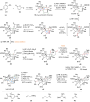
- transesterification sequence produced mono-enone 106, whose hydration installed the C6 stereocenter to yield 107. Further protecting group and oxidation state adjustments afforded lactone 108, which was transformed via an intramolecular SN2′ reaction (single-electron reduction), m-CPBA epoxidation, acid-promoted




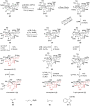


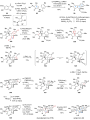

Rapid access to the core of malayamycin A by intramolecular dipolar cycloaddition
Beilstein J. Org. Chem. 2025, 21, 2542–2547, doi:10.3762/bjoc.21.196
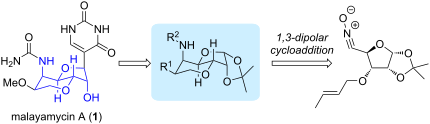
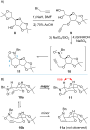
- inaccessible (Scheme 5) [41]. We assumed the steric hinderance of the Boc protecting group might have a great impact to the reactivity of ketone. Investigation along this line is currently on the way. Conclusion In summary, we have streamlined the rapid construction of the core perhydrofuropyran skeleton of




Synthesis of the tetracyclic skeleton of Aspidosperma alkaloids via PET-initiated cationic radical-derived interrupted [2 + 2]/retro-Mannich reaction
Beilstein J. Org. Chem. 2025, 21, 2470–2478, doi:10.3762/bjoc.21.189
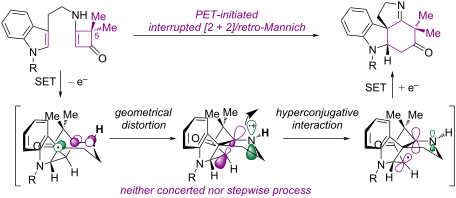
- % (Table 1, entry 10) compared with that in entry 9 (42%). These results indicate that Cbz is a more effective protecting group than Boc under the profiled conditions. The effects of the reaction temperature on the outcome of the PET reaction of 9a were investigated. Among the conditions screened (Table 1
- , which indicates that steric hindrance at C2 has a limited effect on the reactivity. However, when the steric hindrance of the protecting group was increased by replacing –Cbz with –Boc, the activity of the PET reaction decreased, which resulted in a lower yield of 10f (45%). In the case of substrate 9g


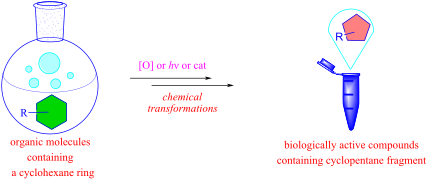
Transformation of the cyclohexane ring to the cyclopentane fragment of biologically active compounds
Beilstein J. Org. Chem. 2025, 21, 2416–2446, doi:10.3762/bjoc.21.185
- completed by converting the exocyclic methyl ester 144 to an aldehyde145 using a one-pot DIBAL-H/Dess–Martin procedure followed by the removal of TMS protecting group using a stoichiometric Wilkinson’s catalyst (Scheme 25). The authors noted that, in the final stages of reduction and oxidation, yields were


Synthetic study toward vibralactone
Beilstein J. Org. Chem. 2025, 21, 2376–2382, doi:10.3762/bjoc.21.182

- deprotection followed by C–H insertion. However, when attempting to remove the ketal protecting group, only decomposition of the starting material was observed. A plausible explanation for this outcome is that the β-lactone ring, located at the β-position of the methyl ketone, may undergo facile β-elimination


Recent advances in Norrish–Yang cyclization and dicarbonyl photoredox reactions for natural product synthesis
Beilstein J. Org. Chem. 2025, 21, 2315–2333, doi:10.3762/bjoc.21.177
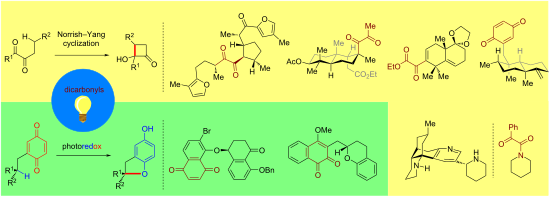
- blue LEDs at room temperature constructed a single diastereoisomer 23 in 90% yield. From 23, the ABCDE pentacyclic skeleton of phainanoids (27) was ultimately established via a Mitsunobu reaction, intramolecular nucleophilic substitution with in situ-generated aryllithium, and protecting group
- stereoretentive coupling at C2 with aryl bromide 86, yielding 88 as a single diastereomer. Manipulation of the protecting group of 88 arrived at lycoplatyrine A (89). Notably, 87 and related α-hydroxy-β-lactams were obtained via Norrish–Yang cyclization of the corresponding neat α-keto amides in the solid state