Search results
Search for "catalysis" in Full Text gives 1304 result(s) in Beilstein Journal of Organic Chemistry. Showing first 200.
Synthesis and uranyl(VI) extraction performance of a calix[4]pyrrole–tetrahydroxamic acid receptor
Beilstein J. Org. Chem. 2026, 22, 486–494, doi:10.3762/bjoc.22.36
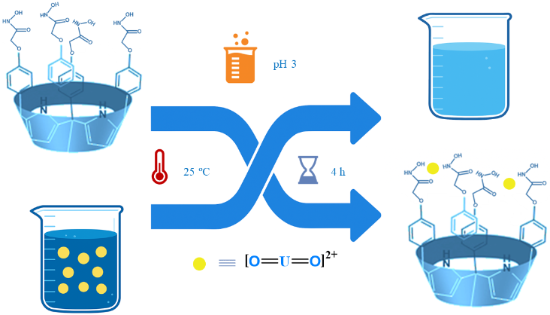
- matrices for a broad range of applications [9]. Notable examples include catalysis, chromogenic sensors and fluorescent sensors, as well as heavy metals extraction [12][13][14][15][16]. One CP molecule that has attracted the attention of several research groups is the meso-tetra-methyltetrakis(4


Recent advances in the stereoselective synthesis of distal biaxially chiral molecules
Beilstein J. Org. Chem. 2026, 22, 461–479, doi:10.3762/bjoc.22.34
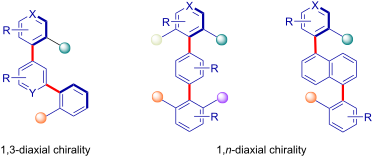
- catalysis [26]. These molecules are widely found in natural products [27] and drugs, such as michellamines A and B [28], korupensamines A and B [29], diazonamide A [30], mastigophorene A [31], and the recently developed drug candidate BMS-986142 [32] (Figure 1). When a molecule contains two or more chiral
- axes, it constitutes a bi- or multiaxial chiral system, significantly increasing structural complexity and stereochemical diversity, which endows the molecules with unique functionalities and excellent performance in catalysis, pharmaceuticals [33], and materials science [34]. In 1989, Hayashi
- in catalysis, drug discovery, and functional materials. Review One-step construction of remote biaxial chiral molecules In recent years, the development of asymmetric catalytic methods, including both transition-metal catalysis and organocatalysis, has provided powerful tools for the one-step


Cone p-aminocalix[4]arenes enriched with ‘clickable’ alkyne or azide functionalities
Beilstein J. Org. Chem. 2026, 22, 399–415, doi:10.3762/bjoc.22.28
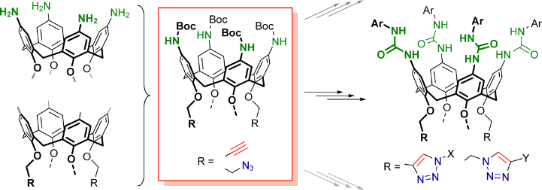
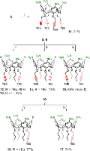
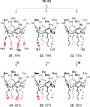
- excess benzyl azide or phenylacetylene, taken as representatives, under copper(I) catalysis, resulting in the narrow-rim triazolated macrocycles. By removing the Boc protecting groups and involving the free amino groups in reactions with p-tolyl isocyanate, a series of narrow-rim triazolated
- arrangement of the triazole N(3)-atoms relative to the calixarene core in compound 40. It was established previously, that p-tert-butylcalix[4]arene having two distal 2-azidoethyl groups at the narrow rim could not efficiently react with phenylacetylene under copper(I) catalysis unless a huge excess of Cu






Electrosynthetic access to unsymmetrical oxaza[8]helicenes with high chiral stability and strong circularly polarized luminescence (CPL)
Beilstein J. Org. Chem. 2026, 22, 372–382, doi:10.3762/bjoc.22.25
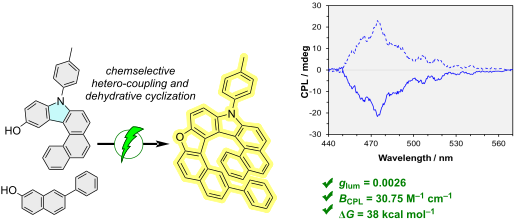
- -bromophenanthrene (1) via Buchwald–Hartwig amination with p-toluidine under Pd catalysis [55] – was subjected to phosphoric acid-mediated annulation with p-benzoquinone to give the hydroxycarbazole derivative 3 through a tandem Michael addition/ring-closure sequence. After rapid optimization of key parameters (see




Non-central chirality in organic chemistry
Beilstein J. Org. Chem. 2026, 22, 370–371, doi:10.3762/bjoc.22.24
- axial, planar, or helical chirality individually, often organized along specific molecular classes or application-driven themes such as asymmetric catalysis or chiral materials. In contrast, this Thematic Issue deliberately brings together diverse manifestations of non-central chirality under a single
Recent advances in the cleavage of non-activated amides
Beilstein J. Org. Chem. 2026, 22, 352–369, doi:10.3762/bjoc.22.23
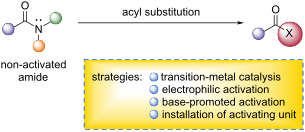
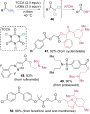
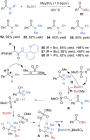
- catalysis, electrophilic activation, strong base-counter-cation systems, and N-based activating groups that enable chemoselective bond cleavage. Together, these developments provide powerful tools for amide functionalization and offer new opportunities for efficient, practical, and selective syntheses
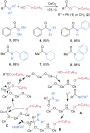
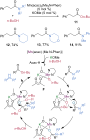
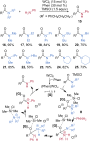
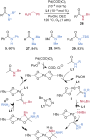
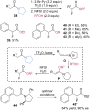
- substrate scope, mechanistic features, and unique advantages or limitations, with the goal of providing a comprehensive overview of current strategies and future opportunities for amide-bond manipulation. Review Transition-metal catalysis Various transition metals that function as Lewis acids have been
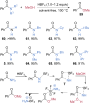
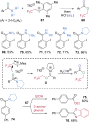
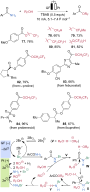
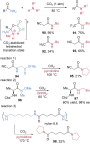
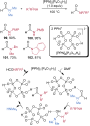
- ) Metal-free photoredox catalysis for cleavage of N-PMB anilide. Funding This study was supported by the Korea institute of Energy Technology Evaluation and Planning (KETEP) grant funded by the Korean Government (MCEE) (RS-2022-KP002707, Jeonbuk, regional Energy Cluster Training of Human resources) and







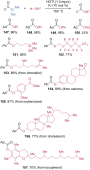

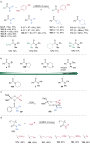


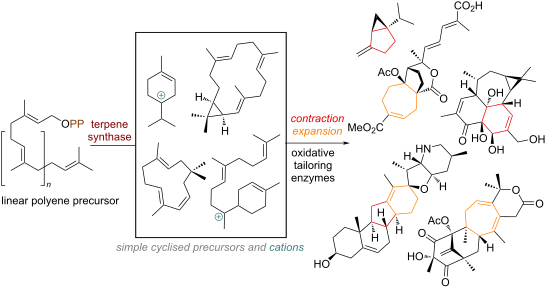
Ring contraction and ring expansion reactions in terpenoid biosynthesis and their application to total synthesis
Beilstein J. Org. Chem. 2026, 22, 289–343, doi:10.3762/bjoc.22.21


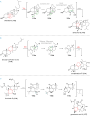




Arene activation via π-bond localization: concepts and opportunities
Beilstein J. Org. Chem. 2026, 22, 257–273, doi:10.3762/bjoc.22.19
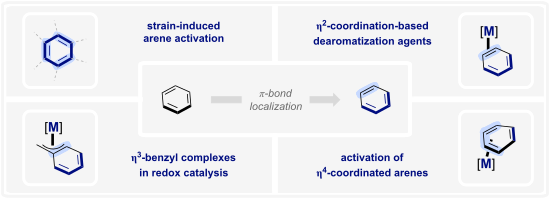
- beneath the surface of the literature, holding remarkable promise for translation into catalysis. In the first chapter we examine strain-induced π-bond localization for arene activation, following the historical traces of the Mills–Nixon hypothesis, its fallacies and the implications of strain on arene
- , increases π-bond localization, rendering phenylenes more susceptible to hydrogenation, metal complexation, ring opening, and cycloaddition reactions [39]. Building on these intriguing studies and the ongoing renaissance of strain-release-driven catalysis [40], harnessing small-ring strain to drive
- dearomatization agents in synthesis is their reliance on stoichiometric quantities of the activating metal. Although recycling strategies offer partial relief, true progress depends on achieving catalysis through transient arene complexation. Unlike the well-established η6-coordination mode [67][68], η2-binding




A mild and atom-efficient four-component cascade strategy for the construction of biologically relevant 4-hydroxyquinolin-2(1H)-one derivatives
Beilstein J. Org. Chem. 2026, 22, 244–256, doi:10.3762/bjoc.22.18
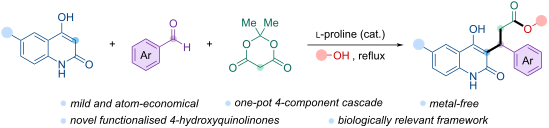
- and selective synthesis of previously inaccessible 4-hydroxyquinolin-2(1H)-one derivatives. Utilizing readily available 6-halo-4-hydroxyquinolinones, aromatic aldehydes, Meldrum’s acid, and alcohols under ʟ-proline catalysis, the reaction proceeds via in situ formation of arylidene-substituted Meldrum
- direct access to scarcely explored open-chain quinolinone esters, expanding the medicinal chemistry toolbox with promising scaffolds for drug discovery. Keywords: antibacterial activity; 4-hydroxyquinolin-2(1H)-one; ʟ-proline catalysis; Meldrum’s acid; Michael addition; multicomponent reaction
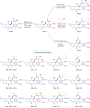
- involving 4-hydroxyquinolinones 2a–c, veratraldehyde, and Meldrum’s acid in alcohol (methanol or ethanol) with ʟ-proline catalysis. Importantly, by employing the alcohol simultaneously as both a reactant and the reaction medium and by fine-tuning the reaction conditions, this cascade can be deliberately


Screwing the helical chirality through terminal peri-functionalization
Beilstein J. Org. Chem. 2026, 22, 205–212, doi:10.3762/bjoc.22.14
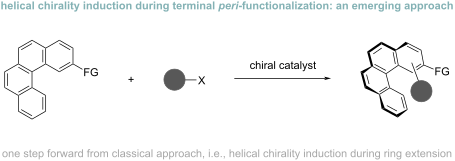
- , the peri-functionalization approach paved a new pathway for the generation of chiral helical molecules. In this article, we highlight the key advancements in these parallel approaches for the generation of helical chiral architectures. Keywords: catalysis; C–H functionalization; helical chirality


Circumventing Mukaiyama oxidation: selective S–O bond formation via sulfenamide–alcohol coupling
Beilstein J. Org. Chem. 2026, 22, 158–166, doi:10.3762/bjoc.22.9
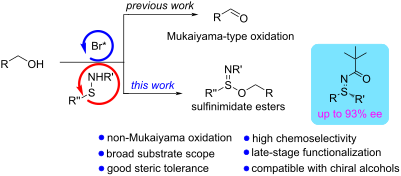
- its multiple oxidation states and ability to form diverse bonds with carbon, nitrogen, and oxygen. This versatility underpins the pivotal roles of organosulfur compounds in pharmaceuticals, catalysis, and materials science [1][2][3][4]. Among these, sulfilimines (R2S=NR') have attracted growing


Asymmetric Mannich reaction of aromatic imines with malonates in the presence of multifunctional catalysts
Beilstein J. Org. Chem. 2026, 22, 151–157, doi:10.3762/bjoc.22.8
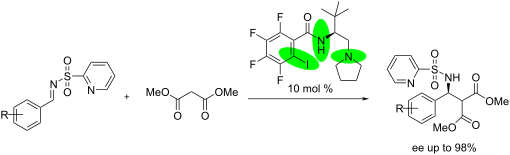
- with the steric effect of the tert-butyl group of the catalyst, is responsible for the high stereoselectivity of the reaction. Keywords: aromatic imine; asymmetric catalysis; Mannich reaction; noncovalent interactions; organocatalysis; Introduction The Mannich reaction, i.e., the addition of an
- been used in the synthesis of numerous pharmaceuticals and natural products [7]. The application of asymmetric synthesis enables access to enantiomerically pure targets. Earlier, metal catalysis was used for Mannich reactions [8][9], but in recent years, methods of asymmetric organocatalysis have been
- widely used to achieve these valuable compounds [10][11][12]. Enamine activation was one of the first organocatalytic methods applied in Mannich reactions [13][14]. Concurrently, hydrogen-bond catalysis has emerged as a significant strategy for promoting asymmetric Mannich reactions [15][16]. This has


Total synthesis of natural products based on hydrogenation of aromatic rings
Beilstein J. Org. Chem. 2026, 22, 88–122, doi:10.3762/bjoc.22.4
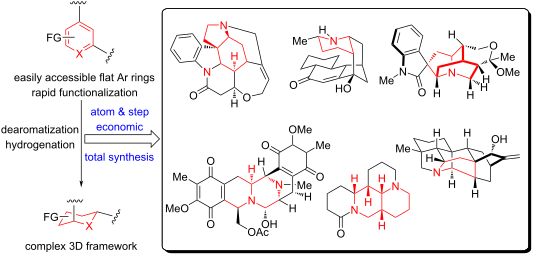
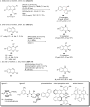
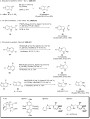
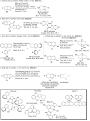
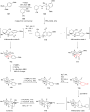
- ][19][20]. In recent years, promoted by the rapid development of asymmetric catalysis, a wealth of reactions applicable to aromatic systems – including substitution reactions, transition-metal-coupling reactions, and even dearomatization [21][22][23] – have been reported, further extending their
- center and complicate catalysis. Consequently, designing cost-effective catalytic systems with enhanced efficiency, particularly for the selective hydrogenation of complex substrates, remains an essential direction for future research [33]. Hydrogenation of arenes has rapidly evolved from a specialized
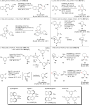
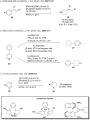
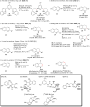
- limitations in terms of substrate scope, stereoselectivity, and scalability, leaving ample room for innovation in catalyst design and mechanistic understanding. Fan and co-workers have long been dedicated to the asymmetric catalysis of chiral diamine ruthenium complexes. In 2020, they reported the efficient











Advances in Zr-mediated radical transformations and applications to total synthesis
Beilstein J. Org. Chem. 2026, 22, 71–87, doi:10.3762/bjoc.22.3
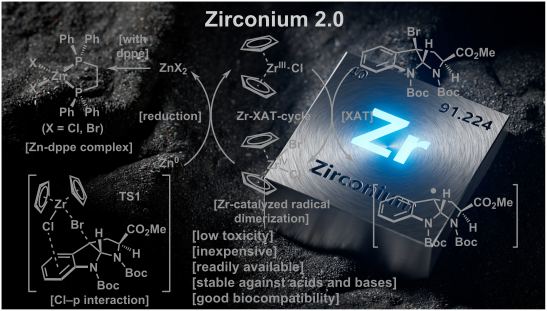
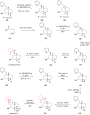
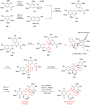
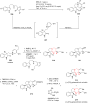
- Yamaguchi published a review on radical reactions catalyzed by zirconium complexes [6]. Their review provides a comprehensive summary, particularly of photo-redox reactions involving zirconium catalysis. In the present review, we focus on three aspects: 1) Zr-mediated stoichiometric radical reactions 2) Zr
- alkyl iodide 10 were subjected to nickel catalysis in the presence of zirconocene dichloride and zinc dust, intermolecular coupling occurred to afford ketone 12 in good yields. This reaction was applicable to substrates bearing β-alkoxy substituents, which are typically problematic under anionic
- regioselectivity. In a related study, Ota and Yamaguchi et al. reported the regioselective ring-opening of oxetanes using zirconocene catalysis (Scheme 6) [21]. Treatment of oxetane 27 with zirconocene in the presence of an Ir-photoredox catalyst led to ring opening via the less substituted radical intermediate








Synthesis and applications of alkenyl chlorides (vinyl chlorides): a review
Beilstein J. Org. Chem. 2026, 22, 1–63, doi:10.3762/bjoc.22.1
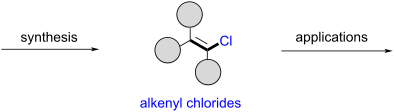
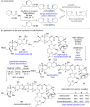
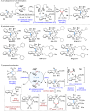
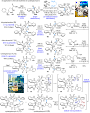
- two decades, considerable efforts have been devoted to the selective monohydrochlorination of alkynes, particularly through the use of transition-metal catalysis. Comprehensive reviews by Lu [40] and Nishiwaki [41] have extensively covered these advances. We also want to briefly mention the work on
- -dichloroethylene) to achieve selective monocoupling reactions catalyzed by nickel with Grignard reagents (Scheme 51C) [176]. Building on Sonogashira's findings [177], Linstrumelle also documented the first monoselective coupling of 1,2-dichloroethylenes with alkynes using palladium catalysis (Scheme 51C). Organ























Competitive cyclization of ethyl trifluoroacetoacetate and methyl ketones with 1,3-diamino-2-propanol into hydrogenated oxazolo- and pyrimido-condensed pyridones
Beilstein J. Org. Chem. 2025, 21, 2716–2729, doi:10.3762/bjoc.21.209
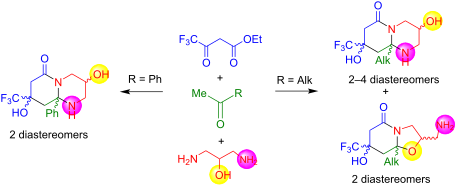
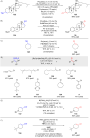
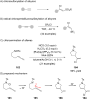
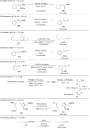
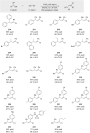
- -trifluoroacetoacetate and methyl ketones enables the synthesis to be carried out for octahydropyrido[1,2-a]pyrimidin-6-ones and hexahydrooxazolo[3,2-a]pyridin-5-ones, the preferential formation of which depends on the substituent in the methyl ketone component. Dual acid–base catalysis of the reactions with alkyl
- composition of the products, increasing the content of the trans,cis-form 4atc to 20%. The use of 1,4-dioxane with acetic acid catalysis at different molar ratios (Table 1, entries 7, 8) led to the formation of a large fraction of unidentified by-products (42–61%), whereas the base catalysis with
- triethylamine in 1,4-dioxane (Table 1, entry 9) did not affect the reaction course significantly. The use of conditions with catalysis by a combination of Bronsted acid and base (acetic acid, Et3N) contributed to a shift in the reaction selectivity towards octahydropyridopyrimidinones 4 (overall yield 71


Visible-light-driven NHC and organophotoredox dual catalysis for the synthesis of carbonyl compounds
Beilstein J. Org. Chem. 2025, 21, 2584–2603, doi:10.3762/bjoc.21.200
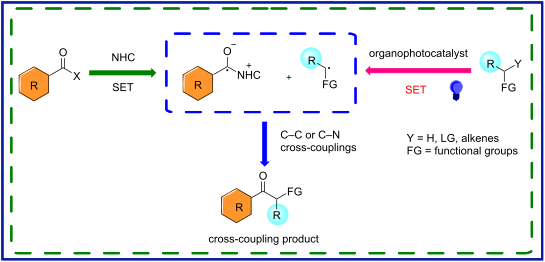
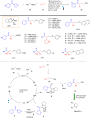
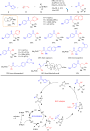
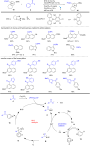
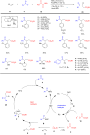
- chemistry. In particular, dual catalysis combining N-heterocyclic carbenes (NHCs) with organophotocatalysts (e.g., 4CzIPN, eosin Y, rhodamine, 3DPAFIPN, Mes-Acr-Me+ClO4−) has emerged as a powerful photocatalytic strategy for efficiently constructing a wide variety of carbonyl compounds via radical cross
- -coupling processes. This cooperative organic dual catalysis has great potential in medicinal, pharmaceutical, and materials science applications, including the development of organic semiconductors and polymers. In recent years, NHC-involved photocatalysis has attracted considerable attention in synthetic
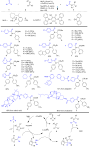
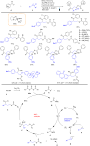
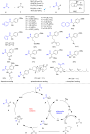
- organic chemistry, and particularly in the late-stage functionalization of bioactive compounds, drugs, and natural products. This review highlights recent advances in NHC–organophotoredox dual catalysis, focusing on methodology development, mechanistic insights, and reaction scope for synthesizing





Isoorotamide-based peptide nucleic acid nucleobases with extended linkers aimed at distal base recognition of adenosine in double helical RNA
Beilstein J. Org. Chem. 2025, 21, 2513–2523, doi:10.3762/bjoc.21.193
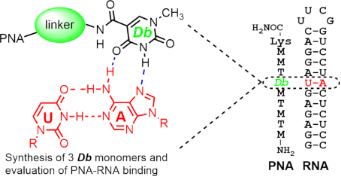
- including regulation and catalysis [1][2][3][4][5][6]. As a result, targeting ncRNA through molecular recognition would afford important tools for molecular biology and biotechnology [7]. One approach focuses on recognition of double-helical regions of RNA (dhRNA) using oligomers called triplex-forming


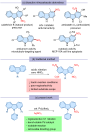
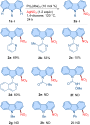
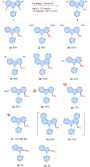
Palladium-catalyzed regioselective C1-selective nitration of carbazoles
Beilstein J. Org. Chem. 2025, 21, 2479–2488, doi:10.3762/bjoc.21.190
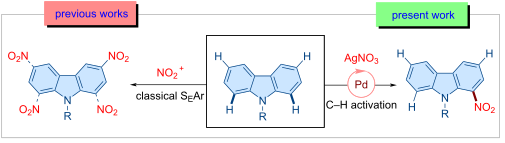
- valuable platform for the selective functionalization of carbazoles, offering potential applications in optoelectronics, functional organic materials, and related areas while contributing to the advancement of C–H activation methodologies. Keywords: C–H activation; carbazole; catalysis; nitration


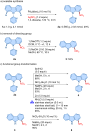
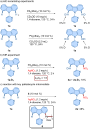
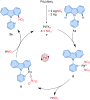
Synthesis of the tetracyclic skeleton of Aspidosperma alkaloids via PET-initiated cationic radical-derived interrupted [2 + 2]/retro-Mannich reaction
Beilstein J. Org. Chem. 2025, 21, 2470–2478, doi:10.3762/bjoc.21.189
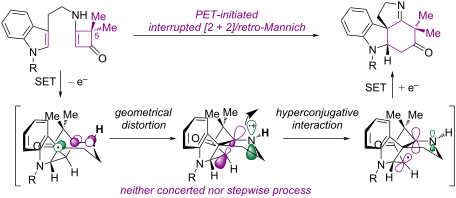
- photoredox catalysis) processes [8][9][10]. Cyclobutenone (A) is a versatile C4 synthon [11] – its [2 + 2] photocyclization yields B, featuring a strained bicyclo[2.2.0]hexane unit [12], which can fragment to form C (Figure 1a) [13][14]. However, competitive C1–C4 bond cleavage under irradiation or heating
- leads to ketene D, which can undergo cycloaddition with an alkene to yield E. This fragmentation pathway dominates under various conditions (e.g., transition-metal catalysis, nucleophilic addition) and is driven by ring-strain release [11]. PET, an alternative to direct excitation and EnT, enables the


Catalytic enantioselective synthesis of selenium-containing atropisomers via C–Se bond formations
Beilstein J. Org. Chem. 2025, 21, 2447–2455, doi:10.3762/bjoc.21.186
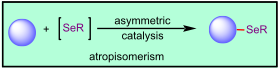
- Atropisomers are not only prevalent in biologically active natural products and pharmaceuticals, but they have also garnered increasing attention for their effectiveness as ligands and catalysts in the field of catalytic asymmetric synthesis. Asymmetric catalysis serves as a key strategy for the
- . Keywords: asymmetric catalysis; atropisomer; chiral selenium-containing compound; C–Se bond formation; Introduction Selenium is an essential trace element for human body [1]. It plays an important role in metabolism. In 1817, the Swedish chemist Berzelius found that red residual mud was attached to the
- compounds can participate in asymmetric synthesis reactions and construct chiral molecules with specific stereoconfiguration, which is particularly critical for drug synthesis [9]. In the field of organic catalysis, chiral organic selenium-containing compounds can be used as chiral ligands or catalysts to




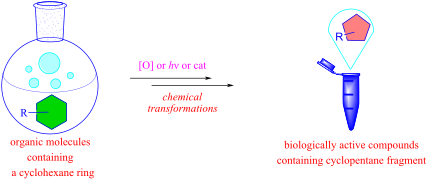
Transformation of the cyclohexane ring to the cyclopentane fragment of biologically active compounds
Beilstein J. Org. Chem. 2025, 21, 2416–2446, doi:10.3762/bjoc.21.185
- allylic oxidation using H2SeO3-dioxane system to form the C30 aldehyde 47, or by the ozonolytic cleavage of the double bond between C20 and C29 to produce 20-methyl-3-ethyldiketone 48 [36]. Intramolecular nitrile–anionic cyclization of ketone 46 or diketone 48 under conditions of basic catalysis proceeded
- 30% and a selectivity of 70% at −100 °C (Scheme 21). 2.3 Wolff rearrangement The Wolff rearrangement is the transformation of α-diazoketones into acids or their derivatives through heating, catalysis, or UV irradiation in the presence of water, alcohols, ammonia, amines, etc. The Wolff rearrangement


Adaptive experimentation and optimization in organic chemistry
Beilstein J. Org. Chem. 2025, 21, 2367–2368, doi:10.3762/bjoc.21.180
- de Lausanne (EPFL), Lausanne, Switzerland National Centre of Competence in Research (NCCR) Catalysis, École Polytechnique Fédérale de Lausanne (EPFL), Lausanne, Switzerland 10.3762/bjoc.21.180 The field of organic chemistry is undergoing a remarkable transformation. The convergence of laboratory
Rotaxanes with integrated photoswitches: design principles, functional behavior, and emerging applications
Beilstein J. Org. Chem. 2025, 21, 2345–2366, doi:10.3762/bjoc.21.179

- patterns that dictate the position of the macrocycle. Later, Leigh and co-workers introduced a new strategy for dynamically controlling asymmetric catalysis using a hydrazone-based rotaxane [72]. The axle features a hydrazone photoswitch and a pseudo-meso 2,5-disubstituted pyrrolidine organocatalytic unit


Comparative analysis of complanadine A total syntheses
Beilstein J. Org. Chem. 2025, 21, 2334–2344, doi:10.3762/bjoc.21.178
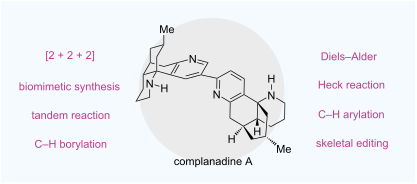
- strategies and creative tactics, reflecting how emerging synthetic capabilities and concepts can positively impact natural product total synthesis. Keywords: biomimetic synthesis; C–H functionalization; complanadine; lycopodium alkaloid; skeletal editing; total synthesis; transition metal catalysis
- approaches. Overall, their synthesis highlights the impact of enabling transition metal catalysis on natural product total synthesis. The Siegel synthesis starts with chiral pool molecule (+)-pulegone (14), which encodes the first stereocenter of the entire sequence. (+)-Pulegone was converted to compound 15
- catalysis, C–H activation methods, biomimetic synthesis, classic rearrangements, skeletal editing logic, and others. In addition, these efforts enabled the identification of the potential cellular target of complanadine A, validation of its neurotrophic activity, establishment of preliminary structure