


Search results
Search for "dithiane" in Full Text gives 38 result(s) in Beilstein Journal of Organic Chemistry.
Thiazole formation through a modified Gewald reaction
- Carl J. Mallia,
- Lukas Englert,
- Gary C. Walter and
- Ian R. Baxendale
Beilstein J. Org. Chem. 2015, 11, 875–883, doi:10.3762/bjoc.11.98
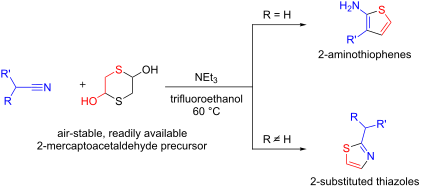
- The synthesis of thiazoles and thiophenes starting from nitriles, via a modified Gewald reaction has been studied for a number of different substrates. 1,4-Dithiane-2,5-diol was used as the aldehyde precursor to give either 2-substituted thiazoles or 2-substituted aminothiophenes depending on the
- substitution of the α-carbon to the cyano group. Keywords: design of experiment (DOE); 1,4-dithiane-2,5-diol; Gewald reaction; thiazole; thiophene; Introduction Thiazoles are privileged motifs which are encountered in many naturally occurring bioactive compounds and pharmaceuticals with indications in a
- an effecient way of synthesising 2-subsituted thiazoles from readily available, air stable 1,4-dithiane-2,5-diol (10) as a precursor for 2-mercaptoacetaldehyde. Experimental See Supporting Information File 1 for full experimental data. Selected examples of biologically active thiazole containing

Graphical Abstract

Figure 1: Selected examples of biologically active thiazole containing molecules [12-20].

Scheme 1: Illustration of substrates that form thiophenes under Gewald-type conditions.

Figure 2: Substrates which did not react under the optimised conditions.

Scheme 2: Proposed mechanisms for the formation of thiazoles.
Sacrolide A, a new antimicrobial and cytotoxic oxylipin macrolide from the edible cyanobacterium Aphanothece sacrum
- Naoya Oku,
- Miyako Matsumoto,
- Kohsuke Yonejima,
- Keijiroh Tansei and
- Yasuhiro Igarashi
Beilstein J. Org. Chem. 2014, 10, 1808–1816, doi:10.3762/bjoc.10.190
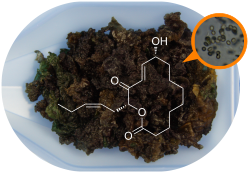
- because of epimerization [12]. To circumvent this problem, we initially attempted to protect the ketone group prior to chemical conversion (Scheme 1). Compound 1 was acetylated (Supporting Information File 1) and subjected to protection as 1,3-dithiane [13] or 1,4-dinitrophenylhydrazone [14]; however

Graphical Abstract

Figure 1: Structure of sacrolide A (1).

Figure 2: Selected COSY (bold lines) and HMBC (arrows) correlations for sacrolide A (1).

Scheme 1: Initial derivatization strategy for the stereochemical analysis of sacrolide A (1).

Scheme 2: Determination of the stereochemistry of sacrolide A (1).

Scheme 3: Plausible biosynthesis of sacrolide A (1).

Figure 3: The effect of sacrolide A (1) on 3Y1 rat fibroblastic cells. (a) Control. (b) 45 min after exposure...

Figure 4: Extracted ion chromatograms for sacrolide A (1) molecular ion at m/z 307 [M – H]− in the LC–MS anal...
Asymmetric total synthesis of a putative sex pheromone component from the parasitoid wasp Trichogramma turkestanica
- Danny Geerdink,
- Jeffrey Buter,
- Teris A. van Beek and
- Adriaan J. Minnaard
Beilstein J. Org. Chem. 2014, 10, 761–766, doi:10.3762/bjoc.10.71
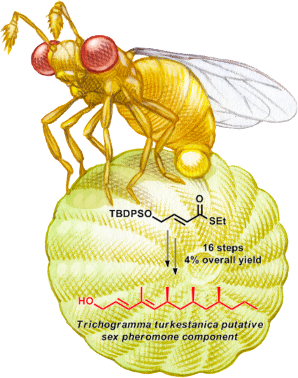
- 10 over two steps [23]. As an alternative deoxygenation procedure, we relied on the so-called Mozingo reduction. Although the procedure for dithiane formation has been reported to be catalytic in Lewis acid, we found a linear correlation between the amount of BF3·Et2O used and the conversion (Scheme
Graphical Abstract

Figure 1: Originally proposed structures A and B and revised structures 1 and 2 of putative sex pheromone com...

Scheme 1: Application of the iterative conjugate addition protocol for the preparation of 8.

Scheme 2: Deoxygenation and desilylation of 8.

Scheme 3: Vinylogous Horner–Wadsworth–Emmons olefination.

Scheme 4: Synthesis of α,β-unsaturated ester 15 using a Wittig reaction.

Scheme 5: Completion of the synthesis of the putative sex pheromone 2.
Garner’s aldehyde as a versatile intermediate in the synthesis of enantiopure natural products
- Mikko Passiniemi and
- Ari M.P. Koskinen
Beilstein J. Org. Chem. 2013, 9, 2641–2659, doi:10.3762/bjoc.9.300
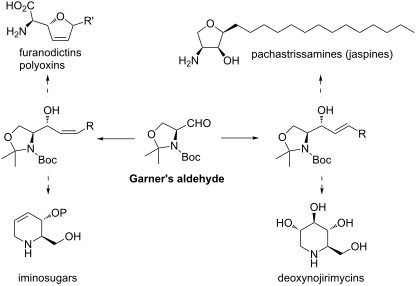
- higher catalyst loading (5% instead of the usual 3%). Fujisawa studied the addition of lithiated dithiane to (S)-1 (Scheme 13) [66]. Without additives the reaction in THF provided alcohols 27 and 28 in a 7:3 ratio (anti/syn). Addition of aggregation braking HMPT slightly improved the selectivity (10:3
- co-ordinated delivery of the vinyl nucleophile. (a) PhMgBr, THF, −78 °C → 0 °C [62] or (a) PhMgBr, Et2O, 0 °C [63]. (a) cat. RhCl3·3H2O, cat. 26, NaOMe, Ph-B(OH)2, aq DME, 80 °C (24, 71%); (b) cat. RhCl3·3H2O, cat. 26, NaOMe, C6H13CH=CH2-B(OH)2, aq DME, 55 °C (25, 78%). Lithiated dithiane (3 equiv

Graphical Abstract

Figure 1: Structures of limonene, carvone and thalidomide.

Figure 2: Structure of Garner’s aldehyde.

Scheme 1: (a) i) Boc2O, 1.0 N NaOH (pH >10), dioxane, +5 °C → rt; ii) MeI, K2CO3, DMF, 0 °C → rt (86% over tw...

Scheme 2: (a) AcCl, MeOH, 0 °C → reflux (99%); (b) i) (Boc)2O, Et3N, THF, 0 °C → rt → 50 °C (89%); ii) Me2C(O...

Scheme 3: (a) LiAlH4, THF, rt (93–96%); (b) (COCl)2, DMSO, iPr2NEt, CH2Cl2, −78 °C → −55 °C (99%).

Scheme 4: The Koskinen procedure for the preparation of Garner’s aldehyde. (a) i) AcCl, MeOH, 0 °C → 50 °C (9...

Scheme 5: Burke’s synthesis of Garner’s aldehyde. BDP - bis(diazaphospholane).

Figure 3: Structures of some iminosugars (7, 9), peptide antibiotics (8) and sphingosine (10) and pachastriss...

Scheme 6: Use of Garner’s aldehyde 1 in multistep synthesis.

Scheme 7: Explanation of the anti- and syn-selectivity in the nucleophilic addition reaction.

Scheme 8: Herold’s method: (a) Lithium 1-pentadecyne, HMPT, THF, −78 °C (71%); (b) Lithium 1-pentadecyne, ZnBr...

Scheme 9: (a) Ethyl lithiumpropiolate, HMPT, THF, −78 °C; (b) (S)- or (R)-MTPA, DCC, DMAP, THF, rt (18, 81%) ...

Scheme 10: Coleman’s selectivity studies and their transition state model for the co-ordinated delivery of the...

Scheme 11: (a) PhMgBr, THF, −78 °C → 0 °C [62] or (a) PhMgBr, Et2O, 0 °C [63].

Scheme 12: (a) cat. RhCl3·3H2O, cat. 26, NaOMe, Ph-B(OH)2, aq DME, 80 °C (24, 71%); (b) cat. RhCl3·3H2O, cat. ...

Scheme 13: Lithiated dithiane (3 equiv), CuI (0.3 equiv), BF3·Et2O (6 equiv), THF, −50 °C, 12 h (70%).

Scheme 14: Addition reaction reported by Lam et al. (a) 1-Hexyne, n-BuLi, THF, −15 °C or −40 °C.

Scheme 15: (a) n-BuLi, HMPT, toluene, −78 °C → rt (85%); (b) n-BuLi, ZnCl2, toluene/Et2O, −78 °C → rt (65%).

Scheme 16: (a) n-BuLi, 34, THF, −40 °C [69]; (b) n-BuLi, 35, THF, −78 °C → rt (80%) [70]; (c) n-BuLi, 35, HMPT, THF, −...

Scheme 17: (a) cat. Rh(acac)(CO)2, 42, THF, 40 °C (74%).
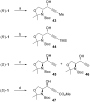
Scheme 18: (a) 1-PropynylMgBr, CuI, THF, Me2S, −78 °C (95%); (b) Ethynyltrimethylsilane, EtMgBr, CuI, THF, Me2...

Scheme 19: (a) cat. 50, toluene, 0 °C (52%); (b) cat. 51, toluene, 0 °C (51%); (c) cat. 52, toluene, 0 °C (50%...

Scheme 20: (a) (iPr)3SiH, cat. Ni(COD)2, dimesityleneimidazolium·HCl, t-BuOK, THF, rt.

Scheme 21: (a) Cp2Zr(H)Cl, cat. AgAsF6, CH2Cl2, rt; (b) Cp2Zr(H)Cl, 1-pentadecyne, cat. ZnBr2 in THF for anti-...

Scheme 22: (a) i) 31, n-BuLi, THF, −78 °C; ii) (S)-1, THF, −78 °C; (b) Red-Al, THF, 0 °C.

Scheme 23: (a) 61, n-BuLi, DMPU, toluene, −78 °C, then (S)-1, toluene, −95 °C (57%); (b) 61, n-BuLi, ZnCl2, to...

Scheme 24: Olefin A as an intermediate in natural product synthesis.

Scheme 25: (a) Ph3(Me)PBr, KH, benzene (66%, rac-64) or (b) AlMe3, Zn, CH2I2, THF (76%) [101]; (c) Ph3(Me)PBr, n-Bu...

Scheme 26: (a) Benzene, rt (82%) [108]; (b) K2CO3, MeOH (85%) [89]; (c) iPrOH, [Ir(COD)Cl]2, PPh3, THF, rt (81%) [114].

Scheme 27: Mechanism of the Still–Gennari modification of the HWE reaction leading to both olefin isomers.
An overview of the synthetic routes to the best selling drugs containing 6-membered heterocycles
- Marcus Baumann and
- Ian R. Baxendale
Beilstein J. Org. Chem. 2013, 9, 2265–2319, doi:10.3762/bjoc.9.265
- between glyoxilic acid monohydrate (3.13) and 1,4-dithiane-2,5-diol (3.14) (Scheme 33) [87]. Subsequent acetylation of the hydroxy group followed by ester formation using (−)-L-menthol permits crystallisation separation of the two diastereoisomers. The use of bis-TBDMS-cytosine as a coupling partner in

Graphical Abstract

Scheme 1: Scaled industrial processes for the synthesis of simple pyridines.

Scheme 2: Synthesis of nicotinic acid from 2-methyl-5-ethylpyridine (1.11).

Scheme 3: Synthesis of 3-picoline and nicotinic acid.

Scheme 4: Synthesis of 3-picoline from 2-methylglutarodinitrile 1.19.

Scheme 5: Picoline-based synthesis of clarinex (no yields reported).

Scheme 6: Mode of action of proton-pump inhibitors and structures of the API’s.

Scheme 7: Hantzsch-like route towards the pyridine rings in common proton pump inhibitors.

Figure 1: Structures of rosiglitazone (1.40) and pioglitazone (1.41).

Scheme 8: Synthesis of rosiglitazone.

Scheme 9: Syntheses of 2-pyridones.

Scheme 10: Synthesis and mechanism of 2-pyrone from malic acid.

Scheme 11: Polymer-assisted synthesis of rosiglitazone.

Scheme 12: Synthesis of pioglitazone.

Scheme 13: Meerwein arylation reaction towards pioglitazone.

Scheme 14: Route towards pioglitazone utilising tyrosine.

Scheme 15: Route towards pioglitazone via Darzens ester formation.

Scheme 16: Syntheses of the thiazolidinedione moiety.

Scheme 17: Synthesis of etoricoxib utilising Negishi and Stille cross-coupling reactions.

Scheme 18: Synthesis of etoricoxib via vinamidinium condensation.

Figure 2: Structures of nalidixic acid, levofloxacin and moxifloxacin.

Scheme 19: Synthesis of moxifloxacin.

Scheme 20: Synthesis of (S,S)-2,8-diazabicyclo[4.3.0]nonane 1.105.

Scheme 21: Synthesis of levofloxacin.

Scheme 22: Alternative approach to the levofloxacin core 1.125.

Figure 3: Structures of nifedipine, amlodipine and clevidipine.

Scheme 23: Mg3N2-mediated synthesis of nifedipine.

Scheme 24: Synthesis of rac-amlodipine as besylate salt.

Scheme 25: Aza Diels–Alder approach towards amlodipine.

Scheme 26: Routes towards clevidipine.

Figure 4: Examples of piperidine containing drugs.

Figure 5: Discovery of tiagabine based on early leads.

Scheme 27: Synthetic sequences to tiagabine.

Figure 6: Structures of solifenacin (2.57) and muscarine (2.58).

Scheme 28: Enantioselective synthesis of solifenacin.

Figure 7: Structures of DPP-4 inhibitors of the gliptin-type.

Scheme 29: Formation of inactive diketopiperazines from cis-rotameric precursors.

Figure 8: Co-crystal structure of carmegliptin bound in the human DPP-4 active site (PDB 3kwf).

Scheme 30: Improved route to carmegliptin.

Figure 9: Structures of lamivudine and zidovudine.

Scheme 31: Typical routes accessing uracil, thymine and cytosine.

Scheme 32: Coupling between pyrimidones and riboses via the Vorbrüggen nucleosidation.

Scheme 33: Synthesis of lamivudine.

Scheme 34: Synthesis of raltegravir.

Scheme 35: Mechanistic studies on the formation of 3.22.

Figure 10: Structures of selected pyrimidine containing drugs.

Scheme 36: General preparation of pyrimidines and dihydropyrimidones.

Scheme 37: Synthesis of imatinib.

Scheme 38: Flow synthesis of imatinib.

Scheme 39: Syntheses of erlotinib.

Scheme 40: Synthesis of erlotinib proceeding via Dimroth rearrangement.

Scheme 41: Synthesis of lapatinib.

Scheme 42: Synthesis of rosuvastatin.

Scheme 43: Alternative preparation of the key aldehyde towards rosuvastatin.

Figure 11: Structure comparison between nicotinic acetylcholine receptor agonists.

Scheme 44: Syntheses of varenicline and its key building block 4.5.

Scheme 45: Synthetic access to eszopiclone and brimonidine via quinoxaline intermediates.

Figure 12: Bortezomib bound in an active site of the yeast 20S proteasome ([114], pdb 2F16).

Scheme 46: Asymmetric synthesis of bortezomib.

Figure 13: Structures of some prominent piperazine containing drugs.

Figure 14: Structural comparison between the core of aplaviroc (4.35) and a type-1 β-turn (4.36).

Scheme 47: Examplary synthesis of an aplaviroc analogue via the Ugi-MCR.

Scheme 48: Syntheses of azelastine (5.1).

Figure 15: Structures of captopril, enalapril and cilazapril.

Scheme 49: Synthesis of cilazapril.

Figure 16: Structures of lamotrigine, ceftriaxone and azapropazone.

Scheme 50: Synthesis of lamotrigine.

Scheme 51: Alternative synthesis of lamotrigine (no yields reported).

Figure 17: Structural comparison between imiquimod and the related adenosine nucleoside.

Scheme 52: Conventional synthesis of imiquimod (no yields reported).

Scheme 53: Synthesis of imiquimod.

Scheme 54: Synthesis of imiquimod via tetrazole formation (not all yields reported).

Figure 18: Structures of various anti HIV-medications.

Scheme 55: Synthesis of abacavir.

Figure 19: Structures of diazepam compared to modern replacements.

Scheme 56: Synthesis of ocinaplon.

Scheme 57: Access to zaleplon and indiplon.

Scheme 58: Different routes towards the required N-methylpyrazole 6.65 of sildenafil.

Scheme 59: Polymer-supported reagents in the synthesis of key aminopyrazole 6.72.

Scheme 60: Early synthetic route to sildenafil.

Scheme 61: Convergent preparations of sildenafil.

Figure 20: Comparison of the structures of sildenafil, tadalafil and vardenafil.

Scheme 62: Short route to imidazotriazinones.

Scheme 63: Alternative route towards vardenafils core imidazotriazinone (6.95).

Scheme 64: Bayer’s approach to the vardenafil core.

Scheme 65: Large scale synthesis of vardenafil.

Scheme 66: Mode of action of temozolomide (6.105) as methylating agent.

Scheme 67: Different routes to temozolomide.

Scheme 68: Safer route towards temozolomide.

Figure 21: Some unreported heterocyclic scaffolds in top market drugs.
A reductive coupling strategy towards ripostatin A
- Kristin D. Schleicher and
- Timothy F. Jamison
Beilstein J. Org. Chem. 2013, 9, 1533–1550, doi:10.3762/bjoc.9.175
- corresponding diester. Preliminary investigation indicates that oxidation of the diol derived from 6 is complicated by the 1,5-relationship of the alcohols. Despite the greater complexity inherent to this alternative, differentiation of the alcohols allowing for sequential oxidation may be necessary. Dithiane
- just 30 minutes; a significant improvement over heating the reaction mixture in toluene under reflux, which typically required 48 hours to obtain a comparable yield. Reduction and oxidation afforded the aldehyde 47, which could then be converted to dithiane 41. Unfortunately, attempts to couple 41 with
- an oxygenated epoxide fragment under a variety of conditions reported by Smith for lithiation and electrophilic trapping [51] were unsuccessful. We suspected that the lithiated dithiane was not being generated and decided to investigate this step of the reaction independently of reaction with the

Graphical Abstract

Figure 1: Structures of the ripostatins.

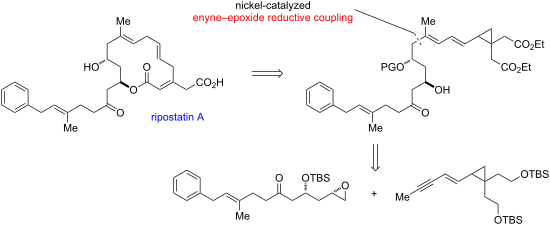
Figure 2: Retrosynthesis of ripostatin A.

Scheme 1: Nickel-catalyzed reductive coupling of alkynes and epoxides.

Figure 3: Proposed retrosynthesis of ripostatin A featuring enyne–epoxide reductive coupling and rearrangemen...

Scheme 2: Potential transition states and stereochemical outcomes for a concerted 1,5-hydrogen rearrangement.

Scheme 3: Rearrangements of vinylcyclopropanes to acylic 1,4-dienes.

Scheme 4: Synthesis of cyclopropyl enyne.

Scheme 5: Synthesis of model epoxide for investigation of the nickel-catalyzed coupling reaction.

Scheme 6: Nickel-catalyzed enyne–epoxide reductive coupling reaction.

Scheme 7: Proposed mechanism for the nickel-catalyzed coupling reaction of alkynes or enynes with epoxides.

Scheme 8: Regioselectivity changes in reductive couplings of alkynes and 3-oxygenated epoxides.

Scheme 9: Enyne reductive coupling with 1,2-epoxyoctane.

Figure 4: Initial retrosynthesis of the epoxide fragment by using dithiane coupling.

Scheme 10: Synthesis of dithiane by Claisen rearrangement.

Scheme 11: Deuterium labeling reveals that the allylic/benzylic site is most acidic.

Scheme 12: Oxy-Michael addition to δ-hydroxy-α,β-enones.

Figure 5: Revised retrosynthesis of epoxide 5.

Scheme 13: Synthesis of functionalized ketone by oxy-Michael addition.

Figure 6: Retrosynthesis by using iodocylization to introduce the epoxide.

Scheme 14: Synthesis of ketone 57 using thiazolidinethione chiral auxiliary.

Figure 7: Retrosynthesis involving decarboxylation of a β-ketoester.

Scheme 15: Synthesis of β-ketoester 61.

Scheme 16: Decarboxylation of 61 under Krapcho conditions.

Scheme 17: Improved synthesis of 63 and attempted iodocyclization.

Figure 8: Retrosynthesis utilizing Rychnovsky’s cyanohydrin acetonide methodology.

Scheme 18: Synthesis of cyanohydrin acetonide and attempted alkylation with epoxide.

Scheme 19: Allylation of acetonide and conversion to aldehyde.

Scheme 20: Synthesis of the epoxide precursor by an aldol−decarboxylation sequence.
Re2O7-catalyzed reaction of hemiacetals and aldehydes with O-, S-, and C-nucleophiles
- Wantanee Sittiwong,
- Michael W. Richardson,
- Charles E. Schiaffo,
- Thomas J. Fisher and
- Patrick H. Dussault
Beilstein J. Org. Chem. 2013, 9, 1526–1532, doi:10.3762/bjoc.9.174
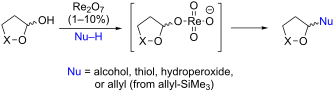
- furnish a dithioacetal or a 1,3-dithiane. A ketone substrate did not react under these conditions (not shown). The mono- and dithioacetalization reactions were visibly different from the O-acetalizations described above. Whereas addition of Re2O7 to a hemiacetal in the presence of an alcohol generates a

Graphical Abstract

Scheme 1: Transacetalization of acetal 7.

Scheme 2: Thioacetalization of hexanal with Re2O7.

Scheme 3: Proposed mechanistic pathway.
Camera-enabled techniques for organic synthesis
- Steven V. Ley,
- Richard J. Ingham,
- Matthew O’Brien and
- Duncan L. Browne
Beilstein J. Org. Chem. 2013, 9, 1051–1072, doi:10.3762/bjoc.9.118
- of this device was for the preparation of a series of hydrazones. A continuous aqueous extraction to remove the excess hydrazine enabled the product to be collected in high purity (Figure 29). Other applications reported in this work include alkene epoxidation and dithiane preparation. Dispersion of

Graphical Abstract

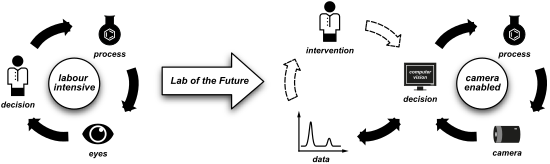
Figure 1: The evolution of computer-based monitoring and control within the laboratory of the future. (a) In ...

Figure 2: A selection of the wide range of digital camera devices available, focusing on those that can be at...

Figure 3: (a) Network cameras (Linksys WVC54GC) in operation in the Innovative Technology Centre laboratory. ...

Figure 4: Remote transmission of video imagery and reaction monitoring data.

Figure 5: A camera can assist the chemist in a number of ways. Digital video recordings of reactions can be u...

Figure 6: Suzuki–Miyaura reaction performed within a microfluidic system. The product is observed by high-spe...

Figure 7: Friedel–Crafts reactions performed by using solid-acid catalysis at high pressures. A camera allowe...

Figure 8: (a) The video camera setup providing a view of the reaction within the microwave cavity; (b) a pall...

Figure 9: (a) Buchwald–Hartwig coupling within a microchannel reactor. (b) Camera view of aggregate deposits ...

Figure 10: The key diprotected piperazic acid precursor in the synthesis of chloptosin.

Figure 11: (a) Piperazic acid mixture, and (b) apparatus for enantiomeric upgrading by recorded crystallisatio...

Figure 12: (a) Crystallisation of a Mn(II) polyoxometalate. (b) A bespoke reactor produced using additive fabr...

Figure 13: Computer processing of digital imagery produces numerical data for later processing.

Figure 14: (a) The Morphologi G3 particle image analyser, which uses images captured with a camera microscope ...

Figure 15: Use of the Python Imaging Library to analyse the proportion of an image consisting of red pixels. A...

Figure 16: (a) Arduino [73,75], a flexible open-source platform for rapidly prototyping electronic applications. (b) ...

Figure 17: Patented device incorporating a standard 96-well plate illuminated by a white-light source. The pla...

Figure 18: Simple colour-change experiments to assess a new AF-2400 gas permeable flow reactor. The reactor co...

Figure 19: (a) Ozonolysis of a series of alkenes using ozone in a bottle-reactor; (b) Glaser–Hay coupling usin...

Figure 20: (a) Camera-assisted titration of ammonia using bromocresol green. NH3 is dissolved in the gas-flow ...

Figure 21: (a) Bubble-counting setup. As the output of the gas-flow reactor (hydrogen dissolved in dichloromet...

Figure 22: Usage of digital cameras to enable remote control of reactions.

Figure 23: In-line solvent switching apparatus. The reactor output is directed into a bottle positioned on a h...

Figure 24: Catch and Release apparatus. (1) The amide intermediate is sequestered onto the central sulfonic ac...

Figure 25: Clips from video footage showing the silica reagent changing appearance; the arrows indicate the ed...

Figure 26: Combination of computer vision and automation to enable machine-assisted synthetic processes.

Figure 27: A coloured float at the interface between heavy and light solvents allows a camera to recognise the...

Figure 28: Graphical demonstration of the image-recognition process. At the start of the experiment, the colou...

Figure 29: Application of the computer-vision-enabled liquid–liquid extractor. The product mixture of a hydraz...

Figure 30: Application of a computer-vision technique to measure the dispersion of a plug of material passing ...

Figure 31: Multiple extractors in series controlled by a single camera.

Figure 32: Two-step synthesis of branched aldehydes from aryl iodides using two reactive gases. A liquid–liqui...
Alternaric acid: formal synthesis and related studies
- Michael C. Slade and
- Jeffrey S. Johnson
Beilstein J. Org. Chem. 2013, 9, 166–172, doi:10.3762/bjoc.9.19
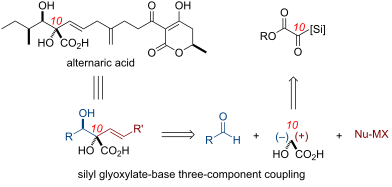
- insufficient for adequate stereocontrol in the three-component coupling reaction [34]. An additional branch point in the carbon backbone, such as in 16b, was deemed necessary. The 1,3-dithiane group in aldehyde 16ba was conceived as a promising candidate for a stereocontrolling element due to its large size
- glyoxylate 1a under previously optimized conditions, high efficiency was achieved along with excellent (>20:1) stereochemical control for the formation of three-component-coupling product 17 (Scheme 7) [41][42][43][44]. To verify that the dithiane was acting in the desired fashion, and to rule out chelation
- from one of the Lewis basic sulfur atoms, derivatization to a lactone was carried out. The dithiane was cleaved to the ketone 18, which underwent a 1,3-syn-selective reduction [45]. The resultant diol 19 was subjected to acidic conditions to effect cleavage of the tert-butyl ester and lactonization to

Graphical Abstract

Scheme 1: (A) Silyl glyoxylates as versatile reagents for three-component coupling reactions: representative ...

Scheme 2: Potential applications of silyl glyoxylate couplings and precedent synthetic intermediates toward t...

Scheme 3: Three-component coupling with a vinyl nucleophile and elaboration to Ichihara’s aldehyde.

Scheme 4: Modified Julia olefination as a step-efficient alternative endgame strategy.

Scheme 5: Three-component coupling with an allyl nucleophile and demonstration of successful ruthenium-cataly...

Scheme 6: Approaches considered to address the stereochemical issue.

Scheme 7: Use of a dithiane moiety to excert stereochemical control in the three-component coupling reaction ...

Scheme 8: Synthesis of a vinyl iodide for nucleophile generation and its use in a three-component coupling re...
Multivalent display of the antimicrobial peptides BP100 and BP143
- Imma Güell,
- Rafael Ferre,
- Kasper K. Sørensen,
- Esther Badosa,
- Iteng Ng-Choi,
- Emilio Montesinos,
- Eduard Bardají,
- Lidia Feliu,
- Knud J. Jensen and
- Marta Planas
Beilstein J. Org. Chem. 2012, 8, 2106–2117, doi:10.3762/bjoc.8.237
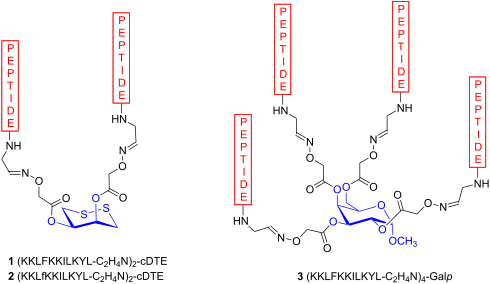
- functionalized cyclo-dithioerythritol (cDTE) and α-D-galactopyranoside (Galp) templates have been described in earlier publications [23][30]. Synthesis of carbopeptide (KKLFKKILKYL-C2H4N)2-cDTE (1) (4R,5S)-1,2-Dithiane-4,5-diyl bis(Boc)2-Aoa (cDTE) (12.7 mg, 18.2 μmol) was dissolved in TFA/CH2Cl2 (1:1, 2 mL) and
- stirred for 1 h. The solution was then concentrated in vacuo, redissolved in a small amount of water and lyophilized to afford (4R,5S)-1,2-dithiane-4,5-diyl bis(2-Aoa) as a white powder. This template and the peptide aldehyde 4 (65.7 mg, 45.0 μmol) were dissolved in 6.2 mL of a 1:1 solution of CH3CN and
- +, 532.2 [M + 6H]6+; HRMS–MALDI (m/z): [M + Na]+ calcd for C156H264N36NaO30S2, 3208.9753; found, 3208.9737. Synthesis of carbopeptide (KKLfKKILKYL-C2H4N)2-cDTE (2) (4R,5S)-1,2-Dithiane-4,5-diyl bis(2-(Boc)2-Aoa) (cDTE) (4.8 mg, 6.9 μmol) was dissolved in TFA/CH2Cl2 (1:1, 1 mL) and stirred for 1 h. The

Graphical Abstract

Figure 1: Structure of the carbopeptides 1–3.

Scheme 1: Solid-phase synthesis of the peptide aldehydes 4 and 5.

Scheme 2: Synthesis of the carbopeptides 1–3.

Figure 2: Kinetics of bactericidal activity on E. amylovora and S. enterica in the presence of peptides and c...
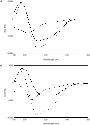
Figure 3: CD spectra of (a) carbopeptide 1 and of (b) carbopeptide 3 in: (i) 10 mM sodium phosphate buffer at...
Metathesis access to monocyclic iminocyclitol-based therapeutic agents
- Ileana Dragutan,
- Valerian Dragutan,
- Carmen Mitan,
- Hermanus C.M. Vosloo,
- Lionel Delaude and
- Albert Demonceau
Beilstein J. Org. Chem. 2011, 7, 699–716, doi:10.3762/bjoc.7.81

- steps via the Fleet protocol [55]. The tandem RCM/dihydroxylation sequence was also applied by Davis et al. in the synthesis of (−)-2,3-trans-3,4-cis-dihydroxyproline. In this case, an α-amino aldehyde, prepared by addition of a 1,3-dithiane to a chiral N-sulfinyl imine, was used as the chiral starting

Graphical Abstract

Scheme 1: Well-defined Mo- and Ru-alkylidene metathesis catalysts.

Scheme 2: Representative pyrrolidine-based iminocyclitols.

Scheme 3: Synthesis of (±)-(2R*,3R*,4S*)-2-hydroxymethylpyrrolidin-3,4-diol (18), (±)-2-hydroxymethylpyrrolid...

Scheme 4: Synthesis of enantiopure iminocyclitol (−)-(2S,3R,4S,5S)-2,5-dihydroxymethylpyrrolidin-3,4-diol (23...

Scheme 5: Synthesis of 1,4-dideoxy-1,4-imino-D-allitol (29) and formal synthesis of (2S,3R,4S)-3,4-dihydroxyp...

Scheme 6: Synthesis of iminocyclitols 35 and 36.

Scheme 7: Total synthesis of iminocyclitols 40 and 44.

Scheme 8: Synthesis of 2,5-dideoxy-2,5-imino-D-mannitol [(+)-DMDP] (49) and (−)-bulgecinine (50).

Scheme 9: Synthesis of (+)-broussonetine G (53).
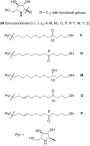
Scheme 10: Structural features of broussonetines 54.

Scheme 11: Synthesis of broussonetines by cross-metathesis.
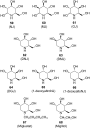
Scheme 12: Representative piperidine-based iminocyclitols.

Scheme 13: Total synthesis of 1-deoxynojirimycin (62) and 1-deoxyaltronojirimycin (65).

Scheme 14: Synthesis by RCM of 1-deoxymannonojirimycin (63) and 1-deoxyallonojirimycin (66).

Scheme 15: Total synthesis of (+)-1-deoxynojirimycin (62).

Scheme 16: Synthesis of ent-1,6-dideoxynojirimycin (83) and 5-amino-1,5,6-trideoxyaltrose (84).

Scheme 17: Synthesis of 1-deoxygalactonojirimycin (64), 1-deoxygulonojirimycin (91) and 1-deoxyidonojirimycin (...

Scheme 18: Synthesis of L-1-deoxyaltronojirimycin (96).

Scheme 19: Synthesis of 1-deoxymannonojirimycin (63) and 1-deoxyaltronojirimycin (65).

Scheme 20: Synthesis of 5-des(hydroxymethyl)-1-deoxymannonojirimycin (111) and 5-des(hydroxymethyl)-1-deoxynoj...

Scheme 21: Synthesis of D-1-deoxygulonojirimycin (91) and L-1-deoxyallonojirimycin (122).

Scheme 22: Total synthesis of fagomine (129), 3-epi-fagomine (126) and 3,4-di-epi-fagomine (130).

Scheme 23: Total synthesis of (+)-adenophorine (135).

Scheme 24: Total synthesis of (+)-5-deoxyadenophorine (138) and analogues 142–145.

Scheme 25: Synthesis by RCM of 1,6-dideoxy-1,6-iminoheptitols 148 and 149.

Scheme 26: Synthesis by RCM of oxazolidinyl azacycles 152 and 154.

Scheme 27: Representative azepane-based iminocyclitols.

Scheme 28: Synthesis of hydroxymethyl-1-(4-methylphenylsulfonyl)azepane 3,4,5-triol (169).

Scheme 29: Synthesis by RCM of tetrahydropyridin-3-ol 171 and tetrahydroazepin-3-ol 173.
Synthesis of (3R,5R)-harzialactone A and its (3R,5S)-isomer
- Gowravaram Sabitha,
- Rangavajjula Srinivas,
- Sukant K. Das and
- Jhillu S. Yadav
Beilstein J. Org. Chem. 2010, 6, No. 8, doi:10.3762/bjoc.6.8
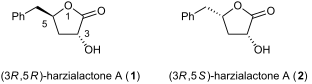
- . Epoxide opening with thioacetal and diastereoselective reductions are used as key reactions. Keywords: dithiane; harzialactone A; hydroxyl directed reduction; stereoisomer; Introduction Marine microorganisms such as bacteria, fungi, and microalgae have proved to be a rich source of structurally novel
- successive protecting group transformations. 3 can be made by hydroxyl directed reduction of 4 which in turn could be prepared by epoxide 6 opening with dithiane 5. Results and Discussion The synthesis of natural (3R,5R)-1 was initiated from the known epoxide 6, which is commercially available. Treatment of

Graphical Abstract

Figure 1: Natural harzialactone A (1), and its (3R,5S)-isomer (2).

Scheme 1: Retrosynthesis of harzialactone A (1).

Scheme 2: Synthesis of natural harzialactone A (1).

Scheme 3: Synthesis of (3R,5S)-harzialactone A (2).
Mitomycins syntheses: a recent update
- Jean-Christophe Andrez
Beilstein J. Org. Chem. 2009, 5, No. 33, doi:10.3762/bjoc.5.33
- the molecule. The synthesis followed Scheme 45 with a noteworthy methoxy-ketal formation going through the dithiane 161. The introduction of the aziridine was elaborated via a diol in the usual way [119]. However, three equivalents of osmium tetroxide and one week of reaction time were needed to get

Graphical Abstract

Scheme 1: Aziridine containing natural products.

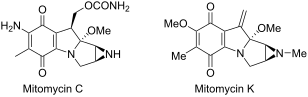
Scheme 2: Mitomycin structures and nomenclature.

Scheme 3: Base catalysed epimerization of mitomycin B.

Scheme 4: Biosynthesis of mitomycin C (MMC) 7.

Scheme 5: Mode of action of mitomycin C.

Scheme 6: The N–C3–C9a disconnection.

Scheme 7: Danishefsky’s Retrosynthesis of mitomycin K.

Scheme 8: Hetero Diels–Alder reaction en route to mitomycins.

Scheme 9: Nitroso Diels–Alder cycloaddition.

Scheme 10: Frank azide cycloadddition.

Scheme 11: Final steps of mitomycin K synthesis. aPDC, DCM; bPhSCH2N3, PhH, 80 °C; cL-selectride, THF, −78 °C; ...

Scheme 12: Naruta–Maruyama retrosynthesis.

Scheme 13: Synthesis of a leucoaziridinomitosane by nitrene cycloaddition. aAlCl3-Et2O; bNaH, ClCH2OMe; cn-BuL...

Scheme 14: Thermal decomposition of azidoquinone 51.

Scheme 15: Diastereoselectivity during the cycloaddition.

Scheme 16: Oxidation with iodo-azide.

Scheme 17: Williams’ approach towards mitomycins.aDEIPSCl, Imidazole, DCM; bPd/C, HCO2NH4, MeOH; cAllocCl, NaH...

Scheme 18: Synthesis of pyrrolidones by homoconjugate addition.
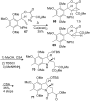
Scheme 19: Homoconjugate addition on the fully functionalized substrate.

Scheme 20: Introduction of the olefin.

Scheme 21: Retrosynthesis of N–C9a, N–C3 bond formation.

Scheme 22: Synthesis of the pyrrolo[1,2]indole 82 using N-PSP activation.aAc2O, Py; bAc2O, Hg(OAc)2, AcOH, 90%...

Scheme 23: Synthesis of an aziridinomitosane. am-CPBA, DCM then iPr2NH, CCl4 reflux; bK2CO3, MeOH; cBnBr, KH; d...

Scheme 24: Oxidation products of a leucoaziridinomitosane obtained from a Polonovski oxidation.

Scheme 25: Polonovski oxidation of an aziridinomitosane. am-CPBA; bPd/C, H2; cDimethoxypropane, PPTS.

Scheme 26: The C1–C9a disconnection.

Scheme 27: Ziegler synthesis of desmethoxymitomycin A.aIm2C=O, THF; bNH3; cTMSOTf, 2,6-di-tert-butylpyridine, ...

Scheme 28: Transformation of sodium erythorbate.aTBDMSCl; bNaN3; cPPh3; d(Boc)2O, DMAP; eTBAF; fTf2O, Pyr.

Scheme 29: Formation of C9,C10-unsaturation in the mitomycins. am-CPBA, DCM; bO3, MeOH; cMe2S; dKHMDS, (EtO)3P...

Scheme 30: Fragmentation mechanism.

Scheme 31: Michael addition-cyclisation.

Scheme 32: SmI2 8-endo-dig cyclisation.

Scheme 33: Synthesis of pyrrolo[1,2-a]indole by 5-exo-dig radical cyclization.

Scheme 34: The C9–C9a disconnection.

Scheme 35: Intramolecular nitrile oxide cycloaddition.

Scheme 36: Regioselectivity of the INOC.

Scheme 37: Fukuyama’s INOC strategy.

Scheme 38: Synthesis of a mitosane core by rearrangement of a 1-(1-pyrrolidinyl)-1,3-butadiene.

Scheme 39: Sulikowski synthesis of an aziridinomitosene. aPd(Tol3P)2Cl2, Bu3SnF, 140; bH2, Pd/C; cTFAA, Et3N; d...

Scheme 40: Enantioselective carbene insertion.

Scheme 41: Parson’s radical cyclization.

Scheme 42: Cha’s mitomycin B core synthesis.

Scheme 43: The N-aromatic disconnection.

Scheme 44: Kishi retrosynthesis.

Scheme 45: Kishi synthesis of a starting material. aallyl bromide, K2CO3, acetone, reflux; bN,N-Dimethylanilin...
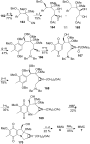
Scheme 46: Kishi synthesis of MMC 7. aLDA, THF, −78 °C then PhSeBr, THF, −78 °C; bH2O2, THF-EtOAc; cDIBAL, DCM...

Scheme 47: Acid catalyzed degradation of MMC 7.

Scheme 48: In vivo formation of apomitomycin B.

Scheme 49: Advanced intermediate for apomitomycin B synthesis.

Scheme 50: Remers synthesis of a functionalized mitosene. aTMSCl, Et3N, ZnCl2 then NBS; bAcOK; cNH2OH; dPd/C, H...

Scheme 51: Coleman synthesis of desmethoxymitomycin A. aSnCl2, PhSH, Et3N, CH3CN; bClCO2Bn, Et3N; cPPh3, DIAD,...

Scheme 52: Transition state and pyrrolidine synthesis.

Scheme 53: Air oxidation of mitosanes and aziridinomitosanes.

Scheme 54: The C9-aromatic disconnection.

Scheme 55: Synthesis of the aziridine precursor. aLHMDS, THF; bNaOH; c(s)-α-Me-BnNH2, DCC, HOBT; dDIBAL; eK2CO3...

Scheme 56: Synthesis of 206 via enamine conjugate addition.

Scheme 57: Rapoport synthesis of an aziridinomitosene.

Scheme 58: One pot synthesis of a mitomycin analog.

Scheme 59: Synthesis of compound 218 via intramolecular Heck coupling. aEtMgCl, THF, then 220; bMsCl, Et3N; cN...

Scheme 60: Elaboration of indole 223. aEt3N, Ac2O; bAcOH; cSOCl2, Et3N; dNaN3, DMF; eH2SO4, THF; fK2CO3, MeOH; ...

Scheme 61: C9-C9a functionalization from indole.

Scheme 62: Synthesis of mitomycin K. a2 equiv. MoO5.HMPA, MeOH; bPPh3, Et3N, THF-H2O; cMeOTf, Py, DCM; dMe3SiCH...

Scheme 63: Configurational stability of mitomycin K derivatives.

Scheme 64: Epimerization of carbon C9a in compound 227b.

Scheme 65: Corey–Chaykovsky synthesis of indol 235.

Scheme 66: Cory intramolecular aza-Darzens reaction for the formation of aziridinomitosene 239.

Scheme 67: Jimenez synthesis of aziridinomitosene 242.

Scheme 68: Von Braun opening of indoline 244.

Scheme 69: C9a oxidation of an aziridinomitosane with DDQ/OsO4.

Scheme 70: Synthesis of epi-mitomycin K. aNaH, Me2SO4; bH2, Pd/C; cMitscher reagent [165]; d[(trimethylsilyl)methyl...

Scheme 71: Mitomycins rearrangement.

Scheme 72: Fukuyama’s retrosynthesis.

Scheme 73: [2+3] Cycloaddition en route to isomitomycin A. aToluene, 110 °C; bDIBAL, THF, −78 °C; cAc2O, Py.; d...

Scheme 74: Final steps of Fukuyama’s synthesis.

Scheme 75: “Crisscross annulation”.

Scheme 76: Synthesis of 274; the 8-membered ring 274 was made using a crisscross annulation. a20% Pd(OH)2/C, H2...

Scheme 77: Conformational analysis of compound 273 and 275.

Scheme 78: Synthesis of a mitomycin analog. aNa2S2O4, H2O, DCM; bBnBr (10 equiv), K2CO3, 18-crown-6 (cat.), TH...

Scheme 79: Vedejs retrosynthesis.

Scheme 80: Formation of the azomethine ylide.

Scheme 81: Vedejs second synthesis of an aziridinomitosene. aDIBAL; bTPAP, NMO; c287; dTBSCl, imidazole.

Scheme 82: Trityl deprotection and new aziridine protecting group 300.

Scheme 83: Ene reaction towards benzazocinones.

Scheme 84: Benzazocenols via homo-Brook rearrangement.

Scheme 85: Pt-catalyzed [3+2] cycloaddition.

Scheme 86: Carbonylative lactamization entry to benzazocenols. aZn(OTf)2, (+)-N-methylephedrine, Et3N, TMS-ace...

Scheme 87: 8 membered ring formation by RCM. aBOC2O, NaHCO3; bTBSCl, Imidazole, DMF; callyl bromide, NaH, DMF; ...

Scheme 88: Aziridinomitosene synthesis. aTMSN3; bTFA; cPOCl3, DMF; dNaClO2, NaH2PO4, 2-methyl-2-butene; eMeI, ...

Scheme 89: Metathesis from an indole.

Scheme 90: Synthesis of early biosynthetic intermediates of mitomycins.



