


Search results
Search for "monosaccharides" in Full Text gives 85 result(s) in Beilstein Journal of Organic Chemistry.
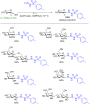
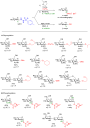
SnCl4-catalyzed solvent-free acetolysis of 2,7-anhydrosialic acid derivatives
Beilstein J. Org. Chem. 2019, 15, 2990–2999, doi:10.3762/bjoc.15.295
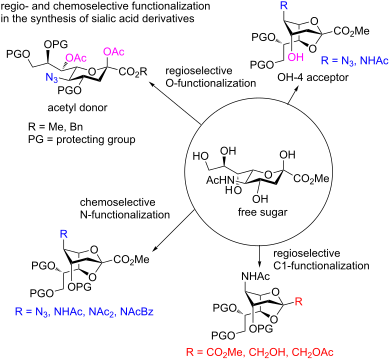
- thiosialoside and halide donors. Keywords: acetolysis; acetolysis products; 2,7-anhydrosialic acid; SnCl4; Introduction Sialic acids are the most prevalent monosaccharides that are found at the nonreducing ends of glycans, and they are involved in many biologically important ligand–receptor interactions [1


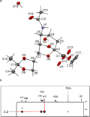


Chemical synthesis of the pentasaccharide repeating unit of the O-specific polysaccharide from Escherichia coli O132 in the form of its 2-aminoethyl glycoside
Beilstein J. Org. Chem. 2019, 15, 2563–2568, doi:10.3762/bjoc.15.249
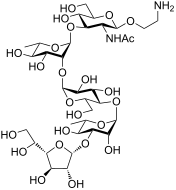
- manipulations on the commercially available monosaccharides and stereoselective chemical glycosylations. The 2-aminoethyl glycoside at the reducing end will facilitate further glycoconjugate formation without hampering the stereochemistry of the anomeric center. We have used similar glycosides in case of other


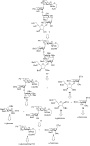


Indium-mediated C-allylation of melibiose
Beilstein J. Org. Chem. 2019, 15, 2458–2464, doi:10.3762/bjoc.15.238
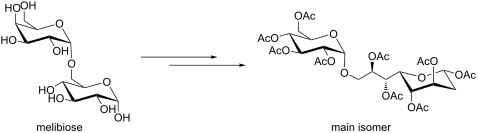
- established as reliable and efficient approach in carbohydrate chemistry, shown by many examples reported in the literature [8][9][10][11][12]. Thus far, this method has been applied to monosaccharides [13][14]. In this context, the development of diastereoselective and efficient synthetic routes to elongated
- showing that these have only minor effects on the conversion. However, the best results were obtained with a ratio of 4:1 (v/v) ethanol/water (Table 1, entries 2–4). Although activation via sonication proved to be beneficial in our previous studies in the C-allylation of monosaccharides [16], in this case
- monosaccharides. Temperatures up to 65 °C led to elevated reaction rates (Table 1, entries 3, 5 and 6). However, higher temperatures caused concentration phenomena, which derived from the reflux of ethanol leading to precipitation of the starting material, which resulted in a significant decrease of the reaction


Anomeric sugar boronic acid analogues as potential agents for boron neutron capture therapy
Beilstein J. Org. Chem. 2019, 15, 1355–1359, doi:10.3762/bjoc.15.135
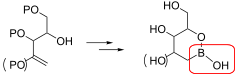
- or DNA ligands [4][5]. In the frame of a more general research program, we have recently published the synthesis of boronic acids derivatives of monosaccharides in which one of the sugar hydroxy groups is substituted by a boronic acid moiety [6]. A related approach has been described [7] recently


Towards the preparation of synthetic outer membrane vesicle models with micromolar affinity to wheat germ agglutinin using a dialkyl thioglycoside
Beilstein J. Org. Chem. 2019, 15, 937–946, doi:10.3762/bjoc.15.90
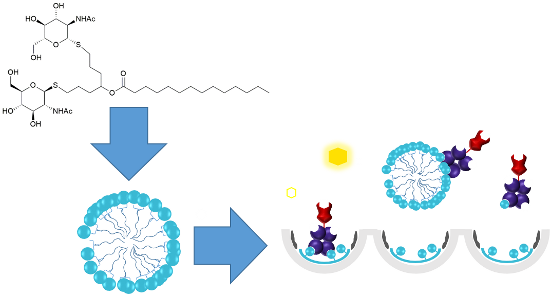
- to prevent the binding to primary sites. Conclusion A series of glucose and N-acetyl glucosamine-based thioglycolipids were synthesized for the first time by using thiol–ene coupling in the absence of protecting groups and in good yields. Monosaccharides where selected on the basis of similar




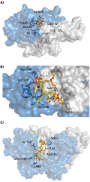
![[Graphic 2]](/bjoc/content/inline/1860-5397-15-90-i4.svg?max-width=637&scale=0.472728) ) and (○) ...
) and (○) ...
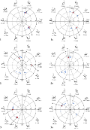
Influence of per-O-sulfation upon the conformational behaviour of common furanosides
Beilstein J. Org. Chem. 2019, 15, 685–694, doi:10.3762/bjoc.15.63
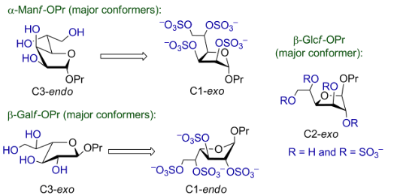
- of sulfates. Keywords: ab initio calculations; conformational analysis; furanosides; NMR; sulfation; Introduction Changes in the conformations of monosaccharides expectedly accompany their modification with different functional groups. Thus, spatial repulsion of silyl groups results in inversion or
- ). NMR data of furanosides 1–3 and 1s–3s 1H and 13C NMR spectra of parent monosaccharides 1–3 and their per-O-sulfated derivatives 1s–3s were recorded in D2O. The signal assignment was performed using 2D COSY and HSQC. J coupling constants were measured directly from 1D 1H NMR spectra. In case of
- overlapping signals J coupling constants were extracted from 2nd order spectra simulations using Bruker TopSpin software (DAISY). The obtained results (see Tables 1–3) showed good coincidence with previously published data for related monosaccharides [15][26][27]. As can be seen from Table 3, J coupling




Convergent synthesis of the pentasaccharide repeating unit of the biofilms produced by Klebsiella pneumoniae
Beilstein J. Org. Chem. 2019, 15, 431–436, doi:10.3762/bjoc.15.37
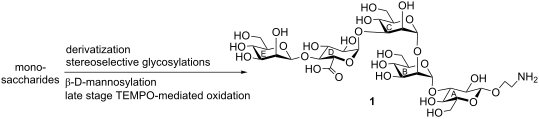
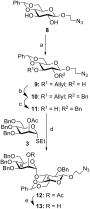
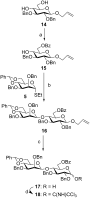
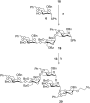
- using a set of stereoselective glycosylations of a number of suitably functionalized monosaccharide derivatives 2, 3 [14], 4, 5 [15], 6 [16] and 7 [17], which were prepared from the commercially available reducing monosaccharides using a number of functional group manipulations reported earlier (Figure



Synthesis of nonracemic hydroxyglutamic acids
Beilstein J. Org. Chem. 2019, 15, 236–255, doi:10.3762/bjoc.15.22
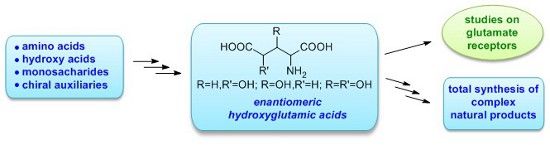
- serine or their synthetic equivalents, glutamic acid, 4-hydroxyproline and pyroglutamic acid were most frequently employed. Alternatively, α-hydroxy acids (malic, tartaric) offered the opportunity to induce chirality at Cα–N while the stereochemistry at C–OH was retained. Monosaccharides (glucose, ribose


First synthesis of cryptands with sucrose scaffold
Beilstein J. Org. Chem. 2019, 15, 210–217, doi:10.3762/bjoc.15.20
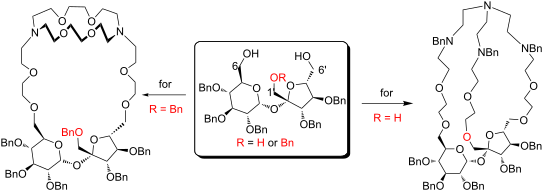
- structure. Up to date, only monosaccharides have been intensively used as chiral building blocks in the synthesis of such macrocycles. Less attention, however, has been paid to macrocycles with disaccharides (or oligosaccharides) being a part of the ring [6][7][8]. We have proposed to use sucrose (1) as a


Unexpected loss of stereoselectivity in glycosylation reactions during the synthesis of chondroitin sulfate oligosaccharides
Beilstein J. Org. Chem. 2019, 15, 137–144, doi:10.3762/bjoc.15.14
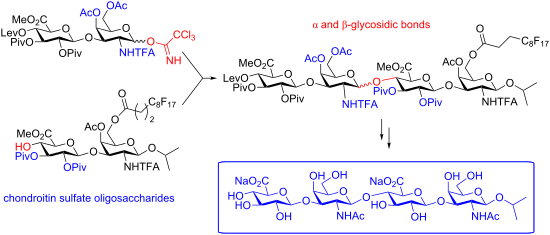
- -acylated N-TFA-protected GalNAc donors and GlcA acceptors that is not due to the presence of the fluorous tail. We hypothesized that the substitution pattern of the GlcA acceptor was responsible for the displayed stereochemistry and some experiments with model monosaccharides were planned to confirm this


Lectins of Mycobacterium tuberculosis – rarely studied proteins
Beilstein J. Org. Chem. 2019, 15, 1–15, doi:10.3762/bjoc.15.1
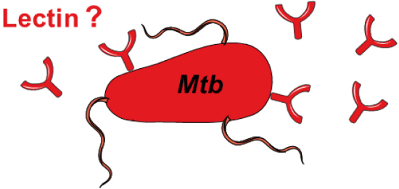
- . identified several monosaccharides able to disperse mycobacterial clumps and inhibit bacterial cellular aggregation when added to pure cultures, including D-arabinose (both M. smegmatis and Mtb), D-xylose, inositol, and D-glucose (M. smegmatis only). The impact of D-glucose on M. smegmatis aggregation was


Synthesis of 1,4-imino-L-lyxitols modified at C-5 and their evaluation as inhibitors of GH38 α-mannosidases
Beilstein J. Org. Chem. 2018, 14, 2156–2162, doi:10.3762/bjoc.14.189
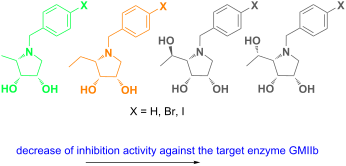
- . Moreover, various desired substituents can be selectively appended to any required position of the carbohydrate unit. This leads to a preparation of mimetics that meet the requirements of metabolically more stable bioactive compounds. During the years, many scaffolds based on monosaccharides [4
- ], disaccharides or higher oligosaccharides [5][6] as well as multivalent [7][8] carbohydrate units have been developed. These glycomimetics and glycopeptides have also found applications as bioactive compounds [9][10]. One group of the scaffolds includes iminosugars [11][12] as analogues of the monosaccharides


An overview of recent advances in duplex DNA recognition by small molecules
Beilstein J. Org. Chem. 2018, 14, 1051–1086, doi:10.3762/bjoc.14.93
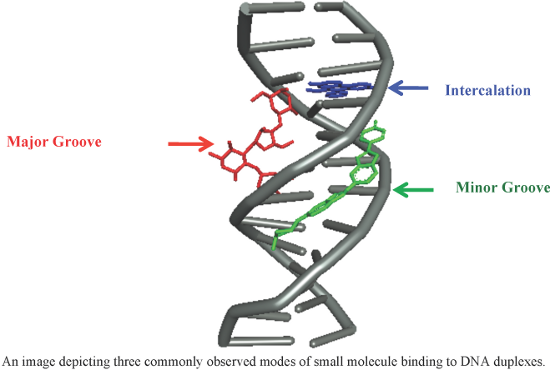
- conjugates in the minor groove by marinating a stable hairpin structure [96]. The authors tethered various monosaccharides such as β-xylose, α-xylose, β-galactose, β-glucose and β-L-fucose to a minor groove binding residue, Py-γ-Py-Ind, structurally analogous to distamycin and netropsin. A new set of novel




AuBr3-catalyzed azidation of per-O-acetylated and per-O-benzoylated sugars
Beilstein J. Org. Chem. 2018, 14, 682–687, doi:10.3762/bjoc.14.56
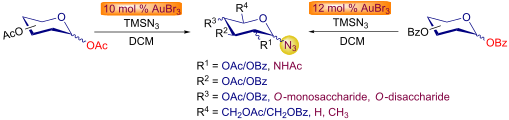
- catalytic amounts of oxophilic AuBr3 in good to excellent yields. The method is applicable to a wide range of easily accessible per-O-acetylated and per-O-benzoylated sugars. While reaction with per-O-acetylated and per-O-benzoylated monosaccharides was complete within 1–3 h at room temperature, the per-O
- slow anomerization [52]. In 2011, Chen’s group reported that 5 mol % FeCl3 can catalyze the reaction of trimethylsilyl azide with per-O-acetylated β-monosaccharides to afford glycosyl azides in 3–7 h, whereas per-O-acetylated β-di- and trisaccharides required 22–28 h for complete conversion [53


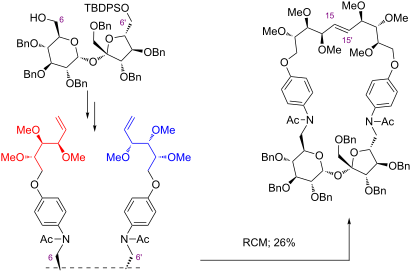
Synthesis of a sucrose-based macrocycle with unsymmetrical monosaccharides "arms"
Beilstein J. Org. Chem. 2018, 14, 634–641, doi:10.3762/bjoc.14.50


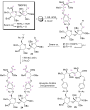
Synthetic and semi-synthetic approaches to unprotected N-glycan oxazolines
Beilstein J. Org. Chem. 2018, 14, 416–429, doi:10.3762/bjoc.14.30
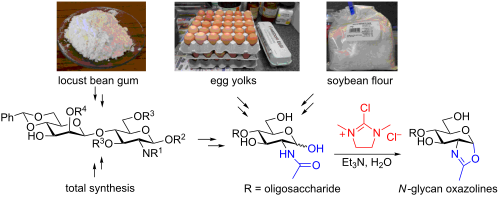
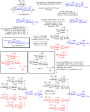
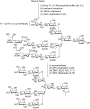
- enzymes has therefore become an area of significant interest over the past 15 years [35][36]. The synthesis of N-glycan oxazolines Formation of glycosyl oxazolines Glycosyl oxazolines of monosaccharides can be produced straightforwardly using strong Lewis acids (e.g., FeCl3, SnCl4, or TMSOTf) and a fully




An efficient synthesis of a C12-higher sugar aminoalditol
Beilstein J. Org. Chem. 2017, 13, 2146–2152, doi:10.3762/bjoc.13.213
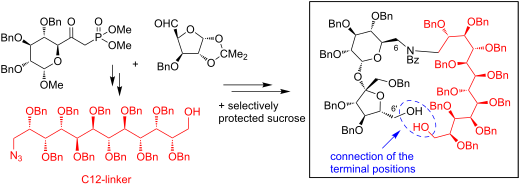
- the coupling of two simple monosaccharides and subsequent transformation of the resulting enone into the protected C12-sugar 1. The conversion of the latter into alditol 2 allowed us to prepare derivative 3 having a 18-membered ring (Figure 1) [8]. Higher sugar 1 has a substantial synthetic potential


1,3-Dibromo-5,5-dimethylhydantoin as promoter for glycosylations using thioglycosides
Beilstein J. Org. Chem. 2017, 13, 1994–1998, doi:10.3762/bjoc.13.195
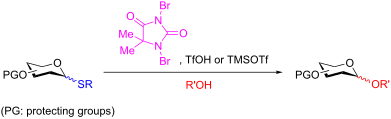
- group at C-6 and C-4 position, respectively. The DBDMH/TfOH system activates glycosyl donors including neutral monosaccharides of different configurations (D-gluco 5 and 6, D-galacto 1 and 4, D-manno 8, L-rhamno 9), amino sugar 7 and uronic acid 10. All thioglycosides reacted equally well, irrespective


New bio-nanocomposites based on iron oxides and polysaccharides applied to oxidation and alkylation reactions
Beilstein J. Org. Chem. 2017, 13, 1982–1993, doi:10.3762/bjoc.13.194
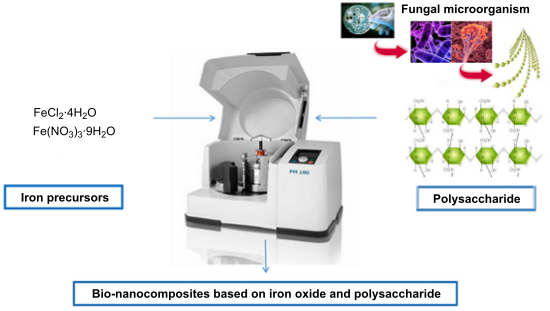
- nanocomposites with diverse applications in catalysis, sensing, drug delivery and adsorption [25][26][27][28]. In addition, mechanochemical protocols have also been employed to functionalize the surfaces of magnetic nanoparticles (MNPs) with monosaccharides [29] and to obtain bio-nanocomposites based on proteins


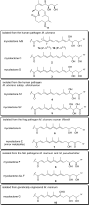
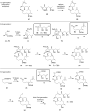
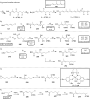
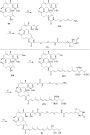
The chemistry and biology of mycolactones
Beilstein J. Org. Chem. 2017, 13, 1596–1660, doi:10.3762/bjoc.13.159









Strategies toward protecting group-free glycosylation through selective activation of the anomeric center
Beilstein J. Org. Chem. 2017, 13, 1239–1279, doi:10.3762/bjoc.13.123

- linchpin for protecting-group-free glycosylation is an exploitation of the differential reactivity of the anomeric center. Two key features of the anomeric center provide this possibility. Firstly, the anomeric position of all unprotected monosaccharides is a reducing end (i.e., in equilibrium as an




Aqueous semisynthesis of C-glycoside glycamines from agarose
Beilstein J. Org. Chem. 2017, 13, 1222–1229, doi:10.3762/bjoc.13.121
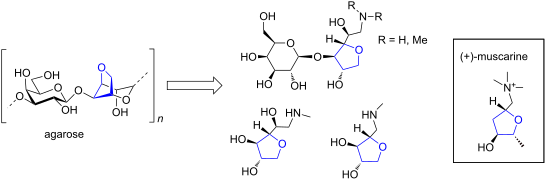
- employed for the synthesis of the primary glycamine 3 by means of reductive amination, which could be entirely conducted in aqueous media. Glycamines of monosaccharides have been extensively prepared via reductive amination; however, there are just few and laborious examples for the preparation of 1-deoxy


Sugar-based micro/mesoporous hypercross-linked polymers with in situ embedded silver nanoparticles for catalytic reduction
Beilstein J. Org. Chem. 2017, 13, 1212–1221, doi:10.3762/bjoc.13.120
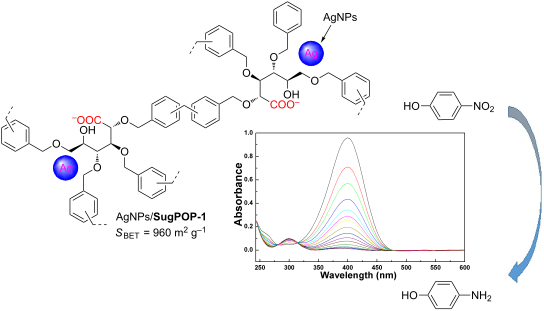
- ]. The chemical structure of monosaccharides is commonly a polyhydroxylated aldehyde or ketone with a pyranose ring structure. These hydroxy groups can be easily benzylated to afford sugar-based monomers containing multiple aromatic skeletons. Recently, Liu and Dai have reported a class of novel
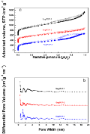
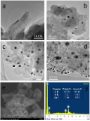
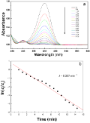
- temperature. Results and Discussion All the sugar-based porous organic polymers (SugPOP-1–3) were synthesized by Friedel–Crafts reaction using FDA as an external cross-linker in a similar way. The preparation routes are shown in Scheme 1. Using benzylated monosaccharides as monomers and FDA as the cross
- unaltered during the whole process [18]. Conclusion The preparation of hypercross-linked polymers based on perbenzylated monosugars by Friedel–Crafts reaction using FDA as an external cross-linker is reported. Considering that the features of the polyhydroxylated structures derived from the monosaccharides




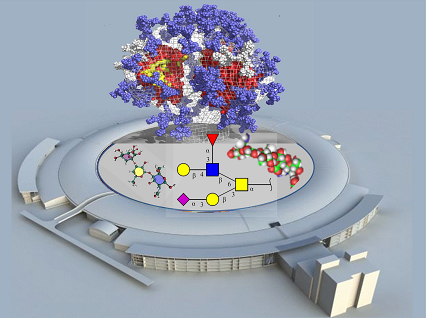
Glycoscience@Synchrotron: Synchrotron radiation applied to structural glycoscience
Beilstein J. Org. Chem. 2017, 13, 1145–1167, doi:10.3762/bjoc.13.114
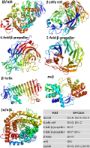
- three to six anti-parallel β-strands. As a large proportion of crystal structures are complexed with carbohydrates (from monosaccharides to oligosaccharides), three CBM types have been classified based on their sugar recognition modes: surface binders, ”endo-type” binders and “exo-type” binders [44
- ]. Lectins: Lectins constitute a unique and diverse family of proteins that reversibly bind monosaccharides and oligosaccharides, with utmost specificity, without displaying any catalytic or immunological activity. At the present time, the number of crystal structures of lectins deposited in the PDB amounts
- to about 1,500. Interestingly, about 60% of them were obtained ligated to carbohydrates, which range from monosaccharides to 10 residue-long oligosaccharides. Lectins occur in plants, animals, algae, bacteria, fungi and yeasts, and viruses. Their involvement in key biologically-important recognition




Correction: Fluorescent carbon dots from mono- and polysaccharides: synthesis, properties and applications
Beilstein J. Org. Chem. 2017, 13, 1136–1138, doi:10.3762/bjoc.13.112
- Stephen Hill M. Carmen Galan School of Chemistry, University of Bristol, Cantock’s Close, Bristol BS8 1TS, UK 10.3762/bjoc.13.112 Keywords: fluorescent carbon dots; monosaccharides; nanomaterials; nanotechnology applications; polysaccharides; Our original publication showns some errors in the





