Search results
Search for "selective" in Full Text gives 1592 result(s) in Beilstein Journal of Organic Chemistry. Showing first 200.
Regioselective approach to 5-arylsulfonylisoxazoles and their antimicrobial activity
Beilstein J. Org. Chem. 2026, 22, 592–602, doi:10.3762/bjoc.22.45
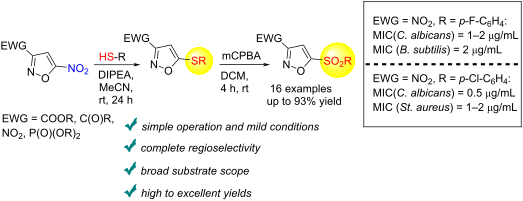
- nucleophilic aromatic substitution with thiophenols followed by oxidation with m-chloroperbenzoic acid (mCPBA). The scope of the reactions was explored, demonstrating high yields across a variety of functional groups and substituents. Optimized conditions enabled selective oxidation of thioaryl groups to


Design and synthesis of an erdafitinib-based selective FGFR2 degrader
Beilstein J. Org. Chem. 2026, 22, 583–591, doi:10.3762/bjoc.22.44
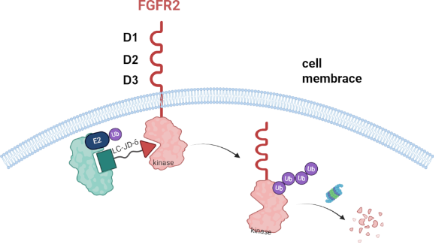
- -selective degrader, and for the first time confirmed its ability to degrade the membrane-bound form of FGFR2. This work provides an innovative targeted protein degradation strategy for the treatment of FGFR2-driven tumors and holds significant potential for clinical application. Keywords: CRBN; erdafitinib
- ; FGFR2; selective degrader; Introduction Fibroblast growth factor receptors (FGFR) are a family of single-pass transmembrane receptor tyrosine kinases (RTKs) localized on the cell surface that bind to fibroblast growth factors [1][2][3]. Dimerization and autophosphorylation of FGFRs are induced by their
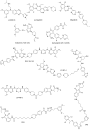
- cholangiocarcinoma [16][17][18]. Accordingly, research into therapeutics targeting FGFR2 has emerged as a major focus. To treat FGFR2-driven tumors, current research primarily focuses on two distinct classes of inhibitors, namely FGFR pan-inhibitors and FGFR2-selective inhibitors. Among these in Figure 1



Continuous-flow carbonyl hydrogenation under subatmospheric to atmospheric hydrogen pressure enabled by robust heterogeneous Pt–Fe catalysts
Beilstein J. Org. Chem. 2026, 22, 575–582, doi:10.3762/bjoc.22.43
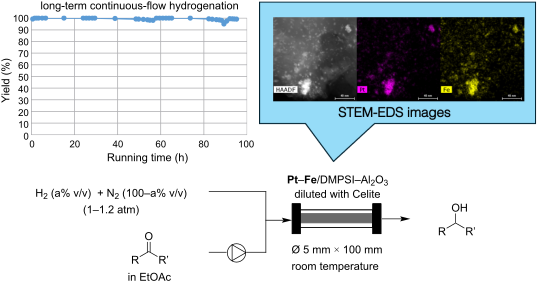
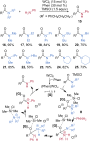
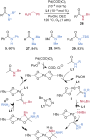
- often suffers from insufficient reactivity and conversion, even under harsh reaction conditions, such as high temperature and pressurized hydrogen, or when employing advanced technologies [8][9][11][12]. The selective hydrogenation of carbonyl moieties often needs to overcome the problem of
- overreduction of other functionalities like aromatic systems, and requires additives to suppress this unwanted side-reaction [6][10]. We have developed heterogeneous bimetallic nanoparticle catalysts for the selective hydrogenation of quinizarin to leucoquinizarin under continuous-flow conditions [30]. During
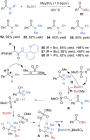
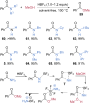
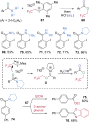
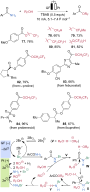
- our mechanistic study, we unexpectedly discovered that Pt–Fe bimetallic nanoparticles immobilized on a composite support of dimethylpolysilane (DMPSi) and alumina (Pt‒Fe/DMPSi–Al2O3) exhibited extraordinary catalytic performance for the selective hydrogenation of ketones under continuous-flow and


Molecular tweezer–peptide conjugates disrupt the protein–protein interaction between survivin and histone H3 essential in mitosis
Beilstein J. Org. Chem. 2026, 22, 557–567, doi:10.3762/bjoc.22.41
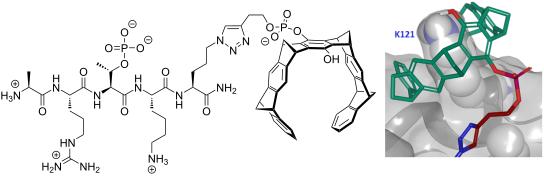
- attached phosph(on)ate anions as powerful new hosts for the amino acids lysine and arginine. In the recent past, we demonstrated that the affinity and selectivity of our lysine-selective molecular tweezers could be improved by attaching natural peptide recognition elements. This could be documented in
- various projects with tailored peptide tweezer conjugates: For example, the self-complementary ELTLGEFL sequence of the nuclear export signal in survivin was coupled to tweezers which rendered them selective for this important interface (NMR evidence, 1:1 stoichiometry, K/A mutants) and prevented the
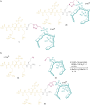
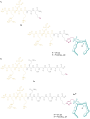
- selective for accessible lysine residues was covalently connected to the histone H3 peptide at various distances to add the released lysine inclusion energy (Kd ≈ 10 µM) and reach nanomolar affinity. Azidopeptides were conjugated to butynyl tweezers by click chemistry and subjected to competitive




Modern synthetic pathways towards eribulin and its subunits
Beilstein J. Org. Chem. 2026, 22, 495–526, doi:10.3762/bjoc.22.37
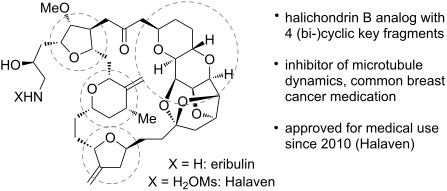
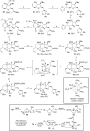
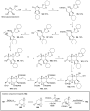
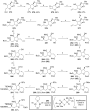
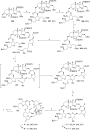
- , Nicolaou and co-workers merged both building blocks within a Ni(II)/Cr(II)-catalyzed NHK reaction using chiral ligand 206 (Scheme 23) [95]. Upon treatment with DBU, 3-methylenetetrahydrofuran 201 was obtained in 56% yield over two steps. PMB-deprotection, iodination and selective reduction of the ester
- allylation, 280 was isolated as a single diastereomer upon recrystallization. The dihydroxylation, oxidative cleavage and reduction with NaBH4 afforded diol 281, whose primary alcohol unit was protected enabling the selective oxidation towards ketone 283. Olefination with 293 (Nysted reagent) and








Synthesis and uranyl(VI) extraction performance of a calix[4]pyrrole–tetrahydroxamic acid receptor
Beilstein J. Org. Chem. 2026, 22, 486–494, doi:10.3762/bjoc.22.36
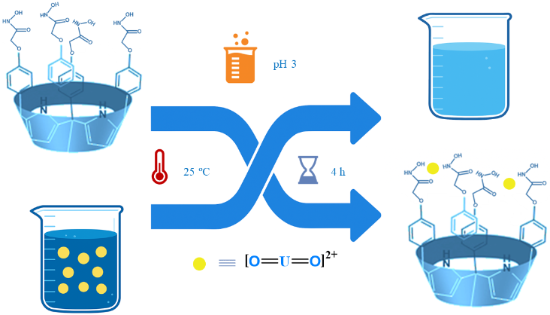
- selective remediation strategies. Supramolecular materials, with their pre-organized structures, offer a promising route for uranium removal. Phenoxycalix[4]pyrroles (PCP) are well-known supramolecular scaffolds capable of selective metal binding, making them attractive candidates for designing uranium


Recent advances in the stereoselective synthesis of distal biaxially chiral molecules
Beilstein J. Org. Chem. 2026, 22, 461–479, doi:10.3762/bjoc.22.34
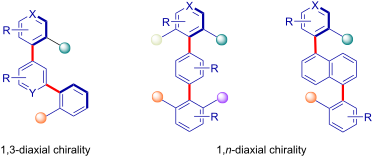
- biaxial terphenyl atropisomers with chlorinated and brominated variants to achieve high diastereo- and enantioselectivity. The process takes place via a two-step kinetic resolution. In 2021, Shi and co-workers reported a highly trans-selective synthesis of axially chiral styrenes 76 containing a
- hydrocarbons. Catalytic synthesis of biaxial triphenylene block-transfer isomers. A Pd(II)-catalyzed trans-selective C–H alkenylation strategy through thioether-directed olefination. Synthesis of N-arylphthalimides from prochiral maleimides and NHC-activated dienolides. Ni-catalyzed synthesis of triaxially


Structural reassignment of compound 968, an allosteric glutaminase inhibitor
Beilstein J. Org. Chem. 2026, 22, 455–460, doi:10.3762/bjoc.22.33
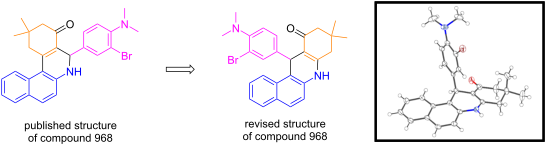
- reaction with 2-naphthol as the dinucleophile is also known [32]. In all cases, the regiochemistry of cyclization is selective and no isomeric products are formed. Conclusion In this report, we confirm the finding by Martinez [28] and Kozlov [29][30] that the three-component reaction originally claimed to


Synthesis and stereochemical analysis of dynamic planar chiral oxa[7]orthocyclophene
Beilstein J. Org. Chem. 2026, 22, 436–442, doi:10.3762/bjoc.22.30

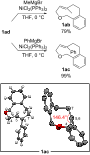
- -substituted oxacyclophene 1ad We planned to construct the nine-membered cyclic ether skeleton of 1ad in the final step by an intramolecular Williamson etherification of haloalcohol 2 (Scheme 1). The iodine-substituted Z-alkene moiety of 2 was planned to be introduced through a trans-selective hydroiodination




Cone p-aminocalix[4]arenes enriched with ‘clickable’ alkyne or azide functionalities
Beilstein J. Org. Chem. 2026, 22, 399–415, doi:10.3762/bjoc.22.28
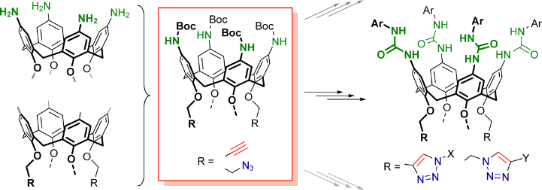
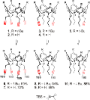
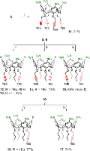
- strategy similar to that described above for the preparation of calixarenes 24–26 involving nitration of calix[4]arenes followed by selective reduction of the nitro groups could not be implemented for the preparation of p-aminocalix[4]arenes bearing 2-azidoethyl groups at their narrow rims. To overcome
- hampering or preventing a catalytic hydrogenation of these compounds. On the other hand, in calixarenes 31 and 32, which are immediate products of the selective reduction of the nitro groups in compounds 29 and 30 under neutral or basic conditions, the free amino groups may be alkylated by a neighboring




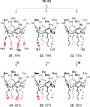


Design, synthesis and biological evaluation of 2,5-diaryloxazolo[4,5-d]pyrimidin-7-ylamines as selective cytotoxic agents against HeLa cells
Beilstein J. Org. Chem. 2026, 22, 390–398, doi:10.3762/bjoc.22.27
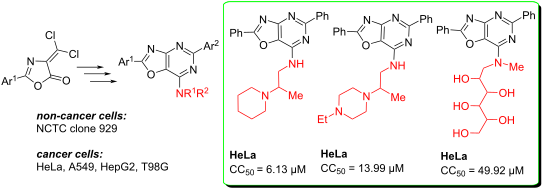
- , 7, and 9 were selective against the tested lines. Compound 9 can be classified as the most attractive and promising candidate for further development against cervical adenocarcinoma. Keywords: ADMET analysis; anticancer activity; 2,5-diaryloxazolo[4,5-d]pyrimidin-7-ylamines; Introduction Purine
- activity. They combine purine-like recognition features with the synthetic flexibility of heterocycles, offering a platform for selective targeting of tumor-related enzymes and receptors. Tumor cells overexpress kinases, DNA/RNA polymerases, and metabolic enzymes that bind purine nucleotides. Cancer cell
- oxazolopyrimidine derivatives may demonstrate selective cytotoxicity against cancer cell lines like HeLa, HepG2, A549, and central nervous system (CNS) tumor models [1][2][3]. The introduction of heterocyclic molecules with different amino groups as hydrogen-bond donors (and sometimes acceptors via lone electron


Electrosynthetic access to unsymmetrical oxaza[8]helicenes with high chiral stability and strong circularly polarized luminescence (CPL)
Beilstein J. Org. Chem. 2026, 22, 372–382, doi:10.3762/bjoc.22.25
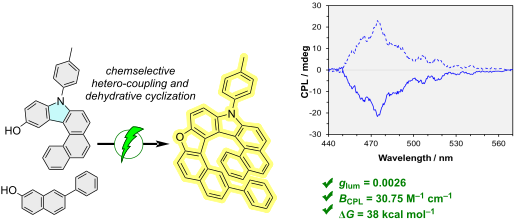
- enables selective oxidative hetero-coupling followed by dehydrative cyclization, furnishing the extended [8]helical scaffold efficiently under mild, oxidant-free conditions. Structural analyses show retained aromaticity, increased helical distortion, and higher configurational stability (≈38 kcal/mol
- designed coupling partners to control both chemo- and regioselectivity. A finely tuned anodic sequence enables selective oxidative hetero-coupling followed by dehydrative cyclization, delivering extended [8]helical scaffolds efficiently under mild, oxidant-free conditions. Combined experimental and DFT




Recent advances in the cleavage of non-activated amides
Beilstein J. Org. Chem. 2026, 22, 352–369, doi:10.3762/bjoc.22.23
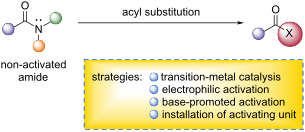
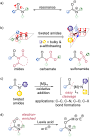
- , bioactive molecules, and advanced materials. However, its exceptional resonance stabilization renders the C–N bond highly inert, posing a persistent synthetic challenge for its transformation. While twisted amides with distorted C–N bonds have offered useful reactivity enhancements, the selective activation
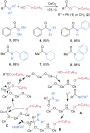
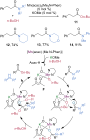
- catalysis, electrophilic activation, strong base-counter-cation systems, and N-based activating groups that enable chemoselective bond cleavage. Together, these developments provide powerful tools for amide functionalization and offer new opportunities for efficient, practical, and selective syntheses
- valuable features, amide derivatives are ubiquitous across the pharmaceutical, agrochemical, dye, polymer, and renewable-energy industries [6][7][8][9][10][11]. Accordingly, the development of efficient methods for both amide-bond formation and the selective transformation of amide functionalities remains





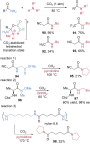
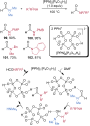


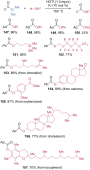

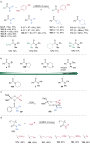


Ring contraction and ring expansion reactions in terpenoid biosynthesis and their application to total synthesis
Beilstein J. Org. Chem. 2026, 22, 289–343, doi:10.3762/bjoc.22.21
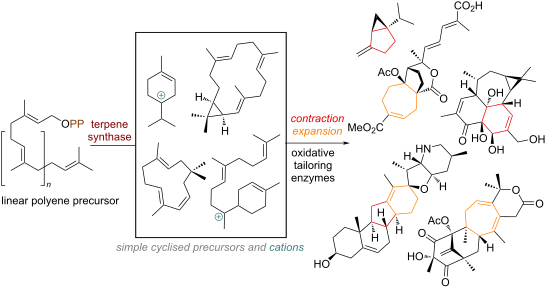
- provide the essential carbocation stabilisation (likely via cation–π interactions) and thus facilitate alkyl migration. The resulting 5,7-bicyclic carbocation 14b is further elaborated and decorated by selective oxidation reactions to build up the family of pseudolaric acids. For example, after a second
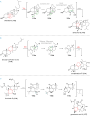
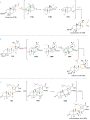
- enables selective C-4 to C-14 ketone aldolisation furnishing pepluanol D (87). The same authors also proposed a putative biosynthetic origin for the intriguing 5/4/7/3-ring system of pepluacetal (89) from pepluanol A (88) by olefin isomerisation (88a to 88b) and 1,6-conjugate addition to build up the new
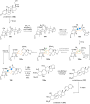
- way of selective oxidation at C-17 (possibly through HAT and SET-induced generation of the positive charge as described in other examples above) the C-17-centred carbocation 114a can undergo a cascade rearrangement, consisting of an initial 1,2-methyl migration to 114b, followed by the crucial 1,2






Arene activation via π-bond localization: concepts and opportunities
Beilstein J. Org. Chem. 2026, 22, 257–273, doi:10.3762/bjoc.22.19
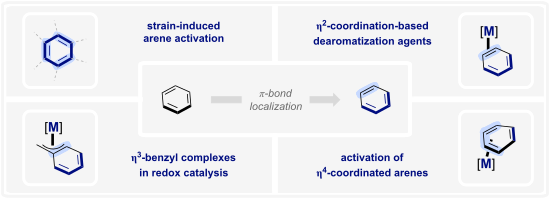
- transformations for the synthesis of complex, three-dimensional molecular architectures with tailored physicochemical properties. Despite notable advances in dearomative methodologies over the past decades, the selective and controlled disruption of the aromatic core continues to represent a fundamental challenge
- into a general, efficient synthetic strategy that enables an entirely new retrosynthetic logic, and (2) to enable previously inaccessible mechanistic pathways for selective arene functionalization. With this review, we aim to assess the current landscape of synthetically applied systems that achieve
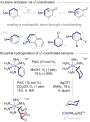
- following sections therefore focus on the selective disruption of aromaticity through the formation of transition metal–arene π-complexes. Transient and reversible coordination of transition metals to aromatic π-systems is a key feature of many catalytic transformations, with the oxidative addition of




A mild and atom-efficient four-component cascade strategy for the construction of biologically relevant 4-hydroxyquinolin-2(1H)-one derivatives
Beilstein J. Org. Chem. 2026, 22, 244–256, doi:10.3762/bjoc.22.18
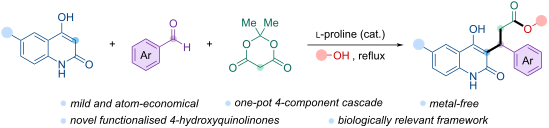
- and selective synthesis of previously inaccessible 4-hydroxyquinolin-2(1H)-one derivatives. Utilizing readily available 6-halo-4-hydroxyquinolinones, aromatic aldehydes, Meldrum’s acid, and alcohols under ʟ-proline catalysis, the reaction proceeds via in situ formation of arylidene-substituted Meldrum
- alcoholysis under prolonged reflux. This insight resolves a long-standing selectivity issue and transforms a known cascade into a synthetically divergent, operationally simple one-pot process. The selective access to methyl and ethyl esters is synthetically valuable, serving as versatile intermediates for


Configuration–packing synergy enabling integrated crystalline-state RTP and amorphous-state TADF
Beilstein J. Org. Chem. 2026, 22, 224–236, doi:10.3762/bjoc.22.16
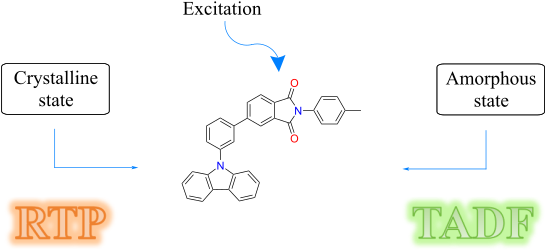
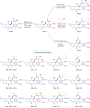
- facilitating thermally activated reverse intersystem crossing (RISC) and enabling TADF. Therefore, a molecular platform based on imide is expected to achieve programmable triplet management through a “configuration-decoupling + packing/confinement synergy” strategy. This platform can enable the selective


Base-promoted deacylation of 2-acetyl-2,5-dihydrothiophenes and their oxygen-mediated hydroxylation
Beilstein J. Org. Chem. 2026, 22, 192–204, doi:10.3762/bjoc.22.13
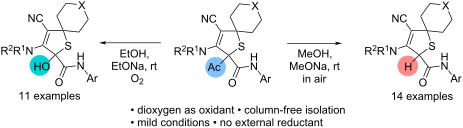
- yield (21%, Table 1, entry 2). When acid (HCl) was added after quenching the residue with water, the yields of products 2a and 3a were increased (30 and 35%, Table 1, entry 3). The selective formation of 2-hydroxy-2,5-dihydrothiophene 2a in 41% yield was achieved when using 5 equiv of sodium and 0.25 mL
- TFE the deacylated product 2a was formed in 75% yield (Table 1, entry 12). Carrying out the reaction under Hockings conditions [26] resulted in the selective formation of the deacylated product 3a (Table 1, entry 13). Thus, the optimized conditions for the synthesis of 2-hydroxy-substituted 2,5
- selective formation of the deacylated products in 60–70% yield. In continuation of the research, isomeric dihydrothiophenes (Scheme 1, E) were also treated in ethanolic solution with sodium ethoxide. Initially, cyclohexano-spiroannulated dihydrothiophene 4a was treated with ethanolic solution (3 mL) in the




Streptoquinolines A and B, new antibacterial meroterpenoids produced by Streptomyces sp. TMPU-A0679
Beilstein J. Org. Chem. 2026, 22, 185–191, doi:10.3762/bjoc.22.12
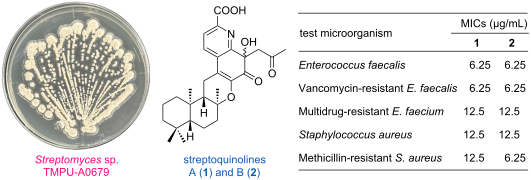
- sesquiterpene fused with a highly substituted quinoline moiety. Further structural comparisons and specific rotation data revealed that 1 and 2 were epimers at C-4'. Compounds 1 and 2 both exhibited selective antibacterial activity against Gram-positive bacteria, including VRE and methicillin-resistant
- -type sesquiterpene fused with a highly substituted quinoline unit. These compounds were isolated from terrestrial Streptomyces sp. TMPU-A0679 and both exhibited selective antibacterial activity against Gram-positive pathogens, including VRE and MRSA. Structural and stereochemical analyses established


Improved synthesis and physicochemical characterization of the selective serotonin 2A receptor agonist 25CN-NBOH
Beilstein J. Org. Chem. 2026, 22, 175–184, doi:10.3762/bjoc.22.11
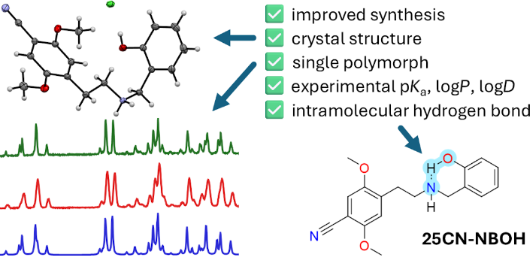
- Copenhagen, Denmark Department of Science and Environment, Roskilde University, Universitetsvej 1, 4000 Roskilde, Denmark 10.3762/bjoc.22.11 Abstract 25CN-NBOH is a selective serotonin 2A receptor agonist used extensively as a tool compound in preclinical research. Herein, we perform an in-depth
- efficacy [2]. Activation of the 5-HT2AR is thought to induce altered states of consciousness and suppress the default-mode network, a process hypothesized to underlie their clinical benefits [3]. However, classic psychedelics lack receptor selectivity, prompting efforts to develop more selective 5-HT2AR
- agonists to study the effects of solely activating this key receptor [4]. 25CN-NBOH (1) was reported in 2014 as part of a series of ligands in the search for selective 5-HT2AR agonists [5]. Subsequently, it has been used and characterized extensively as a tool for investigations into the effects of


A new synthesis of Tyrian purple (6,6’-dibromoindigo) and its corresponding sulfonate salts
Beilstein J. Org. Chem. 2026, 22, 167–174, doi:10.3762/bjoc.22.10
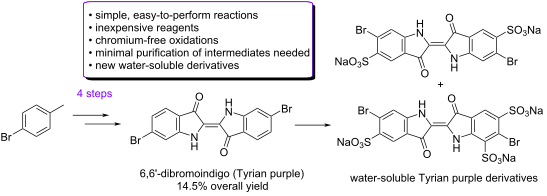
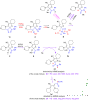
- similar analogues, using 3 as a key intermediate. Furthermore, we were interested in producing a water-soluble derivative of 1, much like indigo carmine was developed as a water-soluble derivative of indigo. Several syntheses of 3 have been reported, but the most common method involves the selective


Circumventing Mukaiyama oxidation: selective S–O bond formation via sulfenamide–alcohol coupling
Beilstein J. Org. Chem. 2026, 22, 158–166, doi:10.3762/bjoc.22.9
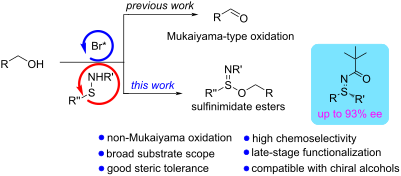
- /bjoc.22.9 Abstract A selective and efficient method for the synthesis of sulfinimidate esters via an NBS-promoted oxidative coupling of sulfenamides with alcohols has been developed. This operationally simple, metal-free protocol uses inexpensive and readily available reagents, operates under mild
- versatile intermediates for enantioselective S–C bond formation under mild and metal-free conditions. Keywords: asymmetric synthesis; late-stage functionalization; selective oxidation; sulfenamides; sulfinimidate esters; Introduction Sulfur is a privileged heteroatom in organic chemistry, celebrated for
- conditions, the selective S–O bond formation has been largely overlooked, rendering the direct synthesis of sulfinimidate esters from alcohols a nontrivial and underdeveloped transformation. Results and Discussion To validate our hypothesis and identify optimal conditions for sulfilimidate ester formation


Asymmetric Mannich reaction of aromatic imines with malonates in the presence of multifunctional catalysts
Beilstein J. Org. Chem. 2026, 22, 151–157, doi:10.3762/bjoc.22.8
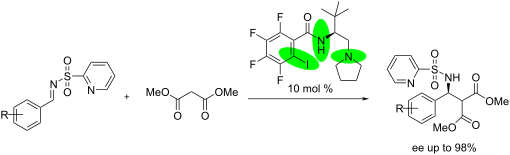
- conversion of the starting imine within 3 hours at rt and in 5 hours at −20 °C. Decrease of the temperature increases the enantiomeric purity of the product (from 27% ee up to 52% ee) (Table 1, entries 1–3). The corresponding H-analogue of catalyst A was less selective (18% ee) (Table 1, entries 4 and 5
- ). This suggests that possibly the halogen bond plays a role in the emergence of the stereoselectivity of the reaction. The reaction with the similar quinidine derivative with reduced double bond (catalyst B) was slower and less selective affording the opposite enantiomer in low enantiomeric purity (14
- % ee, Table 1, entry 6). Aminoindane-based catalysts C and D were inefficient and stereomeric purity of the products were not determined (Table 1, entries 7 and 8). The next group of catalysts consists of amino acid derivatives. The most selective was tert-leucine-based catalyst E affording the Mannich


Symmetrical D–π–A–π–D indanone dyes: a new design for nonlinear optics and cyanide detection
Beilstein J. Org. Chem. 2026, 22, 131–142, doi:10.3762/bjoc.22.6
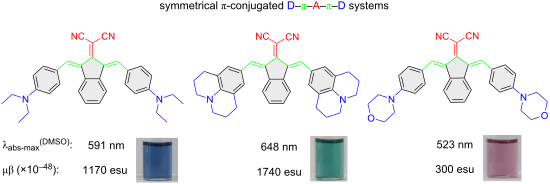
- 10.3762/bjoc.22.6 Abstract Three indan-2-one-based donor–π–acceptor–π–donor type dyes with symmetric donor groups were synthesized and characterized to study their nonlinear optical (NLO) properties and their potential use in the rapid and selective determination of cyanide. The designed structures
- using the EFISH method, where μβ values were found between 300 × 10−48 esu and 1740 × 10−48 esu and the highest value observed was with 2b. Dyes also showed chemosensor properties for the selective detection of cyanide with colorimetric and optical responses in both organic and aqueous media. The


Total synthesis of natural products based on hydrogenation of aromatic rings
Beilstein J. Org. Chem. 2026, 22, 88–122, doi:10.3762/bjoc.22.4
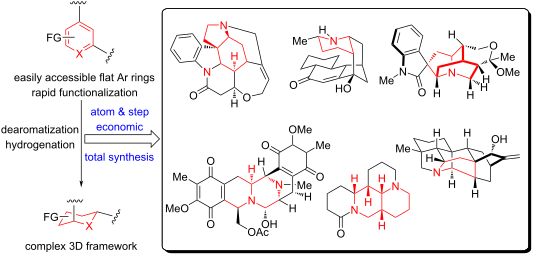
- limitation requires the design of catalysts that achieve precise electronic complementarity, enabling selective activation across a broad spectrum of aromatic compounds (Scheme 2) [32]. From the standpoint of scalable synthesis, catalyst cost is a major bottleneck in aromatic hydrogenation. Most state-of-the
- center and complicate catalysis. Consequently, designing cost-effective catalytic systems with enhanced efficiency, particularly for the selective hydrogenation of complex substrates, remains an essential direction for future research [33]. Hydrogenation of arenes has rapidly evolved from a specialized
- heterocycle part: Quinoline, one of the most accessible heteroaromatic feedstocks from natural and commercial sources, has long attracted interest in both synthetic and medicinal chemistry. A central challenge, however, is the selective catalytic hydrogenation of quinolines to the synthetically valuable