


Search results
Search for "thioester" in Full Text gives 85 result(s) in Beilstein Journal of Organic Chemistry.
Synthesis and late stage modifications of Cyl derivatives
Beilstein J. Org. Chem. 2022, 18, 174–181, doi:10.3762/bjoc.18.19
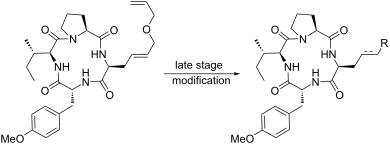
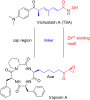
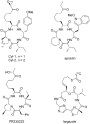
- naturally occurring HDAC inhibitors contain sulfur moieties like, e.g., disulfides or thioesters. They seem to lack a zinc-chelating group at first sight, but the disulfide or thioester acts as a prodrug and are reduced/cleaved in vivo to liberate the free thiol, a strong Zn-binding group [24][25]. Results
- reactions. The chain length in 14 should generally be suitable for effective HDAC inhibition and the thioester moiety might act as a prodrug as described for the natural HDAC inhibitor largazole. Further investigations are currently in progress. Naturally occurring HDAC inhibitors. Naturally occurring HDAC



Chemoselective N-acylation of indoles using thioesters as acyl source
Beilstein J. Org. Chem. 2022, 18, 89–94, doi:10.3762/bjoc.18.9
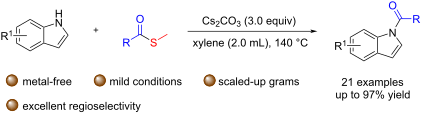
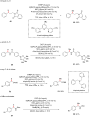
- be obtained efficiently. Beside indole, carbazole can also take part in this reaction. Representative pharmaceuticals containing N-acylindole moieties. A) Strategies for the synthesis of N-acylindoles; B) thioester as dicarbonylation reagent; C) recent work of our group; D) this work. Reactions of


Isolation and characterization of new phenolic siderophores with antimicrobial properties from Pseudomonas sp. UIAU-6B
Beilstein J. Org. Chem. 2021, 17, 2390–2398, doi:10.3762/bjoc.17.156
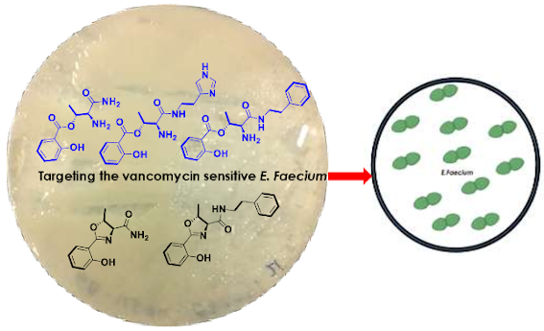
- (see Supporting Information File 1). The biosynthesis hypotheses of compounds 1–5 were proposed to have originated as an extension of the reported pseudomonine (6) biosynthesis [37][38][39][40] via the salimethyloxazolinyl-thioester intermediate 8 (Figure 3). We speculated that compounds 1–3 occur
- through deviation of the salimethyloxazolinyl-thioester intermediate 8 from the assembly line via an unusually facile C–N-bond opening of the ring to generate an ester bond, and followed directly by amination (+ NH3), the addition of histamine and phenethylamine units to form compounds 1, 2, and 3
- -thioester intermediate followed by dehydration [44]. The incorporation of the decarboxylated phenylalanine by a nucleophilic unit to the intermediate salimethyloxazolinyl-thioester resulted in the formation of compound 5 without a rearrangement to isooxazolidinone owing to lack of N–OH in the phenylalanine


Photoredox catalysis in nickel-catalyzed C–H functionalization
Beilstein J. Org. Chem. 2021, 17, 2209–2259, doi:10.3762/bjoc.17.143
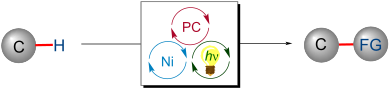
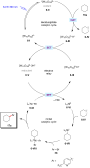
- has improved further the C–H acylation procedures by working under mild reaction conditions. Thus, Doyle and Joe reported a mild C–H acylation protocol for the direct functionalization of α-amino C(sp3)–H bonds of N-arylamines 1 with acyl electrophiles such as anhydrides 72 and 2-pyridyl thioester 73










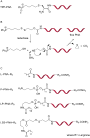
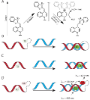
Chemical approaches to discover the full potential of peptide nucleic acids in biomedical applications
Beilstein J. Org. Chem. 2021, 17, 1641–1688, doi:10.3762/bjoc.17.116








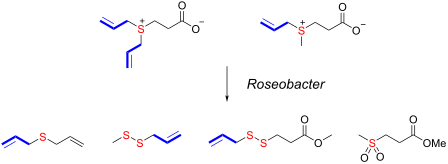
Breakdown of 3-(allylsulfonio)propanoates in bacteria from the Roseobacter group yields garlic oil constituents
Beilstein J. Org. Chem. 2021, 17, 569–580, doi:10.3762/bjoc.17.51
- ]. Compound 17 can be transformed into the coenzyme A thioester 18 by the CoA ligase DmdB, followed by FAD-dependent oxidation to the α,β-unsaturated compound 19 by DmdC. The attack of water to the Michael acceptor catalyzed by the enoyl-CoA hydratase DmdD yields the hemithioacetal 20 that spontaneously
- collapses to methanethiol (MeSH) and malonyl-CoA semialdehyde (21). This compound further degrades to acetaldehyde (22) through the thioester hydrolysis and decarboxylation [27]. Feeding of (methyl-2H6)DMSP to Phaeobacter inhibens DSM 17395 and Ruegeria pomeroyi DSM 15171 resulted in the efficient uptake of


Fabclavine diversity in Xenorhabdus bacteria
Beilstein J. Org. Chem. 2020, 16, 956–965, doi:10.3762/bjoc.16.84
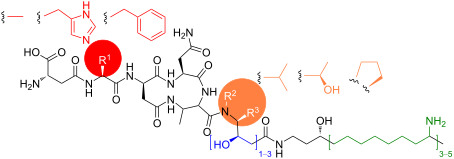
- biosynthesis start at FclJ (the Figures were adapted and modified from [20] and [22]. KS: ketosynthase, AT: acyltransferase, T: thiolation domain, KR: ketoreductase, CLF: chain length factor domain, DH: dehydratase, Ox: 2-nitropropane dioxygenase (enoyl reductase), AMT: aminotransferase, TR: thioester
- . stockiae, g: KK7.4, h: KJ12.1, i: X. bovienii, j: P. temperata. KS: ketosynthase, AT: acyltransferase, T: thiolation domain, KR: ketoreductase, CLF: chain length factor domain, DH: dehydratase, Ox: 2-nitropropane dioxygenase (enoyl reductase), AMT: aminotransferase, TR: thioester reductase, Nit: nitrilase


Synthesis of disparlure and monachalure enantiomers from 2,3-butanediacetals
Beilstein J. Org. Chem. 2020, 16, 616–620, doi:10.3762/bjoc.16.57
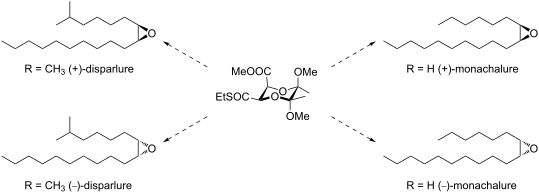
- efficient method for the isomerization of trans-disubstituted butanediacetal derivative 11 with two different substituents (one ester group and one thioester group) to its cis derivative 14 which proceeded with 94% yield [37]. The cis-2,3-butanediacetals 12–14 have the appropriate configuration of the
- 19 instead. This compound was obtained from both aldehyde 15 and its precursor ethyl thioester methyl ester 14, respectively (Scheme 3). Both substrates 14 and 15 were reduced to the corresponding diol 17 with lithium aluminum hydride with 73% or 83% yield, respectively. Next, the selective


Copper-catalyzed enantioselective conjugate addition of organometallic reagents to challenging Michael acceptors
Beilstein J. Org. Chem. 2020, 16, 212–232, doi:10.3762/bjoc.16.24
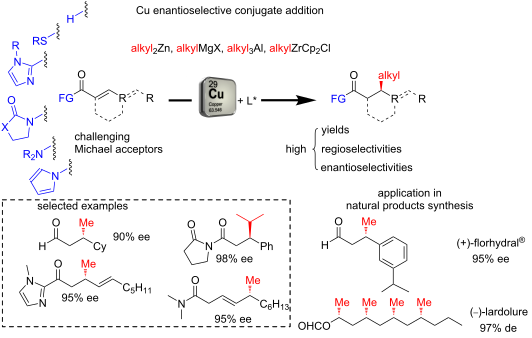
- accomplished in this stimulating field. Keywords: acylimidazole; N-acyloxazolidinone; N-acylpyrrole; N-acylpyrrolidinone; aldehyde; amide; copper catalysis; electron-deficient alkenes; enantioselective conjugate addition; Michael acceptor; thioester; Introduction Generating high molecular complexity and
- report the ECA of Grignard reagents to α,β-unsaturated thioesters [25]. Advantageously, the latter were also readily accessible but significantly more reactive than α,β-unsaturated esters. Indeed, the thioester fragments featured a reduced electron delocalization compared to oxoesters, which resulted in
- CuBr∙SMe2/(R,S)-Josiphos (L9). However, the catalytic system was poorly selective toward sterically hindered organomagnesium nucleophiles (15–25% ee). The synthetic versatility of the thioester function was illustrated in the synthesis of (−)-lardolure (26% overall yield over 12 steps) via a relevant




Chemical synthesis of tripeptide thioesters for the biotechnological incorporation into the myxobacterial secondary metabolite argyrin via mutasynthesis
Beilstein J. Org. Chem. 2019, 15, 2922–2929, doi:10.3762/bjoc.15.286
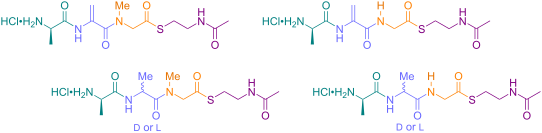
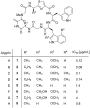
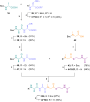
- sarcosine (Sar) and derivatives. Chemical synthesis of the native sequence ᴅ-Ala-Dha-Sar thioester required revision of the sequential peptide synthesis into a convergent strategy where the thioester with sarcosine was formed before coupling to the Dha-containing dipeptide. Keywords: antibiotic; argyrin
- derivatives upon incorporation of synthetically provided tripeptide thioester intermediates, the so called mutasynthons. Mutasynthons are synthesized as SNAc thioesters which mimic the phosphopantetheine (PPant) moiety normally present on the PCP domain of the NRPS. It has been shown by several mutasynthesis
- . This fact provides the opportunity to chemically substitute the initial tripeptide thioester accepted by module 4 on the Arg3 subunit and replace the natural construct in biosynthesis. By feeding the block mutant with synthetic analogs, derivatives should be accessible without the need for full total



Electrophilic oligodeoxynucleotide synthesis using dM-Dmoc for amino protection
Beilstein J. Org. Chem. 2019, 15, 1116–1128, doi:10.3762/bjoc.15.108
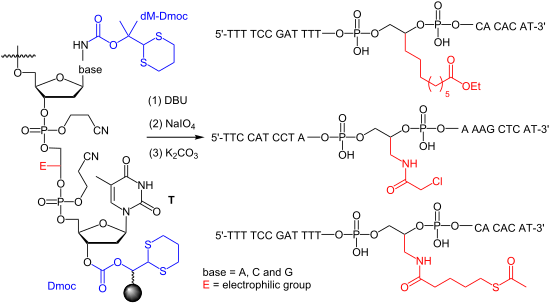
- thioester. Using the technology, the sensitive groups can be installed at any location within the ODN sequences without using any sequence- or functionality-specific conditions and procedures. Keywords: Dmoc; electrophilic; oligonucleotides; protecting group; solid-phase synthesis; Introduction After over
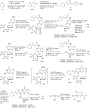
- incorporating electrophilic groups, we also needed phosphoramidite monomers 26a–c, which contained the sensitive functionalities ester, α-chloroacetamide and thioester, respectively (Figure 2). The synthesis of 26b,c has been reported [40]. Scheme 3 shows the synthesis of 26a. The required 1,2-diol 28 was
- under non-nucleophilic conditions using the dM-Dmoc technology, studying the feasibility of the technology for the synthesis of modified ODNs containing ester, α-chloroacetamide and thioester groups was pursued. These groups are sensitive to nucleophiles and cannot survive the commonly used concentrated






Volatiles from the hypoxylaceous fungi Hypoxylon griseobrunneum and Hypoxylon macrocarpum
Beilstein J. Org. Chem. 2018, 14, 2974–2990, doi:10.3762/bjoc.14.277
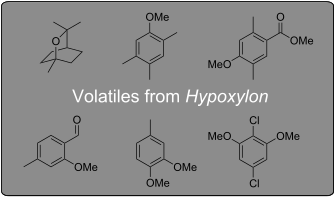
- tetraketide intermediate that can be cyclised by aldol condensation, followed by elimination of water to result in the aromatic ring system. Thioester hydrolysis and decarboxylation produce 29a that can be converted by SAM-dependent O-methylation into 24. In summary, this hypothetical biosynthetic mechanism




Targeting the Pseudomonas quinolone signal quorum sensing system for the discovery of novel anti-infective pathoblockers
Beilstein J. Org. Chem. 2018, 14, 2627–2645, doi:10.3762/bjoc.14.241
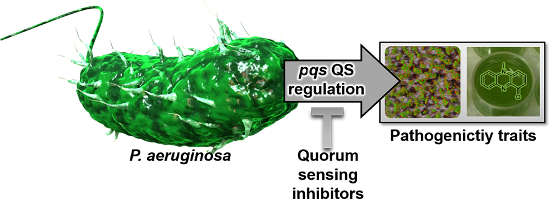
- kynurenine pathway starting from tryptophan or by anthranilate synthases from the PqsR-controlled phnAB operon starting using chorismic acid as a source [24]. Either way, the ligase PqsA starts PQS synthesis by condensing anthranilic acid with coenzyme A [25]. The resulting activated thioester (anthraniloyl
- -CoA) is then transferred to an active-site cysteine of the β-ketoacyl-ACP synthase III (FabH)-type enzyme PqsD [26][27]. Subsequently, another CoA-activated substrate comes into play. In analogy to fatty acid synthesis, malonyl-CoA is reacted with the enzyme-bound thioester to yield 2
- formed by action of the heterodimeric complex PqsBC. This time, CoA-activated octanoic acid is used to preload an active-site cysteine of PqsC with the fatty acid via a thioester linkage [30][31]. The previously produced 2-ABA is then consumed to from HHQ under decarboxylative condensation [30]. Finally


Acyl-group specificity of AHL synthases involved in quorum-sensing in Roseobacter group bacteria
Beilstein J. Org. Chem. 2018, 14, 1309–1316, doi:10.3762/bjoc.14.112
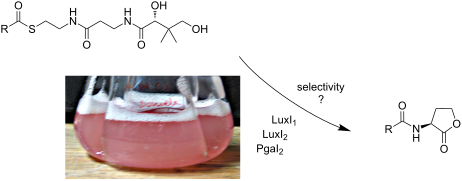
- by substitution of the good leaving group 5’-deoxy-5’-thiomethyladenosine (5) of the thioester group, leading to homoserine lactone 4 formation (Scheme 1). Recently a LuxI-homolog, BjaI [20] preferring acyl-coenzyme A (CoA) substrates instead of the common ACP precursors, was characterized [21]. The


Recyclable hypervalent-iodine-mediated solid-phase peptide synthesis and cyclic peptide synthesis
Beilstein J. Org. Chem. 2018, 14, 1112–1119, doi:10.3762/bjoc.14.97
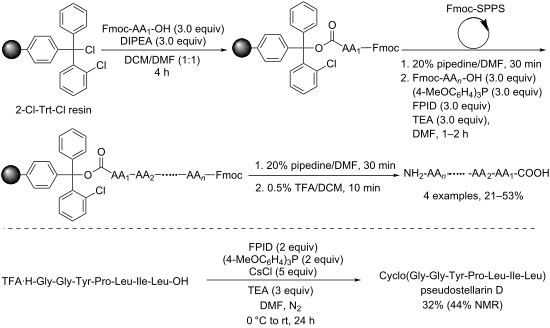
- the p-nitrophenyl ester method (Scheme 4, method A). The other one was described by Agrigento and co-workers, the cyclization was completed via the p-chlorophenyl thioester method with peptide-thioester being the precursor (Scheme 4, method B) [39]. Herein, we realized the synthesis of pseudostellarin


Stimuli-responsive oligonucleotides in prodrug-based approaches for gene silencing
Beilstein J. Org. Chem. 2018, 14, 436–469, doi:10.3762/bjoc.14.32
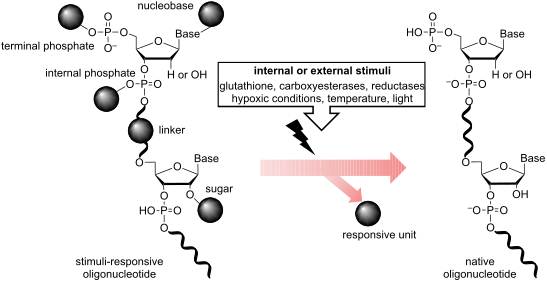
- (for A and C) or isopropylphenoxyacetyl (for G) groups on exocylic amines. These deprotection conditions prevent base-mediated phosphotriester cleavage. Finally, to address the synthetic issue completely, they stabilized the thioester bond to diisopropylamine/methanol by substituting electron-donating


Regioselective decarboxylative addition of malonic acid and its mono(thio)esters to 4-trifluoromethylpyrimidin-2(1H)-ones
Beilstein J. Org. Chem. 2017, 13, 2617–2625, doi:10.3762/bjoc.13.259
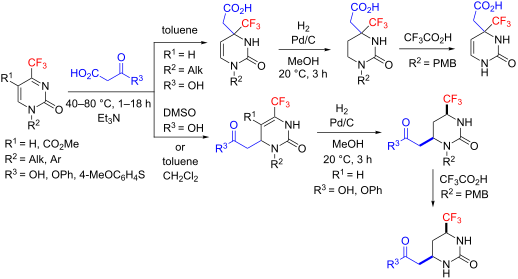
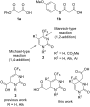
- -dihydroquinazolin-2(1H)-ones and the anti-HIV drug DPC 083 [28]. No examples of any ketimines reacting directly with malonic acid have been reported so far. Here we present the results of the decarboxylative addition of malonic acid, malonic monoester 1a and thioester 1b to 4-trifluoromethylpyrimidin-2(1H)-ones 2
- exclusively Michael-type adducts 6 regardless of the reaction conditions used. Likewise, the more reactive malonic mono thioester 1b, when reacted with a broader scope of substrates 2 under milder conditions, gives rise only to analogous Michael-type products 8. In general, the reactivity of substrates 2 can
- decarboxylative addition of malonic acid mono-4-methoxyphenyl thioester (1b) to 4-trifluoromethylpyrimidin-2(1H)-ones 2a–m. Supporting Information Supporting Information File 481: Experimental procedures, characterization data and X-ray structure determination for compound 11b. Supporting Information File 482



Block copolymers from ionic liquids for the preparation of thin carbonaceous shells
Beilstein J. Org. Chem. 2017, 13, 1693–1701, doi:10.3762/bjoc.13.163
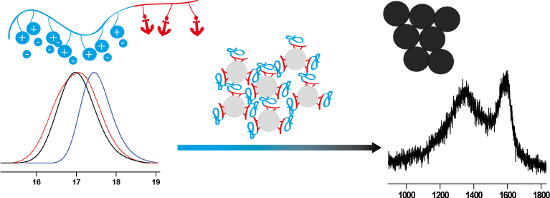
- (see Figure S5, Supporting Information File 1). In the last step the aminolysis of the reactive ester block with dopamine was performed, which leads also to a partial removal of the thioester end group. For this purpose a large excess of dopamine was applied. The 1H NMR spectrum in Figure 3 proves the


From chemical metabolism to life: the origin of the genetic coding process
Beilstein J. Org. Chem. 2017, 13, 1119–1135, doi:10.3762/bjoc.13.111
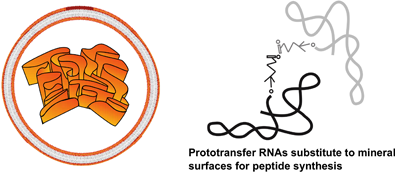
- synthesis, and a phosphate as a charged group) has the remarkable role of a swinging arm transporting a variety of thioester substrates between sulfhydryl catalytic sites (Figure 2). It could well have been involved in its own synthesis as well as that of diverse compounds involving acyl groups (lipids
- convincing way [31]. Other coenzymes, possibly generated by such a swinging-arm thioester-dependent catalysis, may have been precursors of nucleotides, the essential building blocks of nucleic acids. As a matter of fact, extant biosynthesis of nucleotides (built on purine and pyrimidine carbon–nitrogen
- , appeared after an (iso)peptide-based metabolism was commonplace. Cofactors such as pterins and riboflavin are ubiquitously present in living organisms. Precursors of these essential compounds may have been synthesised by a thioester swinging-arm pathway and phosphorylated by polyphosphate. Remarkably, in



Polyketide stereocontrol: a study in chemical biology
Beilstein J. Org. Chem. 2017, 13, 348–371, doi:10.3762/bjoc.13.39
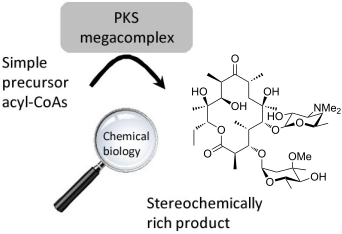
- substrate used was the synthetically accessible (2RS)-2-methyl-3-oxopentanoic acid N-acetylcysteamine (NAC) thioester (‘β-keto diketide’) 17 – a racemic analogue of the diketide generated by condensation of a propionyl starter unit and a (2S)-methylmalonyl extender unit. NAC was chosen as the activating
- in fact, epimerizing KRs bind their substrates in two distinct modes. In the first, which is only available to the substrate bearing the non-epimerized methyl center, the thioester and C-3-keto groups are aligned so that the pKa of the C-2 proton is suitably depressed, allowing facile catalysis by KR
- ). This is apparently the first example of such reversal of diastereospecificity due to the nature of the thioester conjugate. Taken together, these results agree with a common syn dehydration mechanism for PKS DHs, but the requirement that the abstracted proton be positioned equivalently relative to the




Solution-phase automated synthesis of an α-amino aldehyde as a versatile intermediate
Beilstein J. Org. Chem. 2017, 13, 106–110, doi:10.3762/bjoc.13.13
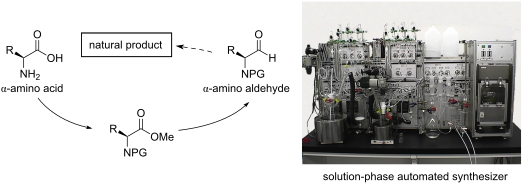
- serine, and the subsequent reduction of carboxylic acid derivatives such as ester [20][21][22][23][24][25][26][27], thioester [28], or Weinreb amide [29][30] to the aldehyde. In addition, Burke and co-workers reported an asymmetric hydroformylation of 2,2-dimethyl-2,3-dihydrooxazole for the synthesis of


Chemical probes for competitive profiling of the quorum sensing signal synthase PqsD of Pseudomonas aeruginosa
Beilstein J. Org. Chem. 2016, 12, 2784–2792, doi:10.3762/bjoc.12.277
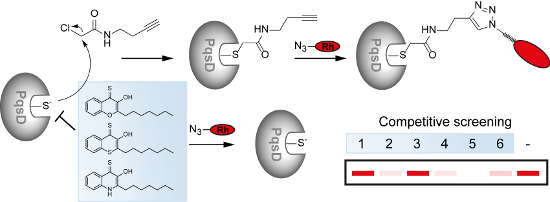
- catalyzes the condensation with malonyl-CoA to form 2-aminobenzoylacetyl-CoA. The thioesterase PqsE hydrolyses the thioester to produce 2-aminobenzoylacetate (2-ABA) [13]. The PqsBC complex finally generates HHQ or other AQs in a decarboxylative condensation reaction of 2-ABA with fatty acids loaded on PqsC
- (Figure 1B) [14]. For the condensation step of an anthraniloyl residue with malonyl-CoA by PqsD, a cysteine residue (Cys112) is involved in the formation of a covalent thioester intermediate. We were speculating that activity-based electrophilic probes may be applicable to target this enzyme in vitro



Efficient mechanochemical synthesis of regioselective persubstituted cyclodextrins
Beilstein J. Org. Chem. 2016, 12, 2364–2371, doi:10.3762/bjoc.12.230
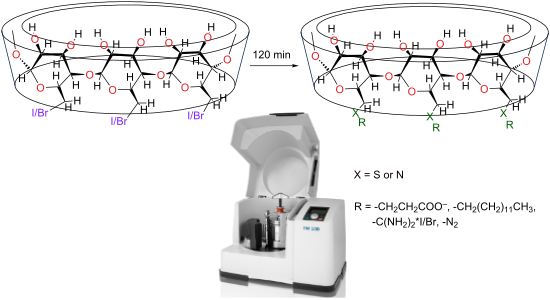
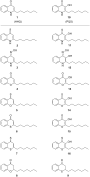
- and thioester compounds [8][30] and the CD thiouronium salt intermediates are not isolated [8] despite their good crystallization properties, while the excess/residual TU and used solvents are removed upon the conversion to thiols only. However, the easy crystallization of these salts is a nice


Evidence for an iterative module in chain elongation on the azalomycin polyketide synthase
Beilstein J. Org. Chem. 2016, 12, 2164–2172, doi:10.3762/bjoc.12.206
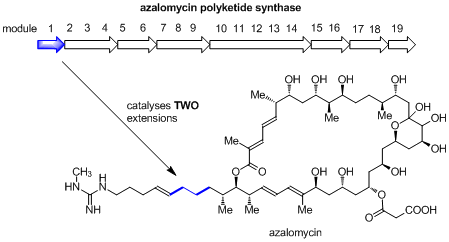
- outcome of reductive processing of the newly-formed β-ketoacyl thioester. Finally, the extended chain is passed on to the following module. This processive assembly-line operation, in which all intermediates remain covalently attached to the multienzyme, helps to explain the efficiency of the process. It
- -ketoacyl–ACP is then reduced by the action of KR and DH but the ER domain is "skipped" so an enoyl thioester is produced. In the second cycle, condensation with a second malonyl–ACP is followed by full reduction, and then the triketide chain is transferred to the KS of the following module, module 2
- . Module 2 is predicted to catalyse addition of a methylmalonate extension unit and reduction to an enoyl thioester (the module lacks an ER domain). Puzzlingly, the structure of azalomycin requires full reduction at this stage. There is precedent for this, for example in the PKS for the anticancer compound


DNA functionalization by dynamic chemistry
Beilstein J. Org. Chem. 2016, 12, 2136–2144, doi:10.3762/bjoc.12.203
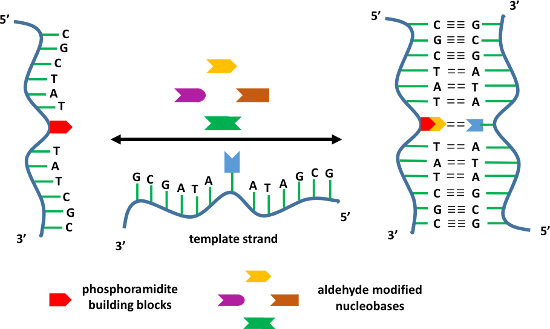
- metal ligands or fluorophores. Functional molecules of interest can be tethered post-synthetically in an irreversible manner as amide or reversibly as imine or thioester. Recent advances in dynamic combinatorial chemistry [29][30][31][32][33][34][35][36][37][38][39][40] have enabled the utilization of
- of nucleobase monomers. In case of an amine group on the backbone, a reversible imine exchange reaction with aldehyde modified nucleobases was performed (Figure 1a). In the presence of a thiol group on the backbone, a thioester exchange reaction with thioester modified nucleobases was expected
- functionalized by imine or thioester formation. In principle this concept allows dynamic DNA functionalization with all kind of functional or recognition units at positions that were modified with the threoninol deoxyribose analogous by solid phase synthesis. As proof of principle the 13mer oligonucleotide





