Search results
Search for "CO" in Full Text gives 1883 result(s) in Beilstein Journal of Organic Chemistry. Showing first 200.
Visible-light-driven NHC and organophotoredox dual catalysis for the synthesis of carbonyl compounds
Beilstein J. Org. Chem. 2025, 21, 2584–2603, doi:10.3762/bjoc.21.200
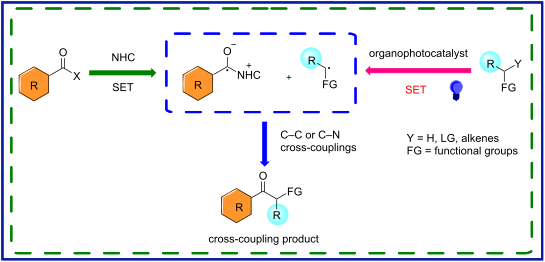
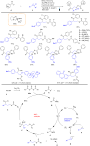
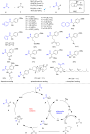
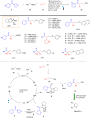
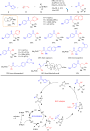
- chemistry and active pharmaceutical ingredients [38][39][40]. Over the years, the groups of Hopkinson, Wang, Dong, Marzo, and co-workers published a comprehensive review detailing the synthetic approaches and mechanistic insights of visible light-promoted dual photocatalysis that combined N-heterocyclic
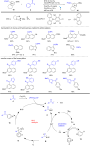
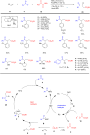
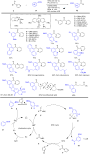
- , and advanced optical and energy materials. Review Visible-light-driven NHC/4CzIPN-catalyzed reactions Recently, Shu and co-workers developed a direct and innovative preparation of highly functionalized aryl amide derivatives 3 from aryl aldehydes 1 and substituted imines 2 under mild conditions in the
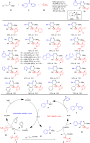
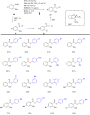
- by the removal of the PMP protecting group using 2 equivalents of CAN and pyridine, affording 2,3-dihydrofurans 12a in 58% (Scheme 4) [54]. In 2022, Sumida, Ohmiya, and co-workers developed a dual NHC/4CzIPN-organocatalyzed, versatile, light-driven silyl radical generation strategy from substituted





Recent advances in total synthesis of illisimonin A
Beilstein J. Org. Chem. 2025, 21, 2571–2583, doi:10.3762/bjoc.21.199
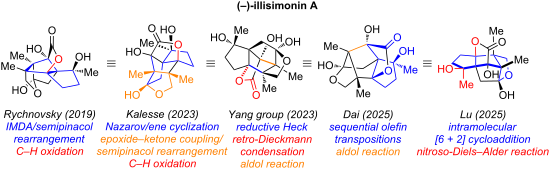
- ][23][24][25]. In 2017, Yu and co-workers isolated a new Illicium sesquiterpene, namely illisimonin A, from the fruits of Illicium simonsii [26]. Unlike other Illicium sesquiterpenes, illisimonin A features an unprecedented bridged tricyclo[5.2.1.01,5]decane carbon framework that incorporates a highly
- neuroprotective effects against oxygen-glucose deprivation-induced cell injury in SH-SY5Y cells, suggesting its potential as a lead compound for the treatment of neurodegenerative diseases. The possible biosynthetic pathway of illisimonin A was also proposed by Yu and co-workers, as illustrated in Scheme 1. The
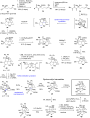
- Rychnovsky [28], Kalesse [29], Yang [30], Dai [31] and Lu [32] have achieved the total synthesis of this molecule. Notable, Rychnovsky and co-workers revised the absolute configuration of (−)-illisimonin A to 1S,4S,5S,6S,7R,9R,10R. This review summarizes the reported synthetic routes toward illisimonin A






Total syntheses of highly oxidative Ryania diterpenoids facilitated by innovations in synthetic strategies
Beilstein J. Org. Chem. 2025, 21, 2553–2570, doi:10.3762/bjoc.21.198
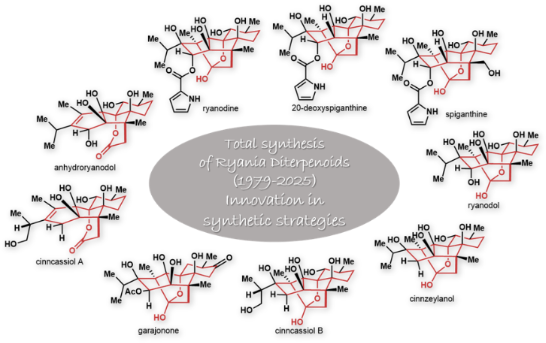
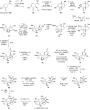
- were ultimately elucidated in 1968 by Wiesner and co-workers using a combination of chemical degradation and X-ray crystallography [14]. Notably, in 2016, Inoue’s group at the University of Tokyo reconciled discrepancies through comparative analysis of experimental and natural product data, confirming
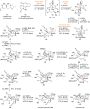
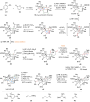
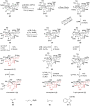
- adduct was subjected to AgOTf-catalyzed lactonization to successfully construct the D ring of target molecular framework. Next, a 1,4-addition reaction introduced a vinyl group to compound 68, affording compound 70. A Pauson–Khand cyclization of 70 under [RhCl(CO)2]2/CO conditions smoothly furnished the
- ). The synthesis commenced with the preparation of key cyclization precursor 98 via Barbier coupling and Babler–Dauben oxidative rearrangement. A pivotal palladium-catalyzed Heck/carbonylative cyclization then efficiently furnished the ABC tricyclic core 99. Notably, adding N-formylsaccharin under a CO







Ni-promoted reductive cyclization cascade enables a total synthesis of (+)-aglacin B
Beilstein J. Org. Chem. 2025, 21, 2548–2552, doi:10.3762/bjoc.21.197
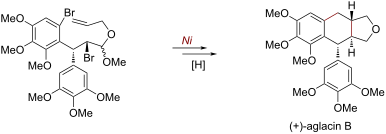
- aryltetralin[2,3-c]furan skeleton embedded in this natural product. Keywords: aryltetralin; conjugate addition; cyclolignan; nickel; reductive coupling; Introduction Proksch and co-workers isolated aglacins A, B, C, and E (1–4, Figure 1) from the methanolic extract of stem bark of Aglaia cordata Hiern from
- the tropical rain forests of the Kalimantan region (Indonesia) [1][2]. These cyclic ether natural products belong to the typical aryltetralin lignans, which have already attracted broad attention from the synthetic community [3][4][5]. Zhu and co-workers disclosed a concise synthesis of (±)-aglacins B


Rapid access to the core of malayamycin A by intramolecular dipolar cycloaddition
Beilstein J. Org. Chem. 2025, 21, 2542–2547, doi:10.3762/bjoc.21.196
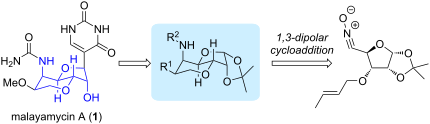
- metabolites and exhibit intriguing bioactivities (2–4, Figure 1). These antifungal nucleoside agents have been received great attention from the scientific community and several elegant syntheses have been disclosed [9][10][11][12][13][14][15]. Specifically, Hanessian and co-workers reported the first total
- stereochemistry of substituents, as well as the heterocyclic anomeric unit. Uncertainty regarding the mode of action, along with inadequate synthetic approaches toward a lead compound, remains elusive. The well-established synthetic route reported by Hanessian and co-workers began with ᴅ-ribonolactone which bears
- details). The following reductive cleavage of the N–O bond was carried out by Mo(CO)6 in refluxing CH3CN [39]. Subsequent oxidation of the resulting secondary alcohol with Dess–Martin periodinane (DMP) [40] afforded methyl ketone 20 in 53% yield for 2 steps. Moreover, the minor isomer 19b also underwent




Palladium-catalyzed regioselective C1-selective nitration of carbazoles
Beilstein J. Org. Chem. 2025, 21, 2479–2488, doi:10.3762/bjoc.21.190
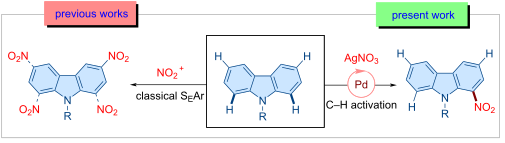
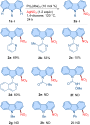
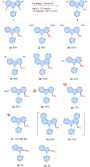
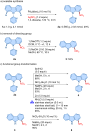
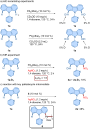
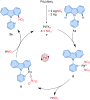
- reagent resulted in complete loss of reactivity (Table 1, entry 12). Further, extending the reaction time had no significant effect on the yield (Table 1, entry 13). Finally, our investigation using various 3d transition metal catalysts such as Ni(OAc)2, Cu(OAc)2, and Co(OAc)2 in place of Pd₂(dba)3 did
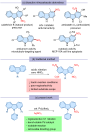
- NiCl2/NaBH4 in methanol at room temperature, affording the corresponding amine 4 in 93% yield. To align with green chemistry principles, we employed a recently reported mechanochemical protocol by Ito and co-workers for the reduction of nitro compounds to amines [72]. Using this solvent-free method


Ex-situ generation of gaseous nitriles in two-chamber glassware for facile haloacetimidate synthesis
Beilstein J. Org. Chem. 2025, 21, 2465–2469, doi:10.3762/bjoc.21.188
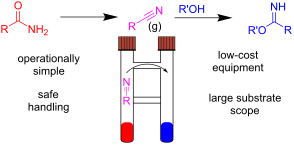
- point = −64 °C). To minimize the setup needed and handling we decided to utilize the two-chamber reaction vessels introduced by Skrydstrup and co-workers [19], which were originally designed for use with carbon monoxide reactions [20] and are now commercially available under the tradename COware (Figure


The intramolecular stabilizing effects of O-benzoyl substituents as a driving force of the acid-promoted pyranoside-into-furanoside rearrangement
Beilstein J. Org. Chem. 2025, 21, 2456–2464, doi:10.3762/bjoc.21.187
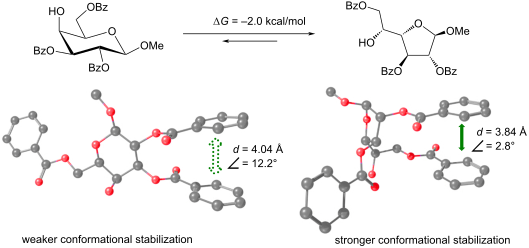
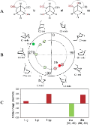
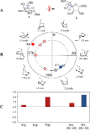
- oriented to have the torsions Hn–Cn–On–CO at 0°. For the benzoate group at O-6 three possible rotamers [40] around the C5–C6 bond were analyzed: trans-gauche (tg), gauche-gauche (gg) and gauche-trans (gt) (Figure 4A). This was done by choosing the initial ω angle (O5–C5–C6–O6) as 180°, −60° or +60




Catalytic enantioselective synthesis of selenium-containing atropisomers via C–Se bond formations
Beilstein J. Org. Chem. 2025, 21, 2447–2455, doi:10.3762/bjoc.21.186
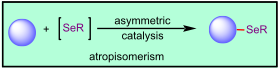
- functionalization remains a significant challenge. In 2024, You and co-workers reported a breakthrough in the enantioselective direct C–H selenylation of 1-arylisoquinolines and 2-(phenylselenyl)isoindoline-1,3-diones under rhodium catalysis to afford axially chiral diaryl selenides [18]. In this protocol, AgPF6
- formation proceeded through an SN2-type nucleophilic substitution mechanism (Scheme 1). In 2025, Li and co-workers reported a highly efficient rhodium-catalyzed enantioselective C–H selenylation reaction of 1-arylisoquinolines with diselenides, employing 3,5-(CF3)2C6H3CO₂Ag and AgSbF6 as additives [19
- or cationic species. In 2019, Qin and co-workers reported a methodology enabling the difunctionalization of alkynes through selenosulfonylation of a VQM intermediate under mild reaction conditions [20]. This racemic transformation proceeds without the need for any catalyst or additive, and the




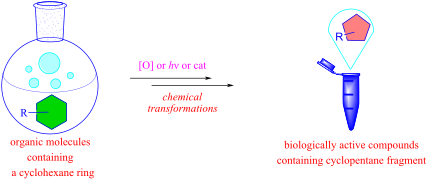
Transformation of the cyclohexane ring to the cyclopentane fragment of biologically active compounds
Beilstein J. Org. Chem. 2025, 21, 2416–2446, doi:10.3762/bjoc.21.185
- ) (Scheme 11). The technique of regioselective oxidative contraction of a six-membered ring was described in the work by Luo, Zhang and co-workers [43] during their synthesis of the natural alkaloids, dactylicapnosines A (63) and B (64), which contain a 9,10-seco-7-dehydroaporphinoid skeleton with an
- -quinone 66 through a Co-mediated benzilic acid rearrangement to give cyclopentanone 69 with a 68% yield. The target products 63 and 64 were obtained in 14 and 16 steps with a total yield of 12% and 5%, respectively, from compound 65 (Scheme 12). The presented improved method opens up the possibility of
- with 52% yield (Scheme 14). The authors [47] provided convincing evidence that the acyloin ring contraction is stereospecific, by replacing the benzil ᴅ-glucose in compound 76 at the C5 atom with an achiral prenyl group. In [49], Zhang and co-workers carried out the first enantioselective synthesis of


Synthetic study toward vibralactone
Beilstein J. Org. Chem. 2025, 21, 2376–2382, doi:10.3762/bjoc.21.182

- moiety have been isolated and demonstrate potent bioactivities [7] (Figure 1). For example, lactacystin (1) which was isolated by Ōmura and co-workers [8][9], is a potent and selective proteasome inhibitor; its active form is the synthetic precursor omuralide (2) [10][11]. Similarly, salinosporamide (3
- ), a marine natural product isolated by Fenical and co-workers [12], also acts as a proteasome inhibitor and displays more potent in vitro cytotoxicity than omuralide (2). Anisatin (4), which contains a characteristic spiro β-lactone has been identified as a noncompetitive antagonist of GABA-gated ion
- channels [13]. Tetrahydrolipstatin (5) is a potent pancreatic lipase inhibitor and has been developed into an antiobesity drug marketed under the generic name Orlistat. Vibralactone (6), which was isolated by Liu and co-workers from Basidiomycete Boreostereum vibrans, features a fused β-lactone with a


Rotaxanes with integrated photoswitches: design principles, functional behavior, and emerging applications
Beilstein J. Org. Chem. 2025, 21, 2345–2366, doi:10.3762/bjoc.21.179

- methoxide anion (Figure 2). The neutral acridane is restored through the thermal nucleophilic attack of the alkoxide on the acridinium ion. Abraham and co-workers exploited this dramatic change in the electronic nature and geometric shape of acridane to modulate the translation of cyclobis(paraquat-4,4
- behavior, enabling the translation of the macrocycle along the axle upon irradiation with light (Figure 3) [21]. Anthracene Anthracene undergoes [4π + 4π] dimerization upon irradiation with light, whereas cycloreversion is achieved thermally (Figure 2) [27]. Tron and co-workers synthesized a [2]rotaxane
- isomerization (Figure 2) [29]. In 1997, Nakashima and co-workers reported the first rotaxane where the azobenzene was located on the axle, acting as a recognition site for a β-cyclodextrin macrocycle. Photoisomerization of the azobenzene controlled the shuttling of the macrocycle [30]. Later, Stoddart and co


Comparative analysis of complanadine A total syntheses
Beilstein J. Org. Chem. 2025, 21, 2334–2344, doi:10.3762/bjoc.21.178
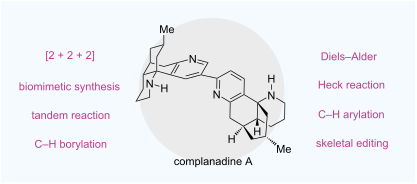
- isolated by Kobayashi and co-workers from the club moss Lycopodium complanatum [4][5][6][7]. They discovered that complanadine A exhibited neurotrophic activity by enhancing the mRNA expression level for nerve growth factor (NGF) biosynthesis in 1321N1 human astrocytoma cells and NGF production in human
- glial cells, rendering complanadine A a promising lead compound for neurological disorder treatment. Later, complanadine A was also identified as a lead compound for pain management by Siegel and co-workers [8]. They discovered one of its potential cellular targets as the Mas-related G protein-coupled
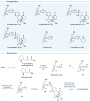
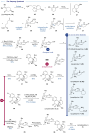
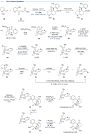
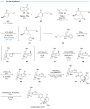
- and co-workers [19]. In this review article, we summarize these four total syntheses, comparatively analyze their strategic novelty and differences, and highlight the impact of enabling methodologies and concepts on the overall efficiency and economy of each total synthesis [20]. Review The Siegel



Insoluble methylene-bridged glycoluril dimers as sequestrants for dyes
Beilstein J. Org. Chem. 2025, 21, 2302–2314, doi:10.3762/bjoc.21.176
- ], and non-conventional adsorbents [14]. Although activated carbon is widely used, its ability to capture polar compounds is limited and the regeneration process is complex and energy-intensive [15]. In work that stimulated supramolecular chemists to enter the game, Dichtel and co-workers demonstrated
- that β-cyclodextrin (Figure 1)-based polymers could remove organic micropollutants from water [15][16]. For example, in 2021, Sessler and co-workers reported the synthesis of a calix[4]pyrrole (Figure 1)-based porous organic polymer, which exhibits the rapid uptake of dyes from water [17]. In addition
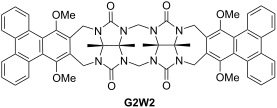
- found that the water-soluble naphthalene-walled glycoluril dimer G2M2 (Figure 1) – with its roughly co-planar aromatic walls – is selective for planar aromatic cations as guests [38]. In order the complement the tricyclic ring system present in the panel of dyes (Figure 2), we envisioned the use of even



Halogenated butyrolactones from the biomass-derived synthon levoglucosenone
Beilstein J. Org. Chem. 2025, 21, 2297–2301, doi:10.3762/bjoc.21.175
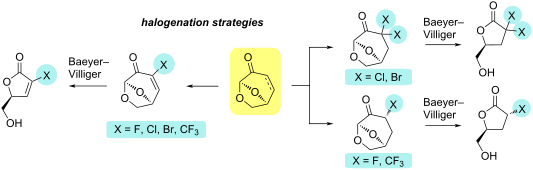
- infections. The preparation of 2-halo-2-deoxy-ᴅ-ribose derivatives can be achieved via the modification of the parent sugar [9][10] or chain-elongation strategies from lower homologues. For example, Castro and co-workers have demonstrated the synthesis of a dichlorinated 2-deoxypentose via the addition of
- species in situ was crucial for this transformation. By modifying a procedure for the trifluoromethylation of ketene dithioacetals reported by Liu and co-workers using TMSCF3 [43], rapid consumption of enamine 15 was observed. Acidic treatment of the intermediate promoted the hydrolysis/elimination



Enantioselective radical chemistry: a bright future ahead
Beilstein J. Org. Chem. 2025, 21, 2283–2296, doi:10.3762/bjoc.21.174
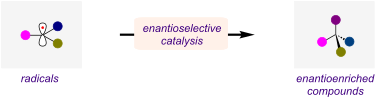
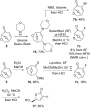
- transformations [43][44][45][46][47][48]. Using SOMO catalysis, MacMillan and co-workers developed a method for the synthesis of substituted pyrrolidines from β-aminoaldehydes and olefins in a formal [3 + 2] cycloaddition (Scheme 2) [44]. The transformation was proposed to proceed via a radical–polar crossover
- single process that established five new carbon–carbon bonds and nine contiguous stereocenters, including four all-carbon quaternary centers (Scheme 3). Transition-metal-catalyzed radical reactions Recent advances in enantioselective radical reactions catalyzed by base metals (e.g., Fe, Co, Ni, Mn
- and NiCl2·diglyme, was used as the catalyst to obtain the coupling products 20 in good yield and high enantioselectivity. The first nickel-catalyzed asymmetric reductive cross-coupling reaction between acid chlorides 21 and secondary benzylic chlorides 22 was reported by Reisman and co-workers (Scheme


Pathway economy in cyclization of 1,n-enynes
Beilstein J. Org. Chem. 2025, 21, 2260–2282, doi:10.3762/bjoc.21.173
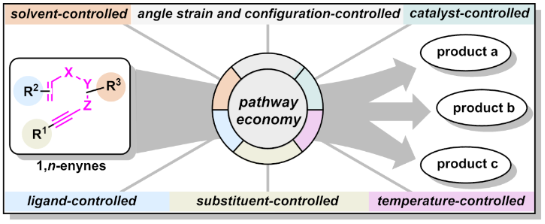
- 2, path b). In the following years, Liu and co-workers discovered that the protonation of intermediate 2 triggered its conversion to intermediate 3, which subsequently underwent oxidation with oxygen, resulting in the generation of an indenone skeleton 6 [9]. This tunability achieved efficient and
- and co-workers achieved an innovative gold-catalyzed cascade cycloisomerization of 3-allyloxy-1,6-diynes to access cyclopropane- and cyclobutane-fused benzofurans/chromanols (Scheme 5) [12]. In this study, solvent polarity and trace water were identified as key parameters governing the reaction
- nexus for the rational design and optimization of highly effective, selective homogeneous catalytic systems. In 2013, Barriault and co-workers demonstrated that strategic modulation of steric and electronic ligand parameters within gold(I)-catalyzed cyclization pathways enables the selective assembly of


A chiral LC–MS strategy for stereochemical assignment of natural products sharing a 3-methylpent-4-en-2-ol moiety in their terminal structures
Beilstein J. Org. Chem. 2025, 21, 2243–2249, doi:10.3762/bjoc.21.171
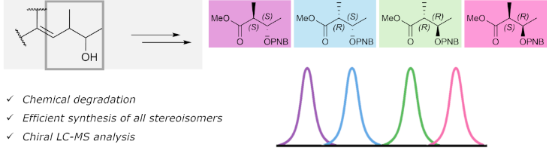
- obtained suffered from co-evaporation during solvent removal under reduced pressure, which led us to consider that degradation of the natural product to obtain the corresponding fragment would be challenging. Accordingly, esterification of the hydroxy group at C3 in 3, and suitable acyl groups were then


Pd-catalyzed dehydrogenative arylation of arylhydrazines to access non-symmetric azobenzenes, including tetra-ortho derivatives
Beilstein J. Org. Chem. 2025, 21, 2234–2242, doi:10.3762/bjoc.21.170
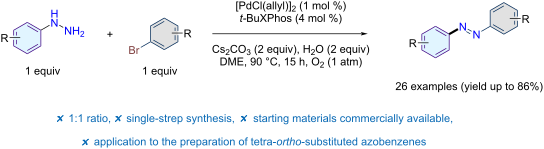
- and co-workers developed a Chan–Evans–Lam-type oxidative cross-coupling reaction between N-arylphthalic hydrazides and arylboronic acids using copper catalysis [41]. Similarly, in 2003, Lee and co-workers introduced a desymmetrization approach employing simpler N=N precursors, specifically N-protected
- hydrazines. Their method involved a three-step process comprising Cu and Pd-catalyzed C–N bond formations followed by a dehydrogenative deprotection step (Figure 1b, top) [42]. This desymmetric approach was further employed by Oestreich and co-workers in 2022, who introduced silicon-masked diazenyl anions in
- for synthesizing non-symmetric azobenzenes via a Pd-catalyzed cascade involving C–N coupling of arylhydrazines with aryl bromides, followed by oxidative dehydrogenation (Figure 1c). As our study was nearing completion, Váňa and co-workers disclosed a related Buchwald–Hartwig approach employing the Pd


C2 to C6 biobased carbonyl platforms for fine chemistry
Beilstein J. Org. Chem. 2025, 21, 2103–2172, doi:10.3762/bjoc.21.165
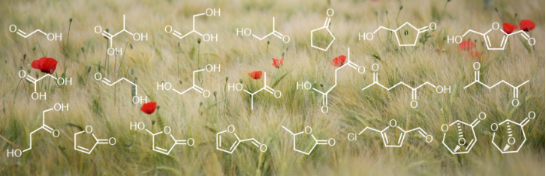
- al. reported the valorization of C1 molecules (CH4, CO2, and CO) upgraded to the industrially important C2 chemical glycolic acid (GA) in a sustainable way. In the first step all the C1 source molecules are converted into formaldehyde. Metabolic engineering of E. coli-based biocatalysts allowed to
- . Polylactic acid (PLA) and polyglycolic acid (PGA) are most important examples of biopolymers exhibiting interesting biodegradability properties [41]. The co-polymerization of PLA with glycolic acid was reported by Ayyoob and Kim [42]. High molecular weight poly-lactic-co-glycolic acid (PLGA) was obtained by
- the direct condensation and co-polymerization of both monomers promoted by a bicatalytic system including stannous chloride (SnCl2·2H2O) and methane sulfonic acid (MSA). PLGA films were prepared by the solvent casting technique, for which the presence of glycolic acid was found to increase their


The application of desymmetric enantioselective reduction of cyclic 1,3-dicarbonyl compounds in the total synthesis of terpenoid and alkaloid natural products
Beilstein J. Org. Chem. 2025, 21, 2085–2102, doi:10.3762/bjoc.21.164
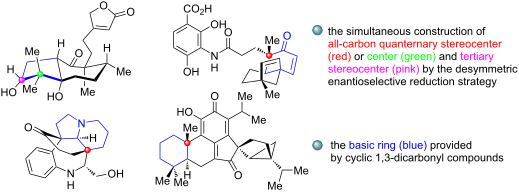
- co-workers accomplished the first asymmetric total synthesis of (+)-aplysiasecosterol A (6) by employing a desymmetric enantioselective reduction strategy of 1,3-cyclopentanedione derivative as the key transformation [14]. Their synthesis features a highly efficient desymmetric enantioselective
- ][44][45][46][47][48][49][50]. For an efficient synthesis of these two natural products, Han and co-workers [51] adopted an alternative route utilizing the desymmetric enantioselective reduction strategy of a 1,3-cyclopentanedione derivative as the key transformation. Both (−)-hamigeran B (11) and
- elastase release and superoxide-anion generation. In 2024, Baudoin and co-workers presented an efficient route for the first total synthesis (+)-randainin D (13) by utilizing an early-staged Ru-catalyzed desymmetric enantioselective reduction as the key transformation [53]. As shown in Scheme 5 [53], based







Multicomponent reactions IV
Beilstein J. Org. Chem. 2025, 21, 2082–2084, doi:10.3762/bjoc.21.163
- issue (1 Letter, 22 Full Research Papers, and 7 Reviews) reflect the broad spectrum of MCR chemistry worldwide. Among the Full Research Papers, isocyanide-based multicomponent reactions still constitute the relative majority. Ugi and co-workers’ groundbreaking discovery of the four-component reaction
Further elaboration of the stereodivergent approach to chaetominine-type alkaloids: synthesis of the reported structures of aspera chaetominines A and B and revised structure of aspera chaetominine B
Beilstein J. Org. Chem. 2025, 21, 2072–2081, doi:10.3762/bjoc.21.162
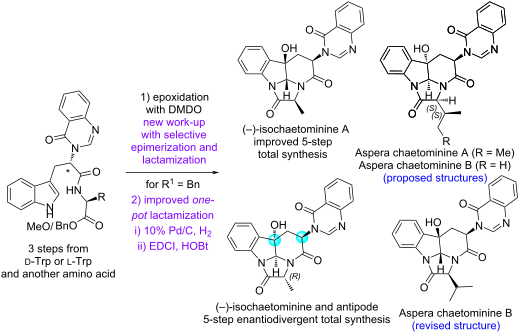
- fungus Aspergillus versicolour SCSIO XWS04 F52 [32]. All these alkaloids distinguish each other only by alkyl substituent at C11 and by relative stereochemistries at C2, C3, C11, and C14. Soon after the report of the isolation, structural elucidation, and bioactivity of (–)-chaetominine by Tan and co
- structures of aspera chaetominines A and B and revision of stereochemistry of aspera chaetominine B Several years after we have had accomplished the abovementioned investigations, Liu and co-workers reported the isolation and structural elucidation of two new alkaloids, aspera chaetominines A (12) and B (13




Bioinspired total syntheses of natural products: a personal adventure
Beilstein J. Org. Chem. 2025, 21, 2048–2061, doi:10.3762/bjoc.21.160
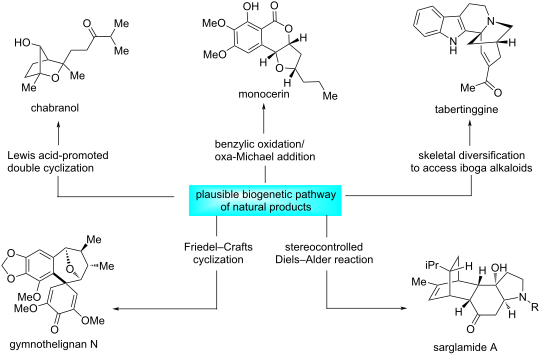
- synthesis of natural products. Review Synthesis of chabranol In 2009, Duh and co-workers investigated the ingredients of Formosan soft corals Sinularia capillosa Tixier-Durivault and Nephthea chabroli Audouin, collected from west pacific Dongsha Atoll and Siaoliouciou Island, providing two terpenoid natural
- with an acid and base-promoted saponification inversed the C12 alcohol stereochemistry, which ultimately provided (12R)-hydroxymonocerin. Total synthesis and bioinspired skeletal diversification of (12-MeO)-tabertinggine In 2013, Kam and co-workers reported the discovery of two novel indole alkaloids
- chinensis Decne and Gymnotheca involucrate Pei. These two plants are endemic in China, and have been used as medicinal herb for a long history to treat diseases such as dysentery, abdominal distention, edema, contusion, and strains [31]. Since 2012, Zhou and co-workers extensively investigated the




Solar thermal fuels: azobenzene as a cyclic photon–heat transduction platform
Beilstein J. Org. Chem. 2025, 21, 2036–2047, doi:10.3762/bjoc.21.159
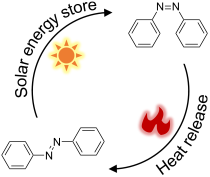
- [8]. Significant progress has been made in developing molecular photochromic systems for solar thermal energy storage, with representative examples including anthracene derivatives [9][10][11], diphenylethylene [12][13], fulvalene-based tetracarbonyldiruthenium (FvRu2(CO)4) [14][15][16
- enables each azobenzene unit to store >200% more energy than isolated molecules, while achieving multi-order-of-magnitude improved storage lifetime and resistance to material degradation during repeated cycling. Feng and co-workers covalently grafted azobenzene groups onto RGO templates (Figure 3b) and
- visible light under sunlight irradiation [59], achieving a solar efficiency of 0.4% and a solid-state isomerization efficiency of 72.7% (Figure 5b). Feng and co-workers reported the synthesis of three azopyridine polymers (ortho-, meta-, and para-) [60], with the m-azopyridine polymer exhibiting a