


Search results
Search for "NHCs" in Full Text gives 70 result(s) in Beilstein Journal of Organic Chemistry.
Synthesis and structures of ruthenium–NHC complexes and their catalysis in hydrogen transfer reaction
Beilstein J. Org. Chem. 2015, 11, 1786–1795, doi:10.3762/bjoc.11.194
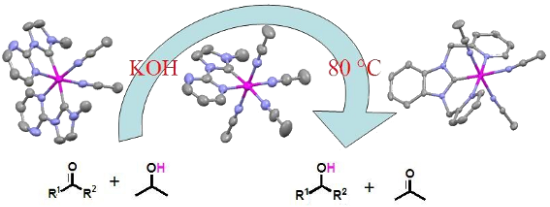
- carbenes (NHCs) have been recognized as a class of strong donating ligands which can stabilize various metal complexes of catalytic importance. Transition metal complexes bearing NHCs are more stable to air, moisture, heat, and tolerant toward oxidation compared to phosphine ligands [1][2][3][4][5][6][7
- ]. Among NHCs, functionalized NHC ligands have been extensively studied in recent years because of their intriguing structural diversities and potential applications in coordination chemistry and homogenous catalysis. NHC ligands containing additional phosphine, nitrogen, oxygen, and sulfur donating groups
- [8][9][10][11][12][13][14][15][16] have been reported. In the family of metal complexes supported by functionalized NHCs, ruthenium complexes have long been a research focus on various applications such as catalysis and photochemistry [17][18][19][20][21][22][23][24][25][26]. However, the majority of


A facile synthetic route to benzimidazolium salts bearing bulky aromatic N-substituents
Beilstein J. Org. Chem. 2015, 11, 1656–1666, doi:10.3762/bjoc.11.182
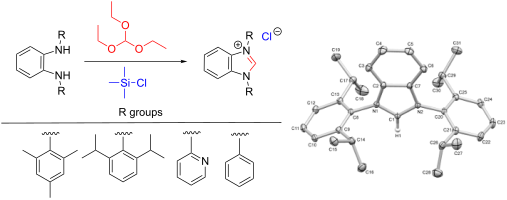
- : benzimidazolium salts; bulky ligands; cyclization; ligand design; N-heterocyclic carbenes (NHC); ring formation; Introduction Imidazole-based N-heterocyclic carbenes (NHCs) are stable systems serving as ancillary ligands mainly to construct organometallic complexes. These NHCs are sterically and electronically
- tunable, strongly binding ligand units in complexes in the search for new materials [1][2][3][4][5] and for catalysts of homogeneous catalysis [6][7][8][9][10]. Besides that NHCs have great potential in organocatalysis [11][12][13][14][15], their electronic properties, σ-donor ability and π-back donation
- used as electroluminescent materials (OLEDs) [16][17][18][19]. After the discovery of NHCs in 1968 by Wanzlick and Öfele, who isolated stable diamino-substituted carbenes, around 20 years later Arduengo further stabilized these potential ligand groups by embedding them into imidazole rings and


Grubbs–Hoveyda type catalysts bearing a dicationic N-heterocyclic carbene for biphasic olefin metathesis reactions in ionic liquids
Beilstein J. Org. Chem. 2015, 11, 1632–1638, doi:10.3762/bjoc.11.178
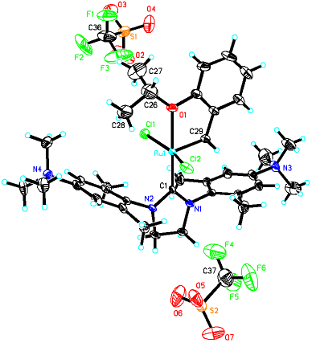
- can also be prepared with the aid of N-heterocyclic carbenes (NHCs) that bear pendant ionic groups (Figure 1) [10][16][17][18][19]. We addressed that issue by preparing a novel ionic Ru-NHC-alkylidene using NHCs with ionic groups. Here we report our results. Results and Discussion Catalyst synthesis
- organic phase (see Supporting Information File 1). It is thus also in line with the fact that Ru–alkylidenes based on electron-rich NHCs, e.g., based on tetrahydropyrimidin-2-ylidenes [23], strongly promote olefin metathesis. Biphasic ring-opening metathesis polymerization (ROMP) reactions To test the



Highly selective palladium–benzothiazole carbene-catalyzed allylation of active methylene compounds under neutral conditions
Beilstein J. Org. Chem. 2015, 11, 994–999, doi:10.3762/bjoc.11.111
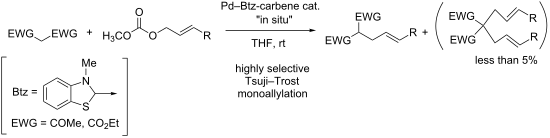
- activity is still mandatory in these kind of reactions. Among various ligands, N-heterocyclic carbenes (NHCs) have gained greater importance in organometallic chemistry. Unlike phosphanes, NHCs are not toxic and insensitive to air, heat and moisture. Moreover, the introduction of substituents onto the


A novel 4-aminoantipyrine-Pd(II) complex catalyzes Suzuki–Miyaura cross-coupling reactions of aryl halides
Beilstein J. Org. Chem. 2014, 10, 2821–2826, doi:10.3762/bjoc.10.299
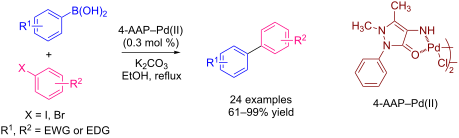
- develop a stable and efficient Pd catalyst for these reactions. Recently, palladium complexes containing imidazole-imines [12], binary nanoclusters [13], N-heterocyclic carbenes (NHCs) [14], nanoparticles [15], palladacycles [16], and Schiff bases [17] have been developed as highly effective phosphine


Dimerisation, rhodium complex formation and rearrangements of N-heterocyclic carbenes of indazoles
Beilstein J. Org. Chem. 2014, 10, 832–840, doi:10.3762/bjoc.10.79
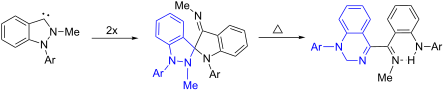
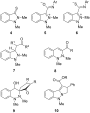
- NHCs of indazole which have been generated and applied in heterocyclic synthesis (vide infra) as well as in complex chemistry [13]. Undoubtedly the N-heterocyclic carbenes of imidazole, imidazoline and the triazoles play the most important roles as ligands in metal-organic chemistry [14] or as
- organocatalysts [15][16]. The N-heterocyclic carbenes of indazole (and pyrazole [17][18]), however, have a chemistry of their own which set them apart from the NHCs of the aforementioned ring systems. Portions of that field have been covered in recent review articles [18][19]. The N-heterocyclic carbene of
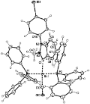
- strong donor strengths of these indazol-3-ylidenes as already postulated earlier on comparing different stretching frequencies of selected 5-membered NHCs [27] or 13C NMR resonance frequencies of several palladium carbene complexes [28]. We were able to obtain single crystals of 15e to perform an X-ray






Modulating NHC catalysis with fluorine
Beilstein J. Org. Chem. 2013, 9, 2812–2820, doi:10.3762/bjoc.9.316
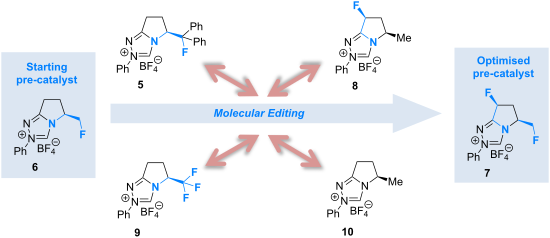
- converted to the respective N-heterocyclic carbenes (NHCs) by simple deprotonation. Given the importance of NHCs in modern organic synthesis [23][24][25][26][27][28] it was envisaged that these systems would be intriguing candidates for investigation. Moreover, structural information gleaned from the
- triazolium salt pre-catalysts regarding conformation [18][22], assist in rationalising the behaviour of the NHCs generated in situ. Herein, the synthesis and catalytic efficiency of a series of fluorinated, bicyclic triazolium salts 2 is disclosed. The effect of molecular editing by hydrogen to fluorine
- -workers, which demonstrated that backbone fluorination of bicyclic NHCs improves enantioselectivity in Stetter reactions of heterocyclic aldehydes with nitroalkenes [37][38][39][40]. Finally, one hybrid system was prepared containing both β-fluoroamine classes (7). The trifluoromethylated triazolium salt


Advancements in the mechanistic understanding of the copper-catalyzed azide–alkyne cycloaddition
Beilstein J. Org. Chem. 2013, 9, 2715–2750, doi:10.3762/bjoc.9.308
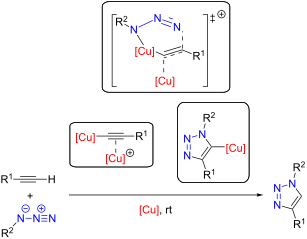
- [PPh2(OPh-2-OMe)]} (Figure 3, second row, left) in water proceeds at room temperature to give >95% conversion after three hours. In organometallic catalysis, N-heterocyclic carbene ligands (NHCs) have superseded phosphine ligands in many fields of application [145]. It was thus only a matter of time


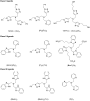


Synthesis and structure of trans-bis(1,4-dimesityl-3-methyl-1,2,3-triazol-5-ylidene)palladium(II) dichloride and diacetate. Suzuki–Miyaura coupling of polybromoarenes with high catalytic turnover efficiencies
Beilstein J. Org. Chem. 2013, 9, 698–704, doi:10.3762/bjoc.9.79
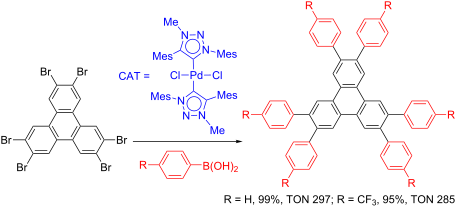
- -triazolylidene; Introduction Over the past decade N-heterocyclic carbenes (NHCs) have attracted the attention of synthetic and organometallic chemists tremendously [1][2][3][4][5]. NHCs have been proven to be useful as organocatalysts in organic synthesis [6][7][8][9]. They are excellent ligands for transition
- ]. Among the various NHCs 1,3-diarylimidazolylidenes are the most widely studied systems [12][13][14]. In the past five years 1,2,3-triazol-5-ylidenes have emerged as promising ligands for transition-metal chemistry [15][16][17][18][19][20]. 1,2,3-Triazol-5-ylidenes have been termed as abnormal NHCs and
- mesoionic carbenes because their structures cannot be represented in neutral canonical form [17][19]. Mesoionic NHCs are stronger sigma donors than the normal NHCs (e.g., imidazolylidenes versus triazolylidenes) [21][22][23]. Hence metal complexes of mesoionic carbene ligands are expected to show high


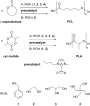
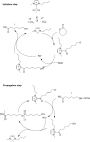
1-n-Butyl-3-methylimidazolium-2-carboxylate: a versatile precatalyst for the ring-opening polymerization of ε-caprolactone and rac-lactide under solvent-free conditions
Beilstein J. Org. Chem. 2013, 9, 647–654, doi:10.3762/bjoc.9.73
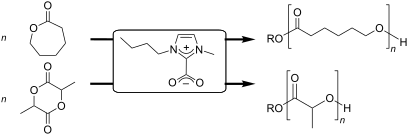
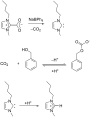
- applications, great efforts have been made recently to develop metal-free organo-catalysts [19][20][21][22][23][24][25][26][27]. In this context, ROP promoted by N-heterocyclic carbenes (NHCs) is an alternative route. Indeed, previous studies have shown that NHCs provide versatile catalyst activities with high


One-pot tandem cyclization of enantiopure asymmetric cis-2,5-disubstituted pyrrolidines: Facile access to chiral 10-heteroazatriquinanes
Beilstein J. Org. Chem. 2013, 9, 265–269, doi:10.3762/bjoc.9.32
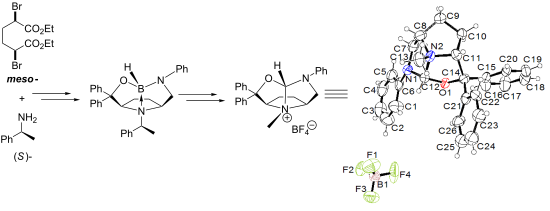
- 5a, 5b, 6a and 6b were also reported in [9], but our previously published structures for compounds 5a and 5b were not completely correct, because the B–N dative bonds were missing. The aim of the following procedures was to obtain several novel bifunctional N-hetereocyclic carbenes (NHCs) [10][11][12


N-Heterocyclic carbene–palladium(II)-1-methylimidazole complex catalyzed Mizoroki–Heck reaction of aryl chlorides with styrenes
Beilstein J. Org. Chem. 2012, 8, 1916–1919, doi:10.3762/bjoc.8.222

- associated with the phosphine ligands, the development of alternative stable, inexpensive and easily available phosphine-free ligands is still in great demand. In the meantime, N-heterocyclic carbenes (NHCs), possessing the advantages of being stronger σ-donors and weaker π-acceptors than traditional


Extending the utility of [Pd(NHC)(cinnamyl)Cl] precatalysts: Direct arylation of heterocycles
Beilstein J. Org. Chem. 2012, 8, 1637–1643, doi:10.3762/bjoc.8.187
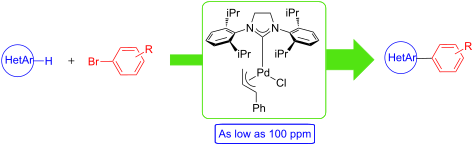
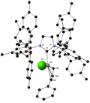
- second precatalyst screening was performed. As shown in Table 3, better activity was observed for precatalysts 1 and 2, which have smaller ligands when compared to the NHCs in 3 and 4. This result suggests a strong dependence of the activity on the steric properties of the NHC ligand. Moreover, the small



N-Heterocyclic carbene-catalyzed direct cross-aza-benzoin reaction: Efficient synthesis of α-amino-β-keto esters
Beilstein J. Org. Chem. 2012, 8, 1499–1504, doi:10.3762/bjoc.8.169
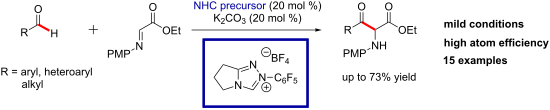
- including C–C bond construction, that is, formal addition of acyl anion equivalents generated from aldehydes 1 with NHCs, to α-imino esters 2 (Figure 1, (f)). Although a large number of NHC-catalyzed umpolung reactions, such as the benzoin reaction and Stetter reaction, have been developed [24][25][26][27
- employing the imines directly has rarely been developed [40][42], due to the unproductive reaction of NHCs with the imines. Therefore, in situ generation of imines or iminium ions from their precursors is generally required to control their reactivity. We anticipated that the introduction of appropriate
- protecting groups of the nitrogen atom of α-imino esters 2, which have been known to be excellent electrophiles, would suppress an unexpected reaction of 2 with NHCs, enabling the direct use of 2 as acyl anion acceptors in the cross-aza-benzoin reaction. In this communication, we describe a new, efficient


A quantitative approach to nucleophilic organocatalysis
Beilstein J. Org. Chem. 2012, 8, 1458–1478, doi:10.3762/bjoc.8.166
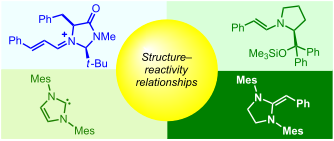
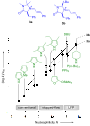
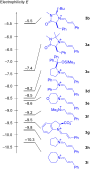
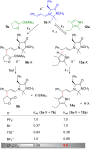
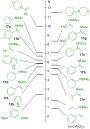
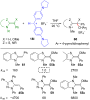
- settled by studying the reactivities of independently synthesized intermediates. Kinetic investigations of the reactions of N-heterocyclic carbenes (NHCs) with benzhydrylium ions showed that they have similar nucleophilicities to common organocatalysts (e.g., PPh3, DMAP, DABCO) but are much stronger (100
- comparison reveals that the nucleophilicities of the NHCs 41–43 do not differ fundamentally from those of other organocatalysts, e.g., triphenylphosphine (10b), DMAP (39), and DABCO (38) [96]. The considerably lower nucleophilicity of the triazolylidene 43 compared with the imidazolylidene 42 can be
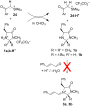
- NHCs, 41, 42, and 43, react quantitatively with the quinone methide 18k, while none of the other Lewis bases, despite their similar nucleophilicities, gives an adduct. The resulting conclusion, that all NHCs are significantly stronger Lewis bases than PPh3 (10b), DMAP (39), and DABCO (38), is confirmed









Synthesis of axially chiral oxazoline–carbene ligands with an N-naphthyl framework and a study of their coordination with AuCl·SMe2
Beilstein J. Org. Chem. 2012, 8, 726–731, doi:10.3762/bjoc.8.81
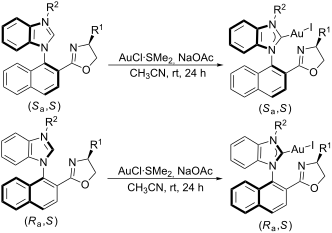
- design and synthesis of chiral gold complexes has received wide attention. Compared with the more commonly used air-sensitive phosphine ligand, N-heterocyclic carbenes (NHCs), with intrinsic characteristics such as strong δ-donor but poor π-acceptor abilities, ease of preparation, air and thermal



N-Heterocyclic carbene/Brønsted acid cooperative catalysis as a powerful tool in organic synthesis
Beilstein J. Org. Chem. 2012, 8, 398–402, doi:10.3762/bjoc.8.43
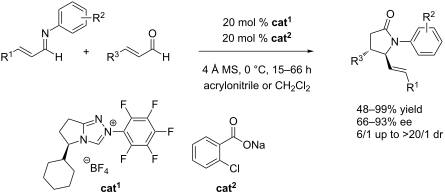
- (NHCs) has provided a window of opportunities for the development of novel catalytic strategies within the past few years. The recent successful combination of Brønsted acids with NHCs has added a new dimension to the field of cooperative catalysis, enabling the stereoselective synthesis of
- salt 1 in 1991 (Scheme 1) [2]. Two years earlier, Bertrand had reported the synthesis of [bis(diisopropylamino)phosphino]trimethylsilylcarbene as the first isolated free carbene [3]. The isolation of stable NHCs and their successful applications as ligands for the preparation of various metal complexes
- ” reactions of aldehydes started as long ago as 1832, and the preparation of sterically hindered triazolium salts in 1996 provided a solid basis for highly stereoselective “umpolung” reactions utilizing NHCs [12]. In addition, conjugate “umpolung” relates to a process in which α,β-unsaturated aldehydes 3 are


Synthesis of chiral mono(N-heterocyclic carbene) palladium and gold complexes with a 1,1'-biphenyl scaffold and their applications in catalysis
Beilstein J. Org. Chem. 2011, 7, 555–564, doi:10.3762/bjoc.7.64
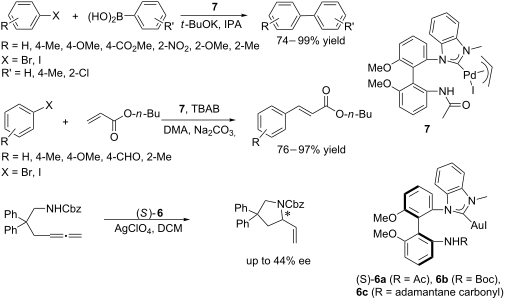
- ][4][5][6][7][8][9][10][11][12][13]. Numbers of novel chiral NHCs and NHC–metal-catalyzed asymmetric transformations have been developed in a dramatic expansion of this area of chemistry during the past decade; however, up to 2010 only a very few efficient chiral NHCs or NHCs metal catalysts have been
- described [14][15][16][17][18]. From the typical configuration of NHC metal complex 1 (Figure 1), NHCs are generally more or less cone-shaped with flat heterocyclic structures, and that R1, R2 and M can rotate flexibly around the R1–N, R2–N and C–M bonds, respectively. Such internal rotations cause the
- active chiral space at the metal center to be relatively ill-defined, which is a key factor for their low enantioselectivity in asymmetric catalysis. As a result, many monodentate NHCs (Figure 1) with sterically hindered R1, R2 groups have been designed, and these have been shown to be good to excellent




Backbone tuning in indenylidene–ruthenium complexes bearing an unsaturated N-heterocyclic carbene
Beilstein J. Org. Chem. 2010, 6, 1120–1126, doi:10.3762/bjoc.6.128
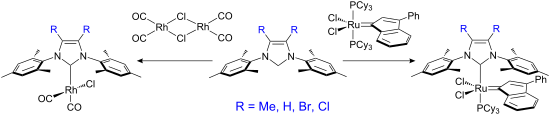
- generation catalysts has been the wide selection of NHCs available [11][12]. These highly basic ligands have now been featured in a number of catalysts that display excellent activity in olefin metathesis. NHCs have become the ligand par excellence in olefin metathesis (Figure 1) [7][8]. In order to improve
- catalytic activity, the possibility of fine-tuning of NHC steric and electronic properties has been exploited. Bulkier and more electron-donating NHCs allow faster initiation with usually a concurrent increase in reaction rate when the olefin substrate is of low steric hindrance [13][14][15][16][17]. Less
- sterically demanding NHCs are typically used for the synthesis of highly encumbered olefins [18]. Recent studies have shown that backbone substitution in saturated NHCs greatly improves catalyst stability by restricting rotation around the N–Caryl bond (Figure 2); this presumably slows catalyst decomposition


Light-induced olefin metathesis
Beilstein J. Org. Chem. 2010, 6, 1106–1119, doi:10.3762/bjoc.6.127

- respective yields and the required reaction times. In line with the development of ruthenium benzylidene initiators [66][67], the phosphane ligand was replaced by an N-heterocyclic carbene (NHCs) in the photoactivated precatalysts. Accordingly, Noels et al. [68][69] synthesised a range of NHC substituted
- in the photochemical process; however, the active species and overall mechanism were not elucidated. Both saturated and unsaturated NHC ligands afforded similar results. However, blocking both ortho positions on the aromatic groups of the NHCs was crucial for the performance of the catalyst. The
- , included NHCs, and in some cases the p-cymene ligand was exchanged for phenylisonitrile and in others the chloride ligands were replaced by trifluroacetate. These transformations were expected to generate more stable, inert, precatalysts that would require external triggers to initiate the dissociation of





