


Search results
Search for "coupling" in Full Text gives 2090 result(s) in Beilstein Journal of Organic Chemistry. Showing first 200.
Competitive cyclization of ethyl trifluoroacetoacetate and methyl ketones with 1,3-diamino-2-propanol into hydrogenated oxazolo- and pyrimido-condensed pyridones
Beilstein J. Org. Chem. 2025, 21, 2716–2729, doi:10.3762/bjoc.21.209
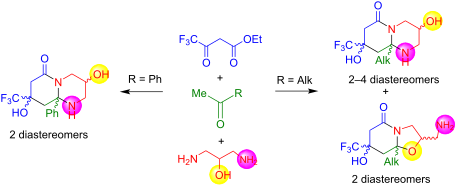
- , HMBC experiments. The relative configuration was established based on the analysis of spin–spin coupling constants 3JH,H and 4JH,H as well as on a set of NOE-correlations. Equatorial or pseudo-equatorial protons of the methylene groups in compounds 4 and 5 were identified by the long-range coupling


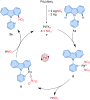
Mechanistic insights into hydroxy(tosyloxy)iodobenzene-mediated ditosyloxylation of chalcones: a DFT study
Beilstein J. Org. Chem. 2025, 21, 2703–2715, doi:10.3762/bjoc.21.208
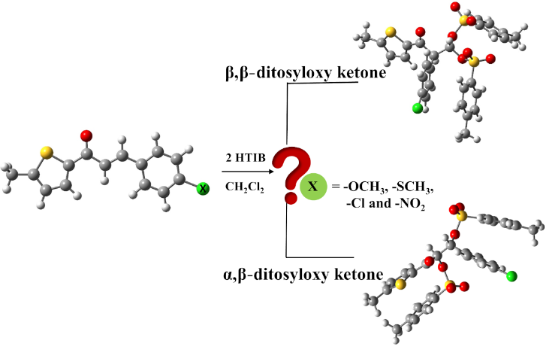
- dearomatization [7], amination [8], oxidative coupling [9], ring contraction [10][11][12], oxidative rearrangement [13][14][15], dihydroxylation of alkenes, arylation [16], oxidation of sulfides [17] and many more. These hypervalent compounds contain iodine in higher oxidation state than its usual −(I) valence


Recent advancements in the synthesis of Veratrum alkaloids
Beilstein J. Org. Chem. 2025, 21, 2657–2693, doi:10.3762/bjoc.21.206
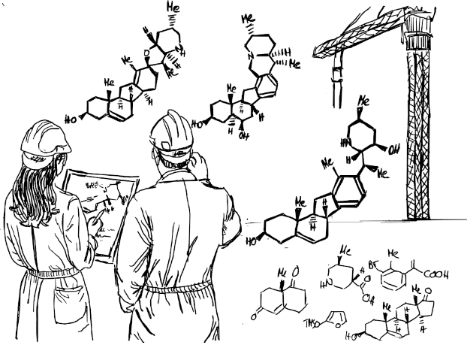
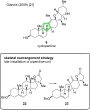
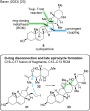
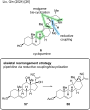
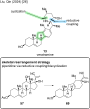
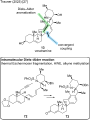
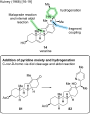
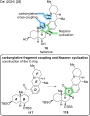
- group disclosed a total synthesis in 2023 [23]. Their synthesis relies on a retrosynthetic cut through the D-ring, enabling a convergent coupling of two similarly complex fragments between C15–C16. Key disconnection steps include a Tsuji–Trost reaction to form the spirocyclic E-ring, and a ring-closing
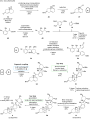
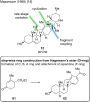
- alkylation was diasteroselective. In the next steps, addition of isopropenyllithium to the lactone moiety led to a hemiketal, which was then opened and a protecting group on the hydroxy group was installed, furnishing fragment 42. Key convergent coupling of this total synthesis was performed by lithium
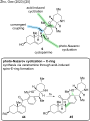
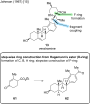
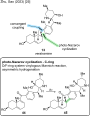
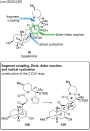
- spirocyclic moiety. Another disconnection was provided by the group of Zhu/Gao in 2023 (Scheme 9) [25]. The major retrosynthetic cut proceeds through the C-ring, while also including a late-stage spirocyclization. The convergent coupling occurs between C11 and C12, while a ketone moiety is present at C11
















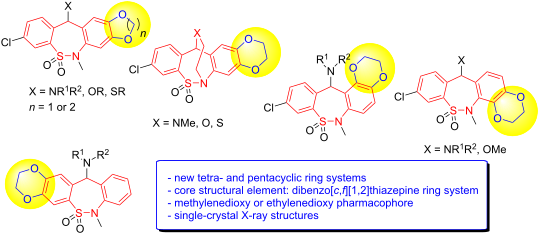
Synthesis of new tetra- and pentacyclic, methylenedioxy- and ethylenedioxy-substituted derivatives of the dibenzo[c,f][1,2]thiazepine ring system
Beilstein J. Org. Chem. 2025, 21, 2645–2656, doi:10.3762/bjoc.21.205
- . The pulse programs were taken from the Bruker software library (TopSpin 3.5) and full 1H and 13C assignments were achieved with widely accepted strategies. 1H assignments were accomplished using general knowledge of chemical shift dispersion with the aid of the 1H–1H coupling pattern. CDCl3 or DMSO-d6
- was used as the solvent and tetramethylsilane (TMS) as the internal standard. Chemical shifts (δ) and coupling constants (J) are given in ppm and in Hz, respectively. Coupling constants reported in the 1H NMR spectra are H–H couplings unless otherwise stated (J ≡ JH–H). Three-bond H–H couplings (3J


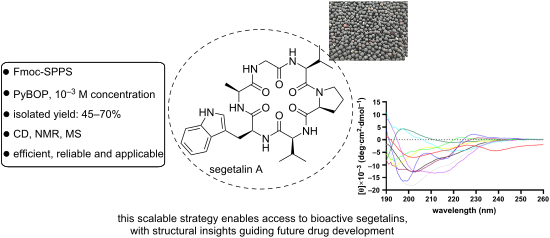
Efficient solid-phase synthesis and structural characterization of segetalins A–H, J and K
Beilstein J. Org. Chem. 2025, 21, 2612–2617, doi:10.3762/bjoc.21.202
- from the high cost of the specialized resin and large solvent volumes required for dilution, coupled with DPPA's poor efficiency in forming sterically hindered peptide bonds involving residues like Val or Ile. Dahiya and Kaur synthesized segetalin C (3) via a solution-phase fragment coupling strategy
- (Scheme 1). Building upon previous work [17][18][19], we focused on optimizing key parameters: resin selection, Fmoc deprotection conditions, coupling reagents for linear assembly, and crucially, the cyclization step. Cost-effectiveness and commercial availability led us to select 2-chlorotrityl chloride
- sequences, coupling efficiency was significantly enhanced using a 1:1 mixture of 1-hydroxybenzotriazole (HOBt) and 2-(1H-benzotriazol-1-yl)-1,1,3,3-tetramethyluronium hexafluorophosphate (HBTU) in DMF [23]. Finally, we obtained crude linear peptides with 75% to 95% yields (Table 1). The critical head-to


Visible-light-driven NHC and organophotoredox dual catalysis for the synthesis of carbonyl compounds
Beilstein J. Org. Chem. 2025, 21, 2584–2603, doi:10.3762/bjoc.21.200
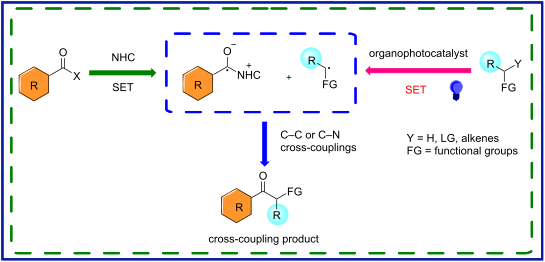
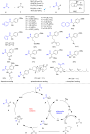
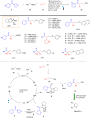
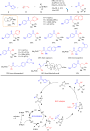
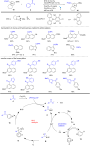
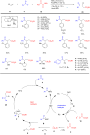
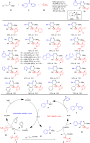
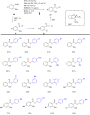
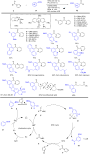
- -coupling processes. This cooperative organic dual catalysis has great potential in medicinal, pharmaceutical, and materials science applications, including the development of organic semiconductors and polymers. In recent years, NHC-involved photocatalysis has attracted considerable attention in synthetic
- carbenes (NHCs) with photocatalysts. The review encompasses transition-metal-based photocatalytic reactions for C–C and C–HA cross-coupling reactions involving various acyl fluorides, amides, aldehydes, carboxylic acids, and esters, highlighting their broad applications in organic synthesis and medicinal
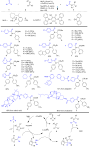
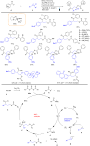
- , generating an N-centered radical species C. This species subsequently undergoes a rapid C–N cross-coupling with ketyl radical B. This cross-coupling method offers a transition-metal free route to highly substituted amides 3 from aldehydes 1 and imines 2, without the need for any external reductants or





Recent advances in total synthesis of illisimonin A
Beilstein J. Org. Chem. 2025, 21, 2571–2583, doi:10.3762/bjoc.21.199
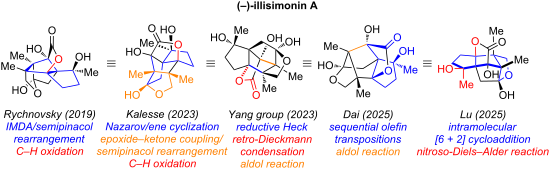
- substructure hidden inside the natural product’s cage-like ring system, Kalesse’s group chose to construct this architecture first using a tandem Nazarov/ene cyclization [36]. The cis-pentalene was subsequently assembled via a Ti(III)-mediated epoxide–ketone coupling reaction. Starting from the known
- triflate formation followed by a palladium-catalyzed coupling reaction with AlMe3. The carbonyl group at C8, required for the subsequent aldol reaction, was introduced by enolate oxidation followed by Jones oxidation. Hydrolysis of the ketal at C11 afforded ketoester 64. A TBD (1,5,7-triazabicyclo[4.4.0






Total syntheses of highly oxidative Ryania diterpenoids facilitated by innovations in synthetic strategies
Beilstein J. Org. Chem. 2025, 21, 2553–2570, doi:10.3762/bjoc.21.198
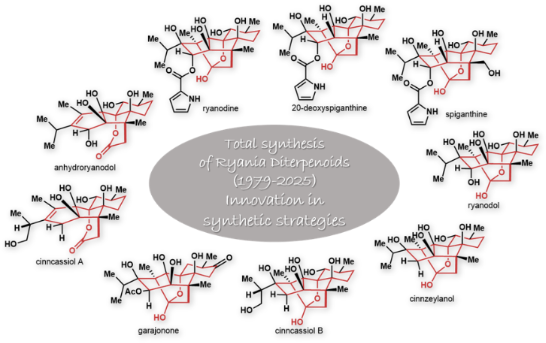
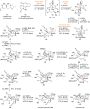
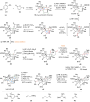
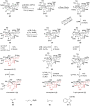
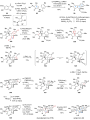
- -ryanodol, cinnzeylanol, and cinncassiols A,B In 2014, the Inoue group at the University of Tokyo reported a synthetic strategy for ryanodol (4) that leveraged substrate symmetry design, employing intramolecular radical coupling and olefin metathesis as key steps [46] (Scheme 4). Recognizing an embedded
- , achieved the total synthesis of anhydroryanodol (10) and a formal synthesis of ryanodol (4) through a key low-valent titanium-mediated intramolecular stereoselective coupling of alkynes with 1,3-dicarbonyl compounds [52] (Scheme 9). To construct the oxygenated fused-ring system with contiguous
- . This work not only demonstrates the efficacy of the titanium-mediated intramolecular alkyne-1,3-diketone coupling but also provides a novel strategic approach for synthesizing natural products within this structural class. The synthesis commenced from commercially available compound 83. Sequential







Ni-promoted reductive cyclization cascade enables a total synthesis of (+)-aglacin B
Beilstein J. Org. Chem. 2025, 21, 2548–2552, doi:10.3762/bjoc.21.197
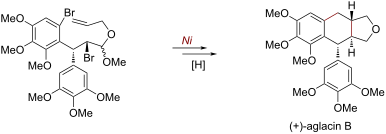
- aryltetralin[2,3-c]furan skeleton embedded in this natural product. Keywords: aryltetralin; conjugate addition; cyclolignan; nickel; reductive coupling; Introduction Proksch and co-workers isolated aglacins A, B, C, and E (1–4, Figure 1) from the methanolic extract of stem bark of Aglaia cordata Hiern from
- synthesis of both enantiomers of aglacins A (1), B (2), and E (4) by asymmetric photoenolization/Diels–Alder reactions as the key steps for the construction of the C7–C8 and C7′–C8′ bonds [8]. During the past decade, we had developed nickel-catalyzed or -promoted reductive coupling/cyclization reactions for


Pentacyclic aromatic heterocycles from Pd-catalyzed annulation of 1,5-diaryl-1,2,3-triazoles
Beilstein J. Org. Chem. 2025, 21, 2524–2534, doi:10.3762/bjoc.21.194
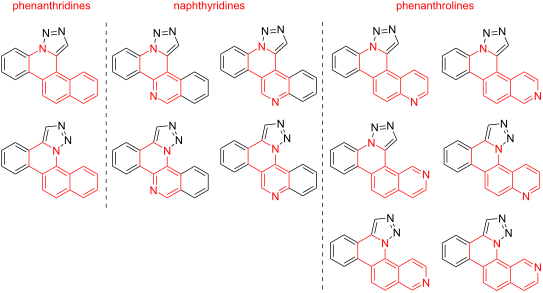
- tandem deprotection/click chemistry followed by Pd-catalyzed annulation is summarized in Table 1. The alkyne-substituted analogs 1–6 [48][49][50][51][52] used in this study were prepared from commercially available aryl halides using microwave-promoted Sonogashira coupling (Table S1, Supporting


Isoorotamide-based peptide nucleic acid nucleobases with extended linkers aimed at distal base recognition of adenosine in double helical RNA
Beilstein J. Org. Chem. 2025, 21, 2513–2523, doi:10.3762/bjoc.21.193
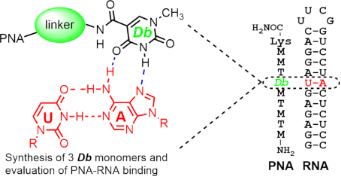
- incomplete conversion resulted in Boc protected beta-alanine that was challenging to separate from the desired product (3). Carboxylic acid 3 then underwent a peptide coupling reaction with allyl-protected PNA backbone 4 to afford nitrobenzene 5 in 69% yield. Nitrobenzene 5 was then reduced to the
- % of the final desired monomer 8 was also isolated in the coupling step, presumably due to hydrolysis of the allyl ester in the iron reduction step. The remaining allyl ester 7 was deallylated via Pd(PPh3)4 to afford the monomer 8 in 51% yield. Db2 Synthesis Db2 was prepared through a convergent
- perform equally well using conventional heating methods. Aniline 10 and carboxylic acid 13 were combined under standard (HBTU) amide coupling conditions to afford benzyl ester 14 in 52% yield. Compound 14 was subsequently debenzylated via hydrogenolysis to afford the target Db2 monomer 15 in 77% yield


Effect of a photoswitchable rotaxane on membrane permeabilization across lipid compositions
Beilstein J. Org. Chem. 2025, 21, 2498–2512, doi:10.3762/bjoc.21.192
- -deuterated solvent signals (acetonitrile-d3: δH = 1.94 ppm, δC = 1.32 ppm). Coupling constant (J) values are in hertz (Hz). Resonance multiplicities are described as s (singlet), app s (apparent singlet), d (doublet), t (triplet), q (quartet), m (multiplet), and br (br). Mass spectrometry (MS) was conducted




Palladium-catalyzed regioselective C1-selective nitration of carbazoles
Beilstein J. Org. Chem. 2025, 21, 2479–2488, doi:10.3762/bjoc.21.190
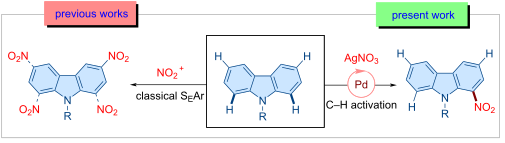
- methodologies are greatly limited due to harsh reaction conditions that impact the scope of the reaction, poor yield, and regioselectivity issues. In sharp contrast, transition metal-catalyzed cross-coupling reactions promisingly improve the regioselectivity issues and substrate scope [25][26][27][28]. In
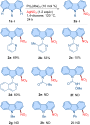
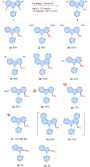
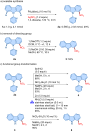
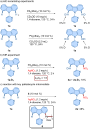
- addition to cross-coupling reactions, transition metal-catalyzed cyclization involving C–H activation approaches have also been reported [29][30][31][32][33][34][35][36]. Despite the significant advances in carbazole core constructions, the established protocols significantly lack access to selectively C1


The intramolecular stabilizing effects of O-benzoyl substituents as a driving force of the acid-promoted pyranoside-into-furanoside rearrangement
Beilstein J. Org. Chem. 2025, 21, 2456–2464, doi:10.3762/bjoc.21.187
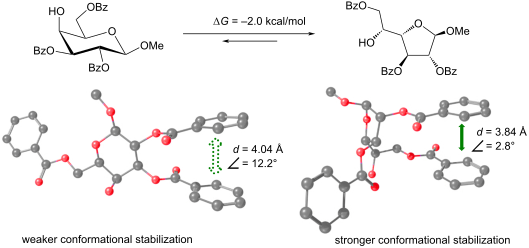
- -Sundralingam parameters for C1-endo and C1-exo conformations of compound 2 are given in Table 1. The resulting most stable C1-endo conformer of furanoside 2 is in agreement with the 1H,1H coupling constants that were observed for it previously [26]: 3J1,2 < 1 Hz, 3J2,3 = 1.6 Hz and 3J3,4 = 5.0 Hz. The




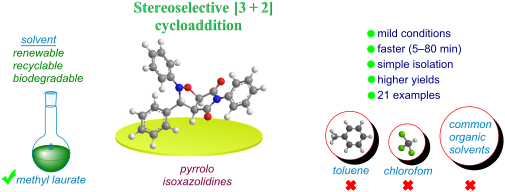
The high potential of methyl laurate as a recyclable competitor to conventional toxic solvents in [3 + 2] cycloaddition reactions
Beilstein J. Org. Chem. 2025, 21, 2389–2415, doi:10.3762/bjoc.21.184
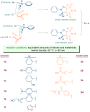
- aromatic aldehydes exhibit a Z-configuration [112][113] and it appears that endo-coupling of the Z-configured C,N-diphenylnitrone with maleimide is more favorable. Indeed, the distribution of the cis/trans product is also found to be significantly influenced by the nature of the substituents present in the






Comparative analysis of complanadine A total syntheses
Beilstein J. Org. Chem. 2025, 21, 2334–2344, doi:10.3762/bjoc.21.178
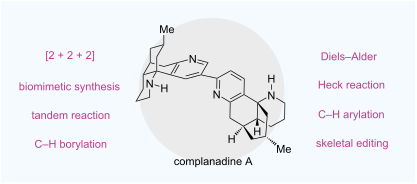
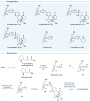
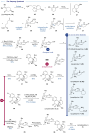
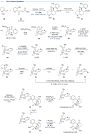
- reaction to rapidly establish the tetracyclic skeleton of complanadine A and an iridium-catalyzed site-selective pyridine C–H borylation followed by a Suzuki–Miyaura cross coupling to forge the C2–C3’ linkage. Their synthesis achieves a high degree of synergy between classic transformations and modern
- in 55% from 25 and 26 in three steps. Triflation of the pyridone gave 33 with a triflate at the C2 position for cross coupling to form the C2–C3’ linkage. At this stage, the Sarpong group needed to install a functional group at the C3 position of the pyridine. They creatively solved this challenge
- lycodine 34 underwent Ir-catalyzed C3–H borylation mainly guided by steric factors to provide boronic ester 35 in 75% yield. With the boronic ester handle at the C3 position, the subsequent Suzuki–Miyaura cross coupling between 35 and 33 occurred smoothly to deliver pseudo-dimer 36, which upon acidic



Recent advances in Norrish–Yang cyclization and dicarbonyl photoredox reactions for natural product synthesis
Beilstein J. Org. Chem. 2025, 21, 2315–2333, doi:10.3762/bjoc.21.177
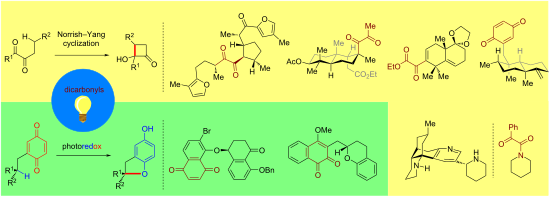
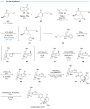
- intermediate is also capable of cyclization through radical coupling to form cyclobutanol D, a process systematically expanded upon by Yang's group at the University of Chicago [4], which later became known as the Norrish–Yang cyclization. In recent years, dicarbonyls, specifically 1,2-diketones, α-keto esters
- ]. In contrast to the direct radical coupling in Norrish–Yang cyclization, the distal biradical F, formed from quinone E through a pathway analogous to that of C in the photoredox process, subsequently undergoes intramolecular SET to generate a zwitterion G. This intermediate is then trapped by the
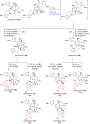
- conformational preference at C8 that favors 1,5-HAT occurring at C9. (2) In terms of stereoselectivity, the steric hindrance between the spin center at C14 and the axial methyl group at C10 restricts the rotation around the C13–C14 bond, thereby enabling the diradical to undergo coupling stereoselectively. As a




Insoluble methylene-bridged glycoluril dimers as sequestrants for dyes
Beilstein J. Org. Chem. 2025, 21, 2302–2314, doi:10.3762/bjoc.21.176
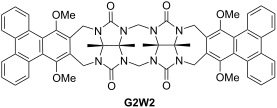
- -surfaces and which are activated for electrophilic aromatic substitution reactions. For the synthesis of W1, we initially prepared tetramethoxybiphenyl 1 (Scheme 1) according to the literature procedure involving the Suzuki coupling between 3,4-dimethoxybromobenzene and 3,4-dimethoxyphenylboronic acid [44
- ]. Next, we performed the oxidative coupling reaction of 1 and W4 in CH2Cl2 catalyzed by anhydrous FeCl3 to give W1 in 35% yield [45]. For the synthesis of W2, we first oxidized triphenylene with CrO3 and 18-crown-6 to give triphenylene-1,4-dione (2) according to Echavarren’s protocol [46]. Triphenylene



Halogenated butyrolactones from the biomass-derived synthon levoglucosenone
Beilstein J. Org. Chem. 2025, 21, 2297–2301, doi:10.3762/bjoc.21.175
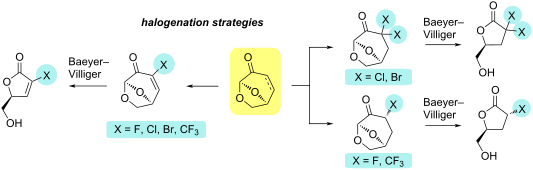
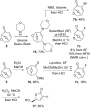
- fluorination attempts. Maintaining some residual solvent allowed for the characterization of compound 13 by NMR spectroscopy. Stereochemical assignment in 13 was based on a large trans-axial coupling constant JH2exo-H3 = 10.6 Hz in the 1H NMR spectrum and interactions between H3endo and H7endo on the



Enantioselective radical chemistry: a bright future ahead
Beilstein J. Org. Chem. 2025, 21, 2283–2296, doi:10.3762/bjoc.21.174
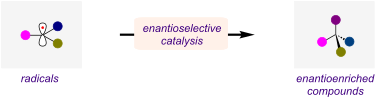
- radical reaction and can occur either intermolecularly or as an intramolecular cyclization reaction. Radical coupling or combination is a possible transformation that is more feasible when one of the radicals is relatively stabilized (a persistent radical). Trapping a radical with a transition metal is
- one way to convert a free radical to a more stable intermediate, which can subsequently undergo coupling with another radical via an SH2 (bimolecular homolytic substitution) mechanism. Lastly, some noteworthy radical processes proceed through a radical–polar crossover pathway, in which one-electron
- titanium have been employed successfully to catalyze enantioselective radical reactions. Two earth abundant transition metals that have found extensive application in enantioselective radical reactions are copper and nickel. These metals, particularly Ni, can be used in radical–radical coupling reactions


Research towards selective inhibition of the CLK3 kinase
Beilstein J. Org. Chem. 2025, 21, 2250–2259, doi:10.3762/bjoc.21.172
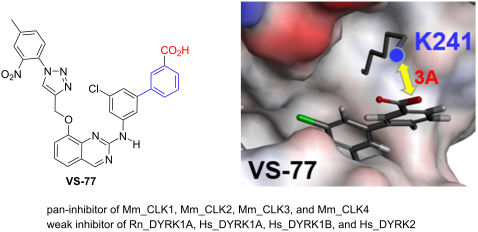
- series of molecules: the ones without chlorine in meta position on this group (series a) and the others which kept this chlorine, like in DB18 (series b). These syntheses are reported in Scheme 2. A Suzuki-type Pd-catalyzed coupling of 7a with 4-(methoxycarbonyl)phenylboronic acid dimethyl ester (8) gave
- 9a which, after saponification, afforded the first target compound 10a. The second molecule 10b was obtained in the same manner starting from 7b with the chlorine in meta position of the aromatic group. Then, by a similar approach, the targets 13a and 13b were prepared by now using as the coupling


A chiral LC–MS strategy for stereochemical assignment of natural products sharing a 3-methylpent-4-en-2-ol moiety in their terminal structures
Beilstein J. Org. Chem. 2025, 21, 2243–2249, doi:10.3762/bjoc.21.171
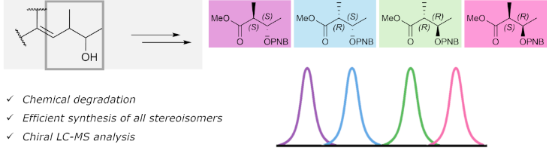
- typically determined using NMR-based techniques, such as coupling constant analysis and NOE experiments, sometimes with the aid of computational chemistry [3][4][5][6][7]. In contrast, absolute configuration remains more challenging to determine, as it frequently requires chemical degradation or
- ], juniperolide A [21], certonardosterol A4 [22], and sclerketide D [23] remain unresolved due to the limited sample quantity or ambiguous results, even when the modified Mosher’s method is employed; a medium vicinal coupling constant (4–6 Hz) prevents reliable differentiation between threo and erythro


Pd-catalyzed dehydrogenative arylation of arylhydrazines to access non-symmetric azobenzenes, including tetra-ortho derivatives
Beilstein J. Org. Chem. 2025, 21, 2234–2242, doi:10.3762/bjoc.21.170
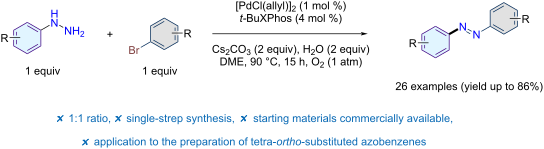
- regioselectivity issues, multistep procedures, and limited applicability to tetra-ortho-substituted structures. Herein, we describe a direct, one-pot Pd-catalyzed dehydrogenative C–N coupling between aryl bromides and arylhydrazines to access non-symmetric azobenzenes. The use of bulky phosphine ligands and
- the presence of water, highlighting its robustness. Keywords: azo compounds; cross-coupling; domino catalysis; palladium; phosphine ligands; Introduction Azobenzenes are a widely studied class of compounds known for their distinctive photoresponsive properties, rendering them valuable in a variety
- , most synthetic methods have focused on the preparation of symmetric derivatives [12][13]. Traditional approaches, such as oxidative coupling of anilines [14][15][16][17][18][19], reductive coupling of nitroarenes [20][21][22][23], or cross-coupling between anilines and nitroarenes have proven


Thiadiazino-indole, thiadiazino-carbazole and benzothiadiazino-carbazole dioxides: synthesis, physicochemical and early ADME characterization of representatives of new tri-, tetra- and pentacyclic ring systems and their intermediates
Beilstein J. Org. Chem. 2025, 21, 2220–2233, doi:10.3762/bjoc.21.169
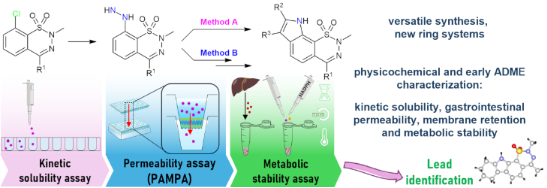
- using widely accepted strategies [46][47]. DMSO-d6 or CDCl3 were used as the solvents and tetramethylsilane (TMS) as the internal standard. Chemical shifts (δ) and coupling constants (J) are given in ppm and in Hz, respectively. High-resolution mass spectra were recorded on an Agilent 2750 GC/Q-TOF mass


A m-quaterphenyl probe for absolute configurational assignments of primary and secondary amines
Beilstein J. Org. Chem. 2025, 21, 2211–2219, doi:10.3762/bjoc.21.168
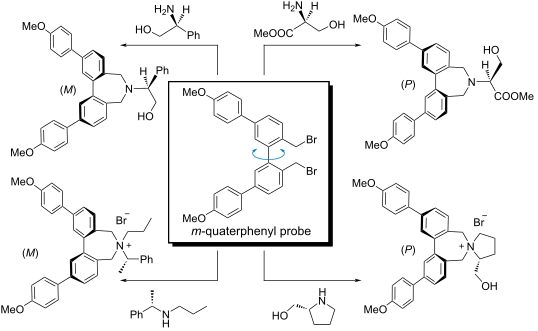
- polarized along the long axes of the methoxybiphenyl chromophores. The CD spectrum of (S)-2a shows Cotton effects arising from exciton-coupling between the two methoxybiphenyl chromophores; λext = 278 nm (Δε1 = −0.6 dm3 mol−1 cm−1) and λext = 258 nm (Δε2 = +1.7 dm3 mol−1 cm−1). The amplitude of exciton
- the quaternary ammonium salts (S)-2f,g and (R)-2h exhibit CD Cotton effects due to the exciton-coupling between the two methoxy-biphenyl chromophores (Figure 1b). Compound (R)-2f exhibited the mirror image of the CD spectrum of (S)-2f (Figure S19 in Supporting Information File 1). The direction of
- clarity. The relationship between the ACD values and excess of P conformer. Excess of P conformer (%) = ([P] − [M])/([P] + [M]) × 100, where [P] and [M] are the amounts of P and M conformers calculated by B3LYP/6-31G*, respectively. Coupling reaction of 1 and chiral primary and secondary amines. The





