


Search results
Search for "epoxy" in Full Text gives 104 result(s) in Beilstein Journal of Organic Chemistry.
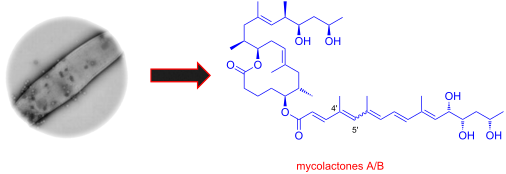
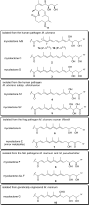
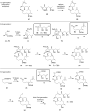
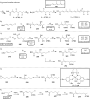
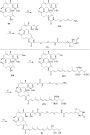
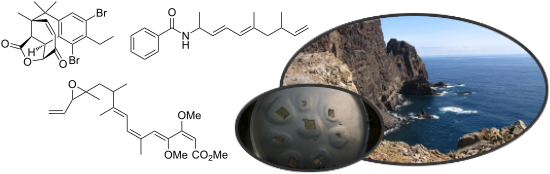
The chemistry and biology of mycolactones
Beilstein J. Org. Chem. 2017, 13, 1596–1660, doi:10.3762/bjoc.13.159









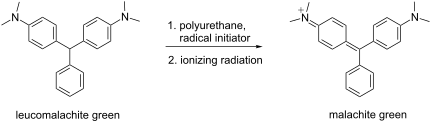
Detection of therapeutic radiation in three-dimensions
Beilstein J. Org. Chem. 2017, 13, 1325–1331, doi:10.3762/bjoc.13.129
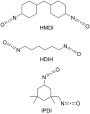
- equivalent [43][44][45]. Polyurethane Acrylic, epoxy, polycarbonate, polyester, polystyrene, polyurethane, polyvinyl chloride and silicone were the common transparent plastics that were evaluated as potential 3D dosimeter matrices [17]. Polyvinyl chlorides and silicones were not further considered since
- high background color. Epoxy resins, which use basic curatives, oxidize leuco dyes making them inappropriate for use as dosimetric matrices. This left the polyurethanes as the most viable option. Transparent polyurethane starting materials are commercially available in two parts where part A is




Secondary metabolome and its defensive role in the aeolidoidean Phyllodesmium longicirrum, (Gastropoda, Heterobranchia, Nudibranchia)
Beilstein J. Org. Chem. 2017, 13, 502–519, doi:10.3762/bjoc.13.50
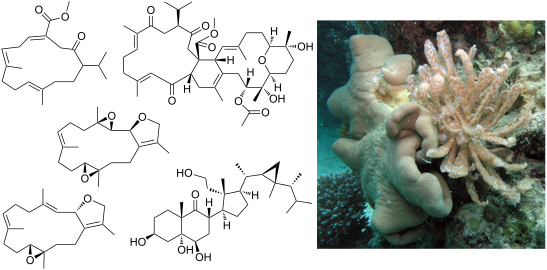
- correlations from H3-28 to C-23 and from H3-29 to C-22, C-23, C-24 and C-30 (see Figure 3). The NMR data (Supporting Information File 1, Table S1) of compound 1 resembled most closely those of epoxy-secosterols isolated from the gorgonian Pseudopterogorgia americana [22] and from the soft coral Pachyclavularia
- violacea (now Briareum violaceum [23]) by Anta et al. ([24], Figure 4). However, the 13C NMR chemical shifts of C-5 and C-6 in compound 1 (δC 80.7 and δC 75.7, respectively) differ from shifts for the equivalent carbons in epoxy-secogorgosterol reported by Naz et al. (δC 61.0 and δC 60.4, respectively; [22
- ]) and from those of the epoxy-secosterol reported by Anta et al. (δC 65.5 and δC 58.1, respectively; [24]). The downfield shift, observed for these carbons in 1, results from the cleavage of the epoxide ring, and 13C values around δC 70–80 as observed for 1 are characteristic for hydroxylated carbons



Synthesis of 1-indanones with a broad range of biological activity
Beilstein J. Org. Chem. 2017, 13, 451–494, doi:10.3762/bjoc.13.48
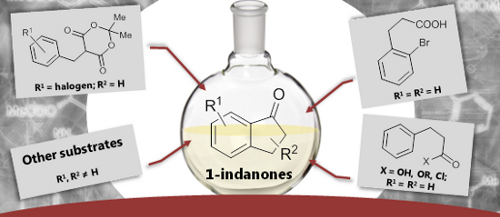
- in 98% yield for both THP and MOM ethers (Scheme 62). Irradiation of aromatic γ,δ-epoxy ketones 226 with a medium-pressure UV mercury lamp (450 W) led to the formation of 1-indanones 227 via a photochemical epoxy rearrangement and 1,5-biradical cyclization tandem reaction (Scheme 63) [92]. The best


cis-Diastereoselective synthesis of chroman-fused tetralins as B-ring-modified analogues of brazilin
Beilstein J. Org. Chem. 2016, 12, 2816–2822, doi:10.3762/bjoc.12.280
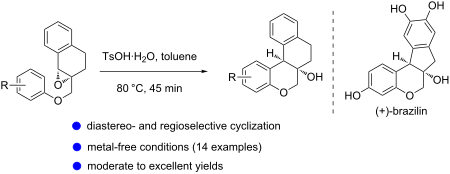
- Abstract We have synthesized a series of cis-6a,7,8,12b-tetrahydro-6H-naphtho[2,1-c]chromen-6a-ols as B-ring-modified analogues of (±)-brazilin. A completely regio- and cis-diastereoselective intramolecular Friedel–Crafts epoxy–arene cyclization of 1-tetralone-derived glycidyl ethers catalyzed by Brønsted
- been reductively removed by a diastereoselective method which should be useful in future for preparing libraries of chroman-fused tetralins with trans-stereochemistry at the ring junction. Keywords: brazilin; chroman; epoxy-arene cyclization; natural-product-like molecules; tetralin; Findings The
- studied during the past 15 years [19]. Moreover, on many occasions natural product-like molecules exhibit more potent biological activities than the parent natural products [20]. Meanwhile, the intramolecular Friedel–Crafts epoxy–arene (IFCEA) cyclization has been well-established as a powerful tool for


Synthesis of the C8’-epimeric thymine pyranosyl amino acid core of amipurimycin
Beilstein J. Org. Chem. 2016, 12, 1765–1771, doi:10.3762/bjoc.12.165
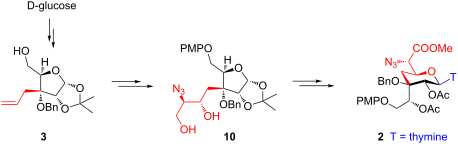
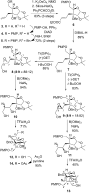
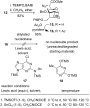
- Sharpless asymmetric epoxidation (SAE) [16][17]. Thus, allyl alcohol 7 was subjected for SAE first using (+)-DET that afforded a diastereomeric mixture of epoxy alcohols 8 and 9 in the ratio of 88:12 (based on the 1H NMR analysis) in 85% yield. Similarly, use of (–)-DET in SAE afforded epoxide 8 and 9 in
- the ratio of 18:82 in 83% yield. With the understanding of SAE mnemonic, we assigned the absolute configuration in epoxide 8 as 7S,8S and in epoxide 9 as 7R,8R. Subsequently, major isomers of epoxy alcohols 8 and 9 were individually subjected to regioselective epoxide ring opening using trimethyl






Rearrangements of organic peroxides and related processes
Beilstein J. Org. Chem. 2016, 12, 1647–1748, doi:10.3762/bjoc.12.162
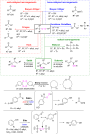
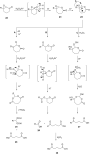
- (Scheme 6). The acid-catalyzed Baeyer–Villiger oxidation of cyclic epoxy ketones 22 produces lactones of type 23, which convert into carbenium ions 24 in the presence of the acid. Subsequently, these ions can be transformed with participation of H2O2 through three different pathways into dihydroperoxides
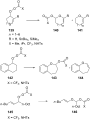
- synthesis of various heterocyclic systems, such as furan, thiophene, and pyrrole derivatives. The reaction of unsymmetrical epoxy dioxanes 290a–d with triethylamine is accompanied by the 1,2-dioxane-ring opening to form 4-hydroxy-2,3-epoxy ketones 291a–d in high yields. The base catalysis involves the
- abstraction of the most acidic α-proton in the vicinity of the O–O bond followed by the rearrangement accompanied by the O–O-bond cleavage to form 4-hydroxy-2,3-epoxy ketones (Scheme 86) [364]. The Kornblum–DeLaMare rearrangement is of special synthetic value in view of the synthesis of biologically active











Marine-derived myxobacteria of the suborder Nannocystineae: An underexplored source of structurally intriguing and biologically active metabolites
Beilstein J. Org. Chem. 2016, 12, 969–984, doi:10.3762/bjoc.12.96
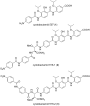
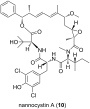
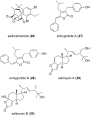
- haliangicin stereoisomers, which differed in the configuration of the three terminal double bonds in the tetraene moiety. Each of the isomers haliangicin, haliangicin B, haliangicin C and haliangicin D happened to be present with two different configurations around the epoxy group. The NOESY spectra showed






Highly stable and reusable immobilized formate dehydrogenases: Promising biocatalysts for in situ regeneration of NADH
Beilstein J. Org. Chem. 2016, 12, 271–277, doi:10.3762/bjoc.12.29
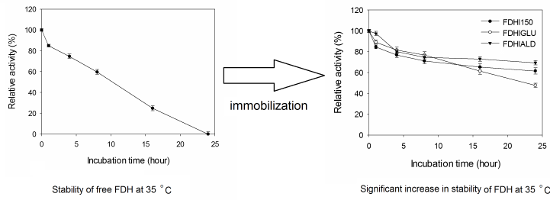
- boidinii as cross-linked enzyme aggregate (CLEA) and demonstrated that the residual activity and thermal stability of CLEA were strictly dependent on the type of cross-linker. Epoxy group containing supports are widely used in enzyme immobilization studies to obtain highly stable enzyme preparations by
- conditions. Hence, the use of a proper immobilization technique and support could stabilize its dimeric form. In this study, NAD+-dependent FDH from Candida methylica was covalently immobilized onto Immobead 150, an epoxy group containing commercial support, and Immobead 150 support modified with
- immobilized enzyme is the type of binding groups on the support which provides higher loading of enzyme and higher retention of activity [28]. Epoxy group containing supports are widely used in the immobilization of many enzymes through multi-point covalent attachments since epoxy groups can easily react with


Amino-functionalized (meth)acryl polymers by use of a solvent-polarity sensitive protecting group (Br-t-BOC)
Beilstein J. Org. Chem. 2016, 12, 245–252, doi:10.3762/bjoc.12.26
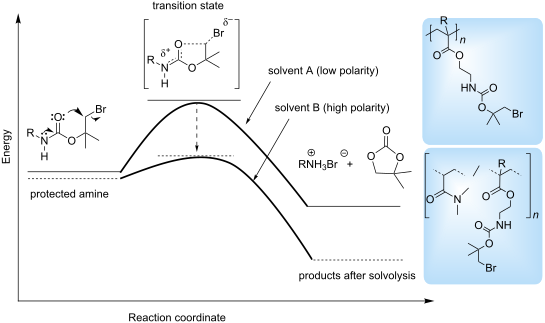
- polymerization; (meth)acryl polymers; neighboring group effects; solvent polarity; Introduction Amino groups are important functionalities in polymer chemistry, e.g., for hardening various epoxy resins [1]. However, they easily react in an undesired side reaction with electron-poor double bonds of (meth


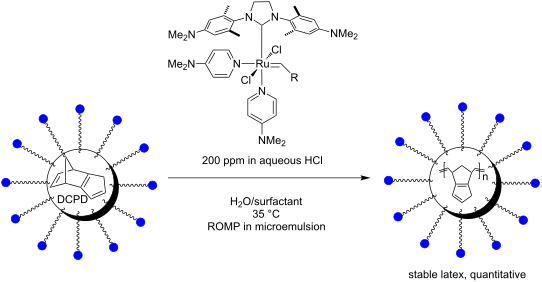
Hexacoordinate Ru-based olefin metathesis catalysts with pH-responsive N-heterocyclic carbene (NHC) and N-donor ligands for ROMP reactions in non-aqueous, aqueous and emulsion conditions
Beilstein J. Org. Chem. 2015, 11, 1960–1972, doi:10.3762/bjoc.11.212
- was truncated to isolate the sample, sealed with epoxy, and mounted on a pin; the pin was placed on a goniometer head. The crystallographic properties and data were collected using Mo Kα radiation and the charge-coupled area detector (CCD) detector on an Oxford Diffraction Systems Gemini S


Cross metathesis of unsaturated epoxides for the synthesis of polyfunctional building blocks
Beilstein J. Org. Chem. 2015, 11, 1876–1880, doi:10.3762/bjoc.11.201
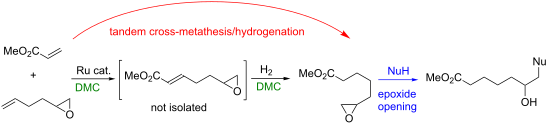
- Chemistry, Hlavova 2030, CZ-128 40 Prague, Czech Republic Faculty of Chemistry, University of Seville, E-41012 Seville, Spain 10.3762/bjoc.11.201 Abstract The cross metathesis of 1,2-epoxy-5-hexene (1) with methyl acrylate and acrylonitrile was investigated as an entry to the synthesis of polyfunctional
- are much more demanding transformations [13][14][24]. We have investigated the reactivity of 1,2-epoxy-5-hexene (1) with methyl acrylate and acrylonitrile and further exploited the versatility of the epoxide ring to prepare trifunctional molecules by ring opening of the epoxide. To date, 1 has been


Dicarboxylic esters: Useful tools for the biocatalyzed synthesis of hybrid compounds and polymers
Beilstein J. Org. Chem. 2015, 11, 1583–1595, doi:10.3762/bjoc.11.174

- . Polyesters containing epoxy moieties. Biocatalyzed synthesis of polyesters containing glycerol. Iataconic (34) and malic (35) acid. Oxidized poly(hexanediol-2-mercaptosuccinate) polymer. C-5-substituted isophthalates. Curcumin-based polyesters. Silylated polyesters. Polyesters containing reactive ether


Design and synthesis of polycyclic sulfones via Diels–Alder reaction and ring-rearrangement metathesis as key steps
Beilstein J. Org. Chem. 2015, 11, 1373–1378, doi:10.3762/bjoc.11.148
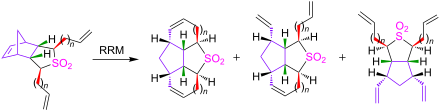
- , commercially available as Oxone®) in aqueous methanol. Equipped with this information, oxidation of compound 5 was attempted under similar reaction conditions to get the desired sulfone 6 [33] (Scheme 1, Table 1). Initially, when the reaction was carried out at 0 °C, the epoxy sulfone 7 was the major product
- (Table 1, entry 1). However, after a considerable amount of experimentation (Table 1), the desired sulfone 6 has been produced in 89% yield (Table 1, entry 2) but it was not possible to eliminate the formation of the epoxy sulfone 7. Next, our efforts were directed towards the synthesis of various


Probing multivalency in ligand–receptor-mediated adhesion of soft, biomimetic interfaces
Beilstein J. Org. Chem. 2015, 11, 720–729, doi:10.3762/bjoc.11.82
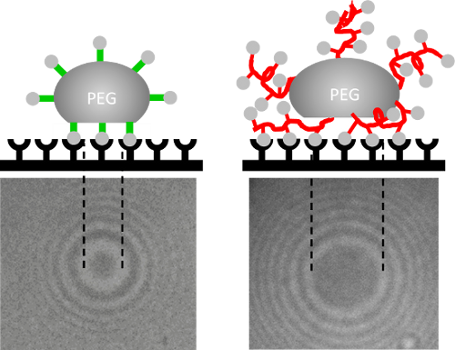
- Equation 1). AFM force spectroscopy with a NanoWizard 3 system (JPK instruments AG, Berlin, Germany) was performed to determine the elastic modulus of the microparticles. As AFM probe a glass bead with a diameter of 5.1 µm was glued with an epoxy glue onto a tipless, non-coated cantilever (spring constant


Synthesis and surface grafting of a β-cyclodextrin dimer facilitating cooperative inclusion of 2,6-ANS
Beilstein J. Org. Chem. 2015, 11, 514–523, doi:10.3762/bjoc.11.58
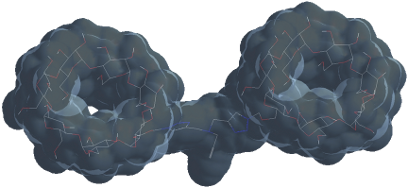
- interactions with the silane linker. The change in chemical composition after silanization with GPTMS and grafting of the β-CD dimer by CuAAC was verified by X-ray photoelectron spectroscopy (XPS). Table 1 displays the chemical surface composition of an unmodified, an epoxy-activated, and a β-CD-dimer-grafted
- unmodified, epoxy-activated and β-CD-dimer-grafted quartz.a Supporting Information Supporting Information File 138: 1H NMR and 13C HSQC spectra of β-CD dimer, 13C HSQC spectra of β-CD dimer in complex with 2,6-ANS and TIRF 2,6-ANS titration on bare quartz. Acknowledgements FeF Chemicals, Køge, Denmark and


Electrochemical selenium- and iodonium-initiated cyclisation of hydroxy-functionalised 1,4-dienes
Beilstein J. Org. Chem. 2015, 11, 174–183, doi:10.3762/bjoc.11.18

- the previously discussed strained epoxy-derivatives could be detected. Transformation of 1,4-dienols via electro-generated iodonium cations In a similar approach we investigated the cyclisation of the 1,4-dienols 2 with in situ electrochemically generated iodonium ions for the desired synthesis of


Thermal and oxidative stability of the Ocimum basilicum L. essential oil/β-cyclodextrin supramolecular system
Beilstein J. Org. Chem. 2014, 10, 2809–2820, doi:10.3762/bjoc.10.298
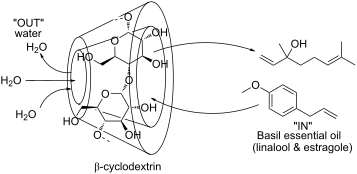
- highest degradation temperature) and for an unidentified sesquiterpene oxide (with an increase of 244%, from 0.1% to 0.3%, Table 2). Other epoxy derivatives appear upon degradation, such as ionone oxide (20). This compound was found increasingly concentrated in degraded samples (and not identified in the


Regio- and stereoselective synthesis of new diaminocyclopentanols
Beilstein J. Org. Chem. 2014, 10, 2513–2520, doi:10.3762/bjoc.10.262
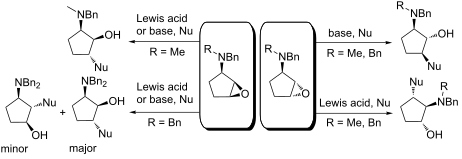
- .10.262 Abstract The optimal conditions for regio- and stereoselective epoxide ring opening of N,N-disubstituted 1,2-epoxy-3-aminocyclopentanes by different nucleophilic reagents have been developed. The substituents on the nitrogen atom in the epoxide precursor and the orientation of the oxirane ring are
- crucial for the reaction outcome. Thus, treatment of (1RS,2SR,3SR)-1,2-epoxy-3-(N,N-dibenzylamino)cyclopentane (3b) with amines gave a mixture of C1 and C2 regioadducts, while the use of (1RS,2SR,3SR)-1,2-epoxy-3-(N-benzyl-N-methylamino)cyclopentane (3a) led ultimately to C1 adducts. Base-catalyzed
- outcome, epoxides 3c and 3d were additionally synthesized, and the results are summarized in Table 3. It has been proposed earlier that the coordination of the Lewis acid to both oxygen atoms in 2,3-epoxy alcohols and acids leads to the formation of the intermediate complex, for which nucleophiles attack


Molecular recognition of surface-immobilized carbohydrates by a synthetic lectin
Beilstein J. Org. Chem. 2014, 10, 1354–1364, doi:10.3762/bjoc.10.138
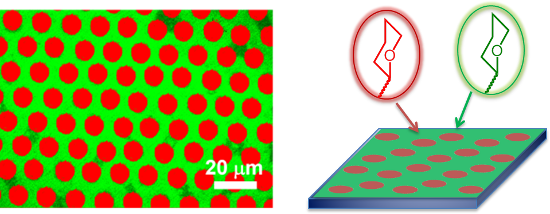
- silicon oxide surfaces can be obtained in only one step from an epoxy-terminated trimethoxysilane. The most common approaches to fabricate epoxide SAMs is by dip-coating or vapor condensation. However, this leads to the formation of thick films of aggregated molecular layers with undefined surface


Heronapyrrole D: A case of co-inspiration of natural product biosynthesis, total synthesis and biodiscovery
Beilstein J. Org. Chem. 2014, 10, 1228–1232, doi:10.3762/bjoc.10.121
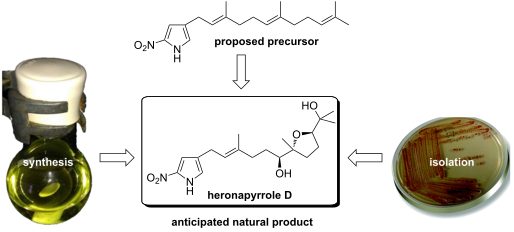
- the farnesyl residue (for atom numbering see Scheme 1), followed by regio- and stereoselective nucleophilic addition of water (and methylation) would deliver heronapyrroles A and B. Similarly, regio- and stereoselective nucleophilic addition of water to a tris-epoxy farnesyl intermediate 4 could
- produce an alternative bis-epoxy intermediate 3 that can deliver a hitherto undetected mono-tetrahydrofuran heronapyrrole (e.g., heronapyrrole D, Scheme 1). To test this hypothesis we completed an asymmetric synthesis of the putative natural product heronapyrrole D, and used this material to probe


Atherton–Todd reaction: mechanism, scope and applications
Beilstein J. Org. Chem. 2014, 10, 1166–1196, doi:10.3762/bjoc.10.117





Metal and metal-free photocatalysts: mechanistic approach and application as photoinitiators of photopolymerization
Beilstein J. Org. Chem. 2014, 10, 863–876, doi:10.3762/bjoc.10.83
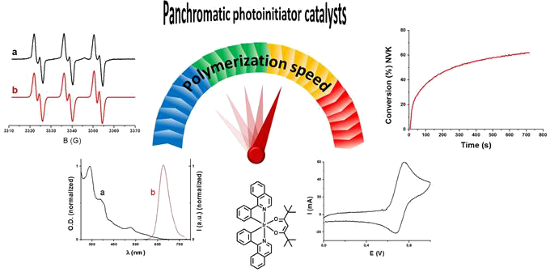
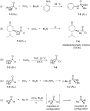
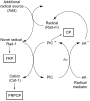
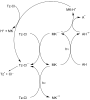
- , respectively, is quite easy; polymerization of sustainable monomers can also be achieved (e.g., epoxidized soybean oil). A possible dual behavior (simultaneous generation of radicals and cations that ensure the formation of, e.g., an epoxy/acrylate interpenetrated network IPN) is achieved. Examples of PICs
- (JASCO FTIR 4100) at about 1630 cm−1 as in [15]. iv) The ring opening polymerization of epoxides: The photosensitive formulations were deposited (25 µm thick) on a BaF2 pellet under air. The evolution of the epoxy group content was continuously followed by real time FTIR spectroscopy (JASCO FTIR 4100) at






Plakilactones G and H from a marine sponge. Stereochemical determination of highly flexible systems by quantitative NMR-derived interproton distances combined with quantum mechanical calculations of 13C chemical shifts
Beilstein J. Org. Chem. 2013, 9, 2940–2949, doi:10.3762/bjoc.9.331
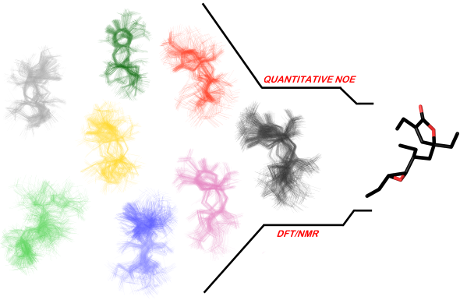
- = 2.0 and 8.0 Hz) and 2.69 (ddd, J = 2.0, 5.6, 7.5 Hz), observed in the 1H NMR spectrum, were found to correlate in the HSQC spectrum with two oxygenated carbons at δC 63.3 and 61.6, respectively, and were assigned to an epoxy ring. The localization of the epoxy functionality at C-7 and the structure


N,N'-(Hexane-1,6-diyl)bis(4-methyl-N-(oxiran-2-ylmethyl)benzenesulfonamide): Synthesis via cyclodextrin mediated N-alkylation in aqueous solution and further Prilezhaev epoxidation
Beilstein J. Org. Chem. 2013, 9, 2834–2840, doi:10.3762/bjoc.9.318
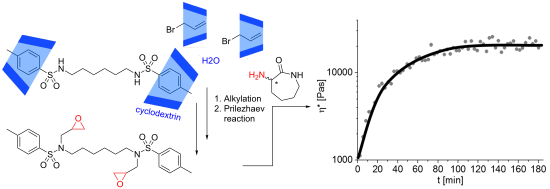
- adequate phase transfer catalysts and the cyclodextrin–guest complexes were characterized by 1H NMR and 2D NMR ROESY spectroscopy. Finally, the curing properties of the diepoxide with lysine-based α-amino-ε-caprolactam were analyzed by rheological measurements. Keywords: alkylation; cyclodextrins; epoxy
- Hz, 2H, O–CH2, trans), 2.40 (s, 6H, Ar-CH3), 1.55 (m, 4H, -CH2-), 1.27 (m, 4H, -CH2-); 13C NMR (75 MHz, CDCl3, δ) 143.6 (2C, Ar(C)-CH3), 136.8 (2C, RO2S-(C)Ar), 130.0 (4C, Ar(C)), 127.3 (4C, Ar(C)), 51.2 (2C, epoxy), 51.0 (2C, N-CH2-CH2R), 49.4 (2C, N-CH2-epoxy), 45.4 (2C, epoxy), 28.5 (2C, -CH2





