Search results
Search for "fluorescence emission" in Full Text gives 112 result(s) in Beilstein Journal of Organic Chemistry.
Self-assembled coordination thioether silver(I) macrocyclic complexes for homogeneous catalysis
Beilstein J. Org. Chem. 2019, 15, 2465–2472, doi:10.3762/bjoc.15.239
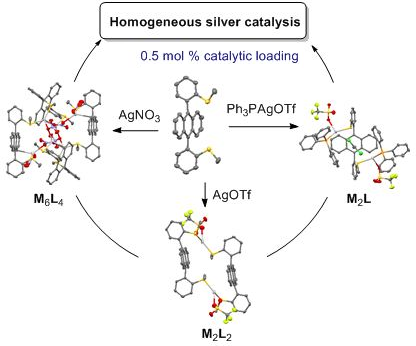
- ). Finally, the photophysical properties of ligand syn-1 (20 μM) and complexes 1a–d (30 μM) were evaluated in dichloromethane (Supporting Information File 1, Figures S4–S8). The UV–visible and fluorescence emission spectra (λexc = 345 nm) of ligand and complexes were similar and correspond to those of 9,10


Ultrafast processes triggered by one- and two-photon excitation of a photochromic and luminescent hydrazone
Beilstein J. Org. Chem. 2019, 15, 2438–2446, doi:10.3762/bjoc.15.236
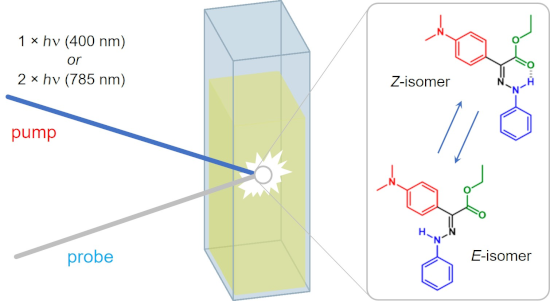
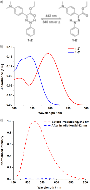
- photoinduced Z/E isomerization of hydrazone 1, and accompanied changes in b) UV–vis absorption (1 × 10⁻⁵ M; toluene) and c) fluorescence emission spectra (1 × 10⁻⁶ M; toluene) before (red) and after (blue) irradiation at 442 nm. Fluorescence decays (dots) in the 500–520 nm spectral region (emission range of



Targeted photoswitchable imaging of intracellular glutathione by a photochromic glycosheet sensor
Beilstein J. Org. Chem. 2019, 15, 2380–2389, doi:10.3762/bjoc.15.230
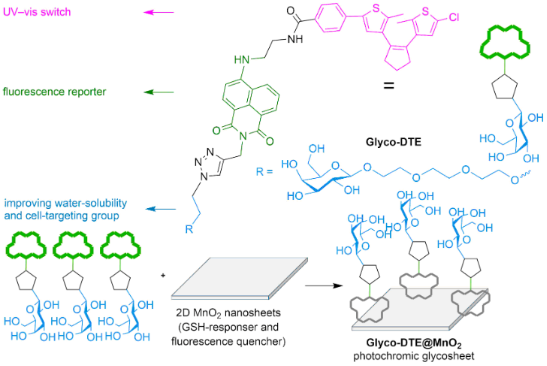
- with 448 nm light, the fluorescence emission peak of Glyco-DTE was observed at 535 nm (ΦF = 0.263, Table S1 in Supporting Information File 1). Owing to the good overlap between the emission band of the naphthalimide fluorophore and the absorption band of DTE closed isomer, the fluorescence was
- glycosheet The fluorescence emission of Glyco-DTE@MnO2 was efficiently quenched to ca. 15% (ΦF = 0.023, Table S1 in Supporting Information File 1) when increasing concentrations of 2D MnO2 nanosheets were added, and reached saturation around 25 μg/mL (Figure 3A). The quenched fluorescence indicated the



Synthesis of a dihalogenated pyridinyl silicon rhodamine for mitochondrial imaging by a halogen dance rearrangement
Beilstein J. Org. Chem. 2019, 15, 2333–2343, doi:10.3762/bjoc.15.226
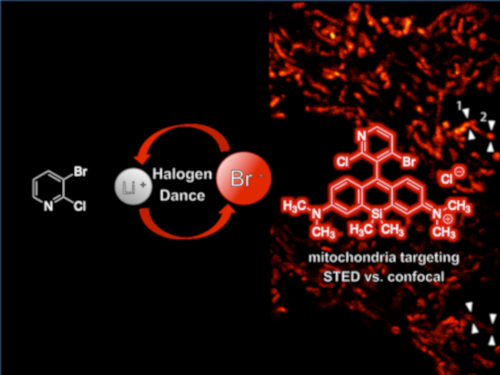
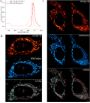
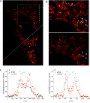
- ) Absorption and fluorescence emission spectra of dye 15 measured in PBS buffer pH 7.4. (b, c) Colocalization experiment of dye 15 (red) and MitoTracker® Green FM (cyan) in living HeLa (b) and U2OS (c) cells supporting the application of dye 15 as a specific NIR mito tracker probe. Both cell lines were



Synthesis, photophysical and electrochemical properties of pyridine, pyrazine and triazine-based (D–π–)2A fluorescent dyes
Beilstein J. Org. Chem. 2019, 15, 1712–1721, doi:10.3762/bjoc.15.167
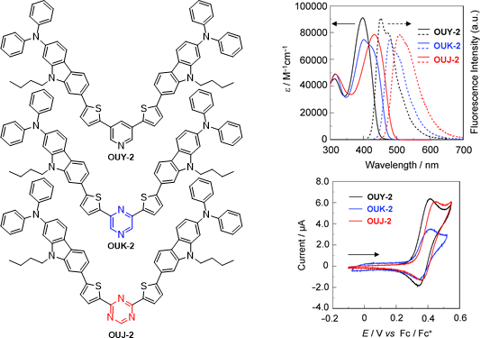
- . Thus, the D–π–A dyes exhibit intense photoabsorption and fluorescence emission properties based on the intramolecular charge transfer (ICT) excitation from the D moiety to the A moiety [1][2][3][4]. Moreover, the D–π–A structure possesses considerable structural characteristics: the increase in the




Host–guest interactions in nor-seco-cucurbit[10]uril: novel guest-dependent molecular recognition and stereoisomerism
Beilstein J. Org. Chem. 2019, 15, 1705–1711, doi:10.3762/bjoc.15.166
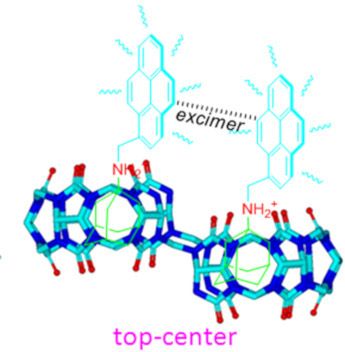
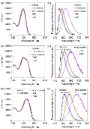
- the fluorescence emission spectra of G2 in the presence of host-1. As can be seen, free G2 produced typical monomer emissions at around 378 and 396 nm in aqueous solution (pH 2) upon excitation of the pyrene fluorophore at 340 nm. When we added host-1 at increasing concentrations to the G2 solution


Synthesis, enantioseparation and photophysical properties of planar-chiral pillar[5]arene derivatives bearing fluorophore fragments
Beilstein J. Org. Chem. 2019, 15, 1601–1611, doi:10.3762/bjoc.15.164
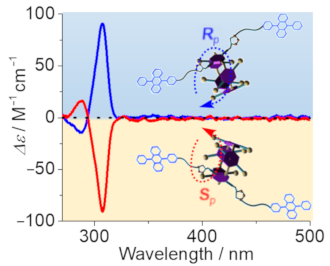
- for [C111H104N6KO12]+, 1753.1813; found, 1753.7510. UV–vis absorption (a) and fluorescence emission spectra (b) of Py-6, P5A-Py (λex = 420 nm) and DPA-6, P5A-DPA (λex = 375 nm) in CHCl3, c = 1.0 × 10⁻⁵ M, 25 °C. (a) Fluorescence decay curves of Py-6 and P5A-Py at 450 nm and (b) fluorescence decay



2,3-Dibutoxynaphthalene-based tetralactam macrocycles for recognizing precious metal chloride complexes
Beilstein J. Org. Chem. 2019, 15, 1460–1467, doi:10.3762/bjoc.15.146
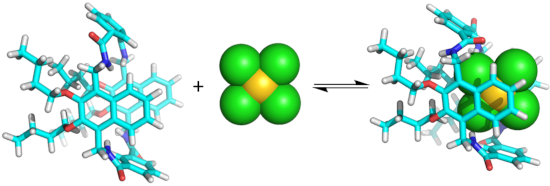
- −@1. Energy-minimized structure of a) AuCl4−@1 and b) AuCl4−@2 at the level of theory of PM3 by using Spartan ’14 (Wavefunction, Inc.). a) Fluorescence emission spectra of 1 (20 µM) upon addition of different amounts of TBA[AuCl4] (concentration range of 0.0−800 µM) and then recorded in


Precious metal-free molecular machines for solar thermal energy storage
Beilstein J. Org. Chem. 2019, 15, 1096–1106, doi:10.3762/bjoc.15.106
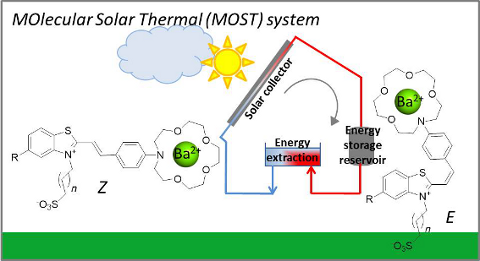
- causes the observed fluorescence decrease. The optical parameters of all 4 dyes, including absorption maxima (λmax,abs), fluorescence emission maxima (λmax,f), hypsochromic shift of the absorption maxima (Δλmax), and fluorescence quantum yields (Φf) for different excitation wavelengths, obtained for the
- TDPBE0 spectra in ACN for dye 4b and its Ba2+ complex. Quaternization of 2-methylbenzothiazoles with alkane sultones. Synthesis of 4-(aza-15-crown-5)benzocarbaldehyde (3) [22]. Synthesis of dyes 4a–d. Absorption maxima (λmax,abs), fluorescence emission maxima (λmax,f), shift of the absorption maxima




Synthesis of a water-soluble 2,2′-biphen[4]arene and its efficient complexation and sensitive fluorescence enhancement towards palmatine and berberine
Beilstein J. Org. Chem. 2018, 14, 2236–2241, doi:10.3762/bjoc.14.198
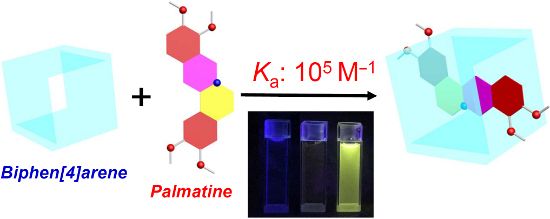
- , compounds P and B alone only displayed fairly feeble fluorescence emission. Upon addition of 2,2’-CBP4, the fluorescence intensity was remarkably improved more than 600 times (Figure 2 and Supporting Information File 1, Figure S10). This was due to the effect of lowering polar microenvironment when P or B
- delivery, supramolecular amphiphiles, etc. Experimental 2,2’-OEtBP4 was synthesized according to our previously reported method [47]. P and B were purchased from Shanghai Aladdin Bio-Chem Technology Co.,LTD. 1H NMR and 13C NMR spectra were recorded on a Bruker AV500 instrument. The fluorescence emission
- presence of 2,2’-CBP4 in aqueous phosphate buffer solution at pH 7.4 at 298 K. The excitation wavelength is at 352.0 nm. Inset: the nonlinear least-squares analysis to calculate the association constant using the fluorescence emission at 530 nm. Visible emission observed from samples of P and B in the


Rational design of boron-dipyrromethene (BODIPY) reporter dyes for cucurbit[7]uril
Beilstein J. Org. Chem. 2018, 14, 1961–1971, doi:10.3762/bjoc.14.171
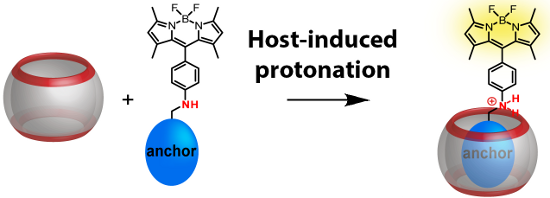
- ][30]. They are characterized by narrow absorption and fluorescence emission bands with small Stokes shifts, high molar absorption coefficients, and high quantum yields. Their excitation and emission maxima are in the visible region, usually above 470 nm, and they show high thermal and photochemical
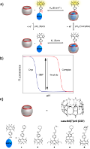
- ) demonstrating the sensing principle based on the pKa of the dye and the complex in the presence and absence of analyte. c) Structures of CB7 and BODIPY derivatives. a) Normalized absorption (solid line) and normalized fluorescence emission spectrum (dotted line) of 0.72 µM 1 in 30% (v/v) ACN in water, pH 7.0




Synthesis and characterization of π–extended “earring” subporphyrins
Beilstein J. Org. Chem. 2018, 14, 1956–1960, doi:10.3762/bjoc.14.170
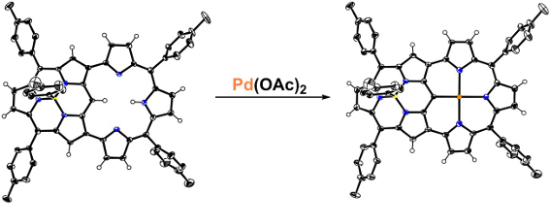
- tripyrrin moiety are 13.7(1)° and 18.4(1)°, respectively. The difference between the two dihedral angles is much larger than that in 3. The UV–vis/NIR absorption spectra of 3 and 3Pd are shown in Figure 5. However, no fluorescence emission can be observed for 3 and 3Pd. Both 3 and 3Pd display broad Soret


Two novel blue phosphorescent host materials containing phenothiazine-5,5-dioxide structure derivatives
Beilstein J. Org. Chem. 2018, 14, 869–874, doi:10.3762/bjoc.14.73
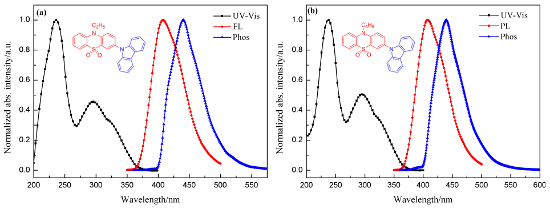
- . Moreover, their fluorescence emission peaks are in the blue fluorescence region at 408 nm and the fluorescence quantum efficiency (Φ) of CEPDO and CBPDO were 62.5% and 59.7%, respectively. Both CEPDO and CBPDO showed very high thermal stability with decomposition temperatures (Td) of 409 and 396 °C as well
- Table 1. Conclusion In summary, we have designed and synthesized two bipolar host materials CEPDO and CBPDO. CEPDO and CBPDO not only have a high triplet energy but also show a bipolar behavior. Moreover, their fluorescence emission peaks are blue fluorescence at 408 nm and the fluorescence quantum


Fluorogenic PNA probes
Beilstein J. Org. Chem. 2018, 14, 253–281, doi:10.3762/bjoc.14.17
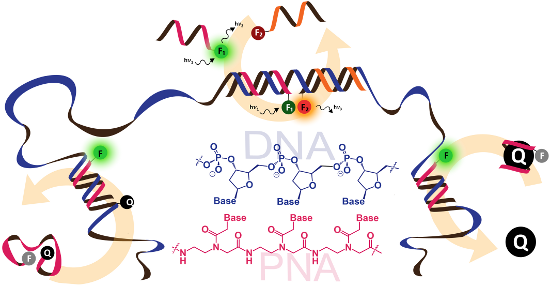
- uracil acted rather like a general fluorescence label. On the other hand, the fluorescent nucleobase 5-(pyren-1-yl)uracil in acpcPNA formed a specific Watson–Crick type base pairing with dA in the DNA strand, and the duplex formation was accompanied by a strong (up to 42-fold) fluorescence emission




Polarization spectroscopy methods in the determination of interactions of small molecules with nucleic acids – tutorial
Beilstein J. Org. Chem. 2018, 14, 84–105, doi:10.3762/bjoc.14.5
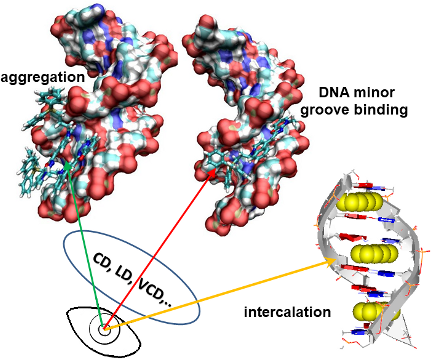
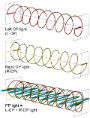
- last decades, complementary methods to ECD also were developed, for instance, vibrational CD (VCD) was successfully applied to investigate DNA/ligand interactions [11]. Furthermore, fluorescence detected circular dichroism (FDCD) combines the advantages of both CD and fluorescence emission technique






Development of a fluorogenic small substrate for dipeptidyl peptidase-4
Beilstein J. Org. Chem. 2017, 13, 2690–2697, doi:10.3762/bjoc.13.267
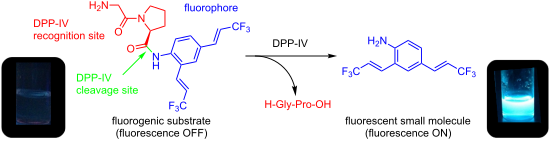
- quantum yield to 0.03. In spectroscopic terms, the fluorescence emission peaks of these compounds red-shifted with increasing TFPE substitution. Additionally, a large Stokes shift was observed for 1, which is important in view of the biomedical use of fluorescent compounds. Next, we changed the solvent


Pyrene–nucleobase conjugates: synthesis, oligonucleotide binding and confocal bioimaging studies
Beilstein J. Org. Chem. 2017, 13, 2521–2534, doi:10.3762/bjoc.13.249
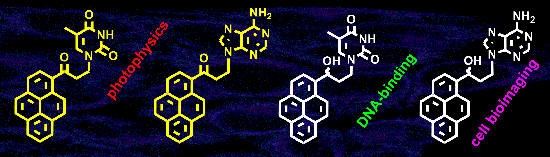
- nucleoli. Noticeably, this pattern was not observed when the cells were labeled with 4. On the other hand fluorescence emission spectra of both compounds in cells were similar (Figure S7, Supporting Information File 1) and compatible with their counterparts registered in dichloromethane solution. This


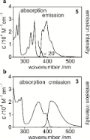


Synthesis and photophysical properties of novel benzophospholo[3,2-b]indole derivatives
Beilstein J. Org. Chem. 2017, 13, 2304–2309, doi:10.3762/bjoc.13.226
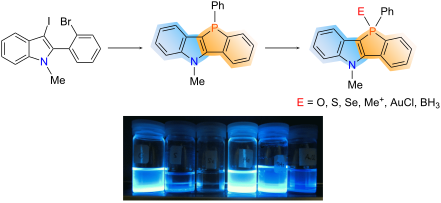
- = 75%) was high, comparable to that of phosphole and indole-fused pentacyclic heteroacene (Ф = 70%) [35]. On the other hand, a low fluorescence intensity was observed for phosphine sulfide 5 and selenide 6 (Ф = 1% and 0.3%, respectively). Quenching of fluorescence emission due to a soft sulfur
- phospholium salt, and the borane complex showed a high fluorescence emission. Further investigations are underway to develop functional materials including electronic devices and evaluate the physicochemical properties of these compounds by synthetic, theoretical, and spectroscopic studies. Phosphole-based
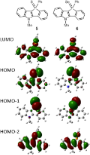
- tetracyclic heteroacenes. ORTEP drawing of compound 3 (left) and 4 (right) with 50% probability. All hydrogen atoms are omitted for clarity. One of two geometries in the unit cell was drawn for 4. UV–vis absorption (left) and normalized fluorescence emission (right, excitation at 335 nm) spectra in CH2Cl2


The chemistry and biology of mycolactones
Beilstein J. Org. Chem. 2017, 13, 1596–1660, doi:10.3762/bjoc.13.159
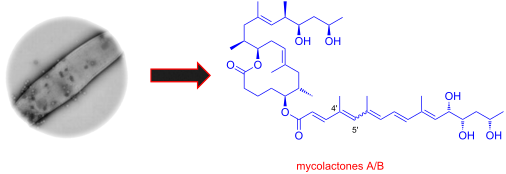
- derivatization of mycolactone A/B (1a,b) with a 2-naphthylboronate-based fluorogenic chemosensor (Figure 4). The latter complexes the 1,3-diol moiety proximal to the pentaene motif of the lower side chain, thus resulting in enhanced fluorescence emission intensity of the mycolactone band upon irradiation with








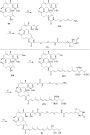

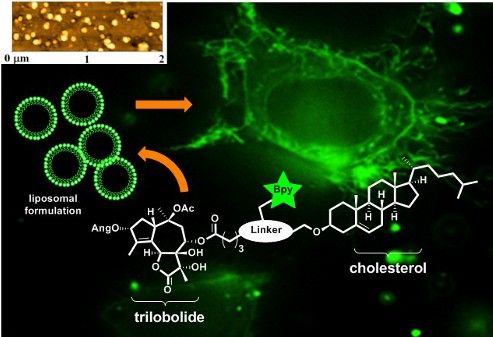
BODIPY-based fluorescent liposomes with sesquiterpene lactone trilobolide
Beilstein J. Org. Chem. 2017, 13, 1316–1324, doi:10.3762/bjoc.13.128
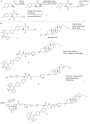
- -terminated intermediate 5 in excellent yield (92%). Finally, CuAAC cycloadition of 5 and Tb-N3VA [31] gave the target fluorescent construct 6 in good yield (84%). The absorbance and fluorescence emission spectra of compounds 3–6 are depicted in Figure 2. Compounds 3–6 showed absorption and emission maxima at




Fluorescent carbon dots from mono- and polysaccharides: synthesis, properties and applications
Beilstein J. Org. Chem. 2017, 13, 675–693, doi:10.3762/bjoc.13.67
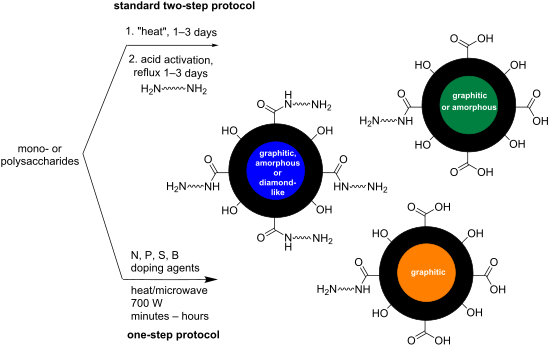
- autoclave chamber with heating to 200 °C for 12 h (Scheme 3) [29]. The fluorescence emission could be tuned by changing the ratio of sugar and KH2PO4. For instance a molar ratio of 1:26 (glucose/KH2PO4) afforded blue-fluorescent CDs (QY = 0.02), whereas a 1:36 ratio yielded green-fluorescent CDs (QY = 0.01
- crystallinity with blue-green emission. Most reported CD syntheses, regardless of the type of starting material or synthetic method, tend to produce CDs with blue-green fluorescence emission. Jana et al. reported a carbohydrate-based preparation to access yellow and red emissive CDs, demonstrating that fine


Novel β-cyclodextrin–eosin conjugates
Beilstein J. Org. Chem. 2017, 13, 543–551, doi:10.3762/bjoc.13.52
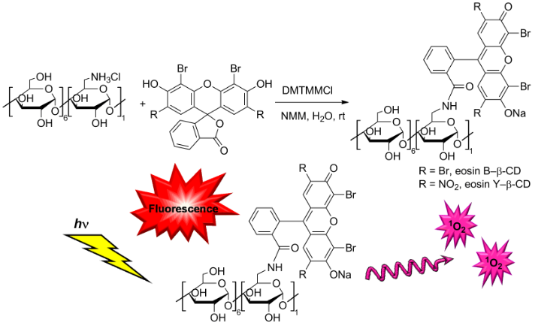
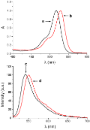
- spectroscopic investigations on the conjugates were carried out in aqueous solutions. Figure 6 shows the absorption and fluorescence emission spectra of eosin Y conjugate 2–β-CD and, for comparison, of the free dye 2. Apart from a slight red shift of the absorption maximum, the absorption spectral profile in
- the visible region of the conjugate is similar to that of the free dye, ruling out any relevant aggregation phenomena. This hypothesis was well confirmed by the fluorescence emission spectrum, which exhibits an intense band maximum at 550 nm. The fluorescence quantum yield was Φf = 0.20, which is very
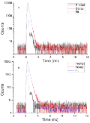
- corresponding 4–β-CD conjugate did not show either detectable fluorescence emission or 1O2 photogeneration. This is not surprising in light of the observed massive aggregation of this derivative in aqueous medium (see Figure 5). Studies currently in progress are addressed to better clarify this point and to



Benzothiadiazole oligoene fatty acids: fluorescent dyes with large Stokes shifts
Beilstein J. Org. Chem. 2016, 12, 2739–2747, doi:10.3762/bjoc.12.270
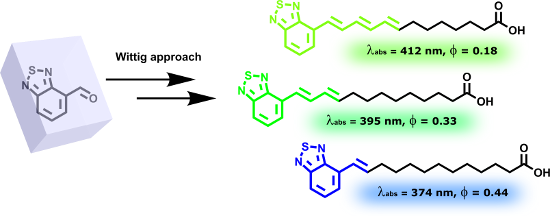
- C27H38N2O2SNa+, 477.25462; found, 477.25542. Examples for previously prepared fluorescent fatty acids and our present work. Absorption spectra of fatty acids 3, 7 and 11. Solid lines show the UV absorption while dashed lines show fluorescence emission. Excitation was performed at the longest wavelength in each


A self-assembled cyclodextrin nanocarrier for photoreactive squaraine
Beilstein J. Org. Chem. 2016, 12, 2535–2542, doi:10.3762/bjoc.12.248
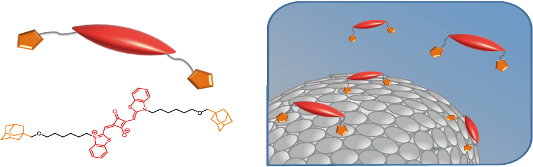
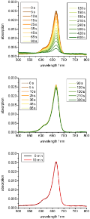
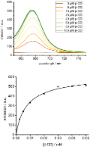
- constant of AdSq with the cyclodextrins in the CDV could be obtained by plotting the maximum fluorescence emission (at 676 nm) against the concentration of available cyclodextrin (Figure 3, bottom). The resulting Langmuir isotherm was fitted by linear regression (see Supporting Information File 1 for




High performance p-type molecular electron donors for OPV applications via alkylthiophene catenation chromophore extension
Beilstein J. Org. Chem. 2016, 12, 2298–2314, doi:10.3762/bjoc.12.223
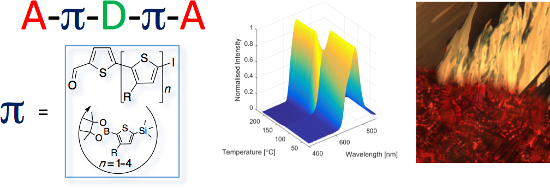
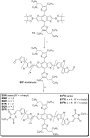
- evident that subtle changes in molecular orientation and packing, with a tendency to H-aggregate formation, are present, however, further work is being undertaken to better understand the underlying processes leading to these changes. Fluorescence emission spectra were collected using the same films as
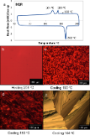
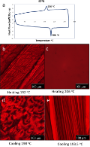
- temperatures (Figure 10) but there is no appearance of the new shoulder, however as the films are rapidly cooled there may be a kinetic effect (see below). Variable temperature fluorescence emission spectra were recorded on BTR and BQR (Figure 9) using a similar setup as for the UV–vis measurements (Figure 8
- remain unclear and are the subject of further structural studies on BTR and BQR thin films. The appearance of the second fluorescence emission peak in variable temperature spectra on the POM stage, again not seen on the thin films (Figure 7c), has been examined in more detail. The thin films used to