Search results
Search for "lipid" in Full Text gives 159 result(s) in Beilstein Journal of Organic Chemistry.
Synthesis, docking study and biological evaluation of ᴅ-fructofuranosyl and ᴅ-tagatofuranosyl sulfones as potential inhibitors of the mycobacterial galactan synthesis targeting the galactofuranosyltransferase GlfT2
Beilstein J. Org. Chem. 2020, 16, 1853–1862, doi:10.3762/bjoc.16.152
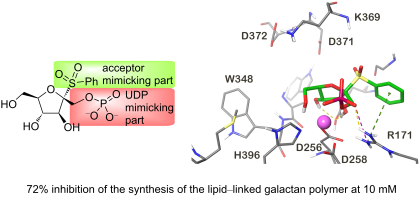
- decaprenyl-P-P-GlcNAc-Rha, (glycolipid 2, GL2), which serves as a lipid carrier for arabinogalactan polymerization [7][8]. The latter enzyme, GlfT2, extends the product of GlfT1-catalyzed reaction, decaprenyl-P-P-GlcNAc-Rha-Galf2 (glycolipid 4, GL4), producing the lipid-linked galactan polymer [8]. Both
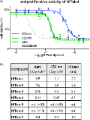
- obtained by acetonide hydrolysis under acidic conditions followed by the final catalytic hydrogenation of the benzyl protecting groups in derivatives 22. Evaluation of the effects of the target compounds on the synthesis of lipid-linked galactan precursors The availability of a series of compounds with
- -up of lipid-linked galactan precursors. The crude enzymes used in the assay allow for in situ synthesis of the acceptor for galactan polymerization, decaprenyl-P-P-GlcNAc-Rha (GL2), from endogenous decaprenyl phosphate and sugar nucleotides UDP-GlcNAc and TDP-Rha supplied in the reaction mixture


Nonenzymatic synthesis of anomerically pure, mannosyl-based molecular probes for scramblase identification studies
Beilstein J. Org. Chem. 2020, 16, 1732–1739, doi:10.3762/bjoc.16.145
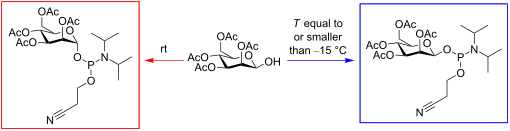
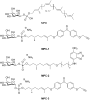
- moiety for photocrosslinking to MPD-recognizing proteins. The presence of an additional propargyl group provides a way to further derivatize the probe with biotin azide via click-type chemistry [16] for the isolation of protein–lipid adducts using streptavidin resins [10]. To synthesize such molecular
- )-labeled analog MPC-2 carries an additional dodecanyl linker between the citronellyl unit and the fluorophore. This is intended to increase the hydrophobic interactions between the probe and the lipid bilayer and also to increase the flexibility. More specifically, the probe should adopt a U-shaped
- Financial support by the Swiss National Science Foundation (SNSF) is gratefully acknowledged: This research was funded by the Sinergia Project: Molecular identification of lipid transporters for protein glycosylation, Grant CRSII5_170923.



Two antibacterial and PPARα/γ-agonistic unsaturated keto fatty acids from a coral-associated actinomycete of the genus Micrococcus
Beilstein J. Org. Chem. 2020, 16, 297–304, doi:10.3762/bjoc.16.29
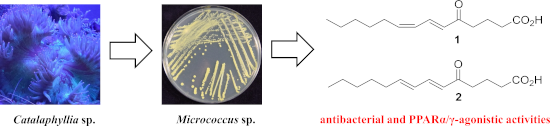
- key roles in lipid and carbohydrate metabolism [43][44]. PPARα upregulates lipid uptake and β-oxidation of fatty acids, whereas PPARγ promotes adipocyte differentiation and adipokine production in adipose tissues to improve insulin sensitivity in diabetic patients [45][46][47]. Owing to these


Potent hemithioindigo-based antimitotics photocontrol the microtubule cytoskeleton in cellulo
Beilstein J. Org. Chem. 2020, 16, 125–134, doi:10.3762/bjoc.16.14
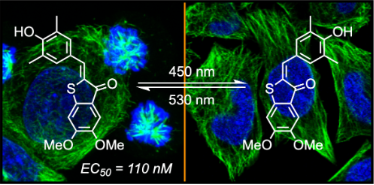
- nm), photoswitching could not be observed either, which we presumed to be due to fast thermal relaxation. However, noting that typical CDIs are substantially biolocalised into lipid environments within cells [31], we decided to explore photoswitching-based cellular assays with these compounds
- dark conditions (λ = 450 nm). This difference was surprisingly high, given that even in aprotic media (e.g., lipid environment reservoirs within cells), there should be ca. 30% residual Z-isomer at photoequilibrium [18], and we had expected that any (E)-HITub entering the cytosol (aqueous environment




Synthesis of C-glycosyl phosphonate derivatives of 4-amino-4-deoxy-α-ʟ-arabinose
Beilstein J. Org. Chem. 2020, 16, 9–14, doi:10.3762/bjoc.16.2
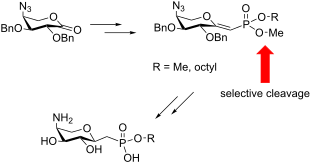
- derivatives. These intermediates will be of value for their future conversion into transition state analogues as well as for the introduction of various lipid extensions at the anomeric phosphonate moiety. Keywords: antibiotic resistance; glycosyl phosphonate; glycosyl transferase; lipid A
- ; lipopolysaccharide; Introduction Glycosyltransferases are important enzymes that accomplish the transfer of activated sugar phosphates onto their respective acceptor molecules [1]. In most cases, nucleotide diphosphate sugars serve as the reactive species, but lipid-linked diphosphate derivatives are equally
- mechanisms of pathogenic Gram-negative bacteria against antibiotics, such as polymyxin B and colistin [3]. The main effect of Ara4N incorporation into the lipid A part – and, less frequently, into the inner core region of LPS [4] – is thought to originate from blocking the electrostatic interaction of


Preparation of anthracene-based tetraperimidine hexafluorophosphate and selective recognition of chromium(III) ions
Beilstein J. Org. Chem. 2019, 15, 2847–2855, doi:10.3762/bjoc.15.278
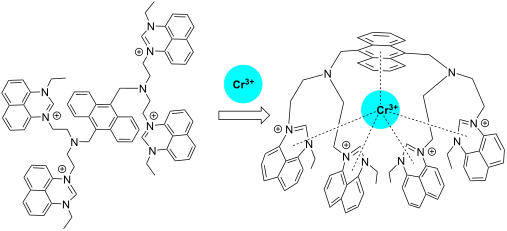
- of Cr3+ ions occupies an important position. Chromium(III) is an essential microelement for humans and animals, and it plays an important role in glucose and lipid metabolism in the body [9][10]. The deficiency of chromium(III) in the human body leads to various diseases, such as diabetes as well as


Plasma membrane imaging with a fluorescent benzothiadiazole derivative
Beilstein J. Org. Chem. 2019, 15, 2644–2654, doi:10.3762/bjoc.15.257
- cellular component. After more than one century of the idea considering cell plasma membranes as lipid bilayers [1], the importance to understand the functions, processes and events associated with plasma membranes is still vital. We are only beginning to understand many of the processes and functions
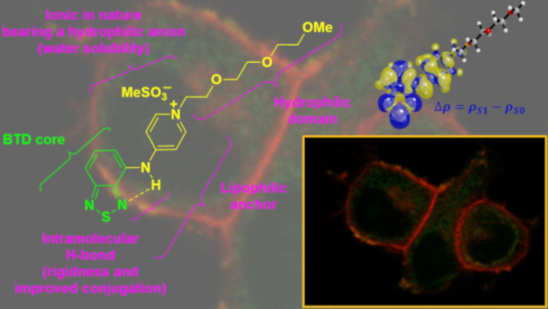
- bilayer of the plasma membrane. In fact, the lipophilic character of similar small BTD derivatives demonstrated improved affinity for lipid-based structures, as we [42][43] and others [26][29] have shown. The intramolecular H-bond is in addition responsible for the rigidity of the structure and enables a


Nanangenines: drimane sesquiterpenoids as the dominant metabolite cohort of a novel Australian fungus, Aspergillus nanangensis
Beilstein J. Org. Chem. 2019, 15, 2631–2643, doi:10.3762/bjoc.15.256
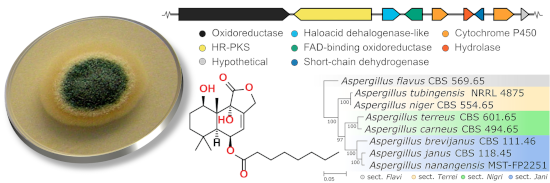
- . The C-6 and C-8 lipid chain is likely produced by the HR-PKS encoded by gene FE257_006541, while the acylation could be attributed to the enzyme encoded by FE257_006545, which contains the conserved domain of the alpha/beta-hydrolase fold superfamily (which includes thioesterases and acyltransferases


Synthetic terpenoids in the world of fragrances: Iso E Super® is the showcase
Beilstein J. Org. Chem. 2019, 15, 2590–2602, doi:10.3762/bjoc.15.252
- challenges to be solved. Hydrophilic and hydrophobic interactions with the unpolar lipid layer make the tendency to yield suitable crystals even more difficult. Nevertheless, Palczewski and co-workers were able to crystallise the first GPCR (G-protein-coupled receptor) in 2000 confirming the previously


Probing of local polarity in poly(methyl methacrylate) with the charge transfer transition in Nile red
Beilstein J. Org. Chem. 2019, 15, 2552–2562, doi:10.3762/bjoc.15.248

- fluorescence was used to detect a lipid droplet in monkey aortic smooth muscle cells [16], for visualizing different proteins, such as lactoglobulin, casein and albumin [17]. In fluorescence lifetime imaging microscopy τf as a viable contrast parameter was employed to image lipid droplets in living HeLa cells




Sugar-derived oxazolone pseudotetrapeptide as γ-turn inducer and anion-selective transporter
Beilstein J. Org. Chem. 2019, 15, 2419–2427, doi:10.3762/bjoc.15.234
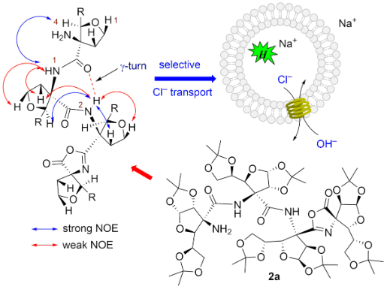
- cation and anion transport across lipid bilayer membranes plays a crucial role in various biological processes [31][32]. Amongst these, the transport of anions is useful in regulating intracellular pH, membrane potential, cell volume, and fluid transport [33]. Any dysfunction in these processes led to
- [17][18], we investigated the ion transport activity of 1 and 2a across lipid bilayer membranes. In this study, the collapse of the pH gradient (pHout = 7.8 and pHin = 7.0), created across egg yolk ʟ-α-phosphatidylcholine (EYPC) vesicles with entrapped 8-hydroxypyrene-1,3,6-trisulfonic acid trisodium
- 2b. The influx of Cl‒ ion by these transporters were monitored using EYPC-LUVslucigenin. Additionally, compound 9, which has a free amino group and a free carboxylic acid group, was also subjected to the Cl‒ transport study. The Cl– sensitive dye lucigenin, was entrapped within the lipid vesicles and


![[Graphic 2]](/bjoc/content/inline/1860-5397-15-234-i4.svg?max-width=637&scale=1.18182) lucigenin (A). Conce...
lucigenin (A). Conce...
Synthesis of a dihalogenated pyridinyl silicon rhodamine for mitochondrial imaging by a halogen dance rearrangement
Beilstein J. Org. Chem. 2019, 15, 2333–2343, doi:10.3762/bjoc.15.226
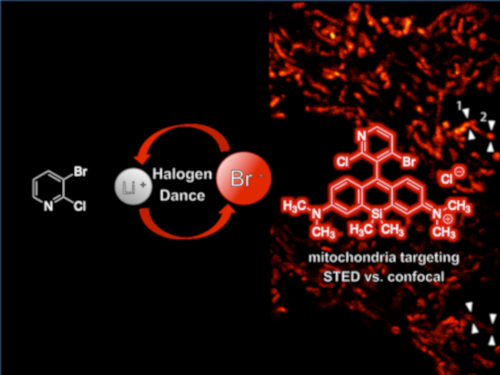
- . Lipophilic cations such as the phosphonium cation or rhodamines are known to accumulate selectively within the mitochondria, driven by the mitochondrial plasma membrane potential [39][40]. Thereby, the high lipophilicity facilitates the diffusion through the lipid bilayers of the cell and mitochondrial



An overview of the cycloaddition chemistry of fulvenes and emerging applications
Beilstein J. Org. Chem. 2019, 15, 2113–2132, doi:10.3762/bjoc.15.209
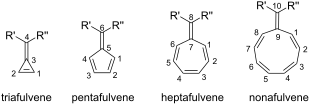
- 21) [105][237]. ROMP of the monomers, followed by deprotection yielded facially amphiphilic polynorbornenes that displayed lipid membrane disruption and antimicrobial activities [237][238]. The facially amphiphilic polynorbornenes with pendent ammonium groups were found to disrupt negatively charged





Steroid diversification by multicomponent reactions
Beilstein J. Org. Chem. 2019, 15, 1236–1256, doi:10.3762/bjoc.15.121
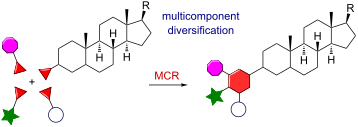
- reaction based on hydrazoic acid as acid component that furnished peptide-steroid 61 and the classic one using acetic acid as carboxylic acid component, which led to conjugate 62. These protocols enabled the introduction not only of a steroidal moiety at the N-terminus but also of lipid and affinity tags


Towards the preparation of synthetic outer membrane vesicle models with micromolar affinity to wheat germ agglutinin using a dialkyl thioglycoside
Beilstein J. Org. Chem. 2019, 15, 937–946, doi:10.3762/bjoc.15.90
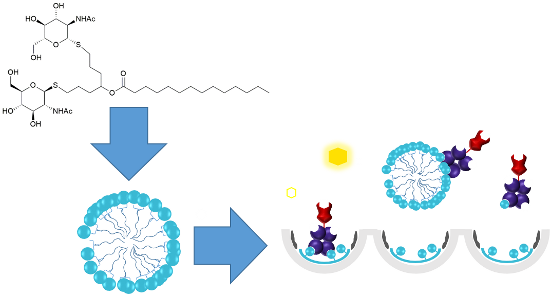
- vesicles, alone or in mixture with phospholipids, mimicking bacterial outer membrane vesicles (OMV) with potential antiadhesive properties. Keywords: glycolipids; outer membrane vesicles; synthetic vaccines; Introduction Outer membrane vesicles (OMV) [1], lipid bilayer vesicles released from the outer
- ] or using natural glycolipids from Gram-negative bacteria such as lipid A [4]. This work represents the first step towards the formulation of an heterogeneous, stable systems (under biological conditions) that can be used for several biological purposes including synthetic vaccines, supramolecular
- evaporator. The resulting thin lipid film was further dried for 180 minutes at 1 mbar/25 °C, and then hydrated for 16 hours – without shaking – with the aqueous buffer, termed “I-solution” (composed of 200 mM sucrose in 50 mM of PBS buffer, pH 7.4) to obtain an overall 1–2 mM lipid concentration. The


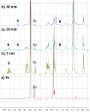


![[Graphic 2]](/bjoc/content/inline/1860-5397-15-90-i4.svg?max-width=637&scale=0.472728) ) and (○) ...
) and (○) ...
Synthesis of acylglycerol derivatives by mechanochemistry
Beilstein J. Org. Chem. 2019, 15, 811–817, doi:10.3762/bjoc.15.78
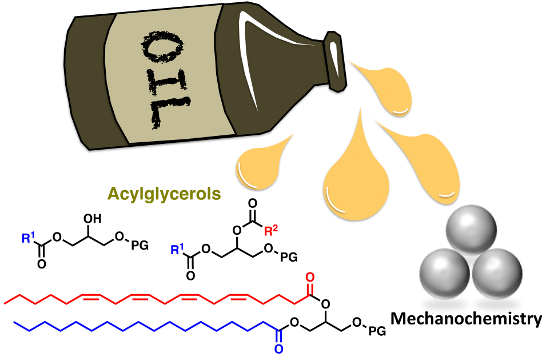
- ]. Among the variety of amphipathic or hydrophobic small molecules that exhibit a lipid structure, diacylglycerols (DAGs) are important due to their signaling functions in cells (DAG signaling) [22][23][24]. Structurally, DAGs are glycerolipids containing two fatty acids esterified to the alcohol glycerol
- transformations. Additionally, synthesizing lipid structures mechanochemically would complement the preparation of biologically relevant building blocks (amino acids, peptides, saccharides, nucleosides, etc.) by mechanochemistry, thereby highlighting the importance of mechanical forces in the chemistry of life
- yields up to 91% (Scheme 4). Particularly interesting was the formation of DAG (18:0/20:4) 5d, an important lipidic backbone present in the biologically relevant phosphatidylinositol 4,5-bisphosphate (PIP2) [22]. In fact, diacylglycerols have proven to play vital roles in regulation of lipid bilayer and


Lectins of Mycobacterium tuberculosis – rarely studied proteins
Beilstein J. Org. Chem. 2019, 15, 1–15, doi:10.3762/bjoc.15.1
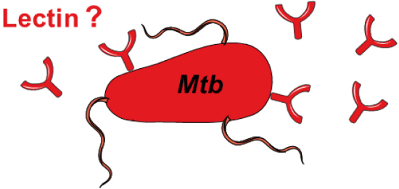
- ]. The primary hydroxy groups of the terminal arabinofuranoside residues are esterified with mycolic acids forming the basis of the outer lipid layer [48]. The major lipoglycans found in the mycobacterial cell envelope are lipoarabinomannan (LAM) and its precursor lipomannan (LM), both of which consist


Pd-Catalyzed microwave-assisted synthesis of phosphonated 13α-estrones as potential OATP2B1, 17β-HSD1 and/or STS inhibitors
Beilstein J. Org. Chem. 2018, 14, 2838–2845, doi:10.3762/bjoc.14.262
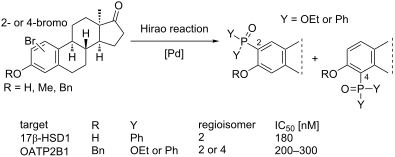
- phenolic hydroxy function. On the other hand, estrone sulfate is not able to cross the cell membrane passively; therefore, a carrier is needed to mediate its transport across the lipid bilayer. These carriers are certain representatives of the solute carrier superfamily (SLC), including members of the


Impact of Pseudomonas aeruginosa quorum sensing signaling molecules on adhesion and inflammatory markers in endothelial cells
Beilstein J. Org. Chem. 2018, 14, 2580–2588, doi:10.3762/bjoc.14.235
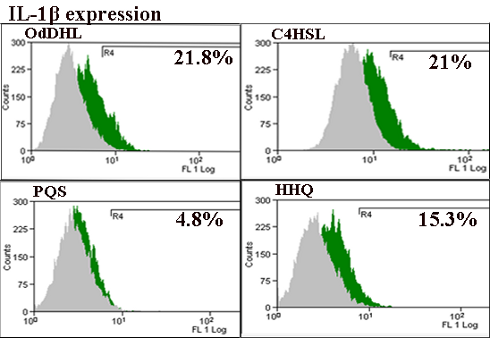
- , and this effect appears to be related to NFκB activation. These autoinducers (AIs) stimulate the production of membrane-associated prostaglandin E (PGE) and PGE2 but not PGE from cytosol. It is known that PGE2 plays a role in inducing mucus secretion, vasodilatation and edema, acting as a lipid


A self-assembled photoresponsive gel consisting of chiral nanofibers
Beilstein J. Org. Chem. 2018, 14, 1994–2001, doi:10.3762/bjoc.14.174
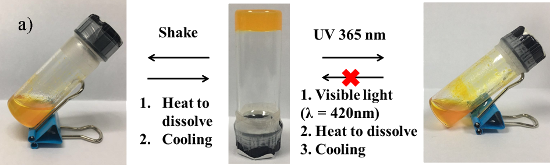
- and co-workers [20][21][22][23][24][25][26][27][28][29][30][31] have built a multifunctional controllable gel system, which utilized L-glutamic lipid to construct nanofibers, nanotwists, and nanotubes with the property of chirality. Azobenzene, which is structurally photosensitive, is widely chosen to
- construct optically controlled systems [17][30][32][33][34][35]. This moiety is also frequently employed as a building block because of its strong π–π stacking in nonpolar solvents. Herein, a novel compound 3 containing both chiral L-glutamic lipid and azobenzene was designed and synthesized (Scheme 1). It


Synthesis of new p-tert-butylcalix[4]arene-based polyammonium triazolyl amphiphiles and their binding with nucleoside phosphates
Beilstein J. Org. Chem. 2018, 14, 1980–1993, doi:10.3762/bjoc.14.173
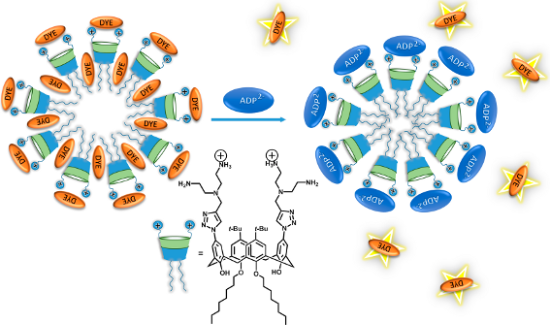
- diacetylene surfactant matrix by amphiphilic receptors with subsequent photopolymerization is a commonly used approach for the design of colorimetric analytical devices [50]. Taking into account the cationic nature of the synthesized calixarene macrocycles, the amido-diacetylene lipid bearing a terminal amino
- at room temperature to give a thin lipid film on the glass surface, which was dried under reduced pressure (0.01 Torr) for 2 h to remove all traces of organic solvent. Then a buffer solution (MES, 50 mM, pH 6.5) was added. The samples were then sonicated for 2 h at 60 °C. The resulting vesicle


Artificial bioconjugates with naturally occurring linkages: the use of phosphodiester
Beilstein J. Org. Chem. 2018, 14, 1946–1955, doi:10.3762/bjoc.14.169
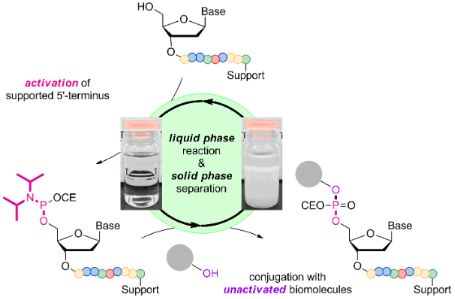
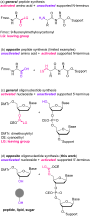
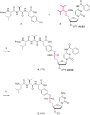
- Information File 1 for side reactions), both the lipid 9 and the protected sugar 10 were also effectively conjugated to the activated 5’-terminus under the same reaction conditions to give the desired bioconjugates 11 and 12, respectively (Table 2, entries 3 and 4). We finally examined whether relatively





Design and biological characterization of novel cell-penetrating peptides preferentially targeting cell nuclei and subnuclear regions
Beilstein J. Org. Chem. 2018, 14, 1378–1388, doi:10.3762/bjoc.14.116
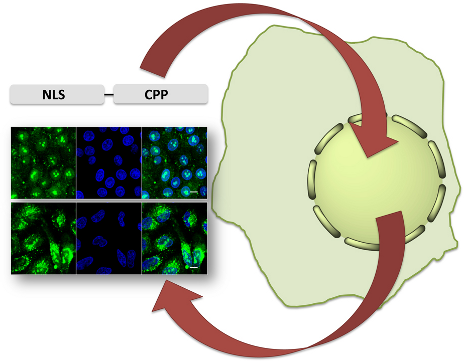
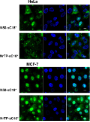
- nuclei; cell-penetrating peptides; nucleoli; subcellular targeting; Introduction Various drugs act on targets that are located within the nucleus, the control center of the eukaryotic cell. A lipid bilayer membrane, which is perforated with nuclear pore complex structures through which the transfer of
- C-terminal aa of the cationic antimicrobial peptide CAP18 [18]. When it comes in contact with lipid membranes, it forms a helical structure, probably supporting membrane interaction [19]. However, the main uptake mechanism that was observed followed endocytotic processes, although we have seen that
- residues within the sequences. These effects were already described by other groups working with highly cationic CPPs [29][30][31][32]. Moreover, the formation of amphipathic α-helices is often one major factor for efficient peptide/lipid interaction, initiating the following internalization process [33



On the design principles of peptide–drug conjugates for targeted drug delivery to the malignant tumor site
Beilstein J. Org. Chem. 2018, 14, 930–954, doi:10.3762/bjoc.14.80
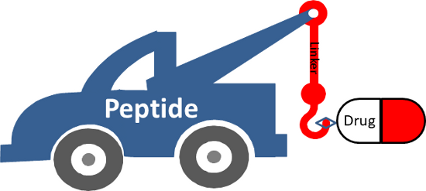
- conducted via a rationally designed linker able to release the drug inside the cancer microenvironment [19]. The ideal targeting molecular device would consist of the following modules: a) the cytotoxic agent (drug), b) the transporting - drug delivery vehicle (i.e., lipid, mannan [28][29][30]), c) the


Crystal structure of the inclusion complex of cholesterol in β-cyclodextrin and molecular dynamics studies
Beilstein J. Org. Chem. 2018, 14, 838–848, doi:10.3762/bjoc.14.69
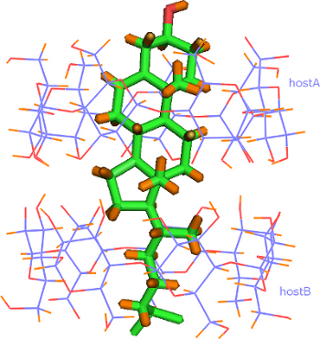
- increased safety in NPC animal models [12]. Moreover, superstructures of cyclodextrins like mono-lactose-appended β-CD [13] and biocleavable pluronic/β-CD-based polyrotaxanes [14] as well as PEG-lipid micelles (DSPE-PEG) in combination with HP-β-CD [15] have shown enhanced therapeutic effects and exhibit a