Search results
Search for "nucleoside" in Full Text gives 162 result(s) in Beilstein Journal of Organic Chemistry.
Synthesis of acylglycerol derivatives by mechanochemistry
Beilstein J. Org. Chem. 2019, 15, 811–817, doi:10.3762/bjoc.15.78
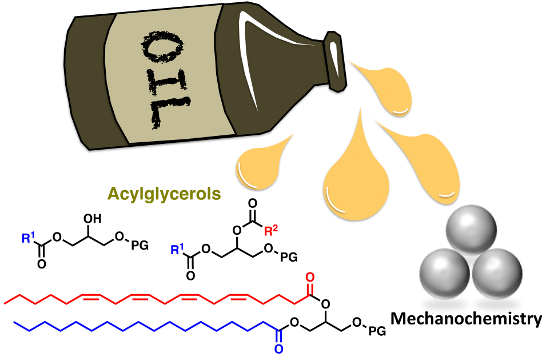
- relevant building blocks with mechanochemistry has further been shown by the recent mechanochemical protocols to transform nucleoside and nucleotide substrates (Figure 1) [18][19]. On the other hand, reports on mechanochemical protocols for the synthesis or derivatization of lipids are scarce [20][21


Tuning the stability of alkoxyisopropyl protection groups
Beilstein J. Org. Chem. 2019, 15, 746–751, doi:10.3762/bjoc.15.70
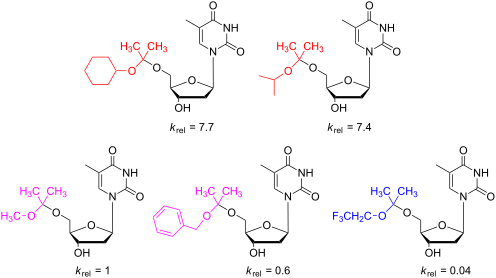
- . Some structural modifications have been introduced to overcome the chirality problem, e.g., the methoxytetrahydropyranyl group suggested in 1970’s for a substitute of THP in nucleoside chemistry [4][5]. For protection of highly sensitive compounds acetone-based acetals can be applied. However, of these
- group of a nucleoside [7]. The acid lability of MIP is comparable to that of the dimethoxytrityl group (DMTr) that is frequently used to protect this position. The DMTr group works more or less perfectly in solid-phase synthesis, however, in solution-phase processes there are several cases where
- cleaving of DMTr fails. This is due to the equilibrium formed between the protected and deprotected compounds. During our search for a highly acid-labile protection for the 5’-hydroxy group of a nucleoside we noticed that neither the DMTr nor the MIP are fully satisfactory. Whereas MIP is easily removable



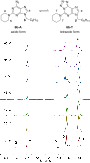
Synthesis and fluorescent properties of N(9)-alkylated 2-amino-6-triazolylpurines and 7-deazapurines
Beilstein J. Org. Chem. 2019, 15, 474–489, doi:10.3762/bjoc.15.41
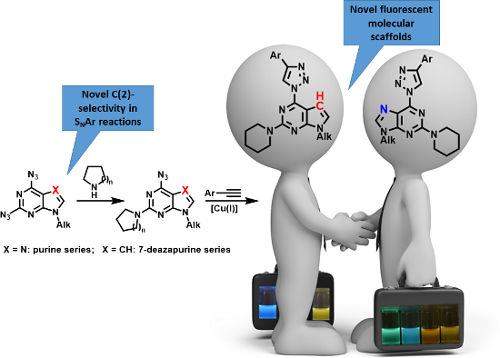
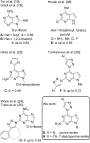
- for this type of molecules. Traditionally, fluorescent purine nucleoside analogs were recognized as valuable fluorescent probes for DNA and RNA research [17]. This paved a way for development of various adenosine and guanosine analogs which in many cases contained an additional substituent at C(8
- →4) followed by a SNAr process (4→5) which showcases the use of 1,2,3-triazoles as leaving groups. It is well established during our previous research in the purine nucleoside series that such an approach provides 6-amino-2-(1,2,3-triazol-1-yl) derivatives [25]. On the other hand, it was also
- and 7-deaza-7-ethenyl-2'-deoxyadenosine or 5-(azidomethyl)-2'-deoxyuridine, we can assume that nucleoside analogs bearing fluorophores of our type would be susceptible to metabolic phosphorylation and incorporation into DNA in the living cells. Further studies are required to develop the newly




Syntheses and chemical properties of β-nicotinamide riboside and its analogues and derivatives
Beilstein J. Org. Chem. 2019, 15, 401–430, doi:10.3762/bjoc.15.36
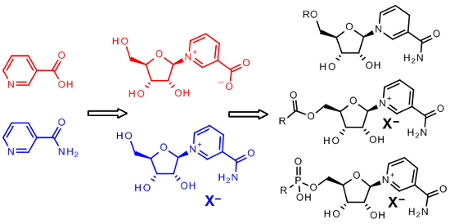
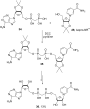
- step would proceed through the formation of an orthoester intermediate G (Figure 4) which Nam would subsequently attack. The removal of the benzoyl groups in 1 M methanolic ammonia was conducted at −15 °C for 4 days to afford the nucleoside NR+Cl− in the rather low yield of 34% with −37°. This optical
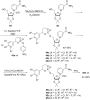
- also attempted to use the newly discovered reaction for the synthesis of N-alkyl-nicotinamide ribosides by reaction of 17 with alkylamines in methanol at 4 °C. However, these amines promoted the decomposition of the nucleoside and cleavage of the glycosidic bond, as the major products were the
- enzymatic synthesis of NR+ from α-D-ribose-1-phosphate and Nam by catalysis with purine nucleoside phosphorylase and sucrose phosphorylase is described in a US patent application by Velasquez et al. [46]. In the NMR experiments, the authors demonstrated the preparation of NR+ but did not isolate pure NR+. 3






Synthesis, biophysical properties, and RNase H activity of 6’-difluoro[4.3.0]bicyclo-DNA
Beilstein J. Org. Chem. 2019, 15, 79–88, doi:10.3762/bjoc.15.9
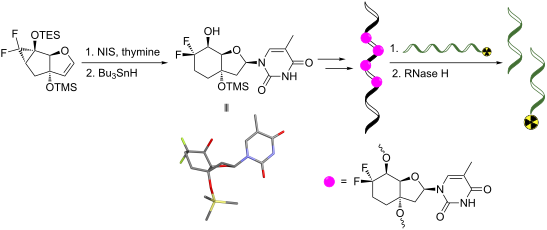
- -DNA (6’-diF-bc4,3-DNA). The difluorinated thymidine phosphoramidite building block was synthesized starting from an already known gem-difluorinated tricyclic glycal. This tricyclic siloxydifluorocyclopropane was converted into the [4.3.0]bicyclic nucleoside via cyclopropane ring-opening through the
- addition of an electrophilic iodine during the nucleosidation step followed by reduction. The gem-difluorinated bicyclic nucleoside was then converted into the corresponding phosphoramidite building block which was incorporated into oligonucleotides. Thermal denaturation experiments of these
- oligonucleotides hybridized to RNA showed a similar structure than the natural DNA/RNA duplex. Furthermore, since the structural investigation on the nucleoside level by X-ray crystallography and ab initio calculations pointed to a furanose conformation in the southern region, a RNase H cleavage assay was


New standards for collecting and fitting steady state kinetic data
Beilstein J. Org. Chem. 2019, 15, 16–29, doi:10.3762/bjoc.15.2
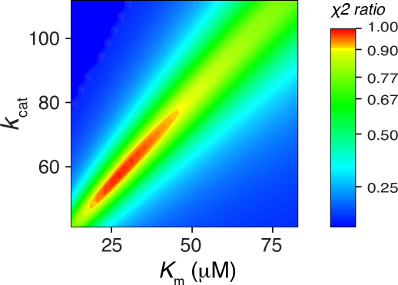
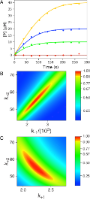
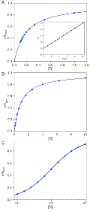
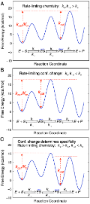
- the alternate substrates are well known. Moreover, it is easy to perform single turnover kinetic measurements to examine steps leading up to the chemical reaction by mixing an enzyme DNA complex with only one nucleoside triphosphate. Recent work on DNA polymerase fidelity has shown that the rate of



6’-Fluoro[4.3.0]bicyclo nucleic acid: synthesis, biophysical properties and molecular dynamics simulations
Beilstein J. Org. Chem. 2018, 14, 3088–3097, doi:10.3762/bjoc.14.288
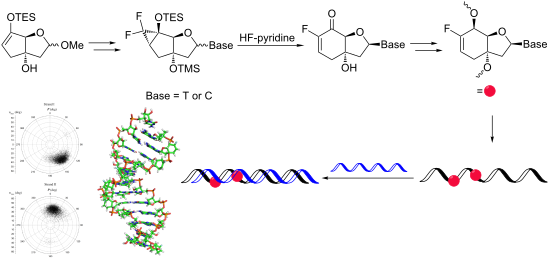
- either by a NIS-mediated or Vorbrüggen nucleosidation yielded in both cases the β-tricyclic nucleoside as major anomer. Subsequent desilylation and cyclopropane ring opening of these tricyclic intermediates afforded the unsaturated 6’F-bc4,3 nucleosides. The successful incorporation of the corresponding
- = −1.5 to −3.7 °C). Molecular dynamics simulation on the nucleoside and oligonucleotide level revealed the preference of the C1’-exo/C2’-endo alignment of the furanose ring. Moreover, the simulation of duplexes with complementary RNA disclosed a DNA/RNA-type duplex structure suggesting that this
- spectra (Supporting Information File 1). The plan for the pyrimidine nucleoside synthesis comprised the use of the meanwhile well-established β-selective N-iodosuccinimide (NIS)-mediated addition of a persilylated nucleobase to a tricyclic glycal [43][45][53][54]. Therefore, the gem-difluorinated


Nucleoside macrocycles formed by intramolecular click reaction: efficient cyclization of pyrimidine nucleosides decorated with 5'-azido residues and 5-octadiynyl side chains
Beilstein J. Org. Chem. 2018, 14, 2404–2410, doi:10.3762/bjoc.14.217
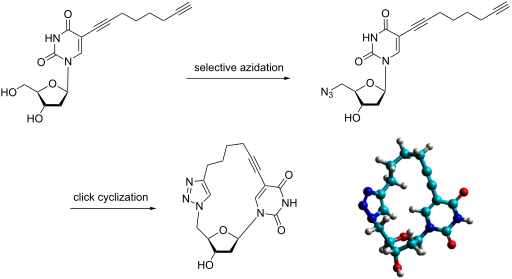
- Organische Chemie, Universität Münster, Corrensstrasse 40, 48149 Münster, Germany 10.3762/bjoc.14.217 Abstract Copper(I)-promoted "click" cyclization in the presence of TBTA afforded nucleoside macrocycles in very high yields (≈70%) without using protecting groups. To this end, dU and dC derivatives
- ’-azido-2’,5’-dideoxycytidine 2. Earlier, the nucleoside precursor 1 was used for DNA cross-linking and labelling [36]. The unprotected nucleoside 1 was treated with equimolar amounts of carbon tetrabromide and triphenylphosphine and a five-fold excess of sodium azide to obtain the azide derivative 2 (37
- reaction the use of the TBTA complex was essential for the cyclization of dC precursor 2 but not for dU precursor 7. Protection of precursor molecules is not required and only four steps are necessary to convert a nucleoside in a nucleoside macrocycle. The single crystal X-ray structure confirmed the click


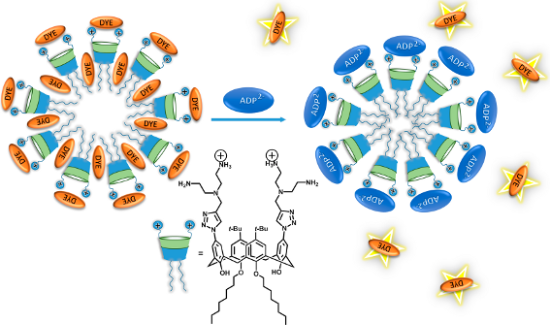
Synthesis of new p-tert-butylcalix[4]arene-based polyammonium triazolyl amphiphiles and their binding with nucleoside phosphates
Beilstein J. Org. Chem. 2018, 14, 1980–1993, doi:10.3762/bjoc.14.173


Anomeric modification of carbohydrates using the Mitsunobu reaction
Beilstein J. Org. Chem. 2018, 14, 1619–1636, doi:10.3762/bjoc.14.138
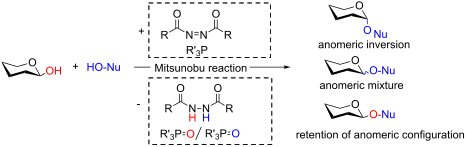
- 15) [63]. Similar reaction conditions were applied by Nie et al. in the total synthesis of the nucleoside antibiotic A201A [64]. Notably, the n-Bu3P-ADDP reagent system led here to the formation of the pure α-glycoside. Likewise, a Mitsunobu glycosylation of complex phenols was successfully
- Mitsunobu methodology, the rebeccamycin analogue 124 was synthesized in high yield and complete β-stereoselectivity by Wang et al. from the glucose derivative 2 and 123 (Scheme 25) [101]. Application of the anomeric Mitsunobu coupling in nucleoside synthesis was pioneered by Szarek et al. [102], who reacted
- glycosylation, Grochowski explored the synthesis of new nucleoside analogues. 1-Hydroxy-benzotriazole, 1-hydroxy-2-cyanobenzimidazole, 1-hydroxyuracil, and 1-hydroxythymine were used to prepare the respective NO-furanosides in the manno- and ribo-series [115][116][117]. Miscellaneous The Mitsunobu reaction was


Glycosylation reactions mediated by hypervalent iodine: application to the synthesis of nucleosides and carbohydrates
Beilstein J. Org. Chem. 2018, 14, 1595–1618, doi:10.3762/bjoc.14.137
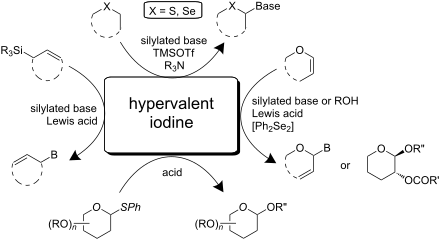
- , Tokushima, 770-8505, Japan 10.3762/bjoc.14.137 Abstract To synthesize nucleoside and oligosaccharide derivatives, we often use a glycosylation reaction to form a glycoside bond. Coupling reactions between a nucleobase and a sugar donor in the former case, and the reaction between an acceptor and a sugar
- ; nucleoside; oligosaccharide; Introduction Nucleic acids and oligosaccharides are both mandatory polymers for the maintenance of life and cell growth. The former exists in nuclei and codes genetic information, which is transformed into proteins through a transcription process known as the “central dogma
- studies by supplying biological tools for the analyses of these polymers, as well as by synthesizing effective drug candidates for the diseases mentioned above [4][8][9][10][11][12][13][14]. To synthesize nucleoside and oligosaccharide derivatives, glycosylation reactions are often used to form a


Oligonucleotide analogues with cationic backbone linkages
Beilstein J. Org. Chem. 2018, 14, 1293–1308, doi:10.3762/bjoc.14.111
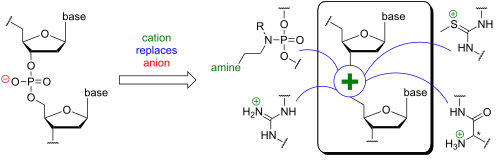
- ' (Figure 5) [72][73][74]. In principle, the NAA-modification is inspired by 'high-carbon' nucleoside structures (i.e., nucleosides having more than five carbon atoms in the sugar unit) found in naturally occurring nucleoside antibiotics [75][76][77]. In muraymycin- and caprazamycin-type nucleoside
- antibiotics, among others, such 'high-carbon' nucleosides are uridine-derived amino acid structures ('glycyluridine', GlyU) [78][79][80], which are aminoribosylated at the 5'-hydroxy group. As part of our ongoing research program on muraymycin nucleoside antibiotics (e.g., muraymycin A1 (44)) and their





Mechanochemistry of nucleosides, nucleotides and related materials
Beilstein J. Org. Chem. 2018, 14, 955–970, doi:10.3762/bjoc.14.81
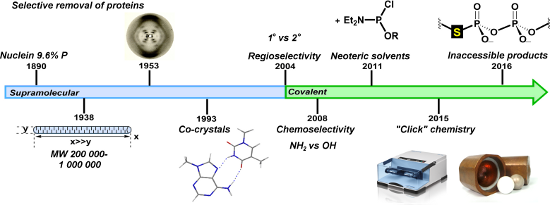
- exploited grinding to facilitate disaggregation of DNA from tightly bound proteins through selective denaturation of the latter. Despite the wide application of ball milling to amino acid chemistry, there have been limited reports of mechanochemical transformations involving nucleoside or nucleotide
- : specifically, solid solutions, cocrystals, polymorph transitions, carbon nanotube dissolution and inclusion complex formation. Keywords: DNA; green chemistry; mechanochemistry; nucleoside; nucleotide; Introduction Several definitions of mechanochemistry have been attempted since Ostwald included it as one of
- vessel (and its shape); the mass of the ball(s); and the hardness of the colliding materials. In order of descending hardness, zirconia, stainless steel, copper and PTFE have all been used to effect mechanochemical transformation of nucleoside or nucleotide substrates. During a study of amide coupling


On the design principles of peptide–drug conjugates for targeted drug delivery to the malignant tumor site
Beilstein J. Org. Chem. 2018, 14, 930–954, doi:10.3762/bjoc.14.80
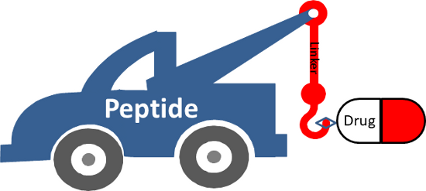
- diminishing expressed nucleoside receptors responsible for the cell uptake of gemcitabine [6]. Additionally, chemotherapy with anticancer agents is often hampered by their poor aqueous solubility, low oral bioavailability and metabolic instability. These drawbacks are linked to the unfavorable ADME
- loading that is usually preferred, mostly due to poor physicochemical properties. Below we analyze a set of drugs that have been tailored and incorporated in PDCs. Gemcitabine (Gem): Gemcitabine (dFdC) is a nucleoside analog of deoxycytidine in which the hydrogen atoms on the 2' carbon are replaced by
- deactivation through deamination in its inactive metabolite dFdU, the acquired multidrug resistance (MDR) and its high hydrophilicity deterring its prolonged drug release from various vehicles [88], which therefore reduces the effective concentration of gemcitabine. It enters cells through nucleoside


Phosphodiester models for cleavage of nucleic acids
Beilstein J. Org. Chem. 2018, 14, 803–837, doi:10.3762/bjoc.14.68
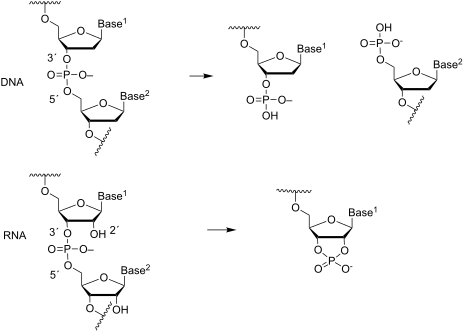
- studies with small molecular phosphodiesters. Keywords: Cleavage; DNA; kinetics; mechanism; RNA; Introduction Nucleic acids are polymeric diesters of phosphoric acid that store and transfer biological information. In biological systems, the diester linkages bridging 3´-O of one nucleoside to the 5´-O of
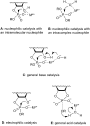
- transphosphorylation by departure of the 5´-linked nucleoside [3]. The half-life at pH 6–7 and 25 °C is around 10 years [4][5], the enzymatic cleavage by RNase A being 3∙1011 times faster [6]. Interestingly, the RNA phosphodiester bonds are additionally subject to cleavage by RNA itself, viz. by RNA sequences known as
- leaving groups that are less basic than EtO−, such as 5´-O− of nucleoside, the lifetime expectedly is shorter. If the leaving group is very good, such as an aryl group, a synchronous concerted mechanism (ANDN) may take over the stepwise mechanism (AN + DN). Model compounds and experimental tools Studies



Recent advances in synthetic approaches for medicinal chemistry of C-nucleosides
Beilstein J. Org. Chem. 2018, 14, 772–785, doi:10.3762/bjoc.14.65
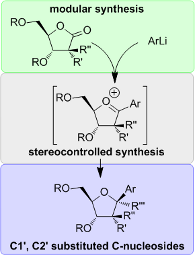
- and supramolecular complexes [10][11][12][13][14][15][16][17][18][19][20][21][22]. Nucleic acids are composed of a monomeric nucleoside unit that features an aromatic nitrogenous moiety (a nucleobase) connected to a pentose sugar, which in turn is attached to a phosphate group (Figure 1) [7]. The
- pentose sugar and the nucleobase are connected by a carbon–nitrogen bond that is adjacent to the sugar oxygen resulting in an hemiaminal ether bond, also known as the glycosidic bond. Because of their key role in many biological processes, modifications to the nucleoside structure have been widely
- employed in the design of drugs, most notably in the fields of virology and cancer research [13][14][15]. Variations in the nucleoside scaffold are typically accomplished by the insertion, deletion or transposition of functional groups or atoms [23][24][25][26][27][28][29]. The varied properties of such
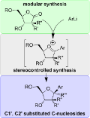


AuBr3-catalyzed azidation of per-O-acetylated and per-O-benzoylated sugars
Beilstein J. Org. Chem. 2018, 14, 682–687, doi:10.3762/bjoc.14.56
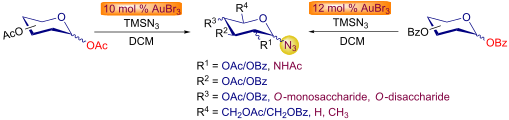
- purine and pyrimidine nucleoside synthesis using per-O-acyl/per-O-benzoyl furanosyl and pyranosyl o-hexynylbenzoates [23]. Subsequently, Hotha and co-workers utilized propargyl 1,2-orthoesters and alkynyl glycosyl carbonate donors for the synthesis of pyrimidine nucleosides [24][25]. In addition, N


Enzyme-free genetic copying of DNA and RNA sequences
Beilstein J. Org. Chem. 2018, 14, 603–617, doi:10.3762/bjoc.14.47
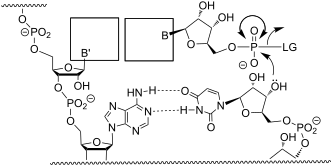
- oligonucleotide is present, stacking with the base of its 5'-terminal nucleoside further adds to the attractive forces experienced by incoming monomers. This is shown schematically in Figure 5. Because downstream-binding strands favorably affect the rate and selectivity of primer extension, we have dubbed them


Stimuli-responsive oligonucleotides in prodrug-based approaches for gene silencing
Beilstein J. Org. Chem. 2018, 14, 436–469, doi:10.3762/bjoc.14.32


Preparation of trinucleotide phosphoramidites as synthons for the synthesis of gene libraries
Beilstein J. Org. Chem. 2018, 14, 397–406, doi:10.3762/bjoc.14.28
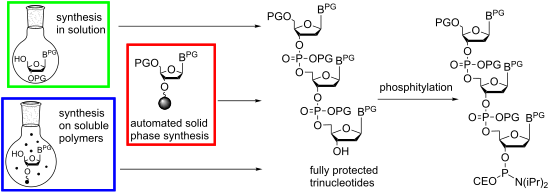
- of two suitably protected monomers to generate a dinucleotide, which then can be extended in either 5'- or 3'-direction (Figure 3). Surprisingly, only one report has made use of this "economy", first coupling a 5'-O-DMTr-protected nucleoside-3'-ortho-chlorophenylphosphotriester to a 3'-O-levulinoyl
- -azidomethylbenzoyl)-protected nucelosides, followed by removal of the 5'-O-DMTr group and extension of the dimer to the trimer by coupling of another N-acyl-3'-O-(o-chlorophenylphosphate)nucleoside. The final removal of the 2-azidomethylbenzoyl group occurred by reduction of the azide with triphenylphosphine in
- , although using phosphite triester chemistry [27]. In this case, the synthesis started with the coupling of an N-acyl-5'-O-DMTr-protected nucleoside-3'-O-phosphoramidite to an N-acyl-3'-O-TBDMS-protected nucleoside, followed by oxidation of the internucleotide phosphorous. Upon cleavage of the 5'-O-DMTr


Fluorogenic PNA probes
Beilstein J. Org. Chem. 2018, 14, 253–281, doi:10.3762/bjoc.14.17
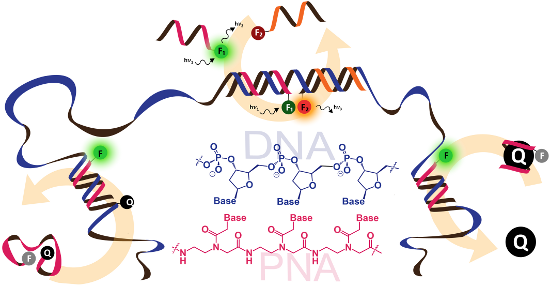
- derivative. 5-Benzothiophene- and 5-benzofuran-modified uracil in aegPNA exhibited a fluorescence that was marginally sensitive to the environment [195]. When incorporated into PNA, benzothiophene-uracil exhibited an increased fluorescence compared to the free nucleoside. The opposite effect was observed




Fluorescent nucleobase analogues for base–base FRET in nucleic acids: synthesis, photophysics and applications
Beilstein J. Org. Chem. 2018, 14, 114–129, doi:10.3762/bjoc.14.7
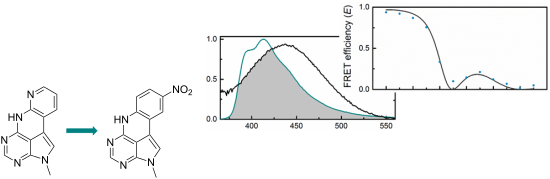
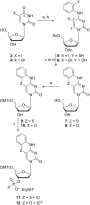
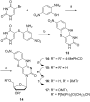
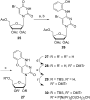
- sodium methoxide in MeOH, which yielded the free nucleoside 15 in 71%. Standard DMTr protection furnished compound 16 which was then activated for oligonucleotide solid-phase synthesis (SPS) by phosphitylation using CEP-Cl. The total yield of tCnitro deoxyribose phosphoramidite was 0.8% over 6 steps
- nucleoside in 65% yield. Subsequent phosphitylation followed by salt-formation finally furnished compound 35 in 52% over two steps. Since the quadracyclic adenine presented an overall structural similarity with adenine and keeping a very rigid heterocyclic system suggesting few options for the molecule to






Polarization spectroscopy methods in the determination of interactions of small molecules with nucleic acids – tutorial
Beilstein J. Org. Chem. 2018, 14, 84–105, doi:10.3762/bjoc.14.5
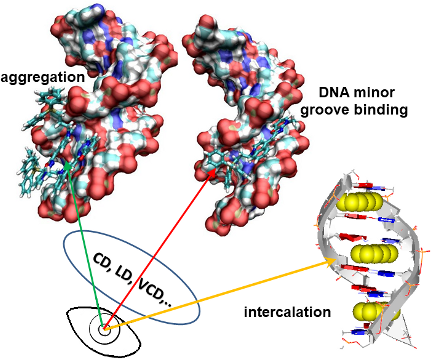
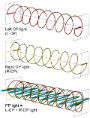
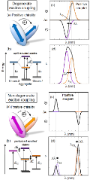
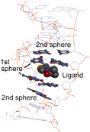
- adequately prepared and characterized. For that reason, a short description of the most important issues in sample preparation is summarized in chapters 2.2 and 2.3. 2.1. Relation between DNA or RNA secondary structure and polarization spectroscopy Nucleobases are achiral but nucleoside and nucleotide






Acid-catalyzed ring-opening reactions of a cyclopropanated 3-aza-2-oxabicyclo[2.2.1]hept-5-ene with alcohols
Beilstein J. Org. Chem. 2017, 13, 2888–2894, doi:10.3762/bjoc.13.281
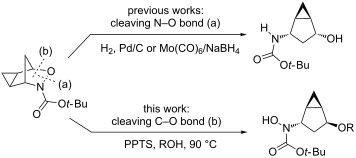
- the structure against cleavage by nucleoside phosphorylases or hydrolases [18][19]. The addition of a cyclopropane unit could provide further rigidity that could better stabilize the compound, thereby enhancing its biological activity. Both of these reported ring-openings of cyclopropanated 3-aza-2


Synthetic mRNA capping
Beilstein J. Org. Chem. 2017, 13, 2819–2832, doi:10.3762/bjoc.13.274
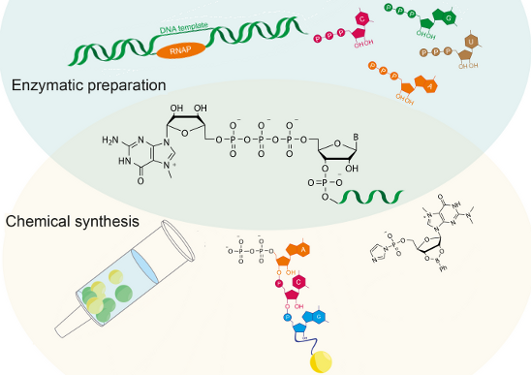
- nucleophiles such as nucleoside mono-, -di- or -triphosphates and are typically reacted in anhydrous DMF in the presence of zinc chloride. The GMP imidazolide (18) is reacted with m7GDP (17) in the presence of ZnCl2 as catalyst to yield m7GpppG (12) [49]. In the past years, variations of this general synthetic