


Search results
Search for "platinum" in Full Text gives 207 result(s) in Beilstein Journal of Organic Chemistry. Showing first 200.
Electrochemical formal homocoupling of sec-alcohols
- Kosuke Yamamoto,
- Kazuhisa Arita,
- Masashi Shiota,
- Masami Kuriyama and
- Osamu Onomura
Beilstein J. Org. Chem. 2022, 18, 1062–1069, doi:10.3762/bjoc.18.108
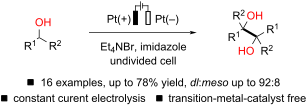
- -1,2-diols through the formal homocoupling of sec-alcohols using platinum electrodes in an undivided cell (Scheme 1c). Results and Discussion We commenced the optimization study for the electrochemical formal homocoupling of sec-alcohols by using 1-phenylethanol (1a) as a model substrate. The results
- are summarized in Table 1. The electrolysis was carried out using an undivided cell in the presence of Et4NBr as an electrolyte with a mixed solvent of MeCN and H2O under air atmosphere. When 4 F/mol of electricity was passed through the reaction mixture using two platinum electrodes at 0 ºC, the
- . The present reaction smoothly proceeded in a simple undivided cell with platinum electrodes under constant current conditions, affording pinacol-type products in moderate to good yields with good to high diastereoselectivities. The successful large-scale experiment showed the potential synthetic

Graphical Abstract

Scheme 1: Strategies for the synthesis of vic-1,2-diols.
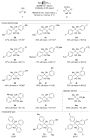
Scheme 2: Substrate scope. Reaction conditions: 1 (1.0 mmol), Et4NBr (0.1 equiv), imidazole (0.05 equiv), MeC...

Scheme 3: Investigation of cross-coupling reaction.

Scheme 4: Large-scale experiment.

Scheme 5: Control experiments. aDetermined by 1H NMR using 1,3,5-trimethoxybenzene as an internal standard. b...

Scheme 6: Proposed mechanism.
Electrochemical vicinal oxyazidation of α-arylvinyl acetates
- Yi-Lun Li,
- Zhaojiang Shi,
- Tao Shen and
- Ke-Yin Ye
Beilstein J. Org. Chem. 2022, 18, 1026–1031, doi:10.3762/bjoc.18.103
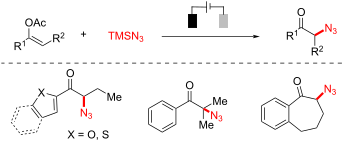
- relevant heterocycles. From vinyl acetates to α-azidoketones. Substrate scope. Reaction conditions: α-arylvinyl acetate (0.5 mmol), TMSN3 (1.0 mmol), n-Bu4NPF6 (0.5 mmol), H2O (2.5 mmol), MeCN (5 mL), carbon cloth anode, platinum cathode, undivided cell, Ecell = 2.3 V, room temperature, 6 h. a2 h

Graphical Abstract

Scheme 1: From vinyl acetates to α-azidoketones.
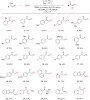
Scheme 2: Substrate scope. Reaction conditions: α-arylvinyl acetate (0.5 mmol), TMSN3 (1.0 mmol), n-Bu4NPF6 (...

Scheme 3: Derivatization of α-azidoketone 2.

Scheme 4: Proposed mechanism.
Electroreductive coupling of 2-acylbenzoates with α,β-unsaturated carbonyl compounds: density functional theory study on product selectivity
- Naoki Kise and
- Toshihiko Sakurai
Beilstein J. Org. Chem. 2022, 18, 956–962, doi:10.3762/bjoc.18.95

- ) was placed in the cathodic chamber of a divided cell (40 mL beaker, 3 cm diameter, 6 cm height) equipped with a platinum cathode (5 × 5 cm2), a platinum anode (2 × 1 cm2), and a ceramic cylindrical diaphragm (1.5 cm diameter). A 0.3 M solution of Bu4NClO4 in DMF (4 mL) was placed in the anodic chamber

Graphical Abstract

Scheme 1: Electroreductive coupling of phthalic anhydrides with α,β-unsaturated carbonyl compounds and subseq...

Scheme 2: Electroreductive coupling of phthalimides with α,β-unsaturated carbonyl compounds and subsequent tr...

Scheme 3: Electroreductive coupling of 2-acylbenzoates with α,β-unsaturated carbonyl compounds and subsequent...

Scheme 4: Electroreductive coupling of 1a with 2a and subsequent transformation to 2-cyanonaphthalene-1-ol (3a...

Scheme 5: Presumed reaction mechanism of electroreductive coupling of 1 with 2a and subsequent transformation...

Scheme 6: Electroreductive coupling of 1a with 2c and subsequent treatment with 1 M HCl.
Introducing a new 7-ring fused diindenone-dithieno[3,2-b:2',3'-d]thiophene unit as a promising component for organic semiconductor materials
- Valentin H. K. Fell,
- Joseph Cameron,
- Alexander L. Kanibolotsky,
- Eman J. Hussien and
- Peter J. Skabara
Beilstein J. Org. Chem. 2022, 18, 944–955, doi:10.3762/bjoc.18.94
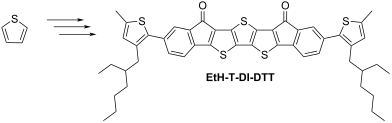
- Cyclic voltammetry (CV) was used to estimate the ionisation energy (IE) and the electron affinity (EA) of the title compound (Figure 9) [63]. CV was measured in a 10−4 M CH2Cl2 solution with 0.1 M tetra-n-butylammonium hexafluorophosphate (TBAPF6) added as electrolyte. A platinum disk electrode, a Pt

Graphical Abstract

Figure 1: EtH-T-DI-DTT (1).

Figure 2: Previously published, ‘bent’ diindenodithienothiophenes [16,24,25].

Figure 3: With crystalline films of 2,7-dioctyl[1]benzothieno[3,2-b][1]-benzothiophene (8), obtained by off-c...

Figure 4: ITIC, a system with fused thiophenes, in combination with donor polymer 11, also featuring a fused ...

Figure 5: The fluorinated derivative of ITIC, IT-4F, achieved, with donor polymer 13, PCEs in OPVs up to 17% [8]....

Figure 6: The non-fullerene acceptor Y6 (14) [30], in combination with donor polymer 15, both fused thiophene sys...

Figure 7: With a three component system of PBQx-TF, eC9-2Cl, and F-BTA3, a PCE of 19% was achieved [32].

Scheme 1: Synthetic route from thiophene to 2,6-bis(4,4,5,5-tetramethyl-1,3,2-dioxaborolan-2-yl)dithieno[3,2-b...

Scheme 2: Ring closure of key intermediate 27 to achieve 29: a) Methyl 5-bromo-2-iodobenzoate, Aliquat 336®, ...

Scheme 3: Synthesis of thiophene derivative 32: a) Magnesium, 2-ethylhexylbromide, spatula tip iodine, anhydr...

Scheme 4: Synthesis of the soluble target structure EtH-T-DI-DTT (1): a) 32, Pd(PPh3)4, K2CO3, THF, H2O, 70 °...

Figure 8: Normalised UV–vis spectra of EtH-T-DI-DTT in 10−5 M CH2Cl2 solution and in the solid state.

Figure 9: Cyclic voltammogram for EtH-T-DI-DTT (1), at a scan rate of 0.1 V s−1 using a Pt disk as the workin...

Figure 10: The structure of EtH-T-DI-DTT optimised on the B3LYP/6-311g(d,p) level of theory, viewed from the (...
Cathodic generation of reactive (phenylthio)difluoromethyl species and its reactions: mechanistic aspects and synthetic applications
- Sadanobu Iwase,
- Shinsuke Inagi and
- Toshio Fuchigami
Beilstein J. Org. Chem. 2022, 18, 872–880, doi:10.3762/bjoc.18.88
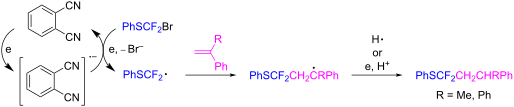
- bromodifluoromethyl phenyl sulfide (1) was measured by cyclic voltammetry in an anhydrous acetonitrile (MeCN) solution containing Bu4NClO4 (0.1 M) using a platinum electrode. One irreversible reduction peak was observed at −2.4 V vs SSCE at a scan rate of 100 mV/s. Even at a much higher scan rate of 500 mV/s, the
- cathodic reduction of 1 at a platinum cathode in Bu4NClO4/MeCN. Notably, when 1.3 F/mol were passed, starting compound 1 was consumed completely. As shown in Scheme 4, difluoromethyl phenyl sulfide (2) was mainly formed as well as bis(phenylthio)difluoromethane (3) as a minor product. From these results
- the radical trapping reagent, the expected radical adduct 4 was formed in reasonable yield of ca. 30% (Table 1, run 1). A platinum cathode is more suitable for the formation of adduct 4 compared to a glassy carbon cathode (Table 1, run 2). Dolbier et al. reported that electron-poor perfluoroalkyl

Graphical Abstract

Scheme 1: Electrochemical gem-difluorination of sulfides bearing α-electron-withdrawing groups.

Scheme 2: Electrochemical gem-difluorodesulfurization of dithioacetals.

Scheme 3: Electrochemical gem-difluorodesulfurization of dithiocarbonate.

Scheme 4: Cathodic reduction of 1.

Figure 1: Cyclic voltammograms of (a) PhSCF2Br (1, 8 mM) in 0.1 M n-Bu4NClO4/MeCN; (b) o-phthalonitrile (4 mM...

Scheme 5: Indirect cathodic reduction of 1 using o-phthalonitrile as mediator.

Scheme 6: Mechanism for the formation of product 3.

Scheme 7: Reaction of compound 1 with PhS anions.

Scheme 8: Cathodic reduction of compound 1 in the presence of α-methylstyrene at a high current density.

Scheme 9: Indirect cathodic reduction of compound 1 in CD3CN.

Scheme 10: Indirect cathodic reduction of compound 1 in the presence of 1,1-diphenylethylene.

Scheme 11: Reaction mechanism.
Synthesis of odorants in flow and their applications in perfumery
- Merlin Kleoff,
- Paul Kiler and
- Philipp Heretsch
Beilstein J. Org. Chem. 2022, 18, 754–768, doi:10.3762/bjoc.18.76
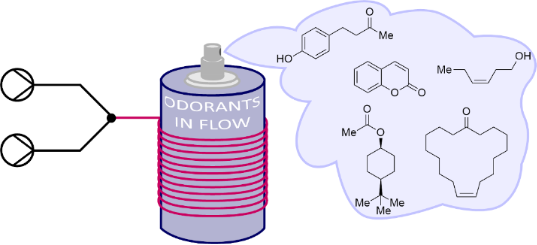
- solution of (R)-carvone (25) in toluene is merged with a stream of hydrogen and the resulting segmented flow is passed through a column reactor containing a dimethylpolysilane-modified platinum catalyst (DMPS-Pt, 26), immobilized on carbon/calcium phosphate. At a temperature of 25 °C using 1.4 equivalents
- ) via selective hydrogenation to enone 27, condensation to hydrazone 28 and subsequent Shapiro reaction. DMPS = dimethylpolysilane-modified platinum catalyst; Ts = tosyl. Selective hydrogenation of alkyne 31 to “leaf alcohol” 32 employing a solid-supported palladium catalyst. A) Synthesis of jasmonal

Graphical Abstract

Figure 1: The olfactory spectrum wheel ordering different types of odorants from fruity to musky.

Figure 2: Classification of odorants as “top note”, “middle note” and “base note” depending on their substant...

Scheme 1: Synthesis of raspberry ketone (5) and raspberry ketone methyl ether (6) in two steps in flow.

Scheme 2: Autoxidation of (+)-valencene (7) to (+)-nootkatone (8) under catalyst and solvent-free conditions ...

Scheme 3: Enzyme-catalyzed acetylation of isoamyl alcohol (9) in a biphasic n-heptane/water mixture utilizing...

Scheme 4: Esterification of alcohols by transesterification, catalyzed by immobilized acyltransferase in a pa...

Scheme 5: Synthesis of homologated alcohols 20 by iterative homologation of terpenyl boronate esters 17 follo...

Scheme 6: Sequential three-step synthesis of (S)-α-phellandrene (30) from (R)-carvone (25) via selective hydr...

Scheme 7: Selective hydrogenation of alkyne 31 to “leaf alcohol” 32 employing a solid-supported palladium cat...

Scheme 8: A) Synthesis of jasmonal (35) by crossed aldol condensation of benzaldehyde (33) and heptanal (34) ...

Scheme 9: Synthesis of thymol (41) from m-cresol (39) and isopropyl alcohol via Fries-type rearrangement of e...

Scheme 10: Preparation of coumarin (46) by reaction of salicylaldehyde (44) with potassium acetate, acetic aci...

Scheme 11: Synthesis of phthalide (50) by photoinduced decatungstate catalysis.

Scheme 12: Synthesis of woody acetate (54) by reduction of cyclohexanone 51 and subsequent acetylation; ADH200...

Scheme 13: Synthesis of juniper lactone (56) by pyrolysis of triperoxide 55 generated by oxidation of cyclohex...

Scheme 14: Synthesis of macrocyclic olefine 60 by ring-closing metathesis of diene 58 in a continuously stirre...

Scheme 15: Synthesis of macrocycles 65 and 66 by ring-closing metathesis of dienes 62 or 63, respectively, in ...

Scheme 16: Z-Selective synthesis of civetone (69) enabled by metathesis catalyst 68 in a tube-in-tube reactor.

Scheme 17: Synthesis of macrocyclic olefine 72 by ring-closing metathesis of diene 70.
Heteroleptic metallosupramolecular aggregates/complexation for supramolecular catalysis
- Prodip Howlader and
- Michael Schmittel
Beilstein J. Org. Chem. 2022, 18, 597–630, doi:10.3762/bjoc.18.62
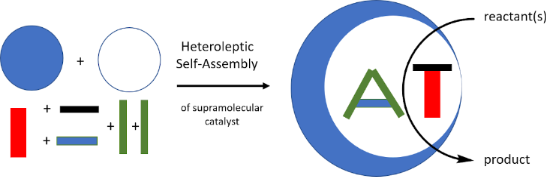
- ]. Using addition and removal of chloride, the Mirkin group reversibly and quantitatively toggled the platinum(II)-based switch 1262+ between a homo- and heteroligated form (Figure 29) [132]. In the closed platinum(II) complex 1262+, the urea units were available for activation of butenone (127) by

Graphical Abstract

Figure 1: Butterfly 1 (Figure was reprinted with permission from [45]. Copyright 2012 American Chemical Society. ...

Figure 2: Synthesis of the three-component heteroleptic molecular boat 8 and its use as a catalyst for the Kn...

Figure 3: Synthesis of the two-component triangle 14 and three-component heteroleptic prism 15 [59]. Figure was a...

Figure 4: Catalytic Michael addition reaction using the urea-decorated molecular prism 15 [59].

Figure 5: Self-assembly of two-component tetragonal prismatic architectures with different cavity size. Figur...

Figure 6: Construction of artificial LHS using rhodamine B as an acceptor and 24b as donor generating a photo...

Figure 7: Synthesis of supramolecular spheres with varying [AuCl] concentration inside the cavity. Figure was...

Figure 8: Hydroalkoxylation reaction of γ-allenol 34 in the presence of [AuCl]-encapsulated molecular spheres ...

Figure 9: Two-component heteroleptic triangles of different size containing a BINOL functionality. Figure was...

Figure 10: Asymmetric conjugate addition of chalcone 42 with trans-styrylboronic acid (43) catalyzed by BINOL-...

Figure 11: Encapsulation of monophosphoramidite-Rh(I) catalyst into a heteroleptic tetragonal prismatic cage 47...

Figure 12: (a) Representations of the basic HETPYP, HETPHEN, and HETTAP complex motifs. (b) The three-componen...

Figure 13: Two representative four-component rotors, with a (top) two-arm stator and (bottom) a four-arm stato...

Figure 14: Four-component rotors with a monohead rotator. Figure was adapted with permission from [94]. Copyright ...

Figure 15: (left) Click reaction catalyzed by rotors [Cu2(55)(60)(X)]2+. (right) Yield as a function of the ro...

Figure 16: A supramolecular AND gate. a) In truth table state (0,0) two nanoswitches serve as the receptor ens...

Figure 17: Two supramolecular double rotors (each has two rotational axes) and reference complex [Cu(78)]+ for...

Figure 18: The slider-on-deck system (82•X) (X = 83, 84, or 85). Figure is from [98] and was reprinted from the jo...

Figure 19: Catalysis of a conjugated addition reaction in the presence of the slider-on-deck system (82•X) (X ...

Figure 20: A rotating catalyst builds a catalytic machinery. For catalysis of the catalytic machinery, see Figure 21. F...

Figure 21: Catalytic machinery. Figure was adapted from [100] (“Evolution of catalytic machinery: three-component n...

Figure 22: An information system based on (re)shuffling components between supramolecular structures [99]. Figure ...

Figure 23: Switching between dimeric heteroleptic and homoleptic complex for OFF/ON catalytic formation of rot...

Figure 24: A chemically fueled catalytic system [112]. Figure was adapted from [112]. Copyright 2021 American Chemical S...

Figure 25: (Top) Operation of a fuel acid. (Bottom) Knoevenagel addition [112].

Figure 26: Development of the yield of Knoevenagel product 118 in a fueled system [112]. Figure was reprinted with ...

Figure 27: Weak-link strategy to increased catalytic activity in epoxide opening [119]. Figure was adapted from [24]. C...

Figure 28: A ON/OFF polymerization switch based on the weak-link approach [118]. Figure was reprinted with permissi...

Figure 29: A weak-link switch turning ON/OFF a Diels–Alder reaction [132]. Figure was reprinted with permission fro...

Figure 30: A catalyst duo allowing selective activation of one of two catalytic acylation reactions [133] upon subs...

Figure 31: A four-state switchable nanoswitch (redrawn from [134]).

Figure 32: Sequential catalysis as regulated by nanoswitch 138 and catalyst 139 in the presence of metal ions ...

Figure 33: Remote control of ON/OFF catalysis administrated by two nanoswitches through ion signaling (redrawn...
Menadione: a platform and a target to valuable compounds synthesis
- Acácio S. de Souza,
- Ruan Carlos B. Ribeiro,
- Dora C. S. Costa,
- Fernanda P. Pauli,
- David R. Pinho,
- Matheus G. de Moraes,
- Fernando de C. da Silva,
- Luana da S. M. Forezi and
- Vitor F. Ferreira
Beilstein J. Org. Chem. 2022, 18, 381–419, doi:10.3762/bjoc.18.43
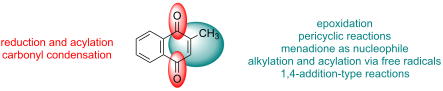
- electrolysis (Scheme 10). For this approach, two smooth platinum foil electrodes placed 1 cm apart in the upper aqueous phase were electrolyzed galvanostatically (30 mA/cm2). Additionally, a NaBr solution acidified with H2SO4 was used as electrolyte. The voltage during electrolysis was 2.1 V and when the

Graphical Abstract

Figure 1: Natural bioactive naphthoquinones.

Figure 2: Chemical structures of vitamins K.

Figure 3: Redox cycle of menadione.

Scheme 1: Selected approaches for menadione synthesis using silver(I) as a catalyst.

Scheme 2: Methylation approaches for the preparation of menadione from 1,4-naphthoquinone using tert-butyl hy...

Scheme 3: Methylation approach of 1,4-naphthoquinone using i) rhodium complexes/methylboronic acid and ii) bi...

Scheme 4: Synthesis of menadione (10) from itaconic acid.

Scheme 5: Menadione synthesis via Diels–Alder reaction.

Scheme 6: Synthesis of menadione (10) using p-cresol as a synthetic precursor.

Scheme 7: Synthesis of menadione (10) via demethoxycarbonylating annulation of methyl methacrylate.

Scheme 8: Furan 34 used as a diene in a Diels–Alder reaction for the synthesis of menadione (10).

Scheme 9: o-Toluidine as a dienophile in a Diels–Alder reaction for the synthesis of menadione (10).

Scheme 10: Representation of electrochemical synthesis of menadione.

Figure 4: Reaction sites and reaction types of menadione as substrate.

Scheme 11: DBU-catalyzed epoxidation of menadione (10).

Scheme 12: Phase-transfer catalysis for the epoxidation of menadione.

Scheme 13: Menadione epoxidation using a hydroperoxide derived from (+)-norcamphor.

Scheme 14: Enantioselective Diels–Alder reaction for the synthesis of asymmetric quinone 50 catalyzed by a chi...

Scheme 15: Optimized reaction conditions for the synthesis of anthra[9,1-bc]pyranone.

Scheme 16: Synthesis of anthra[9,1-bc]furanone, anthra[9,1-bc]pyridine, and anthra[9,1-bc]pyrrole derivatives.

Scheme 17: Synthesis of derivatives employing protected trienes.

Scheme 18: Synthesis of cyclobutene derivatives of menadione.

Scheme 19: Menadione reduction reactions using sodium hydrosulfite.

Scheme 20: Green methodology for menadiol synthesis and pegylation.

Scheme 21: Menadione reduction by 5,6-O-isopropylidene-ʟ-ascorbic acid under UV light irradiation.

Scheme 22: Selected approaches of menadione hydroacetylation to diacetylated menadiol.

Scheme 23: Thiele–Winter reaction catalyzed by Bi(OTf)3.

Scheme 24: Carbonyl condensation of menadione using resorcinol and a hydrazone derivative.

Scheme 25: Condensation reaction of menadione with thiosemicarbazide.

Scheme 26: Condensation reaction of menadione with acylhydrazides.

Scheme 27: Menadione derivatives functionalized with organochalcogens.

Scheme 28: Synthesis of selenium-menadione conjugates derived from chloromethylated menadione 84.

Scheme 29: Menadione alkylation by the Kochi–Anderson method.

Scheme 30: Menadione alkylation by diacids.

Scheme 31: Menadione alkylation by heterocycles-substituted carboxylic acids.

Scheme 32: Menadione alkylation by bromoalkyl-substituted carboxylic acids.

Scheme 33: Menadione alkylation by complex carboxylic acids.

Scheme 34: Kochi–Anderson method variations for the menadione alkylation via oxidative decarboxylation of carb...

Scheme 35: Copper-catalyzed menadione alkylation via free radicals.

Scheme 36: Nickel-catalyzed menadione cyanoalkylation.

Scheme 37: Iron-catalyzed alkylation of menadione.

Scheme 38: Selected approaches to menadione alkylation.

Scheme 39: Menadione acylation by photo-Friedel–Crafts acylation reported by Waske and co-workers.

Scheme 40: Menadione acylation by Westwood procedure.

Scheme 41: Synthesis of 3-benzoylmenadione via metal-free TBAI/TBHP system.

Scheme 42: Michael-type addition of amines to menadione reported by Kallmayer.

Scheme 43: Synthesis of amino-menadione derivatives using polyalkylamines.

Scheme 44: Selected examples for the synthesis of different amino-substituted menadione derivatives.

Scheme 45: Selected examples of Michael-type addition of complex amines to menadione (10).

Scheme 46: Addition of different natural α-amino acids to menadione.

Scheme 47: Michael-type addition of amines to menadione using silica-supported perchloric acid.

Scheme 48: Indolylnaphthoquinone or indolylnaphthalene-1,4-diol synthesis reported by Yadav et al.

Scheme 49: Indolylnaphthoquinone synthesis reported by Tanoue and co-workers.

Scheme 50: Indolylnaphthoquinone synthesis from menadione by Escobeto-González and co-workers.

Scheme 51: Synthesis of menadione analogues functionalized with thiols.

Scheme 52: Synthesis of menadione-derived symmetrical derivatives through reaction with dithiols.

Scheme 53: Mercaptoalkyl acids as nucleophiles in Michael-type addition reaction to menadione.

Scheme 54: Reactions of menadione (10) with cysteine derivatives for the synthesis of quinoproteins.

Scheme 55: Synthesis of menadione-glutathione conjugate 152 by Michael-type addition.
Synthesis of piperidine and pyrrolidine derivatives by electroreductive cyclization of imine with terminal dihaloalkanes in a flow microreactor
- Yuki Naito,
- Naoki Shida and
- Mahito Atobe
Beilstein J. Org. Chem. 2022, 18, 350–359, doi:10.3762/bjoc.18.39
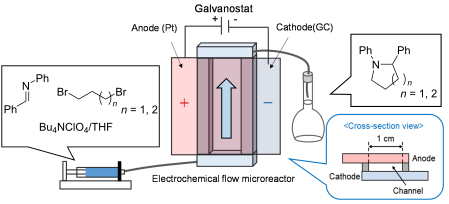
- of the cathode material on the yield of 3a using three different cathode materials: platinum (Pt), glassy carbon (GC), and silver (Ag). As shown in Table 1, the yield of 3a was higher using GC than that of the other cathode materials. The yield of the hydromonomeric product 4 was also highest when GC
- microreactor was constructed with a platinum plate (3 × 3 cm) and cathode plate (3 × 3 cm) (Supporting Information File 1, Figure S1). A spacer (double faced adhesive type with thicknesses of 20, 40, or 80 μm) was used to leave a rectangular channel exposed (1 × 3 cm), and the two electrodes were simply

Graphical Abstract

Figure 1: Piperidine and pyrrolidine rings in biologically active compounds.

Scheme 1: Conventional synthetic routes for piperidine derivatives.

Scheme 2: Synthesis of 1,2-diphenylpiperidine (3a) by the electroreductive cyclization mechanism.

Figure 2: Schematic diagram of the electroreductive cyclization for the synthesis of 1,2-diphenylpiperidine (...

Figure 3: Yield of 3a for each fraction sample in the continuous flow reductive cyclization.
Photophysical, photostability, and ROS generation properties of new trifluoromethylated quinoline-phenol Schiff bases
- Inaiá O. Rocha,
- Yuri G. Kappenberg,
- Wilian C. Rosa,
- Clarissa P. Frizzo,
- Nilo Zanatta,
- Marcos A. P. Martins,
- Isadora Tisoco,
- Bernardo A. Iglesias and
- Helio G. Bonacorso
Beilstein J. Org. Chem. 2021, 17, 2799–2811, doi:10.3762/bjoc.17.191
- VERTEX 70 spectrophotometer with Platinum ATR accessory (diamond crystal) in the 4000–400 cm−1 region. High-resolution mass spectra (HRMS) were obtained for all compounds on a hybrid high-resolution and high-accuracy (5 μL/L) micro Q-TOF mass spectrometer (Bruker Scientific®, Billerica, MA, USA) at the

Graphical Abstract

Figure 1: Examples of structures and properties of Schiff bases of interest in the present study.

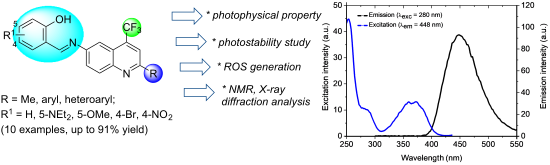
Scheme 1: General view for the present study.

Scheme 2: Synthesis of ((trifluoromethyl)quinolinyl)phenol Schiff bases 3aa–fa.

Scheme 3: Synthesis of trifluoromethylated quinolinyl-phenol Schiff bases 3bb–be.

Figure 2: ORTEP diagram of the crystal structure of (E)-2-(((2-phenyl-4-(trifluoromethyl)quinolin-6-yl)imino)...
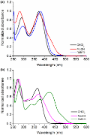
Figure 3: Normalized absorption spectra in the UV–vis region of compounds (a) 3ea and (b) 3be in CHCl3, MeOH ...

Figure 4: Normalized steady-state fluorescence emission spectra of compound 3aa (R = Ph, R1 = H) in CHCl3 (bl...

Figure 5: Comparative normalized steady-state fluorescence emission spectra of compounds 3bb and 3be in the t...

Figure 6: Photostability (%) plots of derivatives 3aa–fa and 3bb–be in DMSO solution after irradiation with w...

Figure 7: DPBF photooxidation assays by red-light irradiation with diode laser (λ = 660 nm) in the presence o...
Synthesis and investigation on optical and electrochemical properties of 2,4-diaryl-9-chloro-5,6,7,8-tetrahydroacridines
- Najeh Tka,
- Mohamed Adnene Hadj Ayed,
- Mourad Ben Braiek,
- Mahjoub Jabli and
- Peter Langer
Beilstein J. Org. Chem. 2021, 17, 2450–2461, doi:10.3762/bjoc.17.162
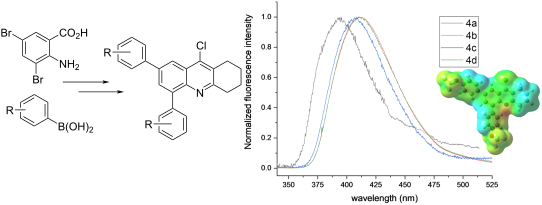
- electrolyte by using a three-electrode cell with a glassy carbon electrode as the working electrode, a platinum wire as the counter electrode, and an Ag/AgCl electrode as the reference electrode. All the measurements were scanned in negative and positive directions at a scan rate of 50 mV/s, as controlled by

Graphical Abstract

Figure 1: Some important tetrahydroacridines used as drugs.

Scheme 1: Synthesis of 2.

Scheme 2: Synthesis of compounds 4a–g.

Figure 2: UV–vis absorption spectra of 4a–d at room temperature in dilute dichloromethane solutions (c = 1 × ...

Figure 3: Fluorescence spectra of 4a–d at room temperature in dilute dichloromethane solutions (c = 1 × 10⁻⁵ ...
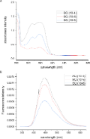
Figure 4: A) Absorbance and B) emission spectra for the standard quinine sulfate (SQ).
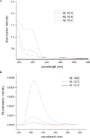
Figure 5: A) Absorbance and B) fluorescence spectra for 4b.

Figure 6: A) Plot of fluorescence intensities against their absorbances for quinine sulfate (SQ) and B) plot ...

Figure 7: Selected dihedral angles (°) for compounds 4a–d.

Figure 8: Selected dihedral angles (°) for compound 4f.

Figure 9: Calculated energy levels for compounds 4a–d and their spatial distribution of the HOMO–LUMO frontie...

Figure 10: Visualization of MEP for compounds 4a–d calculated by B3LYP method with 6-31G(d) basis set.

Figure 11: Cyclic voltammogram for 4c in 0.1 M (n-Bu)4NBF4/acetonitrile at a scan rate of 50 mV/s.
Recent advances in the syntheses of anthracene derivatives
- Giovanni S. Baviera and
- Paulo M. Donate
Beilstein J. Org. Chem. 2021, 17, 2028–2050, doi:10.3762/bjoc.17.131
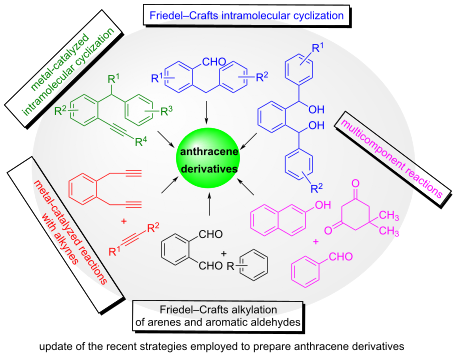
- step, a platinum-catalyzed intramolecular cycloaromatization of 119 provided dibenzo[a,h]anthracenes 120 bearing methyl and alkoxy groups in low to moderate yields (26–51%) [61]. Metal-catalyzed intramolecular double-cyclization In 2012, Nishiyama’s research group synthesized dibenzo[a,h]anthracenes by

Graphical Abstract

Figure 1: Examples of anthracene derivatives and their applications.

Scheme 1: Rhodium-catalyzed oxidative coupling reactions of arylboronic acids with internal alkynes.
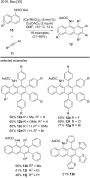
Scheme 2: Rhodium-catalyzed oxidative benzannulation reactions of 1-adamantoyl-1-naphthylamines with internal...

Scheme 3: Gold/bismuth-catalyzed cyclization of o-alkynyldiarylmethanes.

Scheme 4: [2 + 2 + 2] Cyclotrimerization reactions with alkynes/nitriles in the presence of nickel and cobalt...

Scheme 5: Cobalt-catalyzed [2 + 2 + 2] cyclotrimerization reactions with bis(trimethylsilyl)acetylene (23).

Scheme 6: [2 + 2 + 2] Alkyne-cyclotrimerization reactions catalyzed by a CoCl2·6H2O/Zn reagent.
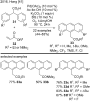
Scheme 7: Pd(II)-catalyzed sp3 C–H alkenylation of diphenyl carboxylic acids with acrylates.

Scheme 8: Pd(II)-catalyzed sp3 C–H arylation with o-tolualdehydes and aryl iodides.
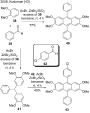
Scheme 9: Alkylation of arenes with aromatic aldehydes in the presence of acetyl bromide and ZnBr2/SiO2.

Scheme 10: BF3·H2O-catalyzed hydroxyalkylation of arenes with aromatic dialdehyde 44.

Scheme 11: Bi(OTf)3-promoted Friedel–Crafts alkylation of triarylmethanes and aromatic acylals and of arenes a...

Scheme 12: Reduction of anthraquinones by using Zn/pyridine or Zn/NaOH reductive methods.

Scheme 13: Two-step route to novel substituted Indenoanthracenes.

Scheme 14: Synthesis of 1,8-diarylanthracenes through Suzuki–Miyaura coupling reaction in the presence of Pd-P...

Scheme 15: Synthesis of five new substituted anthracenes by using LAH as reducing agent.

Scheme 16: One-pot procedure to synthesize substituted 9,10-dicyanoanthracenes.

Scheme 17: Reduction of bromoanthraquinones with NaBH4 in alkaline medium.

Scheme 18: In(III)-catalyzed reductive-dehydration intramolecular cycloaromatization of 2-benzylic aromatic al...

Scheme 19: Acid-catalyzed cyclization of new O-protected ortho-acetal diarylmethanols.

Scheme 20: Lewis acid-mediated regioselective cyclization of asymmetric diarylmethine dipivalates and diarylme...
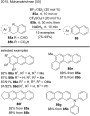
Scheme 21: BF3·OEt2/CF3SO3H-mediated cyclodehydration reactions of 2-(arylmethyl)benzaldehydes and 2-(arylmeth...

Scheme 22: Synthesis of 2,3,6,7-anthracenetetracarbonitrile (90) by double Wittig reaction followed by deprote...
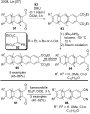
Scheme 23: Homo-elongation protocol for the synthesis of substituted acene diesters/dinitriles.
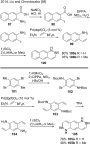
Scheme 24: Synthesis of two new parental BN anthracenes via borylative cyclization.
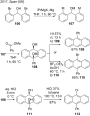
Scheme 25: Synthesis of substituted anthracenes from a bifunctional organomagnesium alkoxide.

Scheme 26: Palladium-catalyzed tandem C–H activation/bis-cyclization of propargylic carbonates.

Scheme 27: Ruthenium-catalyzed C–H arylation of acetophenone derivatives with arenediboronates.

Scheme 28: Pd-catalyzed intramolecular cyclization of (Z,Z)-p-styrylstilbene derivatives.

Scheme 29: AuCl-catalyzed double cyclization of diiodoethynylterphenyl compounds.

Scheme 30: Iodonium-induced electrophilic cyclization of terphenyl derivatives.

Scheme 31: Oxidative photocyclization of 1,3-distyrylbenzene derivatives.
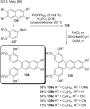
Scheme 32: Oxidative cyclization of 2,3-diphenylnaphthalenes.
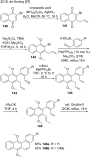
Scheme 33: Suzuki-Miyaura/isomerization/ring closing metathesis strategy to synthesize benz[a]anthracenes.

Scheme 34: Green synthesis of oxa-aza-benzo[a]anthracene and oxa-aza-phenanthrene derivatives.
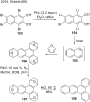
Scheme 35: Triple benzannulation of substituted naphtalene via a 1,3,6-naphthotriyne synthetic equivalent.

Scheme 36: Zinc iodide-catalyzed Diels–Alder reactions with 1,3-dienes and aroyl propiolates followed by intra...

Scheme 37: H3PO4-promoted intramolecular cyclization of substituted benzoic acids.
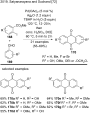
Scheme 38: Palladium-catalyzed intermolecular direct acylation of aromatic aldehydes and o-iodoesters.

Scheme 39: Cycloaddition/oxidative aromatization of quinone and β-enamino esters.

Scheme 40: ʟ-Proline-catalyzed [4 + 2] cycloaddition reaction of naphthoquinones and α,β-unsaturated aldehydes....

Scheme 41: Iridium-catalyzed [2 + 2 + 2] cycloaddition of a 1,2-bis(propiolyl)benzene derivative with alkynes.

Scheme 42: Synthesis of several anthraquinone derivatives by using InCl3 and molecular iodine.

Scheme 43: Indium-catalyzed multicomponent reactions employing 2-hydroxy-1,4-naphthoquinone (186), β-naphthol (...

Scheme 44: Synthesis of substituted anthraquinones catalyzed by an AlCl3/MeSO3H system.

Scheme 45: Palladium(II)-catalyzed/visible light-mediated synthesis of anthraquinones.

Scheme 46: [4 + 2] Anionic annulation reaction for the synthesis of substituted anthraquinones.
Recent advances in the application of isoindigo derivatives in materials chemistry
- Andrei V. Bogdanov and
- Vladimir F. Mironov
Beilstein J. Org. Chem. 2021, 17, 1533–1564, doi:10.3762/bjoc.17.111
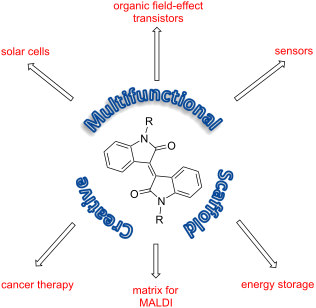
- composite with platinum nanoparticles stabilized with poly(acrylic acid) [113]. Such a catalytic system, obtained by layer-by-layer self-assembly with the addition of poly(diallyldimethylammonium chloride) on the indium tin oxide surface, provided hydrogen formation in photoelectrolytic cycles with a

Graphical Abstract

Scheme 1: Representatives of isomeric bisoxindoles.

Scheme 2: Isoindigo-based OSCs with the best efficiency.

Scheme 3: Monoisoindigos with preferred 6,6'-substitution.

Scheme 4: Possibility of aromatic–quinoid structural transition.

Scheme 5: Isoindigo structures with incorporated acceptor nitrogen heterocycles.

Scheme 6: Monoisoindigos bearing pyrenyl substituents.
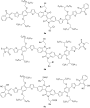
Scheme 7: p-Alkoxyphenylene-embedded thienylisoindigo with different acceptor anchor units.

Scheme 8: Nonfullerene OSC based on perylene diimide-derived isoindigo.

Scheme 9: Isoindigo as an additive in all-polymer OSCs.

Scheme 10: Bisisoindigos with different linker structures.

Scheme 11: Nonthiophene oligomeric monoisoindigos for OSCs.

Scheme 12: The simplest examples of polymers with a monothienylisoindigo monomeric unit.
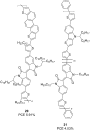
Scheme 13: Monothienylisoindigos bearing π-extended electron-donor backbones.

Scheme 14: Role of fluorination and the molecular weight on OSC efficiency on the base of the bithiopheneisoin...

Scheme 15: Trithiopheneisoindigo polymers with variation in the substituent structure.
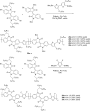
Scheme 16: Polymeric thienyl-linked bisisoindigos for OSCs.

Scheme 17: Isoindigo bearing the thieno[3,2-b]thiophene structural motif as donor component of OSCs.

Scheme 18: Thienylisoindigos with incorporated aromatic unit.
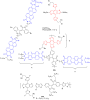
Scheme 19: One-component nonfullerene OSCs on the base of isoindigo.

Scheme 20: Isoindigo-based nonthiophene aza aromatic polymers as acceptor components of OSCs.

Scheme 21: Polymers with isoindigo substituent as side-chain photon trap.
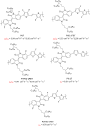
Scheme 22: Isoindigo derivatives for OFET technology with the best mobility.

Scheme 23: Monoisoindigos as low-molecular-weight semiconductors.

Scheme 24: Polymeric bithiopheneisoindigos for OFET creation.

Scheme 25: Fluorination as a tool to improve isoindigo-based OFET devices.

Scheme 26: Diversely DPP–isoindigo-conjugated polymers for OFETs.

Scheme 27: Isoindigoid homopolymers with differing rigidity.

Scheme 28: Isoindigo-based materials with extended π-conjugation.
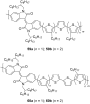
Scheme 29: Poly(isoindigothiophene) compounds as sensors for ammonia.
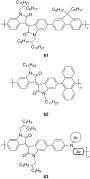
Scheme 30: Sensor devices based on poly(isoindigoaryl) compounds.

Scheme 31: Isoindigo polymers for miscellaneous applications.

Scheme 32: Mono-, rod-like, and polymeric isoindigos as agents for photoacoustic and photothermal cancer thera...
A comprehensive review of flow chemistry techniques tailored to the flavours and fragrances industries
- Guido Gambacorta,
- James S. Sharley and
- Ian R. Baxendale
Beilstein J. Org. Chem. 2021, 17, 1181–1312, doi:10.3762/bjoc.17.90
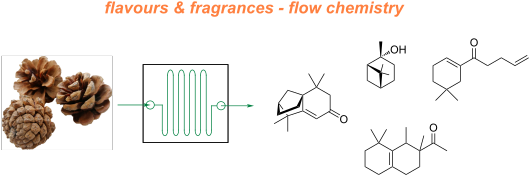

Graphical Abstract

Figure 1: Representative shares of the global F&F market (2018) segmented on their applications [1].

Figure 2: General structure of an international fragrance company [2].

Figure 3: The Michael Edwards fragrance wheel.

Figure 4: Examples of oriental (1–3), woody (4–7), fresh (8–10), and floral (11 and 12) notes.

Figure 5: A basic depiction of batch vs flow.

Scheme 1: Examples of reactions for which flow processing outperforms batch.

Scheme 2: Some industrially important aldol-based transformations.

Scheme 3: Biphasic continuous aldol reactions of acetone and various aldehydes.

Scheme 4: Aldol synthesis of 43 in flow using LiHMDS as the base.

Scheme 5: A semi-continuous synthesis of doravirine (49) involving a key aldol reaction.

Scheme 6: Enantioselective aldol reaction using 5-(pyrrolidin-2-yl)tetrazole (51) as catalyst in a microreact...

Scheme 7: Gröger's example of asymmetric aldol reaction in aqueous media.

Figure 6: Immobilised reagent column reactor types.

Scheme 8: Photoinduced thiol–ene coupling preparation of silica-supported 5-(pyrrolidin-2-yl)tetrazole 63 and...

Scheme 9: Continuous-flow approach for enantioselective aldol reactions using the supported catalyst 67.

Scheme 10: Ötvös’ employment of a solid-supported peptide aldol catalyst in flow.

Scheme 11: The use of proline tetrazole packed in a column for aldol reaction between cyclohexanone (65) and 2...

Scheme 12: Schematic diagram of an aminosilane-grafted Si-Zr-Ti/PAI-HF reactor for continuous-flow aldol and n...

Scheme 13: Continuous-flow condensation for the synthesis of the intermediate 76 to nabumetone (77) and Microi...

Scheme 14: Synthesis of ψ-Ionone (80) in continuous-flow via aldol condensation between citral (79) and aceton...

Scheme 15: Synthesis of β-methyl-ionones (83) from citral (79) in flow. The steps are separately described, an...

Scheme 16: Continuous-flow synthesis of 85 from 84 described by Gavriilidis et al.

Scheme 17: Continuous-flow scCO2 apparatus for the synthesis of 2-methylpentanal (87) and the self-condensed u...

Scheme 18: Chen’s two-step flow synthesis of coumarin (90).

Scheme 19: Pechmann condensation for the synthesis of 7-hydroxyxcoumarin (93) in flow. The setup extended to c...

Scheme 20: Synthesis of the dihydrojasmonate 35 exploiting nitro derivative proposed by Ballini et al.

Scheme 21: Silica-supported amines as heterogeneous catalyst for nitroaldol condensation in flow.

Scheme 22: Flow apparatus for the nitroaldol condensation of p-hydroxybenzaldehyde (102) to nitrostyrene 103 a...

Scheme 23: Nitroaldol reaction of 64 to 105 employing a quaternary ammonium functionalised PANF.

Scheme 24: Enantioselective nitroaldol condensation for the synthesis of 108 under flow conditions.

Scheme 25: Enatioselective synthesis of 1,2-aminoalcohol 110 via a copper-catalysed nitroaldol condensation.

Scheme 26: Examples of Knoevenagel condensations applied for fragrance components.

Scheme 27: Flow apparatus for Knoevenagel condensation described in 1989 by Venturello et al.

Scheme 28: Knoevenagel reaction using a coated multichannel membrane microreactor.

Scheme 29: Continuous-flow apparatus for Knoevenagel condensation employing sugar cane bagasse as support deve...

Scheme 30: Knoevenagel reaction for the synthesis of 131–135 in flow using an amine-functionalised silica gel. ...

Scheme 31: Continuous-flow synthesis of compound 137, a key intermediate for the synthesis of pregabalin (138)...
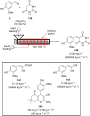
Scheme 32: Continuous solvent-free apparatus applied for the synthesis of compounds 140–143 using a TSE. Throu...

Scheme 33: Lewis et al. developed a spinning disc reactor for Darzens condensation of 144 and a ketone to furn...

Scheme 34: Some key industrial applications of conjugate additions in the F&F industry.

Scheme 35: Continuous-flow synthesis of 4-(2-hydroxyethyl)thiomorpholine 1,1-dioxide (156) via double conjugat...

Scheme 36: Continuous-flow system for Michael addition using CsF on alumina as the catalyst.

Scheme 37: Calcium chloride-catalysed asymmetric Michael addition using an immobilised chiral ligand.

Scheme 38: Continuous multistep synthesis for the preparation of (R)-rolipram (173). Si-NH2: primary amine-fun...

Scheme 39: Continuous-flow Michael addition using ion exchange resin Amberlyst® A26.

Scheme 40: Preparation of the heterogeneous catalyst 181 developed by Paixão et al. exploiting Ugi multicompon...

Scheme 41: Continuous-flow system developed by the Paixão’s group for the preparation of Michael asymmetric ad...

Scheme 42: Continuous-flow synthesis of nitroaldols catalysed by supported catalyst 184 developed by Wennemers...

Scheme 43: Heterogenous polystyrene-supported catalysts developed by Pericàs and co-workers.

Scheme 44: PANF-supported pyrrolidine catalyst for the conjugate addition of cyclohexanone (65) and trans-β-ni...

Scheme 45: Synthesis of (−)-paroxetine precursor 195 developed by Ötvös, Pericàs, and Kappe.

Scheme 46: Continuous-flow approach for the 5-step synthesis of (−)-oseltamivir (201) as devised by Hayashi an...

Scheme 47: Continuous-flow enzyme-catalysed Michael addition.

Scheme 48: Continuous-flow copper-catalysed 1,4 conjugate addition of Grignard reagents to enones. Reprinted w...

Scheme 49: A collection of commonly encountered hydrogenation reactions.

Figure 7: The ThalesNano H-Cube® continuous-flow hydrogenator.

Scheme 50: Chemoselective reduction of an α,β-unsaturated ketone using the H-Cube® reactor.

Scheme 51: Incorporation of Lindlar’s catalyst into the H-Cube® reactor for the reduction of an alkyne.

Scheme 52: Continuous-flow semi-hydrogenation of alkyne 208 to 209 using SACs with H-Cube® system.

Figure 8: The standard setups for tube-in-tube gas–liquid reactor units.

Scheme 53: Homogeneous hydrogenation of olefins using a tube-in-tube reactor setup.
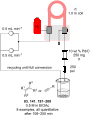
Scheme 54: Recyclable heterogeneous flow hydrogenation system.

Scheme 55: Leadbeater’s reverse tube-in-tube hydrogenation system for olefin reductions.

Scheme 56: a) Hydrogenation using a Pd-immobilised microchannel reactor (MCR) and b) a representation of the i...

Scheme 57: Hydrogenation of alkyne 238 exploiting segmented flow in a Pd-immobilised capillary reactor.

Scheme 58: Continuous hydrogenation system for the preparation of cyrene (241) from (−)-levoglucosenone (240).

Scheme 59: Continuous hydrogenation system based on CSMs developed by Hornung et al.

Scheme 60: Chemoselective reduction of carbonyls (ketones over aldehydes) in flow.

Scheme 61: Continuous system for the semi-hydrogenation of 256 and 258, developed by Galarneau et al.

Scheme 62: Continuous synthesis of biodiesel fuel 261 from lignin-derived furfural acetone (260).

Scheme 63: Continuous synthesis of γ-valerolacetone (263) via CTH developed by Pineda et al.

Scheme 64: Continuous hydrogenation of lignin-derived biomass (products 265, 266, and 267) using a sustainable...

Scheme 65: Ru/C or Rh/C-catalysed hydrogenation of arene in flow as developed by Sajiki et al.

Scheme 66: Polysilane-immobilized Rh–Pt-catalysed hydrogenation of arenes in flow by Kobayashi et al.

Scheme 67: High-pressure in-line mixing of H2 for the asymmetric reduction of 278 at pilot scale with a 73 L p...
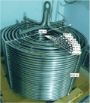
Figure 9: Picture of the PFR employed at Eli Lilly & Co. for the continuous hydrogenation of 278 [287]. Reprinted ...

Scheme 68: Continuous-flow asymmetric hydrogenation using Oppolzer's sultam 280 as chiral auxiliary.
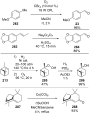
Scheme 69: Some examples of industrially important oxidation reactions in the F&F industry. CFL: compact fluor...

Scheme 70: Gold-catalysed heterogeneous oxidation of alcohols in flow.
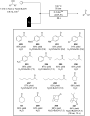
Scheme 71: Uozumi’s ARP-Pt flow oxidation protocol.

Scheme 72: High-throughput screening of aldehyde oxidation in flow using an in-line GC.

Scheme 73: Permanganate-mediated Nef oxidation of nitroalkanes in flow with the use of in-line sonication to p...

Scheme 74: Continuous-flow aerobic anti-Markovnikov Wacker oxidation.

Scheme 75: Continuous-flow oxidation of 2-benzylpyridine (312) using air as the oxidant.

Scheme 76: Continuous-flow photo-oxygenation of monoterpenes.

Scheme 77: A tubular reactor design for flow photo-oxygenation.

Scheme 78: Glucose oxidase (GOx)-mediated continuous oxidation of glucose using compressed air and the FFMR re...

Scheme 79: Schematic continuous-flow sodium hypochlorite/TEMPO oxidation of alcohols.

Scheme 80: Oxidation using immobilised TEMPO (344) was developed by McQuade et al.

Scheme 81: General protocol for the bleach/catalytic TBAB oxidation of aldehydes and alcohols.

Scheme 82: Continuous-flow PTC-assisted oxidation using hydrogen peroxide. The process was easily scaled up by...

Scheme 83: Continuous-flow epoxidation of cyclohexene (348) and in situ preparation of m-CPBA.

Scheme 84: Continuous-flow epoxidation using DMDO as oxidant.

Scheme 85: Mukayama aerobic epoxidation optimised in flow mode by the Favre-Réguillon group.

Scheme 86: Continuous-flow asymmetric epoxidation of derivatives of 359 exploiting a biomimetic iron catalyst.

Scheme 87: Continuous-flow enzymatic epoxidation of alkenes developed by Watts et al.

Scheme 88: Engineered multichannel microreactor for continuous-flow ozonolysis of 366.

Scheme 89: Continuous-flow synthesis of the vitamin D precursor 368 using multichannel microreactors. MFC: mas...

Scheme 90: Continuous ozonolysis setup used by Kappe et al. for the synthesis of various substrates employing ...

Scheme 91: Continuous-flow apparatus for ozonolysis as developed by Ley et al.

Scheme 92: Continuous-flow ozonolysis for synthesis of vanillin (2) using a film-shear flow reactor.

Scheme 93: Examples of preparative methods for ajoene (386) and allicin (388).

Scheme 94: Continuous-flow oxidation of thioanisole (389) using styrene-based polymer-supported peroxytungstat...

Scheme 95: Continuous oxidation of thiosulfinates using Oxone®-packed reactor.

Scheme 96: Continuous-flow electrochemical oxidation of thioethers.

Scheme 97: Continuous-flow oxidation of 400 to cinnamophenone (235).

Scheme 98: Continuous-flow synthesis of dehydrated material 401 via oxidation of methyl dihydrojasmonate (33).

Scheme 99: Some industrially important transformations involving Grignard reagents.

Scheme 100: Grachev et al. apparatus for continuous preparation of Grignard reagents.

Scheme 101: Example of fluidized Mg bed reactor with NMR spectrometer as on-line monitoring system.

Scheme 102: Continuous-flow synthesis of Grignard reagents and subsequent quenching reaction.

Figure 10: Membrane-based, liquid–liquid separator with integrated pressure control [52]. Adapted with permission ...

Scheme 103: Continuous-flow synthesis of 458, an intermediate to fluconazole (459).

Scheme 104: Continuous-flow synthesis of ketones starting from benzoyl chlorides.

Scheme 105: A Grignard alkylation combining CSTR and PFR technologies with in-line infrared reaction monitoring....

Scheme 106: Continuous-flow preparation of 469 from Grignard addition of methylmagnesium bromide.

Scheme 107: Continuous-flow synthesis of Grignard reagents 471.

Scheme 108: Preparation of the Grignard reagent 471 using CSTR and the continuous process for synthesis of the ...

Scheme 109: Continuous process for carboxylation of Grignard reagents in flow using tube-in-tube technology.

Scheme 110: Continuous synthesis of propargylic alcohols via ethynyl-Grignard reagent.

Scheme 111: Silica-supported catalysed enantioselective arylation of aldehydes using Grignard reagents in flow ...

Scheme 112: Acid-catalysed rearrangement of citral and dehydrolinalool derivatives.

Scheme 113: Continuous stilbene isomerisation with continuous recycling of photoredox catalyst.

Scheme 114: Continuous-flow synthesis of compound 494 as developed by Ley et al.

Scheme 115: Selected industrial applications of DA reaction.

Scheme 116: Multistep flow synthesis of the spirocyclic structure 505 via employing DA cycloaddition.

Scheme 117: Continuous-flow DA reaction developed in a plater flow reactor for the preparation of the adduct 508...

Scheme 118: Continuous-flow DA reaction using a silica-supported imidazolidinone organocatalyst.

Scheme 119: Batch vs flow for the DA reaction of (cyclohexa-1,5-dien-1-yloxy)trimethylsilane (513) with acrylon...

Scheme 120: Continuous-flow DA reaction between 510 and 515 using a shell-core droplet system.

Scheme 121: Continuous-flow synthesis of bicyclic systems from benzyne precursors.

Scheme 122: Continuous-flow synthesis of bicyclic scaffolds 527 and 528 for further development of potential ph...

Scheme 123: Continuous-flow inverse-electron hetero-DA reaction to pyridine derivatives such as 531.

Scheme 124: Comparison between batch and flow for the synthesis of pyrimidinones 532–536 via retro-DA reaction ...

Scheme 125: Continuous-flow coupled with ultrasonic system for preparation of ʟ-ascorbic acid derivatives 539 d...

Scheme 126: Two-step continuous-flow synthesis of triazole 543.

Scheme 127: Continuous-flow preparation of triazoles via CuAAC employing 546-based heterogeneous catalyst.

Scheme 128: Continuous-flow synthesis of compounds 558 through A3-coupling and 560 via AgAAC both employing the...

Scheme 129: Continuous-flow photoinduced [2 + 2] cycloaddition for the preparation of bicyclic derivatives of 5...

Scheme 130: Continuous-flow [2 + 2] and [5 + 2] cycloaddition on large scale employing a flow reactor developed...

Scheme 131: Continuous-flow preparation of the tricyclic structures 573 and 574 starting from pyrrole 570 via [...

Scheme 132: Continuous-flow [2 + 2] photocyclization of cinnamates.

Scheme 133: Continuous-flow preparation of cyclobutane 580 on a 5-plates photoreactor.

Scheme 134: Continuous-flow [2 + 2] photocycloaddition under white LED lamp using heterogeneous PCN as photocat...

Figure 11: Picture of the parallel tube flow reactor (PTFR) "The Firefly" developed by Booker-Milburn et al. a...

Scheme 135: Continuous-flow acid-catalysed [2 + 2] cycloaddition between silyl enol ethers and acrylic esters.

Scheme 136: Continuous synthesis of lactam 602 using glass column reactors.

Scheme 137: In situ generation of ketenes for the Staudinger lactam synthesis developed by Ley and Hafner.

Scheme 138: Application of [2 + 2 + 2] cycloadditions in flow employed by Ley et al.

Scheme 139: Examples of FC reactions applied in F&F industry.

Scheme 140: Continuous-flow synthesis of ibuprofen developed by McQuade et al.

Scheme 141: The FC acylation step of Jamison’s three-step ibuprofen synthesis.

Scheme 142: Synthesis of naphthalene derivative 629 via FC acylation in microreactors.

Scheme 143: Flow system for rapid screening of catalysts and reaction conditions developed by Weber et al.

Scheme 144: Continuous-flow system developed by Buorne, Muller et al. for DSD optimisation of the FC acylation ...

Scheme 145: Continuous-flow FC acylation of alkynes to yield β-chlorovinyl ketones such as 638.

Scheme 146: Continuous-flow synthesis of tonalide (619) developed by Wang et al.

Scheme 147: Continuous-flow preparation of acylated arene such as 290 employing Zr4+-β-zeolite developed by Kob...

Scheme 148: Flow system applied on an Aza-FC reaction catalysed by the thiourea catalyst 648.

Scheme 149: Continuous hydroformylation in scCO2.

Scheme 150: Two-step flow synthesis of aldehyde 655 through a sequential Heck reaction and subsequent hydroform...

Scheme 151: Single-droplet (above) and continuous (below) flow reactors developed by Abolhasani et al. for the ...

Scheme 152: Continuous hydroformylation of 1-dodecene (655) using a PFR-CSTR system developed by Sundmacher et ...

Scheme 153: Continuous-flow synthesis of the aldehyde 660 developed by Eli Lilly & Co. [32]. Adapted with permissio...

Scheme 154: Continuous asymmetric hydroformylation employing heterogenous catalst supported on carbon-based sup...

Scheme 155: Examples of acetylation in F&F industry: synthesis of bornyl (S,R,S-664) and isobornyl (S,S,S-664) ...

Scheme 156: Continuous-flow preparation of bornyl acetate (S,R,S-664) employing the oscillating flow reactor.

Scheme 157: Continuous-flow synthesis of geranyl acetate (666) from acetylation of geraniol (343) developed by ...

Scheme 158: 12-Ttungstosilicic acid-supported silica monolith-catalysed acetylation in flow.

Scheme 159: Continuous-flow preparation of cyclopentenone 676.

Scheme 160: Two-stage synthesis of coumarin (90) via acetylation of salicylaldehyde (88).

Scheme 161: Intensification process for acetylation of 5-methoxytryptamine (677) to melatonin (678) developed b...

Scheme 162: Examples of macrocyclic musky odorants both natural (679–681) and synthetic (682 and 683).

Scheme 163: Flow setup combined with microwave for the synthesis of macrocycle 686 via RCM.

Scheme 164: Continuous synthesis of 2,5-dihydro-1H-pyrroles via ring-closing metathesis.

Scheme 165: Continuous-flow metathesis of 485 developed by Leadbeater et al.

Figure 12: Comparison between RCM performed using different routes for the preparation of 696. On the left the...

Scheme 166: Continuous-flow RCM of 697 employed the solid-supported catalyst 698 developed by Grela, Kirschning...

Scheme 167: Continuous-flow RORCM of cyclooctene employing the silica-absorbed catalyst 700.

Scheme 168: Continuous-flow self-metathesis of methyl oleate (703) employing SILP catalyst 704.

Scheme 169: Flow apparatus for the RCM of 697 using a nanofiltration membrane for the recovery and reuse of the...

Scheme 170: Comparison of loadings between RCMs performed with different routes for the synthesis of 709.
Amino- and polyaminophthalazin-1(2H)-ones: synthesis, coordination properties, and biological activity
- Zbigniew Malinowski,
- Emilia Fornal,
- Agata Sumara,
- Renata Kontek,
- Karol Bukowski,
- Beata Pasternak,
- Dariusz Sroczyński,
- Joachim Kusz,
- Magdalena Małecka and
- Monika Nowak
Beilstein J. Org. Chem. 2021, 17, 558–568, doi:10.3762/bjoc.17.50
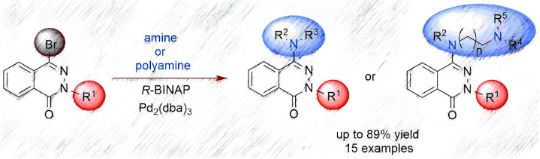
- platinum disc electrode suggested that the [(L3)Cu(II)Cl2]/[(L3)Cu(I)Cl2] redox couple was formed. For more details, see Supporting Information File 2. Bioactivity Cytotoxicity analysis – MTT assay We used the MTT assay to evaluate compounds 5c, 5d, 5f, 5g, 6b, and 6d for their potential activity on

Graphical Abstract

Figure 1: Structure of biologically active phthalazine derivatives.

Scheme 1: Synthetic route to aminophthalazinones 5 and 6.
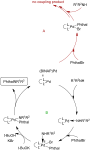
Figure 2: Proposed catalytic cycles for the amination of 4-bromophthalazinones of type 3 (Phthal: phthalazino...
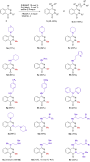
Scheme 2: Synthesis of 4-amino- and 4-polyaminophthalazinones 5 and 6 (the yields refer to the isolated compo...

Figure 3: The phthalazinone derivatives that were used to test the complexation of Cu(II) ions.

Scheme 3: The proposal of the fragmentation pathway of the Cu(II) complex with compound 7.

Figure 4: Structure of complex 17.

Figure 5: Molecular structure of complex 17 with atom numbering scheme. The anisotropic displacement paramete...
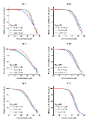
Figure 6: Determination of relative cell viability (% of control) in different cell lines (HT-29; PC-3 and L-...

Figure 7: Cytotoxic properties of the phthalazinone derivatives expressed as IC50 after 72 h of cell treatmen...
Annulation of a 1,3-dithiole ring to a sterically hindered o-quinone core. Novel ditopic redox-active ligands
- Sergey V. Norkov,
- Anton V. Cherkasov,
- Andrey S. Shavyrin,
- Maxim V. Arsenyev,
- Viacheslav A. Kuropatov and
- Vladimir K. Cherkasov
Beilstein J. Org. Chem. 2021, 17, 273–282, doi:10.3762/bjoc.17.26
- electrode (2 mm diameter), platinum wire counter electrode and Ag/AgCl/KCl reference electrode. X-ray crystallography The X-ray data for 6a–d and 7–9 were collected on Rigaku OD Xcalibur (6b–d, 7, 9) and Bruker D8 Quest (6a, 8) diffractometers (Mo Kα radiation, ω-scans technique, λ = 0.71073 Å) using APEX3

Graphical Abstract

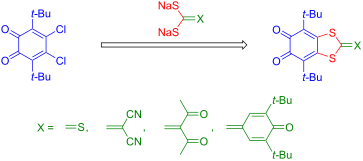
Scheme 1: Synthetic pathways for the preparation of o-quinone derivatives with annulated 1,3-dithiole ring.

Figure 1: Active methylene compounds used for the preparation of gem-dithiolates.

Figure 2: Fragment of coordination polymer chain of adduct 8 in the crystal phase. Hydrogen atoms and CF3 gro...

Scheme 2: The tentative pathway for the formation of o-quinone 7 with annulated thiete ring.

Scheme 3: Reactions of o-quinone 6a.

Scheme 4: Stepwise reduction of o-quinones with metals to semiquinonates and catecholates, respectively.
Recent progress in the synthesis of homotropane alkaloids adaline, euphococcinine and N-methyleuphococcinine
- Dimas J. P. Lima,
- Antonio E. G. Santana,
- Michael A. Birkett and
- Ricardo S. Porto
Beilstein J. Org. Chem. 2021, 17, 28–41, doi:10.3762/bjoc.17.4
- intermediate thioiminium salt, which was heated under the reflux of triethylamine and trimethyl phosphite, providing compound 28 in 69% yield. The catalytic hydrogenation of 28 occurred in platinum (H2, Pt/C) under a pressure of 60 psi of hydrogen (about 4 atm), resulting in amide 29 in 96% yield. This

Graphical Abstract

Figure 1: Homotropane (azabicyclononane) systems.

Figure 2: Alkaloids (−)-adaline (1), (+)-euphococcinine (2) and (+)-N-methyleuphococcinine (3).

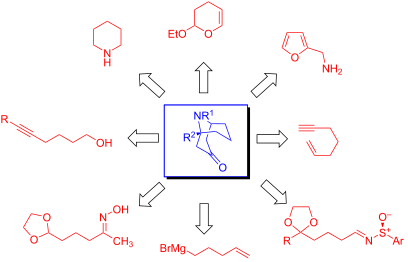
Scheme 1: Synthetic strategies before 1995.

Scheme 2: Synthesis (±)-adaline (1) and (±)-euphococcinine (2). Reagents and conditions: i) 1. dihydropyran, ...

Scheme 3: Synthesis (+)-euphococcinine (2). Reagents and conditions: i) H2O2, SeO2 (cat), acetone, rt, 88%; i...

Scheme 4: Synthesis (+)-euphococcinine (2). Reagents and conditions: i) 2,4-bis(4-phenoxyphenyl)-1,3-dithia-2...

Scheme 5: Synthesis of (±)-euphococcinine precursor (±)-42. Reagents and conditions: i) Bu3SnH, AIBN, toluene...

Scheme 6: Synthesis of (−)-adaline (1). Reagents and conditions: i) LiH2NBH3, THF, 40 °C, 88%; ii) TPAP, NMO,...

Scheme 7: Synthesis of (−)-adaline (1) and (−)-euphococcinine (2). Reagents and conditions: i) 1. BuLi, t-BuO...

Scheme 8: Synthesis of (−)-adaline (1). Reagents and conditions: i) Ref. [52]; ii) Et3N, TBDMSOTf, CH2Cl2, 0 °C t...

Scheme 9: Synthesis of (+)-euphococcinine (2). Reagents and conditions: i) 1. Cp2ZrCl2,AlMe3, CH2Cl2; 2. p-me...

Scheme 10: Synthesis of (−)-adaline 1. Reagents and conditions: i) 1. CuBr.DMS, Et2O/DMS, -42 ºC; 2. 1-heptyne...

Scheme 11: Synthesis of (−)-euphococcinine (2) and (−)-adaline (1). Reagents and conditions: i) 102, KHMDS, Et2...

Scheme 12: Synthesis of N-methyleuphococcinine 3. Reagents and conditions: i) 108 (1.5 equiv), 3,5-di-F-C6H3B(...
All-carbon [3 + 2] cycloaddition in natural product synthesis
- Zhuo Wang and
- Junyang Liu
Beilstein J. Org. Chem. 2020, 16, 3015–3031, doi:10.3762/bjoc.16.251
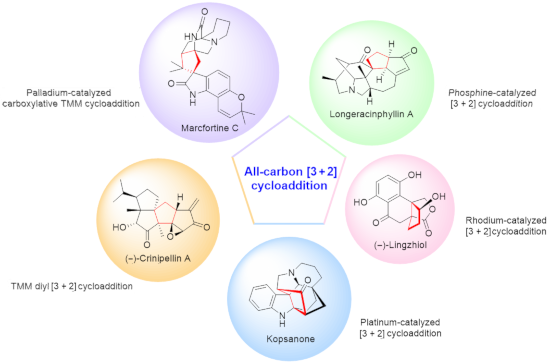
- as the phosphine-catalyzed [3 + 2] cycloaddition [17], platinum-catalyzed [3 + 2] cycloaddition [18], and Rhodium-catalyzed [3 + 2] cycloaddition [12], were invented and have been extensively used in natural product synthesis in the last decade. Many reviews focusing the method development of the all
- 64% yield over three steps. The conversion of 138 to sinensilactam A (20) was achieved in two steps. Platinum-catalyzed [3 + 2] cycloaddition The platinum-catalyzed intermolecular [3 + 2] cycloaddition of propargyl ether derivatives and vinyl ether producing polycyclic indoles was disclosed by
- Iwasawa and co-workers in 2011 [18][66] (Scheme 10A). Treatment of Boc-protected aniline 139 and n-butyl vinyl ether (140) with a platinum(II) catalyst afforded tricyclic indole 141 in 83% yield. The authors suggested that this catalytic [3 + 2] cycloaddition reaction may involve an α,β-unsaturated

Graphical Abstract

Figure 1: Highly-substituted five-membered carbocycle in biologically significant natural products.

Figure 2: Natural product synthesis featuring the all-carbon [3 + 2] cycloaddition. (Quaternary carbon center...

Scheme 1: Representative natural product syntheses that feature the all-carbon [3 + 2] cyclization as the key...
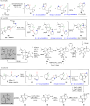
Scheme 2: (A) An intramolecular trimethylenemethane diyl [3 + 2] cycloaddition with allenyl diazo compound 38...
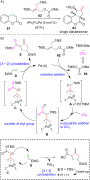
Scheme 3: (A) Palladium-catalyzed intermolecular carboxylative TMM cycloaddition [36]. (B) The proposed mechanism....

Scheme 4: Natural product syntheses that make use of palladium-catalyzed intermolecular [3 + 2] cycloaddition...
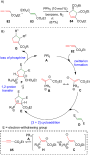
Scheme 5: (A) Phosphine-catalyzed [3 + 2] cycloaddition [17]. (B) The proposed mechanism.

Scheme 6: Lu’s [3 + 2] cycloaddition in natural product synthesis. (A) Synthesis of longeracinphyllin A (10) [41]...

Scheme 7: (A) Phosphine-catalyzed [3 + 2] annulation of unsymmetric isoindigo 100 with allene in the preparat...
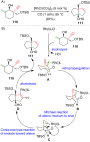
Scheme 8: (A) Rhodium-catalyzed intracmolecular [3 + 2] cycloaddition [49]. (B) The proposed catalytic cycle of t...

Scheme 9: Total synthesis of natural products reported by Yang and co-workers applying rhodium-catalyzed intr...

Scheme 10: (A) Platinum(II)-catalyzed intermolecular [3 + 2] cycloaddition of propargyl ether 139 and n-butyl ...

Scheme 11: (A) Platinum-catalyzed intramolecular [3 + 2] cycloaddition of propargylic ketal derivative 142 to ...

Scheme 12: (A) Synthesis of phyllocladanol (21) features a Lewis acid-catalyzed formal intramolecular [3 + 2] ...

Scheme 13: The recent advances of [3 + 2] annulation in natural product synthesis. (A) The preparation of melo...
Controlled decomposition of SF6 by electrochemical reduction
- Sébastien Bouvet,
- Bruce Pégot,
- Stéphane Sengmany,
- Erwan Le Gall,
- Eric Léonel,
- Anne-Marie Goncalves and
- Emmanuel Magnier
Beilstein J. Org. Chem. 2020, 16, 2948–2953, doi:10.3762/bjoc.16.244
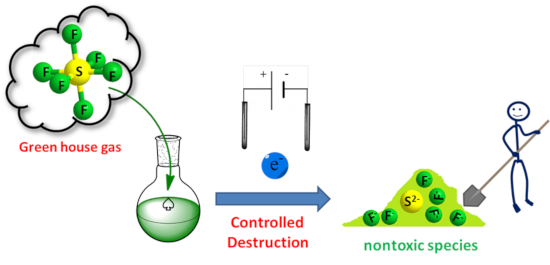
- , CNRS, ICMPE, UMR 7182, 2 rue Henri Dunant, 94320 Thiais, France 10.3762/bjoc.16.244 Abstract The electroreduction of SF6 is shown at ambient temperature in acetonitrile using an array of platinum microelectrodes to improve the electrical detection. Its half reduction potential occurs at −2.17 V vs Fc
- reduction potential of SF6. To allow its electroreduction feasibility in acetonitrile, an electrochemical analytical approach was required [24]. This crucial step was supported by sensors which are based on a micro-disc-array of platinum ultramicroelectrodes (20 µm diameter) acting as multi-probe channels
- reactions were carried out in a single compartment with a conventional three-electrode arrangement: two platinum electrodes and one silver reference electrode, SRE (Figure 3). The electrolysis is performed at constant potential (−2.3 V vs Fc+/Fc) with a continuous supply of SF6 placed in a rubber balloon

Graphical Abstract

Figure 1: (a) Cyclic voltammetry onto microelectrode arrays (Ø = 20 µm) in acetonitrile freshly distilled aft...

Figure 2: Variation of the current reduction (i2) of SF6 onto Pt macroelectrode (Ø = 0.76 mm) at −2.3 V vs Fc+...

Figure 3: Single compartment three-electrode experiment. 1: Balloon of SF6, 2: electrochemical cell, 3: refer...

Figure 4: Electrolysis of SF6 at −2.3 V vs Fc+/Fc in acetonitrile freshly distilled after addition of TBAClO4...

Figure 5: 19F NMR evolution of the crude mixture along the time after electrolysis realized at constant poten...
A heterobimetallic tetrahedron from a linear platinum(II)-bis(acetylide) metalloligand
- Matthias Hardy,
- Marianne Engeser and
- Arne Lützen
Beilstein J. Org. Chem. 2020, 16, 2701–2708, doi:10.3762/bjoc.16.220
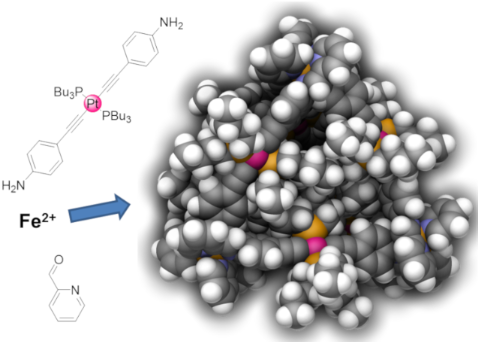
- (acetylide)platinum(II) complex [Pt(L1)2(PBu3)2] as a linear metalloligand. The reaction of this metalloligand with iron(II) cations and pyridine-2-carbaldehyde according to the subcomponent self-assembly approach yielded decanuclear heterobimetallic tetrahedron [Fe4Pt6(L2)12](OTf)8. Thus, combination of
- platinum(II) ions to be especially suitable to prepare a linear metalloligand due to their highly predictable square-planar coordination environment that can easily be employed to access tetravalent planar or divalent V-shaped cis- or linear trans-configurated complexes [43][44][45]. In this context
- platinum(II)-bis(acetylide) complexes [46][47] proved useful as building blocks for the construction of polymers [48], rings [49][50] and cages [36][42][51]. These neutral compounds are usually easy-to-access, rather stable and the cis- and trans-isomers can be separated efficiently. In this work we

Graphical Abstract

Scheme 1: Stepwise assembly of the heterobimetallic tetrahedron 4, starting from 4-ethynylaniline (1) and tra...

Figure 1: ESI(+) mass spectrum of heterobimetallic complex 4. The top inset shows the experimentally observed...

Figure 2: UV–vis spectrum of heterobimetallic complex 4 (1150 µM in acetonitrile at 295 K, 0.01 mm cuvette).

Figure 3: Schematic representation of symmetry-considerations concerning possible diastereomeric tetrahedra. ...

Figure 4: Detailed excerpt of the 31P NMR spectrum of 4 (202 MHz, acetonitrile-d3, 298 K).

Figure 5: 1H NMR and DOSY spectrum of heterobimetallic assembly 4 (500 MHz, acetonitilre-d3, 298 K).

Figure 6: GFN2-xTB minimized gas phase models of the cationic units of all possible diastereomers of 4. Color...
A new method for the synthesis of diamantane by hydroisomerization of binor-S on treatment with sulfuric acid
- Rishat I. Aminov and
- Ravil I. Khusnutdinov
Beilstein J. Org. Chem. 2020, 16, 2534–2539, doi:10.3762/bjoc.16.205

- compounds for the preparation of diamantane are three isomeric polycyclic hydrocarbons C14H20 3а–с, which are obtained by hydrogenation of the norbornadiene dimer, heptacyclo[8.4.0.02,12.03,8.04,6.05,9.011,13]tetradecane (binor-S, 2). Binor-S is hydrogenated in the presence of a platinum catalyst (Н2PtCl6

Graphical Abstract

Scheme 1: Isomerization of 3а–с to diamantane (1). Reaction conditions: (a) CoBr2·2PPh3–BF3·OEt2, 110 °C, 12 ...

Scheme 2: Isomerization of binor-S (2) to diamantane (1).

Scheme 3: Selective synthesis of tetrahydrobinor-S (3c) from binor-S (2).

Scheme 4: Isomerization of binor-S (2) to hydrocarbons 4а and b.
Heterogeneous photocatalysis in flow chemical reactors
- Christopher G. Thomson,
- Ai-Lan Lee and
- Filipe Vilela
Beilstein J. Org. Chem. 2020, 16, 1495–1549, doi:10.3762/bjoc.16.125
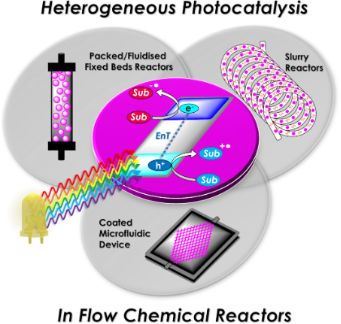
- treatment [146]. Dip-coating has also been commonly applied to coat other inorganic substrates, such as glass spheres, carbon nanotubes, and diatomite with TiO2 thin films for photocatalysis applications [147][148][149][150]. Scaiano and co-workers deposited platinum nanoparticles on TiO2(P25) powder as a
- recombination [154][155]. Suárez and co-workers used the photodeposition of platinum onto tungsten oxide (WO3) powder, before immobilising within a zeolite framework to produce visible light-active HPCats for the degradation of pollutants in air [156]. Scaiano and co-workers have also utilised photodeposition

Graphical Abstract

Figure 1: A) Bar chart of the publications per year for the topics “Photocatalysis” (49,662 instances) and “P...

Figure 2: A) Professor Giacomo Ciamician and Dr. Paolo Silber on their roof laboratory at the University of B...

Scheme 1: PRC trifluoromethylation of N-methylpyrrole (1) using hazardous gaseous CF3I safely in a flow react...

Figure 3: A) Unit cells of the three most common crystal structures of TiO2: rutile, brookite, and anatase. R...

Figure 4: Illustration of the key semiconductor photocatalysis events: 1) A photon with a frequency exceeding...

Figure 5: Photocatalytic splitting of water by oxygen vacancies on a TiO2(110) surface. Reprinted with permis...

Figure 6: Proposed adsorption modes of A) benzene, B) chlorobenzene, C) toluene, D) phenol, E) anisole, and F...

Figure 7: Structures of the sulfonate-containing organic dyes RB5 (3) and MX-5B (4) and the adsorption isothe...

Figure 8: Idealised triclinic unit cell of a g-C3N4 type polymer, displaying possible hopping transport scena...

Figure 9: Idealised structure of a perfect g-C3N4 sheet. The central unit highlighted in red represents one t...

Figure 10: Timeline of the key processes of charge transport following the photoexcitation of g-C3N4, leading ...

Scheme 2: Photocatalytic bifunctionalisation of heteroarenes using mpg-C3N4, with the selected examples 5 and ...

Figure 11: A) Structure of four linear conjugated polymer photocatalysts for hydrogen evolution, displaying th...

Figure 12: Graphical representation of the common methods used to immobilise molecular photocatalysts (PC) ont...

Figure 13: Wireless light emitter-supported TiO2 (TiO2@WLE) HPCat spheres powered by resonant inductive coupli...

Figure 14: Graphical representation of zinc–perylene diimide (Zn-PDI) supramolecular assembly photocatalysis v...

Scheme 3: Upconversion of NIR photons to the UV frequency by NaYF4:Yb,Tm nanocrystals sequentially coated wit...

Figure 15: Types of reactors employed in heterogeneous photocatalysis in flow. A) Fixed bed reactors and the s...

Figure 16: Electrochemical potential of common semiconductor, transition metal, and organic dye-based photocat...

Scheme 4: Possible mechanisms of an immobilised molecular photoredox catalyst by oxidative or reductive quenc...
Scheme 5: Scheme of the CMB-C3N4 photocatalytic decarboxylative fluorination of aryloxyacetic acids, with the...

Scheme 6: Scheme of the g-C3N4 photocatalytic desilylative coupling reaction in flow and proposed mechanism [208].

Scheme 7: Proposed mechanism of the radical cyclisation of unsaturated alkyl 2-bromo-1,3-dicarbonyl compounds...

Scheme 8: N-alkylation of benzylamine and schematic of the TiO2-coated microfluidic device [213].

Scheme 9: Proposed mechanism of the Pt@TiO2 photocatalytic deaminitive cyclisation of ʟ-lysine (23) to ʟ-pipe...

Scheme 10: A) Proposed mechanism for the photocatalytic oxidation of phenylboronic acid (24). B) Photos and SE...

Scheme 11: Proposed mechanism for the DA-CMP3 photocatalytic aza-Henry reaction performed in a continuous flow...

Scheme 12: Proposed mechanism for the formation of the cyclic product 32 by TiO2-NC HPCats in a slurry flow re...

Scheme 13: Reaction scheme for the photocatalytic synthesis of homo and hetero disulfides in flow and scope of...

Scheme 14: Reaction scheme for the MoOx/TiO2 HPCat oxidation of cyclohexane (34) to benzene. The graph shows t...

Scheme 15: Proposed mechanism of the TiO2 HPC heteroarene C–H functionalisation via aryl radicals generated fr...

Scheme 16: Scheme of the oxidative coupling of benzylamines with the HOTT-HATN HPCat and selected examples of ...
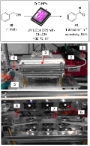
Scheme 17: Photocatalysis oxidation of benzyl alcohol (40) to benzaldehyde (41) in a microflow reactor coated ...

Figure 17: Mechanisms of Dexter and Forster energy transfer.
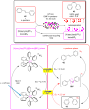
Scheme 18: Continuous flow process for the isomerisation of alkenes with an ionic liquid-immobilised photocata...

Scheme 19: Singlet oxygen synthetic step in the total synthesis of canataxpropellane [265].

Scheme 20: Scheme and proposed mechanism of the singlet oxygen photosensitisation by CMP_X HPCats, with the st...

Scheme 21: Structures of CMP HPCat materials applied by Vilela and co-workers for the singlet oxygen photosens...
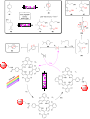
Scheme 22: Polyvinylchloride resin-supported TDCPP photosensitisers applied for singlet oxygen photosensitisat...

Scheme 23: Structure of the ionically immobilised TPP photosensitiser on amberlyst-15 ion exchange resins (TPP...

Scheme 24: Photosensitised singlet oxygen oxidation of citronellol (46) in scCO2, with automatic phase separat...

Scheme 25: Schematic of PS-Est-BDP-Cl2 being applied for singlet oxygen photosensitisation in flow. A) Pseudo-...

Scheme 26: Reaction scheme of the singlet oxygen oxidation of furoic acid (54) using a 3D-printed microfluidic...

Figure 18: A) Photocatalytic bactericidal mechanism by ROS oxidative cleavage of membrane lipids (R = H, amino...

Figure 19: A) Suggested mechanisms for the aqueous pollutant degradation by TiO2 in a slurry flow reactor [284-287]. B)...

Figure 20: Schematic of the flow system used for the degradation of aqueous oxytetracycline (56) solutions [215]. M...
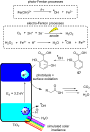
Scheme 27: Degradation of a salicylic acid (57) solution by a coupled solar photoelectro-Fenton (SPEF) process...

Figure 21: A) Schematic flow diagram using the TiO2-coated NETmix microfluidic device for an efficient mass tr...
Activated carbon as catalyst support: precursors, preparation, modification and characterization
- Melanie Iwanow,
- Tobias Gärtner,
- Volker Sieber and
- Burkhard König
Beilstein J. Org. Chem. 2020, 16, 1188–1202, doi:10.3762/bjoc.16.104
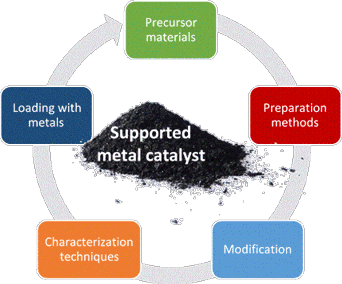
- the aqueous metal solution during the impregnation process and results in a better platinum dispersion. Nevertheless, less acidic and more thermally stable surface groups avoid the sintering of the metal particles by enhanced metal–carbon interaction [109]. Figueiredo et al. observed different types

Graphical Abstract

Figure 1: Experimental setup of ultrasonic spray pyrolysis. Reprinted with permission from [95], copyright 2006 T...

Figure 2: Overview of nitrogen-containing functional groups on the surface of activated carbons. Scheme was d...
Synthesis and properties of quinazoline-based versatile exciplex-forming compounds
- Rasa Keruckiene,
- Simona Vekteryte,
- Ervinas Urbonas,
- Matas Guzauskas,
- Eigirdas Skuodis,
- Dmytro Volyniuk and
- Juozas V. Grazulevicius
Beilstein J. Org. Chem. 2020, 16, 1142–1153, doi:10.3762/bjoc.16.101
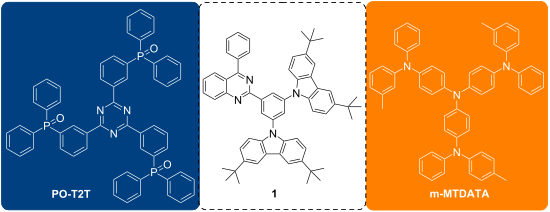
- carried out for the solutions in dry dichloromethane containing 0.1 M tetrabutylammonium hexafluorophosphate at 25 °C; the scan rate was 50 mV/s while the sample concentration was 10−3 M. The potentials were measured against silver as a reference electrode. A platinum wire was used as a counter electrode

Graphical Abstract

Scheme 1: Synthesis of quinazoline derivatives 1–3. Conditions: i) ammonium acetate, copper(II) chloride, iso...

Figure 1: DSC (a, b, c) and TGA (d) curves of compounds 1–3. Scan rates were 20 °C/min (TGA) and 10 °C/min (D...

Figure 2: Frontier-orbital distributions and optimized geometries at the ground state of quinazoline-based co...

Figure 3: Cyclic voltammograms of quinazoline-based compounds 1–3.

Figure 4: UV–vis absorption spectra of compounds 1–3. a) Theoretical and b) experimental spectra of compounds ...

Figure 5: Fluorescence spectra (a) of dilute solutions and thin films of compounds 1–3 (λexc = 350 nm and PL ...

Figure 6: Electron and hole NTOs of compounds 1–3 in the S1 excited state (vacuum).

Figure 7: Chemical structures of exciplex-forming materials used, and visualization of white electroluminesce...
Synthesis of novel multifunctional carbazole-based molecules and their thermal, electrochemical and optical properties
- Nuray Altinolcek,
- Ahmet Battal,
- Mustafa Tavasli,
- William J. Peveler,
- Holly A. Yu and
- Peter J. Skabara
Beilstein J. Org. Chem. 2020, 16, 1066–1074, doi:10.3762/bjoc.16.93
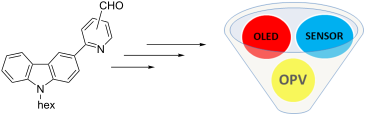
- tetrabutylammonium hexafluorophosphate as the electrolyte (Figure 2). A platinum disk was used as a working electrode, silver wire as the reference electrode and platinum wire as the counter electrode. The ferrocene-ferrocenium redox couple was used as an internal reference. At positive potentials, compounds 7a and

Graphical Abstract

Scheme 1: Synthesis of compounds 7a and 7b from carbazole 1. i) NBS, DMF, 0 °C to rt, 24 h. ii) n-hexyl bromi...

Figure 1: TGA (a) and DSC (b) curve of the compounds 7a and 7b.

Figure 2: Cyclic voltammograms of compounds 7a and 7b in dichloromethane under argon atmosphere at room tempe...

Figure 3: Energy levels of compounds 7a and 7b.

Figure 4: Normalised UV–vis and PL spectra of compounds 7a and 7b in dichloromethane.

Figure 5: Normalised UV–vis spectra of compounds 7a and 7b in different solvents.

Figure 6: PL spectra of compounds 7a and 7b in different solvents (A–H).



