


Search results
Search for "reactions" in Full Text gives 3232 result(s) in Beilstein Journal of Organic Chemistry. Showing first 200.
Ring contraction and ring expansion reactions in terpenoid biosynthesis and their application to total synthesis
Beilstein J. Org. Chem. 2026, 22, 289–343, doi:10.3762/bjoc.22.21
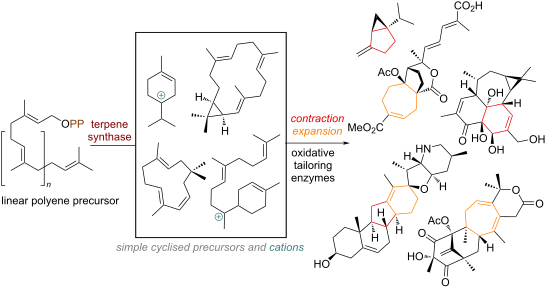
- terpenoids with completely unique carbon connectivity and ring systems are still discovered every single year. In this review article, intriguing examples of apparent ring contraction or expansion reactions of carbocycles in terpenoids, both in biosynthesis and application of similar tactics in the total
- synthesis, are gathered. Our definition includes both radical and polar ring-size altering reactions, transannular cyclisations of macrocycles and cation-mediated rearrangements where fitting. Goal of this review is to gather and compare mechanistic proposals for the biogenesis of ring-size-altered
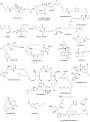
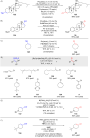
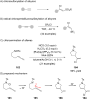
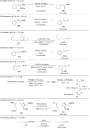
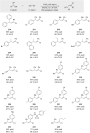
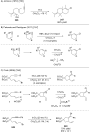
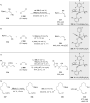
- terpenoids and highlight the utility of strategically including such a step in a natural product synthesis. To start, an overview of the different classes of enzymes, and thus common mechanisms, of ring-size-altering reactions for terpenes will be presented. In Scheme 1 the four most important manifolds for






Spirobarbiturates with a pyrrolizidine moiety: synthesis, structure and biological evaluation
Beilstein J. Org. Chem. 2026, 22, 274–288, doi:10.3762/bjoc.22.20
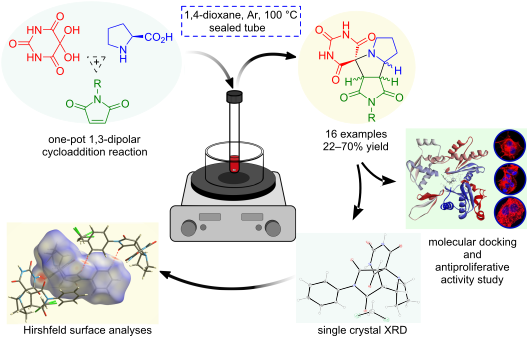
- ; pyrrolizidine moiety; spirobarbiturates; three-component reactions; Introduction The history of barbiturates dates back to 1863, when the young Adolf von Baeyer first synthesized barbituric acid [1][2]. In 1903, the drug marketed under the trade name barbital (veronal©) became commercially available as a
- ]. Advances in this area of organic synthesis include the preparation of barbiturates containing spiro-fused cyclohexane, cyclopentane, tetrahydrooxepine, and tetrahydroquinoline moieties via [3 + 2], [4 + 2], and [5 + 2] annulation reactions involving arylidene and alkylidene barbiturates [20][21][22][23
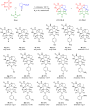
- ). Substitution of the meta-chlorine with fluorine also favored the exo-isomer (compound 4j, 70%, endo/exo 1:2), similar to 4l. The presence of an electron-withdrawing group at the meta-position of the maleimide’s N-aryl group likely facilitates exo-isomer formation. Reactions with maleimides containing meta-NO2




Arene activation via π-bond localization: concepts and opportunities
Beilstein J. Org. Chem. 2026, 22, 257–273, doi:10.3762/bjoc.22.19
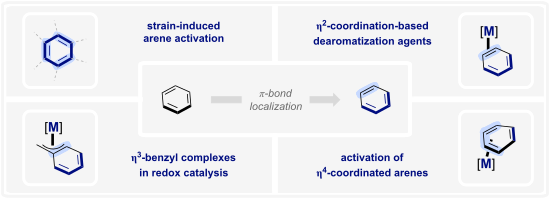
- Paul Meiners Julian J. Melder Tobias Morack Organisch-Chemisches Institut, Universität Heidelberg, Im Neuenheimer Feld 270, 69120 Heidelberg, Germany 10.3762/bjoc.22.19 Abstract Dearomatization reactions of aromatic feedstocks constitute a highly efficient and conceptually powerful class of
- –Alder reactions with several electron-deficient dienes, furnishing distinctive methano-bridged structures (Figure 3C) [32][33][34][35]. Similarly, small cyclophanes are known to act as reactive dienes in Diels–Alder chemistry [36][37]. More recently, Lu and co-workers reported the unusually facile
- , increases π-bond localization, rendering phenylenes more susceptible to hydrogenation, metal complexation, ring opening, and cycloaddition reactions [39]. Building on these intriguing studies and the ongoing renaissance of strain-release-driven catalysis [40], harnessing small-ring strain to drive




A mild and atom-efficient four-component cascade strategy for the construction of biologically relevant 4-hydroxyquinolin-2(1H)-one derivatives
Beilstein J. Org. Chem. 2026, 22, 244–256, doi:10.3762/bjoc.22.18
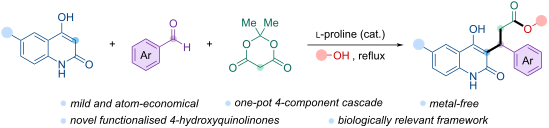
- ; Introduction Contemporary organic chemistry focuses on the development of universal, efficient, and environmentally benign synthetic methods that address the challenges of constructing complex molecular architectures [1][2][3]. Among these, multicomponent reactions (MCRs) have emerged as powerful tools
- reactions catalyzed by diverse agents (Scheme 1). For instance, in 2013, Shi et al. described a three-component reaction involving 4-hydroxyquinolin-2(1H)-one, an aromatic aldehyde, and Meldrum’s acid, catalyzed by ʟ-proline under heating [37]. In the same year, Kurosh Rad-Moghadam and co-workers developed
- obtained via the two-step procedure. The 6-halo-4-hydroxyquinolin-2-ones 2a–c were then subjected to Michael addition reactions with various acceptors following the retrosynthetic approaches (Scheme 2), and the results are discussed below (Scheme 4). No Michael adducts were obtained from reactions of 2a–c


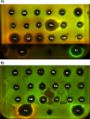
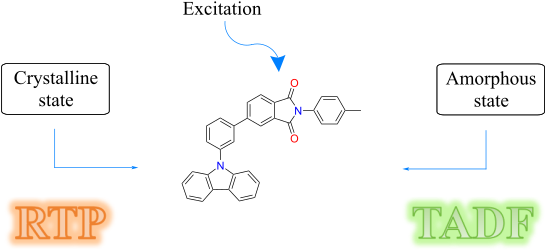
Configuration–packing synergy enabling integrated crystalline-state RTP and amorphous-state TADF
Beilstein J. Org. Chem. 2026, 22, 224–236, doi:10.3762/bjoc.22.16
- placed into a 250 mL three-necked round-bottomed flask, ensuring the proper amount of space for the reaction. It was then dissolved in 100 mL of glacial acetic acid, which served as the solvent. To create an inert atmosphere and prevent any unwanted reactions with oxygen, the solution was purged with


Synthesis of diaryl phosphates using phytic acid as a phosphorus source
Beilstein J. Org. Chem. 2026, 22, 213–223, doi:10.3762/bjoc.22.15
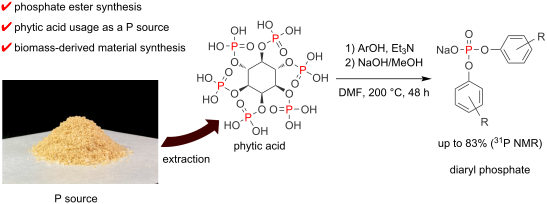
- products of phosphate diesters were obtained through the reactions of commercially available phytic acid and aromatic alcohols with 31P nuclear magnetic resonance yields up to 83%. We also isolated a portion of the reaction substrates with yields up to 60%. Next, we extracted phytic acid from rice bran
- [22] and as insecticides [23]. Particularly, phosphate diesters are among the most important synthetic catalysts, such as the Akiyama–Terada catalyst that serves as a chiral Brønsted acid catalyst [24][25] and promotes a variety of stereoselective reactions. Phosphate diesters also catalyze the ring
- , commercially available phytic acid was used instead of phosphoric acid for the syntheses of diaryl phosphates (Figure 3). Phosphate esters were synthesized using the glass apparatus depicted in Figure S1 of Supporting Information File 1. All reactions were performed under a N2 flow (0.1 L/min) from a three-way




Screwing the helical chirality through terminal peri-functionalization
Beilstein J. Org. Chem. 2026, 22, 205–212, doi:10.3762/bjoc.22.14
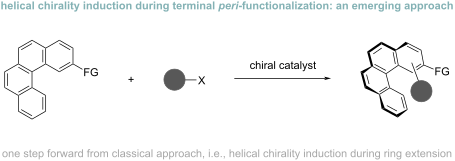
- of chirality. Molecules with helical chirality impart a crucial role in several biological phenomena as well as in modern materials applications. Classically, the generation of chiral helicity in organic molecules relies on a ring extension by means of cycloaddition and related reactions. Recently
- approaches have been developed for the synthesis of chiral helical molecules and the most prevalent approaches include cycloaddition reactions [24], ring extensions [25], and related approaches [26][27]. However, some parallel and more sustainable approaches have emerged in recent years and C–H
- method for the generation of helical chirality primarily involves cycloaddition and central/axial to helical chirality transfer reactions [31] (Figure 1A and B). In addition to this, a parallel strategy also offers a promising approach to achieving configurationally stable helicenes via terminal peri


Base-promoted deacylation of 2-acetyl-2,5-dihydrothiophenes and their oxygen-mediated hydroxylation
Beilstein J. Org. Chem. 2026, 22, 192–204, doi:10.3762/bjoc.22.13
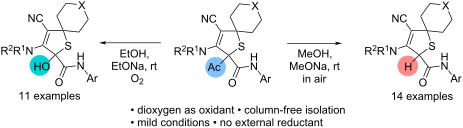
- Oxidative transformations are an important area of modern organic synthesis [1], producing a broad range of valuable synthetic products for the industry. A variety of catalytic reactions were developed for the oxidative conversions of unsaturated compounds [2][3][4][5], alcohols [6][7], alkanes [8][9][10
- 1A) [15][16]. Oxidative rearrangements of carbonyl compounds are based on Dakin [17] and Baeyer–Villiger reactions [18] and their modifications. Cyclic and acyclic ketones were oxidized to afford lactones and esters, accordingly, involving catalytic reactions with hydrogen peroxide [19][20][21][22
- can be considered as analogs of organic sulfides. Accordingly, in oxidative reactions they are also easily oxidized to the corresponding sulfoxides [39][40]. Despite the fact that the synthetic applications of dihydrothiophenes are being actively studied [39][40][41][42][43][44][45][46], their




A new synthesis of Tyrian purple (6,6’-dibromoindigo) and its corresponding sulfonate salts
Beilstein J. Org. Chem. 2026, 22, 167–174, doi:10.3762/bjoc.22.10
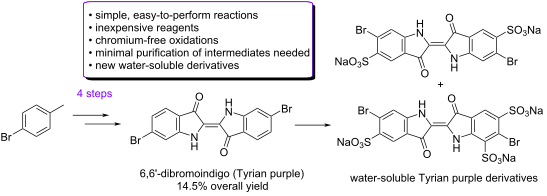
- advantages of inexpensive starting reagents, operationally simple reactions, and minimal purification of intermediates. Moreover, this work reports the successful sulfonation of 6,6’-dibromoindigo, producing water-soluble derivatives of this historically relevant dye. Keywords: 6,6’-dibromoindigo; dye
- that the reported synthetic scheme is valuable because it can produce 6,6’-dibromoindigo from an inexpensive starting material using operationally simple reactions without the need for extensive purification of intermediates. Additionally, this work shows that it is possible to sulfonate compound 1


Circumventing Mukaiyama oxidation: selective S–O bond formation via sulfenamide–alcohol coupling
Beilstein J. Org. Chem. 2026, 22, 158–166, doi:10.3762/bjoc.22.9
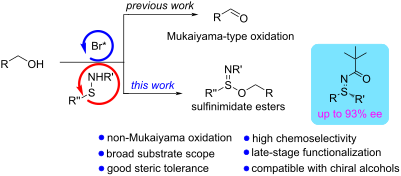
- 77% yield. The cinnamamide-derived sulfenamide, bearing a C–C double bond, also reacted smoothly under the oxidative conditions without noticeable side reactions, delivering the product 3i’ in 75% yield. Furthermore, carbamate-type sulfenamides were well tolerated under the standard conditions
- enrichment of one enantiomer in the product mixture. To further probe this possibility, the two diastereomers of 5 were carefully separated and individually subjected to Grignard substitution. Reactions of the isolated diastereomers with MeMgI and PhMgBr afforded 6a-1 and 6b-1 with 92% ee and 93% ee
- . Yields are of isolated products. Substrate scope of sulfenamides derived from various amides. Reaction conditions: sulfenamide 1 (0.15 mmol), NBS (1.2 equiv), NaHCO3 (1.5 equiv), MeOH (1.5 mL), room temperature, 30 min. Yields are of isolated products. Substrate scope of reactions between sulfenamides 1a


Asymmetric Mannich reaction of aromatic imines with malonates in the presence of multifunctional catalysts
Beilstein J. Org. Chem. 2026, 22, 151–157, doi:10.3762/bjoc.22.8
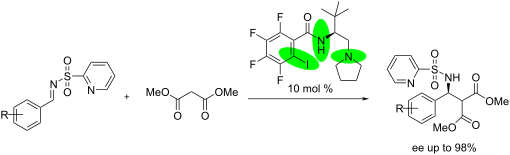
- been used in the synthesis of numerous pharmaceuticals and natural products [7]. The application of asymmetric synthesis enables access to enantiomerically pure targets. Earlier, metal catalysis was used for Mannich reactions [8][9], but in recent years, methods of asymmetric organocatalysis have been
- widely used to achieve these valuable compounds [10][11][12]. Enamine activation was one of the first organocatalytic methods applied in Mannich reactions [13][14]. Concurrently, hydrogen-bond catalysis has emerged as a significant strategy for promoting asymmetric Mannich reactions [15][16]. This has
- efficient in Mannich reactions, as demonstrated by our studies [18] and those of others [19][20][21]. Halogen bonding has also been introduced to further broaden the field of noncovalent interactions. Despite the limited number of asymmetric transformations driven solely by halogen-bond activation [22


Symmetrical D–π–A–π–D indanone dyes: a new design for nonlinear optics and cyanide detection
Beilstein J. Org. Chem. 2026, 22, 131–142, doi:10.3762/bjoc.22.6
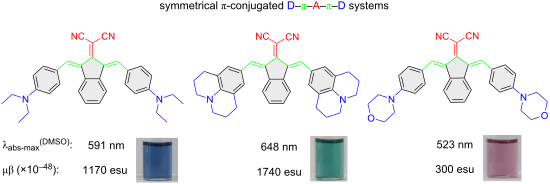
- ). The vinyl bridges were added to the design, which have the potential to open nucleophilic addition reactions (Michael type) due to their electron deficiencies, in addition to acting as π-bridges for the D–A conjugation. Furthermore, a symmetric design with increased π-conjugation was planned to shift


Highly electrophilic, gem- and spiro-activated trichloromethylnitrocyclopropanes: synthesis and structure
Beilstein J. Org. Chem. 2026, 22, 123–130, doi:10.3762/bjoc.22.5
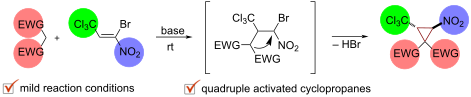
- nitro group upon breaking the C–C bond [16][17]. Substituted nitrocyclopropanes in reactions with various nucleophiles form linear precursors for the synthesis of γ-substituted α-aminobutyric acids [18][19], cyclic nitropyrrolines [20] and isoxazoline N-oxides [18]. The nitrocyclopropane fragment is a
- by several approaches: forming of the CF3-group in a nitrocyclopropane (reaction of 2-nitrocyclopropanecarboxylic acid with sulfur tetrafluoride [31][32]), cyclopropane formation from a nitroethene substrate and a CF3-containing reagent (Corey–Chaykovsky reaction [33]), as well as reactions involving
- Michael-initiated ring closure (MIRC) reaction of gem-halonitroalkenes and CH-acids [37][38]. Thus, 2-nitrocyclopropanecarboxylates were obtained based on the tandem reactions of cyclic CH-acids with alkyl 3-bromo-3-nitroacrylates [39]. Despite the structural proximity and high activity of 1-bromo-1-nitro


Total synthesis of natural products based on hydrogenation of aromatic rings
Beilstein J. Org. Chem. 2026, 22, 88–122, doi:10.3762/bjoc.22.4
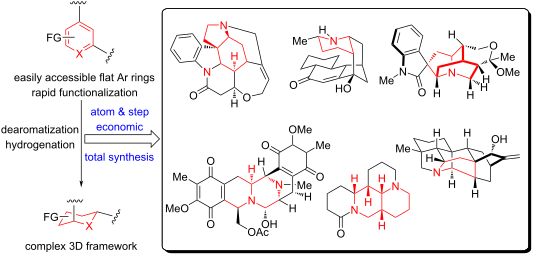
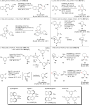
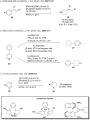
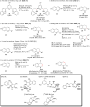
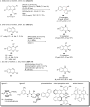
- strategies. The integration of photochemistry [13] and electrochemistry [14] into total synthesis has further extended the realm. Synthesis of complex natural product structures can promote the discovery of new reactions and the generation of new strategies [15]. However, despite careful design, the primary
- ][19][20]. In recent years, promoted by the rapid development of asymmetric catalysis, a wealth of reactions applicable to aromatic systems – including substitution reactions, transition-metal-coupling reactions, and even dearomatization [21][22][23] – have been reported, further extending their
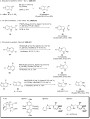
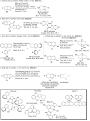
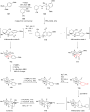
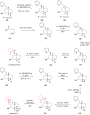
- in the presence of metal catalysts including Pd or Ir and different ligands. In 2021 and 2022, Wang and co-workers reported two impressive hydroboration–hydrogenation reactions catalyzed by FLP (triarylphenylborane) that reduced pyridine compounds 11 or 15 to dihydropyridine compounds 12 or chiral








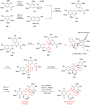


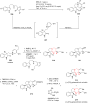

Advances in Zr-mediated radical transformations and applications to total synthesis
Beilstein J. Org. Chem. 2026, 22, 71–87, doi:10.3762/bjoc.22.3
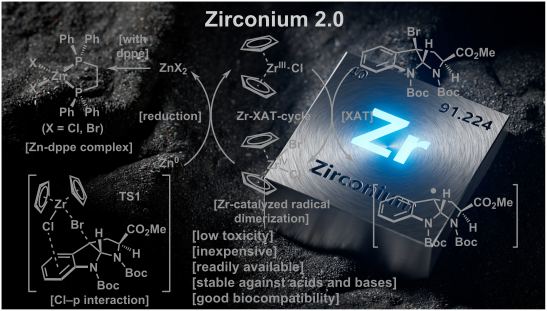
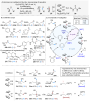
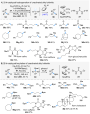
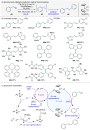
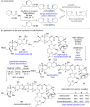
- Hiroshige Ogawa Hugh Nakamura The Hong Kong University of Science and Technology (HKUST), Clear Water Bay, New Territories, Hong Kong SAR, China 10.3762/bjoc.22.3 Abstract Radical reactions, which have been reported in large numbers in recent years, have exerted major influence across fields
- and discovery of two-electron ionic transformations dominated the early stages. Over time, pericyclic reactions exemplified by the Woodward–Hoffmann rules and one-electron radical processes became prominent research topics. Today, many of these classical transformations have been further refined to
- afford reactions that are cheaper, safer, and less toxic. In this context, we focus on mild radical reactions mediated by zirconium (Zr), which has recently attracted attention because of its low toxicity and ease of handling. We discuss the utility of Zr in such radical processes and consider prospects


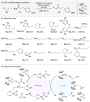






Reactivity umpolung of the cycloheptatriene core in hexa(methoxycarbonyl)cycloheptatriene
Beilstein J. Org. Chem. 2026, 22, 64–70, doi:10.3762/bjoc.22.2
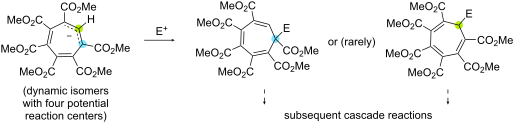
- reactions mainly involve the initial electrophilic attack onto the α-position relative to the hydrogen atom. The selectivity is either due to the high stability of the α-nucleophilic conformer or due to the promotion by the adjacent ester group. Cascade reactions upon the target connection, if installed
- , include the formation of norcaradienes, dihydroindazoles, a tetracyclodecene and a hydrazonocycloheptatriene derivative. Keywords: azo shift; cascade reactions; cycloheptatriene; relief of antiaromaticity; umpolung; Introduction Reactivity umpolung [1] is a synthetic concept in organic chemistry that
- contraposes the expected and the unexpected in terms of polarity in either reactions or synthetic strategies (Figure 1). Most effective reactions within this concept involve the in situ generation of a species exhibiting reversed polarity and the original group is reestablished at later reaction stages [2


Synthesis and applications of alkenyl chlorides (vinyl chlorides): a review
Beilstein J. Org. Chem. 2026, 22, 1–63, doi:10.3762/bjoc.22.1
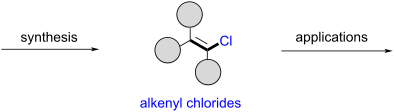
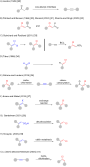
- previous reviews that have addressed this class of compounds in part or within broader contexts. Figure 3 offers a structured overview of prior reviews to facilitate orientation within the existing literature. The earliest comprehensive account is found in Jacobs’ 1949 Organic Reactions chapter, “The
- group in the α-position (e.g., aldehyde, ketone, sulfone, nitro) is beyond the scope of this review. In 2011, Guinchard and Roulland reviewed Pd-catalyzed cross-couplings of 1,1-dichloroalkenes and boron-chlorination reactions in the context of natural product synthesis (Figure 3C) [33]. Takai’s
- contribution to the field, particularly via chromium-mediated olefinations, is covered in a Comprehensive Organic Synthesis chapter (Figure 3D) [34][35]. Carbochlorination and carbonylchlorination reactions were reviewed by Petrone, Ye, and Lautens in their Chemical Reviews article on transition-metal























One-pot synthesis of ethylmaltol from maltol
Beilstein J. Org. Chem. 2025, 21, 2755–2760, doi:10.3762/bjoc.21.212

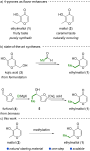
- nucleophilicity of the intermediate lithium alkoxides and to the softer nucleophilic character at C vs O for lithium dienolates. While the dianion strategy was able to convert maltol (2) to ethylmaltol (1) in yields of up to 57%, the reactions suffered from an unsatisfactory purity profile. First, interconversion


Sustainable electrochemical synthesis of aliphatic nitro-NNO-azoxy compounds employing ammonium dinitramide and their in vitro evaluation as potential nitric oxide donors and fungicides
Beilstein J. Org. Chem. 2025, 21, 2739–2754, doi:10.3762/bjoc.21.211
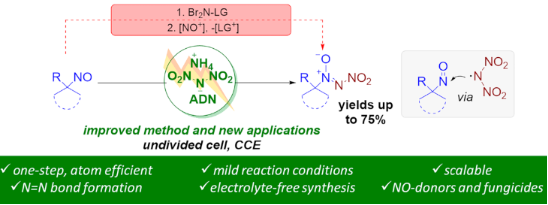
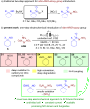
- approaches focus mainly on intramolecular radical cyclizations [42][54][55][56][57][58][59][60][61][62][63], while intermolecular [1][64][65][66][67][68] N–N coupling remains a poorly studied area. In addition to the preparation of azo compounds [69][70], intermolecular N–N coupling reactions are of





Total synthesis of asperdinones B, C, D, E and terezine D
Beilstein J. Org. Chem. 2025, 21, 2730–2738, doi:10.3762/bjoc.21.210
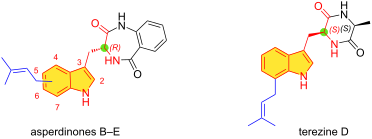
- prenylindoles (Figure 1, approach B) which would rely on a Negishi cross-coupling reaction [37][38] using Jackson’s iodozinc N-Boc-ʟ-serine methyl ester [39] and 3-iodoallyl- or 3-iodoprenylindoles (Figure 3). Related Negishi cross-coupling reactions have been reported for bromoindoles [40] and 3-iodo-N-Boc-7
- reactions was attributed in part to the nature of the organozinc reagent 29. In contrast, a similar coupling using the organozinc reagent prepared from iodo N-Boc-ᴅ-alanyl methyl ester (S)-35 with 4-allylindole under the same conditions afforded a significantly improved yield of 65%. Steric bulk due to the
- Negishi cross-coupling reactions took place in excellent yield with the iodozinc N-Boc reagent 35, in contrast to the organozinc reagent derived from iodo N-Fmoc-ᴅ-alanyl anthranilamide methyl ester 29. Conclusion In summary, we have accomplished the total synthesis of asperdinones 1–4 and terezine D (6


Competitive cyclization of ethyl trifluoroacetoacetate and methyl ketones with 1,3-diamino-2-propanol into hydrogenated oxazolo- and pyrimido-condensed pyridones
Beilstein J. Org. Chem. 2025, 21, 2716–2729, doi:10.3762/bjoc.21.209
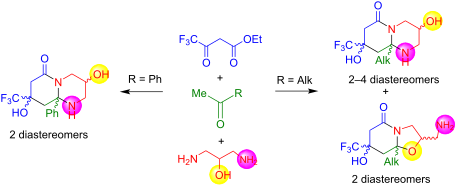
- -trifluoroacetoacetate and methyl ketones enables the synthesis to be carried out for octahydropyrido[1,2-a]pyrimidin-6-ones and hexahydrooxazolo[3,2-a]pyridin-5-ones, the preferential formation of which depends on the substituent in the methyl ketone component. Dual acid–base catalysis of the reactions with alkyl
- to be obtained in one stage using commercially available reagents [1][2][3]. Their ambident properties make 3-oxo esters convenient reagents for the use in multicomponent syntheses, with the Hantzsch [4][5] and Biginelli [6][7][8] reactions being the best known. In the transformations, 3-oxo esters
- starting substrates in multicomponent syntheses [17][18][19]; at the same time, they often show extraordinary reactivity. For example, the introduction of polyfluoroalkyl-3-oxo esters into the aforementioned Hantzsch and Biginelli reactions leads to the hydrated heterocycles, which can provide insight into


Mechanistic insights into hydroxy(tosyloxy)iodobenzene-mediated ditosyloxylation of chalcones: a DFT study
Beilstein J. Org. Chem. 2025, 21, 2703–2715, doi:10.3762/bjoc.21.208
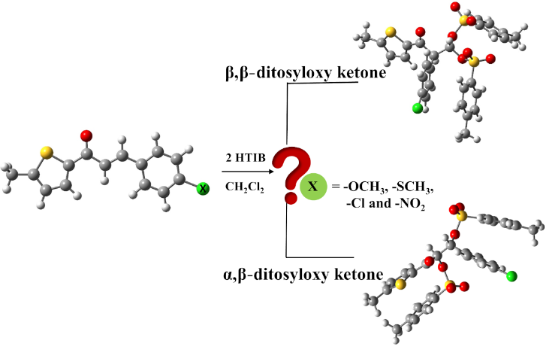
- rearrangement is one of the important reactions induced by HTIB. Similar to other hypervalent iodine(III) compounds, HTIB is known to have higher electrophilicity towards olefinic bonds. HTIB dissociates, adds onto the olefinic bond and subsequently acts as a good leaving group resulting in generation of a
- )3/CH3OH, PhI(OCOCH3)2/CH3OH and PhI(OH)OTs/CH3OH in polar nucleophilic solvents [24][25][26][27][28]. A number of experimental and computational studies have explored the reaction pathway for these oxidative rearrangement reactions under metal-free conditions with the use of hypervalent iodine(III


Tandem hydrothiocyanation/cyclization of CF3-iminopropargyl alcohols with NaSCN in the presence of AcOH
Beilstein J. Org. Chem. 2025, 21, 2694–2702, doi:10.3762/bjoc.21.207
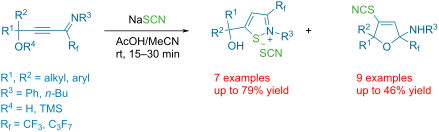
- The hydrofunctionalization of alkynes is one of the most effective and convenient ways of synthesizing polysubstituted alkenes [1][2][3][4][5]. Such reactions can also afford more complex products, provided that the vinyl intermediates formed during the reaction undergo further transformations [6][7
- ][8]. However, this is mainly possible in the case of functionalized alkynes, where these intramolecular reactions usually involve other functional groups that are contained in the same intermediate. Among the numerous hydrofunctionalization reactions, hydrothiocyanation has attracted much attention
- , thioethers, disulfides, phosphonothioates, and trifluoromethyl sulfides. Additionally, due to the presence of two electrophilic sites (the sulfur atom and the carbon of the nitrile function), thiocyanates can readily undergo domino-type intramolecular cyclization reactions to form heterocycles. So, if a



Recent advancements in the synthesis of Veratrum alkaloids
Beilstein J. Org. Chem. 2025, 21, 2657–2693, doi:10.3762/bjoc.21.206
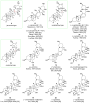
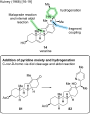
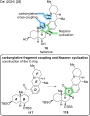
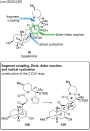
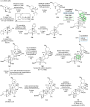
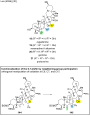
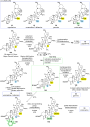
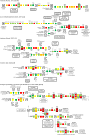
- of green for strategic connections, yellow for neutral, e.g., functional group interconversion and isomerization, orange for non-strategic reactions, and red for protecting group (PG) manipulations (Scheme 3). Protecting group manipulations refer to any protection or deprotection of a functional
- transformation carried out in one flask terminated by a purification [11]. Nevertheless, to point out reaction telescoping (i.e., performing several reactions in one flask by sequentially adding reagents, including solvent-swaps) we opted for a visual representation indicated by black frames around the boxes
- , color-coding each transformation in this one-pot procedure. Cascade reactions, as well as reactions, where a single set of reaction conditions and reagents transform two or more groups simultaneously (e.g., global deprotections) and reactions, that occur upon work-up, are still regarded as one step and




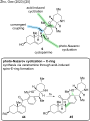
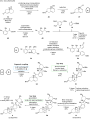
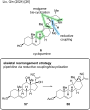

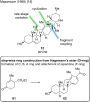


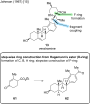

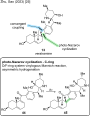

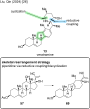

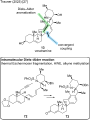






Synthesis of new tetra- and pentacyclic, methylenedioxy- and ethylenedioxy-substituted derivatives of the dibenzo[c,f][1,2]thiazepine ring system
Beilstein J. Org. Chem. 2025, 21, 2645–2656, doi:10.3762/bjoc.21.205
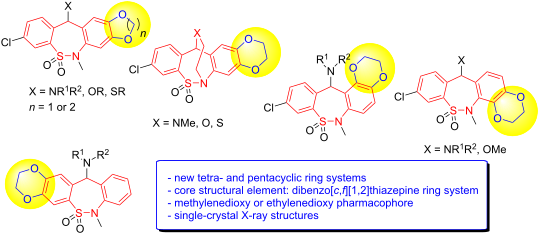
- substitution reactions of benzo-1,3-dioxoles and benzo-1,4-dioxanes [20]. Reduction of ketones 6 and 7 with NaBH4 gave alcohols 16 and 17, which were chlorinated with SOCl2 to result in compounds 18 and 19. Treatment of the latter with the appropriate amines gave amino derivatives 20a, 20c–e, and 21a, 21c–p
- numbers: CCDC 2470493 (20e), CCDC 2470491 (21g), CCDC 2470492 (23a), CCDC 2470490 (25), CCDC 2470489 (26), CCDC 2472402 (27). All reagents were purchased from commercial sources and were used without further purification. Reactions were followed by analytical thin-layer chromatography on silica gel 60
- . Acknowledgements The authors are grateful to Mrs. Erika Koren-Ausländer for technical assistance in the synthetic reactions, to Mrs. Mónika Mezővári for LC-MS and HRMS TOF EI, and to Mr. Péter Kővágó for IR and NMR measurements. Funding This work was prepared in the framework of 2020-1.1.2-PIACI-KFI-2020-00039





