


Search results
Search for "reversibility" in Full Text gives 112 result(s) in Beilstein Journal of Organic Chemistry.
[3 + 2]-Cycloaddition reaction of sydnones with alkynes
- Veronika Hladíková,
- Jiří Váňa and
- Jiří Hanusek
Beilstein J. Org. Chem. 2018, 14, 1317–1348, doi:10.3762/bjoc.14.113
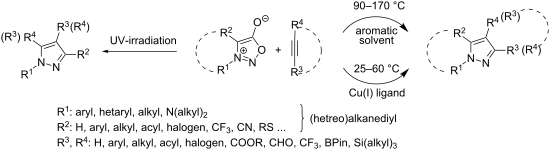
- (80 °C) caused a decrease in the total yield by approximately 50%, with slightly increased selectivity (from 4.96 to 6.56). Lowering of the yield with increasing pressure confirms the reversibility of the first step (see Scheme 5) because of retardation of CO2 cleavage from the bicyclic intermediate
- . Such reversibility was also suggested by Harrity et al. [92] on the basis of quantum calculations. While the formation of the bicyclic intermediate was calculated to be only slightly exergonic (−3.3 kcal·mol−1) the overall reaction is highly exothermic (−108.2 kcal·mol−1). These results show that minor

Graphical Abstract

Scheme 1: Thermal reaction of sydnones with symmetrical alkynes.

Scheme 2: Reaction of sydnones with strained cycloalkynes.

Scheme 3: Reaction of sydnones with didehydrobenzenes.

Scheme 4: Formation of isomeric pyrazole dicarboxylates.

Scheme 5: Mechanism of thermal cycloaddition between sydnones and alkynes.

Scheme 6: Mechanism of photochemical reaction of sydnones with symmetrical alkynes.

Scheme 7: HOMO–LUMO diagram for thermal [3 + 2]-cycloaddition of sydnones with alkynes.

Scheme 8: Synthetic strategy leading to 1,2-disubstituted pyrazoles.

Scheme 9: Unsuccessful reaction with phenylpropiolic acid.

Scheme 10: Synthetic strategy leading to 1,4,5-trisubstituted pyrazoles.

Scheme 11: Reaction of sydnones carrying in position 4- six-membered 2-N-heterocyclic ring.

Scheme 12: Strain-promoted sydnone alkyne cycloaddition (SPSAC).

Scheme 13: Synthesis of a key intermediate of niraparib.

Scheme 14: Reaction of sydnones with 1,3-/1,4-benzdiyne equivalents.

Scheme 15: Reaction of sydnones with heterocyclic strained cycloalkynes.

Scheme 16: Mono-copper catalyzed cycloaddition reaction.

Scheme 17: Di-copper catalyzed cycloaddition reaction.
Phosphodiester models for cleavage of nucleic acids
- Satu Mikkola,
- Tuomas Lönnberg and
- Harri Lönnberg
Beilstein J. Org. Chem. 2018, 14, 803–837, doi:10.3762/bjoc.14.68

Graphical Abstract

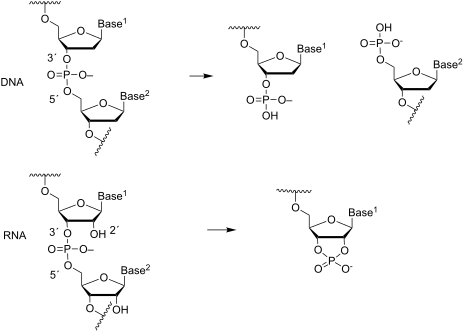
Figure 1: Enzymatic cleavage of phosphodiester linkages of DNA and RNA.

Figure 2: Energy profiles for a concerted ANDN (A) and stepwise mechanisms (AN + DN) with rate-limiting break...

Figure 3: Pseudorotation of a trigonal bipyramidal phosphorane intermediate by Berry pseudorotation [20].

Figure 4: Protolytic equilibria of phosphorane intermediate of RNA transesterification.

Figure 5: Structures of acyclic analogs of ribonucleosides.

Figure 6: First-order rate constants for buffer-independent partial reactions of uridyl-3´,5´-uridine at pH 5...

Scheme 1: pH- and buffer-independent cleavage and isomerization of RNA phosphodiester linkages. Observed firs...

Scheme 2: Mechanism for the pH- and buffer-independent cleavage of RNA phosphodiester linkages.

Scheme 3: Hydroxide-ion-catalyzed cleavage of RNA phosphodiester linkages.

Scheme 4: Anslyn's and Breslow's mechanism for the buffer-catalyzed cleavage and isomerization of RNA phospho...

Scheme 5: General base-catalyzed cleavage of RNA phosphodiester bonds.

Scheme 6: Kirby´s mechanism for the buffer-catalyzed cleavage of RNA phosphodiester bonds [65].

Figure 7: Guanidinium-group-based cleaving agents of RNA.

Scheme 7: Tautomers of triazine-based cleaving agents and cleavage of RNA phosphodiester bonds by these agent...

Figure 8: Bifunctional guanidine/guanidinium group-based cleaving agents of RNA.

Scheme 8: Cleavage of HPNP by 1,3-distal calix[4]arene bearing two guanidine groups [80].

Figure 9: Cyclic amine-based cleaving agents of RNA.

Scheme 9: Mechanism for the pH-independent cleavage and isomerization of model compound 12a in the pH-range 7...

Scheme 10: Mechanism for the pH-independent cleavage of guanylyl-3´,3´-(2´-amino-2´-deoxyuridine) at pH 6-8 [89].

Scheme 11: Cleavage of uridine 3´-dimethyl phosphate by A) intermolecular attack of methoxide ion and B) intra...

Scheme 12: Transesterification of group I introns and hydrolysis of phosphotriester models proceed through a s...

Scheme 13: Cleavage of trinucleoside 3´,3´,5´-monophosphates by A) P–O3´ and B) P–O5´ bond fission.

Figure 10: Model compounds (23–25) and metal ion binding ligands used in kinetic studies of metal-ion-promoted...

Figure 11: Zn2+-ion-based mono- and di-nuclear cleaving agents of nucleic acids.

Figure 12: Miscellaneous complexes and ligands used in kinetic studies of metal-ion-promoted cleavage of nucle...

Figure 13: Azacrown ligands 34 and 35 and dinuclear Zn2+ complex 36 used in kinetic studies of metal-ion-promo...

Figure 14: Metal ion complexes used for determination of βlg values of metal-ion-promoted cleavage of RNA mode...

Figure 15: Metal ion complexes used in kinetic studies of medium effects on the cleavage of RNA model compound...
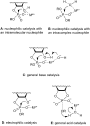
Scheme 14: Alternative mechanisms for metal-ion-promoted cleavage of phosphodiesters.

Figure 16: Nucleic acid cleaving agents where the attacking oxyanion is not coordinated to metal ion.
Investigations towards the stereoselective organocatalyzed Michael addition of dimethyl malonate to a racemic nitroalkene: possible route to the 4-methylpregabalin core structure
- Denisa Vargová,
- Rastislav Baran and
- Radovan Šebesta
Beilstein J. Org. Chem. 2018, 14, 553–559, doi:10.3762/bjoc.14.42
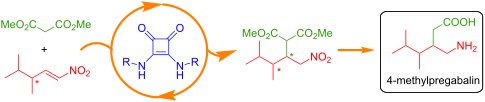
- -mediated addition of nitromethane to the aldehyde 4 provided nitro alcohol 5. The somewhat lower yield (58%) of the aldol product 5 is likely caused by the reversibility of the nitro-aldol reaction. The yield of this reaction did not improve with longer time and unreacted aldehyde was still present in the

Graphical Abstract

Figure 1: Structures of pregabalin and methylpregabalin.

Scheme 1: Synthesis of the nitroalkene 6.

Scheme 2: Catalyst screening in the Michael addition of dimethyl malonate to nitroalkene 6.

Scheme 3: Synthesis of catalysts (Sa,R,R)-C8 and (Sa,S,S)-C8.

Figure 2: Transition state models for the reaction of (R)-6 with dimethyl malonate using catalyst C7 (M06-2X/...

Scheme 4: Synthesis of 4-methylpregabalin (1).
A Brønsted base-promoted diastereoselective dimerization of azlactones
- Danielle L. J. Pinheiro,
- Gabriel M. F. Batista,
- Pedro P. de Castro,
- Leonã S. Flores,
- Gustavo F. S. Andrade and
- Giovanni W. Amarante
Beilstein J. Org. Chem. 2017, 13, 2663–2670, doi:10.3762/bjoc.13.264
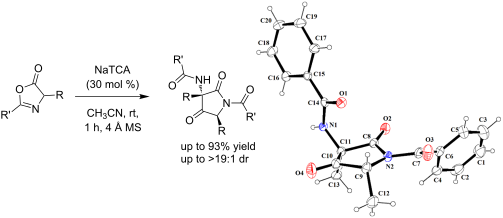
- shown in Figure 3. Furthermore, a six-membered ring involving the salt cation, the azlactone ring and the enolate might be involved in the addition step. Irreversible intramolecular cyclization of 4 gave 5 (for a reaction reversibility study of product 2h, see Supporting Information File 1), eventually

Graphical Abstract

Figure 1: Structure of an azlactone dimer.
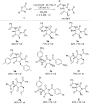
Scheme 1: Diastereoselective dimerization of azlactones. Reactions were carried out using 0.45 mmol of 1 and ...

Figure 2: X-ray crystallographic structure of 2a (30% ellipsoids probability).

Scheme 2: Sterically bulky azlactone enol derivatives.
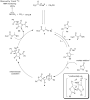
Figure 3: Plausible mechanism for the dimerization of azlactone.

Figure 4:
Plot of ![[Graphic 5]](/bjoc/content/inline/1860-5397-13-264-i10.svg?max-width=637&scale=1.18182) vs time for the dimerization of azlactone 1a.
vs time for the dimerization of azlactone 1a.

Scheme 3: Reduction of 2c.
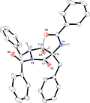
Figure 5: X-ray crystallographic structure of 6 (30% ellipsoids probability).
Synthesis of naturally-derived macromolecules through simplified electrochemically mediated ATRP
- Paweł Chmielarz,
- Tomasz Pacześniak,
- Katarzyna Rydel-Ciszek,
- Izabela Zaborniak,
- Paulina Biedka and
- Andrzej Sobkowiak
Beilstein J. Org. Chem. 2017, 13, 2466–2472, doi:10.3762/bjoc.13.243
- . As expected, addition of an alkyl halide initiator to a solution of CuIIBr2/TPMA during the voltammetric measurements causes a loss of reversibility and an increase of the cathodic current because of reduction of the regenerated CuIIBr2/TPMA via the catalytic electrochemical catalytic process (EC

Graphical Abstract

Figure 1: 1H NMR analysis of QC-Br5 (Mn = 1,050, Ð = 1.11) after purification (in CDCl3).

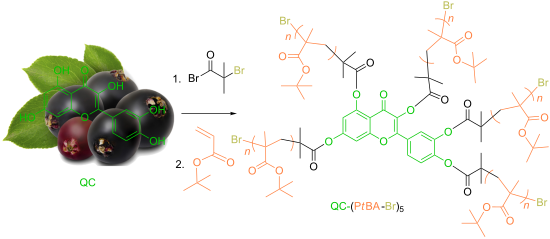
Figure 2: Synthesis of PtBA homopolymers grafted from quercetin-based macroinitiator via seATRP under constan...

Figure 3: (a) First-order kinetic plot of seATRP with periodically applied different values of potential, bet...
Asymmetric synthesis of propargylamines as amino acid surrogates in peptidomimetics
- Matthias Wünsch,
- David Schröder,
- Tanja Fröhr,
- Lisa Teichmann,
- Sebastian Hedwig,
- Nils Janson,
- Clara Belu,
- Jasmin Simon,
- Shari Heidemeyer,
- Philipp Holtkamp,
- Jens Rudlof,
- Lennard Klemme,
- Alessa Hinzmann,
- Beate Neumann,
- Hans-Georg Stammler and
- Norbert Sewald
Beilstein J. Org. Chem. 2017, 13, 2428–2441, doi:10.3762/bjoc.13.240
- -unsaturated imine are not reversible. Reversibility of the rearrangement would be fundamental for racemization of propargylamines, which is consequently improbable. However, even in the presence of strong bases like KOt-Bu or LDA, the propargylamide–allenylamide rearrangement could never be observed for

Graphical Abstract

Figure 1: Concept of carboxylic acid or amide bond replacement on the basis of an alkyne moiety.

Figure 2: Selection of reactions based on propargylamines as precursors. a) Intramolecular Pauson–Khand react...

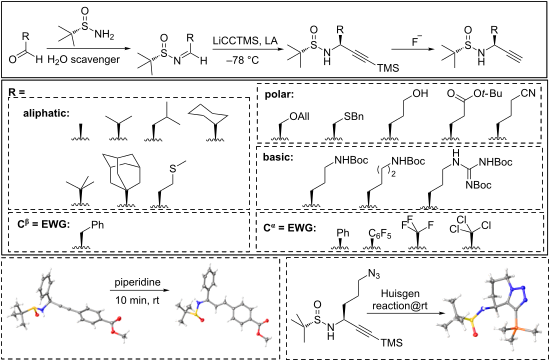
Figure 3: Two different approaches for the stereoselective de novo synthesis of propargylamines using Ellman’...

Figure 4: Synthesis of propargylamines 4a and 4b by introducing the side chain as nucleophile. (a) HC≡CCH2OH,...

Figure 5: Reaction of N-sulfinylimine 5h with (trimethylsilyl)ethynyllithium. (a) GP-3 or GP-4. (b) Aqueous w...

Figure 6: Side reactions observed in the course of the conversion of highly electrophilic sulfinylimines 5. (...

Figure 7: a) Possible transition states TI and TII for the transfer of the methyl moiety from AlMe3 to the im...

Figure 8: Base-induced rearrangement of propargylamines bearing electron-withdrawing substituents.

Figure 9: Base-catalyzed rearrangement of propargylamines 11 to α,β-unsaturated imines 12. A) Reaction scheme...
Selective enzymatic esterification of lignin model compounds in the ball mill
- Ulla Weißbach,
- Saumya Dabral,
- Laure Konnert,
- Carsten Bolm and
- José G. Hernández
Beilstein J. Org. Chem. 2017, 13, 1788–1795, doi:10.3762/bjoc.13.173
- efficient for the enzyme-catalyzed selective esterification of the model compound erythro-1a, partly due to the non-reversibility of the reaction. However, isopropenyl esters of carboxylic acids are, in general, not readily available. Therefore, in order to find alternative acyl donors for the biocatalyst

Graphical Abstract

Scheme 1: Enzymatic reactions under ball milling conditions.

Figure 1: (a) Molecular representation of lignin. (b) Lignin model compound erythro-1a.

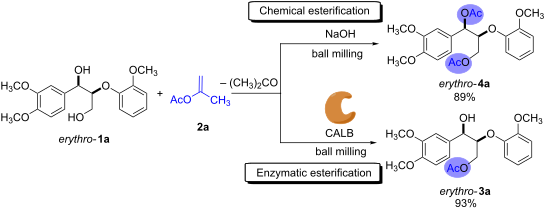
Scheme 2: Chemical and enzymatic esterification of erythro-1a with isopropenyl acetate (2a) in the ball mill....
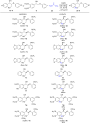
Scheme 3: CALB-catalyzed esterification of lignin model compounds in the ball mill.

Scheme 4: Selective esterification of erythro-1a using long-chain vinyl esters as acyl donors in the ball mil...
The chemistry and biology of mycolactones
- Matthias Gehringer and
- Karl-Heinz Altmann
Beilstein J. Org. Chem. 2017, 13, 1596–1660, doi:10.3762/bjoc.13.159
- loss of cytopathogenicity. Interestingly, washing cells after mycolactone treatment restored cell growth, thus indicating at least a partial reversibility of the toxic effects. The structural proposal for mycolactone that was offered by Small and co-workers in the context of their original report on

Graphical Abstract

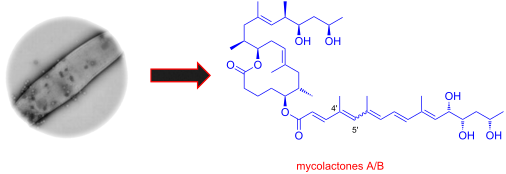
Figure 1: Initial proposal for the core macrolactone structure (left) and the established complete structure ...
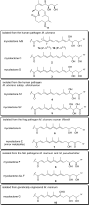
Figure 2: Mycolactone congeners and their origins.

Figure 3: Misassigned mycolactone E structure according to Small et al. [50] (11) and the correct structure (6) f...

Figure 4: Schematic illustration of Kishi’s improved mycolactone TLC detection method exploiting derivatizati...

Figure 5: Fluorescent probes derived from natural mycolactone A/B (1a,b) or its synthetic 8-desmethyl analogs...

Figure 6: Tool compounds used by Pluschke and co-workers for elucidating the molecular targets of mycolactone...

Figure 7: Synthetic strategies towards the extended mycolactone core. A) General strategies. B) Kishi’s appro...

Scheme 1: Kishi’s 1st generation approach towards the extended core structure of mycolactones. Reagents and c...

Scheme 2: Kishi’s 2nd generation approach towards the extended core structure of mycolactones. Reagents and c...

Scheme 3: Kishi’s 3rd generation approach towards the extended core structure of mycolactones. Reagents and c...

Scheme 4: Negishi’s synthesis of the extended core structure of mycolactones. Reagents and conditions: a) (i) ...

Scheme 5: Burkart’s (incomplete) 1st generation approach towards the extended core structure of mycolactones....
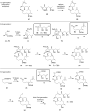
Scheme 6: Burkart’s (incomplete) 1st, 2nd and 3rd generation approach towards the extended mycolactone core s...

Scheme 7: Altmann’s synthesis of alkyl iodide 91. Reagents and conditions: a) (i) PMB-trichloroacetimidate, T...

Scheme 8: Final steps of Altmann’s synthesis of the extended core structure of mycolactones. Reagents and con...

Scheme 9: Basic principles of the Aggarwal lithiation–borylation homologation process [185,186].

Scheme 10: Aggarwal’s synthesis of the C1–C11 fragment of the mycolactone core. Reagents and conditions: a) Cl...

Scheme 11: Aggarwal’s synthesis of the linear C1–C20 fragment of the mycolactone core. Reagents and conditions...

Figure 8: Synthetic strategies towards the mycolactone A/B lower side chain.

Scheme 12: Gurjar and Cherian’s synthesis of the C1’–C8’ fragment of the mycolactone A/B pentaenoate side chai...

Scheme 13: Gurjar and Cherian’s synthesis of the benzyl-protected mycolactone A/B pentaenoate side chain. Reag...

Scheme 14: Kishi’s synthesis of model compounds for elucidating the stereochemistry of the C7’–C16’ fragment o...

Scheme 15: Kishi’s synthesis of the mycolactone A/B pentaenoate side chain. (a) (i) NaH, (EtO)2P(O)CH2CO2Et, T...

Scheme 16: Feringa and Minnaard's incomplete synthesis of mycolactone A/B pentaenoate side chain. Reagents and...

Scheme 17: Altmann’s approach towards the mycolactone A/B pentaenoate side chain. Reagents and conditions: a) ...

Scheme 18: Negishi’s access to the C1’–C7’ fragment of mycolactone A. Reagents and conditions: a) (i) n-BuLi, ...

Scheme 19: Negishi’s approach to the C1’–C7’ fragment of mycolactone B. Reagents and conditions: a) (i) DIBAL-...

Scheme 20: Negishi’s synthesis of the C8’–C16’ fragment of mycolactone A/B. Reagents and conditions: a) 142, BF...

Scheme 21: Negishi’s assembly of the mycolactone A and B pentaenoate side chains. Reagents and conditions: a) ...

Scheme 22: Blanchard’s approach to the mycolactone A/B pentaenoate side chain. a) (i) Ph3P=C(Me)COOEt, CH2Cl2,...

Scheme 23: Kishi’s approach to the mycolactone C pentaenoate side chain exemplified for the 13’R,15’S-isomer 1...

Scheme 24: Altmann’s (unpublished) synthesis of the mycolactone C pentaenoate side chain. Reagents and conditi...

Scheme 25: Blanchard’s synthesis of the mycolactone C pentaenoate side chain. Reagents and conditions: a) (i) ...

Scheme 26: Kishi’s synthesis of the tetraenoate side chain of mycolactone F exemplified by enantiomer 165. Rea...

Scheme 27: Kishi’s synthesis of the mycolactone E tetraenoate side chain. Reagents and conditions: a) (i) CH2=...

Scheme 28: Wang and Dai’s synthesis of the mycolactone E tetraenoate side chain. Reagents and conditions: a) (...

Scheme 29: Kishi’s synthesis of the dithiane-protected tetraenoate side chain of the minor oxo-metabolite of m...

Scheme 30: Kishi’s synthesis of the mycolactone S1 and S2 pentaenoate side chains. Reagents and conditions: a)...

Scheme 31: Kishi’s 1st generation and Altmann’s total synthesis of mycolactone A/B (1a,b) and Negishi’s select...

Scheme 32: Kishi’s 2nd generation total synthesis of mycolactone A/B (1a,b). Reagents and conditions: a) 2,4,6...

Scheme 33: Blanchard’s synthesis of the 8-desmethylmycolactone core. Reagents and conditions: a) (i) TsCl, TEA...

Scheme 34: Altmann’s (partially unpublished) synthesis of the C20-hydroxylated mycolactone core. Reagents and ...

Scheme 35: Altmann’s and Blanchard’s approaches towards the 11-isopropyl-8-desmethylmycolactone core. Reagents...

Scheme 36: Blanchard’s synthesis of the saturated variant of the C11-isopropyl-8-desmethylmycolactone core. Re...

Scheme 37: Structure elucidation of photo-mycolactones generated from tetraenoate 224.

Scheme 38: Kishi’s synthesis of the linear precursor of the photo-mycolactone B1 lower side chain. Reagents an...

Scheme 39: Kishi’s synthesis of the photo-mycolactone B1 lower side chain. Reagents and conditions: a) LiTMP, ...

Scheme 40: Kishi’s synthesis of a stabilized lower mycolactone side chain. Reagents and conditions: a) (i) TBD...
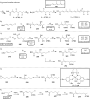
Scheme 41: Blanchard’s variation of the C12’,C13’,C15’ stereocluster. Reagents and conditions: a) (i) DIBAL-H,...

Scheme 42: Blanchard’s synthesis of aromatic mycolactone polyenoate side chain analogs. Reagents and condition...

Scheme 43: Small’s partial synthesis of a BODIPY-labeled mycolactone derivative and Demangel’s partial synthes...

Scheme 44: Blanchard’s synthesis of the BODIPY-labeled 8-desmethylmycolactones. Reagents and conditions: a) (i...
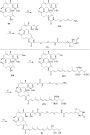
Scheme 45: Altmann’s synthesis of biotinylated mycolactones. Reagents and conditions: a) (i) CDI, THF, rt, 2 d...

Figure 9: Kishi’s elongated n-butyl carbamoyl mycolactone A/B analog.
From chemical metabolism to life: the origin of the genetic coding process
- Antoine Danchin
Beilstein J. Org. Chem. 2017, 13, 1119–1135, doi:10.3762/bjoc.13.111
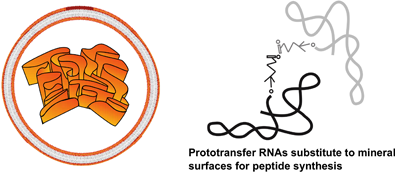

Graphical Abstract

Figure 1: Selective surface metabolism. Prebiotic carbon-based molecules accumulated in a neutral or slightly...
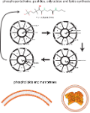
Figure 2: Building up membranes, peptides and co-enzymes. Thioester-based metabolism resulted in the synthesi...

Figure 3: The RNA metabolism world. Among molecules built up by a swinging-arm thioester are pyrimidines coup...
Interactions between shape-persistent macromolecules as probed by AFM
- Johanna Blass,
- Jessica Brunke,
- Franziska Emmerich,
- Cédric Przybylski,
- Vasil M. Garamus,
- Artem Feoktystov,
- Roland Bennewitz,
- Gerhard Wenz and
- Marcel Albrecht
Beilstein J. Org. Chem. 2017, 13, 938–951, doi:10.3762/bjoc.13.95
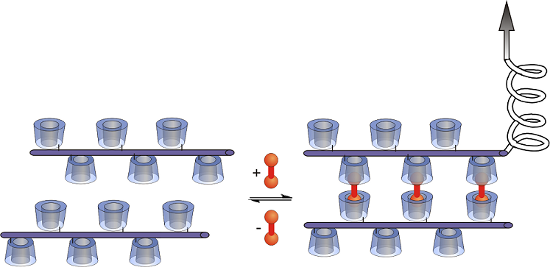
- confirms the reversibility of the underlying interactions. It is difficult to estimate the number of supramolecular bonds contributing to pull-off forces of 1 nN in Figure 7. Based on the single bond rupture force one could assume contributions by 16 supramolecular bonds or even more since it is unlikely

Graphical Abstract

Figure 1: Interaction of a shape-persistent CD polymer with ditopic guests.

Figure 2: Schematic representation of tip and surface modifications realized in this study (bottom). Blue lin...
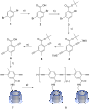
Scheme 1: Synthesis of the CD polymer. a) conc. HNO3, reflux, 6 d; b) tert-butanol, cat. H2SO4, MgSO4, CH2Cl2...

Figure 3: Absorption spectra of monomer 7 (solid red line) and polymer 8 (solid blue line) in water. Emission...

Figure 4: Positive linear MALDI–TOF spectrum of polymer 8 using HABA/TMG2 matrix.

Figure 5: SANS data for polymer 8 and fit by cylindrical model (solid line).

Scheme 2: Ditopic and monotopic guest molecules.

Figure 6: Solubility of polymer 8 in the presence of ditopic connector 9 (black graph) and 1-aminoadamantane ...

Scheme 3: Synthesis of amino functionalized polymer 12.

Figure 7: Characteristic force curves recorded during retraction of the AFM tip from the surface. Four functi...

Figure 8: Graphical summary of experimental results for the four configurations of CD attachment introduced i...

Figure 9: (a) Detail of the end of a force curve for a polymer-functionalized tip retracted from a polymer-fu...

Figure 10: Characteristic result of a friction experiment for a polymer-functionalized tip sliding on a surfac...
Sulfamide chemistry applied to the functionalization of self-assembled monolayers on gold surfaces
- Loïc Pantaine,
- Vincent Humblot,
- Vincent Coeffard and
- Anne Vallée
Beilstein J. Org. Chem. 2017, 13, 648–658, doi:10.3762/bjoc.13.64
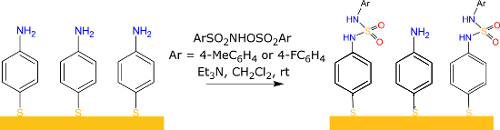
- contact angle (WCA) measurements, Fourier-transform infrared reflection absorption spectroscopy (IRRAS) and X-ray photoelectron spectroscopy (XPS). Keywords: gold surfaces; hydrolysis; IRRAS; reversibility; SAM; sulfamide; XPS; Introduction Self-assembled monolayers (SAMs) have raised considerable
- contact angle measurements to prove the reversibility of their process, a careful characterization of the surface has been carried out in this study [19]. Conclusion In conclusion, a new reaction on gold surfaces was reported based on sulfamide chemistry. In this work, two sulfamide species with different

Graphical Abstract

Scheme 1: General strategy for surface functionalization based on sulfamide chemistry.

Scheme 2: Synthesis of the reference molecule sulfamide 1.

Figure 1: Contact angles of the gold surface, the 4-ATP SAM, the 4-ATP SAM after reaction with ArSO2NHOSO2Ar ...
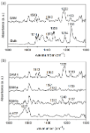
Figure 2: (a) IR spectra of sulfamide 1 in bulk (solid state) (bottom) and adsorbed on gold (top). (b) PM-IRR...

Figure 3: High resolution S2p and N1s XPS spectra of the 4-ATP SAM, the 4-ATP SAM after reaction with 4-FC6H4...

Figure 4: High resolution S2p and N1s XPS spectra of the SAM 1 before (top) and after hydrolysis (bottom). Ri...
Towards the development of continuous, organocatalytic, and stereoselective reactions in deep eutectic solvents
- Davide Brenna,
- Elisabetta Massolo,
- Alessandra Puglisi,
- Sergio Rossi,
- Giuseppe Celentano,
- Maurizio Benaglia and
- Vito Capriati
Beilstein J. Org. Chem. 2016, 12, 2620–2626, doi:10.3762/bjoc.12.258
- stereochemistry of the intermediate species involved in the catalytic cycle [41]. The equilibrating nature of the aldol reaction and the influence of such reversibility on its stereochemical outcome has recently been studied [42]. It has also been reported that the use of additives may have a dramatic influence

Graphical Abstract

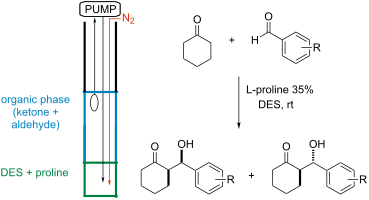
Scheme 1: L-Proline-promoted stereoselective aldol reaction in DES.

Figure 1: Experimental set-up I: test tube (d = 0.5 cm); flow 1 mL/min; DES (1.5 mL); L-proline/DES = 130 mg/...

Scheme 2: Aldol reaction under continuous flow conditions in DESs.
Diels–Alder reactions in confined spaces: the influence of catalyst structure and the nature of active sites for the retro-Diels–Alder reaction
- Ángel Cantín,
- M. Victoria Gomez and
- Antonio de la Hoz
Beilstein J. Org. Chem. 2016, 12, 2181–2188, doi:10.3762/bjoc.12.208

- reversibility of the reaction, homogeneous Lewis acids [1][2][3][4], solid acids [5][6] as catalyst, high pressures [6][7][8] and/or water as a solvent [9][10] have been reported. In particular, and among the most interesting environmental-friendly reactions, the cycloaddition reaction occurs with high

Graphical Abstract

Scheme 1: Distribution of products in the Diels–Alder reaction between cyclopentadiene and p-benzoquinone.

Figure 1: Conversion in the DAR catalysed by silica Beta zeolites and Aerosil.

Figure 2: Effect of Lewis and Brønsted acid sites in the conversion (a) and selectivity (b) of the DAR.

Figure 3: Effect of pore size in the conversion (a) and selectivity (b) of the DAR.

Figure 4: Comparison of conversion (a) and selectivity (b) of the DAR catalysed by Al-Beta zeolite and MCM-41....

Figure 5: Comparison of conversion (a) and selectivity (b) of the DAR catalysed extra-large pore 3D zeolites.

Figure 6: Effect of the Si/Al ratio in the conversion (a) and selectivity (b) of the DAR.

Figure 7: Effect of the reutilization of the catalysts in the conversion (a) and selectivity (b) of the DAR.
Thiophene-forming one-pot synthesis of three thienyl-bridged oligophenothiazines and their electronic properties
- Dominik Urselmann,
- Konstantin Deilhof,
- Bernhard Mayer and
- Thomas J. J. Müller
Beilstein J. Org. Chem. 2016, 12, 2055–2064, doi:10.3762/bjoc.12.194
- electronics [37][38][39][40]. In comparison to thiophene, phenothiazine, a tricyclic dibenzo-1,4-thiazine, possesses a significantly lower oxidation potential, similar to aniline. However, phenothiazine derivatives form stable deeply colored radical cations with perfect Nernstian reversibility [41][42][43][44

Graphical Abstract

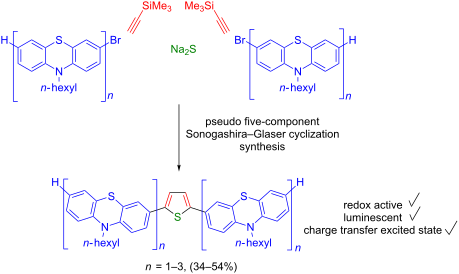
Figure 1: Thienyl-bridged oligophenothiazines as topological hybrids of (oligo)phenothiazines and 2,5-di(hete...

Scheme 1: One-pot bromine-lithium-exchange-borylation-Suzuki (BLEBS) synthesis of 7-bromo-substituted phenoth...

Scheme 2: Pseudo five-component Sonogashira-Glaser-cyclization synthesis of thienyl-bridged oligophenothiazin...

Figure 2: Cyclic voltammograms of compounds 3 (recorded in CH2Cl2, T = 293 K, electrolyte n-Bu4N+PF6−, Pt wor...

Figure 3: UV–vis (solid lines) and fluorescence spectra (dashed lines) of the thienyl-bridged oligophenothiaz...

Figure 4: DFT-calculated minimum conformer of the 2,5-bis(terphenothiazinyl)thiophene 3c (calculated with the...

Figure 5: Relevant Kohn–Sham FMOs contributing to the S1 states that are assigned to the longest wavelengths ...
Stereo- and regioselectivity of the hetero-Diels–Alder reaction of nitroso derivatives with conjugated dienes
- Lucie Brulíková,
- Aidan Harrison,
- Marvin J. Miller and
- Jan Hlaváč
Beilstein J. Org. Chem. 2016, 12, 1949–1980, doi:10.3762/bjoc.12.184
- and natural products as well as for the mild functionalization and derivatization of diene-containing natural products [1][2][3][4][5][6][7][8][9][10]. The reversibility of this reaction plays a considerable role in both the observed regio- and stereocontrol of the nitroso Diels–Alder reaction

Graphical Abstract

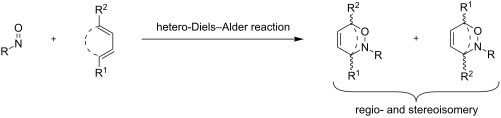
Scheme 1: Nitroso hetero-Diels–Alder reaction.

Scheme 2: The hetero-Diels–Alder reaction between thebaine (4) and an acylnitroso dienophile 5.

Figure 1: Examples of nitroso dienophiles frequently used in hetero-Diels–Alder reaction studies.

Scheme 3: Synthesis of arylnitroso species by substitution of a trifluoroborate group [36].
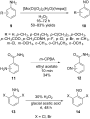
Scheme 4: Synthesis of arylnitroso compounds by amine oxidation.

Scheme 5: Synthesis of arylnitroso compounds by hydroxylamine oxidation.

Scheme 6: Synthesis of chloronitroso compounds by the treatment of a nitronate anion with oxalyl chloride.

Scheme 7: Non-oxidative routes to acylnitroso species.

Figure 2: RB3LYP/6-31G* computed energies (in kcal·mol−1) and bond lengths for exo and endo-transition states...

Scheme 8: Hetero-Diels–Alder cycloadditions of diene 28 and nitroso dienophiles 29.

Figure 3: Relative reactivity (ΔE#) and regioselectivity (Δ) for hetero-Diels–Alder of 28 and nitroso dienoph...

Scheme 9: Reaction of chiral 1-phosphono-1,3-butadiene 31 with nitroso dienophiles 32.

Scheme 10: Hetero-Diels–Alder reactions of hydroxamic acids 35 with various dienes 37.

Scheme 11: General regioselectivity of the nitroso hetero-Diels–Alder reaction observed with unsymmetrical die...

Scheme 12: Effect of the nitroso species on the regioselectivity for weakly directing 2-substituted dienes.

Scheme 13: Regioselectivity of 1,4-disubstituted dienes 51.

Scheme 14: Nitroso hetero-Diels–Alder reaction between Boc-nitroso compound 54 and dienes 55.

Scheme 15: Nitroso hetero-Diels–Alder reaction between Wightman reagent 58 and dienes 59.

Scheme 16: Regioselective reaction of 3-dienyl-2-azetidinones 62 with nitrosobenzene (47).

Scheme 17: The regioselective reaction of 1,3-butadienes 65 with various nitroso heterodienophiles 66.

Scheme 18: Catalysis of the nitroso hetero-Diels–Alder reaction by vanadium in the presence of the oxidant CHP...

Figure 4: 1,2-Oxazines synthesized in solution with moderate to high regioselectivity, showing the favored re...

Figure 5: 1,2-Oxazines synthesized in the solid phase with moderate to high regioselectivity, showing the fav...

Scheme 19: Regioselectivity of solution-phase nitroso hetero-Diels–Alder reaction with acyl and aryl nitroso d...

Scheme 20: Favored regioisomeric outcome for the solution and solid-phase reactions, giving hetero-Diels–Alder...

Figure 6: Favored regioisomers and regioisomeric ratios for 1,2-oxazines synthesized in solid phase (91, 93, ...

Scheme 21: Regiocontrol of the reaction between 3-dienyl-2-azetidinones and nitrosobenzene due to change in a ...

Scheme 22: Regiocontrol of the reaction between diene 111 and 2-methyl-6-nitrosopyridine (112) due to metal co...

Scheme 23: Asymmetric hetero-Diels–Alder reactions reported by Vasella [56].

Scheme 24: Asymmetric hetero-Diels–Alder reaction of cyclohexa-1,3-diene (120) with acylnitroso dienophile 119....

Scheme 25: Asymmetric induction with L-proline derivatives 124–126.

Scheme 26: Asymmetric cycloaddition of the acylnitroso compound 136 to diene 135.

Scheme 27: Asymmetric induction with arylmenthol-based nitroso dienophiles 142.

Scheme 28: Cycloaddition of silyloxycyclohexadiene 145 to the acylnitroso dienophile derived from (+)-camphors...

Scheme 29: Asymmetric reaction of O-isopropylidene-protected cis-cyclohexa-3,5-diene-1,2-diol 147 with mannofu...

Scheme 30: Synthesis of synthon 152 from 2-methoxyphenol 150 and chiral auxiliary 151.

Scheme 31: Asymmetric nitroso hetero-Diels–Alder reaction with Wightman chloronitroso reagent 58.

Scheme 32: Asymmetric 1,2-oxazine synthesis using chiral cyclic diene 157 and the application of this reaction...

Scheme 33: Asymmetric 1,2-oxazine synthesis using a chiral diene reported by Jones et al. [75]. aRegioisomeric rat...

Scheme 34: The nitroso hetero-Diels–Alder reaction of acyclic oxazolidine-substituted diene 170 and chiral 1-s...

Scheme 35: The nitroso hetero-Diels–Alder reaction of acyclic lactam-substituted diene 176 with various acylni...

Scheme 36: The hetero-Diels–Alder reaction of acylnitroso dienophile.

Scheme 37: The hetero-Diels–Alder reaction of arylnitroso dienophiles using Lewis acids.

Scheme 38: Asymmetric hetero-Diels–Alder reactions of chiral alkyl N-dienylpyroglutamates.

Scheme 39: Catalytic asymmetric arylnitroso reaction between mono-substituted 1,3-cyclohexadiene 196 and disub...

Figure 7: Plausible chelate intermediate complexes formed during the hetero-Diels–Alder reaction to give 1,2-...

Scheme 40: Catalytic asymmetric nitroso hetero-Diels–Alder between cyclic dienes and 2-nitrosopyridine.

Scheme 41: The reason for the increased enantioselectivity of stereoisomer 212 compared with stereoisomer 213.

Scheme 42: The copper-catalyzed nitroso hetero-Diels–Alder reaction of 6-methyl-2-nitrosopyridine (199) with p...

Scheme 43: Asymmetric nitroso hetero-Diels–Alder reaction of nitrosoarenes with dienylcarbamates catalyzed by ...

Scheme 44: The enantioselective hetero-Diels–Alder reaction between nitrosobenzene and (E)-2,4-pentadien-1-ol (...

Scheme 45: Asymmetric nitroso hetero-Diels–Alder reaction using tartaric acid ester chelation of the diene and...
Rearrangements of organic peroxides and related processes
- Ivan A. Yaremenko,
- Vera A. Vil’,
- Dmitry V. Demchuk and
- Alexander O. Terent’ev
Beilstein J. Org. Chem. 2016, 12, 1647–1748, doi:10.3762/bjoc.12.162

Graphical Abstract
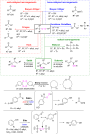
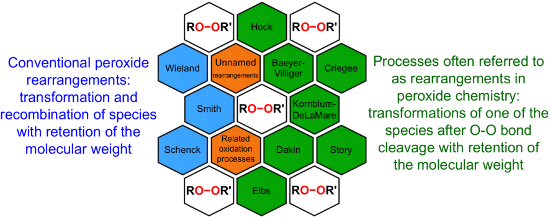
Figure 1: The named transformations considered in this review.

Scheme 1: The Baeyer–Villiger oxidation.

Scheme 2: The general mechanism of the peracid-promoted Baeyer–Villiger oxidation.

Scheme 3: General mechanism of the Lewis acid-catalyzed Baeyer–Villiger rearrangement.

Scheme 4: The theoretically studied mechanism of the BV oxidation reaction promoted by H2O2 and the Lewis aci...

Scheme 5: Proton movements in the transition states of the Baeyer–Villiger oxidation.

Scheme 6: The dependence of the course of the Baeyer–Villiger oxidation on the type of O–O-bond cleavage in t...
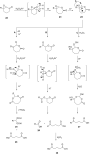
Scheme 7: The acid-catalyzed Baeyer–Villiger oxidation of cyclic epoxy ketones 22.

Scheme 8: Oxidation of isophorone oxide 29.

Scheme 9: Synthesis of acyl phosphate 32 from acyl phosphonate 31.

Scheme 10: Synthesis of aflatoxin B2 (36).

Scheme 11: The Baeyer–Villiger rearrangement of ketones 37 to lactones 38.

Scheme 12: Synthesis of 3,4-dimethoxybenzoic acid (40) via Baeyer–Villiger oxidation.

Scheme 13: Oxone transforms α,β-unsaturated ketones 43 into vinyl acetates 44.

Scheme 14: The Baeyer–Villiger oxidation of ketones 45 using diaryl diselenide and hydrogen peroxide.

Scheme 15: Baeyer–Villiger oxidation of (E)-2-methylenecyclobutanones.

Scheme 16: Oxidation of β-ionone (56) by H2O2/(BnSe)2 with formation of (E)-2-(2,6,6-trimethylcyclohex-1-en-1-...

Scheme 17: The mechanism of oxidation of ketones 58a–f by hydrogen peroxide in the presence of arsonated polys...

Scheme 18: Oxidation of ketone (58b) by H2O2 to 6-methylcaprolactone (59b) catalyzed by Pt complex 66·BF4.

Scheme 19: Oxidation of ketones 67 with H2O2 in the presence of [(dppb}Pt(µ-OH)]22+.

Scheme 20: The mechanism of oxidation of ketones 67 in the presence of [(dppb}Pt(µ-OH)]22+ and H2O2.

Scheme 21: Oxidation of benzaldehydes 69 in the presence of the H2O2/MeReO3 system.

Scheme 22: Oxidation of acetophenones 72 in the presence of the H2O2/MeReO3 system.

Scheme 23: Baeyer–Villiger oxidation of 2-adamantanone (45c) in the presence of Sn-containing mesoporous silic...

Scheme 24: Aerobic Baeyer–Villiger oxidation of ketones 76 using metal-free carbon.

Scheme 25: A regioselective Baeyer-Villiger oxidation of functionalized cyclohexenones 78 into a dihydrooxepin...

Scheme 26: The oxidation of aldehydes and ketones 80 by H2O2 catalyzed by Co4HP2Mo15V3O62.

Scheme 27: The cleavage of ketones 82 with hydrogen peroxide in alkaline solution.

Scheme 28: Oxidation of ketones 85 to esters 86 with H2O2–urea in the presence of KHCO3.

Scheme 29: Mechanism of the asymmetric oxidation of cyclopentane-1,2-dione 87a with the Ti(OiPr)4/(+)DET/t-BuO...

Scheme 30: The oxidation of cis-4-tert-butyl-2-fluorocyclohexanone (93) with m-chloroperbenzoic acid.

Scheme 31: The mechanism of the asymmetric oxidation of 3-substituted cyclobutanone 96a in the presence of chi...

Scheme 32: Enantioselective Baeyer–Villiger oxidation of cyclic ketones 98.

Scheme 33: Regio- and enantioselective Baeyer–Villiger oxidation of cyclic ketones 101.

Scheme 34: The proposed mechanism of the Baeyer–Villiger oxidation of acetal 105f.

Scheme 35: Synthesis of hydroxy-10H-acridin-9-one 117 from tetramethoxyanthracene 114.

Scheme 36: The Baeyer–Villiger oxidation of the fully substituted pyrrole 120.

Scheme 37: The Criegee rearrangement.

Scheme 38: The mechanism of the Criegee reaction of a peracid with a tertiary alcohol 122.

Scheme 39: Criegee rearrangement of decaline ethylperoxoate 127 into ketal 128.

Scheme 40: The ionic cleavage of 2-methoxy-2-propyl perester 129.

Scheme 41: The Criegee rearrangement of α-methoxy hydroperoxide 136.
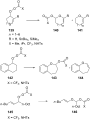
Scheme 42: Synthesis of enol esters and acetals via the Criegee rearrangement.

Scheme 43: Proposed mechanism of the transformation of 1-hydroperoxy-2-oxabicycloalkanones 147a–d.

Scheme 44: Transformation of 3-hydroxy-1,2-dioxolanes 151 into diketone derivatives 152.

Scheme 45: Criegee rearrangement of peroxide 153 with the mono-, di-, and tri-O-insertion.

Scheme 46: The sequential Criegee rearrangements of adamantanes 157a,b.

Scheme 47: Synthesis of diaryl carbonates 160a–d from triarylmethanols 159a–d through successive oxygen insert...

Scheme 48: The synthesis of sesquiterpenes 162 from ketone 161 with a Criegee rearrangement as one key step.

Scheme 49: Synthesis of trans-hydrindan derivatives 164, 165.

Scheme 50: The Hock rearrangement.

Scheme 51: The general scheme of the cumene process.

Scheme 52: The Hock rearrangement of aliphatic hydroperoxides.
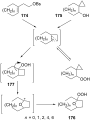
Scheme 53: The mechanism of solvolysis of brosylates 174a–c and spiro cyclopropyl carbinols 175a–c in THF/H2O2....

Scheme 54: The fragmentation mechanism of hydroperoxy acetals 178 to esters 179.

Scheme 55: The acid-catalyzed rearrangement of phenylcyclopentyl hydroperoxide 181.

Scheme 56: The peroxidation of tertiary alcohols in the presence of a catalytic amount of acid.

Scheme 57: The acid-catalyzed reaction of bicyclic secondary alcohols 192 with hydrogen peroxide.

Scheme 58: The photooxidation of 5,6-disubstituted 3,4-dihydro-2H-pyrans 196.

Scheme 59: The oxidation of tertiary alcohols 200a–g, 203a,b, and 206.

Scheme 60: Transformation of functional peroxide 209 leading to 2,3-disubstitued furans 210 in one step.

Scheme 61: The synthesis of carbazoles 213 via peroxide rearrangement.

Scheme 62: The construction of C–N bonds using the Hock rearrangement.

Scheme 63: The synthesis of moiety 218 from 217 which is a structural motif in the antitumor–antibiotic of CC-...

Scheme 64: The in vivo oxidation steps of cholesterol (219) by singlet oxygen.

Scheme 65: The proposed mechanism of the rearrangement of cholesterol-5α-OOH 220.

Scheme 66: Photochemical route to artemisinin via Hock rearrangement of 223.

Scheme 67: The Kornblum–DeLaMare rearrangement.

Scheme 68: Kornblum–DeLaMare transformation of 1-phenylethyl tert-butyl peroxide (225).

Scheme 69: The synthesis 4-hydroxyenones 230 from peroxide 229.

Scheme 70: The Kornblum–DeLaMare rearrangement of peroxide 232.

Scheme 71: The reduction of peroxide 234.

Scheme 72: The Kornblum–DeLaMare rearrangement of endoperoxide 236.

Scheme 73: The rearrangement of peroxide 238 under Kornblum–DeLaMare conditions.

Scheme 74: The proposed mechanism of rearrangement of peroxide 238.

Scheme 75: The Kornblum–DeLaMare rearrangement of peroxides 242a,b.

Scheme 76: The base-catalyzed rearrangements of bicyclic endoperoxides having electron-withdrawing substituent...

Scheme 77: The base-catalyzed rearrangements of bicyclic endoperoxides 249a,b having electron-donating substit...

Scheme 78: The base-catalyzed rearrangements of bridge-head substituted bicyclic endoperoxides 251a,b.

Scheme 79: The Kornblum–DeLaMare rearrangement of hydroperoxide 253.

Scheme 80: Synthesis of β-hydroxy hydroperoxide 254 from endoperoxide 253.

Scheme 81: The amine-catalyzed rearrangement of bicyclic endoperoxide 263.

Scheme 82: The base-catalyzed rearrangement of meso-endoperoxide 268 into 269.

Scheme 83: The photooxidation of 271 and subsequent Kornblum–DeLaMare reaction.

Scheme 84: The Kornblum–DeLaMare rearrangement as one step in the oxidation reaction of enamines.

Scheme 85: The Kornblum–DeLaMare rearrangement of 3,5-dihydro-1,2-dioxenes 284, 1,2-dioxanes 286, and tert-but...

Scheme 86: The Kornblum–DeLaMare rearrangement of epoxy dioxanes 290a–d.

Scheme 87: Rearrangement of prostaglandin H2 292.

Scheme 88: The synthesis of epicoccin G (297).

Scheme 89: The Kornblum–DeLaMare rearrangement used in the synthesis of phomactin A.

Scheme 90: The Kornblum–DeLaMare rearrangement in the synthesis of 3H-quinazolin-4-one 303.

Scheme 91: The Kornblum–DeLaMare rearrangement in the synthesis of dolabriferol (308).

Scheme 92: Sequential transformation of 3-substituted 2-pyridones 309 into 3-hydroxypyridine-2,6-diones 311 in...

Scheme 93: The Kornblum–DeLaMare rearrangement of peroxide 312 into hydroxy enone 313.

Scheme 94: The Kornblum–DeLaMare rearrangement in the synthesis of polyfunctionalized carbonyl compounds 317.

Scheme 95: The Kornblum–DeLaMare rearrangement in the synthesis of (Z)-β-perfluoroalkylenaminones 320.

Scheme 96: The Kornblum–DeLaMare rearrangement in the synthesis of γ-ketoester 322.

Scheme 97: The Kornblum–DeLaMare rearrangement in the synthesis of diterpenoids 326 and 328.

Scheme 98: The synthesis of natural products hainanolidol (331) and harringtonolide (332) from peroxide 329.

Scheme 99: The synthesis of trans-fused butyrolactones 339 and 340.

Scheme 100: The synthesis of leucosceptroid C (343) and leucosceptroid P (344) via the Kornblum–DeLaMare rearra...

Scheme 101: The Dakin oxidation of arylaldehydes or acetophenones.

Scheme 102: The mechanism of the Dakin oxidation.

Scheme 103: A solvent-free Dakin reaction of aromatic aldehydes 356.

Scheme 104: The organocatalytic Dakin oxidation of electron-rich arylaldehydes 358.

Scheme 105: The Dakin oxidation of electron-rich arylaldehydes 361.

Scheme 106: The Dakin oxidation of arylaldehydes 358 in water extract of banana (WEB).

Scheme 107: A one-pot approach towards indolo[2,1-b]quinazolines 364 from indole-3-carbaldehydes 363 through th...

Scheme 108: The synthesis of phenols 367a–c from benzaldehydes 366a-c via acid-catalyzed Dakin oxidation.

Scheme 109: Possible transformation paths of the highly polarized boric acid coordinated H2O2–aldehyde adduct 3...

Scheme 110: The Elbs oxidation of phenols 375 to hydroquinones.

Scheme 111: The mechanism of the Elbs persulfate oxidation of phenols 375 affording p-hydroquinones 376.

Scheme 112: Oxidation of 2-pyridones 380 under Elbs persulfate oxidation conditions.

Scheme 113: Synthesis of 3-hydroxy-4-pyridone (384) via an Elbs oxidation of 4-pyridone (382).

Scheme 114: The Schenck rearrangement.

Scheme 115: The Smith rearrangement.

Scheme 116: Three main pathways of the Schenck rearrangement.

Scheme 117: The isomerization of hydroperoxides 388 and 389.

Scheme 118: Trapping of dioxacyclopentyl radical 392 by oxygen.

Scheme 119: The hypothetical mechanism of the Schenck rearrangement of peroxide 394.

Scheme 120: The autoxidation of oleic acid (397) with the use of labeled isotope 18O2.

Scheme 121: The rearrangement of 18O-labeled hydroperoxide 400 under an atmosphere of 16O2.

Scheme 122: The rearrangement of the oleate-derived allylic hydroperoxides (S)-421 and (R)-425.

Scheme 123: Mechanisms of Schenck and Smith rearrangements.

Scheme 124: The rearrangement and cyclization of 433.

Scheme 125: The Wieland rearrangement.

Scheme 126: The rearrangement of bis(triphenylsilyl) 439 or bis(triphenylgermyl) 441 peroxides.

Scheme 127: The oxidative transformation of cyclic ketones.

Scheme 128: The hydroxylation of cyclohexene (447) in the presence of tungstic acid.

Scheme 129: The oxidation of cyclohexene (447) under the action of hydrogen peroxide.

Scheme 130: The reaction of butenylacetylacetone 455 with hydrogen peroxide.

Scheme 131: The oxidation of bridged 1,2,4,5-tetraoxanes.

Scheme 132: The proposed mechanism for the oxidation of bridged 1,2,4,5-tetraoxanes.

Scheme 133: The rearrangement of ozonides.

Scheme 134: The acid-catalyzed oxidative rearrangement of malondialdehydes 462 under the action of H2O2.

Scheme 135: Pathways of the Lewis acid-catalyzed cleavage of dialkyl peroxides 465 and ozonides 466.

Scheme 136: The mechanism of the transformation of (tert-butyldioxy)cyclohexanedienones 472.

Scheme 137: The synthesis of Vitamin K3 from 472a.

Scheme 138: Proposed mechanism for the transformation of 478d into silylated endoperoxide 479d.

Scheme 139: The rearrangement of hydroperoxide 485 to form diketone 486.

Scheme 140: The base-catalyzed rearrangement of cyclic peroxides 488a–g.

Scheme 141: Synthesis of chiral epoxides and aldols from peroxy hemiketals 491.

Scheme 142: The multistep transformation of (R)-carvone (494) to endoperoxides 496a–e.

Scheme 143: The decomposition of anthracene endoperoxide 499.

Scheme 144: Synthesis of esters 503 from aldehydes 501 via rearrangement of peroxides 502.

Scheme 145: Two possible paths for the base-promoted decomposition of α-azidoperoxides 502.

Scheme 146: The Story decomposition of cyclic diperoxide 506a.

Scheme 147: The Story decomposition of cyclic triperoxide 506b.

Scheme 148: The thermal rearrangement of endoperoxides A into diepoxides B.

Scheme 149: The transformation of peroxide 510 in the synthesis of stemolide (511).

Scheme 150: The possible mechanism of the rearrangement of endoperoxide 261g.

Scheme 151: The photooxidation of indene 517.

Scheme 152: The isomerization of ascaridole (523).

Scheme 153: The isomerization of peroxide 525.

Scheme 154: The thermal transformation of endoperoxide 355.

Scheme 155: The photooxidation of cyclopentadiene (529) at a temperature higher than 0 °C.

Scheme 156: The thermal rearrangement of endoperoxides 538a,b.

Scheme 157: The transformation of peroxides 541.

Scheme 158: The thermal rearrangements of strained cyclic peroxides.

Scheme 159: The thermal rearrangement of diacyl peroxide 551 in the synthesis of C4-epi-lomaiviticin B core 553....

Scheme 160: The 1O2 oxidation of tryptophan (554) and rearrangement of dioxetane intermediate 555.

Scheme 161: The Fe(II)-promoted cleavage of aryl-substituted bicyclic peroxides.

Scheme 162: The proposed mechanism of the Fe(II)-promoted rearrangement of 557a–c.

Scheme 163: The reaction of dioxolane 563 with Fe(II) sulfate.

Scheme 164: Fe(II)-promoted rearrangement of 1,2-dioxane 565.

Scheme 165: Fe(II) cysteinate-promoted rearrangement of 1,2-dioxolane 568.

Scheme 166: The transformation of 1,2-dioxanes 572a–c under the action of FeCl2.

Scheme 167: Fe(II) cysteinate-promoted transformation of tetraoxane 574.

Scheme 168: The CoTPP-catalyzed transformation of bicyclic endoperoxides 600a–d.

Scheme 169: The CoTPP-catalyzed transformation of epoxy-1,2-dioxanes.

Scheme 170: The Ru(II)-catalyzed reactions of 1,4-endoperoxide 261g.

Scheme 171: The Ru(II)-catalyzed transformation as a key step in the synthesis of elyiapyrone A (610) from 1,4-...

Scheme 172: Peroxides with antimalarial activity.

Scheme 173: The interaction of iron ions with artemisinin (616).

Scheme 174: The interaction of FeCl2 with 1,2-dioxanes 623, 624.

Scheme 175: The mechanism of reaction 623 and 624 with Fe(II)Cl2.

Scheme 176: The reaction of bicyclic natural endoperoxides G3-factors 631–633 with FeSO4.

Scheme 177: The transformation of terpene cardamom peroxide 639.
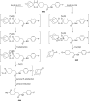
Scheme 178: The different ways of the cleavage of tetraoxane 643.

Scheme 179: The LC–MS analysis of interaction of tetraoxane 646 with iron(II)heme 647.

Scheme 180: The rearrangement of 3,6-epidioxy-1,10-bisaboladiene (EDBD, 649).

Scheme 181: Easily oxidized substrates.

Scheme 182: Biopathway of synthesis of prostaglandins.

Scheme 183: The reduction and rearrangements of isoprostanes.

Scheme 184: The partial mechanism for linoleate 658 oxidation.

Scheme 185: The transformation of lipid hydroperoxide.

Scheme 186: The acid-catalyzed cleavage of the product from free-radical oxidation of cholesterol (667).

Scheme 187: Two pathways of catechols oxidation.

Scheme 188: Criegee-like or Hock-like rearrangement of the intermediate hydroperoxide 675 in dioxygenase enzyme...

Scheme 189: Carotinoides 679 cleavage by carotenoid cleavage dioxygenases.
The role of alkyl substituents in deazaadenine-based diarylethene photoswitches
- Christopher Sarter,
- Michael Heimes and
- Andres Jäschke
Beilstein J. Org. Chem. 2016, 12, 1103–1110, doi:10.3762/bjoc.12.106
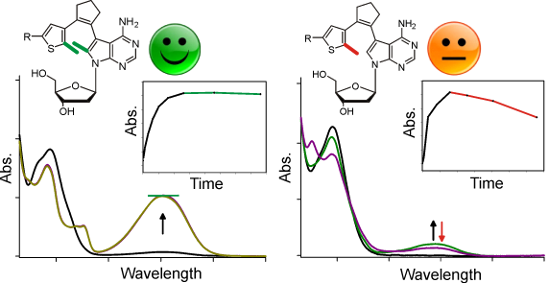
- hybridization upon switching [43][44]. This new class of diarylethenes showed promising photophysical and photochemical properties, such as the location of the photostationary states, reversibility of switching, thermal stability, and fatigue resistance. In 2013 we developed a 2nd generation of diarylethene
- photochemical properties, in particular their photochromicity, switching kinetics and reversibility, fatigue resistance, and thermostability, were investigated. The main text shows only the analytical data for new pyridyl switch 1b in comparison to the previously published and well-studied switch 2b [43]; all
- the differences between the one- and two-methyl switches are not due to solvent effects. This latter observation already indicated poor reversibility and fatigue resistance for the one-methyl switches. We therefore undertook absorption measurements over multiple cycles of ring closure by UV and ring

Graphical Abstract

Figure 1: Diarylethene photoswitches. A: classical design and photoisomerization reaction [27]. B: purine-based p...

Scheme 1: Synthesis of 7-deaza-2’-deoxyadenosine photoswitches with one and two methyl groups via Suzuki cros...

Scheme 2: Optimized route for synthesis of 7-deaza-7-iodo-8-methyl-2’deoxyadenosine (9).

Scheme 3: Synthesis of the boronic acid pinacolate esters.

Figure 2: Spectral changes of the pyridyl switch with one (1b) and two (2b) methyl groups upon irradiation wi...

Figure 3: Reversibility measurements of deazaadenosine photoswitches with one and two methyl groups. A 60 µM ...

Figure 4: Stability analysis of compounds 1b–d and 2b–d upon different times of UV irradiation, monitored by ...

Figure 5: Thermostability measurements of the 7-deazaadenosine nucleosides. A 60 µM solution of the compound ...
Supramolecular structures based on regioisomers of cinnamyl-α-cyclodextrins – new media for capillary separation techniques
- Gabor Benkovics,
- Ondrej Hodek,
- Martina Havlikova,
- Zuzana Bosakova,
- Pavel Coufal,
- Milo Malanga,
- Eva Fenyvesi,
- Andras Darcsi,
- Szabolcs Beni and
- Jindrich Jindrich
Beilstein J. Org. Chem. 2016, 12, 97–109, doi:10.3762/bjoc.12.11
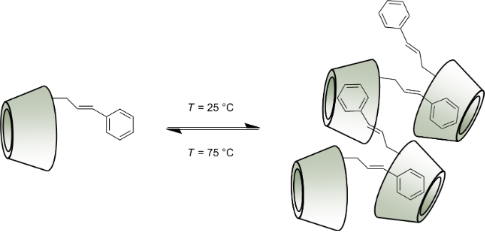
- intermolecular bonding, the formation and decomposition of the SP is at thermodynamic equilibrium, which means that the polymer growth or the destruction of the polymer chain can be adjusted by external stimuli. This reversibility makes SPs promising functional materials and gives them the potential to be easily

Graphical Abstract

Figure 1: Example of elucidation of 2D NMR spectra of 2-O-Cin-α-CD.

Figure 2: 2D ROESY spectrum of 2-O-Cin-α-CD in D2O at 25 °C at 24 mM concentration.

Figure 3: Expansion of the 2D ROESY spectrum of 2-O-Cin-α-CD indicating the geometric arrangement.

Figure 4: 1H NMR spectra of 2-O-Cin-α-CD in D2O at 25 °C at different concentrations.

Figure 5: 1H NMR spectra of 3-O-Cin-α-CD in D2O at 25 °C recorded at various concentrations.

Figure 6: Diffusion coefficients of 2-O-Cin-α-CD (black) and, 3-O-Cin-α-CD (red) in D2O at various concentrat...

Figure 7: Effect of solvent on the size distribution of aggregates formed by 2-O-Cin-α-CD at 25 °C (the appli...

Figure 8: Effect of a solvent on the size distribution of aggregates formed by 3-O-Cin-α-CD at 25 °C (the app...

Figure 9: Aggregate sizes (diameter) of 2-O-Cin-α-CD (black) and 3-O-Cin-α-CD (red) in water at various tempe...

Figure 10: Schematic representation of the DLS experiment proving the host–guest nature of the aggregate forma...

Figure 11: The effect of competitive additives on the size distribution of aggregates formed by 3-O-Cin-α-CD a...

Figure 12: Expansion of the 2D ROESY spectrum of 2-O-Cin-α-CD in the presence of CioOK as competitive guest mo...

Figure 13: 1H NMR spectrum of 2-O-Cin-α-CD before (up) and after (down) the addition of CioOK in 5-fold molar ...

Figure 14: The influence of 5 mM 2-O-Cin-α-CD in BGE (right column) on the decrease of the effective electroph...
Supramolecular polymer assembly in aqueous solution arising from cyclodextrin host–guest complexation
- Jie Wang,
- Zhiqiang Qiu,
- Yiming Wang,
- Li Li,
- Xuhong Guo,
- Duc-Truc Pham,
- Stephen F. Lincoln and
- Robert K. Prud’homme
Beilstein J. Org. Chem. 2016, 12, 50–72, doi:10.3762/bjoc.12.7
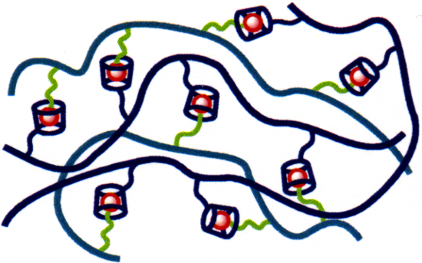
- reversibility of the solution/hydrogel transition is observed in rheological experiments. In vitro tests show that the PEG-b-PAA/cisplatin hydrogel has a sustained cisplatin release over three days and that it has a high cytotoxity towards human bladder carcinoma EJ cells. 5 Responsive smart materials

Graphical Abstract

Figure 1: Structures of α-, β- and γ-CD. Individual carbon atom numbering is shown for one D-glucopyranose su...

Figure 2: Associations of hydrophobic substituents (circled) (a) and their disruption through host–guest comp...

Figure 3: Decrease of aqueous solution viscosity at a shear rate of 50 s−1 due to α-CD (circles), β-CD (recta...

Figure 4: The effect of (a) α-CD, (b) β-CD and (c) γ-CD on the hydrophobic interactions between n-C18H37 subs...

Figure 5: The effect of SDS addition on viscosity shear rate dependence for 2 wt % aqueous PAAodn solutions c...

Figure 6: Host–guest complexation between polymers with cyclodextrin and hydrophobic substituents.

Figure 7: Variation of viscosity with mole ratio of CD substituents to hydrophobic substituents on poly(acryl...

Figure 8: Illustration of the competitive intermolecular host–guest complexation of either the adamantyl subs...

Figure 9: Competitive host–guest complexations in which either the adamantyl substituent (red) or the n-hexyl...

Figure 10: (a) Substituted chitosan in which acyl- and adamantyl-substitution is 5% and 12 %, respectively. (b...

Figure 11: The formation of a AD-PEG micelle followed by the formation of a AD-PEG/α-CD supramolecular hydroge...

Figure 12: Interaction of PEG-b-PAA block copolymer with cis-diamminedichloroplatinum(II), cisplatin, to form ...

Figure 13: Solution to hydrogel transitions (a)–(d) for a PAAddn segment in the presence of competitive photo-...

Figure 14: Structures of the poly(acrylate)-based polymers PAAAzo (trans), PAAAzo (cis), PAA3α-CD and PAA6α-CD...

Figure 15: Variation of viscosity of a PAA6α-CD/PAAAzo solution (circles) and a PAA3α-CD/PAAAzo solution (tria...

Figure 16: The structures proposed for the poly(ethylene glycol)-b-poly(ethylamine)-g-dextran·γ-CD, PEG-PEI-de...

Figure 17: Structure of poly(ethylene glycol) polyrotaxane with adamantyl end substituents, and its temperatur...

Figure 18: Copolymers of either (a) N,N-dimethylacrylamide (DMAA) or (b) N-isopropylacrylamine (NIPAAM) with 1...

Figure 19: The copolymer of isopropylacrylamine and methacrylated β-CD (a) and its complexation of the anions ...

Figure 20: Solution to hydrogel transitions for two segments of PAAddn in the presence of β-CD and change in t...

Figure 21: Preparation of a β-CD and adamantyl substituted acrylamide polymer hydrogel involving host–guest co...

Figure 22: Aqueous solutions of the polymers poly-β-CD and poly-α-BrNP form the poly-β-CD/poly-α-BrNP hydrogel ...

Figure 23: (a) Randomly β-CD substituted poly(acrylate), PAA-6β-CD. (b) Randomly ferrocenyl substituted poly(a...
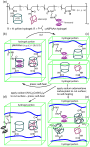
Figure 24: (a) The β-CD, adamantyl and ferrocenyl substituted pAAm and pNiPAAM polymers. (b) The β-CD, adamant...
Assembly of synthetic Aβ miniamyloids on polyol templates
- Sebastian Nils Fischer and
- Armin Geyer
Beilstein J. Org. Chem. 2015, 11, 2646–2653, doi:10.3762/bjoc.11.284
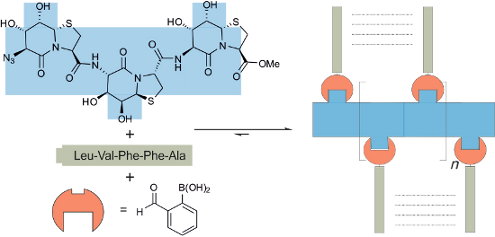
- chemistry is the self-correcting reversibility if individual peptides which are bound in the wrong orientation resulting in a strong preference for defined ring sizes [18] or oligomerization degrees [19]. The idea appears especially attractive for the assembly of peptides with high aggregation tendencies

Graphical Abstract

Figure 1: a) Schematic representation of the Aβ fibril formation. The monomeric peptide is shown as a colored...

Figure 2: a) Peptide boronic acids 1 and 2 are schematically shown as green sticks (peptide) with a red gripp...

Figure 3: Meso-erythritol is a promiscuous polyol which forms mixtures of esters due to the formation of 5-me...

Figure 4: Diol 5 (6.08 mg, 20.0 μmol, 1.0 equiv) and 3-(acetylamino)phenylboronic acid (6, 3.56 mg, 20.0 μmol...

Figure 5: Fmoc-Hot=Tap-OH (8).

Figure 6: Template 9 and boronic acid 6 can form the monoesters 10 and 11, or the diester 12. The signal assi...

Figure 7: Template 9 (2.30 mg, 4.40 µmol, 1.0 equiv) and peptide boronic acid 1 (7.35 mg, 8.80 µmol, 2.0 equi...

Figure 8: Template 5 (1H NMR expansion shown for reference DMSO-d6, 300 K) and peptide Leu-Val-Phe-Phe-Ala ar...

Figure 9: The trimeric template 16 together with 3 equivalents of pentapeptide LVFFA and 2-formylphenylboroni...
Size-controlled and redox-responsive supramolecular nanoparticles
- Raquel Mejia-Ariza,
- Gavin A. Kronig and
- Jurriaan Huskens
Beilstein J. Org. Chem. 2015, 11, 2388–2399, doi:10.3762/bjoc.11.260
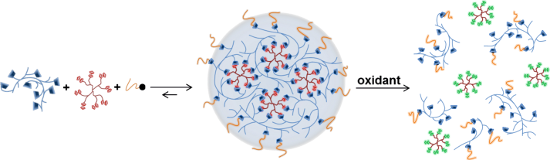
- steric repulsion is important for achieving SNP stability. SNPs of controlled particle size and good stability (up to seven days) were prepared by fine-tuning the ratio of multivalent and monovalent interactions. Finally, reversibility of the SNPs was confirmed by oxidizing the Fc guest moieties in the
- controlled by the stoichiometry of the multivalent guest and the monovalent stabilizer. Finally, the reversibility of the SNPs is assessed by studying the influence of oxidation of the Fc moieties. Results and Discussion Characterization of building blocks The positively charged host CD-PEI was synthesized

Graphical Abstract

Figure 1: Microcalorimetric titrations of a) CD-PEI (CD concentration of 0.088 mM, cell) with Ad-TEG (1.1 mM,...

Figure 2: ITC titration of Fc-PEG (1.03 mM; cell) with native CD (10 mM; burette). H = host and G = guest. Ex...

Scheme 1: a) Schematic representation of the supramolecular nanoparticle (SNP) self-assembly and redox-trigge...

Figure 3: Size determination of SNPs prepared from CD-PEI and Fc8-PAMAM: SEM images (a–c) of the resulting SN...

Figure 4: DLS size determination of SNPs prepared from CD-PEI and Fc8-PAMAM by increasing the [Fc]/[CD] ratio...

Figure 5: Hydrodynamic diameter, d, of SNPs prepared from CD-PEI and Fc8-PAMAM or Ad8-PAMAM measured by DLS a...

Figure 6: DLS size determinations of SNPs prepared from CD-PEI, Fc8-PAMAM, in the absence or presence of a mo...

Figure 7: Size determinations of SNPs prepared from CD-PEI, Fc8-PAMAM and Ad-PEG: SEM images (a–c) of the res...

Figure 8: DLS size determination before (red) and after the addition of the oxidant agent Ce4+ (green) for as...
Photoinduced 1,2,3,4-tetrahydropyridine ring conversions
- Baiba Turovska,
- Henning Lund,
- Viesturs Lūsis,
- Anna Lielpētere,
- Edvards Liepiņš,
- Sergejs Beljakovs,
- Inguna Goba and
- Jānis Stradiņš
Beilstein J. Org. Chem. 2015, 11, 2166–2170, doi:10.3762/bjoc.11.234
- traces of dioxygen was observed. In deaereated aprotic solvents 1 undergoes a reversible one-electron single-step oxidation [16] (+1.00 V in MeCN or +1.25 V in CH2Cl2) while the reversibility of the anodic process disappears immediately after the argon flow through/over the solution has been stopped

Graphical Abstract

Figure 1: Electrochemical oxidation of 1 in deareated (blue) and O2 saturated (red) solutions of CH2Cl2/0.1 M...

Figure 2: The X-ray structures of compounds 1 and 2.

Figure 3: Decrease of the UV absorption band of compound 1 under irradiation (254 nm) in air-saturated CHCl3, ...

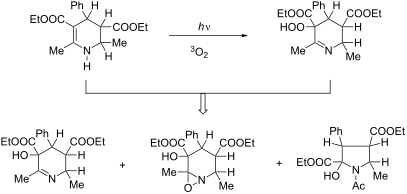
Scheme 1: Photoinduced reaction of 1 in O2 saturated CHCl3 under irradiation by intensive sunlight.

Scheme 2: Heterocycle transformations of 1 in air saturated CHCl3 solutions.

Scheme 3: Proposed mechanism of conversion of oxaziridine 4 to 5.

Figure 4: The X-ray structures of compounds 4 and 5.
Polythiophene and oligothiophene systems modified by TTF electroactive units for organic electronics
- Alexander L. Kanibolotsky,
- Neil J. Findlay and
- Peter J. Skabara
Beilstein J. Org. Chem. 2015, 11, 1749–1766, doi:10.3762/bjoc.11.191
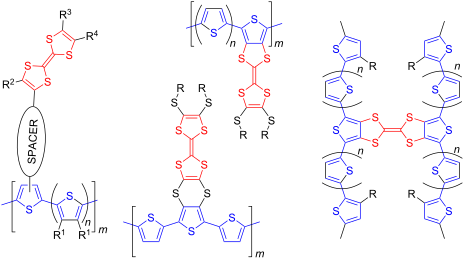
- , with respect to the level of oxidation that is achieved per repeating unit, the excellent electrochemical reversibility observed, and the modest potential window in which the highly doped state is attained. Even for a stable doped system, for example a PEDOT sample heavily doped with

Graphical Abstract

Scheme 1: The synthesis of PT based conjugated systems with the TTF unit incorporated within the polymer back...

Scheme 2: PT with pendant TTF units, prepared by electropolymerisation.

Figure 1: Cyclic voltammograms of copolymers electrodeposited from nitrobenzene solutions of TTF modified mon...

Scheme 3: PT with pendant TTF units prepared by electropolymerisation and post-modification of polymerised PT...

Scheme 4: Synthesis of PT with pendant TTF by post-modification of the polymer prepared by direct arylation.

Scheme 5: Retrosynthetic scheme for the synthesis of the monomer building block which is required for the pre...

Scheme 6: Synthesis of bisfunctionalised derivatives of vinylene trithiocarbonate 21 and 25c required for syn...
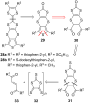
Scheme 7: Retrosynthetic scheme for the synthesis of the building block which is required for the preparation...
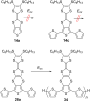
Scheme 8: The monomers 14a, 14c and electropolymerisation of 28a.

Figure 2: Cyclic voltammograms of a thin film of 34 at various scan rates (25 mV, 50 × n mV/s, n = 1–10). Ada...

Scheme 9: Chemical polymerisation of 14b into polymers 35, 37 and 39.

Figure 3: Spectroelectrochemistry of polymers 37 (a) and 34 (b) as thin films deposited on the working electr...

Scheme 10: Photoinduced charge transfer from the TTF of polymer 39 to PC61BM.

Scheme 11: Electropolymerisation of 40 and 41 into polymers 45 and 46, respectively, and Stille polymerisation...

Scheme 12: The synthesis of polymer 48.

Figure 4: Tapping mode AFM height images of polymer 48 film spin-coated from chlorobenzene (left) and chlorof...

Scheme 13: The synthesis of TTF-sexithiophene system 51 and the structure of the parent sexithiophene 53.

Scheme 14: The synthesis of TTF-oligothiophene H-shaped systems 54 (n = 0–2).

Scheme 15: The oxidation of a fused TTF-oligothiophene system.

Figure 5: Molecular structure and packing arrangement of compound 54 (n = 2). Adapted by permission from [92]. Co...

Figure 6: AFM tapping mode images of the compound 54 (n = 1) film cast on an untreated SiO2 substrate surface...
Interactions between tetrathiafulvalene units in dimeric structures – the influence of cyclic cores
- Huixin Jiang,
- Virginia Mazzanti,
- Christian R. Parker,
- Søren Lindbæk Broman,
- Jens Heide Wallberg,
- Karol Lušpai,
- Adam Brincko,
- Henrik G. Kjaergaard,
- Anders Kadziola,
- Peter Rapta,
- Ole Hammerich and
- Mogens Brøndsted Nielsen
Beilstein J. Org. Chem. 2015, 11, 930–948, doi:10.3762/bjoc.11.104
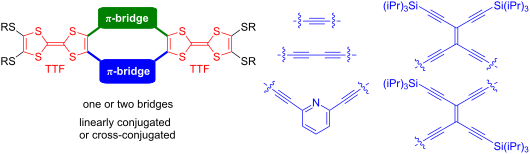
- −1 used for these studies, the reversibility remains unchanged confirming the high stability of the formed radical cation and dication states within each TTF redox site (in further text defined as “polaron” and “bipolaron” states, respectively; see Scheme 4). The small peak separation, ΔE, between

Graphical Abstract

Figure 1: TTF dimers with linearly or cross-conjugated bridging units, acyclic or cyclic bridging units.
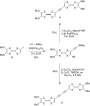
Scheme 1: Synthesis of TTF dimers with alkyne bridges. TMEDA = N,N,N’,N’-tetramethylethylenediamine. MS = mol...
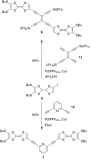
Scheme 2: Synthesis of TTF dimers with TEE and diethynylpyridine bridges.
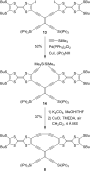
Scheme 3: Synthesis of TTF dimer with radiaannulene core.
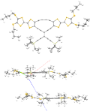
Figure 2: Molecular structure of 8 (top) and packing diagram (bottom). Crystals were grown from CH2Cl2/MeOH. ...

Figure 3: Bond angles for the cyclic core of 8 (X-ray crystal structure data).
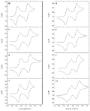
Figure 4: Cyclic voltammograms obtained for the oxidation of compounds 1a ([10]), 2a ([10]), and 3b–8 (this work, ca....

Figure 5: Selected bis-TTFs from literature [20-23].

Figure 6: Cyclic voltammograms obtained for the reduction of compounds 1a, 2a, 6, and 8 in CH2Cl2 (0.1 M Bu4N...

Figure 7: One possible resonance form of the radical anion of 8 with a 14 πz aromatic core.

Scheme 4: Spin–spin interactions resulting from oxidation of TTFdimers.
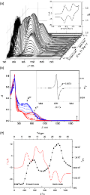
Figure 8: In situ EPR−UV–vis–NIR cyclic voltammetry of 2b (1 mM) (a) potential dependence of difference vis–N...
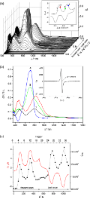
Figure 9: In situ EPR−UV–vis–NIR cyclic voltammetry of 4 (0.4 mM): (a) potential dependence of difference vis...
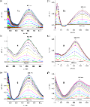
Figure 10: Vis–NIR spectral changes observed during anodic oxidation of each TTF unit to cation radical within...

Figure 11: UV–vis–NIR absorptions of 1b (2.4 mM), 4 (3.5 mM), 5 (2.9 mM), and 8 (1.9 mM) in CH2Cl2 + 0.1 M Bu4...
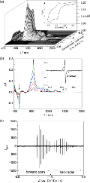
Figure 12: In situ EPR−UV–vis–NIR cyclic voltammetry of 2b (1 mM) in the cathodic region: (a) potential depend...
Impact of multivalent charge presentation on peptide–nanoparticle aggregation
- Daniel Schöne,
- Boris Schade,
- Christoph Böttcher and
- Beate Koksch
Beilstein J. Org. Chem. 2015, 11, 792–803, doi:10.3762/bjoc.11.89
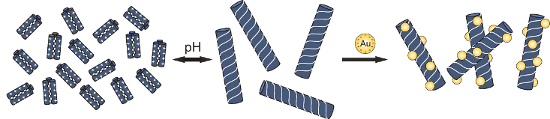
- assembly [9]. Peptide-based nanoparticle aggregation was demonstrated first by Woolfson and coworkers by means of coiled-coil peptides that were immobilized on the nanoparticle surface [26]. Reversibility of the assembly formation, a key feature of a switchable system, has thus far been explored only for a
- few nanoparticle systems by means of temperature [19]; most of the assemblies are irreversibly formed [9], or reversibility is only achieved by adding, for example, oxidizing reagents [27]. Continuous switch behaviour between aggregated and non-aggregated nanoparticles is not obtained as the formation

Graphical Abstract

Figure 1: Helical wheel representation and sequences of the peptides used in this study.

Figure 2: CD spectra of 30 µM peptide VW05, R1A3, R2A2, R2A3, R2A4 and R2A5 at (A) pH 9 and (B) pH 11 in 10 m...

Figure 3: (A) TEM of 100 µM R2A2 in 10 mM Tris/HCl buffer, pH 9. Sample was negative stained with 2% PTA; def...

Figure 4: (A) Dynamic light scattering of 0.05 µM Au/MUA nanoparticles at pH 9. (B) Cryo TEM image of 0.05 µM...

Figure 5: CD spectra of 15 µM peptide in the presence 0.05 µM Au/MUA nanoparticles at pH 9 after (A) 0 hours ...

Figure 6: Agarose gel of (A) VW05, (B) R1A3, and (C) R2A2 in the presence of 0.05 µM Au/MUA nanoparticles at ...

Figure 7: Cryo TEM images of 100 µM R2A2 and 0.05 µM Au/MUA nanoparticles at pH 9 at a defocus of (A) −1.2 µm...



