Search results
Search for "B" in Full Text gives 3312 result(s) in Beilstein Journal of Organic Chemistry. Showing first 200.
Synthesis and applications of alkenyl chlorides (vinyl chlorides): a review
Beilstein J. Org. Chem. 2026, 22, 1–63, doi:10.3762/bjoc.22.1
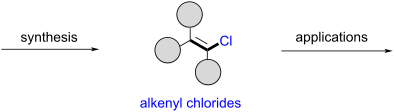
- products 28–35, 38 and 39 [56]). The yields varied considerably depending on the substrate, leading to the following conclusions: (a) unhindered ketones lacking functional groups generally react in high yields; (b) sterically hindered ketones provide products 33, 36, and 39 with low yields; (c) electron
- chlorides was also utilized in the total synthesis of (S)-jamaicamide C and laingolide B (not shown) [121][122]. Schwartz’s work on alkenylzirconium complexes revealed high-yielding, stereoretentive transformations under similar conditions (Scheme 29H) [123]. In a complementary study, Srebnik showed that
- with SOCl2, and treatment with base (Scheme 38; yields refer to the transformation of B → C) [139]. A reaction which includes a fluorine–chlorine exchange and subsequent elimination of HCl was reported by Shibata and co-workers (Scheme 39) [140]. In this reaction the AlEt2Cl has a dual role of fluorine























One-pot synthesis of ethylmaltol from maltol
Beilstein J. Org. Chem. 2025, 21, 2755–2760, doi:10.3762/bjoc.21.212

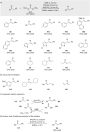
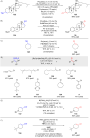
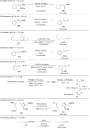
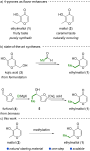
- to ethylmaltol (1) combined with the rather harsh deprotection conditions, led us to investigate other masking groups. Next, we turned towards silyl protecting groups as they offered (a) facile tuning of stability and (b) the opportunity for acid-mediated deprotection during aqueous work-up
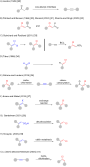
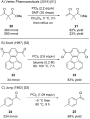
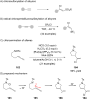
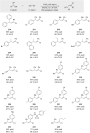
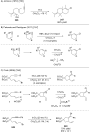
- ethylmaltol (1) is the use of maltol (2) as the starting material, which is readily available from tree barks. Importance and synthetic approaches to ethylmaltol (1). (a) Ethylmaltol (1) is widely used as a flavor enhancer. (b) Reported syntheses. (c) One-step synthesis from naturally occurring maltol (2


Sustainable electrochemical synthesis of aliphatic nitro-NNO-azoxy compounds employing ammonium dinitramide and their in vitro evaluation as potential nitric oxide donors and fungicides
Beilstein J. Org. Chem. 2025, 21, 2739–2754, doi:10.3762/bjoc.21.211
- Alexander S. Budnikov Nikita E. Leonov Michael S. Klenov Andrey A. Kulikov Igor B. Krylov Timofey A. Kudryashev Aleksandr M. Churakov Alexander O. Terent'ev Vladimir A. Tartakovsky N.D. Zelinsky Institute of Organic Chemistry of the Russian Academy of Sciences, 47 Leninsky prosp., 119991 Moscow
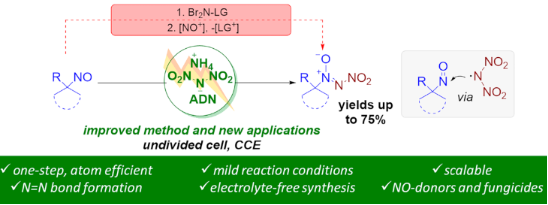
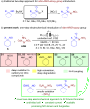
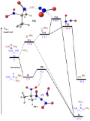
- -nitrosopropane (1a) is expected to be barrierless with the formation of N-oxyl radical B. The radical B undergoes very low-barrier (ΔG≠ 5.5 kcal/mol) fragmentation with the release of NO2 molecule and formation of the final product 2a. An alternative pathway for the formation of 2a is a direct NO2 extrusion from
- ]/CPCM(MeCN) level of theory (in the case of >15 conformers, 15 most stable according to GFN2-xTB were analyzed). CV-curves of 0.01 M solutions of a) 1a (blue), b) 1f (azure), c) 1c (pink), d) 1i (yellow), e) S4 (red), f) S3 (green), g) S2 (brown), and h) S1 (orange) in 0.1 M n-Bu4NBF4 solution in MeCN





Total synthesis of asperdinones B, C, D, E and terezine D
Beilstein J. Org. Chem. 2025, 21, 2730–2738, doi:10.3762/bjoc.21.210
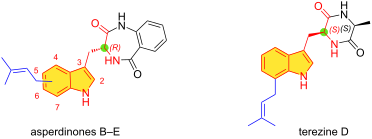
- members of prenylated indole alkaloids exhibiting α-glucosidase activity is described. Asperdinones B, C, D, and E are characterized by the presence of a (3R)-3-indolylmethylbenzodiazepine-2,5-dione unit at C-3 of C4–C7 prenylated indoles. Methods of direct and indirect prenylation of indole and
- -indolylmethylbenzodiazepine-2,5-diones known as asperdinones B, C, D, and E (1–4) exhibiting moderate α-glucosidase inhibitory activity was recently isolated from cultures of Aspergillus spinosus WHUF0344 (Figure 1) [14]. The putative biogenetic precursor, (3R)-3-indolylmethylbenzodiazepine-2,5-dione 5 was also isolated as a
- )-configured asperdinones as new members of this small subfamily of 7-prenyltryptophans with appended benzodiazepine-2,5-dione and diketopiperazine units piqued our interest. Herein, we report our efforts toward the total synthesis of asperdinones B, D, C, and E (1–4) and terezine D (6). Considering their


Competitive cyclization of ethyl trifluoroacetoacetate and methyl ketones with 1,3-diamino-2-propanol into hydrogenated oxazolo- and pyrimido-condensed pyridones
Beilstein J. Org. Chem. 2025, 21, 2716–2729, doi:10.3762/bjoc.21.209
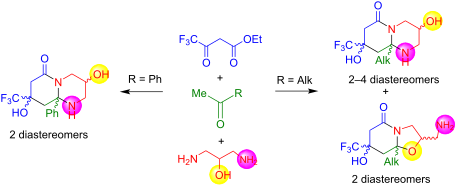
- hetero- and carbocycles. To date, we have proposed new protocols for the synthesis of 2-pyridones [20], imidazo[1,2-a]pyridones and pyrido[1,2-a]pyrimidinones [21][22][23][24], pyrido[2,1-b]oxazinones and oxazolo[3,2-a]pyridones [25] using ammonia, 1,2- and 1,3-diamines or 1,2- and 1,3-amino alcohols
- octahydrocyclopenta[b]oxazolo[3,2-a]pyridin-5-ones in the reactions of 3-oxo ester 1 and cycloketones with amino alcohols [26]. However, these attempts turned out to be unsuccessful because of the increased occurrence of side processes (56%); however, an increase in the proportion of the cis,trans
- at the acyl moiety with the amino group of diamino alcohol 3 to generate a three-component intermediate B (Scheme 4). The latter undergoes intramolecular cyclization involving the C=N bond in two equally probable directions: by adding a free amino group to form a hexahydropyrimidine ring of


Mechanistic insights into hydroxy(tosyloxy)iodobenzene-mediated ditosyloxylation of chalcones: a DFT study
Beilstein J. Org. Chem. 2025, 21, 2703–2715, doi:10.3762/bjoc.21.208
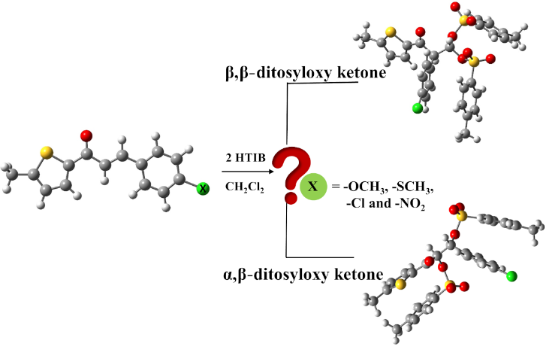
- -mediated ditosyloxylation of α,β-unsaturated carbonyl compounds (chalcones) bearing an aryl group at β-position (compound A) leading to formation of two possible products, that are: α-arylated β,β-ditosyloxy-substituted carbonyl compound (compound B – geminal product) and β-arylated α,β-ditosyloxy
- free energy profile for HTIB-mediated ditosyloxylation of chalcone with X = -NO2 leading to the formation of the α,β-ditosyloxy ketone. Free energies are reported in kcal/mol. Bond lengths are reported in Å. Structure of reactant (chalcone, compound A), geminal product (compound B), vicinal product


Tandem hydrothiocyanation/cyclization of CF3-iminopropargyl alcohols with NaSCN in the presence of AcOH
Beilstein J. Org. Chem. 2025, 21, 2694–2702, doi:10.3762/bjoc.21.207
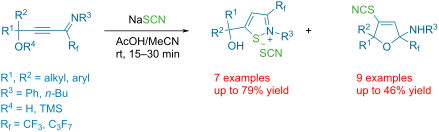
- dihydrofurans 3d,e remained comparable to those of 3a,b. Perhaps the yields of salts 2d,e were affected by steric factors hindering the intramolecular cyclization or their stability under the reaction conditions. Using TMS-protected secondary and primary iminopropargyl alcohols 1f,g (due to their instability
- and 3a appeared immediately upon mixing the starting reagents (Figure 1a and b). This indicated that the cyclization occurred almost immediately. Moreover, in the NMR spectra of the 1g/NaSCN/AcOH reaction mixture in MeCN we detected signals assigned to isothiozolium salt 2g (1H NMR: δ 8.30 s (CH
- stirring. The reaction mixture was heated in a glycerol bath at 80 °C for 10 h. The solvent was evaporated and the residue was purified by column chromatography (eluting with hexane/acetone 1:1) to obtain the mixture of products 4 and 5. 1H and 19F NMR monitoring of 1a/NaSCN/AcOH (a, b) and 1g/NaSCN/AcOH



Recent advancements in the synthesis of Veratrum alkaloids
Beilstein J. Org. Chem. 2025, 21, 2657–2693, doi:10.3762/bjoc.21.206
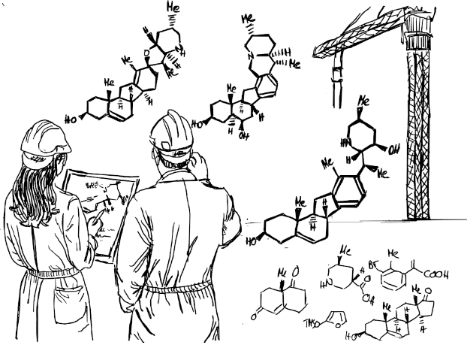
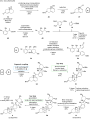
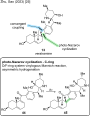
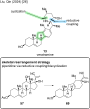
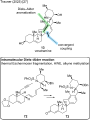
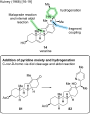
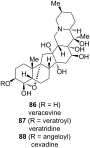
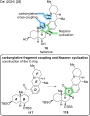
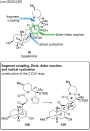
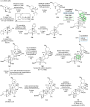
- metathesis for closing the D-ring (Scheme 7). For the left-hand fragment including the A-, B-, and C-ring, the synthesis started from commercially available (S)-Wieland–Miescher ketone (34), which can also be synthesized via a three-step sequence (Scheme 8). To access 35, several protecting group
- butenolide moiety, selective α-methylation, formation of a lactam, reduction of the former to an amine, and installation of two different protecting groups. Aryl bromide 53 (fragment B) was then ready for coupling. Lithium–halogen exchange in fragment B 53 and subsequent 1,2-addition to fragment A 47
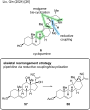
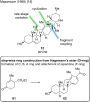
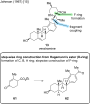
- (12), only one synthesis is reported [14]. The Masamune group disclosed this synthesis in 1968, starting with a sequential ring construction of the C, B and A-ring from Hagemann’s ester (61) to C-nor-D-homo steroid precursor 62 (Scheme 13). The piperidine F-ring was then coupled after D-ring
















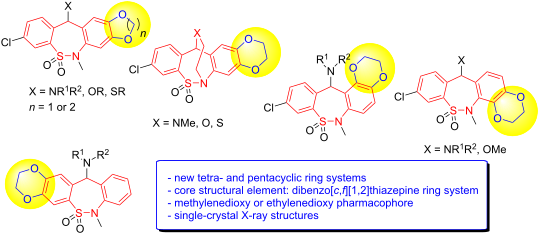
Synthesis of new tetra- and pentacyclic, methylenedioxy- and ethylenedioxy-substituted derivatives of the dibenzo[c,f][1,2]thiazepine ring system
Beilstein J. Org. Chem. 2025, 21, 2645–2656, doi:10.3762/bjoc.21.205
- , 95%; ii) method A: MeI, K2CO3, DMF, rt, 22 h, crude: 99%; iii) method B: methyl N-methylanthranilate, pyridine, 0–5 °C, 2 h, rt, 17 h, 71%; iv) NaOH, MeOH/H2O, reflux, 1 h, crude: 95%; v) 1. SOCl2, DCM, reflux, 8.5 h; 2. AlCl3, 0–5 °C, 1.5 h, reflux, 3 h, 26%; vi) NaBH4, DMF/EtOH, rt, 2 h, 93%; vii


Chemoenzymatic synthesis of the cardenolide rhodexin A and its aglycone sarmentogenin
Beilstein J. Org. Chem. 2025, 21, 2637–2644, doi:10.3762/bjoc.21.204
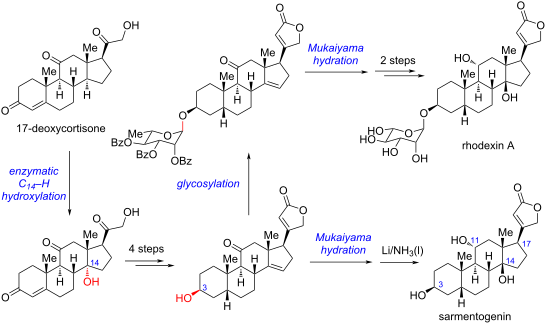
- – sarmentogenin and ʟ-rhamnose connected by the C3–O bond. In the steroidal skeleton, both the A/B and C/D rings are cis fused, which is different from common steroids. Besides, the steroidal skeleton is moderately oxidized at the C3, C11, and C14 positions. The introduction of the hydroxy groups and the
- C14 β-OH group. The revised synthetic route is described in Scheme 2. At first, 4 was subjected to a Pd/C-catalyzed hydrogenation to afford the desired A/B-cis fused intermediate 7 along with its C5 epimer as a 2:1 separable mixture in a quantitative yield. By treating 7 with the Bestmann ylide



Thiazolidinones: novel insights from microwave synthesis, computational studies, and potentially bioactive hybrids
Beilstein J. Org. Chem. 2025, 21, 2618–2636, doi:10.3762/bjoc.21.203
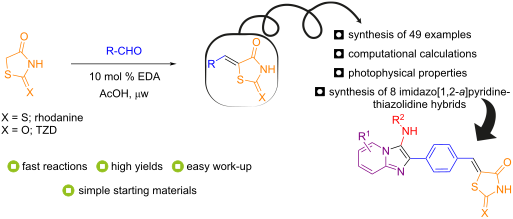
- ], tetrahydrobenzo[b]pyrans [68], and pyrrolo[3,4-c]quinolinediones [69]. EDDA favors the enol formation of the thiazolidinone (2) through hydrogen donation from the protonated amino group, thus facilitating its removal and formation of enol ii (Scheme 4). This enol adds to the carbonyl group of the aromatic
- : a) 1H NMR spectra (600 MHz, DMSO-d6) with expansions, and b) 13C NMR spectra (151 MHz, DMSO-d6) with expansions. a) Molecular structure of 3n with crystallographic labeling (50% probability displacement). b) Perspective views of intermolecular hydrogen bonds (dotted lines) of 3n. (‘) symmetry
- experimental spectrum. In blue, suppressed or absent carbon atoms bound to hydrogen atoms. a) Visual impressions of the solvatochromic study in various solvents (10−5 M) after excitation with a natural light. b) UV–vis absorption spectra of 3n in different solvents (10−5 M) at room temperature. c) Normalized






Efficient solid-phase synthesis and structural characterization of segetalins A–H, J and K
Beilstein J. Org. Chem. 2025, 21, 2612–2617, doi:10.3762/bjoc.21.202
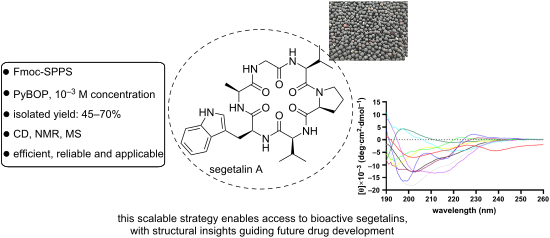
- , culminating in cyclization mediated by N,N'-dicyclohexylcarbodiimide (DCC)/N-methylmorpholine (NMM) at 0 °C for 7 days [18]. This method, however, is lengthy, operationally complex, difficult for product isolation, and carries a significant risk of racemization. Wong and Jolliffe synthesized segetalins B (2
- -tail cyclization step proved challenging. Initial attempts using common coupling reagents such as 1-[bis(dimethylamino)methylene]-1H-1,2,3-triazolo[4,5-b]pyridinium 3-oxide hexafluorophosphate (HATU), HBTU, or HOBt alone in DMF failed to produce any detectable cyclized product [24][25][26]. Ultimately


Silica gel with covalently attached bambusuril macrocycle for dicyanoaurate sorption from water
Beilstein J. Org. Chem. 2025, 21, 2604–2611, doi:10.3762/bjoc.21.201
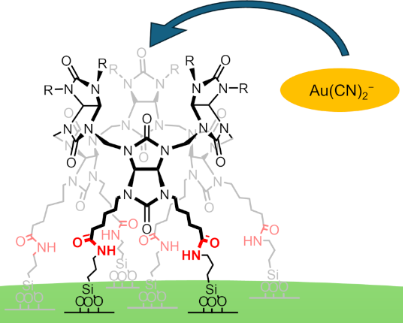
- min at 250 rpm. Afterwards, SG-NHCO-BU1 or SG-BU1 was left to settle and the supernatant was analyzed. The actual concentration of the anion left in the solution was calculated from a calibration curve. A) Thermogravimetric analyses of BU1, SG, a-SG, and SG-NHCO-BU1. B) UV–vis titration of K[Au(CN)2
- (1 mM, 3 mL). A) Depending on the amount of the used material. B) Measured in the absence (Au) and in the presence of K[Ag(CN)2] (Au + Ag); experiments were done using 30 mg of the materials. C) Dicyanoaurate sorption efficiency before (1st cycle) and after (following cycles) washing with NaBr


Visible-light-driven NHC and organophotoredox dual catalysis for the synthesis of carbonyl compounds
Beilstein J. Org. Chem. 2025, 21, 2584–2603, doi:10.3762/bjoc.21.200
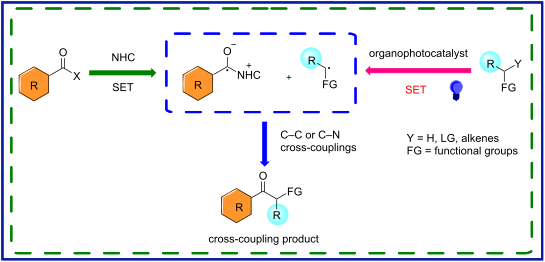
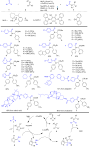
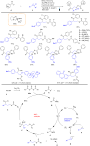
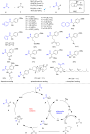
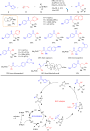
- , generating an N-centered radical species C. This species subsequently undergoes a rapid C–N cross-coupling with ketyl radical B. This cross-coupling method offers a transition-metal free route to highly substituted amides 3 from aldehydes 1 and imines 2, without the need for any external reductants or
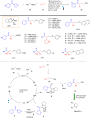
- , tolerates a variety of functional groups, and offers a wide substrate scope. Under the optimized conditions, Rb2CO3 provided better results than DMAP and Cs2CO3. The acyl azolium complex B was synthesized from acyl imidazole 9 using an NHC and Rb2CO3 as the base. Considering the redox potential of 4CzIPN
- and the acylazolium complex B (Ep = −0.81 V vs SCE), single-electron transfer (SET) reduction of B was thermodynamically feasible; however, the efficiency was found to be significantly low. The oxidation potential was measured to be around [Ep = +0.72 V] vs SCE, indicating that it is sufficiently





Recent advances in total synthesis of illisimonin A
Beilstein J. Org. Chem. 2025, 21, 2571–2583, doi:10.3762/bjoc.21.199
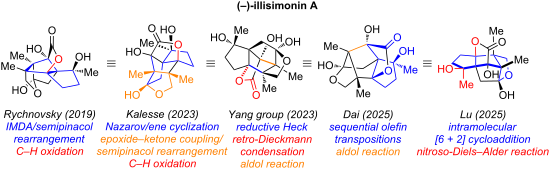
- deprotection and oxidation of the secondary alcohol, yielded the cyclization precursor 35. A B(C6F5)3-catalyzed tandem Nazarov/ene cyclization of 35 provided the key spirocyclic intermediate 37. The tertiary alcohol was protected in situ with TESOTf to suppress retro-aldol side reactions. Notably, prior TES






Total syntheses of highly oxidative Ryania diterpenoids facilitated by innovations in synthetic strategies
Beilstein J. Org. Chem. 2025, 21, 2553–2570, doi:10.3762/bjoc.21.198
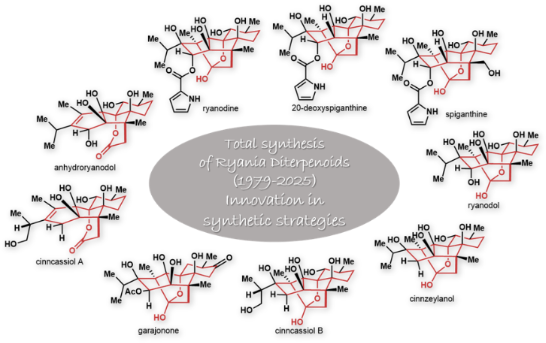
- of cardiovascular diseases [21][22][23][24]. Additionally, compounds such as cinnzeylanol (6), cinncassiol B (7), and cinncassiol A (9) exhibit various potential biological activities, including insecticidal, ion channel modulatory, and immunosuppressive effects [25][26][27][28][29]. Review Synthetic
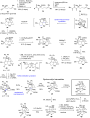
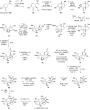
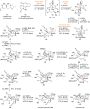
- bond, and a subsequent transannular aldol reaction efficiently assembles the B and C rings, yielding the ABC tricyclic core 16. Further manipulations included the introduction of a methyl group at C9, adjustments of the oxidation state, and the installation of a mesylate group at C10, leading to
- -ryanodol, cinnzeylanol, and cinncassiols A,B In 2014, the Inoue group at the University of Tokyo reported a synthetic strategy for ryanodol (4) that leveraged substrate symmetry design, employing intramolecular radical coupling and olefin metathesis as key steps [46] (Scheme 4). Recognizing an embedded







Ni-promoted reductive cyclization cascade enables a total synthesis of (+)-aglacin B
Beilstein J. Org. Chem. 2025, 21, 2548–2552, doi:10.3762/bjoc.21.197
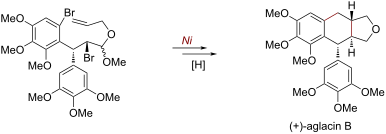
- Abstract The total synthesis of bioactive (+)-aglacin B was achieved. The key steps include an asymmetric conjugate addition reaction induced by a chiral auxiliary and a nickel-promoted reductive tandem cyclization of the elaborated β-bromo acetal, which led to the efficient construction of the
- aryltetralin[2,3-c]furan skeleton embedded in this natural product. Keywords: aryltetralin; conjugate addition; cyclolignan; nickel; reductive coupling; Introduction Proksch and co-workers isolated aglacins A, B, C, and E (1–4, Figure 1) from the methanolic extract of stem bark of Aglaia cordata Hiern from
- the tropical rain forests of the Kalimantan region (Indonesia) [1][2]. These cyclic ether natural products belong to the typical aryltetralin lignans, which have already attracted broad attention from the synthetic community [3][4][5]. Zhu and co-workers disclosed a concise synthesis of (±)-aglacins B


Rapid access to the core of malayamycin A by intramolecular dipolar cycloaddition
Beilstein J. Org. Chem. 2025, 21, 2542–2547, doi:10.3762/bjoc.21.196
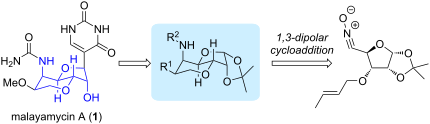
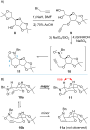
- perhydrofuropyran core highlighted in blue). Synthetic strategies toward malayamycin A. (A) Previous synthetic route. (B) Our strategy toward the core skeleton. Rational for intramolecular dipolar cycloaddition. Proposed pathway for the enone formation. Modified route to access the core of malayamycins. Attempting




Synthesis and characterization of a isothiouronium-calix[4]arene derivative: self-assembly and anticancer activity
Beilstein J. Org. Chem. 2025, 21, 2535–2541, doi:10.3762/bjoc.21.195
- Giuseppe Granata Loredana Ferreri Claudia Giovanna Leotta Giovanni Mario Pitari Grazia Maria Letizia Consoli CNR-Institute of Biomolecular Chemistry, Via Paolo Gaifami 18, 95126 Catania, Italy Dream Factory Lab, Vera Salus Ricerca S.r.L., Via Sigmund Freud 62/B, 96100, Siracusa, Italy J4Med Lab
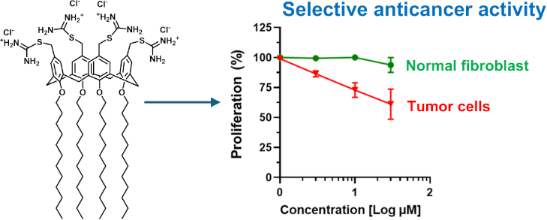
- kinetics in renal cancer 786O and skin fibroblast WS1 cells. Data represent the percentage of proliferation with respect to the correspondent vehicle DMSO controls. ***, p < 0.001 vs the respective vehicle control by 2-way ANOVA; ###, p < 0.001 vs correspondent WS1 conditions by 2-way ANOVA. B) Calculated


Isoorotamide-based peptide nucleic acid nucleobases with extended linkers aimed at distal base recognition of adenosine in double helical RNA
Beilstein J. Org. Chem. 2025, 21, 2513–2523, doi:10.3762/bjoc.21.193
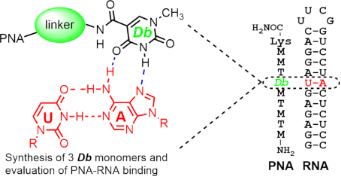
- PNA oligomer with the N-(2-aminoethyl)glycine backbone (in red); (b) Representative monocyclic synthetic nucleobase triples through Hoogsteen hydrogen bonding (blue dashed lines). Watson–Crick hydrogen bonds are in red (dashed lines). Representative extended nucleobase triples through Hoogsteen
- linker are highlighted in red. Sequences for RNA hairpins and PNA ligands used for binding studies. Major-groove view of hydrogen-bonding interactions in the (A) Db1*U–A triplet, (B) Db2*U–A triplet, (C) Db2*C–G triplet, and (D) Db3*U–A triplet. Carbon, hydrogen, oxygen, and nitrogen are labelled in


Effect of a photoswitchable rotaxane on membrane permeabilization across lipid compositions
Beilstein J. Org. Chem. 2025, 21, 2498–2512, doi:10.3762/bjoc.21.192
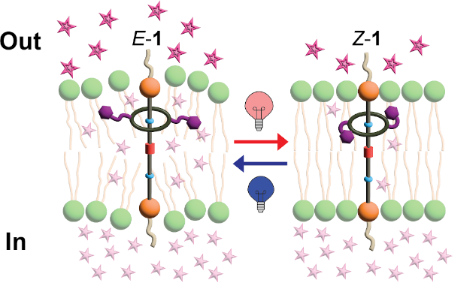
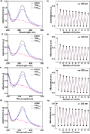
- modulate membrane permeability in large unilamellar vesicles (LUVs) of varying lipid compositions. Upon photoisomerization, the rotaxane significantly enhanced the release of the hydrophilic dye sulforhodamine B in vesicles composed of EYPC/Chol 8:2, with release increasing from 29% (non-irradiated) to 59
- permeabilization was assessed by monitoring the release of encapsulated sulforhodamine B dye, serving as a reporter for membrane perturbation. Specifically, we examined LUVs in the liquid-disordered (Ld), liquid-ordered (Lo), and gel (Lβ) phases. As control molecules, we also investigated the membrane perturbation
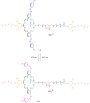
- all tested lipid compositions. Overall, rotaxane 1 exhibited efficient and reversible photoswitching over ten cycles with minimal photofatigue, regardless of the membrane environment. Sulforhodamine B release from LUVs of varying lipid composition in the absence of light We assessed the effects of the




Assembly strategy for thieno[3,2-b]thiophenes via a disulfide intermediate derived from 3-nitrothiophene-2,5-dicarboxylate
Beilstein J. Org. Chem. 2025, 21, 2489–2497, doi:10.3762/bjoc.21.191
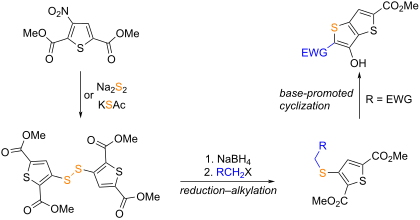
- Roman A. Irgashev Postovsky Institute of Organic Synthesis, Ural Branch of the Russian Academy of Sciences, Ekaterinburg, 620137, Russia 10.3762/bjoc.21.191 Abstract A versatile synthetic route to thieno[3,2-b]thiophenes was elaborated from dimethyl 3-nitrothiophene-2,5-dicarboxylate
- -dicarboxylates by its one-pot reduction–alkylation using NaBH4 in DMF followed by an alkylating agent. Base-promoted cyclization of electron-deficient 3-alkylthio derivatives furnished 2-aryl-, 2-aroyl-, and 2-cyano-substituted thieno[3,2-b]thiophenes, bearing a 3-hydroxy group. This protocol broadens access to
- functionalized thieno[3,2-b]thiophenes with potential applications in pharmaceutical and materials chemistry. Keywords: aromatic nucleophilic substitution; disulfide derivative; 3-nitrothiophene; organic disulfides; thieno[3,2-b]thiophene; thiophene ring closure; Introduction Thieno[3,2-b]thiophene (TT



Palladium-catalyzed regioselective C1-selective nitration of carbazoles
Beilstein J. Org. Chem. 2025, 21, 2479–2488, doi:10.3762/bjoc.21.190
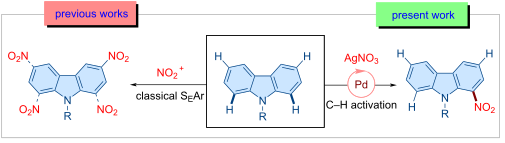
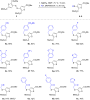
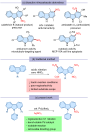
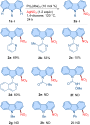
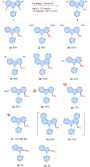
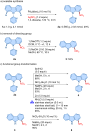
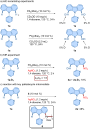
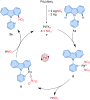
- ). Plausible catalytic cycle. (a) Representative examples of bioactive nitrocarbazoles. (b) Traditional electrophilic aromatic substitution approach for the nitration of carbazole. (c) Present work: palladium-catalyzed directed C1-selective nitration reaction. Effect of directing groups on the nitration of the


Synthesis of the tetracyclic skeleton of Aspidosperma alkaloids via PET-initiated cationic radical-derived interrupted [2 + 2]/retro-Mannich reaction
Beilstein J. Org. Chem. 2025, 21, 2470–2478, doi:10.3762/bjoc.21.189
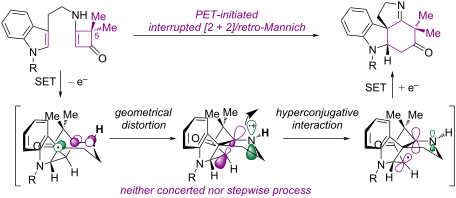
- photoredox catalysis) processes [8][9][10]. Cyclobutenone (A) is a versatile C4 synthon [11] – its [2 + 2] photocyclization yields B, featuring a strained bicyclo[2.2.0]hexane unit [12], which can fragment to form C (Figure 1a) [13][14]. However, competitive C1–C4 bond cleavage under irradiation or heating
- concerted nor stepwise. These findings shed light on the mechanistic innovation of a PET-initiated radical-derived reaction that was driven by the ring-strain release. Synthetic plan. a) General model of cyclobutenone bond cleavage; b) our previously reported method; c) plan for indole Aspidosperma alkaloid
- free energies were calculated at the B3LYP-D3/def2-tzvp//B3LYP/6-31G(d) level in MeCN. b) Spin density of IN4 (isovalue = 0.004). c) IRC analysis of TS2 (red line) and bond-length changes of C19–C3 (yellow line) and C19–C12 (blue line) along IRC path. d) Mayer bond order changes of selected structures


The intramolecular stabilizing effects of O-benzoyl substituents as a driving force of the acid-promoted pyranoside-into-furanoside rearrangement
Beilstein J. Org. Chem. 2025, 21, 2456–2464, doi:10.3762/bjoc.21.187
- Alexey G. Gerbst Sofya P. Nikogosova Darya A. Rastrepaeva Dmitry A. Argunov Vadim B. Krylov Nikolay E. Nifantiev Laboratory of Glycoconjugate Chemistry, N.D. Zelinsky Institute of Organic Chemistry, Russian Academy of Sciences, Leninsky Prospect 47, 119991 Moscow, Russian Federation 10.3762/bjoc
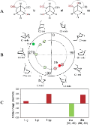
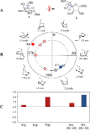
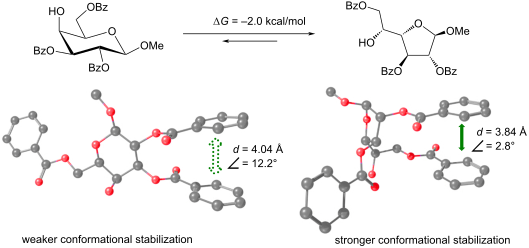
- +60° there were produced some conformers with the energy of the furanoside substantially lower than that of the pyranoside form. The energies are provided in Supporting Information File 1, Table S2 and the graphical representation is given in Figure 4C, bars 2-a and 2-b, and Figure 4B. The Altona
- determined by 1H NMR spectroscopy. (A) Conformers arising during the rotation around the C5–C6 bond in pyranosides. (B) Furanoside ring conformers of monosaccharide 2 in the pseudorotation diagram. The dashed colored circles denote the initial conformations taken for optimization. Solid colored circles