


Search results
Search for "Michael reaction" in Full Text gives 92 result(s) in Beilstein Journal of Organic Chemistry.
Efficient synthesis of β’-amino-α,β-unsaturated ketones
Beilstein J. Org. Chem. 2013, 9, 486–495, doi:10.3762/bjoc.9.52

- devised for the asymmetric synthesis of β’-amino-protected-α,β enones, a valuable intermediate for the synthesis of trans 2,6-disubstituted piperidines. The scope and limitation of the aza-Michael reaction were studied with a range of substrates. We are currently working on the application of this


Reactions of salicylaldehyde and enolates or their equivalents: versatile synthetic routes to chromane derivatives
Beilstein J. Org. Chem. 2012, 8, 2166–2175, doi:10.3762/bjoc.8.244

- 60. However, the reaction suffered from very poor yields (15–21%). The reaction is thought to proceed through the condensation of aldehyde 60 and prolinol 61 to give a chiral iminium-ion intermediate. This intermediate then undergoes a domino reaction involving a Michael reaction with salicylaldehyde


Mechanochemistry assisted asymmetric organocatalysis: A sustainable approach
Beilstein J. Org. Chem. 2012, 8, 2132–2141, doi:10.3762/bjoc.8.240
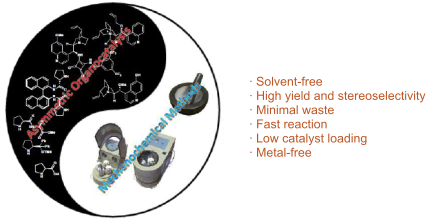
- enantioselectivity (56–86% ee). The reactions carried out under HSBM afford (S)-3-hydroxyindole with higher enantioselectivity, relative to the reaction performed under traditional stirring in solvent. Michael reaction The asymmetric organocatalytic Michael addition to various unsaturated acceptors is one of the
- ball-milling conditions. O-Lauroyl-trans-4-hydroxyproline (VII) was identified as the best catalyst in aqueous media, whilst α,α-diphenylprolinol trimethylsilyl ether (VIII) turned out to be the best catalyst under ball-milling conditions. Michael reaction of aliphatic aldehydes 6 with nitroalkenes 7
- with conventional stirring, because when the reaction was carried out by conventional stirring, the product yield and stereoselectivity deteriorated significantly. Xu and co-workers reported a highly enantioselective organocatalytic Michael reaction of 1,2-carbonyl compounds to nitro-olefins under


Organocatalytic tandem Michael addition reactions: A powerful access to the enantioselective synthesis of functionalized chromenes, thiochromenes and 1,2-dihydroquinolines
Beilstein J. Org. Chem. 2012, 8, 1668–1694, doi:10.3762/bjoc.8.191
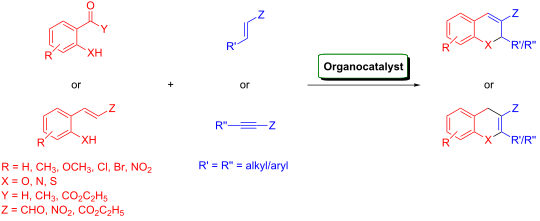
- high yield (up to 90%) and enantioselectivity (up to 99%), whereas compound 2 having electron-withdrawing groups provided poor results. Very recently, Xu et al. [46] reported an improved protocol for the domino-oxa-Michael reaction of salicylaldehydes 1 with α,β-unsaturated aldehydes 2 employing
- ).The protocol involved a tandem oxa-Michael–Michael reaction of 3-methyl-but-2-enal (22) and (E)-2-(2-nitrovinyl)-benzene-1,4-diol (21) followed by a domino Michael–aldol condensation with aldehyde 24 in the presence of TMS-protected diphenylprolinol Ib/AcOH as catalyst, affording the hexahydro-6H
- %) (Scheme 31). In this cascade reaction, the installation of electron-withdrawing groups on the amino moiety of 2-aminobenzaldehydes is anticipated to increase the aniline N–H acidity, the abstraction of which by the tertiary amine leads to an aza-Michael reaction. The thiourea group in the chiral catalyst


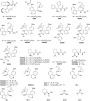




Synthesis and evaluation of new guanidine-thiourea organocatalyst for the nitro-Michael reaction: Theoretical studies on mechanism and enantioselectivity
Beilstein J. Org. Chem. 2012, 8, 1485–1498, doi:10.3762/bjoc.8.168
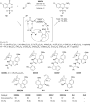
- produces the Michael product 15 with 66% yield in only 2 h. We therefore decided to study the solvent effects on the reaction outcome in the nitro-Michael reaction of diethylmalonate with trans-β-nitrostyrene further. The results are shown in Table 1. Whereas Michael reactions performed in dichloromethane
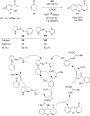
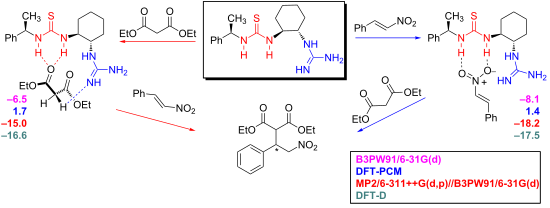
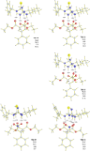
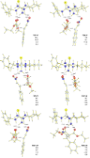
- systems, we decided to carry out a computational investigation of this guanidine-thiourea catalysed nitro-Michael reaction employing density functional calculations. Theoretical studies: DFT calculations The main goal of our calculations was to gain insight into the mechanism of the nitro-Michael addition
- not considered for the further studies. A similar Michael reaction of 1,3-dicarbonyl compounds with nitroolefins has been studied in some detail before [57][59]. It is generally proposed that the reaction proceeds first by deprotonation of the acidic proton of malonate 14 followed by formation of a



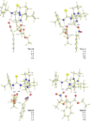
Organocatalytic asymmetric addition of malonates to unsaturated 1,4-diketones
Beilstein J. Org. Chem. 2012, 8, 1452–1457, doi:10.3762/bjoc.8.165
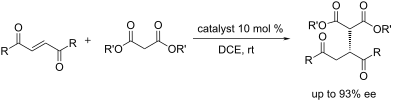
- calculated VCD spectra of the reaction product 3a. Keywords: Michael addition; non-covalent catalysis; organocatalysis; squaramide; thiourea; Introduction The asymmetric 1,4-conjugated addition (Michael reaction) of C-nucleophiles to enones is a powerful tool for obtaining a significant variety of


Stereoselective, nitro-Mannich/lactamisation cascades for the direct synthesis of heavily decorated 5-nitropiperidin-2-ones and related heterocycles
Beilstein J. Org. Chem. 2012, 8, 567–578, doi:10.3762/bjoc.8.64
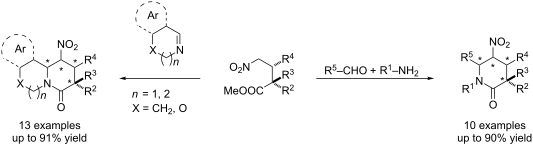
- with the generally high diastereocontrol in the formation of piperidinones 1a–j and 2a–l is interesting and worthy of further commentary. With the knowledge that the retro-Michael reaction does not occur under standard reaction conditions (Scheme 4) and assuming that the final step of the cascade (the


Catalyst-free and solvent-free Michael addition of 1,3-dicarbonyl compounds to nitroalkenes by a grinding method
Beilstein J. Org. Chem. 2012, 8, 534–538, doi:10.3762/bjoc.8.61
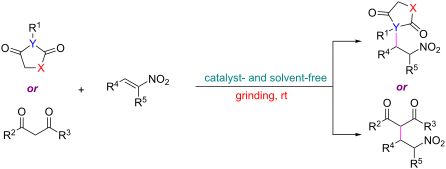
- ). Some aromatic 1,3-dicarbonyl compounds were also successfully used as donors in this Michael reaction in moderate to good yields (Table 1, entries 18–21). In addition, furylnitrostyrene (1m) reacted with 1,3-cyclopentanedione (2a) as well as furan-2,4(3H,5H)-dione (2b) to give the corresponding


Synthesis and characterization of new diiodocoumarin derivatives with promising antimicrobial activities
Beilstein J. Org. Chem. 2011, 7, 1688–1696, doi:10.3762/bjoc.7.199
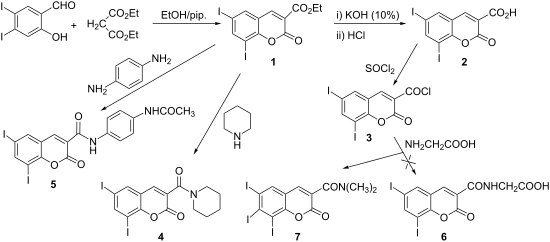
- -diiodosalicylaldehyde; diethyl malonate; ethyl cyanoacetate; coumarins; Michael reaction; Introduction Coumarins and their derivatives are biologically and pharmaceutically interesting compounds known for their use as additives in food, perfumes, cosmetics, pharmaceuticals, platelet aggregation and agrochemicals [1][2
- -withdrawing carbonyl groups, the behavior of 1 towards activated methylene compounds under Michael reaction conditions was investigated. Thus, treatment of 1 with ethyl cyanoacetate/NH4OAc in boiling ethanol afforded two reaction products. The insoluble reaction product was identified as ethyl 2-(3-carbamoyl
- Michael reaction conditions to yield a cyclic Michael adduct, which underwent hydrolysis by NH3 or MeNH2 and cyclization through the elimination of H2O (Scheme 5). The structure of compound 14a was established by 13C NMR, which showed δ at 42.5 (CH2(c)), 168.4 cm–1 (CONH), and 170 cm–1 (CO). The


Efficient gold(I)/silver(I)-cocatalyzed cascade intermolecular N-Michael addition/intramolecular hydroalkylation of unactivated alkenes with α-ketones
Beilstein J. Org. Chem. 2011, 7, 1100–1107, doi:10.3762/bjoc.7.126
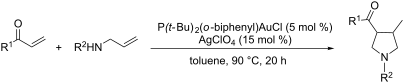
- simple starting materials [41]. We initially envisioned that the gold(I)-catalyzed cascade process could be established starting from the intermolecular N-Michael reaction of α,β-unsaturated ketone 1 and substituted allylamine 2 to furnish an α-ketone intermediate I [42][43][44] (for gold-catalyzed
- intramolecular N-Michael reaction see [42][43]), which further undergoes a subsequent gold(I)-catalyzed hydroalkylation to give pyrrolidine compounds 3 (Scheme 1); these compounds are versatile synthetic building blocks for organic synthesis and are important structural elements of many therapeutic drug
- of the intermolecular N-Michael reaction. Upon subsequent treatment of phenyl vinyl ketone (1a) with N-tosylallylamine (2a) in the presence of 10 mol % of AgClO4 at 90 °C for 3 h, the α-ketone intermediate 4 was formed in 85% yield, however, no product 3a was observed. Even after a longer reaction


Single enantiomer synthesis of α-(trifluoromethyl)-β-lactam
Beilstein J. Org. Chem. 2011, 7, 759–766, doi:10.3762/bjoc.7.86
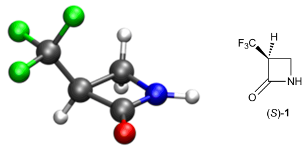
- explored for the hydrogenolysis of 5a, however cleavage of the C–N bond proved very difficult and a satisfactory method could not be found. Therefore, (S)-α-(p-methoxyphenyl)ethylamine (3b) was explored as an alternative amine for the aza-Michael reaction, as removal of this amine using ceric ammonium
- nitrate (CAN) oxidation offered a milder deprotection method [15]. The aza-Michael reaction proved straightforward to generate 4b and then cyclisation again using thionyl chloride and triethylamine gave β-lactams 5b in a 40% de, presumably again a thermodynamically biased isomer ratio. The


Michael-type addition of azoles of broad-scale acidity to methyl acrylate
Beilstein J. Org. Chem. 2011, 7, 173–178, doi:10.3762/bjoc.7.24
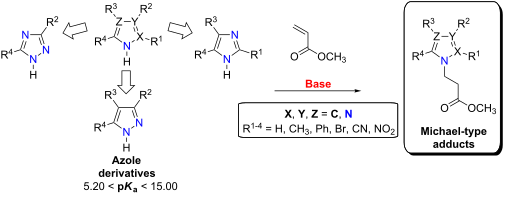
- retro-Michael reaction – in equilibrium with Michael-type addition. By contrast, DIPEA, with a lower pKa gave the same adducts 3a and 3b in excellent yields. For 1b (the azole with the lowest acidity) a similar yield to 1a was achieved only after a significantly prolonged reaction time due to its lower
- acrylate was observed. Nevertheless, decreased yields for azole adducts when DBU or NaH were used as catalysts at elevated temperature could originate from a reversibility of the Michael reaction since unreacted azoles were isolated. This observation is in a good agreement with our recent findings for
- Michael-type addition of uracils to acrylic acceptors [27][42], where a a strongly basic catalyst (DBU) enabled control of regioselectivity via a retro-Michael reaction. Conclusion We have developed and optimised a simple and effective synthetic protocol for Michael-type addition of azoles of broad-scale


A short synthesis of (±)-cherylline dimethyl ether
Beilstein J. Org. Chem. 2009, 5, No. 80, doi:10.3762/bjoc.5.80
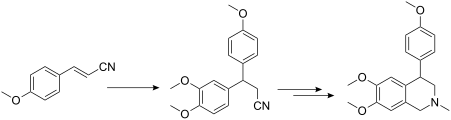
- followed by Pictet–Spengler cyclization. Keywords: Curtius rearrangement; Michael reaction; Pictet–Spengler cyclization; radical azidonation; Introduction Aryl-1,2,3,4-tetrahydroisoquinolines have attracted much attention from the synthetic community owing to the potential biological activities of this


Asymmetric reactions in continuous flow
Beilstein J. Org. Chem. 2009, 5, No. 19, doi:10.3762/bjoc.5.19
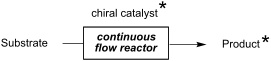
- flow. Asymmetric synthesis of ß-lactams. α-Chlorination of acid chlorides in flow. Asymmetric Michael reaction in continuous flow. Enantioselective addition of Et2Zn to benzaldehyde using monolithic chiral amino alcohol. Continuous-flow hydrolytic dynamic kinetic resolution of epibromohydrin (32


Efficient 1,4-addition of α-substituted fluoro(phenylsulfonyl)methane derivatives to α,β-unsaturated compounds
Beilstein J. Org. Chem. 2008, 4, No. 17, doi:10.3762/bjoc.4.17
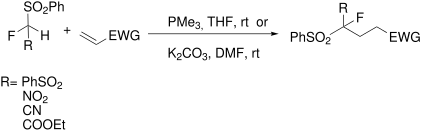
- from 20% to 50%) efficiently promoted the Michael reaction. With 50 mol% catalyst loading, the reaction rates were approximately 2- to 3-fold faster than the corresponding 20 mol% PPh3 catalyzed reactions. A dramatic increase in the efficiency of the reaction came from the usage of less bulkier
- well as HRMS. In addition, base-sensitive functional groups such as cyano, nitro, and ester were well tolerated during the course of the reaction. The failure of (E)-pent-3-en-2-one to undergo the Michael reaction under these conditions demonstrates that the reaction is not tolerant of substituents at


A convenient allylsilane- N-acyliminium route toward indolizidine and quinolizidine alkaloids
Beilstein J. Org. Chem. 2007, 3, No. 32, doi:10.1186/1860-5397-3-32
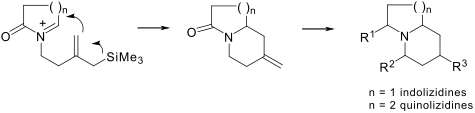
- ] two other syntheses were recently published. [40][41] The first steps of our synthesis were carried out as shown in Scheme 5. The starting material was ethyl 2-aminopropanoate 23. Chirality was introduced with isomers (R)-23a and (S)-23b, which were prepared by a Michael reaction according to Davies


One-pot synthesis of novel 1H-pyrimido[4,5-c][1,2]diazepines and pyrazolo[3,4-d]pyrimidines
Beilstein J. Org. Chem. 2006, 2, No. 5, doi:10.1186/1860-5397-2-5

- starting material occurred. Although we could not isolate any intermediate from the reaction mixture a plausible mechanism for the formation of the products entails an initial Michael reaction of 1 to 2 followed by cyclodehydration possibly by a Bohlmann-Ratz type[32] reaction leading to a seven-membered





