Search results
Search for "carbon" in Full Text gives 2167 result(s) in Beilstein Journal of Organic Chemistry. Showing first 200.
Enantioselective radical chemistry: a bright future ahead
Beilstein J. Org. Chem. 2025, 21, 2283–2296, doi:10.3762/bjoc.21.174
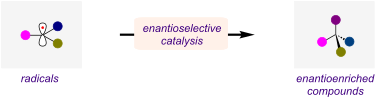
- for the construction of carbon–carbon and carbon–heteroatom bonds. Unlike many ionic reactions, radical reactions are often functional group tolerant and carried out under mild, neutral conditions, avoiding harsh acidic or basic conditions that can promote epimerization or decomposition of the product
- . Additionally, radical chemistry offers opportunities to achieve transformations that may not proceed via two-electron processes. Radicals can be generated through several different approaches, summarized in Figure 1A. The use of organostannanes to generate carbon-centered radicals was formerly commonplace but
- has been largely supplanted by greener methods employing less-toxic reagents. Using alternative methods, radicals can be generated by hydrogen atom transfer (HAT), resulting in the homolytic cleavage of a carbon–hydrogen bond. Other approaches for radical generation in modern radical transformations


Pathway economy in cyclization of 1,n-enynes
Beilstein J. Org. Chem. 2025, 21, 2260–2282, doi:10.3762/bjoc.21.173
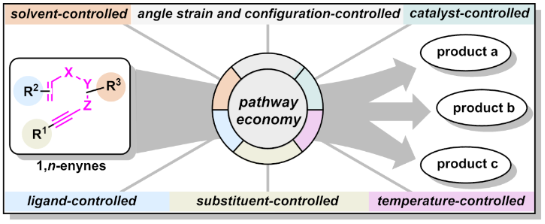
- solvent-controlled selective syntheses of two polycyclic compounds (Scheme 6) [13]. Using PdCl2 as the catalyst and DMF as the solvent, substrate 22 underwent a 6-endo-dig cyclization and subsequent enone insertion, forming a palladium–carbon bond intermediate. Protonolysis yielded isocoumarin-fused
- -catalyzed cyclization strategy for the synthesis of 1,2- and 2,3-fused quinazolinones, which was controlled by the angle strain of a key carbon atom in the substrate (Scheme 30) [43]. Experimental results showed intramolecular cyclization depended on the hybridization state of the carbon adjacent to
- quinazolinone's amino group. When this carbon atom was in a sp2 hybridization state, the C3 position of the indole attacked the inner side of the triple bond under the action of a gold catalyst, leading to a 6-exo-dig cyclization to yield 1,2-fused quinazolinones 146 (Scheme 30, path a). When the carbon atom was


Research towards selective inhibition of the CLK3 kinase
Beilstein J. Org. Chem. 2025, 21, 2250–2259, doi:10.3762/bjoc.21.172
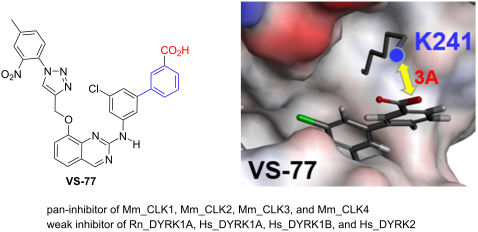
- ). Second, molecular docking using DYRK1A crystal structure was used to understand the unexpected binding on the DYRK kinases (Figure 6). Surprisingly, another lysine (K175) is also located near the acidic group of VS-77 (at 3.2 Å between the carbonyl carbon atom and nitrogen from amine). This residue is


Electrochemical cyclization of alkynes to construct five-membered nitrogen-heterocyclic rings
Beilstein J. Org. Chem. 2025, 21, 2173–2201, doi:10.3762/bjoc.21.166
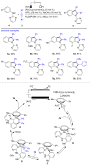
- ureas 1 proceeded smoothly in an undivided cell (reticulated vitreous carbon (RVC) anode, Pt cathode, 5 mA), forming the desired indoles 2 in high yields. The reaction showed good compatibility with various functional groups like phenyl, furyl, alkenyl and alkyl at the acetylene moieties, producing 2a–d
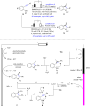
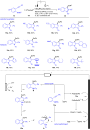
- alkynylation of electron-deficient benzamide. In 2022, Ye presented an electrochemical synthesis of isoindolinone through 5-exo-dig aza-cyclization of 2-alkynylbenzamide (Scheme 9) [208]. By applying carbon cloth as anode, Pt as cathode and n-Bu4NOAc as electrolyte, the 5-exo-dig/6-endo-dig cyclization of 2









C2 to C6 biobased carbonyl platforms for fine chemistry
Beilstein J. Org. Chem. 2025, 21, 2103–2172, doi:10.3762/bjoc.21.165
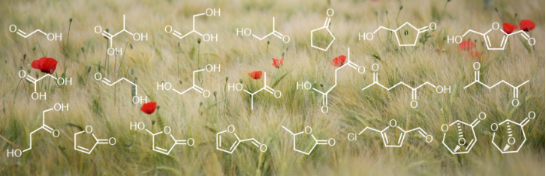
- of Science and Technology, 1037 Luoyu road, Wuhan 430074, China 10.3762/bjoc.21.165 Abstract The carbonyl group is central in organic synthesis, thanks to its ability to undergo a vast range of different chemical transformations on its carbon center or at the neighboring positions. Due to the high
- biomass shows how renewable carbon sources can replace non-renewable chemicals in important industrial processes [18][19][20]. Many, if not most, biobased platform molecules contain carbonyl groups. Carbonyl compounds have unique electrophilic and nucleophilic reactivity which make them central players in
- for the synthesis of GA and GCA using activated carbon deposited Cu catalysts and different biomass-derived polyols as feedstock with exceptionally high atom utilization ≈93% and up to 90% yield (Scheme 1) [28]. Glycolaldehyde (GCA), the smallest sugar molecule, was used by Sels et al. for the


The application of desymmetric enantioselective reduction of cyclic 1,3-dicarbonyl compounds in the total synthesis of terpenoid and alkaloid natural products
Beilstein J. Org. Chem. 2025, 21, 2085–2102, doi:10.3762/bjoc.21.164
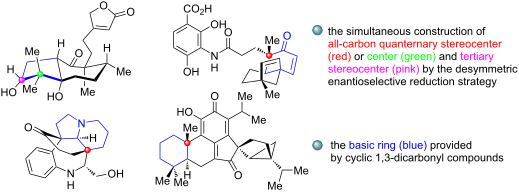
- The desymmetric enantioselective reduction of cyclic 1,3-dicarbonyl compounds is a powerful tool for the construction of ring systems bearing multiple stereocenters including all-carbon quaternary stereocenters, which are widely useful chiral building blocks for the total synthesis of structurally
- shortage of natural product sources. Nevertheless, the asymmetric total synthesis of terpenoid and alkaloid natural products presents significant challenges due to their complex and diverse ring systems and the presence of multiple stereocenters, including all-carbon quaternary stereocenters. Consequently
- , (−)-glaucopine C, and (+)-allocyathin B2 The cyrneine diterpenoids represent an important subfamily of cyathane diterpenoids which possess a common 5-6-7 fused tricarbocyclic core with two all-carbon quaternary stereocenters. Many impressive syntheses have been reported to date [18][19][20][21][22][23][24][25


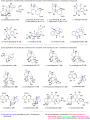


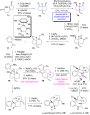

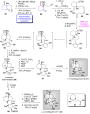


Bioinspired total syntheses of natural products: a personal adventure
Beilstein J. Org. Chem. 2025, 21, 2048–2061, doi:10.3762/bjoc.21.160
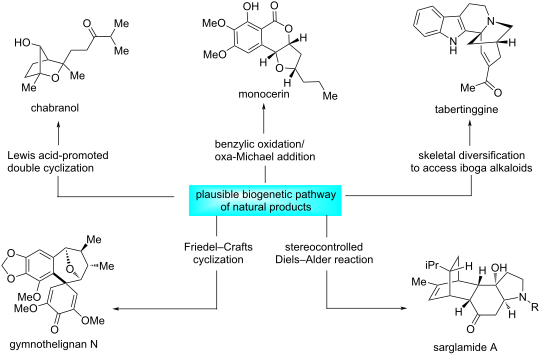
- studies of these molecules indicated that they exhibit a broad-spectrum activities including antifungal, insecticidal, plant pathogenic properties and phytotoxic activity. Structurally, these molecules basically contain an isocoumarin ring system and a five-carbon side chain. The side chain could further




Solar thermal fuels: azobenzene as a cyclic photon–heat transduction platform
Beilstein J. Org. Chem. 2025, 21, 2036–2047, doi:10.3762/bjoc.21.159
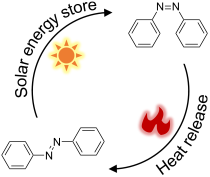
- stored thermal energy in a controlled manner, a phase designated "energy discharging" (Figure 1). The core advantages of such closed-loop systems are primarily manifested in their reversible cycling capability, carbon neutrality characteristics, transportation convenience, and on-demand heat generation
- applications, highlighting key contributions in the field. Discussion Nanocarbon-based azobenzene polymer solar thermal fuels Nanocarbon-based azobenzene polymer solar thermal fuels are constructed by grafting azobenzene moieties onto carbon nanotube [43][44][45] or reduced graphene oxide (RGO) templates
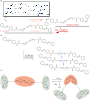
- . Grossman et al. synthesized azobenzene-functionalized single-walled carbon nanotubes (SWCNTs) (Figure 3a) and demonstrated their application as solar thermal fuels [43]. The conformational restriction imposed by the chromophore-template structure combined with photochemically generated spatial strain




α-Ketoglutaric acid in Ugi reactions and Ugi/aza-Wittig tandem reactions
Beilstein J. Org. Chem. 2025, 21, 2021–2029, doi:10.3762/bjoc.21.157
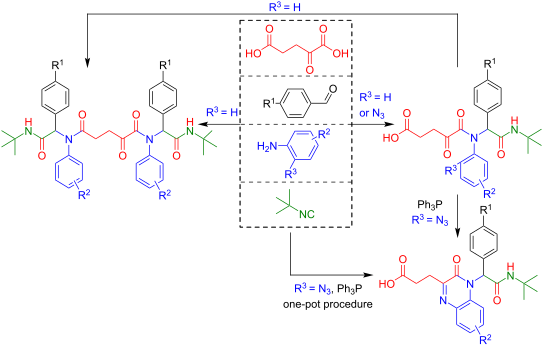
- sufficiently electrophilic carbonyl carbon atom with the elimination of triphenylphosphine oxide via the aza-Wittig reaction. It should be noted that the best method for the isolation of quinoxalinones 9 was column chromatography using an elution gradient of hexane/ethyl acetate 3:1 to hexane/ethyl acetate 1:2
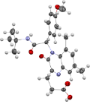
- shift of the signal in the 198 ppm region, corresponding to the carbonyl carbon of compounds 8, to a stronger field in quinoxalinones 9, where cyclization of the keto group has occurred. The structure of quinoxalinones of type 9 was finally assigned based on X-ray diffraction analysis made for 3-(4-(2


Understanding the origin of stereoselectivity in the photochemical denitrogenation of 2,3-diazabicyclo[2.2.1]heptene and its derivatives with non-adiabatic molecular dynamics
Beilstein J. Org. Chem. 2025, 21, 2007–2020, doi:10.3762/bjoc.21.156
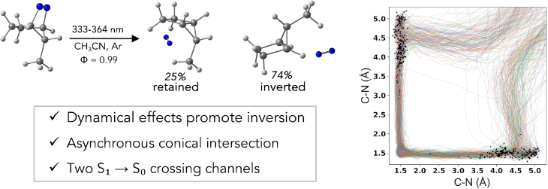
- is fully inverted relative to the reactant geometry. In the second cluster, the inversion is only partial, with one of the carbon atoms in the methylene bridge inverted relative to the reactant. We identified each cluster's corresponding minimum energy conical intersection (MECI), indicating at least
- been employed to release carbon monoxide at relatively safer doses in biological systems using photoresponsive CO-releasing molecules (photo-CORMs) [4] because these have shown anti-inflammatory activity [5][6]. Photochemical denitrogenation of azoalkanes has been utilized in the stereoselective
- trajectory that leads to a partially inverted hopping point. At 1 fs, both dihedral angles are similar, with θ₁ at 87° and θ₂ at 89°. By 150 fs, the first σCN bond breaks. The dihedral angle θ₂, corresponding to the carbon still bonded to N₂, increases to 109°, while θ₁ rises slightly to 90°. At the hopping


Measuring the stereogenic remoteness in non-central chirality: a stereocontrol connectivity index for asymmetric reactions
Beilstein J. Org. Chem. 2025, 21, 1995–2006, doi:10.3762/bjoc.21.155
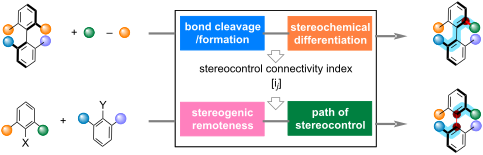
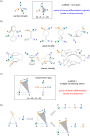
- products are highlighted in grey color. The shortest connecting bonds between them are colored red. Accordingly, the asymmetric hydrogenation of 2-butanone is designated as [20] process because there are two connecting bonds between the stereogenic carbon and the stereochemical differentiation atoms, and
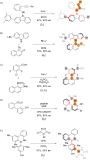
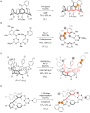
- reaction to two prochiral faces of a planar substrate, where the prostereogenic carbon is part of the reaction site. However, this is not always the case, particularly in remote desymmetrization reactions [2][3][4][5][6][7][8]. For instance, the catalytic desymmetrization of phosphine oxides [9] will be




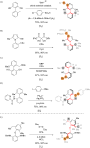

Aryl iodane-induced cascade arylation–1,2-silyl shift–heterocyclization of propargylsilanes under copper catalysis
Beilstein J. Org. Chem. 2025, 21, 1984–1994, doi:10.3762/bjoc.21.154
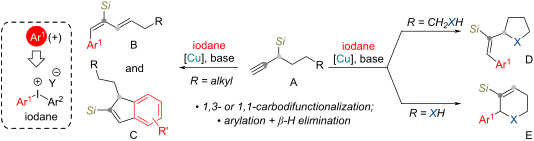
- -product. In the absence of a base, the protodecupration pathway is predominant, affording non-arylated heterocycles 12–14 instead. When considering shorter carbon chain-containing acylamides 16a–c as starting materials, we expected a similar cyclization pattern, involving imidate formation [10]. Instead


Photochemical reduction of acylimidazolium salts
Beilstein J. Org. Chem. 2025, 21, 1973–1983, doi:10.3762/bjoc.21.153
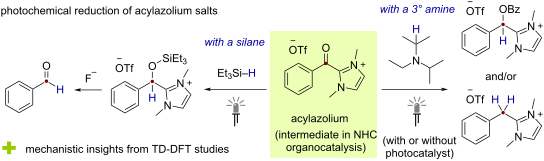
- intermediate A (Figure 1a), in which the formerly electrophilic carbonyl carbon reacts as a nucleophilic center. In this way, the traditional reactivity profile of the carbonyl group is transiently inverted, and unconventional product classes are generated. Alternatively, addition/elimination of the NHC to a
- contrast to these numerous reports with carbon-based alkyl radicals, dual NHC/photoredox-mediated coupling processes between carboxylic acid derivatives and other classes of radical are lacking [22][23][24][25][26][27][28][29][30]. In particular, to the best of our knowledge, formal reduction reactions of


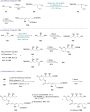
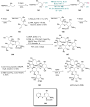
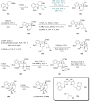
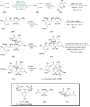
Enantioselective desymmetrization strategy of prochiral 1,3-diols in natural product synthesis
Beilstein J. Org. Chem. 2025, 21, 1932–1963, doi:10.3762/bjoc.21.151
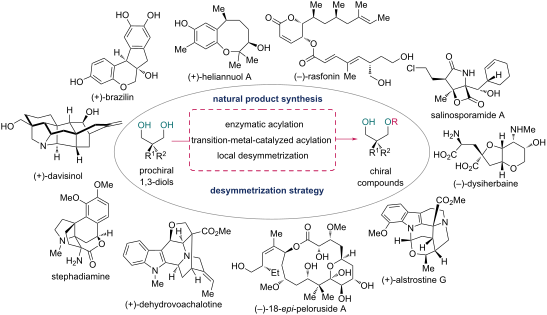
- been developed, employing enzymes, metal complexes, or organocatalysts to convert prochiral or meso precursors into chiral motifs. Different from other strategies constructing chiral centers by formation of a new chemical bond at the central carbon, enantioselective desymmetrization is achieved through
- ), compound 154 underwent epoxidation followed by acid-mediated cyclization to yield bicyclic compound 155. The synthesis was completed through a nine-step conversion of 155 to obtain (−)-dysiherbaine (156). To construct the asymmetric quaternary carbon centers with an amino group, the Kang group developed a
- of compound 248, establishing an expected C6 stereocenter and a chiral quaternary carbon center at C16. This desymmetrization was enabled due to the structural features of diol 246, wherein the proximal hydroxy group was functionalized, while the distal hydroxy group remained intact. The synthesis of








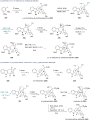


Synthesis of N-doped chiral macrocycles by regioselective palladium-catalyzed arylation
Beilstein J. Org. Chem. 2025, 21, 1917–1923, doi:10.3762/bjoc.21.149
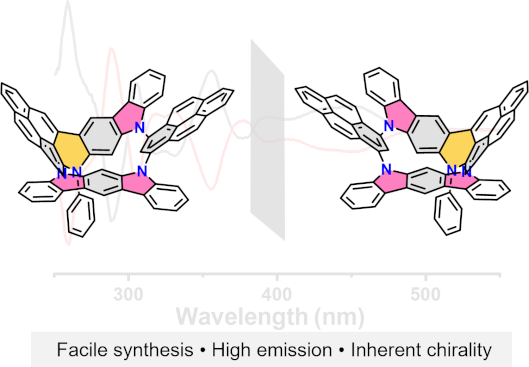
- -bridged structural analogs of [1n]metacyclophanes. In comparison to all-carbon [1n]metacyclophanes, the incorporation of N atoms endows them with unique features, such as enhanced molecular dynamics and tunable redox property, positioning them as key precursors to construct organic high-spin materials [20




Synthesis, biological and electrochemical evaluation of glycidyl esters of phosphorus acids as potential anticancer drugs
Beilstein J. Org. Chem. 2025, 21, 1909–1916, doi:10.3762/bjoc.21.148
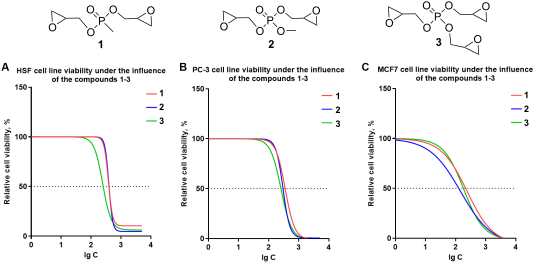
- ) shows a singlet at +32 ppm; for diglycidyl methylphosphate (2) and triglycidyl phosphate (3) also a singlet in the region 0–1 ppm is observed, despite the presence of a chiral carbon atom in the oxirane fragment. In the 1H NMR spectra of esters 1–3 the characteristic signals of the oxirane fragment at
- Eclipse potentiostat (USA). The device includes a measuring unit, a DellOptiplex 320 personal computer with Epsilon-EC-USB-V200 software. As supporting electrolyte 0.1 M Et4NBF4 was used. A glassy carbon electrode modified with carbon paste (surface area 1 mm2) served as the working electrode. Ag/AgCl
- h, while the temperature did not rise above 0 °C. After removal of the precipitate by filtration at 25 °C (filter consisted of layers of Celite, sodium sulfate and activated carbon), the filtrate was evaporated under reduced pressure to remove dichloromethane and excess glycidol. After vacuum


Stereoselective electrochemical intramolecular imino-pinacol reaction: a straightforward entry to enantiopure piperazines
Beilstein J. Org. Chem. 2025, 21, 1897–1908, doi:10.3762/bjoc.21.147
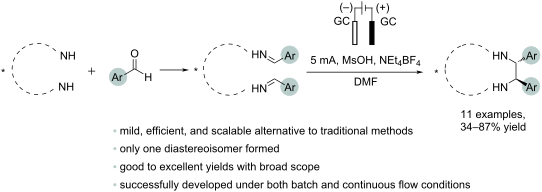
- for different N-benzyl benzaldimines in moderate to good yields. In 1991, Shono’s research group described the electroreductive intramolecular coupling of aromatic diimines, carried out in DMF in the presence of methanesulfonic acid in a divided cell equipped with a lead cathode, a carbon rod anode
- scaffolds that are commonly used as chiral ligands. In this context we report the development of a more sustainable method – which avoids the use of lead bromide or lead electrodes – employing an undivided cell with two glassy carbon electrodes for the electroreductive intramolecular coupling of aromatic
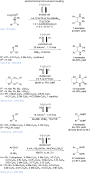
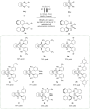
- 47% (Table 1, entry 8), while with two glassy carbon electrodes desired product 2a was isolated in 85% yield (Table 1, entry 9). Reducing the electrolyte loading from 2.6 to 1.3 equivalents significantly affected the reaction outcome, leading to a noticeable decrease in the yield suggesting that





Preparation of spirocyclic oxindoles by cyclisation of an oxime to a nitrone and dipolar cycloaddition
Beilstein J. Org. Chem. 2025, 21, 1890–1896, doi:10.3762/bjoc.21.146
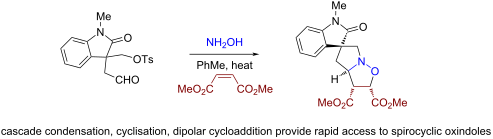
- ; nitrogen – blue; carbon – grey; hydrogen – pale green). Proposed synthetic approach. Preparation of the aldehyde 4. Cycloaddition with N-methylmaleimide. Cycloaddition with N-phenylmaleimide. Cycloaddition with dimethyl fumarate and dimethyl maleate. Supporting Information Supporting Information File 30


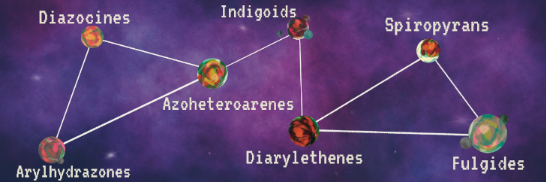
Photoswitches beyond azobenzene: a beginner’s guide
Beilstein J. Org. Chem. 2025, 21, 1808–1853, doi:10.3762/bjoc.21.143




Fe-catalyzed efficient synthesis of 2,4- and 4-substituted quinolines via C(sp2)–C(sp2) bond scission of styrenes
Beilstein J. Org. Chem. 2025, 21, 1799–1807, doi:10.3762/bjoc.21.142
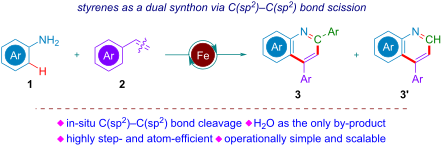
- corresponding imines I and I′, as supported by the detection of imine I during GC–MS analysis. Both imines coordinate with the Lewis acid FeIII forming intermediates II and II′ with enhanced electrophilicity, respectively. Another equivalent of styrene (2a) attacks the electrophilic carbon, leading to the




Research progress on calixarene/pillararene-based controlled drug release systems
Beilstein J. Org. Chem. 2025, 21, 1757–1785, doi:10.3762/bjoc.21.139
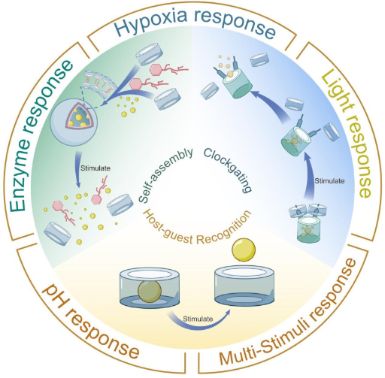
- hybridized with various inorganic materials, such as metal-organic frameworks (MOFs), mesoporous silica nanoparticles (MSNs), metal nanoparticles, and carbon materials [87]. By designing through electrostatic and non-covalent interactions, PAs can be used as "molecular switches" to construct mechanized MOFs


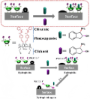


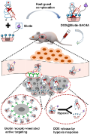


Unique halogen–π association detected in single crystals of C–N atropisomeric N-(2-halophenyl)quinolin-2-one derivatives and the thione analogue
Beilstein J. Org. Chem. 2025, 21, 1748–1756, doi:10.3762/bjoc.21.138
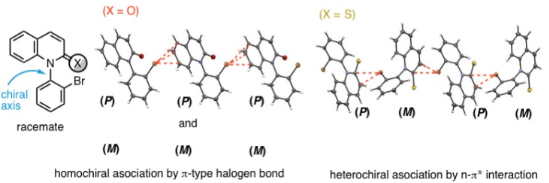
- (the torsion angle: C8–C7–C6···Br = −80.3°). That is, the bromine atom interacts with three carbon atoms (C5–7); the three bond distances (Br···C5–7) and three bond angles (C–Br···C5–7) were 3.44, 3.30, 3.50 Å and 166.6, 155.9, 134.0°, respectively. Although a racemate, homochiral layered polymer
- , the chlorine atom interacts with two carbon atoms (C5 and C6) of the benzene ring, the two bond distances (Cl···C5,6) and two bond angles (C–Cl···C5,6) were 3.42, 3.27 Å and 164.5, 154.4°, respectively. The formation of homochiral layered polymers through intermolecular halogen–π interactions was also


Preparation of a furfural-derived enantioenriched vinyloxazoline building block and exploring its reactivity
Beilstein J. Org. Chem. 2025, 21, 1737–1741, doi:10.3762/bjoc.21.136

- attack to the double bond in intermediate A is kinetically preferred from the face forming the R-configured carbon of the C–N bond as a result of a minimized steric interaction of the oxygen in zwitterion with iPr substituent of oxazoline. Conclusion Unsaturated ester obtained by Torii-type ester


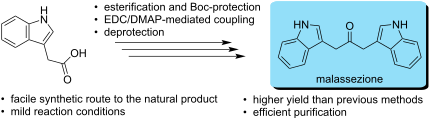
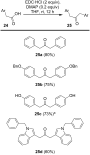
Convenient alternative synthesis of the Malassezia-derived virulence factor malassezione and related compounds
Beilstein J. Org. Chem. 2025, 21, 1730–1736, doi:10.3762/bjoc.21.135
- proton (1H) spectra are reported relative to the residual solvent signal for CDCl3 (δ 7.26) or methanol-d4 (δ 3.31) [30]. Chemical shifts (δ in ppm) for carbon (13C) spectra are reported relative to the residual solvent signal for CDCl3 (δ 77.16) or methanol-d4 (δ 49.00) [30]. Abbreviations used for
- fully consistent with those published previously [20]. The observation of 19 carbon atoms in 1 (HRESIMS) and 10 carbon signals in the 13C NMR spectrum is in accord with the molecule being symmetric. The structure of di-indole 1 was further supported by 2D NMR. The 1H-1H COSY spectrum showed couplings
- the connectivities of these groups were supported from the 1H-13C HMBC spectrum. Couplings between the H8 and C9 (or H8′ and C9) atoms are consistent with the C8 and C8′ atoms linked to the carbonyl carbon (C9). In addition, couplings between the H8 and the C2, C3, C3a, and C8 carbon atoms, as well as


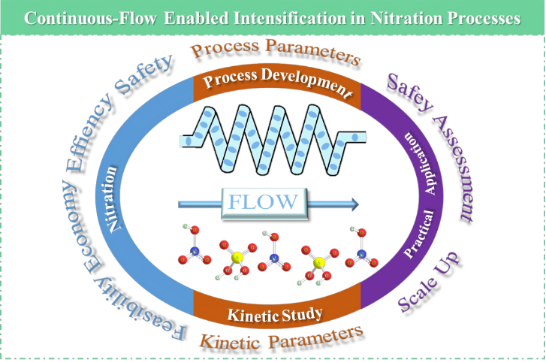
Continuous-flow-enabled intensification in nitration processes: a review of technological developments and practical applications over the past decade
Beilstein J. Org. Chem. 2025, 21, 1678–1699, doi:10.3762/bjoc.21.132
- higher kinetic feasibility than aliphatic C-nitration in saturated carbon frameworks [3]. Following determination of substrate–nitrating agent combinations, reactor system specification emerges as the critical engineering decision. Nitration reactor selection – encompassing batch, semi-batch, continuous
- % are generally considered non-explosive; it is noteworthy that organic peroxides constitute a notable exception to this rule and require stringent safety measures. Indicator 2: number of carbon atoms per plosophoric group [69]. Materials with nitro functional groups may be classified as plosophoric
- process due to the inherent safety features (particularly in microreactor systems). In addition to evaluating it based on the three parameters mentioned above (the number of carbon atoms per plosophoric group, oxygen balance (OB) of the material, and nitrogen content), the raw materials, products, by