Search for "carbonyls" in Full Text gives 93 result(s) in Beilstein Journal of Organic Chemistry.
Beilstein J. Org. Chem. 2012, 8, 2100–2105, doi:10.3762/bjoc.8.236
Graphical Abstract
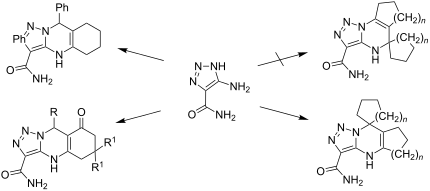
Figure 1: Some MCRs of aminoazoles with controlled switching of the direction.
Figure 2: Some possible products of MCRs involving 4-amino-5-carboxamido-1,2,3-triazole and carbonyl compound...
Scheme 1: Multicomponent and sequential reactions of 4-amino-5-carboxamido-1,2,3-triazole with cyclic ketones....
Scheme 2: Multicomponent and sequential reactions of 4-amino-5-carboxamido-1,2,3-triazole with aldehydes and ...
Beilstein J. Org. Chem. 2012, 8, 1554–1563, doi:10.3762/bjoc.8.177
Graphical Abstract
Scheme 1: Heterolytic cleavage of H2 by a phosphine/borane FLP by H2 polarization in the P–B cavity [5,11].
Scheme 2: Insertion of carbon dioxide into a phosphine/borane FLP [14].
Figure 1: Simplified frontier-molecular-orbital diagrams for (a) Mδ+═Eδ− and (b) Mδ−═Eδ+ FLPs (n = 1 for line...
Figure 2: Quenching of M═E FLPs by dimerization: (a) generic Mδ+═Eδ− case, and (b) Bergman's arylimido zircon...
Scheme 3: Oxygen-atom extrusion from CO2 by a Ta(V) neopentylidene [27].
Scheme 4: Oxygen-atom transfer from acetone at a Zr(IV) imide [28].
Scheme 5: Alkyne cycloaddition at a Zr(IV) imide [38].
Scheme 6: Nitrile-alkyne cross metathesis at a W(VI) nitride [40,41].
Scheme 7: C–H and H–H addition across a zirconium(IV) imide [42].
Scheme 8: Formal [2 + 2] cycloaddition of methyl isocyanate at a ruthenium silylene [58].
Scheme 9: Oxygen-atom transfer from phenyl isocyanate to a cationic terminal borylene [60].
Scheme 10: Coupling of a phosphorus ylide with an iridium methylene [62].
Scheme 11: Reactions of (PNP)Ir═C(H)Ot-Bu with oxygen-containing heterocumulenes [71].
Scheme 12: Reductive coupling of two CS2 units at (PNP)Ir═C(H)Ot-Bu [73].
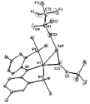
Figure 3: Single-crystal X-ray structure of a silver(I) triflate adduct of (PNP)Ir═C(H)Ot-Bu with most H atom...
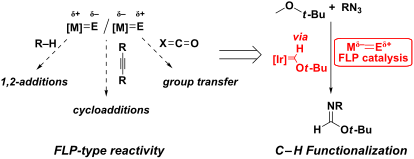
Scheme 13: Possible routes to C–H functionalization by 1,2-addition across a polarized metal–element multiple ...
Scheme 14: Alkoxycarbene formation by double C–H activation at (PNP)Ir [88].
Scheme 15: Catalytic oxidation of MTBE by multiple C–H activations and nitrene-group transfer to a Mδ−═Eδ+ FLP ...
Beilstein J. Org. Chem. 2012, 8, 850–860, doi:10.3762/bjoc.8.95
Graphical Abstract
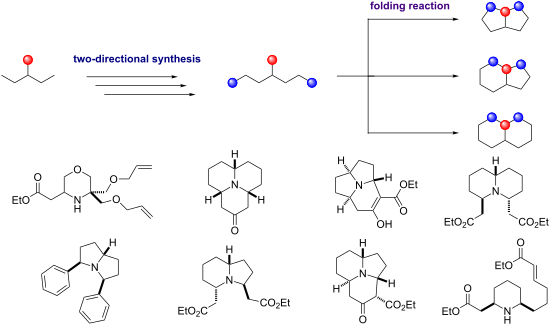
Figure 1: Overview of the DOS strategy.
Scheme 1: Synthesis of linear cyclisation precursors 1–4.
Scheme 2: AlCl3 catalysed tandem Boc-removal/bicyclisation processes; the yields quoted refer to the isolated...
Scheme 3: (a) AlCl3 catalysed formation of tricyclic alkaloid 10 along with an X-ray crystal structure of 10;...
Scheme 4: (a) Optimal conditions to obtain trans-8 and 10 and the control experiments carried out to probe th...
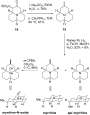
Scheme 5: DOS of 5-5-6 and 5-6-6 tricyclic alkaloids 13 and 14.
Scheme 6: Total synthesis of myrrhine, epi-myrrhine and myrrhine-N-oxide.
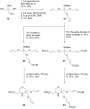
Scheme 7: Use of nitromethane in DOS: Synthesis of meso-diphenylpyrrolidizine 17.
Scheme 8: Use of Tris as a substrate for DOS: Synthesis of decorated morpholines 22 and 23.
Beilstein J. Org. Chem. 2012, 8, 650–657, doi:10.3762/bjoc.8.72
Graphical Abstract
Scheme 1: Metathetic ring opening of 7-methyl-7-vinylbicyclo[3.2.0]hept-2-en-6-one to a linear polyene ketone....
Scheme 2: Synthesis of vinyl or phenyl substituted cyclobutanones 4a–i.
Figure 1: Determination of the structure of 3-phenyl-2-vinyl substituted cyclobutanone 4g.
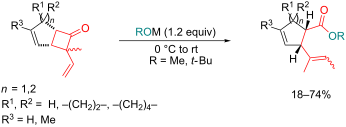
Scheme 3: Ring opening of cyclobutanones 4 to afford products 5 or 6.
Scheme 4: Reaction of 4a with LDA.
Scheme 5: Plausible mechanism for ring opening of 4a.
Beilstein J. Org. Chem. 2011, 7, 1299–1303, doi:10.3762/bjoc.7.151

Graphical Abstract
Scheme 1: Passerini reactions of α,β-unsaturated aldehyde 5.
Scheme 2: Passerini and Ugi reaction of saturated aldehyde 7.
Beilstein J. Org. Chem. 2011, 7, 1075–1094, doi:10.3762/bjoc.7.124
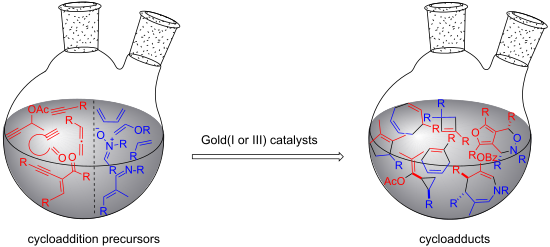
Graphical Abstract
Scheme 1: AuCl3-catalyzed benzannulations reported by Yamamoto.
Scheme 2: Synthesis of 9-oxabicyclo[3.3.1]nona-4,7-dienes from 1-oxo-4-oxy-5-ynes [40].
Scheme 3: Stereocontrolled oxacyclization/(4 + 2)-cycloaddition cascade of ketone–allene substrates [43].
Scheme 4: Gold-catalyzed synthesis of polycyclic, fully substituted furans from 1-(1-alkynyl)cyclopropyl keto...
Scheme 5: Gold-catalyzed 1,3-dipolar cycloaddition of 2-(1-alkynyl)-2-alken-1-ones with nitrones [47].
Scheme 6: Enantioselective 1,3-dipolar cycloaddition of 2-(1-alkynyl)-2-alken-1-ones with nitrones [48].
Scheme 7: Gold-catalyzed 1,3-dipolar cycloaddition of 2-(1-alkynyl)-2-alken-1-ones with α,β-unsaturated imine...
Scheme 8: Gold-catalyzed (4 + 3) cycloadditions of 1-(1-alkynyl)oxiranyl ketones [50].
Scheme 9: (3 + 2) Cycloaddition of gold-containing azomethine ylides [52].
Scheme 10: Gold-catalyzed generation and reaction of azomethine ylides [53].
Scheme 11: Gold-catalyzed intramolecular (4 + 2) cycloadditions of unactivated alkynes and dienes [55].
Scheme 12: Gold-catalyzed preparation of bicyclo[4.3.0]nonane derivatives from dienol silyl ethers [59].
Scheme 13: Gold(I)-catalyzed intramolecular (4 + 2) cycloadditions of arylalkynes or 1,3-enynes with alkenes [60].
Scheme 14: Gold(I)-catalyzed intermolecular (2 + 2) cycloaddition of alkynes with alkenes [62].
Scheme 15: Metal-catalyzed cycloaddition of alkynes tethered to cycloheptatriene [65].
Scheme 16: Gold-catalyzed cycloaddition of functionalized ketoenynes: Synthesis of (+)-orientalol F [68].
Scheme 17: Gold-catalyzed intermolecular cyclopropanation of enynes with alkenes [70].
Scheme 18: Gold-catalyzed intermolecular hetero-dehydro Diels–Alder cycloaddition [72].
Figure 1: Gold-catalyzed 1,2- or 1,3-acyloxy migrations of propargyl esters.
Scheme 19: Gold(I)-catalyzed stereoselective olefin cyclopropanation [74].
Scheme 20: Reaction of propargylic benzoates with α,β-unsaturated imines to give azepine cycloadducts [77].
Scheme 21: Gold-catalyzed (3 + 3) annulation of azomethine imines with propargyl esters [81].
Scheme 22: Gold(I)-catalyzed isomerization of 5-en-2-yn-1-yl acetates [83].
Scheme 23: (3 + 2) and (2 + 2) cycloadditions of indole-3-acetates 41 [85,86].
Scheme 24: Gold(I)-catalyzed (2 + 2) cycloaddition of allenenes [87].
Scheme 25: Formal (3 + 2) cycloaddition of allenyl MOM ethers and alkenes [90].
Scheme 26: (4 + 3) Cycloadditions of allenedienes [97,98].
Scheme 27: Gold-catalyzed transannular (4 + 3) cycloaddition reactions [101].
Scheme 28: Gold(I)-catalyzed (4 + 2) cycloadditions of allenedienes [102].
Scheme 29: Enantioselective gold(I)-catalyzed (4 + 2) cycloadditions of allenedienes [88,102,104].
Scheme 30: (3 + 2) versus (2 + 2) Cycloadditions of allenenes [87,99].
Figure 2: NHC ligands with different π-acceptor properties [106].
Scheme 31: (3 + 2) versus (2 + 2) Cycloadditions of allenenes [106].
Scheme 32: Gold(I)-catalyzed intermolecular (4 + 2) cycloaddition of allenamides and acyclic dienes [109].
Beilstein J. Org. Chem. 2011, 7, 606–614, doi:10.3762/bjoc.7.71
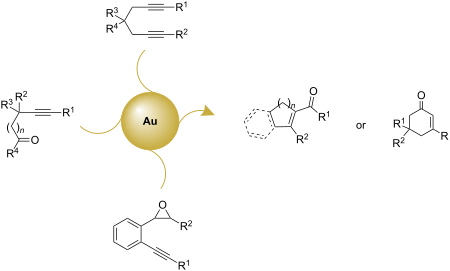
Graphical Abstract
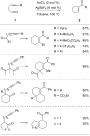
Scheme 1: Lewis acid or Brønsted acid-catalyzed alkyne–carbonyl metathesis and a proposed [2 + 2] intermediat...
Scheme 2: Gold-catalyzed cyclization of internal alkynyl ketones.
Scheme 3: Proposed [2 + 2] mechanism for the cyclization of alkynyl ketones.
Scheme 4: Gold-catalyzed cyclization of terminal alkynyl ketones.
Scheme 5: Gold-catalyzed tandem oxygen transfer/Nazarov cyclizations.
Scheme 6: TfOH-mediated cyclization of alkynyl ketones.
Scheme 7: Gold-catalyzed cyclizations of 2-alkynyl-1,5-diketones.
Scheme 8: Designed isotopic labeling experiment for mechanistic studies.
Scheme 9: 18O isotopic experiments.
Scheme 10: B2PLYP/6-311+G(d,p)//B2PLYP/6-31G(d) computed reaction profile, relative energies in kcal/mol.
Scheme 11: Gold-catalyzed cyclization of tethered alkynyl arylaldehydes.
Scheme 12: Gold-catalyzed cyclization of terminal diynes.
Scheme 13: Proposed hydrolysis/cyclization mechanism.
Scheme 14: Gold-catalyzed cyclization of internal diynes.
Scheme 15: Proposed solvolysis/cyclization mechanism.
Scheme 16: Gold-catalyzed cyclization of alkynyl epoxides and the 18O isotopic labeling experiment.
Scheme 17: Proposed oxygen transfer mechanism.
Scheme 18: Gold or silver-catalyzed cyclization of alkynyl epoxides and the corresponding deuterium labeling e...
Beilstein J. Org. Chem. 2011, 7, 265–269, doi:10.3762/bjoc.7.35
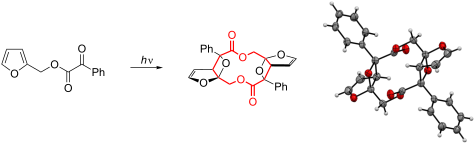
Graphical Abstract
Scheme 1: Reaction of furan with triplet excited carbonyls, regioselectivity.
Scheme 2: Possible pathways for the photochemical reaction of furan derivatives 1a–c.
Scheme 3: Synthesis and the photochemical reaction of furan-2-ylmethyl 2-oxoacetates 1a,b.
Figure 1: X-ray crystal structure of the macrocyclic lactone 2a.
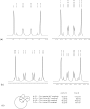
Figure 2: 1H NMR spectra (500 MHz) for (a) the photolysate of 1a after 4 h irradiation in degassed and dried C...
Beilstein J. Org. Chem. 2010, 6, 869–875, doi:10.3762/bjoc.6.102
Graphical Abstract
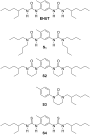
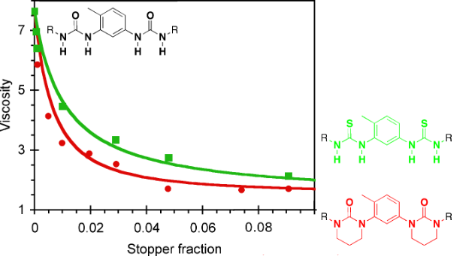
Figure 1: Structures of monomer EHUT and chain stoppers.
Figure 2: Substituted urea conformation. If R is alkyl, the most stable conformation is b); if R = H, the mos...
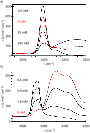
Figure 3: FTIR spectra, at 20 °C, for CDCl3 solutions of S4 (a) or EHUT (b), at several concentrations.
Figure 4: SANS intensity versus scattering vector for 12 mM solutions of EHUT or S4 in d8-toluene, at 22 °C. ...
Figure 5: Relative viscosity for solutions of EHUT (20 mM) in 1,3,5-trimethylbenzene at 25 °C, with increasin...
Figure 6: Relative viscosity for solutions of EHUT (1.1 mM) in toluene at 25 °C, with increasing molar fracti...
Beilstein J. Org. Chem. 2010, 6, No. 32, doi:10.3762/bjoc.6.32
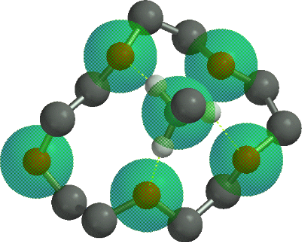
Graphical Abstract
Figure 1: Biologically important amines and quaternary ammonium salts: histamine (1), dopamine (2) and acetyl...
Figure 2: Crown ether 18-crown-6.
Figure 3: Conformations of 18-crown-6 (4) in solvents of different polarity.
Figure 4: Binding topologies of the ammonium ion depending on the crown ring size.
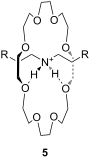
Figure 5: A “pseudorotaxane” structure consisting of 24-crown-8 and a secondary ammonium ion (5); R = Ph.
Figure 6: Typical examples of azacrown ethers, cryptands and related aza macrocycles.
Figure 7: Binding of ammonium to azacrown ethers and cryptands [111-113].
Figure 8: A 19-crown-6-ether with decalino blocking groups (11) and a thiazole-dibenzo-18-crown-6-ether (12).
Figure 9: 1,3-Bis(6-oxopyridazin-1-yl)propane derivatives 13 and 14 by Campayo et al.
Figure 10: Fluorescent azacrown-PET-sensors based on coumarin.
Figure 11: Two different pyridino-cryptands (17 and 18) compared to a pyridino-crown (19); chiral ammonium ion...
Figure 12: Pyridino-18-crown-6 ligand (21), a similar acridino-18-crown-6 ligand (22) and a structurally relat...
Figure 13: Ciral pyridine-azacrown ether receptors 24.
Figure 14: Chiral 15-crown-5 receptors 26 and an analogue 18-crown-6 ligand 27 derived from amino alcohols.
Figure 15: C2-symmetric chiral 18-crown-6 amino alcohol derivatives 28 and related macrocycles.
Figure 16: Macrocycles with diamide-diester groups (30).
Figure 17: C2-symmetric chiral aza-18-crown-6 ethers (31) with phenethylamine residues.
Figure 18: Chiral C-pivot p-methoxy-phenoxy-lariat ethers.
Figure 19: Chiral lariat crown ether 34.
Figure 20: Sucrose-based chiral crown ether receptors 36.
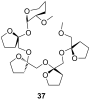
Figure 21: Permethylated fructooligosaccharide 37 showing induced-fit chiral recognition.
Figure 22: Biphenanthryl-18-crown-6 derivative 38.
Figure 23: Chiral lariat crown ethers derived from binol by Fuji et al.
Figure 24: Chiral phenolic crown ether 41 with “aryl chiral barriers” and guest amines.
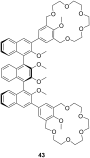
Figure 25: Chiral bis-crown receptor 43 with a meso-ternaphthalene backbone.
Figure 26: Chromogenic pH-dependent bis-crown chemosensor 44 for diamines.
Figure 27: Triamine guests for binding to receptor 44.
Figure 28: Chiral bis-crown phenolphthalein chemosensors 46.
Figure 29: Crown ether amino acid 47.
Figure 30: Luminescent receptor 48 for bis-alkylammonium guests.
Figure 31: Luminescent CEAA (49a), a bis-CEAA receptor for amino acids (49b) and the structure of lysine bindi...
Figure 32: Luminescent CEAA tripeptide for binding small peptides.
Figure 33: Bis crown ether 51a self assembles co-operatively with C60-ammonium ion 51b.
Figure 34: Triptycene-based macrotricyclic dibenzo-[24]-crown-8 ether host 52 and guests.
Figure 35: Copper imido diacetic acid azacrown receptor 53a and the suggested His-Lys binding motif; a copper ...
Figure 36: Urea (54) and thiourea (55) benzo crown receptor for transport and extraction of amino acids.
Figure 37: Crown pyryliums ion receptors 56 for amino acids.
Figure 38: Ditopic sulfonamide bridged crown ether receptor 57.
Figure 39: Luminescent peptide receptor 58.
Figure 40: Luminescent receptor 59 for the detection of D-glucosamine hydrochloride in water/ethanol and lumin...
Figure 41: Guanidinium azacrown receptor 61 for simple amino acids and ditopic receptor 62 with crown ether an...
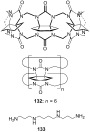
Figure 42: Chiral bicyclic guanidinium azacrown receptor 63 and similar receptor 64 for the enantioselective t...
Figure 43: Receptors for zwitterionic species based on luminescent CEAAs.
Figure 44: 1,10-Azacrown ethers with sugar podand arms and the anticancer agent busulfan.
Figure 45: Benzo-18-crown-6 modified β-cyclodextrin 69 and β-cyclodextrin functionalized with diaza-18-crown-6...
Figure 46: Receptors for colorimetric detection of primary and secondary ammonium ions.
Figure 47: Porphyrine-crown-receptors 72.
Figure 48: Porphyrin-crown ether conjugate 73 and fullerene-ammonium ion guest 74.
Figure 49: Calix[4]arene (75a), homooxocalix[4]arene (75b) and resorcin[4]arene (75c) compared (R = H, alkyl c...
Figure 50: Calix[4]arene and ammonium ion guest (R = H, alkyl, OAcyl etc.), possible binding sites; A: co-ordi...
Figure 51: Typical guests for studies with calixarenes and related molecules.
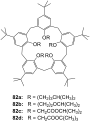
Figure 52: Lower rim modified p-tert-butylcalix[5]arenes 82.
Figure 53: The first example of a water soluble calixarene.
Figure 54: Sulfonated water soluble calix[n]arenes that bind ammonium ions.
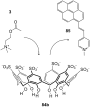
Figure 55: Displacement assay for acetylcholine (3) with a sulfonato-calix[6]arene (84b).
Figure 56: Amino acid inclusion in p-sulfonatocalix[4]arene (84a).
Figure 57: Calixarene receptor family 86 with upper and lower rim functionalization.
Figure 58: Calix[6]arenes 87 with one carboxylic acid functionality.
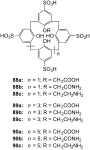
Figure 59: Sulfonated calix[n]arenes with mono-substitution at the lower rim systematically studied on their r...
Figure 60: Cyclotetrachromotropylene host (91) and its binding to lysine (81c).
Figure 61: Calixarenes 92 and 93 with phosphonic acids groups.
Figure 62: Calix[4]arene tetraphosphonic acid (94a) and a double bridged analogue (94b).
Figure 63: Calix[4]arene tetraphosphonic acid ester (92c) for surface recognition experiments.
Figure 64: Calixarene receptors 95 with α-aminophosphonate groups.
Figure 65: A bridged homocalix[3]arene 95 and a distally bridged homocalix[4]crown 96.
Figure 66: Homocalix[3]arene ammonium ion receptor 97a and the Reichardt’s dye (97b) for colorimetric assays.
Figure 67: Chromogenic diazo-bridged calix[4]arene 98.
Figure 68: Calixarene receptor 99 by Huang et al.
Figure 69: Calixarenes 100 reported by Parisi et al.
Figure 70: Guest molecules for inclusion in calixarenes 100: DAP × 2 HCl (101a), APA (101b) and Lys-OMe × 2 HC...
Figure 71: Different N-linked peptido-calixarenes open and with glycol chain bridges.
Figure 72: (S)-1,1′-Bi-2-naphthol calixarene derivative 104 published by Kubo et al.
Figure 73: A chiral ammonium-ion receptor 105 based on the calix[4]arene skeleton.
Figure 74: R-/S-phenylalaninol functionalized calix[6]arenes 106a and 106b.
Figure 75: Capped homocalix[3]arene ammonium ion receptor 107.
Figure 76: Two C3 symmetric capped calix[6]arenes 108 and 109.
Figure 77: Phosphorous-containing rigidified calix[6]arene 110.
Figure 78: Calix[6]azacryptand 111.
Figure 79: Further substituted calix[6]azacryptands 112.
Figure 80: Resorcin[4]arene (75c) and the cavitands (113).
Figure 81: Tetrasulfonatomethylcalix[4]resorcinarene (114).
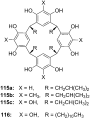
Figure 82: Resorcin[4]arenes (115a/b) and pyrogallo[4]arenes (115c, 116).
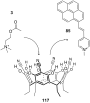
Figure 83: Displacement assay for acetylcholine (3) with tetracyanoresorcin[4]arene (117).
Figure 84: Tetramethoxy resorcinarene mono-crown-5 (118).
Figure 85: Components of a resorcinarene based displacement assay for ammonium ions.
Figure 86: Chiral basket resorcin[4]arenas 121.
Figure 87: Resorcinarenes with deeper cavitand structure (122).
Figure 88: Resorcinarene with partially open deeper cavitand structure (123).
Figure 89: Water-stabilized deep cavitands with partially structure (124, 125).
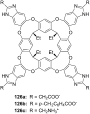
Figure 90: Charged cavitands 126 for tetralkylammonium ions.
Figure 91: Ditopic calix[4]arene receptor 127 capped with glycol chains.
Figure 92: A calix[5]arene dimer for diammonium salt recognition.
Figure 93: Calixarene parts 92c and 129 for the formation molecular capsules.
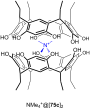
Figure 94: Encapsulation of a quaternary ammonium cation by two resorcin[4]arene molecules (NMe4+@[75c]2 × Cl−...
Figure 95: Encapsulation of a quaternary ammonium cation by six resorcin[4]arene molecules (NMe3D+@[130]6 × Cl−...
Figure 96: Structure and schematic of cucurbit[6]uril (CB[6], 131a).
Figure 97: Cyclohexanocucurbit[6]uril (CB′[6], 132) and the guest molecule spermine (133).
Figure 98: α,α,δ,δ-Tetramethylcucurbit[6]uril (134).
Figure 99: Structure of the cucurbituril-phthalhydrazide analogue 135.
Figure 100: Organic cavities for the displacement assay for amine differentiation.
Figure 101: Displacement assay methodology for diammonium- and related guests involving cucurbiturils and some ...
Figure 102: Nor-seco-Cucurbituril (±)-bis-ns-CB[6] (140) and guest molecules.
Figure 103: The cucurbit[6]uril based complexes 141 for chiral discrimination.
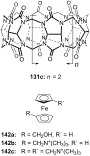
Figure 104: Cucurbit[7]uril (131c) and its ferrocene guests (142) opposed.
Figure 105: Cucurbit[7]uril (131c) guest inclusion and representative guests.
Figure 106: Cucurbit[7]uril (131c) binding to succinylcholine (145) and different bis-ammonium and bis-phosphon...
Figure 107: Paraquat-cucurbit[8]uril complex 149.
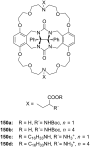
Figure 108: Gluconuril-based ammonium receptors 150.
Figure 109: Examples of clefts (151a), tweezers (151b, 151c, 151d) and clips (151e).
Figure 110: Kemp’s triacid (152a), on example of Rebek’s receptors (152b) and guests.
Figure 111: Amino acid receptor (154) by Rebek et al.
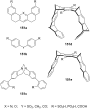
Figure 112: Hexagonal lattice designed hosts by Bell et al.
Figure 113: Bell’s amidinium receptor (156) and the amidinium ion (157).
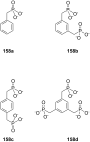
Figure 114: Aromatic phosphonic acids.
Figure 115: Xylene phosphonates 159 and 160a/b for recognition of amines and amino alcohols.
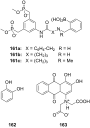
Figure 116: Bisphosphonate recognition motif 161 for a colorimetric assay with alizarin complexone (163) for ca...
Figure 117: Bisphosphonate/phosphate clip 164 and bisphosphonate cleft 165.
Figure 118: N-Methylpyrazine 166a, N-methylnicotinamide iodide (166b) and NAD+ (166c).
Figure 119: Bisphosphate cavitands.
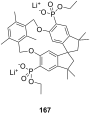
Figure 120: Bisphosphonate 167 of Schrader and Finocchiaro.
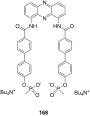
Figure 121: Tweezer 168 for noradrenaline (80b).
Figure 122: Different tripods and heparin (170).
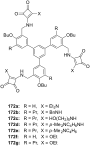
Figure 123: Squaramide based receptors 172.
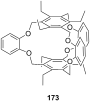
Figure 124: Cage like NH4+ receptor 173 of Kim et al.
Figure 125: Ammonium receptors 174 of Chin et al.
Figure 126: 2-Oxazolin-based ammonium receptors 175a–d and 176 by Ahn et al.
Figure 127: Racemic guest molecules 177.
Figure 128: Tripods based on a imidazole containing macrocycle (178) and the guest molecules employed in the st...
Figure 129: Ammonium ion receptor 180.
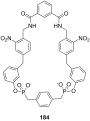
Figure 130: Tetraoxa[3.3.3.3]paracyclophanes 181 and a cyclophanic tetraester (182).
Figure 131: Peptidic bridged paraquat-cyclophane.
Figure 132: Shape-selective noradrenaline host.
Figure 133: Receptor 185 for binding of noradrenaline on surface layers from Schrader et al.
Figure 134: Tetraphosphonate receptor for binding of noradrenaline.
Figure 135: Tetraphosphonate 187 of Schrader and Finocchiaro.
Figure 136: Zinc-Porphyrin ammonium-ion receptors 188 and 189 of Mizutani et al.
Figure 137: Zinc porphyrin receptor 190.
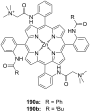
Figure 138: Zinc porphyrin receptors 191 capable of amino acid binding.
Figure 139: Zinc-porphyrins with amino acid side chains for stereoinduction.
Figure 140: Bis-zinc-bis-porphyrin based on Tröger’s base 193.
Figure 141: BINAP-zinc-prophyrin derivative 194 and it’s guests.
Figure 142: Bisaryl-linked-zinc-porphyrin receptors.
Figure 143: Bis-zinc-porphyrin 199 for diamine recognition and guests.
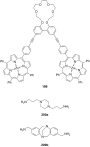
Figure 144: Bis-zinc-porphyrin crown ether 201.
Figure 145: Bis-zinc-porphyrin 202 for stereodiscrimination (L = large substituent; S = small substituent).
Figure 146: Bis-zinc-porphyrin[3]rotaxane and its copper complex and guests.
Figure 147: Dien-bipyridyl ligand 206 for co-ordination of two metal atoms.
Figure 148: The ligand and corresponding tetradentate co-complex 207 serving as enantioselective receptor for a...
Figure 149: Bis(oxazoline)–copper(II) complex 208 for the recognition of amino acids in aqueous solution.
Figure 150: Zinc-salen-complexes 209 for the recognition tertiary amines.
Figure 151: Bis(oxazoline)–copper(II) 211 for the recognition of amino acids in aqueous solution.
Figure 152: Zn(II)-complex of a C2 terpyridine crown ether.
Figure 153: Displacement assay and receptor for aspartate over glutamate.
Figure 154: Chiral complex 214 for a colorimetric displacement assay for amino acids.
Figure 155: Metal complex receptor 215 with tripeptide side arms.
Figure 156: A sandwich complex 216 and its displaceable dye 217.
Figure 157: Lanthanide complexes 218–220 for amino acid recognition.
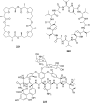
Figure 158: Nonactin (221), valinomycin (222) and vancomycin (223).
Figure 159: Monesin (224a) and a chiral analogue for enantiodiscrimination of ammonium guests (224b).
Figure 160: Chiral podands (226) compared to pentaglyme-dimethylether (225) and 18-crown-6 (4).
Figure 161: Lasalocid A (228).
Figure 162: Lasalocid derivatives (230) of Sessler et al.
Figure 163: The Coporphyrin I tetraanion (231).
Figure 164: Linear and cyclic peptides for ammonium ion recognition.
Figure 165: Cyclic and bicyclic depsipeptides for ammonium ion recognition.
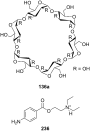
Figure 166: α-Cyclodextrin (136a) and novocaine (236).
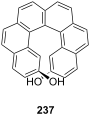
Figure 167: Helical diol receptor 237 by Reetz and Sostmann.
Figure 168: Ammonium binding spherand by Cram et al. (238a) and the cyclic[6]metaphenylacetylene 238b in compar...
Figure 169: Receptor for peptide backbone and ammonium binding (239).
Figure 170: Anion sensor principle with 3-hydroxy-2-naphthanilide of Jiang et al.
Figure 171: 7-bromo-3-hydroxy-N-(2-hydroxyphenyl)naphthalene 2-carboxamide (241) and its amine binding.
Figure 172: Naturally occurring catechins with affinity to quaternary ammonium ions.
Figure 173: Spiropyran (244) and merocyanine form (244a) of the amino acid receptors of Fuji et al.
Figure 174: Coumarin aldehyde (245) and its iminium species with amino acid bound (245a) by Glass et al.
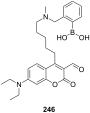
Figure 175: Coumarin aldehyde appended with boronic acid.
Figure 176: Quinolone aldehyde dimers by Glass et al.
Figure 177: Chromogenic ammonium ion receptors with trifluoroacetophenone recognition motifs.
Figure 178: Chromogenic ammonium ion receptor with trifluoroacetophenone recognition motif bound on different m...
Beilstein J. Org. Chem. 2009, 5, No. 35, doi:10.3762/bjoc.5.35
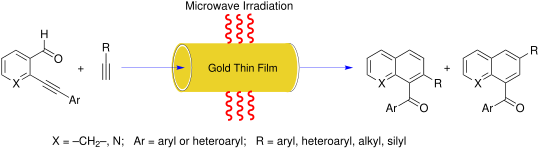
Graphical Abstract
Figure 1: Mechanism of Au(III)-catalyzed benzannulation between aromatic carbonyls and alkynes.
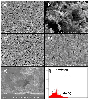
Figure 2: X-ray analysis of the metal films used in this benzannulation study. Panels a–e are scanning-electr...
Beilstein J. Org. Chem. 2009, 5, No. 33, doi:10.3762/bjoc.5.33
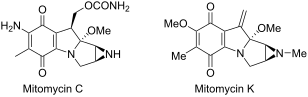
Graphical Abstract
Scheme 1: Aziridine containing natural products.
Scheme 2: Mitomycin structures and nomenclature.
Scheme 3: Base catalysed epimerization of mitomycin B.
Scheme 4: Biosynthesis of mitomycin C (MMC) 7.
Scheme 5: Mode of action of mitomycin C.
Scheme 6: The N–C3–C9a disconnection.
Scheme 7: Danishefsky’s Retrosynthesis of mitomycin K.
Scheme 8: Hetero Diels–Alder reaction en route to mitomycins.
Scheme 9: Nitroso Diels–Alder cycloaddition.
Scheme 10: Frank azide cycloadddition.
Scheme 11: Final steps of mitomycin K synthesis. aPDC, DCM; bPhSCH2N3, PhH, 80 °C; cL-selectride, THF, −78 °C; ...
Scheme 12: Naruta–Maruyama retrosynthesis.
Scheme 13: Synthesis of a leucoaziridinomitosane by nitrene cycloaddition. aAlCl3-Et2O; bNaH, ClCH2OMe; cn-BuL...
Scheme 14: Thermal decomposition of azidoquinone 51.
Scheme 15: Diastereoselectivity during the cycloaddition.
Scheme 16: Oxidation with iodo-azide.
Scheme 17: Williams’ approach towards mitomycins.aDEIPSCl, Imidazole, DCM; bPd/C, HCO2NH4, MeOH; cAllocCl, NaH...
Scheme 18: Synthesis of pyrrolidones by homoconjugate addition.
Scheme 19: Homoconjugate addition on the fully functionalized substrate.
Scheme 20: Introduction of the olefin.
Scheme 21: Retrosynthesis of N–C9a, N–C3 bond formation.
Scheme 22: Synthesis of the pyrrolo[1,2]indole 82 using N-PSP activation.aAc2O, Py; bAc2O, Hg(OAc)2, AcOH, 90%...
Scheme 23: Synthesis of an aziridinomitosane. am-CPBA, DCM then iPr2NH, CCl4 reflux; bK2CO3, MeOH; cBnBr, KH; d...
Scheme 24: Oxidation products of a leucoaziridinomitosane obtained from a Polonovski oxidation.
Scheme 25: Polonovski oxidation of an aziridinomitosane. am-CPBA; bPd/C, H2; cDimethoxypropane, PPTS.
Scheme 26: The C1–C9a disconnection.
Scheme 27: Ziegler synthesis of desmethoxymitomycin A.aIm2C=O, THF; bNH3; cTMSOTf, 2,6-di-tert-butylpyridine, ...
Scheme 28: Transformation of sodium erythorbate.aTBDMSCl; bNaN3; cPPh3; d(Boc)2O, DMAP; eTBAF; fTf2O, Pyr.
Scheme 29: Formation of C9,C10-unsaturation in the mitomycins. am-CPBA, DCM; bO3, MeOH; cMe2S; dKHMDS, (EtO)3P...
Scheme 30: Fragmentation mechanism.
Scheme 31: Michael addition-cyclisation.
Scheme 32: SmI2 8-endo-dig cyclisation.
Scheme 33: Synthesis of pyrrolo[1,2-a]indole by 5-exo-dig radical cyclization.
Scheme 34: The C9–C9a disconnection.
Scheme 35: Intramolecular nitrile oxide cycloaddition.
Scheme 36: Regioselectivity of the INOC.
Scheme 37: Fukuyama’s INOC strategy.
Scheme 38: Synthesis of a mitosane core by rearrangement of a 1-(1-pyrrolidinyl)-1,3-butadiene.
Scheme 39: Sulikowski synthesis of an aziridinomitosene. aPd(Tol3P)2Cl2, Bu3SnF, 140; bH2, Pd/C; cTFAA, Et3N; d...
Scheme 40: Enantioselective carbene insertion.
Scheme 41: Parson’s radical cyclization.
Scheme 42: Cha’s mitomycin B core synthesis.
Scheme 43: The N-aromatic disconnection.
Scheme 44: Kishi retrosynthesis.
Scheme 45: Kishi synthesis of a starting material. aallyl bromide, K2CO3, acetone, reflux; bN,N-Dimethylanilin...
Scheme 46: Kishi synthesis of MMC 7. aLDA, THF, −78 °C then PhSeBr, THF, −78 °C; bH2O2, THF-EtOAc; cDIBAL, DCM...
Scheme 47: Acid catalyzed degradation of MMC 7.
Scheme 48: In vivo formation of apomitomycin B.
Scheme 49: Advanced intermediate for apomitomycin B synthesis.
Scheme 50: Remers synthesis of a functionalized mitosene. aTMSCl, Et3N, ZnCl2 then NBS; bAcOK; cNH2OH; dPd/C, H...
Scheme 51: Coleman synthesis of desmethoxymitomycin A. aSnCl2, PhSH, Et3N, CH3CN; bClCO2Bn, Et3N; cPPh3, DIAD,...
Scheme 52: Transition state and pyrrolidine synthesis.
Scheme 53: Air oxidation of mitosanes and aziridinomitosanes.
Scheme 54: The C9-aromatic disconnection.
Scheme 55: Synthesis of the aziridine precursor. aLHMDS, THF; bNaOH; c(s)-α-Me-BnNH2, DCC, HOBT; dDIBAL; eK2CO3...
Scheme 56: Synthesis of 206 via enamine conjugate addition.
Scheme 57: Rapoport synthesis of an aziridinomitosene.
Scheme 58: One pot synthesis of a mitomycin analog.
Scheme 59: Synthesis of compound 218 via intramolecular Heck coupling. aEtMgCl, THF, then 220; bMsCl, Et3N; cN...
Scheme 60: Elaboration of indole 223. aEt3N, Ac2O; bAcOH; cSOCl2, Et3N; dNaN3, DMF; eH2SO4, THF; fK2CO3, MeOH; ...
Scheme 61: C9-C9a functionalization from indole.
Scheme 62: Synthesis of mitomycin K. a2 equiv. MoO5.HMPA, MeOH; bPPh3, Et3N, THF-H2O; cMeOTf, Py, DCM; dMe3SiCH...
Scheme 63: Configurational stability of mitomycin K derivatives.
Scheme 64: Epimerization of carbon C9a in compound 227b.
Scheme 65: Corey–Chaykovsky synthesis of indol 235.
Scheme 66: Cory intramolecular aza-Darzens reaction for the formation of aziridinomitosene 239.
Scheme 67: Jimenez synthesis of aziridinomitosene 242.
Scheme 68: Von Braun opening of indoline 244.
Scheme 69: C9a oxidation of an aziridinomitosane with DDQ/OsO4.
Scheme 70: Synthesis of epi-mitomycin K. aNaH, Me2SO4; bH2, Pd/C; cMitscher reagent [165]; d[(trimethylsilyl)methyl...
Scheme 71: Mitomycins rearrangement.
Scheme 72: Fukuyama’s retrosynthesis.
Scheme 73: [2+3] Cycloaddition en route to isomitomycin A. aToluene, 110 °C; bDIBAL, THF, −78 °C; cAc2O, Py.; d...
Scheme 74: Final steps of Fukuyama’s synthesis.
Scheme 75: “Crisscross annulation”.
Scheme 76: Synthesis of 274; the 8-membered ring 274 was made using a crisscross annulation. a20% Pd(OH)2/C, H2...
Scheme 77: Conformational analysis of compound 273 and 275.
Scheme 78: Synthesis of a mitomycin analog. aNa2S2O4, H2O, DCM; bBnBr (10 equiv), K2CO3, 18-crown-6 (cat.), TH...
Scheme 79: Vedejs retrosynthesis.
Scheme 80: Formation of the azomethine ylide.
Scheme 81: Vedejs second synthesis of an aziridinomitosene. aDIBAL; bTPAP, NMO; c287; dTBSCl, imidazole.
Scheme 82: Trityl deprotection and new aziridine protecting group 300.
Scheme 83: Ene reaction towards benzazocinones.
Scheme 84: Benzazocenols via homo-Brook rearrangement.
Scheme 85: Pt-catalyzed [3+2] cycloaddition.
Scheme 86: Carbonylative lactamization entry to benzazocenols. aZn(OTf)2, (+)-N-methylephedrine, Et3N, TMS-ace...
Scheme 87: 8 membered ring formation by RCM. aBOC2O, NaHCO3; bTBSCl, Imidazole, DMF; callyl bromide, NaH, DMF; ...
Scheme 88: Aziridinomitosene synthesis. aTMSN3; bTFA; cPOCl3, DMF; dNaClO2, NaH2PO4, 2-methyl-2-butene; eMeI, ...
Scheme 89: Metathesis from an indole.
Scheme 90: Synthesis of early biosynthetic intermediates of mitomycins.
Beilstein J. Org. Chem. 2008, 4, No. 45, doi:10.3762/bjoc.4.45
Beilstein J. Org. Chem. 2008, 4, No. 15, doi:10.3762/bjoc.4.15
Graphical Abstract
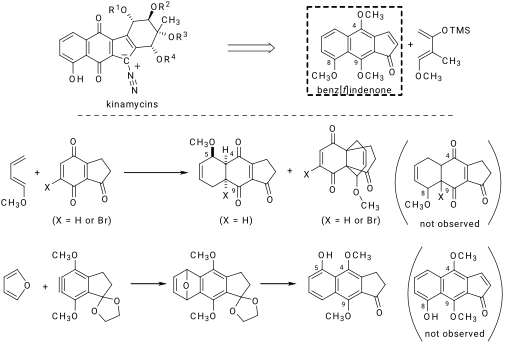
Figure 1: The structure of kinamycins.
Scheme 1: Retrosynthesis of kinamycins.
Scheme 2: Synthesis of quinones 8 and 12 and the acetals 13 and 14. Reagents and conditions: a) P2O5, CH3SO3H...
Figure 2: Selected HMBC correlations (lines) and NOE enhancements (dash) on 21 (a) and on 22 (b).
Scheme 3: DAR of benzyne 10 and furan (9). Reagents and conditions: a) ethylene glycol, PPTS, benzene, reflux...
Figure 3: Selected HMBC correlations (a) and NOE enhancements (b) on the ring-opened product 27.
Figure 4: Transition states supposed for the regioselective DAR via quinone route.
Figure 5: Representative LUMO coeffients of quinones 8 and 12 (a) and their reaction courses with diene 7 (b)....
Scheme 4: The proposed mechanism for the acid-induced ring opening of epoxynaphthalene 29 by Giles et al. [19].
Scheme 5: Supposed reaction pathways for the acid-induced ring opening of 11.
Beilstein J. Org. Chem. 2007, 3, No. 21, doi:10.1186/1860-5397-3-21
Graphical Abstract
Scheme 1: Saigo's cycloisomerisation reaction under Pauson-Khand conditions.
Scheme 2: Pauson-Khand reaction and tether-cleavage in wet acetonitrile.
Scheme 3: Silyl-tethered allenic Pauson-Khand reaction reported by Brummond.
Scheme 4: Intramolecular Pauson-Khand reaction of allyldimethyl- and allyldiphenylsilyl propargyl ethers repo...
Scheme 5: Synthesis and attempted Pauson-Khand reactions of vinyldimethylsilyl- and vinyldiphenylsilyl ethers....
Figure 1: Functionalised acetylenes prepared and used in silyl ether-tethered Pauson-Khand reactions. Yields ...
Figure 2: Chain-functionalised acetylenes prepared and used in silyl ether-tethered Pauson-Khand reactions. Y...
Figure 3: Possible structure of THF-oxidation/insertion product.
Scheme 6: Model Pauson-Khand reaction of allyltrimethylsilane.
Scheme 7: Preparation of allyldiisopropylsilyl ethers.
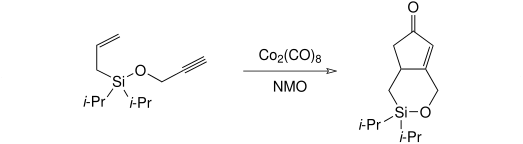
Scheme 8: Pauson-Khand reaction of allyldiisopropylsilyl ethers.
Scheme 9: Preparation of allyldiisopropylsilanes.
Scheme 10: Attempted Mitsunobu reactions of diisopropylsilanols.
Scheme 11: Preparation of alkynic diisopropylsilanes.
Scheme 12: Preparation of allyldiisopropylsilyl ethers.
Scheme 13: Preparation of acetals from dichlorodiphenylsilane.
Scheme 14: Attempted Pauson-Khand reaction of allylpropargyldiphenylsilyl acetal.
Scheme 15: Proposed diisopropylsilyl acetal formation.
Scheme 16: Attempted allylpropargyldiisopropylsilyl acetal formation.
Scheme 17: Attempted allylpropargyldiisopropylsilyl acetal formation.
Scheme 18: Preparation of silicon-tethered Pauson-Khand precursors.
Scheme 19: Failed Pauson-Khand reaction of a silicon-tethered substrate.
Beilstein J. Org. Chem. 2006, 2, No. 19, doi:10.1186/1860-5397-2-19
Graphical Abstract
Scheme 1: Synthesis of vicinal dimethyl difluorosuccinates. The conversion of the tartrates 1 with SF4 and HF ...
Scheme 2: Schlosser's route to vicinal erythro- or threo- difluoro alkanes 5 [13].
Scheme 3: Halofluorination of electron-rich alkenes with in situ fluoride displacement generates vicinal difl...
Scheme 4: Bromofluorination of stilbene [19].
Scheme 5: Treatment of anti-14 with base generated the E-fluorostilbene 15 by an anti elimination mechanism.
Scheme 6: Hypothesis for the predominent retention of configuration during fluoride substitution via phenoniu...
Scheme 7: Proposed C-C bond rotation during the preparation of 14 from cis-stilbene.
Figure 1: Crystal structure of erythro-13.
Figure 2: X-ray structure of threo-13.
Figure 3: Expanded regions of the second order AA'XX' spin systems in the 1H-NMR (left) and 19F-NMR spectra (...
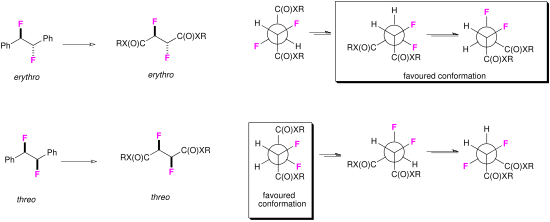
Figure 4: NMR coupling constants and calculated relative energies (kcalmol-1) of the staggered conformers of ...
Scheme 8: Synthesis of erythro-19 via ozonolysis of erythro-13.
Figure 5: X-ray structure of erythro-19.
Figure 6: X-ray structure of threo-19.
Scheme 9: Strategy for the preparation of diastereoisomers of erythro- and threo- 20.
Figure 7: NMR (CDCl3, RT) coupling constants of erythro- and threo- 2,3-difluoro-3-phenylpropionates 21.
Figure 8: Newman projections showing the staggered conformations of erythro- and threo- 21.
Figure 9: X-ray structure of methyl threo- 21.
Figure 10: The preferred conformation of α-fluoroamides has the C-F and amide carbonyl anti-planar [29,30].
Scheme 10: The synthesis of stereoisomers of erythro- and threo- 22. These isomers could be separated by chrom...
Figure 11: X-ray structure of erythro-22.
Figure 12: Crystal packing of erythro-22 clearly indicating intermolecular hydrogen bonding.
Figure 13: X-ray structure of threo-22.
Figure 14: The conformations of erythro- and threo- 23 are very different as a consequence of each conformatio...
Figure 15: 3JHF and 3JHH coupling constants for the erythro (yellow) and threo (blue) diastereoisomers of the ...
Figure 16: Newman projections of the three staggered conformations of the erythro and threo stereoisomers of t...
Figure 17: The average coupling constant with no conformational bias. The limiting coupling constants Jg = 8 H...
Figure 18: The observed 3JHF coupling constants are an average over the rotational isomers.
Beilstein J. Org. Chem. 2005, 1, No. 11, doi:10.1186/1860-5397-1-11
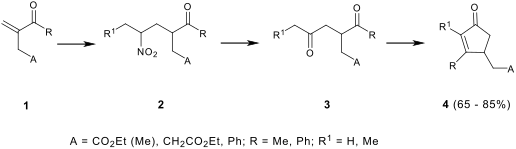
Graphical Abstract
Scheme 1: Synthesis of nitroalkanes derivatives 2 and their corresponding 1,4-diketones 3.
Scheme 2: γ-Functionalized cyclopentenones 4.
Beilstein J. Org. Chem. 2005, 1, No. 5, doi:10.1186/1860-5397-1-5
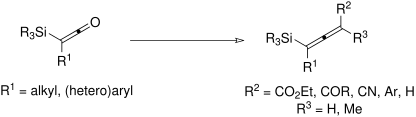
Graphical Abstract
Figure 1: Alkylidenation approach to the synthesis of allenylsilanes.
Scheme 1: Synthesis of substituted silylketenes 1
Scheme 2: Reaction of substituted silylketenes with ester-stabilised phosphoranes
Scheme 3: Reaction of silylketenes with various ylides
Scheme 4: Methylenation of silylketene 1b with the Lombardo reagent
Scheme 5: Methylenation of silylketenes with the Petasis reagent