Search results
Search for "conformations" in Full Text gives 404 result(s) in Beilstein Journal of Organic Chemistry. Showing first 200.
BINOL as a chiral element in mechanically interlocked molecules
Beilstein J. Org. Chem. 2022, 18, 508–523, doi:10.3762/bjoc.18.53
- polyacetylene, with a special focus on the different possible co-conformations of the rotaxane (see Figure 7) [54]. The synthesis of the acetylene monomers 31, containing a chiral rotaxane side-chain, was achieved by tributylphosphane-catalyzed esterification. Two different macrocycles having either one BINOL




Comparative study of thermally activated delayed fluorescent properties of donor–acceptor and donor–acceptor–donor architectures based on phenoxazine and dibenzo[a,j]phenazine
Beilstein J. Org. Chem. 2022, 18, 459–468, doi:10.3762/bjoc.18.48
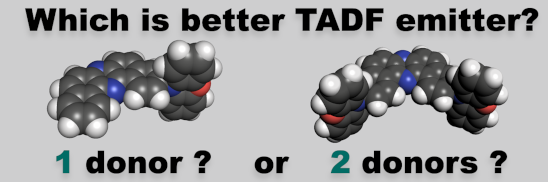
- internal conversion. In this sense, it is important to look into the energy gaps between triplet states of both molecules. Considering the average gaps taken from all the conformations sampled in the nuclear ensemble from the T1 state geometry, we obtain T1 to T2 gaps of approximately 0.4 eV for both


Site-selective reactions mediated by molecular containers
Beilstein J. Org. Chem. 2022, 18, 309–324, doi:10.3762/bjoc.18.35
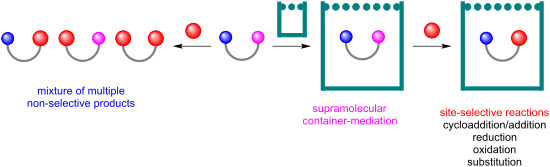
- cavitand hosts were also modified with imidazolium cationic or carboxylic anionic feet [29]. Before the reaction, NMR analysis of the host–guest complex indicated that the bound guest was in yo-yo motions time-averaged between unsymmetrical J-shaped conformations and symmetrical U-shaped ones. Treatment of
- -organize them with certain confined conformations. In this case, the linear diterpenoid substrate 29 possessed a folded U-shaped conformation within the cavity, with the terminal trisubstituted olefin exposed to the solution while the other three internal ones were protected by the cage host. The structure
- . Contemporaneously, the Rebek group illustrated another interesting site-selective monoepoxidation of α,ω-dienes mediated by the water-soluble cavitand host E (Figure 10) [71]. The α,ω-dienes were determined to adopt a yo-yo motion between two J-shaped conformations or the rapid tumbling of a coiled conformation


Peptide stapling by late-stage Suzuki–Miyaura cross-coupling
Beilstein J. Org. Chem. 2022, 18, 1–12, doi:10.3762/bjoc.18.1
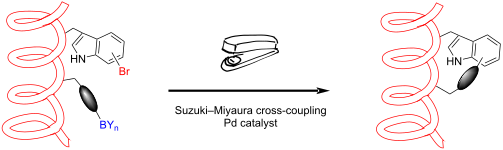
- permeability [1][2][3]. Hence, peptide-based drugs became of high interest because of their high selectivity combined with low toxicity. Cross-linking of side chain residues results in constrained conformations and can be used to stabilise α-helical secondary structures. This technique is called peptide
- portion of the macrocycle and is similar to c1, with the Trp’s indole group pointing in the other direction. In the trans isomer, both conformations are also found, however, with different populations and order. Conformation c2 of P5 trans is helical and resembles c3 of P5 cis, yet with a significantly
- accurate values would be obtained with methods better adapted for kinetics, such as Markov models (for a general overview see reference [94]). Yet, such low barriers are not sufficient to trap the SMC peptide in conformations that can be separated experimentally at ambient conditions [95] and the analysis


Biological properties and conformational studies of amphiphilic Pd(II) and Ni(II) complexes bearing functionalized aroylaminocarbo-N-thioylpyrrolinate units
Beilstein J. Org. Chem. 2021, 17, 2812–2821, doi:10.3762/bjoc.17.192
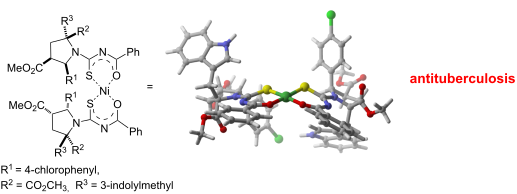
- conformations analyzed by the 1H NMR spectra of nickel and palladium complexes, presumably correlated with their activity. According to the previous activities of derivatives of this nature [15][16] the cis-complex was identified as the therapeutic arrow. We initially tried to determine the driving force
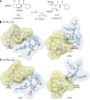
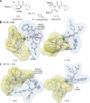
- the metal atom considered, only one of the ligand conformations were energetically accessible (energetic difference of +14.6 and +5.7 kcal·mol−1, for nickel and palladium conformers, respectively, Figure 2). In these cases, the energetic difference between conformers A and B lies in the existence of


Progress and challenges in the synthesis of sequence controlled polysaccharides
Beilstein J. Org. Chem. 2021, 17, 1981–2025, doi:10.3762/bjoc.17.129
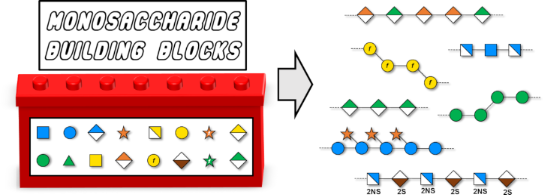
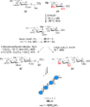
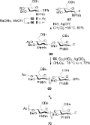
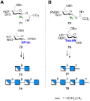
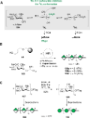
- are ideal probes to study polysaccharides at the molecular level and identify structure–property correlations. Access to synthetic polysaccharides facilitated the correlation of chemical structure with molecular conformations [5][6], intermolecular interactions [7][8], and biological response [9










Cationic oligonucleotide derivatives and conjugates: A favorable approach for enhanced DNA and RNA targeting oligonucleotides
Beilstein J. Org. Chem. 2021, 17, 1828–1848, doi:10.3762/bjoc.17.125
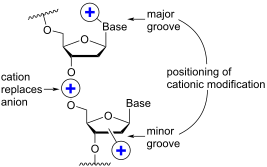
- moieties attached to the sugar scaffold The sugar moiety of ONs has been extensively studied with respect to the significance of structure and configurations of substituents, and the resulting conformations of the furanose ring, on the properties of ONs (including ASOs). The great variation at which


Chemical approaches to discover the full potential of peptide nucleic acids in biomedical applications
Beilstein J. Org. Chem. 2021, 17, 1641–1688, doi:10.3762/bjoc.17.116
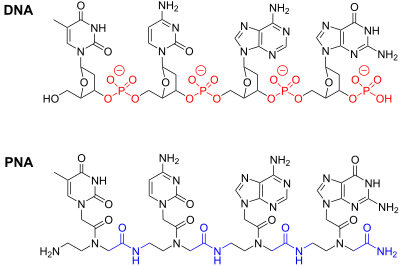
- negative charge on PNA’s backbone. Electrostatic repulsion of the negatively charged phosphates dominates the conformational properties and structure of nucleic acids. In contrast to proteins that prefer to fold in compact structures, DNA and RNA inherently prefer extended conformations that minimize the
- resembled the B- and A-form conformations of natural nucleic acids. The PNA–RNA duplex adopted a conformation very close to the standard A-form helix [40]. In contrast, the PNA–DNA duplex adopted an intermediate structure where positioning of the base pairs was A-like, while the backbone curvature, sugar
- -form helix" by the study authors [41]. Despite the much larger displacement of the bases from the helix axis, the base stacking in the P-form helix resembles that of an A-form DNA duplex. The sugars of a DNA strand adopt C3′-endo conformations with an average interphosphate distance of ≈6 Å, which is








Breaking paracyclophane: the unexpected formation of non-symmetric disubstituted nitro[2.2]metaparacyclophanes
Beilstein J. Org. Chem. 2021, 17, 1518–1526, doi:10.3762/bjoc.17.109
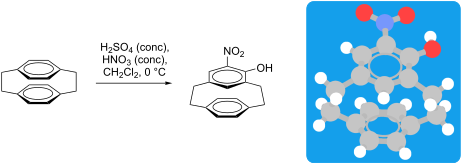
- chains at non-adjacent carbon positions. Their constrained three-dimensional shapes enforce unusual conformations and interactions between the aromatic decks, all of which results in their unique properties [2][3][4][5]. The most studied cyclophane is [2.2]paracyclophane (1, Figure 1). Not only is it the




Structural effects of meso-halogenation on porphyrins
Beilstein J. Org. Chem. 2021, 17, 1149–1170, doi:10.3762/bjoc.17.88
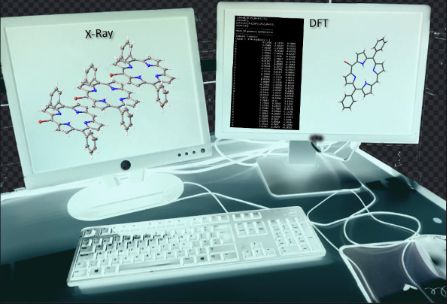
- data in the supporting information for completion. However, we were able to extract atom coordinates and NSD data which can be compared to the existing crystal structures (Supporting Information File 1, Figures S72–S74 and S75–S129) [28][45]. Series 1 In series 1 (Figure 22) the conformations of the


Synthesis of multiply fluorinated N-acetyl-D-glucosamine and D-galactosamine analogs via the corresponding deoxyfluorinated glucosazide and galactosazide phenyl thioglycosides
Beilstein J. Org. Chem. 2021, 17, 1086–1095, doi:10.3762/bjoc.17.85
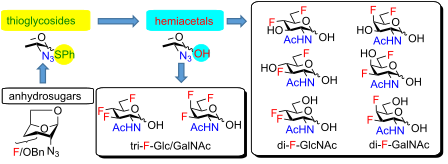
- exocyclic C5‒C6 bond in solution (3JH5-F6 = 24.6–27.1 Hz), whereas the corresponding ᴅ-galacto-configured analogs 60, 67, 69, and 72 adopted gauche,trans (gt) or trans,gauche (tg) conformations to a significant degree (3JH5-F6 = 12.7–14.6 Hz). These findings were in accordance with the previous reports by



Beyond ribose and phosphate: Selected nucleic acid modifications for structure–function investigations and therapeutic applications
Beilstein J. Org. Chem. 2021, 17, 908–931, doi:10.3762/bjoc.17.76
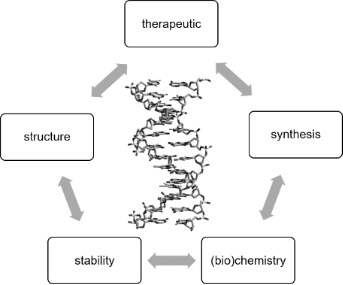
- ][105][106][107]. GNA duplexes possess only one large groove which corresponds to the canonical minor groove, the canonical major groove is a convex surface. Furthermore, the glycol backbone adopts two conformations alternating between gauche and anti conformations such that each base pair contains one




Menthyl esterification allows chiral resolution for the synthesis of artificial glutamate analogs
Beilstein J. Org. Chem. 2021, 17, 540–550, doi:10.3762/bjoc.17.48
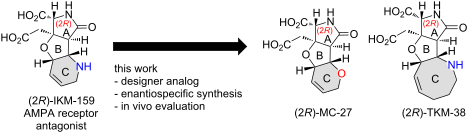
- supported by taking into account the steric interactions between the heterotricycle and the menthyl ring, as follows. There are no major differences in the conformations of the heterotricycle and the menthyl rings in 10, 10*, 21, and 21*. It is reasonably speculated that 1) the four bonds between the rings
- Corporation), employing initial conformations generated by MM2 (ChemBio3D Ultra, Version 14.0.0.117). The calculations were basically independent from the initial conformations. A same set of conformers was obtained after CONFLEX calculations, starting with different conformers employed as initial conformers








Biochemistry of fluoroprolines: the prospect of making fluorine a bioelement
Beilstein J. Org. Chem. 2021, 17, 439–460, doi:10.3762/bjoc.17.40
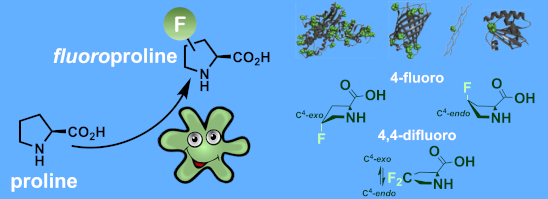
- residue that appear altered in fluoroprolines. The first one to mention is the conformation of the pyrrolidine ring, which exhibits a dynamic transition between several distinct states in a relatively fast kinetic mode (roughly on a GHz scale) [48][49]. For simplicity, two conformations are considered
- the conformations. However, R-Flp stabilizes the C4-exo-pucker, while S-Flp stabilizes the C4-endo system [51]. It is believed that Dfp has no conformational preference akin to proline [52]. The stabilization of the puckers is one of the most prominent features of fluoroprolines that justifies their
- use in protein engineering. The "freezing" of certain proline pucker conformations due to stereospecific fluorination has an effect on the packing within a protein structure as well as the backbone folding parameters (vide infra). 2.5 Thermodynamics of the amide rotation Another special feature of


Exploring the possibility of using fluorine-involved non-conjugated electron-withdrawing groups for thermally activated delayed fluorescence emitters by TD-DFT calculation
Beilstein J. Org. Chem. 2021, 17, 210–223, doi:10.3762/bjoc.17.21
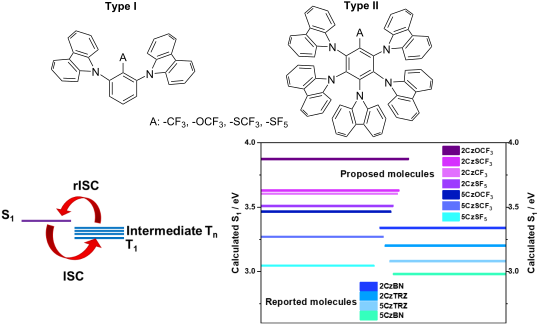
- the increased bulkiness of the SF5 group, the corresponding twist angle increased to 78.5o and 78.7o. These highly twisted conformations contribute to the spatial separation of the HOMO and LUMO. Figure 3 shows the energies of the HOMOs and LUMOs and the S1 and T1 states for the fluorinated acceptor
- intermediate excited triplet states to S1 thereby improving the rISC rate [22][24]. The presence of multiple donors, each possessing slightly different conformations, and thereby presenting slightly different electronic coupling with the central acceptor guarantees a dense population of excited states [22][24


Molecular basis for protein–protein interactions
Beilstein J. Org. Chem. 2021, 17, 1–10, doi:10.3762/bjoc.17.1
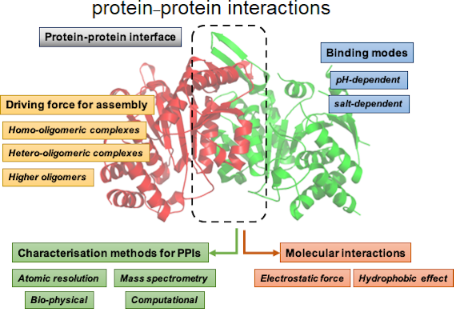
- containers [90]. CCMV was the first icosahedral viral capsid to be disassembled and reassembled in vitro [91]. The CCMV capsid can be reassembled into empty capsids as well as into different conformations, such as disks, rods, tubes, and multiwalled capsids by using different scaffolds [92]. In these cases


Chiral anion recognition using calix[4]arene-based ureido receptors in a 1,3-alternate conformation
Beilstein J. Org. Chem. 2020, 16, 2999–3007, doi:10.3762/bjoc.16.249
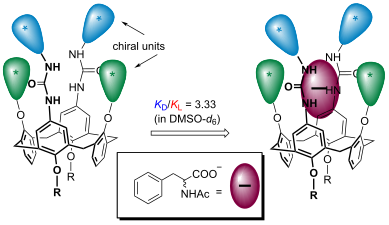
- basic conformations (cone, partial cone, 1,3-alternate, and 1,2-alternate) offers the combination of a precisely defined 3D structure, with functional groups being introduced at exactly defined mutual positions. This makes calix[4]arenes an ideal molecular scaffold [25][26] for the construction of
- different conformations. Although the overwhelming majority of calixarene-based receptors makes use of the cone conformer A (Figure 1), the corresponding diureidocalix[4]arenes in the 1,3-alternate conformation B showed [42][43] surprisingly good complexation abilities towards selected anions. Especially




Naphthalonitriles featuring efficient emission in solution and in the solid state
Beilstein J. Org. Chem. 2020, 16, 2960–2970, doi:10.3762/bjoc.16.246
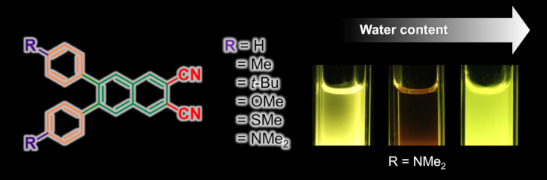
- (AIE) [23][24][25][26][27]. They mentioned a series of silole derivatives with propeller-like conformations that show no emission in dilute solutions, but are highly luminescent when aggregated in the solid state. Their work has attracted major attention and quickly became one of the most sought-after

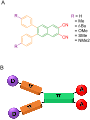


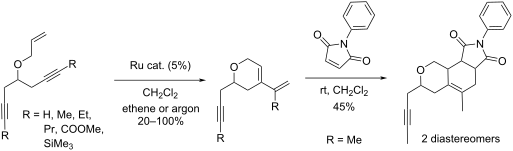
Ring-closing metathesis of prochiral oxaenediynes to racemic 4-alkenyl-2-alkynyl-3,6-dihydro-2H-pyrans
Beilstein J. Org. Chem. 2020, 16, 2757–2768, doi:10.3762/bjoc.16.226
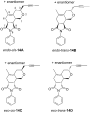
- obtained two diastereoisomers, we decided to perform a short DFT study of the Diels–Alder reaction between dihydropyran 12b and maleimide 13. We started the study with the optimization of the starting compound. While the optimization of the rigid maleimide 13 was straightforward, 18 conformations had to be
- considered for the dihydropyran 12b, namely all combinations of equatorial or axial positions of the but-2-ynyl substituent, three staggered conformations of the prop-1-ynyl group with respect to the C–O bond of the ring, and three conformations of the dienyl system (s-trans and two tilted s-cis
- conformations) (Figure 5). Among the 18 conformations, the structure with an equatorial conformation of the but-2-ynyl group, an anti-arrangement of the O–C bond and the prop-1-ynyl group, and an s-trans conformation of the diene system proved to be the most stable by more than 7 kJ/mol (Figure 6). Of course




Enzyme-instructed morphological transition of the supramolecular assemblies of branched peptides
Beilstein J. Org. Chem. 2020, 16, 2709–2718, doi:10.3762/bjoc.16.221
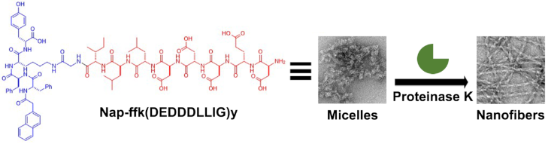
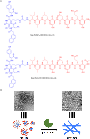
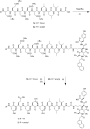
- the cleavage occurs depending on the acetylation of the N-terminal of the branch. Then, we conducted a time-dependent CD analysis to examine the change of the secondary structural conformations of 1 and 2 during the proteolysis catalyzed by proteinase K in Tris-HCl buffer at pH 7.0. As shown in Figure
- conformations than that of peptide 2. With increasing proteolysis time, the CD spectra indicate that the cleavage of 1 or 2 results in more assemblies that favor β-strand conformations (Figure 2D and Figure 2E). In addition, the ratio of the β-strand conformation resulted from the cleavage of 1 being slightly




Vicinal difluorination as a C=C surrogate: an analog of piperine with enhanced solubility, photostability, and acetylcholinesterase inhibitory activity
Beilstein J. Org. Chem. 2020, 16, 2663–2670, doi:10.3762/bjoc.16.216
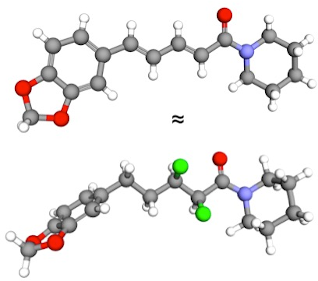
- . Stereoselective fluorination is an emerging strategy for controlling the conformations of organic molecules. The highly polarized C–F bond tends to align in predictable ways with adjacent functional groups, due to a combination of hyperconjugative and/or dipolar interactions [18][19][20][21]. This knowledge led
- to different levels of flexibility within the enzyme active sites. A third possibility is that the analog 2 adopts different conformations upon binding to AChE vs BACE-1, since the microenvironments within the enzymes’ active sites could be different (e.g., more/less polar), the “correct” binding
- physicochemical properties of compound 2 were found to be superior to piperine (1) itself in two key respects, namely photostability and aqueous solubility. The conformational analysis of 2 by DFT and NMR spectroscopy revealed that the lowest-energy conformations 2a–c are imperfect mimics of 1 but that a somewhat


Comparative ligand structural analytics illustrated on variably glycosylated MUC1 antigen–antibody binding
Beilstein J. Org. Chem. 2020, 16, 2540–2550, doi:10.3762/bjoc.16.206

- tools are applied to each of the simulation trajectories and this process was streamlined by using Galaxy workflows. The conformations of the antigens were analyzed using root-mean-square deviation, end-to-end distance, Ramachandran plots, and hydrogen bonding analysis. Additionally, RMSF and clustering
- analysis were carried out. These analyses were used to rapidly assess key features of the system, interrogate the dynamic structure of the ligand, and determine the role of glycosylation on the conformational equilibrium. The glycopeptide conformations in solution change relative to the peptide; thus a
- conformation of the peptide portion of the antigen and does not bind directly. Previous studies have shown that O-glycosylation may provide increased physical stability [20], rigid conformations for protein stability [21], induce the formation of stiff and extended peptide conformations [22], and may affect


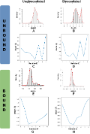


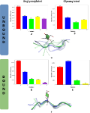
Leveraging glycomics data in glycoprotein 3D structure validation with Privateer
Beilstein J. Org. Chem. 2020, 16, 2523–2533, doi:10.3762/bjoc.16.204
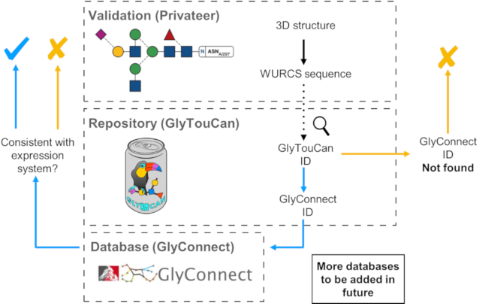
- stereochemistry [14], incorrect torsion [15][16], and unlikely high-energy ring conformations [17]. Early efforts in the validation of carbohydrate structures saw the introduction of online tools such as PDB-CARE [37] and CARP [16]; more recently, we released the Privateer software [24], which was the first
- intermediate interconversion library. A foundation for such interconversion libraries exists in the form of the carbohydrate validation software Privateer. The program is able to compute individual monosaccharide conformations from a glycoprotein model, check whether the modelled carbohydrates atomistic
- and the conformations can be elucidated; middle: A medium resolution example where the identification starts to become difficult; right: A low-resolution example for which all prior knowledge must be used. Despite coming from different glycoprotein structures, the glycan has the same composition, and




NMR Spectroscopy of supramolecular chemistry on protein surfaces
Beilstein J. Org. Chem. 2020, 16, 2505–2522, doi:10.3762/bjoc.16.203
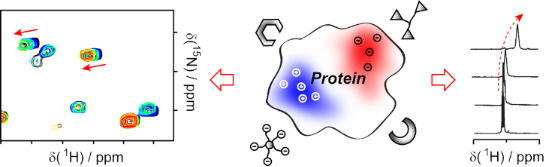
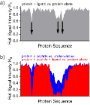
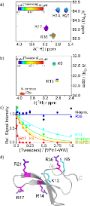
- residues over others as well. The smallest calix[4]arene is confined to a bowl-shaped conformation and entraps mostly lysine side chains, however, occasionally an arginine residue is favored over lysine residues [80][82]. The larger calixarenes are more flexible, and different conformations have been found



Conformational preferences of fluorine-containing agrochemicals and their implications for lipophilicity prediction
Beilstein J. Org. Chem. 2020, 16, 2469–2476, doi:10.3762/bjoc.16.200
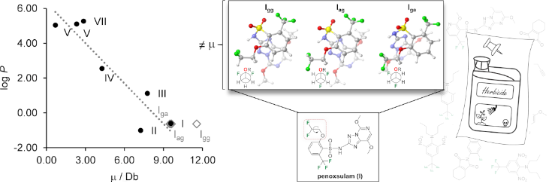
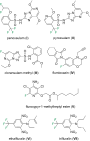
- conformational equilibrium of penoxsulam (I, Figure 1). This compound has a 1,2–disubstituted ethane motif that could adopt three main staggered conformations, namely Igg, Iag and Iga (g = gauche and a = anti; see Figure 1), thus we have explored the intramolecular interactions governing its conformational
- conformations along the 1,2-disubstituted ethane motif, the C–C(F) bond was rotated to additionally obtain conformers Igg and Iga, and the corresponding geometries were then optimized. The resulting geometries and relative conformational energies are summarized in Figure 2. At first, we observe that the overall
- of 2.8 kcal mol–1, see Table 1). Yet, conformer Igg is not the global energy minimum. This is surprising, because all-gauche conformations in fluoropropanediol are strongly preferred [21], while the double gauche effect in difluoroethylamine and its hydrochloride salt stabilizes the gg over ag