Search results
Search for "hydrogen bonds" in Full Text gives 455 result(s) in Beilstein Journal of Organic Chemistry. Showing first 200.
New triazole-substituted triterpene derivatives exhibiting anti-RSV activity: synthesis, biological evaluation, and molecular modeling
Beilstein J. Org. Chem. 2022, 18, 1524–1531, doi:10.3762/bjoc.18.161
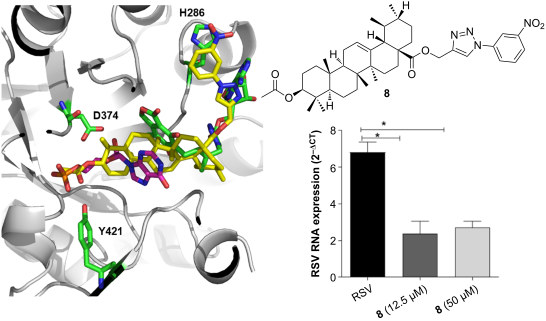
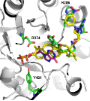
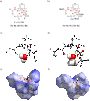
- Figure 3, compound 8 (in yellow sticks) interacted through hydrogen bonds with Arg108 and Tyr421, represented by magenta dots, similar to the interactions observed in the crystallographic complex with IMP and the inhibitor MAD1, in cyan sticks. Moreover, the acetate group (at C-3 position) and nitroaryl


1,4,6,10-Tetraazaadamantanes (TAADs) with N-amino groups: synthesis and formation of boron chelates and host–guest complexes
Beilstein J. Org. Chem. 2022, 18, 1424–1434, doi:10.3762/bjoc.18.148
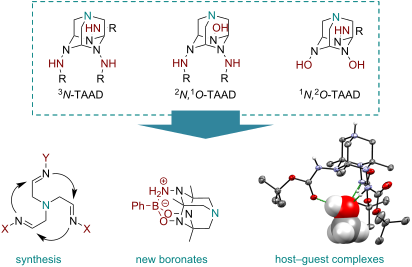
- to the formation of intramolecular bifurcated hydrogen-bonds between the corresponding carbonyl oxygen and NH hydrogens of two axial N-amido groups. The invertomer eq,ax,ax-4a (Figure 4a) lacking this H-bond is less stable by ca. 2 kcal/mol (ΔG°). Upon the formation of inclusion complexes with water






Polymer and small molecule mechanochemistry: closer than ever
Beilstein J. Org. Chem. 2022, 18, 1225–1235, doi:10.3762/bjoc.18.128
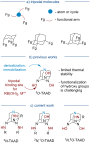
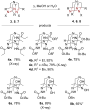
- mechanophores. Moreover, it was demonstrated that the hydrogen bonds of the diarylurea linkages also acted as supporting units to maintain the activated mechanophores (radicals) for a longer time [67]. Overall, this new strategy, which harnesses the power of noncovalent interactions by ball milling [68][69][70


Experimental and theoretical studies on the synthesis of 1,4,5-trisubstituted pyrrolidine-2,3-diones
Beilstein J. Org. Chem. 2022, 18, 1140–1153, doi:10.3762/bjoc.18.118
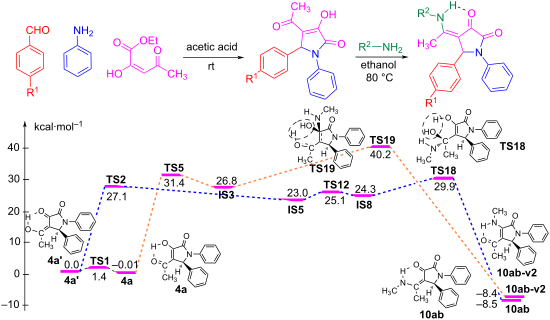
- derivatives present in the enamine form and stabilized by intramolecular hydrogen bonds (Table 5). Single-crystal X-ray diffraction confirmed the structure of 10aa (Figure 3) as well as the presence of the intramolecular N15–H15···O13 hydrogen bond [N15–H15: 0.92(3) Å, H15···O13: 1.90(3) Å, N15···O13: 2.699(3
- (Figure S1 in Supporting Information File 1) is characterized by C7–H7···O12i hydrogen bonds resulting in chain formation along the a direction [C7–H7: 0.93 Å, H7···O12: 2.42 Å, C7···O12: 3.325(3) Å, C7–H7···O12: 164˚; symmetry code: (i) 1 + x, y, z]. Neighboring chains connect by C–H···π interactions


First series of N-alkylamino peptoid homooligomers: solution phase synthesis and conformational investigation
Beilstein J. Org. Chem. 2022, 18, 845–854, doi:10.3762/bjoc.18.85
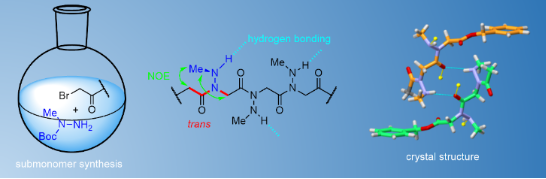
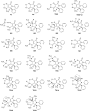
- backbone stabilization through intra-residue hydrogen bonds but also to intermolecular associations. The high capacity of N-(methylamino)peptoids to establish intermolecular hydrogen bonds was notably deduced from pronounced concentration-dependent N–H chemical shift variation in 1H NMR and the
- antiparallel arrangement of mirror image molecules held together via two hydrogen bonds in the crystal lattice of dimer 2. Keywords: cis/trans isomerism; peptoid; structure; trans-inducing side chain; Introduction The term “peptoids” refers to the family of artificial oligo(poly)mers consisting of N
- second group of molecules (conformation B). In the crystal lattice, each molecule establishes four intermolecular CO···HN hydrogen bonds. Only the inter-residue carbonyl (oxygen atom labeled O2, Figure 3C) participates in this network, making two hydrogen bonds with two different molecules and different


Chemistry of polyhalogenated nitrobutadienes, 17: Efficient synthesis of persubstituted chloroquinolinyl-1H-pyrazoles and evaluation of their antimalarial, anti-SARS-CoV-2, antibacterial, and cytotoxic activities
Beilstein J. Org. Chem. 2022, 18, 524–532, doi:10.3762/bjoc.18.54
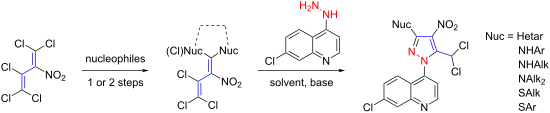
- strongly varying yields (5–72%) and dual orientation (either 3,5- or 5,3-positions) of an amino and dichloromethyl unit in the pyrazole (Scheme 3). We suggest that dienes 4a,l–o, obtained from 2c and primary amines are stabilized by formation of intramolecular hydrogen bonds between the NH and the NO2


BINOL as a chiral element in mechanically interlocked molecules
Beilstein J. Org. Chem. 2022, 18, 508–523, doi:10.3762/bjoc.18.53
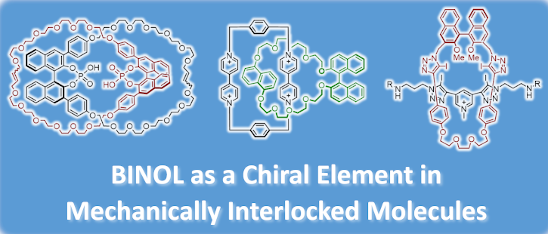
- -ray analysis revealed the presence of the expected [N–H···O] hydrogen bonds between the secondary ammonium station and the crown-ether macrocycle, but also additional [C–H···O] hydrogen bonds involving the benzylammonium methylene groups (see Figure 4). Interestingly, the presence of the directional




A resorcin[4]arene hexameric capsule as a supramolecular catalyst in elimination and isomerization reactions
Beilstein J. Org. Chem. 2022, 18, 337–349, doi:10.3762/bjoc.18.38
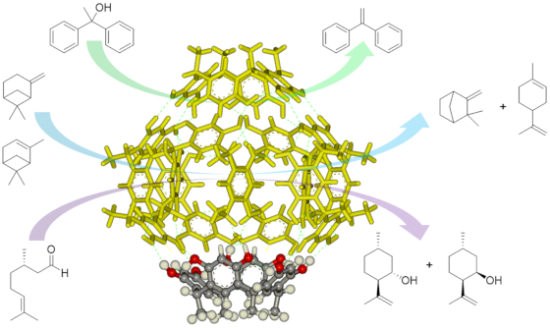
- sixty hydrogen bonds between six units of 1 and eight water molecules (Scheme 1). A very recent publication investigated different possible assemblies that are present in solution as function of the water content [22]. The pseudo-spherical host structure is highly dynamic, with a large cavity of about
- stabilized more effectively by the more symmetric and tighter capsule A (16·8H2O), which is held on by the minimum amount of water to form the network of hydrogen bonds with hydroxy moieties. Indeed, the capsule B, is looser because of the presence of extra water molecules that can arguably interact with


Site-selective reactions mediated by molecular containers
Beilstein J. Org. Chem. 2022, 18, 309–324, doi:10.3762/bjoc.18.35
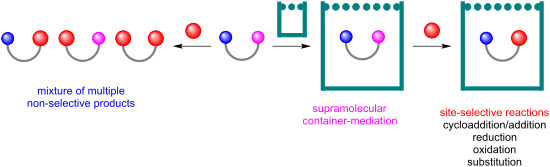
- guest molecule with an inwardly directed carboxylic acid group. The hydrogen bonds provided by a cyclic array of secondary amides around the rim stabilized the vase-like conformation of the complex (Figure 11b). Adding the epoxyalcohol 39 to the solution of I formed 5-membered ring product 40


Unexpected chiral vicinal tetrasubstituted diamines via borylcopper-mediated homocoupling of isatin imines
Beilstein J. Org. Chem. 2022, 18, 303–308, doi:10.3762/bjoc.18.34
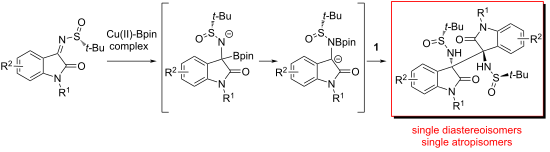
- units. Such the C2–C10 single bond is quite long (1.58 Å), as expected due to crowding of the two facing oxindole systems. In the crystal, NH groups set up intramolecular hydrogen bonds with the O acceptors of the sulfinamide moieties (see Table 2), likely contributing to further stabilize the observed
- parentheses). Reaction conducted according to the Ellman protocol. Proposed mechanism for the borylcopper-mediated homocoupling of ketimines 1. Screening of the reaction conditions for compound 2a.a Intramolecular hydrogen bonds in 2a at room temperature, which involve the NH groups with one keto oxygen (O2


Iridium-catalyzed hydroacylation reactions of C1-substituted oxabenzonorbornadienes with salicylaldehyde: an experimental and computational study
Beilstein J. Org. Chem. 2022, 18, 251–261, doi:10.3762/bjoc.18.30
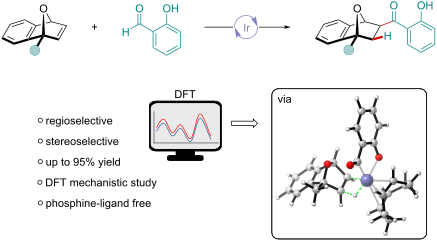
- revolutionized the modern chemist’s synthetic toolbox, prior installation of these functional groups requires a number of steps, leading to undesired side-products and reduced overall yield. An attractive alternative is the catalytic activation and subsequent functionalization of otherwise inert carbon–hydrogen
- bonds [6][7][8][9][10][11][12][13]. Hydroacylation reactions, the formal addition of an aldehyde C–H bond across a C–C π-system, has emerged as a powerful, and highly atom-economic approach to synthesize ketones. As such, C–H functionalizations are inherently both environmentally benign and economically


Bifunctional thiourea-catalyzed asymmetric [3 + 2] annulation reactions of 2-isothiocyanato-1-indanones with barbiturate-based olefins
Beilstein J. Org. Chem. 2022, 18, 25–36, doi:10.3762/bjoc.18.3
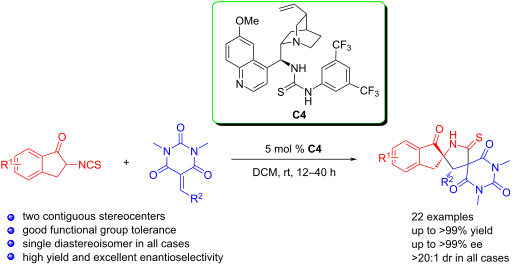
- reaction of 1a and 2a based on the previously published work. As illustrated in Scheme 7, in this cycle, it is reasonable that the catalyst C4 activates barbiturate-based olefins 2a through the action of hydrogen bonds, and then the 2-isothiocyanato-1-indanone 1a tautomerizes to form the corresponding enol




Synthesis of a novel aminobenzene-containing hemicucurbituril and its fluorescence spectral properties with ions
Beilstein J. Org. Chem. 2021, 17, 2840–2847, doi:10.3762/bjoc.17.195
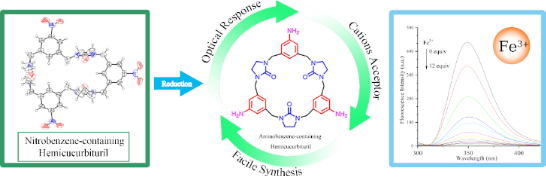
- as reactive sites for derivatization, at the same time allowing for formation of coordination or hydrogen bonds with guests, and the aminobenzene unit as a chromophore could improve the optical properties. With this novel macrocycle in hand, the interactions with some metal cations have been


Host–guest interaction and properties of cucurbit[8]uril with chloramphenicol
Beilstein J. Org. Chem. 2021, 17, 2832–2839, doi:10.3762/bjoc.17.194
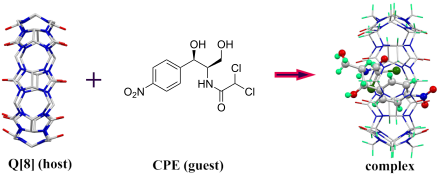
- and carbon atoms and the cavity has a certain degree of hydrophobicity that can form a stable host–guest inclusion complex with a guest molecule via non-bonding interactions, such as hydrogen bonds, van der Waals forces and ionic dipoles [21][22][23][24][25][26][27][28]. It has been proved that


Recent advances in the asymmetric phosphoric acid-catalyzed synthesis of axially chiral compounds
Beilstein J. Org. Chem. 2021, 17, 2729–2764, doi:10.3762/bjoc.17.185
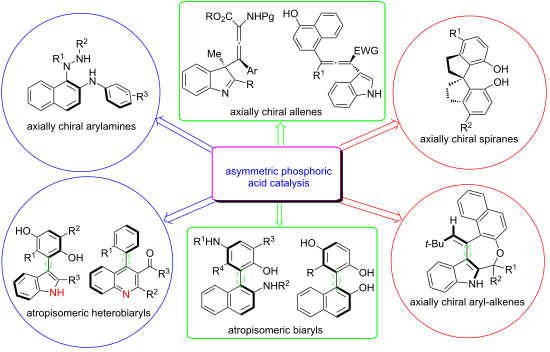
- a crucial role in both the reactivity and enantioselectivity of the reaction due to the formation of hydrogen bonds with CPA. In addition, the chiral phosphoric acid catalysts generate the chiral environment and showed the pleasing role in favoring atropisomerism [65]. In 2019, Shi and co-workers
- played an important role in the asymmetric induction by establishing a favorable chiral environment in the cyclization step through supporting hydrogen bonds [85]. In 2019, the group of Bertuzzi and Corti developed chiral phosphoric acid-catalyzed Povarov reactions of N-arylimines 80 with 3
- -naphthol (88) and allene-iminium intermediate I-24 to form axially chiral I-25, followed by rearomatization of the naphthol ring of I-25 and isomerization to I-26. Thereafter, CPA forms two hydrogen bonds with the two OH groups of I-26 to generate a carbocation and facilitates an intramolecular








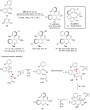


N-Sulfinylpyrrolidine-containing ureas and thioureas as bifunctional organocatalysts
Beilstein J. Org. Chem. 2021, 17, 2629–2641, doi:10.3762/bjoc.17.176
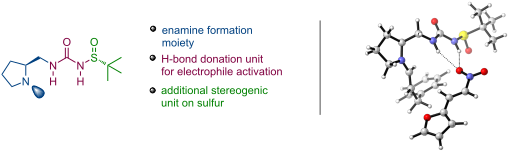
- )- and (S,S)-C2 (Figure 2a) have anti-syn arrangement of the urea unit. Figure 2b shows the enamine intermediate likely formed between aldehyde 6c and catalyst (S,R)-C2. The urea unit adopts an anti-anti arrangement upon coordination of a nitroalkene via hydrogen bonds (Figure 2c). The reaction likely


Adjusting the length of supramolecular polymer bottlebrushes by top-down approaches
Beilstein J. Org. Chem. 2021, 17, 2621–2628, doi:10.3762/bjoc.17.175
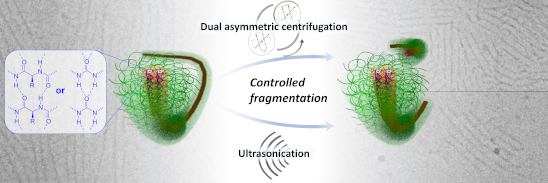
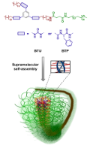
- straightforward adjustment of the length of polyethylene oxide (PEO)-based supramolecular polymer bottlebrushes (SPBs) in aqueous solutions. These cylindrical structures self-assemble via directional hydrogen bonds formed by benzenetrisurea (BTU) or benzenetrispeptide (BTP) motifs located within the hydrophobic
- the conditions for the assembly process, and are therefore often limited to specific materials. An alternative is the use of molecular motifs capable of forming directional supramolecular interaction forces, such as hydrogen bonds or π-interactions, to guide the one-dimensional (1D) assembly of
- bonding moieties are either urea-based or peptide-based (i.e., phenylalanine) units, the dodecyl chains act as hydrophobic shields to induce the amphiphilic assembly in water and prevent the surrounding water from interfering with the hydrogen bonds in the interior [29]. Attaching a hydrophilic PEO chain



In-depth characterization of self-healing polymers based on π–π interactions
Beilstein J. Org. Chem. 2021, 17, 2496–2504, doi:10.3762/bjoc.17.166
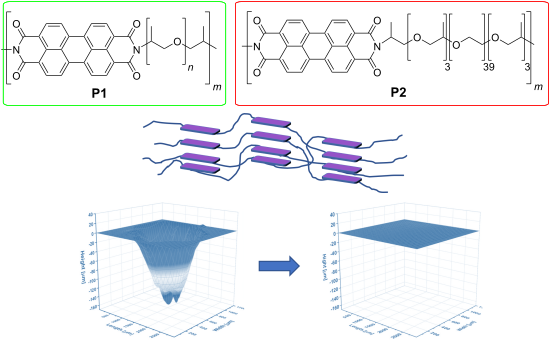
- previous studies, several of these interactions were already applied such as metal–ligand interactions [13][14], hydrogen bonds [15][16] or halogen bonds [17]. Furthermore, π–π interactions also feature a reversible behavior and were therefore utilized for the design of different self-healing polymers [18


Targeting active site residues and structural anchoring positions in terpene synthases
Beilstein J. Org. Chem. 2021, 17, 2441–2449, doi:10.3762/bjoc.17.161
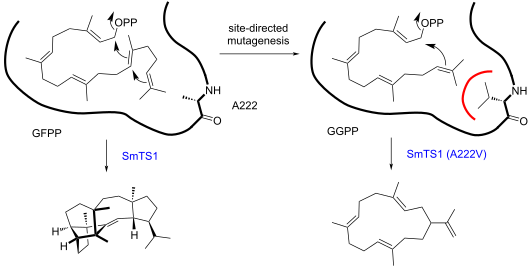
- hydrogen bonds to the substrate’s diphosphate and to the second Asp of the Asp-rich motif (Figure 1), is also not observed in SmTS1, but here a Phe residue (F307) is found. Site-directed mutagenesis and sesterterpene synthase activity To investigate possible functions of the unusual residues in SmTS1
- sensor R178 (Figure 1). As SmTS1 does not contain this Arg residue, but a Gly instead, the opened space in this region could allow for direct hydrogen bonds between Q227 and the substrate’s diphosphate, which may become even stronger in the Q227D variant, explaining its higher catalytic efficiency


Halides as versatile anions in asymmetric anion-binding organocatalysis
Beilstein J. Org. Chem. 2021, 17, 2270–2286, doi:10.3762/bjoc.17.145
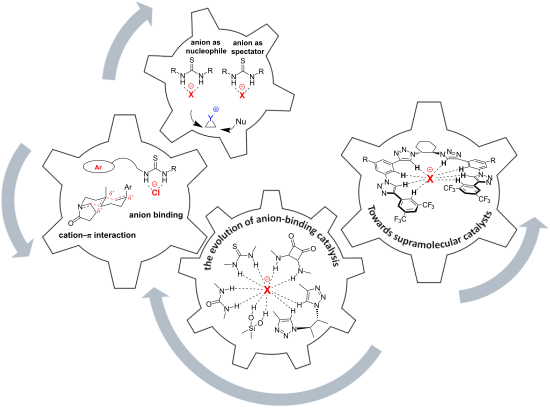
- halogens are often regarded as surrogates for further functionalization, their role in natural and physiological processes is much more diverse. One of these processes is the ability of large complex molecules and enzymes to recognize halide anions via hydrogen bonds in aqueous media [5]. Amongst others
- ) [76]. Due to the linkage of the two molecules, the participating hydrogen bonds are aligned such that a 4H-abstraction mode is achieved, which is more likely to ensure higher catalyst activity in the activation step than the competing 2H-abstraction pathway. Indeed, with multidentate bis-thiourea



(Phenylamino)pyrimidine-1,2,3-triazole derivatives as analogs of imatinib: searching for novel compounds against chronic myeloid leukemia
Beilstein J. Org. Chem. 2021, 17, 2260–2269, doi:10.3762/bjoc.17.144
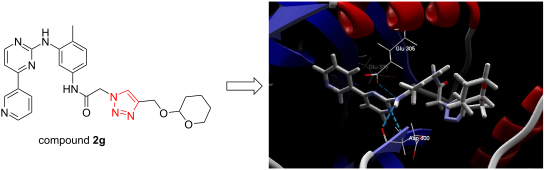
- original work that led to compound 3, and, additionally, they are able to act as acceptors and donors in hydrogen bonds and thus were expected to increase the aqueous solubility of the compounds. Additionally, Kalesh and co-workers demonstrated good results with derivative 4 which contains the amide group
- ). Additionally, the analysis of the interactions between IMT and the enzyme BCR-Abl-1 shows hydrogen bonds with Glu305, Thr334, Met337, and Asp400 (hydrogen bonding energy = −8.97 a.u.) and steric interactions with Glu305, Thr334, Met337, Ile379, and Asp400 (steric binding energy = −193,658 a.u.), in agreement
- , 2c, 2d, and 2g with the BCR-Abl-1 structure (PDB code: 3PYY), showing steric interactions (red dotted lines) and hydrogen bonds (blue dotted lines). Synthetic route of the triazole derivatives 1a,b, and 2a–j. Cytotoxic activity, confidence interval, and selectivity index of imatinib and derivatives


Constrained thermoresponsive polymers – new insights into fundamentals and applications
Beilstein J. Org. Chem. 2021, 17, 2123–2163, doi:10.3762/bjoc.17.138
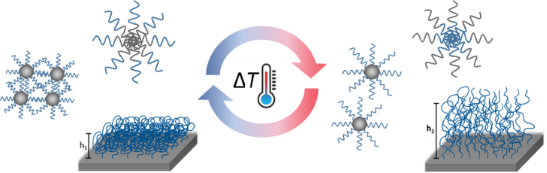
- and ∆mG becomes negative and the polymer dissolves. This phenomenon occurs for polymers whose interactions with the solvent or between the chains are characterized by strong dipol–dipol interactions, such as Coulomb forces, or by hydrogen bonds. Hence, on the one hand, strongly charged zwitterionic
- entropic effect characterized by negative ∆mH and ∆mS values. The essential structural feature of such polymers is their amphiphilic structure of hydrophobic domains and hydrophilic groups, which can form hydrogen bonds with water. These interactions result in a highly ordered hydration shell when the
- macromolecule is in solution. The best known example of a phase transition with an LCST is PNIPAAm with its hydrophilic isopropyl groups interacting with water molecules [48][97][98][99]. From a thermodynamic point of view, the hydrogen bonds between the polymer and the water molecules lead to a negative value


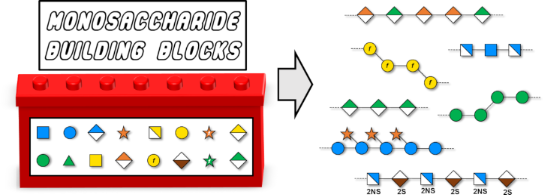
Progress and challenges in the synthesis of sequence controlled polysaccharides
Beilstein J. Org. Chem. 2021, 17, 1981–2025, doi:10.3762/bjoc.17.129
- orientation of the individual chains and in the number of hydrogen bonds in the crystalline structures [42][43]. In Cellulose I, the chains are oriented parallel, whereas in Cellulose II antiparallel. Natural cellulose is produced by cellulose synthases [44][45][46]. As the chain gets elongated, microfibrils
- pattern by chemical synthesis, albeit in low yields. Selective disruption of intra- and intermolecular hydrogen bonds suggested that modifications can be designed to prevent precipitation and guide cellulose assembly. Xyloglucans Xyloglucans (XGs) are based on a β(1–4)-Glc backbone decorated with




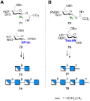


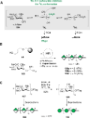


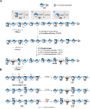


Cationic oligonucleotide derivatives and conjugates: A favorable approach for enhanced DNA and RNA targeting oligonucleotides
Beilstein J. Org. Chem. 2021, 17, 1828–1848, doi:10.3762/bjoc.17.125
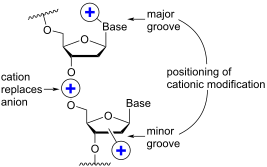
- 3A) [57]. The G-clamp modification was later observed to have antisense inhibition activity involving RNase H cleavage with a single incorporation into a PS-ON [58]. Afterwards, a guanidino-G-clamp (modification 24) was synthesized to increase the number of hydrogen bonds that could be established


Chemical approaches to discover the full potential of peptide nucleic acids in biomedical applications
Beilstein J. Org. Chem. 2021, 17, 1641–1688, doi:10.3762/bjoc.17.116
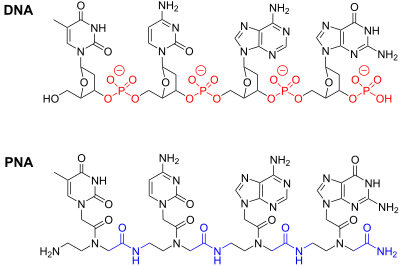
- Hoogsteen triplets in Figure 6 are stabilized by two hydrogen bonds, because of the positive charge, M forms a significantly more stable M+•G–C triplet compared to either J•G–C or T•A–U in dsRNA [28][30]. In a recent study, replacement of six Js with Ms increased the binding affinity of a PNA 9-mer ≈100
- recognition of dsDNA and dsRNA. However, the triple helical recognition has a severe sequence limitation – the requirement of polypurine tracts in target nucleic acids. Natural triple helices allow only T•A–T (or U•A–U) and C+•G–C triplets stabilized by two Hoogsteen hydrogen bonds (Figure 6) [94]. Analogous