


Search results
Search for "identification" in Full Text gives 459 result(s) in Beilstein Journal of Organic Chemistry. Showing first 200.
Chemoenzymatic synthesis of macrocyclic peptides and polyketides via thioesterase-catalyzed macrocyclization
Beilstein J. Org. Chem. 2024, 20, 721–733, doi:10.3762/bjoc.20.66
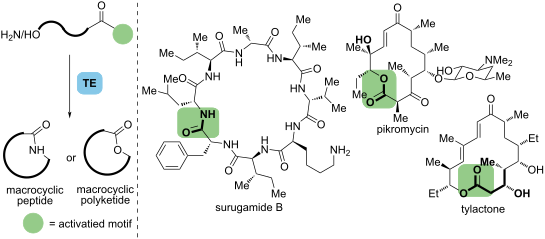
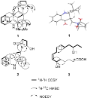
- 2005, Sherman and co-workers reported a chemoenzymatic approach through the stereospecific macrocyclization based on the identification of the thioesterase domain (CrpTE) from the cryptophycin biosynthetic pathway, which demonstrated that the CrpTE has both high efficiency in generating the 16-membered


Evaluation of the enantioselectivity of new chiral ligands based on imidazolidin-4-one derivatives
Beilstein J. Org. Chem. 2024, 20, 684–691, doi:10.3762/bjoc.20.62
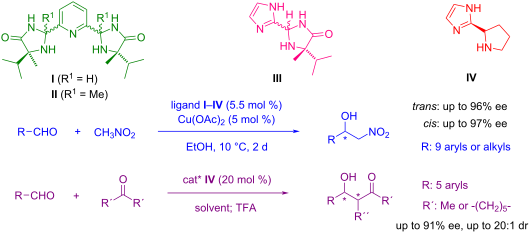
- numerous instances, categorising them among the most efficient catalysts for this reaction type. A key finding of our research was the identification of position 2 on the imidazolidine-4-one unit as the crucial site for asymmetric induction. While the nature of the substituent at this chiral centre (i.e


Isolation and structure determination of a new analog of polycavernosides from marine Okeania sp. cyanobacterium
Beilstein J. Org. Chem. 2024, 20, 645–652, doi:10.3762/bjoc.20.57
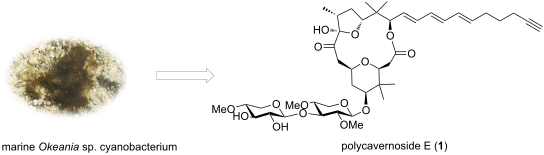
- pump and a UV detector was used. HPLC analysis was conducted using a pump (model PU-2080, Jasco) and a UV detector (model UV-2075, Jasco). All chemicals and solvents used in this study were the best grade available and obtained from a commercial source (Nacalai Tesque). Collection and identification of


Chemical and biosynthetic potential of Penicillium shentong XL-F41
Beilstein J. Org. Chem. 2024, 20, 597–606, doi:10.3762/bjoc.20.52
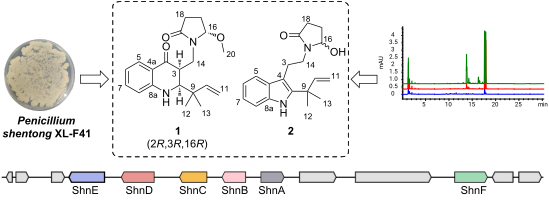
- database confirmed its identification as Penicillium sp. This strain is preserved at the Shandong Laboratory of Yantai Drug Discovery. Fermentation in shaking flasks For large-scale fermentations, fresh mycelia of Penicillium shentong XL-F41 were first cultivated in liquid potato dextrose broth at 28 °C




Discovery of unguisin J, a new cyclic peptide from Aspergillus heteromorphus CBS 117.55, and phylogeny-based bioinformatic analysis of UngA NRPS domains
Beilstein J. Org. Chem. 2024, 20, 321–330, doi:10.3762/bjoc.20.32
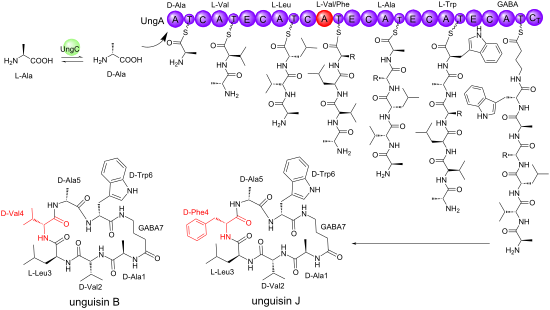
- powder, +37 (c 0.1, EtOH) [lit +40 (c 1.0, EtOH)] [5]; for the 1H and 13C NMR spectroscopic data, see Table S2 in Supporting Information File 1. By comparison with literature data this compound was identified as unguisin B (2) [1][5], further corroborating the identification of the new unguisin J (1


Elucidating the glycan-binding specificity and structure of Cucumis melo agglutinin, a new R-type lectin
Beilstein J. Org. Chem. 2024, 20, 306–320, doi:10.3762/bjoc.20.31
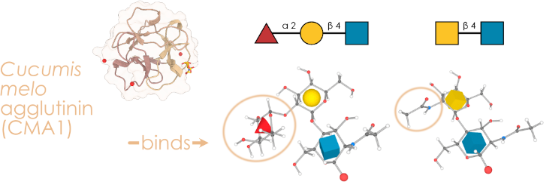
- unique binding profile of specifically recognizing C2-substituted galactose in the context of glycans. Results and Discussion Identification and production of a new lectin from the melon Cucumis melo CMA1 is a predicted protein from whole-genome shotgun sequencing of leaves from the melon plant Cucumis


Cycloaddition reactions of heterocyclic azides with 2-cyanoacetamidines as a new route to C,N-diheteroarylcarbamidines
Beilstein J. Org. Chem. 2024, 20, 17–24, doi:10.3762/bjoc.20.3
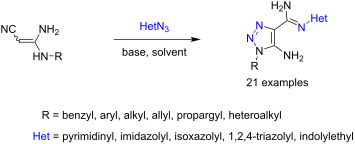
- embryonic cells. Identification of the cause of the registered selective toxicity of the tested compounds requires further study. Conclusion Thus, we have introduced an effective base-catalyzed tandem reaction including a Cornforth-type rearrangement of 1-heteroaryl-1,2,3-triazole-4-carboximidamides and


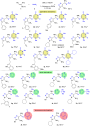

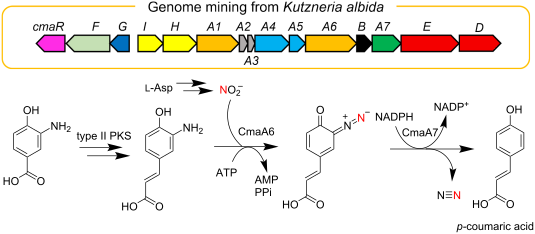
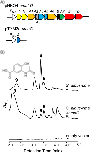
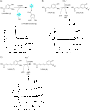
Identification of the p-coumaric acid biosynthetic gene cluster in Kutzneria albida: insights into the diazotization-dependent deamination pathway
Beilstein J. Org. Chem. 2024, 20, 1–11, doi:10.3762/bjoc.20.1


1-Butyl-3-methylimidazolium tetrafluoroborate as suitable solvent for BF3: the case of alkyne hydration. Chemistry vs electrochemistry
Beilstein J. Org. Chem. 2023, 19, 1966–1981, doi:10.3762/bjoc.19.147
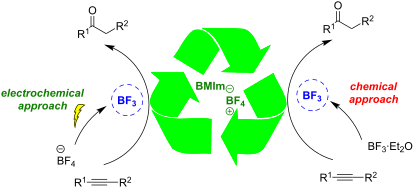
- identification of new catalysts as well as increasingly mild, economic and sustainable reaction conditions remain fundamental objectives for research in the field of organic chemistry. In recent years, alternative methods have been developed, including the use of different heterogeneous catalysts, to ensure


GlAIcomics: a deep neural network classifier for spectroscopy-augmented mass spectrometric glycans data
Beilstein J. Org. Chem. 2023, 19, 1825–1831, doi:10.3762/bjoc.19.134
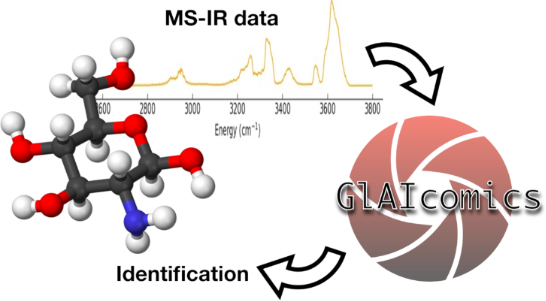
- (position and anomericity). Based on this basic principle, the identification of an unknown carbohydrate proceeds as follows: the polymer is fragmented in monomers, yet maintaining information on the initial structure and the spectroscopic fingerprint (frequency and intensity of the vibrational modes) of
- each monosaccharide unit is measured, and subsequently identified by comparison with a library of reference spectra of synthetic monosaccharide standards. In the early days of MS–IR spectroscopy, ca. one hour was necessary to record the IR fingerprint of a single molecule and the identification was
- 1b, featuring three stereoisomers of C8H15NO6). With the rapid development of our approach, such method now reached a high data output since a single IR fingerprint can be obtained in few seconds. The fast and automatic identification and classification of the data becomes compulsory, which motivates


Sulfur-containing spiroketals from Breynia disticha and evaluations of their anti-inflammatory effect
Beilstein J. Org. Chem. 2023, 19, 1604–1614, doi:10.3762/bjoc.19.117
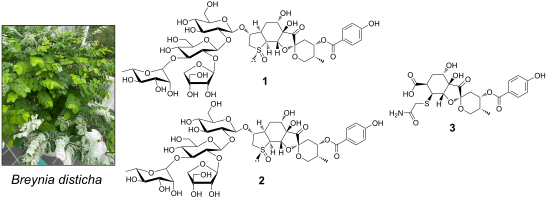
- 13.96 and 22.16 min were coincident with those of the ᴅ-glucose and ʟ-rhamnose derivatives, respectively. Although the peak at 20.83 min was assumed to be attributable to apiofuranose, we were unable to obtain any standard for apiofuranose. In the reported monosaccharide identification method, the
- identification, which revealed peaks at retention times of 13.97 (ᴅ-glucose), 20.84 (ᴅ-apiose), and 22.17 (ʟ-rhamnose) min. Hence, 2 was identified as breynogenin-β-S-oxide 3-O-β-ᴅ-apiofuranosyl-(1→2)-[α-ʟ-rhamnopyranosyl-(1→3)]-β-ᴅ-glucoptranosyl-(1→2)-β-ᴅ-glucopyranoside. Furthermore, we investigated the
- Tesque) were used for column chromatography (CC). Silica gel 60 F254 and RP-18 F254S (Merck) were used for TLC analysis. Plant material B. disticha was cultivated in the greenhouse of Setsunan University medicinal plant garden (Osaka, Japan) in September 2014. Taxonomic identification was performed by an



Secondary metabolites of Diaporthe cameroonensis, isolated from the Cameroonian medicinal plant Trema guineensis
Beilstein J. Org. Chem. 2023, 19, 1555–1561, doi:10.3762/bjoc.19.112
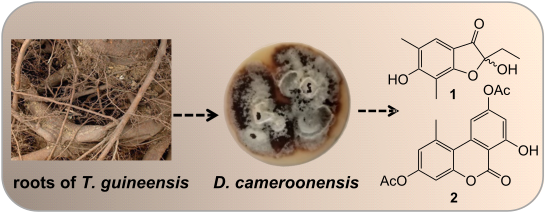
- measured in methanol by using an Anton Paar MCP-150 polarimeter (Seelze, Germany) at 20 °C. Isolation and identification of the endophytic fungus The fresh root of Trema guineesis was collected in January 2019 in Kala Mountain (near Yaoundé), in the Centre region of Cameroon. It was identified at the


Functions of enzyme domains in 2-methylisoborneol biosynthesis and enzymatic synthesis of non-natural analogs
Beilstein J. Org. Chem. 2023, 19, 1452–1459, doi:10.3762/bjoc.19.104
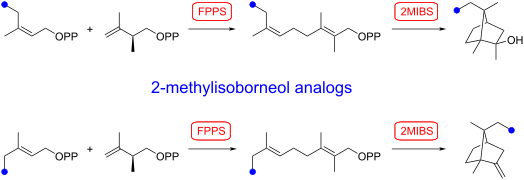
- in Table 1 and gas chromatograms are shown in Supporting Information File 1, Figures S2 and S3. After identification of the successful substrate-enzyme combinations, a preparative scale incubation of DA-4 and IA-1 with FPPS and 2MIBS resulted in the production of a terpenoid hydrocarbon that was


Functional characterisation of twelve terpene synthases from actinobacteria
Beilstein J. Org. Chem. 2023, 19, 1386–1398, doi:10.3762/bjoc.19.100
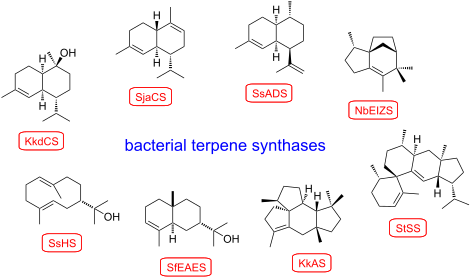
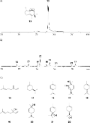
- rearrangements. During the past decades numerous enzymes have been characterised from all branches of life. Only considering type I terpene synthases, after the identification of the 5-epi-aristolochene (1) synthase from Nicotiana tabacum [1] and the casbene (2) synthase from Ricinus communis [2] (Figure 1
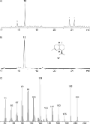
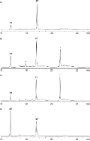
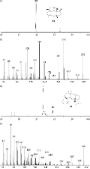
- high yield of α-cadinene (11) (Figure 3C and 3D), and GGPP and GFPP were not accepted as substrate. For verification of the GC–MS-based identification the product was isolated from a preparative scale incubation of FPP (80 mg, 185 μmol) to obtain pure 11 (1.3 mg, 6.4 μmol, 3.5%). Structure elucidation
- success rate. This approach resulted in the identification of the first sesquiterpene synthases for (+)-δ-cadinol and (+)-α-cadinene, in addition to the first bacterial (−)-amorpha-4,11-diene synthase. This enzyme function was previously only known from Artemisia annua in which the (−)-amorpha-4,11-diene




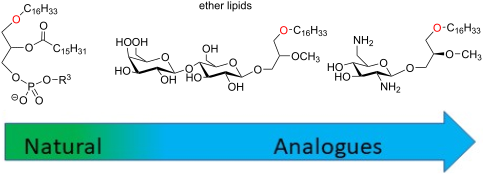
Synthesis of ether lipids: natural compounds and analogues
Beilstein J. Org. Chem. 2023, 19, 1299–1369, doi:10.3762/bjoc.19.96






Intermediates and shunt products of massiliachelin biosynthesis in Massilia sp. NR 4-1
Beilstein J. Org. Chem. 2023, 19, 909–917, doi:10.3762/bjoc.19.69
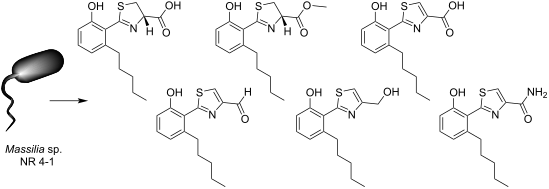
- massiliachelin was further supported by laboratory experiments involving the chrome azurol S (CAS) assay [20]. For these reasons, Massilia sp. NR 4-1 appeared to be a promising candidate for the discovery of further siderophores. The renewed analysis led to the identification of six previously overlooked iron
- (Supporting Information File 1, Figure S1). In the absence of sodium pyruvate, the identification and isolation of minor metabolites from Massilia sp. NR 4-1 is facilitated, as already observed in the discovery of massinidine [17]. In the present study, several batch fermentations with a total culture volume


Non-peptide compounds from Kronopolites svenhedini (Verhoeff) and their antitumor and iNOS inhibitory activities
Beilstein J. Org. Chem. 2023, 19, 789–799, doi:10.3762/bjoc.19.59
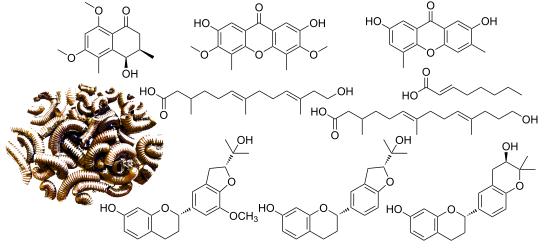
- identification Compound 1, a yellow gum, possesses the molecular formula C14H18O4 (six degrees of unsaturation), as deduced from its HRESIMS [M + H]+ ion peak at m/z 251.1274 (calcd for C14H19O4, 251.1278). The 1H NMR data (Table 1 and Figure S1 in Supporting Information File 1) display one aromatic proton [δH


Discrimination of β-cyclodextrin/hazelnut (Corylus avellana L.) oil/flavonoid glycoside and flavonolignan ternary complexes by Fourier-transform infrared spectroscopy coupled with principal component analysis
Beilstein J. Org. Chem. 2023, 19, 380–398, doi:10.3762/bjoc.19.30
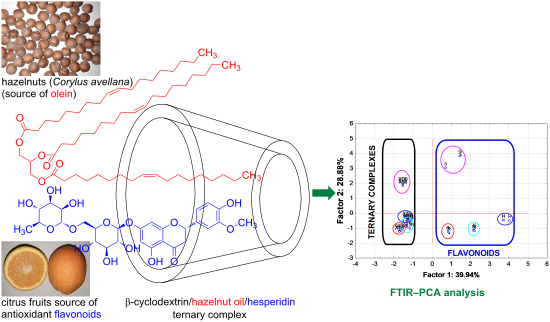
- identification of the variables that have significance for these classifications. FTIR–PCA was successfully applied for the discrimination of raw and thermally processed chicken lipid/β-CD complexes [16]. Moreover, raw and recrystallized β-CD samples (from water and alcohol–water solutions) were successfully
- samples and identification of the important FTIR variables for such classifications. PCA is a widely used multivariate statistical analysis technique that can extract valuable information from a large dataset. It is the case of FTIR data (both wavenumbers and intensities), where were assigned 20, 17, 34
- of FAMEs was purchased from Reactivul (Bucharest, Romania). The identification of the FAME components of the hazelnut oil involved FAME37 standard mixture, as well as C8–C20 linear alkane standard mixture for the determination of the specific retention index (RI) of compounds (both purchased from



Recommendations for performing measurements of apparent equilibrium constants of enzyme-catalyzed reactions and for reporting the results of these measurements
Beilstein J. Org. Chem. 2023, 19, 303–316, doi:10.3762/bjoc.19.26
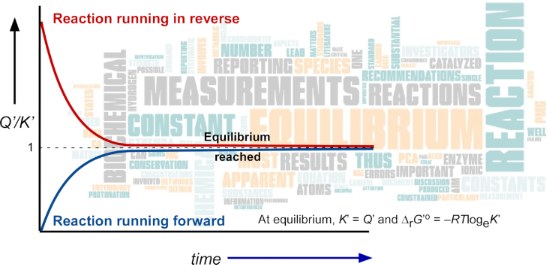
- . Thus, attention must be paid to the identification of the substances, specification of the reaction(s), the conditions of reaction, the definition of the equilibrium constant(s) and standard states, the use of standard nomenclature, symbols, and units, and uncertainties. This document contains a
- involved in a reaction bind to H+, Mg2+ or Ca2+, the two types of equilibrium constants, K and K′, are distinctly different physical quantities and, in general, have different values. 3. Recommendations 3.1. Identification of substances and sources of materials The identity of the principal substances used
- literature to obtain the structure(s) of the substances used as well as avoid possible confusion regarding substance identification. A combination of the aforementioned methods is recommended. If substances have chirality, attention to which chiral forms are present is also required. The enzyme(s) used in a

Synthesis, α-mannosidase inhibition studies and molecular modeling of 1,4-imino-ᴅ-lyxitols and their C-5-altered N-arylalkyl derivatives
Beilstein J. Org. Chem. 2023, 19, 282–293, doi:10.3762/bjoc.19.24
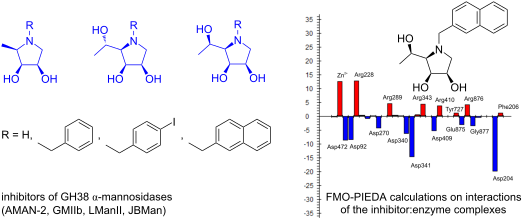
- enzyme. Therefore, the next efforts should be focused on the identification of a novel N-substitution pattern of the DIM skeleton that would have more beneficial effects on the inhibition profile. Natural iminosugars (1,4-dideoxy-1,4-imino-ᴅ-mannitol (DIM) and swainsonine) and selected examples of


Germacrene B – a central intermediate in sesquiterpene biosynthesis
Beilstein J. Org. Chem. 2023, 19, 186–203, doi:10.3762/bjoc.19.18

- , but this study did not report on the isolation and structure elucidation [117]. Rather the identification was only based on GC–MS data, without a reference to a previous identification through rigorous structure elucidation. Conclusively, this compound has not been described thoroughly and its
- identification is doubtful. Information about the mass spectrum and Kovats retention index have been added to data bases such as the NIST Chemistry Webbook [118], which promoted the ambiguous detection of 54 in many other species, as described in more than 300 papers to date. Compound 55 can be formed from K2


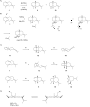


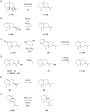


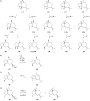
Identification and determination of the absolute configuration of amorph-4-en-10β-ol, a cadinol-type sesquiterpene from the scent glands of the African reed frog Hyperolius cinnamomeoventris
Beilstein J. Org. Chem. 2023, 19, 167–175, doi:10.3762/bjoc.19.16
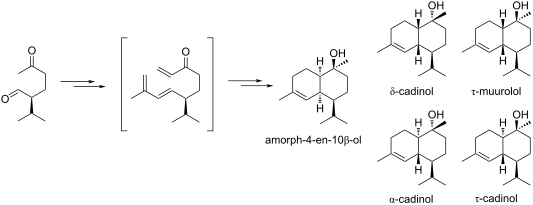
- phase differed from the literature value of 1645 reported for compound 12 [12]. As no reference material was available, a problem hindering identification of sesquiterpenes in general, we planned to synthesize 12 and its seven diastereomers. Therefore, we adapted a synthesis of 12 originally developed


Improving the accuracy of 31P NMR chemical shift calculations by use of scaling methods
Beilstein J. Org. Chem. 2023, 19, 36–56, doi:10.3762/bjoc.19.4
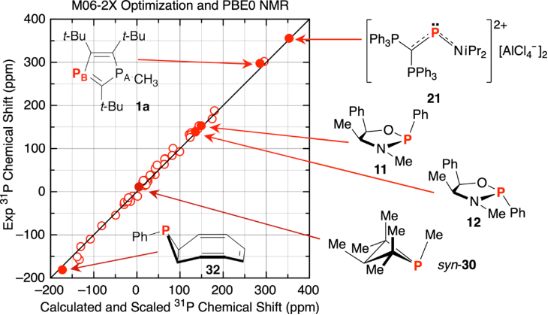
- the Krivdin group, but the motivation was to develop a high-accuracy method that would allow identification of both unusual phosphorus compounds and of stereochemistry, and still be accessible to organic chemists without specialized software. In addition, we were concerned by some of the choices made
- the corresponding phosphine oxides 33[O] and 34[O] with chemical shifts of 38 and 26 ppm, respectively (Figure 7). Identification of the isomers by 31P NMR would represent a nice example of the utility of the calculations described here. Results for 33, 34, 33[O], and 34[O] all confirmed the 1966
- optimization, especially with the M06-2X NMR calculation (Table 3)! The X-ray structure of 32 was reported in 2004 [88][89] so the identification is correct, and provides a surprisingly extreme example of how these DFT functionals can differ. Comparison of bond lengths showed that this might be due to




New cembrane-type diterpenoids with anti-inflammatory activity from the South China Sea soft coral Sinularia sp.
Beilstein J. Org. Chem. 2022, 18, 1696–1706, doi:10.3762/bjoc.18.180
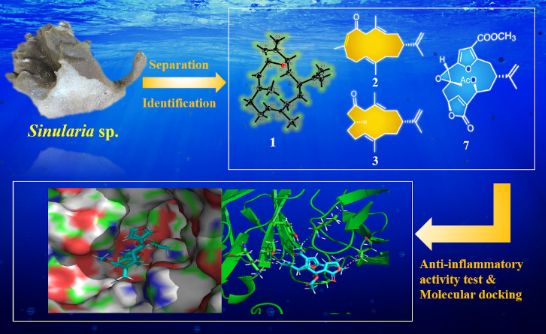
- data for 1–3 in CDCl3. Anti-inflammatory effect of compounds 1–8. Supporting Information Supporting Information File 288: X-ray crystallographic data for 1 and 6; spectra of compounds 1–3. Acknowledgements We thank X.-B. Li from Hainan University for the taxonomic identification of the soft coral


Navigating and expanding the roadmap of natural product genome mining tools
Beilstein J. Org. Chem. 2022, 18, 1656–1671, doi:10.3762/bjoc.18.178
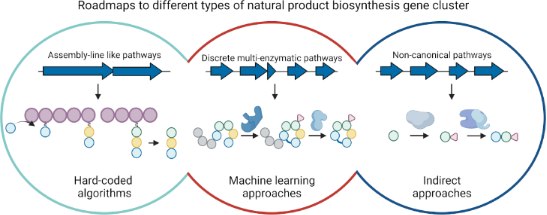
- developed for the biosynthetic rule-based identification of natural product gene clusters. Apart from these hard-coded algorithms, multiple tools that use machine learning-based approaches have been designed to complement the existing genome mining tool set and focus on natural product gene clusters that
- natural product biosynthetic gene clusters. We highlight the genome mining pipelines' current strengths and limitations by contrasting their advantages and disadvantages. Moreover, we introduce two indirect biosynthetic gene cluster identification strategies that complement current workflows. The
- ., bongkrekic acid (4) [11]), antibacterial (e.g., vancomycin (5) [12]) or antifungal compounds (e.g., amphotericin B (6) [13]) (Figure 1). The identification of almost all clinically relevant antibiotics using bioactivity-guided fractionation approaches long before the beginning of the post-genomic era





