


Search results
Search for "nanoparticles" in Full Text gives 267 result(s) in Beilstein Journal of Organic Chemistry. Showing first 200.
Optical detection of di- and triphosphate anions with mixed monolayer-protected gold nanoparticles containing zinc(II)–dipicolylamine complexes
Beilstein J. Org. Chem. 2020, 16, 2687–2700, doi:10.3762/bjoc.16.219
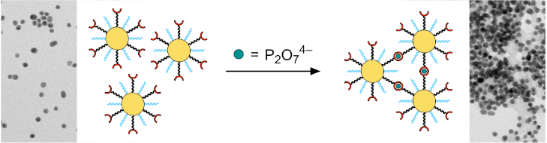
- /bjoc.16.219 Abstract Gold nanoparticles covered with a mixture of ligands of which one type contains solubilizing triethylene glycol residues and the other peripheral zinc(II)–dipicolylamine (DPA) complexes allowed the optical detection of hydrogenphosphate, diphosphate, and triphosphate anions in
- water/methanol 1:2 (v/v). These anions caused the bright red solutions of the nanoparticles to change their color because of nanoparticle aggregation followed by precipitation, whereas halides or oxoanions such as sulfate, nitrate, or carbonate produced no effect. The sensitivity of phosphate sensing
- preferred binding mode of zinc(II)–dipicolylamine complexes with phosphate anions which involves binding of the anion between two metal centers. This work thus provided information on how the behavior of mixed monolayer-protected gold nanoparticles is affected by multivalent interactions, at the same time


NMR Spectroscopy of supramolecular chemistry on protein surfaces
Beilstein J. Org. Chem. 2020, 16, 2505–2522, doi:10.3762/bjoc.16.203
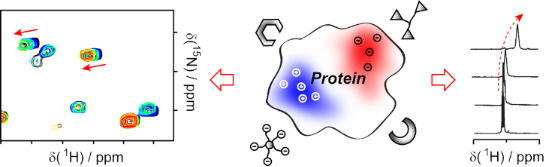
- ], guanidiniocarbonylpyrrole (GCP) ligands [41][42][43][44][45][46], cucurbiturils [47][48][49][50][51], porphyrins [52][53][54][55][56][57][58][59][60], metal complexes [61][62][63], foldamers [64][65][66][67], nanoparticles [34][68], imprinted polymers [69][70][71][72], and dendrimers [73][74]. In this review, we focus
- multivalent ligands, like multi-armed GCP ligands with flexible scaffolds or nanoparticles, have been published yet. NMR spectroscopy is the ideal method to gain structural information and identify residues involved in ligand binding because it delivers single-residue resolution. It is also suitable to



Palladium nanoparticles supported on chitin-based nanomaterials as heterogeneous catalysts for the Heck coupling reaction
Beilstein J. Org. Chem. 2020, 16, 2477–2483, doi:10.3762/bjoc.16.201
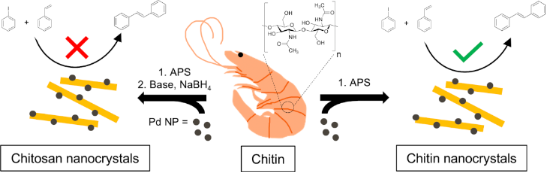
- Mining and Materials Engineering, McGill University, Montreal, Quebec H3A 0E9, Canada 10.3762/bjoc.16.201 Abstract In this report, chitin and chitosan nanocrystals were used as biomass-based supports for Pd nanoparticles (NPs) used as a heterogeneous catalyst for the Heck coupling reaction. By using a
- ], environmental remediation [5], and catalysis [6]. With their high solubility and presence of functionalities such as hydroxy groups, sulfate half-esters, and carboxylates, CNCs are able to stabilize highly disperse metal nanoparticles (NPs), which can act as heterogeneous catalysts for a wide array of organic
- catalytic effect (Table 1, entry 8), likely because the partial reduction taking place under these conditions was ineffective in affording the well-defined nanoparticles we synthesized as PdNPs@ChNC. Comparisons within the literature were made with similar Pd NP-based systems (Table S1 in Supporting


The B & B approach: Ball-milling conjugation of dextran with phenylboronic acid (PBA)-functionalized BODIPY
Beilstein J. Org. Chem. 2020, 16, 2272–2281, doi:10.3762/bjoc.16.188
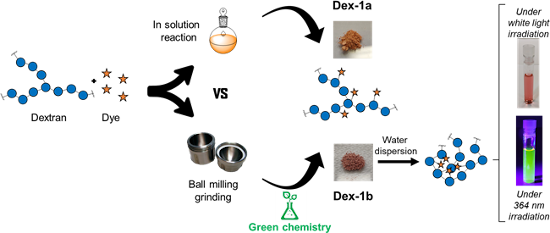
- solution-based synthetic route. PBA-BODIPY dextran assembles into nanoparticles of around 200 nm by hydrophobic interactions. The resulting PBA-BODIPY dextran nanoparticles retain an apolar interior as proved by pyrene fluorescence, suitable for the encapsulation of hydrophobic drugs with high
- biocompatibility while remaining fluorescent. Keywords: ball milling; boronic ester; dextran; bodipy; nanoparticles; Introduction In the last few decades, mechanochemistry has gathered a great deal of attention and a lot of efforts have been focused on its use in organic synthesis, catalysis, biotransformation
- nanoparticles, depending on the degree of substitution. For example, reaction of vicinal diols of dextran with hydrophobic PBA generates boronate esters, which form nanoparticles in water and are capable to host the anticancer drug doxorubicin [27]. In this report, the advantages of the milling process, such as


Automated high-content imaging for cellular uptake, from the Schmuck cation to the latest cyclic oligochalcogenides
Beilstein J. Org. Chem. 2020, 16, 2007–2016, doi:10.3762/bjoc.16.167
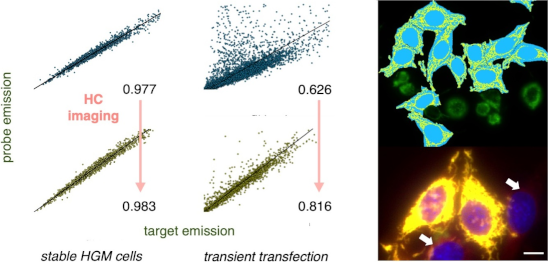
- challenge is most pronounced with large substrates, such as proteins, oligonucleotides, or nanoparticles, due to the permeability barriers formed by the lipophilic core of the cell membrane [18][19]. In recent decades, the use of arginine-rich cell-penetrating peptides (CPPs) as carriers has emerged as an




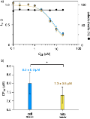

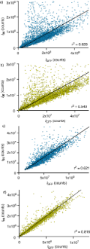
Synergy between supported ionic liquid-like phases and immobilized palladium N-heterocyclic carbene–phosphine complexes for the Negishi reaction under flow conditions
Beilstein J. Org. Chem. 2020, 16, 1924–1935, doi:10.3762/bjoc.16.159
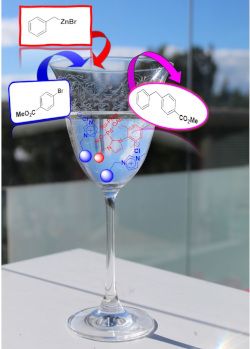
- PdII. In this way, a “cocktail” of catalytic species, including molecular complexes, clusters and nanoparticles may be responsible for the catalytic activity [15]. In a continuous system, this can be accompanied by a significant leaching of the catalytic metal. In order to avoid a loss of activity by
- the presence of palladium nanoparticles (Figure 5) confirming that during the reaction a part of the leached palladium was converted into PdNPs. The higher reactivity of the cocktails based on 9b and 9c can be associated with the presence of PdNPs with smaller size distributions. Our previous results
- combination of a classical molecular mode of operation and a cocktail-type mode of operation can also be involved in the Negishi reaction. Two different palladium species released from the NHC complex can act as catalyst for the Negishi reaction: i) soluble Pd(II) species or ii) palladium nanoparticles (PdNPs



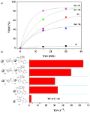


One-pot synthesis of isosorbide from cellulose or lignocellulosic biomass: a challenge?
Beilstein J. Org. Chem. 2020, 16, 1713–1721, doi:10.3762/bjoc.16.143
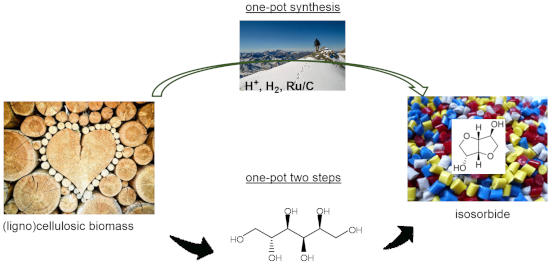
- first run was observed. A sustainable method for the isosorbide production from cellulose is the use of a bifunctional catalyst (Scheme 7). A series of Ru catalysts on acid support were prepared by the adsorption of colloidal Ru nanoparticles on mesoporous and bulk niobium phosphate, mesoporous and bulk
- (5.0 wt % Ru, Ru nanoparticles (NPs): 0.9 nm) in 30 mL H2O after 1 h of reaction at 220 °C under 60 bar of H2. Trace amounts or even no isosorbide was obtained over microporous HZSM-5, NaY, and γ-Al2O3-supported Ru catalysts. A bifunctional Ru catalyst supported on mesoporous niobium phosphate with a
- cellulose and dehydration of sorbitol. An appropriate size of the supported Ru nanoparticles avoids unnecessary hydrogenolysis of sorbitol. The recyclability was investigated and up to 6 cycles could be performed without significant loss in catalytic properties. Moreover, no leaching of Ru was observed


Mechanochemical green synthesis of hyper-crosslinked cyclodextrin polymers
Beilstein J. Org. Chem. 2020, 16, 1554–1563, doi:10.3762/bjoc.16.127
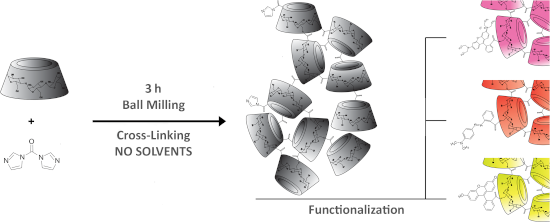
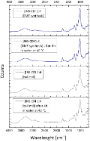
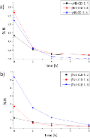
- at around 345 °C for both the βNS-CDI 1:4 from DMF and for the βNS-CDI 1:4 from ball mill. The initial mass loss present in both βNS-CDI 1:4 was due to adsorbed environmental water, always present when dealing with hygroscopic cyclodextrin-based nanoparticles. In addition to this, the particle size
- nucleophilic carboxylic group. The simplified schematic reaction (previously reported by Staab [31] and more recently by Jadhav et al. [33]), with the relative ζ-pot of nanoparticles after functionalization, is presented in Figure 8. Through a simple reaction in closed vials with an excess (dye/CD ratio) of
- carbonate NS synthesized in a solvent and displayed insolubility in water and organic solvents. FTIR and TG analyses were performed on the new material, confirming the structure with a carbonate bond. Nanoparticles, after cycles of ball milling and high-pressure homogenization had a mean diameter of less




Heterogeneous photocatalysis in flow chemical reactors
Beilstein J. Org. Chem. 2020, 16, 1495–1549, doi:10.3762/bjoc.16.125
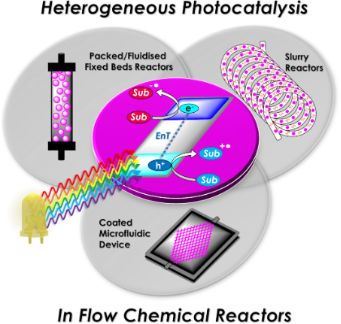
- nanoparticles) or by introducing impurities into the crystal lattice, otherwise known as doping [44][84][85][86]. Semiconductor doping adds additional filled or vacant quantum states to the band structure that lie within the band gap, reducing the Eg and typically resulting in a bathochromic shift in absorption
- solubility of the photocatalyst being poor in those solvents [139]. 2.4 Solid-supported semiconductors and metal nanoparticles For the same reasons outlined in the previous section, the immobilisation of thin films of semiconductors and the deposition of metal nanoparticle photocatalysts can improve the
- treatment [146]. Dip-coating has also been commonly applied to coat other inorganic substrates, such as glass spheres, carbon nanotubes, and diatomite with TiO2 thin films for photocatalysis applications [147][148][149][150]. Scaiano and co-workers deposited platinum nanoparticles on TiO2(P25) powder as a










Cation-induced ring-opening and oxidation reaction of photoreluctant spirooxazine–quinolizinium conjugates
Beilstein J. Org. Chem. 2020, 16, 904–916, doi:10.3762/bjoc.16.82
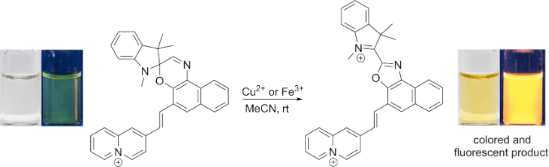
- silver(I) or gold(III) ions, the spironaphthoxazine 1aSO or the corresponding 5-chloro-substituted analog underwent thermal–oxidative degradation even under an inert gas atmosphere in the dark [74][75]. Based on the formation of silver or gold nanoparticles during the reaction, the authors proposed a two


A systematic review on silica-, carbon-, and magnetic materials-supported copper species as efficient heterogeneous nanocatalysts in “click” reactions
Beilstein J. Org. Chem. 2020, 16, 551–586, doi:10.3762/bjoc.16.52
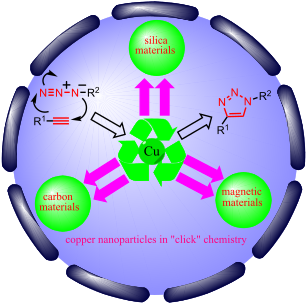
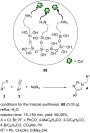
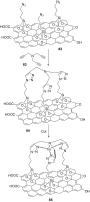
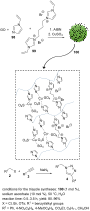
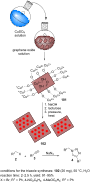
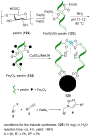
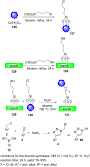
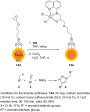
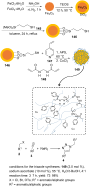
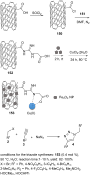
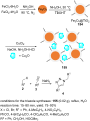
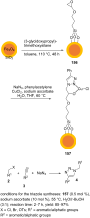
- /mechanical stability, and good adsorption capacity. They also contain an ordered porous network that is appropriate for the free diffusion of reactants and reaction products [24]. In this regard, various functionalized SiO2 nanoparticles were employed in diverse organic reactions, including Suzuki–Miyaura
- reactions, Ugi–Smiles reactions, Mizoroki–Heck reactions, aldol reactions, oxidation and dehydration reactions, Mannich reactions, and multicomponent reactions. Because of the mentioned reasons as well as due to the low toxicity of silica nanoparticles, they are often a good option [24]. For this review
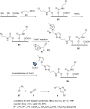
- article, we have provided an overview on the synthesis and functionalization of SiO2 nanoparticles and on the investigation on their catalytic applications in CuAAC reactions. Rhee et al. immobilized Cu(I) and Cu(II) species onto reverse-phased silica gel [25]. In this work, a 2-pyridinecarboxaldehyde


















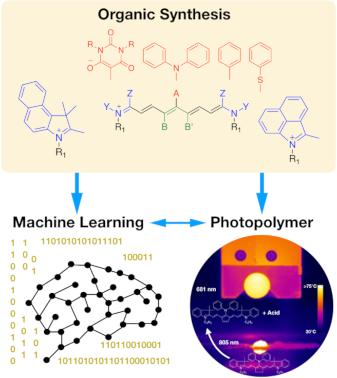
Photophysics and photochemistry of NIR absorbers derived from cyanines: key to new technologies based on chemistry 4.0
Beilstein J. Org. Chem. 2020, 16, 415–444, doi:10.3762/bjoc.16.40
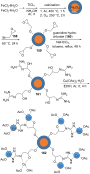
- electrochemically mediated ATRP (eATRP) [122][123][124][125][126][127][128]. In this content, various reducing agents, and electrochemical redox processes, and copper comprising nanoparticles have been accomplished to conduct ATRP by generating the required Cu(I) by the reduction of Cu(II) complexes. A well written


Synthesis of 3-alkenylindoles through regioselective C–H alkenylation of indoles by a ruthenium nanocatalyst
Beilstein J. Org. Chem. 2020, 16, 140–148, doi:10.3762/bjoc.16.16
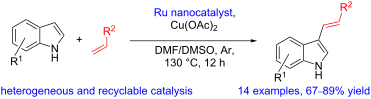
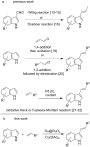
- . Results and Discussion Synthesis and characterisation of the Ru nanocatalyst The surfactant- and stabiliser-free RuNC was synthesised photochemically, based on a procedure that we have previously reported for the synthesis of Pd nanoparticles [46][47]. The synthesised RuNC, obtained directly after
- presented in Figure S3, Supporting Information File 1. TEM–EDX confirmed the nanoparticles to be those of Ru (Figure S2, Supporting Information File 1). Further, the Ru nanoparticles were separated by centrifugation and characterised in more detail. The TEM analysis of the isolated Ru nanoparticles showed
- considerable agglomeration of the individual nanoparticles (Figure S4, Supporting Information File 1). The HRTEM–SAED diffraction image showed the presence of several crystalline phases, including those for Ru(0) and RuO2 (Figure S5, Supporting Information File 1). More specifically, the crystalline planes




One-pot synthesis of substituted pyrrolo[3,4-b]pyridine-4,5-diones based on the reaction of N-(1-(4-hydroxy-6-methyl-2-oxo-2H-pyran-3-yl)-2-oxo-2-arylethyl)acetamide with amines
Beilstein J. Org. Chem. 2019, 15, 2840–2846, doi:10.3762/bjoc.15.277
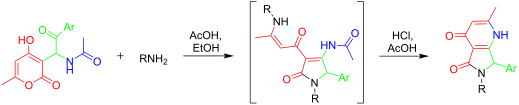
- -one (4), arylglyoxals 5, and acetamide (6) using SnCl2–SiO2 nanoparticles as heterogeneous catalyst under solvent-free conditions [10]. However, as we found out, the use of a catalyst was unnecessary for this transformation. In turn, refluxing the reaction mixture in acetonitrile was sufficient for


A review of asymmetric synthetic organic electrochemistry and electrocatalysis: concepts, applications, recent developments and future directions
Beilstein J. Org. Chem. 2019, 15, 2710–2746, doi:10.3762/bjoc.15.264
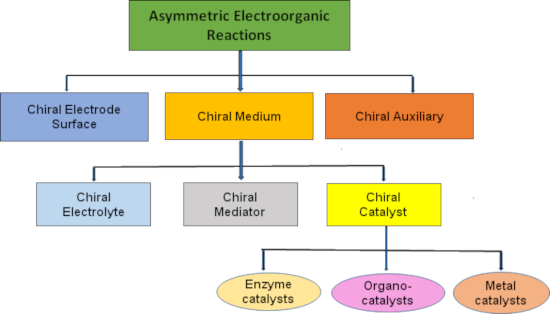
- induced by addition of certain concentration of alkaloid which was found to get adsorbed on CuNP surface (Scheme 12). In continuation, Wang and Lu, in 2016, developed a ‘copper encapsulated alkaloid composite’ by the entrapment of commercial alkaloids within metallic copper nanoparticles. They compacted
- -induced asymmetric electrochemical hydrogenation of 2,2,2-trifluoroacetophenone 32 nanoparticles was also developed (Scheme 13). These NPs with low Pt loading were further obtained by reducing platinum precursors on Cu NPs [41]. Yadav’s group, in 2013, described preparative scale enantioselective cathodic






A photochemical determination of luminescence efficiency of upconverting nanoparticles
Beilstein J. Org. Chem. 2019, 15, 2671–2677, doi:10.3762/bjoc.15.260
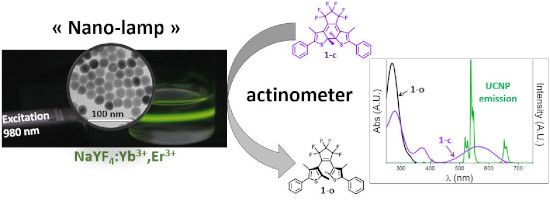
- , France 10.3762/bjoc.15.260 Abstract Upconverting nanoparticles are a rising class of non-linear luminescent probes burgeoning since the beginning of the 2000’s, especially for their attractiveness in theranostics. However, the precise quantification of the light delivered remains a hot problem in order
- green emission of NaYF4:Yb,Er nanoparticles. Using the recently calibrated actinometer 1,2-bis(2,4-dimethyl-5-phenyl-3-thienyl)-3,3,4,4,5,5-hexafluoro-1-cyclopentene operating in the green region of the visible spectra, we propose a simple photochemical experiment to get an accurate estimation of the
- , typically near infrared (NIR), into high energy one thanks to noncoherent photon absorption is called “upconversion”. This phenomenon is exemplified by the lanthanide-based materials [1]. With the rapid developments of nanotechnology, upconverting Ln3+-based nanoparticles (UCNPs) have been reported for


Reversible switching of arylazopyrazole within a metal–organic cage
Beilstein J. Org. Chem. 2019, 15, 2398–2407, doi:10.3762/bjoc.15.232
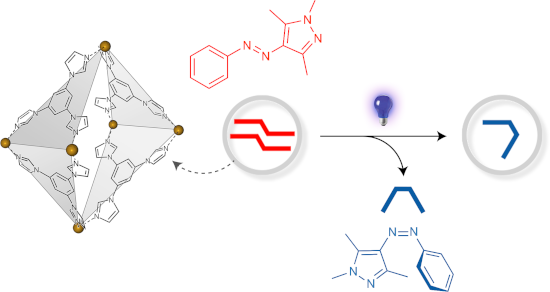
- interfaces [1][2][3], in self-assembled cages [4][5][6][7], on DNA chains [8], and on the surfaces of inorganic nanoparticles [9][10]. Additionally, nanosized cages can induce preorganization of the encapsulated species, thus inducing unusual regioselectivities in various chemical reactions [11][12][13]. The
- ] and, using larger cages, the synthesis of 4 nm silica nanoparticles, which would be difficult to obtain otherwise [15]. One class of organic compounds that exhibit various intriguing properties under confinement is photochromic molecules. In a seminal contribution, unusual switching patterns have been
- affected by their confinement to the surfaces of inorganic nanoparticles. Among other examples, the isomerization kinetics of azobenzene could be tuned by a factor of >5000 by the molecules with which it was co-adsorbed on gold nanoparticles [23], and donor–acceptor Stenhouse adduct (DASA) switches were


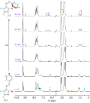
![[Graphic 1]](/bjoc/content/inline/1860-5397-15-232-i3.svg?max-width=637&scale=1.18182) 2 (500 MHz, D2O, 298 K).
2 (500 MHz, D2O, 298 K).




Host–guest interactions in nor-seco-cucurbit[10]uril: novel guest-dependent molecular recognition and stereoisomerism
Beilstein J. Org. Chem. 2019, 15, 1705–1711, doi:10.3762/bjoc.15.166
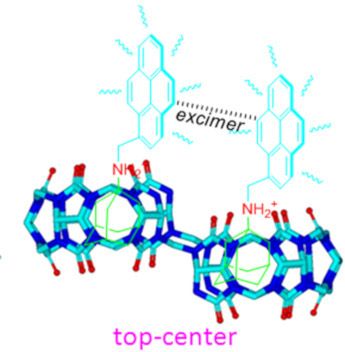
- adamantaneammonium (ADA) or alkylammonium ions into the cavity, forming a ternary complex. The novel binding capacity of NS-CB[10] has been utilized to form supramolecular polymers [24][25][26] and polymer nanoparticles [27]. More importantly, Isaacs et al. discovered that when the unsymmetrical guest ADA molecules


Recent advances on the transition-metal-catalyzed synthesis of imidazopyridines: an updated coverage
Beilstein J. Org. Chem. 2019, 15, 1612–1704, doi:10.3762/bjoc.15.165
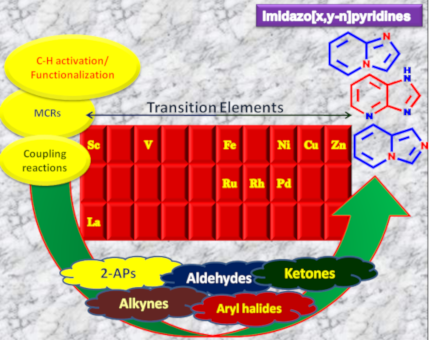
- ][42][43][44]. Various copper salts have been used as Lewis acid in homogeneous catalysis. CuO nanoparticles (NPs) were used for C–N, C–S, C–O cross-coupling reactions and C-arylation. Recently, exploiting the cross-coupling tendency of CuO NPs, Reddy et al. have reported their use as a heterogeneous
- organic reactions. In the syntheses of IPs, various forms of copper viz., salts, complexes, MOFs, oxides, and nanoparticles (NPs) have been used as the catalytic system in both multicomponent reactions (MCRs) as well as derivatization methodologies. The role of palladium in synthetic chemistry Pd


Synthesis, enantioseparation and photophysical properties of planar-chiral pillar[5]arene derivatives bearing fluorophore fragments
Beilstein J. Org. Chem. 2019, 15, 1601–1611, doi:10.3762/bjoc.15.164
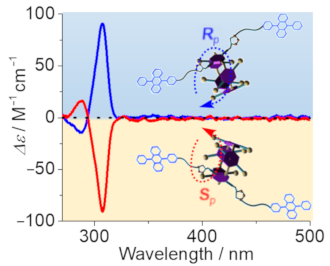
- further investigated by dynamic light scattering (DLS) analyses, and revealed the formation of nanoparticles with 615 nm in average diameter after the addition of 50% water (Figure 4d). Increasing the amount of water to 70% or 90% led to a bathochromic shift of the UV–vis absorption and a raise of the



Reversible end-to-end assembly of selectively functionalized gold nanorods by light-responsive arylazopyrazole–cyclodextrin interaction
Beilstein J. Org. Chem. 2019, 15, 1407–1415, doi:10.3762/bjoc.15.140
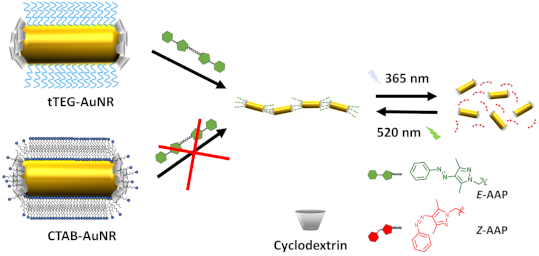
- cycles. By the introduction of AAP, previous disassembly limitations based on the photostationary states of azobenzenes could be solved. The combination photoresponsive interaction and selectively end-functionalized nanoparticles shows significant potential in the reversible self-assembly of inorganic
- sensing properties [4][5]. In particular, noble metal nanoparticles of sizes smaller than the wavelength of the incident light show interesting optical behavior as a result of collective oscillations of the valence electrons. This leads to surface plasmon resonance (SPR), which is highly dependent on size
- a longitudinal SPR (LSPR) band that can reach up to the near infrared (NIR) region [9]. The LSPR band can be tuned over a wider wavelength range than for isotropic nanoparticles by varying the aspect ratio of the AuNR or by the assembly of multiple AuNR into linear clusters [10]. These linear


Selenophene-containing heterotriacenes by a C–Se coupling/cyclization reaction
Beilstein J. Org. Chem. 2019, 15, 1379–1393, doi:10.3762/bjoc.15.138

- DTT 1 in 91% yield (Scheme 1). Triacene dithieno[3,2-b:2’,3’-d]selenophene (DTS, 2) was successfully prepared as well from diiodinated bithiophene 5 in 51% yield after purification in a C–Se cross-coupling/cyclization reaction with selenourea as selenium source, copper oxide nanoparticles as catalyst
- corresponding dibromobiselenophene and benzene sulfonyl sulfide as sulfur source (50% yield) [27]. In parallel, TMS-protected iodinated biselenophene 11 was subjected to selenourea, copper oxide nanoparticles, and potassium hydroxide in DMSO to isolate diselenolo[3,2-b:2’,3’-d]selenophene (DSS, 4) in 48% yield
- deprotection with TBAF in 66% yield, with selenourea and copper oxide nanoparticles surprisingly did not lead to any targeted DSS 4 in the attempted C–Se cross-coupling reaction. The structures of the prepared novel selenolotriacenes 2–4 and known DTT 1 were characterized by means of NMR spectroscopy


Diaminoterephthalate–α-lipoic acid conjugates with fluorinated residues
Beilstein J. Org. Chem. 2019, 15, 981–991, doi:10.3762/bjoc.15.96
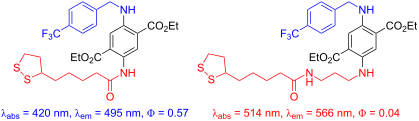
- sensorics [19], microcontact printing [20], dip-pen nanolithography [21], microfluidics [22], and protection of nanoparticles [23]. Initially, surface modification aimed on controlling physical properties of surfaces [24][25], while nowadays chemical surface properties can be tuned to yield platforms for


Easy, efficient and versatile one-pot synthesis of Janus-type-substituted fullerenols
Beilstein J. Org. Chem. 2019, 15, 901–905, doi:10.3762/bjoc.15.87

- in one person or object. Consequently, nanoparticles characterized by two different hemispheres have been named Janus-type nanoparticles as well, and have attracted major attention due to their special properties [1][2]. The term 'Janus' is much less used in molecular chemistry, presumably because


Synthesis of 2H-furo[2,3-c]pyrazole ring systems through silver(I) ion-mediated ring-closure reaction
Beilstein J. Org. Chem. 2019, 15, 679–684, doi:10.3762/bjoc.15.62

- fluorescent organic nanoparticles [31][32][33][34]. The iodination of 1 with iodine in the presence of KOH in DMF afforded 4-iodo-1H-pyrazol-3-ol 2 [26]. We have previously shown that the Sonogashira-type coupling of the aforementioned iodinated compound with phenylacetylene under standard reaction conditions





