Search results
Search for "small molecules" in Full Text gives 239 result(s) in Beilstein Journal of Organic Chemistry. Showing first 200.
Metal-free visible-light-enabled vicinal trifluoromethyl dithiolation of unactivated alkenes
Beilstein J. Org. Chem. 2021, 17, 551–557, doi:10.3762/bjoc.17.49
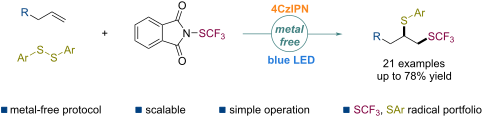
- (πR = 1.44), compared with CF3 (πR = 0.88) and SCH3 (πR = 0.61), which could improve the pharmaceuticals’ ability to cross lipid membranes [9][10]. Along these lines, the introduction of the SCF3 group into small molecules has attracted great attention in organofluorine methodology [11][12][13][14][15


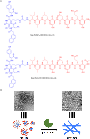
Synthesis and physicochemical evaluation of fluorinated lipopeptide precursors of ligands for microbubble targeting
Beilstein J. Org. Chem. 2021, 17, 511–518, doi:10.3762/bjoc.17.45
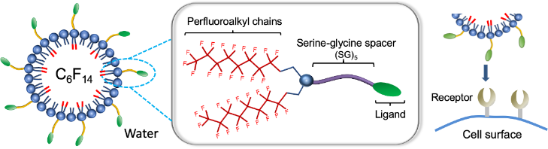
- , which involves the use of targeting ligands, such as monoclonal antibodies, antibody fragments, proteins, peptides, and other small molecules, including vitamins and carbohydrates [7][8]. The targeting ligands are coupled to the surface of the carrier to selectively target tumor cells that overexpress a


Biochemistry of fluoroprolines: the prospect of making fluorine a bioelement
Beilstein J. Org. Chem. 2021, 17, 439–460, doi:10.3762/bjoc.17.40
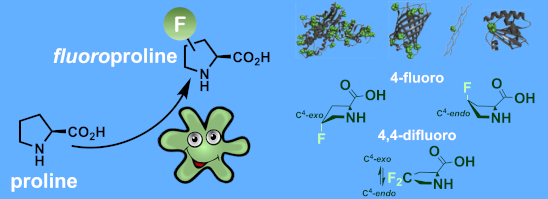
- their high similarity (Figure 12D). The variants containing Pro and R-Flp did not show a clearly defined pucker, whereas the variant with S-Flp was found in a single C4-endo-pucker conformation. Overall, the crystal structures illustrate that the pucker preference observed in small molecules (Figure 6


Multiswitchable photoacid–hydroxyflavylium–polyelectrolyte nano-assemblies
Beilstein J. Org. Chem. 2021, 17, 166–185, doi:10.3762/bjoc.17.17
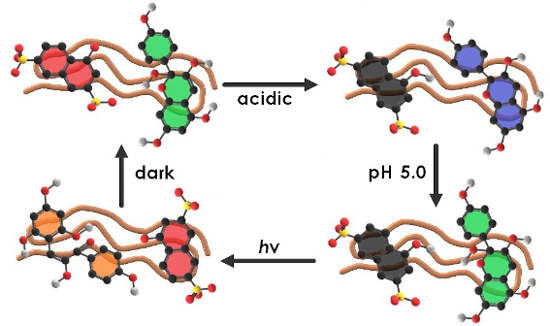
- addition of a fifth hydroxy group, more binding sites become available for the association with the poly(allylamine), leading to an increase in assembly size: More multivalent small molecules bind to the polyelectrolyte, interconnecting more polyelectrolyte molecules into larger aggregates. At the same




Secondary metabolites of Bacillus subtilis impact the assembly of soil-derived semisynthetic bacterial communities
Beilstein J. Org. Chem. 2020, 16, 2983–2998, doi:10.3762/bjoc.16.248
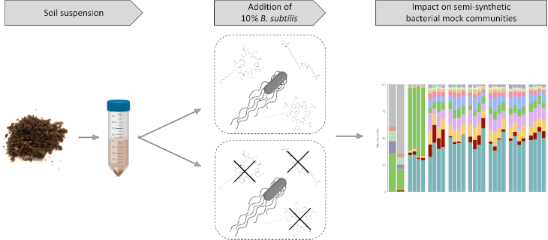
- , enzyme inhibition, or disruption of bacterial protein synthesis. This knowledge was primarily acquired in vitro when B. subtilis was competing with other microbial monocultures. However, our understanding of the true ecological role of these small molecules is limited. In this study, we have established


Encrypting messages with artificial bacterial receptors
Beilstein J. Org. Chem. 2020, 16, 2749–2756, doi:10.3762/bjoc.16.225
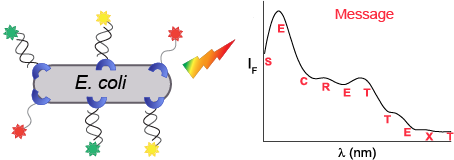
- of cell-surface receptors to extracellular signals, such as small molecules or proteins. In recent years, there has been considerable interest in modifying cells with artificial receptors, as a means to provide them with new properties [1]. We have recently reported a method for decorating His-tagged




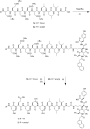
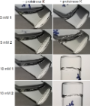
Enzyme-instructed morphological transition of the supramolecular assemblies of branched peptides
Beilstein J. Org. Chem. 2020, 16, 2709–2718, doi:10.3762/bjoc.16.221
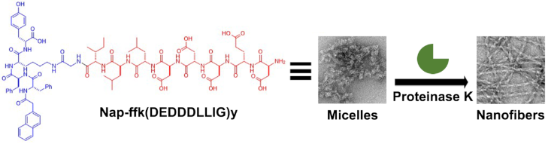
- serendipitously found that an enzyme-responsive branched peptide was able to deliver small molecules or proteins to mitochondria efficiently in a cell-specific manner [33]. The branched peptide, which bears FLAG-tag as the branch [32], forms micelles. Certain proteases on the mitochondria of certain cells cleave
- branched peptides after the enzymatic reaction, we used Nap–ᴅ-Phe–ᴅ-Phe (Nap-ff) to provide aromatic–aromatic interactions from diphenylalanine for self-assembly because Nap-ff is a versatile motif to enable the self-assembly of many small molecules [46]. More specifically, we choose Nap-ffky since lysine




NMR Spectroscopy of supramolecular chemistry on protein surfaces
Beilstein J. Org. Chem. 2020, 16, 2505–2522, doi:10.3762/bjoc.16.203
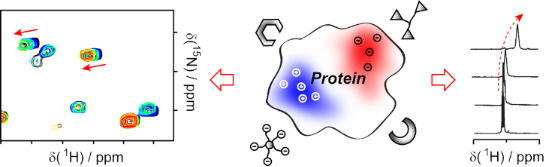
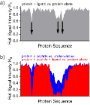
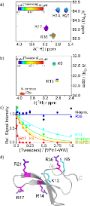
- function and thus on its size. Small molecules <1000 g/mol show positive NOEs while large molecules like proteins exhibit negative NOEs. Around a molecular weight of ≈1000–1500 g/mol, the NOE passes through zero, meaning no NOE signal can be measured, even if molecules are in close enough proximity. A lot



Conformational preferences of fluorine-containing agrochemicals and their implications for lipophilicity prediction
Beilstein J. Org. Chem. 2020, 16, 2469–2476, doi:10.3762/bjoc.16.200
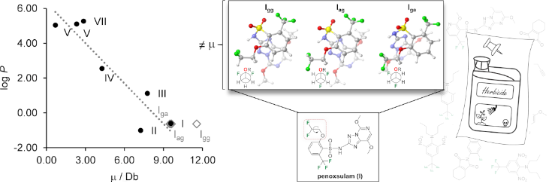
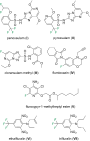
- calculated molecular dipole moments as a descriptor of lipophilicity for small molecules, a more detailed analysis is required. Accordingly, a series of structurally simpler organofluorine compounds were retrieved (Figure 6), all from the same source [29], and a similar computational routine was carried out
- also a dependence between the calculated dipole moment and lipophilicity for small molecules. The considerably lower correlation may be explained by the fact that, in a small molecule, subtle structural changes strongly influence the overall molecular dipole and, sometimes, the introduction of a polar




Computational tools for drawing, building and displaying carbohydrates: a visual guide
Beilstein J. Org. Chem. 2020, 16, 2448–2468, doi:10.3762/bjoc.16.199
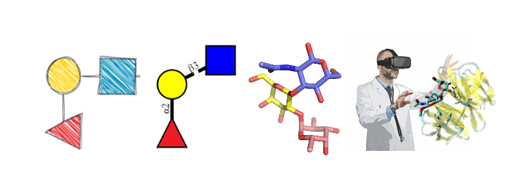
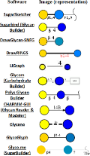
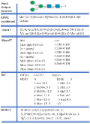
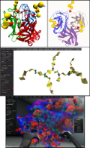
- downloaded and installed locally as a platform-independent tool. This tool can be used in two different modes: “Compound mode” which can be used for drawing small molecules (similarly to any chemical structure drawing software), and “Glycan mode” which is dedicated for rendering glycan structures using









The B & B approach: Ball-milling conjugation of dextran with phenylboronic acid (PBA)-functionalized BODIPY
Beilstein J. Org. Chem. 2020, 16, 2272–2281, doi:10.3762/bjoc.16.188
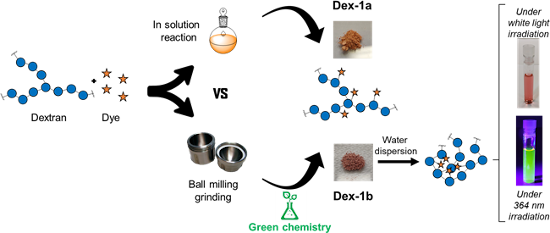
- synthesis of boronic esters. Indeed, ball milling has been successfully exploited for the synthesis of small molecules [4] as well as macrocycles [5][22][23] conjugated with boronic esters and this methodology proved to be by far superior over solution-based methods. In this framework, we decided to exploit
- with small molecules, in a green and scalable process. Results and Discussion The boron dipyrromethene dye 1 bearing a phenylboronic acid moiety (PBA) at the meso position of the BODIPY core (Scheme 1) was prepared in four synthetic steps starting from 4-formylbenzeneboronic acid (2) and pyrrole (3


Synthetic approaches to bowl-shaped π-conjugated sumanene and its congeners
Beilstein J. Org. Chem. 2020, 16, 2212–2259, doi:10.3762/bjoc.16.186

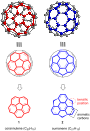
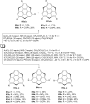
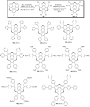
- thermoelectric properties in addition to the onigiri-type core-shell assemblies have been reported for sumanene and its derivatives. More interestingly, its application in the absorption of small molecules such as NH3, CO2, CO, and H2 using density functional theory (DFT) calculations has also been revealed [25











Naphthalene diimide bis-guanidinio-carbonyl-pyrrole as a pH-switchable threading DNA intercalator
Beilstein J. Org. Chem. 2020, 16, 2201–2211, doi:10.3762/bjoc.16.185
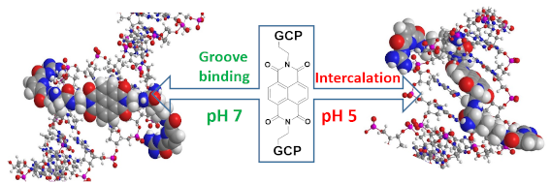
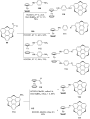
- ; Introduction The small molecules non-covalently binding to DNA or RNA are essential for life as we know it, and therefore it was not surprising that a huge number of synthetic small molecules has been prepared and studied for broad biochemical and biomedical applications [1][2]. Among the most studied small
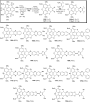
- spectroscopy methods (FDCD, CPL), the sensitivity of response is approaching the classical fluorimetric probes [14]. Our systematic work on aryl-guanidiniocarbonyl-pyrrole (GCP) derivatives characterised the GCP moiety as very useful building block in the design of new small molecules targeting DNA/RNA. The
- recognition of various DNA/RNA sequences could be reversibly changed by adjusting the pH of the solution. The fine structural tuning of such aryl-GCP conjugates allowed us to prepare a wide variety of small molecules with different DNA or RNA sequence selectivity, many of them acting as multipurpose probes



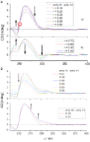


Naphthalene diimide–amino acid conjugates as novel fluorimetric and CD probes for differentiation between ds-DNA and ds-RNA
Beilstein J. Org. Chem. 2020, 16, 2032–2045, doi:10.3762/bjoc.16.170
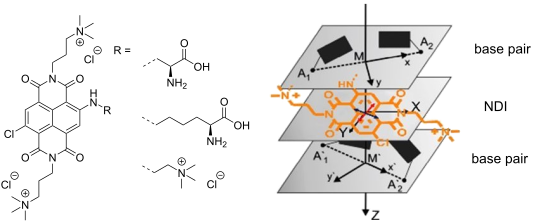
- ; Introduction The interplay of non-covalent interactions between nucleic acids and proteins or peptides is the basis of life and is also often used for the design of artificial small molecules, aiming for sensing or control of biorelevant processes. Many naturally occurring bioactive molecules contain a short
- peptide chain and DNA/RNA interacting aromatic moiety, for instance peptide-based DNA/RNA-intercalators [1][2], as well as many DNA/RNA groove binding small molecules [3][4]. Inspired by these natural examples, the development of novel DNA/RNA targeting synthetic molecules has been in scientific focus for
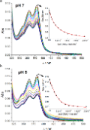
- structure with accessible minor groove at variance to poly(dG-dC)2, which has sterically hindered minor grooves by amino groups, and poly(A)-poly(U) is an A-helix with major groove available for binding of bulky small molecules [38]. The interactions of the NDI derivatives 3a,b, and 5 with DNA/RNA were


pH- and concentration-dependent supramolecular self-assembly of a naturally occurring octapeptide
Beilstein J. Org. Chem. 2020, 16, 2017–2025, doi:10.3762/bjoc.16.168
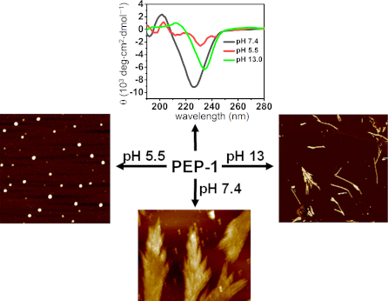
- development of novel drug nanocarrier assemblies. Keywords: aqueous self-assembly; pH-responsive systems; secondary structure; self-assembled nanostructures; solid-phase peptide synthesis; Introduction The self-assembly of small molecules is a ubiquitous phenomenon in nature [1] and also has key


One-pot synthesis of oxazolidinones and five-membered cyclic carbonates from epoxides and chlorosulfonyl isocyanate: theoretical evidence for an asynchronous concerted pathway
Beilstein J. Org. Chem. 2020, 16, 1805–1819, doi:10.3762/bjoc.16.148
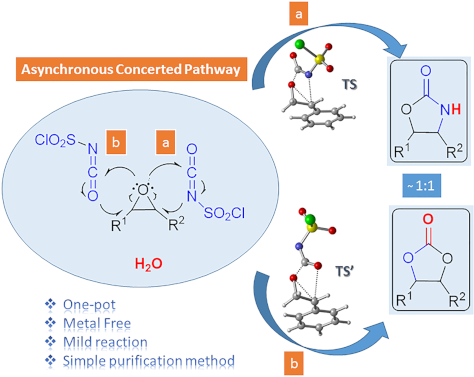
- natural products ranging from small molecules, such as sugars, lipids and amino acids to huge molecules [56]. Computational results A detailed mechanistic investigation of the synthesis of oxazolidinone and five-membered cyclic carbonate derivatives by the reaction between epoxide 7f and CSI has been


Anthelmintic drug discovery: target identification, screening methods and the role of open science
Beilstein J. Org. Chem. 2020, 16, 1203–1224, doi:10.3762/bjoc.16.105
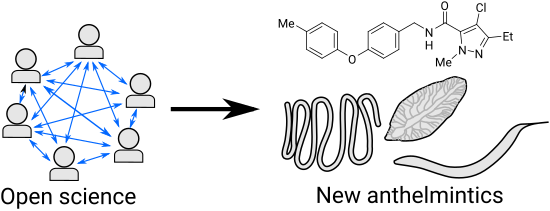
- the motility and a range of other phenotype scores, leading to the identification of 2 new small molecules with distinct chemical scaffolds 17 and 18 with activity against schistosomula and adult worms at low micromolar concentrations (Figure 4). Another CellProfiler toolbox enables the quantitation


Photocatalysis with organic dyes: facile access to reactive intermediates for synthesis
Beilstein J. Org. Chem. 2020, 16, 1163–1187, doi:10.3762/bjoc.16.103
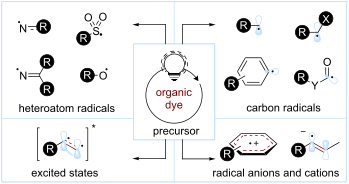
- cations and radical anions) Recently, the exploitation of alkenyl and aryl radical ions has emerged as a platform for the functionalization of small molecules. They appear as attractive intermediates for a direct alkene difunctionalization or arene C–H functionalization. In particular, radical cations are





Palladium-catalyzed regio- and stereoselective synthesis of aryl and 3-indolyl-substituted 4-methylene-3,4-dihydroisoquinolin-1(2H)-ones
Beilstein J. Org. Chem. 2020, 16, 1084–1091, doi:10.3762/bjoc.16.95
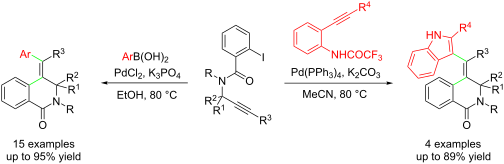
- active small molecules that exhibit antihypertensive activity [7][8]. Moreover, these heterocycles can be used as 5-HT3 antagonists [9], rho kinase inhibitors [10], thymidylate synthetase inhibitors [11], PARP-1 inhibitors [12], melatonin MT1 and MT2 receptor agonist [13], and fascin-targeted



Copper catalysis with redox-active ligands
Beilstein J. Org. Chem. 2020, 16, 858–870, doi:10.3762/bjoc.16.77
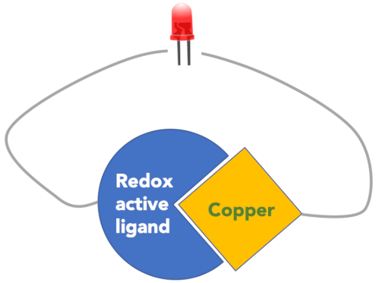
- )electronic transformations of paramount importance in atom transfer reactions and activation of small molecules. To do so, metalloenzymes have acquired many evolutionary reactivity-enhancing tools that enable efficient chemical processes. Among these tools, the entatic state model relies on the fact that a



Opening up connectivity between documents, structures and bioactivity
Beilstein J. Org. Chem. 2020, 16, 596–606, doi:10.3762/bjoc.16.54
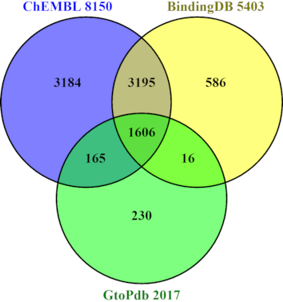
- peptides or polynucleotides, are also important to encompass. However, capture into structured records is more challenging for these larger therapeutic modalities than for small-molecules that can be merged on the basis of chemistry rules. Notwithstanding, space limitations mean that non-small molecule



Combination of multicomponent KA2 and Pauson–Khand reactions: short synthesis of spirocyclic pyrrolocyclopentenones
Beilstein J. Org. Chem. 2020, 16, 200–211, doi:10.3762/bjoc.16.23
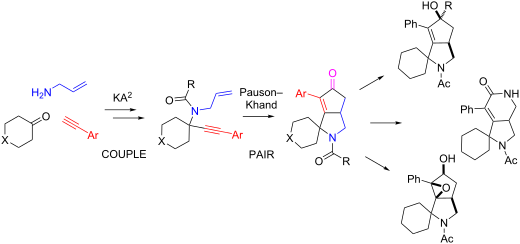
- literature [12]. Among the synthetic approaches to improve the quality and quantity of small molecules members of chemical libraries, diversity-oriented synthesis (DOS) [13][14][15][16], has been proposed as a paradigm for developing large collections of structurally diverse small molecules in a way to




Photocontrolled DNA minor groove interactions of imidazole/pyrrole polyamides
Beilstein J. Org. Chem. 2020, 16, 60–70, doi:10.3762/bjoc.16.8
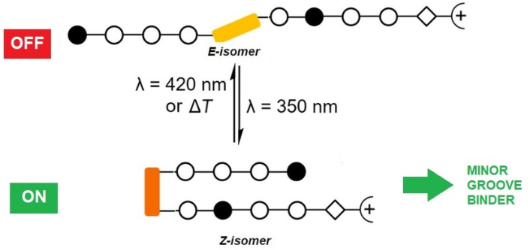
- peptides or small molecules, thereby controlling geometry and functionality. E-to-Z photoisomerization usually is achieved upon irradiation at 350 nm (π–π* transition), while the Z-to-E isomerization proceeds photochemically upon irradiation at >400 nm (n–π* transition) or thermally. Photoswitchable
- substance, once located at the DNA target, with an external stimulus. Azobenzenes are photoswitchable molecules capable of generating significant structural changes in peptides or small molecules, thereby controlling their geometry and functionality upon irradiation [10][11][12][13]. While isomerization of



Facile regiodivergent synthesis of spiro pyrrole-substituted pseudothiohydantoins and thiohydantoins via reaction of [e]-fused 1H-pyrrole-2,3-diones with thiourea
Beilstein J. Org. Chem. 2019, 15, 2864–2871, doi:10.3762/bjoc.15.280
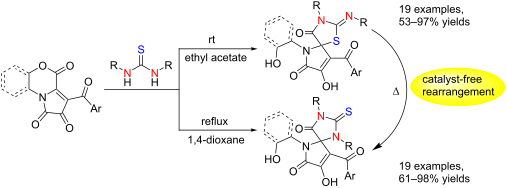
- heterocycles are relatively new and insufficiently investigated structures in medicinal chemistry [17][18]. The introduction of spiro-fused cyclic moieties in small molecules increases the degree of their structural (shape) complexity, which may lead to the reduced binding promiscuity and improved clinical


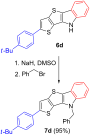
Synthesis of aryl-substituted thieno[3,2-b]thiophene derivatives and their use for N,S-heterotetracene construction
Beilstein J. Org. Chem. 2019, 15, 2678–2683, doi:10.3762/bjoc.15.261
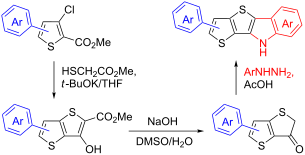
- ]thiophene; thieno[2',3':4,5]thieno[3,2-b]indole; Introduction The thieno[3,2-b]thiophene (TT) unit is highly demanded in modern organic synthesis since TT-based compounds have a variety of applications, e.g., in the field of organic electronics. Indeed, TT-based polymers and small molecules are used as