Search for "stereocontrol" in Full Text gives 139 result(s) in Beilstein Journal of Organic Chemistry.
Beilstein J. Org. Chem. 2016, 12, 2099–2103, doi:10.3762/bjoc.12.199
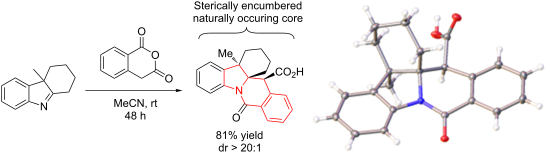
Graphical Abstract
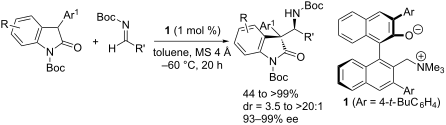
Figure 1: Chiral ammonium betaines.
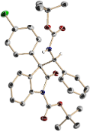
Figure 2: ORTEP diagram of 4ca (Ellipsoids displayed at 50% probability. Calculated hydrogen atoms except it ...
Beilstein J. Org. Chem. 2016, 12, 2038–2045, doi:10.3762/bjoc.12.192
Graphical Abstract
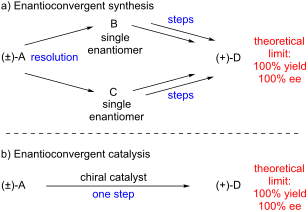
Figure 1: Enantioconvergent methods.
Figure 2: Stereomutative enantioconvergent catalysis.
Scheme 1: Dynamic kinetic resolution by hydrogenation.
Scheme 2: Enantioconvergent synthesis of phosphines governed by Curtin–Hammett/Winstein–Holness kinetics (TMS...
Figure 3: Stereoablative enantioconvergent catalysis.
Scheme 3: Stoltz’ stereoablative oxindole functionalization.
Scheme 4: Fu’s type II enantioconvergent Cu-catalyzed photoredox reaction.
Scheme 5: Stereoablative enantioconvergent allylation and protonation (dba = dibenzylideneacetone).
Scheme 6: Enantioconvergent allylic alkylation with two racemic starting materials.
Figure 4: Enantioconvergent parallel kinetic resolution.
Scheme 7: Enantioconvergent parallel kinetic resolution by two complementary biocatalysts.
Scheme 8: Enantioconvergent PKR by Nocardia EH1.
Beilstein J. Org. Chem. 2016, 12, 1949–1980, doi:10.3762/bjoc.12.184
Graphical Abstract
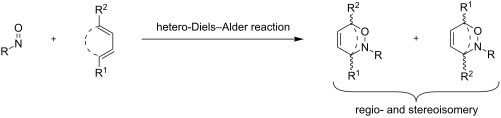
Scheme 1: Nitroso hetero-Diels–Alder reaction.
Scheme 2: The hetero-Diels–Alder reaction between thebaine (4) and an acylnitroso dienophile 5.
Figure 1: Examples of nitroso dienophiles frequently used in hetero-Diels–Alder reaction studies.
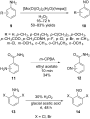
Scheme 3: Synthesis of arylnitroso species by substitution of a trifluoroborate group [36].
Scheme 4: Synthesis of arylnitroso compounds by amine oxidation.
Scheme 5: Synthesis of arylnitroso compounds by hydroxylamine oxidation.
Scheme 6: Synthesis of chloronitroso compounds by the treatment of a nitronate anion with oxalyl chloride.
Scheme 7: Non-oxidative routes to acylnitroso species.
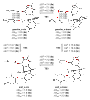
Figure 2: RB3LYP/6-31G* computed energies (in kcal·mol−1) and bond lengths for exo and endo-transition states...
Scheme 8: Hetero-Diels–Alder cycloadditions of diene 28 and nitroso dienophiles 29.
Figure 3: Relative reactivity (ΔE#) and regioselectivity (Δ) for hetero-Diels–Alder of 28 and nitroso dienoph...
Scheme 9: Reaction of chiral 1-phosphono-1,3-butadiene 31 with nitroso dienophiles 32.
Scheme 10: Hetero-Diels–Alder reactions of hydroxamic acids 35 with various dienes 37.
Scheme 11: General regioselectivity of the nitroso hetero-Diels–Alder reaction observed with unsymmetrical die...
Scheme 12: Effect of the nitroso species on the regioselectivity for weakly directing 2-substituted dienes.
Scheme 13: Regioselectivity of 1,4-disubstituted dienes 51.
Scheme 14: Nitroso hetero-Diels–Alder reaction between Boc-nitroso compound 54 and dienes 55.
Scheme 15: Nitroso hetero-Diels–Alder reaction between Wightman reagent 58 and dienes 59.
Scheme 16: Regioselective reaction of 3-dienyl-2-azetidinones 62 with nitrosobenzene (47).
Scheme 17: The regioselective reaction of 1,3-butadienes 65 with various nitroso heterodienophiles 66.
Scheme 18: Catalysis of the nitroso hetero-Diels–Alder reaction by vanadium in the presence of the oxidant CHP...
Figure 4: 1,2-Oxazines synthesized in solution with moderate to high regioselectivity, showing the favored re...
Figure 5: 1,2-Oxazines synthesized in the solid phase with moderate to high regioselectivity, showing the fav...
Scheme 19: Regioselectivity of solution-phase nitroso hetero-Diels–Alder reaction with acyl and aryl nitroso d...
Scheme 20: Favored regioisomeric outcome for the solution and solid-phase reactions, giving hetero-Diels–Alder...
Figure 6: Favored regioisomers and regioisomeric ratios for 1,2-oxazines synthesized in solid phase (91, 93, ...
Scheme 21: Regiocontrol of the reaction between 3-dienyl-2-azetidinones and nitrosobenzene due to change in a ...
Scheme 22: Regiocontrol of the reaction between diene 111 and 2-methyl-6-nitrosopyridine (112) due to metal co...
Scheme 23: Asymmetric hetero-Diels–Alder reactions reported by Vasella [56].
Scheme 24: Asymmetric hetero-Diels–Alder reaction of cyclohexa-1,3-diene (120) with acylnitroso dienophile 119....
Scheme 25: Asymmetric induction with L-proline derivatives 124–126.
Scheme 26: Asymmetric cycloaddition of the acylnitroso compound 136 to diene 135.
Scheme 27: Asymmetric induction with arylmenthol-based nitroso dienophiles 142.
Scheme 28: Cycloaddition of silyloxycyclohexadiene 145 to the acylnitroso dienophile derived from (+)-camphors...
Scheme 29: Asymmetric reaction of O-isopropylidene-protected cis-cyclohexa-3,5-diene-1,2-diol 147 with mannofu...
Scheme 30: Synthesis of synthon 152 from 2-methoxyphenol 150 and chiral auxiliary 151.
Scheme 31: Asymmetric nitroso hetero-Diels–Alder reaction with Wightman chloronitroso reagent 58.
Scheme 32: Asymmetric 1,2-oxazine synthesis using chiral cyclic diene 157 and the application of this reaction...
Scheme 33: Asymmetric 1,2-oxazine synthesis using a chiral diene reported by Jones et al. [75]. aRegioisomeric rat...
Scheme 34: The nitroso hetero-Diels–Alder reaction of acyclic oxazolidine-substituted diene 170 and chiral 1-s...
Scheme 35: The nitroso hetero-Diels–Alder reaction of acyclic lactam-substituted diene 176 with various acylni...
Scheme 36: The hetero-Diels–Alder reaction of acylnitroso dienophile.
Scheme 37: The hetero-Diels–Alder reaction of arylnitroso dienophiles using Lewis acids.
Scheme 38: Asymmetric hetero-Diels–Alder reactions of chiral alkyl N-dienylpyroglutamates.
Scheme 39: Catalytic asymmetric arylnitroso reaction between mono-substituted 1,3-cyclohexadiene 196 and disub...
Figure 7: Plausible chelate intermediate complexes formed during the hetero-Diels–Alder reaction to give 1,2-...
Scheme 40: Catalytic asymmetric nitroso hetero-Diels–Alder between cyclic dienes and 2-nitrosopyridine.
Scheme 41: The reason for the increased enantioselectivity of stereoisomer 212 compared with stereoisomer 213.
Scheme 42: The copper-catalyzed nitroso hetero-Diels–Alder reaction of 6-methyl-2-nitrosopyridine (199) with p...
Scheme 43: Asymmetric nitroso hetero-Diels–Alder reaction of nitrosoarenes with dienylcarbamates catalyzed by ...
Scheme 44: The enantioselective hetero-Diels–Alder reaction between nitrosobenzene and (E)-2,4-pentadien-1-ol (...
Scheme 45: Asymmetric nitroso hetero-Diels–Alder reaction using tartaric acid ester chelation of the diene and...
Beilstein J. Org. Chem. 2016, 12, 1616–1623, doi:10.3762/bjoc.12.158
Graphical Abstract
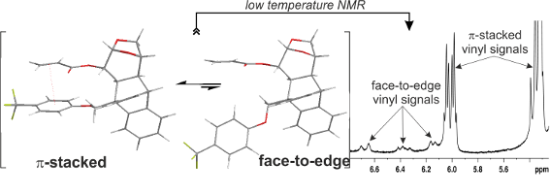
Figure 1: Intramolecular aryl–vinyl π-stacking interaction of a levoglucosenone derivative.
Scheme 1: Synthesis of acrylates 6a,b.
Figure 2: Vinyl region of the 1H NMR spectra of 6a–d in CDCl3 at 300 K.
Figure 3: Vinylic region of the low temperatures 1H NMR spectra of 6a in CDCl3.
Figure 4: M06-2X/6-31+G(d) Gibbs free energy profiles (in kcal/mol) computed for the conformational equilibri...
Scheme 2: Complexes between methyl acrylate (7) and representative anisole derivatives.
Figure 5: Comparison of the M06-2X/6-31+G(d) energy profiles (in kcal/mol) computed for 6d and 6b (in grey).
Figure 6: X-ray thermal ellipsoid plot of 6a (50% probability level) showing the labeling scheme (hydrogen an...
Beilstein J. Org. Chem. 2016, 12, 1512–1550, doi:10.3762/bjoc.12.148
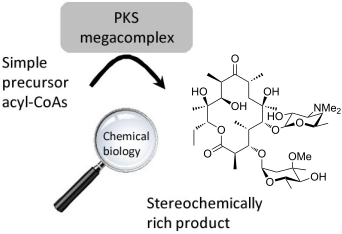
Graphical Abstract
Scheme 1: Schematic description of the cyclisation reaction catalysed by TE domains. In most cases, the nucle...
Scheme 2: Mechanisms for the formation of oxygen heterocycles. The degree of substitution can differ from tha...
Scheme 3: Pyran-ring formation in pederin (24) biosynthesis. Incubation of recombinant PedPS7 with substrate ...
Scheme 4: The domain AmbDH3 from ambruticin biosynthesis catalyses the dehydration of 25 and subsequent cycli...
Scheme 5: SalBIII catalyses dehydration of 29 and subsequent cyclisation to tetrahydropyran 30 [18].
Figure 1: All pyranonaphtoquinones contain either the naphtha[2,3-c]pyran-5,10-dione (32) or the regioisomeri...
Scheme 6: Pyran-ring formation in actinorhodin (34) biosynthesis. DNPA: 4-dihydro-9-hydroxy-1-methyl-10-oxo-3H...
Scheme 7: Pyran formation in granaticin (36) biosynthesis. DNPA: 4-dihydro-9-hydroxy-1-methyl-10-oxo-3H-napht...
Scheme 8: Pyran formation in alnumycin (37) biosynthesis. Adapted from [21].
Scheme 9: Biosynthesis of pseudomonic acid A (61). The pyran ring is initially formed in 57 after dehydrogena...
Scheme 10: Epoxidation–cyclisation leads to the formation of the tetrahydropyran ring in the western part of t...
Scheme 11: a) Nonactin (70) is formed from heterodimers of (−)(+)-dimeric nonactic acid and (+)(−)-dimeric non...
Figure 2: Pamamycins (73) are macrodiolide antibiotics containing three tetrahydrofuran moieties, which are a...
Scheme 12: A PS domain homolog in oocydin A (76) biosynthesis is proposed to catalyse furan formation via an o...
Scheme 13: Mechanism of oxidation–furan cyclisation by AurH, which converts (+)-deoxyaureothin (77) into (+)-a...
Scheme 14: Leupyrrin A2 (80) and the proposed biosynthesis of its furylidene moiety [69,70].
Scheme 15: Asperfuranone (93) biosynthesis, adapted from [75].
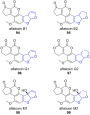
Figure 3: The four major aflatoxins produced by Aspergilli are the types B1, B2, G1 and G2 (94–97). In the di...
Scheme 16: Overview on aflatoxin B1 (94) biosynthesis. HOMST = 11-hydroxy-O-methylsterigmatocystin [78,79,82-106].
Scheme 17: A zipper mechanism leads to the formation of oxygen heterocycles in monensin biosynthesis [109-111].
Scheme 18: Formation of the 2,6-dioxabicyclo[3.2.1]octane (DBO) ring system in aurovertin B (118) biosynthesis ...
Figure 4: Structures of the epoxide-containing polyketides epothilone A (119) and oleandomycin (120) [123-125].
Scheme 19: Structures of phoslactomycin B (121) (a) and jerangolid A (122) (b). The heterocycle-forming steps ...
Scheme 20: a) Structures of rhizoxin (130) and cycloheximide (131). Model for the formation of δ-lactones (b) ...
Scheme 21: EncM catalyses a dual oxidation sequence and following processing of the highly reactive intermedia...
Figure 5: Mesomeric structures of tetronates [138,139].
Figure 6: Structures of tetronates for which gene clusters have been sequenced. The tetronate moiety is shown...
Scheme 22: Conserved steps for formation and processing in several 3-acyl-tetronate biosynthetic pathways were...
Scheme 23: In versipelostatin A (153) biosynthesis, VstJ is a candidate enzyme for catalysing the [4 + 2] cycl...
Scheme 24: a) Structures of some thiotetronate antibiotics. b) Biosynthesis of thiolactomycin (165) as propose...
Scheme 25: Aureusidine synthase (AS) catalyses phenolic oxidation and conjugate addition of chalcones leading ...
Scheme 26: a) Oxidative cyclisation is a key step in the biosynthesis of spirobenzofuranes 189, 192 and 193. b...
Scheme 27: A bicyclisation mechanism forms a β-lactone and a pyrrolidinone and removes the precursor from the ...
Scheme 28: Spontaneous cyclisation leads to off-loading of ebelactone A (201) from the PKS machinery [163].
Scheme 29: Mechanisms for the formation of nitrogen heterocycles.
Scheme 30: Biosynthesis of highly substituted α-pyridinones. a) Feeding experiments confirmed the polyketide o...
Scheme 31: Acridone synthase (ACS) catalyses the formation of 1,3-dihydroxy-N-methylacridone (224) by condensa...
Scheme 32: A Dieckmann condensation leads to the formation of a 3-acyl-4-hydroxypyridin-2-one 227 and removes ...
Scheme 33: a) Biosynthesis of the pyridinone tenellin (234). b) A radical mechanism was proposed for the ring-...
Scheme 34: a) Oxazole-containing PKS–NRPS-derived natural products oxazolomycin (244) and conglobatin (245). b...
Scheme 35: Structure of tetramic acids 251 (a) and major tautomers of 3-acyltetramic acids 252a–d (b). Adapted...
Scheme 36: Equisetin biosynthesis. R*: terminal reductive domain. Adapted from [202].
Scheme 37: a) Polyketides for which a similar biosynthetic logic was suggested. b) Pseurotin A (256) biosynthe...
Figure 7: Representative examples of PTMs with varying ring sizes and oxidation patterns [205,206].
Scheme 38: Ikarugamycin biosynthesis. Adapted from [209-211].
Scheme 39: Tetramate formation in pyrroindomycin aglycone (279) biosynthesis [213-215].
Scheme 40: Dieckmann cyclases catalyse tetramate or 2-pyridone formation in the biosynthesis of, for example, ...
Beilstein J. Org. Chem. 2016, 12, 1440–1446, doi:10.3762/bjoc.12.139
Graphical Abstract
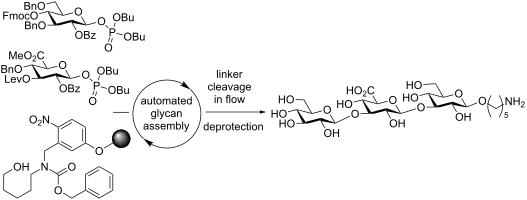
Figure 1: Disaccharide repeating unit of the S. pneumoniae serotype 3 CPS.
Figure 2: Building blocks and solid support for the automated solid-phase synthesis of S. pneumoniae serotype...
Scheme 1: Attempted assembly of SP3 trisaccharide 5 using glycosyl phosphate building blocks 1 and 2. Reagent...
Figure 3: HPLC chromatogram of the crude products of the attempted AGA of SP3 trisaccharide 5; conditions: YM...
Scheme 2: Attempted AGA of SP3 trisaccharide 9 using glycosyl phosphate building blocks 1 and 3. Reagents and...
Figure 4: HPLC chromatogram of the crude products of the attempted AGA of SP3 trisaccharide 9; conditions: YM...
Scheme 3: Automated synthesis of linker-bound glucuronic acid 10 using glycosyl phosphate building block 1. R...
Scheme 4: Automated synthesis of SP3 trisaccharide 5 using glycosyl phosphate building blocks 1 and 2. Reagen...
Figure 5: HPLC chromatogram of the crude products of the automated solid-phase SP3 trisaccharide 5 synthesis;...
Scheme 5: Global deprotection of SP3 trisaccharide 5. Reagents and conditions: a) LiOH, H2O2, THF, −5 °C to r...
Beilstein J. Org. Chem. 2016, 12, 1096–1100, doi:10.3762/bjoc.12.104
Graphical Abstract
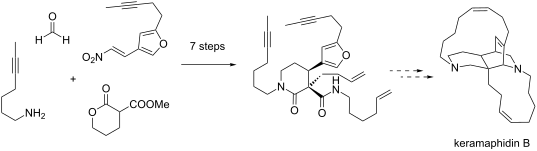
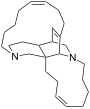
Figure 1: Keramaphidin B (1).
Figure 2: Retrosynthetic analysis of keramaphidin B.
Scheme 1: Enantio- and diastereoselective bifunctional thiourea 12 organocatalysed Michael addition. (a) CO(O...
Scheme 2: Synthesis of bis alkene 5. (a) 12 (20 mol %), toluene, −20 °C, 36 h, 95:5 dr, 92% yield; (b) aq HCH...
Beilstein J. Org. Chem. 2016, 12, 1079–1080, doi:10.3762/bjoc.12.102
Beilstein J. Org. Chem. 2016, 12, 918–936, doi:10.3762/bjoc.12.90
Graphical Abstract
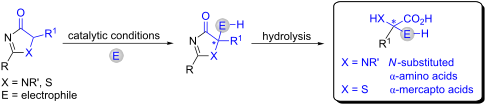
Figure 1: Some α-substituted heterocycles for asymmetric catalysis, their reactivity patterns against enoliza...
Figure 2: 1H-Imidazol-4(5H)-ones 1 and thiazol-4(5H)-ones 2.
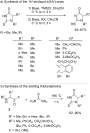
Scheme 1: a) Synthesis of 2-thio-1H-imidazol-4(5H)-ones [55] and b) preparation of the starting thiohydantoins [59].
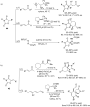
Scheme 2: Selected examples of the Michael addition of 2-thio-1H-imidazol-4(5H)-ones to nitroalkenes [55]. aReact...
Scheme 3: Michael addition of thiohydantoins to nitrostyrene assisted by Et3N and catalysts C1 and C3. aAbsol...
Scheme 4: Elaboration of the Michael adducts coming from the Michael addition to nitroalkenes [55].
Figure 3: Proposed model for the Michael addition of 1H-imidazol4-(5H)-ones and selected 1H NMR data which su...
Scheme 5: Michael addition 2-thio-1H-imidazol-4(5H)-ones to the α-silyloxyenone 29 [55].
Scheme 6: Elaboration of the Michael adducts coming from the Michael addition to nitroolefins [55].
Scheme 7: Rhodanines in asymmetric catalytic reactions: a) Reaction with rhodanines of type 44 [78-80]; b) reactions...
Scheme 8: Michael addition of thiazol-4(5H)-ones to nitroolefins promoted by the ureidopeptide-like bifunctio...
Figure 4: Ureidopeptide-like Brønsted bases: catalyst design. a) Previous known design. b) Proposed new desig...
Scheme 9: Ureidopeptide-like Brønsted base bifunctional catalyst preparation. NMM = N-methylmorpholine, THF =...
Scheme 10: Selected examples of the Michael addition of thiazolones to different nitroolefins promoted by cata...
Scheme 11: Elaboration of the Michael adducts to α,α-disubstituted α-mercaptocarboxylic acid derivatives [85].
Scheme 12: Effect of the nitrogen atom at the aromatic substituent of the thiazolone on yield and stereoselect...
Scheme 13: Michael addition reaction of thiazol-4(5H)ones 74 to α’-silyloxyenone 29 [73].
Scheme 14: Elaboration of the thiazolone Michael adducts [73].
Scheme 15: Enantioselective γ-addition of oxazol-4(5H)-ones and thiazol-4(5H)-ones to allenoates promoted by C6...
Scheme 16: Enantioselective γ-addition of thiazol-4(5H)-ones and oxazol-4(5H)-ones to alkynoate 83 promoted by ...
Scheme 17: Proposed mechanism for the C6-catalyzed γ-addition of thiazol-4(5H)-one to allenoates. Adapted from ...
Scheme 18: Catalytic enantioselective α-amination of thiazolones promoted by ureidopeptide like catalysts C5 a...
Scheme 19: Iridium-catalized asymmetric allyllation of substituted oxazol-4(5H)-ones and thiazol-4(5H)-ones pr...
Beilstein J. Org. Chem. 2016, 12, 750–759, doi:10.3762/bjoc.12.75
Graphical Abstract
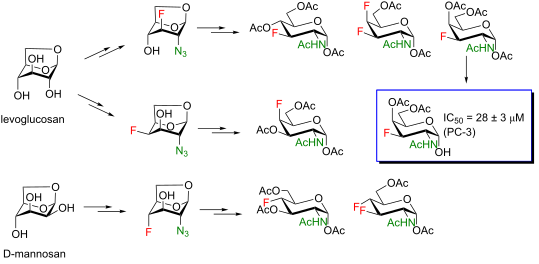
Figure 1: Examples of deoxofluorinated hexosamines.
Scheme 1: Retrosynthetic plan.
Scheme 2: Preparation of starting 2-azido compounds. Reagents and conditions: (a) NaN3, NH4Cl, MeOC2H4OH, 79%...
Scheme 3: Preparation of mono and difluoro analogs of 2-azido-2-deoxy-1,6-anhydro-β-D-gluco- and galactopyran...
Scheme 4: Suggested mechanisms for deoxofluorination at C-3 of 1,6-anhydro-β-D-glucohexopyranose derivatives....
Scheme 5: Formation of oxazoline 41 from 19.
Scheme 6: 1-O-Deacetylation of monofluorinated hexosamines. Reagents and conditions: (a) BnNH2, THF, 62%; (b)...
Beilstein J. Org. Chem. 2016, 12, 524–530, doi:10.3762/bjoc.12.51
Graphical Abstract
Figure 1: Structures of vanillyl β-D-glucoside (1), salidroside (2) and isoconiferin (3).
Scheme 1: Reagents and conditions: a) Ac2O, pyridine, rt, 10 h, >98%; b) NaBH4, H3PO4, −5 °C, 85–95%.
Scheme 2: Reagents and conditions: a) Ac2O, H2SO4, 5 °C to rt, 30 min, >94%; b) 1. NaBH4, THF, 5 °C, 10 min, ...
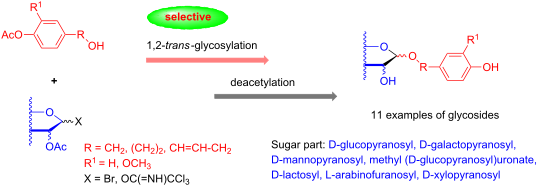
Figure 2: Synthesized glycosyl donors.
Scheme 3: General reaction scheme for the synthesis of p-hydroxyphenylalkyl glycosides.
Figure 3: Overview of protected and deprotected products.
Beilstein J. Org. Chem. 2016, 12, 462–495, doi:10.3762/bjoc.12.48
Graphical Abstract
Scheme 1: Activation of carbonyl compounds via enamine and iminium intermediates [2].
Scheme 2: Electronic and steric interactions present in enamine activation mode [2].
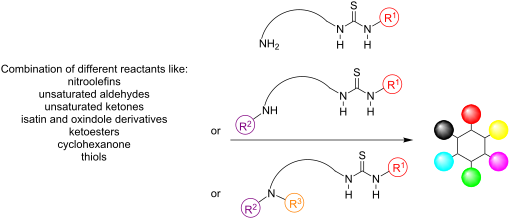
Scheme 3: Electrophilic activation of carbonyl compounds by a thiourea moiety.
Scheme 4: Asymmetric synthesis of dihydro-2H-pyran-6-carboxylate 3 using organocatalyst 4 [16].
Scheme 5: Possible hydrogen-bonding for the reaction of (E)-methyl 2-oxo-4-phenylbut-3-enoate [16].
Scheme 6: Asymmetric desymmetrization of 4,4-cyclohexadienones using the Michael addition reaction with malon...
Scheme 7: The enantioselective synthesis of α,α-disubstituted cycloalkanones using catalyst 11 [18].
Scheme 8: The enantioselective synthesis of indolo- and benzoquinolidine compounds through aza-Diels–Alder re...
Scheme 9: Enantioselective [5 + 2] cycloaddition [20].
Scheme 10: Asymmetric synthesis of oxazine derivatives 26 [21].
Scheme 11: Asymmetric synthesis of bicyclo[3.3.1]nonadienone, core 30 present in (−)-huperzine [22].
Scheme 12: Asymmetric inverse electron-demand Diels-Alder reaction catalyzed by amine-thiourea 34 [23].
Scheme 13: Asymmetric entry to morphan skeletons, catalyzed by amine-thiourea 37 [24].
Scheme 14: Asymmetric transformation of (E)-2-nitroallyl acetate [25].
Scheme 15: Proposed way of activation.
Scheme 16: Asymmetric synthesis of nitrobicyclo[3.2.1]octan-2-one derivatives [26].
Scheme 17: Asymmetric tandem Michael–Henry reaction catalyzed by 50 [27].
Scheme 18: Asymmetric Diels–Alder reactions of 3-vinylindoles 51 [29].
Scheme 19: Proposed transition state and activation mode of the asymmetric Diels–Alder reactions of 3-vinylind...
Scheme 20: Desymmetrization of meso-anhydrides by Chin, Song and co-workers [30].
Scheme 21: Desymmetrization of meso-anhydrides by Connon and co-workers [31].
Scheme 22: Asymmetric intramolecular Michael reaction [32].
Scheme 23: Asymmetric addition of malonate to 3-nitro-2H-chromenes 67 [33].
Scheme 24: Intramolecular desymmetrization through an intramolecular aza-Michael reaction [34].
Scheme 25: Enantioselective synthesis of (−)-mesembrine [34].
Scheme 26: A novel asymmetric Michael–Michael reaction [35].
Scheme 27: Asymmetric three-component reaction catalyzed by Takemoto’s catalyst 77 [46].
Scheme 28: Asymmetric domino Michael–Henry reaction [47].
Scheme 29: Asymmetric domino Michael–Henry reaction [48].
Scheme 30: Enantioselective synthesis of derivatives of 3,4-dihydro-2H-pyran 89 [49].
Scheme 31: Asymmetric addition of α,α-dicyano olefins 90 to 3-nitro-2H-chromenes 91 [50].
Scheme 32: Asymmetric three-component reaction producing 2,6-diazabicyclo[2.2.2]octanones 95 [51].
Scheme 33: Asymmetric double Michael reaction producing substituted chromans 99 [52].
Scheme 34: Enantioselective synthesis of multi-functionalized spiro oxindole dienes 106 [53].
Scheme 35: Organocatalyzed Michael aldol cyclization [54].
Scheme 36: Asymmetric synthesis of dihydrocoumarins [55].
Scheme 37: Asymmetric double Michael reaction en route to tetrasubstituted cyclohexenols [56].
Scheme 38: Asymmetric synthesis of α-trifluoromethyl-dihydropyrans 121 [58].
Scheme 39: Tyrosine-derived tertiary amino-thiourea 123 catalyzed Michael hemiaketalization reaction [59].
Scheme 40: Enantioselective entry to bicyclo[3.2.1]octane unit [60].
Scheme 41: Asymmetric synthesis of spiro[4-cyclohexanone-1,3’-oxindoline] 126 [61].
Scheme 42: Kinetic resolution of 3-nitro-2H-chromene 130 [62].
Scheme 43: Asymmetric synthesis of chromanes 136 [63].
Scheme 44: Wang’s utilization of β-unsaturated α-ketoesters 87 [64,65].
Scheme 45: Asymmetric entry to trifluoromethyl-substituted dihydropyrans 144 [66].
Scheme 46: Phenylalanine-derived thiourea-catalyzed domino Michael hemiaketalization reaction [67].
Scheme 47: Asymmetric synthesis of α-trichloromethyldihydropyrans 149 [68].
Scheme 48: Takemoto’s thiourea-catalyzed domino Michael hemiaketalization reaction [69].
Scheme 49: Asymmetric synthesis of densely substituted cyclohexanes [70].
Scheme 50: Enantioselective synthesis of polysubstituted chromeno [4,3-b]pyrrolidine derivatines 157 [71].
Scheme 51: Enantioselective synthesis of spiro-fused cyclohexanone/5-oxazolone scaffolds 162 [72].
Scheme 52: Utilizing 2-mercaptobenzaldehydes 163 in cascade processes [73,74].
Scheme 53: Proposed transition state of the initial sulfa-Michael step [74].
Scheme 54: Asymmetric thiochroman synthesis via dynamic kinetic resolution [75].
Scheme 55: Enantioselective synthesis of thiochromans [76].
Scheme 56: Enantioselective synthesis of chromans and thiochromans synthesis [77].
Scheme 57: Enantioselective sulfa-Michael aldol reaction en route to spiro compounds [78].
Scheme 58: Enantioselective synthesis of 4-aminobenzo(thio)pyrans 179 [79].
Scheme 59: Asymmetric synthesis of tetrahydroquinolines [80].
Scheme 60: Novel asymmetric Mannich–Michael sequence producing tetrahydroquinolines 186 [81].
Scheme 61: Enantioselective synthesis of biologically interesting chromanes 190 and 191 [82].
Scheme 62: Asymmetric tandem Henry–Michael reaction [83].
Scheme 63: An asymmetric synthesis of substituted cyclohexanes via a dynamic kinetic resolution [84].
Scheme 64: Three component-organocascade initiated by Knoevenagel reaction [85].
Scheme 65: Asymmetric Michael reaction catalyzed by catalysts 57 and 211 [86].
Scheme 66: Proposed mechanism for the asymmetric Michael reaction catalyzed by catalysts 57 and 211 [86].
Scheme 67: Asymmetric facile synthesis of hexasubstituted cyclohexanes [87].
Scheme 68: Dual activation catalytic mechanism [87].
Scheme 69: Asymmetric Michael–Michael/aldol reaction catalyzed by catalysts 57, 219 and 214 [88].
Scheme 70: Asymmetric synthesis of substituted cyclohexane derivatives, using catalysts 57 and 223 [89].
Scheme 71: Asymmetric synthesis of substituted piperidine derivatives, using catalysts 223 and 228 [90].
Scheme 72: Asymmetric synthesis of endo-exo spiro-dihydropyran-oxindole derivatives catalyzed by catalyst 232 [91]....
Scheme 73: Asymmetric synthesis of carbazole spiroxindole derivatives, using catalyst 236 [92].
Scheme 74: Enantioselective formal [2 + 2] cycloaddition of enal 209 with nitroalkene 210, using catalysts 23 ...
Scheme 75: Asymmetric synthesis of polycyclized hydroxylactams derivatives, using catalyst 242 [94].
Scheme 76: Asymmetric synthesis of product 243, using catalyst 246 [95].
Scheme 77: Formation of the α-stereoselective acetals 248 from the corresponding enol ether 247, using catalys...
Scheme 78: Selective glycosidation, catalyzed by Shreiner’s catalyst 23 [97].
Beilstein J. Org. Chem. 2016, 12, 309–313, doi:10.3762/bjoc.12.33
Graphical Abstract
Figure 1: Bioactive 7-azaisatins and their derivatives.
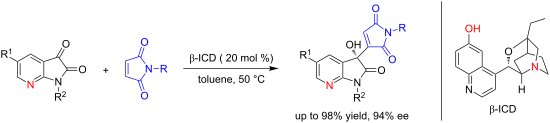
Scheme 1: Further exploration with 7-azaisatin 1a and comparison with the previous work by Zhou [5].
Beilstein J. Org. Chem. 2016, 12, 139–143, doi:10.3762/bjoc.12.15
Graphical Abstract
Scheme 1: Overall strategy.
Scheme 2: Boc-protected aminoalcohols used as inputs in a diastereoselective Ugi reaction.
Beilstein J. Org. Chem. 2015, 11, 2600–2615, doi:10.3762/bjoc.11.280
Graphical Abstract
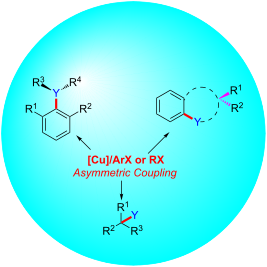
Scheme 1: Copper-catalyzed asymmetric preparation of biaryl diacids by Ullmann coupling.
Scheme 2: Intramolecular biaryl coupling of bis(iodotrimethoxybenzoyl)hexopyranose derivatives.
Scheme 3: Preparation of 3,3’-disubstituted MeO-BIPHEP derivatives.
Scheme 4: Enantioselective synthesis of trans-4,5,9,10-tetrahydroxy-9,10-dihydrophenanthrene.
Scheme 5: Copper-catalyzed coupling of oxazoline-substituted aromatics to afford biaryl products with high di...
Scheme 6: Total synthesis of O-permethyl-tellimagrandin I.
Scheme 7: Total synthesis of (+)-gossypol.
Scheme 8: Total synthesis of (−)-mastigophorene A.
Scheme 9: Total synthesis of isokotanin.
Scheme 10: Synthesis of dimethyl[7]thiaheterohelicenes.
Scheme 11: Intramolecular coupling with chiral ortho-substituents.
Scheme 12: Chiral 1,3-diol-derived tethers in the diastereoselective synthesis of biaryl compounds.
Scheme 13: Synthesis of chiral unsymmetrically substituted biaryl compounds.
Scheme 14: Atroposelective synthesis of biaryl ligands and natural products by using a chiral diether linker.
Scheme 15: Enantioselective arylation reactions of 2-methylacetoacetates.
Scheme 16: Asymmetric aryl C–N coupling reactions following a desymmetrization strategy.
Scheme 17: Construction of cyano-bearing all-carbon quaternary stereocenters.
Scheme 18: An unexpected inversion of the enantioselectivity in the asymmetric C–N coupling reactions using ch...
Scheme 19: Differentiation of two nucleophilic amide groups.
Scheme 20: Synthesis of spirobilactams through a double N-arylation reaction.
Scheme 21: Asymmetric N-arylation through kinetic resolution.
Scheme 22: Formation of cyano-substituted quaternary stereocenters through kinetic resolution.
Scheme 23: Copper-catalyzed intramolecular desymmetric aryl C–O coupling.
Scheme 24: Transition metal-catalyzed allylic substitutions.
Scheme 25: Copper-catalyzed asymmetric allylic substitution of allyl phosphates.
Scheme 26: Allylic substitution of allyl phosphates with allenylboronates.
Scheme 27: Allylic substitution of allyl phosphates with vinylboron.
Scheme 28: Allylic substitution of allyl phosphates with vinylboron.
Scheme 29: Construction of quaternary stereogenic carbon centers through enantioselective allylic cross-coupli...
Scheme 30: Cu-catalyzed enantioselective allyl–allyl cross-coupling.
Scheme 31: Cu-catalyzed enantioselective allylic substitutions with silylboronates.
Scheme 32: Asymmetric allylic substitution of allyl phosphates with silylboronates.
Scheme 33: Stereoconvergent synthesis of chiral allylboronates.
Scheme 34: Enantioselective allylic substitutions with diboronates.
Scheme 35: Enantioselective allylic alkylations of terminal alkynes.
Beilstein J. Org. Chem. 2015, 11, 2577–2583, doi:10.3762/bjoc.11.277
Graphical Abstract
Scheme 1: Diastereodivergent cascade Michael/Michael reaction using catalysts with the same absolute chiralit...
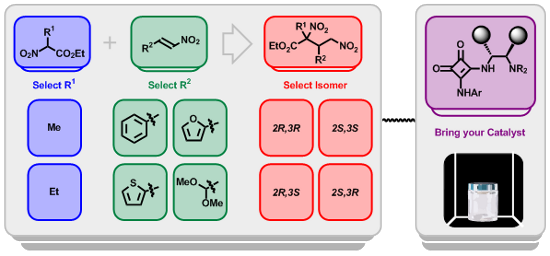
Scheme 2: Diastereodivergent enantioselective Michael reaction using ethyl 2-nitropropanoate and β-nitrostyre...
Figure 1: ORTEP diagrams for anti-3a and syn-3o respectively.
Scheme 3: Proposed models to explain the stereochemical outcome of the reaction.
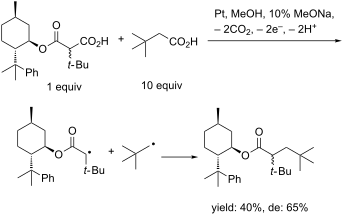
Beilstein J. Org. Chem. 2015, 11, 294–301, doi:10.3762/bjoc.11.34
Graphical Abstract
Scheme 1: Structural features of 8-substituted menthylamines 1.
Scheme 2: Synthetic strategies to menthylamines.
Scheme 3: Stereoselective synthesis of 8-substituted (1R,3R,4S)-menthylamines.
Scheme 4: Influence of the cathode system onto the stereoselectivity of the reduction of (1R,4S)-menthone oxi...
Scheme 5: Preparation of 8-substituted (1R)-menthones 6 and the corresponding oximes 7.
Scheme 6: Influence of cathode material on the preparation of (1R,3R,4S)-menthylamine 8a.
Scheme 7: Protection of the oxime functionality in 7c due to the sterically demanding diphenyl moiety in 8-po...
Scheme 8: Separation of the diastereomeric 8-substituted menthylamines by crystallization of their hydrochlor...
Beilstein J. Org. Chem. 2015, 11, 184–191, doi:10.3762/bjoc.11.19
Graphical Abstract
Figure 1: Acyl phosphorus compounds.
Scheme 1: Synthesis of a dinucleoside acylphosphonate (3b) and a formate diester (1a).
Scheme 2: Reaction of an H-phosphonodiamidite with acid chlorides.
Figure 2: ORTEP [52] drawing of 9. Selected distances (Å) and angles (°): P–N1 1.687(1), P–N2 1.679(1), P–C1 1.87...
Scheme 3: Synthesis of dinucleosides.
Scheme 4: Calculated phosphine, acylphosphine, phosphite, and acylphosphonite inversion barriers.
Beilstein J. Org. Chem. 2014, 10, 2077–2086, doi:10.3762/bjoc.10.216
Graphical Abstract
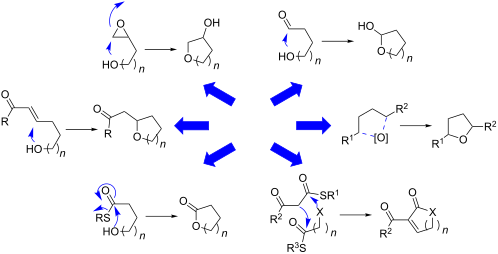
Figure 1: Examples of naturally occurring tetrahydrofurans.
Scheme 1: PdCl2/CuCl2-catalysed bicyclisation of unsaturated polyols [22].
Figure 2: Structures of C5-alkenitols.
Scheme 2: Synthesis of alkenols 20-23 and 30. Reagents and conditions: a) lit. [31] (COCl)2, DMSO, Et3N, CH2Cl2, ...
Scheme 3: Synthesis of alkenols 24–26 and 28. Reagents and conditions: a) lit. [32] DIBAL-H, CH2Cl2; b) TBDPSCl, ...
Scheme 4: Synthesis of substrates 33–35, 37. Reagents and conditions: a) lit. [33] L-proline (0.25 equiv), 2-nitr...
Scheme 5: Synthesis of rac-42. Reagents and conditions: a) MCPBA, CH2Cl2, 0 °C to rt, 45 min; b) TFA, H2O, TH...
Figure 3: Structure of 43.
Scheme 6: Suggested mechanisms for PdII–Pd0, PdII–PdIV and PdII-chloro/cyclisation of unsaturated polyols.
Figure 4: An ORTEP [44] view of crystal and molecular structure of 53.
Scheme 7: Bicyclisation of 55–58. Reagents and conditions: a) NaH, DMF, 50 °C, 2 h; b) I2, CH3CN, rt, overnig...
Beilstein J. Org. Chem. 2014, 10, 1848–1877, doi:10.3762/bjoc.10.195
Graphical Abstract
Figure 1: Examples of phosphonamide reagents used in stereoselective synthesis.
Figure 2: Natural products and bioactive molecules synthesized using phosphonamide-based chemistry (atoms, bo...
Scheme 1: Olefination with cyclic phosphonamide anions, mechanistic rationale, and selected examples 27a–d [18].
Scheme 2: Asymmetric olefination with chiral phosphonamide anions and selected examples 31a–d [1,22].
Scheme 3: Synthesis of α-substituted phosphonic acids 33a–e by asymmetric alkylation of chiral phosphonamide ...
Scheme 4: Asymmetric conjugate additions of C2-symmetric chiral phosphonamide anions to cyclic enones, lacton...
Scheme 5: Asymmetric conjugate additions of P-chiral phosphonamide anions generated from 40a and 44a to cycli...
Scheme 6: Asymmetric cyclopropanation with chiral chloroallyl phosphonamide 47, mechanistic rationale, and se...
Scheme 7: Asymmetric cyclopropanation with chiral chloromethyl phosphonamide 28d [59].
Scheme 8: Stereoselective synthesis of cis-aziridines 57 from chiral chloroallyl phosphonamide 47a [62].
Scheme 9: Synthesis of phosphonamides by (A) Arbuzov reaction, (B) condensation of diamines with phosphonic a...
Figure 3: Original and revised structure of polyoxin A (69) [24-26].
Scheme 10: Synthesis of (E)-polyoximic acid (9) [24-26].
Figure 4: Key assembly strategy of acetoxycrenulide (10) [41,42].
Scheme 11: Total synthesis of (+)-acetoxycrenulide (10) [41,42].
Scheme 12: Synthesis squalene synthase inhibitor 19 by asymmetric sulfuration (A) and asymmetric alkylation (B...
Figure 5: Key assembly strategy of fumonisin B2 (20) and its tricarballylic acid fragment 105 [45,46].
Scheme 13: Final steps of the total synthesis of fumonisin B2 (20) [45,46].
Figure 6: Selected examples of two subclasses of β-lactam antibiotics – carbapenems (111 and 112) and trinems...
Scheme 14: Synthesis of tricyclic β-lactam antibiotic 123 [97].
Scheme 15: Total synthesis of (−)-anthoplalone (8) [56].
Figure 7: Protein tyrosine phosphatase (PTP) inhibitors 130, 131 and model compounds 16, 132 and 133 [68].
Scheme 16: Synthesis of model PTP inhibitors 16a,b [68].
Scheme 17: Synthesis of aziridine hydroxamic acid 17 as MMP inhibitor [63].
Scheme 18: Synthesis of methyl jasmonate (11) [48].
Figure 8: Structures of nudiflosides A (137) and D (13) [49].
Scheme 19: Total synthesis of the pentasubstituted cyclopentane core 159 of nudiflosides A (151) and D (13) an...
Figure 9: L-glutamic acid (161) and constrained analogues [57,124].
Scheme 20: Stereoselective synthesis of DCG-IV (162) [57].
Scheme 21: Stereoselective synthesis of mGluR agonist 21 [124].
Figure 10: Key assembly strategy of berkelic acid (15) [43].
Scheme 22: Total synthesis of berkelic acid (15) [43].
Figure 11: Key assembly strategy of jerangolid A (22) and ambruticin S (14) [27,28].
Scheme 23: Final assembly steps in the total synthesis of jerangolid A [27].
Scheme 24: Key assembly steps in the total synthesis of ambruticin S (14) [28].
Figure 12: General steroid construction strategy based on conjugate addition of 212 to cyclopentenone 48, exem...
Scheme 25: Total synthesis of estrone (12) [44].
Beilstein J. Org. Chem. 2014, 10, 1166–1196, doi:10.3762/bjoc.10.117
Graphical Abstract
Scheme 1: Pioneer works of Atherton, Openshaw and Todd reporting on the synthesis of phosphoramidate starting...
Scheme 2: Mechanisms 1 (i) and 2 (ii) suggested by Atherton and Todd in 1945; adapted from [1].
Scheme 3: Two reaction pathways (i and ii) to produce chlorophosphate 2. Charge-transfer complex observed whe...
Scheme 4: Mechanism of the Atherton–Todd reaction with dimethylphosphite according to Roundhill et al. (adapt...
Scheme 5: Synthesis of dialkyl phosphate from dialkyl phosphite (i) and identification of chloro- and bromoph...
Scheme 6: Synthesis of chiral phosphoramidate with trichloromethylphosphonate as the suggested intermediate (...
Scheme 7: Selection of results that address the question of the stereochemistry of the AT reaction (adapted f...
Scheme 8: Synthesis of phenoxy spirophosphorane by the AT reaction (adapted from [34]).
Scheme 9: Suggested mechanism of the Atherton–Todd reaction, (i) and (ii) formation of chlorophosphate with a...
Scheme 10: AT reaction in biphasic conditions (adapted from [38]).
Scheme 11: AT reaction with iodoform as halide source (adapted from [37]).
Scheme 12: AT reaction with phenol at low temperature in the presence of DMAP (adapted from [40]).
Scheme 13: Synthesis of a triphosphate by the AT reaction starting with the preparation of chlorophosphate (ad...
Scheme 14: AT reaction with sulfonamide (adapted from [42]).
Scheme 15: Synthesis of a styrylphosphoramidate starting from the corresponding aniline (adapted from [43]).
Scheme 16: Use of hydrazine as nucleophile in AT reactions (adapted from [48]).
Scheme 17: AT reaction with phenol as a nucleophilic species; synthesis of dioleyl phosphate-substituted couma...
Scheme 18: Synthesis of β-alkynyl-enolphosphate from allenylketone with AT reaction (adapted from [58]).
Scheme 19: Synthesis of pseudohalide phosphate by using AT reaction (adapted from [67]).
Scheme 20: AT reaction with hydrospirophosphorane with insertion of CO2 in the product (adapted from [69]).
Scheme 21: AT reaction with diaryl phosphite (adapted from [70]).
Scheme 22: AT reaction with O-alkyl phosphonite (adapted from [71]).
Scheme 23: Use of phosphinous acid in AT reactions (adapted from [72]).
Scheme 24: AT reaction with secondary phosphinethiooxide (adapted from [76]).
Scheme 25: Use of H-phosphonothioate in the AT reaction (adapted from [78]).
Scheme 26: AT-like reaction with CuI as catalyst and without halide source (adapted from [80]).
Scheme 27: Reduction of phenols after activation as phosphate derivatives (adapted from [81] i ; [82], ii; and [83], iii).
Scheme 28: Synthesis of medium and large-sized nitrogen-containing heterocycles (adapted from [85]).
Scheme 29: Synthesis of arylstannane from aryl phosphate prepared by an AT reaction (adapted from [86]).
Scheme 30: Synthesis and use of aryl dialkyl phosphate for the synthesis of biaryl derivatives (adapted from [89])....
Scheme 31: Synthesis of aryl dialkyl phosphate by an AT reaction from phenol and subsequent rearrangement yiel...
Scheme 32: Selected chiral phosphoramidates used as organocatalyst; i) chiral phosphoramidate used in the pion...
Scheme 33: Determination of ee of H-phosphinate by the application of the AT reaction with a chiral amine (ada...
Scheme 34: Chemical structure of selected flame retardants synthesized by AT reactions; (BDE: polybrominated d...
Scheme 35: Transformation of DOPO (i) and synthesis of polyphosphonate (ii) by the AT reaction (adapted from [117] ...
Scheme 36: Synthesis of lipophosphite (bisoleyl phosphite) and cationic lipophosphoramidate with an AT reactio...
Scheme 37: Use of AT reactions to produce cationic lipids characterized by a trimethylphosphonium, trimethylar...
Scheme 38: Cationic lipid synthesized by the AT reaction illustrating the variation of the structure of the li...
Scheme 39: Helper lipids for nucleic acid delivery synthesized with the AT reaction (adapted from [130]).
Scheme 40: AT reaction used to produce red/ox-sensitive cationic lipids (adapted from [135]).
Scheme 41: Alkyne and azide-functionalized phosphoramidate synthesized by AT reactions,(i); illustration of so...
Scheme 42: Cationic lipids exhibiting bactericidal action – arrows indicate the bond formed by the AT reaction...
Scheme 43: β-Cyclodextrin-based lipophosphoramidates (adapted from [138]).
Scheme 44: Polyphosphate functionalized by an AT reaction (adapted from [139]).
Scheme 45: Synthesis of zwitterionic phosphocholine-bound chitosan (adapted from [142]).
Scheme 46: Synthesis of AZT-based prodrug via an AT reaction (adapted from [143]).
Beilstein J. Org. Chem. 2014, 10, 544–598, doi:10.3762/bjoc.10.50
Graphical Abstract
Scheme 1: The proposed mechanism of the Passerini reaction.
Scheme 2: The PADAM-strategy to α-hydroxy-β-amino amide derivatives 7. An additional oxidation provides α-ket...
Scheme 3: The general accepted Ugi-mechanism.
Scheme 4: Three commonly applied Ugi/cyclization approaches. a) UDC-process, b) UAC-sequence, c) UDAC-combina...
Scheme 5: Ugi reaction that involves the condensation of Armstrong’s convertible isocyanide.
Scheme 6: Mechanism of the U-4C-3CR towards bicyclic β-lactams.
Scheme 7: The Ugi 4C-3CR towards oxabicyclo β-lactams.
Scheme 8: Ugi MCR between an enantiopure monoterpene based β-amino acid, aldehyde and isocyanide resulting in...
Scheme 9: General MCR for β-lactams in water.
Scheme 10: a) Ugi reaction for β-lactam-linked peptidomimetics. b) Varying the β-amino acid resulted in β-lact...
Scheme 11: Ugi-4CR followed by a Pd-catalyzed Sn2 cyclization.
Scheme 12: Ugi-3CR of dipeptide mimics from 2-substituted pyrrolines.
Scheme 13: Joullié–Ugi reaction towards 2,5-disubstituted pyrrolidines.
Scheme 14: Further elaboration of the Ugi-scaffold towards bicyclic systems.
Scheme 15: Dihydroxyproline derivatives from an Ugi reaction.
Scheme 16: Diastereoselective Ugi reaction described by Banfi and co-workers.
Scheme 17: Similar Ugi reaction as in Scheme 16 but with different acids and two chiral isocyanides.
Scheme 18: Highly diastereoselective synthesis of pyrrolidine-dipeptoids via a MAO-N/MCR-procedure.
Scheme 19: MAO-N/MCR-approach towards the hepatitis C drug telaprevir.
Scheme 20: Enantioselective MAO-U-3CR procedure starting from chiral pyrroline 64.
Scheme 21: Synthesis of γ-lactams via an UDC-sequence.
Scheme 22: Utilizing bifunctional groups to provide bicyclic γ-lactam-ketopiperazines.
Scheme 23: The Ugi reaction provided both γ- as δ-lactams depending on which inputs were used.
Scheme 24: The sequential Ugi/RCM with olefinic substrates provided bicyclic lactams.
Scheme 25: a) The structural and dipole similarities of the triazole unit with the amide bond. b) The copper-c...
Scheme 26: The Ugi/Click sequence provided triazole based peptidomimetics.
Scheme 27: The Ugi/Click reaction as described by Nanajdenko.
Scheme 28: The Ugi/Click-approach by Pramitha and Bahulayan.
Scheme 29: The Ugi/Click-combination by Niu et al.
Scheme 30: Triazole linked peptidomimetics obtained from two separate MCRs and a sequential Click reaction.
Scheme 31: Copper-free synthesis of triazoles via two MCRs in one-pot.
Scheme 32: The sequential Ugi/Paal–Knorr reaction to afford pyrazoles.
Scheme 33: An intramolecular Paal–Knorr condensation provided under basic conditions pyrazolones.
Scheme 34: Similar cyclization performed under acidic conditions provided pyrazolones without the trifluoroace...
Scheme 35: The Ugi-4CR towards 2,4-disubstituted thiazoles.
Scheme 36: Solid phase approach towards thiazoles.
Scheme 37: Reaction mechanism of formation of thiazole peptidomimetics containing an additional β-lactam moiet...
Scheme 38: The synthesis of the trisubstituted thiazoles could be either performed via an Ugi reaction with pr...
Scheme 39: Performing the Ugi reaction with DMB-protected isocyanide gave access to either oxazoles or thiazol...
Scheme 40: Ugi/cyclization-approach towards 2,5-disubstituted thiazoles. The Ugi reaction was performed with d...
Scheme 41: Further derivatization of the thiazole scaffold.
Scheme 42: Three-step procedure towards the natural product bacillamide C.
Scheme 43: Ugi-4CR to oxazoles reported by Zhu and co-workers.
Scheme 44: Ugi-based synthesis of oxazole-containing peptidomimetics.
Scheme 45: TMNS3 based Ugi reaction for peptidomimics containing a tetrazole.
Scheme 46: Catalytic cycle of the enantioselective Passerini reaction towards tetrazole-based peptidomimetics.
Scheme 47: Tetrazole-based peptidomimetics via an Ugi reaction and a subsequent sigmatropic rearrangement.
Scheme 48: Resin-bound Ugi-approach towards tetrazole-based peptidomimetics.
Scheme 49: Ugi/cyclization approach towards γ/δ/ε-lactam tetrazoles.
Scheme 50: Ugi-3CR to pipecolic acid-based peptidomimetics.
Scheme 51: Staudinger–Aza-Wittig/Ugi-approach towards pipecolic acid peptidomimetics.
Figure 1: The three structural isomers of diketopiperazines. The 2,5-DKP isomer is most common.
Scheme 52: UDC-approach to obtain 2,5-DKPs, either using Armstrong’s isocyanide or via ethylglyoxalate.
Scheme 53: a) Ugi reaction in water gave either 2,5-DKP structures or spiro compounds. b) The Ugi reaction in ...
Scheme 54: Solid-phase approach towards diketopiperazines.
Scheme 55: UDAC-approach towards DKPs.
Scheme 56: The intermediate amide is activated as leaving group by acid and microwave assisted organic synthes...
Scheme 57: UDC-procedure towards active oxytocin inhibitors.
Scheme 58: An improved stereoselective MCR-approach towards the oxytocin inhibitor.
Scheme 59: The less common Ugi reaction towards DKPs, involving a Sn2-substitution.
Figure 2: Spatial similarities between a natural β-turn conformation and a DKP based β-turn mimetic [158].
Scheme 60: Ugi-based syntheses of bicyclic DKPs. The amine component is derived from a coupling between (R)-N-...
Scheme 61: Ugi-based synthesis of β-turn and γ-turn mimetics.
Figure 3: Isocyanide substituted 3,4-dihydropyridin-2-ones, dihydropyridines and the Freidinger lactams. Bio-...
Scheme 62: The mechanism of the 4-CR towards 3,4-dihydropyridine-2-ones 212.
Scheme 63: a) Multiple MCR-approach to provide DHP-peptidomimetic in two-steps. b) A one-pot 6-CR providing th...
Scheme 64: The MCR–alkylation–MCR procedure to obtain either tetrapeptoids or depsipeptides.
Scheme 65: U-3CR/cyclization employing semicarbazone as imine component gave triazine based peptidomimetics.
Scheme 66: 4CR towards triazinane-diones.
Scheme 67: The MCR–alkylation–IMCR-sequence described by our group towards triazinane dione-based peptidomimet...
Scheme 68: Ugi-4CR approaches followed by a cyclization to thiomorpholin-ones (a) and pyrrolidines (b).
Scheme 69: UDC-approach for benzodiazepinones.
Scheme 70: Ugi/Mitsunobu sequence to BDPs.
Scheme 71: A UDAC-approach to BDPs with convertible isocyanides. The corresponding amide is cleaved by microwa...
Scheme 72: microwave assisted post condensation Ugi reaction.
Scheme 73: Benzodiazepinones synthesized via the post-condensation Ugi/ Staudinger–Aza-Wittig cyclization.
Scheme 74: Two Ugi/cyclization approaches utilizing chiral carboxylic acids. Reaction (a) provided the product...
Scheme 75: The mechanism of the Gewald-3CR includes three base-catalysed steps involving first a Knoevnagel–Co...
Scheme 76: Two structural 1,4-thienodiazepine-2,5-dione isomers by U-4CR/cyclization.
Scheme 77: Tetrazole-based diazepinones by UDC-procedure.
Scheme 78: Tetrazole-based BDPs via a sequential Ugi/hydrolysis/coupling.
Scheme 79: MCR synthesis of three different tricyclic BPDs.
Scheme 80: Two similar approaches both involving an Ugi reaction and a Mitsunobu cyclization.
Scheme 81: Mitsunobu–Ugi-approach towards dihydro-1,4-benzoxazepines.
Scheme 82: Ugi reaction towards hetero-aryl fused 5-oxo-1,4-oxazepines.
Scheme 83: a) Ugi/RCM-approach towards nine-membered peptidomimetics b) Sequential peptide-coupling, deprotect...
Scheme 84: Ugi-based synthesis towards cyclic RGD-pentapeptides.
Scheme 85: Ugi/MCR-approach towards 12–15 membered macrocycles.
Scheme 86: Stereoselective Ugi/RCM approach towards 16-membered macrocycles.
Scheme 87: Passerini/RCM-sequence to 22-membered macrocycles.
Scheme 88: UDAC-approach towards 12–18-membered depsipeptides.
Figure 4: Enopeptin A with its more active derivative ADEP-4.
Scheme 89: a) The Joullié–Ugi-approach towards ADEP-4 derivatives b) Ugi-approach for the α,α-dimethylated der...
Scheme 90: Ugi–Click-strategy for 15-membered macrocyclic glyco-peptidomimetics.
Scheme 91: Ugi/Click combinations provided macrocycles containing both a triazole and an oxazole moiety.
Scheme 92: a) A solution-phase procedure towards macrocycles. b) Alternative solid-phase synthesis as was repo...
Scheme 93: Ugi/cyclization towards cyclophane based macrocycles.
Scheme 94: PADAM-strategy towards eurystatin A.
Scheme 95: PADAM-approach for cyclotheanamide.
Scheme 96: A triple MCR-approach affording RGD-pentapeptoids.
Scheme 97: Ugi-MiBs-approach towards peptoid macrocycles.
Scheme 98: Passerini-based MiB approaches towards macrocycles 345 and 346.
Scheme 99: Macrocyclic peptide formation by the use of amphoteric aziridine-based aldehydes.
Beilstein J. Org. Chem. 2014, 10, 237–250, doi:10.3762/bjoc.10.19
Graphical Abstract
Scheme 1: 1-Boron-substituted 1,3-diene in a tandem cycloaddition [4 + 2]/allylboration sequence.
Scheme 2: Lewis acid catalyst in the tandem cycloaddition [4 + 2]/allylboration sequence.
Scheme 3: Synthesis of an advanced precursor of clerodin.
Scheme 4: Intramolecular Diels–Alder/allylboration sequence.
Scheme 5: Diastereoselective Diels–Alder reaction with N-phenylmaleimide and 4-phenyltriazoline-3,5-dione.
Scheme 6: Asymmetric synthesis of a α-hydroxyalkylcyclohexane.
Scheme 7: Tandem [4 + 2]-cycloaddition/allylboration of 3-silyloxy- and 4-alkoxy-dienyl boronates.
Scheme 8: Metal-mediated cycloisomerization/Diels–Alder reaction/allylboration sequence.
Scheme 9: Cobalt-catalyzed Diels–Alder/allylboration sequence.
Scheme 10: A two-step reaction sequence for the synthesis of tetrahydronaphthalenes 12.
Scheme 11: Tandem sequence based on the Petasis borono–Mannich reaction as first key step.
Scheme 12: One-pot tandem dimerization/allylboration reaction of 1,3-diene-2-boronate.
Scheme 13: Tandem Diels–Alder/cross-coupling reactions of trifluoroborates 15.
Scheme 14: Diels–Alder/cross-coupling reactions of 16.
Scheme 15: Metal catalyzed tandem Diels–Alder/hydrolysis reactions.
Scheme 16: Synthesis of anti-1,5-diols 18 by triple aldehyde addition.
Scheme 17: Catalytic enantioselective three-component hetero-[4 + 2]-cycloaddition/allylboration sequence.
Scheme 18: Synthesis of natural products using the catalytic enantioselective HDA/allylboration sequence.
Scheme 19: Total synthesis of a thiomarinol derivative.
Scheme 20: Synthesis of an advanced intermediate 27 for the east fragment of palmerolide A.
Scheme 21: Bicyclic piperidines from tandem aza-[4 + 2]-cycloaddition/allylboration.
Scheme 22: Hydrogenolysis reactions of hydrazinopiperidines.
Scheme 23: Tandem aza-[4 + 2]-cycloaddition/allylboration/retrosulfinyl-ene sequence.
Scheme 24: Boronated heterodendralene 32 in [4 + 2]-cycloadditions.
Scheme 25: Synthesis of tricyclic imides derivatives.
Scheme 26: Synthesis of 37 via a HDA/allylboration/DA sequence.
Scheme 27: Diels–Alder/allylboration sequence.
Beilstein J. Org. Chem. 2014, 10, 213–223, doi:10.3762/bjoc.10.17
Graphical Abstract
Scheme 1: General approach to enantiopure the poly(hydroxy)aminopyrans D (n = 0) and the aminooxepanes D (n =...
Scheme 2: Synthesis of (Z)-nitrone 3. Conditions: a) 1. p-Bromobenzaldehyde dimethylacetal, TFA, DMF, rt, 5 d...
Scheme 3: Synthesis of 1,2-oxazines syn-7, syn-9 and syn-10. Conditions: a) n-BuLi, THF, −40 °C, 15 min; b) 1...
Figure 1: Proposed transition structure for the addition of lithiated TMSE-allene 5 to chiral nitrones 3, 6 a...
Scheme 4: Synthesis of ketones 11, 12 and 13 with a bicyclic 1,2-oxazine skeleton by Lewis acid-induced rearr...
Scheme 5: Proposed extended chair-like conformation with Zimmerman–Traxler-type transition state.
Figure 2: GOESY–NMR spectrum (CDCl3, 500 MHz) of bicyclic 1,2-oxazine 13: irradiation of the 2-H proton. [GOE...
Scheme 6: Synthesis of triols 14, 15 and 16 by reduction of the carbonyl group and deprotection. Conditions: ...
Scheme 7: Synthesis of propargylic ether 18. Conditions: a) propargyl bromide, NaOH, TBAI, H2O/CH2Cl2, −20 °C...
Scheme 8: Synthesis of tricyclic compound 20, bicyclic azide 24 and bicyclic amine 25. Conditions: a) MsCl, Et...
Scheme 9: Hydrogenolyses of bicyclic and tricyclic 1,2-oxazines 14, 15 and 20 to aminooxepanes 26, 27 and 28....
Figure 3: Proposed structures of the observed side products 29 and 30 during the hydrogenolyses of 14 and 15.
Scheme 10: Hydrogenolyses of bicyclic 1,2-oxazines to aminooxepanes 26, 31 and 32 and to diaminooxepane 33 und...
Beilstein J. Org. Chem. 2014, 10, 194–208, doi:10.3762/bjoc.10.15
Graphical Abstract
Figure 1: Structures of the 4,4,8-trimethyl-17-furanylsteroid core structure I and the representative B-seco ...
Scheme 1: Retrosynthetic analysis of the B-seco limonoid framework employing a [3,3]-sigmatropic rearrangemen...
Scheme 2: Retrosynthetic analysis of the B-seco limonoid scaffold employing a Claisen rearrangement as key st...
Scheme 3: Synthesis of alcohols 19, 20 and 22. Reagents and conditions: a) CSA, 2,3-butanedione, trimethyl or...
Scheme 4: Retrosynthetic analysis of the B-seco limonoid scaffold employing an Ireland–Claisen rearrangement ...
Scheme 5: Synthesis and Ireland–Claisen rearrangement of the allyl esters 27, 28, 29 and 30. Reagents and con...
Figure 2: Conformation of rearrangement precursor 30 and possible transition state involved in the Ireland–Cl...
Scheme 6: Synthesis of model C rings 40, 41 and 42. Reagents and conditions: a) TBDPSCl, DMAP, NEt3, CH2Cl2, ...
Scheme 7: β-Substituted allyl esters tested in the Ireland–Claisen and the Carroll rearrangement.
Scheme 8: Synthesis and Ireland–Claisen rearrangement of bicyclic allyl ester precursor 66. Reagents and cond...
Figure 3: Conformations of rearrangement precursors 66 and 77 and possible transition states involved in the ...
Scheme 9: Synthesis and Ireland–Claisen rearrangement of allyl ester 70. Reagents and conditions: a) DIPEA, M...
Scheme 10: Synthesis and Ireland–Claisen rearrangement of allyl ester 72. Reagents and conditions: a) TIPSOTf,...
Scheme 11: Synthesis of the C14-epi and C14/C9-epi B-seco limonoid scaffolds 78 and 79. Reagents and condition...
Scheme 12: Synthesis of fully functionalized A ring 87. Reagents and conditions: a) HO(CH2)2OH, THF, Pd/C, H2,...
Scheme 13: and Attempted Ireland–Claisen rearrangement of allyl ester 88. R1 = MOM, R2 = CO2H.
Scheme 14: Synthesis and attempted Ireland–Claisen rearrangement of allyl ester 93. Reagents and conditions: a...
Scheme 15: Allyl esters tested in the Ireland–Claisen rearrangement.