


Search results
Search for "structural analysis" in Full Text gives 125 result(s) in Beilstein Journal of Organic Chemistry.
Synthesis and application of trifluoroethoxy-substituted phthalocyanines and subphthalocyanines
Beilstein J. Org. Chem. 2017, 13, 2273–2296, doi:10.3762/bjoc.13.224
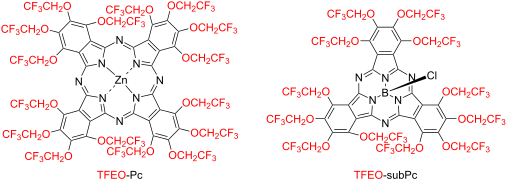
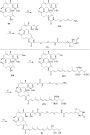
- Pc-subPc. Although Pc-subPc was synthesized via a two-step statistical unsymmetric synthesis, it can be easily purified by silica gel column chromatography due to the aggregation inhibitory effect caused by the trifluoroethoxy group. The structure of Pc-subPc was confirmed by X-ray crystal structural
- analysis, having both a planar structure derived from phthalocyanine and a cone-shaped structure derived from subphthalocyanine (left of Figure 10). In the UV–vis absorption spectrum, Pc-subPc shows an absorption band around 800 nm which is located between the absorption bands of Pc-Pc and subPc-subPc








The chemistry and biology of mycolactones
Beilstein J. Org. Chem. 2017, 13, 1596–1660, doi:10.3762/bjoc.13.159
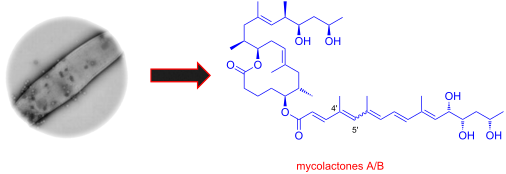
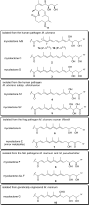
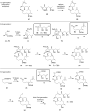
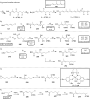
- spectrometry in conjunction with oxidative degradation and deuterium exchange experiments [56]. In spite of the challenge posed by the severely limited availability of natural material for structural analysis, Kishi and co-workers later demonstrated by total synthesis (vide infra) that the Leadlay structure









Glycoscience@Synchrotron: Synchrotron radiation applied to structural glycoscience
Beilstein J. Org. Chem. 2017, 13, 1145–1167, doi:10.3762/bjoc.13.114
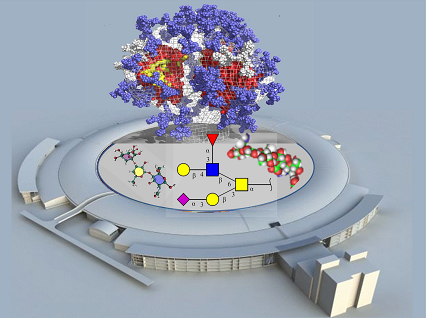
- biological materials (BioSAXS) is a complementary tool to protein crystallography and has become an invaluable resource for structural biologists [80]. Although at a much lower resolution than protein crystallography, BioSAXS permits the structural analysis of macromolecules at more physiological conditions




Expression, purification and structural analysis of functional GABA transporter 1 using the baculovirus expression system
Beilstein J. Org. Chem. 2017, 13, 874–882, doi:10.3762/bjoc.13.88
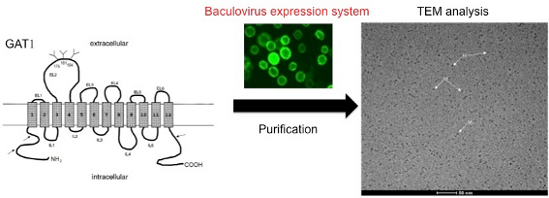
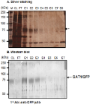
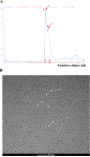
- protein, GAT1, is a potential drug target. The exact three-dimensional structure of GAT1 protein could provide more information for pharmaceutical research. The structural analysis of most membrane proteins is challenging since significant protein yields are required and because eukaryotic membrane
- structure on the N-glycans, which is consistent with previous findings [12]. Therefore, the GAT1/GFP protein produced in the baculovirus system can be suitable for further structural analysis with correct folding and more uniform, less complex N-glycans. Purification of the GAT1/GFP fusion protein from
- glycans on the activity of the GAT1 protein, the glycol-engineered insect cells coupled with the baculovirus system may be further applied to produce a GAT1/GFP protein with complex, terminally sialylated N-glycans. Further structural analysis of the GAT1/GFP fusion protein is possible using



Cyclodextrins tethered with oligolactides – green synthesis and structural assessment
Beilstein J. Org. Chem. 2017, 13, 779–792, doi:10.3762/bjoc.13.77
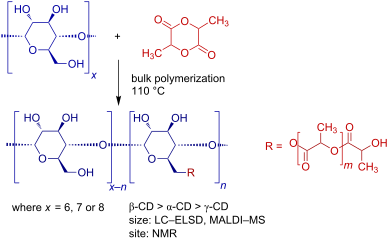
- amount for γ-CD while for α- and β-CD this ratio is similar. Therefore, the performance of different CDs in L-LA polymerization (in current reaction conditions) is decreasing in the order β-CD > α-CD > γ-CD. The structural analysis aimed the following targets: to determine the substitution degrees for CD




Fluorescent carbon dots from mono- and polysaccharides: synthesis, properties and applications
Beilstein J. Org. Chem. 2017, 13, 675–693, doi:10.3762/bjoc.13.67
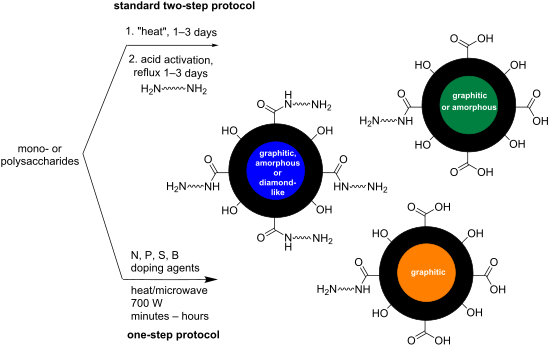
- procedures as previously described for other CD preparations, hyaluronate was heated in a Teflon-lined autoclave in the presence of glycine, which was found to be key, to 200 °C for 4 h to yield CDs of under 10 nm in size (Scheme 22). Structural analysis of the resultant CDs indicated the presence of


Polyketide stereocontrol: a study in chemical biology
Beilstein J. Org. Chem. 2017, 13, 348–371, doi:10.3762/bjoc.13.39
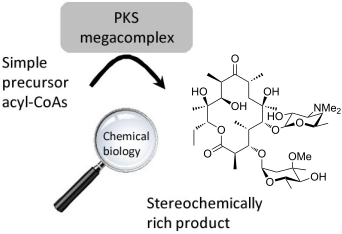
- with the direction of reduction and therefore presumably guiding substrate entry, were initially identified by comparative sequence analysis [64][67], and shown subsequently by structural analysis to occupy positions proximal to the active site [56][57][58][59][60][61][62]. The strongest indicator for
- mutagenesis of the Caffrey motifs [74] and other residues identified as potentially participating in stereocontrol by sequence and/or structural analysis [58][61], failed to produce consistent results, with certain mutations leading to the predicted shift in stereochemistry, others again strengthening wild
- ][84][85], the origin of this stabilization remains unknown. KRs were first suggested to act as epimerases – despite the fact that no other SDR enzyme exhibits this activity – based on structural analysis [57]. This proposal led to the classification of PKS KRs working on C-2 methylated substrates into




Biochemical and structural characterisation of the second oxidative crosslinking step during the biosynthesis of the glycopeptide antibiotic A47934
Beilstein J. Org. Chem. 2016, 12, 2849–2864, doi:10.3762/bjoc.12.284
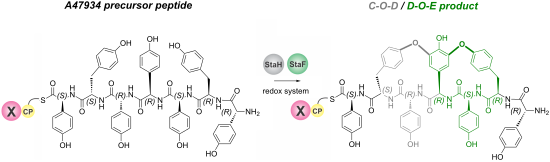
- turnover assay triplicates and the standard deviation is shown. (b) Structures of the peptides used as substrates for StaF, being Tei7-L/D-Hpg7 (1), Pek7-rac-Hpg7 (2) and Act7-rac-Hpg7 (3); R = CoA or methylamine. Structural analysis of StaF: (A) overall structure of StaF, with the heme moiety depicted




A chiral analog of the bicyclic guanidine TBD: synthesis, structure and Brønsted base catalysis
Beilstein J. Org. Chem. 2016, 12, 1870–1876, doi:10.3762/bjoc.12.176
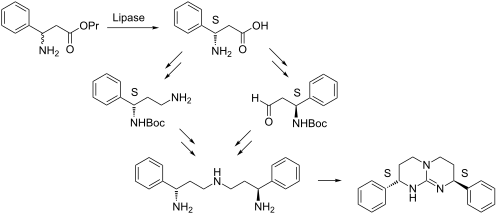
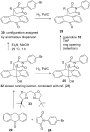
- (42%, 48% ee) yielded 26% of material with 95% ee. Assignment of absolute configurations (Scheme 3): Well grown crystals of enantiopure Michael product 30 suitable for X-ray structural analysis could be obtained by a second recrystallization from CH2Cl2/cyclohexane. The 4-bromophenyl residue allowed


Modular synthesis of the pyrimidine core of the manzacidins by divergent Tsuji–Trost coupling
Beilstein J. Org. Chem. 2016, 12, 1111–1121, doi:10.3762/bjoc.12.107
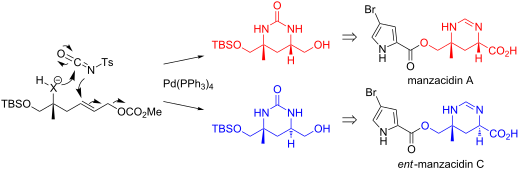
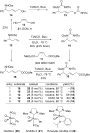
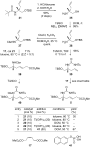
- an X-ray structure of tert-butylsulfinylamine 28 was obtained. Remarkably, these types of substances have not been broadly evaluated by X-ray structural analysis which adds to the importance of this general evaluation. Next, we focused on further homologation towards a suitably functionalized urea



Bi- and trinuclear copper(I) complexes of 1,2,3-triazole-tethered NHC ligands: synthesis, structure, and catalytic properties
Beilstein J. Org. Chem. 2016, 12, 863–873, doi:10.3762/bjoc.12.85
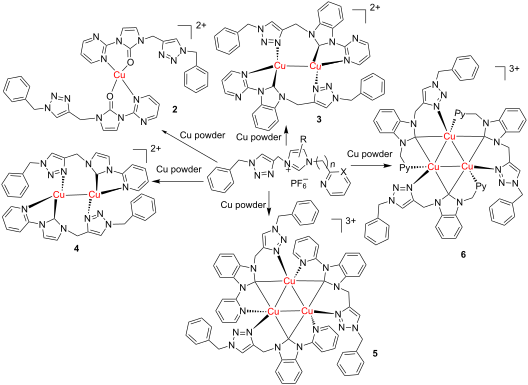
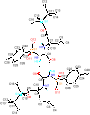
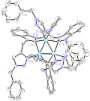
- SQUEEZE [48]. Further details of the structural analysis are summarized in Table 3. X-ray diffraction structure of copper(II) complex 2 with thermal ellipsoids drawn at 30% probability. The anion and hydrogen atoms are omitted for clarity. Selected bond distances (Å) and angles (°): Cu1-O1 1.931(4), Cu1



Synthesis, structure, and mechanical properties of silica nanocomposite polyrotaxane gels
Beilstein J. Org. Chem. 2015, 11, 2194–2201, doi:10.3762/bjoc.11.238
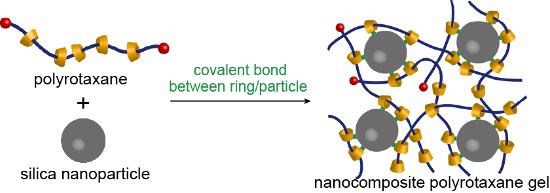
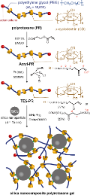
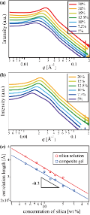
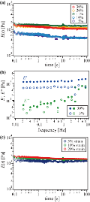
- following structural analysis. Small-angle X-ray scattering measurement Synchrotron small-angle X-ray scattering (SAXS) experiments were carried out at the beamline 6A of Photon Factory, HighEnergy Accelerator Research Organization, KEK (Tsukuba, Japan). The wavelength λ of the incident X-ray beam was 1.50




Grubbs–Hoveyda type catalysts bearing a dicationic N-heterocyclic carbene for biphasic olefin metathesis reactions in ionic liquids
Beilstein J. Org. Chem. 2015, 11, 1632–1638, doi:10.3762/bjoc.11.178
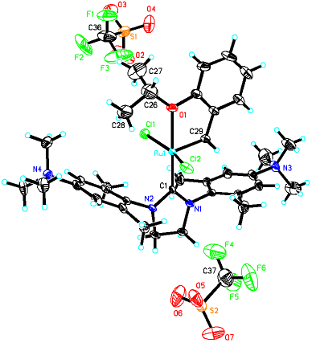
- . Selected bond lengths (pm) for Ru-2 and Ru-1 [21]. ROMP reactions under biphasic conditions.a,b ROMP of M1 under biphasic conditions with recycling.a Supporting Information Supporting Information File 310: Analytical data for Ru-2, the polymers prepared, details on the single crystal X-ray structural
- analysis of Ru-2, results for biphasic RCM. Acknowledgements Financial support provided by the Deutsche Forschungsgemeinschaft (DFG, grant no. BU 2174/8-1) is gratefully acknowledged.



Tetrathiafulvalene-based azine ligands for anion and metal cation coordination
Beilstein J. Org. Chem. 2015, 11, 1379–1391, doi:10.3762/bjoc.11.149
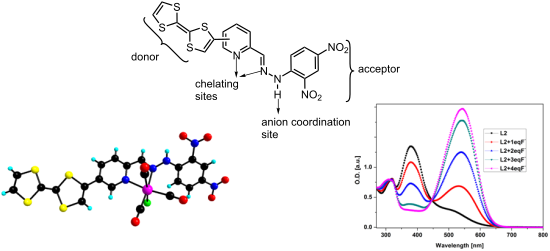
- structure refinement are given in Table 1. Crystallographic data for the structural analysis have been deposited within the Cambridge Crystallographic Data Centre, CCDC 1055120 (ligand L1) and CCDC 1055119 (complex 3). Suitable single crystals for X-ray analysis have been grown for ligand L1 upon


The chemical behavior of terminally tert-butylated polyolefins
Beilstein J. Org. Chem. 2015, 11, 1246–1258, doi:10.3762/bjoc.11.139
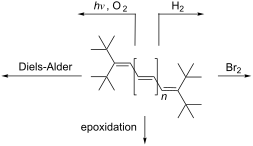
- (as well as many of their precursors) were characterized by X-ray structural analysis. These polyolefins are substructures of the most famous polyene, “polyacetylene”. Having prepared and unambiguously characterized the hydro-carbons 2, we now turn to their chemical behavior. In the sense that these
- prepare crystals of 17 suitable for an X-ray structural analysis. Interestingly, Kuhn and Winterstein in their study on the chemical behavior of α,ω-diphenyloligoenes obtained different results: for 1,4-diphenylbuta-1,3-diene, bromine addition furnished the 1,2-adduct in 95% yield [3]. As in the case of
- produced in good yield (73%). The compound could be kept at −10 °C without decomposition for considerable times and was recrystallized from pentane to provide needles "suitable" for X-ray structural analysis; its qualitative structure in the solid state is reproduced in Figure 3, but should be interpreted


New palladium–oxazoline complexes: Synthesis and evaluation of the optical properties and the catalytic power during the oxidation of textile dyes
Beilstein J. Org. Chem. 2015, 11, 1175–1186, doi:10.3762/bjoc.11.132
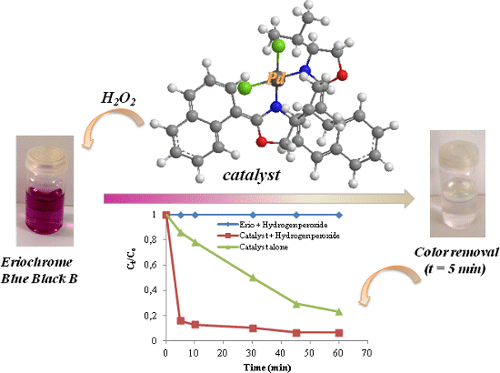
- structures of complexes 8 and 9. The crystallographic data for the structural analysis have been deposited with the Cambridge Crystallographic Data Center, CCDC 1052659-1052660 for 8 and 9, respectively. Crystallographic data associated with this article can be obtained, free of charge, on application to


Potential of acylated peptides to target the influenza A virus
Beilstein J. Org. Chem. 2015, 11, 589–595, doi:10.3762/bjoc.11.65
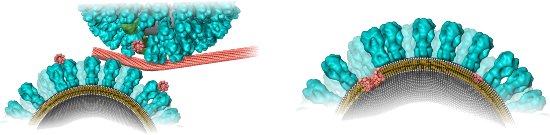
- structures which are even more prominent at higher concentrations. Structural analysis by TEM revealed the presence of stable fiberlike assemblies, which can further arrange side-by-side as sheets. Thus, acylated peptides as C18-PeBGF cannot be considered as micelle forming molecules as it would be expected


Further exploration of the heterocyclic diversity accessible from the allylation chemistry of indigo
Beilstein J. Org. Chem. 2015, 11, 481–492, doi:10.3762/bjoc.11.54
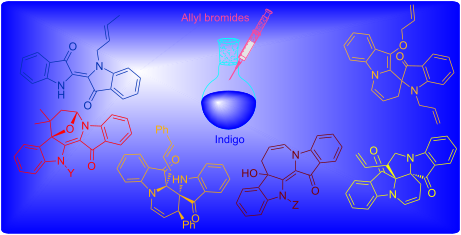
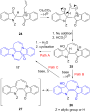
- view. Right: NOESY correlations in support of the proposed structure (s = strong; w = weak). Structural analysis of compound 23. Left: modelled structure showing the cisoid configuration of the NH and the cinnamyl substituents. Middle: X-ray crystal structure (ball and stick representation) showing the




The preparation of new functionalized [2.2]paracyclophane derivatives with N-containing functional groups
Beilstein J. Org. Chem. 2015, 11, 437–445, doi:10.3762/bjoc.11.50
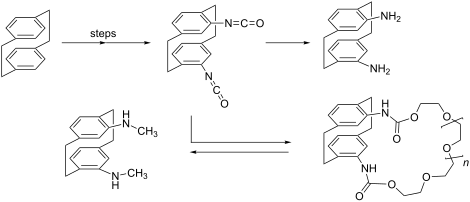
- ) resulted in the formation of the next higher homolog 19 (73%). Both compounds were readily characterized by their analytical data (see Supporting Information File 1) and also by an X-ray structural analysis of 18. Several features are common to all structures presented in this paper. The usual features of
- characterized by their spectroscopic data (Supporting Information File 1), and for 22 we could additionally determine the solid-state structure by X-ray structural analysis (Figure 4a). The orientation of the side chains in 22 is described by the torsion angles C14–C15–N1–C17 131.2(2)°, C15–N1–C17–O −1.3(2
- most other acyl chlorides, 26 is a stable compound with a high melting point (210 °C), which could easily be recrystallized from dichloromethane/pentane to furnish single crystals suitable for X-structural analysis. The molecule of 26 (Figure 5) possesses crystallographic inversion symmetry, consistent


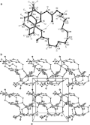

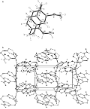


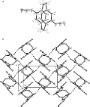
Inclusion of trans-resveratrol in methylated cyclodextrins: synthesis and solid-state structures
Beilstein J. Org. Chem. 2014, 10, 3136–3151, doi:10.3762/bjoc.10.331
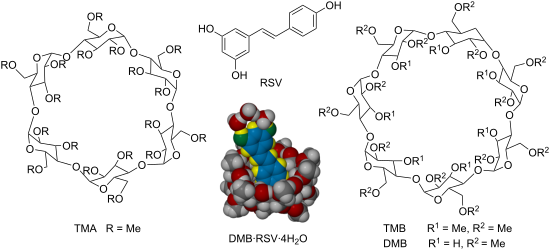
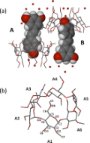
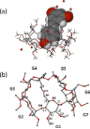
- packing is shown in Figure 7. The complex units pack in a head-to-tail manner in columns parallel to the crystal b-axis. Columns of complex units A propagate as rows parallel to the a-axis, alternating with analogous columns of B complex units. Structural analysis of the inclusion complex between


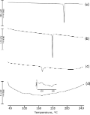





Modification of physical properties of poly(L-lactic acid) by addition of methyl-β-cyclodextrin
Beilstein J. Org. Chem. 2014, 10, 2997–3006, doi:10.3762/bjoc.10.318
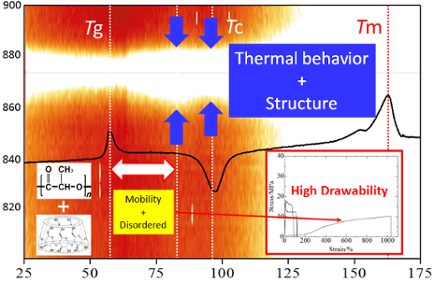
- other hand, Raman spectroscopy reveals the vibrational states of functional groups, but not thermal properties because irradiation affects the sample temperature [38]. For exact and expeditious structural analysis, it is important to determine simultaneously the thermal properties and the local


Five-membered ring annelation in [2.2]paracyclophanes by aldol condensation
Beilstein J. Org. Chem. 2014, 10, 2021–2026, doi:10.3762/bjoc.10.210
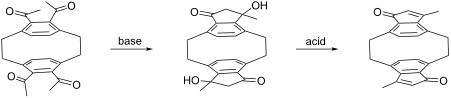
- -38106 Braunschweig, Germany 10.3762/bjoc.10.210 Abstract Under basic conditions 4,5,12,13-tetraacetyl[2.2]paracyclophane (9) cyclizes by a double aldol condensation to provide the two aldols 12 and 15 in a 3:7 ratio. The structures of these compounds were obtained from X-ray structural analysis
- deuteriochloroform) that combine to form a complex three-dimensional pattern (Table 1). Several attempts to obtain crystals of the major isomer 15 suitable for X-ray analysis failed. The anti-orientation of the carbonyl groups of compound 15 was proved by the X-ray structural analysis of the product resulting from a


Building complex carbon skeletons with ethynyl[2.2]paracyclophanes
Beilstein J. Org. Chem. 2014, 10, 2013–2020, doi:10.3762/bjoc.10.209

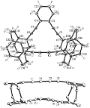
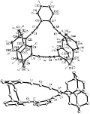
- their usual spectroscopic and analytical data, the new cyclophanes 11, 12, 19, 20, 22, and 26 were characterized by X-ray structural analysis. Keywords: carbon-rich molecules; complex carbon scaffolds; cyclophanes; Glaser coupling; multibridged cyclophanes; X-ray analysis; Introduction Several years
- recrystallized to provide single crystals suitable for X-ray structural analysis. Figure 1 shows that dimer 11 indeed possesses the “crossed” structure; it crystallizes with imposed twofold symmetry, but the effective (non-crystallographic) symmetry is the unusual D2 (222) with r.m.s. deviation 0.01 Å. Despite




Structure/affinity studies in the bicyclo-DNA series: Synthesis and properties of oligonucleotides containing bcen-T and iso-tricyclo-T nucleosides
Beilstein J. Org. Chem. 2014, 10, 1840–1847, doi:10.3762/bjoc.10.194
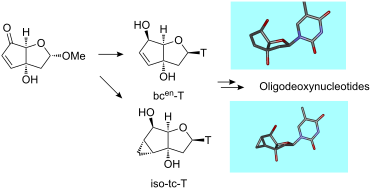
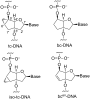
- -DNA molecular platform. In both modifications the torsion around C6’–C7’ within the carbocyclic ring is planarized by either the presence of a C6’–C7’ double bond or a cyclopropane ring. Structural analysis of these two nucleosides by X-ray analysis reveals a clear preference of torsion angle γ for



Rational design of cyclopropane-based chiral PHOX ligands for intermolecular asymmetric Heck reaction
Beilstein J. Org. Chem. 2014, 10, 1536–1548, doi:10.3762/bjoc.10.158
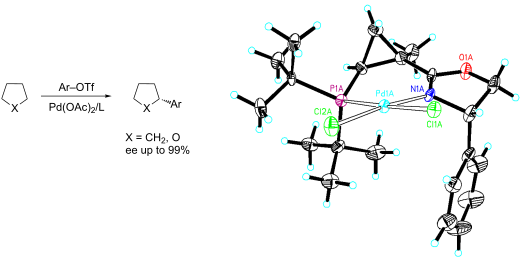
- -Bu substituent in the dihydrooxazole ring of the ligand resulted in a reversal of enantioselectivity. Such an unexpected change in the catalyst selectivity motivated us to perform structural analysis of the key intermediate complexes invoked in the catalytic cycle of the Heck arylation. First, we





