Search results
Search for "C–H activation" in Full Text gives 168 result(s) in Beilstein Journal of Organic Chemistry.
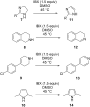
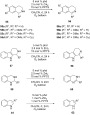
Rhodium-catalyzed C–H functionalization of heteroarenes using indoleBX hypervalent iodine reagents
Beilstein J. Org. Chem. 2018, 14, 1208–1214, doi:10.3762/bjoc.14.102
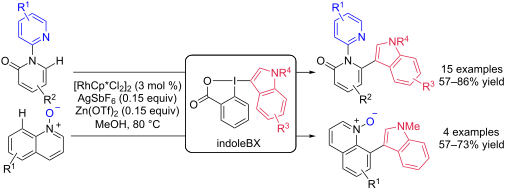
- regioselectivity for the C-6 position of bipyridinones and the C-8 position of quinoline N-oxides and tolerated a broad range of functionalities, such as halogens, ethers, or trifluoromethyl groups. Keywords: C–H activation; hypervalent iodine; indoleBX; indoles; pyridinones; rhodium catalysis; Introduction
- compounds with pyridinone, quinolone and indole cores. C–H functionalization of pyridinones and quinoline N-oxides. Scope and limitations of the Rh-catalyzed C–H activation of [1,2'-bipyridin]-2-one. Scope of the Rh-catalyzed peri C–H activation of quinoline N-oxides. Product modifications. Optimization of
- National Science Foundation (No. 200021_159920), the COST action CA15106 (C-H Activation in Organic Synthesis, CHAOS) and EPFL.


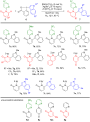


Selective carboxylation of reactive benzylic C–H bonds by a hypervalent iodine(III)/inorganic bromide oxidation system
Beilstein J. Org. Chem. 2018, 14, 1087–1094, doi:10.3762/bjoc.14.94
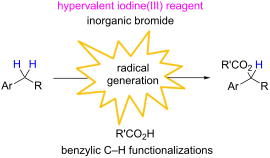
- ; C–H activation; iodine; oxygenation; radicals; Introduction The oxidative activation of a C(sp3)–H bond in organic molecules to directly install various functional groups and new carbon–carbon networks is a topic of interest for researchers engaged in modern synthetic chemistry [1][2][3][4][5][6][7
- aqueous benzylic oxidations using polymeric iodosobenzene in the presence of inorganic bromide and montmorillonite-K10 [51]. In addition, a radical C–H activation strategy, using nonaqueous hypervalent iodine(III)/inorganic bromide systems that can work in organic solvents, was developed for the novel
- results of our extensive study and optimization of our radical C–H activation strategy for the intermolecular oxidative coupling between the benzylic secondary C–H bond and the O–H group of carboxylic acids (Scheme 1). Results and Discussion Benzylic C–H carboxylation can provide a convenient route to


Hypervalent iodine-guided electrophilic substitution: para-selective substitution across aryl iodonium compounds with benzyl groups
Beilstein J. Org. Chem. 2018, 14, 1039–1045, doi:10.3762/bjoc.14.91
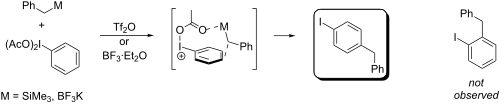
- that many of these useful reagents became a staple in synthetic chemistry laboratories [1][2]. Although hypervalent iodine reagents are commonly used in oxidation reactions, they have also found their own niche in useful C–C bond-formation and C–H activation reactions [3][4][5]. One such C–C bond


Cobalt-catalyzed directed C–H alkenylation of pivalophenone N–H imine with alkenyl phosphates
Beilstein J. Org. Chem. 2018, 14, 709–715, doi:10.3762/bjoc.14.60
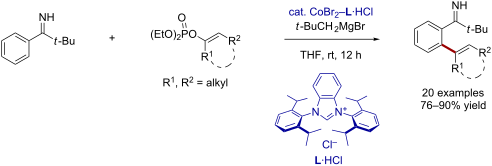
- alkenylation reaction of pivalophenone N–H imine with an alkenyl phosphate. The reaction tolerates various substituted pivalophenone N–H imines as well as cyclic and acyclic alkenyl phosphates. Keywords: alkenylation; C–C bond formation; C–H activation; cobalt; imine; Introduction Transition-metal-catalyzed
- , directing group-assisted arene C–H activation reactions have been extensively studied over the last few decades to offer a broad array of atom and step-economical methods for the synthesis of functionalized aromatic compounds [1][2][3][4][5][6]. Among various C–H transformations, the introduction of alkenyl
- previously reported cobalt-catalyzed ortho C–H functionalization reactions [22][23][28][29], this regioselectivity may be ascribed to the role of the oxygen or fluorine atom as a secondary directing group to have an electrostatic interaction with the cobalt center during the C–H activation. For compound 3ja


Synthesis and stability of strongly acidic benzamide derivatives
Beilstein J. Org. Chem. 2018, 14, 523–530, doi:10.3762/bjoc.14.38
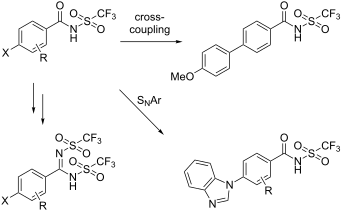
- in a ruthenium-catalyzed C–H activation reaction [36]. Most other reported transformations pass via the imidoyl chloride intermediates (equivalent to 10) to the amidine derivatives, which have been used in rearrangement reaction studies [9][37][38][39]. By these means also N,N’-bis(triflyl


Palladium-catalyzed ortho-halogenations of acetanilides with N-halosuccinimides via direct sp2 C–H bond activation in ball mills
Beilstein J. Org. Chem. 2018, 14, 430–435, doi:10.3762/bjoc.14.31
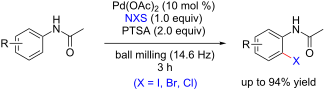
- corresponding N-halosuccinimides. Keywords: acetanilide; ball milling; C–H activation; halogenation; mechanochemistry; N-halosuccinimide; palladium catalysis; Introduction Aryl halides have been widely utilized in organic syntheses, which give access to a range of complex natural products [1][2]. However
- -bromosuccinimide (NBS) and N-iodosuccinimide (NIS), respectively, as the halogen source [30]. However, the mechanochemical ortho-halogenation using the cheaper palladium catalysts has not been reported yet. In continuing our interest in mechanochemistry [21][22][39][40][41] and C–H activation reactions [42][43][44


Progress in copper-catalyzed trifluoromethylation
Beilstein J. Org. Chem. 2018, 14, 155–181, doi:10.3762/bjoc.14.11
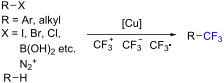
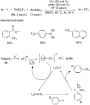
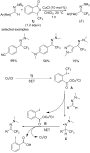
- substituents and generate mixture of regioisomers in some cases. In 2012, the group of Qing [56] designed a copper-catalyzed oxidative trifluoromethylation of heteroarenes and electron-deficient arenes with TMSCF3 through direct C−H activation (Scheme 35). At first, the oxidative trifluoromethylation of 1,3,4










Mechanochemical synthesis of small organic molecules
Beilstein J. Org. Chem. 2017, 13, 1907–1931, doi:10.3762/bjoc.13.186
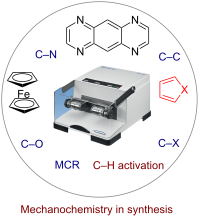
- . They have also demonstrated a mechanochemical synthesis of 3-vinylindoles and β,β-diindolylpropionates by C–H activation. Substituted indoles and ethyl acrylates were reacted in presence of 10 mol % of Pd(OAc)2 and 1.2 equiv of MnO2 to afford highly substituted 3-vinylindoles using silica gel and
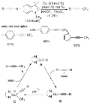
- phase processes. 4'-(N,N-dimethylamino)-4-nitroazobenzene with an equimolar amount of Pd(OAc)2 and 25 μL of glacial acetic acid (for LAG) resulted in regioselective C–H activation to give cyclopalladated complex E in 4.5 h where two Pd- and two azobenzene groups were involved. Treating this complex with
- another 1 equiv of Pd(OAc)2 resulted in a second C–H activation to give dicyclopalladated complex F in 7.5 h (Scheme 46). It is notable that the monocyclopalladated complexation generally takes 3 days in solution and dicyclopalladated complex in solution was never been identified [178]. Recently


Oxidative dehydrogenation of C–C and C–N bonds: A convenient approach to access diverse (dihydro)heteroaromatic compounds
Beilstein J. Org. Chem. 2017, 13, 1670–1692, doi:10.3762/bjoc.13.162
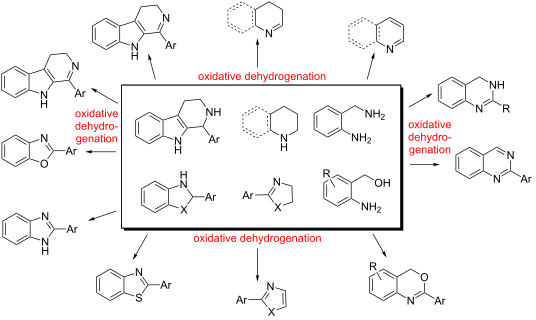
- with alkyne M. This is facilitated by coordination of L with RuII, followed by C–H activation to afford N. Migratory insertion of M on N generate O and subsequent reductive elimination of O afforded the desired compounds (Scheme 26). In another example Yuan et al. [88] demonstrated that a catalytic








Characterization of non-heme iron aliphatic halogenase WelO5* from Hapalosiphon welwitschii IC-52-3: Identification of a minimal protein sequence motif that confers enzymatic chlorination specificity in the biosynthesis of welwitindolelinones
Beilstein J. Org. Chem. 2017, 13, 1168–1173, doi:10.3762/bjoc.13.115
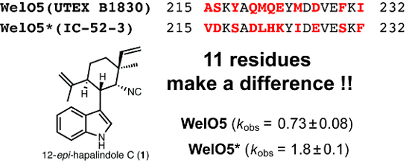
- engineering and evolution of these proteins for biocatalyst application. Keywords: alkaloid biogenesis; biosynthetic divergency; C–H activation; halogenase; non-heme iron enzyme; Introduction Carbon–halogen (C–X) bonds are prevalent structural motifs in modern agrochemicals, pharmaceuticals and bioactive


Transition-metal-catalyzed synthesis of phenols and aryl thiols
Beilstein J. Org. Chem. 2017, 13, 589–611, doi:10.3762/bjoc.13.58

- halides have been extensively studied as substrates for the synthesis of phenols and aryl thiols. In very recent years, C–H activation represents a powerful strategy for the construction of functionalized phenols directly from various arenes. However, the synthesis of aryl thiols through C–H activation
- -catalyzed Ullmann-type coupling reaction has emerged as an effective method, allowing the synthesis of phenols and aryl thiols from aryl halides through C–O and C–S bond formation, respectively [5][6][7]. Very recently, the C–H activation has made revolutionary advances in organic synthesis because it
- allows an access to functionalized products from simple arenes, avoiding their pre-functionalization [8][9][10]. The synthesis of phenols has greatly benefited from C–H activation, but the application in the synthesis of aryl thiols is still yet to be reported. Both phenols and aryl thiols have similar


Decarboxylative and dehydrative coupling of dienoic acids and pentadienyl alcohols to form 1,3,6,8-tetraenes
Beilstein J. Org. Chem. 2017, 13, 384–392, doi:10.3762/bjoc.13.41
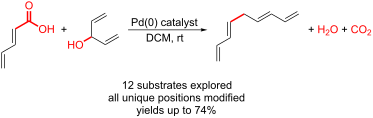
- important problem in organic synthesis. Cross-coupling reactions provide avenues to these otherwise difficult reactions, but often require prefunctionalization of the coupling partners [1][2][3][4][5][6][7][8][9]. However, recent C–H activation research has enabled the use of further simplified starting


Self-optimisation and model-based design of experiments for developing a C–H activation flow process
Beilstein J. Org. Chem. 2017, 13, 150–163, doi:10.3762/bjoc.13.18
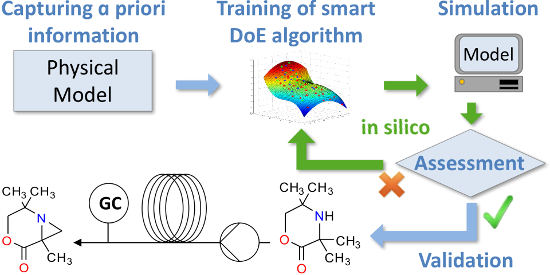
- experimental efficiency. The self-optimisation approach required the least number of experiments to reach the specified objectives of cost and product yield, whereas the MBDoE approach enabled a rapid generation of a process model. Keywords: automated reaction system; C–H activation; design of experiments
- novel flow processes [18]. In this publication, we present an extension of this methodology, in which an initial process model is developed through a MBDoE methodology coupled with an automated self-optimisation flow system. This approach was tested on the Pd-catalysed C–H activation reaction of 1
- intermediate species B in a catalytic first step and consecutively transformed to product 2 in the second step, which comprises the C–H activation. In addition to the main reaction pathway, B can form the relatively unreactive resting state complex A, and compound 1 can also form a coordinated species 1∙HOAc


Direct arylation catalysis with chloro[8-(dimesitylboryl)quinoline-κN]copper(I)
Beilstein J. Org. Chem. 2016, 12, 2757–2762, doi:10.3762/bjoc.12.272
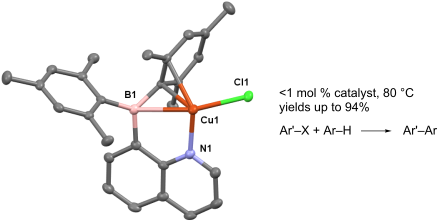
- featuring an ambiphilic ligand, (quinolin-8-yl)dimesitylborane. Direct arylation could be achieved with 0.2 mol % catalyst and 3 equivalents of base (KO(t-Bu)) at 80 °C to afford TON ≈160–190 over 40 hours. Keywords: catalysis; C–C coupling; C–H activation; copper; direct arylation; Introduction Coupling


Facile synthesis of indolo[3,2-a]carbazoles via Pd-catalyzed twofold oxidative cyclization
Beilstein J. Org. Chem. 2016, 12, 2490–2494, doi:10.3762/bjoc.12.243
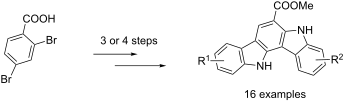
- position. Conclusion In conclusion, a twofold C−H activation protocol applied to methyl 2,4-dianilinobenzoates facilitated a short and quick access to the cyclized products. Via the present route, indolo[3,2-a]carbazole derivatives are available in 3–4 steps based on commercially available starting


C–H Functionalization/activation in organic synthesis
Beilstein J. Org. Chem. 2016, 12, 2315–2316, doi:10.3762/bjoc.12.224
- Richmond Sarpong Department of Chemistry, University of California, Berkeley, 841A Latimer Hall, Berkeley, CA 94720, USA 10.3762/bjoc.12.224 Keywords: C–H activation; C–H functionalization; The last decade has seen an explosion in research reports in the area of C–H functionalization/activation
Biosynthesis of oxygen and nitrogen-containing heterocycles in polyketides
Beilstein J. Org. Chem. 2016, 12, 1512–1550, doi:10.3762/bjoc.12.148
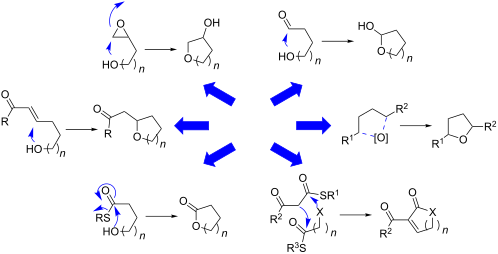
- (f in Scheme 2). The oxidative cyclisation after C–H activation of alkyl carbons is known for the formation of furan rings 21 (g in Scheme 2). 1.1 Pyrans 1.1.1 oxa-Michael addition: The oxa-Michael addition on an α,β-unsaturated thioester intermediate leads to oxygen heterocycles along with the




Synthesis of 2-substituted tetraphenylenes via transition-metal-catalyzed derivatization of tetraphenylene
Beilstein J. Org. Chem. 2016, 12, 1302–1308, doi:10.3762/bjoc.12.122
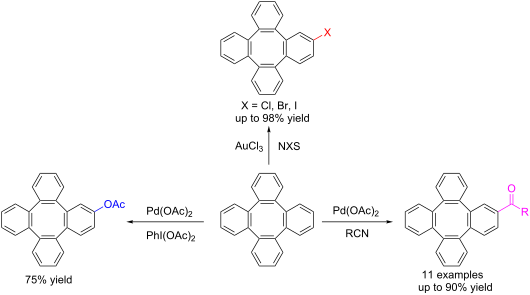
- ][29][30][31][32][33][34][35][36][37][38][39][40][41][42]. While most of these traditional approaches suffer from harsh conditions or complicated procedures, a novel strategy via transition-metal-catalyzed C–H activation has attracted great attention and emerged as a powerful methodology for the


Palladium-catalyzed picolinamide-directed iodination of remote ortho-C−H bonds of arenes: Synthesis of tetrahydroquinolines
Beilstein J. Org. Chem. 2016, 12, 1243–1249, doi:10.3762/bjoc.12.119
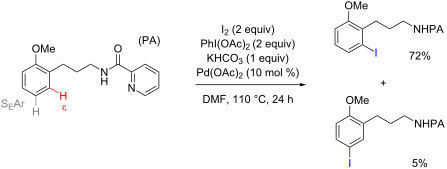
- iodination, and Cu-catalyzed C−N cyclization enables a streamlined synthesis of tetrahydroquinolines bearing diverse substitution patterns. Keywords: iodination; palladium; remote C–H activation; tetrahydroquinoline; Introduction Tetrahydroquinoline (THQ) is an important N-heterocyclic scaffold found in


Synthesis of β-arylated alkylamides via Pd-catalyzed one-pot installation of a directing group and C(sp3)–H arylation
Beilstein J. Org. Chem. 2016, 12, 1122–1126, doi:10.3762/bjoc.12.108
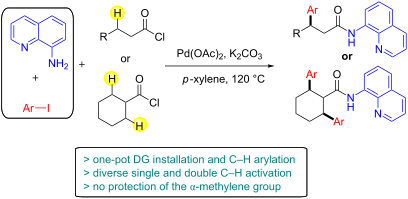
- activation/functionalization has won splendid success [1][2][3][4][5][6]. Among the numerous elegant examples of C–H activation reactions, the DG (directing group) assisted C–H activation is obviously the most generally applicable tactic because of the irreplaceable function of the DG in facilitating the
- incorporation of a metal catalyst and controlling the site selectivity [7][8][9]. While benefiting the advantage of straightforward transformation from the C–H activation strategy, the utilization of a DG also brings unfavorable defection of step economics because an additional operation step in installing the
- subsequent C–H transformation [10][11][12]. The additional time in running the DG installation reaction and purification as well as related consumption of chemicals substantially undermine the efficiency of the C–H activation-based synthesis, which is against the principle of step economy [13][14]. In this


Cationic Pd(II)-catalyzed C–H activation/cross-coupling reactions at room temperature: synthetic and mechanistic studies
Beilstein J. Org. Chem. 2016, 12, 1040–1064, doi:10.3762/bjoc.12.99
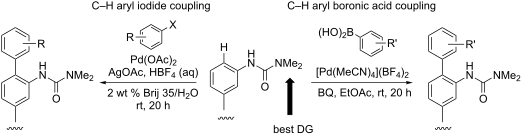
- Takashi Nishikata Alexander R. Abela Shenlin Huang Bruce H. Lipshutz Department of Chemistry & Biochemistry, University of California, Santa Barbara, CA 93106, USA 10.3762/bjoc.12.99 Abstract Cationic palladium(II) complexes have been found to be highly reactive towards aromatic C–H activation of
- arylureas at room temperature. A commercially available catalyst [Pd(MeCN)4](BF4)2 or a nitrile-free cationic palladium(II) complex generated in situ from the reaction of Pd(OAc)2 and HBF4, effectively catalyzes C–H activation/cross-coupling reactions between aryl iodides, arylboronic acids and acrylates
- streamlined and efficient synthesis of boscalid, an agent produced on the kiloton scale annually and used to control a range of plant pathogens in broadacre and horticultural crops. Mechanistic investigations led to a proposed catalytic cycle involving three steps: (1) C–H activation to generate a cationic






Enantioselective carbenoid insertion into C(sp3)–H bonds
Beilstein J. Org. Chem. 2016, 12, 882–902, doi:10.3762/bjoc.12.87
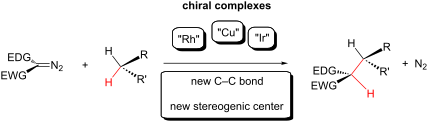
- is an important tool for the synthesis of complex molecules due to the high control of enantioselectivity in the formation of stereogenic centers. This paper presents a brief review of the early issues, related mechanistic studies and recent applications on this chemistry area. Keywords: C–H
- activation; chiral catalysis; diazo compounds; total synthesis; Introduction One of the major challenges met in organic synthesis is the formation of carbon–carbon bonds, in particular in a stereoselective way. Nucleophilic substitution reactions, radical reactions, cross-coupling reactions and the Heck


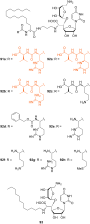
Muraymycin nucleoside-peptide antibiotics: uridine-derived natural products as lead structures for the development of novel antibacterial agents
Beilstein J. Org. Chem. 2016, 12, 769–795, doi:10.3762/bjoc.12.77
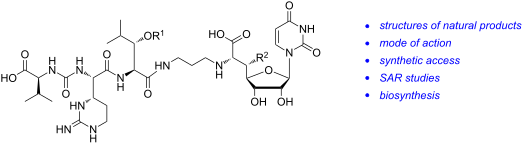
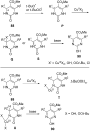
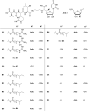
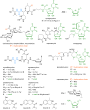
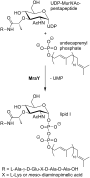
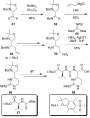
- deprotection led to the target compound (+)-caprazol (19) [90][92]. For the synthesis of muraymycins, Ichikawa, Matsuda et al. furthermore developed a new route towards the epicapreomycidine-containing urea dipeptide unit via C–H activation (Scheme 3) [96][97]. For this purpose, the commercially available δ-N









Opportunities and challenges for direct C–H functionalization of piperazines
Beilstein J. Org. Chem. 2016, 12, 702–715, doi:10.3762/bjoc.12.70
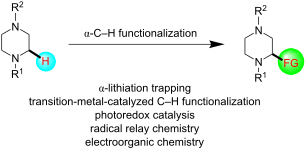
- for organic small-molecule functionalization [56][57][58]. One important application of photoredox catalysis is direct sp3 C–H activation and functionalization [59][60][61]. Among the recent advances, direct photoredox redox C–H activation of the α-position of amines has been an efficient and


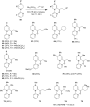


Base metal-catalyzed benzylic oxidation of (aryl)(heteroaryl)methanes with molecular oxygen
Beilstein J. Org. Chem. 2016, 12, 144–153, doi:10.3762/bjoc.12.16
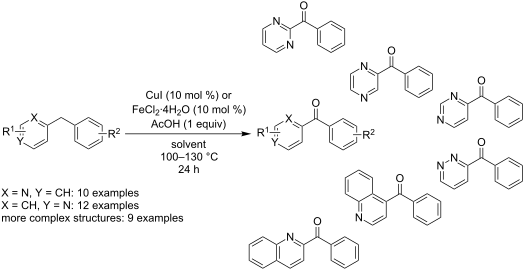
- ) could be obtained in 92% yield. In contrast to the two former cases, 4-(4-chlorobenzyl)pyrimidine (5e) could neither be oxidized at 100 °C nor at 130 °C. Competitive C–H activation of the 2 position is presumed to be the reason for this observation. Blocking this position by a methyl group (5f