Search results
Search for "addition" in Full Text gives 3389 result(s) in Beilstein Journal of Organic Chemistry. Showing first 200.
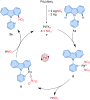
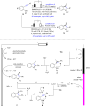
Palladium-catalyzed regioselective C1-selective nitration of carbazoles
Beilstein J. Org. Chem. 2025, 21, 2479–2488, doi:10.3762/bjoc.21.190
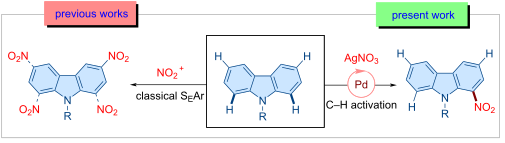
- addition to cross-coupling reactions, transition metal-catalyzed cyclization involving C–H activation approaches have also been reported [29][30][31][32][33][34][35][36]. Despite the significant advances in carbazole core constructions, the established protocols significantly lack access to selectively C1
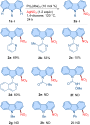
- thoroughly characterized by 1H and 13C NMR spectroscopy, HRMS, and single-crystal X-ray diffraction analysis (Figure 1). A range of solvents was subsequently screened; however, none provided an improvement over 1,4-dioxane for this transformation (Table 1, entries 2 and 3). In addition to AgNO3, other silver

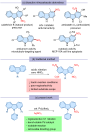

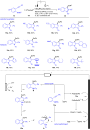
Synthesis of the tetracyclic skeleton of Aspidosperma alkaloids via PET-initiated cationic radical-derived interrupted [2 + 2]/retro-Mannich reaction
Beilstein J. Org. Chem. 2025, 21, 2470–2478, doi:10.3762/bjoc.21.189
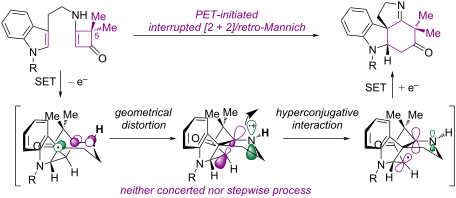
- leads to ketene D, which can undergo cycloaddition with an alkene to yield E. This fragmentation pathway dominates under various conditions (e.g., transition-metal catalysis, nucleophilic addition) and is driven by ring-strain release [11]. PET, an alternative to direct excitation and EnT, enables the
- formation of IN1. The radical cation IN1 served as the reference point for DFT investigations. As illustrated in Figure 2a, facilitated by a favorable radical cation–π interaction [31], IN1 proceeds to the first radical addition transition state (TS1), with an energy barrier of 8.3 kcal/mol. This leads to

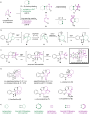

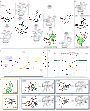
Ex-situ generation of gaseous nitriles in two-chamber glassware for facile haloacetimidate synthesis
Beilstein J. Org. Chem. 2025, 21, 2465–2469, doi:10.3762/bjoc.21.188
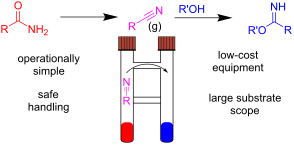
- of various trifluoromethyl-containing aza-heterocycles, such as pyridines [2], pyridinones and pyrimidinones [3], tetrazoles [4], tetrazapentalenes [5] and uracil [6]. In addition, it has also been used for the synthesis of fluoro-substituted ketones [7] and substituted trifluoroacetamides via the
- used building blocks in glycosylations. For the synthesis chamber (A) was loaded with trifluoroacetamide (6 equiv) in pyridine. In the other chamber (B), the hemiacetal (ca. 500 mg, 1 equiv) was dissolved in CH2Cl2 together with a catalytic amount of DBU. Upon addition of trifluoroacetic anhydride
- (TFAA, 5 equiv) to the acetamide in chamber A gas bubbles were observed within seconds. Hence the formation of trifluoroacetonitrile can easily be controlled by the speed of addition of TFAA. After complete addition the reaction was left for some time to ensure sufficient reaction time as TLC analysis


Catalytic enantioselective synthesis of selenium-containing atropisomers via C–Se bond formations
Beilstein J. Org. Chem. 2025, 21, 2447–2455, doi:10.3762/bjoc.21.186
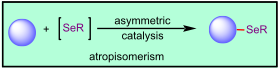
- phenyl-substituted benzoisoquinoline derivatives. Two plausible reaction mechanisms were proposed in the study: one involving oxidative addition of Int 4, a five-membered rhodium cyclic intermediate, followed by reductive elimination and the other proceeding via a bimolecular nucleophilic substitution




Transformation of the cyclohexane ring to the cyclopentane fragment of biologically active compounds
Beilstein J. Org. Chem. 2025, 21, 2416–2446, doi:10.3762/bjoc.21.185
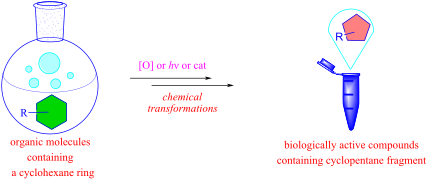
- comparative study of two effective and practical oxidizing agents, hydroxy(tosyloxy)iodobenzene (HTIB) and thallium nitrate trihydrate (TTN·3H2O), was presented in the ring contraction reaction of protected 1,2-dihydronaphthalenes using trimethylorthoformate (TMOF). In addition, various protective groups were
- from 18% to 34% (Scheme 20). Analysis of literature data [58] indicated that the thallium(III) salt is a much better oxidizing agent than iodine(III) for indane syntheses. Similarly, the TTN-mediated reactions are less prone to form addition by-products compared to the HTIB-mediated reactions of 1,2
- phase. Benzyl esters were cleaved, and the resulting carboxylic acids were converted into corresponding benzylammonium salts by addition of two equivalents of benzylamine. Subsequent irradiation of these salts in the form of a crystalline suspension in hexane led to ring-contraction products with a 95


The high potential of methyl laurate as a recyclable competitor to conventional toxic solvents in [3 + 2] cycloaddition reactions
Beilstein J. Org. Chem. 2025, 21, 2389–2415, doi:10.3762/bjoc.21.184
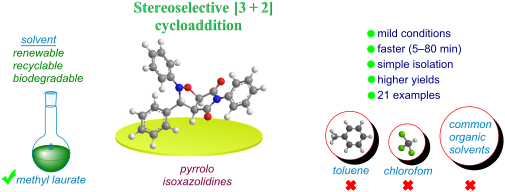
- scaffolds. From the standpoint of organic chemistry, it is evident that these compounds can be efficiently converted into a variety of versatile organic intermediates through the application of ring-opening reactions [49][50][51][52]. In addition to the aforementioned useful properties, the current methods
- days). In addition, it can be seen that out of these three solvents, only methyl laurate is readily biodegradable on the basis of environmental risk factors (in the OECD 301C modified MITI (I) test, a substance can be considered ready biodegradable if 60% of the substance is mineralized in 28 days (in
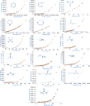
- given in Supporting Information File 1, Figure S1). In addition to the calculations already outlined, a series of toxicity properties of methyl laurate were calculated using ADMETLab 3.0 in comparison with common organic solvents and some green solvents. The obtained results were visualized with a






An Fe(II)-catalyzed synthesis of spiro[indoline-3,2'-pyrrolidine] derivatives
Beilstein J. Org. Chem. 2025, 21, 2383–2388, doi:10.3762/bjoc.21.183
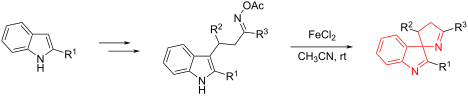
- , a highly diastereoselective method for the synthesis of dihydrospiro[indoline-3,2'-pyrrole]-2-ones has been developed (Scheme 1, path a) [7]. This transformation proceeds via a Lewis acid-mediated conjugate addition of vinyl azides to electron-deficient alkenes, followed by denitrogenative
- yield substituted spiropyrrolidines (Scheme 1, path b) [9]. Additionally, an organocatalytic, enantioselective Michael addition/cyclization sequence of 3-aminooxindole Schiff bases with terminal vinyl ketones, catalyzed by a cinchona-derived base, has been reported to afford chiral spiroindolylpyrroles




Synthetic study toward vibralactone
Beilstein J. Org. Chem. 2025, 21, 2376–2382, doi:10.3762/bjoc.21.182

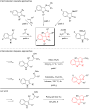
- featuring a novel Pd-catalyzed β-lactone formation [29]. In addition to these approaches, Nelson and co-workers reported a very concise and impressive total synthesis of vibralactone involving photochemical valence isomerization of substituted pyrone, cyclopropanation, and ring expansion [30]. Zeng, Liu and


Conformational effects on iodide binding: a comparative study of flexible and rigid carbazole macrocyclic analogs
Beilstein J. Org. Chem. 2025, 21, 2369–2375, doi:10.3762/bjoc.21.181
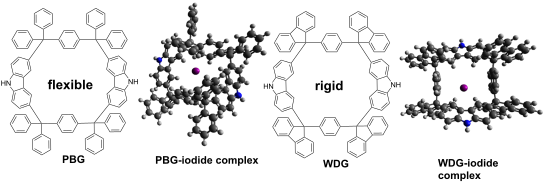
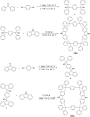
- spectroscopy. Results and Discussion Partial 1H NMR spectra of PBG and WDG after binding to tetrabutylammonium iodide (TBAI) are presented in Figure 2a and 2b, respectively. All 1H NMR titrations were conducted at a fixed concentration of 8.7 mM. With the addition of 2 equivalents TBAI, the NH peak on the PBG
- groups inside the macrocycle and thus causes the NH peak to be shifted downfield. At the same time, after the addition of TBAI to the PBG solution, both proton signals c/d and e/f were shifted downfield, while protons a/b moved slightly to higher field, confirming the interaction between the anion and
- mechanism, while rigid WDGs are limited by the preorganization effect and can only achieve weak hydrogen bonding through conformational selection. In addition, the changes in the chemical shifts of the above two structures lead us to believe that the two structural analogs undergo conformational changes



Rotaxanes with integrated photoswitches: design principles, functional behavior, and emerging applications
Beilstein J. Org. Chem. 2025, 21, 2345–2366, doi:10.3762/bjoc.21.179

- temporal precision in activating systems, and the ability to fine-tune responses by adjusting wavelength, intensity, and exposure time. Additionally, photoswitchable molecules can often operate reversibly without generating chemical waste or requiring the addition of chemical fuels [4][5]. In the last
- fluorescence quenching phenomena with aggregate-induced emission (AIE) in aqueous media. They synthesized a [2]rotaxane with one dithienylethene unit as a stopper, and one BAA and one urea binding site, as well as one DB24C8 macrocycle with a tetraphenylethene (TPE) fluorophore [16] (Figure 7). Addition of
- base results in the deprotonation of the ammonium site and shuttling of the macrocycle to the urea site. Whereas, upon addition of acid, the macrocycle returns to the protonated BAA site. Notably, the rotaxane exhibited high fluorescence intensity due to aggregation in acetonitrile with high water


Comparative analysis of complanadine A total syntheses
Beilstein J. Org. Chem. 2025, 21, 2334–2344, doi:10.3762/bjoc.21.178
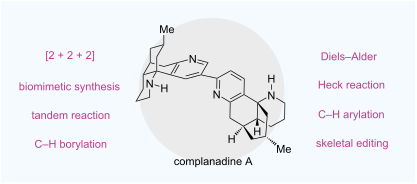
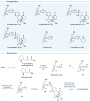
- -oxidized analog and complanadines D and E are partially reduced analogs. In addition, natural analogs such as lycoplatyrine A (6), isolated as a mixture of diastereomers, were discovered as derivatives of lycodine and an amino acid [11]. Biosynthetically, lysine was proposed to be the starting point of
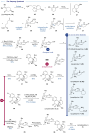
- in four steps. Subsequent conjugate addition of the lithium anion of TMS-acetonitrile to 15, followed by careful one-pot protonation of the resulting enolate with ethyl salicylate and TMS removal with CsF, gave 16 bearing three properly arranged substituents. Grignard 1,2-addition to ketone 16
- alkyne-nitrile partner, the undesired regioisomer (2,2’-bipyridyl product) was obtained as the major product. Switching the alkyne-nitrile partner from 19, bearing a benzyl group, to the formyl-substituted partner 23, combined with addition of 8 equivalents of PPh3, successfully inverted the



Recent advances in Norrish–Yang cyclization and dicarbonyl photoredox reactions for natural product synthesis
Beilstein J. Org. Chem. 2025, 21, 2315–2333, doi:10.3762/bjoc.21.177
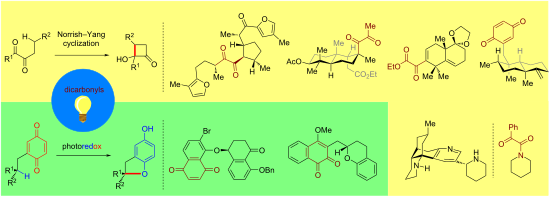
- (C6F5)3B triggered a Meinwald rearrangement, generating aldehyde 66. Nucleophilic addition, oxidation of the resulting alcohol, and base-promoted epimerization at C6 of 67' delivered 67. Subsequent dihydroxylation of the alkene in 67 and protection of the resulting 1,2-diol as a cyclic carbonate
- delivered 68. A one-pot desilylation/oxidation of 67 produced an aldehyde, which was subject to selective nucleophilic addition in the presence of a ketone, allowing for access to the furan precursor 68 [37]. Oxidation–cyclization–aromatization of 68 with Dess–Martin periodinane (DMP) constructed the
- (50) and D (52), respectively. Alternatively, nucleophilic addition of MeOH to 54a and 56a, followed by ring-opening elimination, arrived at the corresponding γ-keto aldehyde intermediates 72/73. Subsequent intramolecular aldol cyclization of these intermediates furnished gracilisoids C/G (51/55) and




Insoluble methylene-bridged glycoluril dimers as sequestrants for dyes
Beilstein J. Org. Chem. 2025, 21, 2302–2314, doi:10.3762/bjoc.21.176
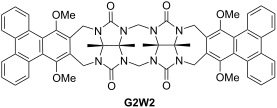
- that β-cyclodextrin (Figure 1)-based polymers could remove organic micropollutants from water [15][16]. For example, in 2021, Sessler and co-workers reported the synthesis of a calix[4]pyrrole (Figure 1)-based porous organic polymer, which exhibits the rapid uptake of dyes from water [17]. In addition



Halogenated butyrolactones from the biomass-derived synthon levoglucosenone
Beilstein J. Org. Chem. 2025, 21, 2297–2301, doi:10.3762/bjoc.21.175
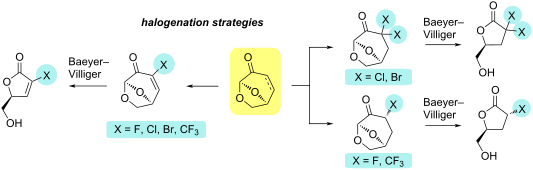
- infections. The preparation of 2-halo-2-deoxy-ᴅ-ribose derivatives can be achieved via the modification of the parent sugar [9][10] or chain-elongation strategies from lower homologues. For example, Castro and co-workers have demonstrated the synthesis of a dichlorinated 2-deoxypentose via the addition of
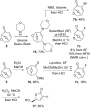
- morpholine via an aza-Michael addition and condensation (Scheme 3). It was envisaged that the β-amino group could act as a stable functional group resulting in Baylis–Hillman-like reactivity. An extensive survey of reaction conditions using Selectfluor and N-fluorobenzenesulfonimide (NFSI) as the sources of
- between was biased to 16 and not 5, gave full consumption of the starting material in 2 hours and the fluorinated product 7c was obtained in 18% yield. Attempts to combine the methanol addition reaction and the fluorination starting with LGO proceeding through 16 were unsuccessful. Although the yield was



Enantioselective radical chemistry: a bright future ahead
Beilstein J. Org. Chem. 2025, 21, 2283–2296, doi:10.3762/bjoc.21.174
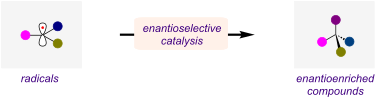
- are photoenzymatic catalysis and electrochemical oxidation or reduction. Free radicals can undergo several types of basic reactions (Figure 1B), including atom or group transfer, addition to a π-bond, and radical–radical combination. In an atom or group transfer reaction, an atom or group is
- transferred to the radical. Important processes of this kind are hydrogen atom transfer (HAT) and halogen atom abstraction. An intramolecular group transfer reaction can result in the net migration of a functional group. Addition of a radical to a π-bond (carbon–carbon or carbon–heteroatom) is another common
- [22][23]. In these studies, alkyl radicals underwent conjugate addition to N-enoyloxazolidinones. Sibi later described enantioselective tandem radical conjugate addition–trapping reactions that formed two carbon–carbon bonds and created two vicinal stereocenters in a single transformation (Scheme 1


Pathway economy in cyclization of 1,n-enynes
Beilstein J. Org. Chem. 2025, 21, 2260–2282, doi:10.3762/bjoc.21.173
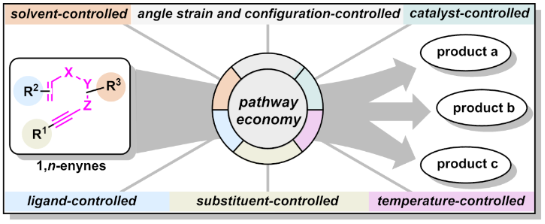
- reaction proceeded via 5-endo-dig cyclization. This pathway involved enol ether attack on the gold-activated alkyne, leading to the formation of oxonium intermediate 2. Subsequently, nucleophilic addition of methanol culminated in the formation of indene motif 5 (Scheme 2, path a). When methanol served
- dual roles as solvent and nucleophile, the gold-catalyzed intermolecular Markovnikov addition of methanol to the gold-activated alkyne proceeded to afford dienol intermediate 4. The intermediate 4 subsequently underwent a regioselective 6-endo-trig cyclization, generating the naphthalene core 7 (Scheme
- radical initiated intramolecular cascade cyclization of 1,n-enynes to provide structurally diverse heterocycles (Scheme 4) [11]. Solvent selection dictated divergent reaction pathways under I2/TBHP oxidation. When an acetonitrile/water mixed solvent was used, iodine radical addition to the alkyne


Research towards selective inhibition of the CLK3 kinase
Beilstein J. Org. Chem. 2025, 21, 2250–2259, doi:10.3762/bjoc.21.172
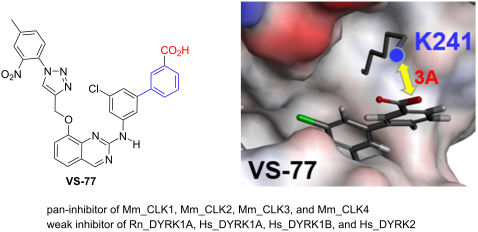
- addition of the terminal acid significantly reinforces the interaction of our new molecules with CLK3, probably through a salt bridge with lysine 241. Logically, the corresponding esters are found to be inactive. Finally, in order to complete our profiling of VS-77, we then measured its activity against
- positioned on the opposite lobe of the protein, as compared to lysine 241 of CLK3 (N-lobe for DYRK1A vs C-lobe for CLK3), but the docking experiment showed that a 180° rotation of the benzoic acid allowed the inhibitor to interact with lysine 175. In addition to molecular simulations, this salt bridge is


Pd-catalyzed dehydrogenative arylation of arylhydrazines to access non-symmetric azobenzenes, including tetra-ortho derivatives
Beilstein J. Org. Chem. 2025, 21, 2234–2242, doi:10.3762/bjoc.21.170
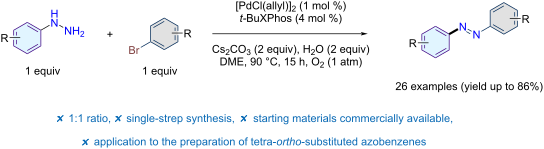
- addition of 2 equivalents of water (Table 1, entries 12 and 13). Finally, the oxidant t-Bu-OO-t-Bu could be replaced by O2, yielding compound 3a with GC yields of up to 79% (Table 1, entry 14, 75% isolated yield). In reactions giving <70% isolated yield, no single side-product dominates; the missing mass
- the scope of arylhydrazines to assess their compatibility under the optimized reaction conditions (Scheme 2). While some arylhydrazines are commercially available, it was observed that their hydrochloride salts were ineffective, even with the addition of excess base. Examining the substituent effects
- proposed. In the first step a C–N-coupling reaction with phenylhydrazine occurs [57]. The catalytic cycle starts by the formation of Pd(0) in situ through reduction facilitated by phosphine and water [58]. This is followed by the oxidative addition of aryl bromides, leading to the formation of the Pd(II


Synthesis of triazolo- and tetrazolo-fused 1,4-benzodiazepines via one-pot Ugi–azide and Cu-free click reactions
Beilstein J. Org. Chem. 2025, 21, 2202–2210, doi:10.3762/bjoc.21.167
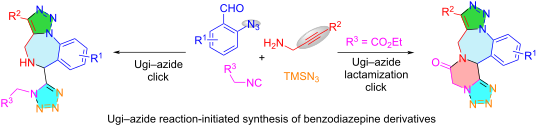
- introduce reactants in a sequential manner. Thus, we changed the reaction conditions by first reacting 0.2 mmol each of 1a and 2a in 2 mL MeOH at 40 °C for 40 min to form the Schiff base Int-I followed by the addition of 0.2 mmol each of 3a and TMSN3 (4) to obtain the desired 1,5-DS-T 5a as Ugi–azide adduct
- two triplets which are slightly downfield-shifted as compared to the aromatic protons in compound 6a. This observation reflects a rigid conformation of aromatic Hs after forming the 7-membered 1,4-diazepine ring in 8a. In addition, the 1H-1H COSY and HSQC analysis of compound 8a were conducted and the
- of 2-azidobenzaldehyde 1 (0.2 mmol, 1 equiv) and propargylamine 2 (0.2 mmol, 1 equiv) in MeOH (2 mL) was heated at 40 °C for 40 min in a metal bath, followed by the addition of isocyanides 3 (0.2 mmol, 1 equiv) and TMSN3 (4, 0.2 mmol, 1 equiv) and further stirred at 40 °C for 12 h. Then, the reaction


Electrochemical cyclization of alkynes to construct five-membered nitrogen-heterocyclic rings
Beilstein J. Org. Chem. 2025, 21, 2173–2201, doi:10.3762/bjoc.21.166
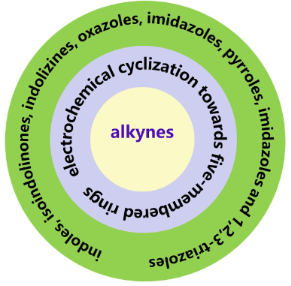
- benzamides with terminal alkynes, 5-exo-dig aza-cyclization of 2-alkynylbenzamides as well as reductive cascade annulation of o-alkynylbenzamides. Pyrroles and imidazoles were formed efficiently via electrochemical annulation of alkynes with enamides and tandem Michael addition/azidation/cyclization of
- ][194][195][196][197][198][199][200], the authors proposed a possible reaction mechanism. For the synthesis of 11a in Pt plate electrodes, two-electron anodic oxidation of I− formed I+. Addition of I+ to C≡C in 10 resulted in the production of A. Meanwhile, continuous reduction of H2O at the cathode
- phenylselenium cation C and phenylselenium radical B through radical cation species A. Simultaneously, the cathodic reduction of 17a generated anion D and radical B. Then, addition of B with the alkyne portion in 16a gave a radical intermediate E, which proceeded a one-electron oxidation followed by nucleophilic









C2 to C6 biobased carbonyl platforms for fine chemistry
Beilstein J. Org. Chem. 2025, 21, 2103–2172, doi:10.3762/bjoc.21.165
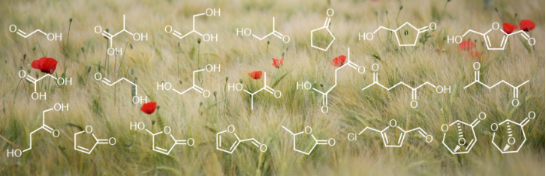
- synthesized by the sol–gel method. The 5Mg/SiO2 catalyst showed the highest activity in terms of selectivity and yield because of its suitable basic and acidic density. The addition of Mn to the 5Mg/SiO2 (1Mn-5Mg/SiO2) catalyst as week acidic side increased the selectivity towards 3-HPA. According to reaction
- carbohydrates [164][165]. Attempts to improve the balance between furfural and humins in high feed of starting xylose have been reported, for example by addition of choline chloride which is beneficial to the transformation of xylose to furfural in the presence of HCl (Scheme 48). The faster furfural formation


The application of desymmetric enantioselective reduction of cyclic 1,3-dicarbonyl compounds in the total synthesis of terpenoid and alkaloid natural products
Beilstein J. Org. Chem. 2025, 21, 2085–2102, doi:10.3762/bjoc.21.164
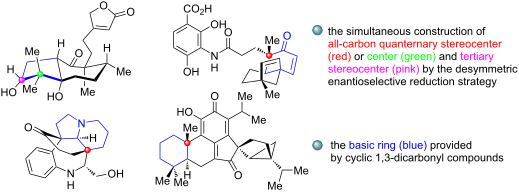
- cyclic prochiral dicarbonyl substrates. In addition, various approaches could be used for the desymmetrization reactions such as enzyme catalytic-, organocatalyst-, and transition-metal-catalyzed reductions [5][6][7]. Advance about the synthesis of several terpenoid and alkaloid natural products (1–5
- and aldehyde 37, which was prepared with 9 steps from commercially available (+)-citronellol, underwent a Reformatsky-type radical addition under the conditions of Et3B/air/Bu3SnH to deliver aldol product [16]. Dehydration of the secondary alcohol gave (E)-38. The HAT radical cyclization [17] of 38 in
- , protection of the resultant primary alcohol, and hydrogenation afforded ketone 65. The LaCl3·LiCl-promoted addition of 65 with Grignard reagent followed by TES protection of the resulting secondary alcohol, regioselective deprotection of the TES group and in situ oxidation provided aldehyde 66. Next, 66





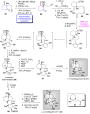


Multicomponent reactions IV
Beilstein J. Org. Chem. 2025, 21, 2082–2084, doi:10.3762/bjoc.21.163

- intermediate purification, work-up, or solvent exchange. Domino processes [3] are characterized by the simultaneous presence of all reactants from the outset, whereas sequential reactions permit the controlled addition of components while maintaining the same reaction conditions. Consecutive processes, in turn
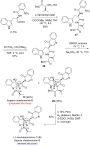
Further elaboration of the stereodivergent approach to chaetominine-type alkaloids: synthesis of the reported structures of aspera chaetominines A and B and revised structure of aspera chaetominine B
Beilstein J. Org. Chem. 2025, 21, 2072–2081, doi:10.3762/bjoc.21.162
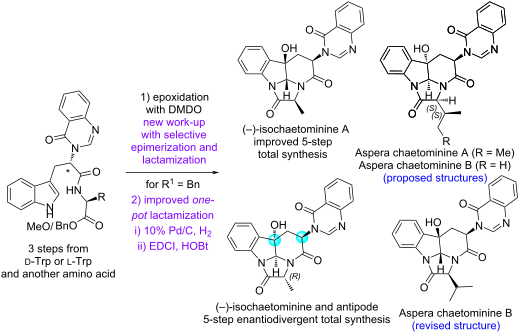
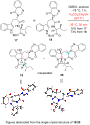
- epoxidation-triggered double cyclization reaction. In addition, the synthesis of the recently reported natural products aspera chaetominines A and B (12 and 13) [32] was addressed. Herein, we report the full accounts of these investigations, which include: 1) an improved five-step total synthesis of




Bioinspired total syntheses of natural products: a personal adventure
Beilstein J. Org. Chem. 2025, 21, 2048–2061, doi:10.3762/bjoc.21.160
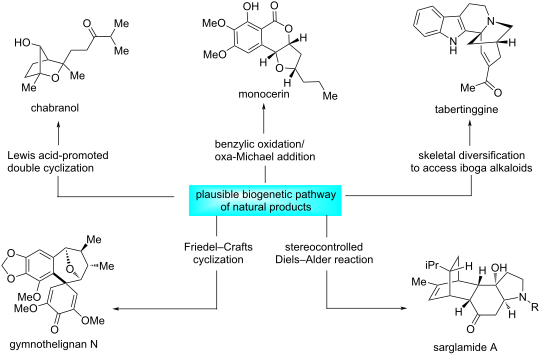
- benzylic oxidation to generate a para-quinone methide (pQM) intermediate. Using fusarentin 6-methyl ether as an example, pQM intermediate 10 would be generated. The C10 alcohol should successively undergo an oxa-Michael addition reaction to close the THF ring, providing 7-O-demethylmonocerin. Similarly
- , monocerin and 12-hydroxymonocerin were presumably generated from their corresponding precursors through similar oxidation and oxa-Michael addition reactions. Given the fact that quinone methides served as a powerful platform for the development of rich useful organic transformations, especially, through
- , Wittig reaction with MOMPPh3Cl and LDA gave the putative methyl enol ether, which could be directly converted into 1,3-dithiane 12 with propane-1,3-dithiol. Nucleophilic addition to chiral epoxide 13 and oxidative hydrolysis of 1,3-dithiane to ketone delivered chiral β-hydroxyketone 14. Evans−Tishchenko