


Search results
Search for "fragmentation" in Full Text gives 258 result(s) in Beilstein Journal of Organic Chemistry. Showing first 200.
Novel (2-amino-4-arylimidazolyl)propanoic acids and pyrrolo[1,2-c]imidazoles via the domino reactions of 2-amino-4-arylimidazoles with carbonyl and methylene active compounds
Beilstein J. Org. Chem. 2019, 15, 1032–1045, doi:10.3762/bjoc.15.101
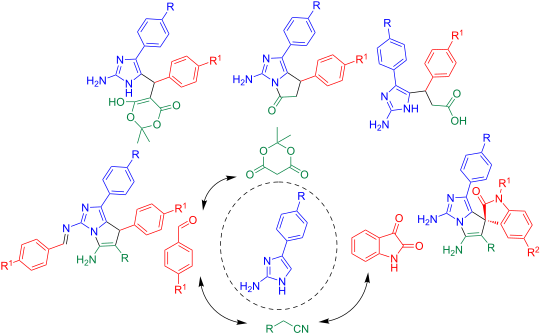
- form is proven by the presence of the singlet of a methyne proton near the saturated carbon atom at 5.42–5.56 ppm and the absence of the signal for the methyne proton of the dioxanedione cycle. With regard to the mass spectra, all compounds 4 exhibit similar behaviour in their fragmentation, showing
- -spectral methods. The mass spectra of compounds 14 and 16 show the similar type of fragmentation. They contain peaks of molecular ions, as well as signals corresponding to the loss of fragments [M+• – NH2, – CN], [M+• – ArCHN], [M+• – NH2, – CN, – CAr]. From the comparison of these data with the results of


Mechanistic investigations on multiproduct β-himachalene synthase from Cryptosporangium arvum
Beilstein J. Org. Chem. 2019, 15, 1008–1019, doi:10.3762/bjoc.15.99
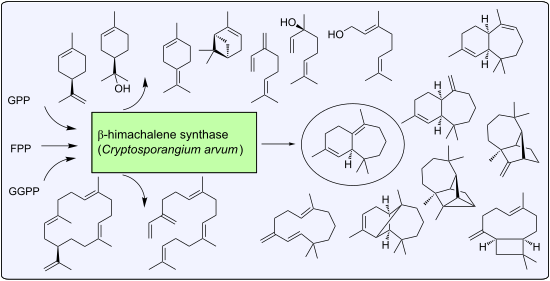
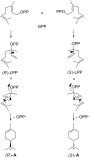
- potential was also exploited in the preparation of sesquiterpene isotopomers, which provided insights into their EIMS fragmentation mechanisms. Keywords: enzyme mechanisms; isotopes; mass spectrometry; promiscuity; terpenes; Introduction The organic chemist usually prefers to work with pure compounds
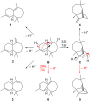
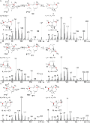
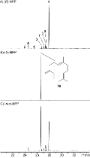
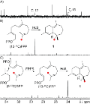
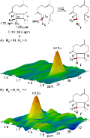
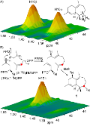
- provides access to labelled sesquiterpenes for EIMS fragmentation studies Since HcS produces a mixture of structurally interesting sesquiterpenes, its synthetic abilities were also exploited to study EIMS fragmentation mechanisms. Therefore, all fifteen singly-13C labelled FPP isotopomers, either obtained
- carbon positions to specific EI-fragments of the corresponding mass spectrum by observing an increase of +1 Da, if the labelled position is part of the fragment (position specific mass shift analysis, PMA [41][52][53]). Although for many fragments multiple overlaying fragmentation pathways were observed





Easy, efficient and versatile one-pot synthesis of Janus-type-substituted fullerenols
Beilstein J. Org. Chem. 2019, 15, 901–905, doi:10.3762/bjoc.15.87

- amphiphile with dimethoxyaniline as substituent (all characterization data can be found in Supporting Information File 1). ESIMS (Figure 1a) shows a rather complex fragmentation pattern similar to unsubstituted fullerenol compounds known in the literature [33]. The general complexity of the spectrum derives
- from the isomerization and fragmentation of the oxygen species in addition to the fragmentation of the substituents. The signals can be assigned with a general formula [M − xH2O − yH − zO − v(HNR)]a−/+. The molecular ion peak of the janus-fullerenol with 1 as substituent can be identified at m/z 1798.6


Solid-phase synthesis of biaryl bicyclic peptides containing a 3-aryltyrosine or a 4-arylphenylalanine moiety
Beilstein J. Org. Chem. 2019, 15, 761–768, doi:10.3762/bjoc.15.72
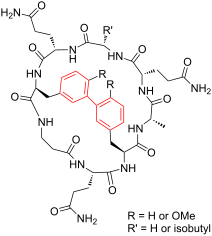
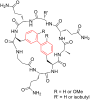
- mixture was analyzed by HPLC and characterized by mass spectrometry. The latter revealed the formation of the expected biaryl bicyclic peptide 1 together with a less intense signal at [M − 18 + H]+, which was attributed to peptide fragmentation during the analysis, as confirmed by tandem mass spectrometry
- , macrolactamization and acidolytic cleavage. Mass spectrometry analysis of the crude reaction mixture showed a signal at m/z corresponding to [M – 18 + H]+, which resulted from the fragmentation of the biaryl bicyclic peptide 2 during mass spectrometry analysis. Synthesis of the biaryl bicyclic peptide 3 Similarly to
- group removal, macrolactamization and final cleavage yielded the biaryl bicyclic peptide 3. Mass spectra showed a signal at [M + H]+ together with a major one at [M − 18 + H]+ attributed to the fragmentation of 3 during the analysis, as confirmed by tandem mass spectrometry. Conclusion A methodology for




Olefin metathesis in multiblock copolymer synthesis
Beilstein J. Org. Chem. 2019, 15, 218–235, doi:10.3762/bjoc.15.21

- –fragmentation chain transfer polymerization [33][34], and intermacromolecular reactions [35][36][37]. Though the properties of multiblock copolymers are far from being fully explored and understood, their applications already include adhesives, barrier materials, emulsifiers, impact modifiers, and materials for




Mechanistic studies of an L-proline-catalyzed pyridazine formation involving a Diels–Alder reaction with inverse electron demand
Beilstein J. Org. Chem. 2019, 15, 30–43, doi:10.3762/bjoc.15.3
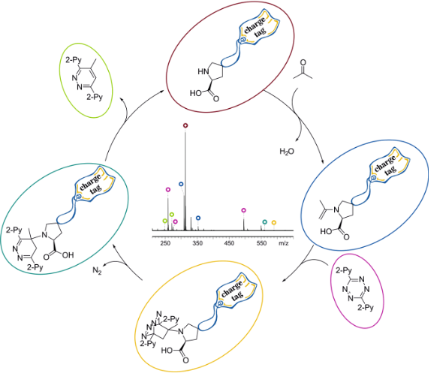
- very easily loses CO2 which causes the signal at m/z 309. This behavior could be confirmed by induced fragmentation experiments (see below). Monitoring the temporal progress of reaction R3 was achieved by taking small samples at regular intervals, diluting and swiftly feeding them into the spectrometer
- characterized as the oxazolidinone species [I3b]+ by infrared multiphoton dissociation (IRMPD) action spectroscopy in the gas phase [18][59]. The fragmentation already takes place at very low collision energies, so that some amount of fragmentation is expected to occur in the ESI source under normal ESI
- conditions – in accordance with the experimental observation as depicted in Figure 7. CID of the bicyclic Diels–Alder intermediate [II3]+ revealed a fascinating feature (Figure 11). [II3]+ shows two competing fragmentation pathways upon collisional activation. On the one hand, it releases substrate 2 which




Degenerative xanthate transfer to olefins under visible-light photocatalysis
Beilstein J. Org. Chem. 2018, 14, 3047–3058, doi:10.3762/bjoc.14.283

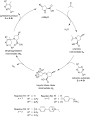
- functionalities [1][2][3][4][5][6][7][8][9][10][11][12][13][14]. This concept has also been of particular importance in the field of polymer science, known as reversible addition–fragmentation chain transfer (RAFT) polymerization [15][16]. Mechanistically, the degenerative transfer of xanthates 1 to olefins 2



Organometallic vs organic photoredox catalysts for photocuring reactions in the visible region
Beilstein J. Org. Chem. 2018, 14, 3025–3046, doi:10.3762/bjoc.14.282
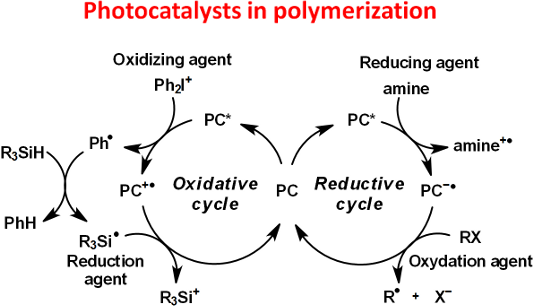
- accessible via a photoredox catalyst. RAFT is the abbreviation of reversible addition-fragmentation chain transfer. A RAFT agent is necessary to perform the polymerization [111]. However, ruthenium or iridium PCs have been used in RAFT polymerizations through a photoredox catalytic cycle to suppress oxygen



Nucleofugal behavior of a β-shielded α-cyanovinyl carbanion
Beilstein J. Org. Chem. 2018, 14, 3018–3024, doi:10.3762/bjoc.14.281
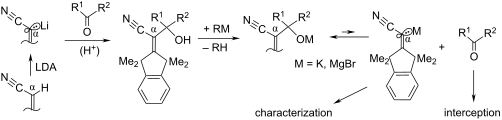
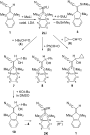
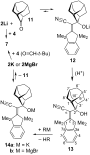
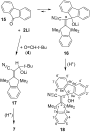
- fission may also be used to generate different metal derivatives of the nucleofugal anions as equilibrium components. Fluoride-catalyzed, metal-free desilylation admitted carbonyl addition but blocked the retro-addition. Keywords: alkoxide fission; desilylation; fragmentation; retro-addition; reversible



N-Acylated amino acid methyl esters from marine Roseobacter group bacteria
Beilstein J. Org. Chem. 2018, 14, 2964–2973, doi:10.3762/bjoc.14.276
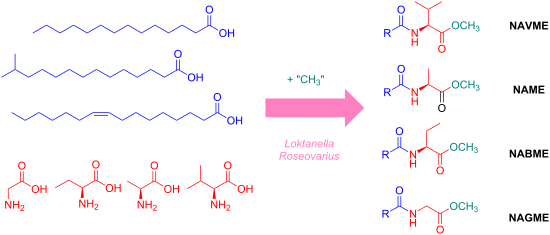
- and ESI mass spectra revealed fragmentation patterns helpful for the detection of similar compounds derived from other amino acids. Some of these compounds showed antimicrobial activity. The structural similarity of N-acylated amino acid methyl esters and similar lipophilicity to AHLs might indicate a
- :1-NAVME. The extract of Roseovarius sp. D12_1.68 was also investigated by HPLC/ESI+–MS to detect more polar compounds compared to GC. The NAMEs, NABMEs and NAVMEs reported here were detected by MS2 analyses based on their characteristic fragmentation (see below). The only oxygenated derivative
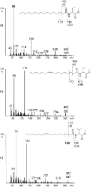
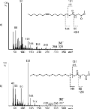
- the three strains. Mass spectrometry The analysis of the mass spectra of NAMEs, NABMEs, NAVMEs, and NAGMEs revealed the typical fragmentation of N-acylated amino acid methyl esters under both EI (Figure 7) and ESI ionization (Figure 8). Detailed structural information can be obtained by EI-MS. A





Synthesis of functionalised β-keto amides by aminoacylation/domino fragmentation of β-enamino amides
Beilstein J. Org. Chem. 2018, 14, 2602–2606, doi:10.3762/bjoc.14.238
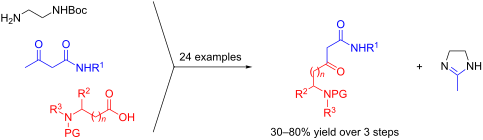
- -protected amino acids. Domino fragmentation of the obtained intermediates leads to functionalised β-keto amides, bearing a protected amino group in their side chain. Keywords: amino acids; C-acylation; domino reaction; enamines; enaminones; keto amides; retro-Mannich; Introduction The acylation of amide
- (4) intermediates were successfully prepared, we proceeded with the removal of the Boc protection group from the ethylenediamine moiety in order to trigger the domino fragmentation to the targeted β-keto amides. In the course of these experiments the two series of compounds showed markedly different
- behaviour. Domino fragmentation of α-aminoacyl intermediates 3 to N-protected γ-amino-β-ketoamides 5 Initially we tried a procedure developed earlier by us for simpler β-keto amides (30 min in neat TFA, then aqueous NaOAc) [22]. In contrast to the preparation of non-functionalised β-keto amides, here these


Learning from B12 enzymes: biomimetic and bioinspired catalysts for eco-friendly organic synthesis
Beilstein J. Org. Chem. 2018, 14, 2553–2567, doi:10.3762/bjoc.14.232
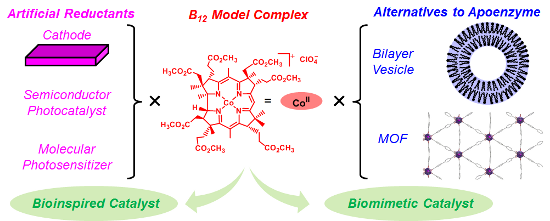
- carboxylic ester-migrated product was formed via not a radical, but a cationic intermediate that was generated by the fragmentation to the monoalkylated complex at the anode (Scheme 2). 2-2. Artificial enzyme-mediated reactions A vesicle-type B12 artificial enzyme was constructed by combining bilayer


Synthesis of aryl sulfides via radical–radical cross coupling of electron-rich arenes using visible light photoredox catalysis
Beilstein J. Org. Chem. 2018, 14, 2520–2528, doi:10.3762/bjoc.14.228
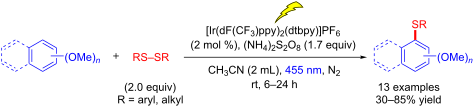
- , indicating that probably a fragmentation of the disulfide bond took place due to the laser irradiation. Since this effect occurred also under reduced laser power (70% of the original 58 mJ/pulse) we restricted the current analysis to the two-component solution (A). Since 1,3,5-TMB did not show any transient


Diazirine-functionalized mannosides for photoaffinity labeling: trouble with FimH
Beilstein J. Org. Chem. 2018, 14, 1890–1900, doi:10.3762/bjoc.14.163
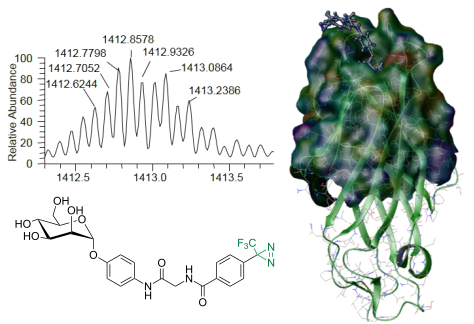
- hydrolyzed carbene. However, MS/MS fragmentation of both the unmodified peptide (567.3281)2+ and the allegedly modified peptide (832.4043)2+ exhibited the same b- and y-ion series (cf. Supporting Information File 1, Figure S10). Accordingly, the low intensity peak is most likely the result of non-covalent




Efficient catenane synthesis by cucurbit[6]uril-mediated azide–alkyne cycloaddition
Beilstein J. Org. Chem. 2018, 14, 1846–1853, doi:10.3762/bjoc.14.158
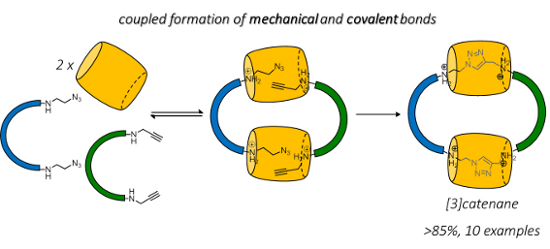
- upfield shifted triazole 1H NMR resonances of Cat-2–Cat-10 at ca. 6.4 ppm are consistent with the inclusion of the triazole in the CB[6] cavity [22][24][25]. The ESIMS, HRMS and MS2 spectra are all consistent with the [3]catenanes with a similar fragmentation behavior as that of Cat-1. The 1H NMR, 13C NMR



The phenyl vinyl ether–methanol complex: a model system for quantum chemistry benchmarking
Beilstein J. Org. Chem. 2018, 14, 1642–1654, doi:10.3762/bjoc.14.140
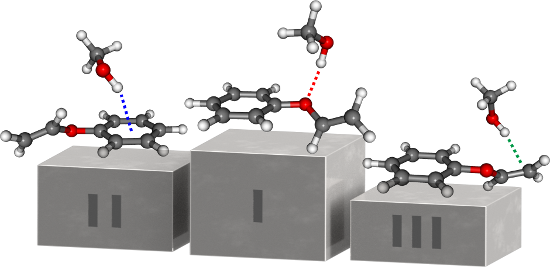
- broadened and affected by ionization-induced fragmentation of larger clusters (cf. Figure S1b, Supporting Information File 1). This is also reflected in the recorded IR/R2PI spectra (cf. Figure S2, Supporting Information File 1), yielding solely the spectrum shown in Figure 4 via the excitation energy of
- would coincide with the fragmentation-dominated region of the R2PI spectrum, where, however, only signatures of larger clusters could be identified. These considerations strengthen the arguments for the presence of an OH∙∙∙O structure laid before, on the basis of the computed coupled cluster energies
- elusiveness would be a low interconversion barrier. However, rotational spectroscopy further reveals the presence of the OH–P isomer as a second isomer, being less populated, which is not observed with the less sensitive FTIR technique and might be superimposed by fragmentation of larger clusters in the


Glycosylation reactions mediated by hypervalent iodine: application to the synthesis of nucleosides and carbohydrates
Beilstein J. Org. Chem. 2018, 14, 1595–1618, doi:10.3762/bjoc.14.137
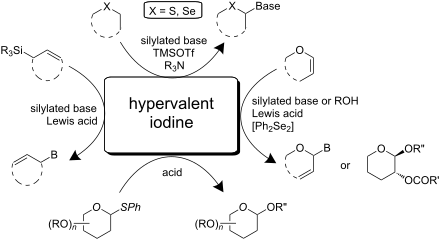
- , similar deformylation by action of hypervalent iodine has also been demonstrated: the β-fragmentation reaction of an anomeric alkoxy radical of carbohydrates was mediated by a hypervalent iodine reagent [73]. The reaction results in the formation of carbohydrates with a reduction of one carbon. From the
- the β-fragmentation of the C1–C2 bond. As a result, a C2 radical is generated and is further oxidized to a carbocation that is reacted with nucleophilic agents to give the desired products. Boto et al. applied the reaction to the one-pot synthesis of acyclic nucleosides that belong to an important
- class of nucleosides with antiviral activity [74]. First, they tried to synthesize acyclic nucleosides in a stepwise manner. The substrates 128 and 129 for the fragmentation reaction were synthesized from ribose in a few steps by the conventional method. The oxidative scission of 128 and 129 was carried


Drug targeting to decrease cardiotoxicity – determination of the cytotoxic effect of GnRH-based conjugates containing doxorubicin, daunorubicin and methotrexate on human cardiomyocytes and endothelial cells
Beilstein J. Org. Chem. 2018, 14, 1583–1594, doi:10.3762/bjoc.14.136
- fragmentation of the conjugate between the aglycon part and sugar moiety resulted in fragments in which the peptide was attached either the aglycon OH group or the amino group of sugar moiety [23]. When unprotected Dox was used for the reaction with glutaric anhydride, the amino group was modified with glutaric


Hypervalent organoiodine compounds: from reagents to valuable building blocks in synthesis
Beilstein J. Org. Chem. 2018, 14, 1508–1528, doi:10.3762/bjoc.14.128
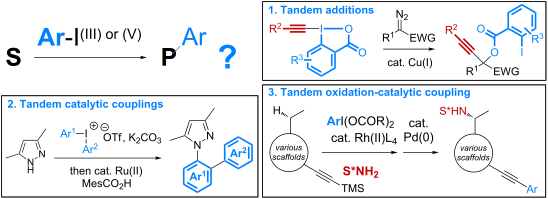
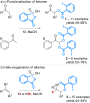
- including the cleavage of the triple bond and the fragmentation of the carboxylate unit, would finally lead to the furans 24 and the formamide 25. The group of Waser has discovered an atom-economical multi-component process between alkynylbenziodoxolones 22 and diazo compounds, which is catalyzed by the




Investigations of alkynylbenziodoxole derivatives for radical alkynylations in photoredox catalysis
Beilstein J. Org. Chem. 2018, 14, 1215–1221, doi:10.3762/bjoc.14.103
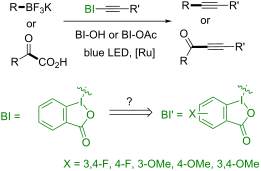
- (Scheme 4). Tertiary alcohols 6 were reported to be activated by cyclic iodine(III) reagents under photoredox conditions to generate alkoxyl radicals, and subsequently underwent β-fragmentation and alkynylation to yield 7 after eliminating the arylketone [25]. With tertiary alcohol 6a as the alkyl radical
- ’-alkyne 3a gave a slightly lower 63% yield of 9 [21]. β-Ketone alcohols 10 were reported to be activated by cyclic iodine(III) reagents under photoredox conditions to generate alkoxyl radicals, and subsequently underwent β-fragmentation and alkynylation to yield ynone 9 [26]. The unsubstituted BI-alkyne


Rapid transformation of sulfinate salts into sulfonates promoted by a hypervalent iodine(III) reagent
Beilstein J. Org. Chem. 2018, 14, 1203–1207, doi:10.3762/bjoc.14.101
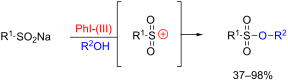
- , decarboxylation, and fragmentation [6][7][8][9][10][11][12][13][14][15][16][17][18][19][20][21][22][23][24][25][26][27]. The sulfonate group is a useful functionality frequently employed as a leaving group in substitution reactions. Production of sulfonates [28] from alcohols generally involves reaction with a


On the design principles of peptide–drug conjugates for targeted drug delivery to the malignant tumor site
Beilstein J. Org. Chem. 2018, 14, 930–954, doi:10.3762/bjoc.14.80


Anodic oxidation of bisamides from diaminoalkanes by constant current electrolysis
Beilstein J. Org. Chem. 2018, 14, 861–868, doi:10.3762/bjoc.14.72

- RCONHCH2OCH3. Moreover, upon replacing LiClO4 with Et4NBF4 an additional fragmentation type of product was generated from the latter amides, namely RCONHCHO. Also, the anodic process was found to be more efficient with C felt as the anode, and in a mixture of 1:1 methanol/acetonitrile co-solvents. Keywords
- spectrum of products obtained is described in Scheme 8. Except for the expected monomethoxylated II-3a and dimethoxylated II-3b products, fragmentation products (II-3c, 3d, 3e) were observed too. Table 2 below summarizes the type of products and their relative ratios obtained from initial electrochemical
- comparison to the above results, oxidation of II-3 on a Pt anode (Table 2, entries 3 and 4) affords similar products but with less selectivity because of the formation of an additional fragmentation product, benzoic acid (II-3e) in 10–20% yield. Other anodes were tested as well (Table 2, entries 5–7) at an


Cobalt-catalyzed directed C–H alkenylation of pivalophenone N–H imine with alkenyl phosphates
Beilstein J. Org. Chem. 2018, 14, 709–715, doi:10.3762/bjoc.14.60
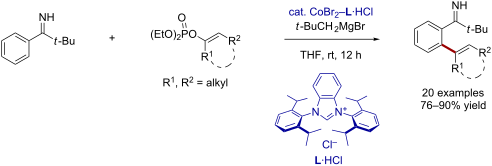
- alkenylation reaction, affording the product 3aj with an E/Z ratio of 4:1. In our previous study on the C–H alkylation and arylation of pivalophenone N–H imines, we demonstrated that the pivaloyl imine readily undergoes fragmentation into a cyano group via an iminyl radical under peroxide photolysis or copper


Electrochemical Corey–Winter reaction. Reduction of thiocarbonates in aqueous methanol media and application to the synthesis of a naturally occurring α-pyrone
Beilstein J. Org. Chem. 2018, 14, 547–552, doi:10.3762/bjoc.14.41
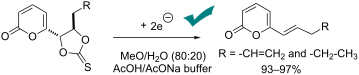
- formed by β-fragmentation of radical anion F, is maximum when is locked in an antiperiplanar conformation (Scheme 4). Therefore, this electrochemical reaction represents a promising way to produce trans-olefins from their respective thiocarbonates, overcoming thus the toxicity and safety issues of the





