


Search results
Search for "metal catalyst" in Full Text gives 133 result(s) in Beilstein Journal of Organic Chemistry.
Easy access to heterobimetallic complexes for medical imaging applications via microwave-enhanced cycloaddition
- Nicolas Desbois,
- Sandrine Pacquelet,
- Adrien Dubois,
- Clément Michelin and
- Claude P. Gros
Beilstein J. Org. Chem. 2015, 11, 2202–2208, doi:10.3762/bjoc.11.239
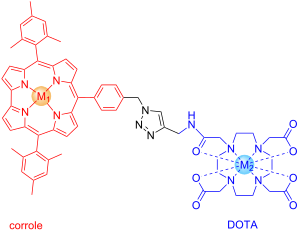
- convenient and rapid access to bimetallic building blocks, opening the door for a wide range of applications in medical imaging. In some cases, the requirement of a metal catalyst can be a complication. Therefore, we actually focus our researches on the development of catalyst-free click reactions using, e.g

Graphical Abstract

Figure 1: Selected ligands for the copper(I)-catalyzed Huisgen cycloaddition.

Scheme 1: Structure of different bimetallic complexes 5–7.

Scheme 2: Synthesis of 8a,b and 9a–d. (i) for 8a: THF, N2, Cu(OAc)2·H2O, rt 15 min; for 8b: GaCl3 0.114 M in ...

Scheme 3: Synthesis of 10a,b and 12a,b. (i) For 10a: Milli-Q water, Gd(NO3)3·5H2O, 50 °C, 17 h, pH 8.0; for 1...
Synthesis of γ-hydroxypropyl P-chirogenic (±)-phosphorus oxide derivatives by regioselective ring-opening of oxaphospholane 2-oxide precursors
- Iris Binyamin,
- Shoval Meidan-Shani and
- Nissan Ashkenazi
Beilstein J. Org. Chem. 2015, 11, 1332–1339, doi:10.3762/bjoc.11.143
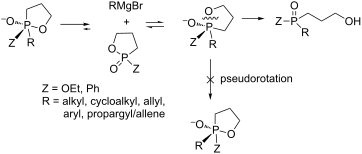
- fact that the γ-hydroxypropyl substituent, which results directly from the ring opening of the phospholane, could provide a second ligation site upon complexation of the corresponding phosphines to a transition metal catalyst. These P,O bidentate ligands are quite useful in organometallic compounds

Graphical Abstract

Figure 1: Chemical structures of 2-methoxy-1,3,2-dioxaphospholane 2-oxide (1), 2-ethoxy-1,3,2-dioxaphospholan...

Scheme 1: (A) Alkaline hydrolysis of dioxaphospholane: the phosphorane intermediate includes one endocyclic o...

Scheme 2: Reaction of 4 with various Grignard reagents.

Scheme 3: Synthesis of 2-phenyl-1,2-oxaphospholane 2-oxide (5).

Scheme 4: Formation of phosphinates and phosphine oxides bearing three different substituents from oxaphospho...

Scheme 5: Synthesis of acetylene and allene phosphine oxides.
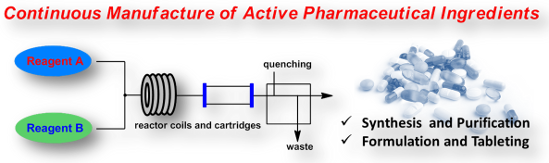
The synthesis of active pharmaceutical ingredients (APIs) using continuous flow chemistry
- Marcus Baumann and
- Ian R. Baxendale
Beilstein J. Org. Chem. 2015, 11, 1194–1219, doi:10.3762/bjoc.11.134
- delivers the desired 1,4-triazole regioisomer without the need for a metal catalyst that requires stringent purification afterwards. Due to the reduced reactivity of 100 the crucial cycloaddition step was conducted neat at elevated temperature (210 °C) yielding pure 102 within short residence times (5–30

Graphical Abstract

Figure 1: Pharmaceutical structures targeted in early flow syntheses.

Scheme 1: Flow synthesis of 6-hydroxybuspirone (9). Inserted photograph reprinted with permission from [45]. Copy...

Figure 2: Configuration of a baffled reactor tube (left) and its schematic working principle (right).

Scheme 2: McQuade’s flow synthesis of ibuprofen (16).

Scheme 3: Jamison’s flow synthesis of ibuprofen sodium salt (17).

Scheme 4: Flow synthesis of imatinib (23).

Scheme 5: Flow synthesis of the potent 5HT1B antagonist 28.

Scheme 6: Flow synthesis of a selective δ-opioid receptor agonist 33.

Scheme 7: Flow synthesis of a casein kinase I inhibitor library (38).

Scheme 8: Flow synthesis of fluoxetine (46).

Scheme 9: Flow synthesis of artemisinin (55).

Scheme 10: Telescoped flow synthesis of artemisinin (55) and derivatives (62–64).

Scheme 11: Flow approach towards AZD6906 (65).

Scheme 12: Pilot scale flow synthesis of key intermediate 73.

Scheme 13: Semi-flow synthesis of vildagliptine (77).

Scheme 14: Pilot scale asymmetric flow hydrogenation towards 83. Inserted photograph reprinted with permission...

Figure 3: Schematic representation of the ‘tube-in-tube’ reactor.

Scheme 15: Flow synthesis of fanetizole (87) via tube-in-tube system.

Scheme 16: Flow synthesis of diphenhydramine.HCl (92).

Scheme 17: Flow synthesis of rufinamide (95).

Scheme 18: Large scale flow synthesis of rufinamide precursor 102.

Scheme 19: First stage in the flow synthesis of meclinertant (103).

Scheme 20: Completion of the flow synthesis of meclinertant (103).

Scheme 21: Flow synthesis of olanzapine (121) utilising inductive heating techniques.

Scheme 22: Flow synthesis of amitriptyline·HCl (127).

Scheme 23: Flow synthesis of E/Z-tamoxifen (132) using peristaltic pumping modules.

Figure 4: Container sized portable mini factory (photograph credit: INVITE GmbH, Leverkusen Germany).

Scheme 24: Flow synthesis of imidazo[1,2-a]pyridines 136 linked to frontal affinity chromatography (FAC).

Figure 5: Structures of zolpidem (142) and alpidem (143).

Scheme 25: Synthesis and screening loops in the discovery of new Abl kinase inhibitors.

Figure 6: Schotten–Baumann approach towards LY573636.Na (147).

Scheme 26: Pilot scale flow synthesis of LY2886721 (146).

Scheme 27: Continuous flow manufacture of alikiren hemifumarate 152.
Stereoselective cathodic synthesis of 8-substituted (1R,3R,4S)-menthylamines
- Carolin Edinger,
- Jörn Kulisch and
- Siegfried R. Waldvogel
Beilstein J. Org. Chem. 2015, 11, 294–301, doi:10.3762/bjoc.11.34
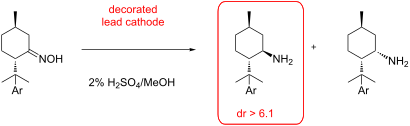
- the configuration at position 4 resulting in a complex diastereomeric mixture. Alternatively, reduction of menthone oxime can be achieved, either employing Bouveault–Blanc conditions [41], or via hydrogenolysis at a transition metal catalyst [42]. Both approaches lead to the desired product as a

Graphical Abstract

Scheme 1: Structural features of 8-substituted menthylamines 1.

Scheme 2: Synthetic strategies to menthylamines.

Scheme 3: Stereoselective synthesis of 8-substituted (1R,3R,4S)-menthylamines.

Scheme 4: Influence of the cathode system onto the stereoselectivity of the reduction of (1R,4S)-menthone oxi...

Scheme 5: Preparation of 8-substituted (1R)-menthones 6 and the corresponding oximes 7.

Scheme 6: Influence of cathode material on the preparation of (1R,3R,4S)-menthylamine 8a.

Scheme 7: Protection of the oxime functionality in 7c due to the sterically demanding diphenyl moiety in 8-po...

Scheme 8: Separation of the diastereomeric 8-substituted menthylamines by crystallization of their hydrochlor...
Come-back of phenanthridine and phenanthridinium derivatives in the 21st century
- Lidija-Marija Tumir,
- Marijana Radić Stojković and
- Ivo Piantanida
Beilstein J. Org. Chem. 2014, 10, 2930–2954, doi:10.3762/bjoc.10.312

- -substituted on the phenyl side-rings by a large variety of substituents, as well as stereo- and regioselectivity (particularly for the bulky groups). Nevertheless, due to the most common metal catalyst (palladium) this method is significantly more expensive and less environmentally friendly than radical-based

Graphical Abstract

Scheme 1: The Grignard-based synthesis of 6-alkyl phenanthridine.

Scheme 2: Radical-mediated synthesis of 6-arylphenanthridine [14].

Scheme 3: A t-BuO• radical-assisted homolytic aromatic substitution mechanism proposed for the conversion of ...

Scheme 4: Synthesis of 5,6-unsubstituted phenanthridine starting from 2-iodobenzyl chloride and aniline [17].

Scheme 5: Phenanthridine synthesis initiated by UV-light irradiation photolysis of acetophenone O-ethoxycarbo...

Scheme 6: PhI(OAc)2-mediated oxidative cyclization of 2-isocyanobiphenyls with CF3SiMe3 [19,20].

Scheme 7: Targeting 6-perfluoroalkylphenanthridines [21,22].

Scheme 8: Easily accessible biphenyl isocyanides reacting under mild conditions (room temp., visible light ir...

Scheme 9: Microwave irradiation of Diels–Alder adduct followed by UV irradiation of dihydrophenanthridines yi...

Scheme 10: A representative palladium catalytic cycle.

Scheme 11: The common Pd-catalyst for the biphenyl conjugation results simultaneously in picolinamide-directed...

Scheme 12: Pd(0)-mediated cyclisation of imidoyl-selenides forming 6-arylphenanthridine derivatives [16]. The inse...

Scheme 13: Palladium-catalysed phenanthridine synthesis.

Scheme 14: Aerobic domino Suzuki coupling combined with Michael addition reaction in the presence of a Pd(OAc)2...

Scheme 15: Rhodium-catalysed alkyne [2 + 2 + 2] cycloaddition reactions [36].

Scheme 16: The O-acetyloximes derived from 2′-arylacetophenones underwent N–O bond cleavage and intramolecular ...

Scheme 17: C–H arylation with aryl chloride in the presence of a simple diol complex with KOt-Bu (top) [39]; for s...

Scheme 18: The subsequent aza-Claisen rearrangement, ring-closing enyne metathesis and Diels–Alder reaction – ...

Scheme 19: Phenanthridine central-ring cyclisation with simultaneous radical-driven phosphorylation [42].

Scheme 20: Three component reaction yielding the benzo[a]phenanthridine core in excellent yields [44].

Scheme 21: a) Reaction of malononitrile and 1,3-indandione with BEP to form the cyclised DPP products; b) pH c...

Figure 1: Schematic presentation of the intercalative binding mode by the neighbour exclusion principle and i...

Figure 2: Urea and guanidine derivatives of EB with modified DNA interactions [57].

Figure 3: Structure of mono- (3) and bis-biguanide (4) derivative. Fluorescence (y-axis normalised to startin...

Scheme 22: Bis-phenanthridinium derivatives (5–7; inert aliphatic linkers, R = –(CH2)4– or –(CH2)6–): rigidity...

Figure 4: Series of amino acid–phenanthridine building blocks (general structure 10; R = H; Gly) and peptide-...

Figure 5: General structure of 45 bis-ethidium bromide analogues. Reproduced with permission from [69]. Copyright...

Scheme 23: Top: Recognition of poly(U) by 12 and ds-polyAH+ by 13; bottom: Recognition of poly(dA)–poly(dT) by ...

Figure 6: The bis-phenanthridinium–adenine derivative 15 (LEFT) showed selectivity towards complementary UMP;...

Figure 7: The neomycin–methidium conjugate targeting DNA:RNA hybrid structures [80].

Figure 8: Two-colour RNA intercalating probe for cell imaging applications: Left: Chemical structure of EB-fl...

Figure 9: The ethidium bromide nucleosides 17 (top) and 18 (bottom). DNA duplex set 1 and 2 (E = phenanthridi...

Figure 10: Left: various DNA duplexes; DNA1 and DNA2 used to study the impact on the adjacent basepair type on...

Figure 11: Structure of 4,9-DAP derivative 19; Rright: MIAPaCa-2 cells stained with 10 μM 19 after 60 and 120 ...

Figure 12: Examples of naturally occurring phenanthridine analogues.
Exploration of C–H and N–H-bond functionalization towards 1-(1,2-diarylindol-3-yl)tetrahydroisoquinolines
- Michael Ghobrial,
- Marko D. Mihovilovic and
- Michael Schnürch
Beilstein J. Org. Chem. 2014, 10, 2186–2199, doi:10.3762/bjoc.10.226
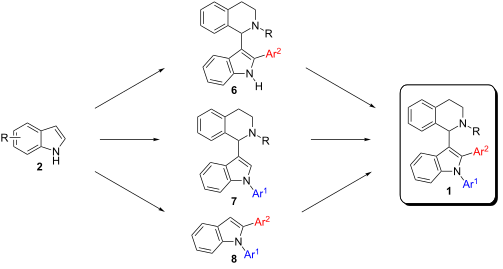
- catalyst instead of copper since palladium has been widely recognized as powerful transition metal catalyst involved in C2-arylations of azoles [25][33][46][47][55][56][57][58]. C2-Arylation of 1-(indol-3-yl)-N-PG-THIQs 4 was expected to be challenging since the C3 position of the indole is blocked by the

Graphical Abstract

Figure 1: General structures of biologically active dihydroisoquinolines, THIQs and 1,2-diarylindoles.

Scheme 1: Li’s THIQ indolation protocol.

Scheme 2: Possible strategies for the synthesis of target structure 1. Dashed arrows indicate literature-know...

Scheme 3: Nucleophilic substitution of DMEDA with 2-fluoro-3-iodopyridine (10).

Scheme 4: Decomposition of 1-(indol-3-yl)-THIQ 4d during N-arylation (monitored by GC–MS).

Scheme 5: Formation of byproduct 13 via benzylic oxidation.

Scheme 6: Routes towards 1,2-diarylindoles starting from indole; a: PhB(OH)2 (3 equiv), Pd(OAc)2 (5 mol %), A...

Scheme 7: Palladium-catalyzed C2-arylation attempt of 1-(1-phenylindol-3-yl)-N-Boc-THIQ.
P(O)R2-directed Pd-catalyzed C–H functionalization of biaryl derivatives to synthesize chiral phosphorous ligands
- Rong-Bin Hu,
- Hong-Li Wang,
- Hong-Yu Zhang,
- Heng Zhang,
- Yan-Na Ma and
- Shang-dong Yang
Beilstein J. Org. Chem. 2014, 10, 2071–2076, doi:10.3762/bjoc.10.215
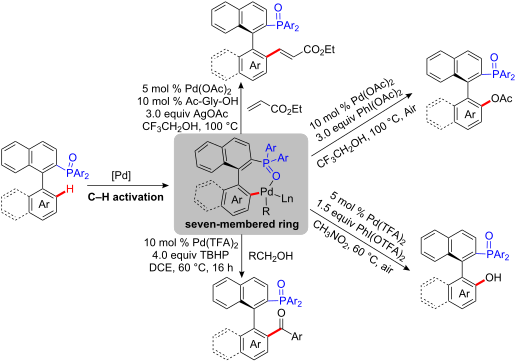
- ]. In particular, their special effects of enhancing the metal-catalyst efficiency and of controlling chiral induction has continually prompted synthetic chemists to probe efficient methods generating access to chiral, enantiomerically pure phosphorus compounds used in pharmaceutical, agrochemical and

Graphical Abstract

Scheme 1: C–H functionalization of P(O)R2 directed through a seven-membered cyclopalladium transition state.

Scheme 2: Synthesis of chiral and racemic substrates.
Figure 1: C–H functionalization of axially chiral phosphorus substrates. The yields are isolated yields and t...
Preparation of phosphines through C–P bond formation
- Iris Wauters,
- Wouter Debrouwer and
- Christian V. Stevens
Beilstein J. Org. Chem. 2014, 10, 1064–1096, doi:10.3762/bjoc.10.106
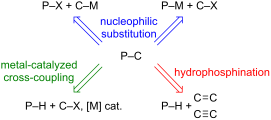
- papers appeared reporting on organocatalyzed asymmetric hydrophosphinations. The organocatalytic process has the advantage that in contrast to a metal-catalyzed method, it cannot undergo product inhibition as a result of the coordination ability of phosphorus to a metal catalyst. The addition of

Graphical Abstract

Scheme 1: Synthesis of P-stereogenic phosphines 5 using menthylphosphinite borane diastereomers 2.

Scheme 2: Enantioselective synthesis of chiral phosphines 10 with ephedrine as a chiral auxiliary.

Scheme 3: Chlorophosphine boranes 11a as P-chirogenic electrophilic building blocks.

Scheme 4: Monoalkylation of phenylphosphine borane 15 with methyl iodide in the presence of Cinchona alkaloid...

Scheme 5: Preparation of tetraphosphine borane 19.

Scheme 6: Using chiral chlorophosphine-boranes 11b as phosphide borane 20 precursors.

Scheme 7: Nickel-catalyzed cross-coupling (dppe = 1,2-bis(diphenylphosphino)ethane).

Scheme 8: Pd-catalyzed cross-coupling reaction with organophosphorus stannanes 30.

Scheme 9: Copper iodide catalyzed carbon–phosphorus bond formation.

Scheme 10: Thermodynamic kinetic resolution as the origin of enantioselectivity in metal-catalyzed asymmetric ...

Scheme 11: Ru-catalyzed asymmetric phosphination of benzyl and alkyl chlorides 35 with HPPhMe (36a, PHOX = pho...

Scheme 12: Pt-catalyzed asymmetric alkylation of secondary phosphines 36b.

Scheme 13: Different adducts 43 can result from hydrophosphination.

Scheme 14: Pt-catalyzed asymmetric hydrophosphination.

Scheme 15: Intramolecular hydrophosphination of phosphinoalkene 47.

Scheme 16: Organocatalytic asymmetric hydrophosphination of α,β-unsaturated aldehydes 59.

Scheme 17: Preparation of phosphines using zinc organometallics.

Scheme 18: Preparation of alkenylphosphines 71a from alkenylzirconocenes 69 (dtc = N,N-diethyldithiocarbamate,...

Scheme 19: SNAr with P-chiral alkylmethylphosphine boranes 13c.

Scheme 20: Synthesis of QuinoxP 74 (TMEDA = tetramethylethylenediamine).

Scheme 21: Pd-Mediated couplings of a vinyl triflate 76 with diphenylphosphine borane 13e.

Figure 1: Menthone (83) and camphor (84) derived chiral phosphines.

Scheme 22: Palladium-catalyzed cross-coupling reaction of vinyl tosylates 85 and 87 with diphenylphosphine bor...

Scheme 23: Attempt for the enantioselective palladium-catalyzed C–P cross-coupling reaction between an alkenyl...

Scheme 24: Enol phosphates 88 as vinylic coupling partners in the palladium-catalyzed C–P cross-coupling react...

Scheme 25: Nickel-catalyzed cross-coupling in the presence of zinc (dppe = 1,2-bis(diphenylphosphino)ethane).

Scheme 26: Copper-catalyzed coupling of secondary phosphines with vinyl halide 94.

Scheme 27: Palladium-catalyzed cross-coupling of aryl iodides 97 with organoheteroatom stannanes 30.

Scheme 28: Synthesis of optically active phosphine boranes 100 by cross-coupling with a chiral phosphine boran...

Scheme 29: Palladium-catalyzed P–C cross-coupling reactions between primary or secondary phosphines and functi...

Scheme 30: Enantioselective synthesis of a P-chirogenic phosphine 108.

Scheme 31: Enantioselective arylation of silylphosphine 110 ((R,R)-Et-FerroTANE = 1,1'-bis((2R,4R)-2,4-diethyl...

Scheme 32: Nickel-catalyzed arylation of diphenylphosphine 25d.

Scheme 33: Nickel-catalyzed synthesis of (R)-BINAP 116 (dppe = 1,2-bis(diphenylphosphino)ethane, DABCO = 1,4-d...

Scheme 34: Nickel-catalyzed cross-coupling between aryl bromides 119 and diphenylphosphine (25d) (dppp = 1,3-b...

Scheme 35: Stereocontrolled Pd(0)−Cu(I) cocatalyzed aromatic phosphorylation.

Scheme 36: Preparation of alkenylphosphines by hydrophosphination of alkynes.

Scheme 37: Palladium and nickel-catalyzed addition of P–H to alkynes 125a.

Scheme 38: Palladium-catalyzed asymmetric hydrophosphination of an alkyne 128.

Scheme 39: Ruthenium catalyzed hydrophosphination of propargyl alcohols 132 (cod = 1,5-cyclooctadiene).

Scheme 40: Cobalt-catalyzed hydrophosphination of alkynes 134a (acac = acetylacetone).

Scheme 41: Tandem phosphorus–carbon bond formation–oxyfunctionalization of substituted phenylacetylenes 125c (...

Scheme 42: Organolanthanide-catalyzed intramolecular hydrophosphination/cyclization of phosphinoalkynes 143.

Scheme 43: Hydrophosphination of alkynes 134c catalyzed by ytterbium-imine complexes 145 (hmpa = hexamethylpho...

Scheme 44: Calcium-mediated hydrophosphanylation of alkyne 134d.

Scheme 45: Formation and substitution of bromophosphine borane 151.

Scheme 46: General scheme for a nickel or copper catalyzed cross-coupling reaction.

Scheme 47: Copper-catalyzed synthesis of alkynylphosphines 156.
Silver and gold-catalyzed multicomponent reactions
- Giorgio Abbiati and
- Elisabetta Rossi
Beilstein J. Org. Chem. 2014, 10, 481–513, doi:10.3762/bjoc.10.46
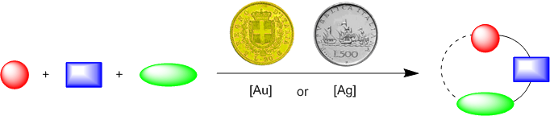
- great chemical diversity of the products of MCRs. Moreover, imines can participate in MCRs as electrophilic or nucleophilic partners, azadienes, dienophiles and 1,3-dipoles. All these reactions may benefit from the presence of a Lewis acid, a Brønsted acid or a transition metal catalyst. Silver

Graphical Abstract

Scheme 1: General reaction mechanism for Ag(I)-catalyzed A3-coupling reactions.

Scheme 2: A3-coupling reaction catalyzed by polystyrene-supported NHC–silver halides.

Figure 1: Various NHC–Ag(I) complexes used as catalysts for A3-coupling.

Scheme 3: Proposed reaction mechanism for NHC–AgCl catalyzed A3-coupling reactions.

Scheme 4: Liu’s synthesis of pyrrole-2-carboxaldehydes 4.

Scheme 5: Proposed reaction mechanism for Liu’s synthesis of pyrrole-2-carboxaldehydes 4.

Scheme 6: Gold-catalyzed synthesis of propargylamines 1.

Scheme 7: A3-coupling catalyzed by phosphinamidic Au(III) metallacycle 6.

Scheme 8: Gold-catalyzed KA2-coupling.

Scheme 9: A3-coupling applied to aldehyde-containing oligosaccharides 8.

Scheme 10: A3-MCR for the preparation of propargylamine-substituted indoles 9.

Scheme 11: A3-coupling interceded synthesis of furans 12.

Scheme 12: A3/KA2-coupling mediated synthesis of functionalized dihydropyrazoles 13 and polycyclic dihydropyra...

Scheme 13: Au(I)-catalyzed entry to cyclic carbamimidates 17 via an A3-coupling-type approach.

Scheme 14: Proposed reaction mechanism for the Au(I)-catalyzed synthesis of cyclic carbamimidates 17.

Figure 2: Chiral trans-1-diphenylphosphino-2-aminocyclohexane–Au(I) complex 20.

Scheme 15: A3-coupling-type synthesis of oxazoles 21 catalyzed by Au(III)–salen complex.

Scheme 16: Proposed reaction mechanism for the synthesis of oxazoles 21.

Scheme 17: Synthesis of propargyl ethyl ethers 24 by an A3-coupling-type reaction.

Scheme 18: General mechanism of Ag(I)-catalyzed MCRs of 2-alkynylbenzaldehydes, amines and nucleophiles.

Scheme 19: General synthetic pathway to 1,3-disubstituted-1,2-dihydroisoquinolines.

Scheme 20: Synthesis of 1,3-disubstituted-1,2-dihydroisoquinolines 29.

Scheme 21: Synthesis of 1,3-disubstituted-1,2-dihydroisoquinolines 35 and 36.

Scheme 22: Rh(II)/Ag(I) co-catalyzed synthesis of 1,3-disubstituted-1,2-dihydroisoquinolines 40.

Scheme 23: General synthetic pathway to 2-amino-1,2-dihydroquinolines.

Scheme 24: Synthesis of 2-amino-1,2-dihydroquinolines 47.

Scheme 25: Synthesis of tricyclic H-pyrazolo[5,1-a]isoquinoline 48.

Scheme 26: Synthesis of tricyclic H-pyrazolo[5,1-a]isoquinolines 48.

Scheme 27: Cu(II)/Ag(I) catalyzed synthesis of H-pyrazolo[5,1-a]isoquinolines 48.

Scheme 28: Synthesis of 2-aminopyrazolo[5,1-a]isoquinolines 53.

Scheme 29: Synthesis of 1-(isoquinolin-1-yl)guanidines 55.

Scheme 30: Ag(I)/Cu(I) catalyzed synthesis of 2-amino-H-pyrazolo[5,1-a]isoquinolines 58.

Scheme 31: Ag(I)/Ni(II) co-catalyzed synthesis of 3,4-dihydro-1H-pyridazino[6,1-a]isoquinoline-1,1-dicarboxyla...

Scheme 32: Ag(I) promoted activation of the α-carbon atom of the isocyanide group.

Scheme 33: Synthesis of dihydroimidazoles 65.

Scheme 34: Synthesis of oxazoles 68.

Scheme 35: Stereoselective synthesis of chiral butenolides 71.

Scheme 36: Proposed reaction mechanism for the synthesis of butenolides 71.

Scheme 37: Stereoselective three-component approach to pirrolidines 77 by means of a chiral auxiliary.

Scheme 38: Stereoselective three-component approach to pyrrolidines 81 and 82 by means of a chiral catalyst.

Scheme 39: Synthesis of substituted five-membered carbocyles 86.

Scheme 40: Synthesis of regioisomeric arylnaphthalene lactones.

Scheme 41: Enantioselective synthesis of spiroacetals 96 by Fañanás and Rodríguez [105].

Scheme 42: Enantioselective synthesis of spiroacetals 101 by Gong [106].

Scheme 43: Synthesis of polyfunctionalized fused bicyclic ketals 103 and bridged tricyclic ketals 104.

Scheme 44: Proposed reaction mechanism for the synthesis of ketals 103 and 104.

Scheme 45: Synthesis of β-alkoxyketones 108.

Scheme 46: Synthesis of N-methyl-1,4-dihydropyridines 112.

Scheme 47: Synthesis of tetrahydrocarbazoles 115–117.

Scheme 48: Plausible reaction mechanism for the synthesis of tetrahydrocarbazoles 115–117.

Scheme 49: Carboamination, carboalkoxylation and carbolactonization of terminal alkenes.

Scheme 50: Oxyarylation of alkenes with arylboronic acids and Selectfluor as reoxidant.

Scheme 51: Proposed reaction mechanism for oxyarylation of alkenes.

Scheme 52: Oxyarylation of alkenes with arylsilanes and Selectfluor as reoxidant.

Scheme 53: Oxyarylation of alkenes with arylsilanes and IBA as reoxidant.
Recent applications of the divinylcyclopropane–cycloheptadiene rearrangement in organic synthesis
- Sebastian Krüger and
- Tanja Gaich
Beilstein J. Org. Chem. 2014, 10, 163–193, doi:10.3762/bjoc.10.14
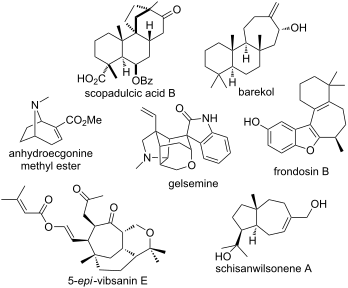
- ]. This reaction sequence constitutes a very nice example of a formal [4 + 3]-cycloaddition, without the use of a transition metal catalyst. Donaldson and coworkers [193] used the DVCPR en route towards the core skeleton of the sesquiterpenoid guianolide family [194][195]. Starting from readily prepared

Graphical Abstract

Scheme 1: Vogel’s first approach towards the divinylcyclopropane rearrangement [4] and characterization of cis-d...

Scheme 2: Transition states for the Cope rearrangement and the related DVCPR. Ts = transition state.

Scheme 3: Two possible mechanisms of trans-cis isomerizations of divinylcyclopropanes.

Scheme 4: Proposed biosynthesic pathway to ectocarpene (21), an inactive degradation product of a sexual pher...

Scheme 5: Proposed biosynthesis of occidenol (25) and related natural compounds.

Scheme 6: Gaich’s bioinspired system using the DVCPR to mimick the dimethylallyltryptophan synthase. DMAPP = ...

Scheme 7: Iguchi’s total synthesis of clavubicyclone, part 1.

Scheme 8: Iguchi’s total synthesis of clavubicyclone, part 2.

Scheme 9: Wender’s syntheses of the two pseudoguainanes confertin (50) and damsinic acid (51) and Pier’s appr...
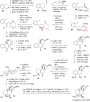
Scheme 10: Overman’s total synthesis of scopadulcic acid B.

Scheme 11: Davies’ total syntheses of tremulenolide A and tremulenediol A.

Scheme 12: Davies formal [4 + 3] cycloaddition approach towards the formal synthesis of frondosin B.

Scheme 13: Davies and Sarpongs formal [4 + 3]-cycloaddition approach towards barekoxide (106) and barekol (107...

Scheme 14: Davies formal [4 + 3]-cycloaddition approach to 5-epi-vibsanin E (115) containing an intermediate c...

Scheme 15: Echavarren’s total synthesis of schisanwilsonene A (126) featuring an impressive gold-catalzed casc...

Scheme 16: Davies early example of a formal [4 + 3]-cycloaddition in alkaloids synthesis.

Scheme 17: Fukuyama’s total synthesis of gelsemine, part 1.

Scheme 18: Fukuyama’s total synthesis of gelsemine, featuring a divinylcyclopropane rearrangement, part 2.

Scheme 19: Kende’s total synthesis of isostemofoline, using a formal [4 + 3]-cycloaddition, including an inter...

Scheme 20: Danishefsky’s total synthesis of gelsemine, part 1.

Scheme 21: Danishefsky’s total synthesis of gelsemine, part 2.

Scheme 22: Fukuyama’s total synthesis of gelsemoxonine.

Scheme 23: Wender’s synthetic access to the core skeleton of tiglianes, daphnanes and ingenanes.

Scheme 24: Davies’ approach towards the core skeleton of CP-263,114 (212).

Scheme 25: Wood’s approach towards actinophyllic acid.

Scheme 26: Takeda’s approach towards the skeleton of the cyanthins, utilitizing the divinylcyclopropane rearra...

Scheme 27: Donaldson’s organoiron route towards the guianolide skeleton.

Scheme 28: Stoltz’s tandem Wolff/DVCPR rearrangement.

Scheme 29: Stephenson’s tandem photocatalysis/arylvinylcyclopropane rearrangement.

Scheme 30: Padwa’s rhodium cascade involving a DVCPR.

Scheme 31: Matsubara’s version of a DVCPR.

Scheme 32: Toste’s tandem gold-catalyzed Claisen-rearrangement/DVCPR.

Scheme 33: Ruthenium- and gold-catalyzed versions of tandem reactions involving a DVCPR.

Scheme 34: Tungsten, platinum and gold catalysed cycloisomerizations leading to a DVCPR.

Scheme 35: Reisman’s total synthesis of salvileucalin B, featuring an (undesired) vinylcyclopropyl carbaldehyd...

Scheme 36: Studies on the divinylepoxide rearrangement.

Scheme 37: Studies on the vinylcyclopropanecarbonyl rearrangement.

Scheme 38: Nitrogen-substituted variants of the divinylcyclopropane rearrangement.
An investigation of the observed, but counter-intuitive, stereoselectivity noted during chiral amine synthesis via N-chiral-ketimines
- Thomas C. Nugent,
- Richard Vaughan Williams,
- Andrei Dragan,
- Alejandro Alvarado Méndez and
- Andrei V. Iosub
Beilstein J. Org. Chem. 2013, 9, 2103–2112, doi:10.3762/bjoc.9.247
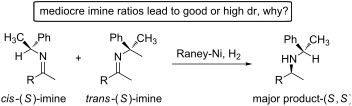
- resolution. Furthermore, in a further effort to investigate the possibility of metal catalyst induced isomerization, we reduced imines 2a–e using significantly higher loadings of Pd/C or Pt/C at 22 °C than noted in Table 2, but found no inconsistency pointing to isomerization.) These overall findings are

Graphical Abstract

Figure 1: Accepted low energy conformations of the cis- and trans-imines of PEA.

Scheme 1: cis/trans-Phenylethylimines, their diastereomeric amine products, and the imines (2a–e) studied in ...

Figure 2: Presumed low energy conformations of α-unbranched substituted cis- and trans-(S)-PEA imines.

Scheme 2: Chiral amine synthesis using (S)-PEA: imine reduction vs. reductive amination.
α-Bromodiazoacetamides – a new class of diazo compounds for catalyst-free, ambient temperature intramolecular C–H insertion reactions
- Åsmund Kaupang and
- Tore Bonge-Hansen
Beilstein J. Org. Chem. 2013, 9, 1407–1413, doi:10.3762/bjoc.9.157

- α-bromodiazoacetamides to thermolyse at ambient temperature without the use of a metal catalyst, offers the reactivity of the bromocarbene amides under genuinely mild reaction conditions. Halocarbonyl carbenes and carbene/carbenoid stabilisation In their ground state, the halocarbonyl carbenes

Graphical Abstract

Scheme 1: Preparation of the diazoacetamides.

Scheme 2: Bromination of the diazoacetamides 3a–f and thermolysis of the α-bromodiazoacetamides 4a–f.
Simple and rapid hydrogenation of p-nitrophenol with aqueous formic acid in catalytic flow reactors
- Rahat Javaid,
- Shin-ichiro Kawasaki,
- Akira Suzuki and
- Toshishige M. Suzuki
Beilstein J. Org. Chem. 2013, 9, 1156–1163, doi:10.3762/bjoc.9.129
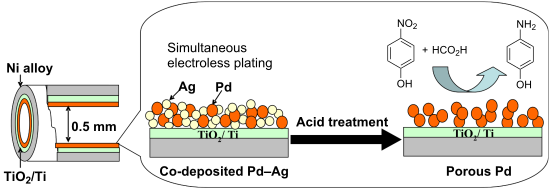
- thin metal-catalyst coating layer over the inner surface of a tubular reactor. Co-plating of Pd and Ag yielded mixed distributed Pd and Ag inner surfaces, which further gave a porous Pd surface by preferential dissolution of Ag by HNO3. A hollow tubular reactor combined with the catalytic inner surface
- suitable for Pd plating, also acts as a barrier to prevent intermetallic diffusion of Ti and the metal catalyst. The TiO2 surface was activated with Pd seeds before electroless plating. Plating of Pd was then conducted according to the procedure described in previous reports [10][11][12]. By 5 h plating at

Graphical Abstract

Figure 1: (a) Graphical presentation of Pd–Ag co-plating and sequential removal of Ag to give a porous Pd sur...

Figure 2: Schematic diagram of experimental setup used for the catalytic hydrogenation of p-nitrophenol.

Scheme 1: Hydrogenation of p-nitrophenol with formic acid.

Figure 3: Influence of temperature on the conversion of 0.01 M p-nitrophenol with 0.1 M formic acid at 30 °C ...

Figure 4: Effect of residence time on the conversion of 0.01 M p-nitrophenol with 0.1 M formic acid at 30 °C ...

Figure 5: Effect of the concentration of formic acid on the conversion of 0.01 M p-nitrophenol. The formic ac...

Figure 6: Effect of pH on the conversion of 0.01 M p-nitrophenol by using 0.05 M formic acid. The porous PdO ...

Figure 7: Long-term testing for continuous hydrogenation of 0.01 M p-nitrophenol with 0.05 M formic acid in t...
Aqueous reductive amination using a dendritic metal catalyst in a dialysis bag
- Jorgen S. Willemsen,
- Jan C. M. van Hest and
- Floris P. J. T. Rutjes
Beilstein J. Org. Chem. 2013, 9, 960–965, doi:10.3762/bjoc.9.110

Graphical Abstract

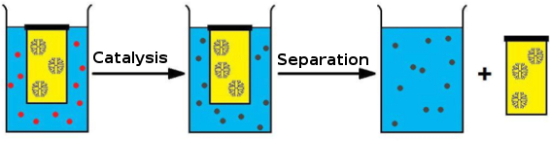
Figure 1: General approach for the use of dendritic catalysts in a dialysis bag.

Scheme 1: Synthesis of water-soluble iridium catalyst 3.

Scheme 2: Synthesis of the desymmetrized bipyridine 8.

Scheme 3: Attachment of the adapted ligand 8 to the dendrimers via a multi-isocyanate coupling, followed by i...

Scheme 4: Catalytic reductive amination of valine (18) via unfavorable equilibrium reactions in water.

Figure 2: Formation of 19 catalyzed by the three iridium catalysts.

Figure 3: Reaction setup to perform compartmentalized catalysis.

Figure 4: G3 catalyst 16 activity in dialysis device.

Figure 5: G4 catalyst 17 activity in subsequent runs.
Enantioselective reduction of ketoimines promoted by easily available (S)-proline derivatives
- Martina Bonsignore,
- Maurizio Benaglia,
- Laura Raimondi,
- Manuel Orlandi and
- Giuseppe Celentano
Beilstein J. Org. Chem. 2013, 9, 633–640, doi:10.3762/bjoc.9.71
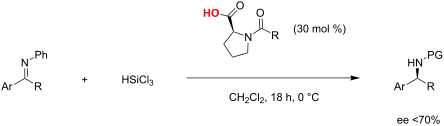
- selectivity was achieved by tuning the metal catalyst. In the trichlorosilane-mediated reductions in this work we aimed to exploit the imine activation by the acid proton of the carboxylic group, which can act at the same time as a Lewis basic site to coordinate the silicon atom and hopefully control the

Graphical Abstract

Figure 1: Catalysts of types A–D.

Figure 2: Catalysts of types E–H.

Figure 3: Proposed approach in this work.

Scheme 1: Stereoselective reduction of ketones.

Figure 4: Catalysts synthesized and studied in this work.

Figure 5: Calculated transition states for catalyst 6.
New simple synthesis of ring-fused 4-alkyl-4H-3,1-benzothiazine-2-thiones: Direct formation from carbon disulfide and (E)-3-(2-aminoaryl)acrylates or (E)-3-(2-aminoaryl)acrylonitriles
- Qiuping Ding,
- Yuqing Lin,
- Guangni Ding,
- Fumin Liao,
- Xiaoyan Sang and
- Yi-Yuan Peng
Beilstein J. Org. Chem. 2013, 9, 460–466, doi:10.3762/bjoc.9.49
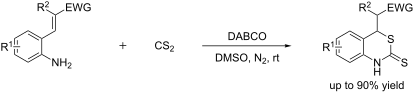
- and efficient method to construct ring-fused 4-alkyl-4H-3,1-benzothiazine-2-thione derivatives has been developed from carbon disulfide and (E)-3-(2-aminoaryl)acrylates or (E)-3-(2-aminoaryl)acrylonitriles under mild conditions, without the need for a metal catalyst. The newly developed method

Graphical Abstract

Scheme 1: AgNO3-catalyzed tandem reaction of 2-alkynylbenzenamines with CS2 and their further transformation.

Scheme 2: Concept for the construction of 4-alkyl-4H-3,1-benzothiazine-2-thione derivatives.

Scheme 3: Alkylation of 2g with iodomethane.
Recent advances in transition-metal-catalyzed intermolecular carbomagnesiation and carbozincation
- Kei Murakami and
- Hideki Yorimitsu
Beilstein J. Org. Chem. 2013, 9, 278–302, doi:10.3762/bjoc.9.34
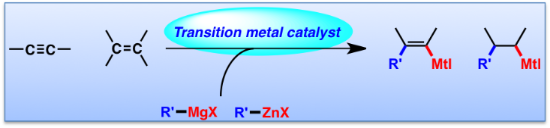
- cyclopropenes Increasing the reactivity of alkynes and alkenes is another strategy to achieve intermolecular carbometalation reactions. For example, strained alkenes are highly reactive toward carbometalation. The reactions of cyclopropenes took place without the aid of a metal catalyst (Scheme 16) [81

Graphical Abstract

Scheme 1: Variation of substrates for carbomagnesiation and carbozincation in this article.

Scheme 2: Copper-catalyzed arylmagnesiation and allylmagnesiation of alkynyl sulfone.

Scheme 3: Copper-catalyzed four-component reaction of alkynyl sulfoxide with alkylzinc reagent, diiodomethane...

Scheme 4: Rhodium-catalyzed reaction of aryl alkynyl ketones with arylzinc reagents.

Scheme 5: Allylmagnesiation of propargyl alcohol, which provides the anti-addition product.

Scheme 6: Negishi’s total synthesis of (Z)-γ-bisabolene by allylmagnesiation.

Scheme 7: Iron-catalyzed syn-carbomagnesiation of propargylic or homopropargylic alcohol.

Scheme 8: Mechanism of iron-catalyzed carbomagnesiation.

Scheme 9: Regio- and stereoselective manganese-catalyzed allylmagnesiation.

Scheme 10: Vinylation and alkylation of arylacetylene-bearing hydroxy group.

Scheme 11: Arylmagnesiation of (2-pyridyl)silyl-substituted alkynes.

Scheme 12: Synthesis of tamoxifen from 2g.

Scheme 13: Controlling regioselectivity of carbocupration by attaching directing groups.

Scheme 14: Rhodium-catalyzed carbozincation of ynamides.

Scheme 15: Synthesis of 4-pentenenitriles through carbometalation followed by aza-Claisen rearrangement.

Scheme 16: Uncatalyzed carbomagnesiation of cyclopropenes.

Scheme 17: Iron-catalyzed carbometalation of cyclopropenes.

Scheme 18: Enantioselective carbozincation of cyclopropenes.

Scheme 19: Copper-catalyzed facially selective carbomagnesiation.

Scheme 20: Arylmagnesiation of cyclopropenes.

Scheme 21: Enantioselective methylmagnesiation of cyclopropenes without catalyst.

Scheme 22: Copper-catalyzed carbozincation.

Scheme 23: Enantioselective ethylzincation of cyclopropenes.

Scheme 24: Nickel-catalyzed ring-opening aryl- and alkenylmagnesiation of a methylenecyclopropane.

Scheme 25: Reaction mechanism.

Scheme 26: Nickel-catalyzed carbomagnesiation of arylacetylene and dialkylacetylene.

Scheme 27: Nickel-catalyzed carbozincation of arylacetylenes and its application to the synthesis of tamoxifen....

Scheme 28: Bristol-Myers Squibb’s nickel-catalyzed phenylzincation.

Scheme 29: Iron/NHC-catalyzed arylmagnesiation of aryl(alkyl)acetylene.

Scheme 30: Iron/copper-cocatalyzed alkylmagnesiation of aryl(alkyl)acetylenes.

Scheme 31: Iron-catalyzed hydrometalation.

Scheme 32: Iron/copper-cocatalyzed arylmagnesiation of dialkylacetylenes.

Scheme 33: Chromium-catalyzed arylmagnesiation of alkynes.

Scheme 34: Cobalt-catalyzed arylzincation of alkynes.

Scheme 35: Cobalt-catalyzed formation of arylzinc reagents and subsequent arylzincation of alkynes.

Scheme 36: Cobalt-catalyzed benzylzincation of dialkylacetylene and aryl(alkyl)acetylenes.

Scheme 37: Synthesis of estrogen receptor antagonist.

Scheme 38: Cobalt-catalyzed allylzincation of aryl-substituted alkynes.

Scheme 39: Silver-catalyzed alkylmagnesiation of terminal alkyne.

Scheme 40: Proposed mechanism of silver-catalyzed alkylmagnesiation.

Scheme 41: Zirconium-catalyzed ethylzincation of terminal alkenes.

Scheme 42: Zirconium-catalyzed alkylmagnesiation.

Scheme 43: Titanium-catalyzed carbomagnesiation.

Scheme 44: Three-component coupling reaction.

Scheme 45: Iron-catalyzed arylzincation reaction of oxabicyclic alkenes.

Scheme 46: Reaction of allenyl ketones with organomagnesium reagent.

Scheme 47: Regio- and stereoselective reaction of a 2,3-allenoate.

Scheme 48: Three-component coupling reaction of 1,2-allenoate, organozinc reagent, and ketone.

Scheme 49: Proposed mechanism for a rhodium-catalyzed arylzincation of allenes.

Scheme 50: Synthesis of skipped polyenes by iterative arylzincation/allenylation reaction.

Scheme 51: Synthesis of 1,4-diorganomagnesium compound from 1,2-dienes.

Scheme 52: Synthesis of tricyclic compounds.

Scheme 53: Manganese-catalyzed allylmagnesiation of allenes.

Scheme 54: Copper-catalyzed alkylmagnesiation of 1,3-dienes and 1,3-enynes.

Scheme 55: Chromium-catalyzed methallylmagnesiation of 1,6-diynes.

Scheme 56: Chromium-catalyzed allylmagnesiation of 1,6-enynes.

Scheme 57: Proposed mechanism of the chromium-catalyzed methallylmagnesiation.
Tandem aldehyde–alkyne–amine coupling/cycloisomerization: A new synthesis of coumarins
- Maddi Sridhar Reddy,
- Nuligonda Thirupathi and
- Madala Haribabu
Beilstein J. Org. Chem. 2013, 9, 180–184, doi:10.3762/bjoc.9.21

- aminoindolizines, 2-(aminomethyl)indoles, imidazopyridines, butenolides and 1,2-dihydroisoquinoline derivatives, respectively, combining these two approaches successfully. Along the same lines, we investigated a reaction between ethoxyacetylene, pyrrolidine and salicylaldehyde in the presence of a transition-metal
- catalyst. That, after consecutive A3 coupling, cycloisomerization and hydrolysis of the resultant vinyl ether intermediate, should produce coumarins (Scheme 1, (d)). The reason for the selective 6-endo-dig cyclization of such a cooperative-catalysis reaction has been well documented through DFT

Graphical Abstract

Scheme 1: Synthesis of various heterocycles by a tandem A3 coupling/cycloisomerization strategy.

Scheme 2: A plausible mechanistic pathway.
The chemistry of bisallenes
- Henning Hopf and
- Georgios Markopoulos
Beilstein J. Org. Chem. 2012, 8, 1936–1998, doi:10.3762/bjoc.8.225

Graphical Abstract

Figure 1: Loschmidt’s structure proposal for benzene (1) (Scheme 181 from [3]) and the corresponding modern stru...

Figure 2: The first isolated bisallenes.

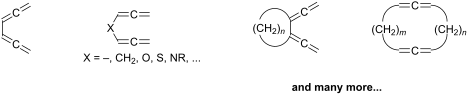
Figure 3: Carbon skeletons of selected bisallenes discussed in this review.

Scheme 1: The preparation of 1,2,4,5-hexatetraene (2).

Scheme 2: The preparation of a conjugated bisallene by the DMS-protocol.

Scheme 3: Preparation of the 3-deuterio- and 3,4-dideuterio derivatives of 24.

Scheme 4: A versatile method to prepare alkylated conjugated bisallenes and other allenes.

Scheme 5: A preparation of 3,4-dimethyl-1,2,4,5-hexatetraene (38).

Scheme 6: A (C6 + 0)-approach to 1,2,4,5-hexatetraene (2).

Scheme 7: The preparation of a fully alkylated bisallenes from a 2,4-hexadiyne-1,6-diol diacetate.

Scheme 8: The preparation of the first phenyl-substituted conjugated bisallenes 3 and 4.

Scheme 9: Selective hydrogenation of [5]cumulenes to conjugated bisallenes: another (C6 + 0)-route.

Scheme 10: Aryl-substituted conjugated bisallenes by a (C3 + C3)-approach.

Scheme 11: Hexaphenyl-1,2,4,5-hexatetraene (59) by a (C3 + C3)-approach.

Scheme 12: An allenation route to conjugated bisallenes.

Scheme 13: The preparation of 3,4-difunctionalized conjugated bisallenes.

Scheme 14: Problems during the preparation of sulfur-substituted conjugated bisallenes.

Scheme 15: The preparation of 3,4-dibromo bisallenes.

Scheme 16: Generation of allenolates by an oxy-Cope rearrangement.

Scheme 17: A linear trimerization of alkynes to conjugated bisallenes: a (C2 + C2 + C2)-protocol.

Scheme 18: Preparation of a TMS-substituted conjugated bisallene by a C3-dimerization route.

Scheme 19: A bis(trimethylsilyl)bisallene by a C3-coupling protocol.

Scheme 20: The rearrangement of highly substituted benzene derivatives into their conjugated bisallenic isomer...

Scheme 21: From fully substituted benzene derivatives to fully substituted bisallenes.

Scheme 22: From a bicyclopropenyl to a conjugated bisallene derivative.

Scheme 23: The conversion of a bismethylenecyclobutene into a conjugated bisallene.

Scheme 24: The preparation of monofunctionalized bisallenes.

Scheme 25: Preparation of bisallene diols and their cyclization to dihydrofurans.

Scheme 26: A 3,4-difunctionalized conjugated bisallene by a C3-coupling process.

Scheme 27: Preparation of a bisallenic diketone by a coupling reaction.

Scheme 28: Sulfur and selenium-substituted bisallenes by a [2.3]sigmatropic rearrangement.

Scheme 29: The biallenylation of azetidinones.

Scheme 30: The preparation of a fully ferrocenylated conjugated bisallene.

Scheme 31: The first isomerization of a 1,5-hexadiyne to a 1,2,4,5-hexatetraene.

Scheme 32: The preparation of alkynyl-substituted bisallenes by a C3-dimerization protocol.

Scheme 33: Preparation of another completely ferrocenylated bisallene.

Scheme 34: The cyclization of 1,5-hexadiyne (129) to 3,4-bismethylenecyclobutene (130) via 1,2,4,5-hexatetraen...
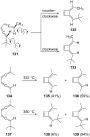
Scheme 35: Stereochemistry of the thermal cyclization of bisallenes to bismethylenecyclobutenes.

Scheme 36: Bisallene→bismethylenecyclobutene ring closures in the solid state.

Scheme 37: A bisallene cyclization/dimerization reaction.

Scheme 38: A selection of Diels–Alder additions of 1,2,4,5-hexatetraene with various double-bond dienophiles.

Scheme 39: The stereochemistry of the [2 + 4] cycloaddition to conjugated bisallenes.

Scheme 40: Preparation of azetidinone derivatives from conjugated bisallenes.

Scheme 41: Cycloaddition of heterodienophiles to a conjugated bisallene.

Scheme 42: Addition of triple-bond dienophiles to conjugated bisallenes.

Scheme 43: Sulfur dioxide addition to conjugated bisallenes.

Scheme 44: The addition of a germylene to a conjugated bisallene.

Scheme 45: Trapping of conjugated bisallenes with phosphinidenes.

Scheme 46: The cyclopropanantion of 1,2,4,5-hexatetraene (2).

Scheme 47: Photochemical reactions involving conjugated bisallenes.

Scheme 48: Base-catalyzed isomerizations of conjugated bisallenes.

Scheme 49: Ionic additions to a conjugated bisallene.

Scheme 50: Oxidation reactions of a conjugated bisallene.
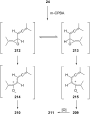
Scheme 51: The mechanism of oxidation of the bisallene 24.

Scheme 52: CuCl-catalyzed cyclization of 1,2,4,5-hexatetraene (2).

Scheme 53: The conversion of conjugated bisallenes into cyclopentenones.

Scheme 54: Oligomerization of a conjugated bisallene by nickel catalysts.
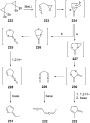
Scheme 55: Generation of 1,2,5,6-heptatetraene (229) as a reaction intermediate.

Scheme 56: The preparation of a stable derivative of 1,2,5,6-heptatetraene.

Scheme 57: A bisallene with a carbonyl group as a spacer element.

Scheme 58: The first preparation of 1,2,6,7-octatetraene (242).

Scheme 59: Preparation of 1,2,6,7-octatetraenes by (C4 + C4)-coupling of enynes.

Scheme 60: Preparation of 1,2,6,7-octatetraenes by (C4 + C4)-coupling of homoallenyl bromides.

Scheme 61: Preparation of 1,2,6,7-octatetraenes by alkylation of propargylic substrates.

Scheme 62: Preparation of two highly functionalized 1,2,6,7-octatetraenes.

Scheme 63: Preparation of several higher α,ω-bisallenes.

Scheme 64: Preparation of different alkyl derivatives of α,ω-bisallenes.

Scheme 65: The preparation of functionalized 1,2,7,8-nonatetraene derivatives.

Scheme 66: Preparation of functionalized α,ω-bisallenes.

Scheme 67: The preparation of an α,ω-bisallene by direct homologation of an α,ω-bisalkyne.

Scheme 68: The gas-phase pyrolysis of 4,4-dimethyl-1,2,5,6-heptatetraene (237).
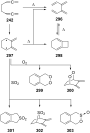
Scheme 69: Gas-phase pyrolysis of 1,2,6,7-octatetraene (242).

Scheme 70: The cyclopropanation of 1,2,6,7-octatetraene (242).

Scheme 71: Intramolecular cyclization of 1,2,6,7-octatetraene derivatives.

Scheme 72: The gas-phase pyrolysis of 1,2,7,8-nonatetraene (265) and 1,2,8,9-decatetraene (266).

Scheme 73: Rh-catalyzed cyclization of a functionalized 1,2,7,8-nonatetraene.

Scheme 74: A triple cyclization involving two different allenic substrates.

Scheme 75: Bicyclization of keto derivatives of 1,2,7,8-nonatetraene.

Scheme 76: The preparation of complex organic compounds from functionalized bisallenes.

Scheme 77: Cycloisomerization of an α,ω-bisallene containing a C9 tether.

Scheme 78: Organoborane polymers from α,ω-bisallenes.

Scheme 79: Preparation of trans- (337) and cis-1,2,4,6,7-octapentaene (341).

Scheme 80: The preparation of 4-methylene-1,2,5,6-heptatetraene (349).

Scheme 81: The preparation of acetylenic bisallenes.

Scheme 82: The preparation of derivatives of hydrocarbon 351.

Scheme 83: The construction of macrocyclic alleno-acetylenes.

Scheme 84: Preparation and reactions of 4,5-bismethylene-1,2,6,7-octatetraene (365).

Scheme 85: Preparation of 1,2-bis(propadienyl)benzene (370).

Scheme 86: The preparation of 1,4-bis(propadienyl)benzene (376).

Scheme 87: The preparation of aromatic and heteroaromatic bisallenes by metal-mediated coupling reactions.

Scheme 88: Double cyclization of an aromatic bisallene.

Scheme 89: Preparation of an allenic [15]paracyclophane by a ring-closing metathesis reaction of an aromatic α...

Scheme 90: Preparation of a macrocyclic ring system containing 1,4-bis(propadienyl)benzene units.

Scheme 91: Preparation of copolymers from 1,4-bis(propadienyl)benzene (376).

Scheme 92: A boration/copolymerization sequence of an aromatic bisallene and an aromatic bisacetylene.

Scheme 93: Formation of a layered aromatic bisallene.

Figure 4: The first members of the semicyclic bisallene series.

Scheme 94: Preparation of the first bis(vinylidene)cyclobutane derivative.
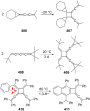
Scheme 95: Dimerization of strain-activated cumulenes to bis(vinylidene)cyclobutanes.

Scheme 96: Photodimerization of two fully substituted butatrienes in the solid state.

Scheme 97: Preparation of the two parent bis(vinylidene)cyclobutanes.

Scheme 98: The preparation of 1,3-bis(vinylidene)cyclopentane and its thermal isomerization.

Scheme 99: The preparation of the isomeric bis(vinylidene)cyclohexanes.

Scheme 100: Bi- and tricyclic conjugated bisallenes.
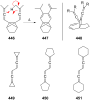
Scheme 101: A selection of polycyclic bisallenes.

Scheme 102: The first endocyclic bisallenes.

Figure 5: The stereochemistry of 1,2,6,7-cyclodecatetraene.

Scheme 103: The preparation of several endocyclic bisallenes.

Scheme 104: Synthesis of diastereomeric derivatives of 1,2,6,7-cyclodecatetraene.

Scheme 105: Preparation of a derivative of 1,2,8,9-cyclotetradecatetraene.

Scheme 106: The preparation of keto derivatives of cyclic bisallenes.

Scheme 107: The preparation of cyclic biscumulenic ring systems.

Scheme 108: Cyclic bisallenes in natural- and non-natural-product chemistry.

Scheme 109: The preparation of iron carbonyl complexes from cyclic bisallenes.

Figure 6: A selection of unknown exocyclic bisallenes that should have interesting chemical properties.

Scheme 110: The thermal isomerization of 1,2-diethynylcyclopropanes and -cyclobutanes.

Scheme 111: Intermediate generation of a cyclooctapentaene.

Scheme 112: Attempted preparation of a cyclodecahexaene.

Scheme 113: The thermal isomerization of 1,5,9-cyclododecatriyne (511) into [6]radialene (514).

Scheme 114: An isomerization involving a diketone derived from a conjugated bisallene.

Scheme 115: Typical reaction modes of heteroorganic bisallenes.

Scheme 116: Generation and thermal behavior of acyclic hetero-organic bisallenes.

Scheme 117: Generation of bis(propadienyl)thioether.

Scheme 118: The preparation of a bisallenic sulfone and its thermal isomerization.

Scheme 119: Bromination of the bisallenic sulfone 535.

Scheme 120: Metalation/hydrolysis of the bisallenic sulfone 535.

Scheme 121: Aromatic compounds from hetero bisallenes.

Scheme 122: Isomerization/cyclization of bispropargylic ethers.

Scheme 123: The preparation of novel aromatic systems by base-catalyzed isomerization of bispropargyl ethers.

Scheme 124: The isomerization of bisacetylenic thioethers to bicyclic thiophenes.

Scheme 125: Aromatization of macrocyclic bispropargylic sulfides.

Scheme 126: Preparation of ansa-compounds from macrocyclic bispropargyl thioethers.

Scheme 127: Alternate route for cyclization of a heterorganic bisallene.
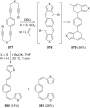
Scheme 128: Multiple isomerization/cyclization of “double” bispropargylic thioethers.

Scheme 129: Preparation of a bisallenyl disulfide and its subsequent bicyclization.

Scheme 130: Thermal cyclization of a bisallenyl thiosulfonate.

Scheme 131: Some reactions of heteroorganic bisallenes with two sulfur atoms.

Scheme 132: Further methods for the preparation of heteroorganic bisallenes.

Scheme 133: Cyclization reactions of heteroorganic bisallenes.

Scheme 134: Thermal cycloadditions of bisallenic tertiary amines.

Scheme 135: Cyclization of a bisallenic tertiary amine in the presence of a transition-metal catalyst.

Scheme 136: A Pauson–Khand reaction of a bisallenic ether.

Scheme 137: Formation of a 2:1adduct from two allenic substrates.

Scheme 138: A ring-forming silastannylation of a bisallenic tertiary amine.

Scheme 139: A three-component cyclization involving a heterorganic bisallene.

Scheme 140: Atom-economic construction of a complex organic framework from a heterorganic α,ω-bisallene.
Iridium-catalyzed intramolecular [4 + 2] cycloadditions of alkynyl halides
- Andrew Tigchelaar and
- William Tam
Beilstein J. Org. Chem. 2012, 8, 1765–1770, doi:10.3762/bjoc.8.201
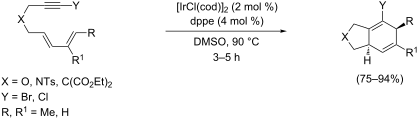
- –94%). These results are the first examples of cycloadditions of alkynyl halides using an iridium catalyst. Keywords: alkynyl halide; cycloaddition; diene-tethered alkyne; iridium; transition-metal catalyst; Introduction Iridium complexes have been used as catalysts for a wide variety of reactions

Graphical Abstract

Scheme 1: Literature examples of intramolecular TMC [4 + 2] cycloadditions of diene-tethered alkynes.

Scheme 2: Reaction pathways of alkynyl halides in transition-metal-catalyzed reactions.

Scheme 3: Synthesis of diene-tethered alkynyl halides 1c and 1e.

Scheme 4: Synthesis of diene-tethered alkynyl halide 1g.

Scheme 5: Unsuccessful cycloaddition attempts with substrates with a 4-atom tether.
Arylglycine-derivative synthesis via oxidative sp3 C–H functionalization of α-amino esters
- Zhanwei Xu,
- Xiaoqiang Yu,
- Xiujuan Feng and
- Ming Bao
Beilstein J. Org. Chem. 2012, 8, 1564–1568, doi:10.3762/bjoc.8.178
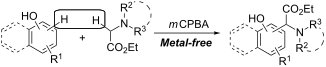
- 1, reactions 1–3). However, these reactions need expensive arylboronic acids (Petasis reaction) [4][5][6][7][8][9] and suitable leaving groups [10][11][12] as well as a metal catalyst (Polonovsky reaction; this route requires the preparation of amine N-oxide in advance) [13][14]. We have recently

Graphical Abstract

Scheme 1: Synthesis of arylglycine derivatives.

Scheme 2: Oxidative sp3 C–H functionalization of α-amino esters.

Scheme 3: Proposed mechanism.
Metal–ligand multiple bonds as frustrated Lewis pairs for C–H functionalization
- Matthew T. Whited
Beilstein J. Org. Chem. 2012, 8, 1554–1563, doi:10.3762/bjoc.8.177
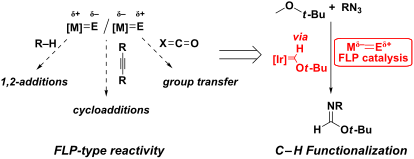
- cleavage seems to depend on the nature of the metal catalyst. Nevertheless, these results do provide inspiration for the development of similar C–H functionalization catalysis involving metal carbenes or silylenes (or perhaps even electrophilic nitrenes). Utility of M═E FLPs in C–H functionalization Given

Graphical Abstract

Scheme 1: Heterolytic cleavage of H2 by a phosphine/borane FLP by H2 polarization in the P–B cavity [5,11].

Scheme 2: Insertion of carbon dioxide into a phosphine/borane FLP [14].

Figure 1: Simplified frontier-molecular-orbital diagrams for (a) Mδ+═Eδ− and (b) Mδ−═Eδ+ FLPs (n = 1 for line...

Figure 2: Quenching of M═E FLPs by dimerization: (a) generic Mδ+═Eδ− case, and (b) Bergman's arylimido zircon...

Scheme 3: Oxygen-atom extrusion from CO2 by a Ta(V) neopentylidene [27].

Scheme 4: Oxygen-atom transfer from acetone at a Zr(IV) imide [28].

Scheme 5: Alkyne cycloaddition at a Zr(IV) imide [38].

Scheme 6: Nitrile-alkyne cross metathesis at a W(VI) nitride [40,41].

Scheme 7: C–H and H–H addition across a zirconium(IV) imide [42].

Scheme 8: Formal [2 + 2] cycloaddition of methyl isocyanate at a ruthenium silylene [58].

Scheme 9: Oxygen-atom transfer from phenyl isocyanate to a cationic terminal borylene [60].

Scheme 10: Coupling of a phosphorus ylide with an iridium methylene [62].

Scheme 11: Reactions of (PNP)Ir═C(H)Ot-Bu with oxygen-containing heterocumulenes [71].

Scheme 12: Reductive coupling of two CS2 units at (PNP)Ir═C(H)Ot-Bu [73].
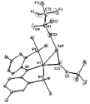
Figure 3: Single-crystal X-ray structure of a silver(I) triflate adduct of (PNP)Ir═C(H)Ot-Bu with most H atom...

Scheme 13: Possible routes to C–H functionalization by 1,2-addition across a polarized metal–element multiple ...

Scheme 14: Alkoxycarbene formation by double C–H activation at (PNP)Ir [88].

Scheme 15: Catalytic oxidation of MTBE by multiple C–H activations and nitrene-group transfer to a Mδ−═Eδ+ FLP ...
Synthesis of a novel chemotype via sequential metal-catalyzed cycloisomerizations
- Bo Leng,
- Stephanie Chichetti,
- Shun Su,
- Aaron B. Beeler and
- John A. Porco Jr.
Beilstein J. Org. Chem. 2012, 8, 1338–1343, doi:10.3762/bjoc.8.153

- 1,2-hydride shift to intermediate 27 followed by elimination of the metal catalyst [25] to afford the observed cyclopropane product 6. An alternative reaction pathway may be invoked for the ethyl-substituted substrate 22 leading to product 23 (Scheme 4). After initial cyclization of the enol ether

Graphical Abstract

Scheme 1: Cycloisomerization/nucleophilic addition of alkynyl benzaldehyde 1 to isochromene 2.
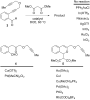
Figure 1: Reaction screen with diynyl benzaldehyde 3.

Scheme 2: Sequential cycloisomerizations of substrate 3. Condition A: PtCl2 (10 mol %), Cu(MeCN)4PF6 (10 mol ...

Figure 2: X-ray crystal structure of cyclopropane 6.

Scheme 3: Proposed reaction pathway for diastereoselective, sequential cycloisomerization.

Scheme 4: Proposed alternative reaction pathway affording 23.
Double N-arylation reaction of polyhalogenated 4,4’-bipyridines. Expedious synthesis of functionalized 2,7-diazacarbazoles
- Mohamed Abboud,
- Emmanuel Aubert and
- Victor Mamane
Beilstein J. Org. Chem. 2012, 8, 253–258, doi:10.3762/bjoc.8.26
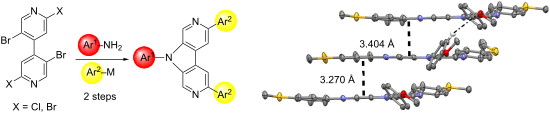
- -pentylaniline (6a) was investigated with several ligands in toluene at 120 °C, and in the presence of Pd2(dba)3 as the source of metal catalyst (Scheme 2). Ligands such as Xantphos [33], biaryl monophosphines [34] and t-Bu3P [35] were tested since they were found to be very effective in the selective C-5

Graphical Abstract

Scheme 1: Cross-coupling reactions of bipyridines 2.

Scheme 2: Ligand effect in the double N-arylation of 2a with 6a.

Figure 1: Unsuccessful substrates in the double N-arylation of 2a.

Scheme 3: Functionalization of diazacarbazole 2a.

Scheme 4: Functionalized diazacarbazoles 12a–c from bipyridine 2b.

Figure 2: (a) ORTEP views showing the π–π (dashed lines) and selected C–H···π (dotted-dashed line) interactio...
Development of the titanium–TADDOLate-catalyzed asymmetric fluorination of β-ketoesters
- Lukas Hintermann,
- Mauro Perseghini and
- Antonio Togni
Beilstein J. Org. Chem. 2011, 7, 1421–1435, doi:10.3762/bjoc.7.166
- -4,5-diyl)dimethanol. Phenyl-TADDOL (T1) = tetraphenyl-(2,2-dimethyl-1,3-dioxolane) derivative; 1-naphthyl-TADDOL (T2) = tetra-1-naphthyl-(2,2-dimethyl-1,3-dioxolane) derivative. Halogenation of β-ketocarbonyl compounds: Importance of enolization and the potential role of a metal catalyst. Qualitative

Graphical Abstract

Figure 1: Fluorinated substances of biomedical relevance.

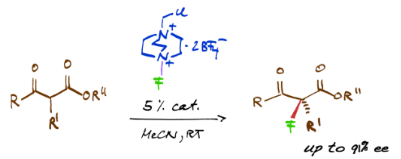
Scheme 1: Enantioselective electrophilic fluorination catalyzed by TADDOLates K1, K2. TADDOL = α,α,α',α'-tetr...
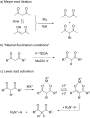
Scheme 2: Halogenation of β-ketocarbonyl compounds: Importance of enolization and the potential role of a met...

Figure 2: Model substrates for catalytic fluorinations, with the degree of enolization determined by 1H NMR m...

Figure 3: 1H NMR (250 MHz) spectra of fluorination reaction mixtures diluted with CDCl3 and filtered. a) Full...

Scheme 3: Qualitative ordering of catalytic activity of several Lewis acids in the fluorination 1→1-F.

Scheme 4: Catalysis of the “neutral” fluorination of β-ketoesters with F–TEDA by Lewis acidic titanium comple...

Figure 4: Structure of the chiral ansa-metallocene [(EBTHI)Ti(OTf)2].
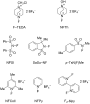
Figure 5: Electrophilic fluorinating reagents of the N–F-type. F–TEDA [27]; NFTh = 1-fluoro-4-hydroxy-1,4-diazoni...

Scheme 5: Synthesis of trifluoromethyl-substituted TADDOL ligands.

Scheme 6: Correlation experiments for the assignment of absolute configuration to fluorination products 11-F, ...

Scheme 7: Mechanistic scheme proposed, based on visual and spectroscopic observations. L = solvent, counterio...

Figure 6: 1H NMR spectra of a species of the type A, generated in CD3CN solution from K1 by ionization in the...

Figure 7: Steric model explaining the face selectivity observed in the titanium–TADDOLate complex catalyzed f...

Figure 8: Excerpt from the X-ray structure of a catalyst/substrate complex [Ti(1-naphthyl-TADDOLato)(β-ketoen...



