


Search results
Search for "molecular recognition" in Full Text gives 172 result(s) in Beilstein Journal of Organic Chemistry.
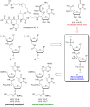
Effective in silico prediction of new oxazolidinone antibiotics: force field simulations of the antibiotic–ribosome complex supervised by experiment and electronic structure methods
Beilstein J. Org. Chem. 2016, 12, 415–428, doi:10.3762/bjoc.12.45
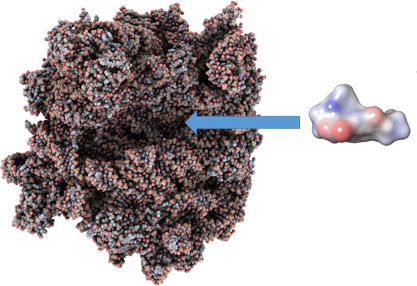
- : compliance constants; computational chemistry; drug design; molecular recognition; relaxed force constants; Introduction Antibiotic resistance is one of the major health problems in modern societies, causing millions of deaths per year [1][2][3]. Although Alexander Fleming recognized the importance of the
- force field method evaluation is therefore a prerequisite for any meaningful in silico study, especially of processes that involve molecular recognition by DNA/RNA hosts [26]. Though there are many success stories in the literature, it is not all it's cracked up to be in the euphoric 1990s, when
- complex between the ribosome and linezolid (Eribo-lzd), 3) the solvated linezolid analog (Eguest) and finally 4) the solvated linezolid (Elzd). Force field evaluation: bioactive conformation of linezolid Since the description of any molecular recognition process relies, first and foremost, on an


Art, auto-mechanics, and supramolecular chemistry. A merging of hobbies and career
Beilstein J. Org. Chem. 2016, 12, 362–376, doi:10.3762/bjoc.12.40
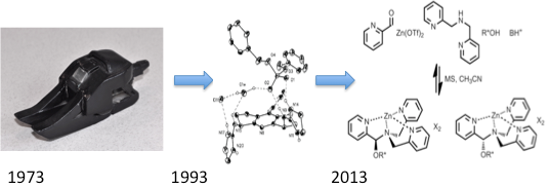
- organic reactions, molecular recognition, and photophysical techniques. In each study, we’ll be driven to create imaginative new approaches and complex physical entities of beauty that perform functions and tasks. As discussed above, we’ll continue to create differential sensing arrays for new, ever
- survive and thrive, supramolecular analytical chemistry must create results that are widely recognized by the chemical community. Our field has to have broad impact, not only advancing the basic science of molecular recognition and chemical reactivity, but also using this information to influence how
- cascade reactions, for signal amplification purposes. Given their advances, we are currently using our own physical organic chemistry insights to amplify the responses of molecular recognition in single analyte or array sensing. This is an area where supramolecular and physical organic chemists can create




Enabling technologies and green processes in cyclodextrin chemistry
Beilstein J. Org. Chem. 2016, 12, 278–294, doi:10.3762/bjoc.12.30
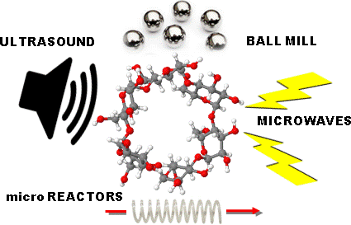
- versatile receptors for molecular recognition and building blocks for functional materials. Due to the binding of two adjacent CD units, bridged bis-CDs display high binding abilities and molecular selectivities compared to native and monosubstituted CDs. A well-organized pseudo-cavity may be provided by




A journey in bioinspired supramolecular chemistry: from molecular tweezers to small molecules that target myotonic dystrophy
Beilstein J. Org. Chem. 2016, 12, 125–138, doi:10.3762/bjoc.12.14
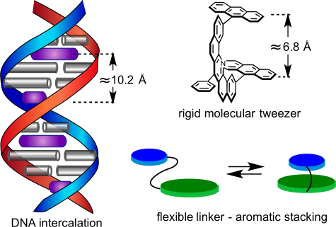
- early career efforts in molecular recognition, especially molecular tweezers. Although designed to complex DNA, these hosts proved more applicable to the field of host–guest chemistry. This early experience and interest in intercalation ultimately led to the current efforts to develop small molecule
- to molecular recognition, and analogously the cleft approach pioneered by Rebek, Hamilton, and others (vide supra), is the ability to recognize large guests, for example, part of the surface of a large macromolecule or biomolecule. Indeed, our original goal of challenging the NEP was guided by the
- reports on molecular-recognition-driven self-assembly. The grand challenge was to design small subunits that would spontaneously form complex structures noncovalently, ultimately with some particular function. So we began in earnest to develop such systems, focusing primarily on hydrogen bonding. This


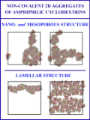
Aggregation behavior of amphiphilic cyclodextrins in a nonpolar solvent: evidence of large-scale structures by atomistic molecular dynamics simulations and solution studies
Beilstein J. Org. Chem. 2016, 12, 73–80, doi:10.3762/bjoc.12.8
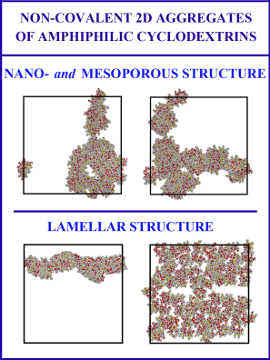
- molecular recognition [3] or nanocarriers for drug delivery [4]. In the recent past, the aggregation behavior of aCD was investigated in water, getting insights on the structures of free nanoassemblies [5][6] or in combination with therapeutic agents [7]. However, in some stages of preparation and


Learning from the unexpected in life and DNA self-assembly
Beilstein J. Org. Chem. 2015, 11, 2713–2720, doi:10.3762/bjoc.11.292
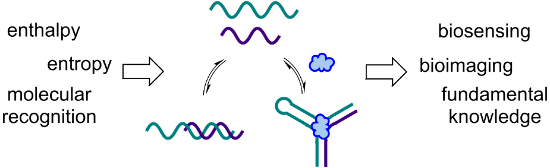
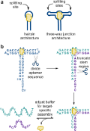
- research choices throughout my career. Much like a negative judgment about my aptitude for science unexpectedly led me to a career in chemistry, my lab has found that our greatest insights into the molecular recognition and self-assembly properties of DNA have come from unexpected results or failed
- my Ph.D. studies, I had tremendous fun designing and studying organic foldamers, but I also began to be attracted to the especially privileged molecular recognition and self-assembly properties of nucleic acids. I think that Jeff actually recognized this before I did, as he chose the additional
- faculty members on my thesis committee to be Profs. Steve Zimmerman and Scott Silverman, who are both leaders in the field of nucleic acid molecular recognition. As my graduation neared, Jeff, Steve, and Scott all enthusiastically encouraged me to pursue postdoctoral research and then a career in academia




Synthesis of bi- and bis-1,2,3-triazoles by copper-catalyzed Huisgen cycloaddition: A family of valuable products by click chemistry
Beilstein J. Org. Chem. 2015, 11, 2557–2576, doi:10.3762/bjoc.11.276
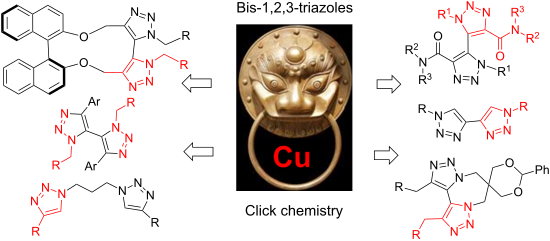
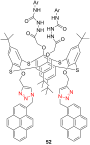
- [4]arenes are sulfur-bridged analogs of calix[4]arenes, which have potential application in the molecular recognition of cationic, anionic or neutral molecules. In this regard, Yamato et al. incorporated two urea moieties possessing various aryl groups and two pyrene-appended triazole rings at the




Aggregation behaviour of amphiphilic cyclodextrins: the nucleation stage by atomistic molecular dynamics simulations
Beilstein J. Org. Chem. 2015, 11, 2459–2473, doi:10.3762/bjoc.11.267
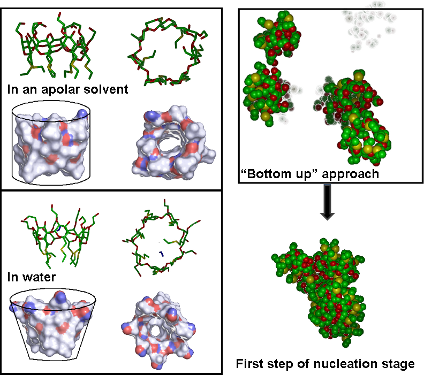
- their versatility both as drug carriers [11][14][15] and as self-assembling systems for molecular recognition [16][17][18]. Different research groups investigated the aCD behaviour in solution, elucidating their nanostructures and physicochemical behaviour, including the temperature- and concentration
- or bilayer, or vesicles and nanospheres at appropriate concentrations. In the recent past, some of these structures have been selected to yield versatile and reliable carriers for drug delivery [3][50], and even for molecular recognition of polymers [51]. In this scenario, the proposed study can open


Size-controlled and redox-responsive supramolecular nanoparticles
Beilstein J. Org. Chem. 2015, 11, 2388–2399, doi:10.3762/bjoc.11.260
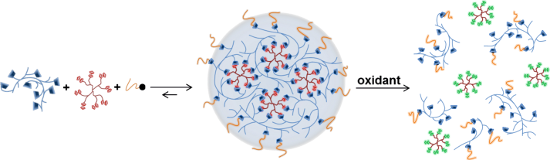
- core of the SNPs. Keywords: host–guest interactions; nanoparticles; self-assembly; stimulus-responsive; supramolecular chemistry; Introduction Self-assembly and molecular recognition are two core concepts underlying supramolecular chemistry. These offer convenient and versatile pathways to
- + guest-stabilizer] = 100 µM (Fc is the number of moieties from Fc8-PAMAM), thus keeping the molecular recognition moieties in a 1:1 stoichiometry ratio. For these experiments, first aqueous solutions of CD-PEI without or with a stabilizer (Ad-PEG, mPEG, Fc-PEG, Ad-TEG; see Scheme 1b) were prepared


Supramolecular chemistry: from aromatic foldamers to solution-phase supramolecular organic frameworks
Beilstein J. Org. Chem. 2015, 11, 2057–2071, doi:10.3762/bjoc.11.222
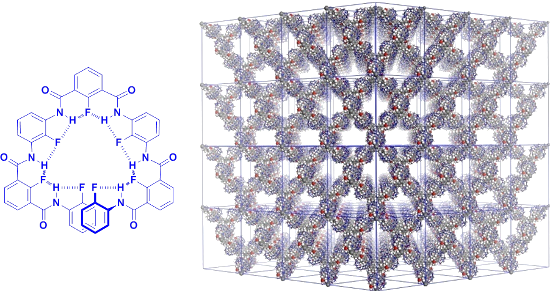
- : applications for molecular recognition and self-assembly Donor–acceptor interaction and π-stacking for folding. In January 2001, I returned to SIOC again. When I left SIOC for Urbana in 2000, I had built a small research group with two graduates. Thanks to the persistence of Professor Xi-Kui Jiang [19][20


![[Graphic 1]](/bjoc/content/inline/1860-5397-11-222-i19.png?max-width=637&scale=1.18182) 16 and dynamic [2]catenane formed by compounds 17–19.
16 and dynamic [2]catenane formed by compounds 17–19.


Selected synthetic strategies to cyclophanes
Beilstein J. Org. Chem. 2015, 11, 1274–1331, doi:10.3762/bjoc.11.142
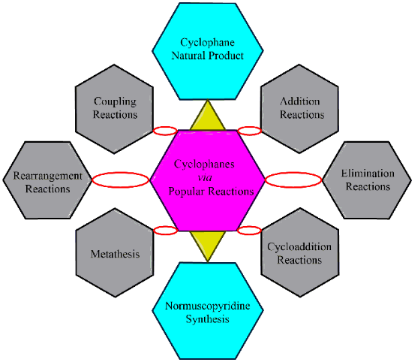
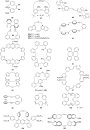
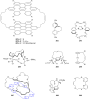
- to a large number of cations, anions, and neutral molecules. Cyclophanes are widely used in materials science and molecular recognition processes [48][49][50][51][52]. A general classification of cyclophanes is as follows: [n]orthocyclophane, [n]metacyclophane, and [n]paracyclophane (1–3) (Figure 1






Carboxylated dithiafulvenes and tetrathiafulvalene vinylogues: synthesis, electronic properties, and complexation with zinc ions
Beilstein J. Org. Chem. 2015, 11, 957–965, doi:10.3762/bjoc.11.107
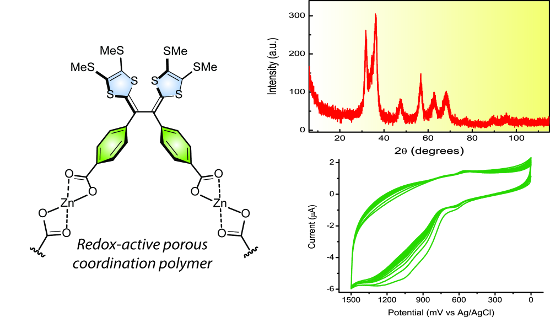
- enhance structural and electronic properties as well as to introduce some “intelligent” functions such as conformational switchability and selectivity in terms of molecular recognition and supramolecular interactions. The synthesis of TTFV structures is usually carried out through a facile iodine-promoted




Is organic chemistry science – and does this question make any sense at all?
Beilstein J. Org. Chem. 2015, 11, 893–896, doi:10.3762/bjoc.11.100
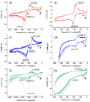
- conditions (molecular recognition, self-assembly and dynamic combinatorial chemistry) and how their molecular composition would be; the question why nature developed DNA and RNA that utilize ribose and 2-deoxyribose as central nucleotide building blocks instead of the more abundant and readily available
Multivalency as a chemical organization and action principle
Beilstein J. Org. Chem. 2015, 11, 848–849, doi:10.3762/bjoc.11.94
- to establish strong, but also reversible chemical interactions between two units, e.g., a receptor and a ligand, viruses and host cells, or between two cell surfaces. Multivalent binding is based on multiple simultaneous molecular recognition processes and plays an important role in the self

Impact of multivalent charge presentation on peptide–nanoparticle aggregation
Beilstein J. Org. Chem. 2015, 11, 792–803, doi:10.3762/bjoc.11.89
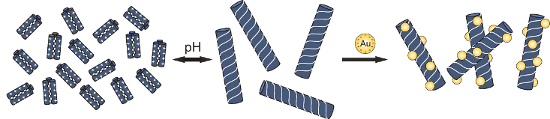
- assemblies. Results Design of the model peptides The α-helical coiled-coil folding motif combines the chemical diversity of peptides with the molecular recognition properties and structural stability of DNA, and provides a valuable and variable system for the organisation of functionalized nanoparticles [34


Discrete multiporphyrin pseudorotaxane assemblies from di- and tetravalent porphyrin building blocks
Beilstein J. Org. Chem. 2015, 11, 748–762, doi:10.3762/bjoc.11.85
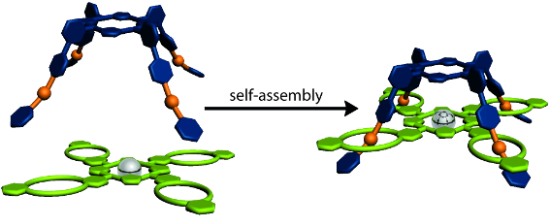
- ] to life science [13][14][15][16][17] have benefited from the development of the basic concepts of molecular recognition, templation [18], self-assembly [19], or self-sorting [20][21], just to name a few. More recently, multivalent binding [22][23][24] and cooperativity [25][26] have attracted





Probing multivalency in ligand–receptor-mediated adhesion of soft, biomimetic interfaces
Beilstein J. Org. Chem. 2015, 11, 720–729, doi:10.3762/bjoc.11.82
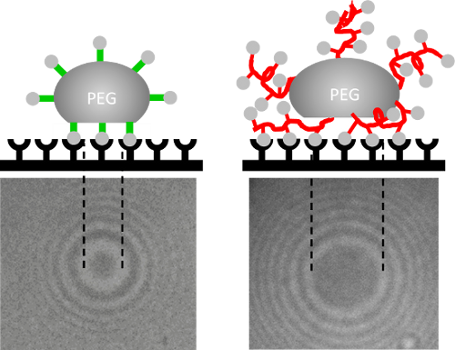
- simply mediated by the high number of ligand–receptor interactions. Keywords: bio-interfaces; cell mimetic; glycocalyx; glycopolymer; molecular recognition; RICM; specific adhesion; Introduction Vast amounts of biological processes are mediated by interactions between membrane proteins and


NAA-modified DNA oligonucleotides with zwitterionic backbones: stereoselective synthesis of A–T phosphoramidite building blocks
Beilstein J. Org. Chem. 2015, 11, 50–60, doi:10.3762/bjoc.11.8
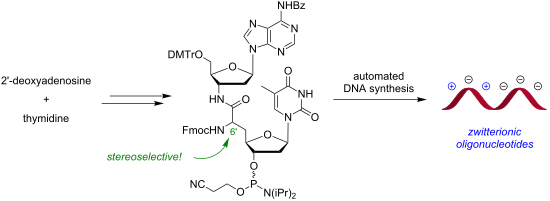
- Oligonucleotides are important agents for a number of biomedical applications [1]. Thus, they are employed to exert antigene [2] or antisense [3] mechanisms as well as to trigger or inhibit RNA interference [4]. The capability of sequence-specific molecular recognition is a striking feature of nucleic acids, but



Inherently chiral calix[4]arenes via oxazoline directed ortholithiation: synthesis and probe of chiral space
Beilstein J. Org. Chem. 2014, 10, 2751–2755, doi:10.3762/bjoc.10.291
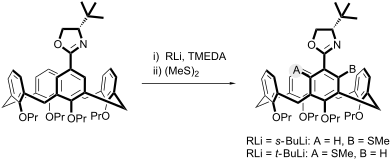
- and applications. These range from their use as molecular receptors [2][3][4][5][6], stationary phase modifiers in separation science [7][8][9], and as molecular storage vessels [10][11][12][13]. In the area of molecular recognition, the importance of chirality in the calixarene receptor has been


Loose-fit polypseudorotaxanes constructed from γ-CDs and PHEMA-PPG-PEG-PPG-PHEMA
Beilstein J. Org. Chem. 2014, 10, 2461–2469, doi:10.3762/bjoc.10.257
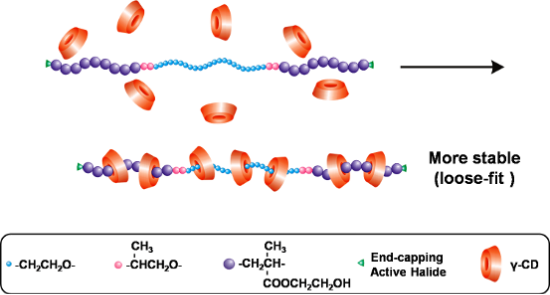
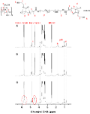
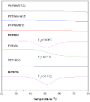
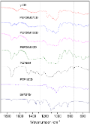
- create the single-chain stranded, loose-fit structured PPRs. A further investigation focusing on molecular recognition between γ-CD and PHEMA is ongoing in our laboratory. Conclusion A series of γ-CD-based PPRs were prepared via the self-assembly of γ-CDs with a pentablock copolymer PHEMA-PPO-PEO-PPO
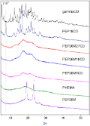
- -PHEMA in aqueous solution at room temperature. The resulting PPRs possess a unique single-chain stranded, loose-fit conformation showing no characteristic channel-type crystal structure. This finding highlights a novel model to fulfil molecular recognition between transformable γ-CDs and functional




Towards the sequence-specific multivalent molecular recognition of cyclodextrin oligomers
Beilstein J. Org. Chem. 2014, 10, 2428–2440, doi:10.3762/bjoc.10.253
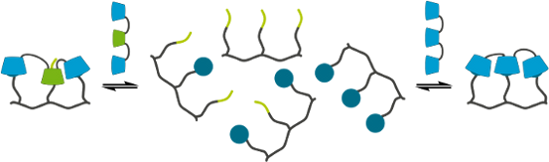
- Michael Kurlemann Bart Jan Ravoo Organic Chemistry Institute, Westfälische Wilhelms-Universität Münster, Corrensstrasse 40, 48149 Münster, Germany 10.3762/bjoc.10.253 Abstract Sequence-specific multivalent molecular recognition has been recognized to play a major role in biological processes
- realize sequence-specific molecular recognition by the use of host–guest chemistry, but the recognition motifs as well as the linkages have to be chosen very carefully. In the case of trivalent systems one adamantane moiety must be included to induce preferred formation of 1:1 adducts. Due to the too weak
- , with non-complementary strands aggregates of higher stoichiometry are generated. Keywords: cooperativity; cyclodextrins; molecular recognition; multivalency; sequence specificity; Introduction Multivalency is the interaction of a receptor and a ligand with at least two recognition motifs on each


Molecular recognition of AT-DNA sequences by the induced CD pattern of dibenzotetraaza[14]annulene (DBTAA)–adenine derivatives
Beilstein J. Org. Chem. 2014, 10, 2175–2185, doi:10.3762/bjoc.10.225
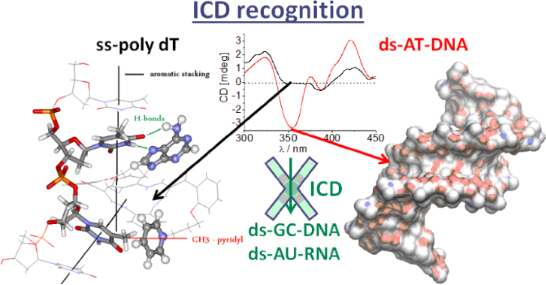
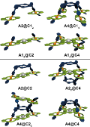
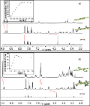
- in contrast to the majority of previously studied DBTAA analogues (DNA/RNA intercalators). Only DBTAA–propyladenine conjugates revealed the molecular recognition of AT-DNA by an ICD band pattern > 300 nm, whereas significant ICD bands did not appear for other ds-DNA/RNA. A structure–activity relation
- /AP3am) revealed molecular recognition of AT-DNA by the appearance of an ICD band pattern >300 nm. Significant ICD bands did not appear for other ds-DNA/RNA. A structure–activity relation for the studied series of compounds revealed that the essential structural features for the ICD recognition of AT-DNA


Why a diaminopyrrolic tripodal receptor binds mannosides in acetonitrile but not in water?
Beilstein J. Org. Chem. 2014, 10, 1513–1523, doi:10.3762/bjoc.10.156
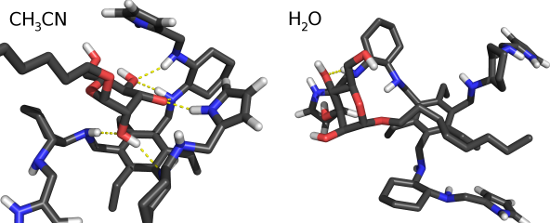
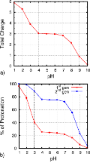
- over the years [1][2][3][4][5][6]. Most of these were developed for glucose since it is one of the most common sugars in living systems [7] and the preferred monosaccharide for energy storage [8]. However, mannose is essential for various biological functions, such as molecular recognition, being one




Carbohydrate PEGylation, an approach to improve pharmacological potency
Beilstein J. Org. Chem. 2014, 10, 1433–1444, doi:10.3762/bjoc.10.147
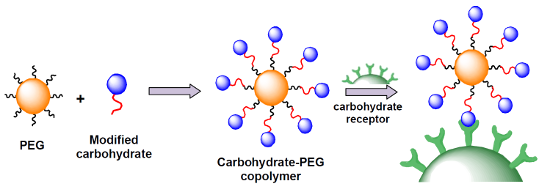
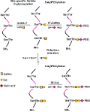
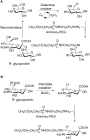
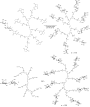
- recognized as immunodominant epitopes in antigenic glycoconjugates [14]. Carbohydrates participate in molecular recognition events such as host–pathogen interactions, responsible for mammal infections, and are candidates for chemotherapy [15]. Moreover, synthesis of multivalent carbohydrate ligands provide







Molecular recognition of surface-immobilized carbohydrates by a synthetic lectin
Beilstein J. Org. Chem. 2014, 10, 1354–1364, doi:10.3762/bjoc.10.138
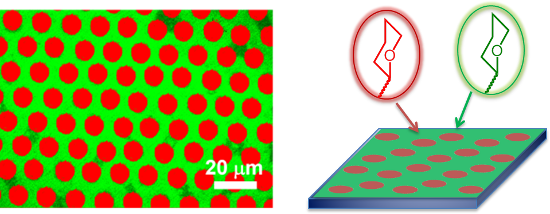
- Melanie Rauschenberg Eva-Corrina Fritz Christian Schulz Tobias Kaufmann Bart Jan Ravoo Organic Chemistry Institute, Westfälische Wilhelms-Universität Münster, Corrensstrasse 40, 48149 Münster, Germany 10.3762/bjoc.10.138 Abstract The molecular recognition of carbohydrates and proteins mediates a
- agglutinin. It was found that the printed carbohydrates retain their characteristic selectivity towards the synthetic and natural lectins and that the recognition of synthetic and natural lectins is strictly orthogonal. Keywords: carbohydrates; lectins; molecular recognition; microarrays; multivalent
- results obtained from the microarray support our earlier finding that the interaction of HisHis and NANA is 1:2 [39], so that HisHis is likely to bind divalently to the microarray surface. Conclusion In summary, we have investigated the molecular recognition of surface immobilized carbohydrates by a





